30 Jahre Bell Book & Candle - Zu diesem großartigen Jubiläum erscheint das neue Album „L.O.V.E.“ mit 12 neuen Songs auf CD, Vinyl und digital, sowie in der Deluxe Edition als Doppel-CD mit dem 21 Titel umfassenden „Best Of“ aus 3 Jahrzehnten der Band.1994 gründete sich das Trio Bell Book & Candle, das 1997 mit dem internationalen Hit „Rescue Me“ die Welt eroberte. Die besondere Magie der Band um Jana Groß, Andy Birr und Hendrik Röder stellte sich schon im Namen dar, der dem Film Bell Book & Candle (1958) entlehnt ist. Bell Book & Candle haben bis heute etwa 1800 Konzerte zwischen Templin und Texas gespielt (u. a. im Vorprogramm der großen Deutschland-Tourneen von Whitney Houston und Roxette). Ein Erfahrungsfundus, von dem die Drei profitieren und der auch ihre Musik immer wieder neu geprägt hat.
Search:bell book
Following her debut album, I’ll Look for You in Others (Past Inside the Present), earlier this year, Patricia Wolf joins Spain’s Balmat label with See-Through, her second album. See Through finds the Portland, Oregon musician and field recordist continuing to develop her signature style of ambient, balancing radiant soundscaping with a carefully expressive sensibility. But the new album is also marked by an important difference. Where I’ll Look for You in Others was largely written in response to the death of a loved one, See-Through represents a kind of rebirth.
“After a long period of grief, I had been hoping to find my way to a place of lightness, peace, playfulness, curiosity, and sensuality again,” Wolf says. “What I was surprised and pleased to find is that for the most part, I had.”
She wrote and recorded many of the album’s songs quickly, in preparation for an August 2021 broadcast on the online radio platform 9128 Live. Excited for the opportunity to play live after more than a year of the pandemic, Wolf decided to write all new material for the event, working with a lean setup of Octatrack, Roland Synth Plus 10, Make Noise 0-Coast, and Novation Summit. (In fact, Wolf was the first sound designer invited to create patches for the Summit.) She also picked up an acoustic guitar that her brother had loaned her. “I decided to take the surrealist approach of ‘pure psychic automatism’ to see what poured out of me,” she recalls. “Woodland Encounter,” “Under a Glass Bell,” “The Grotto,” “The Mechanical Age,” “The Flaneur,” and “Psychic Sweeping” are all products of those sessions; the through line holding them together is their exploratory spirit and clarity
of vision.
Other songs, like “A Conversation With My Innocence,” “Recalibration,” and “Psychic Sweeping,” wrestle with the traumas of the preceding year. Though they may linger on the heaviness of loss, Wolf says, “What I discovered is that a stronger archetype had grown inside me to steer my emotions and thoughts to a better place.” Likewise, “Wistfulness” and “Upward Swimming Fish”—her first experiments with VST synthesizers—balance the bittersweet embrace of melancholy with the freedom to choose happiness.
“Pacific Coast Highway,” the album’s lone song with drums, might at first seem like an outlier. But it also signals Wolf’s interest in finding a fusion between the introspection of ambient and the togetherness of beat-oriented music. “Experiencing loss and isolation is what drove me into gentler territories of sound,” she says, “but I want to start making more beat-oriented music. After an extended period of loss and isolation, I’m ready to experience more joyous and social things.”
Listeners with keen ears might recognize the album’s closing song, “Springtime in Croatia”: A different mix of the song originally appeared on the 2021 digital compilation secondnature & friends Vol. II, from the Seattle label secondnature. This marks its first appearance on vinyl, however, and its spiritual home is undoubtedly here, at the close of See-Through. As the bookending answer to the opening “Woodland Encounter”—another song in which field recordings play a crucial role—it closes the circle of an album that is itself keyed to the steadily turning cycles of life.
Dedication is Stevie Bensusen and Lashley Todd, two friends born and raised in Seattle, WA, who started singing together in high school. Their dynamic blend was undeniable and it made all the sense in the world to form a band together. And if and when the planets were somehow aligned and they were gifted with adequate financing, go into the studio and record their voices. Convinced that their unmistakable vocal blend would be better served by recording their own material (songs both written and arranged by Stevie) that would showcase their voices, both solo and together. After attending Boston's Berklee College of Music to study theory and composition, Stevie returned to Seattle with a batch of new tunes and arrangements in his portfolio. He and Lash focused on rehearsing the material and looked for a chance to take their sound into the studio. As luck would have it, someone liked their prospects enough to bankroll their studio sessions. They hired and rehearsed the top-notch players that would make up their masterful rhythm section, then booked time at now legendary Kaye-Smith Studios in Seattle to cut and mix their tracks. What came from those sessions are four powerful and sophisticated R&B performances, being made available only on the Final Bell label by Super Disco Edits. Their adventures in the unpredictable world of recorded music are now beginning to unfold. Which brings us to this moment in time when audiences in the UK can finally discover, and appreciate . . . Dedication.
- A1: Straight Forward Bedtime
- A2: The York Cycle
- A3: Book
- A4: Brown Derby
- A5: The Diagram Group
- A6: Summoned By Bells
- B1: Chamber Seven Figure
- B2: Vin Iii
- B3: Please Hold
- B4: Early English Silence
- B5: Peter John Mary Keith And Paul
- B6: Who's Going To Hospital, Who's Going To Jail
Clocks and Barometers is a collaborative project between veteran Limbo artists Seán Lee (Dive Reflex Service) and Alex Lupo (Lupo). All the source material for this album was recorded in one morning at Lupo's studio in the summer of 2023. They chose twelve one-minute acoustic improvisations and processed them that afternoon through granular eurorack units.
The results were bought to Bristol where DRS and Lupo shaped the album over the next year in several recording and mixing sessions at DRS’s home studio.
The name Clocks and Barometers is taken from a mysterious shop of the same name on the east Bristol/South Gloucestershire border which appears to never be
open. The title “Learning Through Investigation” as well as some of the track names refer to both artists’ experience as music educators.
Jeff Parker’s 2016 album The New Breed was a turning point for both Parker and for International Anthem, changing the trajectory of his solo career as well as drawing an abundance of attention to our fresh imprint despite our then very limited catalog. Most importantly though, the album is the first to give voice to Parker’s wholly unique take on sample-based beat construction augmented by a crack squad of improv-savvy LA breezers—the high-level crew of Paul Bryan (bass), Josh Johnson (alto sax), and Jamire Williams (drums), augmented by Jay Bellerose (drums) and Ruby Parker (vocals).
What began as Jeff’s interest in understanding his own idea of hip-hop processes (and how they related to his work in jazz) expanded into a blueprint for much of his work since then. (see also: The New Breed’s rock-solid followup Suite For Max Brown, the gentle deconstructionist solo guitar of Forfolks, and the long-form slow bloom dub improvisation of The Way Out of Easy—all released via International Anthem)
The IA11 Edition LP features our IARC 2025 obi strip, plus a new 16-page 11x11" insert booklet with unpublished session photos, new liner notes by New Breed bassist / co-producer Paul Bryan, and an in-depth conversation between JP and IARC co-founder Scott McNiece.
“...equally rooted in jazz and funk, and built upon beat-making experiments…”
- Jason P Woodbury, Aquarium Drunkard
- A1: Sepehr - Twilight Calls
- A2: Sissy Fuss - No Restraint Instrumental Def
- A3: God Is God - Na Gore More Dub Edit
- A4: Alex Loveless - Voicenote
- A5: Suemori - Kisou
- A6: Mari Herzer - Limbal Ring
- A7: Elena Colombi Feat Juno Roche - Lost In A City
- A8: Loma Doom - Sisterresister
- A9: Decha - Mujeres
- B1: Pose Dia - Lovers Rock
- B2: Low End Activist - Need To Know Blue Room Version
- B3: Decha Wir Sind Da
- B4: Mayurashka - Libra Man
- B5: Nar John Silvestre - Ensel Ham
- B6: E-Bony - Slow Machines
- B7: Riva Ft Tommy Khosla - Resurfacing
- B8: Anenon - Length-Of-Night Improvisation
Following on from the celebrated first instalment, the second part of The Male Body Will Be Next compiles an entourage of daring sonic experiments, composed in response to bell hooks’ landmark book The Will to Change. Prompting artists and musicians to envision cross-gender solidarity, Osàre! Editions founder Elena Colombi presents an enrapturing, narrative album, conceptualised around collective transformation.
Resonating with hooks’ challenge to men to reclaim the sensitivity that patriarchy denies them, the name of the record arises from a photograph by Peter de Potter and Rebecca Salvadori’s film of the same title. In these depictions, naked flesh is exposed, made vulnerable and trembles with emotion as the fragility of masculine bodies are examined through the queer and female oppositional gaze. Transforming this visual language into musical expression, The Male Body Will Be Next swirls with punk vitriol, electrified noise, acid, electro and free-wheeling encounters charged by love, lust and limerence.
Gently plunking chords signal Pose Diva’s reimagining of lover’s rock before Sissy Fuss smashes in with a heavy-weight instrumental version of their erotic anthem ‘No Restraint’.
Made up of Turkish musician Etkin Çekin and Belarussian songstress Galina Ozeran, God is God delivers a gentle lullaby, while Low End Activist flirts with dark and brooding bass, shattering penetrating frequencies into luminous fragments. Riffing off the 2020 documentary about female early electronica pioneers, Loma Doom crafts a slowly oscillating drone zenith, the ultimate climax. In line with the conceptual underpinning, there are plenty of collaborations – Daytripper’s Riva and Sitar player Tommy Khosla, Lebanonese experimentalist N R and Swiss-French producer John Silvestre (AKA Typhon), as well as Colombi herself and trans author/activist Juno Roche. Within these partnerships, new modalities come alive as mediums, practices and perspectives are ignited and pushed in otherworldly, metamorphic directions.
While they’ve been active for more than two decades, it’s only been in recent years that the Berlin and New York based contemporary sonic arts platform, Soundwalk Collective, has begun to gather the accolades and attention that they rightfully deserve. Firmly rooted within a multi-disciplinary practice that engages the narrative potential of sound within the contexts of visual art, dance, music and film, as well as tapping anthropological, ethnographic, and psycho-geographic research, they’ve gained great note for collaborations with Jean-Luc Goddard, Nan Goldin, Sasha Waltz, Charlotte Gainsbourg, and numerous others.
Building on the back of 2023’s brilliant “All the Beauty and the Bloodshed”, Soundwalk Collective now returns with “Khandroma”, one of their most fascinating and singular endeavours to date, which re-engages their enduring creative partnerships with Patti Smith. Issued by Ubi Kū, a brand new imprint founded by the Italian Buddhist Union dedicated to the relationships between Buddhist cultures, music, and sound, across the album’s stunning two sides this incredible ensemble draws inspiration from and conjures Tibetan deities, the Himalayan Plateau, the valleys of Nepal and the highest peaks where the most ancient Buddhist temples reside, culminating as a sprawling sonic tapestry like little else. Issued as a beautifully produced, limited edition vinyl LP and CD, mixed and mastered by Giuseppe Ielasi, complete with a booklet featuring liner note essays penned by Chiara Bellini and Filippo Lunardo, and images by Stephan Crasneanscki, it’s hands down among our favourite releases by Soundwalk Collective to date and not to be missed!
An international experimental sound art collective founded in 2001 by the artists Stephan Crasneanscki, who was joined in 2008 by producer Simone Merli, Soundwalk Collective is a contemporary sonic arts platform, featuring a rotating constellation of artists and musicians, that, in vastly varied number of ways, has continuously explored the remarkable potential of sound within the contexts of visual art, dance, music and film, offering particular emphasis to anthropological, ethnographic, and psycho-geographic research, examining conceptual, literary or artistic themes. In addition to their many collaborations and accolades that attend to an increased ambitious catalog of releases, they scored Laura Poitras’ film, “All the Beauty and the Bloodshed”, which won the Golden Lion at the 2022 Venice Film Festival, as well performed and exhibited at Berghain, CTM Festival, documenta, Manifesta, New Museum, and Centre Pompidou, where they notably opened “Evidence”, a exhibition with Patti Smith comprising an audio-visual journey from the work of French poets Arthur Rimbaud, Antonin Artaud and René Daumal. While Soundwalk Collective’s output and use of sonority - sometimes original composition and others manipulated archival recordings - and context is varied, the project’s endeavours are unified by a focus on sound as material that is both tactile and poetic, pursuing layered narratives that address ideas of memory, time, love and loss. Their latest, “Khandroma”, enlisting Patti Smith’s contribution on one of its tracks, stands among the most exciting and rich of these explorations yet.
Perhaps the best way of approaching “Khandroma” is through Soundwalk Collective’s longstanding focus on the discipline of psycho-geography - a practice that interrogates the impact of an environment’s embedded histories and meanings on the psychology of the present - as well as the group’s integration of observations of nature, and uses of non-linear narrative, as a vehicle for recording and the synthesis of meaning. Like previous projects that have encountered them traveling extensively across the world, occupying diverse environments for long periods of investigation and fieldwork, during which they source materials for subsequent works, the material roots of “Khandroma” are a body of field recordings made by Crasneanscki, Francisco López, and Merli at altitudes between 2,760 and 4,500 meters, in varying locations across Upper Mustang during 2016.
Drawing the album’s title from the Tibetan feminine deity who reigns the skies, the album’s two compositions weave a stunning sonic tapestry from collaged sounds of nature, bells, drones, unplaceable tones and vocals, and in the case of its second piece, “Chasing the Demon”, the voice of Patti Smith, culminating as a deeply emotive and imagistic expanse that taps something far more profound than any of its single parts. As the collective states: “the album traces the continuous morphing of the wind into sound expressions. The Himalayan Plateau seems designed to amplify and echo the encounter of the breaths, the prayers, and the chants emerging from around and within those temples; amid the sounding of bells, the turning of prayer wheels, and the billowing of flags. A resonant musical body that we recorded so as to capture its boundless mutations; an unstoppable force that cries, whispers, and blows through and over stones, wood, empty halls and monastic robes, etching an ever-changing sonic landscape onto the surfaces it encounters.”
Immersive, stunningly beautiful, and haunting, “Khandroma” draws the ancient and distant into the consciousness of the present, close to home, bordering on the profound. Issued by Ubi Kū as a beautifully produced, limited edition vinyl LP and CD, mixed and mastered by Giuseppe Ielasi, complete with a booklet featuring liner note essays penned by Chiara Bellini and Filippo Lunardo, and images by Stephan Crasneanscki, we can’t recommend it enough.
- A1: The Meditation Singers - Let Them Talk
- A2: Charlie Brown - The Whole World Is Watching
- A3: Martha Bass - Since I've Been Born Again
- A4: The Williams Singers - So Good To Be Alive
- A5: The Faithful Wonders - Ol' John (Behold Thy Mother)
- A6: The Salem Travelers - Crying Pity And A Shame
- B1: The East St Louis Gospelettes - Soon I Will Be Done
- B2: Power And Light Choral Ensemble - Stand Up America, Don't Be Afraid
- B3: The Masonic Wonders - Just To Behold His Face
- B4: The Majestic Choir & The Soul Stirrers - Why Am I Treated So Bad
- B5: The Jordan Singers - My Life Will Be Sweeter
- B6: Lucy Rodgers - I'm Fighting For My Rights
- C1: The East St Louis Gospelettes - I'll Take Care Of You
- C2: The Williams Singers - Don't Give Up
- C3: The Soul Stirrers - Don’t You Worry
- C4: The Meditation Singers - I've Done Wrong
- C5: The Jordan Singers - Lord Have Mercy
- C6: The Kindly Shepherds - Lend Me Your Hand
- C7: The Violinaires - Groovin' With Jesus
- D1: Cleo Jackson Randle - Life In Heaven Is Free
- D2: The Violinaires - Mother’s Last Prayer
- D3: The Inspirational Singers - Bless Me
- D4: The Bells Of Joy - Give An Account At The Judgement
- D5: Stevie Hawkins - Same Old Bag
- D6: The Soul Stirrers - Striving
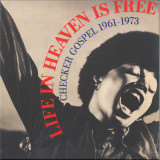
Gospel melts into Soul in this dazzling collection of sides originally released by the Chess subsidiary.
Devised by the same team supporting the likes of Muddy Waters and Etta James at Chess, the vintage of Checker Gospel celebrated here is distinguished by its expertly raw, rugged, live feel — thumping bass and pounding drums, bluesy guitar and horns — and its keen engagement with contemporary realities and politics, with an underlying, unwavering commitment to the Civil Rights movement. Not forgetting its sheer, startling, richly diverse soulfulness.
Key architects of the Chicago Sound and Motown are amongst the scores of contributors: Charles Stepney, Gene Barge, Eddie Kendricks, and Leonard Caston Jr. are in the house… Morris Jennings, drummer on Curtis’ Superfly and Terry Callier’s What Color Is Love… Louis Satterfield from The Pharaohs and Earth Wind & Fire… Ramsey Lewis’ guitarist Byron Gregory… Phil Upchurch… Laura Lee…
Producer Monk Higgins joined Checker in 1967, bringing his experience of R&B and Gospel hit-making for the labels One-derful and Satellite, together with a loyal cohort of musicians. A protege of Willie Dixon, engineer Malcolm Chisholm set up the Ter Mar studio as if preparing for a live gig, carefully teasing measures of bleed into the microphones. With Ralph Bass from King Records running A&R, they knew exactly what they were after. ‘I’m using horns and an R&B sound in gospel recordings,’ said Bass. ‘We have no charts. All the musicians are given the chord changes. I want the cats to think when we’re cutting. I want spontaneity, and that’s what we’re getting.’ And: ‘There is more to gospel than just finding solace in the church. This follows the same message of Martin King, who was fighting for a new way of life. Kids are tired of hearing Jesus Give Us Help. They want a positive message.’
Focussed on the late sixties and early seventies, the twenty-five recordings here are all killer no filler, but try these four, random entry points: the heavy funk ostinato of the Violinaires’ Groovin’ With Jesus, working itself up into a post-James-Brown brass frenzy, sure to knock your socks off; Cleo Jackson Randle’s title track, for those who like their Gospel straight-up and hard-core; Eddie Kendricks’ achingly timely choral call-to-arms, Stand Up America, Don’t Be Afraid; the East St Louis Gospelettes’ heart-stopping, fathoms-deep rendition of Bobby Bland’s I’ll Take Care Of You.
A beautiful gatefold sleeve; a full-colour booklet with excellent notes by Robert Marovich; top-notch sound. Another knockout selection by Greg Belson and David Hill.
A shoo-in for soul compilation of the year.
- A1: The Guiding Stars - Been Dipped In The Water
- A2: The Religious Five Quartet - Let Me Lean On You
- A3: The Butlerairs - He's So Good To Me
- A4: Eastern Star Chorale - Until You Try Jesus
- A5: The Sensational Bells Of Joy - Lord Take My Hand
- A6: Green Street Baptist Church Youth Choir - He's All Right
- A7: The Singing Son Of Zion - Steal Away
- B1: The Gospel Voices Of Soul - Woke Up This Morning
- B2: The Gospel Motivators - Trust Him
- B3: Joe Thomas - I Feel Like Pressing My Way
- B4: The Indiana Wonders - Thank You Jesus
- B5: The Webster Singers - Stay By Our Side
- B6: Rev Eddie James And Family - Jesus Will Fix It
- C1: The Solomonaires - Come Out Of The Wilderness
- C2: The Antioch Majestic Voices - Peace Until My Soul
- C3: Rev Thomas N. Pride - He Knows It All
- C4: The Ecclesiastics - He Made A Way For Me
- C5: The Gospel Descendents - Jesus Is All I Need To Get By
- C6: The Gospel Chanteurs - Lord Don't Leave Me
- C7: Newburg Radio Chorus - Calvary
- D1: Cleo K Joiner Iii And The Metropolitan Comm. Choir - Spirit Of The Living God
- D2: Jimmy Ellis And The Riverview Spiritual Singers - I've Come A Long, Long Way
- D3: Rev Charles E. Kirby - Lord You Been Good To Me
- D4: The Golden Crowns - We Are Trying
- D5: Indiana Community Choir - Lord Don't Move That Mountain
- D6: God's Girls - My Time Ain't Long
Hardcover Book which includes a 208-page book documenting Louisville's rich Black Gospel music legacy and access to a comprehensive digital archive.
In the mid-20th century, Louisville gospel music was occasionally recorded when members of the local gospel community pressed 45rpm records and LPs, and released them through grassroots record labels such as Sensational Sounds, Grace, Blessed, and D.J.S. Over the years, a substantial body of work was produced in our city, but those recordings are in danger of being lost forever.
The Louisville Story Program has been working with dozens of people in the local gospel music community to locate, digitize, and preserve hundreds of these recordings and to develop a book that documents and honors the legacies of the people and communities that produced them.
For decades, the passion, hard work, and support of countless people across dozens of Black church communities in Louisville have nurtured and sustained a rich gospel music ecosystem. This music has served as a central part of people's religious practice and as an expression of Black pride, joy, affirmation, love, dignity, determination, and hope. This legacy continues to this day.
With support from The Owsley Brown II Family Foundation and Owsley Brown III Philanthropic Foundation, LSP has partnered with members of the gospel community and a local advisory group of local gospel historians and luminaries:
To locate, clean, and digitize gospel records of local artists released by small local labels
To accompany the local Black gospel music community in developing a 4 CD box set that includes a 200+ page hardcover book with first-person documentation of their rich history
To create an accompanying double LP featuring 26 of those songs
To create and maintain a public-facing digital archive of 1,000 songs and 1,000 photographs
To celebrate the final release with a large concert at the Brown Theatre (September 28, 2024)
Yes, *that* Al Hirt record. Featuring the godlike "Harlem Hendoo", looped unforgettably by De La Soul for the legendary Buhloone Mind State cut, "Ego Trippin' (Part Two)"!
Al Hirt's infamous Soul In The Horn is inextricably tangled up in crate-digger lore. Originally released in 1967, the album has been in heavy, heavy demand for over 30 years, entirely down to the majestic soul-jazz fire of "Harlem Hendoo". And it's a song so good, so vital, so timeless, that it will always tower above everything else in its proximity. This one track alone is worth the price of admission - even if the cost of entry were $100 or even $1000.
However, it would be an error to dismiss this record as merely a one tracker, loaded as it is with dope samples for adventurous beat makers. Certainly the funkiest Al Hirt record, it definitely lives up to the "soul" in the title. Thanks to composer Paul Griffin and arranger Teacho Wiltshire, Hirt got uncharacteristically free and groovy throughout. It comes on more like an obscure KPM library funk record than the easy listening Al was notorious for.
A Louisiana trumpeter and band leader who made Allen Toussaint’s “Java” famous, Al Hirt was also known for TV themes, Dixieland, Swing and being a minority owner of the New Orleans Saints. Unlike every other Al Hirt record - and despite most "diggers" claiming otherwise - this here gem is genuinely hard to come across "in the wild". Normally, you can't give Al Hirt records away, except this particular one, which raises pulses in the crate digging community to life-threatening levels. For every owner claiming to have found their copy for a dollar, there's scores more claiming to have *never* unearthed one in the field. So, paradoxically, you can consider this the most tricky-to-pull "thrift store record", ever. This is why we're finally making it available for everyone, not just those with endless hours to spend scouring the global goodwills!
Soul In The Horn represented an expressive detour into authentic soul-jazz for Al Hirt. Throughout, we're struck by a fierce, fiery energy that's otherwise absent from his typically easy listening work. Without question, the slinky, magical "Harlem Hendoo" is the standout, here. It's also the reason why the record is so scarce and commands awe among crate diggers, sounding like something from an obscure and deeply revered spiritual jazz record. As is often the case, the true genius of the song is tricky to do justice to; it's like a minor miracle of songwriting and performance that simply swooned down from the heavens on the back of horns, bells and harpsichord. It's one of the sweetest musical compositions ever recorded inside a studio - it's only failing is that it's just too short. Sampled brilliantly by De La Soul, it has also been used by The Roots for "Stay Cool" and Nightmares On Wax for "Damn".
The rest of the record makes for a mighty fine listen. From the opening cover of Booker T. & The MG's "Honey Pot", to the propulsive, ultra-funky "Mess Around", it's nothing but a good time. Given its title, the elegant stepper "Calypsoul" sounds exactly as you'd hope whilst the melancholic, wistful "Long Gone" hurts so good. Truly, this is just dying to be looped up, Al's muted playing capturing a soulful longing only horns can often achieve. The bluesy, slo-mo swing of "Sweetlips" oscillates between cool disaffection and swelling pride whilst the graceful, low-key funky "Girl" closes out the A-Side in the fine style. Ushering in the B-Side, the brief but brilliant strut of "Love Ya' Baby" shines brightly before the skipping funky-jazz of true highlight "Sunday-Goin' To Meetin' Time" demands both your attention and your dancing shoes. The mellifluous piano-funk of bass and horn-drenched "Snap Back" serves as the sumptuous prelude to "Harlem Hendoo"'s main character energy before the irrepressible, upbeat R&B of "Ludwig" closes out this quite remarkable album. An album deserving of a place in every serious record collection.
The audio for Soul In The Horn has been carefully remastered by Be With regular Simon Francis, ensuring it sounds better than ever. Cicely Balston's expert skills have made sure nothing is lost in the cut whilst the records have been pressed to the highest possible standard at Record Industry in Holland. The original sleeve has been restored here at Be With HQ as the finishing touch to this long overdue re-issue. This is after-hours music. Let it speak for itself. Listen. Listen to the soul in Al Hirt's horn.
The Blood of Heroes is a amalgamation of artists re-envisioning worlds first created in the Rutger Hauer film by the same name. In “Nine Cities”, the trilogy is completed. The first self-titled album depicted the PRESENT post-apocalypse as depicted in the film. The second album,The Waking Nightmare, showed the world during the actual apocalypse in the PAST that led to the times in the film. This third album is the FUTURE – further past even post-apocalypse – “Nine Cities buried deep underground” – what had survived, and how did these cities evolve beyond the world-ending criteria of their creation and burial? Past the film inspired storyline, we have for the first time in many years, 2 members of the original Napalm Death collaborating with each other: guitarist Justin K. Broadrick is joined by Scorn beat master Mick Harris. With Submeged on bass, and Enduser on keyboards, the frame is set. Joined by all the artists depicted below, including returning vocalist Dr. Israel, and Fear Factory’s Burton C. Bell, this cast is full of surprising interactions, all masterfully mixed by Dadub’s Daniele Antezza. Original artwork is an extended booklet by Khomatech; these Nine Cities are a world of their own, illustrated by one of the masters of fantasial art.
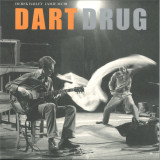
Percussionist Jamie Muir was a member of King Crimson during the recording of Larks' Tongues In Aspic, in 1973. Staying less than a year with Robert Fripp, the Scot had already cut his teeth with another master guitarist, Derek Bailey, as part of the Music Improvisation Company, along with Evan Parker, Hugh Davies and Christine Jeffrey, whose eponymous 1970 album was one of the first releases on ECM. Muir and Bailey recorded Dart Drug eleven years later, in 1981.There's no shortage of great percussionists in the brief history of free improvised music but on the strength of Dart Drug alone Jamie Muir deserves a place at High Table. Unlike for example Han Bennink and John Stevens, though, you can't hear echoes of any particular jazz drummer in Muir's playing, even if he has expressed appreciation for Milford Graves (who himself sounded like nobody else who'd come before him).What on earth did Muir's kit consist of Some instruments are clearly identifiable (bells, gongs, chimes, woodblocks); others could be... well, anything. Old suitcases thwacked with rolled up newspapers Tin cans and hubcaps inside a washing machine Who cares It sounds terrific - but if you're the kind of person who faints at the sound of nails scraping a blackboard, you might want to nip out and put the kettle on towards the end of the title track.Dart Drug is consistently thrilling, and often very amusing - but it's certainly not easy listening. In music we talk about playing with other musicians, whereas in sport you play against another opponent (or with your team against another team). Why not play against in music, too That's precisely what happens very often in improvised music, and Bailey was particularly good at it. How can a humble acoustic guitar hope to compete with a Muir in full flight Sometimes Bailey's content to sit on those open strings, teasing out yet another exquisite Webernian constellation of ringing harmonics and wait for the dust to settle in Muir's junkyard, but elsewhere he sets off into uncharted territory himself.'The way to discover the undiscovered in performing terms is to immediately reject all situations as you identify them (the cloud of unknowing) - which is to give music a future.' Bailey evidently concurred with this spoken statement by Muir, including it in his book Improvisation.Derek Bailey is no longer with us, of course, and Muir gave up performing music back in 1989. All the more reason for seeking out this magnificent, wild album.
Analog Fingerprints Vol. 0 is a compilation bringing together the early 2000s works of Marco Passarani under his Analog Fingerprints alias, collecting key tracks originally released on Rome’s Plasmek and Pigna labels.
For Numbers, the story starts long before the label itself. In their formative years, digging in Glasgow’s Rubadub, Passarani’s records felt like dispatches from a future city. Releases on his own Nature Records and on labels such as Generator and Interr-Ference Communications were mind blowing: rooted in Detroit techno, Chicago house and electro, yet pushing somewhere new. Much like fellow travellers Autechre, who would remix him in 2001, Passarani’s music balanced machine funk with restless experimentation.
Information was scarce, and you would hear these records first on the dancefloor or at listening stations in shops like Rubadub. Print fanzines like Ear and early web outposts such as Forcefield offered only fragments. But there was a palpable axis forming between Detroit techno and a new European wave of record labels including Skam, Rephlex, Clone, Viewlexx and Nature itself. It was the sound that defined Saturday nights at Rubadub’s ‘69’ parties in Paisley, just outside of Glasgow.
Passarani’s records, in particular, were instrumental in bringing together the future Numbers co-founders. Richard had already booked him pre-Numbers; meanwhile Calum (Spencer) and Jack (Jackmaster), then 16/17 year olds working alternate Saturdays in Rubadub, were so enamoured with the Roman sound that they travelled to Rome for the Bitz Festival in 2003 to seek out Passarani and Lory D at their source.
The first Analog Fingerprints release landed as a 12” on Plasmek in 2001, following the fractured, IDM-leaning 6 Katun material. For Passarani, the project marked a recalibration. A DJ first and foremost, he had moved into production via early computer setups, from a Commodore Amiga through primitive PC audio, Cubase and Logic, later experimenting with Ableton. The IDM scene had offered a playground for trial and error, but there was always a tension between abstraction and the dancefloor. Analog Fingerprints became the bridge: still intelligent, but with more dance than distance. After years of broken beats and complex arrangements, he wanted directness without surrendering identity.
Working closely with Francesco de Bellis and Mario Pierro in the Pigneto district, the trio formed Pigna as a vehicle for reclaiming a more accessible dance sound, deliberately steering away from the minimal wave beginning to dominate Europe. Sessions were fast, instinctive, often stretching late into the night with friends dropping by. It was a studio as social space, production as collective energy.
“In that constant search for balance, Analog Fingerprints was my way of expressing something closer to the classic dance floor. The track 'Tribute' - a tribute to my favourite early Detroit techno track of all time, 'First Bass' by Separate Minds - came after I realised I had almost lost my connection with the dance floor. The simplest step was to take inspiration from early Chicago and Detroit and twist it in our Roman ‘Pigna’ way. My goal was to create more accessible dancefloor tracks by mixing my unconscious Italo roots with my teenage love for that early US sound, ensuring the result was as far as possible from the minimal sound that was starting to dominate everywhere.” - Marco Passarani
Technically, the Analog Fingerprints tracks span a transitional era: Roland TR-909, SH-101 and Alpha Juno hardware met early software experiments. A Novation Drumstation rack stood in for the unattainable TR-808, syncing with TB-303 and TR-606. Yet the true secret weapon was Jeskola Buzz, a tracker-style modular environment that allowed step-by-step parameter control and strange melodic constructions, later exported into the audio sequencer. Even the lead on ‘Tribute’ came from an early PPG Wave-style plugin. It was hybrid thinking at a moment when digital tools still felt unstable but full of possibility for technologists like Passarani.
Behind the music sat Finalfrontier, a loose Roman collective orbiting Nature and Plasmek. Distribution and production were intertwined; importing obscure records into Italy built connections with like-minded outsiders across Europe and the US. Expensive phone bills and fax machines forged an “electronix network” that linked Rome to Clone, Viewlexx, Skam, Rephlex, Rubadub and Detroit’s Underground Resistance. There was a shared sense of survival and resistance, of operating against commercial systems.
Passarani recalls “The first time I found a sheet of paper inside an Underground Resistance 12” with info about upcoming releases... and a huge picture of Spock on the back. Imagine that: you love the music, you love Star Trek, and there’s someone on the other side of the ocean sharing those same values and sounds. It was the perfect match. We even gave our original company the suffix ‘Finalfrontier’: that says it all.”
Feedback in that era arrived physically: distributor faxes, conversations with visiting DJs, the experience of playing abroad and meeting kids who had connected with the records. Glasgow became a key node in a scattered outlier network. Passarani personally brought the first two Nature releases to Fat Cat in London, playing them in-store. Shortly after, a fax arrived from Rubadub in Glasgow requesting copies.
“I still remember that phone buzz and the fax paper slowly sliding out, with someone I didn’t know saying they wanted 75 copies of Nature 001. Or like the time we got a fax from the Rephlex crew just saying, “Hello Nature Records, Keep up the good work.” That was how we knew the message was getting through. It was a fantastic feeling; just one piece of thermal fax paper as an analog notification - the mood for the entire week would change.” - Passarani
The connection to Glasgow has since stretched across generations. As Passarani reflects, links often fracture as scenes renew themselves, but in Glasgow something different happened. New and old mixed seamlessly. There was a visible trust in what came before, and a willingness to carry it forward rather than discard it. Observed from Rome, it was deeply encouraging.
Analog Fingerprints Vol. 0 captures that moment of exchange: Rome to Glasgow, Detroit to Europe, experiment to dancefloor. It documents an artist recalibrating his sound and a network of scenes discovering one another in real time, connected by vinyl, faxes and shared intent.
- A1: Orchestral Manoeuvres In The Dark– Telegraph
- A2: Blancmange– That's Love, That It Is
- A3: China Crisis– Tragedy And Mystery
- A4: Adam Ant– Strip
- A5: Divine– Love Reaction
- A6: Yello – I Love You
- A7: Talk Talk– My Foolish Friend
- A8: Japan– Canton (Live)
- B1: Fun Boy Three– The More I See (The Less I Believe)
- B2: Tracie*– Give It Some Emotion
- B3: The Teardrop Explodes– You Disappear From View
- B4: Xtc– Love On A Farmboy's Wages
- B5: The Stranglers– Midnight Summer Dream
- B6: The Kinks– Don't Forget To Dance
- B7: Mari Wilson– Cry Me A River
- C1: Bauhaus– Lagartija Nick
- C2: Marc And The Mambas– Black Heart
- C3: The Glove– Like An Animal
- C4: Freur– Doot Doot
- C5: The B-52'S– Song For A Future Generation
- C6: Wall Of Voodoo– Mexican Radio
- C7: Joe Jackson– Breaking Us In Two
- D1: Oliver Cheatham– Get Down Saturday Night
- D2: Rockers Revenge– The Harder They Come
- D3: Freeez– Pop Goes My Love
- D4: Malcolm Mclaren– Soweto
- D5: Culture Club– I'll Tumble 4 Ya
- D6: The Belle Stars– Indian Summer
- D7: Level 42– Out Of Sight Out Of Mind
- D8: Daryl Hall & John Oates– One On One
- E1: Sparks & Jane Wiedlin– Cool Places
- E2: The Romantics– Talking In Your Sleep
- E3: The Fixx– Saved By Zero
- E4: The Motels– Suddenly Last Summer
- E5: Modern English– I Melt With You
- E6: Missing Persons– Walking In L A
- E7: Naked Eyes– Always Something There To Remind Me
- E8: Taco– Puttin' On The Ritz
- F1: Electric Light Orchestra– Secret Messages
- F2: Men At Work– Overkill
- F3: Pat Benatar– Little Too Late
- F4: Journey– Separate Ways (Worlds Apart)
- F5: Styx– Mr Roboto
- F6: Giorgio Moroder & Joe Esposito– Lady, Lady
- F7: Stephen Bishop– It Might Be You
Celebrating the first year of ‘NOW That’s What I Call Music’ – 1983. ‘Now Yearbook’ presents a stellar selection of 1983’s biggest and best hits… 80 huge chart hits from the year, alongside enduring and well-loved classics on 4 CDs. 1983 saw British artists achieving unprecedented success across the world with ‘Every Breath You Take’ from The Police being the year’s biggest seller in the U.S., and ‘Karma Chameleon’ from Culture Club being the top seller in the U.K. Breakthrough acts, achieving their first big hits – all here – include a staggering line-up of future superstars: U2, Eurythmics, Wham!, Paul Young, The Style Council, Marillion and Thompson Twins, to name a few..' Released on a LTD 4CD SET: This will be a limited run of 5000 4CD units housed in ‘hard-back book’ packaging and featuring a 28-page booklet that includes an overview of the chart music of 1983, a track by track guide including chart stats and fun facts, a selection of original picture sleeves and a quiz. 2CD Standard set and also a limited edition of 3000 units, pressed on 3LP translucent red vinyl...
- A1: Another Thought (02:16)
- A2: A Little Lost (03:18)
- A3: Home Away From Home (05:12)
- A4: Lucky Cloud (02:16)
- B1: This Is How We Walk On The Moon (04:42)
- B2: Hollow Tree (02:30)
- B3: See Through Love (04:46)
- C1: Keeping Up (06:20)
- C2: In The Light Of The Miracle (06:05)
- C3: Lucky Cloud (Return) (03:00)
- C4: Just A Blip (03:42)
- D1: Me For Real (04:55)
- D2: Losing My Taste For The Night Life (04:34)
- D3: My Tiger, My Timing (05:41)
- D4: A Sudden Chill (02:45)
2026 Repress
Another Thought was the first collection of Arthur Russell’s music to be released after his death in 1992. Released in 1993 on Point Music it marked the beginning of nearly 30 years of work to let the world hear the enormous archive of unreleased recordings Arthur left behind. Be With revisits this first compilation for a new gatefold double vinyl version and a triple-fold digipak CD reissue.
Both versions of Be With’s 2021 reissue of Another Thought have been mastered by Simon Francis and the vinyl cut by Pete Norman. The original artwork has been restored and tweaked at Be With HQ for the gatefold sleeve and the triple-fold digipak, with the essential help of Janette Beckman. Each version comes with an insert reproducing the liner notes and lyrics from the original CD release.
Together with Calling Out Of Context, Soul Jazz’s World of Arthur Russell, and much of the ongoing work of Audika, Another Thought is absolutely essential for even the most casual Arthur Russell collection. In fact we’d argue it’s essential for any fan of non-obvious pop music. This is the only place where you can hear some of Arthur’s most recognisable tunes and it’s an album that absolutely deserves to be kept in press.
We’ll assume that by now you’re all at least a little familiar with the story of Arthur Russell, the farm boy from Iowa who moved to 1970s New York. Arthur Russell the genuine musical genius who died just 40 years old, leaving behind a wealth of music that dwarfed the few 12"s and LPs that were released during his short life.
Although Arthur had been working on an album for Rough Trade during his last years, with the label no-longer operating it was Point Music (Philip Glass and Michael Riesman’s label set up together with Philips) who stepped in to help Arthur’s partner Tom Lee start working out exactly what Arthur had left behind.
Tom suggested that Arthur’s friend Mikel Rouse was the right person to make the first catalogue. Working in Tom and Arthur’s apartment he had only two weeks to go through what turned out to be around 800 tapes.
As Tom explained “at the end of each day he would generally wait for me to come home and I would, to the best of my knowledge, name and identify pieces in question from that day’s work. As he worked Mikel compiled about a dozen cassettes that he thought would present the most finished sounding songs for Don/Point to use. As Don listened he would then suggest and ask me and thus we collaborated on the choices.”
Don is Don Christensen, Another Thought’s producer. With a final selection of songs from recordings made between 1982 and 1990, including sessions with some of Arthur’s regular collaborators Peter Zummo, Steven Hall, Mustafa Ahmed, Elodie Lauten, Julius Eastman, Jennifer Warnes and Joyce Bowden, it was then Don’s job to turn these into a finished album.
Another Thought is a little different from the compilations of Arthur’s music that came out since. In our conversations with Steve Knutson (who founded Audika Records and who manages Arthur’s estate together with Tom), he explained that “more than any project released by Arthur during his lifetime or posthumously by Audika, ‘Another Thought’ is the most worked over. The material was significantly edited and rearranged from the original source tapes”.
If the aim was to release a comprehensive exploration of every facet of Arthur’s music, from the most avant-garde of his avant-garde compositions through to the most disco-not-disco of his disco-not-disco tunes then the project was a spectacular failure. But as a coherent album of non-obvious pop music Another Thought is wonderful.
Starting with the sparse voice-and-cello of the title track, A Little Lost adds some guitar along with the sneaking suspicion that we’re listening to something nowhere near as simple as it first sounds. By the time we get to This Is How We Walk On The Moon - it could be the moment you notice the congas, or the percussion that’s been building behind them, or maybe it’s that blast of trumpet and trombone - we realise we’ve gone from splashing around to being completely submerged in the musical world of Arthur Russell.
From here the album heads off on its journey around the sounds of the left-field contemporary classical music of the time, re-directed towards pop ears, with minor detours through the swirling woozy disco of the half-remembered night before on In The Light Of The Miracle and My Tiger, My Timing. Whether it’s just Arthur, his cello and some bleeps on Just A Blip, or whether he has some vocal help as he does on the bounding Keeping Up, this is difficult music made so, so easy. And through it all is Arthur’s voice and cello. Sometimes drowned in distortion and sometimes clear as a bell, but always there somewhere.
A Sudden Chill finally returns us to the calmer waters we started in and this last track closes the album with a melancholy that’s not surprising given how soon after Arthur’s death the album was put together.
Whilst Another Thought holds together with the consistency of a proper album, there’s still no getting away from the fact that this was put together from audio recorded in different ways, in different places, with different people at different times. Those with keen ears will hear traces of tape hiss, the occasional blown-out note and some digital fuzz, all fingerprints of those original recordings as well as of the 1990s digital equipment that was used to piece Another Thought together.
Add to this Arthur’s obvious pleasure in making music from the sort of sounds that can make microphones, speakers and ears uncomfortable, it’s no surprise that Another Thought isn’t glossy and pristine. Don Christensen’s productions have been careful to not scrub up those original recordings so much that they lose their original vibe, understandable given that Arthur wasn’t around as a guide. We’ve applied a similarly light touch with the mastering for these Be With versions, just working to make sure they sound like they should on both the vinyl and the CD.
Despite the Discogs rumours, Another Thought was never originally released as an LP. So when it came to the sleeve for this Be With vinyl version we took the original CD artwork as a starting point to come up with something that looks like it could have been in the record racks back in 1993.
We have to thank Janette Beckman for helping us reproduce her iconic photograph of Arthur in his newspaper boat hat. One of many photographs she took of Arthur, Janette shot this in her New York studio back in 1986 for a short article in the January ’87 issue of The Face Magazine. Those with eagle-eyes will notice we’ve used an ever-so-slightly different shot from the one that appeared in The Face and then again on the original cover of Another Thought. The original has long since been lost so we’ve worked with what is left in Janette’s archives. And we also have to thank Tom Lee for giving us permission to reproduce his liner notes from the original CD booklet, together with Arthur’s lyrics.
Mia Zapata was the greatest rock singer of her time. She may have likely been the greatest blues singer in punk rock history, the woman who married the 78 and the '78. Tragedy did not make this true. Mia Zapata made this true, and the ferocious, spring-loaded shrapnel frame that was built around her by Andy Kessler (guitar: metronomic and furious), Matt Dresdner (bass: fluid, punching, beat-addicted and melodic), and Steve Moriarty (drums: martial and explosive) - who, with Mia, combined to form The Gits - made it true. The Gits were formed at Antioch College in Yellow Springs, Ohio in mid-1986, grabbing and swapping pieces of art, thrash, noise, punk rock, classic rock, and all the sorts of magical silly and bookish jingle bells that an old-school liberal arts education handed you; for the next few years they worked on turning it all into something tough, sensitive, both brutal and kind. Andy, Matt, Mia, and Steve moved to Seattle in middish 1989, landing in a house on Capitol Hill where they (and fellow travelers) wood-shedded and rehearsed for the next few years. The Gits put out three EPs in 1990 and '91 before signing with C/Z Records and releasing their first full-length album, Frenching the Bully. Seattle quickly claimed the quartet as their own and embraced the Gits blend of ferocious fangs and soft heart, the slug/slap of the guitars, and the gorgeous, soft underbelly of the poetic emotions. These qualities not only fit in with the doe-eyed/sharp-clawed grunge ethos but earned the Gits the respect of their peers, including Nirvana, who tapped them to open a major local show in 1990. Then other stuff happened, and their frantic, confessional barbed-heart snowball began rolling up hill very, very fast; the Gits "quickly" (hah! After half a decade learning to implode and explode hearts and stomping their boots on manifold beer-softened, Marlboro-weeded wood stages!) inspired rapture, awe, and the levitation that happened when peak emotion meets peak grindage in front of amps spitting out something that sounded like the mad marriage of Bolan swagger and Dischord tension_ all fronted by a genuinely incomparable woman who held her heart in her mouth and shared it, in all its celebration and fear, without hesitation. The Gits were an angry, inflamed slinky fully in tune with and tuned by the Bessie Patti Smith of her time, truly the only singer who could summon Joplin, Poly Styrene, Sam Cooke, Iggy Pop and Ian MacKaye all in the same goddamn song. In 1993, less than four weeks after accepting an offer from Atlantic Records, Mia died. I leave it at that, because this is not about death; it's about an extraordinary life. I do not say, "You should have been there," I say, "We are lucky so many of us were, and I am so glad we have this extraordinary evidence of the power and gifts of Mia and the Gits that you now can hold in your hands." And I note that Frenching the Bully, this extraordinary testament to the soul, shock, fury and feeling of the Gits, has been long out of print on vinyl and CD, and this new edition - remastered by legendary Seattle engineer Jack Endino - joyfully rectifies that. -Tim Sommer
- A1: Rock Around The Clock - Bill Haley And His Comets
- A2: Sixteen Candles - The Crests
- A3: Runaway - Del Shannon
- A4: Why Do Fools Fall In Love - Frankie Lymon & The Teenagers
- A5: That'll Be The Day - Buddy Holly & The Crickets
- A6: At The Hop - Danny & The Juniors
- A7: He's So Fine - The Chiffons
- A8: See You In September - The Tempos
- A9: I Only Have Eyes For You - The Flamingos
- B1: Surfin' Safari - The Beach Boys
- B2: Little Darlin' - The Diamonds
- B3: Almost Grown - Chuck Berry
- B4: (He's) The Great Imposter - The Fleetwoods
- B5: Smoke Gets In Your Eyes - The Platters
- B6: Peppermint Twist (Part 1) - Joey Dee & The Starliters
- B7: Barbara-Ann - The Regents
- B8: Book Of Love - The Monotones
- B9: A Thousand Miles Away - The Heartbeats
- C1: Do You Wanna Dance - Bobby Freeman
- C2: Party Doll - Buddy Knox
- C3: Come Go With Me - The Del-Vikings
- C4: You're Sixteen - Johnny Burnette
- C5: Love Potion #9 - The Clovers
- C6: Since I Don't Have You - The Skyliners
- C9: Get A Job - The Silhouettes
- D1: Come Back My Love - The Wrens
- D2: Crying In The Chapel - The Orioles
- D3: Cupid - Sam Cooke
- D4: Earth Angel - The Penguins
- D5: Freight Train - Rusty Draper
- D6: Gee - The Crows
- D7: I'm Sorry - Brenda Lee
- D8: Johnny B. Goode - Chuck Berry
- D9: The Locomotion - Little Eva
- E1: Mr. Lonely - Bobby Vinton
- E2: Reet Petite - Jackie Wilson
- E3: Runaround Sue - Dion
- E4: Searchin' - The Coasters
- E5: A Teenager In Love - Dion & The Belmonts
- E6: To The Aisle - The Five Satins
- E7: Whispering Bells - The Del-Vikings
- E8: Will You Love Me Tomorrow - The Shirelles
- E9: Hey Little One - Dorsey Burnette
- F1: Diana - Paul Anka
- F2: The Girl Can't Help It - Little Richard
- F3: It's All In The Game - Tommy Edwards
- F4: A Kiss From Your Lips - The Flamingos
- F5: Oh What A Night - The Dells
- F6: Rock And Roll Music - Chuck Berry
- F7: Sh-Boom - The Crew Cuts
- C7: Chantilly Lace - Big Bopper
- F8: The Stroll - The Diamonds
- F9: Walking Along - The Solitaires
- C8: Tutti Frutti - Little Richard
Inspired by the soundtrack from the motion picture American Graffiti, this 3LP collection captures the sound of late night cruising, jukebox romance and early rock ’n’ roll rebellion. Spanning doo wop, rockabilly and classic pop, the set brings together era defining hits from the mid 1950s to early 1960s, featuring timeless favourites by Chuck Berry, The Beach Boys, Dion, Little Richard, Sam Cooke, The Platters and many more. Pressed across three vividly coloured vinyl records, red, blue and yellow, this set is both a nostalgic listening experience and a striking collector’s piece, celebrating the golden age of American rock and pop in authentic style.
- A1: Robert Pico - Le Chien Fidèle
- A2: Annie Girardot - La Femme Faux Cils
- A3: Spauv Georges - Je Suis L'état
- A4: Zoé - Zoé
- A5: Jacques Da Sylva - Fou
- A6: Valentin - Je Suis Un Vagabond
- A7: Jacques Malia - Histoire De Gitan
- A8: Bernard Jamet - Raison Legale
- B1: Jean-Pierre Lebort - Barbara Au Chapeau Rose
- B2: Les Concentrés - Fils De Dégénérés
- B3: Les Missiles - Publicité
- B4: Hegessipe - Le Credi D'hegessipe
- B5: Marechalement Votre - Ethero Disco
- B6: Mamlouk - Decollez Les
- B7: Mozaique - L'amour Nu
- B8: Jean-Marc Garrigues - Je Dis Non
- B9: Penuel - Astronef 328
The journey through French-speaking pop archives continues with this fifth volume, packed with fuzz, gimmicks, and dissent. Far from the charts, the selected tracks display a great creative freedom, often backed by corrosive humor. Welcome to the surprising, kaleidoscopic, and colorful world of the late sixties and early seventies, Wizzz!
Born in Montauban, Robert Pico stumbled into music by chance when he met René Vaneste, then artistic director at Pathé-Marconi. René brought him to Paris to record his first 45 RPM EP in 1964. A year later, Pierre Perret introduced him to Vogue, where he recorded his second album with Claude Nougaro’s orchestra. Sylvie Vartan then introduced him to RCA, where he recorded four singles, including the astonishing "Chien Fidèle," a track backed by a hair-rising fuzz guitar. Alongside his solo career, he also composed for other artists like Alain Delon (the song was recorded but remains unreleased), Magali Noël, Bourvil, and Georges Guétary. In the Paris of the sixties, he mingled with Mireille Darc, Elsa Martinelli, Marie Laforêt, France Gall, Françoise Hardy, Petula Clark, Régine, Dani, Serge Gainsbourg, Joe Dassin, Franck Fernandel, Charles Level, and Roland Vincent. Despite his efforts and winning a Grand Prix Sacem for his final record, Robert Pico didn’t achieve the expected success in show business and decided to leave Paris and return to the Southwest, where he devoted himself to writing. He is the author of 23 books (including Delon et Compagnie, Jean-Marc Savary Editions 2025, a memoir about his youth and his many encounters). Today, he is relieved to never have become a celebrity and devotes himself to his work with passion.
In 1969, the Franco-Italian movie Erotissimo was released, directed by Gérard Pirès (who later directed Taxi in 1998, written and produced by Luc Besson). This pop comedy features Annie Girardot, Jean Yanne, Francis Blanche, Serge Gainsbourg, Nicole Croisille, Jacques Martin, and Patrick Topaloff. The soundtrack was written by Michel Polnareff and William Sheller, with lyrics by Jean-Lou Dabadie. "La Femme Faux-cils," performed by Annie Girardot. It recounts the feelings of a rich CEO's wife who seeks to develop her sex appeal under the influence of advertisement and magazines. Groovy, sparkling and light, this track, with ITS lush arrangements humorously critiques consumer society and feminine beauty standards.
“Je suis l’Etat” (1967) is the flagship track of the first EP by singer-songwriter Spauv Georges, aka Georges Larriaga, better known as Jim Larriaga (1941-2022). Born into a family of bakers, the young man was initially planning to become a hairdresser when he discovered English-speaking music through Elvis Presley and the Beatles. After this revelation, he decided he would become a songwriter and gave himself five years to succeed. He recorded his first two EP’s independently for RCA under the pseudonym Spauv Georges; meaning “that poor George”, a nickname given to him by the mother of her friend Jean-Pierre Prévotat (future drummer of the Players, Triangle, or Johnny Hallyday). Portraying a depressed and eccentric young man, Spauv Georges created corrosive and amusing songs that didn’t reach a wide audience, despite a TV appearance with Jean-Christophe Averty.
Supported by his loyal friend and fellow songwriter Jean-Max Rivière, Georges Larriaga met the future singer Carlos in the early '70s, then Sylvie Vartan’s assistant. He wrote songs for Carlos, including the popular "La vie est belle," "Y’a des indiens partout," and "La cantine", which went onto become a huge hit in 1972. He also composed for Claude François (“Anne-Marie”, 1971), Charlotte Julian (“Fleur de province”, 1972), helped launch child singer Roméo (who sold 4 million records), and later wrote the hit "Pas besoin d’éducation sexuelle" (1975) for the young Julie Bataille. In 1971, Jim recorded an album for Disc'Az: “L’univers étrange et fou de Jim Larriaga”, which featured pop gems like “La maison de mon père”.
The story of the song "Zoé" began when Pierre Dorsay, artistic director at Vogue Records, asked Swiss singer and musician Pierre Alain to write a song for a new female singer. The inspiration came when he realized that Zoé (the artist's name) was also the name of France's first atomic battery, created in 1948, which consisted of uranium oxide immersed in heavy water! The lyrics reflect a bubbling energy that must be handled with caution, while the instrumentation echoes this atomic theme, notably with the use of a theremin.
Zoé’s career lasted only as long as a single 45 RPM, but it seems Christine Fontane was the vocalist behind this pseudonym, who is known for several EPs, a good "popcorn" album in 1964, and a handful of children’s singles in the '70s. Regardless, the photograph on the cover is of a different girl entirely.
Later, Pierre Alain continued his career, writing songs for himself, Marie Laforêt, Danièle Licari, Alice Dona, Arlette Zola (3rd place in Eurovision 1982), and achieving multiple gold and platinum records in Canada. Also an inventor with several patents, president of the Romande Academy, and head of the French Alliance in Geneva, he now composes atonal music, books, and poetry. Moreover, he is also the host of "Les Mardis de Pierre Alain" at "Le P'tit Music'Hohl" in Geneva.
Filled with oriental choruses and fuzz guitar, "Fou" is from Jacques Da Sylva's only EP released by Vogue in 1967. Despite the quality of this recording, all traces of this singer disappear after this first effort.
Valentin is a baroque pop singer born in Belgium. He is the songwriter and composer of most of the tracks on his three singles released in the late 60s in Canada. A legend says that he reincarnated himself as Jacky Valentin during the 1970s for a rock'n'roll revival career in Belgium, but his older brother sadly debunked this story. Valentin's first two singles were arranged by Claude Rogen, a Parisian session pianist who had come to Canada to promote the song “Mister A Gogo”, a cover of David Bowie’s “Laughing Gnome”, adapted by singer Delphine, his wife at the time. Far from his usual network, Claude Rogen arranged music for Polydor, including the arrangements for “Je suis un vagabond” in 1969, a jerk tune with string arrangements and a furious optimism.
Jacques Malia wrote, composed, and recorded his only 45 EP for Festival in 1966. “Histoire de gitan” is an incredible beat track with bohemian scat that tells the story of a gypsy musician who came to Paris to make it in the Music-Hall, to no avail. The hero of the song and its author probably shared a similar fate, as Jacques Malia faded into anonymity after this remarkable attempt.
Bernard Jamet recorded two EPs for Barclay in the late sixties and co-wrote several songs with Christine Pilzer, Pascal Danel, and prolific songwriters Michel Delancray and Mya Simile. The track “Raison Légale” (1968), his masterpiece, immerses the listener in a courtroom right when a murderer is being judged, with jerk rhythm and free arrangements. A unique, paranoid, judicial, and psychedelic oddity.
Jean-Pierre Lebrot-Millers started his career in show business in 1967 as a singer and songwriter for the Philips label. After three singles, he wrote several songs of a new kind with his friend Pierre Halioche, in the midst of the sexual liberation movement and the democratization of drugs. With provocative lyrics, “Les filles du hasard” and “Barbara au Chapeau Rose” were released on a Philips singles in 1968. The character of Barbara was inspired by a queen of Parisian nightlife during the psychedelic years: model Charlotte Martin, who dated Eric Clapton from 1965 to 1968, then Jimmy Page from 1970 to 1983. Jean-Claude Petit’s arrangements, with a table-filled intro, soul brass, and Hendrixian guitar, emphasize the flamboyance of a hedonistic and sexy character, whose dog is named Junkie because “Junkie est un nom exquis”! The track was recorded live in three takes with a full orchestra.
Upon its release, the record was censored by Europe 1 and RTL due to its references to drug use. Jean-Pierre Lebrot was then banned from the airwaves and later dismissed by his record label. He changed his artist name to Jean-Pierre Millers, while his companion Pierre Halioche became D. Dolby for a new dreamy composition, “Chilla”, which Jean-Pierre produced himself with arrangements by Jean Musy. Once again, the song was immediately censored everywhere. After this setback, he decided to stop singing and started taking on odd jobs to support his Swedish wife and their son until the day he met Jean-Pierre Martin, then production manager at Decca, who had worked with Manu Dibango. Martin offered Jean-Pierre Lebrot-Millers, then employed at Rank Xerox, the position of artistic director at Decca. He accepted and became, a year later, promotion director (radio, press, TV). He worked on Julio Iglesias’s first album for Decca, which became a massive hit and allowed him to meet Claude Carrère. The latter asked him to write new songs and find their performers, much like a “talent scout.” It’s through him that Jean-Pierre discovered Julie Pietri and Corinne Hermès. He composed “Ma Pompadour” for Ringo, Sheila’s husband, and took the microphone again for the syncope hit “Rendez-Vous” in 1982.
That same year, Jean-Pierre Lebrot-Millers tried to release a track for which he had heavily gone into debt: “Si la vie est un cadeau”. Having recorded it in London, he presented it to numerous professionals, all of whom refused to get involved. The same thing happened with Antenne 2 and the Sacem when he proposed the song as France’s entry for Eurovision. He then met Haïm Saban, who was producing cartoon soundtracks and had just launched the Goldorak theme song. Saban, having listened to the song, declared it had the potential to become a hit. He sent Jean-Pierre and Corinne Hermès to meet the CEO of the Luxembourg radio and television network. The latter received them, asked to hear a verse and chorus a cappella in his office, and immediately hired them to represent Luxembourg at Eurovision 1983. They reworked the arrangements and recorded a new version with Haïm Saban as co-producer. The song ended up winning Eurovision 1983, a great comeback for our hero. He continued producing and hung out with the band Nacash in Belgium when a couple came to introduce their daughter for an impromptu audition in a hotel room. The girl sang “Les démons de minuit” while dancing to a radio cassette. Impressed, he had her take singing lessons for a year and composed a song for her (for which he had the melody and title, but no lyrics). This required him to go on the hunt for a lyricist, who ended up being Guy Carlier. They recorded the song, which was initially a ballad, at Bernard Estardy’s CBE studio, and gave the singer a new name: Melody. They showed the song around their industry network without success. Later, Estardy called Jean-Pierre to suggest changing the rhythm and making it pop-rock. Orlando, Dalida’s brother, liked the result and decided to co-produce the track. “Y’a pas que les grands qui rêvent » became a classic hit. The song has since been covered by Juliette Armanet (as a ballad, like the original) and Valentina.
Born into an aristocratic Breton family, Hervé Mettais-Cartier worked as a DJ at Queen Kiss, a nightclub in Poitiers, where he formed the band Les Concentrés with Michel (an actor) and Christian (a radio technician). Together, they created a repertoire of whimsical songs (“Ma bique est morte”, “J’suis un salaud”, “Fils de dégénéré”...) that they performed on stage dressed in white (in homage to “concentrated milk”). They performed at Bliboquet and Olympia in 1968 for the 10th edition of the “Relais de la chanson Française” organized by L’Humanité-Dimanche and Nous les Garçons et les Filles, sponsored by Pepsi Cola. Winners in the author-composer category, alongside Danish singer Dorte, their visibility allowed them to record a 45, and appear on television in Jean-Christophe Averty’s show. The A-side of the disc features Bruno le ravageur, a casatchok dedicated to Bruno Caquatrix, the director of Olympia, nicknamed in the song “Coq Atroce” or “croque-actrices”. The B-side is dedicated to “Fils de dégénéré”, a quirky tribute to Hervé's aristocratic roots, mixing absurdity with sophisticated vocal harmonies.
After Les Concentrés, Hervé Mettais-Cartier formed the duo La Paire et sa Bêtise with his friend Olivier Robert. They performed in Parisian cabarets and toured with Pierre Vassiliu. In the late 1970s, Hervé began a solo career. He recorded two albums for the Motors label in 1978 and 1979, which did not achieve their anticipated success due to lack of promotion. In 1980, he met Bernadette, with whom he started a family and created a “Chansons à voir” (songs to see) show that he performed until his death at the end of 2024.
Publicité comes from the final EP by the Missiles (Ducretet Thomson, 1966), a disc that also includes “La (nouvelle) guerre de cent ans”, featured on Volume 4 of our Wizzz! series. Please refer to the booklet for the story of the band.
“He’s 1.82 meters tall, 28 years old, weighs 135 kg, is black and Belgian”: this is the description of singer Hegesippe on the back of his sole single (Decca, 1967). He appears on the album cover wearing a Greek toga, like a hippie gag – we are at the end of the year 1967. In “Le crédo d’Hegesippe”, this former bodyguard of Antoine and the Charlots plays the delightful card of the thick brute converted to Flower-Power and non-violence, with arrangements by Jean-Daniel Mercier, aka Paul Mille.
“Ethéro-disco” was released on a promotional record for clients of the Maréchal company (Liège, Belgium) for the New Year 1979. Over a funky rhythm, celebrity impersonations (Brigitte Bardot, Jacques Dutronc, Fernandel…) deliver an enigmatic text about pharmaceutical products like ether, bismuth, and aspartate. The track was composed by Dan Sarravah (responsible for Joanna's “Hold-up inusité” featured on Wizzz! Volume 3) and Tony Talado, who was also a singer (one 45 in 1967), songwriter (with over a dozen credits between 1964 and 1985 in various styles from surf music to disco), author (Devenez Végétarien, Dricot Editions, 1985), ad designer, and psychologist.
Décollez-les is on the A-side of Mamlouk's only single, a pseudonym for Marsel Hurten, who is known for his work on several EPs in the late sixties, as well as composing music for Hervé Vilard’s “Capri, c’est fini”, Claude Channes' “La Haine”, Annie Philippe’s “On m’a toujours dit”, and Nancy Holloway’s “Panne de Cœur”.
This strange song, with Afrobeat horns and absurd dialogues between a chef and his kitchen staff, is the result of a collaboration between Marsel Hurten and one of his neighbors, a photographer from Pavillon-sous-Bois (93), where the musician settled after returning from the Algerian War. A music video was shot to promote the record.
Marsel Hurten was born in Tourcoing (59) into a musical family. At a young age, he joined the brass band founded by his grandfather, playing the piston before studying trumpet at the conservatory, as well as teaching himself how to play the guitar. As an orchestra musician, he toured in France, Belgium, Germany, and England. He released a series of solo 45’s between 1965 and 1968 for the DMF and Az labels before stopping recording to focus on working for other artists (Gilles Olivier, Noëlle Cordier…).
“L’amour nu” (Vogue, 1971) is the work of the short-lived Belgian band Mozaïque. The track, written by singer Jacques Albin, closely resembles another of his compositions, “Carré Blanc”, which he recorded in 1969 for Disc’AZ.
Represented by the Lumi Son micro-label based in Marignane (Côte d'Azur), Jean-Marc Garrigues released two 45 RPMs in the late sixties, defending the French jerk sound. The song “Je dis Non” is a short, joyful ode to youth, pop music, and rebellion.
Songwriter and performer Jacques Penuel released three singles. The first one, “Astronef 328” (Fontana, 1969), features a dizzying series of chords punctuated by sound effects, a sci-fi story, and arrangements by Jean-Claude Vannier.
We would like to sincerely thank Pierre Alain, Moon Blaha, Marsel Hurten, Bastien Larriaga, Jean-Pierre Lebrot-Millers, Bernadette Mettais-Cartier, Robert Pico, Olivier Robert, Claude Rogen, Micky Segura.

- A1: Tonic
- A2: Murmuration
- A3: Orange
- B1: Cascade
- B2: Sun
- B3: Tapestry
- B4: Ensō
‘No Fixed Point In Space’, the third full-length album by Jack Cooper’s Modern Nature, takes the palette of sound and themes that were honed on 2021’s ‘Island Of Noise’ and launches them into an expansive world of openness and vivid technicolour.
It’s a music that hasn’t been heard before; as melodic as anything Cooper has produced but framed by rhythms and instrumentation that reflect the chaos, unpredictability and colour of the natural world.
Certain moorings - woodwind, percussion, strings and Cooper’s lambent voice - are still present and recognisable from No Fixed Point In Space’s predecessor, ‘Island Of Noise’, but the new record marks a shift to utilising musical notation as a point of departure, from which the group explore the space around suggested notes and rhythms to create a semiimprovised, semi-composed ensemble performance.
These explorations of partly organised chance were recorded live and directly to tape.
This approach gives the music a remarkably fresh feel; songs pulse and evolve. The changes between movements, verse and choruses are almost all ambiguous. During the album’s opener, ‘Tonic’, a verse of hushed brevity washes away into a passage of overwhelmingly vibrant orchestration.
CD in four-panel digisleeve with 10-panel booklet with lyrics. LP pressed on 140g black vinyl with printed inner
sleeve and stamped postcard.
"Ensomheden Vi Deler" ("The Loneliness We Share") is the result of a dialogue between the collages and the music of øjeRum, initiated by IIKKI, between December 2024 and July 2025.
øjeRum is Copenhagen based musician and collage artist Paw Grabowski.
With his collages, the distinctive feature of øjeRum's works is their ability to combine different historical and artistic periods, such as ancient sculpture, medieval frescoes, classical painting and photography, and to make them interact with one another. øjeRum is also renowned for his work as a musician, where he stands out for his surreal, mysterious and poetic universe. His music and art are closely linked. These two sides of the artist's work are constantly intertwined.
In his øjeRum guise, he plucks and strums his treated acoustic instruments, sounding at times like church bells, at times like angelic harp, at time like drones, and suspends the listener in the magic of his melodies. With a deep back-catalogue of releases since 2014 - spanning labels such as eilean rec., Room40, Line, Opal Tapes and many more - he continues exploring his minimal, textural and deeply personal style of ambient music.
The collage and music project "Ensomheden Vi Deler" ("The Loneliness We Share") is an exploration of loneliness, closeness and distance. A meditation on the fragile architectures and hidden shapes of human connection. This is his second release on IIKKI.
Fine Art Book, Ltd. to 500 copies:
Hand numbered & hand stamped / first edition and only edition (no re-print) / hardcover book (15 cm x 21 cm) on Wibalin Natural Cotton White / 80 pages, 35 collages printed on Freelife Vellum 120g/m2 / Swiss Binding / Coloured edges with neon green pantone / Neon Green pantone on front and back cover (logo, slot and circle) / Sticker on front cover.
- A1: Part Of The Plan
- A2: Illinois
- A3: Changing Horses
- A4: Better Change
- A5: Souvenirs
- A6: The Long Way
- B1: As The Raven Flies
- B2: Song From Half Mountain
- B3: Morning Sky
- B4: (Someone's Been) Telling You Stories
- B5: There's A Place In The World For A Gambler
"Souvenirs opened the door for me in L.A. as far as not just being the kid anymore, but being one of the guys, so I remember that one as a real good time—probably way too good a time! It's a miracle we survived that record." – Dan Fogelberg
Impex Records, in collaboration with Epic Records and Iconic Artists Group, is proud to present the official limited-edition 50th Anniversary 180-gram LP of Souvenirs! Our audiophile vinyl LP has been newly remastered from original analog tapes and features original photographs, new notes, and remembrances from Dan Fogelberg and others who crafted this classic album!
Celebrate the 50th anniversary of Dan Fogelberg's breakout hit album, newly remastered and lavished with The Impex Treatment.
50th Anniversary Edition
180g Audiophile Vinyl LP
Contains the Top-40 Hit "Part of the Plan" & Fan Favorites "As the Raven Flies" & "Illinois"
Features Members of Eagles, Graham Nash, Gerry Beckley, Kenny Passarelli & Russ Kunkel
Mastered from a Flat 1:1 Transfer of the Original Analog Tapes by Chris Bellman at Bernie Grundman Mastering
Pressed at Fidelity Record Pressing
Exclusive Booklet Containing Original Photos & an Appreciation by Charles L. Granata Featuring Archival & New Interviews with Many of the Participants Who Helped Make This Classic Album
Limited to & Individually Numbered to Only 3,000 Copies
- A1: Get Up I Feel Like Being A Sex Machine
- A2: Brother Rapp (Part I & Part Ii)
- A3: Bewildered
- A4: I Got The Feeling
- B1: Give It Up Or Turnit A Loose
- B2: I Don’t Want Nobody To Give Me Nothing
- B3: Licking Stick
- C1: Lowdown Popcorn 9.Spinning Wheel
- C2: If I Ruled The World
- C3: There Was A Time
- C4: It’s A Man’s Man’s Man’s World
- D1: Please, Please, Please
- D2: I Can’t Stand Myself (When You Touch Me)
- D3: Mother Popcorn
James Brown wants to know one thing before he and his band begin Sex Machine. “Can I get into the thing, really?,” he asks. His cohorts enthusiastically respond in the affirmative. And for the next hour and change, Mr. Dynamite gets into it and more, turning in a sweat-soaked, feet-moving, hip-swiveling, emotion-purging, in-the-red, drop-everything-you’re-doing-and-dance performance for the ages. Ranked by Rolling Stone among the 500 Greatest Albums of All Time, the sweeping 1970 effort towers as a testament to Brown’s inimitable legacy as well as the peak powers of his voice, vibrancy, and bands.
Sourced from the original master tapes, pressed at Fidelity Record Pressing, and housed in a Stoughton gatefold jacket, Mobile Fidelity’s numbered-edition 180g 33RPM 2LP set presents Sex Machine in audiophile sound for the first time. It explodes with the energy the lightning-strike music demands. Dynamic, immediate, present, airy: Everything from the brassiness and fluidity of the horns to the snap and decay of the snare to the swell and carry of the organ comes across in full-range perspective.
Then there’s Brown’s superhuman singing, which here emerges with a purity, naturalism, and transparency that ensure you feel everything. Screeching, shouting, pleading, moaning, preaching, stinging, commanding, testifying, crooning, humming: The Godfather of Soul contributes one of the finest vocal performances known to man. This definitive 55th anniversary reissue of Brown’s monster funk statement further exhibits a combination of clarity, solidity, separation, and imaging that helps bring to light what he and his crack ensembles committed to tape. Both in the studio and on the stage.
Just how lifelike does this reissue sound? Senior Mobile Fidelity Sound Lab engineer Krieg Wunderlich, who handled the remaster, notes: “There were some artifacts that sounded a bit like mistracking. But they turned out to be breath blasts on the vocal microphone. That is part of history. JB was workin' hard, and breathin' hard. And there was an edit the timing of that was truly strange. Again, a part of history.”
Originally marketed as a live album, Sex Machine contains six songs recorded in the studio and later overdubbed with canned crowd noise and reverberation. Save for “Low Down Popcorn,” the tracks on the latter half stem from a phenomenal performance captured in October 1969 at Bell Auditorium in Brown’s adopted hometown of Augusta, GA. The special relationship between the singer, the audience, and the location is palpable.
As the 1960s gave way to a new decade, Brown experienced immense success and dealt with unexpected change. Soul Brother Number One soon expanded his idea for an official live album captured in Augusta when the ensemble that backed him on that date morphed into the original version of the world-famous J.B.’s just months after the show. The virtuosic abilities, sticky chemistry, and rhythm-forward nature of the J.B.’s prompted him to book a one-off session in Cincinnati, OH, on a late July night.
Anchored by brothers William “Bootsy” Collins and Phelps “Catfish” Collins, the group — as well as two different drummers — laid down a nearly 11-minute rendition of “Get Up I Feel Like Being Like a Sex Machine” and a thrilling medley of “Bewildered,” “I Got the Feeling,” and “Give It Up or Turnit a Loose.” A pair of then-recent studio singles cut in separate locations in 1969, “Brother Rapp” and “Low Down Popcorn,” each featuring his prior group, took care of the second LP worth of material that complements the originally planned live set.
Complicated? Somewhat. Unusual? Definitely. But just as he elevated the expectations for all present and future R&B artists, Brown not only makes it all work. He makes it positively electrifying.
“Get Up I Feel Like Being Like a Sex Machine” is alone deserving of a dissertation on the art of funk music, seeing it moves up and down akin to an oil derrick, witnesses Brown unleashing a trademark series of grunts, squeaks, and “good god” asides, and glides to a hypnotic groove that won’t quit. Or look to the syncopated rhythms of “Brother Rapp (Part I and Part II),” one of multiple pieces here that signify the point where Brown began viewing every instrument as a percussive tool. Brown closes the three-song medley with his new band with a skedaddling “Give It Up or Turnit a Loose,” which provides jolts on the order of sticking your finger into a socket.
Not that the actual live material falls short in any way. Setting an insistent tempo for the vitality that follows, “I Don’t Want Nobody to Give Me Nothing” positions Brown as a role model, leader, and self-sufficient entrepreneur. All simmer and boil, the short and sweet “Licking Stick” dares you to keep pace. The floating, almost comforting “Spinning Wheel” spotlights the instrumental prowess of Maceo Parker and company, and functions as a seamless segue into the tender, horn-saluted “If I Ruled the World.”
And Brown and his mates still aren’t done. Just try to resist the one-two closing punch of “I Can’t Stand Myself (When You Touch Me)” and “Mother Popcorn.” Mercy.
Ain’t it funky? Sure ‘nuff.
- 1: Threshold
- 2: Always Night
- 3: Feel To Feel
- 4: Wit's End
- 5: The Florist
- 6: Tell Me The Truth
- 7: Bells & Ecstasy
- 8: Martini Symphony
- 9: Life Drawing
- 10: God Give Me Strength
- 11: The Red Book
- 12: Red Drink With White I Once Drank A Blue Drink For A Blue Eyed Girl
- 13: Napoleon's Oracle
- 14: Marlon Brando
"Ensomheden Vi Deler" ("The Loneliness We Share") is the result of a dialogue between the collages and the music of øjeRum, initiated by IIKKI, between December 2024 and July 2025.
øjeRum is Copenhagen based musician and collage artist Paw Grabowski.
With his collages, the distinctive feature of øjeRum's works is their ability to combine different historical and artistic periods, such as ancient sculpture, medieval frescoes, classical painting and photography, and to make them interact with one another. øjeRum is also renowned for his work as a musician, where he stands out for his surreal, mysterious and poetic universe. His music and art are closely linked. These two sides of the artist's work are constantly intertwined.
In his øjeRum guise, he plucks and strums his treated acoustic instruments, sounding at times like church bells, at times like angelic harp, at time like drones, and suspends the listener in the magic of his melodies. With a deep back-catalogue of releases since 2014 - spanning labels such as eilean rec., Room40, Line, Opal Tapes and many more - he continues exploring his minimal, textural and deeply personal style of ambient music.
The collage and music project "Ensomheden Vi Deler" ("The Loneliness We Share") is an exploration of loneliness, closeness and distance. A meditation on the fragile architectures and hidden shapes of human connection. This is his second release on IIKKI.
Fine Art Book, Ltd. to 500 copies:
Hand numbered & hand stamped / first edition and only edition (no re-print) / hardcover book (15 cm x 21 cm) on Wibalin Natural Cotton White / 80 pages, 35 collages printed on Freelife Vellum 120g/m2 / Swiss Binding / Coloured edges with neon green pantone / Neon Green pantone on front and back cover (logo, slot and circle) / Sticker on front cover.
Obsolete is the third studio album by American industrial metal band Fear Factory, released in 1998. It was produced by Fear Factory, Greg Reely and Rhys Fulber, the latter of whom wrote, arranged and performed all of the album's keyboard parts, and this was the band's first full album to feature bassist Christian Olde Wolbers.
Musically, the album saw Fear Factory experiment with their sound and it was the band's first fully fledged concept album. Obsolete revolves around a story penned by vocalist Burton C. Bell, "Conception 5", set in the year 2076 where machines have taken over mankind.
Obsolete would break Fear Factory into the mainstream and remains their highest selling album.
Obsolete is available as a limited numbered edition of 3000 copies on crystal clear & black marbled vinyl and contains a 4 page booklet
- Watch The Water
- The Way Of The World
- Coombe House
- Wash What You Eat
- Like When
- Basic Everyday Life
- Hold Onto I.d
Recorded from late 1996 through early 1997, Hold Onto I.D., The Shadow Ring's fourth album, marks the apogee of the trio's experimental rock epoch - their last record clinging to their factitious bandness before they let all song and structure go awash in sonic malaise for their final run of releases on Swill Radio. The surrealist dreams of City Lights and Put the Music in Its Coffin give way to pseudo-expressionistic lyrics mired in the banality and bleakness of the everyday, set against the backdrop of the Coombe House (as pictured on the album's cover). While Hold Onto I.D. is the group's most overtly autobiographical release to date, Lambkin's lyrics obfuscate his expressionist tendencies filtering them through the codes and languages of officialdom, linking the "inner self" with documents of the state_identification cards, National Insurance numbers, and British passport numbers. Having moved out of their parents' homes and into the top floor of the famed Coombe House, Graham Lambkin and Darren Harris set out to rework material drafted over the previous year, aided by Tim Goss, still safely in residence at the "Valebrook Inn." While the familiar sounds of Harris's deadpan recitation and Lambkin's electric guitar, amateurishly strummed, dominate the album, the emotive interludes of Goss's keyboards populate the record along with of home-cooked tape experiments and dime-store concrète. Originally released on CD and supported by a US tour with friends Scott Foust and Karla Borecky's Idea Fire Company, Hold Onto I.D. is perhaps the band's best-known and most accessible album. (The Shadow Ring's sole representative on a streaming platform, it was once acknowledged by the Guardian as one of "the 101 strangest records on Spotify.") Offered here for the first time on vinyl, Hold Onto I.D. is an essential album for both completists and the uninitiated alike. Throughout their legendary, decade-long run, the Shadow Ring were an enigmatic force on the international musical sub-underground. Before their disbandment in 2002, this shambolic rock outfit, formed by a group of rowdy teenagers in southeast England, left behind a mighty run of eight LPs, a handful of 7"s, and a spate of raucous live shows and cryptic zine appearances on both sides of the Atlantic, all which have bolstered their enduring word-of-mouth mystique. Beginning in 2023 with the first-ever vinyl pressing of the self-released pre-Shadow Ring tape The Cat & Bells Club (1992), Blank Forms Editions has been conducting a systematic retrospective of the storied group. Wax-Work Echoes and Hold Onto I.D. are the latest releases in a multiyear reissue effort that includes several LPs, a comprehensive CD box set, and a nearly five-hundred-page book.
Originally conceived as a compilation of outtakes and live recordings from The Shadow Ring's 1995 stateside tour, Wax-Work Echoes takes its name from the first line of "Put the Music in Its Coffin," the title track of the group's breakthrough release. Lambkin abandons the bitsand- bobs approach, advancing the Shadow Ring concept with entirely original material that builds on the unit's self-mythologizing lyrics, celebrates the clicking of horse hooves, ponders on the sociability of rats and mice, and warns of the dangers of poultry. The first Shadow Ring album to officially include Tim Goss in the main lineup, Wax- Work Echoes reveals the group in its final and lasting form, awash in the outer bounds of atmospheric exploration, with Lambkin's familiar wry and morbid lyricism and the stripped-down angularity of amateurishly detuned guitars fully intact. While Klaus Canterbury and Tony Clark seem all but forgotten, and the shrugged off S. Fritz is listed on the liner notes as performing only "when required," Lambkin did solicit contributions from outside the inner circle. A bit of "Mambo Twist," lifted from a tape of unreleased Vitamin B12 material sent to Lambkin by Alasdair Willis, found its way into "V.E.R.M.I.N.," while an extended epistle contribution from Richard Youngs (and, technically, Brian Lavelle) would be employed in the second half of "Catching Sight/Of Passing Things." Released on CD in 1996 for Bruce Russell's newly minted Corpus Hermeticum, Wax-Work Echoes was recorded concurrently with intense rehearsal periods, in anticipation of the forthcoming "Rose Watson Tour," and was supported by a celebratory fanzine media blitz. The album seemingly absorbs the frenetic excess of the band's transatlantic travels; Wax-Work Echoes channels the trio's wilder instincts into an unresolved catharsis, not yet free of frustration or restlessness. Out of print for almost three decades and available here for the first time ever on long-playing disc, Wax-Work Echoes is a classic from the outer eddies of The Shadow Ring's sound, a must-have for any aficionado's collection: "A window slides, glass slips from frame / And canvas carcass breathes again." Throughout their legendary, decade-long run, the Shadow Ring were an enigmatic force on the international musical sub-underground. Before their disbandment in 2002, this shambolic rock outfit, formed by a group of rowdy teenagers in southeast England, left behind a mighty run of eight LPs, a handful of 7"s, and a spate of raucous live shows and cryptic zine appearances on both sides of the Atlantic, all which have bolstered their enduring word-of-mouth mystique. Beginning in 2023 with the first-ever vinyl pressing of the self-released pre-Shadow Ring tape The Cat & Bells Club (1992), Blank Forms Editions has been conducting a systematic retrospective of the storied group. Wax-Work Echoes and Hold Onto I.D. are the latest releases in a multiyear reissue effort that includes several LPs, a comprehensive CD box set, and a nearly five-hundred-page book.
- A1: Booker T. & The M.g.’s – Green Onions
- A2: Booker T. & The M.g.’s – Boot-Leg*
- A3: Booker T. & The M.g.’s – You Can’t Sit Down
- A4: Booker T. & The M.g.’s – Summertime
- B1: Booker T. & The M.g.’s – Soul Twist
- B2: David Porter – Just Be True*
- B3: David Porter – Can’t See You When I Want To*
- B4: The Astors – What Can It Be*
- B5: Wendy Rene – Bar-B-Q*
- C1: The Mar-Keys – Last Night
- C2: The Mad Lads – Don’t Have To Shop Around
- C3: The Astors – Candy
- C4: William Bell – Any Other Way
- C5: William Bell – You Don’t Miss Your Water
- D1: Carla Thomas – Every Ounce Of Strength
- D2: Booker T. & The M.g.’s – Boot-Leg
- D3: Wilson Pickett – In The Midnight Hour*
- D4: Rufus Thomas – Walking The Dog
In 1965 in the face of social unrest, legendary Memphis label Stax Records put on two pulsating shows at the 5-4 Ballroom in Los Angeles, featuring Rufus Thomas, Booker T. and the M.G.’s, William Bell, Carla Thomas, Wilson Picket and more. 60 years later the recordings, newly mastered by Joe Tarantino, with lacquers cut by Jeff Powell at Take Out Vinyl, have been collected with a bonus set of performances recorded at Club Paradise, Memphis to form Stax Revue – Live In ’65!.
- A1: Shed
- A2: Is There Life In Rhyl?
- A3: Art Is Shit
- A4: Attention Deficit Retention
- A5: Mermaids In The Mersey
- B1: Punks Don?T Jam
- B2: It?S Okay To Be Quiet
- B3: Holy Pictures
- B4: Stand By Your Nan
- B5: Lie Down
LTD BRIGHT GREEN VINYL W/ 4 PAGE INSERT** **JEWEL CASE CD W/ 12 PAGE BOOKLET** A gloriously off-kilter yet deeply personal record that mixes absurdist punk theatre with an unexpectedly tender dive into mental health, Catholic guilt, and the surreal poetry of everyday life. “It’s more personal than the previous ones,” frontman Pete explains, “but not in a heavy way – more like Mortimer & Whitehouse than The Bell Jar”, succinctly summing up the Dinner Ladies’ approach: taking the kitchen sink, giving it a saxophone solo, and letting it spill over with charm, wit, and a fair helping of existential unease. Parody and poignancy runs through every song. Tracks like ‘Is There Life in Rhyl?’ and ‘Holy Pictures’ explore personal trauma and social conditioning through an unmistakably British filter; Catholicism, childhood fear, seaside holidays, and haunted toilet trips included. For fans of: The Fall, The Kinks, John Cooper Clarke, X-Ray Spex, Madness, cabaret, collage, chaos, and joyfully honest punk.
Manchester’s sferic label return with a debut from ungoogleable Greco-Canadian anomaly Anastasia Patellis, aka Any, featuring additional instrumentation and co-production from Klein/Lolina cohort LA Timpa. It's a set of "squat pop" experiments that thread nocturnal soundscaping and pop hooks through hallucinated outlines written on harp and broken synth.
Greco-Canadian artist Any was bedding down in a Cretan squat when the album's title, μέγα ελεός in Greek, boomed from loudspeakers next to a bonfire, courtesy of a midnight Orthodox church sermon. Moving to the sunny, ancient island had provided her with an escape from big city burnout, but she ended staying far longer than expected - years rather than months. It’s this prolonged sense of suspension that provides the album with its wandering spirit, using harp as an emotional core.
Listening to Breton music made on the Celtic harp from artists like Kristen Noguès and Alan Stivell, Any sketched out song outlines that were then tweaked by Lagos-born, Toronto-raised journeyman LA Timpa, who flew out to Crete last summer to put his idiosyncratic stamp on the record. Like the dusty songs on Astrid Sonne's 'Great Doubt, ‘MEGA MERCY' sounds as if its drum line was duped on dictaphone from an old beat tape, then spliced with field recordings and vocals.
Half sung, half spoken, she murmurs around the beat, not exactly over it, adding circuitous, boss-tuned harp twangs when necessary. It's music that's spartan rather than lo-fi; a sort of bare-bones reaction to electroacoustic experimentation and outsider folk. It makes perfect sense that an artist as thematically on-point as LA Timpa is involved - Any's instrumental vamps are roughly pasted around pinprick boom-bap snaps and crunchy foley denouements, eventually cooled into contemplative Nala Sinephro-esque meditations.
Sections bring to mind Tirzah's most psychedelic early excursions, with dry asides set against a slurping, off-axis beatbox loop and distant, barely-audible synths. The record is tied up on 'WEATHER LIKE TIDE', an instrumental callback to the opener, book-ending the album with a melancholy, humid kinda ambient folk, purposefully melting the timeline.
Repress!
In the mid-1970s, a force of nature swept across the continental United States, cutting across all strata of race and class, rooting in our minds, our homes, our culture. It wasn’t The Exorcist, Goodbye Yellow Brick Road, or even bell-bottoms, but instead a book called The Secret Life of Plants. The work of occultist/former OSS agent Peter Tompkins and former CIA agent/dowsing enthusiast Christopher Bird, the books shot up the bestseller charts and spread like kudzu across the landscape, becoming a phenomenon. Seemingly overnight, the indoor plant business was in full bloom and photosynthetic eukaryotes of every genus were hanging off walls, lording over bookshelves, and basking on sunny window ledges. The science behind Secret Life was specious: plants can hear our prayers, they’re lie detectors, they’re telepathic, able to predict natural disasters and receive signals from distant galaxies. But that didn’t stop millions from buying and nurturing their new plants.
Perhaps the craziest claim of the book was that plants also dug music. And whether you purchased a snake plant, asparagus fern, peace lily, or what have you from Mother Earth on Melrose Avenue in Los Angeles (or bought a Simmons mattress from Sears), you also took home Plantasia, an album recorded especially for them. Subtitled “warm earth music for plants…and the people that love them,” it was full of bucolic, charming, stoner-friendly, decidedly unscientific tunes enacted on the new-fangled device called the Moog. Plants date back from the dawn of time, but apparently they loved the Moog, never mind that the synthesizer had been on the market for just a few years. Most of all, the plants loved the ditties made by composer Mort Garson.
Few characters in early electronic music can be both fearless pioneers and cheesy trend-chasers, but Garson embraced both extremes, and has been unheralded as a result. When one writer rhetorically asked: “How was Garson’s music so ubiquitous while the man remained so under the radar?” the answer was simple. Well before Brian Eno did it, Garson was making discreet music, both the man and his music as inconspicuous as a Chlorophytumcomosum. Julliard-educated and active as a session player in the post-war era, Garson wrote lounge hits, scored plush arrangements for Doris Day, and garlanded weeping countrypolitan strings around Glen Campbell’s “By the Time I Get to Phoenix.” He could render the Beatles and Simon & Garfunkel alike into easy listening and also dreamed up his own ditties. “An idear” as Garson himself would drawl it out. “I live with it, I walk it, I sing it.”
But as his daughter Day Darmet recalls: “When my dad found the synthesizer, he realized he didn’t want to do pop music anymore.” Garson encountered Robert Moog and his new device at the Audio Engineering Society’s West Coast convention in 1967 and immediately began tinkering with the device. With the Moog, those idears could be transformed. “He constantly had a song he was humming,” Darmet says. “At the table he was constantly tapping.” Which is to say that Mort pulled his melodies out of thin air, just like any household plant would.
The Plantae kingdom grew to its height by 1976, from DC Comics’ mossy superhero Swamp Thing to Stevie Wonder’s own herbal meditation, Journey Through the Secret Life of Plants. Nefarious manifestations of human-plant interaction also abounded, be it the grotesque pods in Invasion of the Body Snatchers or the pothead paranoia of the US Government spraying Mexican marijuana fields with the herbicide paraquat (which led to the rise in homegrown pot by the 1980s). And then there’s the warm, leafy embrace of Plantasia itself.
“My mom had a lot of plants,” Darmet says. “She didn’t believe in organized religion, she believed the earth was the best thing in the whole world. Whatever created us was incredible.” And she also knew when her husband had a good song, shouting from another room when she heard him humming a good idear. Novel as it might seem, Plantasia is simply full of good tunes.
Garson may have given the album away to new plant and bed owners, but a decade later a new generation could hear his music in another surreptitious way. Millions of kids bought The Legend of Zelda for their Nintendo Entertainment System back in 1986 and one distinct 8-bit tune bears more than a passing resemblance to album highlight “Concerto for Philodendron and Pothos.” Garson was never properly credited for it, but he nevertheless subliminally slipped into a new generations’ head, helping kids and plants alike grow.
Hearing Plantasia in the 21st century, it seems less an ode to our photosynthesizing friends by Garson and more an homage to his wife, the one with the green thumb that made everything flower around him. “My dad would be totally pleased to know that people are really interested in this music that had no popularity at the time,” Darmet says of Plantasia’snew renaissance. “He would be fascinated by the fact that people are finally understanding and appreciating this part of his musical career that he got no admiration for back then.” Garson seems to be everywhere again, even if he’s not really noticed, just like a houseplant.
- Opening (Score)
- Overture (Score)
- Shpadoinkle
- I'm Alferd Packer (Score)
- Shpadoinkle (Group Reprise)
- Doomed (Dialogue)
- The Trappers (Score)
- Noon Is Horny
- That's All I'm Asking For
- The River (Score)
- When I Was On Top Of You C
- Olorado Territory (Score)
- Trapper Song
- Guilty (Score)
- This Side Of Me
- Indians
- The Cyclops (Dialogue)
- Let's Build A Snowman
- Let's Build A Snowman (Reprise)
- Nightmare (Score)
- That's All I'm Asking For (Bummer Reprise)
- For Whom The Bell Trolls (Score)
- Saloon Fight (Score)
- Hang The Bastard
- Packer Saved (Score)
- Shpadoinkle (Finale Reprise)
- Shpadoinkle (Instrumental)
- That's All I'm Asking For (Instrumental)
- When I Was On Top Of You (Instrumental)
- Trapper Song (Instrumental)
- The Side Of Me (Instrumental)
- Hang The Bastard (Instrumental)
Enjoy The Ride Records, in partnership with New Cannibal Society, proudly presents the 2xLP Expanded Deluxe Vinyl release to the Cult-Classic Horror/Comedy Cannibal! The Musical, directed by Trey Parker, co-creator of South Park and The Book of Mormon. Cannibal! The Musical is the true story of the only person convicted of cannibalism in America - Alferd Packer. The sole survivor of an ill-fated trip to the Colorado Territory, he tells his side of the harrowing tale to news reporter Polly Prye as he awaits his execution.
While searching for gold and love in the Colorado Territory, he and his companions lost their way and resorted to unthinkable horrors, including toe-tapping songs! Packer and his five wacky mining buddies sing and dance their way into your heart... and then take a bite out of it! Cannibal! The Musical is Oklahoma meets Friday The 13th Part 2. The film stars Trey Parker (South Park), Matt Stone (South Park), Dian Bachar (Baseketball, Orgazmo), Jason McHugh (Orgazmo) and Toddy Walters (Orgazmo).
For this newly expanded release, the stereo, music, and effects tracks were pulled from the digibeta tapes (thought to be lost) and have been remixed from scratch. This soundtrack also features complete dialogue scenes that lead into songs. What you'll hear is the best quality this soundtrack has ever heard! Cannibal! The Musical is housed in a gatefold jacket with brand-new art by Garreth Gibson. It is pressed on 2xLP vinyl for the first time and features 22 additional tracks available on the format for the first time, including instrumentals, dialogue, and score music. Pressed across four colorful variants, Side B also features a pop-up center label. What a Shpadoinkle day!
- A. The Surfer
- B. The Surfer
mpressed präsentiert in Zusammenarbeit mit Rubber Records den Soundtrack zum Psychothriller "The Surfer" (2024) in der Regie von Lorcan Finnegan mit Nicolas Cage in der Hauptrolle, der bei den 77. Filmfestspielen von Cannes Premiere feierte. Den Score schrieb der australische Filmkomponist François Tétaz, bekannt für seine Arbeiten für "Elvis" (2022), "Wolf Creek" (2005) und "Judy & Punch" (2019). Er fängt die Nostalgie des Protagonisten für den Strand seiner Kindheit, seine unterschwellige Melancholie und die einzigartige Atmosphäre des Ortes ein. Ein wunderschön gestalteter Soundtrack, der unabhängig vom Film genossen werden kann. 180g blau-weisses WAVE/WHITE WASH-Vinyl im Gatefold mit 12-seitigem Booklet und einzeln nummeriertem Obi-Streifen.
- "François Tétaz’ grandiose Filmmusik trägt in ihrem mythischen Antrieb Anklänge an Morricone." - Paste Magazine
- "Die Vertonung von "The Surfer" war ein Geschenk und eine Herausforderung zugleich. Nicolas Cage lieferte eine so großartige Performance ab, dass die Instrumentierung immer umfangreicher und ungewöhnlicher wurde – die Klangfarben erweiterten sich ständig. Irgendwie fügte ich schließlich eine absurde Menge an Windspielen, Mark Tree und Bell Tree hinzu. Normalerweise eine klischeehafte Instrumentenwahl für Wunder und Magie, sollen sie hier so eindringlich wirken, dass sie höhnisch und verrückt machen." – François Tétaz, Filmkomponist
Mia Zapata was the greatest rock singer of her time. She may have likely been the greatest blues singer in punk rock history, the woman who married the 78 and the '78. Tragedy did not make this true. Mia Zapata made this true, and the ferocious, spring-loaded shrapnel frame that was built around her by Andy Kessler (guitar: metronomic and furious), Matt Dresdner (bass: fluid, punching, beat-addicted and melodic), and Steve Moriarty (drums: martial and explosive) - who, with Mia, combined to form The Gits - made it true. The Gits were formed at Antioch College in Yellow Springs, Ohio in mid-1986, grabbing and swapping pieces of art, thrash, noise, punk rock, classic rock, and all the sorts of magical silly and bookish jingle bells that an old-school liberal arts education handed you; for the next few years they worked on turning it all into something tough, sensitive, both brutal and kind. Andy, Matt, Mia, and Steve moved to Seattle in middish 1989, landing in a house on Capitol Hill where they (and fellow travelers) wood-shedded and rehearsed for the next few years. The Gits put out three EPs in 1990 and '91 before signing with C/Z Records and releasing their first full-length album, Frenching the Bully. Seattle quickly claimed the quartet as their own and embraced the Gits blend of ferocious fangs and soft heart, the slug/slap of the guitars, and the gorgeous, soft underbelly of the poetic emotions. These qualities not only fit in with the doe-eyed/sharp-clawed grunge ethos but earned the Gits the respect of their peers, including Nirvana, who tapped them to open a major local show in 1990. Then other stuff happened, and their frantic, confessional barbed-heart snowball began rolling up hill very, very fast; the Gits "quickly" (hah! After half a decade learning to implode and explode hearts and stomping their boots on manifold beer-softened, Marlboro-weeded wood stages!) inspired rapture, awe, and the levitation that happened when peak emotion meets peak grindage in front of amps spitting out something that sounded like the mad marriage of Bolan swagger and Dischord tension_ all fronted by a genuinely incomparable woman who held her heart in her mouth and shared it, in all its celebration and fear, without hesitation. The Gits were an angry, inflamed slinky fully in tune with and tuned by the Bessie Patti Smith of her time, truly the only singer who could summon Joplin, Poly Styrene, Sam Cooke, Iggy Pop and Ian MacKaye all in the same goddamn song. In 1993, less than four weeks after accepting an offer from Atlantic Records, Mia died. I leave it at that, because this is not about death; it's about an extraordinary life. I do not say, "You should have been there," I say, "We are lucky so many of us were, and I am so glad we have this extraordinary evidence of the power and gifts of Mia and the Gits that you now can hold in your hands." And I note that Frenching the Bully, this extraordinary testament to the soul, shock, fury and feeling of the Gits, has been long out of print on vinyl and CD, and this new edition - remastered by legendary Seattle engineer Jack Endino - joyfully rectifies that. -Tim Sommer
- A1: Olivia Salvadori, Coby Sey, Kid Million - With All The Senses, Su Di Te M'infrango
- A2: Upsammy - Programming
- A3: Sepehr - Divooneh
- A4: Levente - Read It
- A5: Ece + Stefan - Love Street No 90
- A6: Ben Bertrand - What To Do With My Male Body
- A7: The Spy - Paradox
- A8: Filmmaker - Broken Power Gloves
- A9: Christos Chondropoulos - The Spell
- A10: Zona Utopica Garantita - Loop Kraut
- B1: Christos Chondropoulos - Love Song
- B2: Galina Ozeran - Dvizhenie
- B3: Lamusa Ii - Le Reve (Feat Vittoria Totale)
- B4: Solid Blake - Nyx
- B5: Laurel Halo - Waves Goodbye
- B6: Annavsjune - Mirrormom
- B7: Brainwaltzera - Scratch The Sir Face
- B8: Frank Rodas - Dial Up
- B9: Black Dot - The Rainbow Children
- B10: Anpanman - Adjustic High
- B11: Fluctuosa - Lamponi
In 2022, Osàre! Editions founder Elena Colombi approached artists and musicians with a prompt: Every body, everyone needs love to flourish. In her book The Will to Change, the eminent author and social activist, Bell Hooks, invites men to excavate their innermost selves, challenging the way that patriarchal society limits their capacity for intimacy, tenderness, care and emotion. As hooks lays out, feminist thought and work requires the collective participation of all genders in order to realise a liberated world. How can we imagine cross-gender solidarity through music and art? And how can we tell sonic stories that facilitate our full potential as desiring beings? These are the questions that The Male Body Will Be Next starts out from.
The title of the record draws connections between hooks' writing, a film by Rebecca Salvadori and Peter de Potter's stunning photo series of the same name. In de Potter and Salvadori's depictions, men's bodies appear as vulnerable, naked and exposed.
Divided into two parts, the first instalment of The Male Body Will Be Next hinges on colliding energies – the melding of club dance floors and haunting ambient textures, agile techno and noisy experimentation.
'The sun on my skin… it’s so warm and gentle,’ speak-sings Olivia Salvadori on ‘Su Di Te M’Infrango’, visualising utopias. Laurel Halo crafts a dreamscape spun from golden threads of synth and strings. Pensive and reflective, Ben Bertrand’s bass clarinet roams searchingly, its piercing tonality full of longing. Yet, in between these lucid, cinematic passages and spoken word, The Male Body Will Be Next finds space to dance together. Moving in fervent, rhythmic patterns, Sepehr’s ‘Divooneh’ pivots between tension and release. Filmmaker unleashes a wave of energy and The Spy delivers a potent take on vintage electro, the track title hinting at the double-bind of gendered expectations. Propelled between these eclectic styles, the record encapsulates the full spectrum of sonic expression.
- Cutting My Fingers Off
- New Scream
- Humming
- Hello Euphoria
- Dizzy On The Comedown
- Diazepam
- Like Slow Disappearing
- Take My Head
- Threshold
- I Would Hate You If I Could
- Intrapersonal
- Humblest Pleasures
- Change Irreversible
- Cutting My Fingers Off (Instrumental)
- New Scream (Instrumental)
- Humming (Instrumental)
- Hello Euphoria (Instrumental)
- Dizzy On The Comedown (Instrumental)
- Diazepam (Instrumental)
- Like Slow Disappearing (Instrumental)
- Take My Head (Instrumental)
- Threshold (Instrumental)
- I Would Hate You If I Could (Instrumental)
- Intrapersonal (Instrumental)
- Diazepam (Alternative)
- Like Slow Disappearing (Alternative)
- Take My Head (Alternative)
- Humblest Pleasures (Alternative)
- Cutting My Fingers Off (Alternative)
- Humming (Alternative)
BLUE MARBLE VINYL[26,01 €]
CHERRY MARBLE VINYL[26,01 €]
CITRUS MARBLE VINYL[26,01 €]
Colored Cassette[14,08 €]
Celebrate a decade of Turnover's iconic sophomore album Peripheral Vision with this Deluxe Anniversary Edition. This Ripple 3LP box set includes Peripheral Vision in full alongside two bonus tracks ("Humblest Pleasures" and "Change Irreversible") on disc one. Disc two features a completely instrumental version of Peripheral Vision's original eleven songs. Disc three features newly-recorded alternate versions of 6 Turnover songs from the era recorded with original producer Will Yip at Studio 4. Packaged in a slip-case set, this deluxe edition features a 24" poster and 12" x 12" book with lyrics, liner notes, archival photos and an interview with the band reflecting on a decade of Peripheral Vision. Released on May 4th, 2015 via Run For Cover Records, Turnover's second album Peripheral Vision is widely regarded as an essential body of the work in the band's discography, maturing its sound into a shoegaze-inflected post-punk direction following the band's 2013 debut record Magnolia. Described as "a tour de force" by Kerrang!, the album set the stage for an extensive and prolific touring history over the past decade and three subsequent albums, including their most recent LP, 2022's Myself in the Way. - Deluxe 3xLP Box Set Celebrating 10 years of Peripheral Vision - Three disc set includes original album, 2 bonus tracks, full instrumental album & 6 alternative versions of album-era songs - Updated packaging includes belly-band, jumbo lyric poster and 12"x12" book with archival photos, tour dates & an interview with the band - Limited edition of 5000 copies
- The Hurdy Gurdy Man
- Peregrine
- The Entertaining Of A Shy Girl
- As I Recall It
- Get Thy Bearings
- Hi It's Been A Long Time
- West Indian Lady
- Jennifer Juniper
- The River Song
- Tangier
- A Sunny Day
- The Sun Is A Very Magic Fellow
- Teas
Audiophile 180g Vinyl 33RPM LP
All Analogue Mastering by Chris Bellman at Bernie Grundman Mastering!
Pressed at RTI
Impex Treatment packaging featuring a 4-page heavy-stock booklet with rare photos and new historical notes by producer/author/historian Charles L. Granata
"Although Donovan had already captivated listeners with hits like 'Sunshine Superman' (a #1 Billboard Hot 100 hit in September of 1966) and 'Mellow Yellow' (#2 on the chart in December of that year), it's The Hurdy Gurdy Man issued in the fall of '68 that became a benchmark of the psychedelic era. The album artfully captured the essence of the moment with its fresh, smart and stylistic approach to songwriting, endearing melange of rock, pop, drone, folk, world and jazz overtones (coupled with deeper psychological undertones, i.e. transcendental consciousness and a yearning for an 'ideal' world).

"Musically, Donovan and producer Mickie Most made liberal use of multiple feels inspired by a wide range of styles, most remarkably the drone: a harmonic effect in which a note or chord is continuously repeated throughout a composition and commonly forms the tonality on which the piece is built. This brought an unusual and memorable quality to many tunes on the album, as did Donovan's whimsical, spiritual-esque vocals. Then, too, both 'The Hurdy Gurdy Man' and its namesake album reflect a tougher rock sound than the singer's earlier recordings."
—Charles S. Granata
Our AAA HQ-180 33.3-rpm LP was mastered from Epic Records' analog master tapes by Chris Bellman at Bernie Grundman Mastering, plated and pressed at RTI for flat and silent surfaces and incredible detail. The 4-page insert features a new appreciation by producer, author, and historian Charles S. Granata that puts in context the positive effects of Donovan's clever, innovative writing and performances.
- A1: Blake Baxter - Sexuality
- A2: Suburban Knight - The Worlds
- B1: E-Dancer - Feel The Mood (N.y. Groove Mix)
- B2: Yvette - Pump Me (Mayday Mix)
- A1: Qx-1 - I Won't Hurt You (I Swear)
- A2: Fred Brown - Roman Days
- B1: Mr. Fingers - I'm Strong (Instrumental)
- B2: Laurent X - Machines (Apocalypse Mix)
- A1: Revelation - First Power (Original Mix)
- A2: Egotrip - Dreamworld (World Of Dreams Mix)
- B1: 33 1/3 Queen - Searchin
- B2: Bobby Konders - Let There Be House
- A1: Steve Poindexter - Computer Madness
- A2: Age Of Chance - Time's Up (Timeless)
- B1: Lfo - Lfo (Leeds Warehouse Mix)
- B2: Alice D In Wonderland - Time Problem (Techno Speed Work)
- A1: Joeski - My English Lover (Acid Mix)
- A2: Pleasure Zone - Fantasy
- B1: Mellow Man Ace - Rhyme Fighter (House Dub)
- B2: The Gherkin Jerks - Strange Creatures
- A1: The D.o.c. - Portrait Of A Masterpiece (Cj's Ed-Did-It-Mix)
- A2: Robert Armani - Circus Bells (Full Length Original Mix)
- B1: Todd Terry Presents Cls - Can You Feel It (In House Dub)
- B2: Virgo - Free Yourself
- B1: A Homeboy, A Hippie & A Funki Dredd - Total Confusion (Heavenly Mix)
- B2: 2 Men From Jersey - Track Werk (After Dark Mix)
- A1: Human Resource - Dominator (Frank De Wulf Remix)
- A2: Frankie Knuckles - Your Love
- B1: Simon Sed - Criminal
- B2: Tyree - Hardcore Hip House (Joe Smooths Too Deep Mix)
- A1: Frankie Bones - Call It Techno (House Mix)
- A2: Frank De Wulf - The Tape (Remix)
- B1: A Guy Called Gerald - Automanikk (Derrick May The Force Be With You Mix)
- B2: Sheer Taft - Cascades (Hypnotone Mix)
- A1: Tronikhouse - The Savage & Beyond (Savage Reese Mix)
- A2: The Orb - A Huge Evergrowing Pulsating Brain That Rules From The Centre Of The Ultraworld (Orbital Dance Mix)
- B1: Mental Mayhem - Where Are They Hiding
- B2: Edwards & Armani - Acid Drill
- A1: Njoi - Jupiter Re-Dawn
- A2: Basex - U-R-Self-Go (All Night Mix)
(10x12" box set, limited to 1000 copies, with premium finishing, uniquely numbered, incl. 10 records in individually printed sleeves, a booklet detailing the club's history & exclusive stickers) Boccaccio has secured its place among legendary venueslike Paradise Garage in New York and The Hacçinda in Manchester. Its bold fusion of emerging electronic genres such as New Beat, Acid, House, and Techno was way ahead of its time, drawing music lovers and clubbers from across Belgium and beyond.
Belgian label Music Man Records presents Boccaccio Life 1987-1993, a new compilation offering a fresh perspective on the legacy of the iconic Belgian club Boccaccio - often associated with the short-lived New Beat movement. The 40-track compilation highlights the raw and futuristic early house and techno sounds that were heard in the pioneering club.
Located in rural Destelbergen (Belgium), just a stone's throw from Ghent, Boccaccio has secured its place among legendary venues like Paradise Garage in New York and The Hacçinda in Manchester. Its bold fusion of emerging electronic genres such as New Beat, Acid, House, and Techno was way ahead of its time, drawing music lovers and clubbers from across Belgium and beyond. Sundays at Boccaccio were unlike anywhere else-offering sounds you couldn't hear anywhere else.
Boccaccio Life 1987-1993 is carefully curated by resident DJ Olivier Pieters and club regular Stefaan Vandenberghe, standing as the ultimate testament to a club that was more than just a venue. For those who experienced it, it was a community - a way of life. Hence the club's full name: Boccaccio Life.
This compilation stands as a testament to an innovative time in electronic music, capturing the raw, futuristic sounds of early house and techno. It sheds light on another side of Boccaccio, one that goes far beyond the short-lived New Beat scene. A carefully curated selection of 40 tracks, resonating with those who were there by offering familiar classics, while also reaching a new generation-those who never experienced it firsthand.
With tracks from Blake Baxter, Virgo, Frankie Knuckles, Tyree, and A Guy Called Gerald, the unmistakable influence of black American pioneers is clear-the originators of the firstanalog house and techno sounds. On the other hand, UK sound innovators such as The Orb and LFO bring both sharp textures and rough breakbeats to the table.
Club staple tracks include dreamy excursions from Roger Sanchez under his Egotrip moniker, the relentless basement house of Circus Bells by Robert Armani on Dance Mania, an uplifting take on a hip-house cut from The D.O.C. (Portrait of A Masterpiece in the CJ Ed-Did-It Mix), a timeless remix of UK Formation's Age of Chance from 1994, and an alternate take on The Tape by Boccaccio club regular and Belgian producer Frank De Wulf, taken from his B-Sides project.
While not always the obvious hits, these tracks have gracefully withstood the test of time, and were exclusive to Sundays at Boccaccio. Now, they are finally available to experience together in one collection, offering a timeless snapshot of a unique era.