Birdwatcher Records News
- 1
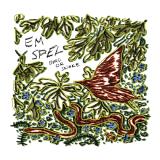
With Horror Spectrum, Bunnies plunges headfirst into the shadowy abyss of their art-rock multiverse, unearthing sounds that slither, shimmer, and scream.
Equal parts psychedelic hallucination, krautrock ritual, and noise rock exorcism, this record feels like the sonic aftermath of mad scientists summoning ghosts through an analog synthesizer they excavated from a cursed tomb. It's less an album and more an experiment gone deliciously wrong—a séance that channels the chaotic energies of dimensions better left untouched.
From the extraterrestrial pulsations of “Eyer of Ire” to the technicolor bliss of “That Evil Ghoul,” Horror Spectrum is a seven-track odyssey that detonates the boundaries of Bunnies’ already unhinged catalog. These tracks drag you by the ankles into realms where sound has teeth, time melts into warped rainbows, and the music feels like it’s plotting something sinister. Few bands dare to tread where Bunnies boldly hop, but here they are, mapping out mythical soundscapes with the glee of cartographers lost in their own creation.
This freakish entity of a record is profoundly unsettling and weirdly exhilarating. Horror Spectrum is the sound of a band digging deep into their subconscious and inviting you to get lost in the labyrinth.
Will you find your way out?
And if it sounds this good, why not just stay?
Sam Moss is a songwriter and instrumentalist based in Virginia. His next LP, Swimming, will be released on February 7th, 2025. Past albums have been acclaimed by publications like The Boston Globe, NPR, The Wire, and Paste. He has played hundreds of shows around the country and shared bills with Jake Xerxes Fussell, Joan Shelley, Diane Cluck, Doug Paisley, and others. He is also a woodworker.
The Young Mothers return with their third album, Better If You Let It, blending a genre-defying mix of jazz, hip-hop, punk, experimental rock, and electronic music. Formed by Norwegian bassist Ingebrigt Håker Flaten in Austin, Texas, the band’s sound is shaped by the diverse musical backgrounds of its members, hailing from both the U.S. and Norway. With influences spanning from Texas’ vibrant hip-hop and punk scenes to Norway’s experimental jazz traditions, the band creates a powerful fusion that feels cinematic and unpredictable.
The lineup includes Jawwaad Taylor (trumpet, rhymes, electronics) and Jason Jackson (tenor and baritone sax) from Houston, Stefan Gonzalez (vibraphone, drums, percussion, voice) from Dallas, Frank Rosaly (drums, electronics) from Chicago and Amsterdam, and Håker Flaten (bass) from Norway.
This global roster brings together a dynamic, cross-cultural sound, with Better If You Let It showcasing their most cohesive and wide-ranging material yet. Recorded in Oslo and set for release on Sonic Transmission Records, the album is a bold statement, proving The Young Mothers’ ability to push musical boundaries across genres and geographies.
"The seven songs of Tombeaux comprise the Brooklyn-based composer and multi-instrumentalist’s third full-length recording, and her first written and arranged for a large ensemble. Frustrated by the limitations of self-production and solitary home recording, Sridharan set out to create something sonically broader, featuring sitar, vibraphone, woodwinds, horns, strings, and piano. Tombeaux is richly textured and deeply felt, weaving medieval and classical influences into a distinct art pop tapestry that will be much loved by fans of Laurie Anderson, Bel Canto, Anna von Hausswolf, and Julia Holter, who produced the record.
The record’s subject is as expansive as the ensemble; each song is a discrete tale of a death, imagined by Sridharan and told in the first person. From reimagining the work of 16th-century Indian poet Mirabai to exploring Ursula K. Le Guin’s Earthsea afterworld, The Dry Land, to writing about her own grandmother’s death, Sridharan teases out the varied nature of death, applying a broad range of historical and cultural lenses to this great inevitability.
Sridharan was raised by an Indian father who exposed her to Indian classical music and a mother whose passion for history, archeology, and medieval music informed and inspired her from an early age. Her upbringing in the woods of Michigan and high school years on the shores Lake Michigan perhaps further inspired her tendency toward reverie, imagined narratives, and the drama that unfolds between this shore and the next.
Though not intended as an exhaustive survey of ideas of death across cultures, Tombeaux’s scope is impressive, shot through with the feel of a book of short stories, or a performance of tales. It is enchanting and elegantly executed, sensitively shepherded by Holter’s production."
- 1


