Joanna Brouk's most ambitious recording, Sounds of the Sea is a concept album full of mystery and eroticism. A conch shell bookends this journey into the deep, going down and down and down further, never reaching bottom. Drawing inspiration from various legends of mermaids and sailors, Brouk weaves circling flutes, vocals, drones and whale songs to describe a sense of unfathomable longing more clearly than words could ever express. Sounds of the Sea is a hypnotic and profound achievement by one of new age's greatest composers.
Cerca:brouk
- 1
Eine der größten Komponistinnen des "New Age"-Genres mit ihrer ambitioniertesten Aufnahme, ursprünglich 1981 erschienen. Ein hypnotisches und tiefgründiges Konzeptalbum voller Geheimnisse und Erotik. Inspiriert von verschiedenen Legenden über Meerjungfrauen und Seeleute, verwebt Brouk kreisende Flöten, Gesang, Drones und Walgesänge, um ein Gefühl von unergründlicher Sehnsucht deutlicher zu beschreiben, als es Worte jemals ausdrücken könnten.
Previously issued on three rare cassette-only editions, Joanna Brouk's 1980 sophomore album The Space Between has finally been given spacious LP quarters. The side-long title track, performed by Brouk's Mills College instructor and sometime-lover Bill Maraldo is among the deepest and most distinctive pieces in the new age canon, while side B's three cuts expand the theme in hypnotic new directions.
Flautist Johanna Orellana teams up with Carmen Villain for a collection of horizontal, pastoral field recordings and close mic-ed flute sounds that zero in on the instrument’s unstable resonance and levitational magic. There’s no cringe virtuoso business or fourth world firewalking here - just sonic purity, sublime minimalism and the precise capture of time, place and poetry.
You might have come across Johanna Orellana before if you’ve listened to Carmen Villain’s music (or seen her perform live), and Villain appears here in a producer’s role, using her engineering expertise to impart a level of restraint and sonic fidelity that’s quite startling. There are only really two central elements to the album: environmental recordings and flute. There’s no psychedelic delay, no cavernous reverb; no audible treatments at all - Orellana and Villain instead force us to consider the flute and its musical lineage.
‘El Jardín I’ introduces the instrument as a physical conduit; Orellana allows her breath to distort the sound - the padded pat pat of the keys forms a kind of rhythm, closely recorded so it’s amplified and jarring, linking to primal wind instruments like conch shells, bamboo flutes and wooden whistles. Recalling the way in which Debit interfaced with the ancient world using AI- assisted tech on last year’s ‘The Long Count’, Orellana uses a comparatively modern contemporary transverse flute, an instrument with roots that stretch back through the baroque era, into Medieval Europe, back to the Byzantine era and into Asia. The component that connects the instruments and eras is breath, and its amplification and modification through differently shaped pipes and vessels.
Orellana lets the environment sing: insects, rushing water and zephyr-like winds form a stage that presents her mortal energy, suggesting a harmony between our use of breath and its environmental ubiquitousness. Her technique is steeped in folk history and decouples itself from expectation by rooting itself in nature. It allows her to bridge the gap between equal temperament and less ordered (less commercially-focused) microtonality without overstating the concept. Other sounds waft in from the sidelines; what might be an Indian bansuri, stray notes, a gust of air.
There’s a link to the foundational new age recordings that Joanna Brouk made with Maggi Payne back in 1980, but Orelanna also absorbs the outdoor folk magic of Fonal or Stroom, and the improvisational grist of Bendik Giske or legendary US horn duo Nmperign.
After two decades in the experimental music scenes of New York and Western Massachusetts, Wednesday Knudsen might be known equally as a sought-after improv collaborator and the vocalist and guitarist for the beloved long-running psych band Pigeons or, more recently, as a member of the New England psych-folk ensemble Stella Kola. Though her forthcoming release, Atrium, is Knudsen’s fifth solo album, it is both her first solo work to appear on vinyl and a double LP, marking her rich recording history with a stunning masterwork. Channeling the “atmosphere of presence” alongside the legions of Éliane Radigue, Hiroshi Yoshimura, and Joanna Brouk, on Atrium, Knudsen plays it all—alto saxophone, flute, guitar, synth, piano, autoharp, bass guitar, and vocals. The collected compositions are studies in the tones, timbres, and pacing particular to the woodland environment of the Taconic Mountains where she lives. Atrium’s tracks are sculptural rather than ambient, with a release into the gorgeous hold of gravity that insists we don’t escape or drift away. This is music for remembering time. This is music that reinforces the power of art as resistance. The songs on Atrium distill our attention in a language that Knudsen calls “the opening of the heart,” reminding us that subsistence and community results from our own actions and engagement with our exterior. Atrium is a refuge, vital in our current moment and imbued with resonant power for our future.
- A1: Joanna Brouk - The Space Between
- A2: Laraaji - Bethlehem
- A3: David Naegele - Eternal Sanctuary
- A4: David Casper - Carmel Valley Sunset
- B1: Don Slepian - Sea Of Bliss
- B2: Vernal Equinox - Silent Dream - The Real Dream
- B3: Steven Cooper - Soulmate Suite Part 1
- B4: Peter Davison - Control
- C1: David Storrs - Night In The Vortex
- C2: Iasos - The Angels Of Comfort
- C3: Robert Slap & Suzanne Ghiglia - Ocean Echoes
- C4: Upper Astral - Crystal Cave (Back To Atlantis)
- C5: Alex Johnson - Music For Earth Orbit
- D1: Georges Boutz - After The Storm
- D2: Dervish - Somebodies
- D3: Peter Nothnagle - New Snow
- D4: Jordan De La Sierra - Music For Gymnastics
- D5: Master Wilburn Burchette - Eternal Light
Clear Vinyl[31,05 €]
The Numero Group guide to private issue new age. Featuring Laraaji, Iasos, Joanna Brouk, Don Slepian, Peter Davison, Master Wilburn Burchette, Jordan De La Sierra, David Casper, Robert Slap and 9 other pioneers of the Perrier underground. Adorned with Marcus Uzilevsky's Linear Landscapes, this 2xLP compilation is housed in a sturdy tip-on jacket and is accompanied by a 32-page booklet. The fourth world awaits.
- A1: Joanna Brouk - The Space Between
- A2: Laraaji - Bethlehem
- A3: David Naegele - Eternal Sanctuary
- A4: David Casper - Carmel Valley Sunset
- B1: Don Slepian - Sea Of Bliss
- B2: Vernal Equinox - Silent Dream - The Real Dream
- B3: Steven Cooper - Soulmate Suite Part 1
- B4: Peter Davison - Control
- C1: David Storrs - Night In The Vortex
- C2: Iasos - The Angels Of Comfort
- C3: Robert Slap & Suzanne Ghiglia - Ocean Echoes
- C4: Upper Astral - Crystal Cave (Back To Atlantis)
- C5: Alex Johnson - Music For Earth Orbit
- D1: Georges Boutz - After The Storm
- D2: Dervish - Somebodies
- D3: Peter Nothnagle - New Snow
- D4: Jordan De La Sierra - Music For Gymnastics
- D5: Master Wilburn Burchette - Eternal Light
Black Vinyl[28,78 €]
The Numero Group guide to private issue new age. Featuring Laraaji, Iasos, Joanna Brouk, Don Slepian, Peter Davison, Master Wilburn Burchette, Jordan De La Sierra, David Casper, Robert Slap and 9 other pioneers of the Perrier underground. Adorned with Marcus Uzilevsky's Linear Landscapes, this 2xLP compilation is housed in a sturdy tip-on jacket and is accompanied by a 32-page booklet. The fourth world awaits.
John Carroll Kirby brings his talents as a composer
and producer to film scoring. His vivid imagination,
dreamy compositions and knack for storytelling with
instrumental music make for a perfect match with
comic book writer, artist and filmmaker Dash Shaw’s
vibrant, fantastical animated feature.
Kirby’s score is at once deeply evocative and
mysterious, evoking nostalgia, wide-eyed innocence,
and ethereal otherworldliness. As with all of Kirby’s
music, the score resists easy genre classification,
melding together sounds from new age, exotica, library
music and the sweeter side of electronic music.
‘Cryptozoo: Original Motion Picture Soundtrack’
features the voice of Kacy Hill.
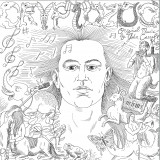
Artwork by the film’s director, Dash Shaw.
‘Cryptozoo’ won the NEXT Innovator Award at
Sundance, premiered internationally at the 2021
Berlinale, and was bought by Magnolia Pictures.
The film is currently streaming on MUBI UK and
Ireland as a MUBI Release and will be on the platform
for several months.
‘Cryptozoo: Original Motion Picture Soundtrack’ is
Kirby’s latest album following the release of his
electronic-jazz album ‘Septet’ in June 2021. He will be
touring the UK and Europe in March 2022.
For fans of Bibio, Tangerine Dream, Susumu Yokota,
Laraaji, Joanna Brouk.
Support from AV Club, New York Times, The Guardian,
Cinemacy, Collider, The Wire, BBC 6 Music, triple j
and KCRW, among others.
Exceptional recordings by this New age maestro. Only recently re-discovered by his friend JD emmanuel & the band Sun Araw. Originally released on cassette in 1983 and now for the first time vailable on 180g Vinyl. For fans of Joanna Brouk, JD Emmanuel and Pauline-Anna Strom.
Randall McClellan was a founding member of the electronic music studio at the Eastman School of Music in 1967 where he later received a Ph.D. in Composition, Theory and Musicology. A growing interest in North Indian music and vocal technique prompted him to develop his personal compositional practice into an active platform for inducing altered states of mind. He constructed his concerts to be spaces for harmonization of mind and body through a musical practice informed by his esoteric studies of ancient mystery schools and sacred geometry, believing these to be primarily teachings on intentional resonance.
These performances were given between 1977 and 1983 in semi-darkened spaces that allowed listeners to relax on carpeting while being enveloped by sound. Each improvisation lasts from twenty-five to forty-five minutes. An entire performance is up to three hours and is designed to provide an environment of meditative sound. They gained in popularity and were soon attended by larger audiences. His final live performance took place at New York City's Alternative Museum in October, 1983.
The “Music of Rana” Enviromental Series uses synthesizers, drone box, tamboura, voice and tape delay to create an environment of continuously evolving multi-layered melody. Described as subtle, graceful and of other worlds. The name RANA, meaning “Sunbreath”, has its origin in ancient philosophical concepts that recognized vibration as the fundamental creative force and central principle of the many esoteric mystery schools of the ancient world. It is now evident that the use of music for its ability to alter mind states and for its effectiveness as a therapeutic aid was music’s original purpose and an important concept of these mystery schools. In the broadest sense, the practice of music for its healing ability may well stand as our oldest continuous musical tradition.
This album is the first volume in the series, previously issued as a cassette in 1983, and part of the cassette box set published by Sun Ark in 2013. This music is based on principles outlined in Randall’s book, The Healing Forces of Music: History, Theory and Practice. These compositions are selected for their meditational and healing abilities. EQ settings of treble and bass levels determine the music's effect upon you. Please explore until the most comfortable settings are found.
FACT MAG: "These deeply meditative pieces are an expert take on how subtleties and concentrated listening go hand-in-hand. There is inherent beauty here, but it’s the deeper aspects that make the biggest impact."
Exceptional recordings by this New age maestro. Only recently re-discovered by his friend JD emmanuel & the band Sun Araw. Originally released on cassette in 1983 and now for the first time vailable on 180g Vinyl. For fans of Joanna Brouk, JD Emmanuel and Pauline-Anna Strom.
Randall McClellan was a founding member of the electronic music studio at the Eastman School of Music in 1967 where he later received a Ph.D. in Composition, Theory and Musicology. A growing interest in North Indian music and vocal technique prompted him to develop his personal compositional practice into an active platform for inducing altered states of mind. He constructed his concerts to be spaces for harmonization of mind and body through a musical practice informed by his esoteric studies of ancient mystery schools and sacred geometry, believing these to be primarily teachings on intentional resonance.
These performances were given between 1977 and 1983 in semi-darkened spaces that allowed listeners to relax on carpeting while being enveloped by sound. Each improvisation lasts from twenty-five to forty-five minutes. An entire performance is up to three hours and is designed to provide an environment of meditative sound. They gained in popularity and were soon attended by larger audiences. His final live performance took place at New York City's Alternative Museum in October, 1983.
The “Music of Rana” Enviromental Series uses synthesizers, drone box, tamboura, voice and tape delay to create an environment of continuously evolving multi-layered melody. Described as subtle, graceful and of other worlds. The name RANA, meaning “Sunbreath”, has its origin in ancient philosophical concepts that recognized vibration as the fundamental creative force and central principle of the many esoteric mystery schools of the ancient world. It is now evident that the use of music for its ability to alter mind states and for its effectiveness as a therapeutic aid was music’s original purpose and an important concept of these mystery schools. In the broadest sense, the practice of music for its healing ability may well stand as our oldest continuous musical tradition.
This album is the first volume in the series, previously issued as a cassette in 1983, and part of the cassette box set published by Sun Ark in 2013. This music is based on principles outlined in Randall’s book, The Healing Forces of Music: History, Theory and Practice. These compositions are selected for their meditational and healing abilities. EQ settings of treble and bass levels determine the music's effect upon you. Please explore until the most comfortable settings are found.
FACT MAG: "These deeply meditative pieces are an expert take on how subtleties and concentrated listening go hand-in-hand. There is inherent beauty here, but it’s the deeper aspects that make the biggest impact."
An exploratory record that dances across time and genre, guided by fidgety miniatures and jazz inflected collage. Throughout, the band pool together their instrumental chops, moving from fluid and serpentine R&B to meditative, minimalistic piano, evoking a contrast of virtuosity and self-surrender.
While constructed from the inspiration of soul, funk and film music, BÉE mediate those influences having first digested them through the productions of Madlib & the RZA.
A sticker on the sleeve tells us Self Help “combines jazz-funk and mysticism,” a signpost to where its musical and spiritual concerns align. The jazz-funk component translates to arresting hooks in sideways song forms: echoes of Gainsbourg spooled through Azymuth-style Brazilian jazz and punctuated by the whip and snap of Steely Dan. “The Sound Where My Head Was,” the instrumental centrepiece, exemplifies present-wave jazz but also ancient sounds, giving off the mothballed air of a Hiroshi Yoshimura record in a library-music archive.
Self Help’s mysticism emerges in broad and specific ways, denoting not only a search beyond cliché and intellect but also an inquiry into the beat, the spirit, the one will. This isn’t new territory for them: Turnbull—the artist formerly known as Slim Twig, who writes and performs with U.S. Girls and various other Toronto concerns—named the group’s Nature, Man & Woman EP after the Alan Watts book. Building these songs from his drafts over three weekends at Toronto’s Palace Sound studio, the ensemble was free to tap out of the city and into some other place, taking up residence in a collective mind maze. The album produces, in equal measure, familiar surprises and the surprisingly familiar. Intoxicated jazz riffs swerve left at phantom intersections. Rhythms cut loose and tie you in knots. But wired in to each song is a sense of gentle accumulation, making every featherlight flourish weigh a ton. U.S. Girls’ Meg Remy brings serenity to “Sing a Silent Gospel,” and wears its antic melodies lightly. The soul shimmer of “Unity (It’s Up to You)” lets the players pool their R&B chops into something fluid and serpentine while, on guest vocals, the musical performance artist James Baley issues urgent declaratives: “Water must pool, as a rule, before tasted/Or else the water is wasted.” The words throughout the record complement the ensemble music while riffing on the precarious nature of unity itself. Then, closer “Extinct Commune” finds Turnbull deserted at the piano, playing phrases of meditative minimalism taking after the composer Joanna Brouk.
For all the record’s reach, it is these contrasting quiet moments that bring Self Help’s communal spirit into focus. A note on personnel: Badge Époque Ensemble now has a seventh member in Karen Ng, the saxophonist and sometime collaborator of Do Make Say Think, Feist, and others. In BÉE, Ng joins Chris Bezant and Giosuè Rosati, her bandmates in the Andy Shauf live band, as well as U.S. Girls co-conspirators Turnbull and Ed Squires, and other Torontonian cross-pollinators listed below. Guest vocalists across Self Help include Meg Remy, who sings with Dorothea Paas on the opener, James Baley, and Toronto singer-songwriter Jennifer Castle on the remarkable “Just Space for Light.” Words by: Jazz Monroe
- 1