Поиск:carlos perez

Стили
Все
  • 1
Head Horny's / K-Style / Carlos Perez - Alegría & Fuego / Funky Feelings 2026

NOFEAR! Musik presents its second vinyl release, bringing together two of the label's most celebrated tracks alongside a fresh reinterpretation of a true classic.

The A-side features Alegría and Fuego, two tracks by Head Horny's & K-Style that became standout releases on the label, receiving strong support from DJs and dancefloors across Europe.

The B-side is dedicated to Funky Feelings 2026, a modern rework of one of Head Horny's classic productions. Together with Carlos Perez and K-Style, the original idea has been updated into two complementary versions: a driving hardgroove-techno interpretation and a more old-school klubb-oriented mix.

Pressed on 180g vinyl, NFV02 reflects the sound and identity of NOFEAR! Musik: energetic, groove-driven and built for the dancefloor.

сбор заказов

Заказать сейчас – как только наберется необходимое количество заказов, продукт будет отштампован.

16,77 €
VARIOUS - A LA ALTURA: VISIONARY MEXICAN MUSIC 1977-1999 Vol.2 LP 2x12"

Eine Hommage an innovative mexikanische Musiker, die elektronische und indigene Instrumente mit Minimalismus, Ambient, Jazz und New-Age-Ästhetik verschmelzen Mit 13 visionären Künstlern, darunter Ana Ruiz, Oxomaxoma, Gerardo Bátiz, Antonio Zepeda und Airwaves, um nur einige zu nennen Enthält 4 bisher unveröffentlichte Titel Zusammengestellt und produziert vom mexikanischen Journalisten, Musiker und DJ Carlos ,Tropicaza" Icaza sowie dem Gründer von dublab radio und dem Creative Producer des LA Phil, Mark ,Frosty" McNeill Covergestaltung vom legendären Künstler Eduardo Terrazas, Design und Layout von D.Norsen Design Doppel-LP, gepresst bei Optimal, inklusive Booklet mit Liner Notes Audio remastert vom GRAMMYr-nominierten Toningenieur John Baldwin Limitierte Farbvinyl-Auflage auf gelbem und blauem Vinyl ///// ,A LA ALTURA" (zu Deutsch: ,Zu den Höhen") würdigt mexikanische Musiker, die sich in den letzten Jahrzehnten des 20. Jahrhunderts mit elektronischen und indigenen Instrumenten auf experimentelles Terrain wagten - im Dialog mit Minimalismus, Ambient, Jazz und New-Age-Ästhetik. Über ein Jahrzehnt in der Entstehung und liebevoll zusammengestellt vom mexikanischen Journalisten, Musiker und DJ Carlos ,Tropicaza" Icaza sowie dem Gründer von dublab radio und Creative Producer des LA Phil, Mark ,Frosty" McNeill, basiert A LA ALTURA auf Originalbändern und Masteraufnahmen mit unveröffentlichten, längst vergriffenen und privat gepressten Aufnahmen. Die Bände 1 und 2 präsentieren 25 visionäre Künstler, die sich aktiv für eine Form der Bewusstseinserweiterung einsetzten - sei es durch das Streben nach den Sternen mittels ihrer Musik oder durch die Weiterentwicklung der Kunstform selbst. Ebenso kühn setzen diese beiden Bände ein Zeichen dafür, dass mexikanische Künstler und Komponisten wie Luis Pérez, Arturo Meza, Jorge Reyes, Ana Ruiz und Antonio Zepeda in einem Atemzug mit Michael Rother, Terry Riley, Hiroshi Yoshimura und den vielen anderen Künstlern genannt werden sollten, die zu Recht für ihren Experimentiergeist gefeiert wurden.

Сделать предзаказ30.10.2026

он должен быть опубликован на 30.10.2026

53,57 €
VARIOUS - A LA ALTURA: VISIONARY MEXICAN MUSIC 1977-1999 LP 2x12"
  • 1: VIENTO DE LLUVIA
  • 2: SAZILAKAB
  • 3: ANHUAC
  • 4: LA TRAMA DE LA VIDA
  • 5: SUITE AL CULTO
  • 6: KETZALKOATL YAUH MIKTLAN
  • 7: BAHA AZTECA
  • 8: PIRMIDE
  • 9: CANTAR DE LA DUALIDAD (OMETEKUIKATL)
  • 10: EL BORDADO CELESTE DE MAM FELIPA
  • 11: AKOYALISTLI
  • 12: LTIMO ENCUENTRO
  • 13: ASCENSO
также имеющийся в продаже

Vol.1 Color Vinyl[53,57 €]

Vol.2 Black Vinyl[49,79 €]

Vol.2 Color Vinyl[53,57 €]


Eine Hommage an innovative mexikanische Musiker, die elektronische und indigene Instrumente mit Minimalismus, Ambient, Jazz und New-Age-Ästhetik verschmolzen haben Mit 12 visionären Künstlern, darunter Luis Pérez, Arturo Meza, Jorge Reyes, Aristeo und Tribu, um nur einige zu nennen Zusammengestellt und produziert vom mexikanischen Journalisten, Musiker und DJ Carlos ,Tropicaza" Icaza sowie dem Gründer von dublab radio und Creative Producer des LA Phil, Mark ,Frosty" McNeill Cover-Artwork vom legendären Künstler Eduardo Terrazas sowie Design und Layout von D.Norsen Design Doppel-LP, gepresst bei Optimal, inklusive Booklet mit Liner Notes Audio remastered vom GRAMMYr-nominierten Toningenieur John Baldwin Limitierte Farbvinyl-Edition, gepresst auf violettem und rosa Vinyl //// ,A LA ALTURA" - oder ,To The Height" - würdigt mexikanische Musiker, die sich in den letzten Jahrzehnten des 20. Jahrhunderts mit elektronischen und indigenen Instrumenten auf experimentelles Terrain wagten und dabei im Dialog mit Minimalismus, Ambient, Jazz und New-Age-Ästhetik standen. Über ein Jahrzehnt in Arbeit und liebevoll kuratiert vom mexikanischen Journalisten, Musiker und DJ Carlos ,Tropicaza" Icaza sowie dem Gründer von dublab radio und Creative Producer des LA Phil, Mark ,Frosty" McNeill, basiert A LA ALTURA auf Originalbändern und Masteraufnahmen mit unveröffentlichten, längst vergriffenen und privat gepressten Aufnahmen. Die Bände 1 & 2 präsentieren 25 visionäre Künstler, die sich aktiv für eine Art Bewusstseinserweiterung einsetzten - sei es durch die Suche nach den Sternen mittels ihrer Musik oder durch die Weiterentwicklung der Kunstform selbst. Ebenso kühn setzen diese beiden Bände ein Zeichen dafür, dass mexikanische Künstler und Komponisten wie Luis Pérez, Arturo Meza, Jorge Reyes, Ana Ruiz und Antonio Zepeda in einem Atemzug mit Michael Rother, Terry Riley, Hiroshi Yoshimura und den vielen anderen Künstlern genannt werden sollten, die zu Recht für ihren Experimentiergeist gefeiert wurden.

Сделать предзаказ30.10.2026

он должен быть опубликован на 30.10.2026

49,79 €
VARIOUS - A LA ALTURA: VISIONARY MEXICAN MUSIC 1977-1999 Vol.1 LP 2x12"

Eine Hommage an innovative mexikanische Musiker, die elektronische und indigene Instrumente mit Minimalismus, Ambient, Jazz und New-Age-Ästhetik verschmolzen haben Mit 12 visionären Künstlern, darunter Luis Pérez, Arturo Meza, Jorge Reyes, Aristeo und Tribu, um nur einige zu nennen Zusammengestellt und produziert vom mexikanischen Journalisten, Musiker und DJ Carlos ,Tropicaza" Icaza sowie dem Gründer von dublab radio und Creative Producer des LA Phil, Mark ,Frosty" McNeill Cover-Artwork vom legendären Künstler Eduardo Terrazas sowie Design und Layout von D.Norsen Design Doppel-LP, gepresst bei Optimal, inklusive Booklet mit Liner Notes Audio remastered vom GRAMMYr-nominierten Toningenieur John Baldwin Limitierte Farbvinyl-Edition, gepresst auf violettem und rosa Vinyl //// ,A LA ALTURA" - oder ,To The Height" - würdigt mexikanische Musiker, die sich in den letzten Jahrzehnten des 20. Jahrhunderts mit elektronischen und indigenen Instrumenten auf experimentelles Terrain wagten und dabei im Dialog mit Minimalismus, Ambient, Jazz und New-Age-Ästhetik standen. Über ein Jahrzehnt in Arbeit und liebevoll kuratiert vom mexikanischen Journalisten, Musiker und DJ Carlos ,Tropicaza" Icaza sowie dem Gründer von dublab radio und Creative Producer des LA Phil, Mark ,Frosty" McNeill, basiert A LA ALTURA auf Originalbändern und Masteraufnahmen mit unveröffentlichten, längst vergriffenen und privat gepressten Aufnahmen. Die Bände 1 & 2 präsentieren 25 visionäre Künstler, die sich aktiv für eine Art Bewusstseinserweiterung einsetzten - sei es durch die Suche nach den Sternen mittels ihrer Musik oder durch die Weiterentwicklung der Kunstform selbst. Ebenso kühn setzen diese beiden Bände ein Zeichen dafür, dass mexikanische Künstler und Komponisten wie Luis Pérez, Arturo Meza, Jorge Reyes, Ana Ruiz und Antonio Zepeda in einem Atemzug mit Michael Rother, Terry Riley, Hiroshi Yoshimura und den vielen anderen Künstlern genannt werden sollten, die zu Recht für ihren Experimentiergeist gefeiert wurden.

Сделать предзаказ30.10.2026

он должен быть опубликован на 30.10.2026

53,57 €
VARIOUS - A LA ALTURA: VISIONARY MEXICAN MUSIC 1977-1999 Vol.2 LP 2x12"

Eine Hommage an innovative mexikanische Musiker, die elektronische und indigene Instrumente mit Minimalismus, Ambient, Jazz und New-Age-Ästhetik verschmolzen haben Mit 12 visionären Künstlern, darunter Luis Pérez, Arturo Meza, Jorge Reyes, Aristeo und Tribu, um nur einige zu nennen Zusammengestellt und produziert vom mexikanischen Journalisten, Musiker und DJ Carlos ,Tropicaza" Icaza sowie dem Gründer von dublab radio und Creative Producer des LA Phil, Mark ,Frosty" McNeill Cover-Artwork vom legendären Künstler Eduardo Terrazas sowie Design und Layout von D.Norsen Design Doppel-LP, gepresst bei Optimal, inklusive Booklet mit Liner Notes Audio remastered vom GRAMMYr-nominierten Toningenieur John Baldwin Limitierte Farbvinyl-Edition, gepresst auf violettem und rosa Vinyl //// ,A LA ALTURA" - oder ,To The Height" - würdigt mexikanische Musiker, die sich in den letzten Jahrzehnten des 20. Jahrhunderts mit elektronischen und indigenen Instrumenten auf experimentelles Terrain wagten und dabei im Dialog mit Minimalismus, Ambient, Jazz und New-Age-Ästhetik standen. Über ein Jahrzehnt in Arbeit und liebevoll kuratiert vom mexikanischen Journalisten, Musiker und DJ Carlos ,Tropicaza" Icaza sowie dem Gründer von dublab radio und Creative Producer des LA Phil, Mark ,Frosty" McNeill, basiert A LA ALTURA auf Originalbändern und Masteraufnahmen mit unveröffentlichten, längst vergriffenen und privat gepressten Aufnahmen. Die Bände 1 & 2 präsentieren 25 visionäre Künstler, die sich aktiv für eine Art Bewusstseinserweiterung einsetzten - sei es durch die Suche nach den Sternen mittels ihrer Musik oder durch die Weiterentwicklung der Kunstform selbst. Ebenso kühn setzen diese beiden Bände ein Zeichen dafür, dass mexikanische Künstler und Komponisten wie Luis Pérez, Arturo Meza, Jorge Reyes, Ana Ruiz und Antonio Zepeda in einem Atemzug mit Michael Rother, Terry Riley, Hiroshi Yoshimura und den vielen anderen Künstlern genannt werden sollten, die zu Recht für ihren Experimentiergeist gefeiert wurden.

Сделать предзаказ30.10.2026

он должен быть опубликован на 30.10.2026

49,79 €
TURN ON THE SUNLIGHT - ISEO

Turn On The Sunlight is the long-running project of Texas-born, Maui-based musician and producer Jesse Peterson.

Originally formed in New York in the late 2000s, Turn On The Sunlight has evolved into a fluid, location-spanning practice rooted in collaboration, intuition and process. Now based on Maui, Peterson’s work draws together a wide network of musicians and environments, with recordings taking shape across Los Angeles, Tokyo, London, San Miguel de Allende and Haʻikū.

Loosely situated within a framework of organic, ambient-leaning jazz, 'Iseo' unfolds as a series of open, exploratory pieces, with electronics sitting subtly beneath acoustic and environmental elements. Built from layered instrumentation including synthesizers, guitar, zither, flutes, voice and field recordings, Peterson moves between grounded, tactile detail and more expansive, immersive states. A sense of warmth and permeability runs throughout: organic percussion, environmental textures and drifting rhythmic elements lend the record a gently saturated humidity, reflecting Peterson’s base in Hawaii, where the presence of nature is felt as much as it is heard.

Underlying the project is a way of working rooted in gathering, listening and tending. Instruments, ensemble sessions, field recordings and everyday environments are approached with attentiveness, shaped through collecting, refining and allowing things to settle. Relationships, landscape and lived experience shape the sound, giving 'Iseo' a tactile, almost hand-made quality.

Rather than fixed arrangements, the album feels as if it has been organically and lovingly assembled through a process of listening and response, each element finding its place within a wider, evolving whole. This approach reaches a natural centre point in the 15-minute piece 'Medianoche En La Calle Aurora', which unfolds patiently, bending through shifting environments as motifs and textures emerge and dissolve with quiet continuity.

Peterson’s role as both instigator and facilitator is central to the project. Bringing together a diverse group of collaborators including Carlos Niño, Mia Doi Todd, Laraaji, Ko Ishikawa, Luis Pérez Ixoneztli and Miles Spilsbury, he creates space for individual voices to emerge within a shared language. The result is a music defined by openness and generosity.

'Iseo' takes its title from Peterson’s son’s middle name, a word that can be understood to mean ‘one-world life’. The piece itself takes the form of a gentle lullaby, its melody loosely shaped around the syllables of his name and sung to Peterson’s son by Luis Pérez Ixoneztli, a close collaborator whose presence across the record reflects a long-standing relationship that extends beyond the music itself.
Sleeve art and design by Michael Willis.

В наличии на складе

Есть у нас в наличии и готов к отправке

Последний логин: 80 дн. назад
22,65 €
VARIOUS - CUBA - GREATEST HITS LP 2x12"
В наличии на складе

Есть у нас в наличии и готов к отправке

Последний логин: 3 мес. назад
22,27 €
TURN ON THE SUNLIGHT FEAT. SAM GENDEL - WARM WAVES

‘Warm Waves’ first appeared in 2020, ten years after Turn On The Sunlight’s debut self-titled album was first released in Japan. During that decade, Turn On The Sunlight’s Jesse Peterson and Mia Doi Todd welcomed their first child and co-founded a music venue in Los Angeles. When performance spaces were required to close at the start of the pandemic, Jesse’s focus shifted back towards home recording. Since ‘Warm Waves,’ five more Turn On The Sunlight albums have followed (including ‘Drives To The Beach,’ also on Tokonoma Records), all of which can be seen as an expansion of the musical direction set forth on this album.

The group heard on ‘Warm Waves’ consists of musicians who Mia and Jesse were regularly playing with at the time - Sam Gendel, Mitchell Brown, Andres Renteria & Gabe Noel - joined by Laraaji, Arji & Luis Pérez Ixoneztli, making their first recordings together.

The group’s blended signal was routed through Mitchell’s tape loops and modular synthesizer, which contributed to the unique communal sound of these recordings. Further extending this approach, Carlos Niño then reprocessed and reimagined ‘Passing Rain’ with Jamael Dean for his Elemental Beat Mix.

Originally released one week into the official lockdown period, some listeners found the warm, collective sound well-suited for the time of introspection and shifting priorities that followed. Now, in 2026, ‘Warm Waves’ returns on vinyl to once again encourage peaceful contemplation and open-hearted togetherness, in echo of the spirit of its creation.

Credits
Sam Gendel: Saxophone & Electronics on A1, A2, A3, B1, B2, B3
Laraaji: Voice & Zither on A3
Luis Pérez Ixoneztli: Bird Sounds on A1, Aerophones & Water Drums on B2
Mia Doi Todd: Voice on A1, A2, B2, B3; Piano on A3
Jesse Peterson: Guitar, Bass, Organ & Bird Sounds on A1; Organ on A2; Guitar & Bass on A3; Wooden Whistles, Guitar, Ukulele & Piano on B1; Ice Breaking on B3
Andres Renteria: Percussion on A1, A2, B1, B2, B3; Marimba & Percussion on A3
Mitchell Brown: Synthesizers & Magnetic Tape on A1, A2, A3, B2, B4
Gabe Noel: Bass on A2, A3, B1
Arji: Bells & Shells on A3
Carlos Niño: Production / Remix on B4
Jamael Dean: Additional Keyboards on B4

Produced, mixed & recorded by Jesse Peterson
Except B4, produced by Carlos Niño

Сделать предзаказ30.05.2026

он должен быть опубликован на 30.05.2026

21,43 €
TURN ON THE SUNLIGHT FEAT. SAM GENDEL - WARM WAVES

‘Warm Waves’ first appeared in 2020, ten years after Turn On The Sunlight’s debut self-titled album was first released in Japan. During that decade, Turn On The Sunlight’s Jesse Peterson and Mia Doi Todd welcomed their first child and co-founded a music venue in Los Angeles. When performance spaces were required to close at the start of the pandemic, Jesse’s focus shifted back towards home recording. Since ‘Warm Waves,’ five more Turn On The Sunlight albums have followed (including ‘Drives To The Beach,’ also on Tokonoma Records), all of which can be seen as an expansion of the musical direction set forth on this album.

The group heard on ‘Warm Waves’ consists of musicians who Mia and Jesse were regularly playing with at the time - Sam Gendel, Mitchell Brown, Andres Renteria & Gabe Noel - joined by Laraaji, Arji & Luis Pérez Ixoneztli, making their first recordings together.

The group’s blended signal was routed through Mitchell’s tape loops and modular synthesizer, which contributed to the unique communal sound of these recordings. Further extending this approach, Carlos Niño then reprocessed and reimagined ‘Passing Rain’ with Jamael Dean for his Elemental Beat Mix.

Originally released one week into the official lockdown period, some listeners found the warm, collective sound well-suited for the time of introspection and shifting priorities that followed. Now, in 2026, ‘Warm Waves’ returns on vinyl to once again encourage peaceful contemplation and open-hearted togetherness, in echo of the spirit of its creation.

Credits
Sam Gendel: Saxophone & Electronics on A1, A2, A3, B1, B2, B3
Laraaji: Voice & Zither on A3
Luis Pérez Ixoneztli: Bird Sounds on A1, Aerophones & Water Drums on B2
Mia Doi Todd: Voice on A1, A2, B2, B3; Piano on A3
Jesse Peterson: Guitar, Bass, Organ & Bird Sounds on A1; Organ on A2; Guitar & Bass on A3; Wooden Whistles, Guitar, Ukulele & Piano on B1; Ice Breaking on B3
Andres Renteria: Percussion on A1, A2, B1, B2, B3; Marimba & Percussion on A3
Mitchell Brown: Synthesizers & Magnetic Tape on A1, A2, A3, B2, B4
Gabe Noel: Bass on A2, A3, B1
Arji: Bells & Shells on A3
Carlos Niño: Production / Remix on B4
Jamael Dean: Additional Keyboards on B4

Produced, mixed & recorded by Jesse Peterson
Except B4, produced by Carlos Niño

Сделать предзаказ30.05.2026

он должен быть опубликован на 30.05.2026

23,74 €
Guilty Razors - Complete Recordings 1977 - 1978

UILTY RAZORS, BONA FIDE PUNKS.


Writings on the topic that go off in all directions, mind-numbing lectures given by academics, and testimonies, most of them heavily doctored, from those who “lived through that era”: so many people today fantasize about the early days of punk in our country… This blessed moment when no one had yet thought of flaunting a ridiculous green mohawk, taking Sid Vicious as a hero, or – even worse – making the so-called alternative scene both festive and boorish. There was no such thing in 1976 or 1977, when it wasn’t easy to get hold of the first 45s by the Pistols or the Clash. Few people were aware of what was happening on the fringes of the fringes at the time. Malcolm McLaren was virtually unknown, and having short hair made you seem strange. Who knew then that rock music, which had taken a very bad turn since the early 1970s, would once again become an essential element of liberation? That, thanks to short and fast songs, it would once again rediscover that primitive, social side that was so hated by older generations? Who knew that, besides a few loners who read the music press (it was even better if they read it in English) and frequented the right record stores? Many of these formed bands, because it was impossible to do otherwise. We quickly went from listening to the Velvet Underground to trying to play the Stooges’ intros. It’s a somewhat collective story, even though there weren’t many people to start it.
The Guilty Razors were among those who took part in this initial upheaval in Paris. They were far from being the worst. They had something special and even released a single that was well above the national average. They also had enough songs to fill an album, the one you’re holding. In everyone’s opinion, they were definitely not among the punk impostors that followed in their wake. They were, at least, genuine and credible.

Guilty Razors, Parisian punk band (1975-1978). To understand something about their somewhat linear but very energetic sound, we might need to talk about the context in which it was born and, more broadly, recall the boredom (a theme that would become capital in punk songs) coupled with the desire to blow everything off, which were the basis for the formation of bands playing a rejuvenated rock music ; about the passion for a few records by the Kinks or the early Who, by the Stooges, by the Velvet mostly, which set you apart from the crowd.
And of course, we should remember this new wave, which was promoted by a few articles in the specialized press and some cutting-edge record stores, coming from New York or London, whose small but powerful influence could be felt in Paris and in a handful of isolated places in the provinces, lulled to sleep by so many appalling things, from Tangerine Dream to President Giscard d’Estaing...
In 1975-76, French music was, as almost always, in a sorry state ; it was still dominated by Johnny Hallyday and Sylvie Vartan. Local rock music was also rather bleak, apart from Bijou and Little Bob who tried to revive this small scene with poorly sound-engineered gigs played to almost no one.
In the working class suburbs at the time, it was mainly hard rock music played to 11 that helped people forget about their gruelling shifts at the factory. Here and there, on the outskirts of major cities, you still could find a few rockers with sideburns wearing black armbands since the death of Gene Vincent, but it wasn’t a proper mass movement, just a source of real danger to anyone they came across who wasn't like them. In August 1976, a festival unlike any other took place in Mont-de-Marsan – the First European Punk Festival as the poster said – with almost as many people on stage as in the audience. Yet, on that day, a quasi historical event happened, when, under the blazing afternoon sun, a band of unknowns called The Damned made an unprecedented noise in the arena, reminiscent of the chaotic Stooges in their early adolescence. They were the first genuine punk band to perform in our country: from then on, anything was possible, almost anything seemed permissible.

It makes sense that the four+1 members of Guilty Razors, who initially amplified acoustic guitars with crappy tape recorder microphones, would adopt punk music (pronounced paink in French) naturally and instinctively, since it combines liberating noise with speed of execution and – crucially – a very healthy sense of rebellion (the protesters of May 1968 proclaimed, and it was even a slogan, that they weren’t against old people, but against what had made them grow old. In the mid-1970s, it seemed normal and obvious that old people should now ALSO be targeted!!!).
At the time, the desire to fight back, and break down authority and apathy, was either red or black, often taking the form of leafleting, tumultuous general assemblies in the schoolyard, and massive or shabby demonstrations, most of the time overflowing with an exciting vitality that sometimes turned into fights with the riot police. Indeed, soon after the end of the Vietnam War and following Pinochet’s coup in Chile, all over France, Trotskyist and anarcho-libertarian fervour was firmly entrenched among parts of the educated youth population, who were equally rebellious and troublemakers whenever they had the chance. It should also be noted that when the single "Anarchy in the UK" was first heard, even though not many of us had access to it, both the title and its explosive sound immediately resonated with some of those troublemakers crying out for ANARCHY!!! Meanwhile, the left-wing majority still equated punks with reckless young neo-Nazis. Of course, the widely circulated photos in the mainstream press of Siouxsie Sioux with her swastikas didn’t necessarily help to win over the theorists of the Great Revolution. It took Joe Strummer to introduce The Clash as an anti-racist, anti-fascist and anti-ignorance band for the rejection of old-school revolutionaries to fade a little.

The Lycée Jean-Baptiste Say at Porte d’Auteuil, despite being located in the very posh and very exclusive 16th arrondissement of Paris, didn’t escape these "committed" upheavals, which doubled as the perfect outlet for the less timid members of this generation.
“Back then, politics were fun,” says Tristam Nada, who studied there and went on to become Guilty Razors’ frontman. “Jean-Baptiste was the leftist high-school in the neighbourhood. When the far right guys from the GUD came down there, the Communist League guys from elsewhere helped us fight them off.”
Anything that could challenge authority was fair game and of course, strikes for just about any reason would lead to increasingly frequent truancy (with a definitive farewell to education that would soon follow). Tristam Nada spent his 10th and 11th unfinished grades with José Perez, who had come from Spain, where his father, a janitor, had been sentenced to death by Franco. “José steered my tastes towards solid acts such as The Who. Like most teenagers, I had previously absorbed just about everything that came my way, from Yes to Led Zeppelin to Genesis. I was exploring… And then one day, he told me that he and his brother Carlos wanted to start a rock band.” The Perez brothers already played guitar. “Of course, they were Spanish!”, jokes their singer. “Then, somewhat reluctantly, José took up the bass and we were soon joined by Jano – who called himself Jano Homicid – who took up the rhythm guitar.” Several drummers would later join this core of not easily intimidated young guys who didn’t let adversity get the better of them.

The first rehearsals of the newly named Guilty Razors took place in the bedroom of a Perez aunt. There, the three rookies tried to cover a few standards, songs that often were an integral part of their lives. During a first, short gig, in front of a bewildered audience of tough old-school rockers, they launched into a clunky version of the Velvet Underground's “Heroin”. Challenge or recklessness? A bit of both, probably… And then, step by step, their limited repertoire expanded as they decided to write their own songs, sung in a not always very accurate or academic English, but who cared about proper grammar or the right vocabulary, since what truly mattered was to make the words sound as good as possible while playing very, very fast music? And spitting out those words in a language that left no doubt as to what it conveyed mattered as well.
Trying their hand a the kind of rock music disliked by most of the neighbourhood, making noise, being fiercely provocative: they still belonged to a tiny clique who, at this very moment, had chosen to impose this difference. And there were very few places in France or elsewhere, where one could witness the first stirrings of something that wasn’t a trend yet, let alone a movement.

In the provinces, in late 1976 or early 1977, there couldn’t be more than thirty record stores that were a bit more discerning than average, where you could hear this new kind of short-haired rock music called “punk”. The old clientele, who previously had no problem coming in to buy the latest McCartney or Aerosmith LP, now felt a little less comfortable there…
In Paris, these enlightened places were quite rare and often located nex to what would become the Forum des Halles, a big shopping mall. Between three aging sex workers, a couple of second-hand clothes shops, sellers of hippie paraphernalia and small fashion designers, the good word was loudly spread in two pioneering places – propagators of what was still only a new underground movement. Historically, the first one was the Open Market, a kind of poorly, but tastefully stocked cave. Speakers blasted out the sound of sixties garage bands from the Nuggets compilation (a crucial reference for José Perez) or the badly dressed English kids of Eddie and the Hot Rods. This black-painted den was opened a few years earlier by Marc Zermati, a character who wasn’t always in a sunny disposition, but always quite radical in his (good) choices and his opinions. He founded the independent label Skydog and was one of the promoters of the Mont-de-Marsan punk festivals. Not far from there was Harry Cover, another store more in tune with the new New York scene, which was amply covered in the house fanzine, Rock News (even though it was in it that the photos of the Sex Pistols were first published in France).
It was a favorite hang-out of the Perez brothers and Tristam Nada, as the latter explained. “It’s at Harry Cover’s that we first heard the Pistols and Clash’s 45s, and after that, we decided to start writing our first songs. If they could do it, so could we!”
The sonic shocks that were “Anarchy in the UK”, “White Riot” or the Buzzcocks’s EP, “Spiral Scratch” – which Guilty Razors' sound is reminiscent of – were soon to be amplified by an unparalleled visual shock. In April 1977, right after the release of their first LP, The Clash performed at the Palais des Glaces in Paris, during a punk night organised by Marc Zermati. For many who were there, it was the gig of a lifetime…
Of course, Guilty Razors and Tristam were in the audience: “That concert was fabulous… We Parisian punks were almost all dressed in black and white, with white shirts, skinny leather ties, bikers jackets or light jackets, etc. The Clash, on the other hand, wore colourful clothes. Well, the next day, at the Gibus, you’d spot everyone who had been at this concert, but they weren’t wearing anything black, they were all wearing colours.”

It makes sense to mention the Gibus club, as Guilty Razors often played there (sometimes in front of a hostile audience). It was also the only place in Paris that regularly scheduled new Parisian or Anglo-Saxon acts, such as Generation X, Siouxsie and the Banshees, the Slits, and Johnny Thunders who would become a kind of messed-up mascot for the venue. A little later, in 1978, the Rose Bonbon – formerly the Nashville – also attracted nightly owls in search of electric thrills… In 1977, the iconic but not necessarily excellent Asphalt Jungle often played at the Gibus, sometimes sharing the bill with Metal Urbain, the only band whose aura would later transcend the French borders (“I saw them as the French Sex Pistols,” said Geoff Travis, head of their British label Rough Trade). Already established in this small scene, Metal Urbain helped the young and restless Guilty Razors who had just arrived. Guitarist for Metal Urbain Hermann Schwartz remembers it: “They were younger than us, we were a bit like their mentors even if it’s too strong a word… At least they were credible. We thought they were good, and they had good songs which reminded of the Buzzcocks that I liked a lot. But at some point, they started hanging out with the Hells Angels. That’s when we stopped following them.”

The break-up was mutual, since, Guilty Razors, for their part, were shocked when they saw a fringe element of the audience at Metal Urbain concerts who repeatedly shouted “Sieg Heil” and gave Nazi salutes. These provocations, even still minor (the bulk of the skinhead crowd would later make their presence felt during concerts), weren’t really to the liking of the Perez brothers, whose anti-fascist convictions were firmly rooted. Some things are non-negotiable.
A few months earlier (in July 1978), Guilty Razors had nevertheless opened very successfully for Metal Urbain at the Bus Palladium, a more traditonally old-school rock night-club. But, as was sometimes the case back then, the night turned into a mass brawl when suburban rockers came to “beat up punks”.

Back then, Parisian nights weren’t always sweet and serene.

So, after opening as best as they could for The Jam (their sound having been ruined by the PA system), our local heroes were – once again – met outside by a horde of greasers out to get them. “Thankfully,” says Tristam, “we were with our roadies, motorless bikers who acted as a protective barrier. We were chased in the neighbouring streets and the whole thing ended in front of a bar, with the owner coming out with a rifle…”
Although Tristam and the Perez brothers narrowly escaped various, potentially bloody, incidents, they weren’t completely innocent of wrongdoing either. They still find amusing their mugging of two strangers in the street for example (“We were broke and we simply wanted to buy tickets for the Heartbreakers concert that night,” says Tristam). It so happened that their victims were two key figures in the rock business at the time: radio presenter Alain Manneval and music publisher Philippe Constantin. They filed a complaint and sought monetary compensation, but somehow the band’s manager, the skilful but very controversial Alexis, managed to get the complaint withdrawn and Guilty Razors ended up signing with Constantin with a substantial advance.

They also signed with Polydor and the label released in 1978 their only three-track 45, featuring “I Don't Wanna be A Rich”, “Hurts and Noises” and “Provocate” (songs that exuded perpetual rebellion and an unquenchable desire for “class” confrontation). It was a very good record, but due to a lack of promotion (radio stations didn’t play French artists singing in English), it didn’t sell very well. Only 800 copies were allegedly sold and the rest of the stock was pulped… Initially, the three tracks were to be included on a LP that never came to be, since they were dropped by Polydor (“Let’s say we sometimes caused a ruckus in their offices!” laughs Tristam.) In order to perfect the long-awaited LP, the band recorded demos of other tracks. There was a cover of Pink Floyd's “Lucifer Sam” from the Syd Barrett era – proof of an enduring love for the sixties’ greats –, “Wake Up” a hangover tale and “Bad Heart” about the Baader-Meinhof gang, whose actions had a profound impact on the era and on a generation seeking extreme dissent... On the album you’re now discovering, you can also hear five previously unreleased tracks recorded a bit later during an extended and freezing stay in Madrid, in a makeshift studio with the invaluable help of a drummer also acting as sound engineer. He was both an enthusiastic old hippie and a proper whizz at sound engineering. Here too, certain influences from the fifties and sixties (Link Wray, the Troggs) are more than obvious in the band’s music.

Shortly after a final stormy and rather barbaric (on the audience’s side) “Punk night” at the Olympia in June 1978, Tristam left the band ; his bandmates continued without him for a short while.

But like most pioneering punk bands of the era, Guilty Razors eventually split up for good after three years (besides once in Spain, they’d only played in Paris). The reason for ceasing business activities were more or less the same for everyone: there were no venues outside one’s small circuit to play this kind of rock music, which was still frightening, unknown, or of little interest to most people. The chances of recording an LP were virtually null, since major labels were only signing unoriginal but reassuring sub-Téléphone clones, and the smaller ones were only interested in progressive rock or French chanson for youth clubs. And what about self-production? No one in our small safety-pinned world had thought about it yet. There wasn’t enough money to embark on that sort of venture anyway.

So yes, the early days of punk in France were truly No Future!

нет на складе

Закажите сейчас, и мы закажем товар для вас у нашего поставщика.

Последний логин: 5 мес. назад
21,43 €
CARLOS NIÑO & FRIENDS - BUBBLE BATHS FOR GIANTS

Opaque Pink Version

Bubble Bath for Giants is an ode, a Tribute, a reverence for Oceans, for the Mighty Magnificent Power of Fairies, to the energy that we are all everything, whole, well, but in different sized and shaped vessels at times . . . It is a Celebration of Gentleness and of incredible Force, and Charge . . . These, I sea as the same. The Yang Springs from the Yin and together they ever reflect, dance, and express themselves . . .

Many Bells, Bowls, Ceramics, Chimes, Cymbals, Drums (Bass, Sakara, Surdo, Tom, and many more,) Gongs (Chao, Cup, Indonesian, Sun, and Symphonic,) Keyboards (Metal, Synthesizer, and Wooden,) Percussion, Plant Leaf Bundles and Fronds (Bamboo, Eucalyptus, and Palm,) Ratlles, Shakers, Voice, Whistles, and Sound Design by Carlos Niño.

Featuring:
Luis ​Pérez Ixoneztli, Bernard Xolotl, ​Aaron ​Shaw, Surya ​Botofasina, Nate Mercereau, Laraaji, Darius ​Jones, Sheila Govindarajan, ​Idris Ackamoor, Deantoni ​Parks, André 3000, ​Marshall Allen, Sam ​Gendel, Sibusile ​Xaba, Mia ​Doi Todd, ​Anisia Uzeyman, Saul Williams, Jojo Abot, Jowee ​Omicil, Aztlan ​Unearthed

///

Cover Photo by Carlos, from in the Maui Waters
Art Direction, Design and Original Art by Nep Sidhu
Layout Production by Jonny O'Hara

Recorded by Carlos Niño in Topanga, California, and by some of the Artists named above, from their Homes . . .

Mastered by David Allen

///

Сделать предзаказ20.03.2026

он должен быть опубликован на 20.03.2026

28,36 €
ESTRELLAS DE BUENA VISTA - LIVE IN HAVANA
  • CHAN CHAN
  • LA NEGRA TOMASA "BILONGO
  • DE CAMINO A LA VEREDA
  • VEINTE ANOS
  • EL CARRETERO
  • POPURRI DE DANZONES
  • DOS GARDENIAS
  • SON PARA MI ABUELO
  • EL CUARTO DE TULA
  • LAGRIMAS NEGRAS
  • CANDELA

Estrellas de Buena Vista was formed to continue the tradition of Buena Vista Social Club. The band features 16 musicians, including 8 original members of the Buena Vista Social Club. The singers Carlos Calunga and Lazaro Villa are from the new generation, and sparks a fresh energy to the Cuban evergreens. The repertoire will recall the golden age of Cuban music, fusing traditional rhythms and songs with contemporary influences. When the group performs in Cuba, the theaters are full of loving enthusiastic audiences, as can be heard on this live recording. And exactly to transmit this authentic Cuban feeling, the band decided to record one of their shows last year. For this album the band invited special guests, the singers Alain Perez and Mayito Rivera. The group has gained national and international recognition for its virtuosity and for transmitting the joy and vibrant spirit of Cuban music, transporting the listeners to the warmth and contagious rhythm of the island. LIVE IN HAVANA presents classical songs in authentic relation to the live audience.

Сделать предзаказ07.03.2025

он должен быть опубликован на 07.03.2025

23,49 €
GRUPO PAN - PAN LP

Grupo Pan

PAN LP

12inchVAMPI263
Vampisoul
30.09.2022

First time reissue of one of the essential and most sought-after Venezuelan rock albums, originally released in 1970, along the lines of what other artists such as Santana or El Chicano were doing from the United States in those same years. Grupo Pan was led by Carlos "Nené" Quintero, former member of Los Dementes, Ray Pérez's group, and through this record he aims to retain the rhythmic strength and brass arrangements typical of salsa, but also explore other sounds based on powerful guitars. This reissue includes original artwork, liner notes and exclusive photos. 180g vinyl Grupo Pan was formed in 1970 in the popular Caracas neighborhood of Marín at the initiative of Carlos "Nené" Quintero together with his brother Jesús "Chú" Quintero. His experience as a professional musician as part of Los Dementes, Ray Pérez's group, would allow him to retain the rhythmic strength and brass arrangements typical of salsa, but also explore other sounds based on powerful guitars. The band would be completed with Alfredo Padilla (percussion), David Azuaje and Carlos Guerra (trombones), Henry Camba (trumpet) and Rubén "Micho" Correa (electric guitar), already with a solid reputation as a guitarist after years playing in rock bands. Nené Quintero would resume contact with his acquaintance Mario Tepedino, at that time artistic director of 2001 Juvenil, a Venezuelan tv show focused on the promotion of young musical values, who would offer them to appear on said program. Through the popularity provided by their frequent television appearances, they were offered the opportunity to record an album. In December 1970 their first and only LP would release, recorded at the Fidelis studios in Caracas and produced by Mario Tepedino. It was published by Souvenir, a label responsible for the release of many other essential Venezuelan rock albums, such as the highly sought-after records by The Love Depression or Ladies W.C. "Pan" successes in overcoming through its grooves the eternal rivalry between the followers of the hard rock sounds and those who, on the contrary, were devotees of salsa. All the songs on the album are written by "Nené" Quintero himself and remain as fundamental milestones in the history of Venezuelan rock. The album would contribute to the birth of a new paradigm of Latin rock, along the lines of what other artists such as Santana or El Chicano were doing from the United States in those same years. After this Souvenir release, the band would also record two singles on another label called Promus. Grupo Pan would remain active until 1973 when the band members would follow different paths. "Pan", their only LP, has become one of the essential and most sought-after Venezuelan albums, and we are pleased to now be able to present the first-time reissue, including liner notes and exclusive photos.

Сделать предзаказ30.09.2022

он должен быть опубликован на 30.09.2022

24,58 €
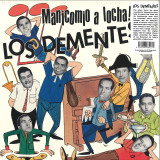
LOS DEMENTES - MANICOMIO A LOCHA LP

This album marks the debut recording for Venezuela's Velvet label by pianist Ray Pérez and his trombone-led salsa band Los Dementes. Heavy dance numbers and the distinctive vocals of Perucho Torcat make this historic 1967 rarity a sought-after collector's item. Now the LP has been lovingly restored, mastered from the original tapes, with its original artwork intact, preserving the legacy of Los Dementes for today's generation of salsa lovers everywhere. First time reissue. Salsa pianist, vocalist, composer and arranger Ray Pérez, acquired his nickname "Loco" by being a free, independent spirit, an innovator and iconoclast who was initially branded as "crazy" for the freshness and audacity of his sound. Amazingly, he is not that well known in the US, where he spent some time in the late 1960s and salsa was king during the 1970s. Yet he was quite popular in his home country from the beginning, especially amongst the working class of Caracas and Maracaibo, who adopted Cuban music played by New York Puerto Ricans as their own and called it "salsa" years before the term was employed by US labels like Fania as a marketing tool. Pérez is revered in Venezuela, as well as in Mexico and Colombia, and his storied career, which spans seven decades and thousands of concerts, has yielded more than 35 albums recorded by his various bands, including Los Dementes, Los Kenya, and Los Calvos, all of which are collector's items today. At the start of 1967 Pérez debuted Los Dementes, with vocalists Claudio Zerpa and Perucho Torcat backed by an ace band featuring only trombones in the brass section. Titled "¡Alerta mundo! Llegaron los 'The Crazy Men'" the record was released on the small Venezuelan label Prodansa. Soon after, Prodansa folded and Los Dementes were left without representation or much compensation for their efforts, being paid only in records. In the end of February of that year, Pérez returned to Caracas from a stint in Maracaibo in order to finish his first LP with the well-established and larger Velvet label, entitled "Manicomio a locha". In the first quarter of 1967, Velvet unleashed a trilogy of salsa records in order to compete with rival label Palacio and their recent success with Federico y su Combo Latino: "Porfi '67 Salsa & Boogaloo" by Porfi Jiménez y su Orquesta, "Guasancó" by Sexteto Juventud and lastly "Manicomio a locha". The LP begins appropriately with the boisterous title track, written by the band's conguero Carlos "Nené" Quintero, who would become a legend in coming years. Torcat describes a jam session in mental institution and introduces the band, with tasty solos by trombonist Rufo García followed by Ray on piano. Already you can hear something was different about Ray and his "Crazy Men"-a sound as wild and innovative as what was happening in New York with Eddie Palmieri, but with a more unhinged, raw feeling in line with Willie Colón and other younger Nuyorican bands. Next up is an intriguing track sung in a mix of Italian, English, Spanish and Papiamento by Pérez himself, performed in the complicated rhythm of the mozambique, an Afro-Cuban carnival beat developed in the early 1960s. This is followed by the heavy dancer 'Rico guaguancó', penned by Angelito Pérez, which changes from the guaguancó to the mozambique rhythm mid-way through, proving that Los Dementes were "different from the rest" as the lyrics say. 'Puerto Libre', sung by Torcat, is dedicated to the Venezuelan island of Margarita in the Oriente region, and the independent spirit of its working people. The rhythm changes from guaguancó to guajira and back again but remains danceable all the way through. The side closes out with a "3 in 1" medley inspired by the popular formula of the mosaicos of Billo's Caracas Boys, seamlessly knitting together several different tempos, rhythms, moods and compositions. Side two starts strong with the fierce yet satirical 'Corte e' patas', then 'Alma Cumanesa', a typical folk song refashioned as a guaguancó. This is followed by the funky 'Guajira con Boogaloo'. The tune echoes the sound of young Latin New York, pointing out the connection between Cuban and African American soul music. The pace picks up again with 'Fiesta de trombones', a hot descarga and then the album closes with another medley. Though this marks the end of a rather short album, it also signaled the emerging success of Los Dementes and their involvement with the salsa boom in Venezuela, quickly selling out of its initial run of 1000 records and making for a memorable debut on the Velvet label. Now this rare and sought-after LP has been lovingly restored, mastered from the original tapes, with its original artwork intact, preserving the legacy of Los Dementes for today's generation of salsa lovers everywhere.

нет на складе

Закажите сейчас, и мы закажем товар для вас у нашего поставщика.

Последний логин: 3 г. назад
24,58 €
Blondie - Vivir en la Habana

Originally released in July 2021 on blue vinyl – this is a yellow vinyl re-press – original notes below

During 2019, Blondie was invited to perform in Havana, Cuba as part of a cultural exchange through the Cuban Ministry of Culture. This was a 40 year ambition come especially for songwriter & guitarist Chris Stein, who had longed to visit Cuba for most of his life. Artist and director Rob Roth documented this special moment and career highlight by shooting a short film titled “BLONDIE: VIVIR EN LA HABANA”.
The film is broken up into 3 parts — Water, Fire and Air — and present a meditation on the experience as well as highlights from the two-night live musical performances with special guests Alain Perez, David Torrens and Cuban Fusion Pioneers Sintesís at Havana’s famous Teatro Mella.
With narration from Blondie founding members Debbie Harry, Chris Stein, and Clem Burke, providing a glimpse into the passion and beauty they discovered in Havana and the magic moments of performing alongside incredible Cuban artists. “BLONDIE: VIVIR EN LA HABANA” goes beyond the atypical short form film and live music documentary by presenting a portrait of the legendary band’s first experience in Havana and of the magical exchange between musicians from the two cities each call home and their intertwined influences.

The sound track for the film features Cuban musicians Carlos Alfonso, Ele Valdés, María del Carmen Ávila, Alejandro Delgado, Juan Carlos Marin, Jamil Schery, Degnis Bofill, Adel González

Released in July on limited edition pale blue vinyl to accompany the film which will feature throughout 2021 in many prominent Film Festivals inc the Tribeca Film Festival.

Сделать предзаказ12.08.2022

он должен быть опубликован на 12.08.2022

18,45 €
Amalia Rodrigues - Récitals Parisiens
Сделать предзаказ10.06.2022

он должен быть опубликован на 10.06.2022

26,68 €
COCO LAGOS Y SUS ORATES - DESCARGAS LP

HIGHLIGHTS: 1967 descargas album by Peruvian percussionist Coco Lagos y Sus Orates, featuring Alfredo Linares, Charlie Palomares, Otto de Rojas, Mario Allison_ This album was recorded following the success of the descarga sessions released by New York label Alegre Records. It includes a version of Cal Tjader's 'Mamblues' and 'Brava pachanga', an original by the Father of Boogaloo, Joe Cuba, among many other stand-out tracks. Quality official reissue on 180g vinyl after years unavailable. Includes insert with liner notes. Details: 1966 was a prolific year for the MAG record label. The microphones were constantly on at the label's studios, recording timeless hits by Los Demonios de Corocochay, Betico Salas, Cholo Berrocal, Mario Allison, Alfredo Linares, Carlos Muñoz and Los Pacharacos, just to mention the most successful ones. The percussion playing by 29-year-old Peruvian Coco Lagos stands out on a number of these recordings. Coco continued his early career, and he played the conga drums for artists who passed through Lima, accompanying Pérez Prado, Oréfiche and Chano Scotty, among others. In the late 50s, he started working as a regular musician in the recently founded record company MAG, alongside musicians such as Ñiko Estrada, Mario Allison, Lucho Macedo...

нет на складе

Закажите сейчас, и мы закажем товар для вас у нашего поставщика.

Последний логин: 4 г. назад
25,17 €
Blondie - Vivir en la Habana

During 2019, Blondie was invited to perform in Havana, Cuba as part of a cultural exchange through the Cuban Ministry of Culture. This was a 40 year ambition come especially for songwriter & guitarist Chris Stein, who had longed to visit Cuba for most of his life. Artist and director Rob Roth documented this special moment and career highlight by shooting a short film titled “BLONDIE: VIVIR EN LA HABANA”.

The film is broken up into 3 parts — Water, Fire and Air — and present a meditation on the experience as well as highlights from the two-night live musical performances with special guests Alain Perez, David Torrens and Cuban Fusion Pioneers Sintesís at Havana’s famous Teatro Mella.

With narration from Blondie founding members Debbie Harry, Chris Stein, and Clem Burke, providing a glimpse into the passion and beauty they discovered in Havana and the magic moments of performing alongside incredible Cuban artists. “BLONDIE: VIVIR EN LA HABANA” goes beyond the atypical short form film and live music documentary by presenting a portrait of the legendary band’s first experience in Havana and of the magical exchange between musicians from the two cities each call home and their intertwined influences.

The sound track for the film features Cuban musicians Carlos Alfonso, Ele Valdés, María del Carmen Ávila, Alejandro Delgado, Juan Carlos Marin, Jamil Schery, Degnis Bofill, Adel González

Released in July on limited edition pale blue vinyl to accompany the film which will feature throughout 2021 in many prominent Film Festivals inc the Tribeca Film Festival.

Сделать предзаказ16.07.2021

он должен быть опубликован на 16.07.2021

19,29 €
  • 1
Продуктов на странице:

Language

N/ABPM
Vinyl