Berlin, späte 1960er Jahre: Eine geteilte Stadt wird zum Epizentrum einer musikalischen Revolution. Inmitten der Spannungen des Kalten Krieges trat eine Gruppe junger Klangforscher auf den Plan, um die Grenzen der Rockmusik neu zu definieren. Agitation Free, 1967 gegründet, war nie nur eine Band, sondern ein Labor für "Bewegung, Unruhe und Veränderung" - so die Definition des Wortes "Agitation", die ihr Mentor Folke Hanfeld in einem Lexikon gefunden hatte. Von Anfang an fungierte Agitation Free als Knotenpunkt der aufkeimenden "Berliner Schule" der elektronischen Musik. Ihre frühen Proben im Electronic Beat Studio unter der Leitung von Thomas Kessler wurden zum Anziehungspunkt für andere Legenden wie Tangerine Dream und Ash Ra Tempel. Gleichzeitig dienten sie als Sprungbrett für Ausnahmetalente wie Christopher "Chris" Franke (Tangerine Dream) oder den Gitarristen Axel "Ax" Genrich (Guru Guru). Während die Studioalben "Malesch" (1972) und "2nd" (1973) von Agitation Free Meilensteine des Genres sind, war die Bühne der Ort, an dem das "Free" in ihrem Namen wirklich zum Leben erwachte. Ihre Konzerte waren avantgardistische Erlebnisse, die Flüssiglicht-Shows und Experimentalfilme mit hypnotischen, langgezogenen instrumentalen Improvisationen verbanden. Ein Beispiel hierfür ist ihr neues Live-Dokument "Live in Berlin" vom 1. Dezember 2025 aus dem Berliner Kesselhaus, auf dem das aktuelle Line-up zu hören ist: die Gründungsmitglieder Lutz "Lüül" Graf-Ulbrich und Burghard Rausch sowie Michael Hoenig, der sich zwar vom Live-Betrieb zurückgezogen hat, aber "Spiritus Rector" der Band bleibt, zusammen mit Daniel Cordes, Axel Heilhecker und Tim Sund. Wie Michael Hoenig einmal feststellte, ist die Musik von Agitation Free eine "Zeitmaschine, die Vergangenheit und Zukunft verbindet". Die Magie lebt weiter.
Agitation Free zählte in den frühen 70er Jahren zu den führenden Vertretern der deutschen experimentellen Rockmusik. Die Berliner Band entwickelte ab Ende 1967 lange, für diese Zeit ungewöhnlich freie instrumentale Improvisationen. Kult-Status erlangte sie bereits 1972 mit einer eigenständigen Mischung aus improvisiertem Rock gepaart mit Elektro-, Ethno-, Jazz- und Trance-Elementen. Umfangreiche Live-Aktivitäten verschafften der Band in ganz Europa einen stetig ansteigenden Bekanntheitsgrad. So trat die Gruppe im Sommer 1972 im kulturellen Programm der Olympischen Spiele in München auf, tourte Anfang 1973 zwei Monate durch Frankreich, trat im Mai beim "German Rock Super Concert" in Frankfurt auf, produzierte das zweite Album "2nd" und ging anschließend auf Tournee durch Frankreich und deutsche Großstädte. 1974 machten sich bei der Band Ermüdungserscheinungen breit, die Ende des Jahres nach einem Abschiedskonzert zur vorläufigen Auflösung führten. Obwohl eine Reihe von Alben (mit Aufnahmen von 1972 bis 1974) nach der Auflösung der Gruppe erschienen und das Studio-Album "River of Return" 1999 herauskam, dauerte es fast 35 Jahre, bis sich die ursprüngliche Band wieder für Konzerte zusammenfand. Im Februar 2007 gab Agitation Free in der Originalbesetzung von 1974 eine Serie von Konzerten in Tokio"s "Shibuya O"West". Im Rückblick zeigte sich, dass der Experimentier-Zirkel Agitation Free eine der wichtigen Bands der "Berliner Schule" und darüber hinaus Karriere-Sprungbrett für einige Deutsche Musiker war. So verhalf Christopher Franke der Band Tangerine Dream zu weltweiter Anerkennung. Michael Hoenig arbeitete mit Klaus Schulze und Tangerine Dream, ehe er nach einem Soloalbum in Hollywood als Filmkomponist bekannt wurde (unter anderem die Filmmusik für den Blockbuster "9 1/2 Wochen" mit Kim Basinger und Mickey Rourke). Axel Genrich wechselte zu Guru Guru, Burghard Rausch wurde Gründungs-Mitglied bei Bel Ami. Gustl Lütjens, tourte mit Shirley Bassey und Nena und fand später mit seiner New-Age-Band Living Mirrors vor allem in den USA ein großes Publikum. Lutz "Lüül" Ulbrich schloss sich Ashra an, arbeitete mit Ex-Velvet Underground-Sängerin Nico, produzierte neben Theatermusik Soloplatten und feiert seit Ende der 90er Jahre mit den 17 Hippies Erfolge. In der Besetzung Michael Hoenig (keyb, syn, el. perc), Burghard Rausch (dr, el. per), Lutz Graf-Ulbrich ((git, acc. git, bj), Gustl Lütjens (git acc. git, vocals) und Daniel Cordes (b, syn) wurde das vorliegende Studioalbum "Momentum" eingespielt.
Agitation Free zählte in den frühen 70er Jahren zu den führenden Vertretern der deutschen experimentellen Rockmusik. Die Berliner Band entwickelte ab Ende 1967 lange, für diese Zeit ungewöhnlich freie instrumentale Improvisationen. Kult-Status erlangte sie bereits 1972 mit einer eigenständigen Mischung aus improvisiertem Rock gepaart mit Elektro-, Ethno-, Jazz- und Trance-Elementen. Umfangreiche Live-Aktivitäten verschafften der Band in ganz Europa einen stetig ansteigenden Bekanntheitsgrad. So trat die Gruppe im Sommer 1972 im kulturellen Programm der Olympischen Spiele in München auf, tourte Anfang 1973 zwei Monate durch Frankreich, trat im Mai beim "German Rock Super Concert" in Frankfurt auf, produzierte das zweite Album "2nd" und ging anschließend auf Tournee durch Frankreich und deutsche Großstädte. 1974 machten sich bei der Band Ermüdungserscheinungen breit, die Ende des Jahres nach einem Abschiedskonzert zur vorläufigen Auflösung führten. Obwohl eine Reihe von Alben (mit Aufnahmen von 1972 bis 1974) nach der Auflösung der Gruppe erschienen und das Studio-Album "River of Return" 1999 herauskam, dauerte es fast 35 Jahre, bis sich die ursprüngliche Band wieder für Konzerte zusammenfand. Im Februar 2007 gab Agitation Free in der Originalbesetzung von 1974 eine Serie von Konzerten in Tokio"s "Shibuya O"West". Im Rückblick zeigte sich, dass der Experimentier-Zirkel Agitation Free eine der wichtigen Bands der "Berliner Schule" und darüber hinaus Karriere-Sprungbrett für einige Deutsche Musiker war. So verhalf Christopher Franke der Band Tangerine Dream zu weltweiter Anerkennung. Michael Hoenig arbeitete mit Klaus Schulze und Tangerine Dream, ehe er nach einem Soloalbum in Hollywood als Filmkomponist bekannt wurde (unter anderem die Filmmusik für den Blockbuster "9 1/2 Wochen" mit Kim Basinger und Mickey Rourke). Axel Genrich wechselte zu Guru Guru, Burghard Rausch wurde Gründungs-Mitglied bei Bel Ami. Gustl Lütjens, tourte mit Shirley Bassey und Nena und fand später mit seiner New-Age-Band Living Mirrors vor allem in den USA ein großes Publikum. Lutz "Lüül" Ulbrich schloss sich Ashra an, arbeitete mit Ex-Velvet Underground-Sängerin Nico, produzierte neben Theatermusik Soloplatten und feiert seit Ende der 90er Jahre mit den 17 Hippies Erfolge. In der Besetzung Michael Hoenig (keyb, syn, el. perc), Burghard Rausch (dr, el. per), Lutz Graf-Ulbrich ((git, acc. git, bj), Gustl Lütjens (git acc. git, vocals) und Daniel Cordes (b, syn) wurde das vorliegende Studioalbum "Momentum" eingespielt.
After almost 25 years a new studio album of the German prog rock legend in original lineup! Agitation Free was one of the leading representatives of German experimental rock
music in the early 1970s. The Berlin band developed long, for that time unusual, free
instrumental improvisations from the end of 1967. They achieved cult status as early as
1972 with an independent mixture of improvised rock paired with electro, ethno, jazz and
trance elements.
Extensive live activities gave the band a steadily increasing level of recognition throughout
Europe. For example, the group performed in the cultural program of the Olympic Games
in Munich in the summer of 1972, toured France for two months in early 1973, performed
at the "German Rock Super Concert" in Frankfurt in May, produced the second album "2nd"
and then went on tour through France and major German cities. In 1974, the band began
to show signs of fatigue, which led to their temporary breakup at the end of the year after
a farewell concert.
Although a number of albums (with recordings from 1972 to 1974) were released after the
group's breakup and the studio album "River of Return" was released in 1999, it took
almost 35 years for the original band to reunite for concerts. In February 2007, Agitation
Free, with the original lineup from 1974, gave a series of concerts at Tokyo's "Shibuya
O'West."
In retrospect, it became clear that the experimental circle Agitation Free was one of the
important bands of the "Berlin School" and furthermore a career springboard for several
German musicians. Christopher Franke, for example, helped the band Tangerine Dream
achieve worldwide recognition. Michael Hoenig worked with Klaus Schulze and Tangerine
Dream before he became known as a film composer in Hollywood after a solo album
(among other things, the film music for the blockbuster "9 1/2 Weeks" with Kim Basinger
and Mickey Rourke). Axel Genrich moved to Guru Guru, Burghard Rausch became a
founding member of Bel Ami. Gustl Lütjens, toured with Shirley Bassey and Nena and later
found a large audience with his new age band Living Mirrors, especially in the USA. Lutz
"Lüül" Ulbrich joined Ashra, worked with ex-Velvet Underground singer Nico, produced
solo records in addition to theater music, and has enjoyed success with the 17 Hippies since
the late 1990s.
In the line-up Michael Hoenig (keyb, syn, el. perc), Burghard Rausch (dr, el. per), Lutz GrafUlbrich ((git, acc. git, bj), Gustl Lütjens (git acc. git, vocals) and Daniel Cordes (b, syn) the
new studio album "Momentum" was recorded.
After almost 25 years a new studio album of the German prog rock legend in original lineup! Agitation Free was one of the leading representatives of German experimental rock
music in the early 1970s. The Berlin band developed long, for that time unusual, free
instrumental improvisations from the end of 1967. They achieved cult status as early as
1972 with an independent mixture of improvised rock paired with electro, ethno, jazz and
trance elements.
Extensive live activities gave the band a steadily increasing level of recognition throughout
Europe. For example, the group performed in the cultural program of the Olympic Games
in Munich in the summer of 1972, toured France for two months in early 1973, performed
at the "German Rock Super Concert" in Frankfurt in May, produced the second album "2nd"
and then went on tour through France and major German cities. In 1974, the band began
to show signs of fatigue, which led to their temporary breakup at the end of the year after
a farewell concert.
Although a number of albums (with recordings from 1972 to 1974) were released after the
group's breakup and the studio album "River of Return" was released in 1999, it took
almost 35 years for the original band to reunite for concerts. In February 2007, Agitation
Free, with the original lineup from 1974, gave a series of concerts at Tokyo's "Shibuya
O'West."
In retrospect, it became clear that the experimental circle Agitation Free was one of the
important bands of the "Berlin School" and furthermore a career springboard for several
German musicians. Christopher Franke, for example, helped the band Tangerine Dream
achieve worldwide recognition. Michael Hoenig worked with Klaus Schulze and Tangerine
Dream before he became known as a film composer in Hollywood after a solo album
(among other things, the film music for the blockbuster "9 1/2 Weeks" with Kim Basinger
and Mickey Rourke). Axel Genrich moved to Guru Guru, Burghard Rausch became a
founding member of Bel Ami. Gustl Lütjens, toured with Shirley Bassey and Nena and later
found a large audience with his new age band Living Mirrors, especially in the USA. Lutz
"Lüül" Ulbrich joined Ashra, worked with ex-Velvet Underground singer Nico, produced
solo records in addition to theater music, and has enjoyed success with the 17 Hippies since
the late 1990s.
In the line-up Michael Hoenig (keyb, syn, el. perc), Burghard Rausch (dr, el. per), Lutz GrafUlbrich ((git, acc. git, bj), Gustl Lütjens (git acc. git, vocals) and Daniel Cordes (b, syn) the
new studio album "Momentum" was recorded.
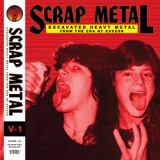
By now you’re probably familiar with our wildly popular Brown Acid series of rare, lost and unreleased proto-metal and stoner rock singles from the 60s-70s. In the endless pursuit of those glorious gems, we often uncover equally brilliant rarities from the late-70s to late-80s Golden Age of Heavy Metal that also just must be heard, but they don’t fit the series’ aesthetic. Scrap Metal, Volume 1 collects some of the greatest unknown and lost Heavy Metal tracks, long buried beneath the avalanche of the era’s classic output.
We all know the old adage that history is told by the winners. But sometimes the losers tell the best stories. And while none of these bands found fame and fortune, this artifact and the volumes to come are testament to the enduring power of heavy music. You can hear the blood, sweat and beers that went into each of these singles. The recordings may be low budget, but the inspiration and talent is immutable. Not only are the amps turned up to 11, the boyish sexual innuendo is cranked to 69. You can hear the convergence of influences — NWOBHM, thrash, glam metal, doom, etc — colliding at once as the era birthed a wellspring of subgenres.
Many of these singles are self-released and were thus limited to a small run of copies. Those that remain are hoarded by collectors and sold for exorbitant amounts. We’ve collected the best of the best for you here. As with Brown Acid, all of these tracks are licensed legitimately and the artists all get paid. Because it’s the right thing to do.
LINER NOTES:
Rapid Tears launch this series with the perfect christening. The Toronto, ON quintet’s 1981 single “Headbang” is such the pinnacle of heavy metal madness that it almost sounds like a spoof. There’s also enough of the rapid-fire sputum that inspired Metallica to bang the head that doesn’t, as such, engage in said practice, to be found on the band’s sole full length Honestly. But “Headbang” is a straightforward glammy anthem for the ages.
Air Raid’s “69 In A 55” may be lyrically so sophomoric that it’s actually pretty clever, but this 1983 Bay Area power metal single is loaded with sleek Judas Priest riffs and interwoven melodies that are downright sublime. The band’s sole release, the 2-song Rock Force 7” features a curious band photo in which 3 band members — dolled up in Crüe makeup and leather — are sexually menacing the lead singer/guitarist tied to a bed. Another low budget highlight is when singer/guitarist Tommy “Thrasher” Merry imitates a delay effect on his vocals as he sings, “tonight!...tonight...night.”
Hades’ “Girls Will Be Girls” has a real demo cassette feel to its vastly uneven mix, but the energy to the performance makes this an undeniable keeper. The long running Paramus, NJ quintet’s 1982 2- song debut 7” titled Deliver Us From Evil features this blistering thrasher dominated by shimmering leads and confident vocals that show why the band went on to near-fame on Metal Blade Records.
Resless don’t need no T to prove that they’ve got “The Power” with this 1984 driving mid-tempo rocker in the vein of Mötley Crüe and Ratt. The River Vale, NJ quartet’s tight crunch wails all over Bon Jovi posers but it’s the band’s unique and subtle deployment of background vocals that gives this rager its staying power.
Pittsburgh, the Steel City, is home to Don Cappa, a band that pays tribute to the burgh, the metal, and the awesomeness of both with “Steel City Metal.” Their lone single, issued in 1987 with only 300 copies released, sounds like the work of some serious steel driving men, with a drummer who might’ve forgotten to wear a hard hat one too many times on the construction site.
The Beast has more of a punk feel to their aggressive “Enemy Ace” track from the 4-song Power Metal EP from 1983 — something like Dr. Know meets D.O.A. But their look, artwork and lyrics all prove that Heavy Metal is where their hearts lie. And this hook filled monster delivers repeated lines like, “I command them all in my lofty realm,” with commendable conviction.
Dead Silence from Denver, Colorado, debuting in 1984 is not to be confused with Dead Silence from Denver, Colorado, who also debuted in 1984. The former a workman’s hard rock bar band, the latter a political peace punk band and neither knowing of the other’s existence throughout their tenure. The pre-internet days were a marvel, indeed.This Dead Silence spits out a slick, Nugent tinged rocker called “Can’t Stop” about life on the road.
The Danger Zone is, by all accounts, not the place to be. And, Hazardous Waste of Boston, MA saw fit to add their two cents on the matter with this 1986 single that combines Van Halen’s flashy musicianship with NWOBHM aggression that sounds so awesome it teeters on itself entering the “Danger Zone.”
Czar’s heavy, doomy “Iron Curtain” single from 1982 hearkens to the sleazy sounds of Saint Vitus and Pentagram with its cranked up DOD Distortion pedal in a Peavey combo amp guitar tone and meaty, barking vocals. The upstate NY quintet only issued this 2-song single, but its driving rhythm, nosedive whammy-bar guitar solos and comparatively mature Cold War subject matter show they had real potential.
Not much is known about Real Steel’s majestic “Viking Queen” from 1987, other than it rocks hard and the 7” 45 sells for upwards of a grand on the collectors market. The Flint, Michigan band recorded at the home studio of local radio personality Bill Lamb, who primarily released Christian Gospel recordings. So, perhaps the band was struck down by a bolt of lightning shortly after this rare single’s release. Whatever the case may be, it’s a must have for fans of classic metal mayhem.