The Heinz Beauvaix project dates back to the mid-1990’s when Niels Rønne and Flemming Kaspersen played in Danish ambient act Swimwear Catalogue. On an ever growing number of DAT tapes they recorded semi-improvised synth/sampler/sequencer jams that mixed influences from ambient, electro and industrial. Later they began working with more detailed studio productions.
The seven tracks on “Vision Man” combine complex synth pads, interweaving monophonic synth lines, discrete drum rhythms, and strange voice samples. The sound is experimental and melodic at the same time. Influences range from early industrial to IDM, techno and synth pop. Rønne and Kaspersen originally met through a shared obsession with Canadian industrial giants Skinny Puppy. And if there is one seminal album that has influenced the Heinz Beauvaix sound, it is the obscure Skinny Puppy side project Doubting Thomas and their solitary album “The Infidel”, released in 1990.
Others have mentioned influences from bands such as Coil, Severed Heads, Bill Leeb and Rhys Fulber’s Delerium and Future Sound Of London.
“Vision Man” is old school synthesizer music with tunes you can hum.
Search:clever lee
- 1
- Memoriam
- Deficit
- 1777:
- Cheyenne
- Burial
- Ethel
- Lebaron
- Memorial (Featuring Chelsea Wolfe)
Limitiertes Silber mit schwarzem Splatter Vinyl im Klappcover! Ein leeres Fotoalbum. Instinktiv blätterst du jede Seite durch, ob sich nicht doch irgendwo ein Fetzen deiner Erinnerungen, deiner Vergangenheit findet. Doch die Fotos sind längst herausgerissen oder verloren gegangen. Und doch spürst du etwas. Auf jeder Seite, die du aufschlägst, eröffnen sich Welten. Gedanken und Gedenken an Vergangenes macht sich in dir breit. Das Gefühl von Vergänglichkeit unterdrückst du, jetzt und hier ist alles ewig und für immer. Und mit geschlossenen Augen blätterst du weiter und fliegst an Orte, die wie Relikte aus deinem Leben aus der Landschaft emporragen. Es sind deine Orte und nur das Gedenken hält sie lebendig. "Memorial", ist das fünfte Album von RUSSIAN CIRCLES und balanciert von Metal beeinflusste Sounds mit nuancierten orchestralen Elementen. In den zwei Jahren nach der Veröffentlichung von ,Empros" war das Trio aus Chicago fast unaufhörlich weltweit auf Tour und traf dabei auf viele härtere Bands, deren Musik unnötig kompliziert schien. "Also machten wir uns auf, eine unkomplizierte, geradlinige, intensive, heavy Platte aufzunehmen" so Cook. "Unbewusst strebten wir nach dunkleren und düstereren Klängen. Wir wollten weg von der offenen Aufdringlichkeit." Auf der Suche nach dem optimierten Sound konzentrierte sich das Trio auf jeden einzelnen Song mit seinen eigenen emotionalen und musikalischen Eigenschaften. Und so fühlt sich "Memorial" fast so an, als würde man die Stufen der Trauer erklimmen und wieder hinabsteigen. Das Konzept wird durch die clevere Struktur des Albums unterstützt, da es an der gleichen Stelle endet in der es beginnt, und natürlich durch den Auftritt der Gastsängerin CHELSEA WOLFE, die mit ihrem ergreifend düsteren Gesang im abschließenden Titeltrack dem Album das angemessene Ende verleiht. Bis zu einem gewissen Grad sind die monolithischen, nebeneinander existierenden Stimmungen auf "Memorial" die Reaktion der Band auf die Verbreitung und den Einfluss der iPod Kultur und wie diese die Songwriting-Prozesse von Bands neuerdings beeinflusst. Heutzutage versuchen viele Musiker aus unvereinbaren Elementen einen Sound-Brei zusammenzurühren und die Ergebnisse klingen so ungenießbar, wie eine Mahlzeit nach Kochen mit verbundenen Augen. RUSSIAN CIRCLES hingegen umgehen klug und geschickt die Fallen der Genre Verschmelzung. "Ich möchte Bands mit einer breiten Palette hören," sagt Cook, "aber sie sollte diese seltsame Balance zwischen Bandbreite und Weite finden. Wir wollten ein Album mit mehr extremen Höhen und Tiefen. Ich hoffe, dass wir damit durchkommen, eine schizophrene Platte gemacht zu haben."
Admittedly, I'm not a great salesperson when it comes to running our little label. I do my best not to give into hyperbole or build something up too intensely if someone has not heard a new artist yet. I prefer to simply present the music and let the listener decide how they feel about it. However, we live in an age when the "story" put together by publicists, labels, and managers are often the driving force of an artist's ascension into the zeitgeist. And for me, that's always felt rather artificial, even when the narrative is genuine. But every once in a while, a project comes along that takes on a life of its own. And I can say without a doubt that the growth of Pale Jay's reach since we first started working with him has little to do with conjured narratives or clever marketing, but more to do with how the music makes the listener feel. It's that simple. In fact, Jay is so enigmatic and without a narrative that the mere absence of a story has become the story. Who is he? Where is he from? What's next? Some questions are better left unanswered in my opinion, my friend. Including the question, "Why does this music make me feel so much?" You're better off just sitting back, disconnecting, and letting Low End Love Songs by Pale Jay wrap you up. Enjoy and spread the good word. - Terry Cole
"Low End Love Songs", more so than previous releases, is a diary in form of song. I knew I just had to wait for the songs to be ready to be picked, like ripe fruit from a tree. Each tune encapsulates a distinct moment in my life, with music serving as my means of processing complex and sometimes conflicting emotions. In this album, I depart from loop-based song structures towards more intricate and lush compositions. Latin influences permeate the music, adding new layers of rhythms and textures to my soul-music roots. - Pale Jay
Admittedly, I'm not a great salesperson when it comes to running our little label. I do my best not to give into hyperbole or build something up too intensely if someone has not heard a new artist yet. I prefer to simply present the music and let the listener decide how they feel about it. However, we live in an age when the "story" put together by publicists, labels, and managers are often the driving force of an artist's ascension into the zeitgeist. And for me, that's always felt rather artificial, even when the narrative is genuine. But every once in a while, a project comes along that takes on a life of its own. And I can say without a doubt that the growth of Pale Jay's reach since we first started working with him has little to do with conjured narratives or clever marketing, but more to do with how the music makes the listener feel. It's that simple. In fact, Jay is so enigmatic and without a narrative that the mere absence of a story has become the story. Who is he? Where is he from? What's next? Some questions are better left unanswered in my opinion, my friend. Including the question, "Why does this music make me feel so much?" You're better off just sitting back, disconnecting, and letting Low End Love Songs by Pale Jay wrap you up. Enjoy and spread the good word. - Terry Cole
"Low End Love Songs", more so than previous releases, is a diary in form of song. I knew I just had to wait for the songs to be ready to be picked, like ripe fruit from a tree. Each tune encapsulates a distinct moment in my life, with music serving as my means of processing complex and sometimes conflicting emotions. In this album, I depart from loop-based song structures towards more intricate and lush compositions. Latin influences permeate the music, adding new layers of rhythms and textures to my soul-music roots. - Pale Jay
Montenegrin born in Istanbul, precocious pianist growing up in an embassy, brilliant musician. Prolific composer speaking eight languages, he arranged music for jazz, pop music, adopting multiple identities.
For one label, he is Andy Loore; for another, Emiliano Orti. For others, he is called Alan Blackwell or Johnny Montevideo, but behind all these aliases, there is only one man: Janko Nilovic.
Exploring the shelves of musical production, venturing into the less-illuminated corners of library music, Janko Nilovic's name lights up dozens of shelves on which his soundtracks, his records for Editions Neuilly or Sforzando, but above all his twenty albums for Editions Montparnasse, are stored. A considerable and imposing work, rich in orchestrations of keyboards, strings and brass instruments, themes, atmospheres and melodies. A repertoire in which the cinema, television and advertising have come to find their delight ...
Subjected to the sharp blades of samplers, reduced to a few effective seconds, joined with rhythmic beats, some of his tracks have infiltrated hip hop for a long time , leading the most curious to go back to the source to get the complete albums from which the precious loops had been taken.
Almost unknown to the general public, Janko Nilovic is a master for the initiated, whether they are at his side in the studio or comfortably seated in their armchair savouring the final result on their turntable. His discretion combined with his long years of silence on the record could lead one to believe that he had cleverly arranged his disappearance from the radar to make Janko Nilovic a mystery that has never been completely solved.
Until this message from The Soul Surfers.
A few miles away, in their studio fired up by analog funk, the Muscovites had been put back on the Nilovic track by multi-instrumentalist Shawn Lee. A few passionate discussions later, and the desire for a joint album was already lighting up the amps, making the bass strings shiver and the drum skins tighten.
Initiated by the coming and going of scores, the collaboration finally continued in studio for a real exchange, instantly bouncing off proposals, developing ideas in a live group dynamic that distance would have made impossible.
To feel the vibrations accumulated for decades at the CBE studio (like Chatelain Bisson Estardy), a mythical place founded in 1966, in which many albums, especially library, were immortalized. A place where consoles, equipment and instruments were kept as they were, accumulating in their wiring, meters and speakers, endless hours of experimentation and recording.
A place that Janko knew well and where an old acquaintance was waiting for him. A Hammond organ with a Leslie booth whose keys he had already flattered in the past and behind which an improvisation and a single take were enough to complete the eponymous title.
Together, Janko Nilovic and The Soul Surfers have built Maze Of Sounds, a musical labyrinth paved by the master's keyboards where the soul-funk groove of the fiery Russians is the listener's thread, his point of reference in this maze of atmospheres and emotions, at once cinematic, nostalgic, dancing, dreamlike and contemplative.
An album where, however, nothing is compartmentalized. Where, blown by the whirlwind strung by a violin quintet, the barriers move preparing the entrance of a Slavic choir, letting a screaming guitar come and go alongside the crystalline liveliness of the Fender Rhodes, organize some rhythmic aerations at the disposal of the samplers.
A fusion between the cleverly blackened scores, between the science of precisely written arrangements and the soul-funk feel of The Soul Surfers. An album such as Janko Nilovic has been dreaming of making for years.
Dire Straits' arresting self-titled debut arrived in the midst of punk's reign but couldn't have been further removed from the era's slash-and-burn style. Recorded in West London in February 1978, the band's tasteful, jazz-inflected set embraces folk, blues, and pub rock while also tracing a direct line back to the beat-oriented sound of early rock n' roll. Country and roots accents further distinguish the British quartet's stripped-down music from any 1970s peers, as does the transparent production, which has remained revered among audiophiles the world over – and which has never been better than on this meticulous pressing.
Mastered from the original master tapes and pressed at RTI, Mobile Fidelity's 180g 45RPM 2LP version of Dire Straits features natural tonalities, superb balances, you-are-there imaging, deep-black backgrounds, and pristine clarity. Even if you've heard this album hundreds of times before, you've never experienced it with such lifelike sonics and premium richness. This numbered-edition collector's set immerses you within the smoky, laidback atmospherics of every song. This is how all vinyl should sound.
Crucial to every arrangement, Mark Knopfler's winding guitar lines emerge with supreme transparency and multi-hued textural detail. His intricate playing comes across as if it's being transmitted via his 60s-era Fender Vibrolux amplifier placed right before you. The cleanliness, dimensions, and live feel are that good. His bandmates, too, benefit from the extra groove space afforded by this 45RPM edition. Rhythms skate and swirl; percussive effects resonate with crispness and attack; the leading edges of notes naturally decay.
Dire Straits' strong, well-edited batch of original material further enhances the overall enjoyment and makes the record one whose pleasures go far beyond the organic sonics. Just as Knopfler's narratives pour forth with poetic and surrealist texts, the musical settings – an intoxicating combination of easygoing shuffles, back-hall boogies, and pop-honed ballads – mirror the old-fashioned soulfulness inherent in the classic recordings of the late 50s and early 60s. The lyrics are equally captivating.
Drawing from his time as a youth in Newcastle, Leeds, and London, Knopfler invests tunes with an autobiographical slant and emotional connectivity that become obvious the moment he opens his mouth to sing. "Down to the Waterline," "Wild West End," and "Lions" all feature colloquial touches that add to their reach. By extension, "In the Gallery" functions as a tribute to Leeds sculptor Harry Phillips (father of future Knoplfer collaborator, Steve Phillips) while the record's breakout smash, "Sultans of Swing," pays homage to struggling bar bands.
Through it all, Dire Straits performs with a subtle cool and clever poise that no band ever matched. Just how good is the chemistry? Bob Dylan heard the quartet and invited Knopfler and drummer Pick Withers to play on Slow Train Coming. But even Dylan himself didn't hear Dire Straits sound this magnetic back in its original heyday. Now, everyone can.
It’s been 43 years since the release of The Selecter’s seminal debut album Too Much Pressure and while it still inspires and resonates today, their new studio album Human Algebra keeps the fire burning with a stellar collection of hard-hitting tracks in the band’s own inimitable style. Human Algebra, released April 21st, is a word from the wise – from questioning ‘fake news’ (“Big Little Lies”), to pointing the finger at keyboard warriors (“Armchair Guevara”), and the scourge of knife crime (“Human Algebra”). Human relationships are also touched upon (“Boxing Clever”), along with a touching tribute to the late great Ranking Roger from The Beat (“Parade The Crown”).
As ever, The Selecter are led by their iconic frontwoman Pauline Black OBE and co-fronted by original member Arthur ‘Gaps’ Hendrickson with original drummer Charley ‘Aitch’ Bembridge. Human Algebra is produced by Neil Pyzer, who also contributes Sax, Guitar and keyboards. The rest of the band feature John Robertson on Guitar, Lee Horsley on organ and Andy Pearson on bass duties.
The essential series from the ’80s has been rebuilt, remastered, and carefully portioned onto a five disc set of 7-inch singles, including all the classic vocal bits that became iconic samples, and more than a few new additions to bring things up to date.
Where would dance music be without Acapellas Anonymous? Although many records claim to have changed the game, the arrival of the Acapellas Anonymous series in the mid/late ’80s actually did just that. A hugely popular, multi-volume set of vocal tracks sourced from a wide variety of dance classics, AA was used extensively at the dawn of sampled music to provide hooks for numerous hits. “I’ve Got the Power,” “Ride On Time,” multiple Clivillés and Cole tracks, Pal Joey’s “Party Time,” ’90s Italo house and rave cuts, and untold others all found their choruses among the many acapellas collected on the series. As Ultimate Breaks & Beats was for funk and hip-hop sampling, so was AA for dance music, both for producers and as a must-have for the creative DJ. Sure, before these records came along, DJs had their own choice vocal bits that they used in sets or layered into edits. But suddenly, much like Ultimate Breaks, these carefully guarded secret sources were available easily, and in convenient form, for the first time. And the response, from DJs and a new generation of producers, was immediate.
That part of the story is widely known, and indeed, was widely experienced by anyone paying attention to music of the time. But the questions linger: who was it that found these acapellas, many of them only existing on promo singles, or as tiny fragments buried on obscure B-sides? Who edited and put them together? By now, you may have guessed that once again we owe an enormous debt to the maestro of edits and our hometown hero, Danny Krivit. And it’s to him we must tip our collective caps for this latest release, a carefully revised, fully remastered, and immaculately executed update to the series — this time on 7-inch.
All of the classics are here, rinsed but still powerful: “Let No Man Put Asunder,” “Weekend,” “Don’t Make Me Wait,” “You Don’t Know,” and dozens more. New additions make a few clever appearances as well, with Roland Clark’s “I Get Deep” (used for Fatboy Slim’s “Star 69”), and Rickie Lee Jones’s stoned rambling known as “Little Fluffy Clouds” showing up for the first time. This is no nostalgia trip — Acapellas Anonymous was recently tapped for a Cardi B megahit, and naturally you’ll find that source, Frank-Ski’s “Whores In This House,” included. All in all, an astounding 80 high-quality acapellas and vocal hooks are spread across the five 7-inch, 33RPM singles, which have each been sequenced thematically with attention paid to timings and tempos to provide maximum utility for the working DJ. And if the past is any indicator, we will likely see a new crop of tracks spring up as these find their way into the production toolkits of the world’s track-makers.
”Sometimes, Forever” - das dritte Album von Soccer Mommy erscheint am 24.06. und beweist Sophie
Allison endgültig als einer der talentiertesten Songwriterinnen der Rockmusik unserer Zeit. Mit cleveren
Anspielungen auf Synthie-Subgenres wie New Wave und Gothic erweitert die heute 24-Jährige die Grenzen
ihrer Ästhetik. ”Sometimes, Forever” ist eine faszinierende Sammlung, die sowohl von der Vergangenheit
als auch von der Gegenwart geprägt ist und damit das gewagteste und ästhetisch abenteuerlichste Werk
von Soccer Mommy. Das Album lebt von widersprüchlichen Kräften: Verlangen und Apathie, Ekstase
und Elend, Gut und Böse, Selbstbeherrschung und Wildheit. Unverblümte Liebeslieder reiben sich an viel
düstererer Kost mit makabre Bildern, die selbst die fröhlichsten Passagen heimsuchen. Aber da es ihr heute
besser geht als zu der Zeit, als sie die Lieder schrieb, hat sie keine Probleme damit, in den Momenten des
unkomplizierten Glücks zu schwelgen, die neben der Dunkelheit existieren. Sie sagt: ”Ich wollte nicht etwas
super Deprimierendes ohne jeden Sinn für Magie machen”. Der Album-Titel bezieht sich auf die Idee, dass
sowohl gute als auch schlechte Gefühle zyklisch sind. ”Kummer und Leere gehen vorbei, aber sie kommen
immer wieder - genauso wie die Freude”, sagt Allison. ”Irgendwann ist man gezwungen zu sagen: Ich muss
einfach beides nehmen.”
Produziert wurde der neue Longplayer von Daniel Lopatin aka Oneohtrix Point Never.
Johnny Clarke ruled the dancehall in the mid '70s, using the clever "Flyers Rhythms" that gave some of his tunes an edge with the sound systems. But his voice was always bigger than this and his versatility to sing a wide range of vocal styles has seen him cut through the decades as one of reggae's best voices. Produced by Bunny Lee, mixed at King Tubby's studio, an absolute reggae/roots classic.
- Rare 1987 Detroit experimental Funk/Soul album - Solo album by Tony Newton (Motown, Funk Brothers) - First ever vinyl reissue - 180g Black Vinyl Edition - Limited to 500 copies // Antonio L. Newton AKA Tony Newton (born 1948) is a multi-instrumentalist from Detroit, MI who began his professional career at the age of thirteen, playing bass guitar with blues legends like John Lee Hooker and T-Bone Walker. Discovered by Motown executive Hank Cosby while playing the Detroit blues circuit at the age of 18, he became the touring bassist with Smokey Robinson and the Miracles on the famed 1965 European 'Motown Review' tour. Within two years, Newton became the Miracles' musical director. Tony Newton also toured and recorded with other Motown artists such as The Supremes, Marvin Gaye, Stevie Wonder, The Jackson 5_and countless others. Earning the nickname "the Baby Funk Brother" he left his trademark of solid, hard-driving and deftly clever grooves on such timeless hits as "Where Did Our Love Go," "Baby Love," "Stop In The Name Of Love," "Nowhere to Run," "ABC," "Never Can Say Goodbye," "Don't Leave Me This Way," and many others. Next to his impressive body of work for Motown, Newton can be heard on several hit singles from labels like Invictus-Hotwax and Stax. Later, Newton gained recognition as a member of both the acclaimed jazz-rock fusion group: The New Tony Williams Lifetime (headed by Miles Davis' drummer Tony Williams) and the British hard rock group: G-Force (with veteran guitarist Gary Moore). Tony Newton also recorded several solo albums during his impressive career, including the two total classics: 'Mysticism & Romance' (1978) and 'Novaphonia' (1987). On the album, we are presenting you today (Novaphonia from 1987) the listener is treated to something UNIQUE (and this is not an overstatement). Newton really puts the 'multi' into multi-instrumentalist, playing the synthesizers, the electric bass and the drum machine. Experimental is the keyword here, sounds vary from psych/trance (almost like a soundtrack from a space movie), to funk, fusion, rock, R&B, soul and jazz. Novaphonia has both elements of Tony Newton's impressive musical past and his vision for the future. Spacious synths, unusual instruments and an all-around cosmic approach make this an 'out of this world' and VERY intriguing album. Resonant, sonically rich, sonorous, colorful, mind-expanding sounds are what one should expect from the 20th century Novaphonic sound developed to its greatest extent. These harmonies are innately pleasing to the human ear, mind and nervous system.
Antonio L. Newton AKA Tony Newton (born 1948) is a multi-instrumentalist from Detroit, MI who began his professional career at the age of thirteen, playing bass guitar with blues legends like John Lee Hooker and T-Bone Walker. Discovered by Motown executive Hank Cosby while playing the Detroit blues circuit at the age of 18, he became the touring bassist with Smokey Robinson and the Miracles on the famed 1965 European ‘Motown Review’ tour. Within two years, Newton became the Miracles’ musical director.
Tony Newton also toured and recorded with other Motown artists such as The Supremes, Marvin Gaye, Stevie Wonder, The Jackson 5…and countless others. Earning the nickname “the Baby Funk Brother” he left his trademark of solid, hard-driving and deftly clever grooves on such timeless hits as “Where Did Our Love Go,” “Baby Love,” “Stop In The Name Of Love,” “Nowhere to Run,” “ABC,” “Never Can Say Goodbye,” “Don’t Leave Me This Way,” and many others. Next to his impressive body of work for Motown, Newton can be heard on several hit singles from labels like Invictus-Hotwax and Stax. Later, Newton gained recognition as a member of both the acclaimed jazz-rock fusion group: The New Tony Williams Lifetime (headed by Miles Davis’ drummer Tony Williams) and the British hard rock group: G-Force (with veteran guitarist Gary Moore).
Tony Newton also recorded several solo albums during his impressive career, including the two total classics: ‘Mysticism & Romance’ (1978) and ‘Novaphonia’ (1987).
On the album, we are presenting you today (Novaphonia from 1987) the listener is treated to something UNIQUE (and this is not an overstatement). Newton really puts the ‘multi’ into multi-instrumentalist, playing the synthesizers, the electric bass and the drum machine. Experimental is the keyword here, sounds vary from psych/trance (almost like a soundtrack from a space movie), to funk, fusion, rock, R&B, soul and jazz. Novaphonia has both elements of Tony Newton’s impressive musical past and his vision for the future.
Spacious synths, unusual instruments and an all-around cosmic approach make this an ‘out of this world’ and VERY intriguing album. Resonant, sonically rich, sonorous, colorful, mind-expanding sounds are what one should expect from the 20th century Novaphonic sound developed to its greatest extent. These harmonies are innately pleasing to the human ear, mind and nervous system.
Explore new musical frontiers intended to catapult the listener towards new dimensions…this is an album that just begs for a special place in your record collection!
Tidal Waves Music now proudly presents the first-ever vinyl reissue of ‘Novaphonia’ since its release in 1987. This rare & private-pressed album (original copies tend to go for large amounts on the secondary market) is now finally back available as a limited 180g vinyl edition (500 copies) complete with the original artwork.
Former Missouri disc jockey, Don Woody teamed up with a friend to write
a dozen rock ‘n’ roll songs to pitch to the record companies.
One was picked up by Little Brenda Lee and opened a door for Don with Decca
Records. Don’s clever way with words is evident on the recordings of “BirdDog” and “Barking Up the Wrong Tree” cut at Decca, while his more recent
coupling on Arco should consolidate his elevated position with the hep set.
YOU’RE BARKING UP THE WRONG TREE
'How is it that one of Art Blakey’s greatest albums with the Jazz Messengers is so little known? The 1961 edition of the Messengers included Lee Morgan on trumpet, Wayne Shorter on tenor saxophone, Bobby Timmons on piano, and Jymie Merritt on bass. In February and May of 1961, this group (with pianist Walter Davis Jr sitting in on two tracks) entered Rudy Van Gelder’s studio in New Jersey and proceeded to lay down Roots & Herbs, a brilliant set of six Shorter compositions including the driving hard bop of the title track, the playful “Ping Pong,” and the clever “United.” The album was eventually released in 1970 and deserves a place among Blakey’s finest recordings.
After The First Wave Of Artists That Have Broken The Ice With Their Way Of Combining Contemporary Symphonic Music With Electronica And Jazz On The European Side (olafur Arnalds, Nils Frahm, Max Richter) - Now There Is A New Generation Of Young Musician Breaking Boundaries On A New Level. Especially In Germany There Is A New Wave Of Artists That Bring The Thing On A Whole New Level. These 20 - 25 Year Old People Don't Just Imitate What The Bigger Names In The Scene (the Fathers) Have Done But Develop The Style To A Totally Different Level And Add New Ideas Instead Of Just Copying What The Older Guys Did. This New Wave Of Artists Have A Huge Musical Knowledge, Have Studied At The Best Music Academies, Learned To Play "classical" Instruments And Know How To Improvise On A Very High Level. They Have Been Raised In 2 Different World: Studied The History Of (contemporary) Classical Music And Also Been Influenced By What's Happening In Electronica Evolution Of The Last 25 Years. Ralph Heidel Is One Of These New Kids In The German Scene. Coming From Munich, The 25 Year Old Extremely Talented Musician Studied Saxophone And Composition At The Munich Academy Of Music (known For Being The Best Music School In Germany. Think Julliard Or Berklee). He Graduated In 2018.leering Everything About The Music Of 20th Century Composers (charles Ives, Alfred Schnittke, Giöyrgi Ligeti Etc). At The Same Time He Grow Up With The Music Of Electronic Producers Like Alvo Noto, Boards Of Canada, Jon Hopkins, Jan Jelinek, Four Tet Since Early Days. And: He Comes From A Jazz Musicians Family And Has Grown Up By Listening To The Jazz Collection Of His Father. Studied Saxophone Since Age Of 12 With A Big Passion For The More Advanced Jazz. In His Own Music All This Comes Together. "moments Of Resonance" Are Seven Compositions Full Of Brilliant Little Ideas, Harmonic Complexity, Unheard Music Surprises, Clever Citations, Dramatic Evolutions, Big Explosive Moments, Meditative Moments And Euphoric High Points. This Album Is An Extremely Emotional Work Of Art For Strings, Saxophone, Drums, Bass And Electronics. Ralph Heidel And His 7 Piece Ensemble Homo Ludens Connect Contemporary Chamber Music With Electronica, Ambient, Post Rock And Avant-garde Jazz. On A Highest Possible Musical Level - Without Getting Too Abstract And Incomprehensible. Everything Is Composed And Improvised. Nothing Is Sampled. You Find Wild Punk-jazz Parts That Recall John Zorn Or Mahavishnu Orchestra And Romantic Passages That Make You Think About European Impressionistic Composers Like Ravel Or Debussy. But Nothing Is Imitated, Everything Gets Broken Up Through An Expressive New Way Of Using Harmonization And Melodic Composing. Sometimes The Band Flies Through An Ambient And Drone Universe But One Moment Later The Music Evolves Into An Explosive, Impossible To Describe Musical Moment. One Of Heidel's Biggest Ability Is To Melt Electronic And Organic Elements Into A New Unheard Sound.
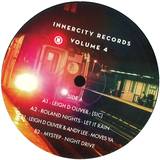
Inner City Records returns with their fourth release, continuing with the ethos of providing first class, dance floor-driven house music with groove and attitude.
InnerCity welcomes the return of an artist who has been there from the very first release and one that fits the InnerCity sound perfectly. Leigh D Oliver, hailing from Yorkshire (UK) has firmly established himself as an artist synonymous with top-notch house music. Leigh's passion for 'proper house' coupled with his raw talent has resulted in him gaining numerous chart positions and releases on prestigious labels such as Large Music, Underground Source and Freche Fruchte.
With its heavy kick, rumbling bass, smooth chords and sweet vocal hooks, '(Sic)' kicks off the release in absolute style, highlighting why Leigh is one of our absolute favourite producers here at InnerCity.
For the second track, Leigh returns, this time combining forces with Lost Records owner Andy Lee. With two producers of this caliber, the results were always going to be excellent. Andy, from the North East (UK) has seen releases and remixes on labels such as Love Not Money, Spinnin' Records, Nervous Records and his DJ career has taken him worldwide, playing gigs in Moscow, Switzerland, Ibiza and beyond. 'Moves Ya' is a first class slab of deep & moody house that does exactly what it says on the tin. A track teaming with deep chord hooks, clever vocal samples and low bass, Moves Ya is perfect for the darker, sweatier clubs.
Next up, InnerCity's very own Roland Nights brings us 'Let It Rain', a dance-floor driven slab of straight-up house with jacking percussion, warm chords and soulful vocal cuts. 'Let It Rain' showcases Roland's passion for classic-sounding house music which has seen previous releases on labels such as Lost My Dog, Large Music and Amenti Music.
Last but by no means least, we head over to the Ukraine, gladly welcoming Mystep who lays down an absolute beast of a house track that is filled with energy, classic sounding chords and rolling bass, guaranteed to work on any floor.
DJ Support:
Golf Clap
Miami Ice
Kinky Movement
Ian Straker
Joan Ribas
Jordan O'Regan
Luke Gibson
Jeff Craven
Cahul House Mafia
This Is Why We Dance
Manooz Manuel
Greg Fenton
Raw Culture
Horsey
Marc Cotterell
Pete Gelderblom
Carlo Gambino
Leigh D Oliver
- 1