Search:d rashid

Styles
All
  • 1
Gensu Dean - R.a.w.

Gensu Dean

R.a.w.

12inchMMG000961
MELLO MUSIC GROUP
12.09.2017

Veteran producer Gensu Dean comes back with his first compilation since 'Lo Fi Fingahz'. The new project is as rugged as the name implies and features artists like Diamond D, Homeboy Sandman, Roc Marciano and more.

Gensu Dean embodies the essence of true, honest Hip-Hop, while his music personifies the art of beat diggin' with sheer creativity. With this approach, Gensu has produced masterpieces for the likes of David Banner, Old Dirty Bastard, Royal Flush, Planet Asia, and Lord Jamar (Brand Nubian) to name a few.

out of Stock

Order now and we will order the item for you at our supplier.

21,64

Last In: 4 years ago
fatalism - Gh0st

Fatalism

Gh0st

12inchBDNX007
Bedouin
21.12.2023

Salem Rashid Skourlis, a human artist and composer, defies limits to manifest his solo project "fatalism." Drawing inspiration from personal experiences with paganism, pacifism, and immigration, fatalism intertwines otherworldly sounds and post-industrial landscapes. His work, relentless and self-sufficient, illuminates a foreboding future. Founder of @bedouinrecords, he has captivated audiences worldwide in prestigious venues like Berghain, Berlin and KGR(n), Tokyo. fatalism's forthcoming debut album, "fatalism:Gh0st," explores human escapism and the power of music to transcend societal confines. Currently based in Bangkok, Salem continues to forge sonic journeys, prepare film soundtracks, and embark on a solo tour for the release of his new album.

In Stock

On Stock and ready to ship

23,11
Deniis Mpale - Our Boys Are Doing It
  • A1: Our Boys Are Doing It 19:33
  • B1: Dennis Groove 10:03
  • B2: Orlando 9:52

By the mid-1970s, trumpeter Dennis Mpale was a consummate musician with an auspicious resume that located him at all the key turning points in the evolution of modern South African jazz. In his mid-20s, he led the trumpet section of Chris McGregor’s Castle Lager Big Band and participated in the ensemble’s landmark 1963 album Jazz/The African Sound. 1968 saw him recording I Remember Nick with The Soul Giants, which joined a wave of notable late-1960s releases, including The Mankunku Quartet’s Yakhal' Inkomo and The Chris Schilder Quintet’s Spring, that ignited the ambitions of South African jazz artists and producers in the 1970s. In 1975, Mpale co-founded the “rock jazz” ensemble Roots, inaugurating the era of jazz fusion in South Africa and opening the door for Pacific Express and Spirits Rejoice.

By 1977, Mpale had earned the right to an album of his own and, having participated in the 1975 recording of Abdullah Ibrahim’s African Herbs, turned to producer Rashid Vally of the As-Shams/The Sun label for his solo debut. Vally financed the project and seized an opportunity to license it to the local subsidiary of a major international label. As such, Our Boys Are Doing It was issued in South Africa on the Mercury label in 1977. Featuring saxophone heavyweight Kippie Moketsi, the album was a response to the global direction taken by trumpeter Hugh Masekela on The Boy's Doin' It in 1975. In contrast, seeped in the bump jive style of popular urban township music, Our Boys Are Doing It was a manifesto for an authentic, exuberant, homegrown variety of South African jazz.

pre-order now18.04.2025

expected to be published on 18.04.2025

34,03

Last In: 2026 years ago
KIPPIE MOKETSI - HARD TOP LP 2x12"

Limited edition of 500 copies.

Hard Top assembles the previously unreleased 1975 recordings of legendary South African saxophonist Kippie Moketsi (also spelled Moeketsi). The 2LP vinyl edition is presented in a gatefold sleeve featuring artwork by Mafa Ngwenya and comes from As-Shams Archive on the heels of the Tete Mbambisa's previously unreleased African Day album in 2024.

By 1975, at the age of 50, saxophonist Kippie Moketsi had already earned his stripes as a South African jazz figurehead. His tenure with the Jazz Epistles and the cast of the "South African Jazz Opera" King Kong in the late-1950s had not only marked his own rise to fame but also seen him help catalyse the ambitions of a younger generation of iconic artists who would go on to become the defining figures of modern South African jazz. While he didn't enjoy the same international attention as his protégés Miriam Makeba, Hugh Masekela and Abdullah Ibrahim, his humble and challenging career on the local jazz scene until his death in 1983 saw him forge an enduring legacy.

Owing to the efforts of record producer Rashid Vally, Kippie Moketsi's journey through the 1970s is beautifully documented, most notably on the albums Dollar Brand + 3 (1973), Tshona! (1975) and Blue Stompin' (1977), in which he shares the spotlight with Abdullah Ibrahim, Pat Matshikiza and Hal Singer respectively. As a featured performer on Soul of the City's Diagonal Street (1975) and Dennis Maple's Our Boys are Doing It (1977), Moketsi is seen embracing the popular orientations of South African jazz in 1970s but, having come up in the 1940s and 1950s, he never forgot his roots as a dedicated admirer and scholar of traditional American jazz.

While Moketsi did write some memorable compositions, it was in the role of interpreter that he shone most brightly. With its title derived from a good-natured nickname that nodded to Moketsi's elder status by way of his receding hairline, Hard Top is a covers album that looks back in time to the era of rhythm and blues while also indulging 1970s pop and funk with a decidedly South African vibe. Officially joining Kippie Moketsi's catalogue 50 years after it was recorded, Hard Top provides an opportunity to celebrate the multiple dimensions of a South African jazz legend and reflect on the unwavering support of his fan, producer and friend Rashid Vally, who passed away in December 2024.

pre-order now18.04.2025

expected to be published on 18.04.2025

28,36

Last In: 2026 years ago
Andy Crysell - Selling The Night: When Club Culture Meets Brands, Advertising and the Creative Industries

They say nothing good happens after midnight, but in the case of creativity, that’s just not so. The night fosters a different kind of creativity: something urgent, spontaneous, carved out of necessity. Tracking the past, present and future of this complex dynamic, Selling The Night explores what happens when after-dark creativity influences wider culture and converges with everything from media, advertising, design and to gaming, fashion, hospitality, alcohol, beauty, tourism and far beyond. Also, as importantly, the implications of brands taking space within dance music as sponsors and supporters.

Author Andy Crysell speaks to DJs, promoters, marketers, academics, activists, archivists, policymakers, photographers, writers and designers. He samples KFC through to Fiorucci, Absolut and Red Bull, and moves from New York disco to the modern global underground.

Selling The Night witnesses how ideas migrate from subculture to influence the creative industries. It searches for lessons in improving the value exchange between dance music and brands, seeking something more symbiotic and less parasitic. All the while, it celebrates what makes after-dark ideas so special – the unique and democratising role they play.

“So much has changed in dance music over the decades. Selling The Night offers a very timely look at the role that brands and culture marketing have played in the past and will play in the future.” Kazim Rashid (Resident Advisor)

“The friction created when youth subcultures meet corporate cultures is long overdue a deconstruction, Selling The Night is necessary reading on how and why there is a transfer of time and money between consumer brands and cultural ecosystems; and what both sectors have to gain and lose through these relationships.” Finlay Johnson (Association For Electronic Music)

out of Stock

Order now and we will order the item for you at our supplier.

18,28

Last In: 11 months ago
Khan Jamal - Give The Vibes Some

Black vinyl / 505mcn paper / 30 x 60 cm Insert with full interview to Khan Jamal II + extended liner notes printed on 300 gram Büttenpapierfabrik Gmund "No Color No Bleach" paper with exclusive pictures & much more!

Personnel:
Khan Jamal - Vibraphone, Marimba
Clint Jackson III - Trumpet
Hassan Rashid - Drums

Notes:
It's quite simple, if you have a good connection with music, to find things that should be reissued due to their exceptional quality, but, like a diviner, being able to unravel the problems related to the licensing of a record, well, that's much more difficult. Finding someone is Sherlock's job! After 4 years, Khan Jamal II (son of Khan Jamal) delighted us with a "Let's go my guy".
Khan Jamal doesn't need much introduction: Born Warren Robert Cheeseboro, he was a jazz vibraphone and marimba player from Philly. He founded the band Sounds of Liberation in 1970 with Byard Lancaster. In 1974, during one of his many trips to the old continent, he recorded this album in France at Jeff Gilson's Palm studio. It is a delicate game of lucid and intense contrasts between Christian Vander's drums provides a rock oriented touch, the marimba and the vibes with influences from the lands of the rising sun of Jamal and the composed trumpet of Clint Jackson III which anchor "Give the vibes Some" in a sort of Space Age Jazz era.
In the end, you know what? This album is a transcendent journey into yourself, like an intense session of meditation...even if "35.007 Feet Up" could easily be played by Jeff MiIls in his DJ Set!

out of Stock

Order now and we will order the item for you at our supplier.

41,97

Last In: 12 months ago
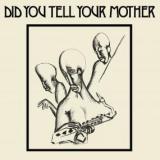
Tete Mbambisa - Did You Tell Your Mother

Vinyl Only / Sleeve manufactured with 400 mcn Fedrigoni "Shiro Eco" paper / Original unreleased poster with alternative artwork insert with notes by Tony Higgins printed on schedography peach past color paper / PVC outers / original artwork /

Personnel:
Tete Mbambisa - Piano
Basil Coetzee - Tenor Sax and Flute
Zulu Bidi - Bass
Monty Weber - Drums

Notes:
Mbambisa first gained prominence as a pianist in 1961 as a member of the Jazz Giants, this time with Pukwana as saxophonist, bassist Martin Mgijima and drummer Makaya Mtoshoko, setting the sound and shape of a scene that became known as Cape Jazz. Following an introduction from Chris McGregor, Mbambisa formed a band, The Swinging City Six, with saxophonist Ronnie Beer before going on to play at the end of the 1960s in the groups The Soul Jazzmen and Spirits Rejoice with Duku Makasi. As a member of The Soul Jazzmen, Mbambisa recorded the breakthrough album 'Inhlupenko Distress' in 1969 for the City Special label. After a recording hiatus, Mbambisa returned in 1974 with an octet album, 'Tete's Big Sound' released on a newly formed label, As Shams or The Sun, established by South African record store owner and independent producer Rashid Vally. 'Tet's Big Sound' included tracks like 'Unity' and the 'Black Heroes Lamentation', now considered a classic in the South African jazz underground.

The sound that Mbambisa carved in this period was wholly acoustic, and is a style that now is often loosely labelled spiritual jazz, a sound that alludes to deep African textures and rhythms balanced with clear nods to American hard bop and modal jazz, sometimes edging toward free improvisation in echoes of John Coltrane and Pharaoh Sanders. The music is often centred around a fulcrum of trance like vamps with repeated motifs that allow for extended pieces that create a hypnotic effect. This clearly exemplified on Mbambisa's next album, 'Did You Tell Your Mother', released in 1979, once more for The Sun label. (Tony Higgins)

pre-order now14.02.2025

expected to be published on 14.02.2025

34,03

Last In: 2026 years ago
OH PEOPLE - PART-TIME ELEGANCE

Denmark"s leading outlet for jazz April Records presents their first debut of 2025 from a brand new quintet of some of the country"s most well known and respected young musicians - collectively called Oh People. Inspired by the works of Duke Ellington in the 20"s and combining them with sounds that came to life over half a Century later with a palpable sense of joy and love, "Part-Time Elegance" is set to release on January 17th on April Records. Exploring the idioms and tropes of the golden age of jazz, the record is built from deep pocket swing, lovesick ballads, percolating latin grooves, and upbeat melodies that can"t help but bring a smile to one"s face. With undertones of contentment and playfulness, each song evokes a sound and style of some of the 20th"s Century"s greatest jazz composers before evolving into passages of animated improvisation from Denmark"s finest new-generation soloists. Anyone who has been keeping up to date with Denmark"s prolific scene will recognize the members of "Oh People" from their solo projects and contributions to many of the nation"s leading jazz innovations. Jonas Due"s trumpet can be heard in the DR Big Band, and popular modern outfit OTOOTO. Andreas Toftemark cut his teeth working and learning as a musician in New York, before returning to Denmark to establish himself with two releases under his own name, receive the prestigious Bent Jædig Prize, and become one of the country"s busiest artists. Casper Christensen"s deep roots in the jazz tradition and Brazilian, coupled with the warm, acoustic sound of his guitar have seen him perform with the likes of Nana Rashid, Jesper Lodval and his own quartet. Lasse Morck has released three albums under his own name, drawing on South American musical traditions as well as literature and mythology. Henrik Holst has spent over a decade contributing his talents to Danish outfits like the Kathrine Windfeld Big Band and Jeppe Zacho Quintet, as well as international jazz legends Mike Stern, Gilad Hekselman and Immanuel Wilkins.

pre-order now31.01.2025

expected to be published on 31.01.2025

22,90

Last In: 2026 years ago
Philmore Greene - The Grand Design

Philmore Greene's "The Grand Design" is a masterful blend of reflective storytelling and dynamic Hiphop. Deeply rooted in the rhythm and streets of Chicago, Greene is a luminary who epitomizes passion for music and undying love for the art form. The album weaves personal experience from the Westside of Chicago with sharp lyrical compositions. The follow up to Philmore's collaborative album with Apollo Brown (Cost of Living), The Grand Design continues the Chicago boom bap tradition with guest features from Bruiser Wolf, Skyzoo, UFO Fev, RJ Payne and Rashid Hadee

pre-order now10.01.2025

expected to be published on 10.01.2025

38,45

Last In: 2026 years ago
THE HAL SINGER JAZZ QUARTET - SOWETO TO HARLEM LP

Hal Singer – Tenor Sax
Alain Jean-Marie – Piano
August “Gus” Nemeth – Bass
Oliver Johnson – Drums


When the U.S. State Department announced in the mid-1970s that they were sponsoring a South African tour for the Oklahoma-born, Paris-based saxophonist Hal Singer, producer Rashid Vally took note. Even though his nascent record label As-Shams/The Sun (established in 1974) was making waves on the local scene, the idea of commissioning a recording from an international artist was a ballsy idea. With a discography that stretched back to the 1950s, Hal Singer was already somewhat of a legacy artist by 1976. Vally was well-versed on Singer’s accomplishments and specifically enamoured by his composition “Blue Stompin’,” which appeared on a Prestige album from 1959 that had struck a chord in South Africa.

With his irresistible charm, Vally managed to coax Singer into a studio in Johannesburg, South Africa, to record a new version of “Blue Stompin’” with South African sax star Kippie Moeketsi, which became the title track of a 1977 album by Moeketsi. The recording session also yielded an album’s worth of new material by Hal Singer and his quartet that took its name from a track inspired by Singer’s trip to South Africa entitled “Soweto to Harlem.” Released in 1976 and only available in South Africa, Soweto to Harlem captures a laid-back, cheeky and nostalgic rhythm and blues set from the Hal Singer Quartet that is unlikely to have emerged for a different target market.

With her irresistible charm, Vally was able to convince Singer to enter a Johannesburg studio. The recording session produced this album of new material by Hal Singer and his quartet named after a song inspired by Singer’s trip to South Africa, entitled “Soweto to Harlem.” Released in 1976 and available only in South Africa, “Soweto to Harlem” captures a laid-back, unabashed and nostalgic rhythm and blues of Hal Singer’s quartet that would hardly have been born for a different market.

Cinedelic’s 2024 edition of this rare album is sourced from the original tape masters and presents it on vinyl internationally for the very first time. The reissue follows Singer’s passing at the 100 in August 2020 as we contemplate and celebrate his extraordinary contribution to jazz in the United States and beyond.

out of Stock

Order now and we will order the item for you at our supplier.

22,90

Last In: 22 months ago
Chaka Khan - Chaka LP

Chaka Khan

Chaka LP

12inch0603497831081
Rhino
22.03.2024

Chaka Khan had lit the world on fire as the frontwoman for Rufus, tearing up the charts with hits like “Tell Me Something Good” and “You Got The Love,” picking up several Grammy awards on the way. She set out on her solo career with this collection in 1978, leading the way with the hit “I’m Every Woman,” which propelled the release to be certified platinum in the US and earn her another Grammy® nomination for best R&B vocal performance.

In November of 2023, she will be inducted into the Rock and Roll Hall of Fame at the end of a year that marked her 50th in the business. In 2024, we will launch a campaign to reissue her solo records, some physically, some digitally only, starting with the self-titled Chaka, which will feature a new remix of “I’m Every Woman” by DJ Rashida featuring Sheila E., liner notes from Emmy-winning journalist Kelley Carter, and bonus tracks from the original sessions.

pre-order now22.03.2024

expected to be published on 22.03.2024

30,88

Last In: 2026 years ago
The Mighty Cavaliers - Mapendo LP

The Mapendo album of the Mighty Cavaliers, up to today, has been shrouded in mystery. If you look at the original cover of this very rare Kenyan funk-infused album all you will find are the names of the engineer and the producer, as EMI Kenya omitted the names of the musicians and the songwriters. Digging deeper a rather sinister story of deceit develops whereby Mapendo becomes symbolic for all what was wrong about the Kenyan record industry in the 1970s, and the music industry in Africa as a whole. As this maltreatment of artists proved endemic throughout the continent, although little talked about.

One of the three surviving members of the Mighty Cavaliers, bass player Bonnie Wanda - who started his career in 1971 with Gloria Africana - vividly remembers participating in the recording of the two albums the band made in 1976 and 1977 - Fisherman and Mapendo - and how they, especially on the last album, got short-changed by shrewd record label executives. In the 1960s it was mostly Indian and European record bosses that called the shots and usually gave musicians the chance of a one-off payment for their session time and recorded songs or wait for - hopefully - a generous royalty check. In most cases records didn't sell more than a thousand copies with an occasional hit selling in the tens of thousands, so musicians were reluctant to register themselves with the Music Copyright Society of Kenya. Although without doing so one couldn't receive royalties.

'For two years the Mighty Cavaliers performed five nights a week at the Starlight Club for five hour sets.

The re-release of Mapendo, the first of the German Want Some Records label, is another exciting puzzle piece in the tapestry of groovy Kenyan music. It proves that there are still great gems out there to be re-discovered for audiences worldwide.

Text written by Michiel van Oosterhout

This Album is dedicated to the musicians
Bonnie Wanda, Rashid Salim, Vuli Yeni, Juma Waweru Njuguna and Athmani 'guitar boy'."

out of Stock

Order now and we will order the item for you at our supplier.

28,36

Last In: 2 years ago
Chaperone - Emotion Hospice

Chaperone

Emotion Hospice

12inchBDNLP012
Bedouin
17.03.2023

Emotion Hospice is the debut LP by New York-based sound artist and writer Chaperone on Bedouin Records. Combining layers of doom electronics, dystopian ambient, and manipulated tape loops, Emotion Hospice reflects both the artist's suffering and recovery from addiction, as well as Philadelphia's history of socio-economic decay and misanthropy.

Emotion Hospice was recorded from 2016 to 2019, when Chaperone's David Coccagna lived and worked in his hometown of Philadelphia, a city notoriously known for its poverty, redlined city divisions, and fascist policing tactics. While exploring the sound of the city and the effects of its political and social climate, Coccagna also struggled with and managed to overcome a severe addiction to alcohol, tying further the misaligned nature of the self to the maladjusted world he grew up in that is reflected in the record itself.

Sonic thrills and their destruction is present throughout the record, as Coccagna experiments with the brutal manipulation of bossa nova, varying styles of jazz, hip hop, and rap, using 4-Track tape loops, shortwave radio frequencies, various apps on his iPad, and open source audio editing software. With Emotion Hospice, Chaperone liberates the inherent darkness of the cheerful and poppy music that he samples and transforms it into an extensive, doomy sound of a future that is dystopian, maladroit, suffering, but hopeful about human beings. The album was written and recorded entirely by Coccagna aside from the track featuring New York rapper and producer Andre Altrez, whose establishment of Girard Hall in Philadelphia was a beacon of DIY ethos that became legendary in the city in its own right.

Chaperone's Emotion Hospice is his first release on Bedouin Records. His cassette release Dead Pitbulls Slung On Tired Shoulders was his first outing for Bedouin's now defunct sub-label Bastakiya Tapes in 2017. This initial tape was the catalyst to a working relationship between Coccagna and label operator Salem Rashid as collaborators and colleagues.

pre-order now17.03.2023

expected to be published on 17.03.2023

20,80

Last In: 2026 years ago
Lionel Pillay - Plum & Cherry

Following the April 2022 reissue of the album Shrimp Boats, We Are Busy
Bodies presents companion titles Plum and Cherry and Deeper in Black
to round out a Lionel Pillay and Basil Mannenberg Coetzee trilogy as part
of the label's As-Shams South African jazz archive series
The connection between these three albums is tight as the 1987 release Shrimp
Boats compiled unreleased recordings from both the 1979 session for Plum and
Cherry and the 1980 session for Deeper in Black. These two rare records have
been carefully remastered from their original tapes and are back in print for the
very first time in over 40 years.Shrimp Boats and Plum and Cherry capture the
extraordinary musical chemistry that existed between pianist Lionel Pillay and
tenor saxophonist Basil Coetzee in the late 1970s. The respective album
showpieces Shrimp Boats and Cherry each occupy an entire side of vinyl with
both exquisite musical journeys clocking in at an epic 25 minutes a piece. While
Shrimp Boats was an instrumental reimagining of the popular 1951 song by
American singer Jo Stafford, Cherry drew inspiration from Abdullah Ibrahim at the
behest of producer Rashid Vally, who wanted to emulate the success of the
famous track that had helped launch his independent As-Shams/The Sun record
label in 1974.
Ibrahim's hit Mannenberg had also featured Basil Coetzee and it was this zeitgeist
South African jazz recording that had given rise to his stage name. Capturing the
grace and vitality of working- class township life on the city fringe, Cherry
channels the type of laid-back Cape groove that Abdullah Ibrahim, recording as
Dollar Brand, introduced to South African jazz in the 1970s. On the flip side, Plum
appears to take its own simple chord change in the same direction before
breaking into a chugging 20-minute romp that verges on proto-electronica and on
which Pillay hangs all manner of savage keyboard riffing and experimentation.
The two distinct flavours of Plum and Cherry make for a well-rounded platter with
an iconic cover featuring the work of abstract expressionist painter and AsShams/The Sun collaborator Hargreaves Ntukwana.

pre-order now20.01.2023

expected to be published on 20.01.2023

36,09

Last In: 2026 years ago
Seikatsu Kojyo Iinkai - Seikatsu Kojyo Iinkai

Ferocious JP / US free jazz bomb. A rare meeting between the NYC free jazz scene and the Japanese free music scene. Old-style Gatefold LP, with rare photographs & liner notes by Alan Cummings.

Following hot on the heels of the first, mid-sixties generation of Japanese free jazz players like Kaoru Abe, Masayuki Takayanagi, Yōsuke Yamashita, Motoharu Yoshizawa, etc., an exciting second wave of younger players began to emerge in the seventies. Two of its leading members were the saxophonist Kazutoki Umezu and multi-instrumentalist Yoriyuki Harada. Both were post-war babies and immigrants to the city, Umezu from Sendai in the north and Harada from Shimane in the west. They first met as students in the clarinet department at the Kunitachi College of Music, a well-known conservatory in western Tokyo. Harada was already securing sideman gigs on bass with professional jazz groups and was active in student politics, making good use of his connections to set up jazz concerts on campus. It was around this time that the two began to play together in an improvised duo, with Umezu on clarinet and bass clarinet and Harada on piano. They also experimented with graphic scores and prepared piano.

These experiments eventually led to the creation of a trio, with a high-school student called Tetsuya Morimura on drums, that they decided to name Seikatsu Kōjyō Iinkai (Lifestyle Improvement Committee) in joking reference to the Marxist discourse of the student radicals of the time. Around 1973, Umezu and Harada decided to call it a day and go their separate ways. Umezu began playing with the Toshinori Kondo Unit and Harada with the Tadashi Yoshida Quintet. In 1974 Harada formed his own trio and began to play at jazz coffeehouses across Japan.

Then, in September 1974 Umezu travelled alone to New York, where he set about building connections with the loft jazz scene in the city. It was a fortuitous moment to arrive in New York. Rents were cheap in the Lower East Side, possibilities for squatting existed, so many musicians and artists had moved to the area. Umezu soon became known on the scene as Kappo and he started to make connections with some of the young musicians like David Murray, Arthur Blythe, and Oliver Lake. He recalls making the rounds of the lofts every evening, checking out the performances, and getting the chance to sit in with many groups including Juma Sultan’s Aboriginal Music Society and trumpeter Ted Daniel’s orchestra.

Things were going so well that Umezu wrote to Harada and invited him to come to New York. He accepted and arrived in the city in July 1975. Harada and Umezu took the opportunity to resume their artistic collaboration. Their first concert together in over two years took place on July 20th at another loft, Sunrise Studios at 122 2nd Avenue. Umezu remembers Sunrise as an unusually sunny loft with the rarest of things, a grand piano. He invited along Ahmed Abdullah, a trumpeter he had got to know while playing with Ted Daniel. Abdullah led his own group and was a long-term Sun Ra sideman. William Parker, one of the key figures in the loft jazz scene of the period, was on bass. Abdullah also brought along Rashid Sinan on drums. Sinan drummed in Abdullah’s units throughout the seventies, but he had also played on Frank Lowe’s immortal Black Beings album and collaborated with Arthur Doyle, playing on Doyle’s Alabama Feeling album. By all accounts the evening was a huge success, with speed and dynamism of Harada’s piano playing gaining him lots of support.

Since they had managed to save some money from their day jobs, Umezu and Harada decided to set up a recording session with the same line-up on August 11 at Studio We, where there was a well-equipped studio on the third floor. Umezu recalls the session as follows, Of course, we recorded our performances in one take, with zero retakes as far as I remember. On all the tracks we recorded, we moved as one unit, sharp and fast. That was the nature of Lifestyle Improvement Committee, New York Branch.

Umezu and Harada would later become known for the elements of parody and entertainment that they brought to their music, a freewheeling blend of pastiche, humour and on-stage performativity that paralleled the approaches of the Art Ensemble, Sun Ra, and Holland’s ICP. But here, on their first recordings, the humour element is not yet present. Instead, there is a febrile sense of joy in creation and connection. On the Umezu-penned “Kim”, for example, Harada opens the piece with a speedy exploration of the full-range of the keyboard, hitting hard on the bass keys to create a rhythmic bed out of which patterns begin to emerge. Umezu enters at a much slower pace, longer held notes that at first float weightlessly over the urgency of the piano before they begin in splinter and accelerate. When Parker and Sinan kick in, it’s a rollicking tempo with Parker plucking deep and hard and the left-handed Sinan skittering hard across the topside of his kit. Abdullah kicks in a glorious solo twelve minutes in, bright and breathy at once. The piece slows and grows more spacious towards the end, giving Parker a chance to showcase some arco work that shades beautifully into the air against Abdullah’s trumpet.

pre-order now06.05.2022

expected to be published on 06.05.2022

25,17

Last In: 2026 years ago
George Duke - Feel

Reissue of George Duke's classic 1975 jazz-funk-fusion album 'Feel'
This album with the strange psychedelic sci-fi cover draws a tighter circle around
Duke's fusion language. The keyboard master ventures deep into his synthesizer
laboratory. Their textures become a more essential component of his pieces,
attaining orchestral dimensions, as evidenced in the opener, Funny Funk, with its
smacking, squishing tongue- in- cheek dialogue between the synths. A virtuoso
layering of the keyboards is also central to Cora Joberge, and on Rashid, Duke's
electronic orchestra explodes over the stormy drums of Leon "Ndugu" Chancler.
Duke shows himself to be a singer with a soulful sound. Shortly before this
recording he had shelved his trombone so that he could communicate more
directly with the audience, as can be heard in the hymnal, dreamlike title piece.
The guest list of players make for an especially exciting concoction. No less than
Duke's playing companion Frank Zappa, under the cryptic pseudonym Obdewl'l X,
performs some adventuresome guitar passages on Love and Old Slippers. On the
California- sunshine pop samba, Yana Aminah, we have a surprise visit by
Brazilian Flora Purim, wife of percussionist Airto Moreira, who opens up his bag
of tricks on The Once Over, and plays on three more tracks.

pre-order now25.02.2022

expected to be published on 25.02.2022

24,24

Last In: 2026 years ago
Tete MBAMBISA - Tete’s Big Sound

Tete Mbambisa has performed and recorded with many of the giants of South African Jazz (Bazil ‘Manenberg’ Coetzee, Johnny Dyani, Dick Khoza, Duku Makasi, Gideon Nxumalo, Dudu Pukwana, etc...), and is one of the very few South African jazz musicians that can claim to have played with the three jazz generations of the last fifty years. His work as a pianist, vocalist, composer and arranger is a landmark on South African jazz history.

After a recording hiatus, Mbambisa returned in 1974 with an octet album, 'Tete's Big Sound' released on a newly formed label, As Shams or The Sun, established by South African record store owner and independent producer Rashid Vally. 'Tet's Big Sound' included tracks like 'Unity' and the 'Black Heroes Lamentation', now considered a classic in the South African jazz underground. The sound that Mbambisa carved in this period was wholly acoustic, and is a style that now is often loosely labelled spiritual jazz, a sound that alludes to deep African textures and rhythms balanced with clear nods to American hard bop and modal jazz, sometimes edging toward free improvisation in echoes of John Coltrane and Pharaoh Sanders.

out of Stock

Order now and we will order the item for you at our supplier.

30,21

Last In: 4 years ago
Spang Sisters - Spang Sisters

The Brighton/Bristol duo have a palpable appreciation and knowledge of the music of yesteryear, which manifests itself with poise throughout the band’s output. The Velvet Underground, Motown, Dr.Dre and the Japanese folk band Happy End have all contributed inspiration to a debut record that is unlike any other.

Rachid recognises the strengths that he & his counterpart bring to the outfit:

“we have quite different approaches to songwriting and recording, hence the notable schism between Jules’ powerfully catchy pop sensibilities and my more off-kilter, melancholic compositions.

All in all, we are very proud of what has emerged from our time of creative reclusion and are inexplicably excited for the world to hear it as well as what lies next.”

Spang Sisters LP will be released via the band’s own label, Bathtime Sounds. Named after the regular DJ night that the band would organise in both Bristol and London, and subsequently the radio shows that the duo would go on to host in both cities (on Bristol’s 10twenty, and Balamii Radio in the capital). Recent guests of which include Country Teasers frontman and Rashid’s musical hero, The Rebel.

Bathtime Sounds pays homage to classic, vinyl-driven sounds that loosely pertain to the world of Americana. Many artists have graced the Bathtime decks since the event’s inauguration.

pre-order now21.05.2021

expected to be published on 21.05.2021

23,49

Last In: 2026 years ago
Various - Gritty, Odd & Good

GRITTY, ODD & GOOD is a new weird, pseudo-music compilation curated by avant-garde experimental composer and audio artist Francisco López.

As far as creation itself is concerned, big cities do not manifest anymore as the catalytic cultural centers they used to be. Their iconic status as hip locations seems more symbolic than real. The combined mighty forces of neocapitalist gentrification and telecommunication / information decentralization might have generated a substantially different landscape of geographical cultural distribution. And so unlikely places are also sources of physically-isolated, but culturally-interconnected, new creation. This is just but one more example of the larger phenomenon of techno-cultural atomisation (not to be confused with the more restricted so-called “democratisation”) that allows millions of people to create and share, pre- and post-internet. The amateur is the new potential master; and that is decided by the crowd in the circus and the stadium, not at the academy. With all of this comes the potential for new aesthetics, or at least the open-ended evolution of the previous ones, –far better than the current confusion between ethics and aesthetics- from the uninformed and the unknown. Atomization of this kind also brings for some the desire and the right to anonymity. And so it is for the unknown obscure artists of this compilation of weird experimental music –“gritty, odd & good”, with drones, glitches, cut-ups and more- who won’t reveal anything beyond their unlikely locations: San Marino, French Guiana, Philippines, Lesotho, Oman, Faroe Islands, Tuvalu, Liechtenstein, Kyrgyzstan. An innovative compilation presenting a world of unusual experimental de-constructed and recombined music casting a strong and exciting light into the unusual corners of our world. Dive in.

Compiled and Mastered by Francisco López
Vinyl mastered by Rashad Becker

a 1 Ragazza Raddrizza (Live Excerpt) - Giuseppe Moretti San Marino 3:00
b 2 SCVB - Daryana Jean French Guiana 4:39
[c] 3 One One Six Bee - James Ocampo [Philippines] 5:37
[d] 4 Coogan Radio - Thabiso Makhetha [Lesotho] 3:18
[e] 5 micro-Sister (Al'ukht Alsaghira) - Rashid Al Balushi [Oman] 3:59
[f] 6 Mond - Lív Jacobsen [Faroe Islands] 3:10
[g] 7 Sansobavo Mix - Eteroa Apinelu [Tuvalu] 8:38
[h] 8 Sans Titre (Fumée v.3) - Zzodiakk [Liechtenstein] 6:38
[Kyrgyzstan] 1:17

out of Stock

Order now and we will order the item for you at our supplier.

14,50

Last In: 5 years ago
Johnny Jewel - Don’t Come Back From The Moon (OST)

Music From The Original Motion Picture Soundtrack. The music of Johnny Jewel, Glass Candy, Chromatics, Mirage, & Symmetry all articulate different visions for different moments — the pure ecstasy of a Saturday night out; unrestrained romantic devotion between vulnerable people; walks on wet streets on foggy nights; isolated twilight meditations. They make music for all moments, all feelings, all stories — in films & in life. Theirs is natural soundtrack music. Bruce Thierry Cheung brings their cinematic music to celluloid to tell the story of a family’s struggles in Don’t Come Back from the Moon, starring James Franco, Rashida Jones, & Jeffrey Wahlberg. The soundtrack mixes new & beloved work from the Italians family. Classic cuts such as Chromatics’ revered “Cherry” & “The River” (alongside the newer “Magazine”) & the disco-bliss of Mirage’s “Lady Operator” are alongside cues from Johnny’s instrumental solo album Digital Rain, all remastered to articulate the resonance of the visuals. Joining them is new music from Johnny & Symmetry. “Bicycle” finds Symmetry taking their Tangerine Dream and John Carpenter vibes into a haunting modern R&B space. Cues like “Street Lights” & “Dusk” use twinkling piano keys & glassy, minimal synthesizers to craft ambient electronic bliss. “Death Valley” is a foreboding & atmosphere track, laced with spectres of fading memories. Once you go to the moon with these songs, you’ll never want to come back.

Produced & Mixed By Johnny Jewel
Mastered By Mike Bozzi At Bernie Grundman Mastering
Cut By Bernie Grundman In Hollywood

out of Stock

Order now and we will order the item for you at our supplier.

25,17

Last In: 6 years ago
Jon Lucien - Lady Love / Love Everlasting

The infamously velvet tones of Jon Lucien get a much welcomed official remastered, reissue - with the original 'Rashida' 7' e.p., that contained four of Lucien's tracks, now split into two 7's for a louder, more refined pressing of each song.

First up, 'Lady Love', with it's bossa nova inspired style, drawing every last drop of emotion from Lucien's infamously voluptuous voice. Once dubbed by Herbie Hancock as 'the man with the golden throat', it's easy to see why - Lucien's rich baritone evoking dreams of summer sunsets, glistening blue seas whilst wrapping you up in a blanket of warmth and tenderness that few can rival.

On the B side - 'Love Everlasting', another of Jon Lucien's bossa nova leaning tracks, swells with jazz flutes, plucked acoustic guitars and a soul drenched string section to compliment Lucien's beautifully calming tones.

With the original Rashida 7' exchanging hands for over £150 on Discogs, here's a chance to get Jon Lucien's golden-throated voice in the collection without raiding the savings.

out of Stock

Order now and we will order the item for you at our supplier.

13,87

Last In: 7 years ago
Simian Mobile Disco - Murmurations

A thrilling 9-song set, Murmurations is as perfectly pitched for headphones as it is for clubs, named after giant cloud formations of starlings and themed around the stunning emergent behaviors that appear within them. To mirror these movements in the sonic landscape and visuals of Murmurations, SMD's James Ford and Jas Shaw collaborated with the celebrated Hackney-based vocal collective The Deep Throat Choir, as well as creative directors Kazim Rashid of ENDLESSLOVESHOW (Aphex Twin, Flying Lotus, Hudson Mohawk) and Carri Munden.

Finding time in between Ford's work as a producer and Jas' club gigging last year, the duo arranged a session in Shaw's countryside studio. Via an introduction from a friend of Ford's wife, The Deep Throat Choir's director Luisa Gerstein and SMD began swapping some production and melodic ideas. They decided to bring the whole East London-based choir into the studio to experiment, and the results were intense. Jas says, 'Listening to them moving their voices around a tone, altering the timbre, making chords, was like working with an incredible new synthesiser.' Rashid and Munden explore related ideas centered on kinetic energy and communal movement throughout the visuals of Murmurations. Rashid says of the collaboration, 'We were both having discussions around the purity of collective human experience and how transcendental this can be. Techno and the dance-floor is one of the last true expressions of this euphoria.'

From the beat-less introduction 'Boids' onwards you can hear uncanny patterns and sounds rising up from the sea of voices -- not traditional chords or harmonies, but complex interference patterns that play tricks on the mind and merge perfectly with SMD's distinctive synth tonalities and instinctive dancefloor nous. At times you might hear hints of Bulgarian choral music, or Cocteau Twins, or avant-garde composers like Iannis Xenakis or Pauline Oliveiros - but really, thanks to the creative freedom of SMD's working methods, it is a sound completely of its own, something all too rare in an age of retro and reference.

Ford and Shaw still have the same love of pure sound, human harmonies and electronic possibilities that they did when they first met at university, and it's clear that their career path has allowed them to nurture this love and express it as vividly as ever before.

out of Stock

Order now and we will order the item for you at our supplier.

29,37

Last In: 7 years ago
  • 1
Items per Page:
N/ABPM
Vinyl