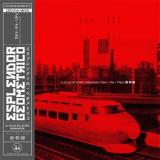
Platform 23 again explores to the dense voids, this time with a touch of the funk, with a reissue of Dutch experimentalists De Fabriek and two tracks from their "Music For" cassette series, this time calling all Hippies.
Featuring both original and reinterpretations from modern-day heads, Dunkeltier and Khidja, this double-pack is something of an oddity, showcasing the bands' expansive range, moving away from the noise, drone and industrial soundscape releases they had become known for and crafting here, free flowing, groovy longform jams.
Active since the late 70s to today, De Fabriek (The Factory) have never considered themselves a real band - being also a label too - with an evolving and irregular line up centred around Richard van Dellen, they present their music and output as a kind of work-union.
With literally four decades and dozens of releases across all formats, 1988's cassette release, 'Music For Hippies', has become something of a cult curio, with the long improvisational tracks, Lullabye and Coming Down eschewing the rougher, industrial experience for something completely different.
In opener Lullabye, we go full leftfield P-Funk meets Motorik undertones. An incessant beat is laid from the start and doesn't cease for over 10 minutes, while spoken vocals call closer to the Krautrock realms of Can and hark to Liebezeit's stylised grooving best.
Analog, echo washed, with touches of glam and wrapped in simple effects pedal work, the secrets are passed to Dresden / Berlin inhabitant Dunkeltier aka Sneaker DJ aka Thomas Smorek. His darker moniker, appearing on obscure edits for Macadam Mambo and the much-missed Bahnsteig 23, his 'Hey Robot' mix adds bass, percussion, strings and synth to remold Lullabye into a late night, red light, basement denzien. This is followed by an additional, bonus reimagining, creating an all-new time piece, an ear worm of the best kind with Tik Tok Goes The Clock.
The second slab presents in Come Down, a more resembling De Fabriek werk. Edited to fit, the darkness is entered as snapshot vocal quips, oscillations and synthesised mutations are laid over a lazy, relentless ostinato rhythm where cymbals crash on the bar. Inviting, calling, De Fabriek's aptly titled downer is in fact, a joyous journey.
To complete, label affiliates, Khidja take a break from finalising their debut album to unfold their 'Psychebabble Mix', a dozen plus minutes of warped, twisted, cassette machinations that suck the listener further along the trip. Added bass propels their edit suddenly to a new direction, a hook for mind and for the open willed, the body. De Fabriek's "coming down lullabye" arriving on vinyl for the first time, with a twist and shake, calling deeper to acceptance.
Поиск:de fabriek
Все
- 1
The bomb that should have dropped way back when. After a career spanning almost two decades DJ Overdose debuts on Creme with his first full length album, upon which we remark with carefully considered understatement: 'A veritable tour de resistance in film noir electronics, Bizarro World is a dank and dark alley made flesh. Overdose's heavy soulful beats and soundscapes snatch your dreams right from under you like a shadowy kleptomaniac, masterfully pairing melancholy and ennui with fear and voyeuristic tiger-lurking-in-the-bushes paranoia. So lock up your future plans or you might very well find yourself without any'. For those who don't know, DJ Overdose is one of the OG's of the La Haya underground, one half of Novamen and the other half of The Hasbeens with classic and sought after releases on Bunker, Viewlexx, Murder Capital, Clone and Strange Life to name a few. In his spare time he doubles as a hand model for Bruce Willis.
The London based singer and keyboard player Dominic Appleton, known since the early eighties for his musical activity in the post punk/dream pop band Breathless, and perhaps even more for his vocal contributions to the legendary This Mortal Coil project on 4AD, joins forces with the Milanese producer and sound artist Matteo Uggeri, active from 1993 behind several projects spanning from industrial to post-rock and ambient soundscapes, known for collaborating with artists such as Maurizio Bianchi, Nocturnal Emissions, Controlled Bleeding, De Fabriek, OvO, Giuseppe Ielasi, Lau Nau, Giulio Aldinucci and many more.
Starlight Assembly’s first album, “Starlight and Still Air”, was released in 2021 by the American label Beacon Sound. In Italy the album received amazing reviews in all four of the main music monthlies. It was album of the month in Blow Up and Rockerilla ran a four page interview. Several articles and reviews were made, including a special issue on Foxy Digitalis by Brad Rose.
A remix project was launched afterwards, including old and new friends and fans of the two S.A. members: among the others, Robin Rimbaud/Scanner, Auscultation, Gabriel Saloman (Yellow Swans), Patricia Wolf, Insides, Julia Sabra with Fadi Tabbal, Sawako and Pan American.
The new album, “There Will Be Fireworks”, continues the duo’s complex cross-genres approach to music by melding Uggeri’s intricate musical textures with Appleton’s sweet and melancholic melodies, in this case even supported by the haunting guitars of Gary Mundy (in Breathless as well but also in Ramleh and Broken Flag’s label manager). The tracks on this album are more songlike, the journey more cohesive, with the artists playing more to one another’s strengths. The mastering will be done by Martin Bowes/Attrition, making it even more powerful and clean for its publication on Silentes (ex-Amplexus), historic italian label well known for releases by Rod Modell, Gigi Masin, Dirk Serries, Eraldo Bernocchi, Merzbow, Fabio Orsi and the latest releases by AUBE and much more.
1) WAIT FOR THE WORLD
2) TIME
3) THIS DESERT
4) ALL THE LOVE THE STANDS BESIDE US
5) MOTH TO THE FLAME
6) FRICTION
7) SYMPHONY IN MELANCHOLY
8) THE NOT DEAD
9) RELIEF
+
10) THERE WILL BE FIREWORKS (ghost track)
Black Truffle is pleased to announce The Leisure Principle, a new solo LP from London-based bassist and sound artist Otto Willberg. A key player in the London underground, Willberg is often heard on acoustic and electric bass in free improv settings and bands with Laurie Tompkins (Yes Indeed) and Charles Hayward (Abstract Concrete), as well as the fractured No Wave unit Historically Fucked. His previous solo releases have ranged from extended technique double bass to explorations of the acoustics of a 19th century artillery fort. But nothing Willberg has committed to wax so far prepares a listener for The Leisure Principle, six unashamedly melodic improvisational workouts created almost entirely with heavily filtered bass harmonica and electric bass. On the opening ‘Reap What Thou Sow’, a single-note bass harmonica loop pulses along underneath a roaming bass solo, the side-chained envelope filtering (where the dynamic behaviour of the bass determines the filter for both bass and harmonica) fusing the two instruments into a single stream of burbling shifts in resonance. After several minutes of patient exploration of this low-end landscape, the music suddenly opens up in widescreen with the entrance of Sam Andreae’s graceful melodica chords, spreading out across the stereo field. From this epic opener, each of the remaining pieces goes on to explore a slightly different aspect of the terrain. On ‘Shadow Came into the Eyes as Earth Turned on its Axis’, a similarly buoyant harmonica bass line provides the foundation, but this time playing a soulful descending riff, its almost R&B feel abstracted and half-obscured by the filtering. On ‘Mollusk’, echoed bass arpeggios skitter between elegiac chords somewhat reminiscent of the opening of John Abercrombie’s ‘Timeless’, before settling into a hypnotic groove. On the record’s second half, Willberg pushes further into the possibilities of his idiosyncratic instrumentation. On ‘Wetter’, bass and harmonica come together into a monstrous, growling jaw harp; on ‘Had we but world enough and more time’, the subtly shifting pulsating patterns start to feel almost like a kind of evaporated, drum-less dub techno until an eruption of wheezing bass harmonica gives the piece a comically folkish turn. Willberg’s melodically inventive and virtuosic bass performance calls to mind any number of fusion touchstones, from Jaco Pastorius to Mark Egan’s singing tone in the early Pat Metheny Group—even Anthony Jackson’s work with Steve Kahn. But with its radically reduced instrumentation, The Leisure Principle is also an exercise in minimalism, and the absence of percussion gives even its funkiest moments a strangely abstracted quality. At times, its uncanny blend of the abstruse and the immediate suggests the fried pop experiments of David Rosenboom or the skewed but deeply musical DIY of 80s underground groups like De Fabriek. Both easy on the ear and profoundly strange, The Leisure Principle proudly takes its place among the most eccentric offerings on the Black Truffle menu.
“On this, their second LP, P16.D4 solicited tapes from several artists from Europe, England, the U.S., Canada, and Japan, and mixed that with their own material. Though in the current digital age collaborations from artists thousands of miles apart is quite normal, this was a quite radical approach back in 1982, when work on this LP began – an interesting concept that actually works quite well, since these artists, which include Bladder Flask, DDAA, the Haters, Merzbow, Nocturnal Emissions, Nurse With Wound, and several others – work in a similar free-ranging experimentalism as P16.D4, and their particular elements, usually just vocals or one instrument or noise implement, blend well without diluting P16.D4’s own peculiar brand of avant-garde post-industrialism, but merely give it another facet. One of the best tracks, “Aufmarsch, Heimlich,” consists of a choir submitted anonymously from Eastern Europe phasing in and out of static while a skronky alto sax bleats away. Most of the pieces exist somewhere just beyond the borders of free jazz, industrial, and even classical avant-garde, full of jarring noises and strange transitions and with a heavy overlay of electronics. What started out as an experiment yielded one of P16.D4’s best albums.” - Rolf Semprebon / AMG
“Distruct is organized around sounds provided by the cream of experimental musicians of the early ’80s, from Nurse With Wound to Nocturnal Emissions, via De Fabriek, Die Todliche Doris, The Haters, Merzbow, and others. Obviously, there is no question of remixing here, and at no time do P16.D4 seek to hide its sources, clearly identifying the contribution of each artist in the liner notes. It would be futile to try to find the paw of each artist, the trio operating vis-à-vis its collaborators the same methods as in their own work. Reworked, distorted by various effects, cut, edited, aggregated with other sounds, produced by P16.D4 themselves, reprocessed. Exchange, communication, two other data that will constantly recur in the work of P16.D4, rich in external contributions and encounters of all kinds. Musically, and despite the diversity of sources treated, Distruct escapes the heterogeneous character, which often marks this type of collaboration, to offer a coherent whole: fragments of opera, Soviet speeches, out-of-tune guitar, saxophone, tattered violins, overdriven and metallic noisy attacks, jackhammers, field recordings, battered choirs, and many other less identifiable sounds. In addition to the desired dialogue between the artists, Distruct also offers a real reflection on listening, and on the expectations of the listener.” - Dissolve
P16.D4 was a German electronic noise music collective, active primarily from 1980 to 1988. P16.D4 embraced tape cut-ups, musique concrète, endless recycling and transformation of previously published material, and many long-distance collaborations with like-minded artists such as DDAA, Vortex Campaign, Nurse With Wound, and Merzbow. Their active participation in the international industrial tape scene yielded collaborative output such as their release Distruct, where bands such as Nurse with Wound, Nocturnal Emissions, Die Tödliche Doris, and The Haters provided the source material. The longest-term collaboration was with the installation and conceptual artist Achim Wollscheid, who used P16.D4 sounds as the basis for LPs he recorded under the name SBOTHI. Ralf Wehowsky, the only constant member of the group, later released solo material under the alias RLW.
Members of P16.D4 were also involved with Selektion, a collective of people involved with sound as well as the visual arts. Selektion published LPs, CDs, books, visual art and design.
The collective worked in a strongly improvised, spontaneous and anti-professional way, using acoustic and electronic instruments, using existing sound fragments, duplicating and alienating them, using repetition, distortion, changes in speed and playing direction. For this they used not only sounds of other artists but also their own material from earlier productions. Late works of the collective are associated with musique concrete.
A Colourful Storm presents a new album by Beequeen, the duo of Frans de Waard (Kapotte Muziek) and Freek Kinkelaar (Brunnen). Over two long-form pieces, new material from 2020 and almost-discarded fragments dating back to 1988 are collaged to form a brand new composition. Think woodblock, guitar, static radio signals, ethereal ambience. An honourable addition to Beequeen's discography and a beautiful piece of the Dutch avantgarde with historic ties to Edward Ka-Spel, De Fabriek, Merzbow and Nurse With Wound. Mastered by Peter Johan Nyland with full-colour sleeve photography by Alfred Borland
“Last night I turned into a cat. Just like that.” A Colourful Storm presents an album by Brunnen aka Freek Kinkelaar, one of the everlasting beacons of the Dutch underground. One half of fabled group Beequeen (1988-2015) with Frans de Waard and collaborator with the likes of Nurse With Wound, Paul Panhuysen, The Residents, Merzbow and Edward Ka-Spel, Kinkelaar presents The Garden of Perpetual Dreams as a newly visioned recording of a cassette from 1989. Produced with Raymond Steeg of The Legendary Pink Dots and mastered by Steeg and Peter Van Vliet (Mekanik Kommando, De Fabriek, The Use Of Ashes).
An Island In The Moon is the perfectly conceived minimal ambient project from Italian composers Pier Luigi Andreoni (Doubling Riders, ATROX) and Silvio Linardi. Andreolina being a mix of the names of the two musicians who were both deeply involved with the label Auf Dem Nil on which the album was originally released in 1990.
The duo stick to a disciplined and simple palette using only two synthesizers and a Roland S50 sampler. They are joined by fellow electronic journeyman Riccardo Sinigaglia who contributes piano and samples on two tracks. Taking influences from Italian minimalism while adding some jazz hints Andreolina sprawls, weightless instrumentals that never stay soporific for too long on this singular rare album.
Auf Dem Nil or ADN was one of the most adventurous Italian record labels of the 80's and early 90's with releases by De Fabriek, Riccardo Sinigaglia and Pierre Bastien. Leaving their mark on the experimental music scene back than and influencing musicians worldwide up until today.
- 1