Death Is Not The End News

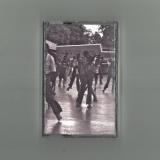
Mark Vernon - Sounds of the Modern Hospital (Tape)
  • 01: Full Blood Count Analyzer
  • 02: Automated Instrument Rinse System
  • 03: Mri Scanner
  • 04: Anaesthetic Machine
  • 05: Meti Human Patient Simulator - Mannequin Breathing
  • 06: Simman Essential Mannequin
  • 07: Cardiac Monitor
  • 08: Lee Silverman Voice Treatment
  • 09: Haemoglobin A1C Analyzer
  • 10: Anaesthetic Machine 2
  • 11: Infusion Pump (Alaris Plus)
  • 12: Heater Fan
  • 13: Phacoemulsifier – Suction And Ultrasound During Cataract Surgery (Two Perspectives)
  • 14: Robotic Pharmacy - Manually Restocking Supplies
  • 15: Ct Scanner
  • 16: Pharmacy Label Printer
  • 17: Dialysis Machine
  • 18: Draeger Oxylog 3000 Plus
  • 19: Meti Human Patient Simulator – Powering Up Of Bellows That Control Mannequin&Apos;S Artificial Lungs
  • 20: Orthopantomograph Op 00
  • 21: Helium Cooler For Mri Scanner
  • 22: Coagulation Analyzer
  • 23: Meti Hps Mannequin
  • 24: Ophthalmology
  • 27: Ultrasound Scanner
  • 28: Operating Theatre
  • 29: Beckman Coulter Access 2 Analyzer
  • 30: Geiger Counter (Berthold Lb124)
  • 31: Automated Mailroom (Opex Mail Matrix)
  • 32: Wall Mounted Suction Unit
  • 33: Dialysis Machine 2
  • 25: Sysmex Sp1000I Automated Slide-Maker
  • 26: Agv (Automatic Guided Vehicle)
disponibile anche

Vinyl[22,48 €]


Death Is Not The End reissue Mark Vernon's sought-after 2013 collection Sounds of a Modern Hospital on vinyl & cassette formats.

Whilst every effort has been made to record the subject in as great a degree of isolation as possible, the sound recordings you will hear on this record were made in a real working hospital and not under controlled conditions. Therefore, on occasion, you may hear some unavoidable background noise, conversations and other extraneous sounds.

All recordings were made by Mark Vernon at Forth Valley Royal Hospital, Larbert, Stirling Community Hospital and Falkirk Community Hospital between 2011 and 2013.

pre-ordina ora27.02.2026

dovrebbe essere pubblicato su 27.02.2026

13,66
Various - Have You Heard About the World Coming to an End? (Tape)
 
16
disponibile anche

Vinyl (LP)[22,48 €]


Death Is Not The End present a compilation gathering a cross-section of early gospel choirs and vocal harmony groups recorded between late 1920s and the mid-1950s - a period when spirituals & jubilee traditions merged with blues, jazz and early rhythm and blues, providing the musical routes for the coalescence of the civil rights movement born out of the black church. In the modern world these perennially vital recordings provide a fitting tonic for the near-dystopia we find ourselves living through.

pre-ordina ora20.02.2026

dovrebbe essere pubblicato su 20.02.2026

16,39
Lukid - Underloop (TAPE)

After following Luke Blair's work for approaching two decades from his 2007 debut as Lukid on Actress' Werk Discs, we're humbled to present a new album on Death Is Not The End. Following relatively hot on the heels of 2023's Tilt (his first in 11 years, not counting his work with Jackson Bailey under the Rezzett guise) Underloop brings Blair's innate knack for building loops and sound structures further to the surface, while allowing his ear for emotional expression to be dialled up a notch. Those fortunate enough to be familiar with Lukid's work as a DJ will be aware of how distinct his ability is to seamlessly disappear into loop-based abstraction and back again seemingly without blinking, and often Underloop feels much like a collection of the sludgey interludes and foggy sketches that underpin his sets. Blending apparently ramshackle melodies and textures and pulling them together into an undeniable whole, Blair's tendency for pairing the simple and the indescribable with an understated vigour is fully on show here.

Written and produced by Luke Blair. Mastered by Giuseppe Ielasi.

non in magazzino

Ordina ora e ordineremo l'articolo per te presso il nostro fornitore.

16,39

Last In: 3 months ago
Various - French Post-Punk & New Wave: 1988-1990 (TAPE)
  • 1: Face
  • 2: Face
disponibile anche

1984-1987[16,39 €]


DINTE's partnership with Philadelphia store/distro World Gone Mad yields three more essential cassette-only mixtapes exploring the global proliferation of the punk spirit - this time exploring 1980s French language post-punk and new wave in France, Belgium and Switzerland across the decade. This is part 1 of 3, focusing on 1988 to 1990.

non in magazzino

Ordina ora e ordineremo l'articolo per te presso il nostro fornitore.

16,39

Last In: 3 months ago
Various - French Post-Punk & New Wave: 1984-1987 (TAPE)
disponibile anche

1988-1990[16,39 €]


DINTE's partnership with Philadelphia store/distro World Gone Mad yields three more essential cassette-only mixtapes exploring the global proliferation of the punk spirit - this time exploring 1980s French language post-punk and new wave in France, Belgium and Switzerland across the decade. This is part 2 of 3, focusing on 1984 to 1987.

non in magazzino

Ordina ora e ordineremo l'articolo per te presso il nostro fornitore.

16,39

Last In: 15 days ago
Various Artists - Elders of the Begena (TAPE)

Fantastisches Album mit 12 Liedern der Begena-Musiker Tafese Tesfaye, Admassu Fikre, Seyoum Mengistu und Alemu Aga. ""Die Begena ist eines jener seltenen Musikinstrumente, das seit über 5800 Jahren existiert. Faszinierend an ihr ist nicht nur ihr Alter, sondern auch die Tatsache, dass sich ihre Herstellung und ihr Verwendungszweck über all die Jahre hinweg nicht verändert haben. ... Während des Derg-Regimes, nach dem Sturz von Kaiser Haile Selassie, wurde sie nicht mehr als wichtig erachtet. ... Aber besonders in den letzten 15-16 Jahren hat es eine Renaissance erlebt. Es gibt viele, meist junge Begena-Spieler, von denen ich über 500 Schüler unterrichtet habe. Es gibt auch Begena-Bauer, die das Instrument für neue Schüler bauen. Das Interessante an diesem Instrument ist, dass die Musik, der Klang, der aus diesem Instrument kommt, die besondere Kraft hat, Menschen zur Konzentration, zur Ruhe und zum Nachdenken zu bewegen. Das ist eine besondere Qualität. Man muss kein Äthiopier sein, jeder kann es hören, es wird ihn automatisch zur Ruhe und Konzentration anregen."" – Alemu Aga (aus einem Interview mit Pit Budde für den WDR, Köln, 2008)

non in magazzino

Ordina ora e ordineremo l'articolo per te presso il nostro fornitore.

16,18

Last In: 4 months ago
Various - Alabaos y Gualíes: Dirges and Funeral Rites in the Afro-Colombian Pacific MC (TAPE)
  • 01: Andagoya - Juana
  • 02: Docordó Infantil - Allá Arriba
  • 03: Bojayá Resistencia - Padre Misericordia
  • 04: Andagoya - Levanten La Tumba
  • 05: Docordó - Yo Sembré Mi Mata
  • 06: Tadó - El Reloj
  • 07: La Encharcazón - Buenas Noches Mis Dolientes
  • 08: Dipurdú - Despierta Mortal Despierta
  • 09: Andagoya - El Alma Se Va
  • 10: Docordó - Tío Pacho
  • 11: Docordó Infantil - Repicaron Las Campanas
  • 12: Tadó - Un Sábado De Mañana
non in magazzino

Ordina ora e ordineremo l'articolo per te presso il nostro fornitore.

16,39

Last In: 4 months ago
Various - Straight Outta Tenggara: Southeast Asian Hip-Hop, 1990s-2000s MC (TAPE)
  • A | Side A
  • B | Side B

Another DINTE tape curated by cult WFMU show and blogger Bodega Pop; Gary Sullivan's long-running project rooted in a passion for digging for music in bodegas and cell-phone stores across NYC's boroughs. This edition focuses in on late 1990s and early 00s hip-hop & rnb from across Southeastern Asia.

"While on a work trip to Chicago in the mid-2000s, I was craving a bowl of pho. A bit of sleuthing led me to hop on the red line "L" up to Argyle Street, ground zero of Chicago's Little Saigon. In the 1960s, Chicago restaurateur Jimmy Wong invested in property on Argyle Street with a vision to build the city's new Chinatown, a kind of mall with pagodas, trees, and reflecting pools. In 1971, the Hip Sing Association, a labor/criminal organization, established itself in the area, and along with Wong, they bought up 80% of the buildings on a three-block stretch of the street. Wong reportedly broke both hips in an accident, leaving his dream to wither; in 1979, Charlie Soo of the Asian American Small Business Association brought it back to life.

Soo expanded the area into a vibrant mix of Chinese, Vietnamese, and other Southeast Asian businesses, pushing for renovations, including an Argyle station facelift and the Taste of Argyle festival. At the time I exited the station and crossed the street to get a better look at a shop with a poster for A Vertical Ray of the Sun in the window, the area was home to some 37,000 Vietnamese residents.

Opening the door, I was gobsmacked by a cavernous Southeast Asian media store, bigger than any I'd been to in Dallas, Montreal, New York, or Seattle. I spent some time at the bins, pulling out collections by some of my then-favorite singers — Giao Linh, Khánh Ly, Phương Dung — before approaching the register to ask the young woman behind the counter if the they carried any Vietnamese rap. It was a longshot, I knew, but if such a thing existed on physical media and anyone carried it, it would be this place.

'Have you heard Vietnamese rap?' she replied, her tone of voice and facial expression betraying a comically exaggerated level of distaste. I admitted my ignorance but assured her that I had long cultivated a high threshold for cheesy pop music of all kinds and genuinely tended to like hip hop from around the world.

She rolled her eyes and pointed to an area I had missed. I walked toward a far corner of the store and knelt over a small box on the floor sparsely populated with CDs, VCDs, and cassettes. I pulled out half a dozen Vietnamese hip hop compilations and a strange-looking CD with a cavalcade of odd typefaces in a queasy multitude of colors: THAILAND RAP HIT, it boasted, with 泰國 "燒香" 勁歌金曲 below it. The information on the back provided an address in Kuala Lumpur and the titles in Thai and English translation. The first track included three simplified Chinese characters after the English-language version of the title, "The Chinese Association": 自己人.

WTF was going on here? Walking back to the register, I waved the CD, asking "What's up with this one?" She gave me a look. I placed it on the counter so she could bask in the cover's full glory. She shrugged. "I'm guessing it's Thai rap?" She looked disappointed in me when I said I'd take it.

It turned out to be a Malaysian pressing of half-Chinese Thai hip hop artist Joey Boy's third album, Fun Fun Fun from 1996, and it completely changed my sense what the genre could sound like. The rapper's self-assured, effortless, silly-but-cool rapid-fire delivery weaved in and out of the most bizarre, antic beats I'd ever heard. The six Vietnamese hip hop CDs were a mixed bag, mostly "serious" sounding mimicry of US rapping over predictable production, but the highs were very high. When I got home and listened to it all, I made a point to find as much hip hop from this part of the world as I could.

The tracks collected here provide a limited but potent reflection of the two-decade ascendency
and ultimate world-takeover of hip hop, as it displaced rock and its endless variants for millions of listeners. This not a fair and balanced overview of regional production: I've only included tracks from Cambodia, Indonesia, Myanmar, Philippines, Thailand, and Vietnam. Nor is this a biggest or most important artists collection; instead, I've tried to recapture the pure visceral thrill of that first time I heard Joey Boy, choosing bangers that sound like nothing else, from nowhere else."

—Gary Sullivan

In Stock

Disponibile in Stock e pronto per la spedizione

16,39
Various - Klassinen Suomalainen Punk Kasetti (Finnish Punk Rock 1978-1980)
  • 1: Track
  • 1: Track 2
  • 1: Eppu Normaali – Poliisi Pamputtaa Taas
  • 2: Hassisen Kone – Hassisen Kone
  • 3: Hassisen Kone – Kolumbia Orkesteri
  • 4: Hurskas – Isänmaa Huumaa
  • 5: Hurskas – Sätkyihminen
  • 6: Karanteeni – Haluan Toimintaa
  • 7: Kollaa Kestää – Musti, Sotakoira
  • 8: Lapsuuden Loppu – Tämän Yön On Tää Kylä Meidän
  • 9: Loose Prick – Mua Potkitaan Päähän
  • 10: Mopot – Erilainen Tyttö
  • 11: Mopot – Pellinen, Pöhköläinen Ja Pähkinä
  • 12: Nauta – Onko Suomi Vapaa Maa
  • 13: Nauta – Mä Meen
  • 14: Neuroosi – Rock Against Seija Isonsaari
  • 15: Pelle Miljoona & 1980 – Helsinki
  • 16: Pelle Miljoona & 1980 – Automaatti
  • 1: Problems? – Ei Tää Lama Päähän Käy
  • 2: Pupukuusikko – Kilpa-Auto
  • 3: Ratsia – Ole Hyvä Nyt
  • 4: Ratsia – Lontoon Skidit
  • 5: Sensuuri – Termiitti
  • 6: Sensuuri – Ydinvoimää
  • 9: Systeemi – Systeemissäkö Vika?
  • 10: Systeemi – Punk Nuorisoo
  • 11: Teurastamo 5 – Vanhat Jarrut
  • 12: Tv N Orjat – Terve Hullus
  • 13: Tv N Orjat – Tavallinen Ihminen
  • 14: Tyhjät Patterit – Tässä Ja Nyt
  • 15: Tyhjät Patterit – 22
  • 16: Vaavi – Mitään
  • 17: 1978 – Elektroninen Xtaasi
  • 18: Problems? – Koko Yö
  • 19: Widows – Overscrupulous
  • 20: Widows – Age Doesn't Mean A Thing
  • 21: Ypö-Viis – Energia On A Ja O
  • 22: Ypö-Viis – Kaupunki Muistaa Nuoria
  • 7: Stalin – Me Ollaan Stalin
  • 8: Stalin – Ei Kiitos
non in magazzino

Ordina ora e ordineremo l'articolo per te presso il nostro fornitore.

16,39

Last In: 4 months ago
Various - Your Kisses Are Like Roses: Fado Recordings, 1914-1936 (TAPE)

The definition of the word 'fado' is technically 'fate', though the Portuguese meaning bound up with this term is more complex. The music itself can be fairly closely compared with that of Greek rebetika - also the American blues or the original working-class tango music of Argentina and Uruguay - and similarly takes it's common subject matter from the various cruel realities of the world. Though perhaps what distinguishes fado in character is it's often poised acceptance of the pains of life rather than protestation or resistance - as writer Paul Vernon says "It speaks with a quiet dignity born of the realisation that any mortal desire or plan is at risk of destruction by powers beyond individual control"

Death Is Not The End compile here a spine-tingling collection of fado recordings, taken from records issued in the mid 1910s through to the 1930s. The fado's Lisbon and Coimbra variants are presented here by some of the music's earliest recorded stars - spanning a time period leading up to the emergence of the fado's all-conquering star, Amália Rodrigues.

In Stock

Disponibile in Stock e pronto per la spedizione

16,39
Death Is Not The End - Skateland Soundtapes, 1980-1986 (TAPE)

Death Is Not The End turns 10 years old in May, and as part of the celebrations are committing a selection of DINTE NTS Radio shows from over the years to cassette. Kicking off with the recent special Skateland Soundtapes, 1980-1986 - comprising a selection of clips from sessions held at Halfway Tree, Kingston's most storied roller skating rink during the dancehall era's golden period of the early to mid/late 1980s.

Audio sourced with the indefatigable efforts of the Who Cork The Dance crew - big thanks going out to Jayman, Ruff House, Keimo, Omar, Gee Wizz and the one Jah Humble.

non in magazzino

Ordina ora e ordineremo l'articolo per te presso il nostro fornitore.

16,39

Last In: 4 months ago
Various - River of Revenge: Brazilian Country Music 1929-1961, Vol. 2

The second volume in Death Is Not The End's survey of a form of Brazilian country music known as música caipira ("hillbilly music") - a stripped-back forerunner to música sertaneja, the Brazilian equivalent to US country & western which in it's contemporary form has come to dominate the domestic music industry in recent decades. This collection covers some of the earliest recordings made by the pioneering folklorist Cornélio Pires at the end of the 1920s, through to records from the 30s, 40s & 50s and the beginning of the 60s.

Somewhat rooted in Portuguese troubadour folk traditions, música caipira is typically performed by a duo singing in parallel thirds and sixths, drawing upon a Portuguese-Brazilian style known as moda de viola - with the viola being the viola caipira, a Brazilian-style ten-string guitar that is the core instrument of the music. Born out of the "outback"-style region in north-eastern Brazil, these songs tell stories of pain, love, loss & betrayal - often backed by homemade guitars using invented tunings. Away from the polished pop country & western-stylings of the sertaneja, these recordings could be viewed as the Brazilian equivalent to the roots music of the American dustbowl or Appalachia.

non in magazzino

Ordina ora e ordineremo l'articolo per te presso il nostro fornitore.

15,08

Last In: 4 months ago
Heavenly - Tragic Tiger's Sad Meltdown

Tragic Tiger's Sad Meltdown is Heavenly aka Tiger Hutchence-Geldof's debut album of sorts, cut from cassette tapes of rehearsals mixed with snippets of field recordings. Recorded with contributions from Nicholas Allbrook (Pond), Scarlett Stevens (San Cisco), India Rose & Jacob Diamond.

"I made this cassette in the living room of our house in Fremantle, a seaside town in Western Australia. I had always been shy to sing with others but moving across the world and my ex-boyfriend Nick had given me some bravery. Something about living closer to nature meant I felt creative and open hearted. It was as if the wide open landscape of Australia had finally given my heart enough space to open properly. The recordings are actually just recordings of our rehearsals, I never feel set in how song is meant to be so they usually just come out of me in the moment. My friends playing along with me are luckily all very empathic players and we found a way to play with one another without any structure or plan. It was really moving to create with so much freedom and understanding. Most of the songs are about my sister Peaches who I lost as a teenager so singing them aloud felt very potent but my band always made me feel held"

non in magazzino

Ordina ora e ordineremo l'articolo per te presso il nostro fornitore.

6,68

Last In: 4 months ago
Death Is Not The End - Folk Poetry, Song & Rhythm in Northeastern Brazil

DINTE's survey of folk music traditions in Northeastern Brazil, originally broadcast on NTS Radio in 2019, becomes the latest to be committed to cassette as part of their 10th anniversary series. It specifically focuses in on the spur-of-the-moment improvised "duelling" poetry of the repente, embolada & aboio styles that are unique to the Nordeste region.

non in magazzino

Ordina ora e ordineremo l'articolo per te presso il nostro fornitore.

16,18

Last In: 5 months ago
Various - I Had the Craziest Dream: Modern Jazz and Hard-Bop in Post War London, Vol. 3

The third volume in a survey of the modern jazz & hard-bop scenes that emerged in the new cultural melting pot of post war London, with recordings from the end of the 1940s through to the early 1960s.

Featuring representations from players whose roots lay in the East-End's jewish community alongside a wealth of talent of Caribbean and African descent playing and recording in post war London during this period.

Made in partnership with the Barbican to coincide with the exhibition Postwar Modern: New Art in Britain 1945-1965.credits

non in magazzino

Ordina ora e ordineremo l'articolo per te presso il nostro fornitore.

7,52

Last In: 6 months ago
Morteza Mahjubi - Selected Improvisations from Golha, Pt. I

A collection of stunning Persian-tuned piano pieces cut from Iranian national radio broadcasts made for the Golha programmes between 1956 & 1965...

Morteza Mahjubi (1900-1965) was a Iranian pianist & composer who developed a unique tuning system for the piano which enabled the instrument to be played in all the different modes and dastgahs of traditional Persian art music. Known as Piano-ye Sonnati, this technique allowed Mahjubi to express the unique ornamental and monophonic nature of Persian classical music on this western instrument - mimicking the tar, setar & santur and extracting sounds from the piano which are still unprecedented to this day.

An active performer and composer from a young age, Mahjubi made his most notable mark as key contributor and soloist for the Golha (Flowers of Persian Song and Poetry) radio programmes. These seminal broadcasts platformed an encyclopaedic wealth of traditional Persian classical music and poetry on Iranian national radio between 1956 until the revolution in 1979.

Presented here is a collection of Morteza Mahjoubi's stunningly virtuosic improvised pieces broadcast on Golha between the programme's inception until Mahjoubi's death in 1965 - mostly solo, though at times peppered with tombak, violin & some segments of poetry.

The vast collection of Golha radio programmes was put together thanks to the incredible work of Jane Lewisohn & the Golha Project as part of the British Library's Endangered Archives programme, comprising 1,578 radio programs consisting of approximately 847 hours of broadcasts.

non in magazzino

Ordina ora e ordineremo l'articolo per te presso il nostro fornitore.

9,66

Last In: 4 years ago
Death Is Not The End - Leave Earth (TAPE)

Somewhat of a companion piece to DINTE's If I Had a Pair of Wings compilations from a few years back, exploring a similar period in Jamaican-recorded music though this time focusing in on gospel, mento & nyabinghi-influenced R&B sounds from the 1950s & early 60s.

pre-ordina ora07.11.2025

dovrebbe essere pubblicato su 07.11.2025

13,66
Anvar Kalandarov - Digging Central Asia: Musical Archaeology along the Silk Road (TAPE)

Anvar Kalandarov is a music archaeologist, musician and producer from Tashkent, Uzbekistan with a focus on unearthing rare and hard to find gems from across Central Asia. Last year he compiled Synthesizing the Silk Roads: Uzbek Disco, Tajik Folktronica, Uyghur Rock & Tatar Jazz, released in collaboration with Ostinato Records. He also runs his own label Maqom Soul Records. Digging Central Asia is a mixtape that journeys through the psychedelic landscapes of the Silk Road, featuring recordings recorded between the 1970s through to the early 1990s.

non in magazzino

Ordina ora e ordineremo l'articolo per te presso il nostro fornitore.

15,92

Last In: 6 months ago
Various - Stars from Another Sky Pt. 1: Film Songs from the Subcontinent Before the World Was Torn Asunder, 19

"It may surprise some that, after two decades of silent films, when Alam Ara broke the silence in 1931, it and every South Asian talkie that followed was what we in the West think of as a "musical." Music had been integral to the culture's staged drama going back to the Gupta Dynasty — sometime between the 4 th and 6 th Century CE. Since its inception, South Asian cinema drew heavily from Marathi, Parsi, and Bengali musical theatre and silent film screenings were often accompanied by live music to mimic a live staged experience.

When sound films arrived, actors with serious singing skills became the next wave of stars. Songs were performed live while shooting, with musicians hidden off-camera, to the side or sometimes even in trees. Playback singing — the practice of dubbing a real singer's voice over a lip-syncing actor — didn't become standard until the 1940s.

Thus, the biggest stars of the 1930s were also the greatest singers, with some, like Govindrao Tembe and Pankaj Mullick, excelling as both composers and vocalists. None, however, were more beloved than K.L. Saigal, whose emotional, untrained crooning captivated audiences across the subcontinent. Saigal's voice inspired a young Lata Mangeshkar, who vowed to become India's greatest filmi singer to win his heart. Sadly, Saigal grew increasingly addicted to alcohol, unable to perform without it, and passed away at age 42, seven months before the Partition. Lata never married.

This collection features some of the earliest songs from South Asian cinema, sourced from CDs and LPs found in Jackson Heights, Queens, Coney Island Avenue in Brooklyn, Lexington Avenue in Manhattan, and Oak Tree Road in Iselin, New Jersey — areas home to vibrant immigrant communities. South Asian immigration to New York and New Jersey surged after the 1965 Immigration and Nationality Act, which lifted non-European quotas. By the 1990s and 2000s, the region's Indian, Pakistani, and Bangladeshi media outlets flourished, especially in Jackson Heights, where such stores outnumbered the total number of regular record shops throughout the five boroughs.

The nascent period of sound film featured a limited palette of musical styles, predominantly Marathi Bhagveet, like the Ghazal, but with greater flexibility of subject matter and rhythm, and Rabindra Sangeet, the approximately 2,000 songs and poems composed by Bengali Nobel laureate Rabindranath Tagore. But there was some evolution as well, with the success of South Asian cinema's first woman composer, the classically trained Saraswati Devi, and the introduction of Western instruments including the piano and Hawaiian guitar.

While much of the music was dark and brooding, perhaps exemplified best by Devika Rani's interpretation of Saraswati Devi's "Udi Hawa Mein" from 1936's Achhut Kannya (Untouchable Maiden), there were moments of brightness, such as R.C. Boral's "Lachhmi Murat Daras Dikhaye" sung by Kanan Devi in Street Singer, an otherwise thoroughly depressing film from 1938 that cemented Devi's and co-star K.L. Saigal's superstardom.

This selection was chosen to emphasise a range of expressivity, instrumentation and style achieved even within the decade's relatively limited scope, setting the listener up for the relative explosion of possibility in the 1940s, to be covered in the next installment of this series."

non in magazzino

Ordina ora e ordineremo l'articolo per te presso il nostro fornitore.

16,18

Last In: 7 months ago
Alberto Juscamaita Gastelú - Reminiscences of Raktako: Huayno Guitar from Cuzco and Ayacucho, 1930-1940 MC (TAPE)

Huayno has its roots in the Andes during the colonial era, when indigenous peoples began to blend their music with influences brought by European settlers. During this process the Spanish guitar naturally became very prevalent, incorporating the tunings, finger-style and rhythms of the traditional Andean harp along with it.

The late Alberto Juscamaita Gastelú, known as Raktako, was a renowned guitarist, composer and mentor to generations of guitarists from his home in Ayacucho, southern Peruvian Andes. His unique style also blended techniques from the Spanish lute and other instruments brought by colonisers, such as the violin and accordion. For over a century, Raktako preserved Ayacucho's musical traditions and the Andean guitar form.

In 2022, the last disciple of Raktako, Gustavo Yashimura, shared with Sound of the Andes' Hánkel Bellido a series of astonishing home recordings made by Raktako between approximately 1930 and 1940. These recordings, made with the sparsest of equipment, had never been published before and represent an invaluable cultural treasure. The guitarist, who lived for over 100 years and passed away in 2023, had been largely forgotten until recently, when the Ministry of Culture of Peru officially recognised him as Meritorious Personality of Culture. His legacy, which includes a profound influence on Peruvian music, especially the Ayacucho guitar tradition, is finally being acknowledged.

non in magazzino

Ordina ora e ordineremo l'articolo per te presso il nostro fornitore.

16,39

Last In: 7 months ago
Articoli per pagina:
N/ABPM
Vinyl