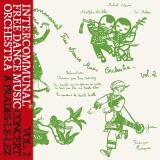
Concert at Prades-le-Lez marks the origins of the Intercommunal Free Dance Music Orchestra. In 1974, François Tusques and his companions (Michel Marre, Jo Maka, Adolf Winkler and Guem), in the spirit of Don Cherry or Chris McGregor, playfully dismantle all borders and all styles of creative music.
On this second volume, the Intercommunal builds unprecedented soundscapes around a song of revolt, a dance tune, or a burst of dissonance. The journey is unforgettable, no question about it. On repeat listening, it even becomes… lunar!
“The music that we make is primarily meant to be listened to live,” warned a leaflet from the Intercommunal Free Dance Music Orchestra. This is precisely why the (restored!) reissue of the two volumes of Concert at Prades-le-Lez, recorded on January 25 and 26, 1974 by François Tusques and his comrades, is such an important event.
In 1971, after recording a series of albums that would leave a lasting mark on French jazz (Free Jazz, of course, with Michel Portal, François Jeanneau, Bernard Vitet, Beb Guérin and Charles Saudrais, but also Le Nouveau Jazz with Barney Wilen, or the solo Piano Dazibao), François Tusques founded the Intercommunal—a grouping whose very name called for the fraternization of the various communities making up the country: Our music will help, we hope, to resolve the contradictions that exist between workers be longing to different communities, by breaking down various forms of national chauvinism, and more particularly the chauvinism of certain French people toward the cultures of Third World countries… Long live the friendship between the peoples of the whole world!
Among the great records made by the Intercommunal Free Dance Music Orchestra, the two volumes of Concert at Prades-le-Lez come first, before L’Inter Communal, Vol. 4, Le Musichien, and Après la marée noire (four titles already reissued by Souffle Continu). François Tusques and his companions (Michel Marre and Jo Maka on saxophones, Adolf Winkler on trombone, and Guem on percussion) performed on January 25 and 26, 1974 at the Moulin de Prades-le-Lez, a few kilometers from Montpellier. It was thus in the southern region of Occitanie that the first echoes of this musical vision of a borderless brotherhood were recorded.
“We’re not among the Colonels,” the Intercommunal reassures us right away, performing a stride piano tune carried by African winds that the audience cannot resist for long. The energy is already striking and it never lets up throughout these two recordings, from start to finish: jazz, blues, traditional music, minimalism, even funk… The musicians of the Intercommunal have heard a lot of great music and now delight in reinventing it by mixing it all together.
“We want the song form to take its place as a weapon in the struggle against capitalist exploitation and all those who oppress us morally and materially,” declared an Intercommunal leaflet, quoting Jean-Baptiste Clément, author of the lyrics to “Le Temps des cerises.” The struggle was therefore serious—but it did not prevent François Tusques and his group from waging it in a festive spirit: each piece on Concert at Prades-le- Lez sends out a call for love and fraternity. Fifty years later, the message remains as relevant as ever—and once again, it is François Tusques who makes it heard.
Suche:down south music
- On N'est Pas Chez Les Colonels
- Intercommunal Blues
- Mazir
- Kan-Ha-Diskan - We Shall Over Come
- African Rythm-N-Logy
2[23,95 €]
Concert at Prades-le-Lez marks the origins of the Intercommunal Free Dance Music Orchestra. In 1974, François Tusques and his companions (Michel Marre, Jo Maka, Adolf Winkler and Guem), in the spirit of Don Cherry or Chris McGregor, playfully dismantle all borders and all styles of creative music.
On this first volume, the Intercommunal takes its audience from New Orleans to Brittany and on to North Africa. The journey was bold, without a doubt—and its memory remains unforgettable.
“The music that we make is primarily meant to be listened to live,” warned a leaflet from the Intercommunal Free Dance Music Orchestra. This is precisely why the (restored!) reissue of the two volumes of Concert at Prades-le-Lez, recorded on January 25 and 26, 1974 by François Tusques and his comrades, is such an important event.
In 1971, after recording a series of albums that would leave a lasting mark on French jazz (Free Jazz, of course, with Michel Portal, François Jeanneau, Bernard Vitet, Beb Guérin and Charles Saudrais, but also Le Nouveau Jazz with Barney Wilen, or the solo Piano Dazibao), François Tusques founded the Intercommunal—a grouping whose very name called for the fraternization of the various communities making up the country: Our music will help, we hope, to resolve the contradictions that exist between workers be longing to different communities, by breaking down various forms of national chauvinism, and more particularly the chauvinism of certain French people toward the cultures of Third World countries… Long live the friendship between the peoples of the whole world!
Among the great records made by the Intercommunal Free Dance Music Orchestra, the two volumes of Concert at Prades-le-Lez come first, before L’Inter Communal, Vol. 4, Le Musichien, and Après la marée noire (four titles already reissued by Souffle Continu). François Tusques and his companions (Michel Marre and Jo Maka on saxophones, Adolf Winkler on trombone, and Guem on percussion) performed on January 25 and 26, 1974 at the Moulin de Prades-le-Lez, a few kilometers from Montpellier. It was thus in the southern region of Occitanie that the first echoes of this musical vision of a borderless brotherhood were recorded.
“We’re not among the Colonels,” the Intercommunal reassures us right away, performing a stride piano tune carried by African winds that the audience cannot resist for long. The energy is already striking and it never lets up throughout these two recordings, from start to finish: jazz, blues, traditional music, minimalism, even funk… The musicians of the Intercommunal have heard a lot of great music and now delight in reinventing it by mixing it all together.
“We want the song form to take its place as a weapon in the struggle against capitalist exploitation and all those who oppress us morally and materially,” declared an Intercommunal leaflet, quoting Jean-Baptiste Clément, author of the lyrics to “Le Temps des cerises.” The struggle was therefore serious—but it did not prevent François Tusques and his group from waging it in a festive spirit: each piece on Concert at Prades-le- Lez sends out a call for love and fraternity. Fifty years later, the message remains as relevant as ever—and once again, it is François Tusques who makes it heard.
- A1: The Bird
- A2: Heart Don't Stand A Chance
- A3: The Waters (Feat. Bj The Chicago Kid)
- A4: The Season / Carry Me
- B1: Put Me Thru
- B2: Am I Wrong (Feat. Schoolboy Q)
- B3: Without You (Feat. Rapsody)
- B4: Parking Lot
- C1: Lite Weight (Feat. The Free Nationals United Fellowship Choir)
- C2: Room In Here (Feat. The Game & Sonyae Elise)
- C3: Water Fall (Interlude)
- C4: Your Prime
- D1: Come Down
- D2: Silicon Valley
- D3: Celebrate
- D4: The Dreamer (Feat. Talib Kweli & Timan Family Choir)
Ten years ago, Anderson .Paak didn't just release an album; he staged a full-scale takeover of the soul and hip-hop landscape. Released on January 15, 2016, Malibu served as the definitive arrival of an artist who had spent years grinding in the underground before a star-making turn on Dr. Dre’s Compton. While his previous work hinted at his potential, Malibu was the moment the world met the "Cheeky Andy" persona in full—a virtuosic drummer, a raspy-voiced crooner, and a sharp-witted rapper all rolled into one. The album is a sprawling, sun-drenched journey through the Southern California coast, blending 1970s funk, church-reared gospel, and gritty boom-bap into something that feels both nostalgic and entirely futuristic. With a heavyweight production lineup including 9th Wonder, Madlib, Kaytranada, and Hi-Tek, the record maintains a warm, analog texture that was a breath of fresh air in an increasingly digital era. It’s an album that breathes, full of intentional imperfections and the kind of "in-the-pocket" groove that can only come from a seasoned live performer. Beyond the infectious, dance-floor-ready energy of tracks like "Am I Wrong" and "Come Down," the album is a deeply autobiographical masterwork. .Paak uses the 65-minute runtime to unpack his life story with startling clarity, touching on his mother’s gambling addiction, his father’s incarceration, and his own brushes with homelessness with a sense of resilience that never feels heavy-handed. He weaves these heavy themes through a lens of triumph, grounded by vintage surfing documentary samples that give the project its cinematic, coastal atmosphere. It’s a celebratory record born out of struggle, anchored by his impeccable technicality on the drums and a guest list—featuring ScHoolboy Q, Rapsody, and The Game—that feels hand-picked to complement his specific brand of West Coast swagger. A decade later, Malibu stands as a modern classic and the blueprint for the soulful revivalism that would eventually lead .Paak to global superstardom and Grammy-winning heights. It remains a testament to the idea that the most profound music often comes from the most personal places, proving ten years on that the best way to move forward is to stay rooted in the groove.
- A1: The Bird
- A2: Heart Don't Stand A Chance
- A3: The Waters (Feat. Bj The Chicago Kid)
- A4: The Season / Carry Me
- B1: Put Me Thru
- B2: Am I Wrong (Feat. Schoolboy Q)
- B3: Without You (Feat. Rapsody)
- B4: Parking Lot
- C1: Lite Weight (Feat. The Free Nationals United Fellowship Choir)
- C2: Room In Here (Feat. The Game & Sonyae Elise)
- C3: Water Fall (Interlude)
- C4: Your Prime
- D1: Come Down
- D2: Silicon Valley
- D3: Celebrate
- D4: The Dreamer (Feat. Talib Kweli & Timan Family Choir)
Ten years ago, Anderson .Paak didn't just release an album; he staged a full-scale takeover of the soul and hip-hop landscape. Released on January 15, 2016, Malibu served as the definitive arrival of an artist who had spent years grinding in the underground before a star-making turn on Dr. Dre’s Compton. While his previous work hinted at his potential, Malibu was the moment the world met the "Cheeky Andy" persona in full—a virtuosic drummer, a raspy-voiced crooner, and a sharp-witted rapper all rolled into one. The album is a sprawling, sun-drenched journey through the Southern California coast, blending 1970s funk, church-reared gospel, and gritty boom-bap into something that feels both nostalgic and entirely futuristic. With a heavyweight production lineup including 9th Wonder, Madlib, Kaytranada, and Hi-Tek, the record maintains a warm, analog texture that was a breath of fresh air in an increasingly digital era. It’s an album that breathes, full of intentional imperfections and the kind of "in-the-pocket" groove that can only come from a seasoned live performer. Beyond the infectious, dance-floor-ready energy of tracks like "Am I Wrong" and "Come Down," the album is a deeply autobiographical masterwork. .Paak uses the 65-minute runtime to unpack his life story with startling clarity, touching on his mother’s gambling addiction, his father’s incarceration, and his own brushes with homelessness with a sense of resilience that never feels heavy-handed. He weaves these heavy themes through a lens of triumph, grounded by vintage surfing documentary samples that give the project its cinematic, coastal atmosphere. It’s a celebratory record born out of struggle, anchored by his impeccable technicality on the drums and a guest list—featuring ScHoolboy Q, Rapsody, and The Game—that feels hand-picked to complement his specific brand of West Coast swagger. A decade later, Malibu stands as a modern classic and the blueprint for the soulful revivalism that would eventually lead .Paak to global superstardom and Grammy-winning heights. It remains a testament to the idea that the most profound music often comes from the most personal places, proving ten years on that the best way to move forward is to stay rooted in the groove.
- A1: The Bird
- A2: Heart Don't Stand A Chance
- A3: The Waters (Feat. Bj The Chicago Kid)
- A4: The Season / Carry Me
- B1: Put Me Thru
- B2: Am I Wrong (Feat. Schoolboy Q)
- B3: Without You (Feat. Rapsody)
- B4: Parking Lot
- C1: Lite Weight (Feat. The Free Nationals United Fellowship Choir)
- C2: Room In Here (Feat. The Game & Sonyae Elise)
- C3: Water Fall (Interlude)
- C4: Your Prime
- D1: Come Down
- D2: Silicon Valley
- D3: Celebrate
- D4: The Dreamer (Feat. Talib Kweli & Timan Family Choir)
Ten years ago, Anderson .Paak didn't just release an album; he staged a full-scale takeover of the soul and hip-hop landscape. Released on January 15, 2016, Malibu served as the definitive arrival of an artist who had spent years grinding in the underground before a star-making turn on Dr. Dre’s Compton. While his previous work hinted at his potential, Malibu was the moment the world met the "Cheeky Andy" persona in full—a virtuosic drummer, a raspy-voiced crooner, and a sharp-witted rapper all rolled into one. The album is a sprawling, sun-drenched journey through the Southern California coast, blending 1970s funk, church-reared gospel, and gritty boom-bap into something that feels both nostalgic and entirely futuristic. With a heavyweight production lineup including 9th Wonder, Madlib, Kaytranada, and Hi-Tek, the record maintains a warm, analog texture that was a breath of fresh air in an increasingly digital era. It’s an album that breathes, full of intentional imperfections and the kind of "in-the-pocket" groove that can only come from a seasoned live performer. Beyond the infectious, dance-floor-ready energy of tracks like "Am I Wrong" and "Come Down," the album is a deeply autobiographical masterwork. .Paak uses the 65-minute runtime to unpack his life story with startling clarity, touching on his mother’s gambling addiction, his father’s incarceration, and his own brushes with homelessness with a sense of resilience that never feels heavy-handed. He weaves these heavy themes through a lens of triumph, grounded by vintage surfing documentary samples that give the project its cinematic, coastal atmosphere. It’s a celebratory record born out of struggle, anchored by his impeccable technicality on the drums and a guest list—featuring ScHoolboy Q, Rapsody, and The Game—that feels hand-picked to complement his specific brand of West Coast swagger. A decade later, Malibu stands as a modern classic and the blueprint for the soulful revivalism that would eventually lead .Paak to global superstardom and Grammy-winning heights. It remains a testament to the idea that the most profound music often comes from the most personal places, proving ten years on that the best way to move forward is to stay rooted in the groove.
- A1: The Bird
- A2: Heart Don't Stand A Chance
- A3: The Waters (Feat. Bj The Chicago Kid)
- A4: The Season / Carry Me
- B1: Put Me Thru
- B2: Am I Wrong (Feat. Schoolboy Q)
- B3: Without You (Feat. Rapsody)
- B4: Parking Lot
- C1: Lite Weight (Feat. The Free Nationals United Fellowship Choir)
- C2: Room In Here (Feat. The Game & Sonyae Elise)
- C3: Water Fall (Interlude)
- C4: Your Prime
- D1: Come Down
- D2: Silicon Valley
- D3: Celebrate
- D4: The Dreamer (Feat. Talib Kweli & Timan Family Choir)
Ten years ago, Anderson .Paak didn't just release an album; he staged a full-scale takeover of the soul and hip-hop landscape. Released on January 15, 2016, Malibu served as the definitive arrival of an artist who had spent years grinding in the underground before a star-making turn on Dr. Dre’s Compton. While his previous work hinted at his potential, Malibu was the moment the world met the "Cheeky Andy" persona in full—a virtuosic drummer, a raspy-voiced crooner, and a sharp-witted rapper all rolled into one. The album is a sprawling, sun-drenched journey through the Southern California coast, blending 1970s funk, church-reared gospel, and gritty boom-bap into something that feels both nostalgic and entirely futuristic. With a heavyweight production lineup including 9th Wonder, Madlib, Kaytranada, and Hi-Tek, the record maintains a warm, analog texture that was a breath of fresh air in an increasingly digital era. It’s an album that breathes, full of intentional imperfections and the kind of "in-the-pocket" groove that can only come from a seasoned live performer. Beyond the infectious, dance-floor-ready energy of tracks like "Am I Wrong" and "Come Down," the album is a deeply autobiographical masterwork. .Paak uses the 65-minute runtime to unpack his life story with startling clarity, touching on his mother’s gambling addiction, his father’s incarceration, and his own brushes with homelessness with a sense of resilience that never feels heavy-handed. He weaves these heavy themes through a lens of triumph, grounded by vintage surfing documentary samples that give the project its cinematic, coastal atmosphere. It’s a celebratory record born out of struggle, anchored by his impeccable technicality on the drums and a guest list—featuring ScHoolboy Q, Rapsody, and The Game—that feels hand-picked to complement his specific brand of West Coast swagger. A decade later, Malibu stands as a modern classic and the blueprint for the soulful revivalism that would eventually lead .Paak to global superstardom and Grammy-winning heights. It remains a testament to the idea that the most profound music often comes from the most personal places, proving ten years on that the best way to move forward is to stay rooted in the groove.
- 01: The Ark
- 02: The Masai
- 03: Dream Dance
- 04: Belize
- 05: As You Are
- 06: Danakil Warrior
Our latest Holy Grail reissue is this private press spiritual jazz gem out of California from Rickey Kelly and his vibes & marimba. Features Diane Reeves (vocals) & Adele Sebastian (flute)!
Heavyweight 180g LP with tip-on sleeve, individually numbered 1-1000, card enclosed for liner notes & audio download
"Rickey, I know these are your friends, the guys you went to school with, but if you wanna record an album, you record with musicians who have been playing their whole life; whatever you write, they'll put their whole life into it. You play with your friends; they may not even play in tune."
These are the words of Slave guitarist Kevin Johnson, and they were to change the course of young Rickey Kelly's life.
It was 1978, and music student Kelly had approached Johnson with a tape of rough demos of some songs he'd written. A San Francisco native, Kelly had recently moved the short distance south to study music at LA City College in East Hollywood. He was a member of E.W. Wainwright Jr.'s African Roots of Jazz, and was spending up to 10 hours a day in practice on both vibes and marimba. He also played with Horace Tapscott, and had his own band made up of fellow students, but it was his ambition to make an album that led to the conversation with Johnson. It was a turning point in his education, and a decision was looming.
The next thing Johnson said was "You call the best jazz musicians. How'd you like to play with Billy Higgins?", a line that would seal it for anyone; for a youngster like Rickey just starting out in the business, you just don't turn down the opportunity to play with the likes of highly accomplished musicians, especially those of the calibre of legendary jazz drummer Billy Higgins.
Some calls were made and the date was set to record at Studio Masters on Beverly Blvd, a studio set up just a few years previous in 1973, owned and operated by Dot Records founder Randy Wood with his son John. Some of the other music professionals set to record with Kelley that day were flautist Adele Sebastian, bass player Tony Dumas, saxophonist Charles Owens and vocalist Diane Reeves, none of whom had previously played with Kelly before.
Kelly was impressed with the studio, with the gold records displayed on the walls and the famous musicians hanging out. 'It took a lot of humility for me to record with them, I mean I was nobody, nothing, and for not a lot of money either' remembers Rickey in a later interview with Calvin Lincoln, 'It taught me a lot, to practice hard, and study for the rest of your life, to give your all, and there's a lot of all to give'.
As the recording session took place, John Wood was listening in. He was impressed. Kelly didn't have the funds to manufacture and release the album himself, so Wood suggested it was pressed up on his in-house studio label, Los Angeles Phonograph Records, and thus the LP 'My Kind of Music' was released early in 1979. The album also saw a subsequent pressing soon afterwards on Dennis Sullivan's New Note label.
Kelly remains humble and proud of his debut album to this day. 'I was still a beginner' he says, 'These masters walked in, smiling, and gave me something worth gold'.
- A1: Life Could Be A Cloud
- A2: Cut Glass Hammer
- A3: I Can't See A Rainbow
- A4: Dropped Down The Well
- A5: In The Weeds
- A6: Reimagined River
- A7: Mediocre Demon
- A8: Bell Miner
- A9: Lemon Trees
- A10: Watching The Moon
- A11: Wildly Remote
- A12: Holy Invisible
YELLOW VINYL[25,17 €]
MEMORIALS jump off the waterslides and head above the clouds with their stunning second album, ‘All Clouds Bring Not Rain’. The duo of Verity Susman and Matthew Simms (formerly of Electrelane and WIRE) locked themselves away in a studio in a barn secluded deep in the woods in southwestern France and re-emerged with a beautiful, unusual record that is both melodic and unconventional. For such an ambitious album it’s striking that it was written, performed, recorded and mixed solely by the two of them. Sounding like an unearthed classic, MEMORIALS twist their influences into their own unmistakable sound. Imagine Nico singing with Can produced by David Axelrod and you’re somewhere in the right ballpark.
The record draws inspiration from a wide range of music including folk, dub, post punk, experimental tape music, 60s soul, garage rock, 70s spiritual jazz and Canterbury prog. This attention to detail in their sound meant finding several other studios to get what they needed to record with, including a harpsichord at 4AD’s studio in London and a vibraphone and vintage Leslie speaker in Stereolab drummer Andy Ramsay’s studio Press Play. Verity’s distinctive, unadorned singing is a focal point of the record, moving from tender to wild. Her vocal melodies quickly become earworms, providing the tuneful heart around which the songs’ more unorthodox elements are arranged, which is where Matthew’s unconventional approach to recording and production comes to the fore. With their adventurous arrangements, classic songwriting skills and innovative production techniques, MEMORIALS have created another mesmerising listen that’s accomplished and compelling in its unique approach yet remains dizzyingly immersive - just like their acclaimed live shows.
Akio Nagase joins Especial with an EP of global acid tracks. Centred around his heritage, Osaka based Nagase infuses his sounds with a mixture of dub and ethno-dance, wrapped in 303 infused mid-tempo 4/4 grooves.
Making music for over 20 years, as well as running his Makedub parties, Nagase has released for Sound Channel, Darker Than Wax and cult Japanese digital label Chillmountain. It is here, on the latter, that the connection was made and his tracks unearthed.
Rearranged, re-edited and remixed especially for vinyl, Jurassic Shanghai Acid starts, fusing sound effects, dialogue and samples atop squelching acid beats. Following is Mongol 303, as Khoomii throat singing and acid vibrations loop and flow across the Altai Mountains down to Steppe Plains - Madrugada Eterna.
Okinawa Yunta crosses the South China Sea to home, perfectly mixing unique folk song from Taketomi Island reconstructed with Nagase's gentle, wiggling acid accompaniment. The incessant repetitive groove an Acid mantra, flowing through consciousness to move mind and body.
The bpm's rise for the close. Saigon Acid mixes tradition and Acid House for fun, a 3AM basement jam where Dan Nhi meets 808 and Nagase presents his ethno-acid love in.
- 1: Come Away
- 2: Dance
- 3: You Make No Sense
- 4: Parking Lot Blues
- 5: Chistelle
- 6: About You
- 7: It’s Alright
- 8: Moody (Spaced Out)
- 9: Tiny Sticks
- 10: The Beat
- 11: My Love For You
Repressed LP on Neon Orange Vinyl. Come Away With ESG - 35-year anniversary release of the classic genre-busting debut album by the Bronx sisters ESG. The sample-friendly opus that’s the inspiration for hip-hop, house and post punk. Music that falls outside of the no wave, new wave and post punk library, it’s for the dance floor but it’s not funk, there’s no horns, no driving organ; it’s the opposite of Sly And The Family Stone but no less cool and no less groovy. “A lasting document of their unique brand of minimal funk that would influence subsequent post-punk, hip-hop, and dance music acts. Stripped down to the most basic of drumbeats and rudimentary bass lines, ‘Come Away’ confirms the notion that the real rhythm is what happens between the beats. AllMusic // “This is dub disco with a punk edge.” Paste // “Uncut punk-funk straight off the streets of the South Bronx.” Record Collector // “ESG are that rare thing” Guardian // “Come Away with ESG sounds so shockingly current.” Paste // “A musical snapshot of New York City at the beginning of the '80s.” Allmusic
There’s no direct English translation for the word “hiraeth”. In the Welsh language, it describes a form of longing for an intangible something, somewhere or someone that no longer exists. Sofie Birch and Antonina Nowacka draw on the concept to guide their second collaborative album, a suite of vulnerable, open-hearted improvisations and reflections that attempt to grasp an image of the past that’s chimeric, dissolving almost as soon as it materializes. The duo’s process follows the same distant beacon; unlike Languoria, their critically acclaimed debut, Hiraeth is, at heart, an acoustic record, informed by in-person improvisations with voices and string instruments that gesture to an era before computers, AI and DAWs. It’s just as lush, but Hiraeth is warmer and more muted than its predecessor.
Nowacka and Birch conceived the album in the wake of a slew of collaborative live concerts, spurred on by serendipitous improvisations and an interest in paring down their setup. Unsound arranged a retreat in Sokołowsko, an idyllic village nestled in the verdant hills of Southern Poland, close to the Czech border. Sokołowsko surrounds a large ruined sanatorium that’s rumored to have inspired Thomas Mann’s 1924 novel The Magic Mountain, and has long been a magnet for artists. The two took the opportunity to rethink their approach completely, arriving with just a guitar, a zither and a portable Nagra reel-to-reel machine. Recording directly to tape, they sketched out ideas with just their voices and instruments, reflecting their surroundings without being distracted or mediated by modern technology.
“We wanted to get away from screens as much as possible,” says Birch, “to bring to the world something vulnerable and honest. Without advance preparation, every day we went out into the open air, finding places to sit, during sunset or the midday sun. We discovered new tunings on our instruments, picked up a melody, and started the machine, playing over
and over till we got a take.” In the autumn, they met again in a Copenhagen studio, sparingly and carefully layering old synths and organs to add more depth without muddying the mix.
Both Nowacka and Birch sing throughout, their voices threading the acoustic instruments and tangling with each other, almost becoming one. But it’s the environment of Sokołowsko, “the birds and the light, even the wind playing against the harps,” that’s woven into the music’s lining. Affected by time spent meditating and in nature, as well as the fact that Birch was pregnant whilst recording, the album feels alive and remarkably present. Even the sound quality of the tape machine gives Hiraeth a tactile, organic quality, as Nowacka puts it, “like being in a warm bath.”
They still have the raw recordings from Sokołowsko on old reels, physical souvenirs of their time spent making music in a “habitat for intuitive songs, a little ecosystem, alive and spirited.” The outmoded gear and remote setting helped the duo disengage from the modern world for a few moments and imagine an existence that’s been lost to time and nominal progress. With digital technology receding into the background, Nowacka and Birch had space to make “intuitive connections with frequencies and people,” as Birch explains. Hiraeth is a testament not to nostalgia, but to the power of kinship.
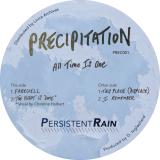
Following his ‘You Are the Music’ EP for Euphoric State, and the reissue of the underground classic ‘Voices’ by Jewellery, David Inglesfield returns with a second EP by PersistentRain – and the first release on his own label, Precipitation.
‘All Time Is One’ is a meditation on the passing – yet continuity – of time, whether across multiple decades, or just in the transition from one day to another.
Opening track ‘Farewell’ brings disparate voices and sounds from the past back to life in an intense, transcendent journey, all driven by a pulsating bassline.
‘The Night Is Done’ features a solid beat and lush array of synths, with the vocal by Bristolian Christine Hulbert the icing on the cake.
On ‘This Place (Displace)’, Inglesfield, a Londoner from birth, but recently moved to South Wales, turns to consider a corner of his beloved native city, where a once-legendary musical theatre was swept away, to become a makeshift car park in the 1960s, then the site of a brutalist block in the 1970s, now torn down yet again. ‘The first place we’re going to stop at … seems to be NOWHERE!’
‘I Remember’ closes the EP, with fragments of Fender Rhodes and strings fluttering like memories over a moody, minimal sub-bass and insistent kick.
- A1: Me Pega
- A2: Tem Carnaval
- A3: Sexy Doce
- B1: Coeur
- B2: Então Tá Bem
- B3: Para Ser Feliz
- B4: Tô Nem Aí
Fresh from releasing projects on Method 808 and Future Classic, landing a huge collaboration with Chloé Caillet, and delivering an official remix for Fatboy Slim, PPJ are entering a new chapter in full force. Their expansive take on global street sounds, ranging from neoperreo to Miami bass, gets a cool re-coating.
Led by the magnetic vocalist Páula, with production from Povoa (individually supported by Four Tet, Ben UFO, and Barry Can't Swim, with recent releases on Live From Earth), the duo operates in maximalist mode: playful, sensual, and slightly unhinged.PPJ’s new era, JOKER, embraces a figure that appears everywhere from card decks to carnival culture as a symbol that mirrors their own DNA: funny, eerie, seductive, unpredictable. The EP leans further into club territory, but rather than polishing their edges, PPJ amplify them.
At the emotional core of the record sits “Coeur,” co-produced with Chloé Caillet. It begins with an MPB-tinged foundation flirting with bossa nova. It’s unmistakably Brazilian, bathed in sunset hues before being sped up and twisted into a dance-floor-ready electronic form. The groove shimmers with tension: warm percussion, elastic basslines, and Páula’s voice hovering between intimacy and tease. It feels like a remix of itself, romantic, but slightly untrustworthy.
If “Coeur” glows, “To Nem Ai” is a slow burner. A very deep and downtempo house cut, it unfolds slowly, almost luxuriously, guided by sensual vocals that feel whispered directly into the ear of the listener. A hypnotizing piano sample that feels like a late-night confession. It’s the kind of record that transforms a dancefloor into something tactile.
Elsewhere, “Me Pega” is a high-energy reinterpretation of the tech-house sounds from Santa Catarina, one of southern Brazil’s most feverish party states, twisted and accelerated for ferocious impact. Drawing direct inspiration from Sarro, a raw and vibrant Brazilian street dance, the track captures physical intensity in its purest form: sweat, bass pressure, collective release.
Its counterpart, “Tem Carnaval” channels Páula’s vivid storytelling into a thunderous ode to Rio’s carnival spirit, euphoric, chaotic, cinematic landed just in time for this year’s celebrations.
On “Sexy Doce,” rugged electroclash melodies collide with unexpected references. “It was inspired by Budots, which is dance music from the streets in the Philippines,” Povoa explains. “Then we mixed it with Páula’s Brazilian vocals. Baile funk is similarly from the streets, so there is a connection.” The result is raw yet futuristic, a cross-continental flirtation that feels both underground and explosive.
With this new EP, PPJ make music like they’re tuning into a dozen pirate frequencies at once. Pirate radio from Rio to Berlin to Manila intercepting fragments of street culture, sensuality, and chaos, and stitching them into something deliriously cohesive.
JOKER doesn’t just nod to club culture. It challenges it, twists expectation and leaves a lasting impression.
- 01: Dancelwerk - Back To Eighties
- 02: Dancelwerk - Breikaut
- 03: Cmos34 - Cem3340
- 04: Cmos34 - Lm13700
- 05: Jorganes - Spirits
- 06: Jorganes - Beds
- 07: Sunday German Flowers - Don’t You Know I’m The Devil (He Said)
- 08: Sunday German Flowers - Amor Sin Gluten
- 09: Nico Hernández - Rdk-Lz 1
- 10: Nico Hernández - Rdk-Lz 2
- 11: Nico Hernández - Rdk-Lz 3
Yearly compilation series RADAR KEROXEN return with its sixth volume of theme-driven releases, continuing to chart the fractured sonic terrain of the Canary Islands’ undergrowth.
After digging through indie, psychedelia, shoegaze, and site-specific drone, Vol. 6 dives headfirst into the after-hours circuitry of the islas afortunadas, assembling a hand-picked selection of underground club mutations from five long-standing operators within the local electronic ecosystem.
If Vol. 5 was shaped by the cavernous resonance of Santa Cruz’s obsolete gasoline tank, Vol. 6 is fuelled by late-night club aesthetics and mid-90s hardware obsession. Opening the record, Dancelwerk — one of the archipelago’s early modular practitioners — delivers tightly wound structures nodding to Warp-era golden agefuturism and southern Tenerife’s rave boom. Cmos34 follow with their first-ever published material, injecting instability into the system through improvised techno rituals built on friction and feedback.
Jorganes drags the narrative deeper into hypnotic territory, stripping club music down to its skeletal pulse and channeling disciplined repetition and late-90s minimalism into austere, trance-inducing momentum. From Gran Canaria, Sunday German Flowers bends the mood toward cinematic dub: heavy low-end pressure, spoken word, and nocturnal atmospheres stitched into slow-burning club noir.
Closing the circle, Nico Hernández pulls the compilation back to volcanic ground with ambient compositions shaped by Lanzarote’s raw geological landscape — basalt echoes, tectonic silence, and island isolation rendered in sound.
As always, the release is housed in a post-tropical collage artwork by Pura Márquez.
Master by Daniel García
Artwork by Pura Marquéz
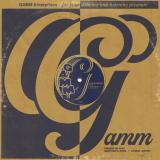
California's finest producer Coflo is back on GAMM with his second EP with edits and reworks of his favourite tunes.
All tracks hover around 4/4 rhythms but beyond that the music goes in all directions. First is 'Yo No Bailo' which is a deep Afro-Cuban House jam with chanting vocals and driving percussion.
Second is 'Sealion', a bumpy house refix of the classic cover of 'See Line Woman'.
On the flip side Coflo goes deep down south for a blues session with an electronic twist, a great marriage of musical styles if you ask us.
We end strong with 'Rare Silk' a vocal Jazz-Afro-House jam that is both deep and uplifting at the same time...
- 1: Urn Burial
- 2: The Redness In The West
- 3: The Third Migration
- 4: They Came Like Swallows
- 5: The Living Theater
- 6: The Oceans Are Crying
- 7: Insight
Black Vinyl[30,67 €]
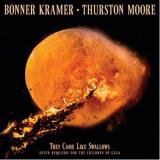
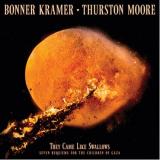
They Came Like Swallows is the first album-length collaboration between Thurston Moore and Kramer (now officially Bonner Kramer), two giants of alternative/ experimental music. The accomplishments and influence of these two artists in the world of independent music cannot be overstated and the result of their artistic union is a startlingly cohesive statement that burns through landscapes of primitive outsider rock, avant-garde composition, progressive ambient and further locales boldly and beautifully unnamable. “Kramer and I reconnected in Miami, Florida, a few years back, many many years after each of us had departed NYC on separate life adventures. It was only a matter of time before Kramer and I started making plans to record together and with his irrepressible due diligence he quickly set up a mobile recording contraption in the pad I was decamped in, the Florida sunshine flowing through the palm leaves, lithe lizards skittering across the windowsills, and we just went for it.
Kramer had the idea to cover a Joy Division tune, a left turn from the improvisations we had been tracking, though wholly in keeping with both our sensibilities of light and dark unifying in transcendent songwriting, both of us devotees of 'the song' as well as 'the freedom.’ What transpired is They Came Like Swallows, a session we immediately felt should exist as a prayer to the war-torn souls of the families of Palestine continually decimated by the brutality of genocide. We agreed beyond words to offer our music as a sonic activism and as a beneficent energy. This album is our duo exchange for human dignity, it is our soul music for any semblance of a peaceful planet.” ~ Thurston Moore “For the first time in our nearly 45 years of friendship, we had identical time windows open to make a record together,” recounts Kramer. After all this time not a moment is wasted as the duo immediately taps into the heightened core of improvisational tension across these seven offerings. Volcanic opener “Urn Burial” notches a similar historic union (John Cale and Terry Riley) to meet the circumstances of the moment, with swirling mists of organ and pounding toms over guitar that thickens the atmosphere with jagged, grimy dissonance.
Solemn strings open the second track, “The Redness In The West,” with Kramer’s cello and viola in dueling bow beneath the high tension drive and sustain of Thurston’s electric guitar, tapping out a Morse code of tension that mounts endlessly into a fog of inevitable war by the end. Moore and Kramer’s sense of experimentalism is in free and full grandeur throughout They Came Like Swallows, though the duo keep a strong and constant sideways eye on melody, composition and architecture, to the ends that any strict lines between song and improvisation are blurred beyond qualification.
As if to punctuate this point, Swallows closes with a nightwork cover of Joy Division’s “Insight,” a doleful coda that breathes out with a solemn inner grace under Thurston’s instantly stylistically recognizable guitar melodies as they weave into he and Kramer’s unison voices. As the lone vocal piece and only traditional ‘song’ form on the album, “Insight” is unique to this set and as a closing statement draws connective lines back to the kind of dynamic, electrified melodicism that wove deep, melancholy patterns into the untamed fire of Sonic Youth’s Sister and Daydream Nation. In the album’s final moments, the two voices repeat the lyric “I’m not afraid anymore” as mantra, underscoring the heavy, unsettled themes and methods that preceded it. Kramer describes the creative process of They Came Like Swallows: “I had composed and recorded a few pieces at my home studio over the course of a couple weeks. Thurston was spending the winter in South Florida, so I flew down and spent a few days recording his guitar parts in his home there. Watching him spontaneously compose his parts was pretty astonishing, to say the least. Once we'd finished working on those pieces, we began improvising and following wherever the music pointed us, and another few pieces were born. We got straight to it, without anything driving us other than the joy of finally working together.
My personal goal was to remain present and catch as many surprises as I could from Thurston's guitar work, and there were plenty during those few days. We had a fucking blast.” Thurston’s contributions here will be readily familiar to any acolytes of his other works, the through-line between his inspired playing, cradled in Kramer’s meticulous, solid arrangements. “If I had to make this record again, I'd do it all exactly the same way,” Kramer says. “It’s like jazz, you don't think about it. You just do it. It was miraculous, and you don't fuck with a miracle.”
They Came Like Swallows is the first album-length collaboration between Thurston Moore and Kramer (now officially Bonner Kramer), two giants of alternative/ experimental music. The accomplishments and influence of these two artists in the world of independent music cannot be overstated and the result of their artistic union is a startlingly cohesive statement that burns through landscapes of primitive outsider rock, avant-garde composition, progressive ambient and further locales boldly and beautifully unnamable. “Kramer and I reconnected in Miami, Florida, a few years back, many many years after each of us had departed NYC on separate life adventures. It was only a matter of time before Kramer and I started making plans to record together and with his irrepressible due diligence he quickly set up a mobile recording contraption in the pad I was decamped in, the Florida sunshine flowing through the palm leaves, lithe lizards skittering across the windowsills, and we just went for it.
Kramer had the idea to cover a Joy Division tune, a left turn from the improvisations we had been tracking, though wholly in keeping with both our sensibilities of light and dark unifying in transcendent songwriting, both of us devotees of 'the song' as well as 'the freedom.’ What transpired is They Came Like Swallows, a session we immediately felt should exist as a prayer to the war-torn souls of the families of Palestine continually decimated by the brutality of genocide. We agreed beyond words to offer our music as a sonic activism and as a beneficent energy. This album is our duo exchange for human dignity, it is our soul music for any semblance of a peaceful planet.” ~ Thurston Moore “For the first time in our nearly 45 years of friendship, we had identical time windows open to make a record together,” recounts Kramer. After all this time not a moment is wasted as the duo immediately taps into the heightened core of improvisational tension across these seven offerings. Volcanic opener “Urn Burial” notches a similar historic union (John Cale and Terry Riley) to meet the circumstances of the moment, with swirling mists of organ and pounding toms over guitar that thickens the atmosphere with jagged, grimy dissonance.
Solemn strings open the second track, “The Redness In The West,” with Kramer’s cello and viola in dueling bow beneath the high tension drive and sustain of Thurston’s electric guitar, tapping out a Morse code of tension that mounts endlessly into a fog of inevitable war by the end. Moore and Kramer’s sense of experimentalism is in free and full grandeur throughout They Came Like Swallows, though the duo keep a strong and constant sideways eye on melody, composition and architecture, to the ends that any strict lines between song and improvisation are blurred beyond qualification.
As if to punctuate this point, Swallows closes with a nightwork cover of Joy Division’s “Insight,” a doleful coda that breathes out with a solemn inner grace under Thurston’s instantly stylistically recognizable guitar melodies as they weave into he and Kramer’s unison voices. As the lone vocal piece and only traditional ‘song’ form on the album, “Insight” is unique to this set and as a closing statement draws connective lines back to the kind of dynamic, electrified melodicism that wove deep, melancholy patterns into the untamed fire of Sonic Youth’s Sister and Daydream Nation. In the album’s final moments, the two voices repeat the lyric “I’m not afraid anymore” as mantra, underscoring the heavy, unsettled themes and methods that preceded it. Kramer describes the creative process of They Came Like Swallows: “I had composed and recorded a few pieces at my home studio over the course of a couple weeks. Thurston was spending the winter in South Florida, so I flew down and spent a few days recording his guitar parts in his home there. Watching him spontaneously compose his parts was pretty astonishing, to say the least. Once we'd finished working on those pieces, we began improvising and following wherever the music pointed us, and another few pieces were born. We got straight to it, without anything driving us other than the joy of finally working together.
My personal goal was to remain present and catch as many surprises as I could from Thurston's guitar work, and there were plenty during those few days. We had a fucking blast.” Thurston’s contributions here will be readily familiar to any acolytes of his other works, the through-line between his inspired playing, cradled in Kramer’s meticulous, solid arrangements. “If I had to make this record again, I'd do it all exactly the same way,” Kramer says. “It’s like jazz, you don't think about it. You just do it. It was miraculous, and you don't fuck with a miracle.”
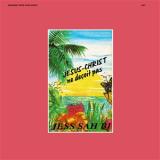
Jess Sah Bi is well-known as half of the legendary duo Jess Sah Bi & Peter One who brought homegrown Country-Americana to the West African masses with their smash debut Our Garden Needs Its Flowers in the mid-1980s. Touring stadiums and reaching listeners worldwide, their music has racked up millions of spins on YouTube and remains imprinted in the hearts of Ivorians of a certain age. ATFA reissued their album in 2018, garnering critical acclaim from publications including Pitchfork and Rolling Stone and reaching a new generation of listeners outside Ivory Coast (Cote d'Ivoire). Sometime in the early 90s, Die Sahbi - or Jesse, as he known to friends-became gravely ill with an unknown ailment and almost died. He visited various doctors and all kinds of religious healers and nothing helped. One day he went down to an Evangelical Christian revival in his neighborhood. They prayed over him and he was delivered. He says, "Their prayers helped chase out whatever demons and unhealthy spirits were inside me. After that my illness went away. When I went to the United States a few months later on an exchange program I wanted to make music to thank God because I was saved." He recorded an album of music praising God in order to honor a promise he made to himself at the depths of his desperation in the hospital. The album Jesus-Christ Ne Deçoit Pas Jesus Christ Does Not Let Us Down came out in 1991 and sold around 3000 cassettes in Ivory Coast. The master tape was lost along the way so the recording has never been on digital platforms until now. Jesse didn't have much time to record while visiting South Carolina, hence the relatively short album, 6 songs including two reprises for filler. A local pastor connected him with a studio and some American musicians (Robert Fortner and Gary Davis) to help. They added acoustic guitar, percussion and keyboard accompaniment to Jesse's soaring French and Gouro vocals, harmonica and finger-picked acoustic. The resulting recording is deeply soothing and contemplative music that perfectly compliments the songs already embraced by millions. But he had to find the rest of the studio expenses-$600 total-which he secured drawing cartoons for UNICEF. Jesse is Ivory Coast's first political cartoonist, a vocation for which he was widely celebrated at the time. It also made him a few enemies which lead to him leaving the country permanently a few years later. Jesus-Christ Ne Deçoit Pas is Jess Sah Bi's first and only gospel album. Fortunately, fans responded with enthusiasm: widespread radio airplay and concerts followed, along with a growing solo profile in the country. The first big gospel artists in Ivory Coast were the duo Mathieu et Constance, who emerged in 1989. There was a bigger gospel music movement in English-speaking counties like Ghana and Nigeria (Christians make up roughly 40% of the population in Ivory Coast, slightly less than Muslims). Jesse didn't have any intention of working in Christian music but he realized, "You don't make music to make money-you want to send a message." In the years since Jesus-Christ's release, gospel music in Ivory Coast has grown to become a key part of music culture in the country. Spiritual music appears in community actives across the public and private spectrum from religious gatherings and parties to television broadcasts and music festivals. And, as it has evolved and indigenized locally, gospel music has picked up elements of traditional Ivorian music, reggae and soul. The album ultimately precipitated the demise of the duo, who were soon separated geographically as Peter One relocated to Nashville. He went on to become a nurse and release a successful solo album on Verve following the ATFA collaboration. Nowadays Jesse lives in the Bay Area and continues to record and perform music wherever and whenever he has the chance. He is publishing a new book of humorous cartoons in 2025 and his most recent album Never Give Up came out in 2020
UK Balearic boss Pete Herbert has been dropping sounds inspired by his worldly travels for years and now gems from the last 20 years all make it on to this essential long player. These are all sounds for sunny spots, watery retreats and beach bliss-outs with Pete's signature touch everywhere. 'Back To Bahia' is a bubbly and loose house sound, 'Later That Night' has an edge that makes is suited to sundown dancing and 'South Seas' is a horizontal escape, while 'Legzira Sunrise' is dubby downtempo with tender chords that sink you in deep. This is the sort of record that elevates your collection with magical tunes for many different moments.