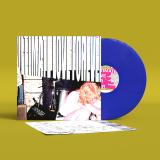
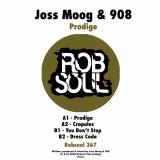
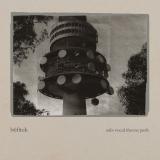
MR. COMPLEX is a veteran MC from NYC, Polyrhythm Addicts and many classic records since 1995. He drops his first 7” record: “I’m Ready” featuring Dres, from Black Sheep and El Fudge from the Rawkus era b/w “Commercial Rap”. Production is from a new undiscovered producer MORTAL 1.
“I’m Ready” is a high energy track with sharp heavy lyrics redefining why their presence is still needed. The B side “Commercial Rap” is a vintage Mr. Complex song where he references classic TV commercials with top notch wordplay. MR. COMPLEX AND MORTAL 1 recorded a whole album "FOREVER NEW" that is due late spring.
Cerca:dres
Jemek was never easy to read: Is he serious or is it all a
joke
With his new album »Jemek Jemowit is Doktor Dres« the one-man
band, DJ and conceptual artist that is Jemek Jemowit moves
between old-school rap, Southern trap and EBM, skillfully
mixed by the infamous hardcore techno legend Marc Acardipane.
Jemowit's anarchistic-dadaistic and often quite explicit
lyrics (there is a sticker on the front of the vinyl record
warning the listener of »swear words«) the, to quote the
artist, »post-patriotic« Jemek sings in Polish, the language
of his parents and in German, the language of the country he
grew up in, he studied in and in which he lives today.
On his last »hyper-patriotic« (Jemowit) EP »Tekkno Polo«
which came out on the Polish Label Oficyna Biedota in 2012,
Jemowit focused on Polish culture in Poland. On the Polish
market the Pole with a German passport, presenting music that
was recorded in Italy and which had used the Polish sub-genre
»Disco Polo«, the Polish equivalent to »Euro Dance«, as
template was an exotic. Subjects Jemowit touched were
national dishes like bigos or bizarre figures of Polish pop
culture. Was he serious or was it all a joke
Until today Jemowit finds it »remarkable«, without taking
sides, that Poles in Germany »so easily adapt, they seem to
merge into German culture so quickly«. On his new album
»Jemek Jemowit is Doktor Dres« which is released on the
Berlin-based label »Martin Hossbach« Jemek embraces the role
of the Pole in Berlin. In Polish, peppered with new word
creations and grammatical mistakes, he states that his alter
ego »Doktor Dres« (Dres is the Polish word for tracksuit)
leads a better live in Berlin that he used to do in Poland.
He often switches into the German language, too. In an
interview with label founder Martin Hossbach Jemowit said:
»I'm the perfect Pole in Germany who goes shopping at the
most expensive warehouse in West-Berlin, the KaDeWe, without
reproach and my German is pretty good, too!« He has now
become the person that »Tekkno Polo« reacted against with its
»hyper-patriotic« approach. Germany is now the sacred land
and on album track »Oryginalne Adidasy« he invites his fellow
Poles to come and visit him, he who »grew up between The Wall
and Moschino«, in Berlin and have Polish dumplings (pierogi),
made by Gucci at KaDeWe. »Endlessly bragging / Style without
class / Deutsche Mark / Oryginalne Adidasy« - this is Doktor
Dres' slogan and the read threat for Jemek Jemowit's new
album.
- Wednesday Main Titles - Danny Elfman
- Thing Follows Rowen
- Morticia And Wednesday
- Secret Library
- Scorpion Flashback
- The Monster
- Family Day
- Burning Outcasts
- Wednesday On The Case
- Dress Shopping
- Gomez Accused Of Murder
- A Dove And A Raven
- Gomez’ Story
- A More Than Adequate Father
- It’s A Snood
- Morticia’s Yearbook
- Devious Plan
- I Will Find You
- Searching The House
- The Monster Is Here!
- Uncle Fester
- Annoying Distractions
- Fester And Wednesday Stakeout
- Let’s Roll
- Wednesday Packs Up
- Crackstone Rises
- Goody Heals Wednesday
- Enid To The Rescue
- The Hug
- The End…?
- End Credits
- Stabbed In The Back
- First Kiss
“Danny Elfman’s musical score was to die for, and
it was incorporated into ‘Wednesday’’s joyfully
bleak coming-of-age story so brilliantly.” -
Double LP on Purple Goth with Smoky Shadow
vinyl, with full colour gatefold sleeve and inner
sleeves.
Composed by four-time Oscar nominee, two-time
Emmy winner Danny Elfman (‘Milk’, ‘Big Fish’,
‘Men in Black’, ‘Good Will Hunting’, ‘Live from
Lincoln Center’, ‘Desperate Housewives’, ‘The
Simpsons’) and three-time Emmy nominee Chris
Bacon (‘The Tick’, ‘Bates Motel’, ‘Smash’,
‘Gnomeo & Juliet’, ‘Sherlock Gnomes’,
‘Immanence’).
Elfman also composed music for Tim Burton’s
‘Beetlejuice’, ‘Batman and Batman Returns’, ‘The
Nightmare Before Christmas’, ‘Mars Attacks!’, ‘Big
Fish’ (for which Elfman earned one of his four
career Oscar nods) and ‘Alice in Wonderland’,
among others.
Chris Bacon is a protege of the great James
Newton Howard, and won an HMMA for ‘Gnomeo
& Juliet’, which he shared with James and Bernie
Taupin (Elton John).
Online - Promoted through all Lakeshore Records social
media.
- 303: Eyelashes Out {16’52’’}
- Her Panties {11’31’’}
- Unwashed (105 Oven) {05’28’’}
- Another Stain {04’32’’}
'Tense from the first note and decisively uncompromising ‘GHSTING’ is the debut collaboration by Polish artists Alex Freiheit and Aleksandra Słyż, an incredibly unique piece of work that mixes fiction, spoken word poetry, theatrical antics, dense synthesis, acoustic ensemble and dark landscapes all set within the backdrop of a sinister Eastern Europe hotel. The resulting sound is menacing, humorous, harmonious, tumultuous, and at times quietly erotic.
Alex Freiheit, a poet and vocalist, is widely recognized for her captivating work with the SIKSA duo. Over the past decade, she has delved into the realms of personal feminist storytelling, postmodern fairy tales, and queer legends, crafting unique and thought-provoking narratives. In this groundbreaking collaboration with talented composer Aleksandra Słyż, they are now delving into the herstory of lies and exaggerations, extracting the raw essence of these tales filled with stench, stains, secretions, and torn organs. Eyeless Freiheit haunts the hotel guests while dressed in a binder and holding a bottle filled with a corrosive substance. She shares compelling stories about the hidden activities and other secrets that unfold within the walls of hotels when no one is watching. Her gripping narrative is complemented by equally haunting and eerie music. Słyż divides the text into four chapters, skillfully intertwining synthetic and acoustic elements. She combines the sounds of synthesizers, woodwind and percussive instruments with vocals, creating a tense, dynamic soundscape. Freiheit’s voice possesses an earnest quality, where a frightening cadence suspiciously flips into a meditative cycle.
Together, Freiheit and Słyż have crafted a bold and suggestive story that feels like the mesmerizing soundtrack to a contemporary Eastern European horror film, captivating an essence that is hard to pinpoint but instantly recognizable. This is abstractly powerful music that pushes listeners into a kaleidoscopic spiral that channels ecstatic over loss.
- A1: The Overture
- A2: Prologue: Jellicle Songs For Jellicle Cats
- A3: The Naming Of Cats
- A4: The Invitation To The Jellicle Ball
- A5: The Old Gumbie Cat
- A6: The Rum Tum Tugger
- A7: Grizabella: The Glamour Cat
- A8: Bustopher Jones
- B1: Mungojerrie And Rumpelteazer
- B2: Old Deuteronomy
- B3: The Jellicle Ball
- B4: Grizabella: The Glamour Cat
- B5: Memory
- C1: The Moments Of Happiness
- C2: Gus: The Theatre Cat
- C3: Growltiger’s Last Stand / The Ballad Of Billy Mccaw
- C4: Skimbleshanks: The Railway Cat
- D1: Macavity: The Mystery Cat
- D2: Mr. Mistoffelees
- D3: Memory
- D4: The Journey To The Heaviside Layer
- D5: The Ad-Dressing Of Cats
There’s an alternate reality where everyone makes a living wage and the cleanest buses you’ve ever seen arrive every other minute. Where the most intense songs are about confessing your love to a crush at the apple orchard, and where gentle feelings and chaotic energy are inseparable best friends. This is the timeline where Cootie Catcher is right at home. This Toronto based four-piece exudes both vulnerability and unbridled excitement, creating a sound that hypercharges the open-hearted tenderness of twee pop with spiraling synths and giddy electronics. New album Something We All Got is the clearest and most vibrant reading of Cootie Catcher’s vision yet, with songs of sweetness, nervousness, and expectancy that beam out unguarded.
After releasing music made primarily in basement recording environments, Something We All Got is the band’s first flirtation with studio recording. The edges are still sharp, however, with some parts assembled from time-honored lo-fi methods and fun, personally-sourced samples seeping into the production. The sound is explosive and upbeat, with euphoric guitars, bubbly synth lines, speedy drums both played and programmed, and all other manner of sound constantly colliding. Cootie Catcher has three songwriters, Sophia Chavez, Anita Fowl, and Nolan Jakupovski, all of whom have distinctive voices but still manage to overlap in their writing on shared concerns like navigating the lines of romantic and platonic relationships, their city’s social scenes, and struggles in both the microcosmic experience of playing in a band and the zoomed-out challenges of living through late-stage capitalism.
Joy still touches every surface of Something We All Got. “Quarter Note Rock” bounces around the room in a fit of jangling guitar chords, scratched samples, and interplay between breakbeat loops and somersaulting live drums. It’s a blast of positivity even with lyrics about how disappointing it can be to meet your heroes. A smiling electro pop instrumental supports lyrics about having to step painfully away from an almost realized love on “Gingham Dress,” a song that subverts themes of domesticity as a backdrop for the dashed wilt of hopeless devotion.
Cootie Catcher rolls down hills and jumps through flaming hoops throughout Something We All Got without ever dumbing down the visceral emotions that drive these songs. There’s a palpable tension between the band’s exhilarating sonics and the raw, often uneasy sentiments expressed, but it’s an integral part of what makes them unique. Rather than hide behind the kind of calculated vagueness that plagues so much of the indie rock landscape in the time of cursed algorithms, Cootie Catcher runs full-speed toward every confusion and excitement, fearlessly direct and embracing the reality they’re in.
Even in these most turbulent of times, dub musician and fatigued onlooker Elijah Minnelli remains an inexplicable stalwart on the lower rungs of the Breadminster County Council.
His latest record ‘Clams As A Main Meal’ continues his astute siphoning of council funds, this time with help from the Breadminster Board of Abstinence. As a further mark of respect, the original head of the Board, Dr. K'houldoux, graces the cover art in his infamous ‘Looming Moon of Desire’ guise.*
As fine a backdrop as any for Minneli’s off-brand dub experiments, and ‘Clams...’ is the truest representation of his varied wheelhouse yet...
We find vocal appearances from dub goliath Dennis Bovell and Welsh-language singer Carwyn Ellis. A pair of tracks which build on 2024’s acclaimed ‘Perpetual Musket’, a collection of folk songs reworked alongside reggae vocalists, released by FatCat Records. It garnered glowing reviews, with nods from The Guardian and The Quietus concluding with prominent appearances on their respective yearly round-up lists.
Elsewhere, the album finds Minnelli in a more experimental mode, all wheezing contraptions and cockeyed bass, creaking with the weight of creation, a satisfying tactility laid seam-side up.
As well as ‘Perpetual Musket’, the new album follows years of sold out 7" singles, handmade and self-released. Online, the tracks have amassed global streams numbering in the millions. His tracks have found play across an eclectic range of radio mixes and dance floors, most notably the likes of Andrew Weatherall, Batu, Optimo and Zakia Sewell (BBC6Music).
It is perhaps worth mentioning that this everbuilding interest in his work is at great odds with the growing suspicions amongst his fellow townsfolk, who see his Breadminster County Council Music Initiative as nothing more than an empty cash-grab.
Further Reading on the Breadminster Board of Abstinence
In the late 70s, Breadminster was awash with the last vestiges of the hippy era. Though the flared silhouette of the lower leg remained, the utopian ideals that had once flowed merrily around the youth's shaded ankles had begun to wane. LSD and free love had led to a sharp spike in population and a generation of children raised by air-headed psychonauts unprepared for the bleary-eyed strictures of parenthood.
Aware of the crisis, the County Council entrusted Dr. Paulinque K'houldoux to spearhead a pushback, and it was his pro-abstinence movement - a mixture of education initiatives and radical renutrition campaigns - that came to impact Breadminster's census deep into the new millennium.
Being a pseudo-archipelago Breadminster has fundamentally limited resources, however deep-seated ties to distant coastal villages meant that oysters were a regular part of the local diet. K'houldoux pinpointed this as a factor in the town's overpopulation, and believed that simply replacing these with clams (a “lesser mollusk”) would help lower the erotic urges of the people. It was his “anti-aphrodesia” movement that first championed the idea of “Clams As A Main Meal,” and the slogan “Consider Abstinence” carried the message yet further.
The Breadminster Board of Abstinence soon became involved in all cultural happenings in the area, with K'houldoux MCing at prominent festivals and performances, sometimes dressed as the “Looming Moon of Desire” - an idea of his relating to the tide, seafood, menstrual cycles, and his privately held celestial predilections.
It was in 1981 that it was revealed Dr. K'houldoux had never fully qualified as a doctor and was seeking exile in Breadminster due to a series of botched bracelet heists in which he had previously been involved. K'houldoux was subsequently extradited to Basingstoke, where he served 3 of a 12-year sentence, owing to the lunar-oriented prisoner health campaigns he helped implement.
It has been a strange twist of bureaucratic fate that the Breadminster Board of Abstinence has never stopped receiving public funding, despite its lack of clear utility. And while its roots are tied to a rose-tinted past, the Board continues to sponsor cultural events and projects to this day.
An extract from: Eugeniq Schooner's article in Sydney Parishioner: “Clams, Breadminster and Countercultural Abstinence Trends” (2008)
With Dispersion, Loom & Thread return to the volatile architecture of the expanded piano trio - and quietly fracture it from within.
Daniel Klein (drums), Tobias Fröhlich (double bass) and Tom Schneider (keys, sampler) remain the sole agents on stage and in the final recording. The triangle holds. And yet, the field has expanded. For their second studio album, the trio fed their improvisations with the timbral signatures of guest saxophone and vibraphone players - not just as additional voices to be featured, but also as material to be absorbed, atomized and redistributed. The result is not augmentation but thorough refraction.
Where the debut album explored the recursive labyrinth of Schneider's live sampling of his own piano, Dispersion introduces an external grain into the feedback system. Breath and metal. Reed turbulence and struck resonance. The trio sampled extended improvisations by saxophone and vibes players: Victor Fox, Asger Nissen, Volker Heuken, and L&T's own Daniel Klein; dissected their attacks, overtones and decay curves, and integrated these fragments into the trio's internal circuitry. What emerges is a play of presences without bodies - instrumental ghosts circulating through the dense weave of rhythm and keys.
At first, one might hear the familiar relational tension: Klein's polyrhythmic elasticity interlocking with Fröhlich's tensile double bass figurations, Schneider poised at the hinge between tonal field and percussive impulse. But soon, the surface splinters - again. A vibraphone shimmer appears, yet no mallets are visible. A reed multiphonic surges through the texture, bending space between bass and drums. These events are neither quotations nor overlays; they are redistributed energies, dispersed across the trio's grammar. A digital multidimensional interplay ensues.
If the first album unfolded as a two-tiered game - live phrase and sampled reflection - Dispersion adds a further axis. The sampled materials from other improvisers are stripped of their erstwhile two-way interaction and reconstituted as malleable particles. Signifier detached from origin, resonance detached from gesture. The trio navigates a constantly shifting topology in which acoustic memory and electronic manipulation are indistinguishable.
Crucially, the album never abandons the physical urgency of three musicians reacting in real time. The additional timbral layers do not thicken the texture into opacity; rather, they introduce stark points and arrows of diffraction. Density opens into prismatic clarity. Lines splinter and regroup. What seems like a quartet or quintet collapses back into three bodies negotiating an expanded field.
Dispersion is not about addition but about distribution - of agency, of timbre, of temporal perspective. It is an album in which the trio setting becomes a site of multiplicity without surrendering its immediacy. A dissolution not only of the divide between present experience and memory, but between inside and outside, self and other.
Three musicians. Countless vectors. A music that fractures in order to cohere.
CREDITS:
Tom Schneider: piano & sampler
Tobi Fröhlich: double bass
Daniel Klein: drums & percussion
sample sources:
Victor Fox: tenor saxophone
Asger Nissen: alto saxophone
Volker Heuken: vibes
Daniel Klein: vibes
Recorded by Martin Dressler at Bauer Studios, Ludwigsburg.
Mixed & mastered by Martin Ruch.
Artwork by Viet Hoa Le.
- A1: Intro
- A2: The Soundtrack Of Life
- A3: Journey
- A4: World Of Love
- A5: Laurie's Theme
- B1: Emotion Heater
- B2: Dream
- B3: Tiki Mix
- C1: Travel Bug
- C2: Le Tunnel De L'amour
- C3: Stay
- D1: A Close Encounter
- D2: Relaxation Central
- D3: Journey (Reprise)
- D4: Outro
- E1: Space Bubble
- E2: Star
- E3: Sunny Day (Demo)
- F1: Journey (Aphex Twin Care Mix)
- F2: Journey (Gentle Instrumental
WRWTFWW Records is proud to present THE GENTLE PEOPLE - Soundtracks for Living (Expanded Edition), ?the ultimate Lounge/Chill Out classic from 1997, reborn! Available as a limited edition white vinyl 3LP in heavyweight 3-panel gatefold sleeve.
When The Gentle People first glided into the mid-90s on clouds of strings, sugar and sine waves, they sounded like visitors from another, more glamorous planet. Signed to Richard D. James and Grant Wilson-Claridge's cult label Rephlex, this multinational "E-Z-Core" lounge unit took the aesthetics of 50s/60s easy listening and exotica and gently smuggled them into 1990s club culture.
Soundtracks for Living was their defining statement: an album that "takes the lounge scene and runs away with it entirely… blissful and heavenly," as one contemporary review put it. Imagine KLF's Chill Out or Space growing up on French 60/70s pop, bossa nova, soundtracks, vocal harmony groups, library music and easy listening then slipping out for a late-night date with dub, ambient techno and bubble-bath pop. That's Soundtracks for Living: a record that can score cocktail hour, 4am taxi rides, and daydreams in headphones with the same effortless grace.
The Gentle People - Dougee Dimensional, Laurie LeMans, Valentine Carnelian and Honeymink - began in early-90s Brixton, throwing dress-up theme parties before taking their audio-visual universe into the studio. For them, music was "a way of life": soothing to the ear, rich in pop hooks, and pitched somewhere between the playfully idiotic and the hyper-intelligent. Their debut on Rephlex was the single "Journey", later blessed with a shimmering Aphex Twin remix that pushed their sugar-coated sound even further into outer space.
This Expanded Edition of Soundtracks for Living finally gives this glambient lounge-pop milestone the treatment it has always deserved. Spread lovingly across 3LP, it features new mastering from the original sources, allowing every harp glissando, string swell and analog squiggle to float in high-fidelity widescreen. The core album is complemented by a bonus 12" of unreleased and rare material, offering a deeper dive into the Gentle world: alternate takes, lost interludes, and secret soundtrack cues for lives not yet lived.
Crucially, "Journey" appears here in its original version, Gentle Instrumental and the cult Aphex Twin remix, reuniting band and labelmate in one place and underlining the quietly radical nature of the project: this was lounge music that could sit next to braindance, acid and IDM and still steal the scene.
Pressed on limited edition white vinyl, Soundtrack for Living (Expanded Edition) invites long-time fans and new listeners alike to step back into The Gentle People's universe - a place of fondue parties, bubble chairs, star-lit elevators and endlessly rewinding sunsets, where "the pathway to the stars" is never quite out of reach.
In an era that often reduces the 90s to big-room bangers and grunge guitars, Soundtracks for Living remains a quietly subversive reminder that the decade was also about imagination, camp, softness and utopian possibility. As later writers have noted, The Gentle People weren't just a curiosity on a weird label; they became unlikely icons of a whole loungecore moment, gracing TV, compilations and magazine spreads, and proving that tenderness could be as futuristic as any drum machine.
In conjunction with this release, WRWTFWW has also unearthed The Gentle People's Peel Sessions, a 4-track EP from their 1997 BBC on-air performance, available on vinyl for the first time ever !
Alex Kardo was initially a choreographer and dancer for Riccardo Cioni, with whom he shared his most important successes in the 1980s (he is one of the two dancers dressed in red in Cioni’s legendary video “In America”). He is still very active today as a dancer and singer.
In 1988, he released “Music Flying”.
This 12″ 45rpm, in addition to the original and instrumental versions, includes a powerful Chicago house (Ron Hardy… / Electro Italo remix by Delphi, one of the Tiger & Woods who has a drum machine instead of a heart and who has been setting dancefloors in Rome and beyond on fire for over twenty years. Also included is a house version by Kardo’s loyal friend, DJ Alex Gomma.
Grace & Raffaella is the first collaborative release by ML and Vittoria Totale. Over nine tracks, the album strikes a deceptively minimalist tone, taking in a ton of musical as well as literary references. An elegy on a journey back to the present, with all the hushed intensity of an informed fever dream, Grace & Raffaella has a magic-realist feel. Its vocal parts serve as loopy self-fulfilling prophecies. Cut off from the sun, the gorge grows darker. Using an electroacoustic sense of spacing, as well as abstracted current-day club influences, with scraps of background noise fading in and out, this album's use and treatment of a snippet-like narrative is its core aesthetic. A digital gleam drenches the spoken bits into instances of subtle surrealism. Like a kitchen sink drama stripped of all deadweight. We are on the edge of relinquishing all control here. Rip up your diary and let go of the language of the old ones. Grace & Raffaella is a seductive slice of modern hyper-pop that defines its own intentions over and over again.
Dresvn launch their new LP GODZILLA that pushes their free, experimental approach even further.
Analogue machines talk to each other in real time, grooves emerge and collapse,textures mutate in the moment,everything is process.
Pure, unpolished Dresvn energy.
GODZILLA will be release on the new,Berlin based label MECHINE.
- A1: Hurts And Noises
- A2: Wake Up
- A3: I Don't Wanna Be A Rich
- A4: Terrorist Bad Heart
- A5: Provocate
- A6: Lucifer Sam (Pink Floyd)
- B1: Happy!?
- B2: So Lazy
- B3: I Feel Down
- B4: Stupido
- B5: Guilty
- B6: Caroline Says (Loo Reed)
UILTY RAZORS, BONA FIDE PUNKS.
Writings on the topic that go off in all directions, mind-numbing lectures given by academics, and testimonies, most of them heavily doctored, from those who “lived through that era”: so many people today fantasize about the early days of punk in our country… This blessed moment when no one had yet thought of flaunting a ridiculous green mohawk, taking Sid Vicious as a hero, or – even worse – making the so-called alternative scene both festive and boorish. There was no such thing in 1976 or 1977, when it wasn’t easy to get hold of the first 45s by the Pistols or the Clash. Few people were aware of what was happening on the fringes of the fringes at the time. Malcolm McLaren was virtually unknown, and having short hair made you seem strange. Who knew then that rock music, which had taken a very bad turn since the early 1970s, would once again become an essential element of liberation? That, thanks to short and fast songs, it would once again rediscover that primitive, social side that was so hated by older generations? Who knew that, besides a few loners who read the music press (it was even better if they read it in English) and frequented the right record stores? Many of these formed bands, because it was impossible to do otherwise. We quickly went from listening to the Velvet Underground to trying to play the Stooges’ intros. It’s a somewhat collective story, even though there weren’t many people to start it.
The Guilty Razors were among those who took part in this initial upheaval in Paris. They were far from being the worst. They had something special and even released a single that was well above the national average. They also had enough songs to fill an album, the one you’re holding. In everyone’s opinion, they were definitely not among the punk impostors that followed in their wake. They were, at least, genuine and credible.
Guilty Razors, Parisian punk band (1975-1978). To understand something about their somewhat linear but very energetic sound, we might need to talk about the context in which it was born and, more broadly, recall the boredom (a theme that would become capital in punk songs) coupled with the desire to blow everything off, which were the basis for the formation of bands playing a rejuvenated rock music ; about the passion for a few records by the Kinks or the early Who, by the Stooges, by the Velvet mostly, which set you apart from the crowd.
And of course, we should remember this new wave, which was promoted by a few articles in the specialized press and some cutting-edge record stores, coming from New York or London, whose small but powerful influence could be felt in Paris and in a handful of isolated places in the provinces, lulled to sleep by so many appalling things, from Tangerine Dream to President Giscard d’Estaing...
In 1975-76, French music was, as almost always, in a sorry state ; it was still dominated by Johnny Hallyday and Sylvie Vartan. Local rock music was also rather bleak, apart from Bijou and Little Bob who tried to revive this small scene with poorly sound-engineered gigs played to almost no one.
In the working class suburbs at the time, it was mainly hard rock music played to 11 that helped people forget about their gruelling shifts at the factory. Here and there, on the outskirts of major cities, you still could find a few rockers with sideburns wearing black armbands since the death of Gene Vincent, but it wasn’t a proper mass movement, just a source of real danger to anyone they came across who wasn't like them. In August 1976, a festival unlike any other took place in Mont-de-Marsan – the First European Punk Festival as the poster said – with almost as many people on stage as in the audience. Yet, on that day, a quasi historical event happened, when, under the blazing afternoon sun, a band of unknowns called The Damned made an unprecedented noise in the arena, reminiscent of the chaotic Stooges in their early adolescence. They were the first genuine punk band to perform in our country: from then on, anything was possible, almost anything seemed permissible.
It makes sense that the four+1 members of Guilty Razors, who initially amplified acoustic guitars with crappy tape recorder microphones, would adopt punk music (pronounced paink in French) naturally and instinctively, since it combines liberating noise with speed of execution and – crucially – a very healthy sense of rebellion (the protesters of May 1968 proclaimed, and it was even a slogan, that they weren’t against old people, but against what had made them grow old. In the mid-1970s, it seemed normal and obvious that old people should now ALSO be targeted!!!).
At the time, the desire to fight back, and break down authority and apathy, was either red or black, often taking the form of leafleting, tumultuous general assemblies in the schoolyard, and massive or shabby demonstrations, most of the time overflowing with an exciting vitality that sometimes turned into fights with the riot police. Indeed, soon after the end of the Vietnam War and following Pinochet’s coup in Chile, all over France, Trotskyist and anarcho-libertarian fervour was firmly entrenched among parts of the educated youth population, who were equally rebellious and troublemakers whenever they had the chance. It should also be noted that when the single "Anarchy in the UK" was first heard, even though not many of us had access to it, both the title and its explosive sound immediately resonated with some of those troublemakers crying out for ANARCHY!!! Meanwhile, the left-wing majority still equated punks with reckless young neo-Nazis. Of course, the widely circulated photos in the mainstream press of Siouxsie Sioux with her swastikas didn’t necessarily help to win over the theorists of the Great Revolution. It took Joe Strummer to introduce The Clash as an anti-racist, anti-fascist and anti-ignorance band for the rejection of old-school revolutionaries to fade a little.
The Lycée Jean-Baptiste Say at Porte d’Auteuil, despite being located in the very posh and very exclusive 16th arrondissement of Paris, didn’t escape these "committed" upheavals, which doubled as the perfect outlet for the less timid members of this generation.
“Back then, politics were fun,” says Tristam Nada, who studied there and went on to become Guilty Razors’ frontman. “Jean-Baptiste was the leftist high-school in the neighbourhood. When the far right guys from the GUD came down there, the Communist League guys from elsewhere helped us fight them off.”
Anything that could challenge authority was fair game and of course, strikes for just about any reason would lead to increasingly frequent truancy (with a definitive farewell to education that would soon follow). Tristam Nada spent his 10th and 11th unfinished grades with José Perez, who had come from Spain, where his father, a janitor, had been sentenced to death by Franco. “José steered my tastes towards solid acts such as The Who. Like most teenagers, I had previously absorbed just about everything that came my way, from Yes to Led Zeppelin to Genesis. I was exploring… And then one day, he told me that he and his brother Carlos wanted to start a rock band.” The Perez brothers already played guitar. “Of course, they were Spanish!”, jokes their singer. “Then, somewhat reluctantly, José took up the bass and we were soon joined by Jano – who called himself Jano Homicid – who took up the rhythm guitar.” Several drummers would later join this core of not easily intimidated young guys who didn’t let adversity get the better of them.
The first rehearsals of the newly named Guilty Razors took place in the bedroom of a Perez aunt. There, the three rookies tried to cover a few standards, songs that often were an integral part of their lives. During a first, short gig, in front of a bewildered audience of tough old-school rockers, they launched into a clunky version of the Velvet Underground's “Heroin”. Challenge or recklessness? A bit of both, probably… And then, step by step, their limited repertoire expanded as they decided to write their own songs, sung in a not always very accurate or academic English, but who cared about proper grammar or the right vocabulary, since what truly mattered was to make the words sound as good as possible while playing very, very fast music? And spitting out those words in a language that left no doubt as to what it conveyed mattered as well.
Trying their hand a the kind of rock music disliked by most of the neighbourhood, making noise, being fiercely provocative: they still belonged to a tiny clique who, at this very moment, had chosen to impose this difference. And there were very few places in France or elsewhere, where one could witness the first stirrings of something that wasn’t a trend yet, let alone a movement.
In the provinces, in late 1976 or early 1977, there couldn’t be more than thirty record stores that were a bit more discerning than average, where you could hear this new kind of short-haired rock music called “punk”. The old clientele, who previously had no problem coming in to buy the latest McCartney or Aerosmith LP, now felt a little less comfortable there…
In Paris, these enlightened places were quite rare and often located nex to what would become the Forum des Halles, a big shopping mall. Between three aging sex workers, a couple of second-hand clothes shops, sellers of hippie paraphernalia and small fashion designers, the good word was loudly spread in two pioneering places – propagators of what was still only a new underground movement. Historically, the first one was the Open Market, a kind of poorly, but tastefully stocked cave. Speakers blasted out the sound of sixties garage bands from the Nuggets compilation (a crucial reference for José Perez) or the badly dressed English kids of Eddie and the Hot Rods. This black-painted den was opened a few years earlier by Marc Zermati, a character who wasn’t always in a sunny disposition, but always quite radical in his (good) choices and his opinions. He founded the independent label Skydog and was one of the promoters of the Mont-de-Marsan punk festivals. Not far from there was Harry Cover, another store more in tune with the new New York scene, which was amply covered in the house fanzine, Rock News (even though it was in it that the photos of the Sex Pistols were first published in France).
It was a favorite hang-out of the Perez brothers and Tristam Nada, as the latter explained. “It’s at Harry Cover’s that we first heard the Pistols and Clash’s 45s, and after that, we decided to start writing our first songs. If they could do it, so could we!”
The sonic shocks that were “Anarchy in the UK”, “White Riot” or the Buzzcocks’s EP, “Spiral Scratch” – which Guilty Razors' sound is reminiscent of – were soon to be amplified by an unparalleled visual shock. In April 1977, right after the release of their first LP, The Clash performed at the Palais des Glaces in Paris, during a punk night organised by Marc Zermati. For many who were there, it was the gig of a lifetime…
Of course, Guilty Razors and Tristam were in the audience: “That concert was fabulous… We Parisian punks were almost all dressed in black and white, with white shirts, skinny leather ties, bikers jackets or light jackets, etc. The Clash, on the other hand, wore colourful clothes. Well, the next day, at the Gibus, you’d spot everyone who had been at this concert, but they weren’t wearing anything black, they were all wearing colours.”
It makes sense to mention the Gibus club, as Guilty Razors often played there (sometimes in front of a hostile audience). It was also the only place in Paris that regularly scheduled new Parisian or Anglo-Saxon acts, such as Generation X, Siouxsie and the Banshees, the Slits, and Johnny Thunders who would become a kind of messed-up mascot for the venue. A little later, in 1978, the Rose Bonbon – formerly the Nashville – also attracted nightly owls in search of electric thrills… In 1977, the iconic but not necessarily excellent Asphalt Jungle often played at the Gibus, sometimes sharing the bill with Metal Urbain, the only band whose aura would later transcend the French borders (“I saw them as the French Sex Pistols,” said Geoff Travis, head of their British label Rough Trade). Already established in this small scene, Metal Urbain helped the young and restless Guilty Razors who had just arrived. Guitarist for Metal Urbain Hermann Schwartz remembers it: “They were younger than us, we were a bit like their mentors even if it’s too strong a word… At least they were credible. We thought they were good, and they had good songs which reminded of the Buzzcocks that I liked a lot. But at some point, they started hanging out with the Hells Angels. That’s when we stopped following them.”
The break-up was mutual, since, Guilty Razors, for their part, were shocked when they saw a fringe element of the audience at Metal Urbain concerts who repeatedly shouted “Sieg Heil” and gave Nazi salutes. These provocations, even still minor (the bulk of the skinhead crowd would later make their presence felt during concerts), weren’t really to the liking of the Perez brothers, whose anti-fascist convictions were firmly rooted. Some things are non-negotiable.
A few months earlier (in July 1978), Guilty Razors had nevertheless opened very successfully for Metal Urbain at the Bus Palladium, a more traditonally old-school rock night-club. But, as was sometimes the case back then, the night turned into a mass brawl when suburban rockers came to “beat up punks”.
Back then, Parisian nights weren’t always sweet and serene.
So, after opening as best as they could for The Jam (their sound having been ruined by the PA system), our local heroes were – once again – met outside by a horde of greasers out to get them. “Thankfully,” says Tristam, “we were with our roadies, motorless bikers who acted as a protective barrier. We were chased in the neighbouring streets and the whole thing ended in front of a bar, with the owner coming out with a rifle…”
Although Tristam and the Perez brothers narrowly escaped various, potentially bloody, incidents, they weren’t completely innocent of wrongdoing either. They still find amusing their mugging of two strangers in the street for example (“We were broke and we simply wanted to buy tickets for the Heartbreakers concert that night,” says Tristam). It so happened that their victims were two key figures in the rock business at the time: radio presenter Alain Manneval and music publisher Philippe Constantin. They filed a complaint and sought monetary compensation, but somehow the band’s manager, the skilful but very controversial Alexis, managed to get the complaint withdrawn and Guilty Razors ended up signing with Constantin with a substantial advance.
They also signed with Polydor and the label released in 1978 their only three-track 45, featuring “I Don't Wanna be A Rich”, “Hurts and Noises” and “Provocate” (songs that exuded perpetual rebellion and an unquenchable desire for “class” confrontation). It was a very good record, but due to a lack of promotion (radio stations didn’t play French artists singing in English), it didn’t sell very well. Only 800 copies were allegedly sold and the rest of the stock was pulped… Initially, the three tracks were to be included on a LP that never came to be, since they were dropped by Polydor (“Let’s say we sometimes caused a ruckus in their offices!” laughs Tristam.) In order to perfect the long-awaited LP, the band recorded demos of other tracks. There was a cover of Pink Floyd's “Lucifer Sam” from the Syd Barrett era – proof of an enduring love for the sixties’ greats –, “Wake Up” a hangover tale and “Bad Heart” about the Baader-Meinhof gang, whose actions had a profound impact on the era and on a generation seeking extreme dissent... On the album you’re now discovering, you can also hear five previously unreleased tracks recorded a bit later during an extended and freezing stay in Madrid, in a makeshift studio with the invaluable help of a drummer also acting as sound engineer. He was both an enthusiastic old hippie and a proper whizz at sound engineering. Here too, certain influences from the fifties and sixties (Link Wray, the Troggs) are more than obvious in the band’s music.
Shortly after a final stormy and rather barbaric (on the audience’s side) “Punk night” at the Olympia in June 1978, Tristam left the band ; his bandmates continued without him for a short while.
But like most pioneering punk bands of the era, Guilty Razors eventually split up for good after three years (besides once in Spain, they’d only played in Paris). The reason for ceasing business activities were more or less the same for everyone: there were no venues outside one’s small circuit to play this kind of rock music, which was still frightening, unknown, or of little interest to most people. The chances of recording an LP were virtually null, since major labels were only signing unoriginal but reassuring sub-Téléphone clones, and the smaller ones were only interested in progressive rock or French chanson for youth clubs. And what about self-production? No one in our small safety-pinned world had thought about it yet. There wasn’t enough money to embark on that sort of venture anyway.
So yes, the early days of punk in France were truly No Future!
- A1: Sideways
- A2: The Van
- A3: We Should Talk
- A4: You And Forever
- A5: Dirty Wedding Dress
- A6: Take You Out Tonight
- B1: I Can't Believe You're Gone
- B2: Dancing
- B3: She's From Before
- B4: I'm Not Joking
- B5: Upstairs At Els
Bleachers' new album “everyone for ten minutes” will be released on 22 May 2026. Described by The New York Times as “anthemic, life-affirming pop rock,” Bleachers are fronted by eleven-time Grammy Award-winning singer, songwriter, musician, and producer Jack Antonoff. Over the past decade, Bleachers have built a massive, devoted following, renowned for their impressive live show and infectious camaraderie. Bleachers’ self-titled fourth studio took the band to new heights including a sold-out Madison Square Garden & the cover of Rolling Stone magazine.
- A1: Design - Premonition
- A2: Vision - Lucifer’s Friend
- A3: Richard Bone - Alien Girl
- A4: John Howard - I Tune Into You
- A5: Ian North - We’re Not Lonely
- A6: Selwin Image - The Unknown
- B1: Harry Kakoulli - I’m On A Rocket
- B2: Rich Wilde - The Lady Wants To Be Alone
- B3: Billy London - Woman
- B4: Alan Burnham - Science Fiction
- B5: The Microbes - Computer
- B6: The Goo-Q - I’m A Computer
- C1: Gerry & The Holograms - Gerry & The Holograms
- C2: The Warlord - The Ultimate Warlord
- C3: Die Marinas - Fred From Jupiter
- C4: Dee Jay Bert & Eagle - I Am Your Master
- C5: Peta Lily & Michael Process - I Am A Time Bomb
- C6: Sole Sister - It’s Not What You Are But How
- D1: Alasdair Riddell - Do You Read Me?
- D2: Karel Fialka - Armband (The Mystery Song)
- D3: John Springate - My Life
- D4: Idncandescent Luminaire - Famous Names
- D5: Disco Volante - No Motion
- D6: Dream Unit - A Drop In The Ocean
2025 REPRESS ON TRANSPARENT GREEN VINYL
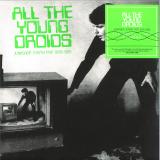
Compiled by Philip King “And then came the rise of synth pop : blokes with dodgy haircuts hunched over keyboard-operated machines stuffed with wires and do-it-yourself tone oscillators making sounds like a brood of geese passing gas in a wind tunnel. Whoopee! This is the way the ‘70s ended : not with a blood-curdling bang bang but with a cheap, synthesized, emasculating whimper.” NICK KENT, NME. All The Young Droids: Junkshop Synth Pop 1978-1985 is a new compilation that charts the underbelly of the epoch-defining sound of the synthesiser in 80s popular music. Compiled by Philip King (previously seen compiling All The Young Droogs, Glitterbest and Boobs - The Junkshop Glam Discotheque), the music here connects the dots between DIY synth enthusiasts grappling with new, cheap synthesisers at the tail-end of punk and wannabe, jobbing songwriters enthral to the new music pioneered by Gary Numan, Depeche Mode and Daniel Miller’s Mute Records. Featuring rare tracks of auto-didactic progressive pop music, proto-techno punk, shoot-for-the-stars-land-in-the-gutter chart flops and heralded, underground synth classics, School Daze paints a picture of beautiful failure. Complete with extensive sleeve notes written by King and never before seen imagery, all 24 tracks were remastered by RPM in-house engineer Simon Murphy, many from vinyl copies due to lost master tapes. The story told on All The Young Droids is one of the dawning opportunity presented by both the emergence to the market of cheaper analog synthesisers and the distribution networks plus indie labels that exploded with the advent of punk music in 1976. While the music that sprouted out all over the globe in the wake of these factors was decried as fake, plastic, a refutation of punk’s guitar-led revolution, it’s telling that much of the music on All The Young Droids.. was created in bedrooms, ramshackle studios and home-made set ups with often borrowed equipment. In the era of record labels jumping to capitalise on the success of The Sex Pistols, The Clash (both on major labels, of course) these artists struggled to stand out from a new gold-rush with next to no budget or PR team. With radio and labels desperate for the new Yazoo, what resulted was a testament to necessity being the mother of invention. At the time, the synthesiser was the music of the future, a shiny new machine that could paint like an orchestra with a single finger and a 4-track. In the hands of Manchester avant-pranksters Gerry & The Holograms it’s a pulsing, sardonic weapon.. the only instrument on the Messthetics classic lampooning of New Wave fashion. In Hamburg, a 16 year old Andreas Dorau used it to write and record (with his female classmates on vocals) a global smash in Fred Vom Jupiter (later licensed to Mute Records). The hard-to-find English version (Fred From Jupiter, natch) is included here. Many artists with alreadystoried careers caught the bug and recorded synthesiser-fuelled peons to space, computers, the future and, of course, love-interests. Harry Kakoulli, late of Squeeze, recorded a solo album in 1979 that included the incredible power-synth-pop smash-that-never-smashed I’m On A Rocket. Similarly, Ian North of Neo and American Power Pop stalwarts Milk ’n’ Cookies bought a Korg MS20 and used a tape machine to record We’re Not Lonely, an absolute lost-classic of minimal synth pop. We’re Not Lonely also features on the Junkshop Synth Pop sampler 7” twinned with John Howard unreleased track You Will See, released April 12th 2025. There are plenty of compilation debuts in evidence. Sole Sister were a mysterious trio who were featured on the Scaling Triangles compilation of female-fronted, queer-adjacent post-punk / underground music that also featured The Petticoats. Selwin Image were from San Francisco and featured members of the recently defunct power pop/punk group The Pushups. Their stupidly catchy The Unknown fizzes with New Wave energy - think XTC to Sparks but remains unreleased until now. Dream Unit’s A Drop In The Ocean is an early synth wave cut, positively teaming with Joy Division instrumentation, previously only released on a long-forgotten and super rare, self-released EP. Incandescent Luminaire’s Famous Names belies an archetypal struggle of a small-town trying to make it in a cruel industry but is a thrilling New Romantic-Synth Wave cross over with a OMD gloominess that’s a joy to hear. Feminist Minimal Wave track I Am A Time Bomb by performance artist Peta Lilly and Michael Chance is a revelation destined for new found cult status. It was released on 7” and lost until now. The flipside to the subterranean, never-made-it synth pop mentioned above are the ambitious, even fruity attempts at success that have a perennial elegance to their confidence. New Jersey-ite Billy London (real name Ed Barth) tried to cash in on the synth boom with Woman, released by a major label, a lurching new wave track built on the Louie Louie rhythm and a wonderfully camp Lou Reedstyle sleazy vocal before exploding in the synthesised chorus. The song bombed but with a chorus like this, you have to wonder why? Ex-Glitter Band member John Springate’s My Life is truly epic, with doomed chord progressions and massive sounding drums turning into at least 3 different songs in the course of the track. Before you wonder what’s going on the song resolves with a glorious return to the main refrain. The dry-ice-dressed dance floor is well catered for too. Design’s Premonition and Vision’s Lucifer’s Friend are stone-cold minimal synth bangers, well loved but given a new lease of life here. The Warlord’s The Ultimate Warlord was released in 1978, a homespun proto Hi NRG banger that was later re-recorded by The Immortals in Canada who had a club hit with it. One-man- band Disco Volante’s No Motion was re-issued by Synth wave label Medical in 2012 but makes its first vinyl compilation appearance here. Close your eyes and you can imagine what Lawrence of Felt would have sounded like with some cheap Korgs a little earlier in his career. Gibraltar-based trio The Microbes imagined a computer programming people to dance - how prescient - and ended up with a propulsive, robo-funk track with splendid rubbery bass playing over a tectonic drum machine. Previously picked up by Belgian label Stroom TV, Dee Jay Bert & Eagle’s heavily Euro-accented I Am Your Master demands the listener to “come to paradise!” In a frankly terrifying manner. All The Young Droids is the first compilation to peel away from the narrative that dour, Minimal Synth and Cold Wave were the only musical children of the first rush of synth pop. Philip King and School Daze Records describe a much more complicated world: along with the austere, Brutalist children of Daniel Miller (who produced Alan Burnham’s Bowie-Low-influenced Science Fiction here) was a plethora of desperate cash-ins, accidental mainstream hits, ambitious pop dramas and major label punts that went nowhere. Crucially, the compilation blurs the line between junk and treasure. What if the two things are interchangeable. What if it’s all science fiction?
- A1: Gregor Salto Feat. Chappell - Your Friend
- A2: D. Van Horn - Somebody Now To Love (Dj Wout Remix)
- B1: Sascha Funke - Mz
- B2: Fabo Feat. Lostcause - Where I Stand (Karmon Remix)
- C1: Andain - Beautiful Things (Gabriel & Dresden Unplugged Mix)
- C2: Moko - Fly
- D1: Pob & Taylor - Today (Seismic Remix)
- D2: Feist - My Moon My Man (Boys Noize Classic Mix)
After ten years 12 Inch Lovers has become a household name not only because of their parties but also because of the fantastic vinyl samplers they released over the past few years, which were sold out in no time and have become true collector's items.
They now continue in the same vein and once again bring a fresh and contemporary mix of hard to find, original house classics or even classics that never had a vinyl release.
These samplers should therefore not be missing from any 12 Inch Lovers collection.
"Gregor Salto" is at it again! Sampler 6 opens with that other and hard to find classic of his "Your Friend". A club classic that has won the hearts of countless clubbers and house fanatics around the world since 2009. And speaking of hearts; Belgian dj-producer "DJ Wout" released this beautiful and emotional remix of "D. Van Horn's" "Somebody Now To Love". A true trance classic and typical in sound for that period that you can find on A2.
On B1 we find a more recent track but which you can already say is a future classic. "MZ" from "Sascha Funke" is still played to this day by top DJs like Solomun and very hard to find on vinyl. A must have! Dutch producer "Karmon" delivered this catchy deephouse remix of "Fabo's" "Where I Stand" in 2012. You can find it on B2.
On C1 we find the beautiful "Andain" classic in the "Gabriel & Dresden Unplugged Mix". "Beautiful Things" was picked up by "Tiësto" at the time and has made it a true classic. Hard to find on vinyl.
"Moko" "Fly" on C2 is a very catchy and quirky track from 2010 that never had a vinyl release! Highly recommended!
D1 brings the dreamy and highly sought after "Today" from "POB & Taylor" in the "Seismic" remix after which we close with D2 with a true classic.
"My Moon My Man" by "Feist" is probably that record which remix is better than the original. "Boys Noize" was responsible for this in 2007 and the rest is as they say history.
The second release on Samurai Music sub label Saibai welcomes Italian sound-world-builder Pianeti Sintetici for a richly rendered foray into dynamic electronica that moves like a set of vibrant ecosystems.
Davide Perrone has developed his Pianeti Sintetici ('synthetic planets') alias to explore the idea of creating imaginary worlds through teeming, densely layered arrangements of modulating synthesis. He's previously delivered spellbinding albums and EPs to respected labels like Astral Industries and Hypnus. On SAIBAI2, Perrone ably blurs the lines between percussive, textural and melodic parts, letting voices bend and warp as each sound evolves through the labyrinthe lattice of his constructions. This is electronic music so dynamic and ever-shifting, it sounds positively sentient, and yet there's a strong emotional sentiment that binds these fantastic visions together as sincere expressions from a grounded, human perspective.
True to Saibai's focus on deeper, mellower flights of fantasy away from the dancefloor, SAIBAI2 offers a kinetic, engaging listening experience dressed up in opulent tones that gleam, shimmer, bend and flex with hypnotising dexterity.
2025 Repress
Following up 2 VA releases, Threads' journey continues with a solo EP signed by mpeg.
The Dresden-based artist delivers a superb EP, an immersive trip into minimal / trance house sound distinguished by his very own array of soft acid synths and percussive lines.
We loved the excursion of the EP, every track is sensual yet effective, and generates an extraordinary impact on the dance floor at every different moment of the night... or morning!
- A1: Hard Up For A Man (Kfm Radio Introduction)
- A2: Hard Up For A Man
- A3: Hard Up For A Man (Kfm Radio Orgasm Outro)
- A4: I Need Love
- A5: Yesterday's Lovers
- A6: Man Power (Kfm Radio Introduction)
- A7: Man Power
- A8: You've Got To Work Harder, Try Harder (Acapella)
- A9: A Real Man
- A10: Female Drag (Kfm Radio)
- A11: The Man In My Life
- A12: Anything Is In Your Key
- A13: You're A Man
- B1: I Live In Prestwich, Manchester (Kfm Radio)
- B2: Rock And Roll Makes Me High
- B3: Sex Slaves Of New Orleans (Kfm Radio Introduction)
- B4: Sex Slaves Of New Orleans
- B5: The Piano And Me Are Great Friends (Kfm Radio)
- B6: Lady
- B7: Little Lady Dynamite (Kfm Radio Introduction)
- B8: Little Lady Dynamite
- B9: Love Power
- B10: Once You've Been Touched By Love (Acapella)
- B11: Where's The Feeling? (Kfm Radio Introduction)
- B14: Paris Is For Lovers
- B15: I Don't Give Up (Acapella)
- B16: Through The Night
- B17: See You At The Next Show (Kfm Radio)
- B12: Where's The Feeling?
- B13: Cult Following (Kfm Radio)
Housewives, househusbands, ladies, gentlemen, and everyone in between… Avril A is ready for relaunch.
A - V - R - I - L
Never released Hi-NRG, synth-pop, wonky rock n' roll from a queer Manchester underground icon of the 80s and 90s.
By day, Avril Eventhal was a housewife in North Manchester's Orthodox Jewish community. By night, she was the fabulous Avril A, a larger than life cabaret performer who found a loyal audience in gay venues across the country and was adored for her outrageous live shows.
With her signature leopard print dress and feather duster in hand she delivered an unforgettable song and dance routine - as it was billed, “an audio-visual assault on the audience”.
She celebrated her unconventional style, finding joy and space for creative reinvention with the queer community.
Avril died in 2017, leaving behind a massive archive of material documenting every aspect of her career in songwriting and performance. For two years, Memory Dance has been working with Avril's niece and family on a digitisation and restoration project bringing these audio recordings back to life.
2x12"[28,36 €]
The Nightlife isn’t just a single. It’s a fever dream. Honey Dijon and Chloë have built a sonic peephole into a city that only half-existed—New York’s Meatpacking District in the late ’70s, that liminal wet haze where sweat, leather, and desire commingled under streetlights that flickered like dying stars. Imagine Blade Runner rewritten by Jean Genet, but scored for bodies pressed together at 4 a.m.—that’s the terrain.
And in the marrow of this track, the ghost of Kim English’s Nitelife thrums—an invocation of the 1990s underground, those rooms where freedom was fragile but absolute. Honey Dijon doesn’t just sample it. She resuscitates it, drags it into the now, dresses it in sequins and grief, insists we dance harder because the future is burning quicker.
This isn’t nostalgia. This isn’t homage. This is ritual. A reminder that nightlife was always resistance—radical, erotic, communal. And The Nightlife is a portal, a signal flare, maybe even an omen. Something larger is coming. Consider this the first act.
2025 Repress
Remixes
Releasing four of the biggest dance tracks of 2018 and crowned as the #2 Beatport Artist Of All Time, Dresden born disco-house producer Purple Disco Machine has quickly become one of the most prolific and sought after producers in the industry.
Following on from the hit single ‘Dished (Male Stripper)’, Purple Disco Machine returns to his club anthem ‘Body Funk’, teaming up with industry icons Carl Cox, Claptone, and Australian rising star Dom Dolla, serving up this mammoth 'Body Funk' remix EP.
DJ Support:
Black Madonna, Jamie Jones, Fatboy Slim, Annie Mac, Pete Tong, Danny Howard
For their first album as Gilla Band (formerly Girl Band), the
foursome have redrawn their own paradigm. ‘Most Normal’ is like
little you’ve heard before, a kaleidoscopic spectrum of noise put in
service of broken pop songs, FX-strafed Avant-punk rollercoaster
rides and passages of futurist dancefloor nihilism.
Lockdown robbed Gilla Band of any opportunity to try the new
material out live, but the pandemic also incinerated any idea of a
deadline for the new album. They were free to tinker at leisure, to
rewrite and restructure and reinvent tracks they’d cut, to, as
drummer Adam Faulkner puts it, “pull things apart and be like,
‘Let’s try this. We could try out every wild idea.’”
The group also fell under the spell of modern hip-hop, “where
there’s really heavy-handed production and they’re messing with
the track the whole time,” says Fox. “That felt like a fun route to go
down, it was a definite influence.”
‘Most Normal’ opens with an absolute industrial-noise banger that
sounds like a manic house party throbbing through the walls of the
next room as a downed jetliner brings death from above. What
follows is unpredictable, leading the listener through a sonic house
of mirrors, where the unexpected awaits around every corner.
The common thread holding ‘Most Normal’’s ambitious Avant-pop
shapes together is frontman Dara Kiely. Throughout, he’s an antic,
antagonistic presence, barking wild, hilarious, unsettling spiels,
babbling about smearing fish with lubricant or dressing up in binliners or having to wear hand-me-down bootcut jeans (“It was a
big, shameful thing, growing up, not being able to afford the look I
wanted and having to wear all my brother’s old clothes,” says
Kiely).
‘Most Normal’, then, is a triumph, the bold work of a group who’ve
taken the time to evolve their ideas, to deconstruct and reconstruct
their music and rebuild it into something new, something
challenging and infinitely rewarding. It’s a headphone masterpiece.
It’s a majestic exploration of the infinite possibilities of noise. It’s a
bold riposte to your parochial beliefs on whatever a pop song can
or should be. It’s the best work these musicians have put to
(mangled) tape.
NYC punk-chic, discodelic funk band Say She She is back with Cut & Rewind, their politically-charged, dancefloor-crushing third album. Led by the powerhouse vocal trio of Piya Malik, Sabrina Mileo Cunningham, and Nya Gazelle Brown, the group channels progenitors like Minnie Ripperton, Charles Stepney, Liquid Liquid, and Raw Silk to create a groove-forward, psychedelic soundscape of pulsing disco beats, heavenly whistle tones, and soaring three-part harmonies. There's a feeling of righteous rebellion simmering beneath these songs' body-moving exterior, though: "She Who Dares" is a call to fight against a near-future dystopia where women's rights have been decimated globally; "Disco Life" decries the racism and homophobia of Steve Dahl's 1979 "Disco Demolition Night," reclaiming the dancefloor as "a playing field where all are free." Cut & Rewind is protest music dressed up as a sweat-dripping, hip-shaking, mind-expanding good time.
- 01: Intro (Dateline Ii)
- 02: Hometune
- 03: Vaders
- 04: Morning Papers
- 05: Dateline Iii
- 06: Tasty Leather Jackets
- 07: All Over London
- 08: Rolls Royce & A Big House
- 09: Beauty Contest
- 10: Dinner & Dance
- 11: Warehouse Experience
- 12: Rhythms Of The Universe
- 13: Roller Skating Session
- 14: Dedications
- 15: Lazerdrome
- 16: Heathens
- 17: Champagne Raffle
- 18: Legal Pulse
- 19: Opposite The Fridge
- 20: Wicked Entertainment
- 21: South East Fourteen
- 22: Kebab House
- 23: Monster Soundsystem
- 24: Family Fun Day
- 29: Big Roadblock
- 30: The Beginning
- 31: Dress To Impress
- 32: Fabulous Riches
- 33: Christmas Hardcore Bash
- 34: Soul & Reggae Alldayer
- 35: Spp
- 36: Come Get It
- 37: Reggae Awards
- 38: Nye & 93
- 39: 100% Niceness Guaranteed
- 40: Spin Offs
- 25: La Plaza
- 26: Stunning Dimension
- 27: Redemption
- 28: Independence Celebration Dance
Vol 1[16,39 €]
The second volume in a two-part collection of pirate radio adverts & idents, taken from recordings of London stations between 1984 & 1993.
Many thanks to Wayne Anthony, Simon Reynolds, Stephen Hebditch & The Pirate Radio Archive.
- A1: Tous Les Garçons Et Les Filles
- A2: Ça A Raté
- A3: La Fille Avec Toi
- A4: Oh Oh Chéri
- A5: Le Temps De L'amour
- A6: Il Est Tout Pour Moi
- A7: Quelli Della Mia Età
- A8: L'età Dell'amore Side
- B1: On Se Plait
- B2: Ton Meilleur Ami
- B3: J'ai Jeté Mon Coeur
- B4: Il Est Parti Un Jour
- B5: J'suis D'accord
- B6: C'est A L'amour Auquel Je Pense
- B7: Ci Stó
- B8: E All'amore Che Penso
One of the most popular French TV extracts of all time is the black and white image of a young and extremely nervous-looking Françoise Hardy being given a firm dressing-down by Mireille Hartush (the famous music teacher who ran La Petite Conservatoire de la Chanson in the 1960s). Presented here is her debut studio album Françoise Hardy (issued as The Yeh-Yeh Girl from Paris! in the USA). It was released in France in December 1962 by Disques Vogue with the catalogue number LD 600-30. Originally issued with no title, except for her name on the cover, the album has therefore colloquially become known by the title of its most successful song, Tous les garçons et les filles, and later reissues added this title. This sensational album compiles the twelve original French versions from her first three EPs released by Vogue during 1962. Hardy would also record versions of songs from the album in Italian (1962, four tracks released on singles have been added here as a bonus), English (1964) and German (1965). The iconic LP combines rockabilly, folk, jazz and blues, and has been noted for its simplicity, featuring a minimalist jazz percussion, bass, and both acoustic and electric guitar. 180 GRAM - GATEFOLD COVER - LIMITED EDITION
For their first album as Gilla Band (formerly Girl Band), the
foursome have redrawn their own paradigm. ‘Most Normal’ is like
little you’ve heard before, a kaleidoscopic spectrum of noise put in
service of broken pop songs, FX-strafed Avant-punk rollercoaster
rides and passages of futurist dancefloor nihilism.
Lockdown robbed Gilla Band of any opportunity to try the new
material out live, but the pandemic also incinerated any idea of a
deadline for the new album. They were free to tinker at leisure, to
rewrite and restructure and reinvent tracks they’d cut, to, as
drummer Adam Faulkner puts it, “pull things apart and be like,
‘Let’s try this. We could try out every wild idea.’”
The group also fell under the spell of modern hip-hop, “where
there’s really heavy-handed production and they’re messing with
the track the whole time,” says Fox. “That felt like a fun route to go
down, it was a definite influence.”
‘Most Normal’ opens with an absolute industrial-noise banger that
sounds like a manic house party throbbing through the walls of the
next room as a downed jetliner brings death from above. What
follows is unpredictable, leading the listener through a sonic house
of mirrors, where the unexpected awaits around every corner.
The common thread holding ‘Most Normal’’s ambitious Avant-pop
shapes together is frontman Dara Kiely. Throughout, he’s an antic,
antagonistic presence, barking wild, hilarious, unsettling spiels,
babbling about smearing fish with lubricant or dressing up in binliners or having to wear hand-me-down bootcut jeans (“It was a
big, shameful thing, growing up, not being able to afford the look I
wanted and having to wear all my brother’s old clothes,” says
Kiely).
‘Most Normal’, then, is a triumph, the bold work of a group who’ve
taken the time to evolve their ideas, to deconstruct and reconstruct
their music and rebuild it into something new, something
challenging and infinitely rewarding. It’s a headphone masterpiece.
It’s a majestic exploration of the infinite possibilities of noise. It’s a
bold riposte to your parochial beliefs on whatever a pop song can
or should be. It’s the best work these musicians have put to
(mangled) tape.
This EP takes you deep into a world of cinematic soundscapes, a haunting symphony of desire and despair, hypnotic rhythms, and ethereal vocals. Blending dark wave, and gothic electronic elements, it unfolds like a forgotten opera—sensual, melancholic, and strangely tragic.
This is only the beginning. “Opera of Lust & The Art of Sorrow” is envisioned as a multipart journey—Part 1 is here, with the next part to follow.
Fresh out the oven: Strawberry Cake, a four-slice serving of disco, Italo, and sleaze. Trent’s secret recipe baked for sharing. These tracks are decadent, intoxicating, and crafted to leave you sticky-fingered and starry-eyed.
The A-side serves two contrasting temptations. The first track is sleek, hypnotic, and nocturnal: a cosmic seduction dressed in sequins, all sugar-sweat indulgence and midnight whispers. Flip to the second, and you’re met with pure Italo melodrama: synths shimmering, bassline rolling like a glittering night train, and urgent vocals turning a lover’s plea into a dancefloor ultimatum.
On the B-side, the heat rises. One track is full-bodied disco intoxication, a satin-clad haze of late-night indulgence. Finally, the last track crashes the party with a sleazy 4 a.m. jam: part disco, part rock’n’roll dive-bar delirium. It closes the record like the forbidden last bite of cake.
A rare confection: irresistible, indulgent, and absolutely decadent.
Quiet Village collaborate with Vanessa Daou on 'Naked Hunger’ Legendary New York artist and The Daou front-woman Vanessa Daou lends vocals to Matt 'Radio Slave' Edwards and Joel Martin's second release on the ‘The Quiet Village’ imprint.
Matt ‘Radio Slave' Edwards and Joel Martin's critically acclaimed Quiet Village project follow-up, 2024's 'Reunion' with the Vanessa Daou collaboration, 'Naked Hunger' on September 5th, '25. 'Naked Hunger', which comes in 'Vocal Mix' and 'Spoken Word Mix' versions, sees Quiet Village employ their hypnotic sensibilities to one of house music's most tantalising vocal talents in Daou, resulting in a mid-tempo house cut that completely envelops.
While the vocal mix of 'Naked Hunger' leans into the interplay between Vanessa Daou's cosseting song voice and spoken vocals, with the rest of the track embracing a subtly dubby ethereal musicality, Quiet Village ramp up the instrumentation on the' Spoken Vocal' version with bass guitar and piano flourishes accompanying her sultry poetic delivery.
'Naked Hunger', Daou's first collaboration with Quiet Village, marks her first release since 2019's 'Little Black Dress'. Throughout her illustrious career, the acclaimed three-time #1 Billboard Dance Chart topper has collaborated with Danny Tenaglia, David Morales, Mood II Swing, Ralphi Rosario, Terry Farley (Farley & Heller), Charles Webster, Horse Meat Disco's Severino Panzetta, Hifi Sean, and Eli Escobar.
Friends since meeting at Goldie's legendary MetalHeadz sessions at London's Blue Note in the '90s, Quiet Village, aka Matt Edwards and Joel Martin, began releasing their brand of dubbed-out, balearic-and-beyond tracks in 2005 via NYC's Whatever We Want Records. The duo's 2008 'Silent Movie' LP was a critical smash hit that resulted in remix commissions for the likes of Bryan Ferry, The Gorillas, Leftfi eld, Francois K, Massive Attack and many more. After a few years in the wilderness, unable to use their nom de plume due to contractual restrictions, the pair launched The Quiet Village label in 2024 with 'Reunion', a stunning 6/8-time urban jazz odyssey, a favourite of the likes of Luke Una, Gilles Peterson and Ryan Elliott.
Makhunik Records Presents: "Withdrawals" - A Bold New Vinyl Release by RAKANS Withdrawals, the highly anticipated follow-up to Emergence EP and Deep State (Midnight Stallion) EP, marks a bold new chapter in RAKANS's ever-evolving sonic journey.
Set for release on I Makhunik Records, Withdrawals explores the tension between desire and detachment, featuring five tracks that blur the lines between electronic, experimental, and club sounds. Available on vinyl, Withdrawals invites listeners to experience the raw and intimate emotions that inspired its creation. Following the success of Emergence EP (Gently Leftfield Techno from a Core Dresden Artist - Resident Advisor/Single Review by Andrew Ryce) and Deep State (Midnight Stallion) EP on Boudica, which gained recognition for their atmospheric intricacies and deep, immersive textures, Withdrawals delves deeper into personal and societal themes, paired with the artist's signature ethereal soundscapes and captivating beats. Each track carries a narrative, from late-night reflection to hedonistic encounters, with a pulsating intensity that mirrors the artist's own process of creative and emotional release. With Withdrawals, RAKANS continues to push boundaries, creating a profound listening experience that resonates both in its melancholy and its intensity.
Description of the Title: The title Withdrawals reflects a state of emotional and mental transition, where one is caught between the craving for connection and the unsettling effects of isolation. It symbolizes the artist's inner turmoil and process of reclaiming personal agency after experiences of burnout and separation. The tracks are an expression of that journey-tracking the highs and lows of life in a world that constantly demands more. Through these melodies, RAKANS has captured the intensity of longing and the aftermath of desire, inviting listeners to confront their own internal conflicts. The narrative is personal yet universally relatable, and the title speaks to the often painful but necessary process of letting go, detoxifying from past habits, and learning to be at peace with oneself. "With Withdrawals, He wanted to channel the emotions that often come from the struggle between desire and self-preservation, between the drive to connect and the need to retreat. he's journey, both as an artist and as an individual, has been filled with moments of intense reflection, self-discovery, and sometimes, disconnection.
These tracks are the culmination of that inner conflict, a raw exploration of what it means to both lose oneself and find a deeper, often painful, form of clarity. Like the music he's created before, the sound of Withdrawals speaks to the space between tension and release, the liminal space where truth is often revealed in its most vulnerable form. He's always believed that music is a mirror to the soul, and in this EP, He's tried to reflect that feeling of being both pulled in and out of something greater. It's a raw and intimate look at the way we navigate modern life, often feeling like we're running toward something that we can't quite reach, yet constantly pulled back into our own personal truths.
This EP is personal, but it's also for anyone who's ever felt caught between two worlds, the one they want and the one they need. I hope it resonates with listeners who are experiencing their own form of withdrawal, whether it's from people, places, or even from themselves.
- A1: Alain Peters - Plime La Misère
- A2: Altin Gün - Goca Dünya
- A3: Mauskovic Dance Band - Repeating Night
- A4: Esplendor Geometrico - Moscu Esta Helado
- A5: Hyperculte - Temps Mort
- A6: Madalitso Band - Wandiputa Dala
- B1: Meridian Brothers - Puya Del Empresario
- B2: Derya Yildirim & Grup Simsek - Nem Kaldi
- B3: Nordine Staifi - Zine Ezzinet
- B4: Cyril Cyril - Les Gens (Radio Edit)
- B5: Africa Negra - Zimbabwe
- C1: Yin Yin - One Inch Punch
- C2: Les Abranis - Chenar Le Blues
- C3: Orchestre Tout Puissant Marcel Duchamp - Breath
- C4: Coco Maria - Me Veo Volar
- C5: Amami - Ivory
- C6: Lalalar - Abla Deme Lazim Olur
- C7: Nusantara Beat - Djanger
- D1: Yalla Miku - Asmazate
- D2: Chouk Bwa & The Ångströmers - Amounay
- D3: Sami Galbi - Dakchi Hani
- D4: Baby Berserk - What I Mean
- D5: Dressed Up Animals - Mondtanz
Ten years, a compilation. It"s not a conclusion, nor a greatest hits. More like a pause, a moment to reflect - a look back to better move forward. Since 2015, Les Disques Bongo Joe have been navigating instinctively, yet with a compass all their own: a love for free-spirited sound, a curiosity for the undefined, and a clear idea of what a label can be - a space for listening, care, and invention. The compilation offers a journey - subjective, fluid, and unapologetic - through ten years of sonic activism. A selection of tracks drawn from the label"s corners and crevices: from early releases to recent ones, from essentials to rarities, from cult reissues to contemporary works that carry the label"s energy forward. The record flows between raw intensity and sonic finesse, between remastered archives and flashes of electronics, between fragile voices and hammered percussion.
The undisputed king of Disco House Purple Disco Machine returns to his club roots with retro-inspired release ‘Ghost Town’ ft. Rertosonix. Fresh off reworking the Hurts classic ‘Wonderful Life’ and delivering a huge remix for ‘Born Again’ (Lisa ft. Doja Cat & RAYE), the Dresden-born producer is once again ready to conquer the dancefloor with his signature sound. Tailor-made for that insatiable desire to dance, it’s a release engineered for movement, locking straight into the pulse of late-night energy and crowd euphoria. As such, the track is unsurprisingly becoming a favourite in Purple Disco Machine’s sets already, where dates in Mexico, the USA, and Spain have left the dancefloors anything but a ‘Ghost Town’. Armed with a dancefloor weapon, Purple Disco Machine drops the release early for DJs on Beatport.
A master of channelling the nostalgia of dance music’s beginnings and blending it with a modern-day flair, Purple Disco Machine has expertly crafted a record reminiscent of throwback disco cuts. The soulful vocals come courtesy of Retrosonix, successful songwriters who have come together to specialise in retro disco vocals that ingeniously feel straight from the archives. You’ll be sonically transported back to a time when disco was heard on every corner. Tactfully letting the powerful hooks and provocative lyricism lead the rhythm for the tune, Purple Disco Machine’s iconic groove-driven beats and mesmerising synths lay the foundation for a dancefloor classic. Crafting breakdowns dripping with funk, the disco maestro builds to a crescendo that will undoubtedly be a crowd pleaser for his many shows in 2025.
On the release, Purple Disco Machine said: “While a number of my recent records have referenced the more electronic 80s disco sound, I never lost the love for the classic funky disco of the 70s - which in many ways was the original blueprint - and so it has been equally inspiring and enjoyable to work with this palette again. I'm hoping that the listeners are as haunted (in a good way…) by Ghost Town as I am !”
Jeff Parker’s 2016 album The New Breed was a turning point for both Parker and for International Anthem, changing the trajectory of his solo career as well as drawing an abundance of attention to our fresh imprint despite our then very limited catalog. Most importantly though, the album is the first to give voice to Parker’s wholly unique take on sample-based beat construction augmented by a crack squad of improv-savvy LA breezers—the high-level crew of Paul Bryan (bass), Josh Johnson (alto sax), and Jamire Williams (drums), augmented by Jay Bellerose (drums) and Ruby Parker (vocals).
What began as Jeff’s interest in understanding his own idea of hip-hop processes (and how they related to his work in jazz) expanded into a blueprint for much of his work since then. (see also: The New Breed’s rock-solid followup Suite For Max Brown, the gentle deconstructionist solo guitar of Forfolks, and the long-form slow bloom dub improvisation of The Way Out of Easy—all released via International Anthem)
The IA11 Edition LP features our IARC 2025 obi strip, plus a new 16-page 11x11" insert booklet with unpublished session photos, new liner notes by New Breed bassist / co-producer Paul Bryan, and an in-depth conversation between JP and IARC co-founder Scott McNiece.
“...equally rooted in jazz and funk, and built upon beat-making experiments…”
- Jason P Woodbury, Aquarium Drunkard
Releasing four of the biggest dance tracks of 2018 and crowned as the #2 Beatport Artist Of All Time, Dresden born disco-house producer Purple Disco Machine has quickly become one of the most prolific and sought after producers in the industry.
Following on from hit singles ‘Dished (Male Stripper)’ and 'Body Funk', Purple Disco Machine returns with his double A-side Emotion EP.
DJ Support:
Black Madonna, Jamie Jones, Fatboy Slim, Annie Mac, Pete Tong, Danny Howard
Previous single 'Body Funk’ already clocking 12 million combined streams and #1 Beatport and #1 DDC & DCC Chart
‘Dished (Male Stripper)’ spent 10 Weeks on BBCR1 Daytime playlist, including 4 weeks on A-ist making it the #5 Dance Record of The Year on BBCR1
Official releases with Fatboy Slim, Calvin Harris & Rag’n’Bone Man, Jax Jones, RÜFÜS DU SOL
Releasing four of the biggest dance tracks of 2018 and crowned as the #2 Beatport Artist Of All Time, Dresden born disco-house producer Purple Disco Machine has quickly become one of the most prolific and sought after producers in the industry.
Following on from hit Club Sweat singles ‘Dished (Male Stripper)’, Body Funk and Emotion, Purple Disco Machine returns with ‘In My Arms’.
- A1: Design - Premonition
- A2: Vision - Lucifer’s Friend
- A3: Richard Bone - Alien Girl
- A4: John Howard - I Tune Into You
- A5: Ian North - We’re Not Lonely
- A6: Selwin Image - The Unknown
- B1: Harry Kakoulli - I’m On A Rocket
- B2: Rich Wilde - The Lady Wants To Be Alone
- B3: Billy London - Woman
- B4: Alan Burnham - Science Fiction
- B5: The Microbes - Computer
- B6: The Goo-Q - I’m A Computer
- C1: Gerry & The Holograms - Gerry & The Holograms
- C2: The Warlord - The Ultimate Warlord
- C3: Die Marinas - Fred From Jupiter
- C4: Dee Jay Bert & Eagle - I Am Your Master
- C5: Peta Lily & Michael Process - I Am A Time Bomb
- C6: Sole Sister - It’s Not What You Are But How
- D1: Alasdair Riddell - Do You Read Me?
- D2: Karel Fialka - Armband (The Mystery Song)
- D3: John Springate - My Life
- D4: Incandescent Luminaire - Famous Names
- D5: Disco Volante - No Motion
- D6: Dream Unit - A Drop In The Ocean
MB Crystal Vinyl[32,73 €]
LTD Trans Pink Vinyl[32,82 €]
LTD Trans Pink Vinyl[27,69 €]
Compiled by Philip King
“And then came the rise of synth pop : blokes with dodgy haircuts hunched over keyboard-operated
machines stuffed with wires and do-it-yourself tone oscillators making sounds like a brood of geese
passing gas in a wind tunnel. Whoopee! This is the way the ‘70s ended : not with a blood-curdling bang
bang but with a cheap, synthesized, emasculating whimper.”
NICK KENT, NME.
All The Young Droids: Junkshop Synth Pop 1978-1985 is a new compilation that charts the
underbelly of the epoch-defining sound of the synthesiser in 80s popular music. Compiled by Philip
King (previously seen compiling All The Young Droogs, Glitterbest and Boobs - The Junkshop
Glam Discotheque), the music here connects the dots between DIY synth enthusiasts grappling with
new, cheap synthesisers at the tail-end of punk and wannabe, jobbing songwriters enthral to the new
music pioneered by Gary Numan, Depeche Mode and Daniel Miller’s Mute Records. Featuring rare
tracks of auto-didactic progressive pop music, proto-techno punk, shoot-for-the-stars-land-in-the-gutter
chart flops and heralded, underground synth classics, School Daze paints a picture of beautiful failure.
Complete with extensive sleeve notes written by King and never before seen imagery, all 24 tracks
were remastered by RPM in-house engineer Simon Murphy, many from vinyl copies due to lost master
tapes. The story told on All The Young Droids is one of the dawning opportunity presented by both the
emergence to the market of cheaper analog synthesisers and the distribution networks plus indie labels
that exploded with the advent of punk music in 1976. While the music that sprouted out all over the
globe in the wake of these factors was decried as fake, plastic, a refutation of punk’s guitar-led
revolution, it’s telling that much of the music on All The Young Droids.. was created in bedrooms,
ramshackle studios and home-made set ups with often borrowed equipment. In the era of record labels
jumping to capitalise on the success of The Sex Pistols, The Clash (both on major labels, of course)
these artists struggled to stand out from a new gold-rush with next to no budget or PR team. With radio
and labels desperate for the new Yazoo, what resulted was a testament to necessity being the mother
of invention.
At the time, the synthesiser was the music of the future, a shiny new machine that could paint like an
orchestra with a single finger and a 4-track. In the hands of Manchester avant-pranksters Gerry & The
Holograms it’s a pulsing, sardonic weapon.. the only instrument on the Messthetics classic lampooning
of New Wave fashion. In Hamburg, a 16 year old Andreas Dorau used it to write and record (with his
female classmates on vocals) a global smash in Fred Vom Jupiter (later licensed to Mute Records).
The hard-to-find English version (Fred From Jupiter, natch) is included here. Many artists with alreadystoried careers caught the bug and recorded synthesiser-fuelled peons to space, computers, the future
and, of course, love-interests. Harry Kakoulli, late of Squeeze, recorded a solo album in 1979 that
included the incredible power-synth-pop smash-that-never-smashed I’m On A Rocket. Similarly, Ian
North of Neo and American Power Pop stalwarts Milk ’n’ Cookies bought a Korg MS20 and used a
tape machine to record We’re Not Lonely, an absolute lost-classic of minimal synth pop. We’re Not
Lonely also features on the Junkshop Synth Pop sampler 7” twinned with John Howard unreleased
track You Will See, released April 12th 2025.
There are plenty of compilation debuts in evidence. Sole Sister were a mysterious trio who were
featured on the Scaling Triangles compilation of female-fronted, queer-adjacent post-punk /
underground music that also featured The Petticoats. Selwin Image were from San Francisco and
featured members of the recently defunct power pop/punk group The Pushups. Their stupidly catchy
The Unknown fizzes with New Wave energy - think XTC to Sparks but remains unreleased until now.
Dream Unit’s A Drop In The Ocean is an early synth wave cut, positively teaming with Joy Division
instrumentation, previously only released on a long-forgotten and super rare, self-released EP.
Incandescent Luminaire’s Famous Names belies an archetypal struggle of a small-town trying to
make it in a cruel industry but is a thrilling New Romantic-Synth Wave cross over with a OMD
gloominess that’s a joy to hear. Feminist Minimal Wave track I Am A Time Bomb by performance artist
Peta Lilly and Michael Chance is a revelation destined for new found cult status. It was released on 7”
and lost until now.
The flipside to the subterranean, never-made-it synth pop mentioned above are the ambitious, even
fruity attempts at success that have a perennial elegance to their confidence. New Jersey-ite Billy
London (real name Ed Barth) tried to cash in on the synth boom with Woman, released by a major
label, a lurching new wave track built on the Louie Louie rhythm and a wonderfully camp Lou Reedstyle sleazy vocal before exploding in the synthesised chorus. The song bombed but with a chorus like
this, you have to wonder why? Ex-Glitter Band member John Springate’s My Life is truly epic, with
doomed chord progressions and massive sounding drums turning into at least 3 different songs in the
course of the track. Before you wonder what’s going on the song resolves with a glorious return to the
main refrain.
The dry-ice-dressed dance floor is well catered for too. Design’s Premonition and Vision’s Lucifer’s
Friend are stone-cold minimal synth bangers, well loved but given a new lease of life here. The
Warlord’s The Ultimate Warlord was released in 1978, a homespun proto Hi NRG banger that was
later re-recorded by The Immortals in Canada who had a club hit with it. One-man- band Disco
Volante’s No Motion was re-issued by Synth wave label Medical in 2012 but makes its first vinyl
compilation appearance here. Close your eyes and you can imagine what Lawrence of Felt would have
sounded like with some cheap Korgs a little earlier in his career. Gibraltar-based trio The Microbes
imagined a computer programming people to dance - how prescient - and ended up with a propulsive,
robo-funk track with splendid rubbery bass playing over a tectonic drum machine. Previously picked up
by Belgian label Stroom TV, Dee Jay Bert & Eagle’s heavily Euro-accented I Am Your Master
demands the listener to “come to paradise!” In a frankly terrifying manner.
All The Young Droids is the first compilation to peel away from the narrative that dour, Minimal Synth
and Cold Wave were the only musical children of the first rush of synth pop. Philip King and School
Daze Records describe a much more complicated world: along with the austere, Brutalist children of
Daniel Miller (who produced Alan Burnham’s Bowie-Low-influenced Science Fiction here) was a
plethora of desperate cash-ins, accidental mainstream hits, ambitious pop dramas and major label
punts that went nowhere. Crucially, the compilation blurs the line between junk and treasure. What if the
two things are interchangeable. What if it’s all science fiction?
From Harmony: I've wanted to do a collab EP with Kenny (Kid Lib) for sometime, as he's a great producer and friend. Kenny and I wrote "Dressback" together a few years ago, but never finished anymore colabs. Recently, I found it while going through my hard drive, and we both decided it still needed to be released. So each of us wrote an additional track to finish off the EP, giving you a bit of our separate styles alongside our collab.