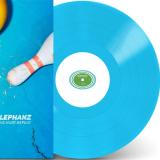
Hiroshi Sato's masterpiece “Awakening” has been reissued for the fourth time in a new color “Pastel Blue Vinyl”. The album was cut by world-renowned engineer Bernie Grundman based on high-spec sound data digitally converted to 96KHz/24bit from the original master tapes. The pressing was done at Sony Music's factory in Japan. This is Hiroshi Sato's fourth original album released in June 1982 after his career in Los Angeles, and his first album for Alpha Records. Featuring Canadian female vocalist Wendy Matthews and using the most advanced drum machine at the time, “LinnDrum,” this mellow and soulful album is a perfect fusion of Sato's sound sense and the atmosphere of American West Coast, and has transcended generations, continues to influence many musicians. Guest guitarists include Tatsuro Yamashita, Tsunehide Matsuki, and Yuji Toriyama! Limited edition.
Buscar:drum factory
Silicon Scally and Fleck E.S.C. need no introduction at this stage. Both artists are veterans not just of Sheffield's Central Processing Unit label but of modern electro as a whole, with the pair having decades of skin in the game at this point. Their new release, a four-track EP entitledSlipwhere Silicon Scally handles the first half and Fleck E.S.C. the second, carries itself with the adventurous confidence of a record made by masters of their craft.
Slipopener 'Phased Array' is exactly the kind of top quality machine-funk tackle you'd expect from this meeting of minds. The beat programming is deliciously tactile from the off, hissing and clanking like machinery in an old Detroit factory. The feel of 'Phased Array' is altered, though, when the chords come in, a series of alternating floating sounds which give the track an altogether eerier feel. When all of this is coupled with the otherworldly synth blurts that periodically force their way to the front of the track, the overall effect is a piece of real depth assembled by an expert practitioner.
'Phased Array' is followed up by 'Stax', another brilliantly propulsive number. Here we find the drum beat - one which is a little reminiscent of that Kraftwerk tune about the numbers, no less - once more offset by some decidedly more shadowy synth work, all while arpeggiated keyboard licks work against an intricate web of basslines, chords and unidentifiable flying synth tones.
Fleck E.S.C. opens theSlipB-side with 'Good Ride', a number where the nudge-wink title is borne out by a track built around looped snippets of sighing vocals. That said, with a bassline that sounds like a blurting old landline telephone, a ghoulish synth lead and all manner of motion-sick breakdowns, the 'ride' in question could just as well be aWipeout-style whizz through hyperspace as anything more suggestive. 'Good Ride' also sets itself apart from the other joints here by showing off a swaying halftime breakdown.
'Intox Remedy',Slip's closer, wraps the EP in a manner which continues some of the trends of the record's earlier tracks - richly tuneful chords, precision-engineered broken beat drum programming and a wide palette of delightfully unusual synth tones are all present and correct. However, there is also something about the chords here which pares back the eeriness of previous joints for a bit more of a wide-eyed, stargazing feel, and as such 'Intox Remedy' sees the record out by placing the listener firmly back in the cosmos.
Tough enough for the dancefloor and intricate enough for home listening, theSlipEP is a fabulous collaboration from two of the most respected voices in the electro game.
Riva Starr returns to Rekids with the ‘Shine A Light’ EP
The Snatch! Records boss follows up 2022’s appearance on the label with Mark Broom as Star B.
Italian producer and DJ Riva Starr returns to Rekids with the ‘Shine A Light’ EP, arriving 27th March 2026. It marks his solo debut for Radio Slave’s flagship label, succeeding his ‘Love Will Remain’ EP together with Mark Broom as Star B in 2022. Active for more than two decades, Starr has been a consistent force within House music, known for building infectious loops, weighty basslines, and hook-led vocals into timeless club records. His catalogue spans his own Snatch! Records alongside labels such as Hot Creations, Cajual, Crosstown Rebels, and Factory 93, with releases regularly topping digital charts.
Riva Starr’s ‘Shine A Light’ EP starts with 'Can't Stop The Feeling’, setting the tone with a bold, elastic House groove, driven by funky bass, smart filter work, and diva-style vocal stabs designed to lift the room. ‘Shine A Light (On Me)’ follows with even greater impact, pairing wall-rattling drums with belting vocals that bring gospel intensity to a hands-in-the-air anthem. ‘Tryin’’ digs deeper, keeping the pressure on with a sleazier bassline underpinning male vocal cries and smooth choral touches built for peak-time reactions. Closing things out, ‘Can’t Stop The Feeling (Beat-A-Pella)’ strips the groove back, rounding off a high-impact, emotionally charged EP of modern house craftsmanship.
Belgian producer Gratts finally drops six in-demand reinterpretations from his Be Strong Be Free imprint to vinyl while showing off the label's collaborative, open-hearted spirit. Alex Kassian sets the tone with a lush, chugging instrumental of 'Sun Circles', followed by Terry Farley & Wade Teo's classic 90s Sound Factory-style overhaul of 'Off My Feet.' 'Submerge Me' dives into raw, hypnotic percussion before the flip delivers Fennec's rolling, floor-ready re-chug of 'Better Days'. Conrad McDonnell of Idjut Boys fame adds heavyweight dub depth to 'Jour De Fete', while Southpaw closes the EP by flipping 'Euphori' into tender, emotive trip-hop.
Edition of 200 hand-numbered records, each housed in a custom Rosy womb French paper jacket with letterpress + a unique hand-cut found photo memory fragment on each cover with newsprint insert. Every copy has a different cover.
An archival release by short-lived post-punk, Brooklyn duo Möthersky. Xander Hing, with South African origins, vocals and guitar on Side A, bass + vocals on Side B. Richard Vergez, visual artist and Noir Age label owner, fuzz bass + drums on Side A and guitar + synths + drums on Side B. Played the Nothing Changes party in 2013. Shared bills with acts such as Cindytalk, Black Rain, Eric Random, Das Ding, and Drew McDowall.
Reviewed in The Wire magazine:
First single by this Brooklyn based duo named after the classic track on Can's Soundtracks LP. Their basic approach remains bottom-heavy in the vein of early Factory and 4AD units, but the guitar angles up top have gotten more slithery. Far less doom-ridden than their earlier work, this still stirs up dark waters aplenty. And it has a lovely package of which I think Peter Saville would approve."
-Byron Coley, The Wire
J.E. Movement's groundbreaking ‘Ma Dea Luv’,
Toward the end of the 1980s South Africa's recording industry was booming. Searching for a sound that could cross over to all in the country's segregated society while also eyeing international success, a new duo emerged that quickly rendered its 'bubblegum' predecessors obsolete. Drawing on international trends and crafting lyrics for local ears, J.E. MOVEMENT — a duo made up of James Nyingwa and Elliot Faku — exploded onto the local scene with their debut album, 'Ma Dea Luv'. The future had arrived.
A talented bassist and composer, Nyingwa was at the time employed as an in-house producer at TRS Studios in Plein Street in downtown Johannesburg, run by two Greek immigrants, George Vardas and Chris Ghelakis. Together they formed a close bond as friends and musical partners at what would become CSR Records, recording original hits with acts like the NEW AGE KIDS and SIDNEY, while also cashing in on cover versions as BLACK BOX.
The six tracks on J.E. Movement’s 1988 debut give firm nods to UK Street Soul, New Jack Swing and Stock Aitken Waterman's 'Hit Factory' sound and infuse them with an African rhythmic flair and homegrown lyrical sentiment. Though not expressly political, the title track was received by many as a play on words referencing then-jailed and banned Nelson Mandela (coming after the similarly styled 'I'm Winning My Dear Love' by Yvonne Chaka Chaka in 1986 and 'We Miss You Manelow' by Chicco in 1987), giving it an added potency for those in the know. 'Jack I'm Sorry' was an underground hit in the townships, while 'Marco', 'Friends', 'Funkytown' and the eponymous closer are similarly bass and drum-driven, with hiphop-styled vocals.
Produced by Chez Damier and Ron Trent, the track was born in NYC, inspired by a transformative night at the legendary Sound Factory Club. In the early morning haze, as the echoes of basslines and rhythms lingered, the duo channeled the energy of the dancefloor into their studio. The result captured the raw, soulful essence of Deep House, reflecting the dancefloor communion that transcended time and space. To extend the feeling while honoring the original, Atjazz was invited to bring his jazz-influenced touc
With his deep understanding of groove and texture, he reimagined the track through two distinct remixes, each offering a fresh perspective. While both versions explore different nuances, they remain faithful to the track’s core essence, maintaining its hypnotic flow while adding a renewed vibrancy to the dancefloor. The duo of Chez Damier and Ben Vedren, proudly welcome French producer Fred H, one of the closest members of their extended musical family, to deliver a special remix of their track "Berlin Nights In Paris".
The result is a re-imagination of the track, introducing a percussive soundscape that drives the rhythm forward while offering a space for the listeners' minds to wander, immersing them in an atmospheric journey. This reinterpretation preserves the original’s essence while infusing it with new textures, dynamic movement, and a hypnotic flow that deepens its emotional impact.
This collaboration is more than just a remix. It’s a testament to the creative synergy within their musical circle, reinforcing the timeless spirit of house music while pushing it forward. er. Through his deep connection to what truly ignites the dancefloor, DJ SOURIRES maintains the emotive spirit of the original track, keeping its essence intact, yet injecting fresh dynamics that transforms it into a high-octane dancefloor heat track. His intricate, oscillating drum programming and masterful arrangement drive the rhythm forward, creating a compelling urgency that commands attention and movement. The remix swells with intensity, amplifying the hypnotic elements of the original while layering in driving percussion, rich basslines, and sharp, yet spacious synths that build tension and release in all the right moments. Every twist and turn in this remix is an invitation to lose yourself in the dance.
Planet E looks to the heart of Detroit’s club culture for the debut appearance on the label from Motor City mainstay, Mister Joshooa. A DJ and sound engineer closely intertwined with the city’s music scene, regularly found behind the decks at clubs like TV Lounge and Lincoln Factory and having previously appeared on Carl Craig’s celebrated Detroit Love compilation, ‘Settle Down’ introduces four tracks that cement Mister Joshooa’s lucid, far-out take on house.
Lead track ‘Settle Down’ distills the energies and influence of the scene into a rubber-jointed, rolling introduction that vibrates with energy and anticipation, nailing a bassline that could run for hours and injecting trippy effects, live percussion and out-there vocals drawing in dancers. ‘Snake Oil’ meanwhile strips things way back, squeezing plenty of juice for the floor from a tunnelling, lightly psychedelic arrangement, offering bang-for-buck deepness that’s no scam.
‘Stop Me’ continues to drive Mister Joshooa’s productions in even wonkier, even mysterious directions, its oscillating crawl and hypnotic melody primed to create a heady atmosphere, giving surreal or even sinister, depending on each dancer’s perspective. Finally, ‘Step Up’ offers the roughest, readiest ride to close, where classic drum machine programming reverberates against throbbing sonics and all manner of analogue weirdness, transforming into an outsider techno stepper from the darker side.
- A1: The Legend Of Zelda (Ocarina Of Time)
- A2: Outset Island (The Wind Waker)
- A3: Mabe Village (Link's Awakening)
- A4: Sword Search (Link's Awakening)
- B1: Song Of Healing (Majora's Mask)
- B2: Inside A House (Series)
- B3: Astral Observatory (Majora's Mask)
- B4: Ballad Of The Wind Fish (Link's Awakening)
- C1: The Great Sea (The Wind Waker)
- C2: King Of Red Lions (The Wind Waker)
- C3: Dragon Roost Island (The Wind Waker)
- C4: Fi's Farewell Song (Skyward Sword)
- D1: Enter The Twilight Realm (Twilight Princess)
- D2: Full Steam Ahead (Spirit Tracks)
- D3: Serenade Of Water (Ocarina Of Time)
- D4: The Legendary Hero (The Wind Waker)
- D5: The Wind Waker (The Wind Waker)
The Deku Trio's cozy Legend of Zelda coffeehouse jazz album
Jazz band The Deku Trio is back for an encore in Zelda & Jazz II, an 18-track smooth jazz Legend of Zelda tribute album. Featuring intimate piano, upright bass, and mellow drums, The Deku Trio reimagines the music of The Legend of Zelda with influences ranging from lounging bossa nova to coffeehouse jazz. Zelda & Jazz II features music from across The Legend of Zelda series. Highlights include Nintendo 64 classics Majora's Mask and Ocarina of Time, GameCube releases Twilight Princess and The Wind Waker, hand-held titles Link's Awakening and Spirit Tracks, Skyward Sword for the Wii, and the Super Nintendo's A Link to the Past. This wide-ranging tribute is topped off with artwork and character designs by comic and environmental artist Christian Benavides (League of Legends). The brainchild of Rob Araujo (Chillhop) and Chris Davidson (GameChops), The Deku Trio features rich reharmonizations on piano, gentle drums, and lush upright basslines, with mixes by Curran Sinha in Los Angeles.
The Deku Trio crafts an intimate smooth jazz tribute to the timeless Legend of Zelda series.
You Are The Morning was formed amid personal upheaval in 2021. "I came out as trans to my nearest and dearest," she says, "Some did not accept me, but some did." Jasmine got divorced, and a difficult home life meant she was writing while experiencing homelessness and precarious housing, sleeping on friend's couches and relying on community support. Despite the pain of some of its background, the record is an uplifting look at t4t love. Jasmine describes her first trans romance as the first time she experienced joy in a deep sense, because of her experience of living as a woman. First single `Skin on Skin' explores the new joy of physical touch. Usually a quick writer, it's a rare song that grew over time, during which a close connection with a friend began to form. "Sticking to the physical boundaries we wanted to have with each other became increasingly difficult. We were spending lots of time together, then falling in love. This song became a celebration of healing and physical catharsis found through unrepressed queer love." The first UK signee on Saddest Factory Records, the album was produced by Julien Baker, Phoebe Bridgers and Lucy Dacus. Jasmine and her band travelled to L.A. to record at Sound City Studios. It was made across 12 days in a highly collaborative and emotional process, and because Jasmine sees her songs as fluid and ever-changing, the recordings carry that free and spontaneous spirit. jasmine.4.t is supported by an all-trans band, Phoenix Rousiamanis contributes piano and strings, with Eden O'Brien on drums and Emily Abbott on bass. With Jasmine's voice and songwriting at the centre, the record incorporates a wider cast of voices. `Best Friend's House' features a chorus including her bandmates, Julien Baker, Phoebe Bridgers and Lucy Dacus ("the girls and the boys"), Saddest Factory Records label-mate Claud, Becca Mancari and E.R. Fightmaster. The song carries the communal spirit of the record's creation. On the closing track, `Woman', she is backed by the Trans Chorus of Los Angeles, a cross-generational group of trans singers who, like Jasmine, use their voice as a source of communal power. The song blossoms from solo performance to wider group catharsis. All the while, Jasmine sings unwaveringly about the power of knowing yourself at a core level: "I am, in my soul, a woman". The writing of You Are The Morning pulled from dark moments to tell its story. Surrounded by friends, the recording process was full of light. Through her performances, activism and artistry, jasmine.4.t is ushering in a new dawn.
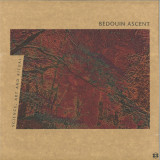
'Science, Art And Ritual' is a story of ‘process'. Growing up in Harrow (a then quiet suburb of London) in the 70’s and 80’s from the age of about 10, Kingsuk Biswas aka Bedouin Ascent's ears opened up to sound as he scanned the airwaves. The undeniable righteousness of 80’s dub via David Rodigan’s Roots Rockers shows was the first prominent influence he received, and with punk roots —and his burgeoning record collection— became exposed to the breathless post punk experimentation that followed in the early 80’s sweeping up free jazz, noise, dub and much more. Throughout though, he maintained his fascination with Indian Classical music which was a mainstay in his parent’s house and spoke with the same infinite space as Joy Division's 'Unknown Pleasures', and King Tubby’s Studio dispatches. Through those teens he assembled and de-assembled, knocking about with fellow travellers —punk bands, garage, space rock, noise. Something was happening. On-U Sound, ECM, Factory Records kept him plugged in and sane.
At that time Kingsuk's core studio setup revolved around his vintage Gretsch, Fender Jazz, Moog, TR-606 and rudimentary FX. He added congas, folk instruments, pipes, hand percussion, gongs, and jammed out shards of funk, noise, jazz fusion, electro and ambience into his hungry Tascam Portastudio. By 1987 these had morphed into what we’d now refer to broadly as techno, but the genre didn't exist beyond the reverberating walls of his bedsit, and he hadn’t yet plugged into the global conversation.
'Science, Art And Ritual' was released in 1994 by Rising High Records and was presented as Bedouin Ascent's debut album, although 'Music for Particles' (released in 1995, again on Rising High) was recorded even before —'SAR' sessions span from 1992-1993, whereas 'Music for Particles' were earlier from 1989-1992, with some older 4-track references from about 1986 too.
Weaved in throughout the album are subconscious references to music that Kingsuk heard in the past that still remained within sight as companions. The opening track "Ancient Ocean III", referencing the extinct ocean Tethis, unapologetically channels Tackhead, Colourbox, Mantronix and Lee Perry. The style was also deliberately juxtaposed to the prevailing sound in techno at the time, which had locked onto a rigid form of symmetrical kicks and light snare drums. Elsewhere 80’s soul and funk are frozen and captured in fragile glass lattices. Electric pianos resound throughout, such as in "He Is She", probably a half-memory of 70’s MOR radio from childhood sleepy night drives. A duel between kick drums from three generations of Roland drum machines —TR-808, TR-707 and R-8— is a central theme in "Transition-R", all in conversation, calling and responding. These were not just machines to Bedouin Ascent, but part of an extended family, with heart and soul.
Three decades after seeing the light, Lapsus is proud to present a special 30th anniversary reissue of this
left-field techno gem in a repackaged and redesigned edition. All pressed on a deluxe 3LP marbled vinyl and including a limited lithographic insert print of the original album cover. All tracks have been restored and remastered directly from the original DAT tapes, and the album also features previously unreleased tracks such as "In the Clouds" and "Thru Water" —regularly performed live at that time and produced in the same period as the album sessions in 1993.
'Science, Art And Ritual’ may refer to esoteric traditions in Indian philosophy, but equally embodies the collision of the science, the art and the ritual that is at the core of being immersed in a deep musical journey.
- A1: All Rights Resevered
- A2: God Factory
- A3: Hawaii / Torso / 97 Cigarettes
- A4: Acid Fur
- A5: Dance
- A6: New York Is A Lonely Town
- A7: (This Track Doesn't Exist)
- B1: Much About Bones
- B2: Scat
- B3: Pander To The Natives
- B4: For Garry 5
- B5: The Monkey Is Safe
- B6: 1-2-3 A Baby Buggy
- C1: Walking Best Friend
- C2: Untitled 1
- C3: Untitled 2
- C4: Now This Is God's Son 1
- C5: Acid Fur (Demo)
- C6: Now This Is God's Son 2
- C7: Hello Donald, Merry Christmas
- C8: Pinstripe Bus
- D1: The Man Of My Dreams
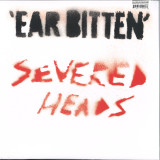
Dark Entries picks up Severed Heads yet again for Ear Bitten, a double LP reissue of some of the band’s earliest material. As originary Aussie industrial legends - although founder Tom Ellard would balk at being branded as such - Severed Heads shaped the continental subcultural sound with their kitchen electronics, chaotic tape loops, and quietly infectious nursery-rhyme-esque melodies. In 1979 Ellard, Richard Fielding, and Andrew Wright abandoned the moniker Mr. and Mrs. No Smoking Sign and adopted the edgier name Severed Heads “to pretend to be an industrial band such as Surgical Penis Klinik & Throbbing Gristle.” Noise-rockers Rhythmx Chymx had placed an advertisement in a local shop looking for a band to share the costs of pressing an LP. The Heads set about recording a Dadaist racket on a pair of open reel dictaphones and a cassette deck using a TRS-80 computer, Kawai Synthesizer 100F and Korg Mini Pops drum machine. Ear Bitten was released in 1980; original copies now fetch obscene sums, in part due to most of Severed Heads’ copies perishing in a fire at Richard’s home. The band’s next endeavor was a cassette titled Side 2, a collection of free-form experiments fashioned as Ear Bitten’s second side. For this reissue, Dark Entries has collected both Ear Bitten and Side 2 on the first disc, presenting the album in its full form. Disc two includes the original first version of Ear Bitten, which was only unreleased because it was recorded in a format not suitable for pressing. The album comes in a gatefold sleeve designed by Eloise Leigh and includes photos, liner notes, and reproductions of the original Xerox inserts from the 1980 issue. Ear Bitten delivers 22 tracks of pain you can dance to!
“We kick the label off with our inaugural release from label head Drum Dance; an eclectic four-tracker opening with ‘Zani!’, an outernational cosmic head-nodder meets Chicago footwork influenced ode to the great Zani Diabaté. Low-slung Latin flavoured boogie number ‘Body Heat’ switches up the tempo but keeps those limbs moving with its percussive four-to-the-floor beat, steamy disco vocals and jazzy keys. 80s jazz Balearic goes to Kingston for a bass-heavy dub makeover on ‘Venus Dub 2’.
Signing things off is ‘Adan On Dòt Soley’, a personal dedication to the beautiful country of Gwadloup. A common farewell in the local tongue, it translates poetically as “until another sun”. The track begins with off-kilter spaced-out synths and emerges into a dubby percussive jam featuring the gorgeous keys of Andy Wileman. Field recordings capturing glimpses of birds singing, waves lapping and the sound of gwo ka on the beach close things out, until another sun.”
Full sleeve artwork printed on reverse board
Mastered and cut by Beau Thomas at Ten Eight Seven Mastering
Pressed and printed by The Vinyl Factory
- A1: Duke Reid & His Group Duke S Cookies
- A2: The Skatalites Yard Broom
- A3: Stranger Cole & Patsy Todd Hey, Hey, Baby
- A4: Roland Alphonso Blackberry Brandy
- A5: Justin Hinds & The Dominoes Carry, Go, Bring, Come
- A6: Tommy Mccook Starry Night
- A7: Alton Ellis Cry Tough
- A8: The Paragons The Tide Is High
- A9: Don Drummond Thoroughfare
- B1: Baba Brooks & Eric 'Monty' Morris Strongman Sampson
- B2: The Skatalites Occupation
- B3: Marguerita & Don Drummond Woman A Come
- B4: Duke Reid S Group Pink Lane Shuffle
- B5: The Silvertones Midnight Hour
- B6: The Valentines Blam Blam Fever
- B7: The Coolies On The Bank
- B8: Stranger Cole & The Skatalites Rough And Tough
- B9: The Melodians Come On, Little Girl
- B10: The Techniques Oh Babe
Vol.2[35,25 €]
Discover a vinyl dedicated to the Treasure Isle label, featuring a compilation that blends rock steady and ska. This record gathers tracks from musical legends such as Alton Ellis, The Techniques, and Duke Reid. Each title is a perfect mix of melodic sweetness and captivating rhythms, typical of these musical genres, providing an immersive experience into the richness of Jamaican music. THIS VINYL IS A PRIME CHOICE FOR ENTHUSIASTS OF VINTAGE AND AUTHENTIC SOUNDS.
Glasgow based Seated Records return with more 1980s Scottish Post-Punk / New Wave material. In this 8-track mini compilation the label introduces the work of Stirling band 22 Beaches, offering a deep dive into music recorded between 1980-1984 - the majority of which has never seen the light of day!
22 Beaches formed in Stirling in the late 1970s as an evolution of the short lived group ‘Alone at Last’ - drummer Fred Parson’s and guitarist Stephen Hunter being the two who spanned the divide. Out of the six members of 22 Beaches, many were school friends, and the rest naturally fell together. The band toured extensively and played at a truly diverse set of venues across the UK: from a local swimming pool boiler room, to small nightclubs and university parties, to several fundraisers for the miners strike. Maybe most notably of all, drummer Fred Parsons described playing at what he calls “the Grangemouth International”, organised by local promoter Brian Guthrie and which featured an all-star lineup of 22 Beaches, The Exploited and the first incarnation of The Cocteau Twins. A coach was hired to ship the audience to Grangemouth from Stirling, the cost of which was included in the ticket. The gig then paused halfway through for a 'help yourself' buffet. Young promoters take heed. This is how it's done!
Over the course of the 80s the band released music on three different, and now sought after, various artists compilation cassettes. “What Day Is It?” and “Sadie When She Died” were released on a compilation of local Stirling artists 'The A.N.K.L.E File'. The track from which the current record takes its namesake - “Dust” - was initially released on a compilation-tape for the fanzine 'Another Spark'. And ‘‘Zoo” (also featured on this record) was first released on Glasgow label Pleasantly Surprised via compilation, 'An Hour Of Eloquent Sounds', where 22 Beaches rubbed shoulders with early music from Scottish names Primal Scream, Cocteau Twins, The Wake and Sunset Gun. Unfortunately, 22 Beaches never met the same level of commercial success as these others and decided to retire the project in 1984 - leaving their recordings and demos to gather dust (hehe)…until now!
This compilation, “Dust: recordings 1980-1984” follows the band's journey and the changes in their sound over the years. It moves from the raw, punk energy of early DIY recordings through to the A Certain Ratio style Balearica of their later pieces. The record's opener and title track “Dust” is perhaps the most shining example of the latter. Characterised by the plenitude of sonic space in the mix, “Dust” has an almost dub sensibility that is communicated through centrality of Parsons’ drums, McChord’s percussion, and Fildes’ Bass while the harmonising vocals of Sharkey and McGregor chant over the top to give the track its distinctive psychedelic edge. This is an atmosphere only exacerbated by the lofi quality of the recording which sits the vocals in the same aural realm as much 1960s psych-folk. On “Cartoon Boy”, the band strips things down further. A droning bass line persists through the tape fuzz and is accompanied by the sounds of a sole looping guitar chord sequence and McGregor and Sharkey’s vocals - respectively and carefully dancing around one another before harmonising in the most beautiful way. The result is a haunting and abstract Marine Girls style heartbreaker. ‘That Girl’ again delivers a dub adjacent rhythm section similar to that of “Dust”. However, on this instance crisp guitar chords, a distant, phased organ and blue-eyed soul vocal delivery, produce a track that could easily have been a lost Orange Juice recording from their sessions with Dennis Bovel. On “Somebody Got It Wrong” and “One Of Us” the band employ a more macro approach where a jangling guitar with an almost highlife-influenced tone, vocal ad-libs and syncopated percussion give the music a Talking Heads-esque swagger.
Taken together these tracks illustrate a clear trajectory in the band's sound, moving from from the high energy no-wave quality of early recordings towards a more dub influenced, and stripped-back sound - a sonic trajectory followed by so many bands of the time, not least those emerging from the diaspora of Manchester’s Factory Records.
On “Breathing’’ we hear the beginning of this transition, with the strong influence of the oddball NYC disco styles of Was (Not Was) and ZE records. All of this is meshed together with the residual punk rock energy of 1980s UK. This combination is employed to excellent effect with the addition of the distinctly Scottish (and what the band confirmed to me to be spontaneous) vocal delivery of: “Do you love me? Do you want me?” “Aye!” “Do you love me? Do you need me?” “Naw!”.
On the record’s closing tracks, “Zoo” and “Talent Show”, we hear early examples of the band’s work, playing with their rawest all-in-one-take live energy where Hunter’s spiralling guitar riffs and McGregor's distorted vocal exclamations lead the charge. The band recalls that these initial-forays did not always translate so well into multitrack recording and overdubbing: “the deconstruction took away some of the band's natural feel”. On “Talent Show” the record ends with Sharkey delivering an almost unintelligible spoken word section over the top of the track, making for one final, disorientating, almost manic slice of post-punk.
These tracks from 1980-1984 chart the progress of a unique contribution to the world of Scottish Post-Punk and New Wave, encapsulating not only the musical trajectory of 22 Beaches but also echoing the broader sonic landscape of 1980s UK, a testament to the adaptability and creativity of the UK’s underground music of the time.
Hilit Kolet debuts on Rekids with ‘Hot Mess’, including remixes from the legendary Mike Dunn.
Following her remix of Terry Farley & Wade Teo’s ‘Why We Dance’, Hilit steps up to the Rekids plate with her debut EP for Radio Slave’s label with her single ‘Hot Mess’. A relentlessly driving drum machine werqout, ‘Hot Mess’ sees her masterfully mixing compulsive, marching rhythms with a fiercely impassioned spoken word vocal.
With added raw jackin’ energy in the ‘Even Hotter Mix’, this has the kind of late night runway energy that demands the
Sound Factory be rebuilt. On the B-side, Chicago house legend Mike Dunn’s remix of ‘Hot Mess’ is a deep groove that adds a wriggling earworm bassline, while still embracing the enchanting vocal of the original.
Hilit Kolet has been an integral part of London’s house scene ever since she started slinging vinyl at Soho’s legendary Black Market Records. Her distinctive, energetic DJ style then established her behind the decks everywhere, from high fashion shows to some of the most celebrated underground clubs in London. 2023 saw Hilit going global with shows from Ibiza to Shanghai via Printworks, Warehouse Project and Ministry of Sound.
Her summer single on the Faith imprint ‘POV Siren’ has been embraced by DJs as diverse as Robert Hood and Paul Woolford, and her edit of Laurent Garnier’s ‘Crispy Bacon’ was rinsed by many from Carl Cox to Patrick Topping, before seeing an official release by Garnier himself. ‘Hot Mess’ sets Hilit Kolet up as a serious name to watch out for in 2024.
- A1: Island Band – Idle Hours 4 55
- A2: Chaz Jankel – Manon Manon 4 56
- A3: Gilbert O’sullivan – So What (Nail Edit) 8 44*
- B1: Rheinzand – Kills And Kisses (Scorpio Twins Remix) 8 10*
- B2: Canada High – Le Chiffre 5 02*
- B3: Lanowa – Burning Up 6 38*
- C1: Khruangbin – So We Won’t Forget (Mang Dynasty Irreverent Dub) 7 16*
- C2: Fernando – 1998 7 00*
- C3: Debbe& The Code – Code Of Love 6 02
- D1: Jana Koubková - Nijána 6 15
- D2: Ipg V Hot Toddy – Open Space 7 32*
- D3: Smashed Atoms & Backdoor Man – Hey Dreamer 6 50*
This July the esteemed scribe, proper DJ, and discreetly deft twiddler Bill Brewster, drops the latest instalment in his ‘After Dark’ series, for Late Night Tales.
A throbbing, louche and leisurely affair, groove is very much at the heart of this freestyle selection, a vibe which Bill de- scribes as “a basement, a red light and a sound system. Or, as the Beastie’s once rapped, slow and low, that is the tempo”.
There’s Hawaiian drum machine bossa balearica from Island Band, percussive afro post punk from Czech jazz singer Jana Koubkova, and breathy-bubbling-dubwise-slap-bass-soul from Debbe& The Code.
There’s also sultry deep house mood music from Lanowa, infectious bouncy jazz funk breaks from Canada High, and Nail’s life affirming re-edit of singer songwriter Gilbert O Sullivan’s electro pop gem ‘So What’.
Bill’s own studio skills are present and correct too, featuring an undulating bassy version of country troubadour Jeb Loy Nichols, reworked along Alex Tepper under their Hotel Motel moniker, and a chugged-up squelchy disco take on Khruang- bin, this time paired with Raj Gupta, as Mang Dynasty.
Chock full of exclusives, tracks are either completely brand new, or available digitally for the first time, whilst others are wallet-rinsing rarities if purchased elsewhere. Whichever way you slice it though, every tune is a highlight, working equally well as standalone nuggets, or within Bill’s fluidly cohesive mix.
Whether he’s taking the roof off a club with his unique selec- tion of deep and tough house music, enchanting a backroom with a genre-bending set of disco, Balearic, rock and hip hop or playing chillout music in a bay in Croatia, Bill Brewster is the man for all occasions.
In a former life, Bill was a punk rocker, a chef and also the co-editor of football magazine When Saturday Comes but has been a record nerd all of his life. He began DJing in the 1980s, but came into his own in the early 1990s, particularly during a two-year stint in New York running DMC’s office, where nights at the Sound Factory and hanging out with Danny Tenaglia gave him the musical grounding you can still hear in his music today.
Bill was also one of the founding residents at Fabric in London, a position he held for five years. There are few still playing regularly today that have his dedication, eclecticism and encyclopedic knowledge of music.
His parallel life is as a writer, and with his long-term part- ner-in-crime Frank Broughton, they have written four books together, including the acclaimed ‘Last Night A DJ Saved My Life’ (latest edition published last July), ‘How To DJ (Prop- erly)’ and ‘The Record Players’.
He has been working in the industry’s fringes for over 40 years including the running of various labels from Twisted UK and Forensic in the ’90s to Disco Sucks and Anorak in the noughties.
He is one of NTS radio’s new residents for 2023 and his ‘Low Life Loves You’ show is available on the first Tuesday of every month.
In May 2020 Cocoon Recordings released the third album of Harald Björk. With the club scene on Covid-hold , tours canceled and all of our favorite DJ’s locked up at home… not the optimal conditions to release an album on a nr.1 world wide club empire as Cocoon. How ever we decided not to let a virus kill our beloved culture, as Mr. Sven Väth put it „I would like to share with you the album of Harald Björk… which has soothed me and I hope will also give you a soundtrack for these uneasy days“. It felt right to release it.
The release was shrinked from a thought of vinyl box to a digital release with future plans on vinyl. However covid decided to stay and time went. The queue at the vinyl factories didn’t make the process easier… But at one point the dream factory of Kranglan Broadcast decided, enough! , the world has to keep on dreaming. And what is a better way to embrace dreams then to release a vinyl full of of dreamers, groundbreaking in their corners of the electronic umberella. Dreamers doing their thing not even looking at the norm or what’s the recent hype.
Aditional info:
Houndtooth finest Throwing Snow who Harald met in New York 2013 during their term at RBMA brings a bassdriven rollercoaster with the arpeggios from Spektrum bouncing like rubberballs through an impressive broken drum work. The remix came delivered with a text saying „I like my drums slamming“ and so do we.
Ada takes the eteric pads of Waldmeister and place them in a auditive dreamstate, an emotional hybrid of space and vacuum. Large feelings, yet so close. It builds, stretches and builds until we are shown the enlighted truth in the end of the tunnel. Harald is a long time fan and colector of Adas music which he got to know through the lovely label of Areal and has continued to love through the Pampa era. First remix from Ada on Kranglan was the epic remake of Sabor Latino, Sabor de Ada! We are delighted to have her art on the label once again.
The pandemic 2020 took away the most fun of beeing in the club scene, sharing stages with brilliant interesting dreamers showing and exchanging visions performing music. Under these strange conditions Molø and Harald ended up sharing a physical stage at the stream festival United We Stream. One thing led to the other and Harald took a deep dive in to Molø‘s great melodic techno universe. Some times you find gold in your own hometown. Molø’s take on Waldmeister build on the mellow arpeggio from the original track and brings them to a perfect chilled out afterhours. Imagine watching the sunrise to this beauty.
Swedes are a people of high integracy but as loyal citizens we allways attend formal events by the state. Skudge and Harald met at the Swedish National Radio price anouncement, both nominated for „electronic act of the year 2011“. It was an akward event with radio interviews and canapés, not very techno, the signum of Skudge. How ever Skudge won it all leaving both Avicii and Swedish House Mafia empty handed. Landberg, the swing king of Skudge is the kind of person that will tell you why the TR-909 has to be master clock to get the right groove in a techno performance, if you ask… which you do ??! If you’re looking for techno with groove look no further, Skudge is king! In his take on Walking Path he display the power of minimalistic dirty grooves, a 909 and a 303 what else do we need?
The 12“ vinyl comes with a fresh re-master of album single Medan Du Sov and an unreleased bonus track, Drifting, a balearic sundazed love story.
After more than 30 years Early Sounds and Halfway Ritmo are finally releasing unpublished recordings (1982-1989) from former Tangerine Dream and Iggy Pop's drummer Klaus Krüger.
Advanced Dance combines a sweeping mix of Krüger's handcrafted acoustic drums and distinctive electronic sounds of the late Berlin-School years, creating a unique blend of advanced polyrhythms.
Krüger achieved a balance between creativity and classic drum patterns giving birth to an unconventional and avant-garde type of music that could be easily defined as a precursor of techno.
His progressive mentality led him to delve further into the tape collage technique and unique ways of triggering his drums. It was a whole new world of music - sustained by his artistic surroundings, which included collaborations as well as friendships with other influential artists such as David Bowie, Martin Kippenberger and Helmut Newton.
In the time of German division, the pulsating West Berlin became a melting pot of creativity and international encounters. Advanced Dance is the result of the blazing heat feeding the unstoppable thirst of discovery which characterized that generation, creating tunes that transform the listener's experience into one blissful moment amidst beautiful confusion.
UILTY RAZORS, BONA FIDE PUNKS.
Writings on the topic that go off in all directions, mind-numbing lectures given by academics, and testimonies, most of them heavily doctored, from those who “lived through that era”: so many people today fantasize about the early days of punk in our country… This blessed moment when no one had yet thought of flaunting a ridiculous green mohawk, taking Sid Vicious as a hero, or – even worse – making the so-called alternative scene both festive and boorish. There was no such thing in 1976 or 1977, when it wasn’t easy to get hold of the first 45s by the Pistols or the Clash. Few people were aware of what was happening on the fringes of the fringes at the time. Malcolm McLaren was virtually unknown, and having short hair made you seem strange. Who knew then that rock music, which had taken a very bad turn since the early 1970s, would once again become an essential element of liberation? That, thanks to short and fast songs, it would once again rediscover that primitive, social side that was so hated by older generations? Who knew that, besides a few loners who read the music press (it was even better if they read it in English) and frequented the right record stores? Many of these formed bands, because it was impossible to do otherwise. We quickly went from listening to the Velvet Underground to trying to play the Stooges’ intros. It’s a somewhat collective story, even though there weren’t many people to start it.
The Guilty Razors were among those who took part in this initial upheaval in Paris. They were far from being the worst. They had something special and even released a single that was well above the national average. They also had enough songs to fill an album, the one you’re holding. In everyone’s opinion, they were definitely not among the punk impostors that followed in their wake. They were, at least, genuine and credible.
Guilty Razors, Parisian punk band (1975-1978). To understand something about their somewhat linear but very energetic sound, we might need to talk about the context in which it was born and, more broadly, recall the boredom (a theme that would become capital in punk songs) coupled with the desire to blow everything off, which were the basis for the formation of bands playing a rejuvenated rock music ; about the passion for a few records by the Kinks or the early Who, by the Stooges, by the Velvet mostly, which set you apart from the crowd.
And of course, we should remember this new wave, which was promoted by a few articles in the specialized press and some cutting-edge record stores, coming from New York or London, whose small but powerful influence could be felt in Paris and in a handful of isolated places in the provinces, lulled to sleep by so many appalling things, from Tangerine Dream to President Giscard d’Estaing...
In 1975-76, French music was, as almost always, in a sorry state ; it was still dominated by Johnny Hallyday and Sylvie Vartan. Local rock music was also rather bleak, apart from Bijou and Little Bob who tried to revive this small scene with poorly sound-engineered gigs played to almost no one.
In the working class suburbs at the time, it was mainly hard rock music played to 11 that helped people forget about their gruelling shifts at the factory. Here and there, on the outskirts of major cities, you still could find a few rockers with sideburns wearing black armbands since the death of Gene Vincent, but it wasn’t a proper mass movement, just a source of real danger to anyone they came across who wasn't like them. In August 1976, a festival unlike any other took place in Mont-de-Marsan – the First European Punk Festival as the poster said – with almost as many people on stage as in the audience. Yet, on that day, a quasi historical event happened, when, under the blazing afternoon sun, a band of unknowns called The Damned made an unprecedented noise in the arena, reminiscent of the chaotic Stooges in their early adolescence. They were the first genuine punk band to perform in our country: from then on, anything was possible, almost anything seemed permissible.
It makes sense that the four+1 members of Guilty Razors, who initially amplified acoustic guitars with crappy tape recorder microphones, would adopt punk music (pronounced paink in French) naturally and instinctively, since it combines liberating noise with speed of execution and – crucially – a very healthy sense of rebellion (the protesters of May 1968 proclaimed, and it was even a slogan, that they weren’t against old people, but against what had made them grow old. In the mid-1970s, it seemed normal and obvious that old people should now ALSO be targeted!!!).
At the time, the desire to fight back, and break down authority and apathy, was either red or black, often taking the form of leafleting, tumultuous general assemblies in the schoolyard, and massive or shabby demonstrations, most of the time overflowing with an exciting vitality that sometimes turned into fights with the riot police. Indeed, soon after the end of the Vietnam War and following Pinochet’s coup in Chile, all over France, Trotskyist and anarcho-libertarian fervour was firmly entrenched among parts of the educated youth population, who were equally rebellious and troublemakers whenever they had the chance. It should also be noted that when the single "Anarchy in the UK" was first heard, even though not many of us had access to it, both the title and its explosive sound immediately resonated with some of those troublemakers crying out for ANARCHY!!! Meanwhile, the left-wing majority still equated punks with reckless young neo-Nazis. Of course, the widely circulated photos in the mainstream press of Siouxsie Sioux with her swastikas didn’t necessarily help to win over the theorists of the Great Revolution. It took Joe Strummer to introduce The Clash as an anti-racist, anti-fascist and anti-ignorance band for the rejection of old-school revolutionaries to fade a little.
The Lycée Jean-Baptiste Say at Porte d’Auteuil, despite being located in the very posh and very exclusive 16th arrondissement of Paris, didn’t escape these "committed" upheavals, which doubled as the perfect outlet for the less timid members of this generation.
“Back then, politics were fun,” says Tristam Nada, who studied there and went on to become Guilty Razors’ frontman. “Jean-Baptiste was the leftist high-school in the neighbourhood. When the far right guys from the GUD came down there, the Communist League guys from elsewhere helped us fight them off.”
Anything that could challenge authority was fair game and of course, strikes for just about any reason would lead to increasingly frequent truancy (with a definitive farewell to education that would soon follow). Tristam Nada spent his 10th and 11th unfinished grades with José Perez, who had come from Spain, where his father, a janitor, had been sentenced to death by Franco. “José steered my tastes towards solid acts such as The Who. Like most teenagers, I had previously absorbed just about everything that came my way, from Yes to Led Zeppelin to Genesis. I was exploring… And then one day, he told me that he and his brother Carlos wanted to start a rock band.” The Perez brothers already played guitar. “Of course, they were Spanish!”, jokes their singer. “Then, somewhat reluctantly, José took up the bass and we were soon joined by Jano – who called himself Jano Homicid – who took up the rhythm guitar.” Several drummers would later join this core of not easily intimidated young guys who didn’t let adversity get the better of them.
The first rehearsals of the newly named Guilty Razors took place in the bedroom of a Perez aunt. There, the three rookies tried to cover a few standards, songs that often were an integral part of their lives. During a first, short gig, in front of a bewildered audience of tough old-school rockers, they launched into a clunky version of the Velvet Underground's “Heroin”. Challenge or recklessness? A bit of both, probably… And then, step by step, their limited repertoire expanded as they decided to write their own songs, sung in a not always very accurate or academic English, but who cared about proper grammar or the right vocabulary, since what truly mattered was to make the words sound as good as possible while playing very, very fast music? And spitting out those words in a language that left no doubt as to what it conveyed mattered as well.
Trying their hand a the kind of rock music disliked by most of the neighbourhood, making noise, being fiercely provocative: they still belonged to a tiny clique who, at this very moment, had chosen to impose this difference. And there were very few places in France or elsewhere, where one could witness the first stirrings of something that wasn’t a trend yet, let alone a movement.
In the provinces, in late 1976 or early 1977, there couldn’t be more than thirty record stores that were a bit more discerning than average, where you could hear this new kind of short-haired rock music called “punk”. The old clientele, who previously had no problem coming in to buy the latest McCartney or Aerosmith LP, now felt a little less comfortable there…
In Paris, these enlightened places were quite rare and often located nex to what would become the Forum des Halles, a big shopping mall. Between three aging sex workers, a couple of second-hand clothes shops, sellers of hippie paraphernalia and small fashion designers, the good word was loudly spread in two pioneering places – propagators of what was still only a new underground movement. Historically, the first one was the Open Market, a kind of poorly, but tastefully stocked cave. Speakers blasted out the sound of sixties garage bands from the Nuggets compilation (a crucial reference for José Perez) or the badly dressed English kids of Eddie and the Hot Rods. This black-painted den was opened a few years earlier by Marc Zermati, a character who wasn’t always in a sunny disposition, but always quite radical in his (good) choices and his opinions. He founded the independent label Skydog and was one of the promoters of the Mont-de-Marsan punk festivals. Not far from there was Harry Cover, another store more in tune with the new New York scene, which was amply covered in the house fanzine, Rock News (even though it was in it that the photos of the Sex Pistols were first published in France).
It was a favorite hang-out of the Perez brothers and Tristam Nada, as the latter explained. “It’s at Harry Cover’s that we first heard the Pistols and Clash’s 45s, and after that, we decided to start writing our first songs. If they could do it, so could we!”
The sonic shocks that were “Anarchy in the UK”, “White Riot” or the Buzzcocks’s EP, “Spiral Scratch” – which Guilty Razors' sound is reminiscent of – were soon to be amplified by an unparalleled visual shock. In April 1977, right after the release of their first LP, The Clash performed at the Palais des Glaces in Paris, during a punk night organised by Marc Zermati. For many who were there, it was the gig of a lifetime…
Of course, Guilty Razors and Tristam were in the audience: “That concert was fabulous… We Parisian punks were almost all dressed in black and white, with white shirts, skinny leather ties, bikers jackets or light jackets, etc. The Clash, on the other hand, wore colourful clothes. Well, the next day, at the Gibus, you’d spot everyone who had been at this concert, but they weren’t wearing anything black, they were all wearing colours.”
It makes sense to mention the Gibus club, as Guilty Razors often played there (sometimes in front of a hostile audience). It was also the only place in Paris that regularly scheduled new Parisian or Anglo-Saxon acts, such as Generation X, Siouxsie and the Banshees, the Slits, and Johnny Thunders who would become a kind of messed-up mascot for the venue. A little later, in 1978, the Rose Bonbon – formerly the Nashville – also attracted nightly owls in search of electric thrills… In 1977, the iconic but not necessarily excellent Asphalt Jungle often played at the Gibus, sometimes sharing the bill with Metal Urbain, the only band whose aura would later transcend the French borders (“I saw them as the French Sex Pistols,” said Geoff Travis, head of their British label Rough Trade). Already established in this small scene, Metal Urbain helped the young and restless Guilty Razors who had just arrived. Guitarist for Metal Urbain Hermann Schwartz remembers it: “They were younger than us, we were a bit like their mentors even if it’s too strong a word… At least they were credible. We thought they were good, and they had good songs which reminded of the Buzzcocks that I liked a lot. But at some point, they started hanging out with the Hells Angels. That’s when we stopped following them.”
The break-up was mutual, since, Guilty Razors, for their part, were shocked when they saw a fringe element of the audience at Metal Urbain concerts who repeatedly shouted “Sieg Heil” and gave Nazi salutes. These provocations, even still minor (the bulk of the skinhead crowd would later make their presence felt during concerts), weren’t really to the liking of the Perez brothers, whose anti-fascist convictions were firmly rooted. Some things are non-negotiable.
A few months earlier (in July 1978), Guilty Razors had nevertheless opened very successfully for Metal Urbain at the Bus Palladium, a more traditonally old-school rock night-club. But, as was sometimes the case back then, the night turned into a mass brawl when suburban rockers came to “beat up punks”.
Back then, Parisian nights weren’t always sweet and serene.
So, after opening as best as they could for The Jam (their sound having been ruined by the PA system), our local heroes were – once again – met outside by a horde of greasers out to get them. “Thankfully,” says Tristam, “we were with our roadies, motorless bikers who acted as a protective barrier. We were chased in the neighbouring streets and the whole thing ended in front of a bar, with the owner coming out with a rifle…”
Although Tristam and the Perez brothers narrowly escaped various, potentially bloody, incidents, they weren’t completely innocent of wrongdoing either. They still find amusing their mugging of two strangers in the street for example (“We were broke and we simply wanted to buy tickets for the Heartbreakers concert that night,” says Tristam). It so happened that their victims were two key figures in the rock business at the time: radio presenter Alain Manneval and music publisher Philippe Constantin. They filed a complaint and sought monetary compensation, but somehow the band’s manager, the skilful but very controversial Alexis, managed to get the complaint withdrawn and Guilty Razors ended up signing with Constantin with a substantial advance.
They also signed with Polydor and the label released in 1978 their only three-track 45, featuring “I Don't Wanna be A Rich”, “Hurts and Noises” and “Provocate” (songs that exuded perpetual rebellion and an unquenchable desire for “class” confrontation). It was a very good record, but due to a lack of promotion (radio stations didn’t play French artists singing in English), it didn’t sell very well. Only 800 copies were allegedly sold and the rest of the stock was pulped… Initially, the three tracks were to be included on a LP that never came to be, since they were dropped by Polydor (“Let’s say we sometimes caused a ruckus in their offices!” laughs Tristam.) In order to perfect the long-awaited LP, the band recorded demos of other tracks. There was a cover of Pink Floyd's “Lucifer Sam” from the Syd Barrett era – proof of an enduring love for the sixties’ greats –, “Wake Up” a hangover tale and “Bad Heart” about the Baader-Meinhof gang, whose actions had a profound impact on the era and on a generation seeking extreme dissent... On the album you’re now discovering, you can also hear five previously unreleased tracks recorded a bit later during an extended and freezing stay in Madrid, in a makeshift studio with the invaluable help of a drummer also acting as sound engineer. He was both an enthusiastic old hippie and a proper whizz at sound engineering. Here too, certain influences from the fifties and sixties (Link Wray, the Troggs) are more than obvious in the band’s music.
Shortly after a final stormy and rather barbaric (on the audience’s side) “Punk night” at the Olympia in June 1978, Tristam left the band ; his bandmates continued without him for a short while.
But like most pioneering punk bands of the era, Guilty Razors eventually split up for good after three years (besides once in Spain, they’d only played in Paris). The reason for ceasing business activities were more or less the same for everyone: there were no venues outside one’s small circuit to play this kind of rock music, which was still frightening, unknown, or of little interest to most people. The chances of recording an LP were virtually null, since major labels were only signing unoriginal but reassuring sub-Téléphone clones, and the smaller ones were only interested in progressive rock or French chanson for youth clubs. And what about self-production? No one in our small safety-pinned world had thought about it yet. There wasn’t enough money to embark on that sort of venture anyway.
So yes, the early days of punk in France were truly No Future!
- A1: Two A Day 03:27
- A2: Blue Room 07:54
- A3: If I Should Lose You 06:59
- B1: This Is Always 09:14
- B2: The Best Thing For You Is Me 08:13
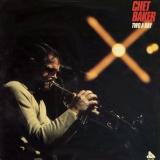
Recorded on December 29, 1978 at the Château d'Hérouville with Jean-Louis Rassinfosse on bass, Jeff Brillinger on drums and Phil Markowitz on piano, then mixed at Studios Davout on December 8, 1979, Two A Day has not been reissued on vinyl since 1980. This little-known but remarkable album from Chet Baker brings together instrumental and vocal tracks, all infused with the swing and emotional depth that define his finest recordings. To fully highlight the qualities of this masterful session, a high-quality remastering has been carried out, restoring the warmth and intimacy of the legendary Château d'Hérouville studios, which also hosted artists such as David Bowie and Pink Floyd. The LP edition features hot gold foil numbering.
“France absolutely engage the body... but the spectacle is one for your mind, especially as you start to wonder how much of what you’re hearing is really there.” The Quietus
Legendary hurdy-gurdy-powered kraut/psych/folk/drone band France have announced a new album ‘Good Thoughts. Bad Thoughts’ on The state51 Conspiracy label; capturing a wild performance at The state51 Factory in East London - part of their very first tour of England. They played Liverpool Psych Fest as a one off some years back.
Forming 20 years ago as a trio in Valence, France, for this performance, were Jeremie Sauvage on bass, Yann Gourdon on electrified hurdy-gurdy, and Cyril Bondi (of La Tene and Cyril Cyril on drums (stalwart Mathieu Tilly was taking some much needed time off).
This album sees the band plunge into the depths of the human psyche, backed up by Hugo Hyart’s deep, all-over cosmic doodles and an unhidden homage to the Parliafunkadelicment state of mind : Uniting, dancing, staying creative and open minded despite the tribulations of life. Dedicated to the feeling of good (and baby they’re good... at being good).
On the night France were recorded by Hot Chip’s in-house engineer James Crump who subsequently mixed the record at Hot Chip’s studio in East London. The album was mastered by Richy Hughes at Binary Feedback.
Calvin Love is a Canadian singer-songwriter, composer, and producer from Edmonton, Alberta, now based between Edmonton and Los Angeles. With a sound that blends noir-tinged folk‑pop, crooning rock ’n’ roll, and cinematic storytelling, Love has become a distinctive voice in the international indie landscape. His music has drawn comparisons to Roy Orbison, Leonard Cohen, and Bryan Ferry, with Aquarium Drunkard describing his work as “a crestfallen soundtrack of near‑escape… like Chris Isaak trapped in a David Lynch film.”
Since his debut New Radar (2012), Love has released a run of acclaimed records including Super Future (Arts & Crafts, 2015), Highway Dancer (2018), Night Songs (2020), and Lavender (2021). Along the way, he has collaborated with renowned producers and artists such as Gus Seyffert (Beck, Roger Waters, Black Keys) and the late Richard Swift (The Shins, Damien Jurado), while earning coverage from outlets including SPIN, The Fader, Interview Magazine, and Stereogum.
A seasoned live performer, Love has toured extensively across North America, Europe, and Asia, appearing at festivals such as SXSW, Pop Montréal, Strawberry Festival (China), Endless Daze (South Africa), and Sled Island. He has shared stages with Morrissey, Mac DeMarco, Courtney Barnett, Jonathan Wilson, The Divine Fits, and Jim James, performing in iconic venues like Carnegie Hall, The Troubadour, and Hollywood Forever Cemetery.
In early February 2026, Love releases his seventh studio album, Throw My Shadow To The Sun — a bold, visceral statement that captures him at a new creative peak. Self‑produced and recorded by Reverend Baron at The Ladder Factory in East Los Angeles, the album channels raw, unfiltered energy into a late‑night rock ’n’ roll atmosphere built on moody grooves, gritty textures, and Love’s unmistakable croon.
The sessions brought together a formidable live band: Josh Da Costa (Drugdealer) on drums, Brent Randall (Vanity Mirror) on bass, Davey Chegwidden (De La Soul, Ghostface Killah, Raekwon, Too Short) on percussion, Jeremy Brian Gill (Curtis Harding) on tenor saxophone and flutes, Daniel E. Garcia (Reverend Baron) on lead guitars, and multi‑instrumentalist Laena Myers (White Fence, Orville Peck, El Mariachi Bronx) on violin.
From the hypnotic sway of “Underneath It All,” to the reverb‑drenched sax of “Forever Feels,” to the heavy sludge‑rock crush of “Setting Sun,” Throw My Shadow To The Sun draws from the lyrical storytelling of Dire Straits, the laid‑back blues of JJ Cale, and the timeless melodic drama of Roy Orbison. The result is a cohesive, lived‑in record that transforms fleeting moments and late‑night impressions into something enduring and cinematic.
- Greensleves
- Borderick
- Light Blue
- Dive
- Impromptune
- Saturn
- Stronger Than Pride
- A House Is Not A Home
- A Nod To The High Priest
- Why?
Recorded spontaneously in a single afternoon, the album captures an unguarded musical conversation between two of the most compelling voices of their generation. Born in Brixton and now based in Harlem, Ruben Fox has emerged as a major presence on the international jazz scene, renowned for the depth of his sound, the emotional clarity of his ballad playing, and a voice rooted in tradition while speaking firmly in the present. His work follows collaborations with artists including Wynton Marsalis, Barry Harris, Roy Hargrove, Jon Batiste, and George Coleman, and builds on the critical acclaim of his 2021 debut Introducing Ruben Fox.
Micah Thomas is one of the most celebrated pianists of his generation, praised for a style that is both restlessly inventive and deeply grounded in the history of the music. A Jerome L. Greene Fellow and Juilliard alumnus, Thomas has worked extensively with Immanuel Wilkins, Joshua Redman, Ambrose Akinmusire, and Billy Drummond, and has been recognised by DownBeat, Jazz Magazine, and The New York City Jazz Record as a defining contemporary voice. Fox and Thomas first developed their musical relationship while studying at Juilliard, where they regularly played duo sets. In Two Minds was recorded on a whim at Chris Pattishall's apartment in Washington Heights, with no rehearsal, no edits, and no agenda beyond mutual respect, listening, and shared musical values. Over three hours, the pair simply showed up and played.
The result is an intimate, conversational record that foregrounds generosity, empathy, and deep musical listening. Sparse, direct, and emotionally rich, In Two Minds offers a rare document of two artists meeting in real time, balancing history, intellect, warmth, and spontaneity.
- 1: Y Dechrau (Feat. Boy Azooga, Jessy Allen, Earl Jeffers, Andy Brown & Amanda Whiting)
- 2: Chware Teg
- 3: Thema Osian
- 4: Tyrchu (Feat. Gruff Rhys)
- 5: Dŵr Y Mynydd
- 6: Geiriau
- 7: Tynged
- 8: Trac Piano
- 9: Cynnau Tân (Feat. Carwyn Ellis)
- 10: Anturiaethau Pellach Capten Idole
- 11: Pino Ar Y Bâs!! (Feat. Darkhouse Family)
- 12: Brân Swît
- 13: Thema Nia (Ahmed)
- 14: Sidan Torri
- 15: Erlid Y Ddraig
- 16: Dwyrain Cymru
- 17: Un I Dewi (Feat. Andy Brown)
- 18: Maen Llia
- 19: Tad A Mab (Feat. Dafydd Brynmor Davies)
- 20: Diolch A Nos Da (Feat. Dafydd Iwan)
Don Leisure has cemented his name as one of the most forward-thinking and experimental beatmakers & producers within the current musical ecosystem. As well as being 50% of Darkhouse Family (alongside Earl Jeffers) he has collaborated with the likes of Angel Bat Dawid, Gruff Rhys, DJ Spinna and First Word label-mates Amanda Whiting & Tyler Daley (Children of Zeus). Garnering serious support from Lauren Laverne, Tom Ravenscroft, Huw Stephens, Gilles Peterson, Huey Morgan, The Vinyl Factory, Clash, Uncut and many more. Following the release of ‘Cynnau Tân (feat. Carywyn Ellis)’ (which gained support across BBC Radio from Tom Ravenscroft, Zakia & Huw Stephens) Welsh beatmaker Don Leisure announces the release of a new album ‘Tyrchu Sain’) as he returns with a new single ‘Tyrchu’ due for release on 22nd January 2025. ‘Tyrchu’ features the soft-spoken vocal stylings of Gruff Rhys over a gently rolling, tape saturated and expertly chopped instrumental, creating (in Gruff’s own words) ‘Shiny new beat-treasures with ghostly reflections of Welsh pop’s past - skillfully dug from Sain Records’ deepest veins’
A dedicated student of music, over the years, Don has amassed a vast encyclopaedic knowledge of music genres and subcultures, including a fascination with Welsh psychedelic folk music from the mid-20th century. This introduction was made by respected musician, producer & selector Andy Votel’s 2005 two-part compilation series ‘Welsh Rare Beat’ (in collaboration with Gruff Rhys and Don Thomas), comprising twenty-five tracks from Sain Records’ back catalogue. Now the oldest independent record label in Wales, Sain is a wildly influential bastion of home-grown Welsh talent, co-founded by Welsh-language folk singer Dafydd Iwan, whose music has seen a cultural resurgence in recent years with his 1983 song Yma o Hyd (We’re Still Here) becoming a huge anthem for Wales football fans. Set up in the Welsh capital, many of Sain’s early releases were recorded at Rockfield Studios in Monmouthshire, but in the early 1970s the record company moved to the Caernarfon area and opened their first recording studio in 1974 near Llandwrog. Announcing a huge digitisation project throughout 2024, Sain Records took on the mammoth task of painstakingly digitising their entire back catalogue spanning 55 years, working in partnership with the National Library of Wales the resulting archive then be submitted for to the National Library of Wales in Aberystwyth, preserving them for future generations to enjoy. Taking this period of rediscovery as an opportunity to reimagine their impressive inventory, Sain invited Don Leisure to dig into their musical treasure chest, creating a sprawling sonic tapestry from the dusty gems within. On this exhilarating excursion, Sain Records founder Dafydd Iwan explains: ‘Imagine someone gave you access to over 50 years of Welsh popular music – almost all of it unknown to you before. It would be a strange experience of discovery, an unknown territory which could baffle and excite. This happened to Jamal (Don Leisure) – and he was captivated by a world of music he barely knew existed, and when he was asked to distill the experience into one album, he immediately warmed to the idea. And this is the result – a kaleidoscope of sounds to encapsulate a half century of Welsh music. To call it unique would be superfluous: no-one could ever recreate this album. Listen, and enjoy.’.
The resulting product is ‘Tyrchu Sain' (translating to ‘Digging Sain’), a fearless and exploratory album, which sees Don put his signature unparalleled and unpredictable skills to work, weaving together moments of forgotten beauty into celestial and otherworldly compositions. The record features appearances by artists from Wales who have a similar obsession as Don Leisure in these classic Welsh rarities including Gruff Rhys, Carwyn Ellis, Earl Jeffers Amanda Whiting and Boy Azooga. A shimmering patchwork quilt of sound, ‘Tychru Sain’ traverses a shifting landscape of acid folk, eerie vocal melodies and interstellar soundscapes, propelled forth by crisp, head nod-inducing drums and grainy textures. Breathing new life into compositions lost to time, and paving a path for new listeners to discover the magic that lies within.
A reflection on how we hold each other and how we let go, ‘Secular Music Vol 1’ is the first instalment in a triptych of albums by multi-limbed live dance music outfit Girls Of The Internet. Continuing their ongoing policy of “therapy through music”, the album touches all points on the shifting landscape of human connection: belief, doubt, loss, forgiveness. Emphasising human elements of songwriting, performance and production within the lineage of house, disco and electronic music; this first record furthers the band’s flair for manifesting the creative and communal spirit that birthed the scene. Joining the dots that have not been joined for a long time, the collective takes on people of all sexualities, gender expressions and body types. House music was created as an inclusive artform and Girls of the Internet are here to assert we are all invited. The group is completed with a rotating assembly of talented collaborators, including the live band with Nandi and Wynter on vocals and Tommy Peach on bass and trumpet. ‘Secular Music Vol 1’ also features guest appearances from Dani Siciliano, Sió, Pinty, i am an island, and James Alexander Bright - also a regular member of the live band. Girls Of The Internet’s 2024 album ‘When I Was Lost, I Found Myself’ was the follow-up to the acclaimed ‘Girls FM’, one of BBC 6 Music’s Albums of the Year in 2019. Firmly on the radar of key DJs Gilles Peterson, Tom Ravenscroft, Trevor Nelson, Pete Tong, and Lauren Laverne for some time, the band’s songs have more recently found fans in BBC Radio 1’s Sian Eleri and BBC 6 Music’s Nick Grimshaw as well as around the rest of the planet on tastemaker stations Byte FM, FIP, NTS, KALW, KCRW, KEXP and Soho Radio. Girls Of The Internet have performed on home turf at Glastonbury, The Warehouse Project’s Homobloc, Drumsheds, Printworks, Latitude, Lost Village festival, and a residency this summer at London’s Colour Factory. With Ibiza shows at Pikes and Glitterbox at #1 Club in the World Hï; this July saw Tom take on their first US dates with DJ sets in New York, LA and San Francisco. The live band are currently in the middle of an extended live tour that runs through to December. ‘Secular Music Vol 1’ is set for release on 14th November 2025 on Girls Of The Internet's own recently launched House Of the Internet label.
- A1: Ocarina Of Time
- A2: Zelda's Lullaby
- A3: Lost Woods
- A4: Sheik's Theme
- A5: Gerudo Valley
- A6: Song Of Storms
- B1: Jabu-Jabu's Interlude
- B2: Zora's Domain
- B3: Great Fairy's Fountain
- B4: Kakariko Lullaby
- B5: Epona's Song
- B6: Gerudo Valley Reprise
Jazz piano, upright bass, and mellow percussion set the stage for the debut release of The Deku Trio. Zelda and Jazz is a 12 track tribute to The Legend of Zelda: Ocarina of Time.
The Deku Trio is a new project from Rob Araujo (Chillhop) and Chris Davidson (GameChops) that elevates video game covers through forward-leaning arrangements for jazz trio.
Highlighting fan favorites like Song of Storms, Zelda’s Lullaby, and Great Fairy Fountain, The Deku Trio's coffeehouse-style reimaginings feature cozy ornamented piano arrangements, interesting reharmonizations, soulful basslines, and delicate drums and percussion. Music composed by Koji Kondo with character designs by award-winning comic author Riana Dorsey
- A1: Soon Forward
- A2: You'll Never Know
- A3: Motherless Children
- B1: Slave Driver
- B2: Mistake
- B3: Going Downtown
- B4: I'm Coming Home
Reissue of the very first album ever released by Sly & Robbie’s iconic TAXI label back in 1979.
"Having saved enough money during a tour with Peter Tosh to buy 4 multitrack recording tapes, Sly & Robbie asked Gregory to voice a few songs for them. Because they had played on so many of his hits, Gregory generously agreed to do it for free to help bootstrap the new TAXI label.
In 1979, Gregory Isaacs was by far Jamaica’s most popular artist, earning his "Cool Ruler" nickname many times over releasing hit after hit, most of which were produced with Sly & Robbie, who at 25 years of age were already the hottest backing band. Out of these sessions came hits like "Soon Forward", a fabulous cover of Bob Marley’s "Slave Driver" and 4 other potent tracks. There were no flimsy soul or pop covers: Gregory Isaacs, whose voice and range were at their peak, sang with clarity, depth, verve and confidence, with no unnecessary mannerisms.
A must have for any serious music fan, this crucial album features extended so-called "Discomix" versions of all the songs, providing listeners with a generous serving of the Riddim Twins drum and bass extravaganza. In addition to the original album, we have added 3 dub versions that were only released in Jamaica, as B Sides of singles, in 1979. These have never been reissued until now and provide a fascinating glimpse into Sly & Robbie's drum and bass sound, which revolutionized Reggae music at the time."
- Lifeline
- Home & Away
- Playtime Is Over
- Lady Of The Manor
- Land Of The Faint At Heart
- The Lucky Ones
- Food Factory
- Our Neck Of The Woods
LIMITED CLEAR VINYL[24,79 €]
Mit England Screaming kehrt Wreckless Eric zurück zu Songs, die er zwischen 1982 und 1984 schrieb - und die ursprünglich auf dem wenig beachteten Album A Roomful Of Monkeys erschienen. Vierzig Jahre später hat Eric Goulden diese Stücke neu aufgenommen und ihnen die klangliche Tiefe und emotionale Ehrlichkeit verliehen, die sie verdienen. Das Ergebnis ist ein kraftvolles, raues Album, das Vergangenheit und Gegenwart miteinander verbindet. Eric spielt die meisten Instrumente selbst, unterstützt von Sam Shepherd (Drums), Amy Rigby und Marc Valentine (Backing Vocals, Piano) sowie dem Performancekünstler Graham Beck. Die Songs handeln von Drogen, Bankrott, Brautmode, Selbsttäuschung und dem Scheitern - Themen, die Eric mit bissiger Klarheit und schwarzem Humor verarbeitet. England Screaming ist ein musikalischer Befreiungsschlag, der die Reife eines erfahrenen Songwriters mit der Energie seiner frühen Jahre vereint.
- 01: Two Former Friends (Original)
- 02: Dance Of The Silver Beetles (Original)
- 03: Miniature White Deer (Original)
- 04: All The Goodbyes (You Tried To Defer)
- 05: Regretful Polar Bear (Original)
- 06: Anxious Shadow Puppets (Original)
- 07: Failed Space Walk (Original)
- 08: Devils (Original)
- 09: A Leopard With No Spots (Original)
- 10: Abandoned Boy (Left In Charge Of The Family Business)
- 11: Metal Mosquitos (Original)
- 12: A Cat Left To His Own Devices (Original)
- 13: Well-Heeled Human Driftwood (Original)
- 14: Flamingo With Bandaged Neck (Original)
Chris Menist pares his sound right back for A book of imaginary beings, his fourth Awkward Corners outing with a project of electronic and abstracted global grooves. Experimenting with simple melodies and uncluttered arrangements, as well as taking inspiration from the Borges' short stories alluded to in the title, the project took shape in the early part of 2025, in the shorter days and dark evenings of January.
The initial challenge was to knock a basic track into shape each evening after work, then refine it later. There's a melancholy in the air in late winter, compounded by the creeping threat of national and geopolitical instability. Ulla, Natural Information Society, Jabu, Torso and Dawuna formed some of the background soundtrack as each tune took shape.
The track titles came after sitting with the sounds for a while, giving shape to images of people, creatures and their stories for a book that is yet to be written.
Two former friends sets the tone for the album perfectly as a minimal electronic piece with a slowly simmering synth bassline underpinning the groove whilst the trademark Awkward sound of the Shahi Baaja enters drenched in effects. It's the first demonstration of Chris' unique ability to create a world from apparently very little.
Dance of the silver beetles is completely unique in that we can hear chopped up Illimba samples seemingly playing backwards and forewords sometimes alone, sometimes together in duet with Chris' conga rhythms. Add to that a more conventional Illimba melody and added shaker percussion and you have one of A book of imaginary beings most curious chapters.
Anxious shadow puppets is closer to the Awkward Corners sound from previous albums as electronic pulses move around the arrangement with the urgency that the track title suggests. Chris' percussive roots move to the fore with the congas that tie down the Paradise Bangkok Molam International Band's sound. Here, the bassline is more playful and works together with one of Chris' many African Illimbas.
Fans of Chris' adventures on his Roland 808 will dig A leopard with no spots, although the minimal mood continues to flow through on this track. The lolloping, but hard-hitting rhythm track provides the grounding for strange and twisting feedback-sounding tones to work the soundscape.
Abandoned boy (left in charge of the family business) is Awkward Corners at his atmospheric best. Drift off to the sublime sounds of Chris exploring the Shahi Baaja, whilst a soft, repetitive synth line and abstracted pads give the listener that feeling of meditation and peace.
Flamingo with bandaged neck is A book of imaginary beings' perfect coda and is exclusively Shahi Baaja draped in reverbs and delays. It feels like the resolution and the closing of a book that – as of yet – remains unwritten.
Awkward Corners is Chris Menist, a musician, DJ and writer. It started life as a small project in Islamabad, where Chris was living at the time. Initial recordings were made with local musicians in Pakistan and then subsequently in Thailand. This culminated in the Sweet Decay LP that came out on Finders Keepers' Disposable Music in 2014, and in turn led to a limited tape release on Boomkat/Reel Torque of original compositions and re-edits of Thai 45s the same year. Chris released – Dislocation Songs – his second LP proper with Shapes of Rhythm in May 2020, collaborating on many of the tracks with award-winning performer Sarathy Korwar. The LP was picked up by many radio stations including NTS, Resonance FM, BBC 6 Music, Balamii and many more. It made Tom Ravenscroft's LPs of 2020. Amateur Dramatics, Chris' second LP arrived just a year later in 2021 and was a more ambitious project featuring more jazz-focussed compositions and featuring Tamar Osborn and Kitty Whitelaw. Shortly after that came another pivot with the heavier, dancefloor-friendly EP Somebody Somewhere. Somebody Somewhere is Dancing in a Field brought the House (yes House!) vibes, whilst Hector Plimmer turned in a remix of No Words in the same club mood.
As one of NTS Radio's longest-standing presenters, Chris continues to hold down the Paradise Bangkok show. Playing drums and percussion since he was a kid, Chris is the percussionist for The Paradise Bangkok Molam International Band as well as co-founding the record label of the same name. Chris has curated compilations for labels such as Finders Keepers, Soundway and Dust-To-Digital. He has been featured on the Boiler Room, Vinyl Factory Collections, played at the Four Tet curated Nuits Sonores festival, and has put together an edition of Volumes which featured unreleased Awkward Corners compositions.
[d] 04: All the Goodbyes (You Tried to Defer) [Original]
[j] 10: Abandoned Boy (Left in Charge of the Family Business) [Original]
- A1: Retrospect - This World Is Not My Home
- A2: Hidden Fire Improvisation
- B1: Hidden Fire Blues
- B2: Hidden Fire Blues
- C1: My Brothers The Wind And Son #9
- C2: My Brothers The Wind And Son #9
- D1: Hidden Fire I
- D2: Hidden Fire Ii
Strut Records proudly presents the official reissue of Hidden Fire Volumes 1 & 2, the final album released by Sun Ra on his El Saturn label in 1988.
Captured live over three nights at the Knitting Factory in New York City, these performances mark the closing chapter of a 33-year odyssey of radical, independent music-making. Originally issued in tiny quantities with minimal packaging and cryptic artwork—often featuring hand-written labels or Ra’s own handmade designs—Hidden Fire was among the most elusive entries in Sun Ra’s vast discography.
Musically, these recordings stand apart from Ra’s other '80s compositions. Here, Hidden Fire plunges into darker, more dissonant territory. Ra performs exclusively on the Yamaha DX7 synthesiser, pushing its digital sound palette into alien dimensions. The Arkestra lineup is uniquely configured, featuring a rare and heavy string section with three violins, including the legendary Billy Bang, and the singular space vocalist Art Jenkins, whose eerie textures and vocalisations had not been heard so prominently since the early 1960s Choreographers Workshop sessions. The music is raw, unsettled, and often overwhelming.
“Retrospect / This World Is Not My Home” opens with a palindromic riff that evokes Ellington before unraveling into a stark sermon from Ra, warning of death’s dominion over Earth-bound minds. “Hidden Fire Improvisation” is a furious explosion of tone science, with Marshall Allen, Billy Bang, and John Gilmore delivering fire-breathing solos over relentless drumming and Ra’s cascading synth clusters. “Hidden Fire Blues” offers a warped, electrified version of Ra’s familiar blues feature, led by Bruce Edwards on guitar and Rollo Radford on electric bass, transformed through the haze of DX7 textures. “My Brothers The Wind And Sun #9” evokes the experimental weight of The Heliocentric Worlds with its crashing percussion, pulsing synth-vocal duets, and string- driven chaos that seems to spiral into oblivion.
Even the quieter moments—such as “Hidden Fire II,” a duet between Ra and Art Jenkins—feel thick with unease and shadowy beauty. These performances represent a Sun Ra less concerned with cosmic joy or outer-space swing, and more focused on conjuring portals to the unknown.
Remastered from original sources and presented with archival photos, new liner notes by Paul Griffiths, and restored artwork inspired by the original Saturn editions, this reissue offers a definitive window into the last creative surge of one of music’s most visionary figures across two Vinyl LP’s.
Following a sold-out UK tour, Factory Floor return to Phantasy with a new single, ‘Tell Me’.
As propulsive and direct as anything the cult UK electronic group has ever released, ‘Tell Me’ continues to perfect the dynamic in the band’s current lineup of Gabe Gurnsey, Nik Colk Void, and Joe Ward, with additional drum tracking by Stephen Morris of New Order. Situated between the sonic promise of enduring indie culture, yet naturally imbued with the band’s relentless forward-thinking ethos. Throughout, Colk Void’s inquisitive vocal guides the listener through an elastic square-wave bass groove that forms the rhythmic backbone to Tell Me, before Gurnsey and Ward's frenetic drumming breakdown rains with pure abandon, exemplifying the band’s personal alchemy between genre, scenes, human, and machine.
‘Tell Me’ arrives digitally and on limited 12” vinyl, housed in a riso-print sleeve, backed with an extended mix for dance floor play. There will also be a limited Rough Trade exclusive vinyl edition featuring an alternate sleeve.
Waage is at the heart of the contemporary dub techno scene and makes another fine statement with this outing on Icelandic titan Exxon's X/OZ Music. This is his fourth outing and it could be his best: 'W9' rolls with great depth and grainy dub textures that speak of a subterranean world. 'W10' is more dark and heavy like it's soundtracking a dirty factory after dark. 'W11 (feat Cold)' layers in some psychedelic swirls to frictionless beats that could roll for days and never get old. 'W12 (feat Exos)' is lighter and more airy with a playful bounce in the drums.
Torn traverses the charnel realms of the grey area on his debut EP for DNO, ‘Taiga’. Steely beats and stony bass coalesce into chimeric rhythms across four enthralling constructions; techno and drum & bass seeping into each other like liquids in a solution, changing the very nature of both.
Opening with a solemn march shrouded in swathes of noise and jitter that blur the soundscape like the death throes of some unlucky video game character, ‘Wreak Havoc’ is an incessant builder. When it finally lets loose the chaos promised by its title, reinforced breakbeats rain down like great factory apparatus hammering out metal plates.
‘Whalebone’ is of a similarly industrial bent. Like a head full of rotor blades, it ripples with densely packed polyrhythms that rattle and whirr, new layers emerging from the churn to grab the consciousness before sinking back into the melee.
‘Taiga’, meanwhile, channelling the cold, ancient immensity of its boreal forest namesake, progresses at a plant-like pace — unhurried and purposeful. It's droning low-end seems to mask secrets, while a canopy of tangled percussion cuts angular shapes through the shadowy undergrowth.
And on ‘Stay’, the complex drumwork vibrates so rapidly around the track’s irradiated pads as to almost merge with them completely, rhythm and ambience becoming a singular hypnotic form.
A natural fit for DNO, Torn’s mystic machine music opens new pathways for the label’s darkling voyage through sound.
Rhythms of postmodern realism at the very bottom of the DNO.
Bart Skils and Weska extend their musical partnership, linking for the superb ‘Torn Clouds’. The duo shares a special sonic kinship, collaborating regularly for outstanding results. From ‘Shades of Summer’, to ‘Polarize’ and ‘Something More’, the duo balance rhythmic flair with timeless melodies for euphoric results. Their fourth offering is no less memorable. ‘Torn Clouds’ rides on a wave of rolling grooves and uplifting melodic tension, capturing the moment the storm clears and euphoria rushes in. It’s accompaniment ‘Dusk till Dawn’ is a late-night anthem built for the long haul — hypnotic, wandering, and made to move the night into light. Together, the tracks showcase the duo’s unmistakable synergy: plump, percussive foundations wrapped in crisp synthwork and immersive vocal layers that have ignited dancefloors including Awakenings, Ultra Resistance, Space Miami, Avant Gardner, Amnesia, Factory93.
Juan Ramos is up to bat for the next Körperspannung release with the four-track stunner EP ‘Hard Bois’. Deeply connected to the ongoing pursuit of gay excellence and endeavors, Juan honors those who have come before us and touches us deeply in our soft spots at all the right moments. Across ‘Hard Bois EP’, the Berlin resident and behind the scenes operator (IYKYK) shows precisely why he’s one of dance music’s most exciting and dependable prospects. Opening the release, ‘Hard Bois’ combines snaking drums in a melange of samples with bff Kris Baha vocalizing sizzling and snaking lyrics winding around this propulsive club cut that could easily be a snapshot right out of a scene from Chicago’s iconic Medusa Club. ‘Saviour Sound’ is music that makes iron pipes sweat with hedonistic abandon. Exposed steel vibrates to a hardcore beat. Gears interlock to move the whole building into autonomous productivity. Conduits of electricity pulsate to the drama unfolding in a dim lit factory with dank corridors leading us on a path to a flowerbed growing and thriving in a subterranean hydroponic garden.
On the flip, the alarm strikes and it’s (shout it out): ‘Werk Day’! This is your call to get buttoned up and ready to make dreams reality. Head to the gym, pump those guns and then house your body. Technological funk winding through a sturdy and rock hard kick that helps you ride through the chasms of pleasure and pain. Rounding out the release is your ‘Acid BB’ rocking and roaring through the airspace of atomized acid matter, a perfect closer to a thoroughly exciting direction Juan Ramos takes with his newfound sound. Play it loud. Play it proud. Juan is one of our own and we do all we can to take care of each other.
Space-surf-psych-rock quartet Japanese Television’s album ‘Automata Exotica’ has been remixed by invited friends and peers; including Goat Fool from GOAT, Factory Floor’s Gabe Gurnsey, and Edgar Breau from cult band Simply Saucer. Informed by UFO encounters, ritualism, robots, Northern Soul, and nuclear weapons, ‘Automata Exotica’ was released in March 2024 and was described as “Heavy but also joyful” by The Quietus, “A fuzzy blast of space-surf energy”in Shindig and “A remarkable and unique proposition” by Louder Than War.
Rather than having been transformed out of all recognition, “reimagined” is a more apt term to describe this new version of ‘Automata Exotica’. With the album’s eight tracks presented via considered, alternative mixes with pertinent sonic application, it hangs together incredibly coherently - albeit as a wild and feverish psychedelic experience.
JTV toured with GOAT while writing ‘Automata Exotica’, with the fat fuzz tones and extended middle percussion section of ‘Typhoon Reggae Police’ heavily influenced by their time watching and learning from side stage. Starting life as an uneasy mixture of scratchy 60s garage rock and 70s Afghan psych folk, Goat Fool from GOAT ripped the song apart and stitched it back together. Recognisable but weird and uncanny, it’s a stripped down, oppressive, shimmering voodoo nightmare.
“We used to go and see Gabe’s weird, excellent band Factory Floor playing dark little club nights in Shoreditch years ago and marvel at the racket” says JTV. “Gabe’s been a long time collaborator of ours, in fact he’s the only person to not only do more than one remix for us, but has featured on every remix release we’ve done. Our most ecstatic, cathartic song, ‘Tabadaboum’ was the perfect match for Gabe - the motorik krautrock bassline fits right in with the pneumatic grind of his vintage drum machine loops and synth flurries”.
It's hard to measure the impact cult 1970s Canadian space rock proto punk psych band Simply Saucer had on the formation of Japanese Television. The band reached out to Edgar Breau - the band’s founding member and guitarist - who guitarist Tim says was “really generous with his time, and really kind to an overly keen and slightly awkward Simply Saucer mega fan. It's a real honor to have him playing guitar on one of our records”. His cosmic reimagining of ‘Golden Birds’ layers on the delay, reverb and screaming guitars, launching the track into outer space.
‘Automata Exotica (Remixed)' is set for release on 6th June 2025 on limited edition LP and digital formats. Japanese Television tour in Europe through March and April. The album is released by cult underground label Tip Top Recordings (Jim Wallis, Mandrake Handshake, Pearl & The Oysters), run by Ben Rimmer and David Warn.
- A1: Theme
- A2: Simian Segue
- A3: Jungle Groove
- A4: Bonus Room Blitz
- A5: Cranky's Theme
- B1: Cave Dweller Concert
- B2: Aquatic Ambience
- B3: Funky's Fugue
- B4: Candy's Love Song
- B5: Bad Boss Boogie
- C1: Life In The Mines
- C2: Mine Cart Madness
- C3: Misty Menace
- C4: Voices Of The Temple
- C5: Treetop Rock
- D1: Forest Frenzy
- D2: Northern Hempisheres
- D3: Ice Cave Chant
- D4: Fear Factory
- D5: Gangplank Galleon
- D6: Game Over
- D7: The Credits Concerto
- A1: K.rool Returns
- A2: Steel Drum Rhumba
- A7: Cranky's Conga
- A8: Schoolhouse Harmony
- A9: Lockjaw's Saga
- A10: Swanky's Swing
- A11: Funky The Main Monkey
- A12: Boss Bossanova
- B1: Hot Head Bop
- B2: Mining Melancholy
- B3: Bayou Boogie
- B4: Snakey Chantey
- B5: Stickerbrush Symphony
- B6: Disco Train
- C1: Flight Of The Zinger
- C2: Run, Rambi! Run!
- C3: Forest Interlude
- C4: Haunted Chase
- C5: In A Snowbound Land
- D1: Krook's March
- D2: Bad Bird Rag
- D3: Crocodile Cacophony
- D4: Game Over
- D5: Lost World Anthem
- D6: Primal Rave
- D7: Dk Rescued
- A3: Welcome To Crocodile Isle
- A1: Dixie Beat
- A5: Token Tango
- A2: Crazy Calypso
- A3: Northern Kremisphere
- A4: Wrinkly's Save Cave
- A5: Hangin' At Funky's
- A6: Crystal Chasm
- A7: Submap Shuffle
- A8: Stilt Village
- A9: Bonus Time!
- A10: Mill Fever
- B1: Brothers Bear
- B2: Frosty Frolics
- B3: Swanky's Sideshow
- B4: Cranky's Showdown
- B5: Boss Boogie
- B6: Treetop Tumble
- B7: Wrinkly 64
- B8: Hot Pursuit
- B9: Enchanted Riverbank
- C1: Brothers Bear Blues
- C2: Water World
- C3: Cascade Capers
- C4: Get Fit Agogo
- C5: Nuts And Bolts
- C6: Pokey Pipes
- C7: Rockface Rumble
- A4: Klomp's Romp
- A6: Jib Jig
- C8: Cavern Caprice
- C9: Jungle Jitter
- D1: Big Boss Blues
- D2: Game Over
- D3: Baddies On Parade
- D4: Krematoa Koncerto
- D5: Rocket Run
- D6: Mama Bird
- D7: Chase
- D8: Jangle Bells
Musique Pour La Danse is proud to present the definitive edition of the highly acclaimed and globally beloved Donkey Kong Country soundtracks, meticulously recreated by composer and producer Jammin' Sam Miller. Released in 1994 for the Super Nintendo Entertainment System (SNES), Donkey Kong Country was celebrated not only for its groundbreaking quasi-3D graphics but also for its exceptional soundtrack.
The soundtrack featured a variety of compositions, and has been highly praised for its diverse and high-quality music, with tracks like "Aquatic Ambiance" and "Fear Factory" standing out as fan favorites. The influence of the Donkey Kong Country soundtrack extends beyond the gaming world, having inspired modern artists and changed the way video game music was perceived.
This limited edition boxset, limited to 500 copies, comes as a triple DLP set, containing Volumes 1, 2, and 3. Pressed on red, green, and blue marbled vinyl, it is housed in a hardboard slipcase featuring new and original artwork by Andrew Beltran.
Don't sleep on this ultimate release-the previous boxset edition has been sold out for a long time, and if you can find it, it's being sold for crazy money.
Using hex SPC data converted to MIDI, Jammin' Sam Miller painstakingly recreated the DKC soundtrack note by note, sourcing the original equipment used to create it. He then translated the MIDI into a modern studio context, incorporating keyboard samples, remixing the sounds with added effects, and mastering the tracks. To learn more about his process, watch the explanatory video here: cutt.ly/ulUHE6J.
Drummer and Composer Nadav Schneerson, based in London has been making moves in the UK Jazz scene having already played with the likes of Charlie Stacey (Yussef Dayes), Steamdown, Dargz, Finn Rees (Allysha Joy), Don Glori and many more across the UK scene and beyond. Highly in demand as a drummer, he's been bubbling as a bandleader with his full 7 piece ensemble gracing many stages in and around London. Having met many of his musical collaborators through Tomorrows Warriors such as Sultan Stevenson, his ensemble line ups feature musicians who have played with many great artists such as Ebi Soda, Levitation Orchestra, Hak Baker, Moses Boyd and much more. Nadav's music is a unique blend of contemporary jazz with various influences from around the Middle East and all being informed by the bustling UK Jazz styles which surround him.
Nadav Schneerson's debut album, Sheva was recorded over two days at the Fish Factory Studio in London. All tracked live, the impressive 7 piece outfit shines through the dynamic range of tracks on the album. Featuring Drums, Double Bass, Grand Piano & Fender Rhodes, Trumpet & Flugelhorn, Tenor Sax, Trombone & Live FX and Oud, there are tracks that are more modal and freeform, allowing the soloists to really let loose. Whereas there are compoisitons more thoroughly arranged, with intricate parts intearweaving through each voice.