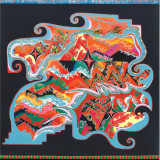
This album was recorded in 1983 in Copenhagen and earned superlative reviews all over the world.
"Tenorman Eddie "Lockjaw" Davis had already been a potent force in jazz for 35 years when he recorded this set but as it turned out his SteepleChase date (his next-to-last session) was one of the strongest of his career. Accompanied by a trio led by pianist Kenny Drew, Lockjaw really tears into these standards which are highlighted by "I Only Have Eyes for You," "There Is No Greater Love" (the alternate version was released for the first time on its CD reissue), "Four" and the title cut.
Davis was at the peak of his powers during this recording, making this SteepleChase outing one of his very best." - Scott Yanow, AllMusic "Nothing valedictory about this date. No signs of decline. It's hard to believe it was Jaw's last album as a leader. Just the thing if you didn't miss your water until your well went dry." - Cadence
Search:eddie lockjaw davis
- 1
- A1: Have Horn, Will Blow
- A2: The Chef
- A3: But Beautiful
- B1: In The Kitchen
- B2: Three Deuces
- C1: The Rev
- C2: Stardust
- D1: Skillet
- D2: I Surrender, Dear
- D3: The Broilers
- E1: I'm Just A Lucky So & So
- E2: Heat 'N Serve
- E3: My Old Flame
- F1: The Goose Hangs High
- F2: Simmerin
- F3: Strike Up The Band
- G1: High Fry
- G2: Smoke This
- G3: Pennies From Heaven
- H1: Pots & Pans
- H2: Jaws
- H3: It's A Blue World
- H4: Blue Lou
Released to celebrate tenor jazz saxophonist Eddie “Lockjaw” Davis’ Centennial, “Cookin’ with Jaws and the Queen” showcases the influential soul-jazz partnership of Eddie “Lockjaw” Davis and Organist Shirley Scott. Bringing together the Prestige albums “Cookbook, Vol. 1-3,” “& “Smokin’”.
This 4-LP set is pressed on 180-gram vinyl at RTI and newly remastered from the Original Analog tapes by Bernie Grundman. The package also features new liner notes by journalist Willard Jenkins.
- A1: Charlie Parker - Roomance Without Finance (Mg9022)
- A2: Dexter Gordon - Dexter's Minor Mad (Mg9022)
- A3: J J. Johnson - Jay Bird (Mg9022)
- B1: Milt Jackson - Hearing Bells (Mg9022)
- B2: Leo Parker - Chase 'N' Lion (Chase'n The Lion) (Mg9022)
- B3: Stan Getz - Stan's Mood (Mg9022)
- A1: Fats Navarro - Hollerin' And Screamin' (Fatso) (Mg9023)
- A2: Allen Eager - Church Mouse (Mg9023)
- A3: Kai Winding - Always (Mg9023)
- B1: Don Byas - Byas A Drink (Mg9023)
- B2: J J. Johnson - Jay Joy (Mg9023)
- B3: Dexter Gordon - Long Tall Dexter (Mg9023)
- A1: Budd Johnson - Little Benny (King Kong) (Mg9024)
- A2: J J. Johnson - Mad Be Bop (Mg9024)
- A3: Milt Jackson - Bubu (Mg9024)
- B1: Leo Parker - Solitude (Mg9024)
- B2: Stan Getz - Don't Worry 'Bout Me (Mg9024)
- B3: Fats Navarro - Maternity (Lard Pot) (Mg9024)
- A1: Allen Eager - Donald Jay (Mg9025)
- A2: Kai Winding - Saxon (Mg9025)
- A3: Budd Johnson - Dee Dee's Dance (Mg9025)
- B1: J J. Johnson - Coppin' The Bop (Mg9025)
- B2: Milt Jackson - Junior (Mg9025)
- B3: Dexter Gordon - Dexter Digs In (Mg9025)
- B2: Serge Chaloff - Pumpernickel (Mg9026)
- B3: Morris Lane - Blowin' For Kicks (Mg9026)
- A1: Allen Eager - Unmeditated (Mg9026)
- A2: Leo Parker - The Lion's Roar (Lion Roars) (Mg9026)
- A3: Eddie "Lockjaw" Davis - Stealin' Trash (Mg9026)
- B1: Roy Porter - Pete's Beat (Mg9026)
”The Birth of Bop” kann ab heute hier vorbestellt werden und erscheint am 31. März in verschiedenen Formaten, darunter ein Vinyl-Boxset mit fünf 10-Zoll-LPs, ein 2-CD-Format und digitale Editionen. Jeder Titel der Sammlung wurde von Joe Tarantino bei Joe Tarantino Mastering frisch restauriert und neu gemastert, während die physischen Formate neue, ausführliche Liner Notes des GRAMMY-gekrönten Autors und Moderators Neil Tesser sowie alte Fotos aus dieser Zeit enthalten. Es ist eine unverzichtbare Einführung in
diese wichtige Periode der Jazzmusik: The Savoy 10-Inch LP Collection enthält 30 ausgewählte Aufnahmen von vielen der Pioniere des Genres, darunter Charlie Parker, Dexter Gordon, Stan Getz, Milt Jackson, Allen Eager, Fats Navarro und viele mehr.
Diese bahnbrechenden Aufnahmen aus den Jahren 1944 bis 1949
trugen maßgeblich zur Entwicklung des modernen Jazz bei und brachten junge Künstler dazu, die Grenzen des Genres in einer Zeit zu erforschen, in der Swingmusik der vorherrschende Sound war und Big Bands den Äther beherrschten.
Since the late 90"s, Jakob "Dino" Dinesen has become a stalwart of the Danish jazz scene, performing with nearly everyone of note in the country as well as internationally celebrated names such as Kurt Rosenwinkel, Jeff "Tain" Watts, Jakob Bro and Paul Motian. Finding joy and inspiration in the building of bridges between genre boundaries, his career in music has seen him travel and perform all over the world, enriching his sound and soul with every new experience. His new record seeks to convey his dream of a future world at peace with itself. "Slow Flow" is set to release on January 25th on April Records. "I envision a world where people from every corner of the globe come together, dancing, sharing meals, and finding joy through my music. My children are a blend of Africa and Denmark, and I hope they"ll carry the traditions and wisdom of both their mother and father as they navigate their path. I would love for music like this to be the soundtrack to their journey through life." Rooted in the playful live sound of an atypical quintet featuring cello and djembe, Slow Flow sits in a unique space somewhere between earthy, simplistic, and acoustic and contemporary, electronic, and unexpected. The record"s sound is soft spoken and full of compassion-a dark-timbred music where the intimate, warm breath of his tenor saxophone intertwines with the crisp, organic tones of the cello. Together, they float over smooth, analog synths and electronic loops, while the carefully crafted lines of the bass and the gentle rhythm of hands on drum skins carry the music forward. Occasional erratic, quirky bursts from an affected keyboard and weaving improvisations offer moments of energy and contrast. Each of the album"s nine original compositions paint musical pictures of contentment that are dear to Dino, as well as offering musical tributes to four of his heroes in Yusef Lateef, Wayne Shorter, Coleman Hawkins and Eddie "Lockjaw" Davis". Drawing on modern European jazz, African rhythms, Italian circus music, and reggae, Slow Flow plays as a deeply personal exploration of Dino"s identity, whilst providing a dream-like message of global peace that promises to resonate with like-minded people all around the world..
Mario Rusca is most probably the biggest living Italian jazzman. His major influences are Duke Ellingtons composing abilities and Hampton Hawes' brilliant sound. He immersed himself in the harmonic inventions of the incredible pianists of the 60s and 70s: from Bud Powell to Bobby Timmons, Wynton Kelly and Bill Evans. Mario Rusca has been the house pianist of Capolinea, the most important Italian jazz club of the 70s and 80s. He went on to perform in important national and international settings-representing Italy in the "Piano Solo'' category of the "International Festival of Varsavia" and participating with his quintet at the "International Festival of Montreal". He has collaborated with a multitude of prestigious names: Chet Baker, Tony Scott, Curtis Fuller, Gerry Mulligan, Lou Donaldson, Art Farmer, Bob Berg, Lee Konitz, Dusko Gojkovic, Al Gray, Kay Winding, as well as Stefano Bagnoli, Enrico Rava, Tullio De Piscopo, Kenny Clarke, Stan Getz, Jimmy Owens, Toots Thielemans, Gianni Basso, Pepper Adams, Steve Lacy, Steve Grossman, Franco Ambrosetti, Woody Shaw, and Eddie "Lockjaw" Davis. With Gerry Mulligan, in particular, he toured in 1976 and with Lee Konitz, he recorded Wheres The Blues? at the end of the 90s. In this regard, Suspension in 1975 with Tullio De Piscopo and Recreations in 1976 with the phenomenal Larry Nocella playing saxophone are still very beautiful and modern recordings. As Mario says, "In jazz, you choose the companions that you can dialogue the most with.there needs to be an interplay, there needs a...a way of feeling, which is why you choose musicians because they feel like you, or, if nothing else, they follow you". The chemistry between the three of them is perfectly aligned, synergistic. Tonys drums and Riccardos bass create a soft and essential rhythmic tapestry that never hinder the creative prowess of the band leader. Here Mario Rusca is interpreting the most dynamic jazz standards. Blues for Gwen by McCoy Tyner, Blues Walk by Lou Donaldson, Blue Minor by Sonny Clark, Turnaround by Ornette Coleman, Bass Blues by John Coltrane or even Super Jet by Tadd Dameron. You cant help but imagine yourself on top of a convertible, smiling and carefree, while they travel through the soloist progressions of Turnaround and Super Jet. We need to underline the four originals included in this recording: Blue Dream (for Allerim), Tempo Blues, Double Horn e Monochrome Blues, extremely suggestive compositions, rich of intuitions and which well exhibit Mario Rusca composition skills and his ability to play the blues. MONOCHROME BLUES is a winning trio album which will deeply please the most demanding jazz hears. The musicians Mario Rusca (piano) Riccardo Fioravanti (bass) Tony Arco (drums)
Demonstrates the deep blues feeling and technical mastery Archie Shepp has on the tenor saxophone. Comprised of four standards - "Things Ain't What They Used to Be," "Body and Soul," "Pannonica," and "'Round Midnight" - this set is one of Shepp's most enjoyable ever.
The reasons are myriad, but it is in large part due to
the fluid, loping bass of Richard Davis. Recorded in a club in front of a live audience, Shepp digs deep into his own history of influential tenor players and comes out not wanting, but on par with them, from Eddie "Lockjaw" Davis to Sonny Rollins to John Coltrane.
His playing here is big, meaty, and warm, full of subtle emotions as well as bleating cries. Davis' sense of time and melody is nearly incredible on the title track and on "'Round Midnight." The interplay Shepp shares with him is tasty, coming from fragmentary elements in Monk's changes; Shepp and Davis move around the lyric and cut to the heart of the tune's colour and ambiguity...a major addition to the saxophonist's catalog." - Thom Jurek, All Music Guide
The next chapter of the Natural Information Society is here. Since Time Is Gravity, credited to Natural Information Society Community Ensemble with Ari Brown, presents a newly expanded manifestation of acclaimed composer & multi-instrumentalist Joshua Abrams nearly 15 year, 7 albums &-counting flagship ensemble. Joining the core NIS of Abrams (guimbri & bass), Lisa Alvarado (harmonium) Mikel Patrick Avery (drums) & Jason Stein (bass clarinet) are Hamid Drake (percussion), Josh Berman & Ben Lamar Gay (cornets), Nick Mazzarella & Mai Sugimoto (alto saxophones & flute), Kara Bershad (harp) & Chicago living legend of the tenor saxophone Ari Brown. Recorded live to tape at Electrical Audio & The Graham Foundation, cover painting Vibratory Cartography: Nepantla, by Lisa Alvarado. 2xLP on Eremite USA, 2xLP & CD on Aguirre/Eremite Europe. Out 14-04.
Since first developing Natural Information Society in 2010, Joshua Abrams has been gradually expanding the group’s conceptual underpinnings, its musical references & the sheer number of the group’s members. Its music is, in a sense, an expansive form of minimalism, based in repeated & overlaid rhythmic patterns, ostinatos & modality. Its roots, its scale & its meaning become clearer in time. If time is gravity, it also allows us to carry more. Having begun as fundamentally a rhythm section with Abrams’ guimbri at its core, the version here can stretch to a tentet, including six horns.
Abrams has been expanding his minimalism gradually, but he has long understood a key to minimalism’s potential: the breadth of its roots in the late 1950s & early 1960s, ranging from the dissatisfaction of young European-stream composers with the limitations of serialism to the simultaneous dissatisfaction of jazz musicians with the dense harmonic vocabulary of bop & hard bop. The former began exploring rhythmic complexity & narrow tonal palates in place of harmonic abstraction (Steve Reich’s Drumming, Philip Glass’ Music with Changing Parts; perhaps above all Terry Riley’s In C & his late ‘60s all-night organ & loop concerts); the later reduced dense chord changes to scales (signally with Miles Davis' Kind of Blue, but rapidly expanding with John Coltrane’s vast project). In the 1950s the LP record opened the world with documentation of Asian & African musics, key influences on both minimalists & jazz musicians. If John Coltrane’s soprano saxophone suggested the keening shehnai of Bismillah Khan, the instrument was rapidly taken up by two key minimalists, LaMonte Young & Riley, similarly appreciative of its flexible intonation, the same thing that kept it out of big bands.
If the guimbri, the North African hide-covered lute that Abrams plays with NIS, involves a rich tradition of hypnotic healing music associated with the Gnawa people, Abrams’ music also touches on other musics as well — other depths, memories & healings, different drones, rhythms & modes. As the group expands on Since Time Is Gravity, he has made certain jazz traditions in the same stream more explicit as well. If there is a mystical & elastic quality involved in the experience of time, both in direction & duration, you will catch it here. The parts for the choir of winds expand on the roles of Abrams’ guimbri, Mikel Patrick Avery & Hamid Drake’s percussion & Lisa Alvarado’s harmonium: at times, the winds are almost looping in the tentet version, each hitting a repeating note in turn, at once drone & distinct inflection on temporal sequence. The brilliance of the work resides in Abrams’ compositions, the NIS’ intuitive execution & in Ari Brown’s singular embodiment of the great tenor saxophone tradition, including the oracular genius of Eddie “Lockjaw” Davis, & Yusef Lateef. The three pieces by the expanded NIS featuring Brown —the opening “Moontide Chorus” & “Is” & the ultimate “Gravity”— have an immediate impact, & togther might be considered a kind of concerto for tenor saxophone. Here Brown presses almost indistinguishably from composed melody to improvised speech, getting so close to language that he might have a text. Everything here is a sign. Note the tap of the Rhythm Ace that links “Moontide Chorus” to “Is”, the attentive heart always present, even when signed by a machine. There’s a link here to the methodologies & meanings of dub music & the linear & vertical collage of beats, textures & tongues: treated with reverence, a sample of a beat-box can be as soulful, as hypnotic, as a mbira or a tamboura. If those pieces with Brown are heard as a suspended concerto, the three embrace & enfold the other works, like the sepals of a flower. That placement will also touch on the mysteries of our perception of time.
Particularly in “Is”, but elsewhere as well, a phenomenon of transcendence arises in which time appears to be tripartite, at once moving backwards & forwards & standing still. This is an act of technical brilliance certainly, but also an illumination of music’s ability to represent temporal consciousness through polymetrics. This particular listener has only heard it before in a few places, including the horn shouts & bowed basses of Coltrane’s Africa, in moments of Charles Mingus’ The Black Saint & the Sinner Lady, in certain pieces where tapes were literally running backwards, & earlier still in Dizzy Gillespie’s Cubana Be, Cubana Bop, in which the composer George Russell & conguero Chano Pozo found a music that spoke at once in the voices of Stravinsky’s Rite of Spring & the vestigial rites, rhythms & songs of the Yoruba language & Santeria religion of inland Cuba.
In Joshua Abrams’ compositions & the realization of them by the NIS, in the time of one’s close listening & memory thereof, distinctions between the “natural” & the “social”, the “quotidian” & the “transcendent” are erased, suspended or perhaps irrelevant. Consider two of the ensemble pieces, one named for nature, the other social science. In “Murmuration” the repeated wind figures of flute & alto saxophone combine with the interlocking patterns of harp, guimbri & frame drum (tar) to create a perfect moving stillness, not an imitation but a witness to the miracle of the starlings’ astonishing collective art, a surfeit of beauty that might be the ultimate defense tactic.
“Stigmergy” takes its name & concept from the Occupy movement’s Heather Marsh, who proposes a social system based on a cooperative rather than competitive models, one in which ideas are freely contributed & developed as ideas rather than an individual’s property. In its form, Abrams’ “Stigmergy” is the closes thing to traditional jazz, a series of accompanied solos by each of the wind players. However, the composed accompaniment is a radically collectivist notion: a repeated rhythmic figure, call it ostinato or riff, in which the different winds each play only a note or two of the figure, a concept both more collectivist & individualistic in its conception than any typical unison figure. It suggests another of the underlying recognitions that propel the Natural Information Society, the group as social organism, the teleology of hypnotic anarchy, all parts in place, functioning systematically, evolving & expressing itself, its nature & society, as a transformative organism.
George Lewis has described music as “a space for reflection on the human condition”. This suggests that, rather than a “distraction”, at least some music might serve as a distraction from distraction. It’s a focus, a clarity, a awareness, an external invitation to interiority, as if music itself is a model for form & contemplation, an organism contemplating for us or as us. If that is a possibility, & I am sure I have heard such musics, than this music is among them. How many of our rhythms, melodies & harmonies (cultural, historical, biological, psychic) might such music carry, translate & transform in the particulate ecstasy of our own murmuration? (Stuart Broomer, April 2022)
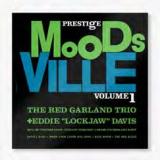
Reissue of the Count Basie Orchestra's 1970 album 'High Voltage',
arranged by Chico O'Farrill and featuring Eddie "Lockjaw" Davis, Cecil
Payne, Joe Newman, Freddie Green and Harold Jones among others
When in January, 1970 Count Basie entered the studio with his 17-piece big band
to record 'High Voltage', he ushered in the last full decade as bandleader of his
Orchestra. The Orchestra had left its imprint on the sixties by recording with the
likes of Frank Sinatra and Ella Fitzgerald. There would be more great albums with
star vocalists in the seventies, but the band's purely instrumental works, which
had begun in 1965, would also continue. Back then Basie had engaged acclaimed
Cuban composer/arranger Chico O'Farrill to arrange the music for such concept
albums as "Basie Meets Bond" and "Basie's Beatle Bag", transforming them into
crossover gems.
On 'High Voltage' O'Farrill demonstrates his affinity to Basie's big band sound, this
time with a repertoire of standards. For this album, Basie specifically chose
pieces the band had never recorded in their more than 30-year existence. This is
saying something, since the band covers such an impressive span of jazz history,
from the beginning of the swing era to the bop-influenced bands of the 50's on
through to the present album.
The Count's new drummer Harold Jones propels Fred Fisher's "Chicago" with a
tremendous drive. The Rogers and Hart classic "Have You Met Miss Jones"
features beguilingly dense deep- register horn lines and an almost languorous
piano, and Eric Dixon's tasty flute solo spices up "The Lady Is A Tramp". With its
smoky sophistication, Eddie Lockjaw Davis' Tenor dominates "Bewitched",
whereas guest trumpeter Joe Newman's muted tongue-in-cheek solo highlights
"Day In Day Out". Of course, Basie himself also steps forward: for instance, on the
Fats Waller-like intro to "I'm Getting Sentimental Over You", and with the playful
grace notes on "If I Were A Bell"." Reminiscent of the Las Vegas shows the band
performed with Frank Sinatra, "Get Me To The Church On Time" is also a
masterful dialogue between the horn sections.
Presenting Shirley Scott’s deeply personal album, ‘One for Me’ - a defiant tribute to the music she always desired to create but was shrouded by the demands of her vibrant career. Thoughtful curation of the band, tracks, and completely self-funded, this project set off on an innovative trajectory supported by Harold Vick on tenor saxophone and Billy Higgins on drums. Originally released on the revolutionary artist-owned label, Strata-East Records, in January 1975, this unique project will be available to enjoy again on Arc Records from 15th May 2020.
The impetus for this record was a real desire for Shirley to express herself more freely and create something for herself, taking back the power she’d seemingly relinquished throughout her career. Maxine Gordon, Scott’s close friend, and executive producer on the original record, expresses thatthey often had intimate discussions about how Scott was being told what to play, what to wear, how to look and how to speak in public for many years. Having had enough of these restrictions, she created this record to please no one but herself.
As Scott expresses on the back of the original LP sleeve:
“All of the music recorded in this album is both personal and very purposeful to me, because it is the first step toward honesty about what and how I want to play. I’ve done a lot of other albums, a lot of different ways for a lot ofdifferent people and now, with the help of the Creator, in whom all things are possible, I have done one for me too.”
Having self-raised funds to make the record, with complete control over the masters, and with her dream band together, Scott recorded at Blue Rock Studio in November 1974. Harold Vick, often referred to as one of the “unsung tenor saxophonists” of his time, was cherry picked to bring Scott’s vision to life. Throughout his career, he released records on Blue Note, RCA as well as performing and recording with a string of legendary artists such as Ray Charles, and Aretha Franklin. Completing the dream trio was highly sought out drummer Billy Higgins, who is the most recorded drummer in the history of Blue Note Records, having played on 45 Blue Note albums. The key to their success was that Higgins tuned his drums to fit with the organ’s bass sound which, of course, Scott played with her feet.
Scott was also known as “Little Miss Half-Steps,” a name given to her by tenor saxophonist George Coleman, (who wrote a composition by that name in her honor) - she regularly played with both George & Harold. Coleman is known to have admired Scott’s half-steps (when you play two adjacent keys on the organ or piano) and their close bond and mutual respect is solidified on this record through a track titled ‘Big George’ - specifically written for Coleman.
“Queen of the Organ”, Shirley Scott was born in Philadelphia in 1934 and lived there most of her life until her early death in March 2002 at the age of 67. Having mastered the piano at an early age, Scott switched from piano to organ at the tender age of 21. Scott had a legendary recording career as a leaderwith 45 albums mainly released on Impulse and Prestige and is often remembered for her work with Eddie “Lockjaw” Davis and Stanley Turrentine.Boasting a thriving career as a musician and composer, Scott progressed to a professor at Cheyney University in her later years. She was a treasured mother and grandmother, and a cherished friend of music scholar, Maxine Gordon, who’s honour it is to collaborate with Arc Records on shining a new bright light on this monumental body of work.
- 1