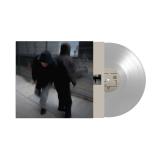
- 1: Reverence
- 2: Raindrops
- 3: Symmetries
- 4: Reno Silver
- 5: A Thousand Steps
- 6: Hiding Place
- 7: Dream
- 8: Heart
- 9: Seeing Is Forgetting
pré-commande10.07.2026
il devrait être publié sur 10.07.2026
23,95 €
il devrait être publié sur 10.07.2026

Elori Saxl's soundtrack for the VR film Texada is an exploration of the smallness of human existence within the grand scope of geologic time, mirroring the film's exploration of Texada Island's limestone-rich landscape. Saxl, inspired by her own experiences of island life on Madeline Island, assembled a soundscape that captures both the vastness of Earth's ancient processes and the intimate moments of human existence. Using analog synthesizers, baritone saxophone (performed by Henry Solomon), and processed field recordings of water and rocks, she created ambient layers that evoke cycles, waves, and the transformative forces of nature. The score begins with an exploration of Earth's origins and the emptiness of a rocky planet before life emerged. This foundation grows into pieces like "The Quarry," where the central geological feature, limestone, takes on a dynamic presence. As loops and rumbling textures evoke the rise and movement of stone over millennia, as abstracted creatures spiral upwards, full of life. The album concludes with "The Most Special Place," which serves as a final bridge between the cosmic and the intimate, leaving a lasting impression of how deeply human lives are intertwined with the ancient geology beneath our feet. Saxl's compositional process itself mirrors the themes of transformation and cycles. Working with limited time and resources, she recorded Solomon's saxophone parts early in the project, later repurposing fragments through re-pitching, stretching, and digital effects. As she explains, "I experimented with bringing out the human character of the saxophone by highlighting breath and imperfections while also pushing it into an alien/unrecognizable/bigger world through digital processing and effects." The result is a soundtrack that feels both organic and otherworldly, capturing the grand scope of Earth's timeline while remaining grounded in human emotion and connection.
il devrait être publié sur 11.04.2025

Die PBS-Serie Earth Focus befasst sich mit den komplizierten Verbindungen zwischen Südkaliforniens Naturlandschaften und städtischer Entwicklung. Jede Episode erforscht einen bestimmten Ort, darunter den Los Angeles River, das Diablo Canyon Nuclear Power Plant, Joshua Tree National Park und die Mojave Wüste. Der Soundtrack der Serie, komponiert von Elori Saxl, unterstreicht die emotionalen Erzählungen dieser Orte und betont das Zusammenspiel zwischen Menschen und der Natur sowie die Auswirkungen der vom Menschen geschaffenen Umwelt. Dabei ließ sie sich von Künstlern wie Alice Coltrane und Hiroshi Yoshimura inspirieren, Saxl hat die Musik mit digital manipulierten Aufnahmen von Wasser und Wind, analogen Synthesizern, MIDI-Samples und bearbeiteten Holzbläsern gespielt von Stuart Bogie (Klarinette, Bassklarinette, Flöte) kreiert. Diese einzigartige Mischung aus Klängen erinnert an das musikalische Erbe von Los Angeles und an die allgemeine Atmosphäre von Wind, Sonne und südkalifornischer Kultur. Die Musik bezieht sich lose auf die psychedelischen und traumhaften Klänge, die mit der Vergangenheit und Gegenwart von Los Angeles verbunden sind. Sie enthält jedoch einen modernen Twist, der reale und synthetische Elemente vermischt, um das zeitgenössische und zunehmend spürbare der von Menschenhand geschaffenen Landschaft in Los Angeles und den angrenzenden Regionen zu reflektieren.
il devrait être publié sur 15.11.2024

„Drifts and Surfaces“ ist ein dreiteiliges Set, wobei jedes Werk aus Auftragsarbeiten hervorgeht und durch gemeinsame Themen vereint wird: der Fluss zwischen ephemerer Bewegung und alltäglichem Stillstand, das Paradoxon von außergewöhnlicher und alltäglicher Schönheit und der Ehrgeiz und Müßiggang, der das Leben im 21. Jahrhundert ausmacht Saxl nutzt weiterhin kammermusikalische Ensembles neben analogen Synthesizern und digitalen Experimenten und vertieft sich dabei in strukturelle Emotionen und die lebendigen Details kleiner Handlungen. Während ihre bahnbrechende LP „The Blue of Distance“ (2021) Feld-Aufnahmen aus den Adirondacks und dem Lake Superior verarbeitete, stammt Saxls Quellenmaterial hier vor allem aus Live-Percussion und anderen Instrumenten. Das Projekt begann 2018 im Brooklyner Stadtteil Red Hook in dem Proberaum, den sich Saxls Band mit dem Percussion-Trio Tigue teilt. Später im selben Jahr spielten sie gemeinsam eine Residency und nahmen das Stück auf. 2021 begann sie ein neues Auftragswerk mit Third Coast Percussion aus Chicago. Der Titel „Drifts“ bezieht sich auf den Roman von Kate Zambreno aus dem Jahr 2020, in dem die Protagonistin von der Arbeit von Chantal Ackerman fasziniert ist, die die typisch weiblichen, unsichtbaren Formen der häuslichen Arbeit als ebenso wertvoll darstellt wie Tätigkeiten, die gemeinhin als produktiv angesehen werden. Saxl stellt „Drifts“ im Geiste dieser feministischen These auf: „Es fühlt sich an, als gäbe es hier eine kleine Reihe von Frauen, die diese Idee erforschen und kleine Aktionen feiern, von denen ich hoffe, dass ich deren Arbeit fortsetze.“ Das letzte Stück, „Surfaces“, wurde vom Guggenheim Museum in Verbindung mit der Alex Katz-Retrospektive im Jahr 2022 in Auftrag gegeben. Die Gruppe - bestehend aus Henry Solomon am Baritonsaxophon, Robby Bowen am Glasmarimbaphon und Saxl - lehnt sich an leichte, nachdenkliche Töne an, die von der Gegenwartsbezogenheit des bahnbrechenden Malers inspiriert sind. Katz' Arbeit beschäftigt sich mit der optischen Wahrnehmung von „schnell vergehenden Dingen“, wie der Liminalität der Dämmerung, wenn die Umrisse eines Objekts beginnen, undeutlich zu werden. „Die Art und Weise, in der sich unsere Wahrnehmung der Dinge verändert, nicht weil sie sich verändern, sondern weil wir uns verändern“, erklärt Saxl. „Ich wollte, dass sich diese wirklich kleinen Veränderungen dramatisch anfühlen, um die imaginäre Bewegung in seinen Gemälden widerzuspiegeln.“ Tritt man zurück, um „Surfaces“ innerhalb des Sets zu betrachten, findet Saxl den Strom, der sich durch die gesamte Arbeit zieht, das Konzept des Selbst als Teil von etwas Größerem. „Katz‘ Darstellung mehrerer Generationen von New Yorker Künstlern hat mich dazu inspiriert, darüber nachzudenken, dass es kein individuelles ‘Ich' als Künstler gibt, ohne die Künstler, die vor mir kamen, und die Gemeinschaft der Künstler, mit denen ich zusammengewachsen bin. Die Grenzen zwischen uns verschwimmen, und ich habe das Gefühl, dass ich auf einer verwobenen Oberfläche getragen werde, die von der Gemeinschaft um mich herum gebildet wird. Gleichzeitig weiß ich aber auch, dass ich mich irgendwann nach innen wenden und allein hinausschwimmen muss.“
il devrait être publié sur 19.07.2024

Limited edition cloudy clear vinyl. Combining processed recordings of wind and water with analog synthesizers and chamber orchestra, Elori Kramer's The Blue of Distance is an audio dissertation on the role technology plays in our relationships to geography and nature, unspooling into an examination of memory and longing across seven sections that layer filmic minimalism over churning electronic soundbeds. Half of the suite was written in the Adirondack mountains during summer amid lakes, rivers, and moss-laden forest floors, while the other half was conceived on a frozen Lake Superior island in deep winter, creating a subtextual dialogue between the two extreme settings. Kramer, who was born in 1990 and grew up alongside the internet, uses her music to explore nature in the actual and the virtual world, through direct experience and facsimile alike, focussing and blurring the line between the two. "Looking back at my videos of that summer-- which is where the processed audio came from-- I tried to remember what it had felt like to be there," she recalls, "thinking about questions of reality versus imagination; physical versus digital; and the ways in which memory shifts through our minds and technology." The title The Blue of Distance was derived from Rebecca Solnit's book A Field Guide to Getting Lost, referring to the phenomenon of faraway mountains appearing blue due to light particles getting lost over distance. "If we were to go up to the mountains that appear blue from far away, we would see that they weren't actually that color." she says. "This beauty is made possible because of their distance," much in the same way that the splendor of a lush season is only fully realized in the throes of a bleak one, and the joy of an event can only be felt when it has long since been consigned to remembrance. R.I.Y.L Kaitlyn Aurelia Smith, Philip Glass, Steve Reich, Josiah Steinbrick, Emily Sprague
il devrait être publié sur 22.01.2021

Sound Wonders: A Series of Epics is the second compilation from Touchtheplants, the imprint and multidisciplinary creative environment founded by Kaitlyn Aurelia Smith and Sean Hellfritsch (aka Cool Maritime). Following 2020's Breathing Instruments, the new collection features sonic responses to a new prompt. Like its predecessor (which explored music as an extension of the human body and the natural world), the medium of focus here dates back to ancient civilizations. Smith invited artists to compose music based on the idea of epics: the long poems and narrative verse works that have detailed deeds and adventures since the dawn of storytelling. The musicians — some of today's most exciting practitioners of experimental sound design, instrumentation, and synthesis — took this directive loosely, realizing a series of vibrant and transportive songs evoking wondrous visions, subjects, and locales.
From Elori Saxl’s chamber piece to Olive Ardizoni’s ode to the strange and beautiful phenomenon of starling murmurations with synth and xylophone tones the album splays out like chapters in a panoramic account of all that surrounds us.
il devrait être publié sur 08.10.2021
