Following her debut album, I’ll Look for You in Others (Past Inside the Present), earlier this year, Patricia Wolf joins Spain’s Balmat label with See-Through, her second album. See Through finds the Portland, Oregon musician and field recordist continuing to develop her signature style of ambient, balancing radiant soundscaping with a carefully expressive sensibility. But the new album is also marked by an important difference. Where I’ll Look for You in Others was largely written in response to the death of a loved one, See-Through represents a kind of rebirth.
“After a long period of grief, I had been hoping to find my way to a place of lightness, peace, playfulness, curiosity, and sensuality again,” Wolf says. “What I was surprised and pleased to find is that for the most part, I had.”
She wrote and recorded many of the album’s songs quickly, in preparation for an August 2021 broadcast on the online radio platform 9128 Live. Excited for the opportunity to play live after more than a year of the pandemic, Wolf decided to write all new material for the event, working with a lean setup of Octatrack, Roland Synth Plus 10, Make Noise 0-Coast, and Novation Summit. (In fact, Wolf was the first sound designer invited to create patches for the Summit.) She also picked up an acoustic guitar that her brother had loaned her. “I decided to take the surrealist approach of ‘pure psychic automatism’ to see what poured out of me,” she recalls. “Woodland Encounter,” “Under a Glass Bell,” “The Grotto,” “The Mechanical Age,” “The Flaneur,” and “Psychic Sweeping” are all products of those sessions; the through line holding them together is their exploratory spirit and clarity
of vision.
Other songs, like “A Conversation With My Innocence,” “Recalibration,” and “Psychic Sweeping,” wrestle with the traumas of the preceding year. Though they may linger on the heaviness of loss, Wolf says, “What I discovered is that a stronger archetype had grown inside me to steer my emotions and thoughts to a better place.” Likewise, “Wistfulness” and “Upward Swimming Fish”—her first experiments with VST synthesizers—balance the bittersweet embrace of melancholy with the freedom to choose happiness.
“Pacific Coast Highway,” the album’s lone song with drums, might at first seem like an outlier. But it also signals Wolf’s interest in finding a fusion between the introspection of ambient and the togetherness of beat-oriented music. “Experiencing loss and isolation is what drove me into gentler territories of sound,” she says, “but I want to start making more beat-oriented music. After an extended period of loss and isolation, I’m ready to experience more joyous and social things.”
Listeners with keen ears might recognize the album’s closing song, “Springtime in Croatia”: A different mix of the song originally appeared on the 2021 digital compilation secondnature & friends Vol. II, from the Seattle label secondnature. This marks its first appearance on vinyl, however, and its spiritual home is undoubtedly here, at the close of See-Through. As the bookending answer to the opening “Woodland Encounter”—another song in which field recordings play a crucial role—it closes the circle of an album that is itself keyed to the steadily turning cycles of life.
Cerca:freedom love joy peace
- 1
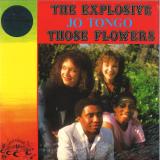
Following the acclaimed reissue of Sa Discossa earlier this year, Jo Tongo's third solo album Those Flowers returns to the spotlight.
Originally released just a year and a half after Sa Discossa, this 1982 gem came out on the small Context label and, in Tongo's own words, the two records are "like twins." Recorded with many of the same musicians, Those Flowers continues the vibrant fusion of disco-funk and reggae - this time dedicating one side to each, leaning slightly more into his Western influences.
But there's more than groove beneath the surface. Tracks like "People Need Peace" and "We Human Beings" channel his enduring themes of resistance, identity, and freedom. The synthesizer at the beginning of the song mimics the ominous drone of warplanes, and lyrics speak directly to global struggles - reminders that his music is both deeply personal and powerfully political. "I paid for these ideals in my career," Tongo reflects, alluding to the personal costs of his outspoken stance against colonialism and injustice.
Still, Those Flowers carries joy at its heart. Songs like "Ain't No Man Like A Real Friend" celebrate trust and loyalty, while the title track offers a tender ode to love and kindness - "picking flowers from the soul," as Tongo puts it. These songs reveal the inner world of a man who has always viewed music as a mirror of life.
This reissue marks the second installment in the African Edge series from The Outer Edge label. Fully restored and remastered, Those Flowers is now set to bloom again - another vital chapter in the legacy of Jo Tongo.
- A1: World Is Dog
- A2: Cctv (Feat Creature)
- A3: Yottabyte
- A4: Bad Pollen (Feat Billy Woods)
- A5: Slum Of A Disregard
- A6: Rfid
- A7: Instant Transfer (Feat Billy Woods)
- A8: Ikebana
- B1: In The Shadow Of If
- B2: Skp
- B3: Hushpuppies
- B4: 14 4 (Feat. Skech185)
- B5: Voice 2 Skull
- B6: Xolo
- B7: Zigzagzig
Black Vinyl[35,08 €]
We’re teaming up with ELUCID and Fat Possum for a limited edition of 300 copies of a Rush Hour black ice coloured edition.
E L U C I D, one half of the illustrious duo Armand Hammer, is here with the full-length follow-up to 'I Told Bessie'. Further experiments in the sonic, expanding on the 'live' side of music paired with the embracing of chaos. Something you haven't heard, or not so for a very long time. E L U C I D is here to reveal the bleakness of reality.
---------------------------------------------------------------------------------
''There is never time in the future in which we will work out our salvation. The challenge is in the moment; the time is always now.''
James Baldwin
A raw, crackling urgency runs through rapper-producer ELUCID’s new album REVELATOR like an underground power line. There is no space here for sepia-toned reminiscences or indulgent self-mythologizing. Intellectual rabbit holes have been filled in with concrete and rebar ; there is nowhere to hide and no off ramp from the audio Autobahn that ELUCID has fashioned—a renegade Robert Moses with gold fronts, bulldozing the homes of the powerful and the complicit. REVELATOR brims with the energy of now, with a refusal to look away. Carpe diem in a murder one mask.
Born in Jamaica, Queens, ELUCID has been on the cutting edge of New York’s underground scene since the mid-2000s. From the beginning, he has defied both convention and expectation. He ran with Okayplayer darlings Tanya Morgan, but his own music eschewed their throwback charm for glitchy noise experiments and bass-swamped culture jamming. His 2016 debut studio project Save Yourself (re-released in a deluxe edition last year) announced him in earnest. But in recent years, his Armand Hammer releases with partner-in-crime billy woods have received significant attention and acclaim. Serving as a followup to his last solo album—2022’s comparatively balmy I Told Bessie—ELUCID hoped to “re-distinguish” himself with REVELATOR, setting himself apart amidst the increasing attention around the music he and his friends are making together.
For ELUCID, this meant setting bold new challenges for himself. One of these was diving further into live instrumentation than ever before—”getting my Quincy Jones on,” as he puts it. The testing ground for this approach was Armand Hammer’s most recent project, 2023’s We Buy Diabetic Test Strips’ Möbius strip soundscapes, warmed with instrumental flourishes and skin-shedding beat progressions. With REVELATOR, though, ELUCID strove to create an atmosphere of chaos, embracing experimental electronics and atonal sample bursts. He worked on much of the album with co-producer Jon Nellen, who comes from a background in avant-garde and Indian classical music. “I wanted to get as freaky as I could at this moment. I wanted people to hear things, maybe for the first time, or in a way they haven’t for a long while,” the rapper explains.
ELUCID arrived at the studio with a collection of noise sources: non-referential samples, glitches and noises. Together he, Nellen, and others created forms out of them and, as ELUCID recalls, “just started playing drums with it.” Their fried, distorted sound was directly inspired by Miles Davis at his most uncompromising—specifically, the tone-clustering funk track “Rated X” from his 1974 double LP Get Up With It. At times, the pairing of rap with avant-fusion sounds also brings Emergency! from The Tony Williams Lifetime to mind, perhaps in an alternate timeline where the late drummer was listening to Ice Cube’s AmeriKKKa’s Most Wanted.
“The World is Dog,” REVELATOR’s lead single, functions as the album’s aesthetic thesis statement. Like the Davis track, the textures are punishing, the tonality is in free-fall, and the driving breakbeat of a groove cuts in and out unceremoniously. Avant-jazz bassist Luke Stewart, who appears throughout the record, holds the whole thing together just long enough for ELUCID to tightwalk over the beat. This tension is exactly where REVELATOR sets itself apart; in a time of drumless loops, and safe soul samples, this is a high-wire act with no safety net. Similarly, the song announces the themes of the album within just a few phrases, evoking the way societies accept and adjust to new levels of debasement and brutality while suffocating under the weight of history: “Can’t clock the kill, all a mystery/Forced past will eating everyone eventually/The world is dog.”
Many of the songs on REVELATOR grapple obliquely with dissolution and disenfranchisement in America and across the world—the grim realities of our domestic sociopolitical climate and our involvement in foreign conflicts. “Much of my artistic and political sensibility comes from the Black arts movement here in New York,” ELUCID explains. “Recognizing the interconnected global struggles against oppression, artists and thinkers created works and actions in solidarity with freedom movements in South Africa and Palestine.” ELUCID cites intellectuals like Amiri Baraka, Kwame Nkrumah, Audre Lorde, Sonia Sanchez, and Nikki Giovanni among his heroes. (One track on the album is specifically inspired by Lorde’s work, “SKP,” citing the scholar’s paper “Uses of the Erotic: The Erotic As Power.”) Songs like REVELATOR’s insistent closer “ZIGZAGZIG,” find ELUCID applying up-to-the-minute messaging, making explicit reference to the conflict in Gaza: “Feed a war machine…from river to sea, in lieu of peace.”
Despite ELUCID’s preference for cacophonous system overload here, the rapper also provides moments of respite. Recorded at The Alchemist’s Los Angeles studio, the laid-back, wheezing “INSTANT TRANSFER” is a collaboration with billy woods, which crystallizes their shared sense of creative determination. “With much momentum behind us and even more on the horizon, I knew a purpose, and that every step was ordered to that purpose,” ELUCID said of the experience. Meanwhile, the jittery “HUSHPUPPIES” is a playful anomaly on the track list, providing a snapshot of ELUCID watching his grandparents in the kitchen while preparing for Friday night fish fry dinners.
“Love still rules over on this side,” ELUCID says. ”I’m raising a family. We are making meaning and finding joy in the midst of all the fucked up-ness of everything around us because the alternative is cowardice and slow death. We remain rooted. We celebrate our people and our wins. Struggle is necessary.”
“IKEBANA” is one of ELUCID’s strongest statements of purpose on the record, blending the record’s heaviest themes with its most hopeful sentiments. supported by a shoutalong refrain and an urgent prog-funk groove. Breaking away from images of dissolution and crumbling societal systems that populate REVELATOR, ELUCID notes that the only way to navigate life’s bleakest landscapes is to cling to love and believe in those around you—to look forward toward something better that may or may not be possible. For the rapper, one of the album’s most trenchant lines comes during a centerpiece of a beat drop: “Being alive/I must look up.”
“The lyric ‘being alive I must look up’ is important especially in the context of this album. Much of the album imagery is harsh and reflects the actual doom some of us experience. But still I/we exist,” ELUCID explains.
Every artist is, in one way or another, the product of their time, bound by life’s leaden gravity to operate within the space of that which is already known. But there are some who are able to shake free of these ties, to shape the culture as it unfolds, to make the present their own.
Revelation, as a concept, points to the scales falling from people’s eyes—something that has been hiding in plain sight becoming clear. “The revelator relates to things that have been talked about, things that have been forecasted,” ELUCID adds. “And now they’re really here, and everyone sees it. And there’s no escaping.” REVELATOR plays out with the unmitigated power of those storms, laying waste to any genre conventions in pursuit of a certain physicality. Here, ELUCID develops a wholly distinctive musical language to explore our fractured modernity.
REVELATOR's packaging was designed by longtime Armand Hammer / Backwoodz art director, Alexander Richter.
the EP FACE I is an evolution from the previously released album JAHRE. it fits into the narrative of urban life and our own personal development. both chronology and emotions are explored here and adapted with lyricism and atmospheric digital and analog sound.
it starts with 1984, beginning of our emotional journey and also literary (GEORGE ORWELL) fixpoint of the electronic adaptation. we feel a kind of lightness in our society, upswing and freedom determine everyday life for a large part of germany. we are free, everything seems possible! almost we move through an utopia. new prosperity and contentment let us blossom, no digital friends and in-between worlds alienate our seemingly naive and peaceful being.
in TMV a first individual emotional world comes to the fore, the mood is mixed and seems fragile. euphoria and melancholy mix to an undefined state of emotional and musical confusion. LYRIK gets a first big space here and carries from the part of confusion into a part of detachment. despite the ambivalence of the first moment, the scene ends in a transcendental, positively driving state of letting go and rest ...
the next part takes us away from the familiar and seemingly peaceful MOMENTS. we jump into the year 2184! 200 years later we are sitting here now, society has turned into an emotional desert like in ORWELLS fiction. a lonely CYBORG sits in the ruins of our once joyful cathedrals and sings about his tearing apart. he can't be without, but also can't be with his own anymore. like a cursed of two worlds he sits stranded in space and time.
the conclusion is made by TMVA, here we get into a very intimate emotional farewell to a lost and unfulfilled love. the calm tempo lets everything flow out that has confused and driven us for years. who or what do we want to become emotionally? are we even capable of letting ourselves fall after decades of searching and disruption? are we already dying? in the end only art and the love of it remains to save us.
ALL LOVE
AMAS_DHE / AMAS_PHI
Alanis Morissette Delivers the Equivalent of a Spiritual Awakening on Supposed Former Infatuation Junkie:
Introspective Themes and Compassionate Emotions on Eastern-Tinged Album Have Grown More Relevant
1998 Smash Plays with Enhanced Detail, Rich Textures, and Sharp Focus on Mobile Fidelity’s 180g 33RPM 2LP Set:
First-Ever Audiophile Edition Strictly Limited to 3,000 Numbered Copies
1/2" / 30 IPS analogue master to DSD 256 to analogue console to lathe
Alanis Morissette refuses to adhere to convention on Supposed Former Infatuation Junkie. While most artists follow-up their breakthrough with an album that closely parallels the approaches that helped make them famous, the maverick singer-songwriter stayed true to herself and drew inspiration from travel to India before she began the recording sessions. As much as the preceding Jagged Little Pill put her on the global radar, Supposed Former Infatuation Junkie confirmed her role as a vital generational voice — and proved her blockbuster success was no fluke. Having set a mark for most sales of an LP in its debut week by a female artist, the 1998 smash remains a pop-rock staple.
Sourced from the original master tapes, strictly limited to 3,000 numbered copies, housed in a Stoughton jacket, and pressed at Fidelity Record Pressing, Mobile Fidelity’s 180g 33RPM 2LP set of Supposed Former Infatuation Junkie presents the triple-platinum LP in audiophile sound for the first time. Benefitting from defined grooves that befit the album’s nearly 72-minute length, this pressing plays with enhanced detail, refined clarity, sharper focus, and broader dynamics than prior versions.
Those traits are key given Morissette’s use of more textured and atmospheric soundscapes, not to mention her evolution into a more nuanced and controlled singer. Similarly, the scale and reach of David Campbell’s string arrangements come across as orchestrations should. Ditto the synth-based architecture shaped by producer and principal Morissette collaborator Glen Ballard. All in all, Mobile Fidelity’s collectible edition simply delivers more information via transparent means.
Notable for its balance, sophistication, and richness, Supposed Former Infatuation Junkie at heart finds Morissette pausing, taking a breath, and learning how to navigate life in a healthy manner after enduring one of the most exhausting and rocket-to-fame stretches any musician ever experienced. It’s the sonic equivalent of a spiritual awakening, a call to betterment, a brave assessment of the self and humanity as a whole. As such, the tunes on her second international (and fourth Canadian) release teem with gratitude, compassion, love, empathy — emotions that lend themselves to the largely mellow, contoured scope and Eastern-tinged melodies of the songs themselves.
“How ‘bout how good it feels to finally forgive you,” Morissette sings on the lead single “Thank U.” “How ‘bout grieving it all one at a time.” Those sentiments, and the vocalist’s embrace of concepts such as divinity and acceptance, not only provide a foundation on which Supposed Former Infatuation Junkie rests. They also reflect the personal maturation she gained from her embrace of Buddhist culture in India and a mindset bent toward notions of reconciliation, peace, and sensuality that were nearly absent in popular music in the late ‘90s.
Those themes continue on “That I Would Be Good,” a confident reflection that takes stock of one’s mental, physical, and emotional state in the face of both changing and unpleasant circumstances — and concludes with Morissette performing a flute solo, further exposing the raw intimacy of the introspective tune. She channels relatable simplicity and joy on “So Pure,” with her invocations of “dance” and “freestyle” speaking to the freedom of expression that courses throughout Supposed Former Infatuation Junkie. And perhaps no song finds Morissette showcasing her refreshed attitude toward life and opening up more than the relationship-themed “Unsent,” whose unconventional structures and lack of a chorus only add to its directness.
Akin to many albums that were ahead of their time, and despite the critical and commercial accolades afforded it upon release, Supposed Former Infatuation Junkie attracted new appreciation and perspective as it got older. Issued during an era where its ideas of serenity, absolution, tranquility, and contentment seemed largely alien, the record — akin to the ways its predecessor foreshadowed a movement — now functions as a visionary beacon that foretells of way to maintain sanity, dignity, and goodness amid a contemporary landscape filled with constant distractions, polarizing views, and incessant calls to purchase, promote, and produce without questioning the what-for purpose.
Supposed Former Infatuation Junkie dares to ask the questions and, at its best, supplies meaningful answers and alternatives that lead to longed-for enlightenment, healing, and laughter. For these reasons alone, it’s a record that never goes out of style.
If blue is the color of sadness, or the best color to reach authenticity, R.Y.F. – the project of the Italian singer-songwriter and musician Francesca Morello, based in Ravenna – goes even further with the new album Deep Dark Blue. Deep Dark Blue is an underwater album, maybe it is even a deep-sea album. The sound is dark and muffled, as if we were in a sort of cradle, a blue bubble, a sea cocoon in which to wrap ourself ves to regenerate and achieve peace, but whose casing also conveys energy. Born following a dazzling baptism in the mesmerizing sea of Stromboli, in Sicily, Deep Dark Blue is an album of suffering and healing which confirms R.Y.F.‘s destabilizing power. According to her: ”Sometimes I experience moments of great suffering, in the last two years caused by my wife’s health problems. I was “broken inside” and I didn’t know if I would be able to go back to the way I was before. Deep Dark Blue tells how I felt and how I would like to rebuild myself. I still talk about the freedom to love, but I also felt the need to talk about suffering, and I tried to do all this with irony, in the most joyful way possible. And it worked. That’s why this is also a healing album”. In Deep Dark Blue there are also some important guests, underlining R.Y.F.’s rise in her international career. They are Moor Mother, Skin (Skunk Anansie) and Alos (aka Stefania Pedretti, formerly OvO and Allun), united by feminism, queerness and political activism, to get precious artistic affinities stronger in these hard times of new repression that we are experiencing. Deep Dark Blue arose from software and analog instruments and was then developed with Maurizio “Icio” Baggio (The Soft Moon, Boy Harsher), who also took care of recording, production, mixing and mastering at the music studio La Distilleria in Bassano del Grappa. Matteo Vallicelli (The Soft Moon, Death Index) participated in the production of some tracks. Although it flows with compact fluidity, the album highlights R.Y.F.‘s mastery in expressing herself through different stylistic genres. There is a dark electro-punk common thread, but there are also blackness (Run Run Run), alt-metal guitars on dance house structures (Can I Can U feat. Skin), industrial doom (Deep Dark feat. Alos) and other experiments (the instrumental interludes Droplets and Sirene). The variety of sounds corresponds to a spontaneous variety of topics. The theme of suffering opens and closes the tracklist with Blue and Deep Dark feat. Alos, almost as if to represent a first contact with the water and the culmination reaching the bottom of the abyss, and is approached both with a smile on the lips in the sexy Lies and from a more authorial perspective in the heartfelt Violent Hopes and December 25th, the first songs on the album to have been written. Deep Dark Blue by R.Y.F. is an immersion from which you emerge different from your old self, some kind of magical creature in a new form, but it is first of all an electric shock from which one is violently happy to be struck.
Renowned Italian spiritual jazz master, DJ, producer, guitarist, and bandleader Nicola Conte proudly presents his new album Umoja via London based label Far Out Recordings.
A joyous exultation across ten tracks, Umoja taps into the abundant well of knowledge Conte has amassed over his career as connoisseuring compiler and archivist of deep jazz, latin, afrofuturist, bossa-nova and soul music from around the world. Expressing unity, oneness and harmony in Swahili, Umoja coalesces universal feelings through the multifaceted global music Conte has spent his life studying and researching.
Having released music with Blue Note, Impulse! and Schema records, Nicola Conte’s relationship with Far Out began over a shared love of hard-edged bossa-nova and swinging samba-jazz. Between 2009-2013 Nicola Conte compiled five volumes of forgotten 60s Brazilian music for his Viagem series. He then released his critically acclaimed Natural album: a collaboration with vocalist Steffania Dippiero, featuring jazz standards alongside covers of lesser known Brazilian gems.
The music of Umoja draws on the deep-dug 70's independent spiritual and free jazz sounds, private-press soul records, and African and Afro Caribbean rhythms in Conte’s collection. But he equally recognises his debt to many of the decade’s more celebrated musical icons, such as North American cosmic jazz masters Lonnie Liston Smith and Gary Bartz, and Afrobeat originators Fela Kuti and Tony Allen.
Since founding the Bari-based bohemian cultural movement and club night Fez at the dawn of the nineties, Conte has proven to be a pillar of the contemporary, international soul-jazz scene. Composed alongside his long time friend, guitarist Alberto Parmegiani, Conte brings together a dazzling host of guests from around the world, including award winning British vocalist Zara Mcfarlane, acclaimed Finnish saxophonist Timo Lassy, french vibes player Simon Mullier, US vocalist Myles Sanko, rising South African drummer Fernando Damon, former Roy Hargrove bassist Ameen Saleem and Serbian flute sensation Milena Jancuric.
Proudly revivalist, Umoja was recorded direct to analog tape, with just two takes for each track. “Searching for an unadulterated, spontaneous, almost improvised feeling”, Nicola made sure that the few overdubs were also transferred to tape in order to retain the colour and warmth of the analog sound. “Very little post production or editing has been added, so what you hear is largely what happened in those magical live sessions”.
Soul Jazz Records are releasing Count Ossie and The Mystic Revelation’s seminal 1975 album Tales of Mozambique in an expanded double album/single CD/digital format, fully remastered and with the inclusion of two bonus rare single-only tracks, full sleevenotes, exclusive photographs and interview.
Count Ossie is the central character in the development of Rastafarian roots music, nowadays an almost mythical and iconic figure. His importance in bringing Rastafarian music to a populist audience is matched only by Bob Marley’s promotion of the faith internationally in the 1970s.
Count Ossie’s drummers performed on the first commercially released single to integrate Rastafarian traditional music with popular music: the vocal group The Folkes Brothers’ groundbreaking song ‘Oh Carolina’, recorded for producer Prince Buster in 1959. In 1966 his drummers greeted the momentous arrival of Haile Selassie at Kingston airport.
His legendary jam sessions up in his Rastafarian compound in the hills of Wareika, Kingston, are famous for the many Jamaican musicians who attended including The Skatalites players – Roland Alphonso, Don Drummond, Johnny Moore, Lloyd Knibbs – and many others.
The Mystic Revelation of Rastafari formed in Kingston, Jamaica, in 1970, a union of Count Ossie’s Rastafarian drummers – variously known as his African Drums, Wareikas or his Afro-Combo – and the saxophonist Cedric Im Brooks’ horns group, The Mystics.
The Mystic Revelation of Rastafari are the defining group in bringing authentic Rastafarian rhythms into the collective consciousness of popular music, their unique music is at once rooted in the deep traditions and rituals of traditional drumming and chanting alongside a forward-thinking, even avant-garde, artistry influenced by the likes of John Coltrane, Sun Ra, Pharoah Sanders and other pioneering African-American jazz artists radicalised and charged by the civil rights movement of the 1960s.
Tales of Mozambique is a truly unique and fascinating ground-breaking album.
Count Ossie and The Mystic Revelation of Rastafari are the central group featured on Soul Jazz Records recent "Rastafari - The Dreads Enter Babylon” a collection showing the influence of Rastafari in Reggae and Jamaican popular culture.
Soul Jazz Records will also be releasing Count Ossie and The Rasta Family 'Man From Higher Heights’ in the near future.
* Bonus tracks
REVIEWS
" All roads in Rastafarian roots music lead to Count Ossie.He’s the lead character in this compelling subplot, the musician who was one of the first to put Rasta tenets into the heart of popular music.
He did so from his camp in the hills above Kingston, Count Ossie and his drummers casting a spell on the musicians who gathered to check him out and then went on to spread the word about the powerful nyabinghi rhythms and mesmerising percussion.
This is a reissue of the 1975 album Count Ossie made with his Rastafarian drummers and saxaphonist Cedric ‘Im’ Brooks’s group The Mystics.
It’s a groundbreaking, majestic work, by turns righteous in tone and joyous in execution. It’s the sound of Ossie and his ensemble narrating a history lesson and you’d be daft not to want to find out more." IRISH TIMES
- A1: Push Out The Noise (Feat Jessica Care Moore - Intro)
- A2: A Beautiful Chicago Kid (Feat Pj)
- A3: When We Move (Feat Black Thought & Seun Kuti)
- A4: Set It Free (Feat Pj)
- A5: Majesty (Where We Gonna Take It) (Where We Gonna Take It)
- B1: Poetry (Feat Marcus King & Isaiah Sharkey)
- B2: Saving Grace (Feat Brittany Howard)
- B3: Star Of The Gang (Feat Pj)
- B4: Imagine (Feat Pj)
- B5: Get It Right
- B6: Exclamation Point (Feat Morgan Parker - Outro)
A Beautiful Revolution Pt. 2 was created with hope and inspiration in mind. The spirit of the album was meant to emulate what a greater day would sound and feel like. We were in the midst of some tough political and socially challenging times. There was still hurt, anger and pain lingering, so I was thinking, “what is the next step in this revolution?” I thought about what being still in these times had brought me and that was a peace beyond understanding, a greater love for self, a closer connection with God, and more appreciation for my family, friends and the simple things in life. I wanted to write about that and create music that embodied that. What does a new day, a brighter day feel like being told through an emcee and some gifted musicians? How could this music be an example of the beautiful aspects of revolution that include joy, self-love, compassion, dreams, peace and good times? As a piece of art, I believe we took it to different places musically only to come back to the original intention. To bring joy to people’s hearts, fun to their lives and smiles to their souls. ABR2. Love Common RADIO: 6Music A List, Album Of The Week on 6Music, support across BBC R1, 1XTRA, Radio 2, 6Music. PRESS: Features in Huck, New Cue, DIY, Daily Star, The Guardian, Line Of Best Fit, MOKO, Clash, NME and more… “If ‘…Pt 1’ felt like a look at the progress we made last year, then this follow up stares down the road ahead – not with trepidation, but with boundless optimism” – DIY **** ‘A Beautiful Revolution, Pt. 2’ is the soundtrack to a new revolt. It’s about unity in the face of adversity and bringing awareness to the Black struggle. But at its core it’s a celebration of Black pride that sees Common in full swing as a champion of peace, love and freedom.” - NME “This is Common’s most hopeful album in years” – The Independent “A late career high” - Clash
- A1: Push Out The Noise (Feat Jessica Care Moore - Intro)
- A2: A Beautiful Chicago Kid (Feat Pj)
- A3: When We Move (Feat Black Thought & Seun Kuti)
- A4: Set It Free (Feat Pj)
- A5: Majesty (Where We Gonna Take It) (Where We Gonna Take It)
- B1: Poetry (Feat Marcus King & Isaiah Sharkey)
- B2: Saving Grace (Feat Brittany Howard)
- B3: Star Of The Gang (Feat Pj)
- B4: Imagine (Feat Pj)
- B5: Get It Right
- B6: Exclamation Point (Feat Morgan Parker - Outro)
A Beautiful Revolution Pt. 2 was created with hope and inspiration in mind. The spirit of the album was meant to emulate what a greater day would sound and feel like. We were in the midst of some tough political and socially challenging times. There was still hurt, anger and pain lingering, so I was thinking, “what is the next step in this revolution?” I thought about what being still in these times had brought me and that was a peace beyond understanding, a greater love for self, a closer connection with God, and more appreciation for my family, friends and the simple things in life. I wanted to write about that and create music that embodied that. What does a new day, a brighter day feel like being told through an emcee and some gifted musicians? How could this music be an example of the beautiful aspects of revolution that include joy, self-love, compassion, dreams, peace and good times? As a piece of art, I believe we took it to different places musically only to come back to the original intention. To bring joy to people’s hearts, fun to their lives and smiles to their souls. ABR2. Love Common RADIO: 6Music A List, Album Of The Week on 6Music, support across BBC R1, 1XTRA, Radio 2, 6Music. PRESS: Features in Huck, New Cue, DIY, Daily Star, The Guardian, Line Of Best Fit, MOKO, Clash, NME and more… “If ‘…Pt 1’ felt like a look at the progress we made last year, then this follow up stares down the road ahead – not with trepidation, but with boundless optimism” – DIY **** ‘A Beautiful Revolution, Pt. 2’ is the soundtrack to a new revolt. It’s about unity in the face of adversity and bringing awareness to the Black struggle. But at its core it’s a celebration of Black pride that sees Common in full swing as a champion of peace, love and freedom.” - NME “This is Common’s most hopeful album in years” – The Independent “A late career high” - Clash
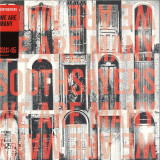
South London-based band Soothsayers are set to release their ninth studio album 'We Are Many'. Held together by heavy basslines, solid grooves, and socially and politically charged lyrics; the album takes the listener into different sonic spaces with elements of dub, Afrobeat, improvisational jazz and electronica.
The initial steps in recording 'We Are Many' came in January 2019 when the band's founders - saxophonist Idris Rahman and trumpeter Robin Hopcraft - set out on a journey to Brazil. With executive production in the Sao Paulo studio by renowned music journalist and author David Katz, they hooked up with bass player and producer Victor Rice who they'd met sharing the bill at Freedom Sounds festival in Cologne, Germany a year earlier. Victor organised a session in Studio Traquitana, home of acclaimed Brazilian band Bixiga 70, and invited a selection of local musicians. Percussionist and singer Ligia Kamara contributed lyrics and melodies written in the studio, and drummer Bruno Buarque, guitarist Joao Erbetta and bassist Victor provided some solid, personality-driven input. Fresh and vital, what came out was a fascinating blend of Soothsayers' dub and Afrobeat mixed with distinctly Brazilian inflections.
After arriving back in the UK, Idris and Robin set about creating the remainder of the album in a different, yet complimentary way, and called on the services of Wu-Lu and Kwake at their The Room studio in South London. Things started to take shape very quickly, Wu-Lu and Kwake combining Soothsayers' music with electronic elements, while also referencing elements of the current UK jazz scene.
When lockdown hit in March 2020, there was still a lot of work to do in order to complete a full album and Robin and Idris set about working on tracks with their musicians remotely. Having time to consider the album as a whole, they found strong connections between the music recorded in Brazil and the tracks recorded in London and they set about fusing and combining these elements further into a satisfying whole.
UK based Sengalese singer Modou Toure was enlisted to guest on one track while percussionists Satin Singh and Maurizio Ravalico were engaged to help affirm a sound-world where Brazilian flavours, such as the low-end Surdo drum, were combined with sounds more readily associated with reggae and Afrobeat.
Soothsayers' three part vocal harmony is a defining factor in this album. With strong references to the vocal styles of reggae legends such as The Gladiators, Mighty Diamonds, Heptones, and Abyssinnians; it has benefited from the long-standing friendship between Robin, Idris and Julia Biel. Lyrics, melodies and harmonies were presented, discussed, explored and recorded at Idris' and Julia's home studio in Streatham in a relaxed and positive way, with concepts from social and political commentary turned into powerful songs.
Themes cover political observations of Trump and beyond alongside Brazil's president Bolsanaro (Rat Race), speaking out against increasing levels of violence from the Brazilian government towards its native and indigenous people (Love And Unity) and keeping hopeful despite the impending horrors of a no-deal Brexit (We Won't Lose Hope).
Elsewhere they discuss striving to create space for meditation and reflection against the background noise of 24/7 news and social media (Move In Silence), the daily grind (No Sacrifice) and workers' rights (Slave), while highlighting those that fall through the cracks in society and end up without a permanent address, what led to this and how close we all are from this happening (One Step Away).
'We Are Many' represents a positive and uplifting statement in the face of challenging times - the overriding force, power and positivity of the music to continue forward, pushing the boundaries of musical concepts into the future.
"Whilst heavy questions of life and death and the future of our species surround us all, music is a guide that can help us perceive the challenges in a different way - a guide that can help us towards a deep inner peace. If we listen, music can help light the way. We hope you will listen, and we hope you will experience the joy, meditative power and beauty in the connection of different musical cultures that was experienced in the creation of this album."
South London-based band Soothsayers are set to release their ninth studio album 'We Are Many'. Held together by heavy basslines, solid grooves, and socially and politically charged lyrics; the album takes the listener into different sonic spaces with elements of dub, Afrobeat, improvisational jazz and electronica.
The initial steps in recording 'We Are Many' came in January 2019 when the band's founders - saxophonist Idris Rahman and trumpeter Robin Hopcraft - set out on a journey to Brazil. With executive production in the Sao Paulo studio by renowned music journalist and author David Katz, they hooked up with bass player and producer Victor Rice who they'd met sharing the bill at Freedom Sounds festival in Cologne, Germany a year earlier. Victor organised a session in Studio Traquitana, home of acclaimed Brazilian band Bixiga 70, and invited a selection of local musicians. Percussionist and singer Ligia Kamara contributed lyrics and melodies written in the studio, and drummer Bruno Buarque, guitarist Joao Erbetta and bassist Victor provided some solid, personality-driven input. Fresh and vital, what came out was a fascinating blend of Soothsayers' dub and Afrobeat mixed with distinctly Brazilian inflections.
After arriving back in the UK, Idris and Robin set about creating the remainder of the album in a different, yet complimentary way, and called on the services of Wu-Lu and Kwake at their The Room studio in South London. Things started to take shape very quickly, Wu-Lu and Kwake combining Soothsayers' music with electronic elements, while also referencing elements of the current UK jazz scene.
When lockdown hit in March 2020, there was still a lot of work to do in order to complete a full album and Robin and Idris set about working on tracks with their musicians remotely. Having time to consider the album as a whole, they found strong connections between the music recorded in Brazil and the tracks recorded in London and they set about fusing and combining these elements further into a satisfying whole.
UK based Sengalese singer Modou Toure was enlisted to guest on one track while percussionists Satin Singh and Maurizio Ravalico were engaged to help affirm a sound-world where Brazilian flavours, such as the low-end Surdo drum, were combined with sounds more readily associated with reggae and Afrobeat.
Soothsayers' three part vocal harmony is a defining factor in this album. With strong references to the vocal styles of reggae legends such as The Gladiators, Mighty Diamonds, Heptones, and Abyssinnians; it has benefited from the long-standing friendship between Robin, Idris and Julia Biel. Lyrics, melodies and harmonies were presented, discussed, explored and recorded at Idris' and Julia's home studio in Streatham in a relaxed and positive way, with concepts from social and political commentary turned into powerful songs.
Themes cover political observations of Trump and beyond alongside Brazil's president Bolsanaro (Rat Race), speaking out against increasing levels of violence from the Brazilian government towards its native and indigenous people (Love And Unity) and keeping hopeful despite the impending horrors of a no-deal Brexit (We Won't Lose Hope).
Elsewhere they discuss striving to create space for meditation and reflection against the background noise of 24/7 news and social media (Move In Silence), the daily grind (No Sacrifice) and workers' rights (Slave), while highlighting those that fall through the cracks in society and end up without a permanent address, what led to this and how close we all are from this happening (One Step Away).
'We Are Many' represents a positive and uplifting statement in the face of challenging times - the overriding force, power and positivity of the music to continue forward, pushing the boundaries of musical concepts into the future.
"Whilst heavy questions of life and death and the future of our species surround us all, music is a guide that can help us perceive the challenges in a different way - a guide that can help us towards a deep inner peace. If we listen, music can help light the way. We hope you will listen, and we hope you will experience the joy, meditative power and beauty in the connection of different musical cultures that was experienced in the creation of this album."
- Idris Rahman and Robin Hopcraft
2021 looms, the world stands on the brink.
A Pandemic rages, economies crumble, leaders sacrifice individuals on the altar of the media.
Adelphi Music Factory resurface with a siren call of hope.
My People: an ode to humanity in the grip of crisis, a joyous tribute to enduring love for empty dance floors across the world.
Sisterhood, brotherhood, freedom, peace
4 x R1 Hottest Records
Dukes of Chutney, the transcontinental trio of Dustin Lynn, John Paul Jones, and Petra, explore the different spaces and places, between nothingness and nature, that nurture inner and outer peace for their debut full-length Hazel. Cosmic yet intimate, long-gestating and free-flowing, diffuse and centered, Dukes turned toward their immediate sanctum, and a network of friends and colleagues, to realize the vision of Hazel. “Pretty much everything we do is without purpose,” the Dukes admit, in line with their pursuit of joy. But it’s not empty hedonism or passivity at play on Hazel, so much as an expression of freedom. “Why not?” was scribbled on the white frame of the Polaroid documenting their first appearance on Tim Sweeney’s Beats in Space many years ago, and it remains their motto, their mantra.
- 1