The 2015 edition of Winnipeg’s send + receive festival, focussed on rhythm, turned out to be a generative meeting of minds. There, Mark Fell encountered the music of Will Guthrie, a meeting that was eventually to result in the frenetic acoustic drumkit and digital synthesis pairing heard on Infoldings and Diffractions (2020). At the same festival, Limpe Fuchs first heard and appreciated the music of Mark Fell, planting the seed of a collaboration that came to fruition when Fell (along with his son Rian Treanor) visited Fuchs at her home in Peterskirchen, Germany in September 2022. Black Truffle is pleased to announce the release of the results of this extensive session in the audacious form of a triple LP, housing over two hours of music across its six sides. The collaboration might appear unlikely: what common ground could exist between Fuchs, classically trained pianist, legend of improvised music, instrument builder and sound sculptor active since the 1960s, whose group Anima Sound connected the dots between free jazz, krautrock and ritual, and Fell, proponent of radical computer music, known for his bracingly austere productions that twist remnants of club music into algorithmic stutters? For all their seeming disparity in technology, approach and background, the music on Dessogia/Queetch/Fauch makes it immediately evident the pair share a great deal in their essentially percussive approach and ability to, in Fuch’s phrase, ‘establish silence’. Recording at her home studio, Fuchs had the use of her entire array of instruments, found, invented, and traditional, and treats the listener to some that don’t often make their way to concerts, including extensive passages performed (with Gundis Stalleicher) on pieces of wooden parquetry. Alongside metallic, wooden and skin percussion of all kinds, sounded and struck in every conceivable way, we also hear bamboo flute, viola, and Fuchs’ distinctive free-form vocalisations. Fell also stretched himself, with his contributions ranging from characteristically fizzing pitched percussive pops to swarms of sliding tones and abstract digital noise. Showing both remarkable restraint and improvisational freedom, much of the music consists of duets between a single percussion instrument and a distinctive mode of digital sound, often lingering in one timbral-rhythmic space for minutes at a time. Improvisational forward momentum coexists with a free-floating, wandering quality. On opener ‘Dessogia I’, the shimmering almost-gilssandi tones of Fuchs’ enormous set of microtonally tuned metal tubes ripples across Fell’s rubbery pulse, which moves up the frequency spectrum as Fuchs becomes more animated and switches to horn. At some points, as on the metallic chiming tones that open ‘Fauch I’, only the unexpected dynamic behaviour of Fell’s sounds distinguish them from Fuchs’ acoustic instruments. At others, like on ‘Queetch III’, the waves of sliding tones and noise textures are bracingly synthetic, joined by piercing squeaks and scrapes from Fuchs’ metal objects. Epic in scope, immersing the listener in an entirely distinctive world of sounds, and thrillingly bold in its melding of the most ancient musical procedures with cutting edge technologies, Dessogia/Queetch/Fauch is an unexpected major statement from two of the great mavericks of contemporary music.
Search:fuchs
The composer, percussionist and instrument builder Limpe Fuchs has spent six decades exploring the outer limits of sound and its effects on the listener. Born in Munich in 1941, Fuchs is part of a generation of German artists who sought radical new approaches to art, music and social organisation in the period following the Second World War.
Alloa, Bavarian for alone. Limpe likes to be alone, because she is never lonely. When she is not on concert tours, she cultivates the garden in front of the door or playfully handles her instruments in the house. Among these has recently been a restored concert grand piano, which she found orphaned at a performance venue in Switzerland and rescued from being scrapped in Peterskirchen. Since then it has been the center of Limpe's attention, is played daily, and can be heard on the recordings of this LP.
The music alternates between free improvisation and impromptu compositions, played also around fragmented recited poems. Beyond the boundaries of jazz, art song and classical music lies the freedom Limpe takes at the piano, laughingly commenting on her unorthodox, even carefree way of making music with a quote from Friedrich Gulda: "From seventy on, all pianists are bad."
Well, so what, Limpe is not a pianist anyway, she is much more than that. She is the most vivid proof of a long-lasting, versatile and intrepid musical career, the next chapter of which will also consist of Limpe no longer exclusively traveling through Europe heavily laden with all her self-made instruments, but every now and then light-heartedly from grand piano to grand piano, to then make music for everyone, as always but not necessarily alone.
Fuchs is a band that never was. It vanished as quickly as it appeared in the picture, much like the animal that can be seen on this album and after whom it was named. In 2005, Kante singer and guitarist Peter Thiessen travelled to Weilheim to visit Markus and Micha Acher in their studio, where they were joined, among others, by Notwist-affiliated musicians like Cico Beck, Robert Klinger, Carl Oesterhelt and Stefan Schreiber. Spirits were high, but schedules were full: after a week of improvised sessions, everyone went their own way. The recordings gathered dust until Markus Acher found them again in 2021 while cleaning out his studio. After carefully re-evaluating the rough mixes, the musicians decided to finally release them. The resulting album comprises six tracks that musically draw on jazz, aesthetically lean on dub techniques and ideologically pick up on krautrock: there’s no solos to be heard on this record, just a few equally skilled and open-minded musicians listening to each other carefully, providing each other with space in which to unfold. »Fuchs« is a document of egos dissolving in a collective spirit.
Thiessen and the Acher brothers met in the 1990s and bonded not only over their shared background in hardcore music and the DIY ethos in which it was rooted, but also over their love for jazz. »If you look at those two things combined, you will eventually become convinced that you don’t have to be formally trained to make music that at least resembles jazz«, says Thiessen today. He invited Micha Acher to join his band Kante on flügelhorn in 2004 for a tour that saw the expanded group play unusual encores after the official concert was over. »Micha had taught us some dixie pieces, so night after night we would play a freestyle dixieland ska set in front of the remaining audience!« Naturally, the Acher brothers didn’t have to ask twice when they invited him for a visit in Weilheim to further explore their mutual interests in a studio setting. »I got on my way immediately and took two or three loose ideas, a tape echo and a guitar on whose headplate you could create fantastic sounds with me«, says Thiessen.
Between immersing themselves in books by the photographer Leonore Mau, cooking together and drinking the occasional fruit schnapps, the trio went into the studio. Says Thiessen, »Micha brought his flügelhorn and some wonderful ideas with him, Markus an Indian harmonium and a plan, Carl Oesterhelt came with a glockenspiel and a Chinese zither and a bunch of amazing jazz musicians joined in, too.« He considers the resulting recording sessions to be a kind of attempt at musically translating their conversations during those days. They discussed different approaches to jazz, whether sampling and musical miscitations can unlock ecstatic potentials and the possible parallels between syncretistic religions and pop music. »There’s traces of glossolalia, it's like a blurry séance«, adds Thiessen in regard to the sessions.
It is especially this spirit that managed to live on even though the recordings themselves were abandoned. »What we all liked most when listening back to the recordings is probably their marginal and fragmentary character, the empty spaces—the moments in which the virtuoso solo never comes, in which the centre remains empty.« The six pieces on »Fuchs« are chock-full of exactly these moments. When at one instant, the players seem to disperse and improvise freely, they always meet again on common ground a short time later, continuing on their way together. There are no conventions or even previous agreements that guide them, just a shared will to explore a vast range of curious sounds and unusual rhythms together as a truly unified constellation of very different musicians. Fuchs is a band that never was. Its ideas still reverberate vividly even 17 years later.
limpe fuchs' first solo record came about by accident. initially, christoph heemann invited the famous anima duo to do a studio record in his home-town aachen, but paul fuchs decided not to join in, so limpe went on her own - and the recording sessions taking place in late 1986 and early 1987 turned out to become "via", limpe's first solo-record and the (visible) starting point of her ongoing exceptional career as an internationally performing, independent female improviser. besides a plethora of (partly self-built) acoustic instruments that can also be heard on her legendary anima (music) records, such as violin, saw blade, chimes, wood block and limpe's unmistakable unique vocals, "via" featured a korg-synthesizer, that drew limpe's attention in the studio and she decided to give it a try and recorded a lot of electronic music for "via" - and in all the years to follow since then she never got near the instrument again; neither for studio recordings nor live performances . fast forward to 2015: after not having met christoph heemann for many years, they got in contact again and performed selected dates (as macchia forest together with timo van luijk) when he proposed to limpe another korg-synthesizer recording. not having touched the instruments in decades limpe was reluctant at first but warmed up to the idea eventually and improvised a wonderfully meditative and soulful electronic piece of music. she also recorded five of her pendulum strings exclusively for the first time (with a bit of vocals, too) - huge self-built instruments of various size with an amazing sound rich of oscillating overtones. the both side-long recordings - one side korg, one side pendulum strings - featured on "solaia" are a visceral document of limpe fuchs' artistic versatility and musical sensibilities. it's fair to say: the spirit of her musical approach is captured perfectly on this new studio-album (mixed and mastered by her son zoro babel), which is released in conjunction with a first-time re-release of "via" - both to celebrate her long-standing musical career (and her eightieth birthday). "via" and "solaia" are available now as two separate lp's. both records are released in an edition of 300 copies and accompanied by a 30-page longform interview with limpe fuchs and christoph heemann to give an insight in their collaborative history and portray limpe's outstanding artistry.
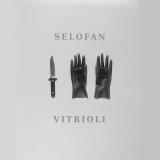
As Selofan's fifth studio album, Vitrioli, from 2018, is a testament to the tragedy of life. The Greek duo, Joanna Pavlidou and Dimitris Pavlidis, who recorded the album in the Fabrika Records home studio, continue on in their poetic, but heartbreaking, music set to a dance beat. Between languages (Greek, English, German, and Spanish), Selofan feels on the brink of mania with Vitroli. However, the madness is controlled, the songs are restrained hysterics that culminate into the alchemic perfection of the band's specific moody sound.
From synthpop to synthpunk elements, the twelve-track LP leads listeners through dark corridors and into haunted, empty beds. There is a resignation to a doomed destiny with Vitroli—a trait that connects all Selofan releases—as a bitter pain and loneliness that cannot, or will not, subside.
The album begins with "Give Me a Reason" whose lyrics feel universal in this day and age: Give me a reason, to get out of bed / I could just watch the ceiling instead. Its heartbreak is profound as bells and voice pads echo under Joanna's voice. The adjacent music video for the song was directed by Dimitris Chaz Lee, and the band describes the video as "depicting the fragile nature, conflicts, emotional demands, and vulnerability of each person in a relationship."
"Billie Was a Vampire" is a story about an undead creature who works at a nightclub followed by the urgency of "Black Box." Brass sounds moan against the fast beat and suggest a frenzied need to escape.
"I'm Addicted" became the second single for the LP. I am addicted, you are mine, Joanna demands of the lover. The music video, also directed by Dimitris Chaz Lee, depicts a clean, white photoshoot primed for the most beautiful creatures of the Athenian wave scene. Alex Macharias, from the legendary Greek band In Trance 95, acts as the photographer for the session, as the models pose and flail under the bright bulbs. The director states: "Addiction is a mental state, something inside all of us. It altered our perception and created a parallel world of avant-garde beings and flashy lights making us part of this everlasting bond."
- 1: Give Me A Reason
- 2: Billie Was A Vampire
- 3: Black Box
- 4: I'm Addicted
- 5: Ist Die Liebe Tot?
- 6: Un Amor Eterno
- 7: The Language Of Love
- 8: Living Scandal
- 9: Βιτριόλι - Vitrioli
- 10: Φούξια Χαμαιλέων - Fuchsia Chameleon
- 11: Η Μοναξιά Είναι Της Μόδας - Loneliness Is In Fashion
- 12: Υστερία - Hysteria
Black / White Splatter Vinyl[25,17 €]
As Selofan's fifth studio album, Vitrioli, from 2018, is a testament to the tragedy of life. The Greek duo, Joanna Pavlidou and Dimitris Pavlidis, who recorded the album in the Fabrika Records home studio, continue on in their poetic, but heartbreaking, music set to a dance beat. Between languages (Greek, English, German, and Spanish), Selofan feels on the brink of mania with Vitroli. However, the madness is controlled, the songs are restrained hysterics that culminate into the alchemic perfection of the band's specific moody sound.
From synthpop to synthpunk elements, the twelve-track LP leads listeners through dark corridors and into haunted, empty beds. There is a resignation to a doomed destiny with Vitroli—a trait that connects all Selofan releases—as a bitter pain and loneliness that cannot, or will not, subside.
The album begins with "Give Me a Reason" whose lyrics feel universal in this day and age: Give me a reason, to get out of bed / I could just watch the ceiling instead. Its heartbreak is profound as bells and voice pads echo under Joanna's voice. The adjacent music video for the song was directed by Dimitris Chaz Lee, and the band describes the video as "depicting the fragile nature, conflicts, emotional demands, and vulnerability of each person in a relationship."
"Billie Was a Vampire" is a story about an undead creature who works at a nightclub followed by the urgency of "Black Box." Brass sounds moan against the fast beat and suggest a frenzied need to escape.
"I'm Addicted" became the second single for the LP. I am addicted, you are mine, Joanna demands of the lover. The music video, also directed by Dimitris Chaz Lee, depicts a clean, white photoshoot primed for the most beautiful creatures of the Athenian wave scene. Alex Macharias, from the legendary Greek band In Trance 95, acts as the photographer for the session, as the models pose and flail under the bright bulbs. The director states: "Addiction is a mental state, something inside all of us. It altered our perception and created a parallel world of avant-garde beings and flashy lights making us part of this everlasting bond."
- 01: Hìeratico
- 02: Litho Non-Danse
- 03: Blue Hymne (Feat. Limpe Fuchs)
- 04: Cuerda De Piedra
- 05: Aranha
- 06: Tombal (Feat. Pierre Bastien, Massimo Silverio &Amp; Marco Baldini)
- 07: Boku Ga (Feat. Adele Altro)
- 08: Meridiana (Feat. Giuseppe Ielasi)
- 09: Lode (Feat. Natalia Rogantini &Amp; Jonas Torstensen)
- 10: Sospire (Feat. Roberto Musci)
- 11: Muracetra (Feat. Vipera &Amp; Dròlo Ensemble)
- 12: Vessel (Digital Bonus Track)
Like its cover, Nicolas Remondino's Hìeratico plays in the rich shades of crepuscular spaces. A night-tuned, percussion led album where prepared drums are accompanied by flickers of spoken word, acoustic instruments and muted electronics,
The title translates to 'hieratic', for Remondino a "black and gold" term laden with dualities and complex connotations. A sense of teetering between sparkling light and richly coloured darkness imbues the music, the compositions simulating a sense of heightened acuity as they convey us through a spooky elemental soundworld. The opening title track begins with a metallic shimmer, a drum skin activated in a way that sounds like it's being smelted. A cushioned rhythm enters, a smothered timbre akin to hearing something lurking around the garden. On "litho non-danse", percussion cracks like branches and dried foliage under foot.
Remondino recorded initial outlines for the pieces at Giuseppe Ielasi's studio in Milan, before fleshing out these ideas with his own additional instrumentation and contributions from a globe-spanning network of collaborators. On "blue hymne", chiming percussion equal parts jubilant and sinister heralds spoken word from Limpe Fuchs. "Tombal" opens with Massimo Silverio whispering in the Carnic dialect, a minority language from the Carnic Alps. Around, Marco Baldini, Pierre Bastien and Remondino construct a somber soundscape that cranks and sighs in the crevices.
Hìeratico is an album of hybrids. Diverse voices, accents and dialects deliver its lyrics, the instrumentation underpinning it crosses idioms. The drumkit at its core is modified to amplify its resonant tones and harmonics. Inspired by natural substances and phenomena: stone, wood, wind, earth, metal, grass, rain, clouds and bark, Remondino explores how percussion could evoke their materiality, treating drums as lucid textural instruments as much as rhythmic timekeepers. It gives the album a finely shaded depth and clarity as it conjures the vibrancies that reside in darkened corners. Hìeratico dwells in a sensation that crosses borders, the speckles of light in the oblique night sky. Listening is an aural equivalent to stepping into a pitch black forest and waiting for your eyes to adjust, a lightless void turning into a spectacular tableau of shadows and glows. Daryl Worthington
Christian Fetish - Aura Nera
DE
Mit "Aura Nera" kehrt Christian Fuchs zu seinen düsteren musikalischen Wurzeln zurück. Inspiriert von Dantes Inferno und dem kosmischen Pessimismus des Philosophen Eugene Thacker steht die "schwarze Luft" als Metapher für eine spürbare gesellschaftliche, politische und persönliche Verdunkelung.
Nach Jahren mit Projekten wie Fetish 69, Bunny Lake, Die Buben im Pelz und dem Black Palms Orchestra reaktiviert Fuchs sein Alter Ego CHRISTIAN FETISH. Aus einer Phase persönlicher Krisen heraus entsteht ein Album, das harte Gitarren wieder mit Elektronik verbindet - jedoch ohne Nostalgie, sondern mit neuen Perspektiven, dekonstruierten Haltungen und existenzieller Dringlichkeit.
Gemeinsam mit langjährigen Weggefährt:innen und markanten Stimmen der österreichischen Musikszene entsteht ein intensives Werk zwischen Industrial, Postpunk und düsterem Pop. "Aura Nera" thematisiert Nihilismus, Schlaflosigkeit, Untergangsängste und fiebrige Leidenschaften - ein kompromissloses Statement in dunklen Zeiten.
feat. Members of Fetish 69, Bunny Lake, Sofa Surfers, Baits, While Miles, BZFOS, Der kleine Tod
The strange thing about the music of Anima is that it’s often considered as strange, while it’s actually very natural. It has a free spirit, analog to nature. For this release the natural spirit is strengthened by the participation of indigenous American flute player and composer R. Carlos Nakai who did a series of concerts in the US and Europe with Paul and Limpe Fuchs in the 1980’s. As with almost all Anima work, the natural feel manifests itself not only by the musical approach and sounds generated by metal, wood, stone and air, but also by the absence of electronic devices.
This LP is a reissue of a rare privately released cassette from 1988 and was recorded by the Bayerischer Rundfunk. May this slice of timeless free spirit be a trigger to more awareness concerning our decaying freedom.
- A1: Tee Mango - So In Love
- A2: Reinhard Voigt - Der, Der Mit Dem Gummiball Sang (Orange)
- A3: Jürgen Paape - Chee-Caruso
- B1: Rex The Dog - Laika
- B2: Michael Mayer - Urian
- C1: Jonathan Kaspar - Are You
- C2: Sascha Funke - The Heck
- C3: Argia - Love Keeps You Running
- D1: Jörg Burger - Legacy Of Ashes
- D2: Wassermann - Die Goldene Zeit
Hello 24! Nice to have you here. 23 is so yesterday, so over the top, really. Well, we’ve been dancing the following dances recently. What about you?
What lasts a long time usually turns out well. Having admired TEE MANGO from afar for many years, our A&R Michael Mayer took heart and invited him to this year’s TOTAL. “So In Love” is in the best tradition of the KOMPAKT minimal funk of the early years. We are delighted to have this lovely Englishman on board!
REINHARD VOIGT has always placed great emphasis on loving animals. On the track with the unsurprising title “Der, der mit dem Gummiball sang (Orange)”, he lets whole hordes of different four-legged friends and poultry on the microphone. Hopefully the stench will dissipate from the studio.
When Rhenish cheerfulness meets holiday anticipation, the result is something like this Hawaiian shirt turned music called “Chee-Caruso” by JÜRGEN PAAPE. No animals were tortured for this piece either, even if it sounds like it.
We stay in the realm of fauna and turn our attention to London’s award-winning pedigree dog REX THE DOG. “Laika” is a heart-warming ode to the mongrel dog of the same name, who was the first living creature to make it from the streets of Moscow into space. She would have loved that bleep.
A little-known fact about MICHAEL MAYER is that he is one of the fastest crossword puzzle foxes on the left bank of the Rhine, always in relentless rivalry with Wolfgang Voigt, who thinks he is even faster. The big battle is yet to come. Uninvited guest with five letters? “Urian”.
As an integral part of the family, JONATHAN KASPAR is of course not to be missed. “Are You” celebrates the kind of early morning rapture that is commonplace at his new DJ venue, the brand new Cologne superclub FI. Everything is so colourful here.
SASCHA FUNKE takes a bow to one of the greats of German showbiz with the trippy electro smasher “The Heck”. Born – like DJ Koze and Barnt – in Flensburg, died in Berlin in 2018 and wore glasses. More will not be revealed.
More emotion, more love, more sing-along factor? Si, claro! ARGIA’s “Love Keeps You Running” masterfully combines groove and pop – a blend that sounds very familiar to us. She may be at home in Madrid, but there’s Cologne DNA in her somewhere. We’re sure of it.
Let’s meet the legends, the veterans! JÖRG BURGER is still in a psychedelic mood in 2024. That suits him, that’s where he needs to be, that’s where we want him to be. A parallel universe is conceivable in which such music is affectionately called Goa.
Before going to bed, the WASSERMANN reads us a fairy tale from the Arabian Nights. At the same time, we focus on a point between everything, but really everything, and absolute, stark naked nothingness. 3, 2, 1… Let go.
Hallo 24! Schön, dass du da bist. 23 ist ja sowas von gestern, geht gar nicht, echt. Also, bei uns tanzt man neuerdings die folgenden Tänze. Und bei Euch?
Was lange währt, wird meist gut. Schon seit vielen Jahren aus der Ferne TEE MANGO bewundernd, hat sich unser A&R Michael Mayer ein Herz gefasst und ihn zur diesjährigen TOTAL eingeladen. “So In Love” steht in bester Tradition des kompaktschen Minimal Funk der frühen Jahre. Wir freuen uns, den quirligen Engländer an Bord zu haben!
Tierliebe wird im Hause REINHARD VOIGT schon immer groß geschrieben. Auf dem Stück mit dem nicht weiter verwunderlichen Titel “Der, der mit dem Gummiball sang (Orange)” lässt er gleich ganze Horden verschiedenster Vierbeiner und Federvieh ans Mikro. Hoffentlich zieht der Gestank wieder aus dem Studio ab.
Wenn rheinischer Frohsinn auf Urlaubsvorfreude trifft, dann kommt so etwas wie dieses Musik gewordene Hawaiihemd namens “Chee-Caruso” von JÜRGEN PAAPE heraus. Auch für diesen Beitrag wurden garantiert keine Tiere gequält, auch wenn es allenthalben so klingt.
Wir bleiben im Reich der Fauna und wenden uns London’s preisgekröntem Rassehund REX THE DOG zu. “Laika” ist eine herzerwärmende Ode an die gleichnamige Mischlingshündin, die es von den Strassen Moskaus als erstes Lebewesen ins All geschafft hat. Den Bleep hätte sie bestimmt gemocht.
Eine wenig bekannte Tatsache über MICHAEL MAYER ist, dass er zu den schnellsten Kreuzworträtsel-Füchsen links des Rheins zählt, stets in unbarmherziger Rivalität zu Wolfgang Voigt, der sich für noch schneller hält. Der große Battle steht noch aus. Ungebetener Gast mit fünf Buchstaben? “Urian”.
Als fester Bestandteil der Familie darf natürlich auch JONATHAN KASPAR nicht fehlen. “Are You” zelebriert frühmorgendliche Entrückungszustände, wie sie in seiner neuen DJ-Wirkungsstätte, dem nigelnagelneuen Kölner Superclub FI Gang und Gäbe sind. Alles so schön bunt hier.
SASCHA FUNKE verneigt sich mit dem trippy Electrosmasher “The Heck” vor einem der ganz Großen des deutschen Showbiz. Geboren – wie DJ Koze und Barnt – in Flensburg, gestorben 2018 in Berlin, Brillenträger. Mehr wird nicht verraten.
Mehr Gefühl, mehr Liebe, mehr Mitsing-Faktor? Si, claro! ARGIA’s “Love Keeps You Running” vereint meisterlich Groove und Pop – eine Melange, die uns durchaus bekannt vorkommt. Sie mag zwar in Madrid zuhause sein, aber irgendwo steckt in ihr eine Kölsche. Da sind wir uns sicher.
Auf zu den Legenden, den Urgesteinen! JÖRG BURGER zeigt sich auch in 2024 in einem psychedelischen Mood. Das steht ihm, da muss er hin, da wollen wir ihn haben. Es ist ein Paralleluniversum denkbar, in dem solche Musik liebevoll Goa genannt wird.
Der WASSERMANN liest uns vor dem Schlafengehen noch ein Märchen aus Tausendundeine Nacht vor. Wir fokussieren uns gleichzeitig auf einen Punkt zwischen allem, aber auch wirklich allem und dem absoluten, splitterfasernackten Nichts. 3, 2, 1… Loslassen
A 12" that has been bubbling under the radar for a while is the ridiculously catchy "Beach Boy" by Vertical Lines. The vocal side is almost Stevie Wonder-like in its delivery with some great vocals by Barry Michael Cooper who carries the groove perfectly. Works well with both Disco and 'Yacht Rock' audiences alike.
The instrumental track is a prime slice of vintage 1982 drum-programming and a very early executive production from Tuff City owner, Aaron Fuchs. Recently featured in Dam-Funks sets, "Beach Boy" has been growing in popularity over the last couple of years and will fit into creative sets like a dream. Needs to be played LOUD over a great system!
Four years on since the landing of his immersive debut full-length "Marianne Brandt", Noorden main operator Alex Ketzer returns with his second studio album, "OTC"!
Perpetuating the non-linear narrative arc initiated by its forerunner, all the while establishing further club-functional bridges over the course of its eleven tracks, "OTC" weaves a fine tissue of lushly textured electronica, downtempo elegies and spacious tech-mospheres and old-school rave motifs through intricate combinations of sorts, marrying the entrancing primal power of the beat with a pastel-coloured palette of Rephlex-nostalgic electronics.
True to his genre-busting, non-formulaic standards of composition, Ketzer once again opted for the fragmentary rather than the straightforward, putting on a collection of variedly contemplative, dark, energetic and motion-inducing cuts in exploded-view.
Mark Fell inaugurates his new label – The National Centre for Mark Fell Studies – with his first solo electronic material in years; a slinky, ravishing volley of unique dance drills that have been in the works for over a decade, feeling somehow like Derek Bailey dissecting Singeli, or Autechre and Hermeto Pascoal dancing in hyperspace. There’s nothing else quite like it.
Back on the floor for the first time since dealing a pair of deep house 12”s with DJ Sprinkles, sending a contemporary classic in »Protogravity« with Errorsmith, plus a lauded collab with Gábor Lázár – all in 2015 – Fell taps back into core club concerns last explored to this uncompromising extent on his string of »Sensate Focus« EPs released between 2012–2013. He’s hardly been slacking since then, with a slew of far-reaching avant collabs with everyone from Rian Treanor to Limpe Fuchs, Okkyung Lee to Pat Thomas, Explore Ensemble to Will Guthrie – each one blurring distinctions between producer, composer, and conductor.
The »Nite Closures« EP is worth the wait – and then some. As ever, Fell manages to retain a highly distinctive, instantly identifiable sound while also tracing and mapping new bends in the continuum. His exploration of contemporary styles and patterns is here distilled and articulated with a rare, daring playfulness and sinuous intricacy – for over half an hour he flows from frantic to almost emotional at the drop of a snare. Trust it’s not your everyday / everynight club music, with an asymmetric angularity bound to wrong-foot fresher feet, but also the type of absolutely future-facing, skewed machine funk that clubs are crying out for, even if they don’t quite realise it.
As someone who’s witnessed the dominance of colouring-book Jive Bunny DJs recycle tested ideas ad infinitum, the message is a firm do-one to myopic ravers in »Nite Closures«. From the displaced anticipations tested in its extended dub and ravishing, tweaked polymetrics on its version, through a »Large Modulos #3« teeming with organismic details, to the hair-kissing swang of »auchterhouse (inversion)« and its clipped, cascading 2.1-step reprise, Fell offers thrilling new options for the loosey-gooseyest dancers at each turn. For us, it’s perhaps his greatest record this century.
Der Saxofonist und Flötist begann seine Zusammenarbeit mit dem Blue-Note-Label Mitte der 1960er Jahre
mit zwei bemerkenswerten Alben (”Fuchsia Swing Song” und ”Contours”), auf denen er ausschließlich
eigene Kompositionen präsentierte. Umso überraschter war die Jazzwelt, als der Avantgardist 1966 mit ”A
New Conception” eine Aufnahme folgen ließ, auf der er auf erstaunlich originelle und entspannte Weise nur
Standards interpretierte. Bis zu seinem Tod im Jahr 2011 sollte dies das einzige Album dieser Art bleiben,
was diese Aufnahme um so reizvoller und kostbarer macht.
- Clap Your Hands!
- Let The Cool Goddess Rust Away
- Over And Over Again (Lost And Found)
- Sunshine And Clouds (And Everything Proud)
- Details Of The War
- The Skin Of My Yellow Country Teeth
- Is This Love
- Heavy Metal
- Blue Turning Gray
- In This Home On Ice
- Gimmie Some Salt
- Upon This Tidal Wave Of Young Blood
- Heavy Metal (Original Version)
Kommt als LP + Flexi 7" auf limitiertem "Yellow and White Splatter on Crystal Fuchsia" Vinyl. Eine frische, kreative Neuinterpretation des Artworks des klassischen Albums anlässlich des 20-jährigen Jubiläums und einer 2025er Welttournee, die in den USA beginnt und sich über Südamerika, Europa, Asien und Australien ausbreitet. Die limitierte Deluxe-Gatefold-Vinyl-Edition verkörpert den DIY-Geist des Albums mit abziehbaren Gecko-Stickern für die eigene Kreativität, eine Bonus-Flexi 7" mit der Originalaufnahme von "Heavy Metal", und atemberaubende Splatter-Vinylscheiben in einem raffinierten Redesign, als Hommage an eine der einflussreichsten Indie-Rock-Platten aller Zeiten. Alec Ounsworth hat einige der erbaulichsten und feierlichsten Songs dieses Jahrtausends geschrieben und auf einem Album von beständiger Exzellenz versammelt, das bis heute zu Recht dafür gelobt wird, dass es die Regeln dafür, was es bedeutet, ein unabhängiger Künstler zu sein, neu auslotete. Eine berauschende Mischung aus unkonventionellem Pop und melodischem, überschwänglichem Indierock, enthielt das Album eine Reihe klassischer New-Wave-Referenzen für eine neue Generation von Musikfans. Der raue, verwahrloste Sound der Platte war ein wesentlicher Bestandteil ihres Reizes; die Zeit hat diesen Charme nur noch verstärkt.
The debut album from CEM, 'FORMA' was developed as a soundtrack to Mauro Ventura’s series of "action painting performances" and uses various bell sounds (cowbells, doorbells, Shinto bells, singing bowls) to pick out anxious giallo sequences and heaving Dadaist formations.
CEM's best known for pneumatic DJ sets that have propped up Berlin's queer underground for a decade at this point, but don't expect to find any vaped darkroom tek on 'FORMA'. Each of the six compositions were commissioned for Ventura’s performative installation at Volksbühne in 2022, and CEM opted to represent the piece's themes of labor and repetition by sampling an arsenal of bells and metal objects that anchor his varying widescreen vignettes. 'The Calling' is a relatively subtle introduction, establishing the space with double bass drones and ratcheting digitally altered chimes - it's 'Bells Corrupt' that cements CEM's concept more righteously, harking back to Goblin's iconic 'Suspiria' score without pastiching any of its Italo-prog themes. Cycling ritualistic bell loops with squashed, industrial-strength thuds and granulised laptop belches, CEM silhouettes the tension and the vivid color of Argento's film, chrome plating the result.
'An Industrial Satire' is even more convincing; this one takes its cues from legendary German sound artist Limpe Fuchs, and the first part integrates scraped, alien resonances with CEM's loping industrial rhythms and squelchy EBM bassline. The real shift occurs in the second part, when CEM's choppy electroacoustic minimalism falls away to unlock his rolling hand drum performance, that he matches with a ghaita sample lifted from the Master Musicians of Joujouka's 1971 album with Brian Jones. With the future-facing deconstructions a memory, 'Statue Garden' beds reedy organ drones in eerie gallery ambiance, and closer 'The New Sincerity Test' finds Lithuanian performance artist Gertrūda Gilytė skewering the wellness industrial complex over nauseous subsonic oscillations and scratchy noise.
Looking behind the obvious, forming an orchestra out of everyday surroundings.
Finding the essence in the trivial, clarity in the complex, poetry in simplicity. All of this is part of the goal, meaning and character of Oh No Noh, the project of Leipzig-based guitarist, robot programmer, magnetic tape crumpler and composer Markus Rom. All of this floats and shines through "As Late As Possible", the third Oh No Noh album, which will be released on April 4th, 2025.
The focus of this album, as the title "As Late As Possible" suggests, was patience. A creative lingering, the selfimposed principle of letting ideas mature, consciously leaving them lying and looking at them again in order to discover and refine new things. Always looking for new ways of producing musical sounds, Markus Rom has been blurring the boundaries between LoFi, Indietronica, Postrock, Kraut and Pop with his solo project for several years. His main instruments for this are electric guitar, MIDI robots, tapes and samples. For “As Late As Possible”, Rom expands his setup with a new sound sources (acoustic guitar, banjo, organ) and musical guests: Damian Dalla Torre (Squama) on bass clarinet and Andi Haberl (the Notwist, Sun) on drums.
“As Late As Possible” continues the signature of past releases and adds new facets. Rom's distinctive looping in and over each other is particularly evident in the tracks “Missing the Point”, “Orb” and “Almost Everywhere”. With "Loot", a straightforward and folk-pop piece finds its way onto the album and coexists with math-trained tracks like "Dog Years" or "Dot", which conjure up associations with Weilheim bands like COUCH. The tracks "Bliss of Disconnect" and "Fawn" were created in collaboration with the featured guests Liz Kosack and KMRU. The confidently unplanned is one of the principles around which Oh No Noh itself is also continuously evolving. Part of this development: the radio series "Oh No Noh Radioh", which has so far consisted of over 40 parts, for which Rom invites a guest in each episode to research music together along roughly defined concepts, ideas and inspirations. Together with technology composer Hainbach, free jazz artist Limpe Fuchs and sound artist Elsa M’Bala, for example, encounters were created whose patient search and find and whose controlled coincidences also characterize “As Late As Possible” – but here concentrated, concise, and with all the love of sound and experimentation always committed to the song. With this will to create a song-like narrative, to move, to develop, “As Late As Possible” remains suspended and searching. Its concentration seems light-footed, its happy accidents well-placed, the melancholic beauty of outdated technologies, forgotten musical toys and broken noise sources always forward-looking. Music like the one that comes about when someone programs an entire robot band, which then becomes just a friendly part of the whole.
The artwork for “As Late As Possible” was created by Leipzig comic artist Anna Haifisch. The album was mixed by Adam Lenox and mastered by Frida Claeson Johannsson.
- Heb 100 Ab - Salewski Parlamenti
- Temporary Secretary - Damenkapelle
- Yamaguchi-Sanchi No Tsutomu-Kun - Japunk
- Mantar I - Rumpeln
- We Are The World - Hektor & Rositha
- The Bitch Is To Be - The Great Tyrannia
- Thriller Night - Pcn
- Private Motocross - Parasyte Woman
- Transatlantik Express - Die Lore
- Bobby Brown - Queen Of Japan
- He's Lost - Tom Wu
- Im Keller - Mosh Mosh (Buzz Taser Version)
- Desiree Tout - Electronicat
- Nothing Like The Sun - Jason Arigato & The Sayonaras
- Hau Ab, Du Nervst - Grexits & G.rag / Zelig Implosion D
- Strassenköter - Schnecken Im Hochbeet
- Boring Games - Murena Murena
- That's How Strong My Love Is
- Samurai Kebap - Sasebo
- Immer Wieder - Peter Brombacher
- Don't Believe The Heimat - Suzie Trio
- Slow Run - Zwinkelman
- Beat Report - H
- Alter Mond - Die Moulinettes
- Blind Song - Das Weiße Pferd
- Enjoy Peace - Ippio Payo
- Martellata - Babel/Fuchs
Jubiläums Werkschau des Münchener Indie Labels Echokammer. Wie kein anderes Label repräsentiert Albert Pöschls Echokammer den Sound of Munich Underground. Am Außenposten von Popmusik ist Echokammer ein Labor, in dem Schablonen renoviert oder weiterentwickelt werden. Disko wird (in Kenntnis des Sound of Munich selbstverständlich) neu zusammengebaut, von Punk werden die weiterhin verblüffend beliebten Klischees abgeschraubt, Electro wird mit scheinbar unpassenden Elementen versetzt usw. Das alles klingt nach einer sehr ernsten Angelegenheit. Tatsächlich aber könnte man auch einen langen Essay "Über die Komik in der Musik am Beispiel von Echokammer-Platten" schreiben. Wobei die Komik immer karl-valentinesk bizarr-grotesk ist und nie comedy-witzig. In etwa vergleichbar mit der Taktik, Autoritäten nicht mit Gebrüll, sondern mit Verarschung anzurempeln.
New pressing in soon, note increased price. When Jerry Fuchs joined Maserati in 2004, he initiated a complete overhaul of the group: old songs were dropped, tempos were drastically sped up, and the budding psych-rock impulses of guitarists Coley Dennis and Matt Cherry were given room to grow. Beginning with the electrifying Inventions for the New Season, Maserati were a better, faster, stronger beast. That spirit shines bright on Maserati VII, their first album conceived since Fuchs' passing. Maserati has an uncanny ability to toggle time back and forth between the past, present, and future – often in the span of one song. On Maserati VII, they're grounded and driven by new drummer Mike Albanese (Cinemechanica), whose dexterity and stamina prove a perfect fit for Maserati's trademark relentless, driving rhythms and epic song lengths, anchored by bass badass, Chris "Coach" McNeal. To celebrate Maserati's 20th anniversary, we have finally made Maserati VII available again on vinyl for the first time in over five years, packaged in the original heavyweight, full-color old-style tip-on gatefold jacket with custom matte and spot gloss varnishes
The unconscious and unknown must be really nice places. In any case, if you take the second album of Menelaos Tomasides under his given name as travelogue. A trip into dreamlike territory, yet concrete enough, a journey without target yet looking forward and looking back into familiar places, „dreamhike“ both continues and departs from the style Menelaos has found earlier, in “When the Moon Comes Through”, or his more conceptual-intentional “31 Minuten” works. As the album title - which roughly translates to “dream hiking” but also hints on “walkabout” and “songlines” – suggests, we are rambling between the real and the imaginary. From the bucolic border triangle of Belgium, Germany, and the Netherlands to the buzzing streets of the capital of Cyprus, where Menelaos has lived for many years, the tracks are about real places, about real experiences and emotions yet interwoven with a dreamlike fabric. Something that is just not tangible, yet substantial and palpable. Something concrete that manifests in the genuine and special sound design of this records - basically all of Menelaos’ works - his really special treatment of dynamics and loudness. It is one of the very few records where the established language of music making, specifically Techno, House, Dub, and early 2000’ Electronica, the clicks, thumps and plops from an earlier age of electronic music, transmogrify into slow movements of something new. Something that is gentle and truly personal, looking inwards. There are four-to-the-floor beats, there is wobbly bass, and dubby chords, even sublimated clarion calls. There is an immense energy in these tracks, the sheer materiality of low frequencies of a massive sound system manifested in a tiny room. Yet it is without any aggression, stripped bare of sonic pressure. It is quiet music no matter how high you turn up the volume. A rare treat, that requires exceptional skills and exceptional restraint and control on the technical side of music making. Probably it is a result of Menelaos specific combination of instinctual, intuitive approach to making music, which meets a genuine love for sound in seemingly endless loops of refinement that can lead to such a result as „dreamhike“. The elegant floating balance of control and playful experimentation manifests for example in a track that continues the ongoing collaboration with seasoned Cologne improviser Achim Fink on bass trumpet. Not only in this respect, the album can be described as a product of openness. It comes from a lot of taking in the world, of travel, of places and people met, of friendship and conversation (not necessarily with words). The deep trip of “dreamhike” further manifests Menelaos as one of the truly independent voices of electronic Cologne and beyond. Somewhat alike in character and attitude probably to what late Pete Namlook has established for Frankfurt with his label Fax +49-69/450464 (though ultimately warmer and much less uncanny) Menelaos has found his very own sound and vision. Music that answers to no one but speaks to everyone. Uncompromising yet gentle to the core: kind sounds from a kind spirit, arguably the most extraordinary and valuable quality music can have these days.
At the frayed bottom-edge of Indiana - just a moderate bike ride north of Louisville, Kentucky - multi-instrumentalist, artist and songwriter Ryan Davis' Americana-noir soundwaves have been emanating for years in a myriad of forms. As driving force for the lauded State Champion, long-running member of Tropical Trash, administrator of the esoteric and excellent Cropped Out festival, and lone proprietor of the Sophomore Lounge label, Davis lays down his first proper 'solo' release with Dancing On The Edge, a rich, 2LP tapestry of tunes that absolutely glows over seven expansive cuts. It's a pure collage of modernity and heritage. Recorded in early 2023 with help both in-studio and remotely from peers like Joan Shelley, Catherine Irwin (Freakwater), Will Lawrence (Felice Brothers, Gun Outfit, John Early), Jenny Rose (Giving Up), Christopher May (Mail the Horse), Elisabeth Fuchsia (Footings, Bonnie "Prince" Billy), and Aaron Rosenblum (Son of Earth, Sapat), the results herein are melancholic, gentle, minimal yet colorful in mood: a lilting highway accompaniment of crisp instrumentation and a relaxed, amiable approach to vocals with rhapsodic wordsmithery. Fans of the aforementioned artists as well as those of Souled American, David Berman, Kurt Vile and 'Comes A Time'-era Neil should all easily find bounty. While bare-boned and uncluttered in presentation, many of these pieces track over 6 minutes allowing a fair amount of expansiveness. Dancing On The Edge stares down into the navel of the American Experience underbelly with a fair amount of outward reach. Besides the Kosmische-synth and violin stabs reaching into a European element, stately organ swells build a musical bridge between 1969 Southern California and Felt's latter era smooth moves, with layers of intelligent gesture taking this well beyond the realm of its archetypal indie troubadour/acoustic songwriter tag. Music and mint juleps never went down so well together." Originally released via Ryan's own label, Sophomore Lounge, in the US late 2023, it picked up some incredible reviews: best of 2023 in both Pitchfork and Rolling Stone, 9/10 lead review in Uncut, and a raft of other notable publications. "This is the sound of someone bearing a torch." - Bill Callahan (Smog) - RIYL Silver Jews, BPB, Lambchop, Cass McCoombs, Sparklehorse.
- 01: Tochter Zion
- 02: Pony
- 03: Begrüssung
- 04: Stundenlang Am Wasser Stehn
- 05: Tragically Hip
- 06: Heiliges Fernweh
- 07: Drei Tage Regen Danke Scheisskerl
- 08: Grazie De Là Kotze Feat. Jenny Thiele
- 09: Das System Ist Das System, Ja?
- 10: Das Imperium Rudert Zurück
- 11: Welt In Teile
- 12: Es Kommt Ein Schiff Geladen
- 13: Endspiel
- 14: Queen Of Fucking Everything
- 15: Das Letzte Kommando
- 16: Gegen Die Vernunft
- 17: Macht Hoch Die Tür
- 18: Die Durchnummerierten Im Irish Feat. Anna Fuchs
- 19: Glitzerschwein
- 20: Fuck It Up Round Christmas Time
- 21: Zwei Himmel
- 24: And It Takes The Pain Away
- 25: Als Unsre Gegenwart Science Fiction War
- 26: Auf Sankt Pauli Ist Der Abendstern Gebor'n
- 22: Es Ist Ein Ros' Entsprungen
- 23: Schau Mein Bruderherz Ich Blute
blue 2x12"[33,40 €]
"Ein Großmeister der Pianoballaden" schrieb der Rolling Stone zu Martin Bechlers Solo Liedern, "betörend und souverän".
An zwei ausverkauften Abenden in der Kölner Kulturkirche wurde eben diese Magie in beeindruckender akustischer Kulisse eingefangen.
Der Kopf der Kölner Indie Abräumer Band Fortuna Ehrenfeld führt in einem der seltenen Solokonzerte beeindruckend intensiv sein Publikum durch die Aggregatszustände eines Schrammenlebens.
Blut, Schweiß, Tränen.
- 01: Tochter Zion
- 02: Pony
- 03: Begrüssung
- 04: Stundenlang Am Wasser Stehn
- 05: Tragically Hip
- 06: Heiliges Fernweh
- 07: Drei Tage Regen Danke Scheisskerl
- 08: Grazie De Là Kotze Feat. Jenny Thiele
- 09: Das System Ist Das System, Ja?
- 10: Das Imperium Rudert Zurück
- 11: Welt In Teile
- 12: Es Kommt Ein Schiff Geladen
- 13: Endspiel
- 14: Queen Of Fucking Everything
- 15: Das Letzte Kommando
- 16: Gegen Die Vernunft
- 17: Macht Hoch Die Tür
- 18: Die Durchnummerierten Im Irish Feat. Anna Fuchs
- 19: Glitzerschwein
- 20: Fuck It Up Round Christmas Time
- 21: Zwei Himmel
- 24: And It Takes The Pain Away
- 25: Als Unsre Gegenwart Science Fiction War
- 26: Auf Sankt Pauli Ist Der Abendstern Gebor'n
- 22: Es Ist Ein Ros' Entsprungen
- 23: Schau Mein Bruderherz Ich Blute
black 2x12"[30,67 €]
"Ein Großmeister der Pianoballaden" schrieb der Rolling Stone zu Martin Bechlers Solo Liedern, "betörend und souverän".
An zwei ausverkauften Abenden in der Kölner Kulturkirche wurde eben diese Magie in beeindruckender akustischer Kulisse eingefangen.
Der Kopf der Kölner Indie Abräumer Band Fortuna Ehrenfeld führt in einem der seltenen Solokonzerte beeindruckend intensiv sein Publikum durch die Aggregatszustände eines Schrammenlebens.
Blut, Schweiß, Tränen.
Mercurio is the debut album by Opuntia, the solo project of Mexico City producer Camila de Laborde. After three albums with her duo/band, Camila Fuchs (ATP/Felte, etc.), Camila decides to embark on a new path of musical and interpersonal exploration with Opuntia as her new alias, and with the album Mercurio as a statement of metamorphosis and creative process.
Broadly speaking, Mercurio is a direct impact of beautiful melodies, rhythms, and voices that traverse a leftfield electronic pop axis, sprinkled with elegant nods to experimental transitions. In Mercurio, you can sense the spaces, textures, and echoes, akin to a sort of retro Sci-Fi analogy. Bass hits or percussions carry a weight that bursts forth yet delicately dissolves instantly – perhaps another analogy, akin to liquid metal. From softness to fury across the ten songs, Opuntia proposes an artistic reinvention in constant movement. Speeds and spaces change, but the narrative remains consistent from beginning to end – finding a place, a resolved utopia. Mercurio is darkly joyful, with substantial doses of sophisticated pop.
Transparent Purple w/ Magenta Double High-Melt and Magenta w/ Purple Double High-Melt Colored Vinyl.
Das 2010 erschienene Album „Pyramid of the Sun“ ist der Meilenstein von Maserati. Es war die letzte Aufnahme der Band mit Schlagzeuger Jerry Fuchs, die ein Jahr nach seinem tragischen Tod fertiggestellt und veröffentlicht wurde. Es wurde zu einem der wichtigsten Alben der Band und ist nach wie vor der Grundstein von Maseratis legendärem Katalog. Als letzter Teil der Feierlichkeiten zum 20-jährigen Bestehen von Maserati kommt "Pyramid of the Sun - Anniversary Edition" neu verpackt, von den Original-Masterbändern von Josh Bonati neu gemastert und ergänzt um die Bonustracks "Pyramid of the Moon" und "Pyramid of the Moon (The Field Remix)" sowie ein grandioses Live-Set von der SXSW Music Conference 2009.
- Who Can Find The Beast?
- Pyramid Of The Sun
- We Got The System To Fight The System
- They'll No More Suffer From Thirst
- Ruins
- They'll No More Suffer From Hunger
- Oaxaca
- Bye M'friend, Goodbye
- Pyramid Of The Moon
- Pyramid Of The Moon (The Field Remix)
- No More Sages (Live At Radio K, Sxsw Music Conference, 3/19/2009)
- We Got The System To Fight The System (Live At Radio K, Sxsw Music Conference, 3/19/2009)
- Pyramid Of The Moon (Live At Radio K, Sxsw Music Conference, 3/19/2009)
- Monoliths (Live At Radio K, Sxsw Music Conference, 3/19/2009)
Purple w/ Magenta Vinyl[35,71 €]
Das 2010 erschienene Album „Pyramid of the Sun“ ist der Meilenstein von Maserati. Es war die letzte Aufnahme der Band mit Schlagzeuger Jerry Fuchs, die ein Jahr nach seinem tragischen Tod fertiggestellt und veröffentlicht wurde. Es wurde zu einem der wichtigsten Alben der Band und ist nach wie vor der Grundstein von Maseratis legendärem Katalog. Als letzter Teil der Feierlichkeiten zum 20-jährigen Bestehen von Maserati kommt "Pyramid of the Sun - Anniversary Edition" neu verpackt, von den Original-Masterbändern von Josh Bonati neu gemastert und ergänzt um die Bonustracks "Pyramid of the Moon" und "Pyramid of the Moon (The Field Remix)" sowie ein grandioses Live-Set von der SXSW Music Conference 2009.
Zum 10. Todestag von Lou Reed veröffentlichen DIE BUBEN IM PELZ ihr neues Album "Verwandler" (Konkord) auf welchem sie sich den Songs von Lou Reed widmen und diese in den Wiener Dialekt übersetzen. Als 2015 das selbstbetitelte Debütalbum (Konkord) von DIE BUBEN IM PELZ erschien, wirbelten sie damit viel Staub auf. Denn die beiden Gründungsmitglieder David Pfister und Christian Fuchs (beide vom Radiosender FM4) wagten etwas Riskantes. Die Buben übersetzten das ikonische Debütalbum von Velvet Underground komplett ins Wienerische. Wechselten die legendäre Andy Warhol-Banane auf dem Cover mit einer Wurst aus - und übertrugen die Atmosphäre des New York von 1967 in das Wien von 2015. Düstere Parallelen wurden ausgelotet. Flirrende Gitarren zum Klingen gebracht. Spirituelle Verwandtschaften mit Lou Reed, John Cale und Nico zelebriert. Die Platte wurde inzwischen zu einem viel beachteten Klassiker der deutschsprachigen, alternativen Popmusik. Für die deutsche Tageszeitung ,Die Zeit" beispielsweise ein Album des Jahres 2015. Ebenso erfuhr das Artwork der LP von Dieter Oitzinger große Aufmerksamkeit. Die Erstauflage auf Vinyl mit einer abziehbaren Wurst statt einer Banane ist inzwischen ein begehrtes Sammlerobjekt. 2017 und 2019 erschienen zwei weitere Platten auf dem Wiener Label Noise Appeal, zuletzt ,Geisterbahn" produziert von Alexander Hacke von den Einstürzenden Neubauten und Alexander Lausch. Neben Pfister und Fuchs bestehen DIE BUBEN IM PELZ auch noch aus dem Bassisten Christof Baumgartner (Black Palms Orchestra), Bernd Supper (Scarabeus Dream), Markus Reiter (Destroyed But Not Defeated) und Gernot Scheithauer (Liger). Brutalität und Zärtlichkeit Zum 10. Todestag von Lou Reed am 27. Oktober veröffentlichen Die Buben Im Pelz ihr neues Album ,Verwandler" (Konkord), auf dem sie sich erneut ausschließlich den Songs von Lou Reed und Velvet Underground widmen. Auch wenn Titel und Artwork auf den Klassiker ,Transformer" von Lou Reed anspielen, übersetzten die Buben dieses Mal kein komplettes Album, sondern eine Auswahl von Reed-Songs mit Blick auf sein gesamtes Schaffen. Und auch dieses Mal zeigt sich: Die Klassiker von Lou Reed, zwischen textlicher Brutalität und Zärtlichkeit, funktionieren auch in unserer seltsamen Zeit perfekt als tröstende Ventile. Egal ob in persönlichster Identitätssuche oder beim großen Blick auf die Welt. Black Vinyl!
Jetzt ist dann aber Schluss mit der Gemütlichkeit! Christian Fuchs und David Pfister haben als Mitglieder der Brachial-Wienerlied-Kapelle "Neigungsgruppe Sex, Gewalt & Gute Laune" die österreichische Dialektpop-Welle maßgeblich mitinitiiert. Jetzt gehen sie als Die Buben im Pelz wieder einen Schritt weiter. Und gleichzeitig zurück. Und finden, dass das Wienerlied auch wie Velvet Underground mit Meidlinger L klingen kann. Oder im Sinne legendärer Ahnherren wie Helmut Qualtinger oder Gerhard Rühm, wie ein Zyankalizuckerl schmecken muss, das im weißen Spritzer aufgelöst wird. Aufgenommen im steirischen Studio des Produzenten Bernd Heinrauch eingespielt mit einer großartigen Schar von GastmusikerInnen und FreundInnen gelingt Fuchs und Pfister auf ihrem gemeinsamen Debütalbum ein Rotzbubenstück sondergleichen. Inklusive roher Gewalt und abgedrehten Sex'n'Drugs-Stories, aber auch rasiermesserscharfem Pop&Trash-Appeal. Da wimmelt es in den Songs von Protagonisten in grindigen Pelzen und engem Leder, die sich die sunglasses after dark auf die Schnapsnasen drücken. Tatsächlich schnappen sich die Buben im Pelz, frei nach Sacher-Masoch, das heiliggesprochene erste Velvet Underground Album - ja, das mit dem Bananen-Cover! - und übersetzen die wild aufgekratzte Energie und speckig-dreckige Lust der Stücke ins gache und goscherte Wienerische. Der hektische Großstadtspeed des einstigen New Yorks kracht auf die aktuelle schäbige Noblesse der Donaumetropole. So scharf und modern nach Großstadt triefend hat Wien schon lange nicht mehr geklungen. So aufregend gefährlich gfeanzt und finster auch nicht. Der Tod ist ein Wiener und er trägt jetzt Pelz. Und jetzt ist die gesuchte Debut-Platte der Buben im Pelz als hochwertige 180g-Vinyl-Neuauflage wieder erhältlich, neu umgeschnitten und mit besserer Klangqualität als bisher. Auch eine CD-Version im Digipak ist lieferbar.
- Chariots Of Pumpkins (Halloween Iii)
- 69: Th St. Bridge (Escape From New York)
- The Alley (War) (Big Trouble In Little China)
- Wake Up (They Live)
- Julie's Dead (Assault On Precinct 13)
- The Shape Enters Laurie's Room (Halloween Ii)
- Season Of The Witch (Halloween Iii)
- Love At A Distance (Prince Of Darkness)
- The Shape Stalks Again (Halloween Ii)
- Burn It (The Thing)
- Fuchs (The Thing)
- To Mac's Shack (The Thing)
- Walk To The Lighthouse (The Fog)
- Laurie's Theme (Halloween)
Black Vinyl[23,49 €]
By now everyone should know, John Carpenter is not only a celebrated filmmaker but also a musical maestro whose soundtracks have become syn - onymous with the genres of horror, suspense, and science fiction. His innate talent for composition and his deep understanding of how music can elevate storytelling have left an indelible mark on the world of cinema, and a haunt - ing presence in people's record collections. Anthology II continues the celebration of his compositional genius via an ex - cellently sequenced collection of some of his most iconic pieces of music from his extensive filmography, all newly recorded with his musical collaborators Daniel Davies and Cody Carpenter . The compilation opens with "Chariots of Pumpkins" from Halloween III that perfectly captures the eerie essence of the cult classic film with its pulsating synths and haunting melodies. The listener is engulfed by a sense of unease and anticipation, before being thrust into "69th St. Bridge" from Escape From New York , a dynamic track that encapsulates the futuristic and gritty nature of the film via the use of throbbing bass lines, driving rhythms, and electronic textures. The record has also an isolating tone as it skulks through ambient leaning tracks such as "Fuchs" and "To Mac's Shack" from The Thing, and "Walk to the Lighthouse" from The Fog, all of which display a slower tempo, foreboding undertones and an ethereal atmosphere that feels like a distant whisper. All of which has been cautiously laid in preparation to the grand finale. The iconic and instantly recognizable "Laurie's Theme" from the original Halloween . Its simple yet menacing piano melody which has become synonymous with the horror genre, concludes the album by striking fear into the hearts of listeners. These tracks represent just a fraction of John Carpenter 's impressive musical repertoire. With each haunting note and pulsating beat, his soundtracks continue to resonate with audiences, forever etching his name in the annals of film music history.
- 1: Chariots Of Pumpkins (Halloween Iii)
- 1: 269Th St. Bridge (Escape From New York)
- 1: 3The Alley (War) (Big Trouble In Little China)
- 1: 4Wake Up (They Live)
- 1: 5Julie's Dead (Assault On Precinct 3)
- 1: 6The Shape Enters Laurie's Room (Halloween Ii)
- 1: 7Season Of The Witch (Halloween Iii)
- 1: 8Love At A Distance (Prince Of Darkness)
- 1: 9The Shape Stalks Again (Halloween Ii)
- 1: 0Burn It (The Thing)
- 1: Fuchs (The Thing)
- 1: 2To Mac's Shack (The Thing)
- 1: 3Walk To The Lighthouse (The Fog)
- 1: 4Laurie's Theme (Halloween)
Blue Vinyl[24,79 €]
By now everyone should know, John Carpenter is not only a celebrated filmmaker but also a musical maestro whose soundtracks have become syn - onymous with the genres of horror, suspense, and science fiction. His innate talent for composition and his deep understanding of how music can elevate storytelling have left an indelible mark on the world of cinema, and a haunt - ing presence in people's record collections. Anthology II continues the celebration of his compositional genius via an ex - cellently sequenced collection of some of his most iconic pieces of music from his extensive filmography, all newly recorded with his musical collaborators Daniel Davies and Cody Carpenter . The compilation opens with "Chariots of Pumpkins" from Halloween III that perfectly captures the eerie essence of the cult classic film with its pulsating synths and haunting melodies. The listener is engulfed by a sense of unease and anticipation, before being thrust into "69th St. Bridge" from Escape From New York , a dynamic track that encapsulates the futuristic and gritty nature of the film via the use of throbbing bass lines, driving rhythms, and electronic textures. The record has also an isolating tone as it skulks through ambient leaning tracks such as "Fuchs" and "To Mac's Shack" from The Thing, and "Walk to the Lighthouse" from The Fog, all of which display a slower tempo, foreboding undertones and an ethereal atmosphere that feels like a distant whisper. All of which has been cautiously laid in preparation to the grand finale. The iconic and instantly recognizable "Laurie's Theme" from the original Halloween . Its simple yet menacing piano melody which has become synonymous with the horror genre, concludes the album by striking fear into the hearts of listeners. These tracks represent just a fraction of John Carpenter 's impressive musical repertoire. With each haunting note and pulsating beat, his soundtracks continue to resonate with audiences, forever etching his name in the annals of film music history.
OPUS („Live is Life“) haben zwar ihr Karriereende bekanntgegeben, aber Schluss ist deshalb doch noch nicht.
Die Band – ohne Sänger – hat sich nämlich nun mit den Schick Sisters, die ebenfalls aus der Steiermark kommen, zusammengetan und veröffentlichen gemeinsam das Album „We Are One“ auf CD und als limitierte (300 only!) LP.
Geplant war zwar nur ein Song, doch die gemeinsame Arbeit im Studio hat sich für alle Beteiligten als derart fruchtbar herausgestellt, dass die Entscheidung ein Album aufzunehmen gar nicht getroffen werden musste.
Neben orchestrierten Stücken, darunter ein Song zum Weltfrauentag ‚We Are‘ (mit Arrangement von Christian Kolonovits), gibt es auch eine Gast-Performance von Opus Sänger Herwig Rüdisser. Das Artwork basiert auf der ‚Paradiso ‘ Werk-Trilogie des österreichischen Ausnahme-Malers Ernst Fuchs.
"Keeping Secrets Will Destroy You", das neue Album von Bonnie Prince Billy, erscheint am 11. August 2023 bei Domino und ist ein Album, das so gemacht wurde, wie es gehört werden sollte, in einem Raum. Der Klang von Menschen, die zusammen sind, die miteinander spielen, kommunizieren. Streicher, Holz, Tasten und Stimmen singen.
Das Album wurde in Louisville von Nick Roeder aufgenommen, mit Sara Louise Callaway an der Violine, Kendall Carter an den Tasten, Elisabeth Fuchsia an Bratsche und Violine, Dave Howard an der Mandoline, Drew Miller am Saxophon und Dane Waters' Stimme. Die 12 Songs umfassen ein breites Spektrum von Musik. Von der Klassik bis zum japanischen Acid-Folk und darüber hinaus. Und was vielleicht noch wichtiger ist: sie vermitteln ein Gefühl von Gemeinschaft, Zusammenhalt und dem Triumph des Vermächtnisses, das das Mark und das Herzblut dieser Musik ist.