
nicht am Lager
Bestelle jetzt und wir bestellen den Artikel für dich beim Lieferanten.
9,12 €
Last In: vor 3 Jahren
Bestelle jetzt und wir bestellen den Artikel für dich beim Lieferanten.
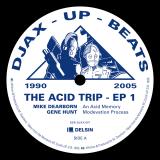
Delsin is pleased to announce an extensive compilation series combing through the catalogue of landmark Dutch techno label Djax-Up-Beats. The series, curated by Rush Hour co-founder Christiaan Macdonald, launches with a look at the label's legacy in the development of acid music through the 90s. In total, this first entry in the Djax-Up-Beats 1990-2005 series comprises 20 tracks, presented as a main triple-vinyl album plus two additional 12" EPs. This first additional EP brings four tracks, by Dutch pioneers Spasms and Random XS, and Chicago heavyweights Mike Dearborn and Gene Hunt. Crucially, every track featured on the series has been carefully mastered by Johanz Westerman, bringing the best out of tracks that often had very little post-production treatment before they were originally pressed to wax. With five more, equally extensive, volumes to come in this series, Djax-Up-Beats 1990-2005 is a thorough exploration of a true totem of techno culture - a renegade label that operated on its own terms and carried surprises and slammers in equal measure.
Bei uns am Lager und sofort versandfertig

Future Romance proudly presents the 3rd volume of a regularly recurring V/A EP concept called "Sonos Futures", featuring both established artists and next generation talents. Curated with heart & soul by label founder Solee each volume will take you on a journey through deep and expressive sounds that lead us into the future.
For part III of "Sonos Futures" we warmly welcome an international group of esteemed artists. Axel Haube from Belgium with "The Return", Cybek from France with "The End Clap", Deep:art & Ysmael Amasis from Portugal with „Singularity“ and Deniz Kabu from Turkey with "Infinity".
Every track tells a story, functional but artistic, no trivial fillers. That´s exactly what you can expect on Future Romance.
Early DJ support by Tale Of Us, Hunter/Game, Nick Warren, Tim Engelhardt, Armonica, Lexer, Nhar, Anii, Eelke Kleijn and more.
Bestelle jetzt. Wir sammeln aktuell Bestellungen für eine Nachpressung.

Delsin is pleased to announce an extensive compilation series combing through the catalogue of landmark Dutch techno label Djax-Up-Beats. The series, curated by Rush Hour co-founder Christiaan Macdonald, launches with a look at the label's legacy in the development of acid music through the 90s. In total, this first entry in the Djax-Up-Beats 1990-2005 series comprises 20 tracks, presented as a main triple-vinyl album plus two additional 12" EPs. The compilation also features all-new illustrations from Alan Oldham, the Detroit-rooted visual artist who gave Djax-Up-Beats a distinctive visual identity from very early on, and design by Lost Communication. Each volume of the series also features liner notes from music journalist Oli Warwick. Crucially, every track featured on the series has been carefully mastered by Johanz Westerman, bringing the best out of tracks that often had very little post-production treatment before they were originally pressed to wax. Volume 1 - The Acid Trip focuses on an area the label is best known for - acid house and techno. After the pioneering breakthroughs Chicago-based producers made with the Roland TB-303 in the late 1980s, acid music creation was starting to become more widespread when Djax-Up started in late 1990. The rebellious, rave-ready sound was an instant draw for label founder Miss Djax, and so her label ended up reflecting the development of acid as it spread from the Chicago roots across the world. Volume 1 - The Acid Trip looks at the diverse approaches to acid taken by artists on Djax-Up. Tracks on the compilation include an early outing from Ludovic 'St Germain' Navarre and Bjorn Torske's Ismistik alias, as well as Dutch pioneers such as Edge Of Motion, Spasms, Random XS and Acid Junkies, and Chicago heavyweights Mike Dearborn and Gene Hunt. With five more, equally extensive, volumes to come in this series, Djax-Up-Beats 1990-2005 is a thorough exploration of a true totem of techno culture - a renegade label that operated on its own terms and carried surprises and slammers in equal measure.
Bestelle jetzt und wir bestellen den Artikel für dich beim Lieferanten.

The journey through French-speaking pop archives continues with this fifth volume, packed with fuzz, gimmicks, and dissent. Far from the charts, the selected tracks display a great creative freedom, often backed by corrosive humor. Welcome to the surprising, kaleidoscopic, and colorful world of the late sixties and early seventies, Wizzz!
Born in Montauban, Robert Pico stumbled into music by chance when he met René Vaneste, then artistic director at Pathé-Marconi. René brought him to Paris to record his first 45 RPM EP in 1964. A year later, Pierre Perret introduced him to Vogue, where he recorded his second album with Claude Nougaro’s orchestra. Sylvie Vartan then introduced him to RCA, where he recorded four singles, including the astonishing "Chien Fidèle," a track backed by a hair-rising fuzz guitar. Alongside his solo career, he also composed for other artists like Alain Delon (the song was recorded but remains unreleased), Magali Noël, Bourvil, and Georges Guétary. In the Paris of the sixties, he mingled with Mireille Darc, Elsa Martinelli, Marie Laforêt, France Gall, Françoise Hardy, Petula Clark, Régine, Dani, Serge Gainsbourg, Joe Dassin, Franck Fernandel, Charles Level, and Roland Vincent. Despite his efforts and winning a Grand Prix Sacem for his final record, Robert Pico didn’t achieve the expected success in show business and decided to leave Paris and return to the Southwest, where he devoted himself to writing. He is the author of 23 books (including Delon et Compagnie, Jean-Marc Savary Editions 2025, a memoir about his youth and his many encounters). Today, he is relieved to never have become a celebrity and devotes himself to his work with passion.
In 1969, the Franco-Italian movie Erotissimo was released, directed by Gérard Pirès (who later directed Taxi in 1998, written and produced by Luc Besson). This pop comedy features Annie Girardot, Jean Yanne, Francis Blanche, Serge Gainsbourg, Nicole Croisille, Jacques Martin, and Patrick Topaloff. The soundtrack was written by Michel Polnareff and William Sheller, with lyrics by Jean-Lou Dabadie. "La Femme Faux-cils," performed by Annie Girardot. It recounts the feelings of a rich CEO's wife who seeks to develop her sex appeal under the influence of advertisement and magazines. Groovy, sparkling and light, this track, with ITS lush arrangements humorously critiques consumer society and feminine beauty standards.
“Je suis l’Etat” (1967) is the flagship track of the first EP by singer-songwriter Spauv Georges, aka Georges Larriaga, better known as Jim Larriaga (1941-2022). Born into a family of bakers, the young man was initially planning to become a hairdresser when he discovered English-speaking music through Elvis Presley and the Beatles. After this revelation, he decided he would become a songwriter and gave himself five years to succeed. He recorded his first two EP’s independently for RCA under the pseudonym Spauv Georges; meaning “that poor George”, a nickname given to him by the mother of her friend Jean-Pierre Prévotat (future drummer of the Players, Triangle, or Johnny Hallyday). Portraying a depressed and eccentric young man, Spauv Georges created corrosive and amusing songs that didn’t reach a wide audience, despite a TV appearance with Jean-Christophe Averty.
Supported by his loyal friend and fellow songwriter Jean-Max Rivière, Georges Larriaga met the future singer Carlos in the early '70s, then Sylvie Vartan’s assistant. He wrote songs for Carlos, including the popular "La vie est belle," "Y’a des indiens partout," and "La cantine", which went onto become a huge hit in 1972. He also composed for Claude François (“Anne-Marie”, 1971), Charlotte Julian (“Fleur de province”, 1972), helped launch child singer Roméo (who sold 4 million records), and later wrote the hit "Pas besoin d’éducation sexuelle" (1975) for the young Julie Bataille. In 1971, Jim recorded an album for Disc'Az: “L’univers étrange et fou de Jim Larriaga”, which featured pop gems like “La maison de mon père”.
The story of the song "Zoé" began when Pierre Dorsay, artistic director at Vogue Records, asked Swiss singer and musician Pierre Alain to write a song for a new female singer. The inspiration came when he realized that Zoé (the artist's name) was also the name of France's first atomic battery, created in 1948, which consisted of uranium oxide immersed in heavy water! The lyrics reflect a bubbling energy that must be handled with caution, while the instrumentation echoes this atomic theme, notably with the use of a theremin.
Zoé’s career lasted only as long as a single 45 RPM, but it seems Christine Fontane was the vocalist behind this pseudonym, who is known for several EPs, a good "popcorn" album in 1964, and a handful of children’s singles in the '70s. Regardless, the photograph on the cover is of a different girl entirely.
Later, Pierre Alain continued his career, writing songs for himself, Marie Laforêt, Danièle Licari, Alice Dona, Arlette Zola (3rd place in Eurovision 1982), and achieving multiple gold and platinum records in Canada. Also an inventor with several patents, president of the Romande Academy, and head of the French Alliance in Geneva, he now composes atonal music, books, and poetry. Moreover, he is also the host of "Les Mardis de Pierre Alain" at "Le P'tit Music'Hohl" in Geneva.
Filled with oriental choruses and fuzz guitar, "Fou" is from Jacques Da Sylva's only EP released by Vogue in 1967. Despite the quality of this recording, all traces of this singer disappear after this first effort.
Valentin is a baroque pop singer born in Belgium. He is the songwriter and composer of most of the tracks on his three singles released in the late 60s in Canada. A legend says that he reincarnated himself as Jacky Valentin during the 1970s for a rock'n'roll revival career in Belgium, but his older brother sadly debunked this story. Valentin's first two singles were arranged by Claude Rogen, a Parisian session pianist who had come to Canada to promote the song “Mister A Gogo”, a cover of David Bowie’s “Laughing Gnome”, adapted by singer Delphine, his wife at the time. Far from his usual network, Claude Rogen arranged music for Polydor, including the arrangements for “Je suis un vagabond” in 1969, a jerk tune with string arrangements and a furious optimism.
Jacques Malia wrote, composed, and recorded his only 45 EP for Festival in 1966. “Histoire de gitan” is an incredible beat track with bohemian scat that tells the story of a gypsy musician who came to Paris to make it in the Music-Hall, to no avail. The hero of the song and its author probably shared a similar fate, as Jacques Malia faded into anonymity after this remarkable attempt.
Bernard Jamet recorded two EPs for Barclay in the late sixties and co-wrote several songs with Christine Pilzer, Pascal Danel, and prolific songwriters Michel Delancray and Mya Simile. The track “Raison Légale” (1968), his masterpiece, immerses the listener in a courtroom right when a murderer is being judged, with jerk rhythm and free arrangements. A unique, paranoid, judicial, and psychedelic oddity.
Jean-Pierre Lebrot-Millers started his career in show business in 1967 as a singer and songwriter for the Philips label. After three singles, he wrote several songs of a new kind with his friend Pierre Halioche, in the midst of the sexual liberation movement and the democratization of drugs. With provocative lyrics, “Les filles du hasard” and “Barbara au Chapeau Rose” were released on a Philips singles in 1968. The character of Barbara was inspired by a queen of Parisian nightlife during the psychedelic years: model Charlotte Martin, who dated Eric Clapton from 1965 to 1968, then Jimmy Page from 1970 to 1983. Jean-Claude Petit’s arrangements, with a table-filled intro, soul brass, and Hendrixian guitar, emphasize the flamboyance of a hedonistic and sexy character, whose dog is named Junkie because “Junkie est un nom exquis”! The track was recorded live in three takes with a full orchestra.
Upon its release, the record was censored by Europe 1 and RTL due to its references to drug use. Jean-Pierre Lebrot was then banned from the airwaves and later dismissed by his record label. He changed his artist name to Jean-Pierre Millers, while his companion Pierre Halioche became D. Dolby for a new dreamy composition, “Chilla”, which Jean-Pierre produced himself with arrangements by Jean Musy. Once again, the song was immediately censored everywhere. After this setback, he decided to stop singing and started taking on odd jobs to support his Swedish wife and their son until the day he met Jean-Pierre Martin, then production manager at Decca, who had worked with Manu Dibango. Martin offered Jean-Pierre Lebrot-Millers, then employed at Rank Xerox, the position of artistic director at Decca. He accepted and became, a year later, promotion director (radio, press, TV). He worked on Julio Iglesias’s first album for Decca, which became a massive hit and allowed him to meet Claude Carrère. The latter asked him to write new songs and find their performers, much like a “talent scout.” It’s through him that Jean-Pierre discovered Julie Pietri and Corinne Hermès. He composed “Ma Pompadour” for Ringo, Sheila’s husband, and took the microphone again for the syncope hit “Rendez-Vous” in 1982.
That same year, Jean-Pierre Lebrot-Millers tried to release a track for which he had heavily gone into debt: “Si la vie est un cadeau”. Having recorded it in London, he presented it to numerous professionals, all of whom refused to get involved. The same thing happened with Antenne 2 and the Sacem when he proposed the song as France’s entry for Eurovision. He then met Haïm Saban, who was producing cartoon soundtracks and had just launched the Goldorak theme song. Saban, having listened to the song, declared it had the potential to become a hit. He sent Jean-Pierre and Corinne Hermès to meet the CEO of the Luxembourg radio and television network. The latter received them, asked to hear a verse and chorus a cappella in his office, and immediately hired them to represent Luxembourg at Eurovision 1983. They reworked the arrangements and recorded a new version with Haïm Saban as co-producer. The song ended up winning Eurovision 1983, a great comeback for our hero. He continued producing and hung out with the band Nacash in Belgium when a couple came to introduce their daughter for an impromptu audition in a hotel room. The girl sang “Les démons de minuit” while dancing to a radio cassette. Impressed, he had her take singing lessons for a year and composed a song for her (for which he had the melody and title, but no lyrics). This required him to go on the hunt for a lyricist, who ended up being Guy Carlier. They recorded the song, which was initially a ballad, at Bernard Estardy’s CBE studio, and gave the singer a new name: Melody. They showed the song around their industry network without success. Later, Estardy called Jean-Pierre to suggest changing the rhythm and making it pop-rock. Orlando, Dalida’s brother, liked the result and decided to co-produce the track. “Y’a pas que les grands qui rêvent » became a classic hit. The song has since been covered by Juliette Armanet (as a ballad, like the original) and Valentina.
Born into an aristocratic Breton family, Hervé Mettais-Cartier worked as a DJ at Queen Kiss, a nightclub in Poitiers, where he formed the band Les Concentrés with Michel (an actor) and Christian (a radio technician). Together, they created a repertoire of whimsical songs (“Ma bique est morte”, “J’suis un salaud”, “Fils de dégénéré”...) that they performed on stage dressed in white (in homage to “concentrated milk”). They performed at Bliboquet and Olympia in 1968 for the 10th edition of the “Relais de la chanson Française” organized by L’Humanité-Dimanche and Nous les Garçons et les Filles, sponsored by Pepsi Cola. Winners in the author-composer category, alongside Danish singer Dorte, their visibility allowed them to record a 45, and appear on television in Jean-Christophe Averty’s show. The A-side of the disc features Bruno le ravageur, a casatchok dedicated to Bruno Caquatrix, the director of Olympia, nicknamed in the song “Coq Atroce” or “croque-actrices”. The B-side is dedicated to “Fils de dégénéré”, a quirky tribute to Hervé's aristocratic roots, mixing absurdity with sophisticated vocal harmonies.
After Les Concentrés, Hervé Mettais-Cartier formed the duo La Paire et sa Bêtise with his friend Olivier Robert. They performed in Parisian cabarets and toured with Pierre Vassiliu. In the late 1970s, Hervé began a solo career. He recorded two albums for the Motors label in 1978 and 1979, which did not achieve their anticipated success due to lack of promotion. In 1980, he met Bernadette, with whom he started a family and created a “Chansons à voir” (songs to see) show that he performed until his death at the end of 2024.
Publicité comes from the final EP by the Missiles (Ducretet Thomson, 1966), a disc that also includes “La (nouvelle) guerre de cent ans”, featured on Volume 4 of our Wizzz! series. Please refer to the booklet for the story of the band.
“He’s 1.82 meters tall, 28 years old, weighs 135 kg, is black and Belgian”: this is the description of singer Hegesippe on the back of his sole single (Decca, 1967). He appears on the album cover wearing a Greek toga, like a hippie gag – we are at the end of the year 1967. In “Le crédo d’Hegesippe”, this former bodyguard of Antoine and the Charlots plays the delightful card of the thick brute converted to Flower-Power and non-violence, with arrangements by Jean-Daniel Mercier, aka Paul Mille.
“Ethéro-disco” was released on a promotional record for clients of the Maréchal company (Liège, Belgium) for the New Year 1979. Over a funky rhythm, celebrity impersonations (Brigitte Bardot, Jacques Dutronc, Fernandel…) deliver an enigmatic text about pharmaceutical products like ether, bismuth, and aspartate. The track was composed by Dan Sarravah (responsible for Joanna's “Hold-up inusité” featured on Wizzz! Volume 3) and Tony Talado, who was also a singer (one 45 in 1967), songwriter (with over a dozen credits between 1964 and 1985 in various styles from surf music to disco), author (Devenez Végétarien, Dricot Editions, 1985), ad designer, and psychologist.
Décollez-les is on the A-side of Mamlouk's only single, a pseudonym for Marsel Hurten, who is known for his work on several EPs in the late sixties, as well as composing music for Hervé Vilard’s “Capri, c’est fini”, Claude Channes' “La Haine”, Annie Philippe’s “On m’a toujours dit”, and Nancy Holloway’s “Panne de Cœur”.
This strange song, with Afrobeat horns and absurd dialogues between a chef and his kitchen staff, is the result of a collaboration between Marsel Hurten and one of his neighbors, a photographer from Pavillon-sous-Bois (93), where the musician settled after returning from the Algerian War. A music video was shot to promote the record.
Marsel Hurten was born in Tourcoing (59) into a musical family. At a young age, he joined the brass band founded by his grandfather, playing the piston before studying trumpet at the conservatory, as well as teaching himself how to play the guitar. As an orchestra musician, he toured in France, Belgium, Germany, and England. He released a series of solo 45’s between 1965 and 1968 for the DMF and Az labels before stopping recording to focus on working for other artists (Gilles Olivier, Noëlle Cordier…).
“L’amour nu” (Vogue, 1971) is the work of the short-lived Belgian band Mozaïque. The track, written by singer Jacques Albin, closely resembles another of his compositions, “Carré Blanc”, which he recorded in 1969 for Disc’AZ.
Represented by the Lumi Son micro-label based in Marignane (Côte d'Azur), Jean-Marc Garrigues released two 45 RPMs in the late sixties, defending the French jerk sound. The song “Je dis Non” is a short, joyful ode to youth, pop music, and rebellion.
Songwriter and performer Jacques Penuel released three singles. The first one, “Astronef 328” (Fontana, 1969), features a dizzying series of chords punctuated by sound effects, a sci-fi story, and arrangements by Jean-Claude Vannier.
We would like to sincerely thank Pierre Alain, Moon Blaha, Marsel Hurten, Bastien Larriaga, Jean-Pierre Lebrot-Millers, Bernadette Mettais-Cartier, Robert Pico, Olivier Robert, Claude Rogen, Micky Segura.
Bestelle jetzt und wir bestellen den Artikel für dich beim Lieferanten.

After the success of volume 1, Stereophonk unveils the long-awaited sequel with Bunch Of Funk Vol.2. This album features 18 unreleased tracks, available for the first time on vinyl, including two never-before-released tracks created in collaboration with the talented Medline (My Bags).
DJ Marrrtin, an iconic figure in the breakdance scene, delivers a powerful and organic sound that celebrates the heritage of breakdance while reinventing it for future generations. His tracks, played at the biggest battles, competitions, and break events around the world, are a true ode to dance.
Whether solo or with his group Funky Bijou, Marrrtin drops hard-hitting breaks that set the dance floor on fire. Each track is an invitation to let loose, express your style, and showcase your best moves.
Get ready to feel the contagious energy of Bunch Of Funk Vol.2 and dance without restraint!
erscheint voraussichtlich am 20.10.2024

Jens Brands has created a large number of installations, musical performances and Interactive Media works. He uses the concepts of parallel activities rather then ideas of fusion. The pieces presented on this recording focus on sonic events related to electronic music (such as intense volumes and dynamics, white noise, square or sine waves) but stay entirely acoustic.
On a live performance of »Ratchets«, the sounds are generated with the idea of a physical, sculptural, yet invisible presence. It might happen that the body of a person moving around in the audience has more impact on the sound then the variations produced by instruments themselves.
"I was always interested in the idea of making acoustic music that has the quality of electronic music," muses Dortmund based musician and visual artist Jens Brand. "Electronic music is fantastic, but I don't like speakers very much."
Take his performance entitled »Motors And Styrofoam«. Pieces of glistening white styrofoam fitted with small motors hang from the ceiling above the audience's heads, squatting balefully in mid-air like lopsided clouds. Acting as a resonator, the styrofoam amplifies the whirr of the motors, which builds up into a loud, persistent drone overlaid with overtones.
Equally uncompromising is »Ratchets«, which deploys a number of football rattles, those small wooden devices originally used by hunters. The ratchets are set in motion by motors whose speed and direction are controlled by a computer: they click busily away, producing a dense, enveloping sound reminiscent of heavy rainfall. In performance, the sound of the ratchets is spellbinding in its rawness and intensity, attaining impressive volumes as it interacts with the features of the space.
erscheint voraussichtlich am 24.02.2023

Caution alert! On the volume 3 of the Resurrection series, Simoncino teams up with one the greatest & biggest voice in House Music: the great Robert Owens. The voice behind Mr Fingers and so many other timeless titles. He alone sums up our history, all the greatest tracks that paved the way for our sound & community (yes still though instagram & the self worships) since 40 years. The master sang for Larry Heard but also Frankie Knuckles, Satoshi Tomiie, Photek, Layo & Bushwacka!, Mr. C, Quentin Harris, Marshall Jefferson, Michael Watford, DJ Spen, Gene Hunt, Soul Clap, K' Alexi Shelby, Sandy Riviera and so many others! He is simply the greatest soulful underground vocalist for a generation of househeads. The Italian prodigy simoncino gives us a daunting ep of 6 tracks (!) which navigate between deep techno (that could be a easily played in Berghain) and the purest original house where he excels. Its inimitable style is a clever mix of chicago house tinged with the most classy techno touches. The A side composed of Riccione Part I, Riccione Part II & Masonry is completely dedicated to this kind of techno sound, very pure, very mental and at the same time incredibly funky. It's a total trip. The B side explores the more house influences of the genius of peruggia, notably on All my soul & All My Soul (Riviera Ambient Mix) in direct homage to the italo dream house sound. Pure gold. An absolute marvel. I'll Be Your Friend 4 Ever, Skylax 4 Ever ! Note that on the label's bandcamp, with the purchase of the vinyl, you can get 1 exclusive bonus track : Simoncino "Love Me Forever Or Love Me Not"
Bestelle jetzt und wir bestellen den Artikel für dich beim Lieferanten.
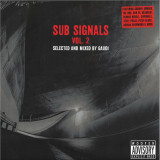
Sub Signals Vol.2 is a deep dive into underground bass, guided by artist and producer Gaudi. Featuring predominantly unreleased originals and versions by some of the biggest names in the worldwide dub collective, it intricately combines analogue elements with digital grooves to stunning effect.
Much more than just a compilation, the Sub Signals series is a celebration of the evolution of the sound of dub, from its original roots in reggae to its fusion with a much wider spectrum of sounds and influences. Gaudi curated the first volume back in 2006 for the cult Canadian label Interchill, sourcing tracks and dubs from High Tone, Zion Train, Manasseh, Almamegretta, Noiseshaper, Creation Rebel, Greg Hunter, Dubadelic and more.
15 years on, Gaudi has created the second volume, blending contributions by established reggae names Steel Pulse, Dennis Bovell and African Head Charge with next generation dub producers Alpha Steppa, Radikal Guru and Paolo Baldini Dubfiles, headline acts Groove Armada, Dub FX and The Orb with underground artists Deadbeat, Pitch Black and SUBSET, to create a seamless 75 minute mix.
“With Volume 2, I wanted to create a deep vibrational experience by shaping an aural trajectory that encompassed the many aspects of dub and its related sub-frequencies. To achieve my goal, I reached out to the artists I regularly work with to ask for contributions, in some cases digging in their archives to find what I was looking for.”
As a solo artist, Gaudi has recorded over 20 albums, while as a producer he has hundreds of productions under his belt. He has worked with legends of the reggae and electronic music worlds including Lee "Scratch" Perry, Horace Andy, Dub Pistols, Hollie Cook, Youth, Mad Professor, Prince Fatty, Lamb, Trentemøller and Nusrat Fateh Ali Khan.
Dedicated to the sound of dub in its many forms, Gaudi’s latest excursion of his Sub Signals series is pure bass therapy, designed to excite your eardrums and worry your woofers.
Bestelle jetzt und wir bestellen den Artikel für dich beim Lieferanten.

The second volume brings sublime crossings of gospel with the soul, funk and jazz of the Black Power era. Twenty rapturous cuts dot dazzlingly between Muscle Shoals soul, screwed breakbeat, Mizells-style fusion, disco and proto-house. Triumphant re-workings of Sly Stone, Donny Hathaway and Herbie Hancock’s Head Hunters will have listeners throwing their pew cushions into the air.
Full-size booklet; beautifully designed, with stunning, rare photographs and original Savoy artwork.
Bestelle jetzt und wir bestellen den Artikel für dich beim Lieferanten.
