Search:geraldo

Styles
All
  • 1
Geraldo Pino & The Hearbeats - Let's Have A Party

It's no exaggeration to say that Geraldo Pino and his band the Heartbeats kickstarted the whole soul/funk/afrobeat scene in West Africa. Mixing highlife, funk and jazz, and using the latest equipment, they laid waste to all before them. In 1966 Fela Kuti was a jobbing musician, eeking out a living with highlife bands. When Gerlado Pino came to town, it changed his life. Pino tore up the scene,' he recalls in an interview with Carlos Moore. I knew I had to get my shit together. And fast!'. Produced by Odion Iruoje and engineered by Emmanual Odenusi, Let's Have A Party is Geraldo Pino's masterpiece. It's slick and heavy, tough and uncompromising, with musicianship that will blow your mind. It's all killer, no filler, with 'Heavy Heavy Heavy' and 'Let Them Talk' bonafide, nailed on funk classics. The Heartbeats are exactly that, a tight and efficient engine that keeps the groove moving. This is US-style funk, with an emphasis on extended percussion workouts and organ wigouts. You can't listen to 'Power To The People' without being impressed - or compelled to dance. The extended call out to each Heartbeat in 'Let's Have a Party' is well deserved. If my house caught on fire, this is the one album I'd rescue. After one listen, I reckon you'd do the same. - Peter Moore

out of Stock

Order now and we will order the item for you at our supplier.

20,38

Last In: 6 years ago
Various - Afro-rock Volume One

Various

Afro-rock Volume One

2x12inchSTRUT59LP / 151771
STRUT
16.01.2018

'Afro Rock Vol. 1' is one of the most important compilations of heavy original '70s Afro funk and soul to be released in recent years. Originally surfacing on Duncan Brooker's indie Kona label in early 2001, the album single-handedly kick-started the thirst among jazz, funk and soul fans and 'diggers' to rediscover lost music from Africa made during the '60s and '70s from a time when many countries were gaining independence and celebrating a Pan-African identity within their music. The album was one of the first to reach a far different audience to the traditional 'world music' market and spawned many further projects and labels in its wake. A year later, the 'Nigeria 70' compilation surfaced on Strut and labels like Soundway and Analog Africa would continue to unearth amazing lost gems from the Motherland.The album is testament to the determined work of Brooker following several research trips, especially to East Africa - Kenya and Zaire. It brought to light East Africa's finest funk band, Air Fiesta Matata, led by the recently deceased Steele Beautttah, 'The Nigerian James Brown' Geraldo Pino from Port Harcourt in Nigeria, and the storming Afro jam 'Yuda' by Dackin Dackino, a previously unreleased gem from Zaire discovered on a discarded reel. The album has remained influential since its release with tracks appearing on other Afro compilations and on TV and the big screen - Jingo's 'Fever' featured in Kevin McDonald's 2006 hit film, 'Last King Of Scotland'.Out of print since 2015, the album is being reissued on Strut in its original form with the extra dynamite unreleased psychedelic cut by Kenya's Ishmael Jingo, 'Keep On Holding On' taken from the original master tape. The package features the original sleeve notes by Duncan Brooker along with new additional notes providing further background to the album and tracks.

out of Stock

Order now and we will order the item for you at our supplier.

25,17

Last In: 8 years ago
Afro Rock - Volume 1

Afro Rock

Volume 1

2x12inchSTRUT059LP / 151771
STRUT
30.09.2017

'Afro Rock Vol. 1' is one of the most important compilations of heavy original '70s Afro funk and soul to be released in recent years. Originally surfacing on Duncan Brooker's indie Kona label in early 2001, the album single-handedly kick-started the thirst among jazz, funk and soul fans and 'diggers' to rediscover lost music from Africa made during the '60s and '70s from a time when many countries were gaining independence and celebrating a Pan-African identity within their music. The album was one of the frst to reach a far different audience to the traditional 'world music' market and spawned many further projects and labels in its wake. A year later, the 'Nigeria 70' compilation surfaced on Strut and labels like Soundway and Analog Africa would continue to unearth amazing lost gems from the Motherland. The album is testament to the determined work of Brooker following several research trips, especially to East Africa - Kenya and Zaire. It brought to light East Africa's fnest funk band, Air Fiesta Matata, led by the recently deceased Steele Beautttah, 'The Nigerian James Brown' Geraldo Pino from Port Harcourt in Nigeria, and the storming Afro jam 'Yuda' by Dackin Dackino, a previously unreleased gem from Zaire discovered on a discarded reel. The album has remained infuential since its release with tracks appearing on other Afro compilations and on TV and the big screen - Jingo's 'Fever' featured in Kevin McDonald's 2006 hit flm, 'Last King Of Scotland'.Out of print since 2015, the album is being reissued on Strut in its original form with the extra dynamite unreleased psychedelic cut by Kenya's Ishmael Jingo, 'Keep On Holding On' taken from the original master tape. The package features the original sleeve notes by Duncan Brooker along with new additional notes providing further background to the album and tracks.

out of Stock

Order now and we will order the item for you at our supplier.

18,87

Last In: 8 years ago
Various - AfroMagic Vol.2 – Hypnotic Grooves & Ecstatic Moves LP

"Deep Dancefloor Jams of African Disco, Funk, Boogie, Reggae & Proto Electro Music 1977-1986reggWhen a passionate DJ and crate digger intuitively selects music for a DJ compilation, without artistic compromise and without the burden of trends, AfroMagic vol.1 emerges from the depths of his soul. Herewith we present the new favorite phonomancer’s tool for all the DJs who experience the dance floor as a sanctuary and a source of freedom and love.

The most fundamental thing that defines African music is that it was created for dancing. In African dance, there is often no clear distinction between ritual celebration and social recreational entertainment – one can seemlessly merge with the other. Because dance and rhythm have more power than gesture and more richness than words, and because they express the deepest experiences of human beings, dance is in itself a complete and self-sufficient language. It is truly an expression of life with all of its emotions – joy, love, sadness and hope – without which there is no African music and dance. For the African people, dance and music are integral parts of the body and soul, thus depicting the expression of life, current emotional states, visions or dreams. Through hypnotic repetitive music and dance, people communicate with each other and with the souls of the dead, the animals, the plants, the stars, the Gods… They free the body and the spirit through ecstatic states, reaching a healing sense of freedom, happiness, and satisfaction.

Throughout history, this transcendental perception of rhythm and dance originating from Africa, influenced popular music worldwide, thus creating new living and breathing forms of musical genres – freeing them from their industrial mold. Funk, disco, soul, boogie, reggae, dancefloor jazz etc., developed in parallel all over the world. It is foolish to perpetually discuss where they originated from and who were the creators of all these fiery dance floor genres – being obvious that they directly or indirectly originate from the African continent and its people who were as well, over the centuries, influenced by disturbing socio-cultural factors of colonialism. However, no one can enslave the soul. The seeds of free and uninhibited dance and rhythm, true to their original form, initially first sprouted onto the USA’s fertile fields of clubbing and popular music while later evolving in other parts of the world.

The disco funk club culture manifested itself as a phenomenal explosion of artists and grooves in the second half of the 70s in the USA. Shortly it spread around the world continually reigning over charts in its various forms – to this day. Clubs emerged where the DJ is an almighty shaman and the dancers are a tribe united under one roof. This urban ritual had and still has a single goal: togetherness, freedom, and love. Clubs have evolved into temples where we free ourselves from the burden of a consumerist lifestyle and suppressed emotions – a place where we receive love and give love – to be who we really are.

Disco funk clubbing was such an influential global phenomenon that its influence can be observed in various other genres from the disco funk era i.e. progressive rock, which mutated by layering complex rock arrangements with a disco funk groove resulting in hybrids, highly sought by today’s diggers, producers and collectors. The profit-hungry music industry of the 80s very quickly commercialized the original disco funk sound by amputating of its original Afro groove to be able to easily ‘sell’ it globally. So, the original disco funk groove became underground again, and it has remained so until this day. Today, for a DJ to unearth that ravishing groove that will lead the dancers to the stars, he must dig passionately like a true musical archaeologist in search of that groove that picks you up after just a few initial beats. That groove which forces the atoms in your body to vibrate, that groove which unites the body and releases the burden.

The AfroMagic compilation series is created as a tool for real DJs who stick to the aesthetics and essence of clubbing.

This continuation of the Afromagic compilation by DJ Borovich was created in a private jam session which served as an escape route from intense and complex love problems.

Unconsciously driven by intuition and emotion and following a live mix tape framework where many tunes are arranged instantaneously, Borovich narrates his story with a strong rhythm that cuts loose even the most blocked off energy nodes and restores happiness to the spirit and the body.

The musical experience of the groove is completed by the lyrics of the songs, which symbolically give DJ Borovich universal answers to his questions arising from questioning the boundaries, nuances and other forms of love.

When considering that Borovich’s selection was created to facilitate an escape from the burdens of reality through rhythm and dance, we can be sure that Afromagic Vol. 2 will have a 100% uplifting, energized and spaced-out effect on the listeners.

The intro to A1, “Feeling Happy” by the Apostles, introduces us to an experienced and slow, cool and irregularly tight groove containing a confidently sung chorus that instantly gives a sense of freedom and hints at the remainder of Afromagic Vol. 2: “I’m gonna feel happy, ´cause I know I’m gonna be myself.” After the anthemic song mantra of the Apostles, Aigbe Lebarty uncompromisingly continues with a dirty disco rhythm. Acidified by accented synths that elevate it to shamanic levels and held together by a female tribal choir, we embark on an uncompromising ritual disco journey. Without a moment to take a breather the prog funk band Mighty Flames and their Road Man launch a highly vicious and raw, thick funk groove spiced with acid synths and dirty RnR breaks, raising the bar for the A side. Jimi Hendrix himself would surely praise it given the ultimate freedom and virtuosity in the solo sections. With the last tune on A side DJ Borovich decides to burn the floor with Geraldo Pino’s psychedelic, acid furious groove and lyrics which describe this HEAVY part of love problems: “The way she walk, the way she talk, the way she does a funky dances, she is really really heavy – that woman”.

While the A side represents a compact intoxicating afro groove machine that separates us from reality and lifts us up to the stars in over 23 minutes, the B side is a treasure trove of proto sub-genres gems. This selection represents the mission of the Afromagic: to find singular events in African recorded discography of popular music from the 70s and 80s that give evidence to the birth of new modern genres on the Dark Continent even before they emerged in the U.S.A. or Europe. The beginnings of electronic music influenced genres are represented back to back with 80s synth jazzy pop, all painted in African colours.

The B side opens big with Jake Sollo and a huge reggae blues number singing about the humiliation of a man – goosebumps guaranteed! “You think I’m nobody that’s why, you don’t know the way for me, I’m somebody I know, I found myself at last”. Adolf Ahanotu then enters the scene with a hard sliding tackle at B2 and an exotic rare disco funk dancefloor napalm. A ‘Sensation’ that would ignite even the coldest of introverts. While we approach the end of the compilation the narrative revolves again and takes a different turn. No less and no more than to the proto-electro that Baad John Cross serves us in “Give Me Some Lovin´”. The fat and repetitive broken electro synth groove, championing many early 90s electro tracks, is presented here without hesitation and with constant tension accompanied by a mantric chorus “Gimme some, gimme some, gimme some looooovin’, EVERBODY!!!”. Finally, we’re guided to the end of Afromagic Vol. 2 by Eji Oyevole’s 80s synth pop style presented in an authentic afro manner, giving us a glimpse at yet another released Afromagic edition, as well as giving an answer to DJ Borovich’s love problems. A smoothly broken electronic rhythm resembling electrified highlife sounds, carried on the wings of a virtuoso dreamy saxophone on top of which Eji presents the most intimate parts of himself. Finalizing the track with a symbolic chorus, on the surface referring to the dancefloor and simply having fun, but in actuality referring to the skill and happiness of living: “I´m a dancer, I can dance”. So, get up and dance among the stars with DJ Borovich and Afromagic.

In Stock

On Stock and ready to ship

25,17
JOAO DONATO - QUEM É QUEM LP

When João released “Quem é Quem” in 1973, he had already been in the music industry for over 20 years, gaining national and international recognition. Nevertheless, the album marked the beginning of a new phase in his career: the surprising multi-instrumentalist included lyrics in his songs for the first time. It is one of his most important albums, which now returns to shelves on 180-gram vinyl as part of the “Classics on Vinyl” collection from Polysom.

The album was produced by Milton Miranda and Marcos Valle, with arrangements by João Donato, Maestro Gaya, Lan Guest, Laércio de Freitas, and Dory Caymmi. It features 12 tracks, the vast majority of which are authored by him, with collaborators such as Geraldo Carneiro, Lysias Ênio, Paulo Cesar Pinheiro, Caetano Veloso, and João Carlos Pádua. The only exception is the song “Cala Boca Menino” by Dorival Caymmi.

out of Stock

Order now and we will order the item for you at our supplier.

37,40

Last In: 5 months ago
Brazilia Maravilha - Vol. 1
 
26

Brazilia Maravilha... A real wonder of selected Brazilian tunes.
You will feel the mood and breeze like you were over there!

28 songs including some great classics as "Lamento" by Nelson Riddle, "Mas Que Nada" by Elza Soares, "Groovy Samba" by Cannonball Adderley and "So Nice (Samba De Verao) by Sérgio Mendes as well as more unique ones.

Kindly remastered tracks from master tapes to keep the dusty roots of the original sound. Double vinyl in a balanced mix of vocals, instrumentals, bossa nova and some jazzy beats tunes.

out of Stock

Order now and we will order the item for you at our supplier.

30,04

Last In: 2 years ago
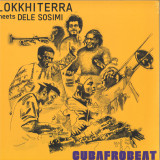
Lokkhi Terra & Dele Sosimi - Cubafrobeat LP

Repress!

Funkiwala Records presents the third in the series of "Lokkhi Terra meets"albums, with the London fusionistas creating another unique sound-clash, this time with ex-Fela Kuti keyboardist and legendary UK Afro-beat ambassador Dele Sosimi, and members of his critically acclaimed Afro-beat Orchestra.

This particular collaboration has been bubbling away for a few years now, teasing audience expectations with a handful of sold out shows each year in between both bands busy schedules.
Featuring the two pianos of Kishon Khan and Dele Sosimi – Cuban percussionists/vocalists Geraldo De Armas (Yoruba Andabo), Oreste Noda (Ariwo), Javier Camilo (Ibrahim Ferrer) - a horn section led by Justin Thurgur (Bellowhead) featuring Yelfris Valdes (Sierra Maestra) and Graeme Flowers (Kyle Eastwood) to name a few – this is an All-star cast.

Kishon Khan's Lokkhi Terra have over a number of years now been quietly establishing themselves as one of London's more unusual heavyweight outfits, described as "Stunning Headliners… A majestic multi-cultural blend of sounds… effortlessly builds bridges between rolling Indian raga rhythms, Afro-Cuban grooves, Acid Jazz/funk and free flowing improvisation" (Timeout London). Included amongst the band members are London's top Cuban musicians, adding their infectious rich musical history to the city's melting pot.
When the band wanted to explore Cuban links with another of their favourite traditions, Afrobeat, who better to bring in then one of the Afrobeat originators – maestro Dele Sosimi – "Sosimi creates some of the most bewitching grooves in modern African music" E Jazz News.
Bringing together two Yoruba speaking musics - with different accents, from different sides of the Atlantic - Havana meets Lagos in London – A Cuban-Afrobeat-Experience. CUBAFROBEAT.

All About Jazz 4star review

A younger version of London's Grand Union Orchestra, founded by world-jazz pioneer Tony Haynes in 1982, Lokkhi Terra was put together by keyboard player Kishon Khan in 2005. Both ensembles have made a specialism of jazz / South Asian fusion, with Lokkhi Terra also giving as much attention to music from Cuba, where Bangladeshi-born, London-based Khan lived for a while in the early 2000s.

Cubafrobeat, as the title foretells, is a blend of Cuban dance music and Nigerian / Yoruban Afrobeat—a fusion rendered seamless by the synergies existing between Afro-Cuban and Yoruban music, language and mythology. The album is Lokkhi Terra's third and partners the band with the keyboard player and vocalist Dele Sosimi .

A young-going-on-child-prodigy member of Fela Kuti's Egypt 80, Sosimi went on to become musical director of Femi Kuti's Positive Force, before relocating to London and setting up Dele Sosimi's Afrobeat Orchestra, the finest Afrobeat band outside Nigeria, bar none, now with a string of consistently engaging albums under its belt. Cubafrobeat features Sosimi as lead vocalist on all four tracks, and on Fender Rhodes on two of them. His singing plays a prominent role in the Afrobeat Orchestra, but, such is the whirlwind impact of the band in full instrumental flight, that Sosimi is often thought of first and foremost for his keyboard and arranging talents. That may change by the time 2018 is over. Cubafrobeat is the third album in as many months to feature Sosimi as guest vocalist, spotlighting the gravitas, air of mystery, intimacy and ferocity his voice can bring to an occasion.

The first of these albums was the genre-bending spiritual-jazz band Emanative's Earth (Jazzman). One of the stand-out tracks, "Ìyáàmi," features Sosimi making obeisance to the titular Mother Goddesses of the Yoruba spirit worlds. His raw and intense invocations carry the track for nine mesmerising minutes. Otherwordly is not the half of it. Next up was dub / reggae / jazz band Soothsayers' Tradition (Wah Wah 45s), which featured Sosimi as lead vocalist on the compelling "Sleepwalking (Black Man's Cry)." Earth and Tradition are both outstanding albums and have previously been reviewed here.

Cubafrobeat is a total stonking blinder, too. It is an effectively nuanced affair, opening with the fiery "Afro Sambroso" and closing with the relatively reflective "Rumbafro." Sosimi's vocals light up the music, as do the several solos from trumpeters Graeme Flowers and Yelfris Valdes Espinosa and trombonist Justin Thurgur (a member of both Lokkhi Terra and the Afrobeat Orchestra). Sosimi and Kishon Khan's intertwining Fender Rhodes solos on "Cubafro" are also a delight, as is the drum and percussion section throughout.

The sound of summer, for sure, Cubafrobeat has enough depth and variety to make it something for all seasons.

Songlines 4star review

Lokkhi Terra are one of London's most authentic groups. They are a Latin-flavoured collective whose keyboard player and bandleader Kishon Khan segues from percussive montunos to complex Bengali rhythms and back, with jazz chops sparking funky and outward-looking fusions. Their collaboration with Dele Sosimi, Britain's foremost Afrobeat ambassador, has been bubbling for a while; here four tracks at ten minutes see musical conversations that never lose their sense of flow. An extensive line-up of stellar players, including trumpeter Yelfris Valdés, conguero Oreste Noda and trombonist Justin Thurgur, highlights the genre-crossing potential of world traditions. Opener 'Afro Sambroso' showcases batá drums from Gerardo de Armas Sarria before the track links Cuban grooves with Afrobeat. 'Timbafro' crackles and sways via Khan's organ, Sosimi's vocals and Oscar Martinez's timbales. 'Cubafro' features dazzling interplay between Khan, Sosimi and Javier Camillo's Spanish-language vocals. 'Rumbafro' is all rumba choruses, Yoruba vocals and Afrobeat horns. Rooted in their sources, but with musical threads intertwining, separating and reconfiguring – with grooves at a premium – this is a fusion lover's dream

out of Stock

Order now and we will order the item for you at our supplier.

25,00

Last In: 2 years ago
ALCEU VALENÇA - MOLHADO DE SUOR LP

Sought-after Brazilian classic originally released in 1974, "Molhado De Suor" is the first solo effort by Alceu Valença, mixing traditional northeastern Brazilian music and rhythms with folk rock and psychedelia. Aided by Lula Cortes and Geraldo Azevedo, Valença's rich vocals combine with driving guitar work, moody arrangements and unusual trips. Reissued again after years unavailable. DESCRIPTION In the early '70s tropicalia was going strong, a challenge to both the music establishment and the state. Música Popular Brasileira (or MPB) was firmly established. Up in the northeastern corner of Brazil, centered in Recife, was another exciting strain of Brazilian culture called Udigrudi. "Molhado De Suor" is the first solo effort by Alceu Valença, mixing traditional northeastern Brazilian music and rhythms with folk rock and psychedelia. Aided by Lula Cortes and Geraldo Azevedo, Valença's rich vocals combine with driving guitar work, moody arrangements and unusual trips, successfully integrating the sounds of his native region, Pernambuco. Valença followed its release with many albums, the latest from this year, each one establishing him more.

pre-order now26.08.2022

expected to be published on 26.08.2022

24,58
VASCONCELOS SENTIMENTO - FURTO LP

Residing in Rio de Janeiro, Vasconcelos Sentimento is a self-taught composer, producer and multi-instrumentalist. A mosaic of lo-fi breaks, cosmic ambient jazz and wonky chromatic funk, the eccentric Brazilian DIY wizard’s debut album Furto beautifully pieces together a huge range of seemingly disparate sonic elements. Calling himself an “amateur euphoric sound researcher”, he has no formal training in either music theory or production, and it’s simply by following his ear that has led him to creating his debut album for Far Out Recordings.

It was his fascination with his fellow countryman, the enigmatic, psychedelic 70s folk artist Jose Mauro, that led the young Vasconcelos Sentimento (real name Guilherme Esteves) to first make contact with Far Out. Coincidentally living in the same region as Mauro, Sentimento managed to track him down and put label boss Joe Davis in touch, after Davis had spent years of what felt like hopeless searching for the man many assumed dead.

When Joe and the Far Out team heard Guilhermes’ own music, there was a sense of shock. “It was unlike anything we’d heard before, but it also sounded curiously at home on Far Out. Like it had taken little pieces of different releases from the catalogue, and all the music from the ‘60s onwards that influences everything we do, and recreated all that magic in such an exciting new way”.

Indeed, Sentimento is not afraid to admit what he himself sees as acts of theft. (Furto=Theft in Portuguese). But while the debate surrounding the ethics of sampling is a never ending one, Sentimento’s music - while it does contain the odd sample, including an interview with Joe Davis himself, “One For The Masta Digga”) - steals in an entirely different way. His creative process involves an intensive period, in which he’ll listen to just one artist or song over and over, for days and weeks on end. Then he’ll head to his rudimentary bedroom studio, which, as he puts it, is “built for speed”, hit record and “blurt” whatever comes out. “I never spend more than a day working on any one song idea”...

Picasso once said “lesser artists borrow; great artists steal”. And it’s through this process of ‘Furto’ that Vasconcelos Sentimento has somewhat ironically cultivated a sound that is unmistakably his own.

Furto is due for vinyl, CD and digital release on 30th July 2021, via Far Out Recordings.

out of Stock

Order now and we will order the item for you at our supplier.

20,97

Last In: 4 years ago
GOLDEN BOYS/SILVIO C SAR - Segura Na Cintura Dela (O Gavi o) / Beco Sem Sa da

For number 89 in the Brazil45 series, we present a no-nonsense Brazilian funk / samba rock double-sider courtesy of the mighty Golden Boys and Silvio C sar. The Golden Boys were a quartet formed in 1958 by the Correa brothers; Renato, Roberto, Ronaldo, and their cousin Valdir Anuncia o. They enjoyed a stellar recording career, from the 50s through to the 90s, with members of the group still involved in music to this day. For this selection we headed to their self-titled 1975 album released on Odeon and cherry-picked one of the group’s funkiest moments, ‘Segura Na Cintura Dela (O Gavi o)’. By now performing as a trio, they enlisted Paulo Deb tio of Lemos E Deb tio 8206;fame as executive producer and, on the controls, producer Milton Miranda. Miranda was a silent figure behind so many of the much-loved classic Odeon / EMI releases of the 60s and 70s. ‘Beco Sem Sa da’ is another Odeon release, and another classic produced by Milton Miranda. Taken from Silvio C sar’s self-titled 1971 album, here the prolific singer and composer delivers a swinging samba rock / groove. With fantastic arrangements by Geraldo Vespar, this addictive swing was reconstructed in the 2000s when Drumagick sampled it for their track ‘Sambarock’. So here we have two slices of Brazilian dancefloor pressure just waiting to take centre stage again.

- Next installment in BRAZIL45 Series.
- Brazilian funk and samba rock double-sider.
- Both tracks produced by Milton Miranda.

out of Stock

Order now and we will order the item for you at our supplier.

11,13

Last In: 2 years ago
Lokkhi Terra & Dele Sosimi - Cubafrobeat

Funkiwala Records presents the third in the series of "Lokkhi Terra meets"albums, with the London fusionistas creating another unique sound-clash, this time with ex-Fela Kuti keyboardist and legendary UK Afro-beat ambassador Dele Sosimi, and members of his critically acclaimed Afro-beat Orchestra.

This particular collaboration has been bubbling away for a few years now, teasing audience expectations with a handful of sold out shows each year in between both bands busy schedules.
Featuring the two pianos of Kishon Khan and Dele Sosimi – Cuban percussionists/vocalists Geraldo De Armas (Yoruba Andabo), Oreste Noda (Ariwo), Javier Camilo (Ibrahim Ferrer) - a horn section led by Justin Thurgur (Bellowhead) featuring Yelfris Valdes (Sierra Maestra) and Graeme Flowers (Kyle Eastwood) to name a few – this is an All-star cast.

Kishon Khan's Lokkhi Terra have over a number of years now been quietly establishing themselves as one of London's more unusual heavyweight outfits, described as "Stunning Headliners… A majestic multi-cultural blend of sounds… effortlessly builds bridges between rolling Indian raga rhythms, Afro-Cuban grooves, Acid Jazz/funk and free flowing improvisation" (Timeout London). Included amongst the band members are London's top Cuban musicians, adding their infectious rich musical history to the city's melting pot.
When the band wanted to explore Cuban links with another of their favourite traditions, Afrobeat, who better to bring in then one of the Afrobeat originators – maestro Dele Sosimi – "Sosimi creates some of the most bewitching grooves in modern African music" E Jazz News.
Bringing together two Yoruba speaking musics - with different accents, from different sides of the Atlantic - Havana meets Lagos in London – A Cuban-Afrobeat-Experience. CUBAFROBEAT.

out of Stock

Order now and we will order the item for you at our supplier.

18,36

Last In: 4 years ago
Soul Jazz Records Presents - NIGERIA SOUL POWER 70

Soul Jazz Records’ Nigeria Soul Power 70 album showcases the influence of funk, rock and disco on Nigerian music during the 1970s. Originally released as a now-long-out-of-print collectors’ 7” RSD box, this fully expanded album release now also includes extra tracks from Sonny Okosuns, Wings, Chief Kollington Ayinla and more. While for many people the fusion of funk and jazz music with Nigerian rhythms and aesthetics began with Fela Kuti and his afro-beat sound, in fact this can be traced further back to the phenomena of the 1960s Nigerian artists and house bands in nightclubs and hotels who interpreted US soul and pop music with a local flavour and none more so than Geraldo Pino, the ‘African James Brown’ who features heavily in this collection. Other similarly inspired Nigerian funk and soul artists featured here included Tony Grey and his Ozimba Messengers and Don Bruce and The Angels. Nigeria Soul Power 70 includes a number of tracks from the group Wings originally known as BAF (Biafran
Air Force) Wings, an army band formed during the Biafran civil war in Nigeria. The groups’ heavy mixture of funk, rock and African styles was popular among many Nigerian groups at the time.
Beneath the shadow of the few Nigerian artists who signed international recording deals in the 1970s – Fela Kuti, King Sunny Ade, Chief Ebenezer Obey – lies of vast wealth of largely undiscovered musical transmutation and cultural cross-pollination, and included here are heavy afro-funk/rock and disco tracks
from artists such as the legendary Sonny Okosuns as well as rare cuts from little-known outside of Nigeria - groups such as Colomach and MFB. Most of these obscure artists signed to major labels in Nigeria in the commercial slipstream that opened up as Philips, Decca and EMI tried to emulate the international
success of the big three international Nigerian artists. Finally featured here is Kollington Ayinla, one of the co-founders of Nigerian Fuji music, who gives us perhaps the heaviest of all tracks on this album. Ayinla is the great moderniser of the Fuji sound and in the late 1970s began adding Bata drums and synthesizers to his authentic music to create a powerful and heavy new fusion of traditional and modernist aesthetics, embracing both new technology and experimentation while rooted firmly in Nigerian historical lineage. Nigeria Soul Power 70 is released as a heavyweight gatefold double vinyl LP (+ free download code),
deluxe slipcase CD and digital album.

out of Stock

Order now and we will order the item for you at our supplier.

32,56

Last In: 4 years ago
C Powers - Oysters Ep

C Powers

Oysters Ep

12inchPROPER008
Proper Trax
18.05.2015

This is the story of C POWERS. To understand OYSTERS, you must understand the man behind it all...
THE UNITED STATES TERRITORY OF GUAM, ca. 1989
Abandoned at the island nation's only beachfront techno club as an infant, young Christoph (C POWERS) was adopted by the club's owner, Geraldo Powers. During Geraldo's time as a naval officer, he traveled the world throughout rave's formative years, secretly going to the underground parties when arriving to European ports after having originally fallen in love with early house music as a teenager in his native Chicago via roller-rink parties and the legendary Music Box headed by Ron Hardy. Rear Admiral Geraldo, outed as a gay homosexual during the discriminatory days of Ronald Reagan's U.S. military, was forced to retire, but spared a dishonorable discharge thanks to his roster of medals earning during his exemplary leadership for the invasion of Grenada in 1983.
Throughout his three year stay at the local naval base, the now 30-something Gerry Powers had been struck by the natural beauty and unsettling mysticism of Guam and its peoples and made the choice to permanently set up shop on the island after his unexpected retirement. Taking his partner and newly-crowned Supreme Butch Queen of the New York vogue circuit--Amadeus Lector--with him and financed with $6669.69 in prize money, the new era of DAS POUNDHAUS LTD. was to begin.
In 1990, Gerry founded the notorious Guamanian club DAS POUNDHAUS (the name of which was strongly influenced by a two-week long ecstasy and Polish speed-fueled bender during 1989's inaugural Love Parade in West Berlin). Located inside a decrepit lighthouse originally built during Spain's reign over the island, the club played host to a steady stream of closeted, Pacific-touring U.S. military personnel and later, the party-craving barons of the dot com bubble. Outed in private usenet circles for its off-the-charts hedonism, the club's infamous parties would inevitably lead to its perilous demise, and the eventual deportation of Gerry Powers and his family to the mainland.
But there was one thing that could never be taken away from them...
...synesthesia...
You see, young Christoph was diagnosed with the "disorder" as a pre-teen after having been exposed to nearly a decade of DAS POUNDHAUS first-hand and at such a young age. The youngster was like a fish in water during his childhood in Guam, but when the family was deported in 1999, he began to show signs of anxiety and depression. His ability to hear colors and see sounds had simply turned into a stream of incomprehensible, uncontrolled static. He was now a pariah among his peers. Shunned and admonished. Assigned to sit by himself during school lunch. One of "those" kids.
By this time, his two dads' relationship was on the rocks and would quickly unravel. Amadeus, frustrated with Gerry's incessant ramblings about bunkering in Montana because of the Clinton-Illuminati conspiracy to enslave the middle-class, decided to leave Gerry in an attempt to become a backup dancer for Madonna during her "Drowned World Tour" in 2001 (which would have provided a significant sum of financial security to the family, considering their life savings had been destroyed thanks to the toppling of the NASDAQ from its peak of 5048 in March of 2000--and thanks to those dot com baron stock tips, the Powers were all-in). However, Amadeus' unflinchingly "authentic" vogue style was considered obsolete, and he would go to die in a Reno Motel 6, a victim of drug abuse and that kind of thing apparently.
>>>>Fast-forward to the year2012ish>>>>

out of Stock

Order now and we will order the item for you at our supplier.

9,45

Last In: 7 years ago
  • 1
Items per Page:
N/ABPM
Vinyl