Premier release of the Never before released iconic, cult & paramount original holy grail soundtrack recording for the action packed partisansploitation movies and TV series - Otpisani and Povratak otpisanih (The written offs & The return of the written offs). This music composed by Milivoje Markovic and recorded in 1972 & 1976 represents the epitome for original Jazz Funk music recorded in ex-Yugoslavia. The series had people glued to their television screens awaiting for their own ‘Inglorious basterds’, the Belgrade guerilla group, to appear gunning down nazis by the hundreds - backed by an original deep funk soundtrack.
Everland Новости
- 1
- A1: Arsen Dedić - Onaj Dan
- A2: Zdenka Vučković - Bosonoga
- A3: Bogdan Dimitrijević - O Barquinho
- A4: Nino Robić - Jedna Nota (Samba De Uma Nota Só)
- A5: Milan Bačić - Hō-Bá-Lá-Lá
- B1: Beti Jurković - Ljuljačka
- B2: Elda Viler - Senca Tvojega Nasmeha (The Shadow Of Your Smile)
- B3: Arsen Dedić - Često Te Sretnem
- B4: Bogdan Dimitrijević - Hershey Bar
- B5: Zdenka Vučković - Izgubljeno (Desafinado)
- C1: Drago Diklić - Moja Draga
- C2: Krunoslav Kićo Slabinac - Tko Si Ti
- C3: Plesni Orkestar Rtz - Plava Krizantema
- C4: Gabi Novak I Radojka Šverko - Za Mene Je Sreća (Samba Da Rosa)
- C5: Dubrovački Trubaduri - Ljuven Zov
- D1: Vikica Brešer - Sunčano Ljeto
- D2: Drago Diklić - Nitko Na Svijetu
- D3: Višnja Korbar - Subotnje Veče
- D4: Arsen Dedić - Večeras
- D5: Jimmy Stanić & Glenn Rich Orchestra - The Girl From Ipanema
Rich musical history of Yugoslavia reveals a long-lasting love for the music of Latin America.
Entwined in Afro-Cuban rhythms, ballrooms were shakin', swayin' and swingin', gathering musicians who were heavily into jazz bands and orchestras, most notably in Ljubljana, Zagreb, and Belgrade. Jazz could be heard on the streets of Split way back in 1919 when dancing became a symbol of freedom. Radio was the most loved household item, newest sheet music was in demand and collecting records was hip like today. In the aftermath of Second World War, jazz went underground but little by little, things changed and Ella, Satchmo, Dizzy and Miles came to visit, among others. Music festivals shaped the music for entertainment and variety of popular styles showed influences from all over the world. In the early sixties, one particular rhythm crashed on the coast of the Adriatic Sea: the rhythm of bossa nova!
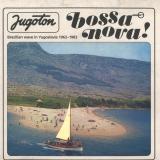
In the whirlwind of various musical styles, Latin American music still played important part of the scene in the early sixties Yugoslavia. Beguine, tango, rhumba, samba, calypso, mambo and cha-cha-cha all found their place on the festivals inspired by famous Sanremo, festival of Italian popular song that largely shaped the musical taste of Europe. It was the era of instrumental rock, R & B and rock'n'roll - sounds of "imperialist America" now played freely on imported and hand-made electric guitars. While dancing halls had been turning into concert venues, bossa nova has come! Eydie Gorme with Blame It on the Bossa Nova and Paul Anka with Eso Besso (That Kiss!) tried to make us learn some new dance moves but it was Joao Gilberto's gentle singing and his new way of playing samba songs, along with Tom Jobim's modern dissonant harmonies and poetry of Vinicius de Moraes that created the magic. When American alto saxophonist and flautist Bud Shank visited Zagreb and Ljubljana in 1963 (with Boško Petrović in his quintet) "it was the first time we heard bossa nova!" remembers Stjepan Braco Fučkar. Jugoton, the biggest record company in Yugoslavia, released 4-track EP Bossa Nova by Bogdan Dimitrijević and his ensemble that same year! While not being fully accepted or understood completely, the archives of Jugoton reveal to us various interpretations of this new trend from their vast catalogue.
Intifaxa is the first part in a series of 4 outstanding double vinyl albums with bonus songs, previously released on CD between 1990 and 1994 on the Australian cult label Extreme Music.
Intifaxa is full of heavy percussion fire with deep tribal grooves, embedded in modulated field recordings. The album is a transcendental journey into Eastern soundscapes and a secret weapon for DJs who enjoy to tear down the borders of tribal underground house and psychedelic trance music.
The original tracks were perfectly remastered for this first time ever vinyl release and the new masters received high praise from the Extreme Music owner Roger Richards.
New sleeve designs were created by Oleg Galay, who is famous for his artworks for many Muslimgauze reissues.
All 4 album covers are made from extra heavy cardboard with deluxe spot UV finish and inside print.
Black[56,26 €]
Coloured[76,43 €]
A long-lost masterpiece of Yugoslavian jazz-funk and disco finally returns! Originally released in 1979 on the iconic Jugoton label, YU Disko Expres by Igor Savin and Orkestar Stanka Selaka is a rare gem—an electrifying fusion of jazz, funk, electronic music, and traditional folk elements. Decades ahead of its time, this album remains a strikingly modern and danceable exploration of sound, seamlessly blending synthesizers with tight horn arrangements and deep, infectious grooves.
Igor Savin, one of Croatia’s most respected composers and pioneers of electronic music, was a driving force in blending contemporary jazz with emerging electronic sounds. A classically trained musician with a deep love for jazz, he left a lasting mark on the region’s music scene, working across film, TV, and avant-garde composition.
Backed by an all-star ensemble featuring some of Yugoslavia’s finest musicians—trumpeter Stanko Selak, bassist Miljenko Prohaska, drummer Silvije Glojnarić, saxophonist Stjepan Mihaljinec, and more—YU Disko Expres delivers an unparalleled groove that has remained a collector’s favorite for decades.
For the first time ever, this sought-after album gets an official reissue, fully remastered from the original tapes. DJs, hip-hop producers, and groove aficionados take note: YU Disko Expres is back, sounding fresher than ever. Don’t miss your chance to own a piece of Yugoslavian music history!
- A1: Darko Domijan - Zlatokosa
- A2: Plesni Orkestar Rtz - Quiz-Balet
- A3: Dalibor Brun - Svađamo Se
- A4: Novi Fosili - Ti Koja Ne Gledaš Me Nikad
- A5: Vis Mi- Jednog Od Ovih Dana
- B1: Muharem Serbezovski - Diskoteka
- B2: Miki Jevremović - Ti I Ja
- B3: Tihomir Pop Asanović- Telepatija
- B4: Zlatni Prsti - Prsti Od Plastike
- B5: Pop Grupa Selekcija - Magle
- B6: Spektar - Kao Sad
- C1: Zdenka Kovačiček - Frka
- C2: Cod - Moja Mala Na Popravni Pala
- C3: Meta Sekcija - Fly By Jat
- C4: Nina Spirova - Ljubov Od Minatoto
- C5: Josipa Lisac - Čarobna Moć Mjeseca
- C6: The Montenegro Five - Soul Finger
- D1: Igor Savin - U Mukama Rođena
- D2: Marijan Kašaj- Bo Bo
- D3: Grupa 777 - Potraži Svoj Dom
- D4: Jazz Sextet Boška Petrovića- Trogir By Day
Jugoton Funk is back with a second instalment gone funkier and crazier than before - now capturing even the early 80s disco and folk decadence occurring after Tito’s death. Jugoton, the Yugoslavian discography leader by all standards, still incites our inspiration and keeps our fingers dusty for more beats, soul and jazz presented here in equal proportion. From unreleased Jugoton associated numbers by Spektar and breakbeat bombshell classics like Zlatokosa to early Yugoslavian Soul Finger renditions and groovy jazz infusions from Josipa Lisac - this compilation rounds it all up. Enjoy it while we take another 5 years to get to Vol.3.
- 1: Prepad
- 2: Svetski Osmeh
- 3: Daj Mi Sansu
- 4: Progresio Sam
- 5: Djuskaj
- 6: Kupatilo Je Shvatilo
- 7: Meterology
- 8: Otisli Smo
Original[30,88 €]
ŽUR (‘Zhure’, party) is absolute cult and one of the most rare Yugoslavian disco funk albums, originally recorded in 1981, reissued on Everland Music for the first time since the original vinyl came out more than 40 years ago. The album was carefully and brilliantly remastered by grammy nominated sound engineer Jessica Thomson.
Boban Petrović is a legend of Belgrade's sophisticated disco funk scene from the late 70s and early 80s.
Back in the second half of the 70s Boban started one of the first disco clubs in Belgrade and he was one of the biggest organizers of private house parties.
The finest balance between Boban Petrović's big-hearted party-maker-turned-philanthropist personality and his hustler one was achieved on Žur.
On Žur, he is at home, in his safe place, since the parties, the music and the people are the first out of many things he had completely figured out in his life. He is at the top of his game, occasionally bothered by a casual heartbreak, but always feeling himself, coming out playful and fundamentally peaceful, satisfied and ready to transcend himself in order to put the rest of the world in the limelight. In fact, Žur isn’t about the party, music, lyrics or its, hands down, beautifully balanced sonics. It’s about Boban and the funk he lived thoroughly. The funk before, but the funk he lived after this album even more so. All the ups and downs that he faced since the moment the first needle dropped on a Žur record to this very day are on this album as the unwritten destiny of that lighthearted character he played.
In short, ŽUR represents the essence of underground club life in Belgrade from the late 70s, when the album was recorded.
The quality of this trust is confirmed by the fact that Boban Petrovic's music is still actively listened to today, not just anywhere, but at the finest club events.
High end production and extremely authentic arrangements outside the mold of classic disco music, and lyrics that literally convey the vibe of his already jet-set lifestyle in Belgrade at the time.
Shortly after his musical career, Boban Petrovic became a businessman of the conscious class. He was living in Spain on his own luxury yacht for years, he had a private airplane, a car park. But all this time living on highest class level he never lost his identity. In all his offices, yacht, airplane and everywhere was playing loud funk music and he was dressed like a musician who just finished or need to start a gig.
Along the way Boban also wrote two books: Rokanje 1 & 2 describing the time when the album ŽUR was created.
The ŽUR album is one of the the holy grails of disco funk music releases on a global level.
ŽUR (‘Zhure’, party) is absolute cult and one of the most rare Yugoslavian disco funk albums, originally recorded in 1981, reissued on Everland Music for the first time since the original vinyl came out more than 40 years ago. The album was carefully and brilliantly remastered by grammy nominated sound engineer Jessica Thomson.
Boban Petrović is a legend of Belgrade's sophisticated disco funk scene from the late 70s and early 80s.
Back in the second half of the 70s Boban started one of the first disco clubs in Belgrade and he was one of the biggest organizers of private house parties.
The finest balance between Boban Petrović's big-hearted party-maker-turned-philanthropist personality and his hustler one was achieved on Žur.
On Žur, he is at home, in his safe place, since the parties, the music and the people are the first out of many things he had completely figured out in his life. He is at the top of his game, occasionally bothered by a casual heartbreak, but always feeling himself, coming out playful and fundamentally peaceful, satisfied and ready to transcend himself in order to put the rest of the world in the limelight. In fact, Žur isn’t about the party, music, lyrics or its, hands down, beautifully balanced sonics. It’s about Boban and the funk he lived thoroughly. The funk before, but the funk he lived after this album even more so. All the ups and downs that he faced since the moment the first needle dropped on a Žur record to this very day are on this album as the unwritten destiny of that lighthearted character he played.
In short, ŽUR represents the essence of underground club life in Belgrade from the late 70s, when the album was recorded.
The quality of this trust is confirmed by the fact that Boban Petrovic's music is still actively listened to today, not just anywhere, but at the finest club events.
High end production and extremely authentic arrangements outside the mold of classic disco music, and lyrics that literally convey the vibe of his already jet-set lifestyle in Belgrade at the time.
Shortly after his musical career, Boban Petrovic became a businessman of the conscious class. He was living in Spain on his own luxury yacht for years, he had a private airplane, a car park. But all this time living on highest class level he never lost his identity. In all his offices, yacht, airplane and everywhere was playing loud funk music and he was dressed like a musician who just finished or need to start a gig.
Along the way Boban also wrote two books: Rokanje 1 & 2 describing the time when the album ŽUR was created.
The ŽUR album is one of the the holy grails of disco funk music releases on a global level.
"Deep Dancefloor Jams of African Disco, Funk, Boogie, Reggae & Proto Electro Music 1977-1986reggWhen a passionate DJ and crate digger intuitively selects music for a DJ compilation, without artistic compromise and without the burden of trends, AfroMagic vol.1 emerges from the depths of his soul. Herewith we present the new favorite phonomancer’s tool for all the DJs who experience the dance floor as a sanctuary and a source of freedom and love.
The most fundamental thing that defines African music is that it was created for dancing. In African dance, there is often no clear distinction between ritual celebration and social recreational entertainment – one can seemlessly merge with the other. Because dance and rhythm have more power than gesture and more richness than words, and because they express the deepest experiences of human beings, dance is in itself a complete and self-sufficient language. It is truly an expression of life with all of its emotions – joy, love, sadness and hope – without which there is no African music and dance. For the African people, dance and music are integral parts of the body and soul, thus depicting the expression of life, current emotional states, visions or dreams. Through hypnotic repetitive music and dance, people communicate with each other and with the souls of the dead, the animals, the plants, the stars, the Gods… They free the body and the spirit through ecstatic states, reaching a healing sense of freedom, happiness, and satisfaction.
Throughout history, this transcendental perception of rhythm and dance originating from Africa, influenced popular music worldwide, thus creating new living and breathing forms of musical genres – freeing them from their industrial mold. Funk, disco, soul, boogie, reggae, dancefloor jazz etc., developed in parallel all over the world. It is foolish to perpetually discuss where they originated from and who were the creators of all these fiery dance floor genres – being obvious that they directly or indirectly originate from the African continent and its people who were as well, over the centuries, influenced by disturbing socio-cultural factors of colonialism. However, no one can enslave the soul. The seeds of free and uninhibited dance and rhythm, true to their original form, initially first sprouted onto the USA’s fertile fields of clubbing and popular music while later evolving in other parts of the world.
The disco funk club culture manifested itself as a phenomenal explosion of artists and grooves in the second half of the 70s in the USA. Shortly it spread around the world continually reigning over charts in its various forms – to this day. Clubs emerged where the DJ is an almighty shaman and the dancers are a tribe united under one roof. This urban ritual had and still has a single goal: togetherness, freedom, and love. Clubs have evolved into temples where we free ourselves from the burden of a consumerist lifestyle and suppressed emotions – a place where we receive love and give love – to be who we really are.
Disco funk clubbing was such an influential global phenomenon that its influence can be observed in various other genres from the disco funk era i.e. progressive rock, which mutated by layering complex rock arrangements with a disco funk groove resulting in hybrids, highly sought by today’s diggers, producers and collectors. The profit-hungry music industry of the 80s very quickly commercialized the original disco funk sound by amputating of its original Afro groove to be able to easily ‘sell’ it globally. So, the original disco funk groove became underground again, and it has remained so until this day. Today, for a DJ to unearth that ravishing groove that will lead the dancers to the stars, he must dig passionately like a true musical archaeologist in search of that groove that picks you up after just a few initial beats. That groove which forces the atoms in your body to vibrate, that groove which unites the body and releases the burden.
The AfroMagic compilation series is created as a tool for real DJs who stick to the aesthetics and essence of clubbing.
This continuation of the Afromagic compilation by DJ Borovich was created in a private jam session which served as an escape route from intense and complex love problems.
Unconsciously driven by intuition and emotion and following a live mix tape framework where many tunes are arranged instantaneously, Borovich narrates his story with a strong rhythm that cuts loose even the most blocked off energy nodes and restores happiness to the spirit and the body.
The musical experience of the groove is completed by the lyrics of the songs, which symbolically give DJ Borovich universal answers to his questions arising from questioning the boundaries, nuances and other forms of love.
When considering that Borovich’s selection was created to facilitate an escape from the burdens of reality through rhythm and dance, we can be sure that Afromagic Vol. 2 will have a 100% uplifting, energized and spaced-out effect on the listeners.
The intro to A1, “Feeling Happy” by the Apostles, introduces us to an experienced and slow, cool and irregularly tight groove containing a confidently sung chorus that instantly gives a sense of freedom and hints at the remainder of Afromagic Vol. 2: “I’m gonna feel happy, ´cause I know I’m gonna be myself.” After the anthemic song mantra of the Apostles, Aigbe Lebarty uncompromisingly continues with a dirty disco rhythm. Acidified by accented synths that elevate it to shamanic levels and held together by a female tribal choir, we embark on an uncompromising ritual disco journey. Without a moment to take a breather the prog funk band Mighty Flames and their Road Man launch a highly vicious and raw, thick funk groove spiced with acid synths and dirty RnR breaks, raising the bar for the A side. Jimi Hendrix himself would surely praise it given the ultimate freedom and virtuosity in the solo sections. With the last tune on A side DJ Borovich decides to burn the floor with Geraldo Pino’s psychedelic, acid furious groove and lyrics which describe this HEAVY part of love problems: “The way she walk, the way she talk, the way she does a funky dances, she is really really heavy – that woman”.
While the A side represents a compact intoxicating afro groove machine that separates us from reality and lifts us up to the stars in over 23 minutes, the B side is a treasure trove of proto sub-genres gems. This selection represents the mission of the Afromagic: to find singular events in African recorded discography of popular music from the 70s and 80s that give evidence to the birth of new modern genres on the Dark Continent even before they emerged in the U.S.A. or Europe. The beginnings of electronic music influenced genres are represented back to back with 80s synth jazzy pop, all painted in African colours.
The B side opens big with Jake Sollo and a huge reggae blues number singing about the humiliation of a man – goosebumps guaranteed! “You think I’m nobody that’s why, you don’t know the way for me, I’m somebody I know, I found myself at last”. Adolf Ahanotu then enters the scene with a hard sliding tackle at B2 and an exotic rare disco funk dancefloor napalm. A ‘Sensation’ that would ignite even the coldest of introverts. While we approach the end of the compilation the narrative revolves again and takes a different turn. No less and no more than to the proto-electro that Baad John Cross serves us in “Give Me Some Lovin´”. The fat and repetitive broken electro synth groove, championing many early 90s electro tracks, is presented here without hesitation and with constant tension accompanied by a mantric chorus “Gimme some, gimme some, gimme some looooovin’, EVERBODY!!!”. Finally, we’re guided to the end of Afromagic Vol. 2 by Eji Oyevole’s 80s synth pop style presented in an authentic afro manner, giving us a glimpse at yet another released Afromagic edition, as well as giving an answer to DJ Borovich’s love problems. A smoothly broken electronic rhythm resembling electrified highlife sounds, carried on the wings of a virtuoso dreamy saxophone on top of which Eji presents the most intimate parts of himself. Finalizing the track with a symbolic chorus, on the surface referring to the dancefloor and simply having fun, but in actuality referring to the skill and happiness of living: “I´m a dancer, I can dance”. So, get up and dance among the stars with DJ Borovich and Afromagic.
Some of us love PIC vinyl but some don't. NWW do loves PIC vinyl, but please take note - that picture “vinyl” is no audiophile format, it’s a collectible format. Especially for music like NWW with its wide stereo spread, swirling high frequencies, and deep droning basses. The more stereo and bass, the wider and deeper the grooves have to be, to provide all information to the needle. But picture discs have only a very thin plastic foil over the pictures, it’s no vinyl, just plastic, similar to pet bottles. On picture “vinyl” can not be pressed so deep and wide grooves, that it would sound as well as a real vinyl. That’s the same for ALL picture LPs, not only NWW.
General conclusion:
Of course, our picture LP editions are enjoyable to listen to! But to get the best sound quality, you should choose the 2CD version, those sound best. For your collection just buy whatever you think looks best.
Includes digital pre-order of Thunder Perfect Mind. You get 6 tracks now (streaming via the free Bandcamp app and also available as a high-quality download in MP3, FLAC and more), plus the complete album the moment it’s released.
Brilliantly remastered (picture) LP/CD with new stunning artwork!
Lo-Fi India Abuse was recorded in 1998, some tracks are “pure” Muslimgauze and some are re-mixs of tracks from Systemwide’s “Sirius” CD (see also Systemwide meets Muslimgauze “at the City of the Dead” 12″). Nearly all of the tracks have hand percussion in varying tempos and intensities and at least 1/2 make use of electronic noise surges. The sound is very crisp and clean, extremely well produced, recorded and nicely varied throughout the length of the disc. Some track by track comments: “Antalya” is obviously from the same sessions as “Fakir Sind” seeing as it shares the same hand percussion sound, whistles, vocal wailing, cut-ups and delays. “Valencia Flames” sounds like a Systemwide remix. A dub bass line, hi-hat and background vocal of some sort are all obliterated by numerous delays, starts, stops and re-starts with an unpredictable nature in these cut-up tracks. “Al Souk Dub” injects background voices, market sounds and drones into the cut-up mix of slow hand percussion playing. “Catacomb Dub” and the final two tracks make use of twinkling synth waves, presumably a Systemwide sound source. “Dust of Saqqara” has a heavy pulsating electronic sound wave over an old beat box rhythm. “Android Cleaver” is brutal (as is “Nommos’ Afterburn”) hand percussion, jabs of noise and an oft repeated, unintelligible vocal sample. Yes, Lo-Fi India Abuse is yet another great Muslimgauze release, grab it!
All tracks recorded by Muslimgauze 1998
Some tracks are re-mixes from Systemwide’s “Sirius” album
Re-mastered by Višeslav Laboš
Sleeve by Oleg Galay
Originally released in 1999 via BSI Records (BSI 1999-3).
- 1. Soul Sound Band - Ljubavna Pjesma 3:33
- 2: Grupa Škrgatić - Tarbuk - Uzmi Riječi 4:39
- 3: Grupa Škrgatić - Tarbuk - Prvi Put 2:0
- 4: Grupa Škrgatić - Tarbuk - Trenutak Jedne Misli 3:52
- 5: Grupa Marina Škrgatića I - Bumbarov Pjev 4:40
- 6: Grupa Marina Škrgatića Ii - Prirodi 5:30
- 7: Grupa Marina Škrgatića Ii - Čežnja (Alternate Take) 4:05
- 8: Grupa Marina Škrgatića Iii - Karneval 3:04
- 9: Grupa Marina Škrgatića Iii - Rastanak 2:46
- 10: Grupa Marina Škrgatića Iv - Tko Remeti Tvoj Mir 2:19
- 11: Grupa Marina Škrgatića Iv - Prijateljstvo 3:29
In 1974, a brash young designer called Augustus Kerry Taylor had an idea. He'd gather together the hottest musicians in Ghana and record an album of the heaviest and funkiest sounds coming out of America. And this time, he wouldn't just design the cover, like he'd done with Fela Kuti, he'd even release it on his new label, Emporium, as well. Local Accra legends Joe Wellington, Jagger Botchway, Leslie Addy, Officer Toro, Oko Ringo, Soldier and Steve answered the call. They were christened the Kelenkye Band and gelled immediately. Moving World, is a funky, disparate album that exudes a rare warmth, enthusiasm and togetherness. 'Moving World' and 'Brotherhood of Man' are hard, grinding funk. 'Jungle Music' has a more soulful groove. There's also a bit of reggae, 'Dracula Dance', and old-skool highlife, 'Wale Tobite'. Accra's leading DJ, Charlie Sam, declared his mind 'well and truly boggled.' The Kelenkye Band never recorded another album. Augustus Kerry Taylor shut down Emporium and went back to designing album covers. But in Moving World they delivered a perfect moment of funk alchemy that has rightly become the Holy Grail of 70's Ghanian groove. - Peter Moore / Licensed by the bandleaders and songwriters of the album, Joe Wellington and Jagger Botchway.
Ebalunga!!! is thrilled to announce the first official reissue of the self-released, self-produced, and self-titled 1985 LP Scott Seskind. The album is a lo-fi singer-songwriter jewel. Don’t miss it.
“Authentic and personal, at times it reminds this writer of luminaries such as Jackson C. Frank, PF Sloan, Skip Spence, and Phil Orchs while never feeling derivative.
The songs are melodic and haunting, fueled by existential woes, political angst, and good ol’ fashioned love. Scott’s rich voice has an unpretentious gravitas, his simple-yet-effective guitar playing ranging from delicate fingerpicking to angry bashing.
Created at home on a Tascam 4-Track Portastudio, the recording features few frills and is all the better for it. Unlike most mid-80s records it sounds like it could have come from any time since the late ’60s onwards. As a testament to its greatness, and despite the late recording date, it even gets a nod on Patrick Lundborg’s “Acid Archives” compilation website, Lysergiawhere it’s described thus: “Late phase downer-loner folk and singer-songwriter trip, mostly acoustic, some tracks with a small band.” – Andrew Ure for Ugly
Things.Read a long story about the album in the upcoming Shindig! issue: Story about Scott Seskind in Shiding Mag.
The reissue is available on vinyl with a lyric insert.
Mastering (as always) by Jessica Thompson.
Feedbacks and reviews:
“Almost totally inheralded singer-songwriter Scott Seskind gets the reissue treatment, and I couldn’t be happier. About a year ago I pulled Seskind’s sole vinyl release out of the used bin of a Boulder record store, and with its almost Wallace Berman-esque cover art, could immediately suspect it was something special. The first listen didn’t dispel that notion one bit; here was an impressively captivating and moving collection of four-tracked bedroom folk of the highest order, with an out-of-time vibe that didn’t really snyc with its 1984 recording date. Definitely on the loner-ish end of the folk spectrum, with some aspects of the album harkening back to Skip Spence’s iconic Oar, while other moments revealed the urgency of the ’80s lo-fi revolution. But most importantly, the songs were just really, really great and managed to remain haunting long past their leaving.
Here, I thought, is an album that needs to be heard by more people, NOW. I asked around amongst some record collecting friends and discovered it was pretty highly rated by a small circle of people in the know, and that it had even managed to garner a mention in the Acid Archives despite its late recording date, and most excitingly that there was talk that the digital reissue label Yoga had managed to track Seskind down and secure the rights to his LP. (…) So here we have it, the best songs from Seskind’s eponymous LP. (…) I really hope this release continues to garner the listeners that it deserves.” – Michael Klausman
“The one that struck us the most this year was the almost totally unheralded work of singer-songwriter Scott Seskind, who recorded an impressively captivating and moving collection of four-tracked bedroom folk of the highest order, with an out-of-time vibe that doesn’t really sync with its original 1984 release date. Definitely on the loner-ish end of the folk spectrum, with songs that are really, really great and which manage to remain haunting long past their leaving. Truly an album that deserves to be heard by more people immediately. ” – Other Music
Reissue of this cult 1972 album which featured on the infamous Nurse With Wound List.
During the long, dark hangover of the Summer of Love, the classically-trained Essex prodigy approached CBS Records with demo recordings. A forward-thinking A&R executive must have seen a potential revenue stream in Don Bradshaw-Leather's avant-classical noise. The artist was given an advance to record an album. He used the funds to create a large studio in Sussex with many instruments including an actual church organ. Here, on his own, without the use of any electronic sequencing, he recorded "Distance Between Us" using simply multitrack tape, layering each part of the composition. Upon hearing the product of their financial investment - four side-long tracks of blurry organ drones, frantic piano tinkling, and ritualistic percussion - CBS got cold feet.
The album was self-released on Bradshaw-Leather's own Distance imprint; a vanity label established for the sole purpose of releasing the album. The sleeve art is full of mysteries, from the misspelling of "Bradshaw" ("Bradsham"), to the coal-blackened visage of the bohemian madman on the cover (DBL himself?), to the rear photo collage depicting the same madman accosting a nude woman. The music isn't any less mysterious; shapeless symphonies of smeared-out Mellotron, tribal drums, and wordless vocals. Don Bradshaw-Leather passed away in the 90's.
Presented in a matt-laminate gatefold digisleeve.
Brilliantly remastered (picture) LP/CD with new stunning artwork!
Lo-Fi India Abuse was recorded in 1998, some tracks are “pure” Muslimgauze and some are re-mixs of tracks from Systemwide’s “Sirius” CD (see also Systemwide meets Muslimgauze “at the City of the Dead” 12″). Nearly all of the tracks have hand percussion in varying tempos and intensities and at least 1/2 make use of electronic noise surges. The sound is very crisp and clean, extremely well produced, recorded and nicely varied throughout the length of the disc. Some track by track comments: “Antalya” is obviously from the same sessions as “Fakir Sind” seeing as it shares the same hand percussion sound, whistles, vocal wailing, cut-ups and delays. “Valencia Flames” sounds like a Systemwide remix. A dub bass line, hi-hat and background vocal of some sort are all obliterated by numerous delays, starts, stops and re-starts with an unpredictable nature in these cut-up tracks. “Al Souk Dub” injects background voices, market sounds and drones into the cut-up mix of slow hand percussion playing. “Catacomb Dub” and the final two tracks make use of twinkling synth waves, presumably a Systemwide sound source. “Dust of Saqqara” has a heavy pulsating electronic sound wave over an old beat box rhythm. “Android Cleaver” is brutal (as is “Nommos’ Afterburn”) hand percussion, jabs of noise and an oft repeated, unintelligible vocal sample. Yes, Lo-Fi India Abuse is yet another great Muslimgauze release, grab it!
All tracks recorded by Muslimgauze 1998
Some tracks are re-mixes from Systemwide’s “Sirius” album
Re-mastered by Višeslav Laboš
Sleeve by Oleg Galay
Originally released in 1999 via BSI Records (BSI 1999-3).
After almost two years of work, we're glad to invite you to a new journey through the fog of time and enjoy the upcoming reissue of the great Ambient/Folk record from 1984. A well-known to collectors but extremely rare record by Jon Iverson a multi-instrumentalist from Palo Alto and his college friend, mandolinist Tom Walters. They shared a love for singer/songwriter fare and gigged around campus playing covers of Neil Young, CSN, and Loggins/Messina in the late '70s.
"First Collection" was recorded during the Spring of 1984 in a small garage that had been converted to a one-room apartment in the seaside community of Los Osos, California.
With an instrumentation of 12-string guitar, piano, mandolin, analog synthesizers, and sampler, the duo has recorded nine bright, weightless, and diverse compositions where electronic experiments mix with ethnic rhythms, sweeping through inspired folk reminiscent of the work of William Ackerman, John Fahey, Master Wilburn Burchette, and Robbie Basho, to homemade pastoral space folk exuding sophisticated, pale, lunar sonic moods that somehow might remind of the work of Roedelius from the early 80s.
Equipment used for tracking included a rented 1/2" 8-track Otari MX5050 analog tape machine and assorted mics. With only a few thousand albums pressed, First Collection has become a collectable in some circles.
Now, almost forty years later, First Collection has been remixed and remastered from the original 1/2" tapes for this release.
* "The Ape of Naples” is a deeply emotional and uniquely rewarding album. In its immediate accessibility it is somewhat reminiscent of their mid-1980s classic “Horse Rotorvator”
* The Infinite Fog version is the third Coil record receiving the fully remastered and enhanced 3LP/2CD treatment supervised by Danny Hyde.
* Includes 9 additional rare or unreleased tracks.
* All of the original material has again been carefully and sympathetically remastered by Grammy-nominated engineer Jessica Thompson who has been previously lauded for her splendid job on its sister release “The New Backwards”.
* The 3LP comes in heavy trifold cover, CDs in 6-sided Digpaks with booklet and posters.
- A1: Laboratorija - Jugoton Express
- A2: Laboratorija - Devica 69
- A3: D'boys - Zaba
- A4: Beograd - Sanjas Li U Boji
- A5: Data - Neka Ti Se Dese Prave Stvari
- A6: Brazil - Gdje Nema Te
- B1: Denis & Denis - Jugoton Express
- B2: Denis & Denis - Ti I Ja
- B3: Du Du A - Romance
- B4: The Master Scratch Band - Pocket
- B5: U Skripcu - Noc Ca, Ca, Ca
- B6: Parlament - Kad Je Kraj Blizu
- C1: Dorian Gray - Jugoton Express
- C2: Dorian Gray - Tonemo U Mrak
- C3: Hc Andersen - Palcica
- C4: Sladana & Neutral Design - Neko Je Tu (Sa Mnom U Sobi) (Sa Mnom U Sobi)
- C5: Amila - Vodi Me Iz Ovog Grada
- C6: Tuzne Usi - Ti Me Uci
- C7: Zana - On
- D1: Oliver Mandic - Jugoton Express
- D2: Oliver Mandic - Dode Mi Da Vrisnem Tvoje Ime
- D3: Hc Andersen - Snjezna Kraljica
- D4: Dubravka - Harakiri
- D5: Milka Lenac - Ponocni Express
- D6: Nicky - Radio Video
- D7: Mladen Kusec - Tonkica Palonkica Frrrrrrr
Synthetic Music From Yugoslavia 1980-1989
"The galloping technical progress in the second half of the last century dominated all spheres of daily life, art and culture. In the music industry machines took over the role of classical instruments and did not stop at RnR, punk nor industrial music. No one could resist the challenge, but also the prevailing trends in the 80s. The music industry was influenced by the electronic virus globally, not sparing even the remotest corners of the planet, producing bands like Depeche Mode, New Order, Soft Cell or lesser known ones like Liquid Liquid, Section 25, The Wake as well as the pioneers of the electronic music Silver Apples, Pierre Henry,etc .

What was going on in the music industry of former Yugoslavia and at Jugoton, the biggest YU music label at that time? The all over answer is given by a new release of Everland Music: Electronic Jugoton - Synthetic music from Yugoslavia 1964. - 1989. Vol. 1
Electronic Jugoton is the first part of two double albums, where the second part will even go back to pre-electronic music from 1964. Both double albums were initially released by Croatia Records (ex-Jugoton) in 2014 on a 2CD set with no less than two and a half hours of material (47 songs, 35 performers), showing the contemporary trend of Jugoton at that time towards avant-garde and provocative directions in electronic music. This untimely compilation is released for the first time on vinyl now on two double LPs, housed in gatefold sleeves by Everland Music, where part 2 will be released in 2023.
The brave and insightful creators of the compilation Electronic Jugoton, veteran crate diggers Višeslav Laboš and Zeljko Luketić, have excelled at reconstructing the musical past of electronic music in Yugoslavia from 1964 – 1989. Jugoton's extensive research included the most exciting and progressive moments of pop and disco music, early rap, electronic responses of new wave, RnR, post punk and industrial bands to the current trend of the 80s, but also pioneers of avant-garde electronic music.
Electronic Jugoton part 1 is officially opened by the band Laboratorija with the song Devica 69, which opens a window to a completely new and experimental world in former Yugoslavia.Laboš and Luketić have boldly chosen the material without reservations, suggesting that for the first time in one place we have a section of forgotten, unique underground bands like Beograd, Data, Brazil, The Master Scratch band, DU DU A and beyond.
Besides the excellent underground bands, we find popular performers of the time performing less well-known songs: Denis & Denis, Oliver Mandić, Slađana & Neutral Design.
Electronic Jugoton part 2 is partly dedicated to unique electronic music in the performance of important Yugoslav punk, new wave, RnR and industrial bands: Zana, Pekinška patka, Električni orgazam and Borghesia, while the second part of the material is focused on avant-garde early electronic music in Yugoslavia, where the works of composers Igor Savin, Branimir Sakac, Igor Kuljerić and Miroslav Miletić were presented. Luketić and Laboš rescued the obscure electronic tune Elektra by Zdenka Kovačiček, who was at that time Jugoslovska Soul and funk diva.
The uniqueness and quality of this compilation are also audio stories for children, which were extremely fertile ground for an experimentation with electronic sounds, as they should be highly imaginative to attract the attention of the childrens. Electronic Jugoton is also the first compilation in which the listener will find fragments of interviews with actors from the time gave for Jugoton Express. This was a series of promo vinyls printed in extremely small quantities in the 80's and intended to be exclusively for radio stations. An average of 30 minutes of promotion material and interviews with musicians were available for the first time through this compilation.
The value of this compilation is time and priceless. The only question is whether you will be fast enough to catch your copy of the limited double vinyl editions!"
- 1: Ponor Naviše – Uplifting Abyss
- 2: Prolećna Groznica – Spring Fever
- 3: Hej Krčmarice – Hey Waitress Mama
- 4: Blue Kum – Blue Best Man
- 5: Dan Za Danom – Day By Day
- 6: Uspomena - Memento
- 7: Ne Dolaziš Više U Moju Ulicu – You Don’t Come By My Street No More
- 8: Moja Soba – My Room
- 9: Sećanje Na Prošlo Leto – Remembering Last Summer
- 10: Balada - Ballad
What would you do if a never before released jazz funk album from 70s Yugoslavia had dropped suddenly into your arms? An album which sounds like a crate diggers holy grail!? Album full of heavy drum breaks, repetitive bass grooves, superb sax solos and world class jazz arrangements finely intertwined with Yugoslavian folk music elements?! - “PRESS IT!” ~ That’s what we said always striving to present the future of unheard sound of Yugoslavia! With the help from Mr. Cosmic himself (Željko Kerleta), Jovan Maljoković and his wife Nevenka and, of course, Radio Belgrade who provided the recordings buried deep in their library, here we present Jovan’s first vinyl release since 1989 and his album nr. zero. If this LP was released in 1976, sounding this clear and impressive as it sounds today, it would be up on the pedestal with cult Yugo jazz-funk releases such as Sećanja by Miša Blam (also released on Everland) – and believe me – it would burn a whole through your wallet. Don’t allow me to get started on the Jovan’s ensemble personnel here, represening the crème de la crème of jazz and funk instrumentalists of Yugoslavian Jazz (Goce Dimitrovski, Miloš Krstić, Kire Mitrev, Miodrag Maljoković, Aleksandar Sanja Ilić, Miša Blam, Uroš Šećerov...). The raw execution, top recording and compositions resembling but not imitating the greatest contemporary western jazz-funk ides of the time, that sound like something that could have been easily released on Mainstream, Columbia, MPS or even be an authentic Kudu hit record if it had been released at the time by Creed Taylor. Just listen to the track A1 Ponor Naviše with a whirlwind of big band arrangement turnovers or track B1- Uspomena (hint: Sećanje...) where Jovan takes on the ‘Lame donkey’ in a strong downbeat rearrangement released just two years after Volker Kriegel published it on his album Lift! (MPS/BASF 1973.). You’ll be blown away by the instrumental prowess of the ensemble and Jovan’s ideas! ~ Dr. Smeđi Šećer
1982's 'Heart And Soul' is a masterpiece of '80s soul funk with a pop edge that will excite fans of Chaka Khan, Sade, Luther Vandross, The Temptations or Marvin Gaye with well-crafted memorable songs that show a great production and lush arrangements that reveal many quirky only with further spins on the turntable. A holy grail for collectors finally made available again.
A compelling slice of Canadian funk from the late 70s - a group and album who were inspired by the righteous power of James Brown's famous Payback album - but who come across here with a warmer, clubbier feel overall! There's a nice degree of boogie in the mix, but the overall approach is definitely funk - with bumping basslines underneath tight horns, including plenty of sweet Fred Wesley-styled trombone. Yet other club elements come into the mix too - keyboards and a bit of strings at times, which warm things up nicely alongside the tighter bottom rhythms - but always in a way that's still relatively funky overall. Most cuts have an instrumental focus - but there's also female chorus vocals on a number of tracks too - and titles include "Le Payback", "Struttin", "Feelin Good", "Funky Feelin", "The Forge", and "The Mad Mechanic".
In opposite to other Nigerian acts which hardly got known beyond the borders of their homeland, BLO were always very popular in the Western world. Accompanying Ginger Baker of CREAM fame was the first step to break them into the western popular music market of the 70s and what followed could be called an African fairy tale.
Still this, their fifth album from 1979, waited a long time for a proper reissue, especially on hot black wax with originals in good conditions fetching prices of 300 € and more. For fans of 5th Dimension, The Temptations, Hot Chocolate, Earth, Wind & Fire. First ever and long overdue official reissue of this long lost Nigerian disco classic from 1979. Fifth album by one of The most outstanding Nigerian 70's afro beat acts.
RE-pressed and available again on 9th november 2018! The Gunesh Ensemble was founded in 1970 in Ashkhabad, Turkmen Soviet Socialist Republic, then part of the Soviet Union. They started out as a vocal group with supporting musicians from Turkmenistan State Radio and TV. Later several young musicians came to play with them and the band's music became much more modern. The group began to play jazz-rock tightly intertwined with traditional Oriental music. With that new musical style the band participated in some popular festivals around the Soviet Union. They received various awards and became very popular. Gunesh has always been in the process of developing and was one of the first and best local jazz-groups to organically combine the principles of jazz and melodic improvisation. The remarkably beautiful arrangements and polyrhythmic compositions were always further developed thematically. This process was highly praised at the Moscow competition With A Song On Life in 1977 where the ensemble became a prize-winner. The Organizing Committee of the Festival Spring Rhythms in Tbilisi (1980) called out members Rishad Shafi as best drummer and Stanislav Morozov as best saxophonist. This, their very fine first LP was originally released in 1980 on the Soviet state label Melodyja and contains traditional Central Asian music in jazz-rock arrangements plus a Vietnamese singer. The line-up has changed many times. Around 65 musicians have been a member of the group at some point in time.
Mutima is the debut album led by bassist Cecil McBee recorded in 1974 and first released on the Strata-East label. In his review for Michael G. Nastos called it "A landmark recording in early creative improvised modern music" and states "McBee as a pure musician has staggering technique, rich harmonic ideas, and an indefatigable swing, but it is as a composer that he is set apart from other musicians of this mid-'70s era... Mutima (translated as "unseen forces") undoubtedly solidified his stature and brilliance as a major player". Dustygroove now calls it: 'A great bit of spiritual soul jazz - and one of the few albums as a leader recorded by the legendary bassist Cecil McBee! Cecil's joined here by a large group of players that includes Billy Hart on drums, George Adams on tenor, Onaje Allen Gumbs on piano, Jimmy Hopps on percussion, Art Webb on flute and Dee Dee Bridgewater on vocals - adding in just a touch of soulful color to the record as she did on a few other 70s sides like this.' Plus: 'The music's got that essential Strata East sound, with a rich and spiritual vibe on all tracks, and slight bits of funk hiding somewhere in the mix! Tracks are long and freely expressive - but never too outside, either.' A long lost classic we call it. And this latest reissue is the best vinyl version ever since it first appeared almost 45 years ago!
Recorded already in 1983/84, these soulful songs still show a relation to 1970s soul pop with lush
arrangements that work with real instruments and have a vibrant atmosphere. An all in all memorable songwriting
and the incredible vocals of Mavis Staples from The Staple Singers make the album stand the test of time, even 35
years after the initial recording sessions and 25 years past its first CD/MC release. Licensed by legendary BRIAN
HOLLAND and for the first time on vinyl now by EVERLAND!
Mavis Staples has come to fame and fortune as member of the family vocal group THE STAPLES
SINGERS from the late 50s onward to the mid 80s and she has released a fair amount of solo albums as well,
many of them in recent years. - Love gone bad' is a solo effort from 1993, originally titled - Mavis Staples' and only
released on CD and cassette back in the days. So EVERLAND have now done the right thing and put out the first
ever vinyl of this gem. And a real gem can be found here. Soul music in a down tempo with a slick production and
lush arrangements that still have this vivid expression making it real music by real musicians. The songs contained
on this album all date back to the early 80s, from a session not released until 1993. The melodies and the way the
compositions flow go back to a mid to late 70s soul pop style that incorporates elements of funk and dance music
but in a moderate pace. You can easily float upon the dancefloor and drift away in silky dreams. Some tunes have
a synthesized beat with a typical 80s sound, but these are compositions that stand the test of time and 25 years
after their initial release and 35 years after these recording sessions they shine on as diamonds of black soul pop
and R'n'B music (not to be confused with Rhythm & Blues). Mavis sings like a grand lady of soul with a timeless
quality that makes her stand out from the crowd of similar crooners. Even in the most gentle moments here the
tunes have an irresistible groove that moves the listener. But you can also sit and listen and explore piece by piece
digging deeper into the arrangements to unearth great bass and guitar lines. You will sing these vocal melodies
over and over again in the days to come until you throw this onto your turntable once again. I wonder why this did
not see a regular release back in the 80s as it would have led Mavis Staples to the top positions of the charts, Pop,
Black Music and Billboard. She was meant to make an impact and although she was already in her mid 40s when
she recorded this collection of soul nuggets, she brought a lightfooted youthful spirit in, which gives so much life to
her songs. A must have for all aficionados of female fronted soul pop.
This is a long overdue reissue of a fantastic album! Here we find a pure disco classic from the US scene of the late 70s. The original copies retail at plus $300, that's only if you can find one at all! So those who love to spin good music, but are unwilling or unable to lay down too much money can now lend an ear to this fine vinyl! The opening track is 6.5 minutes long and consists of ongoing grooves with a hint of rock thanks to the melodic lead guitar. The driving rhythms are irresistible with soulful and strong female lead vocals that capture you right away. This reminds me strongly of the lengthy Donna summer dance classic, released during the same period 'Better than walking out' which became a dance floor sweeper. There is nothing complicated here, just sheer groove interwoven with catchy melodies. 'Lovin' you is so easy' follows and is a mid-paced soul anthem that comes as clean, slick and close to pop music a tune can come, but the melody of the chorus will stick to your mind. The arrangements are tight revealing several layers of instrumentation on second take. The lead singer's expressive voice matches with the best of its genre. A grand dame of soul familiar to a wide audience. While we ruminate about the different stylistic ingredients of this album we reach ''Woman', an entire instrumental with a straight groovy beat paired by cool funky rhythm guitar that lies beneath a soundscape made by the electric piano. Both seem to interact tightly and communicate with another. This tune just moves you physically with ease. Lushly orchestrated ''Our love is special' turns out to be a wonderful soul pop anthem of the kind that stays with you when you have only enjoyed it once. I'm almost certain that most fans of the late 70's soulful dance and pop will spin this record over and over again. This is what the DISCO LADIES are made for. Their music has this certain disco feeling but the classic 60s Motown Soul roots are so obvious and keep the whole collection of songs so grounded, that the music will go straight to the heart, nestling there for a long time. ''I second that emotion' is again a mid-paced groover that has this fluttering beat with great instrumental figures build upon this footing. One might hear elements of reggae, gospel and funk melting into an utterly joyful soul pop tune that eventually would become an evergreen in the clubs. Last but not least we are treated to ''Woman', again the arrangements of lead and backing vocals are amazing! These are footed by equally amazing strings and horns. These melodies, soulful, expressive, intense and full of joy! The last tune is a vocal version of 'Woman'. Definitely being the highlight of the entire album and a worthy finale for a record that sticks out of the masses of disco music productions of it's era! All this makes a wonderful and delightful reissue ! worthy of joining every black music aficionado of the 1970s.
Fantastic 80s pop music with a soul and funk touch and an outstanding singer. A must have for fans
of Billy Ocean, Barry White and similar artists. Perfect playing, perfect production, perfect songwriting.
On the edge of the lightfooted disco movement there was sophisticated funk music and one of the often
overlooked protagonists oft he scene was Mr. Sterling Harrison, born in 1941, passed in 2005. His legacy contains
two solo albums from the early 80s and this, dear friends of funk music, is his second from 1981. Copies in good
shape fetch prices up to 800 Dollars so we should give this current reissue on EVERLAND warm welcomes. Is it all
worth the enthusiasm Oh, you can bet it is. Sterling Harrison had left behind the 70s and was ready for the 80s.
The sound is up to date, clear, clean and powerful. The music still shows the fire of the earlier funk records but the
synthesizer passages, the whole production proves that we are now entering a new age. 80s Synthie Pop is part of
the mix, despite the main ingredients are soul, funk and a bit of disco here and there. The vocals are overwhelming,
sung with great emotions and a feeling for the freaky edge of soul. The tunes here come as diverse as they can be,
each one with his very own face, but they all have the same spirit courtesy of Sterling Harrison. Each one should
have had a spot on the top ten pop charts in 1981 but in this case this album would probably be legendary in
another way. This music will drive every 80s black pop enthusiast wild. When after all these powerfully driving pop
and dance tunes, with a more relaxed reggae groover in between, your feet ask for a break, just go for a sweet soul
ballad in the best Barry White style. Smooth and slick, yet still performed with depth and spirit, such a song might
calm you down until the next dancefloor sweeper will hit your ears. The overall atmosphere of this record is truly
happy and enlightened. Good vibrations pour from every note, played here by a team of highest order musicians. A
perfect record for 80s black pop aficionados who admire Billy Ocean's 80s albums for example. This record is a
typical example of the contemporary pop music of its era, but this is what makes it even more charming. And the
songs will definitely stick to your mind after just a few spins without losing their fascination. A true gem for true
music lovers.
- Upward Bound' is a long lost, incredibly rare and very expensive classic disco era album! It combines soul, funk with and slick pop appeal into a great cocktail of grooves and melodies! This will drive you to the dancefloor and make you sing along at the same time! The lush arrangements, tight grooves and powerful soul vocals with catchy harmonies make this album an instant evergreen. I'm least surprised that the arrangements should pose a challenge to every rhythm section and that the catchy melodies instantly stick to the listener. The flashing horn arrangements are amazing! The funky bass grooves and guitar riffs weave a cocoon of sound around your soul. The sound is certainly clean but also vivid and the music feels grounded despite it's larger than life expression. The swirling backing vocals in combination with the lead singer are the icing on the cake that already consists of catchy and outstanding songs. This is more funk and soul than simple disco music. There is depth in the arrangements with awesome details as you delve deeper into each single track. You can of course groove along and just enjoy the songs as they are, but be sure to at least be on the lookout for the beautiful ornaments in each song. This music will surely move you, it makes it impossible sit still . In this album you'll find a wide range of funky music, from Slow groovers to fast paced tunes, you will get them all. Some with a deep atmosphere, some energetic, all of them memorable with arrangements that keep your attention going even with the 50th spin on your turntable. To my opinion this album is an unmissable gem of the disco era at it's peak! The original album retails at $ 400 going up, rarely a decent copy could surfaces on the market once a year. So here's a chance for you to grab an affordable copy of this well-deserved and long overdue reissue on vinyl and be enchanted!
The group Shake was the brainchild of the elusive soul and funk singer/producer Lenis Guess from Norfolk, Virginia. It is now considered one of the great overlooked funk bands of the late 70s Virginia scene - a tight little combo with a warm style that's just right for the dancefloor! The VA groove of the time was a different take on the styles being used up north in Philly and New York - as the groups were often more traditionally funk-based, especially in their instrumentation - but played in a mode that was upbeat and soaring, perfectly suited for the disco-era dancefloor, yet handled with the sincerity of an indie soul group. Shake communicate a heck of a lot in their music - moving through some great original tunes written by producer Lenis Guess, done with some nicely personal touches that maintain the indie spirit of the set, even though the group's overall sound is tightly professional. Originally released on Guess records, it includes the Kon & Amir favourite 'Lost In Space', but the whole album is just great.
This very high quality double-sided 45 features Billy Byrd's throaty vocals on two classic songs. Top drawer modern soul with an irresistible heavy beat, courtesy of producer Calvin Arnold, the Georgia native, known for his pretty diverse and very well crafted soul and funk output. The music was arranged by Tommy Stuart & Frankie Wynn. Most likely it was Arnolds influence that gave this record such a solid, intense rhythm. Yes, it's the beat that really counts. Few records of this nature have such an incessant, thumping groove that has so much appeal to the dancefloor. Upon its release in 1973 this record went nowhere and has remained extremely scarce ever since. At times, pristine original copies on the Scream Records label sold for up to $2000... Now this modern soul rarity is officially reissued, fully licensed and restored from the original master tapes and available for everyone to hear.
Very little is know about the apparent duo Stevens & Foster who had this self produced release in 1977 on the Jerri Records label from Atlanta, Georgia that had national distribution though T.K. Productions Inc. Nevertheless original copies are now very scarce and crazy expensive. For decades, the B-side's piano intro has rescued a DJ's dancefloor all over Europe, with it's seductive qualities of lush strings, muted Wah-Wah, simplistic but addictive piano fuse into a must gulp down cocktail of soul delights. In more recent times it is the A-side, that formerly lived in the shadows of that essential DJ tool, is also gathering a strong following, using the same instrumental approach but taking the pace right down. Ballad fans will immerse themselves in the real feelings the girl lead projects as she gets more poignant the deeper she gets into the lyrics. Fully restored and officially licensed, this is your chance to obtain this great soul and funk record as a top quality European re-press at a regular price.
This is the only album from The Tutt Band known to ever be recorded. The ultra rare and sought after boogie-funk LP on Spoonful Records out of Phoenix, Arizona was released in 1988, but style-wise it sounds much more like being recorded in 1983 or 1984. It contains ten very solid and good tracks - both club tunes and slow jams - that all hit the required spot. There's also some treats for all Roger Troutman and vocoder lovers. Head straight to the ultra dope tracks 'Get It On' and 'She's Got It Going'. In retrospect The Tutt Band has been one of the little known but essential groups whom created the funky and beat heavy new jack swing sound that dominated American r&b from the mid eighties and early nineties.
- 1