Originally released in 1969, “Poe Through The Glass Prism” was one of the first ever concept-based rock albums. This Scranton, PA band (the first rock group from the Northeast to perform on national television shows and obtain a major record label deal) adapted Edgar Allan Poe poems to psychedelic rock with stunning results: swirling organ, fuzz bursts, passionate vocals… the sound quality was exceptional as the album was engineered and produced by Les Paul (the legendary inventor of the electric guitar and many studio recording devices) at his recording studio in New York. The album and its single “The Raven” hit the Billboard, Cashbox and Record World charts in 1969 and remained on for several weeks.
We’re proud to offer the first ever band sanctioned LP reissue of this cult psychedelic classic.
*Sourced from the original master tapes
*Insert with liner notes by Plastic Crimewave and rare photos
“The Glass Prism were forerunners of the Goth movement. “The Raven” was the first true expression of Goth Rock.
Suche:glass prism
- 1
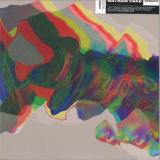
As Nathan Fake rises from the nocturnal subterranea and rave catharsis of his previous records, on Evaporator, he resurfaces into the domain of daylight, bringing a tangible sense of air rushing against your face, of big skies, and endless landscapes. The idea of pop accessibility that trickled into 2023’s Crystal Vision is refracted here through the prism of sweeping ambient, deep electronica, and trance uplift. Evaporator is Fake’s idea of “airy daytime music”, with each track a different barometer reading across the album’s varying atmospheres, which range from vibrant sunbursts, bracing rainscapes, and fine mists of clement melodics. “It’s not overtly confrontational electronic club music,” states Fake. “It’s quite pleasant, it’s accessible. As I was progressing through making the tracklist, I called it a daytime album. It doesn’t feel like an afterparty album.” For the past decade Fake has been gingerly introducing collaborations with heroes and friends alike into his lone, idiosyncratic working process. Border Community alumni Dextro AKA Ewan Mackenzie transmutes his ferocious drumming for Pigs Pigs Pigs Pigs Pigs Pigs Pigs into the blurred choral thump of ‘Baltasound’. ‘Orbiting Meadows’, meanwhile, is his second collaboration with Clark, an eerily idyllic duet where microtonal 18EDO piano clangs slowly twirl around wailing pads. Evaporator marks the junction point of old technology and ever fresh creativity for Nathan. The trusty “dinosaur” age software, particularly Cubase VST5, that has powered two decades of music is rarely updated. “I used to sort of feel a bit ashamed of using such old software, and then I kind of had an epiphany – that’s just how I work”, comments Fake. “That’s just how I play. I’m very fond of these old tools, and I get the most joy out of them, but now I’ve incorporated new technology too.” When an artist accumulates so much synergy with their instrument, music making becomes instinctual. By Fake’s account, much of Evaporator just fell into place. The album title arrived randomly in his head (“it felt completely perfect. Airy.”), ideas looped and developed until things locked into place and just felt right. ‘The Ice House’ is a fleeting glimpse of the sonic world he taps into in this creative state, its glassy FM synths built around a counterpoint between rough-hewn crystalline arpeggios and sparse yet gravitas-bearing bass. “That riff I just wrote out on the keyboard, I just played it forever and ever and ever. The original track ended up being really short. Here you go, and it’s gone!” These unplanned channellings of sound call forth records from Fake’s past while he looks ahead, perhaps getting at the very essence of his musicianship. The opener ‘Aiwa’ (“the breeziest,” he muses) reminds of the introspection that characterised Providence, excited by the fire and grit of Steam Days’ textural experiments, its chunky slams and clatters surging into a flood of harmonic buzzing as they reach out for old wisdom. ‘Hypercube’ stampedes in a similar chronological confluence, infusing an incessant synth line reminiscent of the golden age of rave with the crackling, ecstatic energy of modern festival anthems. Like the vaporisation of liquid to particles, everything that Evaporator presents has a mutant desire to be amorphous. Sounds rarely settle; the irradiated garage beat of ‘Bialystok’ is pitched downwards to driving, rebounding effect, while ‘You’ll Find a Way’ warps static into shivering energy, cinematic synth strings building anticipation into a gradual gush of chords. This translates into a more expansive stereo field than Fake has explored before. ‘Slow Yamaha’ saves the wildest, most kinetic transformations for last with a cornucopia of crispy melodies and fried drums; a sibilance of cymbals on the left, a susurrus of shakers on the right, and kaleidoscopic lasers pulsing and fizzing all around. Evaporation culminating in pure excited atoms. In a world where music has increasingly become background content, making albums remains lifeblood for Fake: “It makes me realise how long; twenty years is ages! It’s weird to see how much the world has changed. Release day back then you did fuck all, now you spend all day on socials. When I grew up the people who made the electronic music I was into were quite mysterious, and the artwork was very abstract. There was a massive distance between you and that music, and that was a key part of it, really. Now it helps to be an extrovert, and I'm just not, but the album marks the first time my face has graced the cover art. I’ve never wanted to do this before, I'm very shy, and generally I don’t like being seen,” he professes. “But, twenty years in, I supposed I could try something new. I'm very lucky that I'm somehow surviving in this world, where the media world favours extroverts and interesting looking people. It’s not my world but somehow I’m still in it.” Evaporator continues to prove Nathan’s necessary presence, with some of his most engaging, varied, and magical music yet.
Next up on Fluid Electronics, Irish producer Derek Carr joins up the fold with his “Harvest Time EP”, featuring Dutch techno staple Deniro on remix duty. Carr’s style, stretching from low-slung techno to squelchy electro, via breaks and chiselled IDM, teleports us to a zero-G headspace where shape and substance merge into an effervescing and highly stimulating maelstrom of sound. The very idea of self-reflexive dance music.
Fusing sino-flavoured harmonics with a straight out hi-tech edge, the lead single “Harvest Time” is the perfect balance between body and soul music, as it elegantly bridges the gap between that sense of weightless vaporousness and a more tactile punch. Pace itself feels relative. In the hands of Deniro, the track hatches into an eerily haunting piece of cinematic electronics, stressing further on the contrasting batucada-esque rhythms and slo-scudding synth tapestry.
The Italo-indebted “Dust Yourself Down” takes Moroder on a ride by the seashore, all arps and heavily processed keys blazing. Dipped in acid, “Rhea” pulls out a cascade of pretty aggro snares, prismatic bleeps, bloops, and a healthy dose of post-trancey waves crashing against a glassy sound design.
Somewhere close to Manchester’s ever changing city centre, as the sun fades and peeks through the newest glass facade, you’ll find Shaking Hand. One part in shadow, the other basking in prisms of light as they sketch out their own sonic landscapes in the dusty redbrick mill they call home. One that is just about clinging on from the encroaching developments that surround them.
Against this back-drop where buildings are constantly torn down & built back again, the three piece craft away. Pulling from early post-rock, and 90s US alternative rock, crafting their own brand of Northwest-emo. Assembling something new, yet nostalgic. Looking ahead towards the transforming horizon. Shaking Hand’s music is built on tension and release – quiets that stretch, louds that overwhelm. Repetition that feels both hypnotic and destabilising.
The band’s musical DNA runs through experimental guitar outfits like Women, Slint, Sonic Youth, Pavement, and Ulrika Spacek, balanced with the melodic sensibility of Big Thief and the dynamic intimacy of Yo La Tengo. Their compositions push against structure: sudden jolts of tempo, polyrhythms that almost fall apart, and riffs that unravel into something fragile or ecstatic. Yet, as Ellis notes, there’s an underlying warmth too: “Like walking through an empty city late at night but catching flickers of life in the buildings you pass.”
Early ideas like ‘Night Owl’ and ‘Sundance’ grew out of George’s lockdown “bedroom years,” where new tunings (open E, drop D, and stranger Pavement-inspired set-ups) opened up uncharted textures. Later, in grim rehearsal rooms, the murky epic ‘Cable Ties’ and the hypnotic ‘Mantras’ absorbed the gloom and grit of the band’s surroundings.
The album was recorded with producer David Pye (Wild Beasts, Teenage Fanclub) at Nave Studios in Leeds, housed in a converted church. “The live room was huge and perfect for capturing our sound,” says George. Determined to bottle their onstage energy, the band tracked the foundations live, layering vocals and guitars later. Soviet-era microphones, odd mic placements, and even phone-recorded demos fed into the mix. “You’ve got to watch out for David though,” Freddie laughs. “He made me play four tambourines in one hand, really hurt, man.”
Lyrically, the record drifts between abstraction and lived moments. George’s words often spill out instinctively, words falling into place before their meaning becomes clear. “A lot of the lyrics look like they’re buried in abstraction,” he says, “but when I look back I can see what they were about — whether that’s an emotional response at the time or just an observation of what was happening around me”. There’s contrast at the heart of it all – optimism vs. doubt, the lightness of youth vs. the monotony of work, a city in constant redevelopment vs. the people drifting through it.
The album artwork is taken from unused plans for the 1970s redevelopment of Los Angeles by architect Ray Kappe, entitled ‘People Movers’. Hypothetical buildings for real people, it feels a complement to the band’s own constructions. One thing’s for sure, Shaking Hand’s debut is built to last.
- A1: Aiwa - 04:56
- A2: Hypercube - 04:52
- A3: Yucon - 02:49
- A4: Bialystok - 04:29
- A5: The Ice House - 01:24
- A6: Sunlight On Saturn - 03:13
- B1: You’ll Find A Way - 03:18
- B2: Baltasound Feat. Dextro - 04:37
- B3: Orbiting Meadows Feat. Clark - 02:05
- B4: Slow Yamaha - 09:00
- B5: Black Drift (Outro) - 01:11
As Nathan Fake rises from the nocturnal subterranea and rave catharsis of his previous records, on Evaporator, he resurfaces into the domain of daylight, bringing a tangible sense of air rushing against your face, of big skies, and endless landscapes.
The idea of pop accessibility that trickled into 2023’s Crystal Vision is refracted here through the prism of sweeping ambient, deep electronica, and trance uplift. Evaporator is Fake’s idea of “airy daytime music”, with each track a different barometer reading across the album’s varying atmospheres, which range from vibrant sunbursts, bracing rainscapes, and fine mists of clement melodics. “It’s not overtly confrontational electronic club music,” states Fake. “It’s quite pleasant, it’s accessible. As I was progressing through making the tracklist, I called it a daytime album. It doesn’t feel like an afterparty album.” For the past decade Fake has been gingerly introducing collaborations with heroes and friends alike into his lone, idiosyncratic working process.
Border Community alumni Dextro AKA Ewan Mackenzie transmutes his ferocious drumming for Pigs Pigs Pigs Pigs Pigs Pigs Pigs into the blurred choral thump of ‘Baltasound’. ‘Orbiting Meadows’, meanwhile, is his second collaboration with Clark, an eerily idyllic duet where microtonal 18EDO piano clangs slowly twirl around wailing pads. Evaporator marks the junction point of old technology and ever fresh creativity for Nathan. The trusty “dinosaur” age software, particularly Cubase VST5, that has powered two decades of music is rarely updated. “I used to sort of feel a bit ashamed of using such old software, and then I kind of had an epiphany – that’s just how I work”, comments Fake. “That’s just how I play. I’m very fond of these old tools, and I get the most joy out of them, but now I’ve incorporated new technology too.” When an artist accumulates so much synergy with their instrument, music making becomes instinctual. By Fake’s account, much of Evaporator just fell into place. The album title arrived randomly in his head (“it felt completely perfect. Airy.”), ideas looped and developed until things locked into place and just felt right. ‘The Ice House’ is a fleeting glimpse of the sonic world he taps into in this creative state, its glassy FM synths built around a counterpoint between rough-hewn crystalline arpeggios and sparse yet gravitas-bearing bass. “That riff I just wrote out on the keyboard, I just played it forever and ever and ever.
The original track ended up being really short. Here you go, and it’s gone!” These unplanned channellings of sound call forth records from Fake’s past while he looks ahead, perhaps getting at the very essence of his musicianship. The opener ‘Aiwa’ (“the breeziest,” he muses) reminds of the introspection that characterised Providence, excited by the fire and grit of Steam Days’ textural experiments, its chunky slams and clatters surging into a flood of harmonic buzzing as they reach out for old wisdom. ‘Hypercube’ stampedes in a similar chronological confluence, infusing an incessant synth line reminiscent of the golden age of rave with the crackling, ecstatic energy of modern festival anthems. Like the vaporisation of liquid to particles, everything that Evaporator presents has a mutant desire to be amorphous. Sounds rarely settle; the irradiated garage beat of ‘Bialystok’ is pitched downwards to driving, rebounding effect, while ‘You’ll Find a Way’ warps static into shivering energy, cinematic synth strings building anticipation into a gradual gush of chords. This translates into a more expansive stereo field than Fake has explored before.
‘Slow Yamaha’ saves the wildest, most kinetic transformations for last with a cornucopia of crispy melodies and fried drums; a sibilance of cymbals on the left, a susurrus of shakers on the right, and kaleidoscopic lasers pulsing and fizzing all around. Evaporation culminating in pure excited atoms.
Civilistjävel! x Mayssa Jallad’s ‘Marjaa: The Battle of the Hotels (Versions)’ is a radical response to Mayssa Jallad’s 2023 original LP, a lyrical account of epochal events in Beirut at the dawn of Lebanon's civil war. ‘…(Versions)’ sees Civilistjävel! (aka Swedish producer Tomas Bodén) apply a stripped, dub methodology to Mayssa's rich stems, refracting the Arabic source through the hazy prism of Northern European electronica. Retaining ‘Marjaa…’s deep spatial framing and vaporous, shifting nature, traces are lifted and set down in a new landscape: a ghost of a ghost. Informed by Tomas' singular strand of ambient, minimalist, dub techno, ‘… (Versions)’ recalls the reductive, shimmering pulse of pioneering Berlin-based practitioners Basic Channel/Chain Reaction, but with the parameters stretched into the ether. Where versions typically focus on a rhythm, here the anchor is the tone and texture of Mayssa’s voice, around which a new world has been constructed. Disembodied and liminal, it conjures an eerie panorama that feels like a postscript to the original, further emphasizing the geopolitical events that have had such devastating effect in Mayssa’s homeland of Lebanon since that record’s release. ‘Marjaa…’ (tr. ‘reference’) combined Mayssa Jallad’s two main vocations: music and urban research/architectural history. The album was co-written with Fadi Tabbal and based on Mayssa's Historic Preservation master's thesis (‘Beirut’s Civil War Hotel District: Preserving the World’s First High-Rise Urban Battlefield’). The thesis examined a 5-month conflict that took place within Beirut's skyscraper-laden luxury hotel district of Minet El Husn near the start of the Lebanese Civil War. Addressing a post-war generation who have never been taught this difficult history, ‘Marjaa…’ was an attempt to process trauma, and “a call to protest for the renewal, rather than the recycling of the political class that once destroyed the country and holds us, to this day, hostage of its violence.” Often perceived as a mysterious, shadowy presence, Civilistjävel! has come increasingly to the fore in recent years through a consistently dazzling stream of records, released both anonymously and via Fergus Jones’ FELT imprint, often appearing with scant information and tracks for the most part untitled. Having featured tracks from ‘Marjaa…’ on mixes, and included the album in his picks of 2023, in early 2024 Tomas asked Mayssa to provide vocals for a track on his album ‘Brödföda’. Mayssa remembers, “Tomas asked me to choose one of the tracks he was working on. I was in Boston at the time, so I took a walk and chose a track. I wrote the lyrics at the public park, wondering if I was the only one around that was losing sleep over the genocide in Palestine and the war in South Lebanon. I went back to the apartment and recorded the vocals on my phone, while listening to the track on headphones. Tomas reworked it with the voice and sent it back. I liked it immediately.” Despite the geographical distance from Beirut to Uppsala, Sweden, where Tomas resides, Mayssa’s contribution sounds very much at home in Civilistjävel!’s atmospheric, contemplative sound-world. Tomas’ request was reciprocated by Mayssa soon after, resulting in the spectral, glassy ambience of ‘Etel, Kharita (Version)’. This was followed by an invitation to work on more tracks, which Tomas immediately embraced, intensively jamming out versions live to two-track tape in downtime between travelling. If not entirely dissimilar to his regular working practice, the immediacy of it was unusual. Much was improvised live with just a keyboard (not tethered to a grid), and a restricted set-up that largely forbade later edits - only the rhythm tracks are programmed. A sharp conceptual thinker and composer, Tomas takes creative liberties with Mayssa’s songs in a way that is deeply felt and sympathetically aligned, whilst unashamedly outside of the original context of the record. The voice is leaned into as an instrument, without the clear, specific details of language, and this axis provides an uncertain, amorphous footing - structure is often suggested or hinted at, before disappearing or collapsing into fog, and folding back into the message within the song. A somewhat unprecedented source for an album of versions, even those familiar with ‘Marjaa: The Battle of the Hotels’ may at points struggle to hear the songs these versions are rebuilt from, despite the vocal narratives remaining virtually intact. The light has shifted; eroded buildings are foregrounded; fragments of memories appear in chiaroscuro. Signs and signifiers have been replaced. Shorn of the original's warm guitar, ‘Baynana (Version)’ feels like an ominous visitation, the sun no longer visible. ‘Holiday Inn (March 21 to 29) (Version)’ is a molten, clattering invocation. The beat-less tracks nod towards the cold, otherworldly sound-scaping of late '90s isolationism. More propulsive and embodied, ‘Holiday Inn (January to March) (Version)’ and ‘Kharita (Dub)’ are strobing, iridescent techno - lithe, shifting and mutating with almost implausible finesse. A stunning addition to Civilistjävel!’s growing catalogue, ‘…(Versions)’ is a luminous counterpoint to ‘Marjaa…’, and a welcome reminder of how incredible that record remains.
Award-winning singer Candice Night returns with a new solo album (and first for earMUSIC), “Sea Glass.”
Continuing a career as a multi-instrumentalist, vocalist, composer and lyricist, perhaps most famously as musical alchemist and voice of Blackmore’s Night, “Sea Glass” finds Candice at a new plateau in her life and music.
THE ALBUM
Inspired by a lifetime of challenging musical adventures as well as the magic and demands of everyday life and family, Candice has crafted an album that observes life through a prism of experiences, much like looking through a kaleidoscope of sea glass colors with their own special glow.
The album draws from rock influences on tracks such as first single‘ Angel and Jezebel’ and ‘Unsung Hero (She’ll Never Tell)’ and thematically touches on themes of loss and love (‘The Last Goodbye’) as well as the bond between parents and children and their wishes and dreams for the future (‘Promise Me’).
Inspired by Candice’s lifelong passion for collecting sea glass – finding treasure that has been transformed by time and tides – the images reflect the randomness of those discoveries and how they all assemble into a whole life’s experience.
MARKETING AND PROMOTION
•New album from multi-instrumentalist and voice behind chart-topping Blackmore’s Night with a fanbase built over a quarter century
•Album announcement and first single “Angel and Jezebel” January 2025
•Album release preceded by 3 singles and videos
•Continuous online marketing and social media campaign from album announcement through release
- Baby I'm Your Man
- It's So Easy
- Power
- The Hole I See
- Feedback
- A&E
- Flick Of The Wrist
- Turn On The Radio
- Sweetheart
- Politicians
- SE23:
- Karen's God Plan
Crankers of amp, torturers of fuzzbox and denizens of small-hours salvation, Thee Alcoholics dished out a rancorous and righteous debut in their decent `Feedback' - one that filtered gnarled riffage and motorik malevolence through a uniquely debauched prism in pursuit of some extremely ill-advised audial dystopia. Thee Alcoholics may have started life as the home-birthed brainchild of Rhys Llewellyn (Hey Colossus/Acidliner/Drmcnt) yet an evolution since has proven the ultimate form of this beastly creation to be the live arena. In assembling cohorts to turn these visceral jams into something to shake rafters and rattle pint-glasses, new frontiers of ornery intensity have made themselves manifest, and such is the form of the monstrous Bear Bites Horse Sessions, a live-in-the-studio document recorded with Wayne Adams at Bear Bites Horse studio in Haggerston, London, chronicling a band breathing life into a Stoogian paradigm, and doing so apparently whilst barely breaking a sweat. Taking essential elixirs of in-the-red mania, hypnotic repetition and deathless swagger, these twelve jams walk a crooked path that neighbours the nihilistic vortex of Loop, the saturnine lurch of The Fall and the deadpan derangement of The Heads but remains possessed of a maverick charisma and mischief all its own. Lovers of lysergic heaviosity and the sound of a Marshall 4x12 violently spluttering its last will find much to satisfy here, but moreover Bear Bites Horse Sessions is a testimony to sonic punishment as a gateway to new horizons, audial excess as a path to wisdom, and answers, right or wrong, being found in the bottom of a glass.
Just a little over two years since the release of his debut album Opening the Door, Jack re-emgerges with a new full length album. On Blue Desert, the Australian-born Vancouver-based multi-instrumentalist, singer, songwriter and producer wades deeper into the stylistically prismatic pool of his own creation: melancholy dub-funk, jangling psychedelia, moon-burnt sophisti-pop and stained glass folk mutations float freely together.
Entirely self-produced at Mood Hut Studios in Chinatown, Vancouver between 2022 and 2024, the album picks up where Opening the Door left off; the songwriting concise and refined, the voice front and centre on almost every song, the pensive mood irresistible and dense.
The apparently effortless melodic interplay of voice, guitar, synthesizers and bass that Jack is well known for is ever present but despite the clear-eyed harmonies and energetic rhythms there is a shadow that quietly haunts the album. The lyrical buoyancy of his early EPs and even some of the more explicitly sunburnt instrumental moments of his last record have continued to fade and peel like paint. Regret, remorse and melancholy are woven into almost every turn of phrase; the self-deprecating longing of Tracey Thorn and Sade Adu can be heard alongside the plaintive echos of Mark Hollis and Arthur Russell. The Mood Hut Records founder and NTS host digs deeper in all the directions that he only brushed upon on Opening the Door, creating a kaleidoscopic index of his omnivorous listening habits: from Underworld to Kate Bush, Disco Inferno to Bryan Ferry, Julian Cope to Arthur Verocai.
The LP will be released on Jack’s own Mood Hut Records on November 1st and will be followed by a live tour in the UK and Europe in November and December, featuring a string of dates opening for revered Los Angeles artist Jessica Pratt.
- Mood Hut Records, Vancouver
Produced by Jack Jutson at Mood Hut Studios, Chinatown Vancouver
Mixed by Jack Jutson and CZ Wang
Saxophone by Linda Fox
Strings on Falling Down a Well by Aiden Ayers
Bass on Down the Line by Diego Herrera
Additional synth on Red Cloud by Liam Butler
Artwork by Mela Melania + Jack Jutson
e A5. Pink Shoes Part I
Part II
Morgan Harper-Jones surft gerade auf einer kleinen Erfolgswelle. Erst Ende September erschien der Netflix #1 Hit “Love At First Sight”, bei dem Morgans Musik eine gewichtige Rolle spielt und sie sogleich in die Top10 der globalen Shazam Charts katapultierte. Nun kündigt die Singer-Songwriterin aus Rochdale (England) ihr Debütalbum über Play It Again Sam an: “Up To The Glass” erscheint am 12. April als Coloured Eco Vinyl. Ihr Debütalbum ist eine zarte Erkundung der Selbstfindung in den Zwanzigern vor dem Hintergrund von Liebe, Selbstakzeptanz und Verlust. Es dokumentiert diese allgemein prägenden Momente des jungen Erwachsenseins durch das Prisma von Morgans eigener Perspektive und erforscht zutiefst persönliche Themen wie das Ableben ihrer Großeltern, das ängstliche Nachdenken über jeden kleinen Fehler und die Sehnsucht nach einer Liebe, die unerwidert bleiben wird.
Relapse Records präsentiert die Wiederveröffentlichung des einflussreichen TECHNO ANIMAL-Albums The Brotherhood of the Bomb (featuring Justin Broadrick (Godflesh, Jesu,u.a.) & Kevin Martin (The Bug)), das erstmals 2001 erschien. Das Album, das von Broadrick komplett neu gemastert wurde, ist zum ersten Mal überhaupt auf LP erhältlich!
Bevor The Brotherhood of the Bomb überhaupt konzipiert wurde, wurde das britische Duo TECHNO ANIMAL bereits von den Beastie Boys unterstützt und veröffentlicht, arbeiteten mit Alec Empire und den damals noch jungen Dälek zusammen, blieben aber dennoch fast völlig unbekannt.
Ob sie nun als Pioniere des Industrial Metal mit Godflesh oder als Vertreter des knirschenden Noise-Rock mit GOD bekannt waren, die verschiedenen Aspekte von TECHNO ANIMAL sind in The Brotherhood of the Bomb spürbar. TECHNO ANIMAL galten damals als zu laut für Hip-Hop-Fans und zu hip-hoppig fürNoise-/Metal-Fans und waren ihrer Zeit wirklich voraus.
Tokyo architect Hiroki Takahashi is a world-builder both in matter and sound. His latest collection of serene micro-miniatures was inspired by “the dissatisfaction with reality that I feel on a daily basis.” Escapism offers exactly that: percolating patterns of fiberglass synthetics and fluorescent melody, assembled into minimalist bio-domes of refracted light and hanging gardens.
Recorded during metropolitan commutes, afterhours office meditations, and various windows of urban stasis, the album actualizes the ambient muse of its maker, willing space from density, tranquility from tedium. As with his work in exotic atmosphere unit UNKNOWN ME, Takahashi’s touch is hushed, precise, and prismatic, coaxing spectrums of illusion and bliss in its tinted glass spirals: “Extreme tension produces extreme relaxation.”
Swedish singer and composer Elin Piel returns to Mystery Circles after making a debut appearance on the Las Vegas-based ambient label back in 2020. Piel's sound deals in microscopic layers of textural detail slowly shifting around delicately embellished melodies - 'Tunnlar' is a perfect opening statement in this sense as glassy synth phrases pass through prismatic DSP and faint flickering interference skips around in the background. If you enjoy the work of artists like Emily A. Sprague and The Humble Bee you'll certainly find much to savour on this beautifully rendered album.
Milly make songs that simmer and spark. The Los Angeles-based band, led by songwriter Brendan Dyer, finds power in the slow burn: their music carries the tension of a lake’s surface moments before a storm hits, or a cracking pane of glass moments before it shatters. Their debut album, Eternal Ring, is kinetic, physical, and often a little bit volatile — a mixture of emo music and 90s-indebted indie that tastes as if it’s been fermenting for years, feeding on itself until it becomes something new entirely. A profound first full-length statement from Dyer and his closest collaborator, bass player Yarden Erez, it’s a record that takes the anxiety of modern-day America and filters it through a prismatic, powerfully individualistic lens, resulting in something intense, bracing, and deeply modern
Cole Pulice is a saxophone player from Minneapolis. An improviser of Ambient Jazz who earned his merits touring with Bon Iver, working with Godspeed You! Black Emperor and releasing wonderful electroacoustic gems with the groups Iceblink (Moon Glyph) and LCM (Orange Milk). With Gloam - his solo debut - Cole Pulice offers us six spacious audio holograms, one-take recordings of his saxophone entangled with live electronic hardware. We hear undulating pitch shifters, ring modulations and spectrally rich harmonizers. Cole applies all signal processing live, augmenting the calm, serene melodies Cole plays on his saxophone. The electronics never serve as a mere effect here. Instead, Cole’s fine-tuned setup functions as one whole instrument with which he effortlessly morphs shapes and colors, like fractals within a kaleidoscope or fragments of stained glass in a rock tumbler. Cole mentions the Synchromism visual art movement as an influence for this record, an American avantgarde style of the early 20th century in which colour and sound were treated as equivalents. It’s a spot-on analogy for these musical gems which serve to immerse us in imaginatory prisms. Cole’s sessions conjoin artificial processes with the vibrations of his breath to create electro-acoustic lullabies which reveal ever more timbral layers with each listen. Gloam was released on tape by the Moon Glyph imprint from Portland during the first lockdown in 2020 and has been licensed to Pingipung for this vinyl edition.
Imperium Droop brings two mavericks of sweeping exploration together into new avenues of musical expression. Kid Millions and Jan St. Werner explore a liminal space between improvisation and composition, a fluid yet defined sound-space, founded on the unique chemistry of their friendship and pushing into the future. Kid Millions stands as one of the most sought after drummers and improvisers in NYC, known for his work as the drummer for Oneida, his expansive solo work as Man Forever, as well as collaborations and performances with the likes of Laurie Anderson, Philip Glass, Royal Trux, Boredoms, White Hills, and Spiritualized. Regardless of who he's working with Kid Millions radically redefines the drums as an instrument. Jan St. Werner has consistently remained at the vanguard of electronic music. In his work as one half of the visionary duo Mouse On Mars, as well as his acclaimed solo work both as a composer and sound artist, and in collaborations with The Fall's Mark E Smith, Oval's Markus Popp, Stereolab, and The National St. Werner constantly pushes the limits of recorded sound. Together, Millions and Werner have crafted a monument of unpredictable beauty built on breathless forays into the unknown. Werner's application of a seemingly infinite arsenal of textures unleashes colorful swaths of energy. Mats Gustaffson joins Werner on the maximalist "Color Bagpipes," unleashing torrents of swiveling melody and breathy clicks over the exponential thunder of Millions' drum kit. Pieces like "Dark Tetrad" and "Astral Stare" demonstrate the duo's mastery of space and surprise. Dark flutters flow in slow pulses across "Apotropaic" where erratic swirls of sound twist and mutate on "Sorrows and Compensations," unified as a single force by the overwhelming diversity of sounds. Millions' drums effortlessly rides each wave of Werner's prismatic deluges and channels their energy into dynamic movements. Through his singular prowess, Millions' tireless rhythms and subtle gestures mirror Werner's boundless textural palette and drive each piece towards transcendence. On Imperium Droop, Kid Millions and Jan St. Werner have combined their powers into an incomparable work of gripping and intrepid sonic fluctuations.
Carla dal Forno announces her second full-length album, Look Up Sharp , on her own Kallista records.
Dal Forno beckons a bold new era in her peerless output pushing her dub-damaged DIY dispatches to the limits of flawless dream-pop. In a transformative move towards crystal clear vocals and sharpened production, Look Up Sharp is an evolutionary leap from the thick fog and pastoral stillness of her Blackest Ever Black missives, You Know What It’s Like (2016) and The Garden EP (2017). Three years since her plain-speaking debut album, the Melbourne-via-Berlin artist finds herself absorbed in London’s sprawling mess. The small-town dreams and inertia that preoccupied dal Forno’s first album have dissolved into the chaotic city, its shifting identities, far-flung surroundings and blank faces. Look Up Sharp is the story of this life in flux, longing for intimacy, falling short and embracing the unfamiliar. Dal Forno connects with kindred spirits and finds refuge in darkened alleys, secret gardens and wherever else she dares to look.
In her own territory between plaintive pop, folk and post-punk dal Forno conjures the ghosts of AC Marias, Virginia Astley and Broadcast through her brushwork of art-damaged fx and spectral atmospheres. The first half of the record is filled with dubbed-out humid bass lines, which tether stoned hazes of psychedelic synth work as on ‘Took A Long Time’ and ‘No Trace.’ These are contrasted with songs like ‘I’m Conscious and ‘So Much better’ that channel the lilting power of YMG and are clear sequels-in-waiting to dead-eyed classics like ‘Fast Moving Cars.’
The B-side begins with the feverish bass and meandering melody of ‘Don’t Follow Me,’ which takes The Cure’s ‘A Forest’ as its conceptual springboard. It’s the clearest lyrical example since ‘The Garden’ of dal Forno’s unmatched ability to unpick the masculine void of post-punk and new wave nostalgia to reflect contemporary nuance. Look Up Sharp reaches its satisfying conclusion with ‘Push On’ - dal Forno’s most explicit foray into an undiscovered trip hop universe between Massive Attack and Tracey Thorn. The album’s last gasp finds personal validation in fragility: ‘I push on / I’m the Place I’m Going,’ a self discovery lifted by reverberant broken beats and glass-blown vocals.
Adding further depth to Look Up Sharp are the instrumentals, which flow seamlessly between the vocal-led pieces. ‘Hype Sleep’ and ‘Heart of Hearts’ drink from the same stream as The Flying Lizard’s dubbed-out madness and the vivid purple sunsets of Eno’s Another Green World. While ‘Creep Out of Bed’ and ‘Leaving for Japan’ funnel the fourth-world psychedelia of Cyclobe’s industrial-folk into the vortex of Nico’s The Marble Index.
Conceived as a whole, Look Up Sharp is a singular prism in which light, sound and concept bend at all angles. A deeply personal but infinitely relatable album its many surfaces are complex but authentic, enduring but imperfect, hard-edged but delicate. A diamond. Look up sharp or you’ll miss it.
- A1: Moondog - Fur Fritz (Chaconne In A Minor)
- A2: Emilie Levienaise-Farrouch - Louella
- A3: Bryce Dessner - Ornament 2
- A4: Bryce Dessner - Ornament 3
- A5: Meredith Monk - Railroad (Travel Song)
- A6: Philip Glass - Etude No 9
- B1: William Susman - Quiet Rhythms: Prologue & Action No 9
- B2: Hans Otte - Das Buch Der Klange (Part 2)
- B3: Moondog - Elf Dance
- B4: Michael Nyman - The Heart Asks Pleasure First
- C1: Gavin Bryars - Ramble On Cortona
- C2: Peteris Vasks - Balta Ainava
- D1: Nico Muhly - A Hudson Cycle
- D2: Philip Glass - Etude No 5
- D3: Wim Mertens - Struggle For Pleasure
The title of this new album by Vanessa Wagner refers to John Cage's Imaginary Landscape (1939), one of the first works to use electronic devices. After all, when Cage wrote his manifesto The Future of Music in the late 1930s, he already knew that the merging of written and electronic music would bear exquisite fruits. The album is the lone protuberance from 2016 album Statea, on which Wagner, alongside producer Murcof (she on the piano, him manning the machines), reinterpreted pieces from the fathers of minimalism: Arvo Pärt, Philip Glass, Morton Feldman, Erik Satie, or John Cage. The same secret conversation between the artist, the piano, and contemporary music is now continuing on Inland. Making more with less, the album turns long harmonies into multicolored prisms, miniature detailed embroidery, sighs and breaths, syncopated or restrained chants. In this brave new world, sounds exist for themselves, and silence comes to life. While the repertoire remains in the minimalistic vein, it gives priority to living composers, of which almost all are still active.
- 1