Pressed On Clear Vinyl! To celebrate the 25th Anniversary of UGK's first album, Get On Down goes the extra mile, presenting it for the first time ever on vinyl. AND 2LP clear vinyl at that, giving the strutting, funky grooves the chance to really stretch out on your system. Back in 1992, Southern hip-hop was still proving to the world that it could sustain a fan base that was chiefly raised on rap from New York and LA. The Geto Boys and 2 Live Crew had made strong cases by the earliest '90s, and Pimp C and Bun B were ready to make their own. Most of the trunk-bumping bass comes from drum programs and basic sampling on these tunes - in later years they would build their sound into something even fuller and deeper. Self-produced with additional work from Houston locals Bernie Bismark and Shetoro Henderson, the tracks here are minimal, slow and menacing, which matched their lyrical approach quite nicely. You can hear the beginnings of the group's true greatness in these early lyrical workouts - several taken from the regional cassette-only EP The Southern Way that got them signed to Jive - with tales of street hustles, relationships and self-reliance in a world stacked against them. They may have been done early-on, but that doesn't mean they aren't crucial to UGK's legacy - cases in point being the three singles: Something Good', a charismatic update to Bill Withers' Use Me Up', and Pocket Full Of Stones' (the latter featured on the Menace II Society soundtrack). Beyond the singles, deeper cuts like I'm So Bad,' Feels Like I'm The One Who's Doin' Dope' and Cramping My Style' made it clear to the world that this crew had the attitude and charisma to make even bigger waves in the years to come.
Cerca:hard to swallow
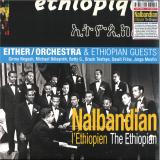
The Éthiopiques series returns! Essential archive recordings from an extremely fruitful period in Ethiopian music.
Before “Swinging Addis” took over the world, there was Moussié Nerses Nalbandian — the Armenian-born composer who shaped modern Ethiopian music. Mentor, arranger, and pioneer, he laid the foundations of Ethio-jazz.
This Éthiopiques volume revives his forgotten legacy, recorded live by Either/ Orchestra First issue ever with new exclusive photos and in depth liner 8-page insert.
“Ethiopian jazzmen are the best musicians that we have seen so far in Africa.
They really are promising handlers of jazz instruments.”
Wilbur De Paris
(1959, after a concert in Addis Ababa)
አዲስ፡ዘመን። *Addis zèmèn* **A new era.**
The time is the mid-1950s and early 1960s, just before "Swinging Addis" bloomed – or rather boomed – onto the scene. Brass instruments are still dominant, but the advent of the electric guitar, and the very first electronic organs, are just around the corner. Rock’n'Roll, R’n’B, Soul and the Twist have not yet barged their way in. Addis Ababa is steeped in the big band atmosphere of the post-war era, with Glenn Miller's *In the* *Mood* as its world-wide theme song, neck and neck with the Latin craze that was in vogue at the same period. Life has become enjoyable once again, with the return of peace after the terrible Italian Fascist invasion of Ethiopia (1935-1941). The redeployment of modern music is part and parcel of the postwar reconstruction. *Addis zèmèn* – a new era – is the watchword of the postwar period, just as it was all across war-torn Europe.
The generation who were the young parents of baby boomers** were the first to enjoy this musical renaissance, before the baby boomers themselves took over and forever super-charged the soundtrack of the final days of imperial reign. Music is Ethiopia's most popular art form, and very often serves as the best barometer for the upsurge of energy that is critical for reconstruction. Whether it be jazz in Saint-Germain-des-Prés or the *zazous* who revolutionised both jazz and French *chanson* after the *Libération*, be it Madrid's post-Franco Movida, or Dada, the Surrealists and *les années folles* that followed World War I, the periods just after mourning and hardship always give rise to brighter and more tuneful tomorrows. Addis Ababa, as the country's capital, and the epicentre of change, was no exception to this vital rule.
**Two generations of Nalbandian musicians**
Nersès Nalbandian belonged to a family of Armenian exiles, who had moved to Ethiopia in the mid-1920s. The uncle Kevork arrived along with the fabled "*Arba Lidjotch*", the** "*40 Kids*", young Armenian orphans and musicians that the Ras Tafari had recruited when he visited Jerusalem in 1924, intending to turn their brass band into the official imperial band. If Kevork Nalbandian was the one who first opened the way of modernism, pushing innovation so far as to invent musical theatre, it was his nephew Nersès who would go on to become, from the 1940s and until his death in 1977, a pivotal figure of modern Ethiopian music and of the heights it. Going all the way back to the 1950s. Nothing less. And it is Nersès who is largely to thank for the brassy colours that so greatly contributed to the international renown of Ethiopian groove. While the younger generations today venture timidly into the genealogy of their country's modern music, often losing their way amidst a distinctly xenophobic historiographical complacency, many survivors of the imperial period are still around to bear witness and pay tribute to the essential role that "Moussié Nersès" played in the rise of Abyssinia's musical modernity.
Given the year of his birth (15 March 1915), no one knows for sure if Nersès Nalbandian was born in Aintab, today Gaziantep (Turkiye/former Ottoman Empire) or on the other side of the border in Alep, Syria... What is certain is that his family, like the entire Armenian community, was amongst the victims of the genocide perpetrated by the Turks. Alep, the place of safety – today in ruins.
Before Nersès then, there was uncle Kevork (1887-1963). For a quarter of a century, he was a whirlwind of activity in music teaching and theatrical innovation. *Guèbrè Mariam le Gondaré* (የጎንደሬ ገብረ ማርያም አጥቶ ማግኘት, 1926 EC=1934) is his most famous creation. This play included "ten Ethiopian songs" — a totally innovative approach. According to his autobiographical notes, preserved by the Nalbandian family, Kevork indicates that he composed some 50 such pieces over the course of his career. This shows just how much he understood, very early on, the critical importance of song as Ethiopia's crowning artistic form. Indeed, for Ethiopian listeners, the most important thing is the lyrics, with all their multifarious mischief, far more than a strong melody, sophisticated arrangements or even an exceptional voice. (This is also why Ethiopians by and large, and beginning with the artists and producers themselves, believed for a long time — and wrongly — that their music could not possibly be exported, and could never win over audiences abroad, who did not speak the country's languages).
Last but not least, one of Kevork's major contributions remains composing Ethiopia's first national anthem – with lyrics by Yoftahé Negussié.
Nersès Nalbandian moved to Ethiopia at the end of the 1930s, at the behest of his ground-breaking uncle. Proficient in many instruments (pretty much everything but the drums), conductor, choir director, composer, arranger, adapter, creator, piano tuner, purveyor of rented pianos,... he was above all an energetic and influential teacher. From 1946 onwards, thanks to Kevork's connexion, Nersès was appointed musical director of the Addis Ababa Municipality Band. In just a few years, Nersès transformed it into the first truly modern ensemble, thanks to the quality of his teaching, his choice of repertoire, and the sophistication of his arrangements. It was this group that would go on to become the orchestra of the Haile Selassie Theatre shortly after its inauguration in 1955, which was a major celebration of the Emperor's jubilee, marking the 25th anniversary of his on-again-off-again reign.
At some point or other in his long career, Nersès Nalbandian had a hand in the creation of just about every institutional band (Municipality Band, Police Orchestra, Imperial Bodyguard Band, Army Band, Yared Music School…), but it was with the Haile Selassie Theatre – today the National Theatre – that his abilities were most on display, up until his death in 1977. To this must be added the development of choral singing in Ethiopia, hitherto unknown, and a sort of secret garden dedicated to the memory of Armenian sacred music, and brought together in two thick, unpublished volumes. Shortly before his death (November 13, 1977), he was appointed to lead the impressive Ethiopian delegation at Festac in Lagos, Nigeria (January-February 1977).
His status as a stateless foreigner regularly excluded him from the most senior positions, in spite of the respect he commanded (and commands to this day) from the musicians of his era. Naturally gifted and largely self-taught, Nerses was tirelessly curious about new musical developments, drawing inspiration from the very first imported records, and especially from listening intensely to the musical programmes broadcast over short-wave radio – BBC *First*. A prolific composer and arranger, he was constantly mindful of formalising and integrating Ethiopian parameters (specific “musical modes”, pentatonic scale, and the dominance of ternary rhythms) into his “modernisation” of the musical culture, rather than trying to over-westernise it. It even seems very probable that *Moussié* Nerses made a decisive contribution to the development of tighter music-teaching methods, in order to revitalise musical education during this period of prodigious cultural ferment. Flying in the face of all the historiographical and musicological evidence, it is taken as sacrosanct dogma that the four musical modes or chords officially recognised today, the *qǝñǝt* or *qiñit* (ቅኝት), are every bit as millennial as Ethiopia itself. It would appear however that some streamlining of these chords actually took place in around 1960. It was only from this time onward that music teaching was structured around these four fundamental musical modes and chords: *Ambassel*, *Bati*, *Tezeta* and *Antchi Hoyé*. A historical and musical “details” that is, apparently, difficult to swallow, especially if that should honour a *foreigner*. Modern Ethiopian music has Nersès to thank for many of its standards and, to this day, it is not unusual for the National Radio to broadcast thunderous oldies that bear unmistakable traces of his outrageously groovy touch.
Multi-award-winning singer-songwriter and leading UK jazz vocalist Zara McFarlane releases Sweet Whispers – Celebrating Sarah Vaughan on 14th June. The album honours the jazz great who inspired her on her own artistic journey and whose centenary year is marked in 2024.
‘Sweet Whispers’ is more than a run-through of some of Vaughan’s most popular songs. It’s not hard to imagine the immense task in selecting those songs, after all, Vaughan’s recording career spanned 50 years notching up almost 60 albums (plus nearly 30 again in compilations and box sets). Through a thoughtfully chosen selection of songs, formed across months in collaboration with producer, and the album’s clarinettist and saxman, Giacomo Smith – Zara journeys through the musical life of Sarah Vaughan, from her first to last recording, bringing to life and breathing new life into some of her best and less familiar songs. But importantly, the songs that mean the most to Zara.
Zara McFarlane said “It was when I started to listen to Sarah Vaughan that I really began to appreciate jazz vocals. She had such control across her range and a vocal command that was cheeky, playful and fun yet sophisticated and articulate. I really wanted to pay homage to her as I feel she has been somewhat overlooked amongst the jazz singers. Although I do love Ella and Billie, it's all about Sarah for me.”
‘Sweet Whispers – Celebrating Sarah Vaughan’ was recorded analogue at Durham Studios, London. Giacomo assembled a stellar cast of musicians - Joe Webb on piano, Ferg Ireland on double bass, Jas Kayser on drums, Marlon Hibbert on Steel Pan and Gabriella Swallow on cello – to record 11 tracks live to tape; with minimal overdubs, the recording has retained a live, vintage feel. A celebration of Sarah Vaughan could be in no better hands than that of Zara McFarlane, who makes an inspired homage to the ‘Divine One’. Beautifully performed in Zara’s own inimitable style, with her own playful swoops and slides, she has added her own
touch to the music. With a silken voice and timbre that bring emotional depth, attitude and personality to this collection of SaraH Vaughan songs, this is a masterful celebration
- 1: Jeu De Plomb
- 2: Honky Whale
- 3: Thirdal
- 4: Shallow Dive
- 5: Hildegund
- 6: Cantantor
- 7: Foremostly
- 8: Old Segotia
- 9: Swallow Dive
- 10: Reverse Burst
- 11: Oíche Crua Sna Sléibhte
From the opening notes – arriving as if in mid-air – to its final, cheerful burblings, Sean Mac Erlaine and Caoimhín Ó Raghallaigh’s Old Segotia is an album about friendship: both musical and human, the product of two distinctive musicians visiting each other’s worlds with a sense of veneration, and a sense of joyful wonder.
Here, Mac Erlaine (This is How We Fly, Quiet Music Ensemble) and Ó Raghallaigh (The Gloaming, This is How We Fly) meet on common ground developed over 20 years of playing together, with Mac Erlaine’s musical language rooted in jazz and sonic experimentation, and Ó Raghallaigh emerging from an Irish traditional music that he has shaped and reshaped in a deeply personal way.
In this place, Mac Erlaine and Ó Raghallaigh’s music is profoundly integrated and emotionally textured: at times bursting with explosive energy, at times almost sighing into life, but always searching. Here are the touching unison duets of ‘Cantandor’, the lyrical wanderings of ‘Swallow Dive’, or the flirtations with finding a groove in ‘Reverse Burst’.
The palette of instruments speaks to the album’s feeling of abundance, with Mac Erlaine performing on clarinets, chalumeau d’amore, three different flutes, car hooter, percussion, live electronics, Wurlitzer, synthesiser, vocals and alto saxophone; and with Ó Raghallaigh bringing his signature hardanger d’amore sound plus a turn on the flute and live electronics, too.
With the title echoing a well-worn Dublinese expression for “friend”, Old Segotia plays out with ‘Oiche Crua Sna Sleibhte’ (A Hard Night in the Mountains), with ornithologist Seán Ronayne’s field recordings of birdsong rising out of the musicians’ playful explorations, offering a taste of life echoing music, echoing life.
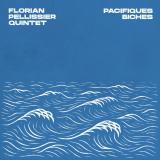
Wild by nature, the Does of the Florian Pellissier Quintet could never be contained in a creative pen that would have forced them never to cross potential geographical limits. Travelers, spending their energy without restraint to let the hard bop of their jazz wander and export itself wherever the groove guided them, they went as far as Africa or South America, from the Cape of Good Hope to Rio. Rio, precisely where, for their last appearance, exposure to a brief electric current had carried them into outer space. A revelation.
Furious strides, exhausting gambols, the Does had done so much that they could not escape the obvious call of calm and serenity. Freed from distances, and after a stop in Colombia to mingle with the crowd at the Barranquilla carnival, it was California and its Pacific coast they reached, to rest before the peaceful immensity of the ocean.
One hundred sixty-five million square kilometers, an infinite expanse to contemplate in order to fling wide open the gates to an even vaster space. A spiritual domain conducive to the search for new sounds. That of the open sea, where measuring miles is neither relevant nor meaningful, and where the only compass becomes the musical tracks the Does follow.
Beneath their coppery hooves, to the crystalline sound of the Fender Rhodes and the sweep of electric layers, the path to take revealed itself in this meditative and abstract realm they had never before explored. Invited to join the purely organic textures, the synthetic notes distilled a few aromas of sweetness into an album of ten tracks, where the FPQ abandoned written scores on some pieces in order to be guided only by the inspiration born of a newfound freedom.
Blue when they began their journey five albums ago, their coat has now taken on the colors that illuminate the Pacific coast. That moment when, as you gaze at the horizon swallowing the sun, only glowing shades filter through—reddish, orange, violet.
Departing without haste or frenzy from one of the shores bordering the ocean, the voices of Archie Shepp, Iggy Pop, and DjeuhDjoah still resonating in their antlers, the Does may now be on the opposite shore. Carried all the way to the Japanese coast by Hokusai’s wave…
- 1: The Weed (.5)
- 2: Carnaval De Barranquilla (7.0)
- 3: Archie Et John Feat Archie Shepp (4.26)
- 4: The Movie Critic (3.2)
- 5: La Naissance De La Comédie (2.4)
- 6: Wonderful World Leaders (.03)
- 7: Pacifiques Biches (5.25)
- 8: Only Fan Feat Iggy Pop ( 2.10)
- 9: Où C’est ? Qui Sait ?Feat Djeuhdjoah ( 5.55)
Wild by nature, the Does of the Florian Pellissier Quintet could never be contained in a creative pen that would have forced them never to cross potential geographical limits. Travelers, spending their energy without restraint to let the hard bop of their jazz wander and export itself wherever the groove guided them, they went as far as Africa or South America, from the Cape of Good Hope to Rio. Rio, precisely where, for their last appearance, exposure to a brief electric current had carried them into outer space. A revelation.
Furious strides, exhausting gambols, the Does had done so much that they could not escape the obvious call of calm and serenity. Freed from distances, and after a stop in Colombia to mingle with the crowd at the Barranquilla carnival, it was California and its Pacific coast they reached, to rest before the peaceful immensity of the ocean.
One hundred sixty-five million square kilometers, an infinite expanse to contemplate in order to fling wide open the gates to an even vaster space. A spiritual domain conducive to the search for new sounds. That of the open sea, where measuring miles is neither relevant nor meaningful, and where the only compass becomes the musical tracks the Does follow.
Beneath their coppery hooves, to the crystalline sound of the Fender Rhodes and the sweep of electric layers, the path to take revealed itself in this meditative and abstract realm they had never before explored. Invited to join the purely organic textures, the synthetic notes distilled a few aromas of sweetness into an album of ten tracks, where the FPQ abandoned written scores on some pieces in order to be guided only by the inspiration born of a newfound freedom.
Blue when they began their journey five albums ago, their coat has now taken on the colors that illuminate the Pacific coast. That moment when, as you gaze at the horizon swallowing the sun, only glowing shades filter through—reddish, orange, violet.
Departing without haste or frenzy from one of the shores bordering the ocean, the voices of Archie Shepp, Iggy Pop, and DjeuhDjoah still resonating in their antlers, the Does may now be on the opposite shore. Carried all the way to the Japanese coast by Hokusai’s wave…
GATEFOLD DOUBLE VINYL WITH SPOT UV FRONT COVER
Following the skewed-unself-help-brilliance of ‘Sus Dog’ (which marked his first full foray into songs, abetted by Thom Yorke), and its companion piece ‘Cave Dog’, Chris Clark returns to the dancefloor’s simple, but no less affecting pleasures, with ‘Steep Stims’.
“I found it hard to pull away from listening to this record, hard to stop making it, I had to remove myself from the Stims and stop enjoying it at some point. The album feels like nature to me. I love it when electronic music feels more naturalistic than acoustic music, more potent, that’s the devil’s trick, the promise of electronic music.” comments Chris.
“I used an old synth - the Virus on all of the tracks. I used it at Mess in Melbourne - run by my friend Robin Fox - I loved it so much I had to buy one when I got back to the UK, it took a while to find. They’re a bit clunky to program but make some of my most favourite sounds.”
‘Steep Stims’ marks a back-to-basics approach, invoking the early years of gung-ho creativity enforced by limitations in technology at the time. “Most of the tracks on this album capture the spirit of making music on old samplers, which don’t have much memory time”, explains Clark. “It reminds me of making ‘Clarence Park’, my first album, where I would have to finish tunes in the session, as they would be saved on floppy disks and I couldn’t easily go between tracks. This new record is just a few synths and a few choice sounds; the writing is the important thing.”
Made quickly, ‘Steep Stims’ reflects the immediate rave energy of his live show, but that’s not to say it’s basic floor fodder, as it’s rife with personality, synth magic, and knack for melody. Although swift and impressionistically captured rather than laboured over, it’s still formidably deft, with plenty of oddball weirdness lurking beneath the dancefloor.
Soft, orange, scorched, brutal, the opening track ‘Gift and Wound’ captures the classic dance music dread / awe / euphoria combo perfectly, before ‘Infinite Roller’ merges sparkly-minimalism with snarling bass and soft sines, which turn more dense and metallic as it progresses.
The melancholic smoke belch of ‘No Pills U’ gives strong classic vibrations, which is belied by its creation, made in just 20 minutes. “I love working quickly sometimes”, comments Clark. “Inspiration hits, rough and ready. It’s off the cuff but also screams ‘don’t gild the lily with nonsense, keep it simple keep it clean’”. Segueing into its elder brother, the piece becomes bigger and beatier on ‘Janus Modal’, where it permutates for over 7 minutes of fluttering, beatific club majesty.
At ‘18EDO Bailiff’ you inexplicably find yourself at a clearing, things have suddenly got much quieter. You enter a decrepit and eerie old house, and as you move through its unsettling interior, you arrive at ‘Globecore Flats’. A real piano tuned to 18 notes per octave gives the pair of tracks a haunted, olde worlde feel, which promptly gets eaten by a huge tech step tearout monster, birthing a strange but exotic beast.
The white hot ‘Blowtorch Thimble’ is all hooktasm-rave-hyper-amen-energy, whilst acidic flute leaps around like Ian Anderson on pingers throughout the catchily simple jump-up lurch of ‘Civilians’.
“‘In Patient’s Day Out’ is like some sort of Morricone-does-kraut-rock-with-drum-machines, but that’s probably just in my head” says Clark. “I made several versions of this then went with the early mix but cranked through some choice outboard because it just had something.”
Drumless, yet still full of exhilarating-big-trance-drama, ‘Who Booed The Goose’ flashes by in stroboscopic fast forward, then ‘5 Millionth Cave Painting’ gives a palate cleanser, letting “the virus with its delicious broken, luxurious reverb have a moment”, before ‘Negation Loop’ swoops down in all its glory, with Clark’s tweaked vocals leading deconstructed trance breakdowns, tape edits and brutal noisebursts.
An antidote to the bombast of its predecessor is ‘Micro Lyf’, which closes the set on a poignant note, of sorts. Muted staccato gives way to field recordings “that gradually put it in this outside space; alien in a meadow somewhere nameless. It feels like a sinkhole. The record kinda swallows itself up and then is gone”, ends Chris.
- A1: Time For A Change (Paul’s Collection)
- A2: Nobody Will Ever Help You (The Klan)
- A3: 20Th Century (Berry Clan)
- A4: See My Car (New Inspiration)
- A5: I Don’t Need You (The Jumpers)
- A6: Woman Don’t Love Me (The Swallows)
- A7: When I’m Down (Ferre Grignard)
- B1: Only Lonely Me (The Mec-Op Singers)
- B2: Lonely Tears (R And The R’s)
- B3: Mad Jane (François Nico)
- B4: Tomorrow (The Midgets)
- B5: Freedom (Les Altesses)
- B6: Tus Es Mon Enfer (Mosaïque)
- B7: Cocaine Blues (Patrick)
Starman Records, the Belgian label renowned for re-releasing Belgian rock from the 60s, 70s, and 80s, has so far released five volumes in the highly anticipated and widely acclaimed Belgian Vaults Series, praised by both press and fans.
These unique albums focus entirely on the sixties and early seventies, compiling many rare and hard-to-find tracks—mainly originally released as singles on small, long-forgotten labels. Covering genres such as pop, beat, rock ’n’ roll, and psych, these gems are well worth rediscovering. Belgian Vaults are not just collector’s items; each album features restored and remastered sound quality and is carefully curated to appeal to all fans of sixties rock.
The Ottawa composer/performer and head of Black Bough Records plays every instrument on his CST debut: an accessibly avant-garde work of dark/ambient modern chamber music. Mark Molnar has been a linchpin of the Ottawa experimental music scene for over two decades, spanning contemporary classical, electroacoustic, industrial/noise, and improv. As a string player in a wide range of projects, an organizer and curator of innumerable shows, and via his own avantgarde label Black Bough Records, Molnar's unflagging contributions to independent music culture in Canada's capital city have been significant. EXO is his Constellation debut: a remarkable and bracing suite of post-classical composition on which Molnar plays every instrument. Meticulously self-recorded, primarily with strings, harp, and piano, EXO balances thematic melodicism, polytonality, and dissonance across three elegiac pieces of exquisitely expressive dynamism. This is exacting modern chamber music that blends formal and harmonic complexity with a solemn emotive sensibility accessible to a broad audience. Listeners that yearn for some edge and disquietude in a landscape of often all-too-approachable post-classical music should find EXO eminently worth their time and attention. While Molnar is a highly trained string player, and studied music under Aubrey Wolfe, microtonality with James Tenney, and composition with R. Murray Schafer, his trajectory has been entirely and intentionally outside the academy, signalling a socio-artistic commitment to DIY culture, forged from an early passion for the sonic worlds of post-hardcore, post-punk, no-wave, free improv, power electronics, and other independent/underground musics. His classically-informed works have been described as "tense currents of musical modernism invigorated with punk's raw vitality." EXO carries an undercurrent influenced by dark industrial and ambient metal in particular, with microphones purposely placed to pick up the low-end frequencies of the piano body, and of a bass drum positioned as a resonant skin in the acoustic space; an electroacoustic strategy organically meshed to the crisply defined and pristinely recorded pointillisms and polychords of strings, harp, and piano, which feed into this noisefloor of crepuscular sub-bass disquietude and decay. It's a production aesthetic that lends EXO a distinct undertow of tension and feeling, a sort of roiling maximalism where the chamber instrumentation traces arcs and waves of form and flow as if drawn from a dark, impervious ocean below. It also reinforces the profound hermeticism of Molnar's process, as a forbiddingly solitary creative act of immersion and navigation. The album artwork, featuring semiabstract stills of the sea by British photographer Ed Allen, further reifies this metaphor. The album's opening piece 'Sub Luna' (and its shortest at 8 minutes) showcases Molnar's adeptness at naturalistic and flowing complexity: tight cascades of climbing and descending chordal clusters hold their polytonal densities for various durations, yielding to more clarified harmonic suspensions and motifs, as melodic themes led primarily by violins in the higher registers provide a fractured lyricism. Molnar says: "the opening and closing figures of this piece act as opposing shorelines; the shorelines provide a reliable expression of range and key signature, and the tides come in and swallow them up, the motion of a body that addresses the relationship between states of lucidity and melodic figures." On 'Terre Sacer' everything happens in soupier waters, as a slow and doleful theme, anchored by grinding bass notes, circles in a gyre of dark resonances, until glistening strings gradually ascend to enrobe a plaintive and gently harrowing single-voiced ostinato over the composition's final third. Molnar's drone, ambient, minimalist, and goth-industrial influences are on display here. Side Two of EXO features the 18-minute multi-movement 'pallida Mors' (pale death): a waterfall of heterophony introduces dense chordal movements where strings are recorded and mixed to evoke pipe organ, in the album's most overtly dissonant and (anti)liturgical sequence. This gives way to ever more open and fragile spaces, before a resurgence of dark clusters and noise treatments introduces a final repeating piano coda, shrouded in devastated bass resonance, settling into what Molnar calls "a meditative hollow." Constellation is honoured to release this work by Mark Molnar, a longtime fellow-traveler whose selfless and boundlessly generous activities as an independent arts enabler sometimes obscure his own accomplished and uncompromising artistry. We trust EXO can help shed some much deserved light on this fine composer. Thanks for listening.
Limited edition of 500 copies.
Hard Top assembles the previously unreleased 1975 recordings of legendary South African saxophonist Kippie Moketsi (also spelled Moeketsi). The 2LP vinyl edition is presented in a gatefold sleeve featuring artwork by Mafa Ngwenya and comes from As-Shams Archive on the heels of the Tete Mbambisa's previously unreleased African Day album in 2024.
By 1975, at the age of 50, saxophonist Kippie Moketsi had already earned his stripes as a South African jazz figurehead. His tenure with the Jazz Epistles and the cast of the "South African Jazz Opera" King Kong in the late-1950s had not only marked his own rise to fame but also seen him help catalyse the ambitions of a younger generation of iconic artists who would go on to become the defining figures of modern South African jazz. While he didn't enjoy the same international attention as his protégés Miriam Makeba, Hugh Masekela and Abdullah Ibrahim, his humble and challenging career on the local jazz scene until his death in 1983 saw him forge an enduring legacy.
Owing to the efforts of record producer Rashid Vally, Kippie Moketsi's journey through the 1970s is beautifully documented, most notably on the albums Dollar Brand + 3 (1973), Tshona! (1975) and Blue Stompin' (1977), in which he shares the spotlight with Abdullah Ibrahim, Pat Matshikiza and Hal Singer respectively. As a featured performer on Soul of the City's Diagonal Street (1975) and Dennis Maple's Our Boys are Doing It (1977), Moketsi is seen embracing the popular orientations of South African jazz in 1970s but, having come up in the 1940s and 1950s, he never forgot his roots as a dedicated admirer and scholar of traditional American jazz.
While Moketsi did write some memorable compositions, it was in the role of interpreter that he shone most brightly. With its title derived from a good-natured nickname that nodded to Moketsi's elder status by way of his receding hairline, Hard Top is a covers album that looks back in time to the era of rhythm and blues while also indulging 1970s pop and funk with a decidedly South African vibe. Officially joining Kippie Moketsi's catalogue 50 years after it was recorded, Hard Top provides an opportunity to celebrate the multiple dimensions of a South African jazz legend and reflect on the unwavering support of his fan, producer and friend Rashid Vally, who passed away in December 2024.
- The Internet Will Break My Heart
- Un Solo Corpo
- Me Porn, You Porn
- The Train Seems To Know Where I Go
- Agoraphobie
- Let S Not Talk About The War
- Liturgy Of Litter
- Volatile
- Boundless Love
Over the last ten years, Chris Imler's perhaps not quite as rapid but equally unstoppable rise has coincided with the world's free fall. “The Internet will break my heart” marks the steepest artistic stage to date. We see a man whose entire oeuvre is a late work, at the dizzying heights of his game. “So, the Internet, that's a really hot topic”, I can already hear blasé hisses here and there in the boxes. But the truth is that the topic is annoyingly topical. Because only now is the world wide web unfolding its full disappointing potential. All pipe dreams of an emancipatory power of the digital multitude (remember Negri/Hardt, haha) are as completely extinguished as the Arab Spring was swallowed up by the pre - nuclear winter. While they are capped from above in authoritarian states, social media in the so - called free world are primarily used by lumpen capital to undermine humanistic standards and by the remnants of the left for self - destructive polarization. But the cute animal videos! They too have their dark side, which Imler brings up in the title song: “The animals in the real world are under pressure”. - Jens Friebe
With their name taken from an episode of the radio program The Goon Show, Ned's Atomic Dustbin formed in Stourbridge, UK, in 1987. They're known for using two bass-players in their line-up and creating a tense and highly driven sub-hardcore sound featuring distorted effects-laden guitar and energetic drums.
In 1992 they released their second studio album Are You Normal?. The album features their American hit song “Not Sleeping Around”, which hit the top of Billboard's Modern Rock Tracks chart. The album was produced by Andy Wallace, best known for his work with Slayer, Prince, Nirvana, Sonic Youth, Paul McCartney and so on.
Are You Normal? is available as a limited edition of 1000 individually numbered copies on translucent blue coloured vinyl and includes an insert.
Black Vinyl[21,22 €]
Since first bonding over Slowdive at a Texas karaoke bar six years ago, musicians Uriel Avila and Jonathan Perez have grown trauma ray into Fort Worth's foremost flag bearer of crushing shoegaze. A five-piece rounded out by bassist Darren Baun, drummer Nicholas Bobotas, and guitarist Coleman Pruitt, the band's debut album, Chameleon, captures their evolving sound at an apex of majestic devastation. A fusion of downer hooks, gauzy melancholia, and bulldozer riffs, the album heaves and crashes across 50 minutes of stacked amplifier alchemy. Lyrically the songs trace similarly lofty and brooding terrain; Avila says "The theme is death. And a chameleon, like death, can shape-shift in and out our lives in different forms." Chameleon opens with "Ember," dreamy and distant, alternately anthemic and apocalyptic, defeated and deafening. Lead single "Bishop" perfectly encapsulates trauma ray's depth and dimension, ripping out of the gate with "the biggest, baddest, saddest wall of sound." Lyrics about being burnt at the stake and "tossed in the flame" float above a stop-start assault of precision distortion, eventually expanding into a lush, heavy, sorrowful end coda. "Spectre" is a mysterious, introspective dirge, envisioned as a "mellow, slowcore, Duster-thing," all feeling and heavy fuzz chords (with no lead guitar). Avila wrote it, "to be a hymnal" from the perspective of someone who won't let go - a ghost, an ex, a shadow self. Although the album is rich with subtleties, graceful lulls, and "breaths of air," the band's three guitar attack is its defining force, a power flexed to its peak on "Bardo." Perez's intentions were blunt: "I wanted to write a riff that was hard as fuck." The result is alternately mean and eerie, veering between noisy one string bends and surging headbang, mapping a middle ground between Unwound and early-Deftones. One of trauma ray's greatest gifts is their ability to make doomy, sledgehammer heaviness sound like an earworm, without production tricks or gimmicks: "Riff, verse, chorus, three guitar parts - that's all you need." This quality is particularly apparent on the title track, a churning slab of amplifier worship, swirling chords, and heavenly, defeated vocals about not belonging, shape-shifting, and death ("A twisted face / Void of attention / An empty space / In your reflection"). "U.S.D.D.O.S" closes the album, swaying across seven minutes of grey skied guitar and haunted voice, subtly thickening as it deepens. Feedback and shrapnel gradually begin raining down, like a satellite disintegrating in the atmosphere. Titled as an acronym after a poem by Chilean writer Roberto Bolaño that loosely translates to "a dream within a dream," the melody softens, smears, and then disappears, slowly swallowed by the gravity of eternal descent. Chameleon is a masterpiece of craft, balance, melody, lyricism, and gravity, flexing a fresh vision of loud-quiet-loud architectures and the vertigo depths of blasted harmonics. From Slowdive to Nothing, to Hum and beyond, the band absorb and expand on their influences into a rare and dedicated alchemy. trauma ray's cinematic tempest is a gathering storm only just taking flight.
Mint Green Vinyl.[22,27 €]
Since first bonding over Slowdive at a Texas karaoke bar six years ago, musicians Uriel Avila and Jonathan Perez have grown trauma ray into Fort Worth's foremost flag bearer of crushing shoegaze. A five-piece rounded out by bassist Darren Baun, drummer Nicholas Bobotas, and guitarist Coleman Pruitt, the band's debut album, Chameleon, captures their evolving sound at an apex of majestic devastation. A fusion of downer hooks, gauzy melancholia, and bulldozer riffs, the album heaves and crashes across 50 minutes of stacked amplifier alchemy. Lyrically the songs trace similarly lofty and brooding terrain; Avila says "The theme is death. And a chameleon, like death, can shape-shift in and out our lives in different forms." Chameleon opens with "Ember," dreamy and distant, alternately anthemic and apocalyptic, defeated and deafening. Lead single "Bishop" perfectly encapsulates trauma ray's depth and dimension, ripping out of the gate with "the biggest, baddest, saddest wall of sound." Lyrics about being burnt at the stake and "tossed in the flame" float above a stop-start assault of precision distortion, eventually expanding into a lush, heavy, sorrowful end coda. "Spectre" is a mysterious, introspective dirge, envisioned as a "mellow, slowcore, Duster-thing," all feeling and heavy fuzz chords (with no lead guitar). Avila wrote it, "to be a hymnal" from the perspective of someone who won't let go - a ghost, an ex, a shadow self. Although the album is rich with subtleties, graceful lulls, and "breaths of air," the band's three guitar attack is its defining force, a power flexed to its peak on "Bardo." Perez's intentions were blunt: "I wanted to write a riff that was hard as fuck." The result is alternately mean and eerie, veering between noisy one string bends and surging headbang, mapping a middle ground between Unwound and early-Deftones. One of trauma ray's greatest gifts is their ability to make doomy, sledgehammer heaviness sound like an earworm, without production tricks or gimmicks: "Riff, verse, chorus, three guitar parts - that's all you need." This quality is particularly apparent on the title track, a churning slab of amplifier worship, swirling chords, and heavenly, defeated vocals about not belonging, shape-shifting, and death ("A twisted face / Void of attention / An empty space / In your reflection"). "U.S.D.D.O.S" closes the album, swaying across seven minutes of grey skied guitar and haunted voice, subtly thickening as it deepens. Feedback and shrapnel gradually begin raining down, like a satellite disintegrating in the atmosphere. Titled as an acronym after a poem by Chilean writer Roberto Bolaño that loosely translates to "a dream within a dream," the melody softens, smears, and then disappears, slowly swallowed by the gravity of eternal descent. Chameleon is a masterpiece of craft, balance, melody, lyricism, and gravity, flexing a fresh vision of loud-quiet-loud architectures and the vertigo depths of blasted harmonics. From Slowdive to Nothing, to Hum and beyond, the band absorb and expand on their influences into a rare and dedicated alchemy. trauma ray's cinematic tempest is a gathering storm only just taking flight.
Originally released to a fan base and music press that were unprepared for the band to move on from the punk fury of "Crossing The Red Sea", The Adverts "Cast Of Thousands" has since been recognized as a lost classic of the time. TV Smith's cutting observational lyrics and sharp musical instincts saw his song writing grow and move in unexpected directions. The primal thumping was replaced by dynamic and driving drumming, acoustic guitars and probing solos emerged, and Tim Cross joined to add keyboards and fill out the overall sound. The one constant was the pounding throb of Gaye Advert's bass. Encouraged to experiment by surprise producer Tom Newman (Mike Oldfield "Tubular Bells") the band found themselves stretching creatively, both in song writing and recording techniques. They might agonize over the sound of recording a match being lit in the middle of one song, while doing a single take of a vocal via a microphone hung in the bathroom for another. Giant choirs were built meticulously over multiple tracks, while the sound of a rat running through the reverb room would be captured forever. The results wrapped some of TV's best songs in strange and inventive sounds to compliment his anti-pop smarts and rock and roll heart. They did not know it at the time, but the band was falling apart. Tensions would soon rise to the level that replacement players were called in to finish their final tour. Punk fans left them in droves. Critics skewered the singles from the album. Their record label had moved on to the next big thing. Feeling that they had reached a creative peak made the tumble even harder to swallow. Time has been very kind though, and fans discovering punk after the first wave have been able to hear "Cast" for what it is - a brilliant and biting collection of rock and roll. Still full of stomp and swagger even when stripped down on "My Place" or via the anthemic surge of "Television's Over", with TV's hook factory on full display on the anti-love song "Love Songs", and the band closing the album with the creeping ballad "I Will Walk You Home"; The Adverts had grown from a great punk rock band to a great rock band. Black vinyl.
The Moon and the Melodies is a singular record within the Cocteau Twins" catalogue - unusually ethereal, even by their standards, and largely instrumental, guided by the free-form improvisations of Harold Budd, an ambient pioneer who had drifted into their orbit as if by divine intervention. Building on the atmospheric bliss of Victorialand, released earlier the same year, it signalled a possible future for the trio, yet it was a path they"d never take again. Now, almost forty years after it was fi rst released, it"s being reissued on vinyl for the first time - remastered, from the original tapes, by Robin Guthrie himself. Over the ensuing years, The Moon and the Melodies has attracted a passionate fan base. Its most atmospheric tracks routinely turn up in ambient DJ sets. "Sea, Swallow Me" is one of the Cocteau Twins" most streamed songs on Spotify, having found a new life on TikTok, where it serves as the soundtrack to innumerable expressions of hard-to-express melancholy. For such a low-key aff air, the album casts a long shadow - but Raymonde believes the record"s uniqueness stems directly from its humble, unpremeditated origins. "It captured a moment in time between friends that are enjoying making music together. Really, that"s the essence of it."
Hardwood Vinyl. Narrow Head's highly anticipated new LP 12th House Rock arrives August 28th on Run For Cover Records. The Houston-based band's latest entry is the distillation of the greatest moments in 90's alternative and hard rock with a fresh set of ears, thirteen tracks of their signature brand of bludgeoning lullabies bursting at the seams with creative ideas, new directions and yes, massive, monolithic riffs. In between the sparkle and smash, open-hearted and emotionally naked songwriting showcases a core piece of the band's identity- showcasing 12th House Rock as one of the best releases of 2020.Delving into deep-seated themes of self loathing, desolation, self-medication, the loss of loved ones and hopeful redemption,12th House Rock is, as the title suggests, a rock-focused LP themed on transition- exploring the vast abyss of darkness just before the sun cracks upon the horizon. Using distorted guitars as their primary vehicle, Narrow Head's wall of riffs add stark contrast to their best quality- deceptively sweet pop melodies that channel the lessons of My Bloody Valentine, Cocteau Twins, Helmet, Deftones and Guided by Voices all at once.
It's hard to believe it's been four years since the debut release of The Goalie's Anxiety at the Penalty's kick excellent debut "Ways of Hearing." But growth takes time and rather than rush a follow-up album to market to capitalize on their newfound success, the group opted to take their time and focus their efforts at their own pace. It paid off.On their much anticipated sophomore album, ambition is key. The name of the album itself "The Iliad and the Odyssey and the Goalie's Anxiety at the Penalty Kick" spans a glorious 71 characters and is bound to swallow the screen of whatever device that attempts to display the text. The essence of the album is built upon delicate, pleading vocals that sit atop stirring dynamic movements that seem to move between small and vulnerable to full-on symphonies that are bursting with emotion. "The Iliad and the Odyssey and the Goalie's Anxiety at the Penalty Kick" will be released by veteran indie label Count Your Lucky Stars on April 25th, 2024 (an homage to their first released single of the album) during the dead time when the cold end of winter is transitioning to a hopeful and promising spring- an apt metaphor that seems to encompass the heart of the album.
Witch Trials will release his anticipated new EP CANNIBAL CULTURE on his own label, MYRYRS. The upcoming EP spans genres and journeys between contemporary dance, electronic, house, and breakbeat - showcasing the progression and expansion of a stand out artist continuing to evolve and reinvent his craft.
The new EP from Witch Trials delivers a time-traveling thrust of rave culture, melodic riffs and atmospheric beats that would work the dancefloor as hard as a solitary listener at home– experiencing the tracks in confinement.
“CANNIBAL CULTURE… it’s the voices in your head that guide you, the demons in the night or day I overcome, the time I close curtains to obscure the light. It's the carnivorous force that kills, it’s the kindness of the crowd on the dancefloor, it’s also the power to continue to create. After the madness, anxiety, and constrictions within or outside of my mind, life goeson.” - WITCH TRIALS
London-based, American-born, and Irish-raised artist Witch Trials releases the visual for his new EP CANNIBAL CULTURE. Confusing the lines that bound or bind art and music, the visual captures the fusion of trauma, light after dark, and a chthonic realm of solitude. The photographic concept and the sound world push distinct interpretations of the mediums and work alone or in harmony.
From the depths of Gothenburg, The Family Men emerge. Since 2017, they have slowly carved out a sound entirely their own within the current music scene, standing out as one of the hardest groups in Sweden today. Making use of unconventional sampling, chainsaw-guitars and gritty industrial tones, they manage to blast their way into yet uncharted musical territory. Their debut album 'No Sound Forever' is an explosive, daring and vital record of a band ready to swallow you whole.
A new EP by The Untouchables is always a treat to be savoured, but the opening track of their latest for DNO is so deliciously tense, so foaming at the mouth with anticipation, that it’s hard not to gulp down the whole release in one go. A minute and a half of sinister notes trying to jab their way through a thick filter and there’s no doubting ‘Emu’ is gonna be one hell of a ride — and it doesn’t disappoint, revealing the stabs in all their gritty darkcore glory, and unleashing a torrent of system-shaking subs.
As per, the Belgian duo present a masterclass in merging dub’s unparalleled spaciousness with techno’s unrelenting drive, and delivering it all at a drum & bass tempo.
On ‘Punjab Chant’, a South Asian vocal call and various wind and percussive instrumentation from the region are pulled apart, lashed with delay, and layered over rubbery subs, resulting in an intense intercontinental dubwise belter.
‘Ragga Ting’ goes full digi dancehall, maintaining pace while employing sultry dembow-style syncopation and a hefty droning bassline that seems to loop ad infinitum. It’s an innovative move and one that’s sure to get hips swinging in the dance.
And the final track on wax, ‘86 Dread’, is pure bass weight, its boxy drums almost swallowed up by the sullen low-end, with only crisp shakers and the odd sonic squiggle poking above the gloom.
Digital bonus track ‘Planetarium Space’ brings the tempo down, but fills the mix with the hurried tick of hi-hats and pattering congas, dollops of reverse bass that add slippery off-kilter movement, and a rogues’ gallery of ghostly organ and other haunted samples and synths that wouldn’t feel out of place in an ‘80s horror flick.
Always taking a leftfield route to rattle your ribcage, The Untouchables and DNO once again prove they’re a perfect pairing. Yum, yum.
Rhythms of postmodern realism at the very bottom of the DNO.
Während sich die australischen Metal-Juggernauten Parkway Drive auf eine Welttournee vorbereiten, um ihr 20-jähriges Bandjubiläum zu feiern, kündigt Epitaph Records die Veröffentlichung der Debüt-EP der Band aus dem Jahr 2004 an, zum ersten Mal auf Vinyl. Diese erweiterte Version von Don't Close Your Eyes enthält die ursprünglichen 8 Tracks der ersten EP der Band und zusätzlich Bonustracks von ihrem Split-Album mit I Killed the Prom Queen und von den Compilation-Alben What We've Built und True Till Death, Volume I.
Parkway Drive stammen aus der australischen Küstenstadt Byron Bay und stürmten aus ihrer ruhigen Umgebung heraus, um eine explosive Mischung aus komplizierten Metal-Riffs, heftigen Breakdowns und emotionaler Hardcore-Spannung zu bieten. Mit den Chartstürmern Horizons (2007) und Deep Blue (2010) entfachte die Band regionales Feuer, bevor sie 2012 mit Atlas den internationalen Markt eroberte. Mit Ire (2015) führte die Gruppe Clean-Gesang in ihr Werk ein, und auf Reverence (2018) und Darker Still (2022) bewegte sie sich weiter in Richtung eines melodischeren, aber nicht weniger aggressiven Metal-Stils.
Parkway Drive sind auch nach 20 Jahren immer noch eine Naturgewalt und einer der Top-Headliner in der harten Musikszene. Don't Close Your Eyes lässt die Anfänge der Band wieder aufleben und ihre größten Fans werden sich freuen, dieses Album endlich auf Vinyl zu haben.
Während sich die australischen Metal-Juggernauten Parkway Drive auf eine Welttournee vorbereiten, um ihr 20-jähriges Bandjubiläum zu feiern, kündigt Epitaph Records die Veröffentlichung der Debüt-EP der Band aus dem Jahr 2004 an, zum ersten Mal auf Vinyl. Diese erweiterte Version von Don't Close Your Eyes enthält die ursprünglichen 8 Tracks der ersten EP der Band und zusätzlich Bonustracks von ihrem Split-Album mit I Killed the Prom Queen und von den Compilation-Alben What We've Built und True Till Death, Volume I.
Parkway Drive stammen aus der australischen Küstenstadt Byron Bay und stürmten aus ihrer ruhigen Umgebung heraus, um eine explosive Mischung aus komplizierten Metal-Riffs, heftigen Breakdowns und emotionaler Hardcore-Spannung zu bieten. Mit den Chartstürmern Horizons (2007) und Deep Blue (2010) entfachte die Band regionales Feuer, bevor sie 2012 mit Atlas den internationalen Markt eroberte. Mit Ire (2015) führte die Gruppe Clean-Gesang in ihr Werk ein, und auf Reverence (2018) und Darker Still (2022) bewegte sie sich weiter in Richtung eines melodischeren, aber nicht weniger aggressiven Metal-Stils.
Parkway Drive sind auch nach 20 Jahren immer noch eine Naturgewalt und einer der Top-Headliner in der harten Musikszene. Don't Close Your Eyes lässt die Anfänge der Band wieder aufleben und ihre größten Fans werden sich freuen, dieses Album endlich auf Vinyl zu haben.
- A1: Suave And Suffocated
- A2: Walking Through Syrup
- A3: Legoland
- A4: Swallowing Air
- A5: Who Goes First?
- A6: Tantrum
- B1: Not Sleeping Around
- B2: You Don't Want To Do That
- B3: Leg End In His Own Boots
- B4: Two And Two Made Five
- B5: Fracture
- B6: Spring
- B7: Intact
Red Vinyl[30,46 €]
With their name taken from an episode of the radio program The Goon Show, Ned's Atomic Dustbin formed in Stourbridge, UK, in 1987. They're known for using two bass-players in their line-up and creating a tense and highly driven sub-hardcore sound featuring distorted effects-laden guitar and energetic drums.
In 1992 they released their second studio album Are You Normal?. The album features their American hit song “Not Sleeping Around”, which hit the top of Billboard's Modern Rock Tracks chart. The album was produced by Andy Wallace, best known for his work with Slayer, Prince, Nirvana, Sonic Youth, Paul McCartney and so on.
Are You Normal? is available as a limited edition of 1000 individually numbered copies on translucent blue coloured vinyl and includes an insert.
- A1: Speedboat (2023 Edit)
- A2: Low Res Skyline (2023 Edit)
- B1: Blocks (2023 Edit)
- B2: Burma Heights (2023 Edit)
- B3: Skin Diving (2023 Edit)
- C1: Fukumachi (2023 Edit)
- C2: L O.9.V.e. (2023 Edit)
- C3: Cone (Mix 2)
- D1: Bueno (2023 Edit)
- D2: French Dub (2023 Edit)
- D3: Evil Dub (2023 Edit)
- E1: Blufarm (Abbey Road 2023 Edit)
- E2: Unknown Mind
- E3: Bueno (Ambient Mix)
- F1: Speedboat (96 Demo)
- F2: L O.9.V.e. (Boat Mix, 2023 Edit)
- F3: Redfarm (Abbey Road 2023 Edit)
Dance music has always been grounded in a sense of place. Chicago, Detroit, London, Berlin—a zip code can tell you as much about the music as the year it was made.
But beyond the nuts and bolts of the here and now lies a netherzone where some of the best electronic music floats, impossible to pin down. Swayzak’s Snowboarding in Argentina is one such record.
The title hints at its uncanny placelessness. The music has nothing outwardly to do with Argentina, for one thing. The work of UK producers David Nicholas Brown and James S. Taylor, it was recorded in a number of locations—mostly bedrooms—around London. Yet there is little that is quintessentially British about the music.
Instead, Brown and Taylor drew much of their inspiration from, on the one hand, the luminous chords and silky heft of Detroit techno, and on the other, the staccato drums and clipped textures that were then beginning to bubble out of Berlin and Cologne.
That brings us to the question of time. For if Snowboarding in Argentina belongs to nowhere, it is equally a product of nowhen.
On a practical level, the music took shape in the mid to late 1990s, although it took nearly 10 years for it to come to fruition. Brown and Taylor began jamming on instruments, then machines, in the late 1980s. Then, after Brown suffered a serious car accident, the two musicians began working together more seriously. Trial and error yielded a promising single with a downtempo vibe that a hired-gun studio producer promptly ruined; Swayzak retreated to their bedrooms.
They learned about Chain Reaction from a radio show, found new ways to burrow into the circuitry of their machines, and by 1996 they had hit upon their sound. brought 10 copies of the first to Berlin’s Hard Wax, sold them directly to the shop for a fistful of Deutschmarks, and turned around and spent the money on records; that’s how DIY electronic music worked in those days.) The album itself appeared in 1998 on London’s Pagan label and quickly built a cult following. It was clear that the music was in conversation with its contemporaries: Heard from the right angle, it was possible to imagine it as a halfway point between the proto progressive house of Underworld and the monochromatic minimalism of Kompakt. But it also didn’t quite sound like anything else around; it was a dispatch from an unknown territory that needed no special understanding to decipher.
A quarter century later, Snowboarding in Argentina sounds simply eternal. Certain hallmarks of ’90s production are available—the music’s almost murky warmth is a reminder of what electronic music sounded like before software swallowed everything into its digital maw—but there’s nothing dated about it. The exploratory nature of these tracks, as the result of experimenting with their machines’ limitations, never eclipses their musical or emotional essence.
Long since been deemed a classic, Snowboarding in Argentina remains an underdog in the annals of electronic music. Its semi-obscurity was surely not helped by the decision to publish nine of its original 12 tracks on the CD, and seven on the vinyl, with only four appearing on both formats. Twenty-five years after its original release, Lapsus’ Perennial Series edition unites, for the first time, all the album’s tracks as a single triple-vinyl package, rounding out the 12 original songs with previously unreleased material. Working off the original DAT premasters, Swayzak have created new edits of all the tracks. The result might be considered the definitive edition of the album as it was meant to be, after a 25-year journey. It seems fitting that an album so timeless would continue morphing throughout its lifespan. For fans, it’s the chance to hear a beloved album as never before. And for newcomers, it’s the perfect introduction to a record that, in its own quiet way, reshaped the sound of electronic music, opening up new frontiers unbound by cartography or calendars.
The core of Snowboarding in Argentina appeared on a series of three two-track singles in 1997. (Taylor brought 10 copies of the first to Berlin’s Hard Wax, sold them directly to the shop for a fistful of Deutschmarks, and turned around and spent the money on records; that’s how DIY electronic music worked in those days.) The album itself appeared in 1998 on London’s Pagan label and quickly built a cult following. It was clear that the music was in conversation with its contemporaries: Heard from the right angle, it was possible to imagine it as a halfway point between the proto progressive house of Underworld and the monochromatic minimalism of Kompakt. But it also didn’t quite sound like anything else around; it was a dispatch from an unknown territory that needed no special understanding to decipher.
A quarter century later, Snowboarding in Argentina sounds simply eternal. Certain hallmarks of ’90s production are available—the music’s almost murky warmth is a reminder of what electronic music sounded like before software swallowed everything into its digital maw—but there’s nothing dated about it. The exploratory nature of these tracks, as the result of experimenting with their machines’ limitations, never eclipses their musical or emotional essence.
Long since been deemed a classic, Snowboarding in Argentina remains an underdog in the annals of electronic music. Its semi-obscurity was surely not helped by the decision to publishnine of its original 12 tracks on the CD, and seven on the vinyl, with only four appearing on both formats. Twenty-five years after its original release, Lapsus’ Perennial Series edition unites, for the first time, all the album’s tracks as a single triple-vinyl package, rounding out the 12 original songs with previously unreleased material. Working off the original DAT premasters, Swayzak have created new edits of all the tracks. The result might be considered the definitive edition of the album as it was meant to be, after a 25-year journey. It seems fitting that an album so timeless would continue morphing throughout its lifespan. For fans, it’s the chance to hear a beloved album as never before. And for newcomers, it’s the perfect introduction to a record that, in its own quiet way, reshaped the sound of electronic music, opening up new frontiers unbound by cartography or calendars.
Das sechste Album der New Yorker Band The National ist der Nachfolger des gefeierten Meisterwerks "High Violet" (2010), das sich weltweit über 600.000-mal verkaufte. Sänger Matt Berninger beschreibt die Songs auf "Trouble Will Find Me" im Vergleich zum bisherigen Schaffen der Band als "intuitiver und direkter". Tatsächlich ist der Sound des Albums unmittelbarer und zugänglicher, sodass man förmlich spürt, wie die Band bei sich selbst angekommen ist. "In den letzten zehn Jahren waren wir immer hinter etwas her und wollten etwas beweisen", so Berninger. Nach der fast zweijährigen Tour zu "High Violet" hätten sie sich diesbezüglich nun endlich mal entspannen können. Das Ergebnis ist gleichzeitig so neuartig wie familiär, der Höhepunkt einer künstlerischen Reise, die The National sowohl in neue Sphären als auch zurück zu ihren Anfängen bringt. Bassist Aaron Dessner: "Auf der einen Seite sind die neuen Songs die bisher komplexesten, aber auch die schlichtesten und "menschlichsten". Es fühlt sich einfach an, als hätten wir unsere gemeinsame Chemie gefunden."
- 1: Song Against Sex
- 1: 2 You've Passed
- 1: 3 Someone Is Waiting
- 1: 4 A Baby For Pree
- 1: 5 Marching Theme
- 1: 6 Where You'll Find Me Now
- 2: 1 Avery Island/April 1St
- 2: Garden Head/Leave Me Alone
- 2: 3 Three Peaches
- 2: 4 Naomi
- 2: 5 April 8Th
- 2: 6 Pree-Sisters Swallowing A Donkey's Eye
- 3: 1 The King Of The Carrot Flowers Part One
- 3: 2 The King Of The Carrot Flowers Parts Two & Three
- 3: In The Aeroplane Over The Sea
- 3: 4 Two-Headed Boy
- 3: 5 The Fool
- 3: 6 Holland, 1945
- 3: 7 Communist Daughter
- 3: 8 Oh Comely
- 3: 9 Ghost
- 3: 10 Untitled
- 3: 11 Two-Headed Boy Part Two
- 4: 1 Oh Sister
- 4: 2 Ferris Wheel On Fire
- 4: 3 Home
- 4: April 8Th
- 4: 5 I Will Bury You In Time
- 4: 6 Engine
- 4: 7 A Baby For Pree/Glow Into You
- 4: 8 My Dream Girl Don't Exist
- 5: 1 Everything Is
- 5: 2 Here We Are (For W. Cullen Hart)
- 5: 3 Unborn
- 5: 4 Tuesday Moon
- 5: Ruby Bulbs
- 5: 6 Snow Song
- 5: 7 Aunt Eggma Blow Torch
- 6: 1 Little Birds
- 6: 2 Little Birds (Studio Version)
- 7: 1 You've Passed
- 7: 2 Where You'll Find Me Now
- 8: 1 Holland, 1945
- 8: 2 Engine
- 9: 1 A Baby For Pree
- 9: 2 Two-Headed Boy
- 9: 3 I Will Bury You In Time
- 9: 4 Garden Head/Leave Me Alone
- 9: 5 Two-Headed Boy Part Two
- 9: 6 I Love How You Love Me
- 9: 7 Engine
- 9: 8 Naomi
- 9: King Of Carrot Flowers Part Two
- 9: 10 King Of Carrot Flowers Part Three
- 9: 11 Oh Comely
The two full-length records that Jeff Mangum made as Neutral Milk Hotel sound both in and out of time. Like translations of a shared subconscious, 1996's On Avery Island and 1998's In the Aeroplane Over the Sea give voice to the perennial spirit of youthful epiphany, of beginning to see the world clearly, to process and express it-no matter when you encounter them. With lo-fi indie rock, accordion, singing saw, tape collages, the so-called "zanzithophone" and beyond, Neutral Milk Hotel created an eternal entry into their Elephant 6 scene and an enduring feeling of possibility. Mangum was born in the small city of Ruston, Louisiana, in 1970, coming of age within the '80s and '90s indie and punk undergrounds, a movement of teenagers recording in their bedrooms, sharing zines and trading tapes, listening to hardcore and experimental music on college radio. For all the mythology Mangum's elusive persona has accrued-particularly during the 15 years immediately following Aeroplane, when he abruptly left the band behind-it's the beguiling songs themselves that have resonated so deeply for generations. In 2011, Mangum collected nearly all of the band's recorded output in a limited-edition box set (self-released under Neutral Milk Hotel Records, a small operation helmed by Mangum and his mother) which is now re-pressed by Merge. // CONTENTS: Black matte box is a 2-piece telescoping casewrapped package. Outer shrink-wrap includes a front sticker with "Neutral Milk Hotel," and a back sticker listing box contents. The box set includes 2 folded posters, each printed one side and each 24 x 24 inches when flat, and 1 postcard, printed front and back with box set information and sized 3.75 x 5 inches. Vinyl records: 1. In the Aeroplane Over the Sea: LP is 11 tracks pressed 33RPM to black vinyl in a gatefold jacket + printed insert for full album download. --- 2. On Avery Island: 2-LP is 12 tracks pressed to double black vinyl in a gatefold jacket + 11 x 11 printed insert + printed insert for full album download. Sides A, B and C pressed 45RPM. Side D pressed 33RPM. --- 3. Live at Jittery Joe's: 12-inch picture disc is 11 tracks pressed 33RPM to a full color picture disc in a heavyweight poly jacket + printed insert for full album download. --- 4. Ferris Wheel on Fire: 10-inch is 8 tracks pressed 45RPM to black vinyl in a printed jacket + postcard insert + printed insert for full album download. --- 5. Everything Is: 10-inch is 7 tracks pressed 45RPM to black vinyl in a printed jacket + postcard insert + printed insert for full album download --- 6. "Little Birds": 7-inch is 2 tracks pressed 45RPM to black vinyl in a printed jacket + printed insert for full album download 7-inch housed in a heavy-weight poly jacket. --- 7. "You've Passed": 7-inch is 2 tracks pressed 45RPM to black vinyl in a printed jacket + printed insert for full album download. 7-inch housed in a heavy-weight poly jacket. --- 8. "Holland, 1945": 7-inch is 2 tracks pressed 45RPM to black vinyl in a printed jacket + printed insert for full album download. 7-inch housed in a heavyweight poly jacket.
Omochi, (honorific “O” before mochi) in daily parlance is a rice cake, a dense glutinous product suited to many recipes, sweet or savoury. Stick one under the grill, watch it burst open, wrap it in crisp seaweed and dip it in soya sauce - a healthy snack, and a staple around Japanese New Year. Like everything, Omochi also has its dark side - each year it kills off a small section of the aged community, the gluey bolus a hard act to swallow - the unwary can quickly choke to death.
This Omochi is in fact Tadaki Matsunaga, of early 2000s Tokyo three piece Femini Flyers. The original Feminis were Tadaki (bass), Sachie (vocals) and Koji (drums) that was it, no guitars, no synths, Tadaki's bass being the rhythm and lead, and boy could he make it sing. Their 7” single Like You See / Masterbed was an early Ethbo release was the most requested track from Japan Blues’ Boiler Room Collections video - now pulled off the internet by The Powers That Be - since it was first aired, way back in 2014. Now the single trades for a collector's premium with those in the know. Since that recording, Omochi has built, and been working in, his home studio. The first release being his Ethbo 7” Devil, in 2019.
The follow-up is a roller-coaster ride, his own take on several genres in his forage bag, marinated to his own recipe. You'll hear his expert bass in amongst the fungii, some slick R'n'B guitar styling, several dollops of glitch-tronics, some falling-down-the-stairs drum'n'bass, a slice of kraut, Omochi's louche voice, and a spot of Sachie, the lead singer of the legendary Feminis.
This modern psychedelic omnibus, flying in the face of logic (an Ethbo template) was pressed by Omochi at Toyo Kasei, the last independent Japanese pressing plant, housed it in a tip on sleeve and shipped it to the UK, grill-ready for release. Itadakimasu!
Breton band Guadal Tejaz brilliantly continue its peregrinations in post
punk, psychedelia & kraut rock with a second and very percussive album
named 'Noche Triste'
Coco (guitar and bass), Hugo (drums and drum machine), Morgan (vocals and
guitar) and Theo (bass and Korg MS-20 synthesizer) have decided to beef up its
sound by moving towards more krautrock, post punk and electronic sounds in
order to obtain an explosive mix more sharper and efficient than ever, as it
synthesizes the saturations of punk and kraut with a cleaner and more percussive
sound driven by drum machines and other fiddling.
Noche Triste is a real kraut punk gem that can be swallowed in one go like a shot
of tequila and that you will want to put on replay instantly. This album clearly
allows Guadal Tejaz to pass a notch above with evocative name hits like "Valley
of Hate" or "Krautoxic". That track keeps all the promises of its title, because it
mixes with a DIY mastery a kind of ultra stirring synthetic kraut with a stentor
punk vocal that makes you particularly addicted, without forgetting a wah- wah
guitar that slams hard and drives the whole.
Part 5 of the various artists series is at it again with 5 tracks by 5 different producers and a mixture of feel good party time music and contemplative music. You will hear familiar Running Back names like Storken (this time together with JStaaf) refining their comic tropes (or imagine Foreigner doing house music) next to newcomers like Archie Ward. His Pizza Girl puts musical toppings on a pounding underbelly that wouldn't be out of place in any warehouse, while Moritz and Amount dial it back a bit. Their respective tracks are gleaming with a special kind of elegant end-of-night euphoria that is hard to come by - and all the nicer if it happens. Remember: trance is a state of mind! Last but not least, Australia's Jonus Eric delivers an IDM-leaning piece of outsider dance. Hot soup, hot swallow!
Her Shadow offers dreamy pop music with moonlight melodies, heavenly hooks and Lynchian twists. The ethereal soundscapes come to life in a dream noir universe oozing with catchy choruses, Morricone motifs and vintage sounds interweave with state of the art production. The birth of Her Shadow was inevitable. Old friends, guitarist-songwriter Tomi Henttunen (Royal Lips) and keyboardist-lyricist (Kuolemanlaakso) had a versatile but very different background in making music but a shared obsession with Twin Peaks and Lana Del Rey. The original idea in 2016 was to combine the best of both worlds, and spice up the mix with film noir and dream-like elements – to make music that they love, but had never done before. They recruited the enigmatic singer Anna Carolina (Royal Lips), drummer extraordinaire Toni Ronkainen (Kuolemanlaakso) and producer-engineer Jaani Peuhu (Swallow the Sun, Lord of the Lost etc.), and recorded a four-song demo. They instantly got signed to Svart Records, and started working on their debut album. After five long years of hard work, it is finally ready to be released upon the world. As they say, good things come to those who wait: The Ghost Love Chronicles will be released on November 11, 2022. The album was produced by musical and visual mastermind Henttunen, mixed by Sampsa Väätäinen (Ismo Alanko, Neøv etc.) and mastered by Jaime Gomez Arellano (Ghost, Paradise Lost, Opeth etc.). The songs range from the mellow Motown mood of Fifth Season to the modern pop banger Kinda Love You, from the Morricone-inspired Vigilante to the nightmarish haunted house thriller What Hides in the Dark and from eerie playfulness of White Lane to ghoulishly beautiful Devil Inside. It remains to see, if The Ghost Love Chronicles will grow into a hit album or a cult classic, but it sure has the potential for both. Slip into something comfortable, open the doors of your perception and enter realm of Her Shadow. HER SHADOW Anna Carolina – lead vocals Tomi Henttunen – guitar, bass, keyboards Markus Laakso – keyboards, backing vocals Toni Ronkainen – drums and percussion Harri Hyvönen – live bass Otto Daavitsainen – live guitar
It’s taken a long time for me to feel good about myself,” says Andreya Triana of the journey to her third album. “As a musician, as a woman, it’s difficult getting to that space. It’s really wonderful where you reach that time of having more good days than bad.” That sense of celebration is what drives ‘Life In Colour’, Andreya’s most confident, instinctive and heartfelt work to date; a record that celebrates love, freedom, independence and womanhood. “‘Life In Colour’ is about stepping into my womanhood and being like ‘OK, I know this space. Let me try some s**t. I know it’s going to be hard but I know it’s going to be OK’. I just wanted to put some good energy out there.” The first taster of that sweet release was teased with lead single ‘Woman’ - a soulful pop anthem of self-love, tracking Andreya’s life from awkward teen to mighty queen, from memories of heartache and trauma to triumph. “You know when you’re feeling so uncomfortable in yourself and you just want to be swallowed up into a hole in the ground?,” Andreya recalls of her youth. “This is about moving on from being a victim to a place of strength, to feeling like a superhero. “Anyone who has gone through difficult times like I have, should know that it’s absolutely possible to get to a good place. It doesn’t define who you are or your future. You have to fight like hell every day to move forward but anything is possible. We’re all full of so much goodness. Don’t lose sight of that.” The lyric video is a tribute to Andreya’s mother, grandmother, the strong females of her life and the many sacrifices that women make day-to-day, generation after generation.
The third album 'Life In Colour' by the MOBO nominated British soul/jazz singer Andreya Triana who's collaborated with Bonobo, Flying Lotus been endorsed by the likes of Gilles Peterson & Jamie Cullum.
- 1: Untitled 2
- 2: Cream Of The Crop
- 3: Synergy (Feat. Rob Damiani)
- 4: Holy Ghost Spirit
- 5: For The Jeers
- 6: Ember
- 7: Pop Off!
- 8: One Man's Cringe
- 9: Feels Bad Man
- 10: Die Another Day
- 11: Two Secret Weapons
- 12: Polka Dot Dobbins
- 13: Long Nights In Jail
- 14: Back On Deck
- 15: Current Events
- 16: Pray To God For Your Mother
- 17: Swallowed By Eternity
- 18: Have A Great Life
Black vinyl[22,65 €]
2LP[36,56 €]
Turquoise and Black splatter vinyl[27,69 €]
Gold LP[25,63 €]
Black Vinyl[26,85 €]
Forest Green Vinyl[39,08 €]
Red / Blue Splatter Vinyl[29,37 €]
Black Vinyl[29,37 €]
Vinyl[35,92 €]
Clear Vinyl[28,53 €]
Clear Vinyl[30,21 €]
LP[30,21 €]
LP2[38,87 €]
Black Vinyl[29,37 €]
Creme White Vinyl[31,89 €]
Clear Green Vinyl[31,89 €]
Lavender Marble[30,63 €]
Black VInyl[30,21 €]
Cassette[15,08 €]
Black Vinyl[33,19 €]
Tidewater Tri Color Vinyl[34,87 €]
Rejecting tired formulas at every step, Dance Gavin Dance merge progressive rock and post-hardcore with thick groove, brilliantly combining experimental music with hooks and a warped sense of humor. The group has amassed over 1.35 billion global streams, and 1.2 million album equivalent units sold across their catalog in the US alone.
The band will be releasing their tenth studio album Jackpot Juicer on 29 July, 2022.
- 1: Untitled 2
- 2: Cream Of The Crop
- 3: Synergy (Feat. Rob Damiani)
- 4: Holy Ghost Spirit
- 5: For The Jeers
- 6: Ember
- 7: Pop Off!
- 8: One Man's Cringe
- 9: Feels Bad Man
- 10: Die Another Day
- 11: Two Secret Weapons
- 12: Polka Dot Dobbins
- 13: Long Nights In Jail
- 14: Back On Deck
- 15: Current Events
- 16: Pray To God For Your Mother
- 17: Swallowed By Eternity
- 18: Have A Great Life
Black vinyl[22,65 €]
2LP[36,56 €]
Turquoise and Black splatter vinyl[27,69 €]
Gold LP[25,63 €]
Black Vinyl[26,85 €]
Forest Green Vinyl[39,08 €]
Red / Blue Splatter Vinyl[29,37 €]
Black Vinyl[29,37 €]
Vinyl[35,92 €]
Clear Vinyl[28,53 €]
Clear Vinyl[30,21 €]
LP[30,21 €]
LP2[38,87 €]
Black Vinyl[29,37 €]
Creme White Vinyl[31,89 €]
Clear Green Vinyl[31,89 €]
Yellow w/ red & black splatter[30,63 €]
Black VInyl[30,21 €]
Cassette[15,08 €]
Black Vinyl[33,19 €]
Tidewater Tri Color Vinyl[34,87 €]
Dance Gavin Dance lehnen langweilige Konzepte bei jedem ihrer Schritte ab und verschmelzen Progressive Rock und Post-Hardcore mit sattem Groove, wobei sie auf brillante Weise experimentelle Musik mit Hooks und einem schrägen Sinn für Humor kombinieren. Die Gruppe hat weltweit über 1,35 Milliarden Streams und allein in
den USA 1,2 Millionen verkaufte Alben erreicht. Mit Hunderttausenden von begeisterten Fans, die Dance Gavin Dance in den sozialen Netzwerken unterstützen, und ihrem eigenen Festival, dem Swanfest, dessen erste Austragung 2019 ausverkauft war und dessen triumphale Rückkehr für 2022 in der Heimatstadt der Band, Sacramento, im April dieses Jahres geplant ist, stellt sich die Band mit voller Kraft einem Mainstream, der sie zu lange übersehen hat. Dance Gavin Dance kündigen nun die Veröffentlichung ihres neuen Albums JACKPOT JUICER an, der Nachfolger von AFTERBURNER aus
dem Jahr 2020, das die US-Charts anführte und auf Platz
14 der Billboard Top 200 war.
Decomposed recalls classic American hardcore like Bad Brains, Poison Idea and Jerry’s Kids or Japanese ragers like Paintbox, The Comes, Eiefits and Skizophrenia. But there’s also a healthy slug of classic UK and US punk and even a bit of Krautrock, psychedelia and Black Sabbath in there too. Nottingham has always been a melting pot for heavy music. For a small city, it has boasted more than its fair share of genre defining bands and artists, not to mention record labels. Bands cross-pollinate, form projects and offshoots and play one-off gigs that would result in lengthy careers and world tours if they had happened across the Atlantic. It has always been like that there. No big deal (but yet, a really big deal if you know). One such band/project/offshoot were Endless Grinning Skulls. Formed by guitarist Andy Morgan (also from Bloody Head, Army Of Flying Robots, Nadir and countless more), drummer Steve Charlesworth (Heresy, Wolves Of Greece, Meatfly, Geriatric Unit) and bassist Gords (Hard To Swallow, John Holmes, Geriatric Unit) in the early twenty-teens, they re-set the bar for the 3-piece hardcore band before (perhaps inevitably) burning out in 2018. Morgan and Charlesworth weren’t done though. They’d forged a bond in EGS and wanted to carry on playing together so - in a familiar Nottingham storyline - they recruited former Pitchshifter guitarist Stu Toolin on bass and Anmarie Spaziano (who you might know from running a famous burger joint) on vocals and formed Blind Eye. They knew Toolin was about to relocate to Portland, Oregon so they wrote and recorded an EP (released on Morgan’s own Viral Age Records). Quick-sharp. No messing about. And that – by rights – should have been that: over and out. New band please. However, the demo captured a rare intensity and vitality that more considered projects often fail to achieve. This was a band let loose, free from previous shackles and loving the noise they made. It seemed a shame to stop there. Recruiting Matt Grundy (a former bandmate of Morgan’s in both Nadir and Dead In The Woods) to the bass vacancy they went back to Stuck On A Name Studios in 2021 with Ian “Boulty” Boult at the helm again and delivered the album Decomposed.
Decomposed genuinely rocks out without losing one iota of the effervescent anger that made the demo such an essential listen. From the insistent, minimal opener Ready To Go Now via the unhinged thrash of Straw Man and the menace of the stomping Pero No Quieres, to the measured chugging and epic crescendo of closer Broken Star, this record is a fucking blast. Needle off, flip it back over, play it again. Your neighbours are loving it so much they’re banging on the walls to tell you. “I suppose the intention was to write high energy, catchy hardcore, with a nod to what has come before, but also to do our own thing,” explains Andy. “Lyrically, the album was written during the pandemic, and although it’s not ‘a pandemic album’, I think it deals with a lot of the feelings of loss, separation and isolation
Winston 'Niney' Holmes AKA The Observer, must be one of Reggaes finest Roots Rebel producers. Capable of making some of the heaviest, innovative music, not only in sound but also in the Cultural/Political sense.
Born George Boswell, Montego Bay, Jamaica 1951, and name checked 'Niney' due to losing a thumb in a workshop accident. He began his career in music by organising bands to play at school dances. But his first steps learning the musical ropes came working under the tutelage of producer Bunny Lee around 1967, organising sessions for Bunny's stable of artists. He moved on to work alongside Lee Perry at Joe Gibb's 'Amalgamated' label setup, where on Lee Perry's leaving in 1969 to start his own 'Upsetter' label, Niney became chief engineer.
Inspired by Perry's success it wasn't long before his own 'Destroyer' label was under way. It was 1970, and his first production entitled 'Mr Brown' by DJ's Dennis Alcapone and Lizzy, proved to be a minor hit, but his own 'Blood and Fire' track released in December of that year would become a major hit. After initial problems with it's likeness to Bob Marley's track ' Duppy Conqueror' being ironed out, it's reissue on his now named 'Observer' label, saw it go on to become, Jamaican Record of the Year 1971. Far out selling Bob Marley's track to the tune of 30,000 copies in Jamaica alone. A roots classic...
Niney's reputation for building great roots tracks, was furthered with more success working with singer Max Romeo. Issuing cuts such as 'Beard Man Feast', the great 'Reggae Matic' and 'Aily Ailaloo' and renewing his friendship with Lee Perry on the track 'Rasta Band Wagon', who's production credit read Perry, Niney, Maxie. In 1973, Niney began working with Dennis Brown, who was already an established star from an early age, they found a chemistry that went on to produce some of Dennis' finest work. The 1973 hit 'Westbound Train' was followed in 1974 by 'Cassandra', 'I am the Conqueror' and the timeless 'No More Shall I rOam'. Another important connection around this time was the great King Tubby who Niney would take his tapes along to and even record some of his tracks at Tubby's house, 18 Drummlie Avenue, Kingston, which doubles as his Studio of Dub.
It's these tracks that we are concentrating on here. Tubby would strip the tracks back to the bone and rebuild then sometimes leaving off the hook line. Whether that be the horn line or keyboard line and adding effects over the top that could disguise the cut even more. Even Niney stating that when Tubby had finished with a cut, he found it hard to recognise the track himself. Its these tracks as dub plate specials that Tubby would play on his Hometown HI-FI Sound System and it's these such tracks that we have compiled for this release. Dub Plated that have not seen the light of day since tragically the great Osborne Ruddock AKA King Tubby was gunned won and murdered on the 06th December 1989. For a few dollars and a gold chain, reggae music has lost one of it's most creative, inventive forces.
Niney also cut tracks with many other Reggae giants such as Gregory Issacs, Michael Rose, Junior Delgado, Horace Andy and Delroy Wilson to name but a few. As in house producer at the legendry Channel Studios and supervising sessions at Dynamic and Randy's Studio 17, his magic touched many. DJ, Arranger, Producer, his Roots Rebel music still stands the test of time.
Hope you enjoy the set.....
With Plum, the songwriting partnership rooted in the creative rapport between bandleader Molly Hamilton and guitarist Robert Earl Thomas continues to expand on shared visions, delving deeper into what was always there: dusty guitars, ear-worm melodies, warm expansive arrangements. Each entry to their catalog has marked a subtle reimagining of Widowspeak's sound, though perennial points of reference remain the same: 90's dream pop, 60's psych rock, a certain unshakeable Pacific-Northwestness. Speaking to the timeless feeling of each, the albums continue to be discovered well beyond their respective PR cycles, made beloved by new listeners through word of mouth. The band's fifth album feels comfortable and lived-in: humble in structure, heavy on mood. Perhaps that came taking time off from the touring grind, instead working full-time jobs and settling into the rhythm of daily life in a small upstate New York town. Plum was recorded over a handful of weekends last winter by Sam Evian (Cass McCombs, Kazu Makino, Hannah Cohen) at his Flying Cloud studio in the Catskills, and was mixed by Ali Chant (PJ Harvey, Aldous Harding, Perfume Genius). In addition to Hamilton (vocals, guitar) and Thomas (guitars, bass, synth), it features instrumental contributions by Andy Weaver (drums), Michael Hess (piano), and Sam himself (bass, synth). Plum nestles into the band's canon like it was always there, but with new textures coming to the fore, like the polyrhythmic pulse of "Amy" and "The Good Ones", or the watery, Terry Riley-influenced track "Jeanie" Plum navigates the spaces between the lesser emotions of modern life. Hamilton's lyrics speak to the unique turmoil of anyone who creates as their work, who must somehow survive off such "fruits of their labor." Yet, Widowspeak have always made a bitter pill much easier to swallow. The majestic "Breadwinner", the luminous "Even True Love" - these songs here were made to be listened to, enjoyed. "Money" is particularly hypnotic, built around a repeating, cyclical motif that serves as both skeleton and body. "Will you get back what you put in?" Hamilton asks over an insistent guitar riff. The line is delivered with a knowingness that transcends its surface critiques of late-stage capitalism, asking both herself and the listener whether this is, in fact, the world we want to live in. Through Plum, Widowspeak have brought something into the world that seems to know its own worth, even as it wonders aloud about what is to come. What value and meaning do we assign ourselves, our time, and how do we spend it?
‘Expressions of Interest’ is the debut album from Melbourne/Naarm post-punk group screensaver.
Sonically, the 10 track album is rich and detailed, and pays homage to its era of inspiration (late 70s-mid 80s post-punk and new wave) with gripping vocals, dissonant guitar, melodic basslines, washes of synths and motorik drumming. Engineered by Julian Cue alongside band member Chris Stephenson and recorded over multiple studio sessions between 2020-2021
The album opens with the ominously titled ‘Body Parts’, an immediately arresting song that showcases the bands penchant for blending classic post-punk elements, leaning into a sound somewhere between the Banshees and Protomartyr.
Maynard doubles down on these themes in the frenetic second track, ‘No Movement’. Guttural organ tones swim under overdriven guitar, jagged and intense. Additional textures and sound effects are used percussively to embellish the dynamics, creating a feverish atmosphere with some Martin Hannett like flourishes.
The album takes a surprising turn into electronic driven krautrock on track three with 'Buy, Sell, Trade' - a rollicking piece of danceable ephemera, dominated by swirling synth sounds and punctuated with electronics reminiscent of Sparks/Moroder collaborations. Chris Stephenson's masterful guitar work begins with Greg Sage-esque determination before a crescendo into a lush Frippertronics outro.
'MEDS' transports us back to the foundation established on 'Body Parts', a gothy piece, full of tribal toms and dirge-y synths. Industrial punk rock nearly swallowed whole by the keys in the middle and slowly building back to complimentary guitar and vocal hooks.
It's from this point in the album that the band let's their other influences rise to the surface, as they explore touches of EDM on 'Static State' - a brutal, death-disco style track, Krystal Maynard's lead synth and gloomy vocal complimenting the pounding drums and dub-esque bass line culminating in a track worthy of the dancefloor.
Opening side two we have 'Skin', beginning with a solid and simple backbeat, James Beck’s post-punk percussion provides a steady and minimal framework for the rest of the band to colour in with great depth and detail. Giles Fielke’s bass guitar wobbles brilliantly leading the verse melody, whilst Chris Stephenson’s guitar drives the chorus that folds neatly in on itself.
In ‘Attention Economy’, Krystal Maynard is flexible with her lyrical style, and knows how and when to lend her voice to the greater backdrop of the composition. ‘Attention Economy’ has an almost Kraftwerkian structure - repetitious, but engaging with its constant tom driven beat, lush synth lines and minimal bass tones.
Just when you thought things had slowed down, screensaver ramp things right back up again with ‘Overnight Low’ - a no holds barred thumper. Giles Fielke underpins the hard-edged sound with his bassline, keeping things smooth and tight. It brings to mind a hybrid of PiL’s ‘Annalisa’ and Wire’s ‘Two People In a Room.’
Before you can catch your breath, we have ‘Regular Hours’ - another industrial track, and perhaps the sister song to ‘Static State’ heard earlier on side one. Seething electronic drum samples cut through an abyss of growling synths, Giles Fielke hanging up the bass temporarily to accompany Krystal Maynard on synth duties.
The album closes with the fittingly titled ‘Soft Landing’, literally bringing the listener back down...softly. The song is heavy on atmos, and resembles the aesthetics previously encountered on ‘Attention Economy’ a few tracks earlier.
‘Expressions of Interest” was recorded at various locations across Melbourne, with a handful of songs being captured before the start of the Covid pandemic in January 2020. With the recording timeline being drastically altered, the band shifted focus to work on what would become their first single ‘Strange Anxiety’, throughout the first months of the Melbourne 2020 lockdown.
With a string of releases as Garage Shelter and as of last year, alongside Hardrock Striker as Bleu Blanc House, Signal St. returns to line up his first LP with SKYLAX.Laden with indecipherable disco and funk samples, emotive chord changes and clocking in at one hour, it’s fully fledged dance album with no filler, showing what contemporary house music should sound like in 2018 on a label that has always pushed the genre. The album wanders through a range of functions and energies, from One For You on which Signal St. channels Moodymann, Life Aquatic, where the looping styles of Moomin play centre to a dance of whispy 808 symbols and the percussive workout of Right Next To Me which gives way to the album’s final act. Though club-ready and touching on a range of moods, it evolves from its from its disco/funk beginnings and descending into a 10-minute downtempo finale, swallowed by an abyss of reverb. Like an explosive separation of two people, thrown from the plains of heaven to the depths of hell, “Zapoï and other dysfunctional love stories, closing the loops” pulls together the many faces of Signal St. in a dance album that reflects a young producer entering his prime.that will delight both fans of the purest house but also those whose scrolls of Romanian raresh bewitch. It's clearly another piece of art to add to your skylax records collection. Future classic. !