Suche:henry threadgill

Styles
Alle
  • 1
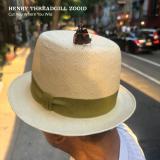
Henry Threadgill feat. Liberty Ellman & Christophe - Cut You Where You Was LP
  • A1: Fluoroscope
  • A2: Bingo Part 1
  • A3: Bingo Part 2
  • A4: Bingo Part 3
  • B1: Red Admiral Red Moon Rising
  • B2: Blur
  • B3: Off and On What Happened
  • B4: Lightnin
  • B5: Snow Bones
  • B6: Wind at My Back

Mit "Cut You Where You Was" kehrt Zooid, die Flaggschiff-Band des Saxofonisten, Flötisten und Pulitzer-Preisträgers Henry Threadgill zurück. Die Künstler feiern damit das 25-jährige Jubiläum ihres ersten Albums "Up Popped the Two Lips", der ersten Veröffentlichung von Pi Recordings, dem Label, das ursprünglich angetreten war, die Veröffentlichungen von Threadgill zu dokumentieren. Das Album umfasst eine Reihe kurzer Stücke, die von Threadgills Faszination für frühe Aufnahmetechniken inspiriert sind: Ihre kurze Spieldauer zwingt jeden Musiker dazu, sich schnell zu äußern, anstatt sich in langwierigen Entwicklungen zu verlieren und eröffnet so neue Möglichkeiten des musikalischen Ausdrucks.

vorbestellen11.09.2026

erscheint voraussichtlich am 11.09.2026

23,95 €
Henry Threadgill & Zooid - This Brings Us To - Volumes I & Ii LP 2x12"

To celebrate saxophonist/flutist Henry Threadgill’s career retrospective at the 2024 Big Ears Festival, Pi Recordings is proud to release both Volumes I & II of This Brings Us To together in a limited-edition double vinyl set. Featuring his long-running band, Zooid, the two volumes were originally released in 2009 and 2010 even though the music was all recorded at a single session. They were his first releases in eight years, longer than any hiatus in his career, a time that allowed for the gestation of what was to become Threadgill’s signature intervallic system of composition and group improvisation that ultimately won him a Pulitzer Prize for his work In for a Penny, In for a Pound. The original albums were voted the #2 and #5 best releases of the year by The Village Voice Jazz Critics’ Poll, about which NPR said “The jazz world is coming to realize that Threadgill is a true idiosyncratic great…. This Brings Us To staggers and lurches and creates dissonances, and it still brings the mad-scientist funk.”

This Brings Us To - Volumes I & II by Henry Threadgill & Zooid, released 19 April 2024.

This version of This Brings Us To - Volumes I & II comes as a 2xLP.

The vinyl is pressed as a opaque disc. Another vinyl is pressed as a opaque disc.

vorbestellen19.04.2024

erscheint voraussichtlich am 19.04.2024

37,77 €
Christer Bothén Featuring Bolon Bata - Trancedance

Black Truffle is pleased to announce the first vinyl reissue of Trancedance, a wild slice of Swedish Afro-fusion from Christer Bothén, originally released in 1984. A major figure in Swedish jazz and improvised music since the 1970s, often heard on bass clarinet and tenor sax, Bothen studied doso n’koni (the large six-stringed ‘hunter’s harp’ of the Wasulu) in Mali in 1971-2 before turning to the guinbri (the three-stringed lute of the Gnawa/Gnauoua) in Marakesh later in the decade. In between, he performed extensively with Don Cherry during his Organic Music Society period and taught Cherry the doso n’koni. In the later 70s and 80s he worked with the most important figures in the distinctive Swedish jazz-rock-world fusion scene, joining Archimedes Badkar for their African-influenced Tre and participating in Bengt Berger’s legendary Bitter Funeral Beer Band. Many of the musicians who played on the Bitter Funeral Beer Band’s ECM LP (including Berger on drums, Anita Livstrand on voice and percussion and Tord Bengstsson on piano, violin and guitar) joined Bothén for one of the sessions that produced Trancedance, the first release under his own name, dedicated to his compositions. The other session introduced his seven-piece group Bolon Bata, heard on the second track of each side. The title track opens the album with the rubbery buzzing strings of the doso n’goni playing a hypnotic ten beat pattern, soon joined by bass and piano before the entire nine-piece group kicks in with a rollicking Afro-jazz workout, Berger’s drums driving an intricate, winding melodic line played by the horns with Mattias Helden’s cello throwing in pizzicato slides and smears. Bothén then takes centre stage on tenor sax, soloing with a wide, vibrating tone and moving seamlessly from soaring melodies to guttural stutters. After a return to the composed horn lines and a solo from Elsie Petrén on alto sax, the piece builds to an ecstatic conclusion of yelping voices and handclaps, gradually simmering down to return to the solo doso n’koni where it began.

The hypnotic sounds of the hunter’s harp carries over to ‘Mimouna’, where it is joined by Bothen’s overdubbed guinbri. The piece develops into a haunting whispered and sung invocation, gradually building momentum until the organic textures of strings, voices, and hand percussion are ruptured by Lennart Söderlund’s distorted guitar, which brings an unmistakable touch of 1984 to the otherwise timeless sound. Joined by chicken scratch guitar and increasingly dominated by the insistent clang of three of Bolon Bata’s members on karqab (a kind of cast-iron castanet), the grove develops frenetically.

The B side opens with the multi-part epic ‘9+10 Moving Pictures for the Ear’, at over 16 minutes the record’s longest piece. Though Bothen is heard only on horns on this piece, the hypnotic repeating bass line carries on the first side’s link to African musical traditions. Using an expanded 16-piece ensemble, the music balances untethered improvisation with carefully arranged passages of knotty ensemble playing that at points suggest Mingus, Moacir Santos or some of the ambitious post-free work being done in the same years by figures like David Murray or Henry Threadgill. The piece ends with a triumphant passage of looping unison melody reminiscent of the Scandinavian folk explorations of Arbete och Fritid (whose Kjell Westling is heard on bass clarinet and soprano sax here). The sound of Bjorn Lundqvist’s fretless bass introduces the odd left turn made by the record’s final track, a spaced-out expedition into bluesy horn lines and distant guitar atmospherics set to a semi-reggae beat, perfumed by the core Bolon Bata group and bearing the appropriate title of ‘The Horizon Stroller’. A must for fans of the Swedish scene around groups like Arbete och Fritid and Archimedes Badkar, as well as any listener who has been seduced by Louis Moholo’s Spirits Rejoice!, The Brotherhood of Breath, or, more recently, the guinbri grooves of Natural Information Society, Trancedance is a lost classic ripe for rediscovery.

nicht am Lager

Bestelle jetzt und wir bestellen den Artikel für dich beim Lieferanten.

Last In: vor 2 Jahren
21,81 €
New Life Trio - Visions Of The Third Eye

The music world is most fortunate that the past two decades have witnessed the rediscovery of mind-opening music that went under-recognized when originally released, and the wellspring of musical content produced by a generation of brilliant musicians. One such musician was the late great drummer Steve Reid, whose reissued eclectic recordings on his own Mustevic Sound label gave his career a second wind.

Though teased on a well-received compilation, one Mustevic release never saw reissue: New Life Trio’s Visions Of The Third Eye, a tremendous collaborative effort between Reid, guitarist Brandon Ross and bassist David Wertman.

Due to overwhelming demand, Early Future Records and Finders Keepers Records are proud to announce a second limited edition pressing of the classic and final Mustevic recording. The release also includes a 20-page written zine featuring an in-depth testimonial and interview with Brandon Ross, and an explorative essay by Finders Keepers’ Andy Votel, as well as a wealth of archival photos, scores and reviews.

Reid’s long and varied career began in his native New York City, where he was involved early on as a member of the Apollo Theater House Band and the R&B scene of the 1960s, including recordings with Martha Reeves and James Brown. In the late 1960s, Reid spent three years in West Africa absorbing musical traditions and experimenting with artists such as Fela Kuti, Guy Warren and Randy Weston. After a stint in prison for dodging the draft as a conscientious objector, the drummer came out swinging in the 1970s. He worked regularly as a session and Broadway musician even while immersing himself into the jazz world, from the straight-ahead styles of Freddie Hubbard and Horace Silver to the otherworldly sounds of Sun Ra and Charles Tyler.

The do-it-yourself ethos of the New York Loft Scene inspired Reid to create his own label, Mustevic Sound, on which he began releasing his own recordings and those of a couple of friends. One of these trusted friends was David Wertman, a young bassist from New York who released his own Kara Suite on Mustevic in 1976.

New Life Trio’s story began when Wertman moved from New York to the more sedate but creatively vibrant town of Northampton, Massachusetts. Here Wertman met Brandon Ross, a young guitarist from New Jersey who had relocated there with his brother to join a coterie of New York expats who had found a comfortable, collaborative environment amidst the liberal college towns in the area, including avant-garde legends Archie Shepp and Marion Brown. Wertman and Ross became friends and began to perform together regularly, both formally and informally.

A string trio of Wertman, Ross and violinist Terry Jenoure was set to record, but Jenoure dropped out just prior to the date. This led Wertman to call his friend Steve Reid to come join the two at the Tin Pan Hollow Studios in Vermont to record what would become Visions Of The Third Eye on December 6, 1978. Originally conceived as an all-acoustic date, the recording would morph slightly when Ross added electric guitar muscle on a number of pieces. Reid would then take the helm and release the recording in 1980, giving a very auspicious birth to what has now become a classic spiritual jazz recording.

Fast forward to 1995…..New Life Trio gets a belated second wind from Stuart Baker’s inclusion of the Ross-voiced “Empty Streets” on his Universal Sounds of America compilation. The brief, haunting lead track just hinted at what the full Visions Of The Third Eye album had to offer. Audience awareness resulted in the pursuit of out-of-print original LPs, thus the rarity of Visions Of The Third Eye led to it becoming a kind of “holy grail” record for collectors of jazz and creative music. The album’s cover image was even incorporated into the cover of Freedom, Rhythm & Sound (SJB, 2009), a wonderful coffee table book presenting album covers from those revolutionary decades in Black creative music. The recording’s legend was cemented.

New Life Trio’s legend continues to grow partly due to the brevity of its existence. The triumvirate of Reid, Ross and Wertman would never work together again. Each member would continue along his own path, finding success in numerous projects. Reid’s career was reinvigorated with the reissue of the bulk of his Mustevic Sound recordings in the early 2000s, which led him to a rewarding partnership with Four Tet’s Kieran Hebden until Reid’s untimely passing in 2010. Wertman balanced life between Florida and Massachusetts as a regular in the local jazz scene, recording numerous projects with his wife, Lynne Meryl, before passing away in 2013. The fantastically creative Ross has remained active in the New York creative music scene with a number of projects, most notably with Henry Threadgill, Cassandra Wilson and Harriet Tubman, a wildly eclectic co-led band with underpinnings of rock, dub and free jazz.
vorbestellen10.06.2022

erscheint voraussichtlich am 10.06.2022

26,51 €
  • 1
Artikel pro Seite:

Language

N/ABPM
Vinyl

