
out of Stock
Order now and we will order the item for you at our supplier.
Last In: 5 years ago
9,20 €
Order now and we will order the item for you at our supplier.
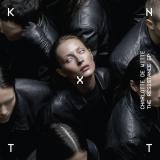
Charlotte de Witte now unleashes her slamming three-track EP ‘The Resistance’, featuring Theo Nasa and XSALT, out on KNTXT. It follows the astonishing summer tour of her new audiovisual show ‘The Resistance’, including a spectacular ‘XXL’ version at Belgium’s Rock Werchter in July, for a 40,000 audience watching from inside and outside the tent.
World #1 techno artist Charlotte de Witte’s new show continues a standout year of experimental ventures and celebrations, global pop-up shows, monster street parties, incredible new music (EPs and Deluxe LP)… and most recently ‘The Resistance’ AV show world premier at UNVRS Ibiza and the EU tour. The new ‘The Resistance’ EP is hard, fast, and uncompromising. It features Theo Nasa, whose raw, deep techno EP ‘Lifeline’ was released on her KNTXT label; vocal artist / longtime collaborator XSALT, (previously on ‘No Division’, ‘Overdrive’, ‘Roar’, ‘How You Move’); and Charlotte’s own vocals on a personal track ten years in the making.
‘The Resistance’ EP title track feat. Theo Nasa is urgent, demanding, unapologetic. Juddering main theme, rattling hyperspeed beat, spacey hoover swoops form a matrix for the deep, amused authoritative voice of Nasa – ‘we are unity, we are techno’. The brief ‘The Resistance (Intro Version)’ opens with futuristic FX and Nasa’s voice to the fore introducing the techno credo.
‘Never have I ever teased a track this much as I teased ‘The Resistance’. From the moment the track was being made in the studio, I knew this was going to be a special one. Theo Nasa captures the spirit of the underground and guides you through the essence of club culture like no one did before. An entire A/V show grew out of this feeling, this philosophy. It’s one of the biggest tracks I’ve ever made.’ Charlotte de Witte
‘See Through The Lies’ feat. XSALT: futuristic FX, fast stabby synth theme, and XSALT intoning ‘see through the lies. It’s time to take control’. A message of defiance. ‘XSALT delivers again on ‘See Through The Lies’, offering his own take on the EP's theme. Open your eyes. Break the illusion, see through the lies. Release the pressure. It’s time to take control!’ de Witte says.
‘Another Place’ has relentless pace, twanging pizzicato synth, and de Witte’s whispered phrases becoming full voice. ‘’Another Place’ has been in the making for over a decade. It saw the light of day in Brussels, where the lyrics took shape together with my friend One Track Brain. The track was forgotten and resurfaced years later, leading to an entirely new track created around that magical vocal from all those years ago. This is an EP very close to my heart.’
At the heart of ‘The Resistance’ EP and AV show is a message central to de Witte’s work: Protect Club Culture and the communities that sustain it. That’s why de Witte is donating all proceeds from The Resistance EP to The Nighttime Foundation, a global nonprofit dedicated to safeguarding and shaping the future of nightlife, empowering grassroots communities and promoting nightlife as a vital form of culture worldwide.
Colours, to the mast, well and truly nailed.
expected to be published on 15.10.2026

180g Heavy double vinyl LP with liner notes by Tyran Grillo. Limited Japanese Obi for the first pressing. Original artwork by Russell Mills and photography by Jean-Baptiste Mondino.
The third Time Capsule is a body of dub reinterpretations by celebrated producer Bill Laswell of Ethiopian singer Gigi. Curated by Tokyo record collector, music researcher and seasoned reissue supervisor Ken Hidaka, it is the first time Illuminated Audio is pressed to vinyl after its CD release in 2003.
Ejigayehu Shibabaw was born in 1974 in Chagni, northwestern Ethiopia and by pursuing a career as a singer, went against her father’s strict, traditional gender roles. As Gigi, she embraced the same musical freedom she had strived for in her personal life, incorporating the Ethiopian church, funk, hip-hop, West and South African music into her work. She first settled in Nairobi, then Addis Ababa, where she quickly established herself as one of the city’s leading singers. A move to San Francisco in 1998 led to a long and fruitful creative partnership with bassist and producer Bill Laswell.
Around the same time, Chris Blackwell had stepped away from Island Records to start the art house film company and label Palm Pictures. He took an interest in Gigi and together with Laswell, pulled together an all-star cast of musicians for her self-titled US debut album, including Herbie Hancock, Pharoah Sanders and Wayne Shorter. It won international critical acclaim, not just for its musicianship but for making Gigi a “defining voice for the Ethiopian expatriate community”, as journalist Tyran Grillo praises in his Time Capsule liner notes. From the nation-defining 1896 victory over Italian invaders to the quiet revolutionaries who wear simple shemma garments, Grillo believes the themes in Gigi make it “a shower of sunlight on her homeland for those ignorant of its struggles.”
After its success, Blackwell encouraged them to go back into the studio to rethink the album and Illuminated Audio was born. “Anyone can make a voice sound worldly”, Grillo remarks, “but rare are those who can make one sound inner-worldly.” Gigi was clear with Laswell to give her vocals a minor role “because it’s already been done.” Instead her Amharic verse is fleeting, exhaling through the textures like ghostly fragments; soaring yet muted. Yet the album is still titled under her name, an assertion by Laswell of her central role in the album’s creation. Not only was it a fully endorsed project by Gigi, but she would be present throughout its development, giving feedback on half-finished ideas as Laswell played them back in the studio. “It works perfectly”, she reflected after the album’s release. “We wanted to capture the whole spirit of each track, and Bill’s remixes create a different music language that really puts you in a pleasant place”.
This new vocabulary takes its lead from a technical approach that Laswell had been perfecting during a furtive creative period at the turn of the millennium. Much like his ambient interpretations of Miles Davis (Panthalassa, 1998), Bob Marley (Dreams of Freedom, 1997), and Carlos Santana (Divine Light, 2001), Laswell approached Illuminated Audio by returning to the original multitrack masters. Gigi wasn’t just reworked, but recomposed into an expansive lattice of instruments, submerged in a watery ambience of dub and trance undercurrents.
Sonically, this new language that Gigi refers to, is manifested by the original album’s more understated parts being pushed to the fore. Explaining his contrasting methods, Laswell saw Gigi as being “put together in a way that fits”. Contrastingly, in Illuminated Audio, “a lot of things that I featured in the remix weren’t as audible in the original.” Instrumentation laying near-dormant, deep in the mix, are brought to the fore: the acid rock guitar and Wayne Shorter’s saxophone on ‘Tew Ante Sew’, Graham Haynes’ flugelhorn on ‘Nafekeñ’, Laswell’s bass on ‘Kahn’, the melodica in Mengedegna or the floating synths and talking drums in ‘Gud Fella’.
Brought to his attention by mentor DJ Nori, Hidaka describes Illuminated Audio as a “masterful sonic exploration into ethereal ambience and dub” and made sure this reissue also contained a full remaster to give its “deep musicality” much better dynamics and density in the overall sound. Hidaka admits that Laswell's music “is sometimes so out-there, it is often misunderstood” and, indeed, to dub album non-believers this might seem like a prolific producer imposing himself on another artist’s work; eternally developing rearrangements that never quite get to its destination. But that’s missing its true power and triumph. This is more than the reissue of a remix, but “a wholly unique musical entity”, as Hidaka describes. Illuminated Audio refers to the illuminated manuscripts that comprise the major part of Ethiopian art and its new compositions stand in proud solitude as a rare body of reworks that both informs and enhances their originals.
expected to be published on 19.10.2026

2x12"[30,21 €]
Often credited as the father of multi-media theatre, Alwin Nikolais (1910-1993) took complete creative control over his productions - including cutting-edge approaches to lighting and costume that transformed human bodies into shifting sculptural shapes, while also composing wildly innovative electro-acoustic and synth-based audio as accompaniment.
After initially experimenting with musique concrète and tape manipulation (as demonstrated on the 1959 LP Choreosonic Music of the New Dance Theatre of Alwin Nikolais) Nikolais became the first owner of Robert Moog's synthesizer at the Audio Engineering Society convention in New York in late 1964. Relying heavily on the Moog and later the Synclavier synth/sampler, these 21 tracks document Nikolais' highly-prescient compositions across the mid 1960s through to the late 1980s - existing not only as extensions of his other-worldly choreographic productions, but standalone pieces of foundational mid-century American electronic and experimental music.
"Born in Southington, Connecticut in 1910, Nikolais’s early years and early career were in acting, music and puppetry. It was not until the late 1930s that he began his work as dancer/choreographer in Hartford, Connecticut, where he was commissioned by the Avery Memorial Theatre, a part of the Wadsworth Atheneum, to create an evening-length work to the music of Ernst Krenek. Previously his work and study as a pianist-organist found him accompanying silent films. This sort of accompaniment required from the musician not only a playing skill but also a versatility in improvisation, matching movement to sound, and evoking mood to situation.
Nik was drawn initially to dance by his involvement with the percussion scores used by the illustrious early twentieth century German dancer Mary Wigman. In trying to learn more about percussion, he was lured into dance class and thus his career began. His development of music and dance occurred simultaneously. His introduction to the twelve-tone technique opened his mind to the expanding areas of atonal music, and his dealing with music as sound per se. In 1948, after being appointed director of the Henry Street Playhouse in New York, Nikolais formed the Playhouse Dance Company, later known as the Nikolais Dance Theater, and began his aesthetic orientation toward dance as a study of motion. By the 1950s, he had ceased creating literal dances and began his explorations and eventual milieu as an abstractionist.
Sound became an important part of his abstract theatre. For his first dances, which involved his new thinking of dance as both a visual and kinetic art, he used live percussion scores in which he directed his dancers to play instruments of all nature. There was a combination of children’s toy instruments as well as harsh and resonant automobile brake drums, and other pitched auto parts which he also used to accompany classes. Once he installed his own tape recording machines, he quickly used the limited range these instruments provided in a new way, slowing and increasing speed and reversing sound. He also made the sounds adhere to the choreographic structure (not the other way around), thereby giving the dance its independence from the musical phrasing. But the real need remained: the search for new sound. Nik made a sound library, recording noises and percussion and vocal sounds, which the French aptly called musique concrète. Needless to say, he became a master at splicing bits and pieces.
From 1956 to 1962 Nikolais composed eleven major scores for his theatre pieces using such techniques. In 1963, James Seawright, who at the time was assisting Nik in his productions and also working at the Columbia-Princeton Center for Electronic Music, recorded a sound bank for the production Imago (1963). With this material, Nikolais created his first synthesizer score. Imago won the Paris Grand Prix in 1968 and launched the Nikolais Dance Theatre towards its national and primarily international acclaim.
During the same period, Seawright came to Nik and told him of a young man who had invented and constructed a simplified synthesizer and insisted that Nik visit the electronic fair currently being held in New York. Nik did so and met Robert Moog. He was completely taken by the new machine and after making some suggestions to Moog, (which Moog made), Nik bought the inventor’s first machine with the aid of a Guggenheim Fellowship. Moog himself was astonished by what his machine could produce for Nik. This machine was later acquired by the Museum of Musical Instruments at the University of Michigan at Ann Arbor as the first Moog synthesizer. The Synclavier was Nik’s next source of sound and since the mid-1970s remained the major instrument in the Nikolais soundroom.
Alwin Nikolais has been honored and awarded throughout the world. He has received the French Legion of Honor, the Kennedy Center Honors, National Medal of the Arts, two Guggenheim Fellowships, as well as Mellon, Ford, and Rockefeller grants. He has been a recipient of NEA grants since 1966, been awarded five honorary doctorates, all for his remarkable achievements in Dance Theater. His genius has influenced several generations of artists."
—Murray Louis
expected to be published on 19.10.2026

After a quarter-century hiatus, the legendary jungle artist M-Beat has resurfaced with Mekatune, his newly established label. Mekatune serves as a platform for unveiling not only his extensive back catalog but also fresh, innovative material from himself and other luminaries of the jungle music scene.
This exclusive boxset comprises five vinyl records, each elegantly housed in a black paper sleeve ensconced within a high-quality, 3mm-spined card housebag. Renowned DJ Mag designer Martin Brown has lent his artistic touch to each housebag, featuring a captivating montage of M-Beat's illustrious history spanning three decades. The reverse side of these housebags reveals an in-depth interview conducted by Dave Jenkins, delving into M-Beat's origins, his prolific career, and the enigmatic disappearance that kept fans in suspense for so long. The five housebags nestle snugly within a beautifully crafted card slipcase, forming a stunning piece of jungle and drum & bass history.
Moreover, each track in this boxset has undergone meticulous remastering by Dapz at Compound Audio and precision vinyl cutting by Beau at Ten Eight Seven Mastering, ensuring an unparalleled audio experience. These 20 handpicked gems represent the pinnacle of M-Beat's discography, each highly sought after and commanding a premium on Discogs. With a limited run of just 500 units, the majority of which have already been claimed through pre-sale, this is a rare opportunity to own a piece of music history. Once sold out, there are no plans for a repress, making it an essential addition for collectors and jungle music enthusiasts alike.
On Stock and ready to ship
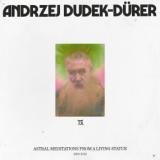
Forty years of cassette releases, pressed for the first time on vinyl
First of two instalments exploring the previously unreleased sonic archives of one of Poland’s most enigmatic
living artists - with its first volume focused on his deep listening practice and spiritual reverie (recorded 1990–2013)
The last time Andrzej Dudek-Dürer took a banknote bearing the face of the Polish anarchist Jarosław Dąbrowski from his pocket to trade it for a pair of shoes was in 1969. He bought them for 120zł - the equivalent of 100€ today - and never replaced them since then. Only rebuilt them, year after year, drawing a needle and thread through the leather each time it split, closing one wound before the next one opened. It became a ritual of precision, stitching a record of another year into their soles.
That same year, in Wrocław, he arrived at a conclusion that would recalibrate everything that followed. Convinced he was the reincarnation of Albrecht Dürer, he adopted the surname Dudek-Dürer, stopped cutting his hair and began wearing the same garments every day. It was the first ritual of many, though he wouldn't have called it that yet. Look closely enough, over the decades, and it is always the same gesture, returning in different material: hair growing in a single unbroken strand, a needle drawing thread through leather, sitar strings pulled taut across a neck he built with his own hands and magnetic tape spooling forward inside the cassette boxes stacked against his walls.
None of this began in a vacuum. Dudek-Dürer emerged from the Wrocław neo-avant-garde, in a Polish art world where an exhibition could be cancelled overnight by the stroke of a censor's pen. In 1973, his exhibition Auto-crucifixion was shut down by the state, and for a time he found himself blocked from exhibiting his own art at all - the one force in his life that ever came close to cutting the thread.
He seemed to experience it differently. In 1974, after long, patient research into sitar craftsmanship, he built his first prototype with his brother, a knowledgeable luthier. In 1978, in a smoked-out jazz club, he took his first steps into sound recording with the unreleased album Jazz From Underground with his first band. By 1979, recognition started to travel further than he could.
Turning toward Far-Eastern philosophy, meditation and the idea of reincarnation was another language of freedom for him. It was a way of claiming an inner territory the state could not reach, a border it could not close. Mail Art served a parallel function, reaching further out: in a country that restricted travel and expression, sending and receiving art through the postal system became an act of quiet rebellion.
The body, in his understanding, is only an envelope readied for constant transformation. From this came Metaphysical Telepathy: during the years he could not leave Poland, he treated that confinement as a rehearsal room, sending his mind out ahead on the same thread his body would later follow. Living Sculpture grew from the same root with performances of stillness beside static art objects, until the boundary between the object and the man beside it simply dissolved. Camera Meditation extended the same instinct into photography: a shutter click flattening three dimensions into two so that a single instant could be held forever. Inspired by the pioneers of self-portrait photography like Robert Cornelius, he used it to document time itself, and kept explaining to me: "You know. This is not about vanity. This is about observing time passing.”
The isolation did not end suddenly. It ended the way his own philosophy had already predicted it would, from the inside first. Mail Art quietly solved the problem politics couldn't. Correspondence built during years of confinement slowly worked its way through doors the state itself had kept locked. Contacts made through folded paper and stamps became invitations. Ultimately, invitations became passports.
In 1983 he made his first trip outside Poland, to Germany, in search of the audio technology he couldn’t get his hands on before. In 1985, he was invited by the Indian embassy in Poland to give a sitar concert on an instrument he had spent a decade patiently stringing together - half sitar, half tanpura, built from patience and determination. After the collapse of the People's Republic of Poland, the travels kept unspooling: South Korea, then Mexico, then Australia, Canada, New Zealand, Singapore, Japan and the United States - each stop leaving behind its own small knot of tape, tied off and carried home.
In the decades since, recognition arrived at the same unhurried pace: he conducted workshops at UC Berkeley, served as vice-president for artistic affairs of the Union of Polish Art Photographers and the Union of Polish Visual Artists between 2010 and 2014 and received the Bronze Medal for Merit to Culture - Gloria Artis. His visual work gradually entered collections including the National Museums of Warsaw, the Stedelijk Museum, Tate Modern, MoMA and the Venice Biennale. His musical practice, by contrast, never found that kind of room - left to circulate quietly, sharing his cassette tapes directly, waiting for someone willing to follow it further.
It took months before I could find a way to reach Andrzej Dudek-Dürer - his presence online is very close to nonexistent. Surprisingly, LinkedIn turned out to be the only door still open, a faintly absurd irony given everything else about him. I packed the strict minimum for a three-day trip and an empty notebook and made my way to Wrocław. His headquarters sits in the neighbourhood of Grabyszyn: a two-storey pre-war house that has belonged to his family for generations. The man who opened the door was long-haired, long-bearded, in his trademark leather shoes and patched jeans. We sat in his living room, in front of a computer where decades of recordings sat organised in cryptically named files, surrounded by books and objects that had arrived one layer at a time, leaving room for only two chairs in the middle. His shoes sat by the door, rebuilt so many times they had become their own quiet sculpture. Cassette tapes filled boxes against the walls, almost unlabelled, each one a spool of thread holding decades of sound that had never once been asked for, until now.
I listened for hours: meditating in front of strangers on the porch of a Seoul temple until the tourists stopped taking photos and simply waited with him; a stand-off with border guards at the US–Mexico crossing over an instrument they couldn't identify and didn't trust; a session with the Stockhausen family that he still, decades later, describes like it happened last week. All of it interrupted, occasionally, by the smell of soup boiling and fresh bread warming on the ceramic stove. After two days, it felt like being handed the end of a very long thread and asked, gently, to keep following it. I left with a USB drive holding his full discography, signed with his unmistakable signature.
Astral Meditations From A Living Statue is a length of that thread, drawn out from the boxes stacked against his walls - recordings gathered from different rooms, different countries, different decades. This first record breathes slowly: incense-thick, meditative, built for stillness. A cutting-edge séance in outer space where machines learn how to dream.
It begins with the neo-classical improvisations of Andrzej, space-delayed, recorded at Klub Muzyki i Literatury in Wrocław in 2002. 'When..So' opens the curtains with a deep-rooted meditation accompanied by slow-decaying piano figures illuminated by a candle-lit spirit gathering.
Los Angeles, 1990: a dormant villa, a grand piano, the voice of Bonnie Barnett. 'Exception' is captured in a single room, in a single afternoon - voice and keys circling each other, neither one leading, until the silence between the notes starts to feel like the instrument.
'The Meta...' and 'Tired Of...', recorded at Studio Morandi in Ponte Nossa, Italy, in 1992, settle into a sitar drone built entirely from patience - overtones stacking and beating against each other, strung by a man who never once set foot in India. 'Mastery Of...' follows, recorded the same year at Studio Suski in Łomianki, pushing that same hum further still, until pitch dissolves into a spectral reverie. 'Transcendental Sound', from 2000, closes the first record in a slow bath of celestial frequency - better heard beside the shores of the Odra river.
More than fifty years after deciding that a life could become an artwork, Andrzej Dudek-Dürer continues to inhabit that decision. His shoes keep wearing thin against the earth's crust. His hair keeps growing, one strand at a time. His cassette tapes keep spooling in the dark of their boxes.
Now the thread finds its last shape: a single unbroken groove, spiralling inward from the outer edge to the label at the centre. Never cut - the way nothing else in his life ever was. Drop the needle and it will find that groove and follow it, the same way a needle once followed leather, once followed a border it couldn't cross, once followed string into an instrument that didn't exist until he built it. This record is the other end of a thread that has been travelling for fifty years. For the length of both sides, it rests here, in your hands. This is a timeless proof that the Lord of the New Age was never lost."
Produced by Andrzej Dudek-Dürer
Mastered by Ruud Lekx
Liner Notes written by Mathias Chaboteaux
Pictures by Andrzej Dudek-Dürer
Artwork by Wojciech Gawronski
Executive Producer: Mathias Chaboteaux
℗© 2026 Huveshta Rituals Records. All rights reserved. HR006
expected to be published on 06.11.2026

Tape[16,60 €]
Often credited as the father of multi-media theatre, Alwin Nikolais (1910-1993) took complete creative control over his productions - including cutting-edge approaches to lighting and costume that transformed human bodies into shifting sculptural shapes, while also composing wildly innovative electro-acoustic and synth-based audio as accompaniment.
After initially experimenting with musique concrète and tape manipulation (as demonstrated on the 1959 LP Choreosonic Music of the New Dance Theatre of Alwin Nikolais) Nikolais became the first owner of Robert Moog's synthesizer at the Audio Engineering Society convention in New York in late 1964. Relying heavily on the Moog and later the Synclavier synth/sampler, these 21 tracks document Nikolais' highly-prescient compositions across the mid 1960s through to the late 1980s - existing not only as extensions of his other-worldly choreographic productions, but standalone pieces of foundational mid-century American electronic and experimental music.
"Born in Southington, Connecticut in 1910, Nikolais’s early years and early career were in acting, music and puppetry. It was not until the late 1930s that he began his work as dancer/choreographer in Hartford, Connecticut, where he was commissioned by the Avery Memorial Theatre, a part of the Wadsworth Atheneum, to create an evening-length work to the music of Ernst Krenek. Previously his work and study as a pianist-organist found him accompanying silent films. This sort of accompaniment required from the musician not only a playing skill but also a versatility in improvisation, matching movement to sound, and evoking mood to situation.
Nik was drawn initially to dance by his involvement with the percussion scores used by the illustrious early twentieth century German dancer Mary Wigman. In trying to learn more about percussion, he was lured into dance class and thus his career began. His development of music and dance occurred simultaneously. His introduction to the twelve-tone technique opened his mind to the expanding areas of atonal music, and his dealing with music as sound per se. In 1948, after being appointed director of the Henry Street Playhouse in New York, Nikolais formed the Playhouse Dance Company, later known as the Nikolais Dance Theater, and began his aesthetic orientation toward dance as a study of motion. By the 1950s, he had ceased creating literal dances and began his explorations and eventual milieu as an abstractionist.
Sound became an important part of his abstract theatre. For his first dances, which involved his new thinking of dance as both a visual and kinetic art, he used live percussion scores in which he directed his dancers to play instruments of all nature. There was a combination of children’s toy instruments as well as harsh and resonant automobile brake drums, and other pitched auto parts which he also used to accompany classes. Once he installed his own tape recording machines, he quickly used the limited range these instruments provided in a new way, slowing and increasing speed and reversing sound. He also made the sounds adhere to the choreographic structure (not the other way around), thereby giving the dance its independence from the musical phrasing. But the real need remained: the search for new sound. Nik made a sound library, recording noises and percussion and vocal sounds, which the French aptly called musique concrète. Needless to say, he became a master at splicing bits and pieces.
From 1956 to 1962 Nikolais composed eleven major scores for his theatre pieces using such techniques. In 1963, James Seawright, who at the time was assisting Nik in his productions and also working at the Columbia-Princeton Center for Electronic Music, recorded a sound bank for the production Imago (1963). With this material, Nikolais created his first synthesizer score. Imago won the Paris Grand Prix in 1968 and launched the Nikolais Dance Theatre towards its national and primarily international acclaim.
During the same period, Seawright came to Nik and told him of a young man who had invented and constructed a simplified synthesizer and insisted that Nik visit the electronic fair currently being held in New York. Nik did so and met Robert Moog. He was completely taken by the new machine and after making some suggestions to Moog, (which Moog made), Nik bought the inventor’s first machine with the aid of a Guggenheim Fellowship. Moog himself was astonished by what his machine could produce for Nik. This machine was later acquired by the Museum of Musical Instruments at the University of Michigan at Ann Arbor as the first Moog synthesizer. The Synclavier was Nik’s next source of sound and since the mid-1970s remained the major instrument in the Nikolais soundroom.
Alwin Nikolais has been honored and awarded throughout the world. He has received the French Legion of Honor, the Kennedy Center Honors, National Medal of the Arts, two Guggenheim Fellowships, as well as Mellon, Ford, and Rockefeller grants. He has been a recipient of NEA grants since 1966, been awarded five honorary doctorates, all for his remarkable achievements in Dance Theater. His genius has influenced several generations of artists."
—Murray Louis
On Stock and ready to ship

MTMS2 - Mystica Tribe Meets Scopeotaku 2 Following the duos first release - Mystica Tribe Meets Scopeotaku on 13/Silentes. Mystica Tribe and Scopeotaku push their collaborative adventures further with MTMS2. Creating psychedelic dubs with rich textures, tape saturation and echo chambers. Utilising acid synths combined with deep dub rhythms and melodic electronics evolving into a new dimension of dub. Deep psychedelic electronic steppers blend with bass pressure and heavyweight rhythms drifting into techno, ambient and mutant dub. Creating a sonic adventure where tradition is often pushed into unfamiliar territory. Two distant worlds, one frequency. Nine tracks for the mind and body. Deep dub frequencies. Psychedelic textures. Heavyweight rhythms. —————————
Mystica Tribe is the musical alias of Tokyo, Japan based producer Taka Noda. Drawing on a wide range of influences from dub, soul, bass and rhythm & blues. Mystica Tribe has been developing a very distinctive sound that exists in a weird freaked out zone, between dub and techno. Noda is especially interested in deep psychedelic music and this is reflected in his productions. Which are equally suited for late night listening sessions or on bent broken dancefloors.
Scopeotaku is the alter ego of Scott Prentice, a Glasgow, Scotland based artist. Scopeotaku has experimented with audio since purchasing a sampler and a four track cassette deck many many moons ago. His love for left-field dub and eccentric sounds have led him to create a variety of output, from industrial ambient, illbent electronics to mutant dub.
expected to be published on 11.12.2026

WRWTFWW Records announces the return of Louisiana-based composer and producer Jammin’ Sam Miller with A Link To The Past Tribute, his homage to the music of Zelda (A Link To The Past). His remake of the classic video game score is available as a limited edition green vinyl LP with artwork and sticker sheet by French illustrator Pierre Thyss, as well as an obi strip.
Originally composed by the legendary Koji Kondo, the epic 1991 Zelda soundtrack for the Super Nintendo Entertainment System is one of the most celebrated pieces of video game music ever, a sound that will automatically bring fans to a complete state of pixelized nostalgia bliss.
Jammin' Sam Miller entirely remade the soundtrack from scratch, note by note, without sampling any of the original audio. He recorded his cover versions by finding the original equipment used to create the score, translating the MIDI into a modern studio context, adding his keyboard sounds, and re-mixing and re-mastering the whole soundtrack with modern techniques. The result is a new experience of vintage Zelda music in full HD uncompressed glory and blessed with the beloved Jammin’ Sam Miller touch!
Pure heaven for video game music lovers!
On Stock and ready to ship

How enduring is the signature song from Harry Chapin’s Verities & Balderdash? So timeless that it became the subject of a 2025 documentary in which artists from multiple generations weigh in on its impact on their lives and craft. “Cat’s in the Cradle” doubtlessly remains the main event on the singer-songwriter’s 1974 album. The legendary opening track also serves as a guidepost for the bold personal and social material that follows — as well as the gorgeous folk-rock arrangements that underpin the New York native’s most commercially successful work.
Sourced from the original master tapes, pressed at Fidelity Record Pressing, housed in a Stoughton jacket complete with a four-page insert, and strictly limited to 3,000 numbered copies, Mobile Fidelity’s 180g 33RPM LP of Verities & Balderdash presents Chapin’s fourth full-length in audiophile quality for the first time on vinyl. Captured during a golden era for sonics and production, the Top 5 effort features remarkable tonal balance, instrumental separation, and organic naturalism. Those valued aspects come into supreme focus on this reissue, which plays with dead-quiet surfaces and a low noise floor.
The newfound clarity, openness, and imaging underscore the lasting appeal of Chapin’s tender deliveries, soulful timbre, and careful phrasing. Every word comes across with incredible realism, while his underrated guitar playing occupies its own distinctive space. Also notable: The extension of the tasteful string accents; airiness of the backing vocals; depth and shape of the spare bass lines; and width and depth of the soundstaging. When on “Six String Orchestra” Chapin calls out names of instruments, they appear like magic, the band performing feet from you. Chapin has never sounded so lifelike on record.
Certified double platinum, Verities & Balderdash resonated with the times and public. “Cat’s in the Cradle” reached No. 1 on the chart on its way to being inducted into the Grammy Hall of Fame. The romantic ballad “I Wanna Learn a Love Song” flirted with the Top 40 and wrapped listeners in the equivalent of a cozy blanket. The record’s other single, the mini-epic “What Made America Famous?,” helped establish Chapin as one of the country’s most incisive and insightful commentators.
Verities & Balderdash teems with situational devices and topical matters. Chapin observes everything from the polarization of the nation to changes in moral standards and cultural priorities. He investigates pressing themes without ever turning preachy or elevating himself above the matters at hand. On “Halfway to Heaven,” whose coda races to the finish and ranks as the most urgent moment on the record, Chapin inhabits the mind of his frustrated protagonist akin to an eagle-eyed novelist.
Conveying emotions that range from melancholic to carefree, Chapin is as much of a singer as a storyteller. He assumes the voice of multiple characters within a single narrative. During the quirky “30,000 Pounds of Bananas,” a tale based on a delivery-truck accident in 1965, Chapin alters his delivery, pronunciation, and diction to become an old man reflecting on the mishap and mess. The tempo, too, adjusts to match the speed of the vehicle Chapin describes.
Adorned with timely laugh tracks to reinforce the bittersweet humor, the stripped-down “Six String Orchestra” takes everything up another notch, with Chapin intentionally missing guitar notes or playing a broken passage to illustrate the failures of the hopeful protagonist who doesn’t have what’s required to make it as an artist.
Chapin, of course, did not have any such problem. The lynchpin of a career cut short by a tragic traffic incident, Verities & Balderdash is Exhibit A of the savvy craft, feeling, and perspective he lent to American music.
This item has not yet been released. You can pre-order the product now.

Black Moon Mother blends light and heavy soundscapes that pull from elements of Psych-Rock, Pop, Doom Metal and Shoegaze. Formed out of a Nashville music collective in 2017, the band put together a demo EP that became their live set, kickstarting their musical journey. At the beginning of 2018, Black Moon Mother began writing new material and continued the show-a-month ritual, while adding a new song to the live set one by one. January 2020 brought Black Moon Mother to Dark Art Audio in Madison, TN where they worked with engineer and producer Mikey Allred. Their newest album Illusions Under the Sun showcases an expanded musical depth and songwriting maturity, while exploring themes of nature, purpose, and perspective.
On Stock and ready to ship
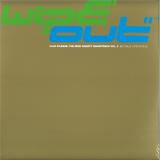
The legacy of wipE′out′′ has transcended time and cemented itself as a true transgenerational phenomenon. Launched in 1995, it didn’t just revolutionise the gaming industry, it created a bridge between the gaming ecosystem and the raver community. Its futuristic aesthetics and forward-thinking sound left a mark not only on mainstream audiences but also on the most demanding corners of the underground.
Decades later, the game’s impact is still alive. The release in 2023 of The Zero Gravity Soundtrack on Lapsus Records proved once again that wipE′out′′’s accompanying audio will go down in history as much more than just an anti-gravity racing game soundtrack.
This is why we decided to go deeper into the slipstream and build the second volume you’re now holding in your hands. Drawn from the original archives of Tim Wright, aka CoLD SToRAGE, this new collection surfaces unreleased cuts, pieces that couldn’t fit on the first edition, and a suite of self-authored ambient reworks that translate pure velocity into wide-screen atmospherics engineered for the long straights, the drone of airbrakes, the blue hour between checkpoints. It also reconnects the circuit, gathering selections and variants tied to later chapters of the saga — wipE′out′′ HD and wipE′out′′ Pure — plus alternative mixes that, until now, only existed in the Sega Saturn dimension of the franchise.
Finally, the material takes a leap into the future in the hands of four remixers especially chosen for this release: Tim Reaper, SHERELLE, Mantra, and NikNak, who collectively forge links between CoLD SToRAGE’s pioneering musical vision, the sound world of the game, and the contemporary breakbeats and drum & bass vanguard.
Expect the DNA you remember — accelerated breaks, trance-vector synths, jungle influences, sub-bass rumbling neatly beneath the craft’s hull, and at times even echoes of classic hardstyle — now revealed with new angles and air. The previously unheard material carries the same aerodynamic design sense that made these tracks feel faster than the track map itself, while the ambient versions open the field of view with melodies hovering at the lip of overdrive. Without a doubt, here you’ll find a strong sense of nostalgia. But this isn’t just nostalgia; it’s also proof that this sound world continues to evolve when you ease off the throttle.
For the faithful — crate-digging ravers, speed-run obsessives, and design nerds — this is an essential expansion pack: compiling rarities, restoring context, and reframing the emotional core of wipE′out′′ for late nights and early mornings alike. Bridging memory and momentum, club and console, rush and afterglow. Strap in.
Detailed tracklist, with annotations by Tim Wright aka CoLD SToRAGE
· Scratch Pad 1: “This track was composed using incomplete tracks that were developed around the time of the first wipE′out′′. It’s so long because it was used for a marathon-length Psygnosis promotional video.”
· Messij Received: “Messij was a firm favourite with wipE′out′′ fans, so it made sense that there’d be more where that came from — this was one of those re-workings.”
· God’s Gift: “I was always very fond of Erasure’s track Love to Hate You with the canned crowd FX sounds. God’s Gift was a tongue-in-cheek reference to how some musicians think they are just that. This was way before I even played live as CoLD SToRAGE.”
· Tentative: “I wasn’t sure about introducing some wacky beats and distorted sounds into one of the tracks, because it was kinda heading away from the other tracks, hence Tentative — but it turned out OK.”
· Canada 2048: “When wipE′out′′ 2048 was launched I decided to re-make Canada as a kind of tribute, but in a slightly new-tech, laid-back way, using Propellerhead Reason and all software synths.”
· Wiped Out: “Based on a few riffs from a MIDI file unused at the time of the original wipE′out′′ game compositions, this featured on my debut album MELT.”
· Body in Motion (Body Plus Mix): “A more trippy interpretation of Body in Motion that featured on non PlayStation versions of the game e.g. Sega Saturn.”
· Onyx (“Dark Side of the Moon”): “Onyx was my sole contribution to wipE′out′′ Pure on the Sony PSP handheld gaming console. This version was something I developed in a darker style, that eventually erupts into a crescendo.”
· Messij Received (WSTWGBE Mix): “Like I say, Messij was a hit with most wipE′out′′ fans, so when I was asked to compose more music for non-PlayStation versions, I adapted this tune into a parallel-universe version for PC and Sega Saturn. By the way, WSTWGBE refers to Who Said This Was Going To Be Easy?”
· Canada (Drunken Ausländer Mix): “In early 2018 I released a fresh album called Ch'illout′′, a re-working of many of my wipE′out′′ tracks in an ambient, Sunday-morning vibe style — it was a few years’ work, here and there.”
· Tentative (Woffenfum Mix): “Another chilled re-working of one of my wipE′out′′ tracks, the mix named with a nod to a good friend of mine, Carl Woffenden — someone who I've worked with for many years in the games industry.”
· Messij (Bobbing Boat Mix): “A nice cheesy computer blip-blop start belies its deep and upbeat chilled-out melodic finale.”
· Body in Motion (Timeless Techno Mix): “Another classic track given the chilled-out vibe mix, as featured originally on my Ch'illout′′ album. This one’s a really trippy, deep-space take on the original.”
· DOH-T (AM / FM Mix): “The idea with this chilled-out mix was to imagine all the melodic parts of this varied track being broadcast on terrestrial radio, so each theme drifts in and out through the radio static.”
· ’95 Future Echoes: “Originally developed as a companion album for wipE′out′′ HD, this track actually has its roots in a tiny loop of a song that never progressed to anything special back in the mid-’90s when I was composing for the original game.”
· Turbine: “Also from my wipE′out′′ HD album, it leans heavily into the upbeat, uplifting tunes from the original game, but also steals a bit of vibe and energy from The Prodigy, with those distorted flute sounds.”
· Pencil Neck: “This excerpt from my wipE′out′′ HD album features lots of sounds centre-stage and forward from Propellerhead Reason’s Subtractor virtual synth. I learned to love this more than my JD-800!”
· Messij 2005 (New Science Mix): “Yet another take on the track that still raises a smile, this time through a mix of samples from the original and Propellerhead Reason — the ‘new science’ when compared to an Amiga 1200 running Bars and Pipes.”
On Stock and ready to ship
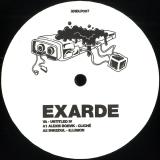
Continuing the VA series with different artists from around the globe the fourth instalment has landed. The 9 track LP features already familiar to the label artists as well as many new faces unified by the idea of the love for the non-standard audio frequencies. With the dystopian artwork by the label’s visual guru Gkoner and the music by the nine talented artists the disc has obtain its shape. With the vast range of sound being present but all tied in the concept of the label’s musical ideology, the “Untitled IV” is born and armed for different settings where electronic music can be blasted loud on huge sound systems or in complete solitude does not matter at all. What matters is the love of music the listener brings making it all come together with a complete and fulfilled sense.
On Stock and ready to ship

Ring The Alarm! Nach der Neuauflage von Sister Nancys „Bam Bam“, die eine reißenden Absatz fand, folgt nun der nächste unverzichtbare Track auf dem Stalag Riddim vom verstorbenen, großartigen Tenor Saw. Dies ist die ultimative Soundsystem-Waffe und ein Muss für jeden Selector, der etwas auf sich hält. Zurück mit dem entscheidenden Original-Keyboard-Workout von Ansell Collins Stalag 17, aufgenommen für Techniques, ist Stalag einer der Eckpfeiler der Reggae-Musik, der von einer ganzen Galaxie von Superstars der Musikwelt verwendet und genutzt wird, darunter Big Audio Dynamite, Public Enemy, Run DMC, Alicia Keys, Kanye West, Sublime usw. Ein Original Twin-Killer-Doppelsider – limitierte Auflage in illustrierter Hülle. Verpassen Sie es nicht!
On Stock and ready to ship

Reintroducing Soar - the alias of Christian Aebi, serial DIY taper and one-man orchestra from Langenthal, a fog-shrouded town in the Swiss provinces. Krautophobia, ambient lo-fi agriculture, analogue soul balm and slowspeed psych gelati-blitz cardboard pop only gesture towards the sound world he coaxed from his broken Tascam four-track recorder, in attics, churches, junkyards and at the kitchen table.
The spark for Soar was likely time and space, somewhere in the autumn of 1994. Armed with a cable salad of Sixties guitar/bass, fairground drums, mould-speckled organs and toy instruments, Aebi coaxed five albums, an unverified run of 25 cassettes, and a handful of gigs. Mostly issued through Zurich label Corazoo, the records arrived in hand-pasted sleeves, rough-cut reproductions of his teddy bear-fixated artwork that carried the same imperfect immediacy as the music. With Rudi Steiner, performances in galleries, clubs and halls bent into live sound-image happenings - part installation, part film, part flea-market-instrument theatre - invariably leaving the house engineers bewildered.
At the time of his untimely death in 2021, Aebi remained a village secret, his music passed quietly between friends and local ears. Now, Swiss graphic designer and Ghost Riders compiler Ivan Liechti has pieced together a portrait from the afterglow, gathering tangled audio formats, paintings, illustrations, photographs and notebooks with his family, former label and peers. What emerges is a first glimpse of Soar's intimate cosmos - brushing against Füxa, Spectrum, Dump, Stereolab and King Crimson, but orbiting a dimension entirely his own.
On Stock and ready to ship

Este nuevo lanzamiento de BAOX marca una pauta que creemos fundamental: continuar luchando
para comunicar nuestras ideas.
En un mundo tan saturado de propuestas genéricas, copias y grandes corporaciones, tanto privadas como gubernamentales, llenando el cyber-espacio y lo tangible con propaganda y silenciando ciertos temas actuales y queriendo controlar nuestra información, nos refugiamos en la música para intentar movernos sigilosos pero efectivos.
Todos sabemos el reto de seguir lanzando música en formatos físicos, tanto de producción como
económicos, pero esperamos que los sellos y artistas independientes no se den por vencidos y
sepan que no están solos, muchos seguimos intentando conservar esta cultura tan pura del disco,
desde las fábricas, las tiendas, distribuidores, los ingenieros de audio, los artistas e incluso
nuestras familias y amigos que nos apoyan.
On Stock and ready to ship

"Waxwork Records is proud to announce the next entry into their collection of FRIDAY THE 13th soundtrack releases on vinyl, FRIDAY THE 13th PART 3. Waxwork and composer Harry Manfredini re-visited the original analog tapes in an effort to faithfully master the complete soundtrack for vinyl. FRIDAY THE 13TH PART 3 includes every musical cue featured in the film and encompasses two 180 gram LP's clocking in at nearly one hour of chilling audio which serve as a dark musical backdrop to one of the most beloved franchises for horror fans. Originally released in 1982 and in 3-D, FRIDAY THE 13TH PART 3 is the first film to feature the legendary slasher, Jason Voorhees, wearing his signature hockey mask. This image of a machete wielding, hockey masked killer became the trademark for the franchise, as well as an iconic image in American cinema and horror films in general. To keep in tune with the original 3-D theatrical release of the film, Waxwork created a deluxe quality 3-D lenticular mounted album cover for the heavyweight old-style tip-on gatefold jacket which houses two LP's featuring the complete score.
Waxwork Records incorporated the lost, deleted final scene of the film into the inner gatefold illustration. This deleted scene from the film depicted an unmasked Jason Voorhees violently beheading the “final girl"". Deemed too graphic by the film studio, the scene was cut from the movie altogether. Here's your chance to see it up close and personal through the artistic vision of Gary Pullin.
And yes, this soundtrack release includes the now famous “Disco Theme"" from FRIDAY THE 13TH PART 3's opening credits!
On Stock and ready to ship

The writer Max Sebald often pondered over the nature of human memory, specifically, how our thoughts and desires - and their results - overlap and mutate over time. In A Place in the Country, he writes of the significance of what see as “similarities, overlaps and coincidences”. Are they the “delusions” of the self and senses, or manifestations of “an order underlying the chaos of human relationships, ... which lies beyond our comprehension”?
Song of the Night Mists, the new album by post-classical composer Stefan Wesołowski, often feels it draws on Sebald’s premise.
On a simpler plane, the one where the market dictates the neatly ordered information we consume, Song of the Night Mists can be described thus: recorded in the main by Stefan Wesołowski in Gdańsk, both in his studio and in Saint Nicholas' Basilica, the album incorporates acoustic instruments - piano, violin, double bass - and classic synthesizers such as the Roland Jupiter-8, the Soviet Polivoks. A Roland Space Echo RE-150 tape delay was also pressed into service as an instrument. We also hear the basillica’s organ and field recordings from the Tatra Mountains. Other musicians were Maja Miro, who played the flute parts on ‘Glacial Troughs’ and brother Piotr Wesołowski, who played the organ on ‘Wilhelm Tombeau’. Sound engineer was Marcin Nenko, who was also on hand to record the basilica organ parts. The album was mixed in New York by Al Carlson (Oneohtrix Point Never, Jessica Pratt, Zola Jesus, Lady Gaga, and Liturgy) and Rafael Anton Irisarri handled the mastering.
Ostensibly, Song of the Night Mists is the last in a trilogy, following on from albums Liebestod (2013) and Rite of the End (2017). All three deal with existential matters such as love, death, decay and “an ultimate end”; apocalyptic and Promethean in spirit, and betraying very human conceits. The Sebaldian nature of the new record starts to make itself felt when Wesołowski talks of how he used sampling. One element is unexpected, that of sampling himself: “I go back to dozens of my own unused sketches and recordings, treating them as raw material to cut, slow down, reverse, and transform in every possible way.” Memory as sound, to be reemployed by the listener through their own imaginings.
Another set of samples made by Wesołowski plays another role. These are field recordings, originally created for an audio illustration of the formation of the Tatra Mountains, and used in a film by sound designer Michał Fojcik. Wesołowski: “You can hear cracking ice, streams, footsteps in the snow and the wind, and a real avalanche, recorded from the inside.” The “Tatra connection” on the album is also found in samples referencing composer Karol Szymanowski. The album’s title alludes to a poem about the mountains by Polish poet, Kazimierz Przerwa-Tetmajer.
Wesołowski’s Tatra recordings are “about a world without humans - about the fact that the world existed, was beautiful, and had meaning long before people arrived, and for the vast majority of its history, it was a place without us.” Wesołowski, using one iteration of the natural world, plays out in sound Sebald’s idea of another order, underlying the chaos of human relationships lying beyond human comprehension.
These feelings play themselves out on the five album tracks. Sonorous and rich, they illustrate tectonic shifts we have no control over. Wesołowski hints that the overall sound is a “meditation on the metaphysics of the non-human set against the spirituality that human presence has brought into it.” In that light, the opening number, ‘Core’, with its slow build, and crackling and straining sound effects, create an effect of the earth groaning into life in a creation myth. Once the piano part raps out a simple melody and modulated tonguing trumpet samples add to the overall atmosphere, the listener can certainly find a cue in the “spiritual”, or “human” side of the story. Human versus nature: from the strains and harmonic muscle stretches of the second number, ‘Glacial Troughs’, through to the powerful and filmic ‘Stalagmite’ and heart-on-sleeve romance expressed in closer, ‘Wilhelm Tombeau’, we listeners are cast as Friedrich’s wanderer, looking out over a landscape that will appear only if we engage with it.
Formations of melody appear incrementally, almost appearing by chance - like hidden footings in the rock shelves to give us something to grasp onto. Rhythms are used sparsely: the prolonged percussive taps on ‘Glacial Troughs’ are an anomaly and maybe there to give pace to the album to come; essentially to keep the listener strapped in. Elsewhere, percussion is used as an aid to mood, the two thudding, timpani-style passages on ‘Peak’ there to offset the short, beautiful, kosmische passage that splits them.
Elements of the borderline religious spirit that drove German electronic music in the late 1960s and 1970s also find a place on Song of the Night Mists. The swells and recessions of the organ find their emotional climax on ‘Wilhelm Tombeau’, a track which summons up echoes of the “mountain magic” vistas created by Popol Vuh or Tangerine Dream, especially with the slightly atonal wobble of the Mellotron that counters it.
This is a dramatic album, but it does feel a strangely short, or curtailed listen on ending, evoking the feeling one gets when waking from a dream, and, for all its incipient grandeur, a track like ‘Stalagmite’, for instance, ends on a minor note. Wesołowski admits that Song of the Night Mists is born of the all too human process of temptation, doubt and recalibration - Sebaldian overlaps and coincidences forming something that must live another life, away from its creator. In Wesołowski’s words, the album is “a newborn foal must stand up and walk right after birth.” Now it is yours to ponder.
On Stock and ready to ship

This 59 minute piece was conceived as part of a total environment for the exhibition Deus Ex Machina.
The project as a whole seeks to define and articulate the emotional, cultural and aesthetic manifestations of man’s uneasy relationship with technology. The music takes the form of a film score complete with stylized dialogue and actions.
During the 59 minutes four basic layers repeat in various configurations.The effect is to provide a template of narrative in which the pieces exhibited may become protagonists, situated in hypothetical scenarios which illustrate the contentions of Deus Ex Machina and the transmission of information.
Review:“Paul Schütze’s debut album from 1989 sets his stall out from the start; with a cyber update on Jon Hassell’s notion of ‘Fourth World Music”. Schütze’s music always sounds like it could be an alternative soundtrack to ‘Blade Runner’ (be aware fellow purists, I did state “alternative”), and this album is probably the perfect candidate if in some other dimension the Vangelis OST was no longer deemed satisfactory (such a dimension surely cannot exist). The listener feels like they’re walking through the rain soaked, neon-lit streets of a future LA with Deckard.” – Jay Harper
On Stock and ready to ship

Electronic music visionary Pye Corner Audio, a master of blending nostalgia with forward-thinking production, has carved out a unique niche in the electronic music landscape. Drawing inspiration from 1970s and 80s synthesizer music, Detroit techno, and cinematic soundtracks, his work often evokes a sense of eerie futurism.
Lapsus Records is proud to present Where Things Are Hollow: No Tomorrow, a comprehensive box set revisiting and expanding his acclaimed Where Things Are Hollow series. This release includes the first two volumes—with Volume 2 featuring an unreleased track—and two additional chapters that further enrich the series’ narrative. Once again, Pye Corner Audio delivers innovative soundscapes, drawing inspiration from ambient techno, cinematic electronica, and experimental slow disco.
The third installment unveils a constellation of entirely new tracks, weaving the ambient, synthwave, and retro-futuristic textures that define Jenkins' work. Meanwhile, Where Things Are Hollow 4 amplifies this narrative, incorporating reinterpretations by some of today’s most visionary artists: Alessandro Cortini, Kaitlyn Aurelia Smith, Lord Of The Isles, and Surgeons Girl, alongside the popular 2020 John Talabot remix of "Resist".
As with previous entries, the visual identity of Where Things Are Hollow: No Tomorrow is a striking collaboration between Basora Studio and renowned illustrator Alex Trochut, offering a visual counterpart to the series' otherworldly audio.
With all tracks remastered for this release, Where Things Are Hollow: No Tomorrow is a testament to Jenkins' enduring influence and creative evolution, cementing Pye Corner Audio as a key figure in modern electronic music.
On Stock and ready to ship

Black Vinyl[35,08 €]
We’re teaming up with ELUCID and Fat Possum for a limited edition of 300 copies of a Rush Hour black ice coloured edition.
E L U C I D, one half of the illustrious duo Armand Hammer, is here with the full-length follow-up to 'I Told Bessie'. Further experiments in the sonic, expanding on the 'live' side of music paired with the embracing of chaos. Something you haven't heard, or not so for a very long time. E L U C I D is here to reveal the bleakness of reality.
---------------------------------------------------------------------------------
''There is never time in the future in which we will work out our salvation. The challenge is in the moment; the time is always now.''
James Baldwin
A raw, crackling urgency runs through rapper-producer ELUCID’s new album REVELATOR like an underground power line. There is no space here for sepia-toned reminiscences or indulgent self-mythologizing. Intellectual rabbit holes have been filled in with concrete and rebar ; there is nowhere to hide and no off ramp from the audio Autobahn that ELUCID has fashioned—a renegade Robert Moses with gold fronts, bulldozing the homes of the powerful and the complicit. REVELATOR brims with the energy of now, with a refusal to look away. Carpe diem in a murder one mask.
Born in Jamaica, Queens, ELUCID has been on the cutting edge of New York’s underground scene since the mid-2000s. From the beginning, he has defied both convention and expectation. He ran with Okayplayer darlings Tanya Morgan, but his own music eschewed their throwback charm for glitchy noise experiments and bass-swamped culture jamming. His 2016 debut studio project Save Yourself (re-released in a deluxe edition last year) announced him in earnest. But in recent years, his Armand Hammer releases with partner-in-crime billy woods have received significant attention and acclaim. Serving as a followup to his last solo album—2022’s comparatively balmy I Told Bessie—ELUCID hoped to “re-distinguish” himself with REVELATOR, setting himself apart amidst the increasing attention around the music he and his friends are making together.
For ELUCID, this meant setting bold new challenges for himself. One of these was diving further into live instrumentation than ever before—”getting my Quincy Jones on,” as he puts it. The testing ground for this approach was Armand Hammer’s most recent project, 2023’s We Buy Diabetic Test Strips’ Möbius strip soundscapes, warmed with instrumental flourishes and skin-shedding beat progressions. With REVELATOR, though, ELUCID strove to create an atmosphere of chaos, embracing experimental electronics and atonal sample bursts. He worked on much of the album with co-producer Jon Nellen, who comes from a background in avant-garde and Indian classical music. “I wanted to get as freaky as I could at this moment. I wanted people to hear things, maybe for the first time, or in a way they haven’t for a long while,” the rapper explains.
ELUCID arrived at the studio with a collection of noise sources: non-referential samples, glitches and noises. Together he, Nellen, and others created forms out of them and, as ELUCID recalls, “just started playing drums with it.” Their fried, distorted sound was directly inspired by Miles Davis at his most uncompromising—specifically, the tone-clustering funk track “Rated X” from his 1974 double LP Get Up With It. At times, the pairing of rap with avant-fusion sounds also brings Emergency! from The Tony Williams Lifetime to mind, perhaps in an alternate timeline where the late drummer was listening to Ice Cube’s AmeriKKKa’s Most Wanted.
“The World is Dog,” REVELATOR’s lead single, functions as the album’s aesthetic thesis statement. Like the Davis track, the textures are punishing, the tonality is in free-fall, and the driving breakbeat of a groove cuts in and out unceremoniously. Avant-jazz bassist Luke Stewart, who appears throughout the record, holds the whole thing together just long enough for ELUCID to tightwalk over the beat. This tension is exactly where REVELATOR sets itself apart; in a time of drumless loops, and safe soul samples, this is a high-wire act with no safety net. Similarly, the song announces the themes of the album within just a few phrases, evoking the way societies accept and adjust to new levels of debasement and brutality while suffocating under the weight of history: “Can’t clock the kill, all a mystery/Forced past will eating everyone eventually/The world is dog.”
Many of the songs on REVELATOR grapple obliquely with dissolution and disenfranchisement in America and across the world—the grim realities of our domestic sociopolitical climate and our involvement in foreign conflicts. “Much of my artistic and political sensibility comes from the Black arts movement here in New York,” ELUCID explains. “Recognizing the interconnected global struggles against oppression, artists and thinkers created works and actions in solidarity with freedom movements in South Africa and Palestine.” ELUCID cites intellectuals like Amiri Baraka, Kwame Nkrumah, Audre Lorde, Sonia Sanchez, and Nikki Giovanni among his heroes. (One track on the album is specifically inspired by Lorde’s work, “SKP,” citing the scholar’s paper “Uses of the Erotic: The Erotic As Power.”) Songs like REVELATOR’s insistent closer “ZIGZAGZIG,” find ELUCID applying up-to-the-minute messaging, making explicit reference to the conflict in Gaza: “Feed a war machine…from river to sea, in lieu of peace.”
Despite ELUCID’s preference for cacophonous system overload here, the rapper also provides moments of respite. Recorded at The Alchemist’s Los Angeles studio, the laid-back, wheezing “INSTANT TRANSFER” is a collaboration with billy woods, which crystallizes their shared sense of creative determination. “With much momentum behind us and even more on the horizon, I knew a purpose, and that every step was ordered to that purpose,” ELUCID said of the experience. Meanwhile, the jittery “HUSHPUPPIES” is a playful anomaly on the track list, providing a snapshot of ELUCID watching his grandparents in the kitchen while preparing for Friday night fish fry dinners.
“Love still rules over on this side,” ELUCID says. ”I’m raising a family. We are making meaning and finding joy in the midst of all the fucked up-ness of everything around us because the alternative is cowardice and slow death. We remain rooted. We celebrate our people and our wins. Struggle is necessary.”
“IKEBANA” is one of ELUCID’s strongest statements of purpose on the record, blending the record’s heaviest themes with its most hopeful sentiments. supported by a shoutalong refrain and an urgent prog-funk groove. Breaking away from images of dissolution and crumbling societal systems that populate REVELATOR, ELUCID notes that the only way to navigate life’s bleakest landscapes is to cling to love and believe in those around you—to look forward toward something better that may or may not be possible. For the rapper, one of the album’s most trenchant lines comes during a centerpiece of a beat drop: “Being alive/I must look up.”
“The lyric ‘being alive I must look up’ is important especially in the context of this album. Much of the album imagery is harsh and reflects the actual doom some of us experience. But still I/we exist,” ELUCID explains.
Every artist is, in one way or another, the product of their time, bound by life’s leaden gravity to operate within the space of that which is already known. But there are some who are able to shake free of these ties, to shape the culture as it unfolds, to make the present their own.
Revelation, as a concept, points to the scales falling from people’s eyes—something that has been hiding in plain sight becoming clear. “The revelator relates to things that have been talked about, things that have been forecasted,” ELUCID adds. “And now they’re really here, and everyone sees it. And there’s no escaping.” REVELATOR plays out with the unmitigated power of those storms, laying waste to any genre conventions in pursuit of a certain physicality. Here, ELUCID develops a wholly distinctive musical language to explore our fractured modernity.
REVELATOR's packaging was designed by longtime Armand Hammer / Backwoodz art director, Alexander Richter.
On Stock and ready to ship

Astral travel with Cybotron into the meta-narrative of the Parallel Shift, a new sonic fiction that raises many questions about military science of the near-future and the possibility of other worlds.
Descending backward through the rhythms of time, the Skynet module retracts from the hyper-structural society of 2100, edging toward the mid-century modern age teetering on the brink of what was then the frontier of “the future”. The system boots the Infiniti process, morphing into a cosmotechnic vessel coursing the superhighway of burgeoning general intelligence, seeking data from just before “the overshoot and collapse.”
R&D methods, rhythmanalytically applied, dissect the aftermath of an industrial society that burst through the ecological capacity of Spaceship Earth. Fractal visions of war and innovation spike and recede from and into the surfaces of reality being bent and guiding the eyes, ears, touch towards a laboratory in the year 1961. A nuclear expert, Don Lewis, receives orders to decrypt the mysterious black dodecagonal disc known as Fortec and the extraterrestrial biology unearthed in Roswell. He joins a team disassembling Fortec and studying the recurrent dodecahedral patterns linked to the human nervous system.
Through dismantling and probing, the team cycles through a saecular search devoid of finite conclusions, limited by Earth’s intellectual and technological prowess. One 1960s night, Lewis, while meddling with Fortec’s cyborganic innards, accidentally electrifies himself. His cyclotron and missile experience guides him to circuit-bend Fortec, stirring the entity from a mechanical slumber. Lewis and Fortec communicate in resonances, until it drifts back into a tranquil stasis.
The US Defense and contractors, unbeknownst to them, observe this breakthrough. They later permit Lewis to exit military service as the Air Force forms the Foreign Technology Division. Concurrently, MJ12 evolves into CY12, delving into second-order cybernetics. Lewis clandestinely keeps working on Fortec fragments, transitioning from military engineer to musician, pioneering the LEO module, a fusion of Fortec’s essence and audio engineering.
He shares his insights with Roland founder Ikutaro Kakehashi, aiding the creation of the iconic TR-808. Meanwhile, Fortec branches out, coining “Cyberspace” – a collective illusion of liberty unshackled by physical, political, or spiritual bounds, anchored in the equitable distribution of The Golden Ratio across realities. Yet “Cyberspace” morphs into a chaotic truth reservoir, spilling over into deception.
The Parallel Shift manifests in the perpetual “Now,” a collapsed event horizon where past and future are ensnared in a relentless present, unfurling along a dissolving timeline, overseen by a monolithic simulation under ceaseless watch…
— The Rhythmanalyst aka DeForrest Brown, Jr.
On Stock and ready to ship
Audrey Powne's eagerly anticipated debut album has been met with widespread acclaim from a host of tastemakers and musicians. Garnering over 500 plays on UK radio, her music has reached an audience exceeding 2 million listeners. Many have touted her work as a strong contender for Jazz Album of the Year—a remarkable achievement for a debut release. This exceptional remix pack features a soulful interpretation from the illustrious DJ and producer Joe Claussell, profoundly inspired by the album cut "Souled Out." Claussell unveils three exquisite and spiritual remixes, each highlighting unique elements of Audrey's original production. Joaquin's Deep Version is quintessential Claussell, merging the bassy textures of a vintage King Tubby dub with vibrant percussion and dance-inducing beats. The "Sacred Rhythm Mix" is an essential for the dancefloor, weaving a seamless progression of expertly crafted sonic layers that culminate in a boogie-style crescendo, destined to be a summer anthem for DJs. The Cosmic Arts Interpretation Mix completes the trinity expertly with an enchanting downtempo mix expertly seasoned with orchestral and percussive elements which breathes even more magic into Audrey’s incredible vocal display on this track. True to Claussell's renowned craftsmanship, these remixes speak for themselves—listen and be transported. Adding to the allure of this remix pack are the superb renditions of "Feed The Fire'' by the legendary deep house producer Atjazz and the dynamic New York duo musclecars. Both remixes have garnered critical acclaim, elevating this package to an unprecedented level of excellence. Available for the first time on vinyl, these mixes are presented by BBE Music in a double pack, ensuring unparalleled sound quality that is spread out for maximum audio fidelity—a must-have for discerning DJs and vinyl aficionados who prize top-tier music pressed on wax. This release is not just a collection of tracks but a treasure trove of sonic brilliance, making it indispensable for enthusiasts of high-quality, heartfelt music.
On Stock and ready to ship

For the next edition under the number twenty-two we have Peruvian mastermind Rufo, coming up to steer the spaceship into the right direction as he always does. Currently based in Barcelona being the resident of the legendary project Mad Radio that is expanding rapidly with the clear vision of electronic underground music. Therefore, our artist has learnt and studied the ancient methods of best of the best. The extend play is called chronicles of past millennium and explores the sound of the past with a modern twist on it. It’s sounds splendidly fresh now and with full confidence could be said it will sound fresh in all the upcoming future millenniums. The record features a vast range of sounds which shows the maestro is very versatile at the executing stunning audio puzzle pieces that are ready to blast the dancefloors of big clubs, illegal raves or the afterparties all over the globe.
On Stock and ready to ship

Features
NEW in the MK2 version:
Newly developed top panel and reinforced housing construction
Reworked metallic buttons with improved feel & tactile response
Precision Pitch with selectable ranges of +/-8 %
Superior finish in deep black metallic
Quartz-driven DJ turntable with direct drive
Perfect for beginners
USB audio output for digitizing your records easily
Precise motor control with 2 speeds selectable (33 1/3 & 45 rpm)
Precision-engineered, die-cast aluminium platter with stable rotation
Statically balanced s-shaped tone arm with hydraulic lift and anti-skating - mechanism
Universal connection for pick-up systems (SME)
Extendible needle illumination
Built-in phono pre-amplifier (no grounding necessary)
Switchable phono and line level output
Shock-absorbing feet for vibration isolation
Sturdy, heavy construction with optimized damping features
Prepared for dust cover (available as optional accessory)
Incl. platter, OM Black pick-up system (by Ortofon), headshell, slipmat, counterweight, power cord, operating instruction manual
Technical Data
Turntable:
Type: direct drive turntable
Drive: quartz-driven direct drive
Motor: 8-pol., 2-phase, brushless DC motor
Turntable speeds: 2 speeds, manual (33 1/3, 45 RPM)
Starting torque: > 1kg/cm
Brake time: 50 dB (DIN-B)
Brake system: electronic brake
Platter:
Material: aluminium die-cast
Diameter: 332 mm
Tone arm:
Type: universal, statically balanced, s-shaped
Effective length: 230.5 mm
Overhang: 16 mm
Tracking angle error: < 3°
Applicable pick-up weight: 3.5 – 8.5 g (incl. headshell 13 – 18 g)
Anti-skating range: 0 - 7 g
Connections:
1x PHONO/LINE out (gold-plated)
General:
Power supply: AC 115/230 V, 60/50 Hz (US/EU)
Power consumption: 13 W
Dimensions: 450 (w) x 352 (d) x 144 (h) mm
Weight: appr. 6.76 kg
On Stock and ready to ship
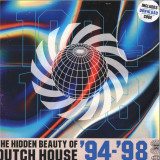
Chicago? Absolutely! Detroit? Definitely! For many, however, a significant chapter in the coming-of-age story of House music was also written in The Netherlands.
This 8-track compilation is the result of a nationwide search for lost Digital Audio Tapes (DAT’s), dusty home-studio recordings, and other relics from those early days. The distinctive "House" sound eventually evolved into a rainbow of local styles and grooves. Back then, DJ’s played their heart out and didn’t limit themselves to any particular musical genre. Following that spirit, this compilation contains everything that makes the Dutch sound so special, from energetic Breaks to atmospheric Deep House.
These are not your usual suspects, not even the most revered diggers have this collection at their fingertips. It's raw, pure material from the time when house parties were fresh and dirty at the same time. Back when the only dress code was a wide smile from ear to ear. Four sides with two tracks each, ensuring maximum DJ enjoyment. Now get out there and spread the Dutch 90's House vibes!
On Stock and ready to ship

Korean artist and musician Jin Won Lee (이진원), otherwise known as Gazaebal, began his career in New York. Working as a sound engineer, alongside such illustrious artists as the Wu-Tang Clan and Janet Jackson, led him to develop a keen ear for dexterous audio design, melodic flair and catchy rhythm. But his true interest lay in uncovering the unique textures and synthetic qualities of electronic music. From the late 1990s to the early 2000s, Gazaebal focused on developing himself as a producer, synergising a uniquely potent take on club music, releasing three albums and appearing on numerous collaborations.
An established figure in the realm of contemporary art, Jin Won Lee is well-known for his hybrid, highly technological practice. In 2008, together with Jang Jaeho, he formed The Tacit Group, a collective for computer-coded art. Presenting works that manipulate audio and visuals in real-time through programming, the group has performed at the FAMS Choice selection, Lincoln Center in New York, at the Seoul branch of the Museum of Contemporary Art and the Sejong Center for the Performing Arts, among many others. As a solo practitioner, he initiated in 2023, a project that examines sound as abstracted vibration. brings together Jin Won Lee’s decades long investigations into sonic experimentation and the physicality of noise.
Outside the avant-garde, Gazaebal has enjoyed mainstream success, collaborating with Big Hit Productions founder and BTS songwriter Mr. "Hitman" Bang on remixes and arrangements for K-POP albums. They also formed the two-man group Banana Girl, with Gazaebal focusing on composition while Bang handled vocals, achieving a big hit with their 2000s track ‘Butt.’
Another crucial figure in Gazaebal’s life is his wife Nine who operates as his agent and business partner. Initially released in 1999 on Nine’s independent imprint dmstrax, the titular track ‘Talk’ first appeared on techno@kr, a compilation CD of Korean electronica. Together, they co-founded G Records, which was partly absorbed into Bighit Entertainment in 2005. Appearing as the inaugural record on Bighit, the original version of 'And So On' – featuring Bang’s vocal production – was not available for re-release due to licensing difficulties. But thankfully the multitrack was well preserved. Utilising these components, Nawon Ha (AKA Korean-but-Amsterdam-based artist Naone) re-imagines the song for Betonska Records.
A combination of un- and self-released material, Talk is an album that firmly belongs to the millennium while sounding utterly outside of space and time. A cosmic trance trip that draws on rock’s steely drive, wiggy acid basslines and warbling dub, the record is presented as a mix-friendly mini-album, with the 6 tracks ideally tailored to DJ-level quality and loudness. As much suited to the psychedelic rave scene of yesteryear as they are to present-day dancefloors, Gazaebal’s productions are defined by his idiosyncrasies. Melding the sheen of tight production and pop sensibilities with a flagrant DIY spirit, his music assuages the high-commercialism of the 2000s, resulting in a style that’s as definitely punchy as it is precise
On Stock and ready to ship

Debut full length vinyl from the UK/Italian duo of Ecka Mordecai and Valerio Tricoli, working together as Mordecoli. Individually these two travellers have carved out a path of ghostly musique concrete (Tricoli) and textural cello wandering (Mordecai). Alter is proud to present the album Château Mordécoly a result of two musicians (and friends) coming together to explore the middle ground of their individual investigations.
The results of a red wine induced residency at London’s Cafe Oto, Château Mordécoly is a panoramic audio field exploring both the physicality of sound, informed by the voice, cello and pictish harp of Mordecai, and the artificial manipulations of Tricoli’s revox tape machine. The delicate tension between the physical ‘real’ and the distortive ‘new’ leverages this release far beyond a tipsy residency and shifts it into a top tier electroacoustic take on the zeitgeist. Solo cello and voice appear rooted in the timbre of time. The magnetic tape is both a friend and covert manipulator.
The physical elements open themselves to disfigurement as a means of propagating the fantastical audio that unfolds from the initial enquiry. There’s no witchery or wizardry on part of either player but rather a symbiotic passing of the baton as the line between the real and the non-real flow in and out of themselves. The results are at once sedate, shocking and subversive.
Château Mordécoly is a disembodied sonic landscape; a phantasmagorical world of fantasy unfolds as the delicate beauty of Mordecai’s playing and singing is transformed into a playful and unusual landscape. Epoch’s are evoked as the visual stimuli resulting from these alchemical transformations conjure everything from a haunted house to the Middle Ages.
On Stock and ready to ship

"We find ourselves venturing into the depths of a rugged terrain. In our hands, we hold stones and minerals, each possessing its own distinct texture, weight, and sonic potential. It is through the artistic touch and through the musical instruments that these earthly treasures, once dormant, are awaken to life." — Sara Oswald + Feldermelder
The 3rd collaboration of prolific cellist Sara Oswald and electronic musician Feldermelder evokes captivating sensations that oscillate between impending doom and hope. The albums' sonic journey is highly immersive, transporting the listener from one cerebral landscape to another. The transformative nature of metallic elements being integrated in sustained orchestral tones weaves the sonic tapestry, resulting in a captivating experience for the listeners. The organic sounding — reminiscent of minerals' timbres — brings a touch of brightness and a distinctive edge, while the orchestral harmonic structures lend a sense of grandeur and continuity. The origins of this music remain enigmatic, while the tracks of the album gradually unveil concealed aspects and the hidden truth.
One can step into a realm where melodies are reborn, as Sara Oswald's cello spins tales and emotions burst forth. Nature's eternal splendor intertwines with the essence of music, as she infuses harmonies with the soul of mountains. Vibrant hues come alive with delicate strokes, and cascading notes resonate with a select few. Feldermelder conjures profound echoes that swirl like ancient whispers of the earth's primordial past. He sculpts textures, from fragmented glitches to expansive atmospheres, that warp the fabric of reality. The two musicians merge together harmoniously, blending the acoustic and electronic worlds into a transcendent unity. This fusion of contrasting elements adds a unique and intriguing quality to the music. The cello's warmth merges with pulsating electronic beats, creating a symphony of contrasts and sonic upheaval. Each composition is woven in intricate layers, combining electroacoustic architecture with delicate precision. A subtle balance of chaos and control permeates the music as it meanders through the labyrinth of the mind. The soundscape unfolds like a grand tapestry, distant echoes murmuring like grains of sand.
Trained in baroque cello and advocating improvised music, Sara Oswald is the perfect match for sound artist and electronic musician Feldermelder. She plays solo, composes for film and theatre and collaborates with musicians like The Young Gods, Pascal Auberson, Sophie Hunger and Julian Sartorius. Feldermelder is a polymathic creative whose artistry spans composition, sound design, installation and code. He is co-founders of -OUS and part of Encor.studio, a collective of artists who specialise in creating immersive audio-visual installations. Through his work, he explores the idea of secrecy and its impact on our lives, using music and sound to create a thought-provoking and immersive experience for his audience.
On Stock and ready to ship

Eternally Frozen consists of a series of canon based compositions for brass ensemble, percussion and synthesizer by Andrea Belfi. The canon is an ancient compositional technique in which an initial melody is imitated at a specified time interval by one or more parts, creating illusionary never-ending musical journeys.
The work is inspired by the evocative image of the Deprong Mori, a mythological bat with the alleged ability to fly through solid matter by bending atoms by its natural skill of audio echolocation. The myth suggests that one of these bats had been “eternally frozen” in a wall of solid lead in 1952 by the researcher of the Rockefeller University, Donald R. Griffith. This story is exhibited in a display at the Museum of Jurassic Technology in Los Angeles, an institution renowned for both speculative, fantastical reinforcement of mythology and playful and beguiling distortions of mysterious could-be truths.
Both the canon and the “frozen” Deprong Mori are man-made illusory simulations of eternity. Their attempt is to create mirages, where the insinuation of facts is more meaningful than the reality.
After many years of sonic explorations with percussion, drums, and electronics, Belfi is here projecting himself as a composer through the direction of an astonishing brass ensemble in the realization of these canonic works. There are evident echoes of the works of Arthur Russell, Miles Davis, Moondog, William Basinski, and the Italian soundtrack tradition of Ennio Morricone and Egisto Macchi.
On Stock and ready to ship

Utter presents the extraordinary audio-visual project 'SuperEverything*' by multi-media artists The Light Surgeons.
'SuperEverything*' is a live cinema performance piece that explores identity, ritual and place in relation to Malaysia’s past, present and future. Commissioned by The British Council in 2011, it was created in collaboration with a group of Malaysian audio and visual artists. Over the past decade, the project has toured to various film and new media arts festivals internationally.
'SuperEverything*' is a fusion of music, field recordings, documentary filmmaking and real-time moving image manipulation that together transports its audiences through a series of universal narratives; exploring themes of tradition and modernity, globalisation and development, race and national identity, to consumer culture and belief.
'SuperEverything*' surveys our human condition to reveal what unites and divides us. It weaves together a rich kaleidoscope of stories, sounds, images and smells live on stage. It is a truly immersive, cross disciplinary performative artwork that reflects on how our complex identities are formed through ritual in relation to our rapidly evolving physical and psychological environments.
'SuperEverything*' poses many questions about how people form a sense of identity in a world increasingly dominated by information networks and fast changing social and economic landscapes.
This limited edition vinyl and digital album features the nine original tracks that make up the musical score to this groundbreaking live cinema project, fusing traditional South East Asian instruments with field recordings, electronica and western classical string instruments.
Accompanying the record is a 24 page full colour booklet and double-sided poster, housed in a gatefold sleeve. The booklet contains quotes from the narrative interviewees whose voices are interwoven throughout the performance. These quotes accompany images from the production and performances to help illustrate the musical journey and allow you to contemplate the themes and ideas explored in this work. The poster design features a collection of filmstrips taken from the video material in the show with a single striking album image photo on the reverse.
The release is also accompanied by a previously unavailable film of the full live cinema performance recorded at Hackney Empire in collaboration with The Barbican in 2013.
On Stock and ready to ship

We’re excited to be launching a new release series: “Melodies Record Club”, a string of DJ and artist curated mini compilations in loud 12” format.
The first instalment was put together by Four Tet, selecting two big peak-time Jazz tracks he used to spin regularly at Plastic People.
On one side, we’ve got all time jazz greats Jackie McLean and Michael Carvin’s De I Comahlee Ah, taken from their seminal album Antiquity recorded in Denmark back in 1975. A year and a half ago, we visited Steeplechase, the original label in the outskirts of Copenhagen. They informed us that at the time, the track was cut short as it didn’t fit on the full LP. They were kind enough to provide us with the tape of the full original recording, allowing us to release for the first time the full extended version capturing twelve and a half minutes of studio magic. Speaking with Michael back in November, he told us that every song on that album was recorded without any overdubs. They had taken their shoes off and organised the studio in such a way that they could move from instrument to instrument during the take (!!)
On the flip, we have Chris McGregor’s Brotherhood of Breath – MRA. Back in 70s London, the Brotherhood had brought together musicians who had sought refuge from South Africa’s apartheid regime and the best of a new generation of British jazz musicians. Music journalist Richard Williams, who had originally reviewed the band in the 1970s tell us: “They made music that appealed in equal measure to the head, the heart and the feet, taking the jazz legacy of Duke Ellington and Charles Mingus and adding to it the fantastic dance rhythms and gorgeous harmonies of the townships and untethered collective improvisations of the new free music”.
Four Tet’s instalment is out early May in 12” format and digitally (stream & download), first press comes with a folded A2 insert with words from and about the artists. Graphic design by Studio ChoqueLeGoff, illustration and animation by Nevil Bernard and for the audiophiles out there, remastered and cut at half speed by Matt Colton at Metropolis Studios!
The second instalment curated by Ben UFO is scheduled shortly, which will be followed over time by a string of releases including selections from Hunee, Mafalda, Floating Points, Anya & Julia from Javybz, Daphni, Josey Rebelle, Charlie Bones, Gilles Peterson… and more, stay tuned!
On Stock and ready to ship

Andrej Lasic (Laseech) is an artist, producer and audio engineer from Štinjan, Pula, Croatia. More intrigued with underground music he started producing music and in 2016 he released his first EP "Grotlo" on Hand Job Recordings and first single "Soulgroove" on famous King Street Sounds.
In 2018 he released his first vinyl single "Remember" on famous Australian deep house label Red Ember Records and singed his first remix for Jan Kincl & Regis Kattie's song 'Florette' on PDV records.
His work support and play world known artists such as Laurent Garnier, Kai Alce, Chez Damier, Scott Grooves, Gari Romalis, Dermarkus Lewis, Mike Huckaby and many more..
By now he had the chance to play on illectricity festival, Slurp! festival, Dimensions and Outlook festival and many other venues and clubs in the region, such as Klub K4 in Ljubljana, Hartera in Rijeka, Podmornica in Zagreb and many more..
From Jazzy, Funky and Soulful to Raw, Groovy, Deep and Acid, Andrej Laseech is considerate to be one of finest Croatian artists from the new generation. 'Can't Get This Feeling' EP represents a deep and meaningful connection between soul, jazz and that classic deep house sound, but also a connection between two artists and friends Andrej Laseech and Jasmina Makota. Syncopated groove, loving jazzy chords with Jasmina's beautiful voice and heart touching lyrics makes this EP a wonderful love story.
On Stock and ready to ship
Mystica Tribe and Scopeotaku have formed an international dub alliance. Taking their sounds into melodic experimental electronic dub territory. Previously, both have fused their own cultures and personalities into numerous dub releases. Now they are expanding their parameters by collaborating on a project that encompasses both their love for psychedelic and electronic audio combined with heavyweight dub reggae rhythms.
Mystica Tribe is the musical alias of Tokyo, Japan based producer Taka Noda. Drawing on a wide range of influences from dub, soul, bass and rhythm & blues. Mystica Tribe has been developing a very distinctive sound that exists in a weird freaked out zone, between dub and techno. Noda is especially interested in deep psychedelic music and this is reflected in his productions. Which are equally suited for late night listening sessions or on bent broken dancefloors.
Scopeotaku is the alter ego of Scott Prentice, a Glasgow, Scotland based artist. Scopeotaku has experimented with audio since purchasing a sampler and a four track cassette deck many many moons ago. His love for left-field dub and eccentric sounds have led him to create a variety of output, from industrial ambient, illbent electronics to mutant dub.
expected to be published on 08.10.2026

- 180 GRAM AUDIOPHILE VINYL
- 4 PAGE INSERT WITH RAP LYRICS
- FEATURING THE CLASSIC HIP HOP TRACKS TRUE
FUSCHNICK', RING THE ALARM' AND LA
SCHMOOVE'
Even before they made it to the record bins, three-man New York crew Fu-Schnickens created quite a buzz in the hip-hop community with the oddity of their group name. Once they dropped their debut album, F.U. Don't Take It Personal, their music turned out to be every bit as curious and intriguing.
F.U. Don't Take It Personal is the debut studio album from American hip hop group Fu-Schnickens, released February 25, 1992. Recording sessions for the album took place at Battery Studios in New York, New York.
The album peaked at number sixty-four on the Billboard 200 chart. By late 1992, it was certified gold by the RIAA, for shipping 500,000 copies in the United States. The album spawned three popular singles, including Ring The Alarm', True Fuschnick' and La Schmoove'.
In The Village Voice, Robert Christgau praised
Fu-Schnickens' ideas and illusory rhymes, calling the group 'rappers whose visions of fun, agape, and aural conquest remain open-ended, playful, and, face it, silly'.
Order now and we will order the item for you at our supplier.

2026 Repress
Celebrating dubwise origins, Mole Audio delivers two fresh remixes of their very first release: Andy Martin ft. Gavsborg's Plato & Caves.
Gavsborg is a towering figure in Jamaica's dancehall scene. So when Andy found an acapella, he set to work on a renegade edit. Subsequently approved and embraced by Gavborg himself, Andy's interpretation provided the launch point for Mole Audio - and is re-envisioned twice more here.
Paired with the original A-side, the B-side remix comes courtesy of south London’s legendary Dub War. Benny ill & Bill Robin are progenitors of the original London Dubstep sound, and their Dub War releases on Tempa are highly prized among collectors.. Pairing hypnotic beats with spacious textures, an insistent analog bass line weaves its way through an infectiously dystopian atmosphere.
Taking a minimalistic house-driven approach, Andy's all-new Mad Magnetism Version brings Gavsborg's original vocal to a prime time environment. Sizzling high hats and diving bass drops combine to keep the dancefloor in motion before insistent dub chords further elevate the urgent atmosphere.
Combined with the original and Nit Yardman's remix, the resulting package once again showcases Mole Audio's unique approach to modern dub aesthetics.
Order now and we will order the item for you at our supplier.
![Various - [QR]V.205.DTON.26](https://www.deejay.de/images/l/7/1/1248271.jpg)
K' Alexi Shelby is a prominent figure in electronic music with a career spanning decades. The cultivation of his massive music catalogue has overflowed into albums and the three labels he heads. It's also led to legendary collaborations with artists like The Pet Shop Boys, Robert Owens, Kenny Dixon, Roy Davis Jr., Joe Smooth, Steve Silke Hurley, Tyree Cooper, Ron Trent, Glenn Underground, Larry Heard, DJ Pierre, Carl Craig, Felix da Housecat, Marshall Jefferson and more. He makes a welcome return to COD3 QR with the jazzy house of opening track, "House Music de Chicago".
Voltaire has built his career through passion and a perfectionist approach to music, creating a richly emotional eclecticism, with inspiration from the pioneers of Detroit to the glorious electro decades of the 2000s and 2010s. Today he's a COD3 QR regular and released his debut album, "Echoes" on the label last year. He leans into the realms of house with a deep techy edge, for new track "Some House".
Finder is the alias of Radial (Jeroen Liebregts), originally from The Netherlands but today residing in Spain. He started mixing records around '98 and in 2002 teamed up with Bas Mooy to started the now legendary label, Audio Assault. He's also released on Token, Perc Trax, Mote-Evolver, Numb, Drumcode, Planet Rhythm, Mord, Will & Ink and MDR, alongside his label, Radial Records. As Finder he goes in a new direction with "Team Dream".
Benny Rodrigues a.k.a. ROD's other moniker, The Lost Souldancer has already seen him drop "No More Voices" and "Life and Death" for the label. In his own words, Benny says: "The Lost Souldancer is about coping with the loss of what once was. Finding comfort in the invisible rather than what can be seen. Disconnect to connect in order to be loved rather than liked." He returns with another emotional journey on "Magnolia".
Producer and manager of Slates Records, Squal G is a French artist who has been passionate about electronic music since the '90s. Initially a DJ, he soon turned to machines and computers. This enabled him to progress with his production and remixes. He never tries to stick to a single style, which, depending on his inspiration, can lead him to be more or less hard, while remaining in the spirit of techno. A popular COD3 QR regular, he's back with the intense techno of "Crackle".
French producer, DJ and live artist, Electric Rescue is world renowned. His productions have been signed on labels like Cocoon, Virgo, Arts, F Communications, COD3 QR, Soma, Sci + Tec, Boys Noize and his own Skrypto¨m. Ahead of his forthcoming artist album (to be released on COD3 QR in October) he closes the vinyl with the electro-tech and wonderfully wonky machine funk of "Internet Was an Illusion".
Order now and we will order the item for you at our supplier.
THE TIMELESS DEBUT OF BRUTAL ATMOSPHERIC DEATH METAL FROM THE UK LEGENDS - PRESENTED ON BLACK VINYL, FEATURING REMASTERED AUDIO. Paradise Lost formed in Halifax, West Yorkshire in 1988 & are known for being the founders of the Gothic Death/Doom Metal genre; a style fully brought into existence with their genre-defining second album, the highly influential 'Gothic'
expected to be published on 03.07.2026

WRWTFWW Records unleashes the first ever release of legendary post-disco, funk, soul and electronic UK trio Imagination's cult album Night Dubbing in (well deserved) double LP format. The limited edition full-length comes with pristine audiophile treatment and luxurious packaging : a 45rpm and Half Speed Mastered DLP housed in heavyweight silver cardboard sleeve.
Imagination's singular 1983 album Night Dubbing is a refined deconstruction of black British soul and club pop, filtered through the deep studio and mixing techniques of dub music. Elegant, restrained, and, in its very own subtle way, radical, the record reshapes choice selections from the group's stellar catalogue into an immersive and out-of-this-world listening experience.
The special mixes on Night Dubbing are built on time and space. Basslines elongate and dissolve. Vocals appear, vanish, and reappear like ghosts. Drums fall away into vast silences, while echoes, tape edits, and precise engineering manoeuvres smoothly slide across the stereo field, revealing themselves like magic over repeated listens. Far from simple extensions or 12" versions, Night Dubbing treats the studio itself as an instrument, opening new dimensions of sound.
Often cited as a foundational record in the genesis of the house genre, the album also features the historic Larry Levan remix of "Changes", a Paradise Garage anthem that helped shape the direction of club music for decades to come.
More than 40 years on, Night Dubbing remains a seminal work. Its influence continues to echo through contemporary dance music, offering a blueprint for how pop could be transformed into something darker, stranger, more physical - a timeless sound that drifts effortlessly from the dancefloor into space.
Important note : it sounds amazing played on 33rpm too !
Order now and we will order the item for you at our supplier.

First ever vinyl release of this massive classic psychedelic black rock funk compilation. Lovingly reproduced for audiophiles on black vinyl and packaged in a fully artworked sleeve and labels and shrinkwrapped. Limited edition vinyl press! “One of the best compilations of formerly released material ever made. A classic” “The whole compilation is pretty damn sweet, but anything dug up by Iron Knowledge is essential listening”!
expected to be published on 15.05.2026