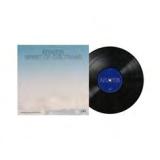
Zum 100. Geburtstag von John Coltrane verneigt sich Miguel Atwood-Ferguson mit “ANANTA: Spirit
of Coltrane” vor einer seiner wichtigsten musikalischen und spirituellen Inspirationsquellen. Der in Los
Angeles beheimatete Komponist, Arrangeur und Multiinstrumentalist ist ein Grenzgänger zwischen Jazz,
Klassik, Hip-Hop und elektronischer Musik und arbeitete bereits mit Künstler wie Flying Lotus, Kamasi
Washington, Thundercat und Anderson .Paak.
Gemeinsam mit einem 21-köpfigen Ensemble und Gästen wie Brandee Younger, Shabaka, Immanuel Wilkins,
Jeff Parker, Flying Lotus und Aja Monet überführt er Coltranes Musik ins Hier und Jetzt. Klassiker wie
“Naima”, “My Favorite Things”, “A Love Supreme” und “Giant Steps” erscheinen in neuen Klangfarben.
Mehr als eine reine Hommage versteht Atwood-Ferguson “ANANTA” als spirituelle “Cosmic Music” – und
als zeitgenössische Weiterführung von Coltranes grenzenloser musikalischer Vision.
Seine Kunstfertigkeit hat ihn zu einer prägenden Figur des zeitgenössischen Jazz gemacht, der Improvisation, Komposition und globale Einflüsse zu einem Klang verschmilzt, der sowohl filmisch als auch zutiefst persönlich ist.
Maestro begann im Alter von fünf Jahren mit dem klassischen Klavierunterricht und entdeckte mit acht Jahren den Jazz durch die Aufnahmen von Keith Jarrett und Oscar Peterson.
Mit neunzehn schloss er sich dem Trio des Bassisten Avishai Cohen an, war Co-Autor des gefeierten Albums „Gently Disturbed“ und trat weltweit auf.
2011 gründete er sein eigenes Trio und nahm sechs Alben auf, die seinen Ruf als einzigartige Stimme im modernen Jazz.
Das neue Album stellt einen mutigen Sprung nach vorne dar und kombiniert die Sensibilität des modernen Jazz mit elektronischem Sounddesign
und der harmonischen Tiefe der klassischen Musik. The Guesthouse schafft einen üppigen, filmischen Raum, in dem Grenzen verschwimmen und verkörpert aestros Erkundung von Offenheit und Zusammenarbeit.
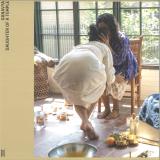
Vom Wall Street Journal als "eine der faszinierendsten Sängerinnen der modernen Musik" beschrieben, hat die in New York geborene und in Tamil Nadu aufgewachsene Sängerin und Multi-Instrumentalistin GANAVYA Details zu ihrem neuen Album "Daughter of a Temple" veröffentlicht, das am 15. November 2024 erscheinen soll. Das Album folgt auf ihren Auftritt bei SAULTs umjubeltem Live-Debüt 2023 in London, bei dem, laut The Guardian, ihre "Stimme eine zarte emotionale Kraft hatte, die selbst Stoiker zu weinenden Wracks machen konnte." Für "Daughter of a Temple" lud ganavya über 30 Künstler*innen verschiedener Disziplinen zu einer rituellen Zusammenkunft nach Houston ein. Dementsprechend sind auf dem entstandenen Album zahlreiche Mitwirkende zu hören, darunter renommierte Musiker*innen wie esperanza spalding, Vijay Iyer, Shabaka Hutchings, Immanuel Wilkins und Peter Sellars. Die Ergebnisse, eine innovative und zutiefst bewegende Mischung aus spirituellem Jazz und südasiatischer geistlicher Musik, wurden zunächst von Ryan Renteria aufgenommen und dann 2024 von Nils Frahm im LEITER Studio in Berlin weiter bearbeitet und abgemischt. ganavya ist die Autorin und Sängerin des ersten tamilischen Textes, der mit einem Latin Grammy ausgezeichnet wurde, sie war Sängerin in Vijay Iyers Ritual Quartet und Solosängerin auf dem von Quincy Jones produzierten "Tocororo", das Platz 1 der Jazz-Charts erreichte. Ihr letztes Album, "like the sky I"ve been too quiet", hat sie mit Shabaka Hutchings aufgenommen und versammelt Gäste wie Floating Points, Tom Herbert, Carlos Niño und Leafcutter John.
out of Stock
Last delivered 7 months ago available to reorder, subject to availability
Denmark"s leading outlet for jazz April Records presents their first debut of 2025 from a brand new quintet of some of the country"s most well known and respected young musicians - collectively called Oh People. Inspired by the works of Duke Ellington in the 20"s and combining them with sounds that came to life over half a Century later with a palpable sense of joy and love, "Part-Time Elegance" is set to release on January 17th on April Records. Exploring the idioms and tropes of the golden age of jazz, the record is built from deep pocket swing, lovesick ballads, percolating latin grooves, and upbeat melodies that can"t help but bring a smile to one"s face. With undertones of contentment and playfulness, each song evokes a sound and style of some of the 20th"s Century"s greatest jazz composers before evolving into passages of animated improvisation from Denmark"s finest new-generation soloists. Anyone who has been keeping up to date with Denmark"s prolific scene will recognize the members of "Oh People" from their solo projects and contributions to many of the nation"s leading jazz innovations. Jonas Due"s trumpet can be heard in the DR Big Band, and popular modern outfit OTOOTO. Andreas Toftemark cut his teeth working and learning as a musician in New York, before returning to Denmark to establish himself with two releases under his own name, receive the prestigious Bent Jædig Prize, and become one of the country"s busiest artists. Casper Christensen"s deep roots in the jazz tradition and Brazilian, coupled with the warm, acoustic sound of his guitar have seen him perform with the likes of Nana Rashid, Jesper Lodval and his own quartet. Lasse Morck has released three albums under his own name, drawing on South American musical traditions as well as literature and mythology. Henrik Holst has spent over a decade contributing his talents to Danish outfits like the Kathrine Windfeld Big Band and Jeppe Zacho Quintet, as well as international jazz legends Mike Stern, Gilad Hekselman and Immanuel Wilkins.
Vom Wall Street Journal als "eine der faszinierendsten Sängerinnen der modernen Musik" beschrieben, hat die in New York geborene und in Tamil Nadu aufgewachsene Sängerin und Multi-Instrumentalistin GANAVYA Details zu ihrem neuen Album "Daughter of a Temple" veröffentlicht, das am 15. November 2024 erscheinen soll. Das Album folgt auf ihren Auftritt bei SAULTs umjubeltem Live-Debüt 2023 in London, bei dem, laut The Guardian, ihre "Stimme eine zarte emotionale Kraft hatte, die selbst Stoiker zu weinenden Wracks machen konnte." Für "Daughter of a Temple" lud ganavya über 30 Künstler*innen verschiedener Disziplinen zu einer rituellen Zusammenkunft nach Houston ein. Dementsprechend sind auf dem entstandenen Album zahlreiche Mitwirkende zu hören, darunter renommierte Musiker*innen wie esperanza spalding, Vijay Iyer, Shabaka Hutchings, Immanuel Wilkins und Peter Sellars. Die Ergebnisse, eine innovative und zutiefst bewegende Mischung aus spirituellem Jazz und südasiatischer geistlicher Musik, wurden zunächst von Ryan Renteria aufgenommen und dann 2024 von Nils Frahm im LEITER Studio in Berlin weiter bearbeitet und abgemischt. ganavya ist die Autorin und Sängerin des ersten tamilischen Textes, der mit einem Latin Grammy ausgezeichnet wurde, sie war Sängerin in Vijay Iyers Ritual Quartet und Solosängerin auf dem von Quincy Jones produzierten "Tocororo", das Platz 1 der Jazz-Charts erreichte. Ihr letztes Album, "like the sky I"ve been too quiet", hat sie mit Shabaka Hutchings aufgenommen und versammelt Gäste wie Floating Points, Tom Herbert, Carlos Niño und Leafcutter John.
out of Stock
Last delivered 40 days ago available to reorder, subject to availability
Das Blue-Note-Debüt eines außergewöhnlichen Musikers zwischen Pop und Jazz! Seit seiner Debütsingle „Cold War“ (2018) kennt man Cautious Clay. Der Titel wurde mehr als 150 Millionen Mal gestreamt und von Taylor Swift auf ihrem Album „Lover“ gesampelt. Als Songwriter hat Cautious Clay mit Billie Eilish, John Mayer, John Legend, Khalid, Kavinsky, Melanie Martinez, Remi Wolf und anderen gearbeitet. 2021 legte Cautious Clay mit “Deadpan Love” sein erstes Album vor, das im Musikexpress als “ein aufregender Tanz zwischen R’n’B und Indie Songwritertum” beschrieben wurde. Mit seinem zweiten Album „Karpeh“ setzt der in Cleveland, Ohio, geborene, in New York lebende Sänger, Songwriter, Produzent und Multiinstrumentalist zu seinem nächsten großen Karriereschritt an - die Zusammenarbeit mit dem Jazzlabel Blue Note Records! Mit einem Mix aus R&B, Hip-Hop, Leftfield-Indie-Pop und Jazz-Elementen hat sich Cautious Clay bislang einen Namen für poetische und emotional ehrliche Musik gemacht, auf Blue-Note-Records und in Zusammenarbeit mit Label-Größen wie Immanuel Wilkins und Ambrose Akinmusire fügt er seiner Musik jetzt eine weitere Dimension hinzu.
Alto saxophonist Immanuel Wilkins follows-up his acclaimed debut Omega (NY Times Best Jazz Album of 2020) with another striking album featuring his remarkable quartet with Micah Thomas on piano, Daryl Johns on bass, and Kweku Sumbry on drums plus special guest appearances by flutist Elena Pinderhughes and the Farafina Kan Percussion Ensemble The album consists of an hour-long suite comprised of seven movements that strive to bring the quartet closer to complete vesselhood by the end, where the music would be entirely improvised, channeled collectively. The title is derived from a question steeped in Biblical symbolism: If the number six represents the extent of human possibility, Wilkins wondered how it would sound to invoke divine intervention and allow that seventh element to possess his quartet. “It’s the idea of being a conduit for the music as a higher power that actually influences what we’re playing,” he says.
Horace Tapscott's Pan-Afrikan Peoples Arkestra (P.A.P.A.) was one of the most transformative, forward-thinking and straight-up heavy big bands to have played jazz in the 1960s and 1970s. If P.A.P.A. doesn't have the interstellar rep of that other famous Arkestra, and if the name Tapscott doesn't ring bells like Monk or Tyner, there's a reason why: in an industry dominated by record labels, a band that doesn't record doesn't count. And the Pan-Afrikan Peoples Arkestra didn't record for nearly twenty years. But recording success was never their concern -- they weren't about that. First formed as the Underground Musicians Association in the early 1960s, Tapscott always wanted his group to be a community project.
From their base in Watts, UGMA got down at the grassroots. The group was renamed the Pan-Afrikan Peoples Arkestra in 1971, and soon after they established a monthly residency at the Immanuel United Church of Christ which ran for over a decade, while still playing all over LA and beyond. But they never released a note of music. It was the intervention of fan Tom Albach that finally got them on wax. Determined that their work should be documented, Albach founded Nimbus Records specifically to release the music of Tapscott, the Arkestra, and the individuals that comprised it. The first recording sessions in early 1978 yielded enough material for two albums, and the first release was Flight 17. The album commences with the magnificent title track. It is effectively in three parts. It begins with unaccompanied pianos. Then the ensemble embark on a dense, circular and mechanical movement, a platform for horns and pianos to swoop and dive. We return to Earth with a beautiful solitary flute. The second track, the piano-centric, ‘Breeze’ is different to ‘Flight 17’ in intensity and also brevity but it is quietly as daring as the title track. It concludes with a moving lush wash from the full Arkestra, which sound almost like strings only more substantial. These first two tracks take full advantage of the texture of the unusual mix of the various instruments. Next though, it’s a significant change with ‘Horacio’, which is an exuberant Latin infused jingle. It’s unlike anything else on the album. I like to think it was named after the conductor’s Cuban alter-ego! ‘Clarisse’ gracefully switches between slow blues and bop and is bookended with a grand vaguely East Asian theme. The busy bass line introduces ‘Maui’. As with the previous track, it moves between a number of contrasting melody lines and rhythms but there’s still space for a tuneful sax solo.
This is a must-have album. I think the first two tracks on their own make this release essential. Kevin Ward/UK Vibe/Boomkat
Osaka-born and New York-based pianist Erika Dohi is a multi-faceted
artist with an eclectic musical background. From highly polished
raditional classical to bold improvisation, she is a dynamic performer
whose timeless style and unidiomatic technique sets her apart in
contemporary NYC avant-garde circles.
Dohi’s vast repertory is impressive but what makes her truly such a
barrier-defying artist is what lies ahead. ‘I, Castorpollux’, Dohi’s debut
solo album, is a profound personal excavation set to a gripping
andscape of wild, genre-fluid composition, a virtuosic but emotionally
generous convergence of the technical and the spiritual. With
understated piano and keyboards at its centre, ‘I, Castorpollux’ is
equal parts hazy nostalgia, science-fiction soundtrack and
electroacoustic experimentation.
The project features contributions from Channy Leaneagh (Polica),
Andy Akiho and Immanuel Wilkins, among others, and is produced by
William Brittelle.
The central theme to the album is the ‘split-self’ and variable
perceptions of time that Dohi has faced at formative moments in her
ife. She experienced the 1995 Kobe earthquake at age 7. Hiding
under a table during the worst of it, she later emerged to find the
world around her crumbled. In her immediate vicinity, a fixture of her
childhood remained standing. The Tower of the Sun, a type of three
aced time machine itself from Expo 70, designed by artist Taro
Okamoto, is a trail-marker on Erika’s journey, a stand-in sigil to
unlock the mysterious sounds of her work, with 70s synths and retro
sci-fi aesthetics permeating the album’s narratives.
Much of the album was written while living in Texas where the split
between her Asian self and the idea of being an American
necessitated a near mountain of self-discovery to reconcile how she
elt and who she was within the social backdrop of a strongly
conservative environment. It is no wonder that the character of the
Dioscuri, Castor and Pollux from Greek and Roman mythology
esonate so deeply with her, or Haruki Murakami’s Two Moons and
heir strange light.
From her contributions to various projects and her participation in the
Artist in Residency collaborations, Erika has become a staple of the
37d03d community.
Fresh on Francis Harris' Kingdoms imprint comes Rasmus Juncker's 'Ophold' - six tracks of sublime atmospheres and textures. The Danish musician, sound composer and DJ fits perfectly with the label's aesthetic, joining the dots between ambient, leftfield electronica and modern classical.
Juncker has a background in studying jazz drumming and has been playing improvised music within the jazz domain for many years. He also started to DJ at the age of 14 and was introduced to the world of electronic music production at the same time.
When Rasmus started to think about his debut album he spent several months trying to find his own way to combine his favourite musical influences, improvisation, electronics and classical music. 'Almost a year later', Juncker says, "I went to a sensory deprivation floating tank in Copenhagen while researching for another performance and while I was lying there, floating in the water, deprived from most of my senses, I got the idea to do something drastic in my musical process. Philosophers like Immanuel Kant describe this deprived state as a mental 'Cesura', which became some sort of guideline for the album."
So Juncker decided to start working on the album by leaving the process as well as the final result completely open. 'I wanted to create sounds and music that I had no idea what they would sound like, but would feel like a mental 'Cesura', an 'Ophold' (in Danish)' he states.
He invited musicians, one after the other, to his studio. "I had an electronic musician to improvise patterns and new interesting sounds based on my experience in the deprivation tank. I chose some of the takes and some weeks later I invited a jazz guitarist to listen and improvise on top of what he heard. Then a classical string quartet and a double bass player came to my studio months later, and finally I recorded myself on percussion and drums.
Throughout the recording process I've been experimenting with special microphones in various setups, used noises from the recordings and the room became absolutely essential for the pieces." Juncker states.
"The material I used was all first take improvision which I arranged, layered and edited into compositions. The final pieces were mixed by Andreas Pallisgaard with the same improvised and experimental approach of the recording and the production. None of the musician met each other, but their sounds developed into something completely fantastic I think. The presence of the acoustic instruments and the depth and complexity of the synthesized layers gave some kind of an indescribable sounding music from another galaxy.
Track by track:
'Norddrum' starts proceedings - ethereal, grainy sounds merge and disassociate, as a distant rhythm gradually finds its way to the fore.
The second track, 'Sora' , clocking in at under 2 minutes, is an interlude full of strings, pads, and percussive hits, rich in feeling. This strong sense of sound design and seemingly disparate sounds woven together into a whole carries through into 'Eksotisk Tirsdag' - the strings, plucked instruments and electronics harking back to 4th world adventurers like Jon Hassel and Brian Eno.
'Cyklus' dives into drone textures, pulsing and modulating to create an unearthly soundtrack.
'Havekunst' is another 2 minutes interlude, this time bringing a fully charged rhythmic barrage to the front.
'Cesura', the final track is in essence the EP's centerpiece - a sprawling 8 minute journey that traverses tense, fibrous sections and on into pulsing modular passages, before opening up into glorious moments of wonder and brightness. It's a hugely bold yet fragile endeavour, in line with the whole release.