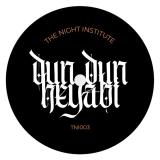
This is Timmy Stewart & Jordan Nocturne's debut single together as TNI, a raucous percussive club weapon designed by The Night Institute residents to reflect the pair's shared history & energy as DJs.
First up on remix duties is Shit Robot. The Dublin-born, DFA mainstay cranks the energy right up, driving things further forward with punchy drums and bright insistent synths built for the peak of the night.
Irish collective LA Dysto have been on a roll recently, with their unique brand of chugged-out electronics. Here they get psychedelic, dubbing out the vox and adding a driving hypnotic bassline,
The finale belongs to fellow Belfast artist Viper Patrol, who strips the track back to its bare bones and heads off on a tripped out breakbeat mission with even more middle-eastern twists.
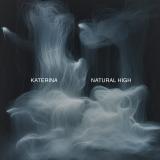
Katerina is an old friend from the early trips to Helsinki, a Finnish Bulgarian queen of the dance, having commanded the wood floors of Kaiku since its inception. Her debut EP with the ESP Institute, 'Natural High' is something special if we may humbly brag. It is the electronic embodiment of our annual journey around the sun, with its release landing just in time for this year’s Summer solstice. Over 4 tracks, the narrative shifts are technically subtle but emotionally palpable, presenting moods that swing both warm and cold but maintain a delicate balance start to finish, a confidence that speaks of true experience and understanding the dynamics of dancefloor moods. Our typical verbose track-by-track dissection feels unnecessary as Katerina’s work here is most legible as a whole. 'Natural High' is a cozy and honest offering, a soft-edged cerebral antidote to the daily falsehoods perpetrated by mankind, and a reminder that in the end, we are all just children of Gaia. Run Free!
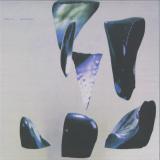
Yeong Die would typically be described as DJ, musician, or “experimental” composer, but in reality she is a sculptor. Between the rapidly disintegrating boundaries of composition and sound design, her work employs a hunting and gathering of intangible material—bursts of memory, fragments of liminal space, interstitial banalities—materializing as boundless expressions that evade genre constructs. As an integral presence among Seoul’s most forward thinking sound artists, Yeong is in a constant uphill battle rejecting the reverence that so quickly creeps in and infects contemporary craft, that relegates even the most audacious attempts of her peers to pigeon-hole pastiche. Given this style-agnostic starting line, her ESP Institute debut 'Uncapturable' exudes non-urgency, an unfettered pace that allows breathing room, affording the listener freedom to mentally isolate and explore elements without fear of missing a “bigger picture.” There is a warm and welcoming feeling that invites repetitive, even studied listening. While half the work is somewhat singular in presentation—'1km', 'Like Your Flaw', or 'Burnt'—there are moments of meticulous complexity—'Morning Rum Punch' (featuring vocals by Cifika) and 'Did' (featuring a smattering of spoken words by icecream drum), both underground Korean peer artists. These moments feel more of like an acute focus on execution that compliments the overall shape of the album, rather than a dynamic contrast. Cifika’s vocals, in particular, command the listener’s periphery in a playful and refreshing way, exaggerating negative space and in-between moments that not only the paint an arresting stereo field but a remarkable sense of depth, not easily achieved without production sorcery. It is, without a doubt, these beautiful fleeting moments that we describe as 'Uncapturable'.
Marco Funari’s Music Institute Records make’s a return with it’s first ever release from 1993, remastered and re-released. Another lost house classic !
Fashion Flesh tears the fabric of space and time. This is his first offering for the ESP Institute. With side A’s 'Atoms Revolt', ESP cordially introduces Fashion Flesh, AKA John Talaga, to the deepest corners of your mind. Using largely homemade electronics, circuit-bent gadgets, and tape manipulation, John manages to tap into the innate character of these otherwise introverted machines, eavesdropping and documenting their buried inner dialogue. His command of distortion is multi-tiered. On a micro level, he induces happy accidents and shepherds stray elements. Zooming out a bit, we begin to understand the sonic meat grinder that equalizes his bag of disparate ingredients. And from a macro vantage point, we fully recognize the greater tool that sculpts all of the above into form. Side B’s 'New Freedom' conjures a specific dystopian image—the byproduct of an artist involuntarily conditioned by the commute between up-river Bay County, Michigan and the Detroit metropolitan area. Like cutting away at flesh and muscle, breaking through the bone to suck the marrow, John depicts both the contrast and parallels between two post-industrial urban landscapes, the banal trek across The Thumb between them, and the gradual disintegration of agriculture as one nears the Techno city. Voice fragments begin to stutter in syncopation like radio frequencies interfering with our psyche, Geiger counters wail and moan, untamed oscillations mimic caged primates rioting at the zoo, and a steady-firing piston of drums struggles to break through a dense harmonic soot. The depth of personality John extracts through his manipulation process is remarkable— a point-of-view that foreshadows humanity’s looming technological singularity while hinting that it may have always been here, hiding in plain sight, waiting to be given a voice. These two songs will trip your circuit breakers.
Marco Funari's Music Institute Records follow up on last year's Ciao Lee Tong banger with a re-release of the house classic, Franky E.P. Four raw and unpolished dancefloor pleasers with a snapshot back into the world of early 90's garage house.
Evelyn spreads her wings and prepares to fly. This is her first offering for the ESP Institute. On side A, 'Tremors' slams together a plethora of seemingly disparate rhythms, organic percussion, field samples, hypnotic chants and a relentless low end punch, that when in full-swing, works some seriously deep sorcery. Contrasting her pounding kick and rolling sub combo are a softer grouping of melodies, soft mallets and muted tones that lay subtly beneath the aggression, skillfully playing with a sense of spatial depth and room size. Its the kind of track that draws you in with meditative bars, concentric cycles that sit ever so slightly off-axis, inducing the mind and body to obsess and regulating its timing, and then drops you into a very intentionally arranged soundstage giving expansive space to explore. On the flip, 'Pregunta' continues this approach of natural versus industrial instrumentation. The consistent machine kick has a powerful but playful tone, the negative space between each stroke evoking a mighty gesture as its note bends in the decay. Set in 3/4, a community of live percussion successively adds and subtracts, each player’s imperfect attack accumulating into a mechanically smeared and addictive loop that toys with peaks a handful of times yet restrains any unnecessary climax for the betterment of a driving groove. Near the end, as the kick and various players mute and the base of the track is given a moment to breathe, its apparent just how layered the production was in the moments prior, as we’re suddenly at home, smitten with the wobbly and lopsided innocence of the foundational percussion. These two songs will push you headfirst into the light.
The Intergalactic Research Institute for Sounds is proud to present Requiem for Robots. For this latest transmission, Florina Speth aka Schloss Mirabell joined forces with a group of robots that were built by Kay Sievers (versioduo.c..). The musical question this record states is: “Who animates what?”
The physical body of these robots consists of a wooden cuboid, a single string around which a round, internally strung bow revolves, and a motorized finger which can press down the string. They produce sounds that are very similar to the cello. They display unusual characteristics such as motor noises, infinite sounds or sometimes scratchy and gruff qualities. In addition, there is the extraordinary level of kinetic expression created by the bow circling around the string. Taken together, precisely these peculiarities form a unique instrument profile, a character which is emphasized in the presented project.
Florina Speth, born 1983 in the mountains near Salzburg, started playing the cello and piano at the age of 6 and began studying music at the “University Mozarteum Salzburg'' at Clemens Hagen when she was 11. She won several prizes and was part of orchestras such as the Bayerisches Landesjugend Orchester and Salzburger Junge Philharmonie. Always keenly interested in contemporary music, she loves bridging experimental arts with science. She composes and works with cello and cello robots. She regularly collaborates with Dasha Rush, Hüma Utuku, Nicholas Bussmann, Lucile Desamory and Larissa Lackner.
Recollections VII-VIII marks the fourth in a planned series of 7” releases, each built from Glonti’s expanding archive of Soviet-era recordings. The artwork by Dmytro Nikolaienko (Day Night) once again reflects the utilitarian aesthetic of Soviet-era record design.
In 2018, Glonti started collecting LPs of Soviet-era Georgian composers at Tbilisi’s “Dry Bridge” flea market.The records mostly consisted of classical and chamber music released on Melodiya, the singular, state owned record label of the USSR. It was through this process that the idea of Recollection was born, as Glonti aimed to create an album that would utilize samples from his growing collection.
out of Stock
Last delivered 4 months ago available to reorder, subject to availability
Recollection V-VI marks the third in a planned series of 7” releases, each built from Glonti’s expanding archive of Soviet-era recordings. The artwork by Dmytro Nikolaienko (Day Night) once again reflects the utilitarian aesthetic of Soviet-era record design.
In 2018, Glonti started collecting LPs of Soviet-era Georgian composers at Tbilisi’s “Dry Bridge” flea market.The records mostly consisted of classical and chamber music released on Melodiya, the singular, state owned record label of the USSR. It was through this process that the idea of Recollection was born, as Glonti aimed to create an album that would utilize samples from his growing collection.
out of Stock
Last delivered 8 months ago available to reorder, subject to availability
Seit ihrem ersten Demo 2013 haben INSTITUTE, die ursprünglich aus Austin stammen, ihren rauen Anarcho-Punk zu etwas Weitgreifenderem und Nuancierterem geschliffen. Die ,Salt EP" aus dem Jahr 2014 stellte den Beginn der Zusammenarbeit der Band mit Sacred Bones dar und ergründete längere, experimentellere Songstrukturen. ,Catharsis", das Debütalbum der Band, war ein weiterer großer Schritt vorwärts - mit einer etwas klareren Produktion und einigen Krautrock-Einflüssen. Weiter und weiter schieben sie sich selbst aus jeglichem Genre, indem sie Hard Rock und Glam mit in ihr Spektrum aufnehmen und so das bisher abwechslungsreichste Material ihrer Karriere auf Subordination veröffentlichen.
Patrick Conway crossed the threshold to find a new hope. This is his third offering for the ESP Institute. On side A, 'Loss' sets an overall melancholic tone for the record. A single repeating high note on the piano establishes a guiding element, which is eventually supported by a tear-jerking yet resolving chord progression, a trailing choir of angelic voices, and a filter-modulating synth that pads the widest zones of the mix with the occasional counter-melody. Robust in and of itself, Patrick’s melodic arrangement floats gracefully over an otherwise antagonistic rhythm section built from his signature corroded dancehall arsenal. This hornets nest of boxed live kick drums, piccolo snares, and high-pitched toms is held together by a dry veneer of saturation, sitting at safe distance from but in natural harmony with the bulbous low-frequency atmospherics. On the flip, 'Silencio' employs a similar statement at the top of each measure, this time an anthemic polyphonic synth stab as opposed to the singular piano note, however, unlike the layered melodies throughout 'Lost', here Patrick explores the narrative possibility of negative space—call and response, rhythmic dialogue, and the implied notes that leave the listener’s or dancer’s intuition to complete a phrase. In the game “musical chairs,” children run around manically until signaled to find a chair, at which point their diverse personalties must urgently synchronize, until set free to run again and repeat the process. Patrick's approach for 'Silencio' conjures said metaphor—his melody and rhythm are unleashed to meander and spasm within the confines of each respective bar, until that anticipated synth stab unifies everything “on the one”—controlling the chaos, calling on muscle memory and affirming logic. These two songs will be with you always as they always have been.
out of Stock
Last delivered 18 months ago available to reorder, subject to availability
Taking our time has become a sort of ESP modus operandi, often proving that when variables are left to cook long enough—relationships, styles, politics, moments in culture—we may collectively yield a more considered result. Once in a 'Blue Moon', we set sights on a record that conducts some strange voodoo, some rare combination of elements that commands our entire being. Entering our atmosphere with a concise 6-track debut, dub technician Brendon Moeller has brought us exactly that. Although we’ve long been admirers Brendon’s work, separated by only a few degrees—he and ESP’s Lovefingers are the same age and shared a decade of salad days in New York City—it took another decade before enough courage was mustered to suggest we actually work together. Our reticence has seen Brendon’s aesthetic and palette evolve over the years, and the label has simultaneously sculpted a tone of its own, but now we’re more than proud to finally marry his highly refined output with our, let’s say, “deliberate” appetite. 'Blue Moon' touches everywhere Brendon has been as an artist—from the obtuse corners of ambient to IDM, dub techno to liquid drones and bass—yet the vocabulary is honed and succinct, relying on a very intentional handful of expressions. This is almost an exercise in restraint, all 6 tracks are delivered from a disciplined and committed point-of-view, but what we find most captivating is the exploration that this allows in terms of depth, texture, fluidity and pacing. There is a complexity hidden in plain sight that begs to be studied, a comfort that allows us to slip inside like a warm bath, an addictive tingling sensation that we must prolong indefinitely. Even as we write this testimonial, the album is going on a fourth repeat and we languish the intervening silence between tracks. This is being under the spell of Brendon’s 'Blue Moon'.
out of Stock
Last delivered 11 months ago available to reorder, subject to availability
Following 2020’s 'Point Vacancies', the debut EP from Jamie Paton and Mike Bourne’s collaborative act Metal, the duo return with a trio of dubwise remixes from Mr Paton himself as well as a peak-time stormer from fellow Bristolian artist, Hodge. The latter immediately sets the record ablaze with a driving-tempo kick thump, a duo of grain-textured 16th note hi-hats and chalky clap. He layers an anthemic three-chord pad progression with layered octaves, peppering in arpeggiated bleeps and articulate lead melodies, then tops it off with a few modular elements that retain the character of the original, before climaxing in true rave fashion. Proper. The following three mixes by Metal’s own Jamie Paton make clear his sonic obsession, the type of infinite tweaking that sees some artists/producers to the edge of madness, or at the very least satisfies some dragon-chasing addiction. There’s a successive deconstruction from 'Remix' to 'Dubwise' to 'Dubwise II', most notably in the reduction of rhythm and drum machinery, but also in the general tonality. The melody remains central but is gradually obscured, taking on a less and less recognizable form, and by the end we’re left with a skeleton of the track, quips and cranks, an assembly line of aluminum sheeting punctuated by an array of demented nuts and bolts. As with the previous EP, the sparsity of elements illustrates just how far one can twist an aesthetic, proving that self-imposed limitations can often propel an artist’s process and land them somewhere unfamiliar, somewhere foreign, somewhere enchanted.
out of Stock
Last delivered 2 years ago available to reorder, subject to availability
BELFAST PARTY THE NIGHT INSTITUTE LAUNCHES NEW ELECTRONIC MUSIC LABEL
The Night Institute, the legendary cult club night at the forefront of Belfast's thriving electronic music scene, announces eponymous new record label.
Spearheaded by scene stalwarts Timmy Stewart of Black Bones fame and Jordan Nocturne, known for his contributions to labels like Correspondent and Polari, this new venture aims to showcase Belfast's true independent club scene on a global scale.
The Night Institute has long been synonymous with cutting-edge music, providing a haven for the city's electronic music aficionados.
With the label, the vinyl and digital project features tracks by both resident artists as well as global artists who've played at the party.
The inaugural release boasts a stellar lineup.
Alongside Night Institute residents Timmy Stewart (Ft. Northern Irish vocalist Megan Sylvan) and Jordan Nocturne, the record showcases guest appearances by Justin Cudmore, resident of New York's renowned The Bunker and regular contributor to Phonica Records, and Hifi Sean, who has been making waves with his collaborative project alongside David McAlmond while working with icons like Ce Ce Peniston and Yoko Ono.
The label aims to capture the essence of Belfast's underground electronic music scene, while joining the dots with global collaborators across four tracks of acid, odd-ball house and dance floor electronics.
Good Vibes for Uncertain Times
out of Stock
Last delivered 19 months ago available to reorder, subject to availability
There was a long time I considered Raymond Richards the ultimate secret weapon. There were sounds he could make that other people just couldn’t. Pure, whole, yet complex sounds. The pedal steel is an extremely niche instrument outside of its Country confines, but its sheer and transcendent depth has never failed to floor me. Raymond’s ear for implementing the steel into literally 'anything' has always been uncanny. After decades of being savvy to his work ethic, multi-faceted studio skills and overall sense of musical honesty, it became a priority for me to channel some of this into narratives through the ESP Institute and get his stories told. Without further recounting the history and trajectory of our musical relationship (see the press release for 2020’s critically-acclaimed album 'The Lost Art Of Wandering'), I can whole-heartedly confirm this sophomore release, 'Sand Paintings', opens an even wider door into Raymond’s visceral, contemplative world. The cast of players has elaborated to include Calexico’s John Convertino on drums and percussion, a bevy of eccentric stringed instruments and even a hint of brass to collectively stratify context for the pedal steel. Through diversifying the timbral palette, we invite an increased soundstage acuity but also reveal untapped wells of emotion for the listener, perhaps even testing cultural literacies. One foot remains in our established ambient realm, while the other steps toward grand cinematic gestures, and despite the dense, insurmountable emotion in these songs, there is a stoic singularity, like a lonesome cowboy pulling up his boot straps to endure another day. 'Badwater Basin' opens with courage, an enormous chord evoking Raymond’s image of “hard dawn”, but in navigating through the dramatic depictions of 'Monument Valley', 'Saguaro' and 'Deer On Hwy 80', we grapple with a cloaked vulnerability—weathered by the elements, beaten down and alone, yet still madly in love with the world. —Lovefingers
out of Stock
Last delivered 2 years ago available to reorder, subject to availability
ESP Institute artist Bartellow, one third of the project Tambien and otherwise known in the Contemporary Classical sphere as Beni Brachtel, returns to the label with his second full-length release, Noosphere. While currently heading the SVS label and residency series out of Munich, Beni’s resume expands well beyond electronic music to include immersive sound installations such as The Adven- ture Of The Empty House (solo live performance across seven floors of Walter Henn’s Deckelbau building), a slew of compositions for the Bavarian State Opera (for which he doubled as conductor), and a prolific career of over twenty-five theater scores for institutions such as the Münchner Kammerspiele, Schauspiel Basel, Maxim Gorki Theater Berlin, Berliner Ensemble, Schauspiel Köln, Schaus- piel Graz and with directors Ersan Mondtag, Alexander Eisenach, Jessica Glause and Tobias Staab among others.
Noosphere is a compendium excerpting from theatrical scores WUT (Elfriede Jelinek, at Schauspielhaus Köln, directed by Ersan Mondtag, 2020), Ödipus and Antigone (Maxim Gorki Theatre Berlin, directed by Ersan Mondtag, 2017), Der Zauberberg (Thomas Mann, Schauspiel Graz, directed by Alexander Eisenach, 2017), Hass Tryptichon (Sybille Berg, Wiener Festwochen / Maxim Gorki Theatre, directed by Ersan Mondtag, 2019), Wonderland Ave. (Sibylle Berg, Schauspielhaus Köln, directed by Ersan Mondtag, 2018), Die Verdammten (after Visconti ́s film, Schauspielhaus Köln, directed by Ersan Mondtag, 2019) and Roi Ubu (Alfred Jarry, Theater Neumarkt, Zurich, directed by Alexander Eisenach, 2018).
The work traverses homages, infusing everything from Baroque to Impressionism, and while these types of references are certainly built into the canon of Theatre as a discipline, here we gather histor- ic layers in an even wider net. Under the self-referential thumb of Contemporary Classical music, this sort of "hindsight" approach has been largely avoided, however, in today’s all-access arena, the constant stream of historic causal-chained events has opened a delta where anything is possible. This defines Bartellow’s stance among his colleagues as well as his cultural position as a composer.
Beni considers beauty a fleeting objective in the arts, that expression is often expected to follow notions of Destructivism or the unfulfilled. Art will pore over wounds, collective angst, mourn- ing a loss of natural habitat or a fear of technological invasion, yet there is a bitter irreverence for the friction or salvation in beauty itself. Acknowledging this subjectivity — what one audience considers superficial pleasure may be deeply profound to another — he leans into musical instinct as if composing via divine conduit.
Noosphere conjures a array of suspense, ecstasy, melancholy, and dread, but in isolating the work from its theatrical component, Brachtel directs our focus toward formal qualities, clearing unim- peded space to conceive fresh narratives and examine dynamism and interconnectivity. In sympathy with often difficult theatre pieces, the passages can be dark and transgressive, but more importantly they remain relative to Brachtel’s circumstances at their time of creation. The title Noosphere speaks to the evolution of human thought and knowledge, opening a door to subjective points-of-view. For example, Nexus II On The Beach refers to both Roberto Musci’s Water Messages On Desert Sand as well as the film Bladerunner, invoking the image of an android enjoying the sunset, but whether or not this abstraction may be considered beautiful depends the listener’s cumulative life experience and perspective.
This is hybrid chamber music, augmented by electro-acoustic layers, juxtaposing various periods and successively processing their residual themes into a trans-generational rendering of “now.”
out of Stock
Last delivered 9 months ago available to reorder, subject to availability
Experimental political pop artist Mary Ocher returns with a musical tourde-force examining the collective dread of the impending future Feat. Barry Burns (Mogwai), Red Axes, Roberto Cacciapaglia, and a homage to Delia Derbyshire. A stunning run-thru the history of experimental and electronic music
In 2022 we journeyed to the center of the earth with Agartha, Lasha Chkhaidze's first album. This time we go the opposite direction, and fly towards the outer edge of the atmosphere.
Atmos, the latest offering of the young and talented Georgian artist, sees him explore the ether. Subtle and intricate layers are weaved together on the course of six tracks. This ambient album offers a completely different artistic direction compared to his previous work. Where melancholia and piano dominated Agartha, we are throughout Atmos taken into an otherworldly environment. The LP’s atmospheric undertone combined with its glitchier elements brings it into a lightly psychedelic dimension. With its really beautiful soundscapes and subdued intricate ideas, Atmos will undoubtedly please listeners of finely written ambient.
Lasha Chkhaidez is a gifted musician capable of crafting evocative music, The Intergalactic Institute for Sound is glad to present his deeply immersive experience to the public.
out of Stock
Last delivered 2 years ago available to reorder, subject to availability
Jdotbalance left the moon and the sky for a city that works. This is their first offering for the ESP Institute. On side A, 'Sublimate' combines two aspects of a digital pipe and mallet assortment—both as the percussive base for a groove, and as an interstitial layer where inherent resonances are massaged into melody. Bubbles and squeaks dance around the sound-stage periphery, occasionally pierced by high frequency statements, presenting as either ghostly yelps from the aether or as bursts of kaleidoscopic shards. A third of the way through the track, the instrumentation truly does sublimate, crystallizing into a new self—bolder and naughtier, abandoning its pensive optimism for a detour around the spectrum's dark end. On the flip, 'Precipitate' continues with its predecessor's primer of metallic percussion, but accelerates the pace to reveal Jdot’s attitude leaning toward cunty malice. The kick drum relentlessly pounds us as 16th note droplets metamorphose from chrome-dipped hail into full-blown acid wind. As intensity retreats beneath the digital rubble and the track draws to a close, so does our stream of Jdot’s consciousness. These two songs will accelerate your nervous system.
out of Stock
Last delivered 2 years ago available to reorder, subject to availability
Close your eyes and merge into Benedikt Frey’s 'Fastlane'. Imagine sitting in the driver’s seat of a an automobile, one with exceptional horsepower and torque, as you stare out the windshield at the red light, warping in fata-morgana a mile down the road. It’s a straight-away, a black top with two lanes, and against your better judgment you decide to floor the gas. No hesitation in your muscle, your ankle or the ball of your foot, which you now realize is some kind of universal pivot, the first point of contact fusing your body with the will of machine. In this moment you’re in awe that you, a human, an animal, grew from pond scum into something so advanced as to engineer this thing, a mechanical beast capable of overwhelming power and exhilaration. But you also feel a seductive dread, an outside force diverting you from caution toward a dangling carrot of curiosity, asking yourself, ‘How far can I take this thing?’ The dread, now a constant, is numbed, equalized by an adverse intoxicating gratification. You feel both sensations in real time, however, rather than take responsibility for yourself, friends, family and innocent bystanders, you cement your foot to the floor and lean your head back. Noise around you fades to mute. Smell the benzene-scented air, feel the wind on your face, the menacing vibration of the vessel you control beneath you and every grain of asphalt under its tires. This mile has now lasted an eternity and you’ve left your body for some objective view, as if watching climax of a film. Past the point of no return, you embrace abandon and lean into fate. The film becomes slow motion, a crawling pace so mesmerizing you convince yourself of an option to eject yourself from this madness, but as you finally let go of your last morsel of fear, you run the red light head-on into the nucleus of a fantastic glistening sculpture of torn metal, glass, oil, broken dreams and heartache. 'Fastlane' may be just drum machines and synthesizers if you’re timid, but listen harder and know the catastrophic reality of existence, a wreckage so gruesome we dare not rubberneck, but afterall it is our nature to stare.
out of Stock
Last delivered 15 months ago available to reorder, subject to availability
Damage and Their Slices” is a collaborative album NVST and Theo Muller, in which they invite the listeners to a deep dive into an esoteric universe where dark magic meets political revolt.
The Swiss artist NVST shouts, preaches, stirs up and questions the consciences of his audience with a deluge of words about this sick society, the capitalist infection and the abuse of power. In tune with this mantra of georgeorwellian rhetoric, the music by Frenchman Théo Muller turns the malaise of the content into form: paranormal psychedelia, arcane dub, industrial ectoplasms, esoteric ambient and paranormal drones. In short: a friction of electronic sounds that Kraftwerk, years ago, unwittingly defined as metal on metal. Live, this call to action to necromancy and revolution takes on an amphibious, organic, almost cathartic and revealing form.
out of Stock
Last delivered 3 years ago available to reorder, subject to availability