The latest wayward soundsystem sonics on the Social come from Wroclaw in Poland courtesy of dadan karambolo. As part of the strictly legit SPLOT crew karambolo is spearheading a vibrant community of bassweight freaks digesting all the best misfit club music from the cracks between — a hint of dubstep, a twist of techno and plenty of advanced sound design, all poured into a thoroughly modern, richly realised brew.
Having previously snuck tunes out on SPLOT’s in-house label and the respected Awkwardly Social crew out of Berlin, karambolo delivers an extended statement with his Sneaker Special Club debut. Subtle pressure is the order of the day as he zeroes in on evocative soundscaping and a subdued mood, all while piling on ample low end intensity and edging some sharp angles out of the meditative roll. Even when minuscule slithers of amen breaks sneak into ‘Awkward Expression’, the ambience remains somewhere between dream and dread while ‘Huskarl’ scatters industrial jackhammers across a vast tundra of drone.
‘Done For’ steps forward a touch more forthright with its grime-coded bass spasms, deploying the kind of bludgeoning physicality and ruthless reduction you might associate with fellow Sneaker alumni, Mars89. ‘Burbot’ also switches the script for a cheeky B3 that toys with 80s electro chopped into a snappy breakbeat and underpinned with a sticky synth line. Sidestepping direct dancefloor routes in search of different ways to achieve movement in the club, karambolo has more than matched the over-arching Sneaker ideal with an assured, original transmission from the outer limits of the soundsystem.
Suche:jackhammer
- 1
Tuskegee returns with serious intent and a fresh club weapon from a recognised statesman of house music, Junior Sanchez. Having written and collaborated with artists including Daft Punk, Armand Van Helden, Todd Terry, and Roger Sanchez, ‘Bitch U Could Neva’ pairs Sanchez with vocalist and songwriter Dave Giles II, riding high himself following link-ups with Honey Dijon, Mike Dunn, and a producer on Beyonce’s anthemic ‘Cozy’.
‘Bitch U Could Neva’ is a powerful, instantaneous trip back into the underground style and attitude shared between both artists, reflecting the vibe of Sanchez’s rise to success in the halcyon days of New York nineties clubbing, alongside Giles II’s own youth in the Chicago creative scene. Living up to the attitude of its title, ‘Bitch U Could Neva’ bumps with peak-time energy, jackhammer drums and chopped-up vocals never undermining its fundamental sensuality, an increasingly rare link between true, authentic dancefloors past and present.
The pair then look to London for a confident, stripped-back take from prestigious record collector and curator GIDEON. The founder of dance music institutions Adonis and Glastonbury’s infamous Block 9 goes deep to find the track’s potential as a minimal, vogue-adjacent house workout, scattered with telephone dial tones and an upfront disclosure; “Bitch, I’m serving.”
Back across the Atlantic, Physical Therapy and Michael Mangan team up under their Fatherhood project to give ‘Bitch U Could Neva’ a seriously bouncy redress, winding tight drums atop a rubbery bassline and paying their own Twilo and Tunnel-era tributes with cut-up vocals and an ecstatic onslaught of rave stabs.
Following 5 years in Berlin, two albums and a continuing residency at Tresor all bringing acclaim, Maedon is now an established voice and one also in transition. The 8th release for her own Rant & Rave label announces this in its title, 2.0, and its sound, a bold move away from her industrial roots towards the groove-laden techno that earned her bones im Keller. The product of careful study of techno's roots and evolution, this gradual process reaps rewards here, showcasing a bracing new direction for an already-accomplished artist.
'Working Out the Kinks' leads off, more a kinky workout than the work-in-progress its title suggests. A vocal sample and rugged groove initially brings an old school feel, something quickly offset by strikingly modern production details. The EPs middle stride, 'Temporal' and 'Growing Pains', attacks heads-down techno head on with style to spare. On the former, growling lows and rotating pads are gradually joined by a symphony of sonic detritus, with razor sharp drums slicing through the murk. A bouncing bassline and blink-and-miss fills on the latter hammer the rhythm onwards, surrounded by reduced industrial elements and grimy ambiance. 'Breakthrough' does exactly that, it's uneasily modulating lead and bruising EBM bass buffeted by waves of percussion then jackhammering to a climax confirming Maedon's 2nd coming.
A resident of Berlin's long-running Gegen, a multifaceted queer techno and performance art event, Samantha Togni has seen her profile rising with appearances on Mixmag's Lab series in London and a heavy release schedule on established and upcoming labels: Stay Up Forever, Noise Manifesto, her own Boudica, and others, quickly accumulating a significant discography since her 2019 debut. Her latest is the Lunaversal EP on Rant & Rave, representing another edgy release from upcoming female techno talent. It leads off with the title track, not exactly as cosmic as implied with buried, indecipherable vocals and buzzsaw synth riffs seesawing between intermittent breakdowns which only serve to increase tension 'Minor Goddess' takes an old school rave approach with abrasive, rising stabs and dissected vocals against a hammering framework of kicks and crushing bass pressure. With its lilting ambient chopped vocal samples slightly counterbalancing the surging forward motion of the rhythm, 'Pit of Truth' hits deeper, but the pit in the title obviously leans more towards dungeon or grave. 'Jesters Have a Heart Too' rubs unstable synth sweeps against blasts of industrial noise and jackhammer percussion, reaching peak intensity in its brutally chopped final run.
Drumsauw announced debut release 'Focus' on DCLTD.
Drumsauw, the rising techno prodigy also known as Joseph Sutherland, is gearing up for his highly anticipated debut on DCLTD. With a rapid ascent since 2017 and support from industry titans like Adam Beyer and Ritchie Hawtin, Drumsauw's arrival on the label promises an electrifying fusion of driving beats and impeccable production finesse.
'Focus' fires like a jackhammer, a piercing slice of percussive techno that reveals an atmospheric side as metallic synths enter at the mid-way mark and the momentum into dreamier territory.
'Set Back' is a highly effective cut built around ultra crisp drum work, shuffling kicks, a mind warbling vocal and menacing synth line.
After the recent Experiments re-issue with 90's off-style unclassifiable tracks composed by the legendary Dub producer - The Disciples - Androo (NS Kroo) sets out to re-create and freely adapt this material. The fact that Sound Metaphors chose Androo to re-construct these works in to new material is not random. Androo has been producing Dub since he was a teenager but he quickly turned to all kinds of musical experiences, mixing styles and influences. Once past the intimidation of working with material from one of his favorite and revered producers, Androo tried to pay homage to the free spirit that this Disciples album contains. Between reference and irreverence, the album is woven with a playful, DIY, and also serious weave. As you listen, a sometimes very harmonious and controlled landscape takes shape, then suddenly steep slopes and raw ridges appear. Almost like an art of sound drawing. A line in permanent oscillation between supposedly antagonistic registers. Danceable pieces cut for dancefloor brush against strange, problematic, and voluntarily irrecoverable elements. Consensual pop chords rub shoulders with sizzling blurred contours and sounds that are sometimes too loud. 4/4 rhythms get jackhammered out of the tempo with opulent delay effects. The “Dubmix” is here, constantly at work. It is, above all, an art of the hands, fingers handling the console which from then on becomes an instrument in its own right - for Androo Dub is experimental music.
Barcelona-based Rob Clouth returns to Leisure System with the Deep Field 12', a stomping showcase of his focused sound design and knack for memorable melodies with additional remixes from Kowton and Vessels.
Deep Field is Clouth's Leisure System follow-up to the Clockwork Atom EP, which was named one of the top EPs of 2014 by Bleep and introduced his electronic wizard by to a wider audience following prior releases as Vaetxh and under his own name. Debuted on Max Cooper's Boiler Room and appearing again on his Essential Mix, 'Deep Field' is tactile and threatening, with disorienting glitches weaved into the 4/4 structure. The belching low-end brings to mind a talkative machine that's been muzzled, eager to burst from its restraints.Livity Sound boss Kowton inverts the original into a gelatinous mass, adding jackhammering drums to the cloudy atmosphere and creating a spacious and stuttering lesson in tension and release. Fresh off the release of their LP Dilate, Leeds band Vessels put their own euphoric electronic magic to work with a housier take, drawing out Clouth's propulsive percussion with an added dose of lush melodicism that
should make it a new favorite for house DJs looking for a spirited twist on the typical. Deep Field is the third in Leisure System's new GRIDLOCK series, melding the freaky and functional
for modern dance floors.
- Abduction
- Ravaged
- Jackhammer Philosophy
- A Distant Thunder
- Claustrophobic
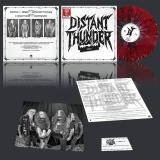
Schon immer schwirrte im Kopf von Husky (Drums / Asphyx, Rotten Casket, ex Sodom, ex Desaster, ex Metalucifer, ex Metal Inquisitor) die Idee herum, eine Band zu gründen, die sich dem puren Thrash Metal widmet und dabei auch einen kanadischen „Razor“-Touch aufweist, ohne jedoch die musikalischen Wurzeln aller Musiker zu verlieren. Auf einem der unzähligen Treffen mit seinem alten Kumpel Patrick (Bass / ex Crematory, ex Apophis) kam es vor zwei Jahren dann auf dem Party.San Open Air zum finalen „lass uns doch mal jetzt was zusammen machen“. Patrick rekrutierte zusätzlich Holg (Gitarre / u.a. Abandoned, Roxxcalibur) und Husky verpflichtete Benni (Vocals / u.a. Knife, The Earwix), um das Line-Up passend zu komplettieren.
Im Juni 2025 traf man sich im niederländischen Enschede, um bei Tom Meier Recordings (u.a. Asphyx, Soulburn, Cryptosis, Graceless, Rotten Casket) ein erstes Demo aufzunehmen. Die Band hat im Anschluss bei niemand Geringerem als High Roller Records einen Deal erhalten, um das Demo als MCD/MLP zu veröffentlichen und auch das folgende Debütalbum wird dort erscheinen.
Und dies ist erst der Anfang…Seid bereit für „Razorsharp Thrash Metal“!
There’s a reason they call it deep House. On 'The New Jersey' EP, DJ Romain doesn’t just nod to his roots, he digs into them, scooping out a warm, rhythmic core that pulses with sweat, memory, and reverence. This is not a revival or a pastiche; it’s a love letter etched in drum machines and delay, from a producer who’s lived the lineage.
A fixture of late-’90s NYC dance floors, Romain cut his teeth in the city’s thumping underbelly, learning from the likes of Todd Terry and later carving his own signature into the genre’s sidewalk. Across these four freshly cut tracks, Romain channels the same urgency that once drove dance crews, celebrities, and nightlifers alike into motion, and still does.
Lead track “Hello New York” is a no-nonsense DJ tool, a serrated slice of big room energy built around snapping snares, a jackhammer kick, and a spoken word vocal that bristles with pride and uplift. “Put more cut in your strut… pride in your stride” - it’s part mantra, part mission statement. “But It’s Alright” flips the vibe, conjuring up basement jazz sessions through dusky chords and a muted, plucked bassline that slinks like a late-night subway ride.
On “Check Your Pockets,” the energy turns inward and abstract, a woozy, psychedelic House jam that feels like dancing through a heatwave haze. He wraps the record with “Deep Inferno,” a peak-time burner full of sticky Afro-funk polyrhythms, clashing vocal chops, and steam-pressure percussion. It’s unhinged, hypnotic, and gloriously raw.
Having revisited his archive with ‘The Lost D.A.T.S.' series, Romain returns to Hard Times not as a nostalgia act but as a flamekeeper - still innovating, still sweating, still firmly on the floor. The New Jersey EP is a love letter, yes, but it’s also a reminder: House never left. It just got deeper.
- The Big E
- The Queen
- What's Wrong
- The Jackhammer
- Another World
- No
- Something Sweet
- Real Fire
- Flesh Debt
- Slight Return
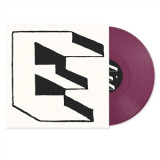
Editrix is a Massachusetts-rooted trio known for their wild, gnarly take on experimental rock. Blending jagged guitar riffs, unpredictable rhythms, and bursts of cartoonish eccentricity, the band creates a sound that's both chaotic and compelling. Composed of singer and guitarist Wendy Eisenberg, drummer Josh Daniel, and bassist Steve Cameron, Editrix thrives on musical risk-taking, often veering into noise-rock territory with a playful edge. On their latest release, The Big E, Editrix unleashes their fangs, resulting in a demonic wall of scuzz. But for as intense as Editrix sounds, the act is convivial and easygoing _ ingrained in deep friendships and speedy, yet jovial recording sessions. Editrix's most pummeling moments seem to be founded on a heartfelt connection, adding emotional resonance to their most feral noise. In the three years since their second LP Editrix II, Eisenberg, Daniel, and Cameron have thrived in individual states of motion _ in and away from music. New York City-based Eisenberg is an accomplished solo artist in the avant-garde realm, receiving recent acclaim for their album Viewfinder (released by American Dreams in 2024). They are also a prolific collaborator, performing in a handful of projects alongside the likes of romantic partner more eaze, Bill Orcutt, David Grubbs, and others. Cameron relocated from Massachusetts to New York City around the same time Editrix II came out, taking a slight step away from music to return to school. Daniel is the only member of Editrix left living in Massachusetts, and performs with the eclectic bands Landowner, Hot Dirt, and The Leafies. Due to Editrix being scattered, the band's new album, The Big E, found them toying with a fresh process. Editrix was quick to write off the idea of collaborating remotely, as the act relishes the warmth of happy accidents that only happen in person. The Big E sparked with Eisenberg, Daniel, and Cameron compiling a list of albums they each admire to establish a self-professed "vibe" up front. King Crimson, My Disco, and Horse Lords were a few key touchstones that shine through, their grounded grooviness balancing erraticism. Eisenberg also found themself infatuated with `70s outlaw country and Van Dyke Parks production. The Big E is titled after a comedic bit between band members, sharing its name with a prominent regional fair in Western Massachusetts, although the title-track aptly features massive E chords. When held up alongside Editrix II _ which found the act toying with Finnish death metal and harsh noise _ The Big E feels settled in its skin. Editrix recorded The Big E with legendary tech death producer Colin Marston (Krallice, Behold_, Dysrhythmia) at his soon-to-be-shuttered studio in Queens. Though these tracks sound toiled over and technical, they are very spontaneous. The majority of The Big E was captured live, with a handful of overdubs added after the fact and came to life over the course of four focused, but rewarding days. Eisenberg uses zen words like "meditative" and "evocative" to describe Editrix's methods, but the end result is crunchy, intricate, and impressively baffling. Easygoing as the band's operation may be, The Big E is a strong jump forward for Editrix inching them towards the center of the avant-rock constellation.
“Mata leao” means “lion killer” in Portuguese, an appropriate title for this beast of an album, Biohazard’s first as a trio. In this case less is more; with a sound blending so many ingredients (hardcore, rap, metal), the increased focus brought on by the streamlined line-up just hardens the tip of the jackhammer.
Produced by Dave Jerden of Jane’s Addiction and Alice in Chains fame, this 1996 release sees its first US issue on vinyl, complete with printed inner sleeve.
"Once more with attitude: April Art have set out to do nothing less than change the world. That may seem bold, true, but you know what: They have the songs to back this attitude. It’s a modern metal sensation like no other, emerging from the underground and led by sparkling frontwoman Lisa-Marie Watz. In, fact, April Art have risen so rapidly in recent years that it could make you feel dizzy just by watching them. Now, however, the time has come for the big leap, for their breakthrough: their third album “Rodeo” unapologetically changes into the fast lane, speeding away from everyone else with huge hits, a brutal bite and peerless power.
Trigger warning: a German band hasn’t sounded this explosive, this hungry, this insatiable for a very long time. “Our music stands for hope,” says the German band. “We want to give strength and courage to believe in yourself and in life. The more people realise that they can take their lives into their own hands, the less room there is for hatred and envy.”
April Art deliver this important message in the best possible way – with uplifting, electrifying, euphoric music somewhere between modern metal and alternative rock. The band are just as averse to blinkers as they are to racism, homophobia or division, spicing up their energising brew with flavours ranging from pop to rap and electro. “Rodeo” gives us all wings. Let’s soar together. In 2022 and 2023 alone, April Art earned two million streams on Spotify, appeared on WDR Rockpalast and will be on stage at the legendary Wacken Open Air this year. "
Joe Ely präsentiert sein erstes Road-Album Driven to Drive, dreiundzwanzig Alben und mehrere Millionen Meilen nachdem er zum ersten Mal auf die
Reise ging. Die Sammlung von Songs über und inspiriert von motorisierten Reisen wurde von Ely zusammengestellt, der Mitte der 1970er Jahre wie
ein wirbelnder Tornado über die flachen Ebenen des Llano Estacado in Westtexas fegte und eine legendäre Band anführte, die zu sehr Rock für
Country und zu sehr Country für Rock war. Der wilde, offene Honky-Tonk-Roadhouse-Sound der Joe Ely Band bescherte ihrer Heimatstadt Lubbock
den ersten Musikhelden seit Buddy Holly.
Das Projekt setzt sich aus Aufnahmen zusammen, die über mehrere Jahrzehnte hinweg in den Spur Studios, seinem Heimstudio außerhalb von Austin,
gemacht wurden. Unterstützt wird er dabei von den Musikern/Nachbarn Joel Guzman am Akkordeon, dem Keyboarder Bill Guinn, dem Sänger Eddie
Beethoven und dem Geiger Richard Bowden. Letztes Jahr im The Zone in Dripping Springs, Texas, fügte Jeff Plankenhorn seine Gitarre zu drei Stücken
hinzu und der Tontechniker Pat Manske, der Driven to Drive gemastert hat, steuerte das Schlagzeug bei.
Die Bewegung in diesen Liedern wird auf viele Arten erfasst: Autos, sechzehnrädrige Lastwagen, Motorräder, Greyhound-Busse. Es gibt
Pedal-to-the-Metal-Hymnen, die auf einem geraden, zweispurigen schwarzen Asphaltstreifen dahingleiten; ein träges Mäandern auf dem Gulf Blues
Highway; eine Geschichte über die Flucht auf der Interstate; Geschichten darüber, wie man von hier nach dort kommt, und Lieder darüber, wie man
überhaupt nirgendwo hingeht. The Lord of the Highway is calling. Joe Ely möchte Sie auf eine Reise mitnehmen.
Thee Alcoholics are the brainchild of Rhys Llewellyn, a longtime Rocket Recordings alumnus whose background leans as heavily into the bassbin-shaking realms of electronic music as it does the tinnitus-inducing world of howling, cranked-up ampstacks. Not content with hammering drumskins for numerous floor-shaking records on the Rocket discography from the likes of Hey Colossus and The Notorious Hi-Fi Killers, he’s also been responsible for brain-rearranging electronic works under the Drmcnt and Acidliner monikers. Thee Alcoholics, however - which initially gestated as a result of Rhys himself wanting to pursue the somewhat hostile sound in his own head during lockdown - maps out a collision course between all of the above. Cranky and cantankerous yet lysergically aligned, Feedback is mesmeric rock with swagger, warped into sci-fi shapes by the spirit and sonics of bass and soundsystem culture. The psychedelic shapes here are redolent of the ur-klang of The Fall and the monolithic lurch of The Heads, the motorik malevolence less an uplifting trip to the heavens than a drill down to the earth’s core. Discernible in these jackhammer beats, grimly murmured vocals and delirious dirges to certain heads may be the trash futurism of Chrome, the decomposed stomp of unsung legends Earl Brutus and the electro-punk attack of Six Finger Satellite, yet all of the above co-ordinates are waylaid effortlessly by a balls-out intensity and a 6 fearsome intent on aural oblivion at all costs. Feedback may be elemental and primal, yet this is no psych comfort-blanket nor retrofetishism, rather a repetition-driven journey headlong into intimidating territory unknown. Get on board and strap yourselves in for a bumpy ride.
Hurry has grafted the best qualities of ‘90s bubblegum power pop—the pitch-perfect songwriting, the pop-rock sheen, the borderline saccharine vocal melodies—onto something far more raw and emotionally resonant. Don’t Look Back is striking in its tenderness and candor—approximately half of the lyrics on the record concern the deterioration of an 11- year relationship Scottoline was in, with the other half being a celebration of new love. The first words Scottoline sings, in opening track “Didn’t Have to Try,” is essentially a statement of theme: “And we’re back at the beginning / Never thought I’d see a face like that again / It attacks when we’re not ready / And I won’t play it safe this time.” This is pop music about actual feelings which means it’s automatically better than most pop music. It is challenging and addictive.
There is not a single moment on Don’t Look Back that isn’t completely drenched in melody and emotion. “Parallel Haunting” evokes the tuneful ache of golden age Evan Dando; “Little Brain” sounds like golden age Evan Dando and golden age Noel Gallagher. Don’t Look Back is, in a word, bittersweet, with melodies that feel like a jackhammer on your brain’s pleasure center and lyrics that feel like getting slapped in the heart.
"Sunrise On Slaughter Beach" ist Clutch’s 13. Studioalbum, das im September 2022 veröffentlicht wurde. Es ist eine knallharte Zusammenfassung all dessen, was die Band großartig macht, und ein weiterer großer Sprung nach vorne in Richtung Langlebigkeit der Karriere.
Die hier vorliegende, limitierte Veröffentlichung besteht aus sechs hand gepressten 7" Vinyl jeweils in eigens hergestellten Jacken und hat drei zusätzliche Bonustracks: “Boogeyman Blues”, “Arts & Crafts”, und “Railroad Daisies”. Alle drei Songs wurden während der Aufnahmen von "Sunrise on Slaughter Beach" eingespielt. Ein 8-seitiges Booklet und eine 7" Plattenspieler Matte runden das Paket aus. Das Album wurde im The Magpie Cage Recording Studio, Baltimore, MD, von dem Grammy-nominierten Tom Dalgety (Ghost, Royal Blood, Pixies) produziert und gemischt, mit zusätzlicher Technik von J Robbins (Jawbreaker, Against Me!, The Sword).
“On this, their second LP, P16.D4 solicited tapes from several artists from Europe, England, the U.S., Canada, and Japan, and mixed that with their own material. Though in the current digital age collaborations from artists thousands of miles apart is quite normal, this was a quite radical approach back in 1982, when work on this LP began – an interesting concept that actually works quite well, since these artists, which include Bladder Flask, DDAA, the Haters, Merzbow, Nocturnal Emissions, Nurse With Wound, and several others – work in a similar free-ranging experimentalism as P16.D4, and their particular elements, usually just vocals or one instrument or noise implement, blend well without diluting P16.D4’s own peculiar brand of avant-garde post-industrialism, but merely give it another facet. One of the best tracks, “Aufmarsch, Heimlich,” consists of a choir submitted anonymously from Eastern Europe phasing in and out of static while a skronky alto sax bleats away. Most of the pieces exist somewhere just beyond the borders of free jazz, industrial, and even classical avant-garde, full of jarring noises and strange transitions and with a heavy overlay of electronics. What started out as an experiment yielded one of P16.D4’s best albums.” - Rolf Semprebon / AMG
“Distruct is organized around sounds provided by the cream of experimental musicians of the early ’80s, from Nurse With Wound to Nocturnal Emissions, via De Fabriek, Die Todliche Doris, The Haters, Merzbow, and others. Obviously, there is no question of remixing here, and at no time do P16.D4 seek to hide its sources, clearly identifying the contribution of each artist in the liner notes. It would be futile to try to find the paw of each artist, the trio operating vis-à-vis its collaborators the same methods as in their own work. Reworked, distorted by various effects, cut, edited, aggregated with other sounds, produced by P16.D4 themselves, reprocessed. Exchange, communication, two other data that will constantly recur in the work of P16.D4, rich in external contributions and encounters of all kinds. Musically, and despite the diversity of sources treated, Distruct escapes the heterogeneous character, which often marks this type of collaboration, to offer a coherent whole: fragments of opera, Soviet speeches, out-of-tune guitar, saxophone, tattered violins, overdriven and metallic noisy attacks, jackhammers, field recordings, battered choirs, and many other less identifiable sounds. In addition to the desired dialogue between the artists, Distruct also offers a real reflection on listening, and on the expectations of the listener.” - Dissolve
P16.D4 was a German electronic noise music collective, active primarily from 1980 to 1988. P16.D4 embraced tape cut-ups, musique concrète, endless recycling and transformation of previously published material, and many long-distance collaborations with like-minded artists such as DDAA, Vortex Campaign, Nurse With Wound, and Merzbow. Their active participation in the international industrial tape scene yielded collaborative output such as their release Distruct, where bands such as Nurse with Wound, Nocturnal Emissions, Die Tödliche Doris, and The Haters provided the source material. The longest-term collaboration was with the installation and conceptual artist Achim Wollscheid, who used P16.D4 sounds as the basis for LPs he recorded under the name SBOTHI. Ralf Wehowsky, the only constant member of the group, later released solo material under the alias RLW.
Members of P16.D4 were also involved with Selektion, a collective of people involved with sound as well as the visual arts. Selektion published LPs, CDs, books, visual art and design.
The collective worked in a strongly improvised, spontaneous and anti-professional way, using acoustic and electronic instruments, using existing sound fragments, duplicating and alienating them, using repetition, distortion, changes in speed and playing direction. For this they used not only sounds of other artists but also their own material from earlier productions. Late works of the collective are associated with musique concrete.
DNO hits double figures as Denver’s Trisicloplox & Sectra return with more industrial-strength electro-sludge.
Sectra sets the tone with ‘Mail Theft’, a hulking mass of sand-blasting static, insectoid jitter and low-end boom. It’s an intimidating, uneasy listen, like tuning through the haunting emptiness of post-apocalyptic broadcast frequencies, only to be interrupted by sudden bursts of unseen filth and gore.
Trisicloplox follows with a brace of tracks. ‘Bruised’ does exactly what it says on the tin, gargantuan kicks pummelling layer upon layer of dense sound into an impenetrable wall of noise. Ritualistic rhythms and gluttonous amounts of overdrive swarm over distant wails, sending everything into a spiral into despair.On ‘Megastructure’, doom metal meets hip-hop, as rough-hewn drums crunch above a bassline that takes its cues from the Super Hans School of Electronic Music: “The longer the note, the more dread.”
And finishing up the vinyl offerings is ‘Dead On Arrival’. Coming courtesy of Sectra, the most traditionally ‘club-focused’ effort of the lot sees a serrated breakbeat and venomous acid lick sparring over dissonant pads.
As always, digital listeners are offered a little bonus, this time the only full collab: ‘The Dead InTheir Shrouds’. Shunted along by a systematic kick, the track’s jackhammer subs become all-consuming, seemingly sucking all the air from the room and hurling it back out of the bassbins in a violent frenzy.
A bold release that’s not for the faint of heart, the ‘Dead Structure’ EP further cements Trisicloplox & Sectra as truly original talents and DNO as an outlet that can never be pigeonholed.
Rhythms of postmodern realism at the very bottom of the DNO.
Sunrise On Slaughter Beach is Clutch’s thirteenth studio album – a slamming summary of everything that makes the band great and another giant leap forward into career longevity.
New bangers like “Red Alert (Boss Metal Zone),” “Nosferatu Madre,” “Skeletons on Mars,” “Jackhammer Our Names,” and “Mercy Brown” take their rightful place alongside Clutch classics. Sunrise On Slaughter Beach is the natural culmination of what Clutch began as teenagers in the early ‘90s.
Recorded at the The Magpie Cage Recording Studio, Baltimore, MD, the album was produced and mixed by Grammy nominated Tom Dalgety (Ghost, Royal Blood, Pixies) with additional engineering by J Robbins (Jawbreaker, Against Me!, The Sword).
Sunrise On Slaughter Beach is Clutch’s thirteenth studio album – a slamming summary of everything that makes the band great and another giant leap forward into career longevity.
New bangers like “Red Alert (Boss Metal Zone),” “Nosferatu Madre,” “Skeletons on Mars,” “Jackhammer Our Names,” and “Mercy Brown” take their rightful place alongside Clutch classics. Sunrise On Slaughter Beach is the natural culmination of what Clutch began as teenagers in the early ‘90s.
Recorded at the The Magpie Cage Recording Studio, Baltimore, MD, the album was produced and mixed by Grammy nominated Tom Dalgety (Ghost, Royal Blood, Pixies) with additional engineering by J Robbins (Jawbreaker, Against Me!, The Sword).
Sunrise On Slaughter Beach is Clutch’s thirteenth studio album – a slamming summary of everything that makes the band great and another giant leap forward into career longevity.
New bangers like “Red Alert (Boss Metal Zone),” “Nosferatu Madre,” “Skeletons on Mars,” “Jackhammer Our Names,” and “Mercy Brown” take their rightful place alongside Clutch classics. Sunrise On Slaughter Beach is the natural culmination of what Clutch began as teenagers in the early ‘90s.
Recorded at the The Magpie Cage Recording Studio, Baltimore, MD, the album was produced and mixed by Grammy nominated Tom Dalgety (Ghost, Royal Blood, Pixies) with additional engineering by J Robbins (Jawbreaker, Against Me!, The Sword).
Sunrise On Slaughter Beach is Clutch’s thirteenth studio album – a slamming summary of everything that makes the band great and another giant leap forward into career longevity.
New bangers like “Red Alert (Boss Metal Zone),” “Nosferatu Madre,” “Skeletons on Mars,” “Jackhammer Our Names,” and “Mercy Brown” take their rightful place alongside Clutch classics. Sunrise On Slaughter Beach is the natural culmination of what Clutch began as teenagers in the early ‘90s.
Recorded at the The Magpie Cage Recording Studio, Baltimore, MD, the album was produced and mixed by Grammy nominated Tom Dalgety (Ghost, Royal Blood, Pixies) with additional engineering by J Robbins (Jawbreaker, Against Me!, The Sword).
Described as a ’60s garage rock band performing as a mini-orchestra stuck within a Tarantino film, Los Angeles-based Spindrift is a cinematically inspired rock band that has also been described as “Heavy Western” or “psychedelic spaghetti-western rocknroll.” Led by songwriter-producer-composer Kirpatrick Thomas on guitar and lead vocals, along with Portland-based guitarist Becca Davidson, bass / baritone guitarist, producer, and vocalist Riley Bray, and aerospace engineer Joe Zabielski on drums and electronics, Spindrift creates a cinematic scope that has been heard on their compilation albums like Classic Soundtracks Vol 1, 2, and The West (released by Xemu Records), HBO’s Eastbound & Down (Seasons 1 & 2), the Quentin Tarantino-produced biker exploitation film Hell Ride, the film Diablo (featuring Scott Eastwood), and “The Ballad of Darrell Lemaire” from Season 1 Episode 9 of Hamilton’s Pharmacopeia (Viceland). Classic Soundracks Vol. 3 is their tenth studio soundtrack compilation album, co-produced by Riley Bray and Jello Biafra. Released by Jello’s own Alternative Tentacles Records, it completes a trilogy of themes from various feature films, documentaries, and TV mini-series. This final installment reveals a new level of maturity from the band, opening doors to new genres including espionage-esque Bond themes, upbeat guitar duets, “Italian Polizia” car chase electronica, hard rock from the Middle East, psychedelic disco, and progressive “kung fu” rock." "Los Angeles-based cinematically inspired rock band’s third in a trilogy of themes from various features. Songs have been heard on HBO’s Eastbound & Down, the Tarantino-produced Hell Ride, Diablo and Hamilton’s Pharmacopeia on Viceland.
Prong’s distinctive industrial metal sound influenced other bands such as Korn and Nine Inch Nails. Former New York club CBGB’s soundman Tommy Victor founded Prong in 1987 as his outlet for sonic fury. Having their roots in the thrash metal and hardcore scenes, Prong carved a niche for themselves - groovy, angry, massive; just perfect mosh music. The trio wrecked stages and impressed audiences all over the world.
Rude Awakening is Prong’s fifth album. Prong continued to refine their piercing attack on Rude Awakening, while simultaneously expanding their sonic vocabulary. Throughout the record, they continue to mix in industrial rhythms and effects - there are samples scattered all over the album - but the key to the success of Rude Awakening is the precise, drilling effect of the group’s jackhammer riffs.
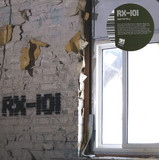
RX-101 has quietly been making waves in the IDM/electronic music underground for the past few years, through a series of archival releases — material recorded in the late-90s, but previously unreleased until Suction Records began compiling and releasing these records in 2016. What’s truly mind-boggling about RX-101’s output is the sheer quantity of stunning, top-drawer material that Dutch producer Erik Jong recorded over the period of just 3 years, 1997-1999. Many have suggested that the whole thing is a publicity stunt — some insisting that this is all new material masquerading as vintage, while others have proposed that the material may in fact be a secret alias for Aphex Twin to release gems from his own legendary ’90s audio archive. RX-101 has absolutely nailed the sound, and quality, of early-90s AFX/Rephlex, that much is true. “Serenity,” this latest full-length RX-101 release, is no exception.
Just as RX-101’s last album, 2019’s Dopamine, concentrated on one hallmark of Aphex Twin’s sound — the smooth melodic techno of his Selected Ambient Works 1985-1992 LP — so too does Serenity reference another classic early-Aphex era, but this time it’s a completely different beast. Don't let the title fool you - Suction Records' latest dive into RX-101's 1997-1999 tape archives is not all lush, serene melodies. On Serenity, scorched, crunchy jackhammer beats combine with emotional, plaintive pads, delivering a classic set of vintage-Rephlex-style bliss, à la AFX, Caustic Window, and Cylob. It was Cylob who coined the term Industrial Folk Songs for his classic 1995 LP, and that release is clearly a blueprint for RX-101’s latest collection.
Standout cut Hearts Utd., featuring a stunning music video by Aidan Fantinatto and I Dream Of Wires’ director Robert Fantinatto, not only nails the magic of AFX’s trademark, irresistible jackhammer-beats-meets-plaintive-melody device, it arguably rivals the master at his own sound. As a whole, what could be a harsh and monotonous collection is lifted by RX-101’s subtle diversity and skill, particularly in his ability to create eerie, evocative moods, with gorgeous melodies that speak volumes of emotion.
lvin Toffler was overwhelmed. When in the morning of October 4th, 1988-it was his 60th birthday-he was starring with a still somewhat absent look into a bowl of cornflakes, he thought that in the surface structure of the yellowish shimmering milk which was making an emulsion with the maple syrup and slowly but irreversibly corroding the crunchy crystals on the flakes, he could see through a window into a timeless dimension. Toffler, who at that time had reached the peak of his fames as a future scientist, was sustainably disturbed from his peek into this extra temporary peephole. In none of his books-'Future Shock' had just been released with yet another edition featuring a proud printed note on the book cover stating 'more than 5 million copies in print'-did he ever mention this occurrence. Even after his death in June 2016, no note on this incident could ever be found in his estate. The 'flake dimension' as Toffler called it in notes which were later shredded remains a secret of opaque, hard-to-grasp radiant power.
Maybe it's too simple to describe 'Pneumatics' as a creation coming from this cornflake world Without doubt. Are there any more precise terms or instruments to determine the multifacetedness and beyond-timeliness of the 'Pneumatics' soundscape There are still unknown. 'Pneumatics' is, after releases at Innervisions, Die Orakel und his own label Sound Mirror, the debut album of Orson Wells (as long as you don't count in 'Jupiter' - Wells's first LP which was released in 2014 with 48 copies on cassette-have fun digging for rarities and bargains!).
Perhaps Wells, known in Frankfurt under his real name Lennard Poschmann and as an employee at the record store Tactile, is only a messenger. Or a psychic. The sound manifesto that he apparently transmits from Toffler's secret dimension tells of a city of upside down pyramids ('Tianon'), of passes into the land of the five elements ('Multipass') and dead straight four-to-the-floor lines which appear bended within the spherical dimension (''Geodesic'). These beats are right on the heels of the ones of Intersteller Fugitives; the strings sound like that at any moment a vocal sample edited by Moodyman could warp over through the Cornflake wormhole. Pneumatics is the science of all technological applications powered by condensed and often by quite heated air. It is a matter of mechanics, compression, jackhammer, ramblings, high pressure levels, valves for blowing of steam. On 'Pneumatics' it's all about this. And more. Orson Wells's album gets to the point of the post-retro futuristic state of the dancefloors of the house and techno clubs of this planet. It is like a peek into another dimension, right on the golden cut of spacetime geometry.
The latest chapter in the unfolding story of Chronicle finds the New York techno label reaching out to Japan once again, calling upon the considerable talents of Hironori Takahashi to deliver a nerve -shredding manifest on cinematic scope and malicious intent in the darker corners of contemporary techno. Takahashi has previously shared his vision for malevolent dancefloor crushers on such highly regarded labels as Semantica and Stroboscopic Artefacts, not to mention holding down a job at the world-renowned Disk Union record shop in Tokyo.
Proceedings start somewhat inviting on EVENT0009, as the warm, dub-inflected chords of 'Ariast' drift through the stout rhythmic throwdown with orchestral grace. There is of course plenty of space left for brooding, uncertain elements underneath this melodic calm, but it's still a positively mellow offering compared to the jackhammer drum damage of 'Dazre' with its monstrous industrial intent and soaring sound design.
'Cecilleatis' is a more patient beast that simmers its tough ingredients into a predatory whole, using atmospheric pressure instead of sheer volume to create the required intensity. It's not all steel furnace fury though, as the track comes equipped with an epilogue that cools the fires of the EP with some glacial tones and distant machine bleeps that continue Chronicle's commitment to showcasing different sides of their chosen artists.
With his new album "What's Fruit", Schlammpeitziger touches the dancefloor more than ever before in his 22-year long career. Yet his dancefloor is a playful one. The Cologne based composer's sounds electrify with their multi-layered melodic structures. He weaves countless details in perfection, to a high density of musical activity, always focusing on the slow, driving beats which hold everything together. Each of the eight tracks represents shades of the unique humour we love about Schlammpeitziger: The tricky question about what's those things we call fruit, or his mantric German lyrics on "Schneid ein Stück aus der Zeit" are charming messages which never fail to be heard in the guise of those lovely synth hooks. This new Schlammpeitziger disco has its source in a situation which does not quite promise relaxed creativity: In the past year Schlammpeitziger's studio in Cologne has been surrounded by construction works. Locked up in his private space between massive hums, squealing saws and pulsating jackhammers, he delivers this indeed relaxed album with eight tracks. It comes across with the freshness of a debut work. Contrary to his previous records which had been mostly made with analogue synths, this album has been produced with iPad synths at 90% of the time, before taking the mixes to Stefan Mohr's (ex- member of the band "Workshop") mixing console.
- 1