Order now and we will order the item for you at our supplier.

Last In: 7 years ago
Order now and we will order the item for you at our supplier.
expected to be published on 06.10.2025
- 2x LP Compilations featuring iconic tracks from the legendary US label Holland-Dozier-Holland (HDH)
- The trio behind HDH helped define the Motown sound and split from the label in 1967
- 20 tracks guaranteed to fill a dancefloor with hits from;.
- Freda Payne's 'Band of Gold', Chairmen of the Board 'Give Me Just A little More Time', The Honey Cone, Parliament, Barrino Brothers and more
- Featuring tracks sampled by Fat Boy Slim, The Avalanches, 2Pac, DJ Shadow
Order now and we will order the item for you at our supplier.
'Listen To The Music' is the fourth star-studded 'Songs Around The World' album and video series from the world-renowned Playing For Change organization. It features audio recordings of hit rock and world-beat songs, along with a compelling series of performance videos in which Playing For Change's unique recording process is documented to great effect. each song is multi-track recorded and videotaped in multiple picturesque locations around the world by visionary producer and hilanthropist Mark Johnson. The full 12 song project features more than 200 Artists and was recorded in 25 different countries. Featured stars include The Doobie Brothers, Ellis Hall, Jack Johnson, Dr. John, Warren Haynes, Cyril and Ivan Neville, John Cruz, Preservation Hall Jazz Band (New Orleans), TP OK Jazz Band from Congo
(Kinshasa), John Densmore, Bombino, Buddy Guy, Waddy Wachtel, Roots Gospel Voices of Mississippi, James Gadson, Reggie McBride, Karl Denson,Roberto Carcasses, Mamadou Diabate, Lee Oskar,Anders Osborne and Pancho Amat.
Now available on vinyl.
Order now and we will order the item for you at our supplier.
DJ Support: Kerri Chandler, Folamour, Louie Vega, Jazzy Jeff, Dimitri From Paris, David Morales, Dave Lee, The Shapeshifters, Brian Tappert, Quentin Harris, Michael Gray, Terry Hunter, Hector Romero, Tedd Patterson, Dr. Packer, Marcel Vogel, Dj Pippi and many others
Groove Culture main men Micky More and Andy Tee are once again at the controls as the label presents its' Third collection of “Groove Is In The Heart”. As with the popular imprint's various EPs, the focus is on joining the dots between organic house, revivalist disco, uplifting dancefloor soul and colourful jazz-funk. There's much to admire from start to finish, a very strong bunch including MM & AT,Gianni Bini and Angela Johnson celebratory cover of EWF swirling disco-funk ‘In The Stone', a wonderfully rolling and funky-House joint titled ‘Let The Rhythm’ from Ralph Session & Djfudge, Memi P. And Gisele Jackson tasty Feel Good Classic-house Tune “Make It On My Own” and the soulful-house warmth of Audiowhores ‘Touch The Ground' Feat. Angela Johnson.
On Stock and ready to ship
This is the fourth volume in the collection dedicated to the Arlecchino nightclub in Santa Maria Codifiume, in the province of Ferrara. It's once again a double-vinyl set that gathers the best of Afro, Funky, Rare Groove, and Black Music, as played at the club by resident DJs Giancarlo Lelli, DJ Ghello, and DJ Frank.
On Stock and ready to ship
The Situation collective headed up by Mr Mulatto and Frank Situation return with their much-anticipated new album ‘Audio Proxemics’. Across nine sumptuous tracks it explores a warm array of sounds from jazz-flecked deep house to soulful nu-disco with guests like Javonntte, Faze Action's Robin Lee and more. Situation is a collective of DJs, producers, editors, and musicians who hail from the five valleys of Stroud in the UK. Between them they have deep roots in electronic music and have been entrenched in the scene on many levels from hosting their own events, organising free parties, releasing everything from deep house to tech under several aliases and, since 2014, have established Situationism Records with cultured sounds from the likes of Ashley Beedle, Greg Wilson, Dr. Packer, and more.
This accomplished new album has been two years in the making and began with three tracks recorded by South African vocalist Venessa Jackson while she was on tour in the UK. As well as Venessa’s sweet tones, vocalists from across the globe contribute alongside some core Situation members: James Payne, Phil aka Dr Keys and Jon Gray aka BitterSuite who take care of bass, arrangement, production, and guitar.
It’s a timeless record that spans everything from jazz to funk with real musicality and standout instrumental skills lighting up each track. Underground favourite Javonntte adds deep and smoky tones to the flute laced and sunny house sounds of 'Bullit' while 'Never Taken A Weekend Off' is a lush broken beat sound with radiant synth leads and vocal hooks that echo classic Brit funk. 'Mrs Donovan' is a more club-ready sound with dazzling keys dancing over dusty house drums and 'Fairy Godmother' is a gorgeous slice of disco house with vibrant strings from Faze Action's Robin Lee and an effortlessly cool acid jazz vocal. Add in 'Over & Over', a lovely jumble of chords, organic percussion and life-affirming horns, and the hip-swinging drums and expressive interplay of sax and synth on the uplifting 'Rodborough Groove' and you have an album perfectly suited to bright days and hot summer nights.
On Stock and ready to ship
Jamwax Records proudly presents this historic reissue, featuring two timeless tracks from The Wailers’ legendary album The Best of The Wailers: "Can't You See" and "Back Out". While these songs have long been cherished as classics, this marks the first time they have ever been available on a 7-inch vinyl single. Even though some books about Bob Marley & The Wailers list them as having been released on 7-inch, I have never seen a copy for sale.
Produced by the visionary Leslie Kong with co-producer Warwick Lyn, the album captures The Wailers at their soulful, raw best. These songs predate the group’s later partnership with Lee Perry and Island Records, offering a purer, more unembellished sound. The harmonies are flawless, the arrangements simple yet deeply powerful, and the performances utterly timeless. "Back Out" highlights Bob Marley's unmistakable voice, brimming with the confidence and charisma that would later make him a global icon. Bunny Wailer and Peter Tosh's harmonies add depth to a track that perfectly embodies the spirit of early reggae. "Can't You See" showcases Peter Tosh on lead vocals, supported by the sublime harmonies of Bob Marley and Bunny Wailer.
These recordings, crafted with a four-track setup and featuring some of Jamaica’s finest musicians—including Mickey ‘Boo’ Richards on drums, Jackie Jackson on bass, and Winston Wright on organ—are testament to a moment in time when reggae was still raw, revolutionary, and evolving.
Recorded at Dynamic Sounds Studios (Kingston, Jamaica), from 29th April until 19th May 1970.
Originally released on August 9th of 1971 by Beverley's Records, 135 b Orange Street, Kingston, Jamaica, West Indies.
On Stock and ready to ship
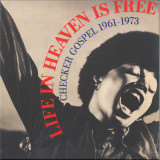
Gospel melts into Soul in this dazzling collection of sides originally released by the Chess subsidiary.
Devised by the same team supporting the likes of Muddy Waters and Etta James at Chess, the vintage of Checker Gospel celebrated here is distinguished by its expertly raw, rugged, live feel — thumping bass and pounding drums, bluesy guitar and horns — and its keen engagement with contemporary realities and politics, with an underlying, unwavering commitment to the Civil Rights movement. Not forgetting its sheer, startling, richly diverse soulfulness.
Key architects of the Chicago Sound and Motown are amongst the scores of contributors: Charles Stepney, Gene Barge, Eddie Kendricks, and Leonard Caston Jr. are in the house… Morris Jennings, drummer on Curtis’ Superfly and Terry Callier’s What Color Is Love… Louis Satterfield from The Pharaohs and Earth Wind & Fire… Ramsey Lewis’ guitarist Byron Gregory… Phil Upchurch… Laura Lee…
Producer Monk Higgins joined Checker in 1967, bringing his experience of R&B and Gospel hit-making for the labels One-derful and Satellite, together with a loyal cohort of musicians. A protege of Willie Dixon, engineer Malcolm Chisholm set up the Ter Mar studio as if preparing for a live gig, carefully teasing measures of bleed into the microphones. With Ralph Bass from King Records running A&R, they knew exactly what they were after. ‘I’m using horns and an R&B sound in gospel recordings,’ said Bass. ‘We have no charts. All the musicians are given the chord changes. I want the cats to think when we’re cutting. I want spontaneity, and that’s what we’re getting.’ And: ‘There is more to gospel than just finding solace in the church. This follows the same message of Martin King, who was fighting for a new way of life. Kids are tired of hearing Jesus Give Us Help. They want a positive message.’
Focussed on the late sixties and early seventies, the twenty-five recordings here are all killer no filler, but try these four, random entry points: the heavy funk ostinato of the Violinaires’ Groovin’ With Jesus, working itself up into a post-James-Brown brass frenzy, sure to knock your socks off; Cleo Jackson Randle’s title track, for those who like their Gospel straight-up and hard-core; Eddie Kendricks’ achingly timely choral call-to-arms, Stand Up America, Don’t Be Afraid; the East St Louis Gospelettes’ heart-stopping, fathoms-deep rendition of Bobby Bland’s I’ll Take Care Of You.
A beautiful gatefold sleeve; a full-colour booklet with excellent notes by Robert Marovich; top-notch sound. Another knockout selection by Greg Belson and David Hill.
A shoo-in for soul compilation of the year.
On Stock and ready to ship
Boxset !
Overview
Arguably the greatest Jamaican record producer of all time, Lee ‘Scratch’ Perry was instrumental in transforming the island’s national sound throughout the Sixties and Seventies, with his unique approach to music making pushing the music beyond previously perceived boundaries.
To mark the first anniversary of his passing, the very best of his work is showcased across a number of products, all of which effectively demonstrate why Perry was widely venerated figure for so long..
The deluxe box set comprises four vinyl LPs and four CD sets featuring his best known and most influential recordings including a previously unreleased mix of Junior Murvin’s powerful ‘Police And Thieves’, UK chart-buster ‘Hurt So Good’ by Susan Cadogan and the Upsetters’ boss reggae classic ‘Return Of Django’, as well as numerous major Jamaican hits.
Aldo included in the set is a 50 page fully illustrated page book, penned by Scratch’s official biographer, David Katz and featuring an array photos by celebrated photographer Adrian Boot, and a newly designed two sided full colour 24” x 24” poster.
The 2x gatefold LP and 2x CD set collection focus upon of the legendary music-maker’s best known productions from the Sixties and Seventies, performed by some of the giants of Jamaican music, with both extensive notes on the man whose talent and imagination took reggae to new heights of excellence.
On Stock and ready to ship
Cream[27,31 €]
To celebrate 10 years of one of London’s most loved underground club nights, Tangent, Mr Bongo are thrilled to launch this new compilation series. Crafted by its two residents, John Gómez and Nick the Record, it aims to transmit a taste of Tangent’s spirit. A party rooted in inclusivity and open-mindedness, whose name captures the spontaneous switches in musical direction that are a defining element of their nights. For the compilation, the pair have cherry-picked a selection of their prized, rare and dancefloor-ready tracks from around the globe, that have soundtracked the past decade of parties.
Friends for close to 20 years, music lovers, record obsessives and internationally renowned DJs in their own right, John and Nick have two lifetimes worth of musical knowledge to draw from. John a long-standing NTS Radio resident and compiler for Music From Memory. Nick one of the UK’s go-to record dealers, resident DJ since the ‘90s at one of Japan’s pioneering parties, Life Force, and co-captain / co-edit-expert of Record Mission with Dan Tyler (Idjut Boys).
In 2014, the pair decided to bring some of Life Force’s grassroots principles to the UK, whilst channelling underground clubbing institution Plastic People’s meticulous attitude to sound. Tangent grew from being a small gathering of friends, to an established fixture in London’s nightlife, whilst always maintaining a strict no guest DJ policy. “As London’s clubs have become increasingly reliant on international guests, we wanted to emphasize the importance of a club night growing through its residents”, John and Nick reflect. With 10 years of the duo at the helm, an intimate connection between DJ and dancefloor has been built, allowing for freedom of expression on both sides of the decks.
Tangent reaches around the globe and across different eras to make connections that stimulate emotional reverberations in the unfamiliar. Where the blissfully Balearic ‘Laberinto’ by Miguel Perikás, goes hand-in-hand with the Cameroonian hip-house of King B.’s ‘Love is Crazy’. The thundering ‘Amek Amek’ by L'Innovateur Djoe Ahmed et le Zoukabyle, rubs shoulders with the soulful Caribbean-influenced touch of Champagn’s ‘Bel Ti Négress’. And Pellegrin El Kady’s afro-cosmic ‘Seiva de Carnaval’, crosses paths with Kajou’s Kompa disco anthem ‘Tet Chajé’.
Tangent’s longevity is in part down to it having always embraced contemporary sounds. The sub-rattling bass of Srirajah Sound System’s stunning Molam dub stepper ‘Si Phan Don Lovers Rock’ and the slow, woozy mantra of leftfield dancehall explorer Androo’s ‘Lyriso’, are two shining examples.
This compilation represents an ongoing dialogue between past and present, transporting listeners to the heart of a pure musical experience, where open minds and open hearts are eager to follow the tangent.
On Stock and ready to ship
DJ Support: Kerri Chandler, Jimpster, Dave Lee, Kevin Yost, Brian Tappert, Don Carlos, Seamus Haji, Marcel Vogel, David Harness, Marc Cotterell, Dirtytwo, Demarkus Lewis
Get yourself geared up for summer season with some fierce dancefloor prime time certified with the Groove Culture Deep Stamp. DEEP INTO HOUSE vol.2 includes some fresh House/Deephouse actions from Milton Jackson, Sebb Junior, Luca Olivotto and Folkness. Energy, Groove, moods and vibes. An essential package for diggers.
On Stock and ready to ship
Korean artist and musician Jin Won Lee (이진원), otherwise known as Gazaebal, began his career in New York. Working as a sound engineer, alongside such illustrious artists as the Wu-Tang Clan and Janet Jackson, led him to develop a keen ear for dexterous audio design, melodic flair and catchy rhythm. But his true interest lay in uncovering the unique textures and synthetic qualities of electronic music. From the late 1990s to the early 2000s, Gazaebal focused on developing himself as a producer, synergising a uniquely potent take on club music, releasing three albums and appearing on numerous collaborations.
An established figure in the realm of contemporary art, Jin Won Lee is well-known for his hybrid, highly technological practice. In 2008, together with Jang Jaeho, he formed The Tacit Group, a collective for computer-coded art. Presenting works that manipulate audio and visuals in real-time through programming, the group has performed at the FAMS Choice selection, Lincoln Center in New York, at the Seoul branch of the Museum of Contemporary Art and the Sejong Center for the Performing Arts, among many others. As a solo practitioner, he initiated in 2023, a project that examines sound as abstracted vibration. brings together Jin Won Lee’s decades long investigations into sonic experimentation and the physicality of noise.
Outside the avant-garde, Gazaebal has enjoyed mainstream success, collaborating with Big Hit Productions founder and BTS songwriter Mr. "Hitman" Bang on remixes and arrangements for K-POP albums. They also formed the two-man group Banana Girl, with Gazaebal focusing on composition while Bang handled vocals, achieving a big hit with their 2000s track ‘Butt.’
Another crucial figure in Gazaebal’s life is his wife Nine who operates as his agent and business partner. Initially released in 1999 on Nine’s independent imprint dmstrax, the titular track ‘Talk’ first appeared on techno@kr, a compilation CD of Korean electronica. Together, they co-founded G Records, which was partly absorbed into Bighit Entertainment in 2005. Appearing as the inaugural record on Bighit, the original version of 'And So On' – featuring Bang’s vocal production – was not available for re-release due to licensing difficulties. But thankfully the multitrack was well preserved. Utilising these components, Nawon Ha (AKA Korean-but-Amsterdam-based artist Naone) re-imagines the song for Betonska Records.
A combination of un- and self-released material, Talk is an album that firmly belongs to the millennium while sounding utterly outside of space and time. A cosmic trance trip that draws on rock’s steely drive, wiggy acid basslines and warbling dub, the record is presented as a mix-friendly mini-album, with the 6 tracks ideally tailored to DJ-level quality and loudness. As much suited to the psychedelic rave scene of yesteryear as they are to present-day dancefloors, Gazaebal’s productions are defined by his idiosyncrasies. Melding the sheen of tight production and pop sensibilities with a flagrant DIY spirit, his music assuages the high-commercialism of the 2000s, resulting in a style that’s as definitely punchy as it is precise
On Stock and ready to ship
Sixteen killer 70s reggae funk and soul cuts from the likes of John Holt, Lee Perry, Cornel Campbell, The Cimarons, The Chosen Few and more featuring superb reggae takes on songs by artists including The Jackson 5, William DeVaughn, Diana Ross and The Supremes, War, The Temptations, Roberta Flack, The Stylistics and others!
Well-documented is the influence of American black music on Jamaican styles of the 1960s – from the birth of ska music, when The Skatalites ska-ified the jump-up southern USA rhythm and blues music of Rosco Gordon, Louis Jordan and Fats Domino, through to the creation of rocksteady when Jamaican artists like The Techniques, The Paragons, Alton Ellis and The Melodians turned to the slower rhythms and soulful harmonies of groups such as The Impressions and The Drifters for inspiration.
Less-well established is that in the 1970s Jamaicans didn’t (shock!) stop listening to American black music styles, with many 70s reggae artists as invested in soul, funk and the proto-disco sounds of Philadelphia, as was the case with rhythm and blues in the previous decade. In the 1970s, while Jamaica promoted its own roots reggae styles around the world, powerhouse USA soul labels such as Motown, Philadelphia International and Stax Records were at the same time all popular on the island.
This interaction between American and Jamaican music was not limited to Jamaica. In Britain, first-generation Caribbean-émigré children in the 1960s and early 70s grew up with an equal love of both soul and reggae, which manifested itself in the home-grown arrival of lovers rock in the mid-1970s.
Soul Jazz Records’ new ‘Reggae Island Soul’ tells this story of how soul and funk-infused reggae in the 1970s united the sounds of Jamaica, USA and the UK into a highly addictive cultural hybrid of styles.
expected to be published on 15.05.2026
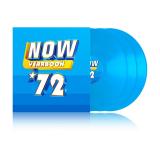
Welcome to THE VAULT for 1985. A collection that digs deeper into the year’s musical landscape – uncovering singles that may not have always reached the highest chart positions but remain essential to the rich and diverse pop story of 1985. Some were overshadowed at the time, some were highlights from albums that had already sold huge amounts, some found greater success internationally – but all deserve their place in this continued celebration of 80s pop.
45 tracks across 3-LPs – pressed in gorgeous green vinyl – NOW Yearbook – The Vault: 1985.
LP1 opens with a trio of tracks from huge-selling albums:- Bruce Springsteen’s ‘My Hometown’, the sixth single in the UK from ‘Born in the U.S.A’ - one of the best-selling albums of the decade, followed by Bryan Ferry with the stunning ‘Windswept’ from ‘Boys And Girls’ and Sting’s ‘Love Is The Seventh Wave’, taken from his solo debut ‘The Dream Of The Blue Turtles’. Next up, Go West with a U.S single release ‘Eye To Eye’, Scritti Politti with ‘Perfect Way’ – their biggest hit in America, and ABC with ‘Be Near Me’. The first side closes with two established bands; Heaven 17 and Orchestral Manoeuvres In The Dark… Flip the LP over for Adam Ant with ‘Vive Le Rock’, Midge Ure, Blancmange and the second collaboration between Philip Oakey & Giorgio Moroder with ‘Good-Bye Bad Times’. The Style Council’s ‘Welcome To Milton Keynes’ leads to LP1’s closer’s from Simply Red and Fine Young Cannibals who followed their debut ‘Johnny Come Home’ with ‘Blue’.
LP2 opens with Cocteau Twins and the dream-pop atmospherics of ‘Aikea-Guinea’, ahead of The Jesus And Mary Chain with ‘Just Like Honey’, and The Dream Academy with ‘The Love Parade’.
Brilliant with their cover of James Brown’s ‘It’s A Man’s Man’s Man’s World’ and jazz-influenced pop from Matt Bianco are up next ahead of the sublime ‘Castles In The Air’ from The Colourfield and Elvis Costello & The Attractions, who released the 1979 track ‘Green Shirt’ to promote their ‘Best Of’ collection … and the side closes with The Clash’s ‘This Is England’ which would become their last originally released hit…whilst on the other side…celebrate the dancefloor, with a vibrant mix of Hi-NRG, soul, electro and club-influenced pop:- Opening with Sheryl Lee Ralph’s ‘In The Evening’ and Barbara Pennington’s equally superb ‘On A Crowded Street’, the hi-energy continues with Miquel Brown and Hazell Dean ahead of a US hit from Laura Branigan (‘Spanish Eddie’) and Divine’s cover of ‘Twistin’ The Night Away’. LP2 finishes with a massive U.S. dancefloor smash for Eddie Murphy with ‘Party All The Time’.
The final LP kicks off with a bunch of singles that achieved bigger hit status in the US than here and opens with Billy Joel’s ‘You’re Only Human (Second Wind)’, a track written exclusively for his ‘Greatest Hits – Volume I & II’ compilation, ahead of pop-rock from John Mellencamp plus an anthemic smash from Bon Jovi. Pat Benatar’s ‘Invincible’ features ahead of The Power Station’s third US Top 40 hit…whilst back in the UK Chris Rea enjoyed his biggest chart hit to date with ‘Stainsby Girls’ and the side is completed by Marillion with ‘Heart Of Lothian’ the third hit from their huge ‘Misplaced Childhood’ album… Flip to the final side for the stellar vocals on ‘Act Of War’, the huge collaboration between Elton John & Millie Jackson ahead of dancefloor smash ‘New Attitude’ from Patti Labelle and ‘Show Some Respect’ a U.S. single from Tina Turner. Sophisticated pop-R&B from Michael McDonald and Daryl Hall & John Oates come ahead of the collection’s closers- and two outstanding vocal performances: Chaka Khan’s ‘Through The Fire’ and the U.S. breakthrough hit from Whitney Houston with ‘You Give Good Love’ – signalling the arrival of one of the decade’s brightest new stars.
NOW Yearbook – The Vault: 1985 – A deeper dive into an unforgettable year in pop.
expected to be published on 15.05.2026
expected to be published on 08.05.2026
DIG! is the 6th studio album by UK 5-piece band Mamas Gun, a rare creative brotherhood of passionate musicians making soul music that sounds and feels timeless. Recorded by engineer Neil Innes straight to 16-track analogue tape at All Things Analogue Studios in Leeds, the album captures the sound of five musicians at the very top of their game, coming together to bring 11 lovingly crafted songs to life. The result is intimate performances that put you in the room with the band as the music unfolds.
Andy Platts’ golden falsetto leads songs that explore universal themes of love, family, hope, and redemption, finding uplift in times of downturn. Drummer Chris Boot provides grooves with jazz-like lightness, Cameron Dawson’s melodic bass echoes the spirit of James Jamerson, Terry Lewis brings warm, old-school guitar authenticity, and Dave Oliver connects jazz, gospel, and soul with piano, Wurlitzer, and Hammond organ.
The album features a standout collaboration with legendary Brian Jackson on the jazz-funk title track “DIG!”, as well as fan favourites like “Food For The Flames”, “The Proof”, and “Joy.” Deeply soulful and authentic, DIG! is Mamas Gun at their most accomplished.
expected to be published on 10.04.2026
By 1968, Soul music is fully in the ascendant, with some of the tracks getting funkier and funkier - no Blues or R & B any more. So this album of music from the Lone Star state continues the tradition of mixing up big star artists with lesser known singers - plenty of uptempo dancers and a few delicious ballads for a change of pace. Definitely the best of Texas ‘68!
expected to be published on 13.03.2026
Spring Revisited pays us a respectful revisit this autumn as a full double LP on Acid Jazz, Ace Records and Cosmos, pinching the celebrated 12" singles into one power-punchy grab bag. Spring, founded in late 60s New York by Bill Spitalsky with Roy and Julie Rifkind, became a 70s soul powerhouse, home to such dance music pioneers Millie Jackson, Joe Simon and The Fatback Band. Their collegiate creations were of course ripe for modern reinterpretation - a fated intention - and as recently as 2025 saw DJs and producers pull them apart and reappraise them for modern floors: Dimitri From Paris turned Jackson's 'We Got To Hit It Off' into a stout summer anthem, Joaquin 'Joe' Claussell reimagined Fatback's 'Snake', and Kenny Dope, Dave Lee, DJ Spinna, Opolopo, Colleen 'Cosmo' Murphy and others added their own ensouled spins.
Order now and we will order the item for you at our supplier.
Young Gun Silver Fox are the captains of AM Waves, setting sail towards an isle where melodies soak the shoreline and grooves sway like palm trees. Their route traces a natural progression fromWest End Coast, an album that cast Andy Platts (Young Gun) and Shawn Lee (Silver Fox) as musical virtuosos of SoCal-infused pop. AM Waves does more than duplicate the perfection of West End Coast. It improves it.
Recorded at The Shop in London and Roffey Hall in the English countryside, AM Waves burnishes the blend between the duo's modern aesthetic and their sumptuously crafted homage to '70s-styled pop, rock, and soul. "This music hits a certain spot for me personally that nothing else quite does," says Shawn, who produced the album amidst his projects for Saint Etienne, Shawn Lee's Ping Pong Orchestra, and several other acts. "It's real high-caliber music. It's easy and breezy to listen to but it's really hard to make. Every aspect is A game."
The A game behind AM Waves fuels 43 minutes of Young Gun Silver Fox in peak form. "AM Waves is much more instinctive," says Andy, whose penchant for writing irresistible hooks and melodies also shapes his role as lead singer and lyricist/composer for the band Mamas Gun. "It's more vivid. You can see the clarity to the colors of AM Waves whereas West End Coast is slightly more impressionist, as it were."
Originally issued as a single in September 2017, "Midnight in Richmond" is the anchor of AM Waves. "I hit one chord, which I'd never played before, and the song sort of wrote itself," notes Shawn. "It was intuitive. In many ways, the primary function of what I'm doing is trying to find that chord that opens a door and takes you someplace else. Those chords have magic." Andy embellishes the song's appeal by nimbly juxtaposing wistful emotions with a sun-kissed melody, his voice evoking richly drawn memories. The qualities that make "Midnight in Richmond" an instant classic abound throughout the album.
"Lenny" and "Take It or Leave It" spotlight Andy's versatility as a songwriter. The former was inspired by a dream he had where Lenny Kravitz owned a bar. "It was surreal," he says. "He was polishing the glasses and just serving me hit after hit." Like swimming through moonshine, Andy languorously savors every syllable in the song. "Take It or Leave It" is pure pop bliss. "That was one of those songs that fell out in half an hour," he says. "I had everything and it was done." Shawn adds, "It's such a perfect song in itself. When I listen to it, it's like you've created a record that already existed."
Young Gun Silver Fox introduce a five-piece horn section on "Underdog" that literally trumpets the song's protagonist. Shawn affectionately dubbed them the "Seaweed Horns" in honor of the Seawind Horns, an LA-based unit that recorded with powerhouses like Michael Jackson,Rufus & Chaka Khan,and Earth, Wind & Fire during the late-'70s. Andy explains, "The horns grab another hue of the west coast sound, which is the starting point, but it's also maybe the point where we're injecting a little bit more of ourselves and some outside colors into the familiar west coast palette."
A bounty of treasures course through AM Waves' ebb and flow. "Mojo Rising," which the duo penned with Rob Johnson, is a veritable retreat to paradise. "Sky-bound, heaven sent / Way above the clouds watching shootingstars descend," Andy sings, mirroring the music's celestial undertones. Sensuality contours the notes on "Just a Man," a song that basks in the allure of a woman who leaves "footprints on the water" while "Love Guarantee" is festooned with the Seaweed Horns. "I wanted to bring more of that R&B slickness into the mix," Shawn notes about the latter track. "We hadn't done a tune with that sort of groove." Similar to his work on "Underdog," Nichol Thomson's intricate horn arrangement on "LoveGuarantee"exemplifies another distinction between AM Waves and its predecessor.
"Caroline" occupies a special place on AM Waves, beyond spawning the album title. It tells the story of Radio Caroline, a pirate radio station that broadcast from an offshore vessel during the '60s and '70s. "They played the music that kids wanted to hear, whether it was the old stuff or cutting edge stuff," says Andy. "'Caroline' is about Radio Caroline's eventual capture." Complementing Andy Platts' deft wordplay, which draws parallels between radio airwaves and the station's literal home on the ocean, Shawn Lee layers nearly a dozen different parts on "Caroline," showcasing the vastness of his musicality. "I loved that track as soon as I heard it," Andy continues. "It's a beautiful fusion of me and Shawn."
The Seaweed Horns joinYoung Gun Silver Foxas they detour to the dance floor on "Kingston Boogie." Shawn explains the track's genesis, "I was thinking, what have we not done yet We definitely should get an AOR disco thing happening. I quite like disco. The beat is so metronomic that it allows you to be really sophisticated on top. 'Kingston Boogie' just laid itself out. I call it 'midnight disco.'" With a nod to "Lenny," Andy Platts sets "Kingston Boogie" back at Lenny's Bar, this time revealing a detail or two about its mysterious proprietor as he pours sweet wine and moonshine.
In a sense, AM Waves ends with the beginning. Even before there was Young Gun Silver Fox, there was "Lolita," the first song Andy Platts and Shawn Lee wrote together and a crowd-pleasing staple of the duo's live sets. The tale of a femme fatale who harbors a secret was recorded for West End Coast but instead furnished the B-side to "Long Way Back" as well as a bonus track on the North American edition of the album. Despite the song's checkered trajectory, its infectious chorus sparked the brighter, more buoyant orientation of AM Waves.
Like the moon pulling the tide, Young Gun Silver Fox are a magnet for good songs. "We're both so obsessed and constantly interested in music-making," says Andy. "We're both thinking about it all the time. When you know you have an accomplice with you that's the same as you, it's very liberating. Suddenly, worlds of color start to appear." Indeed, AM Waves is elemental in its power to induce pleasure. Dive right in.
Christian John Wikane
(New York City / February 2018)
Order now and we will order the item for you at our supplier.
In 2025 Acid Jazz announced the Spring Revisited project, in collaboration with Ace Records,
exploring the musical legacy of the iconic New York label Spring Records, with a series of new
mixes and limited edition vinyl releases.
After the rapid sell-out of the first release – 12” mixes of Millie Jackson’s iconic ‘We Got To Hit It
Off’ from Dimitri From Paris and Opolopo respectively – they are introducing a special 7” to the
series. This release is fronted by Dimitri’s ‘Liberated Woman Edit’ of the track – a vinyl exclusive,
dance-floor and flight-ready for DJ sets this summer. It is backed by a special edit of Dave Lee’s
inspired disco mix of The Joneses ‘Love Contest’.
It is presented in a beautiful, aged reproduction of the classic Spring house-bag, looking as if it
were hand-delivered to you from 1979. Limited to 500 copies and out 11 July, pre-order is
advised…
Order now and we will order the item for you at our supplier.
25th anniversary edition of the widely acclaimed tribute album celebrating the music of Brian Wilson & The Beach Boys. 24 exclusive tracks. New remaster on 2 LPs in a gatefold sleeve with extensive liner notes and many rare photographs.
Order now and we will order the item for you at our supplier.
Embark on a sonic journey through Rod Stewart's unparalleled career with this comprehensive compilation. Ultimate Hits gathers his most beloved songs, from the heartfelt storytelling early classics like "Handbags and Gladrags" and "Maggie May" to the irresistible hooks of chart-topping anthems such as "Da Ya Think I'm Sexy?" and "Forever Young". More than just a collection of hits, this meticulously curated set spans decades, revealing the evolution of a true musical icon's enduring talent and versatility. This is the ultimate Rod Stewart experience for both longtime fans and new listeners, a testament to his lasting impact on music.
Rod Stewart’s Ultimate Hits will be a new career-spanning greatest hits collection. The release will be the first to include songs ranging from his 1971 hit, “Maggie May” to selections from 2024’s UK #1,“Swing Fever,” with key touchstone hits along the way - celebrating 6 #1 UK singles and a top 5 hit worldwide in consecutive decades. Rod will participate in several major milestone events this year, including his performance in the Teatime Legend Slot at Glastonbury Festival on Sunday, June 29th.
expected to be published on 27.06.2025
Chicago recording artist Reggie Soul (real name Reginald Stone) recording career consisted of three 45singles spread over 3 separate labels. Firstly, the funk outing “I Got Jody” backed with the soulful “I Feel So Bad” for the Red Balloon label. “I Feel So Bad” was a Lee Sain composition which Lee himself recorded under the title of “Baby Don’t Leave Me” for the Broach label. Reggie’s “I Got Jody” also came out a second time on Nation Time Records as the flipside to “Soul Walkin’” a cover version of the James Brown song but mis-credited as the performing artist Reggie Smith?
Reggie’s third release “My World of Ecstasy/Mighty Good Loving” was released on the Scott Brothers owned Capri Records label in 1968. The fledgling Capri Records Company having been set up in premises at 409, East 47TH Street in Chicago’s Southside, used the front of the building as a record store with the rehearsal studios situated at the rear, the final recording sessions took place initially at some of the smaller independent studios across the city before using the major Columbia and RCA Recording Studios as Capri Productions grew. Reggie co-wrote both sides of his Capri 45 with Charles and Walter Scott respectively. The arrangements were provided by John Jackson and Bill McFarland who alongside Claude Williams provided the horn section to many of the Scott’s future productions. The Scott Brothers were also the house band at one of the Southside’s most popular night clubs ‘The Bonanza Lounge on 7641, South Halsted. Besides performing, they used the club to scout for potential artists for their label and it is believed that’s where their business relationship with Reggie Soul initially began.
Surviving witness accounts always cite Reggie as a solo performer which begs the question who are the credited ‘The Soul Swingers’ on the Capri 45? Well, it transpires that this was a pseudonym used by the Scott Brothers present on the recording, Charles (Chuck) drums, Tommy (bass guitar) and Walter (Rhythm guitar).
At the beginning of Soul Junction’s working relationship with Scot-Tees a further Reggie Soul unissued session was mentioned and sure enough two tape boxes arrived one containing “My World Of Ecstasy/Mighty Good Loving”, great, but disappointingly the second named tape had been reused as a rehearsal tape of several recognizable riffs of later Scott-Tees productions, doh!
Then months later lady luck intervened, a box containing two unmarked acetates held together with a nut and bolt was found. After considerable investigation, it transpires that they are the missing Reggie Soul tracks which we now present to you. Both songs are A.C Carson compositions, The A-side “So Many Miles Away” is a wonderful crossover song that shares some lyrical similarities to fellow Capri stablemate Judson Moore’s released Chicago Music Bag 45 “Lisa” while the flipside of our release features Reggie’s interpretation of Judson’s “Groovy Thang”. So, at long last Soul Junction are able to present to the lost Reggie Soul sessions that several veteran soul scribes who known their onions have likened to another great Chicago recording artist, the mighty, Tyrone Davis.
expected to be published on 13.06.2025
expected to be published on 14.03.2025
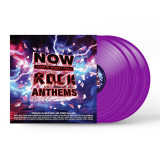
Introducing the ultimate Rock and Power Ballads collection - NOW That’s What I Call Rock Anthems – Out 31st May! Get ready to crank up the volume and let the music take you on a journey through 79 epic hits, spread across 4 CDs.and with 45 epic hits on 3-LP’s pressed in stunning Neon Violet Vinyl
Order now and we will order the item for you at our supplier.
Burning Hell was recorded in Detroit, MI in 1959, but not released until 1964. Even then, it was only available in the UK. This 180-gram vinyl pressing marks the first official worldwide single LP release of the album. The album was pressed at QRP in collaboration with Acoustic Sounds and features Hooker solo playing originals and classics. AllMusic writes that on this album Hooker proves himself to be an excellent performer who could have rivaled the Delta bluesmen of any era.
Order now and we will order the item for you at our supplier.
Blue Vinyl[42,82 €]
1967 setzte Nancy Sinatra ihren künstlerischen Aufstieg in die Pop-Stratosphäre fort: mit dem James-Bond-Titelsong ,You Only Live Twice", dem groovigen Farbfernsehspecial ,Movin' With Nancy", der Aufnahme eines der beliebtesten Duette aller Zeiten, ,Some Velvet Morning", und einer Pilgerreise quer durch das Land ins Zentrum der Country-Musikszene. Nancy reiste nach Nashville, um ihr fünftes Album in den RCA Studios aufzunehmen, wo viele der größten Country-Songs aller Zeiten entstanden sind. Auf ,Country, My Way" verschmilzt Nancy ihren persönlichen Stil mit der Country-Musik, was zu einem neuen hybriden Sound führt. Der Produzent Lee Hazlewood nannte es ,Hippie-Billy". Zwar wird der zeitgenössische Country-Sound vielen zugeschrieben, doch wie bei vielen Meilensteinen der 1960er Jahre war Nancy eine der Ersten. Nancy Sinatra war gleichermaßen stark, schwül und klug und war ihrer Zeit lange Zeit voraus - sowohl in ihren Entscheidungen als Künstlerin als auch als Geschäftsfrau. Unbeirrt schlug sie schon früh ihren eigenen Weg ein und ebnete den Weg für jahrzehntelang nachfolgende Künstlerinnen - und behielt dabei stets die Kontrolle über ihre Karriere, ihr Image und ihre Musik. Im Jahr 1965 veränderte Nancy Sinatra das Gesicht der Musik, der Mode und der Kultur. Die endgültige Vinyl-Neuauflage von Nancys kultigem Album von 1967 ist eine wunderschön verpackte und erweiterte Gatefold-LP mit 20-seitigem Booklet, enthält die Singles "Jackson" und "Oh Lonesome Me", wurde neu gemastert von den analogen Originalbändern vom GRAMMYr-nominierten Toningenieur John Baldwin und kommt in dieser Auflage mit fünf Bonustracks: den Non-Album-Singles von 1967: "Love Eyes", "You Only Live Twice", "Lightning's Girl", "Until It's Time for You to Go" und "Tony Rome".
expected to be published on 29.11.2024
Black Vinyl[36,77 €]
1967 setzte Nancy Sinatra ihren künstlerischen Aufstieg in die Pop-Stratosphäre fort: mit dem James-Bond-Titelsong ,You Only Live Twice", dem groovigen Farbfernsehspecial ,Movin' With Nancy", der Aufnahme eines der beliebtesten Duette aller Zeiten, ,Some Velvet Morning", und einer Pilgerreise quer durch das Land ins Zentrum der Country-Musikszene. Nancy reiste nach Nashville, um ihr fünftes Album in den RCA Studios aufzunehmen, wo viele der größten Country-Songs aller Zeiten entstanden sind. Auf ,Country, My Way" verschmilzt Nancy ihren persönlichen Stil mit der Country-Musik, was zu einem neuen hybriden Sound führt. Der Produzent Lee Hazlewood nannte es ,Hippie-Billy". Zwar wird der zeitgenössische Country-Sound vielen zugeschrieben, doch wie bei vielen Meilensteinen der 1960er Jahre war Nancy eine der Ersten. Nancy Sinatra war gleichermaßen stark, schwül und klug und war ihrer Zeit lange Zeit voraus - sowohl in ihren Entscheidungen als Künstlerin als auch als Geschäftsfrau. Unbeirrt schlug sie schon früh ihren eigenen Weg ein und ebnete den Weg für jahrzehntelang nachfolgende Künstlerinnen - und behielt dabei stets die Kontrolle über ihre Karriere, ihr Image und ihre Musik. Im Jahr 1965 veränderte Nancy Sinatra das Gesicht der Musik, der Mode und der Kultur. Die endgültige Vinyl-Neuauflage von Nancys kultigem Album von 1967 ist eine wunderschön verpackte und erweiterte Gatefold-LP mit 20-seitigem Booklet, enthält die Singles "Jackson" und "Oh Lonesome Me", wurde neu gemastert von den analogen Originalbändern vom GRAMMYr-nominierten Toningenieur John Baldwin und kommt in dieser Auflage mit fünf Bonustracks: den Non-Album-Singles von 1967: "Love Eyes", "You Only Live Twice", "Lightning's Girl", "Until It's Time for You to Go" und "Tony Rome".
expected to be published on 29.11.2024
Rough Trade Shops präsentiert mit "Behind The Counter with Ian Rankin" den zweiten Teil einer Reihe, in der Künstler eingeladen werden, die Musik zusammenzustellen, die sie am meisten beeinflusst hat. Der schottische Autor und Musikfanatiker Ian Rankin folgt auf den Komponisten Max Richter, der 2017 die erste Ausgabe kuratierte. Als langjähriger Vinylenthusiast gehören in Rankins Auswahl auch Songs, die als Titel seiner Bestsellerromane dienten, wie etwa Jackie Levens "Another Man's Rain" (aus dem "Another Man's Grave" wurde) und "The Hanging Garden" von The Cure. Beide Doppelformate enthalten je 23 Tracks mit Begleittexten.
- "Ich treibe mich immer noch in Plattenläden herum und lege Vinyl auf, und ich erstelle immer noch Playlisten, für den Fall, dass sich die Gelegenheit ergibt, hinter der Ladentheke zu arbeiten", sagt Rankin. "Hier ist ein Teil dessen, was Sie hören würden, wenn Sie die Tür aufstoßen und in mein Kaufhaus kämen, Tracks, die ich mir immer wieder gerne anhöre."
expected to be published on 22.11.2024
Fresh off a rework of Papa Levi with single Ribena, London’s jungle pioneers 4am Kru drop their highly anticipated debut album Incognito Rhythm featuring all the tracks that have cemented their reputation as the go-to act for raw, live jungle music.
Having already taken the 2024 festival circuit by storm with appearances at Outlook Origins, Boomtown, Boardmasters, Reading+ Leeds, The Blind Tiger, Parklife Waterworks, Boundary and a milestone Saturday night closing set at Glastonbury’s Temple Stage, 4am Kru continue to draw audiences into the madness of their raucous blend of 1993-1994 influenced jungle. First bursting onto the scene post-lockdown, the falling monitors and flying bodies of their shows were particularly thrilling for ravers who had turned 18 in isolation.
Originally developing their live sound in indie bands while sharing a studio in Tottenham, the duo quickly realized that the traditional DJ set couldn’t contain the energy of their act. They have since surrendered to the chaos of their incredibly physical performances, nursing chipped bones and back injuries, deep finger taping, chalking up and wearing shoes designed for skipping rope whilst rewiring what it meant to move their bodies. Their innovation extends to the equipment, with the duo reinventing a way to deliver their signature throbbing basslines with a Roland SPD SX drum pad as thick as a car tire. Their upcoming UK tour this October promises to further showcase their immersive, disruptive sound.
4am Kru’s latest single Ribena breathed new life into Papa Levi’s iconic British reggae classic Militancy following the release of hard-hitting Wutt this past July, setting the stage for their most ambitious project yet. Their debut album draws from a wide range of influences in addition to 4am Kru’s signature blend of 90s jungle flavours, from obscure slow jam R&B like Angela Bofill, Janet Jackson and Prince, early hardcore bands like Hüsker Dü, off kilter Scottish folk, and even classical music. The project is a snapshot of the incognito, nocturnal world that the duo have dwelled in for the past two years, a time capsule of well-worn songs played between midnight and 4am. An extraordinary debut, 4am Kru’s Incognito Rhythm is an immersive, razor sharp, face melting journey through their show-stopping live sound.
Order now and we will order the item for you at our supplier.
expected to be published on 30.08.2024
Black[28,36 €]
To celebrate 10 years of one of London’s most loved underground club nights, Tangent, Mr Bongo are thrilled to launch this new compilation series. Crafted by its two residents, John Gómez and Nick the Record, it aims to transmit a taste of Tangent’s spirit. A party rooted in inclusivity and open-mindedness, whose name captures the spontaneous switches in musical direction that are a defining element of their nights. For the compilation, the pair have cherry-picked a selection of their prized, rare and dancefloor-ready tracks from around the globe, that have soundtracked the past decade of parties.
Friends for close to 20 years, music lovers, record obsessives and internationally renowned DJs in their own right, John and Nick have two lifetimes worth of musical knowledge to draw from. John a long-standing NTS Radio resident and compiler for Music From Memory. Nick one of the UK’s go-to record dealers, resident DJ since the ‘90s at one of Japan’s pioneering parties, Life Force, and co-captain / co-edit-expert of Record Mission with Dan Tyler (Idjut Boys).
In 2014, the pair decided to bring some of Life Force’s grassroots principles to the UK, whilst channelling underground clubbing institution Plastic People’s meticulous attitude to sound. Tangent grew from being a small gathering of friends, to an established fixture in London’s nightlife, whilst always maintaining a strict no guest DJ policy. “As London’s clubs have become increasingly reliant on international guests, we wanted to emphasize the importance of a club night growing through its residents”, John and Nick reflect. With 10 years of the duo at the helm, an intimate connection between DJ and dancefloor has been built, allowing for freedom of expression on both sides of the decks.
Tangent reaches around the globe and across different eras to make connections that stimulate emotional reverberations in the unfamiliar. Where the blissfully Balearic ‘Laberinto’ by Miguel Perikás, goes hand-in-hand with the Cameroonian hip-house of King B.’s ‘Love is Crazy’. The thundering ‘Amek Amek’ by L'Innovateur Djoe Ahmed et le Zoukabyle, rubs shoulders with the soulful Caribbean-influenced touch of Champagn’s ‘Bel Ti Négress’. And Pellegrin El Kady’s afro-cosmic ‘Seiva de Carnaval’, crosses paths with Kajou’s Kompa disco anthem ‘Tet Chajé’.
Tangent’s longevity is in part down to it having always embraced contemporary sounds. The sub-rattling bass of Srirajah Sound System’s stunning Molam dub stepper ‘Si Phan Don Lovers Rock’ and the slow, woozy mantra of leftfield dancehall explorer Androo’s ‘Lyriso’, are two shining examples.
This compilation represents an ongoing dialogue between past and present, transporting listeners to the heart of a pure musical experience, where open minds and open hearts are eager to follow the tangent.
Order now and we will order the item for you at our supplier.
We Release JAZZ is very happy to announce an exciting new body of work by Joseph Deenmamode aka Mo Kolours. The singular musical spirit’s new 21-track album Original Flow is available as a double LP housed in a heavy 350gsm sleeve with original artwork by Mo Kolours himself and the classic WRJ obi strip, as well as in digipack CD and digital formats.
A catalog of critically acclaimed records, including his self-titled debut (2014), ‘Texture Like Like Sun’ (2015), 2018 album ‘Inner Symbols’ and three companion EPs, established Deenmamode as a prodigious musician and vocalist. Pitchfork extolled his “hypnotic, tribal-infused dance grooves”, DJ Mag appreciated the “colourful celebration of soundsystem culture”, and Resident Advisor advocated that “no one sounds quite like Mo Kolours”. Musical analogies were drawn by The Guardian as “The best album Curtis Mayfield never made with A Tribe Called Quest and Lee Perry” and Mojo as “like Marvin Gaye produced by J Dilla”.
Five years ago, Deenmamode moved to the Japanese countryside. Far away from familiarity, he contemplated his place and further questioned his identity. “I had none of my ‘own’ people around. I had time to really find what makes me tick musically. Japan has helped me go back to those subconscious leanings, really go deep, and reflect the aspects that make up my story”.
The tracks on ‘Original Flow’ have been constructed from sessions, improvisations and soundbites captured around the world during this time; collecting contributions from musicians including Deenamode’s brothers Reginald Omas Mamode and Jeen Bassa plus Andrew Ashong, Charles Bullen, Dwaye Kilvington, Eddie Hick, Stefan Asanovic, Myele Manzanza, Ross Hughes, and Tom Dreissler. Deenamode says “I’m proud of this album’s creative process. Coming from a tradition of scouring through hours of records, I wanted to create my own samples, to find that perfect loop that no other producer could put their hands on. I decided to invite a group of friends and acquaintances, who also happen to be incredible musicians, to a studio in Crystal Palace to improvise based on some loose ideas I had. We spent all day, and recorded everything”.
‘Original Flow’ is an album of UK street-soul nouveau, future indigenous jazz fusion, Rasta Segga, Nyahbinghi jazz, Malagasy Hebrew hip hop. While retaining a spirit of exploration and improvisation, it sees Deenmamode grow and flex beyond beat tape brevity, expanding composition and stretching his musical muscle to play live with other musicians. Themes of empowerment, overcoming adversity, and mental liberation coexist with notes from ancient history, futurism, and science, as well as musings on family and togetherness.
‘Magik Momentum’ springs from a discussion that features at the start of the song, an inspiring mentor answering a question from Deenmamode about improvisation and what role it plays in life when planning and manifesting the future. ‘Rockets to Mars’ questions the lack of care for the billions of people with nothing, while governments plan to explore space. “This sparked a comparison in my mind to a Sonny Okuson song that I would reference when performing. Okuson’s song talked of the lack of resources in many communities in the world, while governments go to the moon”.
He says the music behind ‘The News These Days’ is “possibly my favourite on the album”. Looped like he would a late sixty jazz-fusion sample, there was nothing added and the track was complete within a matter of minutes. “It was the first and best moment from the entire Crystal Palace session”, he adds. The album’s contrasting title track with minimal instrumentation played solo by Deenamode. While frustratingly searching for gems in past recordings, he thought in a burst of ego, “I don’t need no-one else to make a dope beat!” picked up his ravanne, (the traditional frame drum of his fathers home-land of Mauritius), pressed record, and started to play. He says, “In my thoughts were the rhythms of the Nubians in Upper-Egypt and Sudan, the swing of the huge drums played by Mauritanian women, of-course the Sega beat of Mauritius, and the ever inspiring beat of James Yancey”.
Driven by UK broken beat, Cuban congas, Nigerian and Mauritian inflections, ‘Love Vibration’ follows the concept that all emotions carry a vibratory frequency and pays homage to the frequency of creation and the power of love. The two part ‘Tatamaka’ tells of the history of Deenmamode’s ancestors, the maroons of Mauritius. “We are people who managed to run from our oppressors and find refuge in a corner of the island called ‘Le Morne’ where they could not reach us. One bloody day they came in numbers to re-capture, to revenge. Many of us chose to jump to our deaths, rather than be taken back into subjugation. The poem by Creole Richard Sedley Assonne says; “there were hundreds of them, but my people, the maroons chose the kiss of death over the chains of slavery”. Tatamaka was the name of a famed maroon leader who was murdered for claiming his, and our people’s freedom. The song is the imagined journey of escape and freedom by an ancestor of the maroons of Le Morne”.
Born in the west midlands and raised on the traditional sega music of his father’s Indian Ocean homeland of Mauritius alongside records by the likes of Jimi Hendrix, Santana and Michael Jackson; his influences expanded with late 90s jungle and drum and bass nights in Bristol, experiments at art college in Camberwell, and the rich culture of Peckham, “at the time we called it the Afro Quarters of London” says Deenmamode, adding hip hop, dub, soul and soundsystem styles to his individual sound.
He explains, “I love drum music, from hand-drums to 808s. I love music from the ancient past, heritage music, indigenous music, traditional music passed down from the beginning of time. Music from the body, hand claps, grunts and foot stomps. Music with audible depth, busy, bustling, highly charged. Music from the soul, the music from beyond. I love music from the islands and the mountains. The music of the streets, hustle music, alleyway beats. Club music”.
He describes the creative process as thinking in images. “The visual world and the world of sound seem to intermingle in my thought process. When I play the drum with my eyes closed, a world of imagery dances and moves with beat. Improvised drumming feels like I am listening to what I want to hear, rather than trying to play what I want to hear. Following the rhythm and finding new pathways to walk within the patterns is what I experience. In this way I often feel I am just a listener, instead of the player”.
Original Flow is pressed on biovinyl, a sustainable alternative to traditional vinyl. Biovinyl replaces petroleum in S-PVC by recycling used cooking oil or industrial waste gases, resulting in 100% CO2 savings in bio-based S-PVC production. Furthermore, it is 100% recyclable and reusable, embracing the circular economy ideology.
Order now and we will order the item for you at our supplier.
Don't judge a book by its cover. Judge a record by its cover.
And, perhaps, its title.
Cedar Walton's Mobius is as outrageously, disorientatingly brilliant as the stunning jacket design, featuring the legendary jazz pianist morphing into a mobius strip, set against a beautiful sky filled with cumulus clouds. A proper jazz-funk fusion slapfest, Mobius is a stellar electric set from - essentially - one *hell* of a SUPERBAND.
Yes, in addition to Walton's Fender Rhodes wizardry, Mobius is elevated by Ryo Kawasaki's stinging electric guitar, pristinely clear vocals by Adrienne Albert and Lani Groves, rootsy percussion by Ray Mantilla and Omar Clay, alto and baritone from Charles Davis, trumpet from Roy Burrowes, Gordon Edwards on bass and Frank Foster's tenor sax. Oh and did we mention STEVE GADD ON DRUMS?!?!
Gem after gem of looping, bliss-inducing gold, it's an incredibly revelatory album. It presents a thrilling synthesis of R&B, funk, blues and hard bop (with a hint of rock), all driven by an idiosyncratic electronic keyboard. Walton, a giant in the jazz world, got quite the workout every time he played, from piano to arp synthesizer to clarinet to electric piano to mini-moog and back again.
Mobius was Cedar Walton's debut for RCA in 1975. The versatile artist confirmed his abilities as a player, composer, interpreter and arranger with this stunning record, and his own bright compositions offered a springboard for the improvisations of the different soloists. Coltrane's "Blue Trane" is the first classic to be given the funkafied Mobius treatment, Ryo Kawasaki let loose all over neck-snapping Gadd-drum gold before the horns take a fiery turn and subsequently give way to Cedar's virtuosity. A sparkling b-boy break version of Thelonious Monk's "Off Minor" (featuring an absolutely *fire* solo from Walton) really sets proceedings alight. Of the three original pieces, the shuffling, percussive power of "Soho" is just absolutely mind bending Latin-influenced jazzy soul whilst the mellow vibes of "The Maestro" bring elegant, sumptuous soul. And then there's the effortlessly funky "Road Island Red". Just too, too good.
Cedar Walton was born in Dallas, Texas, on January 17, 1934 and began his professional career in 1959 when he began touring for several years with the J.J. Johnson Quintet. He later joined the Art Farmer-Benny Golson Jazztet and then Art Blakey's Jazz Messengers. Pretty solid credentials, right? While based in New York City, Cedar played with such luminaries as Donald Byrd, Eddie Harris, Blue Mitchell, Kenny Dorham, Lee Morgan, Freddie Hubbard, Jimmy Heath and Milt Jackson. Without question, he was one of the most complete and gifted musicians of his time and Mobius provides proof of that. The fresh, danceable tracks, all firmly rooted in the living tradition of blues and gospel, are skilfully presented by a master who enjoyed keeping abreast of contemporary tastes and was always keen to renew his language.
As the album notes state: “Mobius, which is the theoretical shape of the infinite universe, makes use of the most modern recording techniques and synthesizers. We mastered and mixed so that it’s hotter than the competition, which should help radio play and in-store demonstration.” Indeed. Mobius is really gorgeous mid-70s fusion, ranging from the funky to the ecstatic. It's an absolute MONSTER that will completely blow you away; and, yes, it's as wild and hypnotic as the cover. The audio for Mobius has been carefully remastered by Be With regular Simon Francis, ensuring it sounds better than ever. Cicely Balston's expert skills have made sure nothing is lost in the cut whilst the records have been pressed to the highest possible standard at Record Industry in Holland. The original, iconic sleeve has been restored here at Be With HQ as the finishing touch to this long overdue re-issue.
Order now and we will order the item for you at our supplier.
Most southern soul fans will tell you that that the music produced in Memphis in 1967 and 1968 was the pinnacle of quality. So following on from our look at the River City’s soul output in 1967, we now turn our attention to an album covering the next year. As before, the singers here are a heady mixture of local Tennessee talent and welcome soulful guests who journeyed down south hoping that a little of the famous Memphis magic would rub off on their songs. There are soul genres to suit all tastes here – from the deepest ballads to upbeat tracks that will rock your socks off. Soul doesn’t get much better than the artists and their tunes on this LP!
This item has not yet been released. You can pre-order the product now.
OPAQUE BLUE & WHITE Vinyl[35,92 €]
A sonic snapshot of America's steel capital, developed in the prosperous cavern between the departure of the Jackson 5 to Motown and the collapse of U.S. Steel, Skyway Soul is a love letter to Gary, Indiana. Featuring The New Day, El Anthony, Nate Evans, Sky's The Limit, Wilton Crump, Lost Weekend, General Lee, Krash Band, Billy Foster & Audio, I.N.D., and Junei, this double album collects 21 lost songs from the southern-most tip of Lake Michigan. Housed in a deluxe tip-on gatefold jacket, with a 16-page booklet crammed with photos, ephemera, and an indepth essay from Jake Austen, Skyway Soul connects the dots between The Spaniels, Michael Jackson, and Freddie Gibbs. Don't forget to pay the toll
expected to be published on 01.12.2023
Black Vinyl[33,19 €]
A sonic snapshot of America's steel capital, developed in the prosperous cavern between the departure of the Jackson 5 to Motown and the collapse of U.S. Steel, Skyway Soul is a love letter to Gary, Indiana. Featuring The New Day, El Anthony, Nate Evans, Sky's The Limit, Wilton Crump, Lost Weekend, General Lee, Krash Band, Billy Foster & Audio, I.N.D., and Junei, this double album collects 21 lost songs from the southern-most tip of Lake Michigan. Housed in a deluxe tip-on gatefold jacket, with a 16-page booklet crammed with photos, ephemera, and an indepth essay from Jake Austen, Skyway Soul connects the dots between The Spaniels, Michael Jackson, and Freddie Gibbs. Don't forget to pay the toll
expected to be published on 01.12.2023
Reggie Soul real name Reginald Stone is just one of many illusive recording artists who had a very limited recording career for a handful of small independent Chicago labels then disappeared into obscurity, Reggie reputedly left Chicago in the mid 1970’s for the lone star state of Texas never to be seen or heard from again!
Reggie’s recording legacy is the sum total of 3, 45 singles two of which he recorded under the supervision of respected Chicago songwriter and producer Clarence Johnson., firstly the funk outing “I Got Jody” backed with the soulful “I Feel So Bad” for Red Balloon Records, “I Feel So Bad” was composed by Lee Sain who recorded his own version under the title of “Baby Don’t Leave Me” for the Broach label. Reggie Soul’s “I Got Jody” also came out as a B-side on Nation Time Records, the A-side was a version of the James Brown song “Soul Walkin’ but this side was credited under the mis-credited artist name of Reggie Smith?
Finally, Reggie’s third release “My World Of Ecstasy/Mighty Good Loving” was released on the Scott Brothers own Capri Records label in 1968. Both sides of the 45 were written by Reggie with Charles and Walter Scott, arrangements were provided by John Jackson and Bill McFarland who provided the horn section to many of the Scott’s future productions. The Scott Brothers of which there were several (all musicians) had begun their own careers during the late 1950’s recording under the group name of The Masquerades on the Formal label. Often referred to as The Scott Brothers Orchestra with Howard Sephus Scott at the head of their growing musical dynasty they formed their own company Capri Productions circa 1968, their initial recording productions were Fred Johnson (Shi-Lush Records) and the aforementioned Reggie Soul & The Soul Swingers. The Scott’s were also the house band in one of Chicago’s Southside’s most popular night clubs ‘The Bonanza Lounge on 7641, South Halsted. The Scott’s often used the Bonanza as a source of finding future artists for their labels, such as The Soul Majestics, Judson Moore, Bobby Jones & Duke Turner amongst others, they even recorded a live performance on The Bonanza Lounges’ resident comedian Randolph Browner which gained a release on the Shi-Lush label.
“My World Of Ecstasy” like several Capri 45 releases were heavily imported into the UK, often sold in soul packs before finding favour with aficionados of the Crossover Scene in the late 1980’s with it’s popularity still remaining high to the present day.
Soul Junction through their licensing deal with Scot-Tees Publishing would like to present the first release of their Capri Records series.
expected to be published on 10.11.2023
Paul Hillery, Plattensammler, Archivar und DJ, präsentiert mit 'Folk Funk & Trippy Troubadours Volume Two' 17 brillant psychedelische und funky Juwelen, die er auf seiner unermüdlichen Suche nach musikalischen, Generationen und Genres umfassenden Schätzen entdeckt. Liebevoll handverlesene, verlorene Nuggets auf privat gepressten Obskuritäten, vergessenen Studiotapes oder tief in digitalen Ordnern versteckt, warten darauf, wieder gehört zu werden.
Order now and we will order the item for you at our supplier.
Brother Deges zweites Album "How to Kill a Horse" wurde nachts in einem leeren Lagerhaus aufgenommen (während er tagsüber in einem Obdachlosenheim für Männer arbeitete) und ist ein Meisterwerk, das von Scheunenbrennern über antike Delta-Meditationen bis hin zu babylonischen Schrottplatz-Jams reicht, die die Schattenseiten dessen erforschen, was es heißt, ein Mann in der modernen Welt zu sein. Zu den Einflüssen zählen: Ernest Hemingway, Joseph Conrad, Ry Cooder, Norman Mailer, Henry Miller, Sonic Youth, Black Sabbath, Blind Willie Johnson, Einstürzende Neubauten, Jackson Pollock und Don Quijote. Wie Hemingways stärkste Werke dringt "How to Kill a Horse" tief in das Gefängnis-Rodeo des menschlichen Herzens ein, konfrontiert die dunklere, fehlerhafte Seite des Selbst, während es mit voller Aggressivität in den existenziellen Hochofen der modernen Weltgerät steuert und mit den Rollen der Männer als Versorger, Beschützer, Partner, Liebhaber, Krieger, Friedenstruppen, was auch immer ringt. "How to Kill a Horse" ist ein gewaltiger Schuss vor den Bug aller Riff-Heads, Songwriter und Americana-Enthusiasten auf der ganzen Welt. Es ist ein Game-Changer, der das ganze Durcheinander der Roots-Musik aus den Vinyl-Mülltonnen ins 21. Jahrhundert befördert.
expected to be published on 20.10.2023
Brother Deges zweites Album "How to Kill a Horse" wurde nachts in einem leeren Lagerhaus aufgenommen (während er tagsüber in einem Obdachlosenheim für Männer arbeitete) und ist ein Meisterwerk, das von Scheunenbrennern über antike Delta-Meditationen bis hin zu babylonischen Schrottplatz-Jams reicht, die die Schattenseiten dessen erforschen, was es heißt, ein Mann in der modernen Welt zu sein. Zu den Einflüssen zählen: Ernest Hemingway, Joseph Conrad, Ry Cooder, Norman Mailer, Henry Miller, Sonic Youth, Black Sabbath, Blind Willie Johnson, Einstürzende Neubauten, Jackson Pollock und Don Quijote. Wie Hemingways stärkste Werke dringt "How to Kill a Horse" tief in das Gefängnis-Rodeo des menschlichen Herzens ein, konfrontiert die dunklere, fehlerhafte Seite des Selbst, während es mit voller Aggressivität in den existenziellen Hochofen der modernen Weltgerät steuert und mit den Rollen der Männer als Versorger, Beschützer, Partner, Liebhaber, Krieger, Friedenstruppen, was auch immer ringt. "How to Kill a Horse" ist ein gewaltiger Schuss vor den Bug aller Riff-Heads, Songwriter und Americana-Enthusiasten auf der ganzen Welt. Es ist ein Game-Changer, der das ganze Durcheinander der Roots-Musik aus den Vinyl-Mülltonnen ins 21. Jahrhundert befördert.
expected to be published on 20.10.2023
: Written and recorded in a series of bedroom studiosin England and France, London-based Gareth Donkin’s extraordinary debut, Welcome Home, showcases the 23-year-old’s stunning mix of instrumental virtuosity and emotional intuition, blending highly sophisticated melodic and harmonic craftsmanship with deeply moving lyrical explorations of longing, desire, and determination. The songs here draw on soul, funk, pop, yacht rock,hip-hop, jazz, and even bossa nova, hinting at times to everything from Michael Jackson and Bill Evans to George Benson and Jamiroquai, and Donkin’s performances are nothing short of mesmerizing, layering up instrument after instrument in the best one-man-band tradition of Prince or Stevie Wonder. The result is a moving work that’s equal parts brain and brawn, a masterful coming-of-age self-portrait from a young artist discovering himself—and his sound—one song at a time. Born with perfect pitch, Donkin was already fanatically obsessed with both jazz piano and drums before he turned twelve. In high school, he began DJing and teaching himself to record and sample, and by the time he headed to the Leeds College of Music to pursue a degree in production, he was already writing and recording his own material at home. His first single, “Catharsis,” would go on to rack up more than a million streams on Spotify, and a series of subsequent tracks would find similarly organic success and help land him a deal with the burgeoning drink sum wtr label.
expected to be published on 01.10.2023
Order now and we will order the item for you at our supplier.
Obwohl der Begriff "soul" schon während der Dreißigerjahre in der US-amerikanischen Populärmusik auftauchte, entstand Soul als eigenständiges Genre erst in den 1950ern aus Gospel und Rhythm"n"Blues sowie je einer Prise Blues und Jazz. Schon bald darauf sollte Soul zum Inbegriff "schwarzer Popmusik" werden. Kennzeichnend für die afroamerikanisch geprägte Unterhaltungsmusik sind emotional gefärbte Sangeskünste. Sich mit ganzer Seele und herzergreifendem Gesang den Vibes, dem Groove und der Message hinzugeben, das macht Soul aus. Sängerinnen wie Aretha Franklin, Etta James, Tina Turner, Lavern Baker, Marlena Shaw oder Diana Ross beherrschten dieses Metier meisterhaft. Sie finden sich neben Dionne Warwick, Nina Simone, Dusty Springfield, Irma Thomas, Amy Winehouse, Ibeyi und vielen anderen Künstlerinnen auf der geschmackvoll kompilierten Doppel-LP "Soul Women".
expected to be published on 21.07.2023
It's often a good sign when one of your favorite musicians steps out from beyond the studio walls and past the stage lights to fulfill their own inspired and creative intent. And Caíto Sánchez is not just a favorite musician, but as his lengthy resume as a sideman shows, he's also one of your favorite musicians' favorite musicians, constantly working without fanfare as an essential ingredient in a larger music feast. Sánchez earned his stripes in the 2000s and beyond as a key session player and an integral touring band member, a quiet standout even among many oversized personalities. A dedicated drummer born in Panama and living in New York, Sánchez is quite capable of keeping time for legends like Charles Bradley, Lee Fields, and Brian Jackson, as well as supporting eclectic outfits like the live groups of Quantic, Chico Mann and Midnight Magic. For all the players who have shared a stage or studio with him it comes as no real surprise, and frankly as a long overdue development, that such a unique artistic force is finally stepping into the spotlight.
With this debut single we get a glimpse into Sánchez's creative and artistic personal space, more precisely a multi-instrumental discipline of not only drums, but also bass, guitar and lead voice. It's an intensely intimate recording debut, a fantastic studio concoction born from the heart of its creator, and later fostered and mixed down by the talented hands of NYCT and Daptone veteran Victor Axelrod. The defining result on this initial 7-inch offering are two heavy psychedelic and moody nuggets of rock enespañol, a decidedly new wave of sounds and style that are quite capable of shining on their own.
expected to be published on 24.03.2023
LTD. COL. VINYL
Definitive compilation spans solo recordings, rarities and duets with Lee Hazlewood Newly remastered from the original analog tapes by GRAMMYr-nominated engineer John Baldwin New interviews with the legendary singer, actress, and activist, Nancy Sinatra Extensive essay by Amanda Petrusich Q&A interview with Nancy & GRAMMYr-nominated reissue co-producer Hunter Lea Never-before-seen photos from Nancy Sinatra's personal archive Deluxe CD housed in 7"x7" hardcover book w/ 64-pg booklet Beautifully packaged Double LP featuring a 24-pg book 2xLP available on Standard Black Wax plus Summer Wine Sunburst Orange Release coincides with Nancy Sinatra's 80th birthday celebration Release to be supported by international press campaign in cooperation with Nancy Sinatra // Light In The Attic Records is proud to present Nancy Sinatra: Start Walkin' 1965-1976. The definitive new collection surveys Sinatra's most prolific period over 1965-1976, including her revered collaborations with Lee Hazlewood, over 23 tracks. Remastered from the original analog tapes by GRAMMYr-nominated engineer John Baldwin, the collection is complemented by liner notes penned by Amanda Petrusich (author and music critic at The New Yorker), featuring insightful new interviews with Sinatra, as well as a Q&A with archivist and GRAMMYr-nominated reissue co-producer Hunter Lea. The CD edition comes housed in a 7"x7" hardcover book (featuring 64-pages) and the two-disc vinyl set is presented in a gatefold jacket (featuring a 24-page booklet), with special color editions available exclusively at and independent record stores. Nancy's performance of the Lee Hazlewood-penned song "These Boots Are Made for Walkin'" was a huge hit in 1966 and became her signature tune. The pair began a three year run of successful albums, duets and singles including "Sugar Town," "Some Velvet Morning," "Summer Wine," "Sand," "Jackson," and the title track to the 1967 James Bond film "You Only Live Twice." Start Walkin' explores Nancy's recordings with Lee, her inspired collaborations with songwriter Mac Davis ("Hello L.A., Bye Bye Birmingham"), producer Lenny Waronker ("Hook and Ladder") and the "should've been hit" song with arranger/producer Billy Strange ("How Are Things In California.") Over the years, she has been cited as an influence by countless artists, including Sonic Youth, Morrissey, Calexico, U2, and Lana Del Rey. Her haunting song "Bang, Bang" gained a new legion of fans when it appeared in the opening credits of Quentin Tarantino's 2003 film, Kill Bill Volume 1.
Order now and we will order the item for you at our supplier.
One of the most popular instrumental songs ever, “Green Onions” started out as a band jam at a demo recording session for rock’n’roll singer Billy Lee Riley with the famed Stax Records house band. Stax label head Jim Stewart liked what he heard and recorded what would become the basis for the band’s debut album. Christened Booker T. & The M.G.s, they released “Green Onions” with original members Booker T. Jones (organ, piano), Steve Cropper (guitar), Lewie Steinberg (bass), and Al Jackson Jr. (drums) in October 1962. The title track became a worldwide hit, covered by dozens of artists including the Blues Brothers, the Ventures, the Shadows, Deep Purple, Mongo Santamaria and Count Basie.
The deluxe 60th Anniversary Edition of “Green Onions” releases as a 1LP 180g vinyl in a green translucent colorway similar in hue to the vegetable it celebrates plus a 4-page insert, including band photos, Stax Records ephemera and David Ritz’s new liner notes.
expected to be published on 24.02.2023
2022 jährt sich die Veröffentlichung der ersten Single
und des ersten Albums der internationalen Supergruppe
des Soul/Funks, die mit ihrem Memphis-Sound die
Soul-Landschaft neu erfunden hat.
"Green Onions", einer der populärsten Instrumentalsongs
aller Zeiten, begann als Band-Jam bei einer
Demo-Aufnahme für den Rock'n'Roll-Sänger Billy Lee
Riley mit der berühmten Stax Records Houseband.
Stax-Labelchef Jim Stewart gefiel, was er hörte, und er
nahm auf, was die Grundlage für das Debütalbum der
Band werden sollte.
Unter dem Namen Booker T. & The M.G.s
veröffentlichten sie "Green Onions" mit den
Originalmitgliedern Booker T. Jones (Orgel, Klavier), Steve
Cropper (Gitarre), Lewie Steinberg (Bass) und Al Jackson
Jr. (Schlagzeug) im Oktober 1962. Der Titelsong wurde
ein weltweiter Hit, der von Dutzenden von Künstlern wie
den Blues Brothers, den Ventures, den Shadows, Deep
Purple, Mongo Santamaria und Count Basie gecovert
wurde.
expected to be published on 24.02.2023
Jackson Lee's Mystical Disco label unveils a new singing here in the form of Paranoid Pyramid. The mysterious outfit enchants us from the off here with the sleazy, meandering acid lines of the opener drawn out over dusty, dubby and deep house drums. 'Water Temple' is another proudly analogue cut with wispy pads way off in the distance and slow but lumpy drums get you into a groove. There is more hazy and horizontal depth to 'Analog Joint' and 'Memphis Prophet' pairs vaporous synths with mystic drum sounds before 'Birdspeak' making for another perfectly lo-fi world of cosmic melodic wonder.
Order now and we will order the item for you at our supplier.
The Art and Soul of Network is well and truly captured on this beautiful collection.
Fittingly for a remix selection, Network’s iconic artwork is reconstructed by Trevor Jackson, the designer of those original graphics. He has lovingly reworked the maverick indie house label’s distinctive branding for this 2 x 12 double album selection which rewinds to some of Network’s finest moments.
Network was based in Birmingham but as this release demonstrates had an international outlook and an alchemist touch for joining together disparate talents which lent itself well to the world of remixology.
Dave Lee’s remix,when he was working under his Joey Negro pseudonym, of The Reese Project’s awesome Direct Me is arguably his finest ever work. The original track fused Detroit electronica with the Motor City’s ever present Soul Music stirrings. Dave simply made the superlative perfect . The result was not only an iconic Network release but one of House Music’s greatest recordings.
There was possibly no better example of Network’s deft touch when it came to selecting unlikely combinations of people to work together than Day By Day. . Andrew Pearce, a raw but incredibly gifted 18 years gospel singer, was plucked of the streets of Wolverhampton and promptly despatched to Detroit where producer Kevin Saunderson and songwriter Ann Saunderson gave him the complete Reese Project template on the mesmerising Day By Day. Then Chez Damier & Ron Trent were drafted in to create their Urban Sound Gallery masterpiece of a remix. It truly is a gem.
Ann Saunderson is also central to Surreal’s hypnotic Happiness, not only as songwriter but as the vocalist too. Network then did their “let’s try this” thing by letting loose Italian house godfathers The Fathers Of Sound on the track parts. They threw down and created a progressive (but dreamy) house anthem that is to this day massively in demand.
Slo Moshun’s game changer (House slows down into Hip Hop then ramps up back into House) Bells Of New York was produced by Mark Archer & Danny Taurus.It became huge literally overnight. Various attempts to remix it were tried but in the end it was back to Mark who demonstrated that sometimes the original creator of a track is best able to re-imagine it by coming up with his much loved Beefy Bells remix.
Inner City’s stark and brutal Ahnonghay saw Kevin Saunderson going back to his Detroit Techno roots. Fittingly it was one of the UK’s disciples of that innovative Belleville Three era,Dave Clarke, who supplied the awesome remix contained here.
Rhythmatic’s Mark Gamble created a British Bleep House anthem with the sledgehammer Demonz. The original won the support of John Peel with repeated BBC Radio plays underlining incessant club plays. Again it’s the original artist who does that remix thing best with Mark’s Sequel mix managing to improv his classic original.
Neal Howard’s Indulge was the debut Network release. His music sounded like it was from another planet and he was hailed as Chicago’s answer to Detroit genius Derrick May..Here we present Derrick’s Mayday remix of To Be Or Not To Be which was the flip to Indulge. This was Network’s debut release, and it is hard to imagine a label having a more euphoric greeting card.
The album concludes with a remix of a track recorded at a live concert in 1989.. To be clear THE TRACK that defined that year’s Acid House cultural revolution. Derrick May brought along Carl Craig to perform with him as Rhythim Is Rhyhim when invited to support Inner City at London’s Town And Country Club . Luckily Kool Kat - the predecessor to Network - recorded for posterity an historic rendition of Strings Of Life. Roll on a few years and Network went into the vaults and asked Ashley Beedle to work on the tape. He completely remoulded it and conjured up a new incarnation of Strings Of Life.
Network - we coninue…
Order now and we will order the item for you at our supplier.
Die neue VERVE BY REQUEST-LP-Serie präsentiert rare Kultalben, die von den Fans immer wieder
gefordert werden, gepresst in audiophilem 180-Gramm-Vinyl bei Third Man Pressing/Detroit.
JAMES BROWN - ”Soul On Top ”
“Im Herzen bin ich ein Jazz-Mann“ gesteht der der Godfather of Soul in den Linernotes zu diesem groovenden Album von 1969, mit einer Big Band unter der Leitung von Drummer Louis Bellson und arrangiert von
Impulse!-Star Oliver Nelson. Browns Partner in Crime, der Saxophonist Maceo Parker, ist ebenfalls daran
beteiligt, es zu einer swingenden, temperamentvollen Sammlung von Standards und James-Brown-Hits zu
machen.
(audiophiles 180-Gramm-Vinyl, Gatefold-Sleeve)
MEL BROWN - ”Chicken Fat”
Gitarrist Mel Browns Impulse!-Debüt von 1967 ist das möglicherweise funkigste als auch ungewöhnlichste Album, das je auf dem Label veröffentlicht wurde. Browns flüssiger Blues-Picking-Stil - den er sich
zulegte, als er in den Bands von John Lee Hooker und T-Bone Walker spielte - garniert mit der swingenden
Soul-Jazz-Orgel von Gerald Wiggins. Besondere Highlights sind der Titeltrack, „Greasy Spoon“ und das
blues-getränkte „I’m Goin’ to Jackson“.
(remastered von den analogen Originalbändern, audiophiles 180-Gramm-Vinyl)
expected to be published on 13.01.2023
Die neue VERVE BY REQUEST-LP-Serie präsentiert rare Kultalben, die von den Fans immer wieder
gefordert werden, gepresst in audiophilem 180-Gramm-Vinyl bei Third Man Pressing/Detroit.
JAMES BROWN - ”Soul On Top ”
“Im Herzen bin ich ein Jazz-Mann“ gesteht der der Godfather of Soul in den Linernotes zu diesem groovenden Album von 1969, mit einer Big Band unter der Leitung von Drummer Louis Bellson und arrangiert von
Impulse!-Star Oliver Nelson. Browns Partner in Crime, der Saxophonist Maceo Parker, ist ebenfalls daran
beteiligt, es zu einer swingenden, temperamentvollen Sammlung von Standards und James-Brown-Hits zu
machen.
(audiophiles 180-Gramm-Vinyl, Gatefold-Sleeve)
MEL BROWN - ”Chicken Fat”
Gitarrist Mel Browns Impulse!-Debüt von 1967 ist das möglicherweise funkigste als auch ungewöhnlichste Album, das je auf dem Label veröffentlicht wurde. Browns flüssiger Blues-Picking-Stil - den er sich
zulegte, als er in den Bands von John Lee Hooker und T-Bone Walker spielte - garniert mit der swingenden
Soul-Jazz-Orgel von Gerald Wiggins. Besondere Highlights sind der Titeltrack, „Greasy Spoon“ und das
blues-getränkte „I’m Goin’ to Jackson“.
(remastered von den analogen Originalbändern, audiophiles 180-Gramm-Vinyl)
expected to be published on 13.01.2023
Celebrate Christmas with an array of stars and the best diva talent the world has ever known. Featuring classic songs and festive favourites from Aretha Franklin, Billie Holiday, Eartha Kitt, Ella Fitzgerald, Judy Garland, Nina Simone and many more, this LP is the perfect seasonal soundtrack.
Order now and we will order the item for you at our supplier.
The period of 1967 – 1968 when Rocksteady was in full flow, would also be a turning point for Bunny ‘Striker’ Lee, when he became a producer in his own right. Many of the great tunes during this eventful year came out of his stable and initially saw the light of day on his own imprint label ‘Lee’s’. This album has been assembled from some of those fine tunes and tells the story of reggae in what was a stellar time for both reggae and Mr Bunny Lee.
Edward ‘Bunny’ Lee later to become known as ‘Striker’ (b.23rd August 1941) got his introduction to the music business around 1962 when his future brother in law singer Derrick Morgan introduced Bunny to producer Duke Reid, who gave him a job as record plugger for his Treasure Isle label. 1966 saw Bunny Lee move on to working for producer Ken Lack who ran his own label Caltone. Bunny’s first credit as a producer was released on the label when he produced ‘Lloyd Jackson and the Groovers’ with a tune called ‘Listen To The Music’.
As we stated earlier by 1967 Bunny Lee was leading the way and his vast stable of singers, were producing hit after hit for him. Many of those artists are featured on this compilation. The Sensations ‘Long Time Me No See You Girl’, the Uniques that featured the great Slim Smith are here on some of their greatest cuts ‘Love and Devotion’ and ‘The Beatitude’, ‘Girls Like Dirt’. ‘My Conversation’ a song that would be a big hit for the Uniques would also go on to be of the most covered songs and redone over rhythms, in the history of reggae music. The great singer Pat Kelly features on ‘Somebody’s Baby’ and ‘Little Boy Blue’ all massive hits, when originally released. Bunny’s love of Jazz and the brass sections would also shine through with some of Jamaica’s finest musicians featured here with the excellent tenor sax work of Val Bennett which gave us our album title track ‘Jumping With Mr Lee’ and ‘Jumping With Val’. The Alto sax work of Lester Sterling are featured on the timeless cut ‘Bangerang’ and ‘Tribute To Scratch’. The big sound of Trombonist ‘Vin Gordon’ features on ‘Sounds and Soul’. Not forgetting the previously mentioned King of Ska Derrick Morgan on ‘Hold Your Jack’. A song that in a few years’ time would provide the backbone for Mr Max Romeo’s cross over and controversial hit ‘Wet Dream’. So yes, a fine collection of tracks from the great producer Bunny ‘Striker’ Lee. Sit back and enjoy the reggae music of 1967-1968 with of the best sounds in town.Sit back and enjoy…..
Order now and we will order the item for you at our supplier.
More solid UK boogie & brit-funk courtesy of Freestyle Records - this time giving the 12" reissue treatment to short-lived group Cool Runners' 1982 single Checking Out, backed up with sought-after High on a Feeling.
-------
As Cool Runners' Paul Tattersall recalls, "this single was a follow-up to the "Play The Game (So You Think It Funny) / Hawaiian Dream" 12" which we believe got to around number 60 in the national charts, and was at the time heavily played on the radio by DJ Greg Edwards who sadly passed away earlier this year..." Recorded mixed and mastered then licensed for release to MCA, this initial single also relased in 1982 was voiced by Tony Jackson, then part of Paul Young's backing band as his career took off in the charts. Tony formed part of a string of funk groups throughout the 70s and early 80s - Sweet Dreams, Midnight, Ritz & Indigo - and later went on to be successful as lead singer in Rage.
These tracks "Checking Out" and "High on a Feeling" on the other hand features the vocal talents of Rush Winters, who would go on to record with the likes of Carmel, Yello, D.C.Lee and others. "It received little in the way of promotion by the record company at the time", Tattersall continues "so it has produced a cult following and has become rather sought-after, as few copies were actually released at that time."
After release, Cool Runners' Paul Tattersall and Chris Rodel then played with several different bands, with Chris moving onto double bass. He still plays professionally today as an accomplished jazz bass player. Paul has run a successful musical hire company in North London, with a specialism on synths and keyboards, since the eighties - and continues to this day.
Order now and we will order the item for you at our supplier.
Vinyl LP[23,49 €]
As the sun sets on a quaint East Nashville house, a young man bares a piece of his soul. Facing the camera, sporting a silky suit jacket/shirt/slacks/fingerless gloves ensemble that announces "singer" before he's even opened his mouth, Lee Tracy Johnson settles onto his stage, the front yard. He sways to the dirge-like drum machine pulse of a synth-soaked slow jam, extends his arms as if gaining his balance, and croons in affecting, fragile earnest, "I need your love… oh baby…"
Dogs in the yard next door begin barking. A mysterious cardboard robot figure, beamed in from galaxies unknown and affixed to a tree, is less vocal. Lee doesn't acknowledge either's presence. He's busy feeling it, arms and hands gesticulating. His voice rises in falsetto over the now-quiet dogs, over the ambient noise from the street that seeps into the handheld camcorder's microphone, over the recording of his own voice played back from a boombox off-camera. After six minutes the single, continuous shot ends. In this intimate creative universe there are no re-takes. There are many more music videos to shoot, and as Lee later puts it, "The first time you do it is actually the best. Because you can never get that again. You expressing yourself from within."
"I Need Your Love" dates from a lost heyday. From some time in the '80s or early '90s, when Lee Tracy (as he was known in performance) and his music partner/producer/manager Isaac Manning committed hours upon hours of their sonic and visual ideas to tape. Embracing drum machines and synthesizers – electronics that made their personal futurism palpable – they recorded exclusively at home, live in a room into a simple cassette deck. Soul, funk, electro and new wave informed their songs, yet Lee and Isaac eschewed the confinement of conventional categories and genres, preferring to let experimentation guide them.
"Anytime somebody put out a new record they had the same instruments or the same sound," explains Isaac. "So I basically wanted to find something that's really gonna stand out away from all of the rest of 'em." Their ethos meant that every idea they came up with was at least worth trying: echoed out half-rapped exhortations over frantic techno-style beats, gospel synth soul, modal electro-funk, oddball pop reinterpretations, emo AOR balladry, nods to Prince and the Fat Boys, or arrangements that might collapse mid-song into a mess of arcade game-ish blips before rallying to reach the finish line. All of it conjoined by consistent tape hiss, and most vitally, Lee's chameleonic voice, which managed to wildly shape shift and still evoke something sincere – whether toggling between falsetto and tenor exalting Jesus's return, or punctuating a melismatic romantic adlib with a succinct, "We all know how it feels to be alone."
"People think we went to a studio," says Isaac derisively. "We never went to no studio. We didn't have the money to go to no studio! We did this stuff at home. I shot videos in my front yard with whatever we could to get things together." Sometimes Isaac would just put on an instrumental record, be it "Planet Rock" or "Don't Cry For Me Argentina" (from Evita), press "record," and let Lee improvise over it, yielding peculiar love songs, would-be patriotic anthems, or Elvis Presley or Marilyn Monroe tributes. Technical limitations and a lack of professional polish never dissuaded them. They believed they were onto something.
"That struggle," Isaac says, "made that sound sound good to me."
In the parlance of modern music criticism Lee and Isaac's dizzying DIY efforts would inevitably be described as "outsider." But "outsider" carries the burden of untold additional layers of meaning if you're Black and from the South, creating on a budget, and trying to get someone, anyone within the country music capital of the world to take your vision seriously. "What category should we put it in?" Isaac asks rhetorically. "I don't know. All I know is feeling. I ain't gonna name it nothing. It's music. If it grabs your soul and touch your heart that's what it basically is supposed to do."
=
Born in 1963, the baby boy of nine siblings, Lee Tracy spent his earliest years living amidst the shotgun houses on Nashville's south side. "We was poor, man!" he says, recalling the outhouse his family used for a bathroom and the blocks of ice they kept in the kitchen to chill perishables. "But I actually don't think I really realized I was in poverty until I got grown and started thinking about it." Lee's mom worked at the Holiday Inn; his dad did whatever he had to do, from selling fruit from a horse drawn cart to bootlegging. "We didn't have much," Lee continues, "but my mother and my father got us the things we needed, the clothes on our back." By the end of the decade with the city's urban renewal programs razing entire neighborhoods to accommodate construction of the Interstate, the family moved to Edgehill Projects. Lee remembers music and art as a constant source of inspiration for he and his brothers and sisters – especially after seeing the Jackson 5 perform on Ed Sullivan. "As a small child I just knew that was what I wanted to do."
His older brother Don began musically mentoring him, introducing Lee to a variety of instruments and sounds. "He would never play one particular type of music, like R&B," says Lee. "I was surrounded by jazz, hard rock and roll, easy listening, gospel, reggae, country music; I mean I was a sponge absorbing all of that." Lee taught himself to play drums by beating on cardboard boxes, gaining a rep around the way for his timekeeping, and his singing voice. Emulating his favorites, Earth Wind & Fire and Cameo, he formed groups with other kids with era-evocative band names like Concept and TNT Connection, and emerged as the leader of disciplined rehearsals. "I made them practice," says Lee. "We practiced and practiced and practiced. Because I wanted that perfection." By high school the most accomplished of these bands would take top prize in a prominent local talent show. It was a big moment for Lee, and he felt ready to take things to the next level. But his band-mates had other ideas.
"I don't know what happened," he says, still miffed at the memory. "It must have blew they mind after we won and people started showing notice, because it's like everybody quit! I was like, where the hell did everybody go?" Lee had always made a point of interrogating prospective musicians about their intentions before joining his groups: were they really serious or just looking for a way to pick up girls? Now he understood even more the importance of finding a collaborator just as committed to the music as he was.
=
Isaac Manning had spent much of his life immersed in music and the arts – singing in the church choir with his family on Nashville's north side, writing, painting, dancing, and working various gigs within the entertainment industry. After serving in the armed forces, in the early '70s he ran The Teenage Place, a music and performance venue that catered to the local youth. But he was forced out of town when word of one of his recreational routines created a stir beyond the safe haven of his bohemian circles.
"I was growing marijuana," Isaac explains. "It wasn't no business, I was smoking it myself… I would put marijuana in scrambled eggs, cornbread and stuff." His weed use originated as a form of self-medication to combat severe tooth pain. But when he began sharing it with some of the other young people he hung out with, some of who just so happened to be the kids of Nashville politicians, the cops came calling. "When I got busted," he remembers, "they were talking about how they were gonna get rid of me because they didn't want me saying nothing about they children because of the politics and stuff. So I got my family, took two raggedy cars, and left Nashville and went to Vegas."
Out in the desert, Isaac happened to meet Chubby Checker of "The Twist" fame while the singer was gigging at The Flamingo. Impressed by Isaac's zeal, Checker invited him to go on the road with him as his tour manager/roadie/valet. The experience gave Isaac a window into a part of the entertainment world he'd never encountered – a glimpse of what a true pop act's audience looked like. "Chubby Checker, none of his shows were played for Black folks," he remembers. "All his gigs were done at high-class white people areas." Returning home after a few years with Chubby, Isaac was properly motivated to make it in Music City. He began writing songs and scouting around Nashville for local talent anywhere he could find it with an expressed goal: "Find someone who can deliver your songs the way you want 'em delivered and make people feel what you want them to feel."
One day while walking through Edgehill Projects Isaac heard someone playing the drums in a way that made him stop and take notice. "The music was so tight, just the drums made me feel like, oh I'm-a find this person," he recalls. "So I circled through the projects until I found who it was.
"That's how I met him – Lee Tracy. When I found him and he started singing and stuff, I said, ohhh, this is somebody different."
=
Theirs was a true complementary partnership: young Lee possessed the raw talent, the older Isaac the belief. "He's really the only one besides my brother and my family that really seen the potential in me," says Lee. "He made me see that I could do it."
Isaac long being a night owl, his house also made for a fertile collaborative environment – a space where there always seemed to be a new piece of his visual art on display: paintings, illustrations, and dolls and figures (including an enigmatic cardboard robot). Lee and Issac would hang out together and talk, listen to music, conjure ideas, and smoke the herb Isaac had resumed growing in his yard. "It got to where I could trust him, he could trust me," Isaac says of their bond. They also worked together for hours on drawings, spreading larges rolls of paper on the walls and sketching faces with abstract patterns and imagery: alien-like beings, tri-horned horse heads, inverted Janus-like characters where one visage blurred into the other.
Soon it became apparent that they didn't need other collaborators; self-sufficiency was the natural way forward. At Isaac's behest Lee, already fed up with dealing with band musicians, began playing around with a poly-sonic Yamaha keyboard at the local music store. "It had everything on it – trumpet, bass, drums, organ," remembers Lee. "And that's when I started recording my own stuff."
The technology afforded Lee the flexibility and independence he craved, setting him on a path other bedroom musicians and producers around the world were simultaneously following through the '80s into the early '90s. Saving up money from day jobs, he eventually supplemented the Yamaha Isaac had gotten him with Roland and Casio drum machines and a Moog. Lee was living in an apartment in Hillside at that point caring for his dad, who'd been partially paralyzed since early in life. In the evenings up in his second floor room, the music put him in a zone where he could tune out everything and lose himself in his ideas.
"Oh I loved it," he recalls. "I would really experiment with the instruments and use a lot of different sound effects. I was looking for something nobody else had. I wanted something totally different. And once I found the sound I was looking for, I would just smoke me a good joint and just let it go, hit the record button." More potent a creative stimulant than even Isaac's weed was the holistic flow and spontaneity of recording. Between sessions at Isaac's place and Lee's apartment, their volume of output quickly ballooned.
"We was always recording," says Lee. "That's why we have so much music. Even when I went to Isaac's and we start creating, I get home, my mind is racing, I gotta start creating, creating, creating. I remember there were times when I took a 90-minute tape from front to back and just filled it up."
"We never practiced," says Isaac. "See, that was just so odd about the whole thing. I could relate to him, and tell him about the songs I had ideas for and everything and stuff. And then he would bring it back or whatever, and we'd get together and put it down." Once the taskmaster hell bent on rehearsing, Lee had flipped a full 180. Perfection was no longer an aspiration, but the enemy of inspiration.
"I seen where practicing and practicing got me," says Lee. "A lot of musicians you get to playing and they gotta stop, they have to analyze the music. But while you analyzing you losing a lot of the greatness of what you creating. Stop analyzing what you play, just play! And it'll all take shape."
=
"I hope you understood the beginning of the record because this was invented from a dream I had today… (You tell me, I'll tell you, we'll figure it out together)" – Lee Tracy and Isaac Manning, "Hope You Understand"
Lee lets loose a maniacal cackle when he acknowledges that the material that he and Isaac recorded was by anyone's estimation pretty out there. It's the same laugh that commences "Hope You Understand" – a chaotic transmission that encapsulates the duality at the heart of their music: a stated desire to reach people and a compulsion to go as leftfield as they saw fit.
"We just did it," says Lee. "We cut the music on and cut loose. I don't sit around and write. I do it by listening, get a feeling, play the music, and the lyrics and stuff just come out of me."
The approach proved adaptable to interpreting other artists' material. While recording a cover of Whitney Houston's pop ballad "Saving All My Love For You," Lee played Whitney's version in his headphones as he laid down his own vocals – partially following the lyrics, partially using them as a departure point. The end result is barely recognizable compared with the original, Lee and Isaac having switched up the time signature and reinvented the melody along the way towards morphing a slick mainstream radio standard into something that sounds solely their own.
"I really used that song to get me started," says Lee. "Then I said, well I need something else, something is missing. Something just came over me. That's when I came up with 'Is It What You Want.'"
The song would become the centerpiece of Lee and Isaac's repertoire. Pushed along by a percolating metronomic Rhythm King style beat somewhere between a military march and a samba, "Is It What You Want" finds Lee pleading the sincerity of his commitment to a potential love interest embellished by vocal tics and hiccups subtlely reminiscent of his childhood hero MJ. Absent chord changes, only synth riffs gliding in and out like apparitions, the song achieves a lingering lo-fi power that leaves you feeling like it's still playing, somewhere, even after the fade out.
"I don't know, it's like a real spiritual song," Lee reflects. "But it's not just spiritual. To me the more I listen to it it's like about everything that you do in your everyday life, period. Is it what you want? Do you want a car or you don't want a car? Do you want Jesus or do you want the Devil? It's basically asking you the question. Can't nobody answer the question but you yourself."
In 1989 Lee won a lawsuit stemming from injuries sustained from a fight he'd gotten into. He took part of the settlement money and with Isaac pressed up "Saving All My Love For You" b/w "Is It What You Want" as a 45 single. Isaac christened the label One Chance Records. "Because that's all we wanted," he says with a laugh, "one chance."
Isaac sent the record out to radio stations and major labels, hoping for it to make enough noise to get picked up nationally. But the response he and Lee were hoping for never materialized. According to Isaac the closest the single got to getting played on the radio is when a disk jock from a local station made a highly unusual announcement on air: "The dude said on the radio, 107.5 – 'We are not gonna play 'Is It What You Want.' We cracked up! Wow, that's deep.
"It was a whole racist thing that was going on," he reflects. "So we just looked over and kept on going. That was it. That was about the way it goes… If you were Black and you were living in Nashville and stuff, that's the way you got treated." Isaac already knew as much from all the times he'd brought he and Lee's tapes (even their cache of country music tunes) over to Music Row to try to drum up interest to no avail.
"Isaac, he really worked his ass off," says Lee. "He probably been to every record place down on Music Row." Nashville's famed recording and music business corridor wasn't but a few blocks from where Lee grew up. Close enough, he remembers, for him to ride his bike along its back alleys and stumble upon the occasional random treasure, like a discarded box of harmonicas. Getting in through the front door, however, still felt a world away.
"I just don't think at the time our music fell into a category for them," he concedes. "It was before its time."
=
Lee stopped making music some time in the latter part of the '90s, around the time his mom passed away and life became increasingly tough to manage. "When my mother died I had a nervous breakdown," he says, "So I shut down for a long time. I was in such a sadness frame of mind. That's why nobody seen me. I had just disappeared off the map." He fell out of touch with Isaac, and in an indication of just how bad things had gotten for him, lost track of all the recordings they'd made together. Music became a distant memory.
Fortunately, Isaac kept the faith. In a self-published collection of his poetry – paeans to some of his favorite entertainment and public figures entitled Friends and Dick Clark – he'd written that he believed "music has a life of its own." But his prescience and presence of mind were truly manifested in the fact that he kept an archive of he and Lee's work. As perfectly imperfect as "Is It What You Want" now sounds in a post-Personal Space world, Lee and Isaac's lone official release was in fact just a taste. The bulk of the Is It What You Want album is culled from the pair's essentially unheard home recordings – complete songs, half-realized experiments, Isaac's blue monologues and pronouncements et al – compiled, mixed and programmed in the loose and impulsive creative spirit of their regular get-togethers from decades ago. The rest of us, it seems, may have finally caught up to them.
On the prospect of at long last reaching a wider audience, Isaac says simply, "I been trying for a long time, it feels good." Ever the survivor, he adds, "The only way I know how to make it to the top is to keep climbing. If one leg break on the ladder, hey, you gotta fix it and keep on going… That's where I be at. I'll kill death to make it out there."
For Lee it all feels akin to a personal resurrection: "It's like I was in a tomb and the tomb was opened and I'm back… Man, it feels so great. I feel like I'm gonna jump out of my skin." Success at this stage of his life, he realizes, probably means something different than what it did back when he was singing and dancing in Isaac's front yard. "What I really mean by 'making it,'" he explains isn't just the music being heard but, "the story being told."
Occasionally Lee will pull up "Is It What You Want" on YouTube on his phone, put on his headphones, and listen. He remembers the first time he heard his recorded voice. How surreal it was, how he thought to himself, "Is that really me?" What would he say to that younger version of himself now?
"I would probably tell myself, hang in there, don't give up. Keep striving for the goal. And everything will work out."
Despite what's printed on the record label, sometimes you do get more than one chance.
Order now and we will order the item for you at our supplier.
60s Jukebox Hits Vol. 2 , das sind 18 Original Hits von Original Interpreten aus den legendären 80er Jahren. Für alle Vinyl Fans ist diese Serie eine tolle Gelegenheit sich eine Sammlung der großen Hits der 60er Jahre anzulegen Inkl. den beliebtesten Jukebox Hits von The Beach Boys, Brenda Lee, The Isley Brothers, Sam Cooke, Cliff Richard, Ray Charles uvm.
expected to be published on 14.10.2022
Cassette[11,72 €]
As the sun sets on a quaint East Nashville house, a young man bares a piece of his soul. Facing the camera, sporting a silky suit jacket/shirt/slacks/fingerless gloves ensemble that announces "singer" before he's even opened his mouth, Lee Tracy Johnson settles onto his stage, the front yard. He sways to the dirge-like drum machine pulse of a synth-soaked slow jam, extends his arms as if gaining his balance, and croons in affecting, fragile earnest, "I need your love… oh baby…"
Dogs in the yard next door begin barking. A mysterious cardboard robot figure, beamed in from galaxies unknown and affixed to a tree, is less vocal. Lee doesn't acknowledge either's presence. He's busy feeling it, arms and hands gesticulating. His voice rises in falsetto over the now-quiet dogs, over the ambient noise from the street that seeps into the handheld camcorder's microphone, over the recording of his own voice played back from a boombox off-camera. After six minutes the single, continuous shot ends. In this intimate creative universe there are no re-takes. There are many more music videos to shoot, and as Lee later puts it, "The first time you do it is actually the best. Because you can never get that again. You expressing yourself from within."
"I Need Your Love" dates from a lost heyday. From some time in the '80s or early '90s, when Lee Tracy (as he was known in performance) and his music partner/producer/manager Isaac Manning committed hours upon hours of their sonic and visual ideas to tape. Embracing drum machines and synthesizers – electronics that made their personal futurism palpable – they recorded exclusively at home, live in a room into a simple cassette deck. Soul, funk, electro and new wave informed their songs, yet Lee and Isaac eschewed the confinement of conventional categories and genres, preferring to let experimentation guide them.
"Anytime somebody put out a new record they had the same instruments or the same sound," explains Isaac. "So I basically wanted to find something that's really gonna stand out away from all of the rest of 'em." Their ethos meant that every idea they came up with was at least worth trying: echoed out half-rapped exhortations over frantic techno-style beats, gospel synth soul, modal electro-funk, oddball pop reinterpretations, emo AOR balladry, nods to Prince and the Fat Boys, or arrangements that might collapse mid-song into a mess of arcade game-ish blips before rallying to reach the finish line. All of it conjoined by consistent tape hiss, and most vitally, Lee's chameleonic voice, which managed to wildly shape shift and still evoke something sincere – whether toggling between falsetto and tenor exalting Jesus's return, or punctuating a melismatic romantic adlib with a succinct, "We all know how it feels to be alone."
"People think we went to a studio," says Isaac derisively. "We never went to no studio. We didn't have the money to go to no studio! We did this stuff at home. I shot videos in my front yard with whatever we could to get things together." Sometimes Isaac would just put on an instrumental record, be it "Planet Rock" or "Don't Cry For Me Argentina" (from Evita), press "record," and let Lee improvise over it, yielding peculiar love songs, would-be patriotic anthems, or Elvis Presley or Marilyn Monroe tributes. Technical limitations and a lack of professional polish never dissuaded them. They believed they were onto something.
"That struggle," Isaac says, "made that sound sound good to me."
In the parlance of modern music criticism Lee and Isaac's dizzying DIY efforts would inevitably be described as "outsider." But "outsider" carries the burden of untold additional layers of meaning if you're Black and from the South, creating on a budget, and trying to get someone, anyone within the country music capital of the world to take your vision seriously. "What category should we put it in?" Isaac asks rhetorically. "I don't know. All I know is feeling. I ain't gonna name it nothing. It's music. If it grabs your soul and touch your heart that's what it basically is supposed to do."
=
Born in 1963, the baby boy of nine siblings, Lee Tracy spent his earliest years living amidst the shotgun houses on Nashville's south side. "We was poor, man!" he says, recalling the outhouse his family used for a bathroom and the blocks of ice they kept in the kitchen to chill perishables. "But I actually don't think I really realized I was in poverty until I got grown and started thinking about it." Lee's mom worked at the Holiday Inn; his dad did whatever he had to do, from selling fruit from a horse drawn cart to bootlegging. "We didn't have much," Lee continues, "but my mother and my father got us the things we needed, the clothes on our back." By the end of the decade with the city's urban renewal programs razing entire neighborhoods to accommodate construction of the Interstate, the family moved to Edgehill Projects. Lee remembers music and art as a constant source of inspiration for he and his brothers and sisters – especially after seeing the Jackson 5 perform on Ed Sullivan. "As a small child I just knew that was what I wanted to do."
His older brother Don began musically mentoring him, introducing Lee to a variety of instruments and sounds. "He would never play one particular type of music, like R&B," says Lee. "I was surrounded by jazz, hard rock and roll, easy listening, gospel, reggae, country music; I mean I was a sponge absorbing all of that." Lee taught himself to play drums by beating on cardboard boxes, gaining a rep around the way for his timekeeping, and his singing voice. Emulating his favorites, Earth Wind & Fire and Cameo, he formed groups with other kids with era-evocative band names like Concept and TNT Connection, and emerged as the leader of disciplined rehearsals. "I made them practice," says Lee. "We practiced and practiced and practiced. Because I wanted that perfection." By high school the most accomplished of these bands would take top prize in a prominent local talent show. It was a big moment for Lee, and he felt ready to take things to the next level. But his band-mates had other ideas.
"I don't know what happened," he says, still miffed at the memory. "It must have blew they mind after we won and people started showing notice, because it's like everybody quit! I was like, where the hell did everybody go?" Lee had always made a point of interrogating prospective musicians about their intentions before joining his groups: were they really serious or just looking for a way to pick up girls? Now he understood even more the importance of finding a collaborator just as committed to the music as he was.
=
Isaac Manning had spent much of his life immersed in music and the arts – singing in the church choir with his family on Nashville's north side, writing, painting, dancing, and working various gigs within the entertainment industry. After serving in the armed forces, in the early '70s he ran The Teenage Place, a music and performance venue that catered to the local youth. But he was forced out of town when word of one of his recreational routines created a stir beyond the safe haven of his bohemian circles.
"I was growing marijuana," Isaac explains. "It wasn't no business, I was smoking it myself… I would put marijuana in scrambled eggs, cornbread and stuff." His weed use originated as a form of self-medication to combat severe tooth pain. But when he began sharing it with some of the other young people he hung out with, some of who just so happened to be the kids of Nashville politicians, the cops came calling. "When I got busted," he remembers, "they were talking about how they were gonna get rid of me because they didn't want me saying nothing about they children because of the politics and stuff. So I got my family, took two raggedy cars, and left Nashville and went to Vegas."
Out in the desert, Isaac happened to meet Chubby Checker of "The Twist" fame while the singer was gigging at The Flamingo. Impressed by Isaac's zeal, Checker invited him to go on the road with him as his tour manager/roadie/valet. The experience gave Isaac a window into a part of the entertainment world he'd never encountered – a glimpse of what a true pop act's audience looked like. "Chubby Checker, none of his shows were played for Black folks," he remembers. "All his gigs were done at high-class white people areas." Returning home after a few years with Chubby, Isaac was properly motivated to make it in Music City. He began writing songs and scouting around Nashville for local talent anywhere he could find it with an expressed goal: "Find someone who can deliver your songs the way you want 'em delivered and make people feel what you want them to feel."
One day while walking through Edgehill Projects Isaac heard someone playing the drums in a way that made him stop and take notice. "The music was so tight, just the drums made me feel like, oh I'm-a find this person," he recalls. "So I circled through the projects until I found who it was.
"That's how I met him – Lee Tracy. When I found him and he started singing and stuff, I said, ohhh, this is somebody different."
=
Theirs was a true complementary partnership: young Lee possessed the raw talent, the older Isaac the belief. "He's really the only one besides my brother and my family that really seen the potential in me," says Lee. "He made me see that I could do it."
Isaac long being a night owl, his house also made for a fertile collaborative environment – a space where there always seemed to be a new piece of his visual art on display: paintings, illustrations, and dolls and figures (including an enigmatic cardboard robot). Lee and Issac would hang out together and talk, listen to music, conjure ideas, and smoke the herb Isaac had resumed growing in his yard. "It got to where I could trust him, he could trust me," Isaac says of their bond. They also worked together for hours on drawings, spreading larges rolls of paper on the walls and sketching faces with abstract patterns and imagery: alien-like beings, tri-horned horse heads, inverted Janus-like characters where one visage blurred into the other.
Soon it became apparent that they didn't need other collaborators; self-sufficiency was the natural way forward. At Isaac's behest Lee, already fed up with dealing with band musicians, began playing around with a poly-sonic Yamaha keyboard at the local music store. "It had everything on it – trumpet, bass, drums, organ," remembers Lee. "And that's when I started recording my own stuff."
The technology afforded Lee the flexibility and independence he craved, setting him on a path other bedroom musicians and producers around the world were simultaneously following through the '80s into the early '90s. Saving up money from day jobs, he eventually supplemented the Yamaha Isaac had gotten him with Roland and Casio drum machines and a Moog. Lee was living in an apartment in Hillside at that point caring for his dad, who'd been partially paralyzed since early in life. In the evenings up in his second floor room, the music put him in a zone where he could tune out everything and lose himself in his ideas.
"Oh I loved it," he recalls. "I would really experiment with the instruments and use a lot of different sound effects. I was looking for something nobody else had. I wanted something totally different. And once I found the sound I was looking for, I would just smoke me a good joint and just let it go, hit the record button." More potent a creative stimulant than even Isaac's weed was the holistic flow and spontaneity of recording. Between sessions at Isaac's place and Lee's apartment, their volume of output quickly ballooned.
"We was always recording," says Lee. "That's why we have so much music. Even when I went to Isaac's and we start creating, I get home, my mind is racing, I gotta start creating, creating, creating. I remember there were times when I took a 90-minute tape from front to back and just filled it up."
"We never practiced," says Isaac. "See, that was just so odd about the whole thing. I could relate to him, and tell him about the songs I had ideas for and everything and stuff. And then he would bring it back or whatever, and we'd get together and put it down." Once the taskmaster hell bent on rehearsing, Lee had flipped a full 180. Perfection was no longer an aspiration, but the enemy of inspiration.
"I seen where practicing and practicing got me," says Lee. "A lot of musicians you get to playing and they gotta stop, they have to analyze the music. But while you analyzing you losing a lot of the greatness of what you creating. Stop analyzing what you play, just play! And it'll all take shape."
=
"I hope you understood the beginning of the record because this was invented from a dream I had today… (You tell me, I'll tell you, we'll figure it out together)" – Lee Tracy and Isaac Manning, "Hope You Understand"
Lee lets loose a maniacal cackle when he acknowledges that the material that he and Isaac recorded was by anyone's estimation pretty out there. It's the same laugh that commences "Hope You Understand" – a chaotic transmission that encapsulates the duality at the heart of their music: a stated desire to reach people and a compulsion to go as leftfield as they saw fit.
"We just did it," says Lee. "We cut the music on and cut loose. I don't sit around and write. I do it by listening, get a feeling, play the music, and the lyrics and stuff just come out of me."
The approach proved adaptable to interpreting other artists' material. While recording a cover of Whitney Houston's pop ballad "Saving All My Love For You," Lee played Whitney's version in his headphones as he laid down his own vocals – partially following the lyrics, partially using them as a departure point. The end result is barely recognizable compared with the original, Lee and Isaac having switched up the time signature and reinvented the melody along the way towards morphing a slick mainstream radio standard into something that sounds solely their own.
"I really used that song to get me started," says Lee. "Then I said, well I need something else, something is missing. Something just came over me. That's when I came up with 'Is It What You Want.'"
The song would become the centerpiece of Lee and Isaac's repertoire. Pushed along by a percolating metronomic Rhythm King style beat somewhere between a military march and a samba, "Is It What You Want" finds Lee pleading the sincerity of his commitment to a potential love interest embellished by vocal tics and hiccups subtlely reminiscent of his childhood hero MJ. Absent chord changes, only synth riffs gliding in and out like apparitions, the song achieves a lingering lo-fi power that leaves you feeling like it's still playing, somewhere, even after the fade out.
"I don't know, it's like a real spiritual song," Lee reflects. "But it's not just spiritual. To me the more I listen to it it's like about everything that you do in your everyday life, period. Is it what you want? Do you want a car or you don't want a car? Do you want Jesus or do you want the Devil? It's basically asking you the question. Can't nobody answer the question but you yourself."
In 1989 Lee won a lawsuit stemming from injuries sustained from a fight he'd gotten into. He took part of the settlement money and with Isaac pressed up "Saving All My Love For You" b/w "Is It What You Want" as a 45 single. Isaac christened the label One Chance Records. "Because that's all we wanted," he says with a laugh, "one chance."
Isaac sent the record out to radio stations and major labels, hoping for it to make enough noise to get picked up nationally. But the response he and Lee were hoping for never materialized. According to Isaac the closest the single got to getting played on the radio is when a disk jock from a local station made a highly unusual announcement on air: "The dude said on the radio, 107.5 – 'We are not gonna play 'Is It What You Want.' We cracked up! Wow, that's deep.
"It was a whole racist thing that was going on," he reflects. "So we just looked over and kept on going. That was it. That was about the way it goes… If you were Black and you were living in Nashville and stuff, that's the way you got treated." Isaac already knew as much from all the times he'd brought he and Lee's tapes (even their cache of country music tunes) over to Music Row to try to drum up interest to no avail.
"Isaac, he really worked his ass off," says Lee. "He probably been to every record place down on Music Row." Nashville's famed recording and music business corridor wasn't but a few blocks from where Lee grew up. Close enough, he remembers, for him to ride his bike along its back alleys and stumble upon the occasional random treasure, like a discarded box of harmonicas. Getting in through the front door, however, still felt a world away.
"I just don't think at the time our music fell into a category for them," he concedes. "It was before its time."
=
Lee stopped making music some time in the latter part of the '90s, around the time his mom passed away and life became increasingly tough to manage. "When my mother died I had a nervous breakdown," he says, "So I shut down for a long time. I was in such a sadness frame of mind. That's why nobody seen me. I had just disappeared off the map." He fell out of touch with Isaac, and in an indication of just how bad things had gotten for him, lost track of all the recordings they'd made together. Music became a distant memory.
Fortunately, Isaac kept the faith. In a self-published collection of his poetry – paeans to some of his favorite entertainment and public figures entitled Friends and Dick Clark – he'd written that he believed "music has a life of its own." But his prescience and presence of mind were truly manifested in the fact that he kept an archive of he and Lee's work. As perfectly imperfect as "Is It What You Want" now sounds in a post-Personal Space world, Lee and Isaac's lone official release was in fact just a taste. The bulk of the Is It What You Want album is culled from the pair's essentially unheard home recordings – complete songs, half-realized experiments, Isaac's blue monologues and pronouncements et al – compiled, mixed and programmed in the loose and impulsive creative spirit of their regular get-togethers from decades ago. The rest of us, it seems, may have finally caught up to them.
On the prospect of at long last reaching a wider audience, Isaac says simply, "I been trying for a long time, it feels good." Ever the survivor, he adds, "The only way I know how to make it to the top is to keep climbing. If one leg break on the ladder, hey, you gotta fix it and keep on going… That's where I be at. I'll kill death to make it out there."
For Lee it all feels akin to a personal resurrection: "It's like I was in a tomb and the tomb was opened and I'm back… Man, it feels so great. I feel like I'm gonna jump out of my skin." Success at this stage of his life, he realizes, probably means something different than what it did back when he was singing and dancing in Isaac's front yard. "What I really mean by 'making it,'" he explains isn't just the music being heard but, "the story being told."
Occasionally Lee will pull up "Is It What You Want" on YouTube on his phone, put on his headphones, and listen. He remembers the first time he heard his recorded voice. How surreal it was, how he thought to himself, "Is that really me?" What would he say to that younger version of himself now?
"I would probably tell myself, hang in there, don't give up. Keep striving for the goal. And everything will work out."
Despite what's printed on the record label, sometimes you do get more than one chance.
Order now and we will order the item for you at our supplier.
Imperfect Stranger is the pseudonym of Glasgow based soundtrack composer and producer Kenny Inglis. “Everything Wrong is Right” is his debut solo album for Castles in Space.
Born in 1975, Kenny didn't listen to much music, unless it was the opening credits to a TV show or a film score that had caught his ear. "I loved the pre-title music on a lot of those 80's U.S. TV shows. From the family orientated stuff like The A-Team, to darker dramas such as The Equalizer. My mother would let me stay up to watch the opening sequence of the latter then send me to bed because the story would be too heavy for a kid. That left me with this hanging sense of ambiguity as to what would happen in that hour after the titles came up.”
Exposure to a work colleague’s tiny project studio in a kitchen cupboard was a lightbulb moment for him and the experience of utilising music technology as a way of writing and producing entire tracks stirred a wave of determination to chase a career in music using the opportunities that technology could offer. Kenny figured the best way to move forward was to start a small project studio and learn his craft as a recording engineer. "It was a bit of a shock to the system. I literally had no idea how to work any of the equipment. Kenny focused on learning as much about the craft as he could whilst winging his way through recording and mixing everyone from the likes of singer/songwriters to bands, to voiceovers artists and anything in between. "Eventually, I stopped writing the music I thought people would want to hear, and started writing the music I wanted to make. I didn't come from a music loving background, but I was always obsessed by the way music and film would interact - how music brings this atmosphere and tone to even the most mundane visual stuff. I wanted to capture that. I wanted to grab some of that ambiguity I felt from the TV shows of my childhood and make it into a project of some sort". That project was Spylab. A dark, downtempo project with a cinematic edge. The initial demo consisted of three tracks, with the melancholic 'This Utopia' leading the playlist.
"At the time you did demos on normal cassette tapes. I remember having this endless battle with the bias control to try and get the best sound I could on these little tapes. Ten went in the post one Monday morning, and the following Monday there were three offers from three different labels. Studio K7 were interested in a singles deal, as was Flying Rhino in London. But then there was an offer from a Chicago based label by the name of Guidance Recordings. They wanted an album, and were offering a $15,000 advance. It wasn't a difficult decision to make"
Writing and recording Spylab 'This Utopia' began in 1999. The album took a whole year to produce. The album was to catch the attention of Mary Anne Hobbs at Radio One. At the time Mary Anne was presenting The Breezeblock - a late Sunday night show with an eclectic playlist of alternative electronic music. Picking out the album's title track 'This Utopia', Mary Anne would go on to play it no less than 8 weeks in a row. A request for Spylab to DJ on the show was to follow. "I had never DJ'd before. I think I had a week to figure out how to do that and put a playlist together. I'm not entirely sure how I pulled that off.” In March 2001 the Spylab album was finally released to a hoard of excellent reviews. A North American live tour would follow. From the launch party in Los Angeles, to a sell out show at SXSW in Austin. "I then started a new project under the name Cinephile. It had some of the core elements of the Spylab sound but it was deeper, more cinematic.” Kenny received news that a track from the previous project Spylab had been requested by HBO for the first episode of a new TV drama called Six Feet Under. This was to become a major turning point in Kenny's career. The Spylab track 'Celluloid Hypnotic' dropped during a poignant party scene of the first Six Feet Under episode. Within a couple of days Kenny was getting requests for music from other music supervisors. "It was a chain reaction. The Six Feet Under sync was like the tip of an iceberg. One day I called CBS in America and they put me on to the CSI music supervisor and I managed to get on a call with him. I sent the Cinephile stuff out and within a few months I got this fax through from CBS - a quote request for one of the tracks for a potential use on CSI. It changed my life."
The tone and style of Kenny's music sat perfectly with the CSI score requirements. So much so he found himself part of a pool of incidental writers who worked on all three aspects of the franchise - CSI, CSI: NY, and CSI: Miami. This would continue until 2013, when the last of the series would come to an end.
"I was juggling a bunch of stuff for those ten years. Writing material for CSI, whilst releasing new Cinephile stuff and playing live. As Cinephile continued to gather pace, one of the tracks from Kenny's efforts on CSI was chosen for the Hollywood trailer for the Samuel L. Jackson film 'Lakeview Terrace'. Further trailers would follow, from Gangster Squad to Dead Man Down, Spike Lee's Undisputed Truth, to Fifty Shades Freed.
At the same time, Kenny picked up his first factual commissions in the UK, and this too would be the beginning of a regular run of fully scoring factuals and documentaries. By 2021, six of these had won BAFTAs. He also would find himself soundtracking adverts for the likes of Nike, Audi, and American AirlinesIn early 2020, Kenny made a return to focusing on his own music under the pseudonym Imperfect Stranger. A tweet from Colin Morrison from Castles In Space regarding a charity compilation album 'The Isolation Tapes' caught his eye. Kenny had made a start on his debut album as Imperfect Stranger and submitted the track 'Hymn To The Sun' (which would become the lead track on the album). Further discussions ensued, and the album found a home on CiS. "I had been doing TV and film stuff for almost ten years. It paid the bills and was as close to a 'real job' as I'd had, but I yearned to get back to writing for myself, so doing an album for Castles in Space was a joy.
“The music I write is like a diary. There's an authentic narrative to everything i do. I don't write tracks for the sake of writing. I write tracks to diarise and process the stuff that I've lived through, and the experiences that have come along with the passing years. That's what makes me tick. It's a very public and vulnerable way of expressing myself. If people want to know the real me, all they have to do is listen."
expected to be published on 08.07.2022
Clear Vinyl
Tacit Group is an audio-visual group founded in 2008 with a vision of creating new art for the 21st century. Based in Seoul but working globally, the group comprises composer Jaeho Chang and electronic musician Gazaebal(Lee Jinwon).
With audio-visual art as its core content, Tacit Group has expanded in a contemporary and experimental way in multimedia performances, interactive installations, and music installations. Representative works such as ‘Hun-Min-Jeong-Ak,’ ‘Game Over,’ ‘Morse ㅋung ㅋung,’ combine a systematic worldview weaved through intuitive materials and technology inspired by normal everyday activities such as games and text chatting. In particular, works that utilize the beauty and communica- tion power of characters are among their most striking.
“It’s like wind chimes,” says Tacit Group’s Jeaho Chang. “The creator makes the pipes, but the wind makes the music.” He’s talking about the algorithmic music that Tacit Group creates. Jaeho and Gazaebal create audio/visual systems using code that the pair work within to unleash their utterly compelling AV performances, each show, each track, as unique as a snowflake. The pair met at Korea National University of Arts in 2006. Jaeho Chang was a media installation artist and composer who’d studied classical composition in Korea and electronic music at Den Haag’s Conservatoire. Gazaebal, who’d moved to the US as a teen, had worked at the renowned Quad group studios as a sound engineer, recording acts including Rage Against The Machine, Wu Tang and Janet Jackson. Returning to Korea, he had found success as a K-Pop producer, (founding the act Banana Girl, and writing their No.1 Korean hit ‘Shake Your Ass’) and DJing under the moniker Gazaebal, before deciding to go ‘back to school’ to learn to create more challenging music.
The quiet and reserved Jae and the more outgoing Gazaebal bonded over a shared vision, forming Tacit Group in 2008. And until recently, everything they have done has been through the medium of their globally acclaimed live shows, playing all over the world from Lincoln Center in NY, the Museum of Contemporary Art in Chicago, MMCA (National Museum of Modern and Contemporary Art) and Nam June Paik Art Center in Korea, Aarhus Festival in Denmark, Stereolux in France and NYU Abu Dhabi.
Each show an utterly unique and compelling event, a synthesis of music and visual art that has echoes of the concept of synesthesia: “we love the idea that the audience can ‘see’ the music.” says Gazaebal, “the way that you can hear a painting like Edvard Munch’s ‘The Scream’.” The frameworks and systems are created in advance using code such as C++ and max/M- SP(sometimes combined with analog and modular synthesizers), often growing out a of a simple idea (one of their first composi- tions, ‘Game Over’ explored the idea of a Tetris gameplay as a musical score) while on stage the pair react to the audience, creating new inputs and variables that can lead the performance in ways that are unexpected and even self sustaining - some of their installations could in theory continue to evolve and run on into infinity.
For Tacit Group, the process is as important as the outcome, and every bit as fascinating for the audience, who’ve been known to react like the crowd at a rock band gig to tracks / installations like ‘Hun-Min-Jeong-Ak’ which sees abstract geometric shapes based on the Korean alphabet evolve (through the process of live text interchanges between the pair) to become almost an immersive call and response.With that in mind, the duo have long been reluctant to commit to the idea of releasing via a ‘fixed medium’ it was actually the release of an acclaimed (and beautifully designed) book Tacit.print0_Anthology that convinced them to share their work more widely through an album.
Order now and we will order the item for you at our supplier.
- FIRST EVER official vinyl reissue - definitive version with Nancy's involvement - Definitive reissue of Nancy & Lee's classic 1968 duet album - Includes the bonus tracks, "Tired Of Waiting for You" and "Love Is Strange," from the album sessions - Newly remastered from the original analog tapes by GRAMMYr-nominated engineer John Baldwin - Vinyl pressed at RTI - Q&A with Nancy & GRAMMYr-nominated reissue co-producer Hunter Lea - Never-before-seen photos from Nancy Sinatra's personal archive - Beautifully packaged and expanded gatefold LP featuring a 20-pg booklet // "We had sort of a love/hate relationship. Maybe it was a sexual tension because we never had any kind of affair. I don't know exactly what it was, but it worked." - Nancy Sinatra Light in the Attic is thrilled to announce the first official reissue of Nancy & Lee: the highly-influential 1968 duet album from Nancy Sinatra and Lee Hazlewood. This definitive edition of Nancy & Lee features newly-remastered audio by the GRAMMYr-nominated engineer John Baldwin and includes an array of exclusive content, including a new interview with Nancy, never-before-seen photos, and two bonus tracks from the album sessions: an ethereal cover of The Kinks' "Tired of Waiting for You" and an uptempo version of "Love Is Strange" (first made famous by Mickey & Sylvia in 1956). This release marks the official debut on vinyl for both tracks. After a string of successful duet singles with Lee Hazlewood, including "Sand," "Summer Wine," "Jackson," and "Some Velvet Morning;" the pair released the duet album Nancy & Lee in 1968. The album features the lush, orchestral arrangements of Billy Strange and the famed Los Angeles session musicians, The Wrecking Crew, at the peak of their powers. The unique vocal blend, the iconic cover and the selection of classic songs attracted a huge following and sold over a million copies.
expected to be published on 03.06.2022
- FIRST EVER official vinyl reissue - definitive version with Nancy's involvement - Definitive reissue of Nancy & Lee's classic 1968 duet album - Includes the bonus tracks, "Tired Of Waiting for You" and "Love Is Strange," from the album sessions - Newly remastered from the original analog tapes by GRAMMYr-nominated engineer John Baldwin - Vinyl pressed at RTI - Q&A with Nancy & GRAMMYr-nominated reissue co-producer Hunter Lea - Never-before-seen photos from Nancy Sinatra's personal archive - Beautifully packaged and expanded gatefold LP featuring a 20-pg booklet // "We had sort of a love/hate relationship. Maybe it was a sexual tension because we never had any kind of affair. I don't know exactly what it was, but it worked." - Nancy Sinatra Light in the Attic is thrilled to announce the first official reissue of Nancy & Lee: the highly-influential 1968 duet album from Nancy Sinatra and Lee Hazlewood. This definitive edition of Nancy & Lee features newly-remastered audio by the GRAMMYr-nominated engineer John Baldwin and includes an array of exclusive content, including a new interview with Nancy, never-before-seen photos, and two bonus tracks from the album sessions: an ethereal cover of The Kinks' "Tired of Waiting for You" and an uptempo version of "Love Is Strange" (first made famous by Mickey & Sylvia in 1956). This release marks the official debut on vinyl for both tracks. After a string of successful duet singles with Lee Hazlewood, including "Sand," "Summer Wine," "Jackson," and "Some Velvet Morning;" the pair released the duet album Nancy & Lee in 1968. The album features the lush, orchestral arrangements of Billy Strange and the famed Los Angeles session musicians, The Wrecking Crew, at the peak of their powers. The unique vocal blend, the iconic cover and the selection of classic songs attracted a huge following and sold over a million copies.
expected to be published on 03.06.2022
- FIRST EVER official vinyl reissue - definitive version with Nancy's involvement - Definitive reissue of Nancy & Lee's classic 1968 duet album - Includes the bonus tracks, "Tired Of Waiting for You" and "Love Is Strange," from the album sessions - Newly remastered from the original analog tapes by GRAMMYr-nominated engineer John Baldwin - Vinyl pressed at RTI - Q&A with Nancy & GRAMMYr-nominated reissue co-producer Hunter Lea - Never-before-seen photos from Nancy Sinatra's personal archive - Beautifully packaged and expanded gatefold LP featuring a 20-pg booklet // "We had sort of a love/hate relationship. Maybe it was a sexual tension because we never had any kind of affair. I don't know exactly what it was, but it worked." - Nancy Sinatra Light in the Attic is thrilled to announce the first official reissue of Nancy & Lee: the highly-influential 1968 duet album from Nancy Sinatra and Lee Hazlewood. This definitive edition of Nancy & Lee features newly-remastered audio by the GRAMMYr-nominated engineer John Baldwin and includes an array of exclusive content, including a new interview with Nancy, never-before-seen photos, and two bonus tracks from the album sessions: an ethereal cover of The Kinks' "Tired of Waiting for You" and an uptempo version of "Love Is Strange" (first made famous by Mickey & Sylvia in 1956). This release marks the official debut on vinyl for both tracks. After a string of successful duet singles with Lee Hazlewood, including "Sand," "Summer Wine," "Jackson," and "Some Velvet Morning;" the pair released the duet album Nancy & Lee in 1968. The album features the lush, orchestral arrangements of Billy Strange and the famed Los Angeles session musicians, The Wrecking Crew, at the peak of their powers. The unique vocal blend, the iconic cover and the selection of classic songs attracted a huge following and sold over a million copies.
expected to be published on 03.06.2022
This collection is drawn from throughout the 60's, though it does not
entirely fit the commonly held belief that Northern Soul records are all
ultra-rarities, because half of the tracks here actually were major hits in the US, and four of them were top twenty entries! Included among the twelve artists are people who maintained long careers, some who had great success as writers, and one who went on to have a major No 1 in the seventies. We finish with Charles Sheffield (aka Mad Dog or Prince Charles) and his 1961 gem It’s Your Voodoo Working. A well known track among some classic hits and some perhaps lesser known songs, which is the nature of this must-have collection.
expected to be published on 31.03.2022
NEW LIVE ALBUM RECORDED DURING GONG'S 2019 TOUR - DUE FOR RELEASE ON KSCOPE - 2LP 140Gram Gatefold Sleeve
Formed in 1969 by Daevid Allen, one of the founding members of Soft
Machine, classic albums such as 'Camembert Electrique', 'Flying Teapot' & 'You' established Gong as one of the most unique, innovative & experimental rock groups of the Seventies. Before he sadly passed away in 2015, founding Gong member, Daevid Allen, laid
out his hopes for a future Gong, that it should be uplifting, exploratory & a positive force. Kavus Torabi, Fabio Golfetti, Ian East, Dave Sturt & Cheb Nettles, chosen by him, continue his vision.
'Pulsing Signals', recorded live at The Wardrobe in Leeds, The Cluny in Newcastle & Rescue Rooms in Nottingham in 2019 during 'The Universe Also Collapses' tour finds the group in spirited form, unbeknownst to them, it being their final tour before the global pandemic took charge.
Owing to Gong being an international band, lockdown & restrictions on travel made it impossible to convene & work on new music. The band received many requests by fans to release a live album & fortunately enough, the band had multitrack recordings of several shows from the 2019 tour. Bassist Dave Sturt went through all the master tapes & selected the best performances which
became 'Pulsing Signals'.
The album was recorded by Pete Wibrew & mixed by Frank Byng, while mastering was handled by Andy Jackson. The stylish artwork was designed by Steve Mitchell, who has worked closely with the band since 2016's 'Rejoice I'm Dead'.
With touring now set to recommence & bookings going long into 2022 & beyond, Daevid Allen's vision for the future looks set to be fulfilled. 'Pulsing Signals' will be released as a 9-track gatefold double LP on 140g black vinyl.
expected to be published on 18.03.2022
In the early 1970s the island of Jamaica, and in particular its reggae musicians, developed a love affair with small Japanese motor bikes. Honda bikes were eulogised in Big Youth’s ‘S90 Skank’ and Dillinger’s ‘CB200’, whilst their rival was lauded on Shorty The President’s ‘Yamaha Skank’, to name the most obvious examples. The plot of the film ‘Rockers’ revolved around how transformative a motorbike could be, providing a livelihood whilst projecting an image of success in the ghetto.
Vivian ‘Yabby You’ Jackson had been fiercely independent as a singer and producer, and the success of his early self-pressed productions, mostly on the Prophets or Vivian Jackson labels, had given him a sense of hard earned autonomy. A motorbike was one of the fruits of his labours, acquired as a way of zipping around the capital’s roads to deliver records and organise recording sessions. His wife Jean could often be see hanging on to the back. Twelve years after his death, she remembers various exploits on the pot-holed roads of Kingston.
Jean Vencella Williams: ‘His first motorbike was a Honda 50 and then a 100, a Yamaha. I remember the Yamaha, it was a dark blue colour, it must have been from the mid 70s til the early 80s. I used to ride around on the back and we ride all over, like we go to the country cos his mother lived in Clarendon. And he had a little carrier thing for boxes of records, so we go to Mandeville in Manchester, sometimes to Spanish Town fe sell records. Most of the time he sell them to the shops, like Randys, and the people them buy it from there. He had pressing plants like Byron Lee and later Tuff Gong, so when the records pressed we find out the time when we get back the records, which usually was at least a couple of days or about a week. And later when we living in Clarendon we come into Kingston to pick them up at the pressing plant. And when he book the studio he might book two or three days and we come in and usually stay til late.
‘He used to carry the records from the different pressing plants on the bike, but because of the rain and weather you know it not so good for the records, and also the sun beating down. Then Wayne Wade had an accident on the Yamaha, and he was hurt quite bad, and he had to go to the hospital for quite a while. Well Yabby didn’t ride it after that, cos it was getting dangerous with so many cars coming in. So he gave up the Yamaha and bought a Toyota Carina, and that car was very good to him. Then the Carina become a little shaky, so he got a Toyota Corolla which he drove until his death.’
This album presents a sample of the best of those ‘Dubs and Versions’ that Yabby was ferrying around town, whether rarities, B-sides or tracks culled from albums that showcase the breadth of Yabby’s productions between 1975 and 1982.
This release comes with sleevenotes original artwork.
expected to be published on 11.03.2022
By All Means (Feat. Herbie Hancock, Freddie Hubbard,
Lee Ritenour, Seawind Horns)
Reissue of Alphonse Mouzon's killer 1981 album 'By All Means', featuring
Herbie Hancock, Freddie Hubbard and Lee Ritenour - the album is a
classic of the period, blending funk, disco, and improvisational creativity
At the time of his death in 2016 at the age of 68, drummer, composer and multiinstrumentalist Alphonse Mouzon had for decades been a major force within the
jazz, fusion, R&B and pop arenas. The early eighties was a time when Mouzon
toyed with disco and channelled funk. His musical amalgam was a far cry from
the Saturday Night Fever brand – he brought more funk, more soul, more
spontaneous creativity into the mix.
For 'By All Means', Mouzon brought together musicians who were masters in
virtually any musical style. The rhythm section belonged to the who's who of the
LA studio scene. Electric bassist Scott Edwards had worked with such stars as
Stevie Wonder, Smokey Robinson & Aretha Franklin. 21- year- old guitarist Paul
Jackson Jr. was just beginning his stellar career, had recorded with Aretha
Franklin and within a few years he would participate in Michael Jackson's Thriller
and Bad and would go on to work with the likes of Elton John, George Duke, Al
Jarreau, and Marcus Miller. Lee Ritenour began playing and recording with
Mouzon in 1974. At the age of 17, Ritenour first worked with Tony Bennett. He
was also brought in to put a little more rock in the rock 'n roll of a couple of takes
on Pink Floyd's seminal "The Wall". Over the years he has recorded with many of
the giants of pop, rock, and jazz, and his own recordings have had a slew of
Grammy nominations.
Herbie Hancock stands beside Mouzon as the other major presence on the
recording. Like Mouzon, at the beginning of the eighties he delved into disco,
adding danceable grooves to the mix. During this period Mouzon was Herbie's
drummer on four of Hancock's albums, so it seems appropriate that these two
like- minded musicians came together for this recording. The Seawind Horns
provide the last needed ingredient in this tasty musical concoction. Guesting on
the title track, trumpet great Freddie Hubbard's contributes a flashy solo.
By All Means, get out on your private dance floor and get up with it.
expected to be published on 25.02.2022
60th Anniversary Edition[36,56 €]
Limited coloured marbled vinyl edition of this album Booker T. & the M.G.s formed as the house band for Stax Records and provided playbacks for numerous singers, including Wilson Pickett and Otis Redding. During a - recording break for Billy Lee Riley, 17-yearold keyboardist Booker T. Jones, guitarist Steve Cropper, Lewie Steinberg on bass and Al Jackson Jr. on drums began messing around with a bluesy organ riff. The president of Stax Records, Jim Stewart, was at
the mixing board. He liked what he heard and recorded it. The result: „Green Onions,“ with „Behave Yourself“ as the B-side.
The record became a hit when radio DJ Reuben Washington played it four times in a row, even before the band had a name. The single went to #1 on the US R&B chart, #3 on the pop chart, reached #7 in the UK
and sold over a million copies. The song was listed as one of the 500 greatest songs of all time by Rolling Stone magazine and received a Grammy Hall of Fame Award in 1999. It was followed by the allinstrumental album „Green Onions“, which is now a classic of the era.
The album was included in Robert Dimery‘s 1001 Albums You Must Hear Before You Die. Booker T. & the M.G.s have been called the most influential stylists in modern American music. Until the 2000s, they
played as the house band for countless world stars such as Bob Dylan, Stevie Wonder, Johnny Cash, Eric Clapton, George Harrison, Neil Young and many others.
Order now and we will order the item for you at our supplier.
For Memory Pearl’s »Music for 7 Paintings« Moshe Fisher–Rozenberg traveled to art galleries throughout North America searching for paintings which would enrapture him.
Like the experience of being drawn into the worlds of those paintings, these seven tracks — each one directly referencing a single work by Joan Mitchell, Robert Ryman, Lee Krasner, Helen Frankenthaler, Franz Kline, or Jackson Pollock — are love letters to the sympathetic vibration of one creative mind encountering another. They trace the way art inspires and generates art. Each resonates with the reconstructive energy that comes from translating the visual to the auditory.
One might expect a jagged, alienating angularity, given the modernist and postmodern source material. Instead there is warmth and depth of sentiment, accented by the analogue and digital synth pitch–shifts and cascades. The pieces crackle with the energy of translation: something new is created as the medium changes, mediated across the boundaries of genre. There are associations, asides, tangents as each work is »read« into its new format. There is no alienation, no cold distance: only engagement and warmth. The album’s lead track, Natural Answer, 1976 opens with sounds that feel like the gaze being caught and drawn into an intimate emotional connection with a work. Cupola, 1958–1960 begins with a thickly layered wash of sound as nostalgic as a train ride through the outskirts of a city at night, then expands into a cavernous memory–scene of personal association.
Fisher–Rozenberg brings a vast experience to bear on the paintings that inspire »Music for 7 Paintings«. While this may be his debut full length as a solo artist, he is a consummate collaborator (Alvvays, Fucked Up, U.S. Girls, Youth Lagoon, Man Forever) best known as the drummer and synthesist in Absolutely Free. Also clear is his visual sensibility — his instinct for how to translate the emotive context of visual art into sound, honed in collaborative work on kinetic sculptures, immersive installations and film scores. But what most comes to the fore is perhaps his recent graduate work in music therapy, and the sensitivity learned through his leading of music therapy sessions at Toronto's Centre for Addiction and Mental Health. This direct encounter with music’s power to heal lends the tracks a sacred, therapeutic quality. They are suffused with curative frequencies that connect the isolated individual to a world of contemplative beauty.
»Music For 7 Paintings« catalogues the energy in the gaze of a seasoned musician, translating brushstroke to sound.
expected to be published on 17.12.2021
Die überaus erfolgreiche 3 CD-Box “50 Jukebox Hits“ gibt es
jetzt endlich für alle Analog-Liebhaber auf Vinyl. Auch die dritte Ausgabe liefert wieder 20 Hits von original Interpreten aus den 50er Jahren. Elvis Presley, Buddy Holly, Fats Domino, Ricky Nelson,
Bill Haley, Chuck Berry lassen mit ihren zeitlosen und
unvergessenen Hits die Zeit der Tanzcafes, Petticoats noch
einmal aufleben.
expected to be published on 22.10.2021
New York City 4-piece deliver a modern blues rock masterclass on their feisty debut album.
“A timeless classic rock sound that revels in lean riffs and raw emotion.” – Afropunk
In an age where artistic merit is awarded to those who shout the loudest, Dakota Jones pride themselves on an unwavering ability to leave a lasting impression. Spearheaded by Tristan Carter-Jones fierce and unashamedly uncensored songwriting, the band’s fast-growing reputation as formidable live act has stamped Dakota Jones with the hell-hath-no-fury power of Chaka Khan, the wild spontaneity of Janis Joplin, and the honey-dripping sensuality of Marvin Gaye. Their debut album’s message of proud black heritage and triumphant queerness manifests itself in Carter-Jones’ ability to challenge norms of adulthood and femininity as she takes a deep dive into some of life’s most visceral emotions.
Tristan Carter-Jones: “I’m a black, queer woman expressing myself through love and music. Some folks still find that to be a transgressive act in and of itself. I work to fight that idea. I write a lot about my
Continued over…
sexuality and the ways in which I express it. Songs about sex and love bounce back and forth between songs about heartache, hangovers and self-medication, and the pleasure and pain of truly finding yourself. I don’t think we get to hear these things from a woman’s mouth as often as we should.”
Serving as an instant tone setter, the album opens with the line "Stretch marks from growing pains" with Carter-Jones lamenting the woes of adjusting to adulthood on lead single ‘Did It To Myself’ - her husky and commanding vocal instantly asserting its place in the spotlight. The atmosphere soon turns steamy on the flirtatious title track ‘Blacklight,’ whilst fantasising over a modern-day Bonnie & Clyde love affair the funk-laden ‘We Playin Bad Games’ packs a punch with its tale of free spirits entwined in a haze of late-night revelry.
Elsewhere, stories of caustic heartache twist the knife into wounded blues guitar riffs on ‘Like That’ and ‘Black Magic (That Power)’, in which Carter-Jones’s stoical voice never once faulters as she mourns the memories of a previous flame. Personal prayer ‘Lord Please’ recites empowered words of reassurance, and solidarity in the face of injustice erupts into a rallying cry for change on the classic sounding ‘Noise’ – written as a reaction to the 2016 US election. “I woke up after the election feeling pure panic and fear in my body,” remembers Tristan. “I wanted people in a place of privilege to stand up for what I was feeling, stand up for injustice, stand up for all of the things we need to change as a country. I wanted their rage, and I wanted their noise.”
Finally, the band’s tender tropes of togetherness eventually boil into gritty, guitar-slung balladry on hidden bonus track, ‘California,’ where, knees buckling under the weight of past trials and tribulations, Carter-Jones sets out on one final journey of self-discovery, hastily pulling out from reality and leaving only a dust cloud in her wake.
Production comes courtesy of the Grammy-winning John Wooler, ex Virgin Records A+R and founder of the Blues label Pointblank who has worked with everyone from John Lee Hooker and John Hammond to Isaac Hayes and Van Morrison. The album also features a wealth of hugely talented and accomplished musicians, including backing vocalist Kudisan Kai, former backing vocalist for the likes of Elton John, Chaka Khan, Anita Baker, Natalie Cole, Beck, Sting, Mary J. Blige and Jill Scott. Also present; Grammy winning keyboardist Jon Gilutin, who has spent years working with some of the industry’s most respected and iconic artists including Linda Ronstadt, James Taylor, Lady Gaga, Willie Nelson, Aretha Franklin, Diana Ross, Jackson Browne, Celine Dion, Bonnie Rait and Carole King. You’ll also hear the talents of acclaimed guitarist Michael Toles. Most well-known for being a part of the Stax Records group The Bar Kays, and for his contributions on famous records by Issac Hayes, Al Green, BB King, Johnny Taylor, Rufus Thomas, Albert King to name just a few.
Dakota Jones are a rising funk, soul and blues rock band from Brooklyn, New York City. Comprising of Tristan Carter-Jones (vocals), Scott Kramp (bass) Steve Ross (drums), and acclaimed musician Randy Jacobs (guitar) - former member of Was(Not Was) who has recorded for Seal, Bonnie Raitt, Tears for Fears, Elton John and many others. Though Carter-Jones and Ross first met in 1999 whilst at primary school, the band formed years later following a series of home jam sessions in 2016. The band’s collective alias originates from Carter-Jones’s middle name, ‘Dakota’. Dakota Jones have since released a string of acclaimed singles and EPs as well as received international attention for their track, ‘Have Mercy’ after it featured on Netflix’s 2019 film, Always Be My Maybe starring Ali Wong and Randall Park – and now after years of hard work and determination, the band are finally set to reveal their long awaited debut album. “We’d been regularly releasing EPs, waiting for our chance to come, and wondering what that would look like,” says Carter-Jones. “We didn’t realise until we started making this record that we needed to stop waiting for some break to come along, and just do it ourselves, independently.”
“Black Light really dives into a place of funk soul and everything that comes with it. There’s joy and dancing, sleek guitar licks and funky bass slaps. There’s pain and longing, and there’s the feeling of relief when you come out of that place and find your joy and purpose again. Black Light is my story.”
expected to be published on 27.08.2021
• “Choctaw Ridge” explores a new country sound, one that emerged at the end of the 60s in the wake of Bobbie Gentry’s ‘Ode To Billie Joe’, a shock number one hit in 1967. When singers like Gentry, Jimmy Webb, Michael Nesmith and Lee Hazlewood moved from the south to Los Angeles to make it in the music business, they were not part of the Nashville in-crowd and they forged a new direction.
• ‘Ode To Billie Joe’ was the tip of the iceberg, and its success helped a bunch of singers and storytellers to emerge over the next three or four years. Some of the tracks on this collection bear that song’s stamp more clearly than others: Sammi Smith’s moody ‘Saunders’ Ferry Lane’ had a similar mystery lyric, and Henson Cargill’s ‘Four Shades Of Love’ is a portmanteau, with one (or possibly two) of the theoretically romantic situations ending in death.
• Suddenly, character sketches of southerners became a lot more rounded – women didn’t have to stay home, or take abuse at the office, and darkness wasn’t only found at the bottom of a bottle. Storytelling is the link between all of the songs on this collection. We have cautionary tales about what could happen to someone who heads for the bright lights and doesn’t make it, ending up in the grasping hands of ‘Mr Walker’ (Billie Joe Spears), or on the ‘Back Side Of Dallas’ (Jeannie C Reilly), or on a mortuary slab in the case of the songwriter with the ‘Fabulous Body And Smile’ (Robert Charles Griggs). And there are stories about wanting to go home – Nat Stuckey’s ‘What Am I Doing In LA?’ and Charlie Rich’s ‘Feel Like Going Home’ – and others from Ed Bruce and Lee Hazlewood, who know that their home isn’t home anymore.
• The tracklist and fulsome sleeve notes have been put together by Bob Stanley (Saint Etienne) and Martin Green (Smashing, The Sound Gallery), who have been collecting these records for decades.
• The voices are resonant and relatable, and the productions take in the best of what pop had to offer in the late 60s and early 70s. Before the factionalism between smooth pop-conscious Nashville and the hedonistic ‘outlaws’ made it look inward again, this was a golden era for an atmospheric, inclusive and progressive country music. It began on the third of June, another sleepy, dusty Delta day.
expected to be published on 30.07.2021
2024 Repress
Mystical Disco returns to vinyl after six years. Jackson Lee brings a moody atmosphere to the A side with a Motown revisitation swirled in hazy pads while A2 follows the vibe with some deeper shades of acid. The B side is all about devotion to city and feline. Empire State is a peak-time club slammer and love song to New York City. B2 brings out the analog hardware for a colorful, bubbling synthesizer ode to the best studio companion ever. Mystical Disco 8.5 is dedicated to Jedi the House Cat.
Order now and we will order the item for you at our supplier.
With Bending the Golden Hour, the third album from Memphis, Tennessee’s Aquarian Blood, husband and wife team J.B. Horrell (Ex-Cult) and Laurel Horrell (formerly of the Nots) continue the gorgeously stripped-down and atmospheric direction set on their critically acclaimed previous effort A Love That Leads to War.
While Aquarian Blood has roots as a chaotic punk rock six-piece, the band shifted gears after two raucous cassette-only releases on ZAP Cassettes, a pair of seven-inches, and 2017’s Last Nite in Paradise, released on Goner Records. After drummer Bill Curry broke his arm, the Horrells redefined
Aquarian Blood, reemerging in early 2018 as the more intimate, mostly acoustic balladeers behind the staccato, fever dream sound of A Love That Leads to War. Like its immediate predecessor, Bending the Golden Hour was recorded at the Horrell's Midtown Memphis home. The band turned over 43 tracks to Goner co-owner Zac Ives, who handpicked 17 songs for the album.
The final result is shimmering and hopeful; as beautiful and sparse as a Rockwell Kent snowscape. Bending the Golden Hour begins ominously with “Channeling,” which sounds like an outtake from Paul Giovanni’s soundtrack to 1973’s pagan nightmare The Wicker Man. Then the band upshifts for “Time in the Rain,” a sweet duet set to a rigid snare beat. From there, Aquarian Blood zigs to country and zags to psychedelic folk, brooding on one song and soothing listeners with the next. And while the music, feel, and experience is different, Aquarian Blood naturally brings to mind some legendary musical partnerships: Richard and Linda Thompson, Lee Hazlewood and Nancy Sinatra, Johnny and June Carter Cash, Gram Parsons and Emmylou Harris; not to mention similarly-bent-but-beautiful luminaries like Roy Harper, Pentangle circa 1967 -1973, and Jackson C. Frank.
There’s a big middle ground, like folk-psych, or weirder country music,” he says, reeling off names like Skip Spence and Syd Barrett as stepping stones between the genres of punk and folk.
Inspirations for Bending the Golden Hour come from myriad sources that document the milestones and minutiae in a family’s full life. Some lyrics name a time or a place; others reflect the fleeting moments that elapse unnoticed. “Come Home,” which is sung by J.B. and his daughter Ava, was written the day Ava got her driver’s license. “Ava took the car out by herself afterwards, and I wrote the song immediately—she sang her part when she got home that evening,” J.B. recalls. Whether or not the listener knows the backstory, the song rings sentimental, with subtle, supportive instrumentation that underscores guitar and vocals. The bewitching “Rope and Hair,” on the other hand, is less sketched out, with lyrics that are simply a recitation of the talismen found on a silver sabertooth charm that J.B. purchased for Laurel at a Latin strip mall in southeast Memphis. That’s all to be said. “Sometimes when you know too much about what the song is about, it takes away the magic,” says J.B. “Alabama Daughter,” says Laurel, is about a place where a childhood friend lived called Castleberry Holler. “It was really rural, just a lot of shacks without electricity—the kind of place you didn’t go to unless you were invited,” she says. “Probable Gods” is a hazy reflection on the struggle of such a strange year. “It’s been very cathartic to put all of this into words and not have it live
expected to be published on 04.06.2021
- Rare 1987 Detroit experimental Funk/Soul album - Solo album by Tony Newton (Motown, Funk Brothers) - First ever vinyl reissue - 180g Black Vinyl Edition - Limited to 500 copies // Antonio L. Newton AKA Tony Newton (born 1948) is a multi-instrumentalist from Detroit, MI who began his professional career at the age of thirteen, playing bass guitar with blues legends like John Lee Hooker and T-Bone Walker. Discovered by Motown executive Hank Cosby while playing the Detroit blues circuit at the age of 18, he became the touring bassist with Smokey Robinson and the Miracles on the famed 1965 European 'Motown Review' tour. Within two years, Newton became the Miracles' musical director. Tony Newton also toured and recorded with other Motown artists such as The Supremes, Marvin Gaye, Stevie Wonder, The Jackson 5_and countless others. Earning the nickname "the Baby Funk Brother" he left his trademark of solid, hard-driving and deftly clever grooves on such timeless hits as "Where Did Our Love Go," "Baby Love," "Stop In The Name Of Love," "Nowhere to Run," "ABC," "Never Can Say Goodbye," "Don't Leave Me This Way," and many others. Next to his impressive body of work for Motown, Newton can be heard on several hit singles from labels like Invictus-Hotwax and Stax. Later, Newton gained recognition as a member of both the acclaimed jazz-rock fusion group: The New Tony Williams Lifetime (headed by Miles Davis' drummer Tony Williams) and the British hard rock group: G-Force (with veteran guitarist Gary Moore). Tony Newton also recorded several solo albums during his impressive career, including the two total classics: 'Mysticism & Romance' (1978) and 'Novaphonia' (1987). On the album, we are presenting you today (Novaphonia from 1987) the listener is treated to something UNIQUE (and this is not an overstatement). Newton really puts the 'multi' into multi-instrumentalist, playing the synthesizers, the electric bass and the drum machine. Experimental is the keyword here, sounds vary from psych/trance (almost like a soundtrack from a space movie), to funk, fusion, rock, R&B, soul and jazz. Novaphonia has both elements of Tony Newton's impressive musical past and his vision for the future. Spacious synths, unusual instruments and an all-around cosmic approach make this an 'out of this world' and VERY intriguing album. Resonant, sonically rich, sonorous, colorful, mind-expanding sounds are what one should expect from the 20th century Novaphonic sound developed to its greatest extent. These harmonies are innately pleasing to the human ear, mind and nervous system.
expected to be published on 16.04.2021
Antonio L. Newton AKA Tony Newton (born 1948) is a multi-instrumentalist from Detroit, MI who began his professional career at the age of thirteen, playing bass guitar with blues legends like John Lee Hooker and T-Bone Walker. Discovered by Motown executive Hank Cosby while playing the Detroit blues circuit at the age of 18, he became the touring bassist with Smokey Robinson and the Miracles on the famed 1965 European ‘Motown Review’ tour. Within two years, Newton became the Miracles’ musical director.
Tony Newton also toured and recorded with other Motown artists such as The Supremes, Marvin Gaye, Stevie Wonder, The Jackson 5…and countless others. Earning the nickname “the Baby Funk Brother” he left his trademark of solid, hard-driving and deftly clever grooves on such timeless hits as “Where Did Our Love Go,” “Baby Love,” “Stop In The Name Of Love,” “Nowhere to Run,” “ABC,” “Never Can Say Goodbye,” “Don’t Leave Me This Way,” and many others. Next to his impressive body of work for Motown, Newton can be heard on several hit singles from labels like Invictus-Hotwax and Stax. Later, Newton gained recognition as a member of both the acclaimed jazz-rock fusion group: The New Tony Williams Lifetime (headed by Miles Davis’ drummer Tony Williams) and the British hard rock group: G-Force (with veteran guitarist Gary Moore).
Tony Newton also recorded several solo albums during his impressive career, including the two total classics: ‘Mysticism & Romance’ (1978) and ‘Novaphonia’ (1987).
On the album, we are presenting you today (Novaphonia from 1987) the listener is treated to something UNIQUE (and this is not an overstatement). Newton really puts the ‘multi’ into multi-instrumentalist, playing the synthesizers, the electric bass and the drum machine. Experimental is the keyword here, sounds vary from psych/trance (almost like a soundtrack from a space movie), to funk, fusion, rock, R&B, soul and jazz. Novaphonia has both elements of Tony Newton’s impressive musical past and his vision for the future.
Spacious synths, unusual instruments and an all-around cosmic approach make this an ‘out of this world’ and VERY intriguing album. Resonant, sonically rich, sonorous, colorful, mind-expanding sounds are what one should expect from the 20th century Novaphonic sound developed to its greatest extent. These harmonies are innately pleasing to the human ear, mind and nervous system.
Explore new musical frontiers intended to catapult the listener towards new dimensions…this is an album that just begs for a special place in your record collection!
Tidal Waves Music now proudly presents the first-ever vinyl reissue of ‘Novaphonia’ since its release in 1987. This rare & private-pressed album (original copies tend to go for large amounts on the secondary market) is now finally back available as a limited 180g vinyl edition (500 copies) complete with the original artwork.
expected to be published on 16.04.2021
Definitive compilation spans solo recordings, rarities and duets with Lee Hazlewood Newly remastered from the original analog tapes by GRAMMYr-nominated engineer John Baldwin New interviews with the legendary singer, actress, and activist, Nancy Sinatra Extensive essay by Amanda Petrusich Q&A interview with Nancy & GRAMMYr-nominated reissue co-producer Hunter Lea Never-before-seen photos from Nancy Sinatra's personal archive Deluxe CD housed in 7"x7" hardcover book w/ 64-pg booklet Beautifully packaged Double LP featuring a 24-pg book 2xLP available on Standard Black Wax plus Summer Wine Sunburst Orange Release coincides with Nancy Sinatra's 80th birthday celebration Release to be supported by international press campaign in cooperation with Nancy Sinatra // Light In The Attic Records is proud to present Nancy Sinatra: Start Walkin' 1965-1976. The definitive new collection surveys Sinatra's most prolific period over 1965-1976, including her revered collaborations with Lee Hazlewood, over 23 tracks. Remastered from the original analog tapes by GRAMMYr-nominated engineer John Baldwin, the collection is complemented by liner notes penned by Amanda Petrusich (author and music critic at The New Yorker), featuring insightful new interviews with Sinatra, as well as a Q&A with archivist and GRAMMYr-nominated reissue co-producer Hunter Lea. The CD edition comes housed in a 7"x7" hardcover book (featuring 64-pages) and the two-disc vinyl set is presented in a gatefold jacket (featuring a 24-page booklet), with special color editions available exclusively at and independent record stores. Nancy's performance of the Lee Hazlewood-penned song "These Boots Are Made for Walkin'" was a huge hit in 1966 and became her signature tune. The pair began a three year run of successful albums, duets and singles including "Sugar Town," "Some Velvet Morning," "Summer Wine," "Sand," "Jackson," and the title track to the 1967 James Bond film "You Only Live Twice." Start Walkin' explores Nancy's recordings with Lee, her inspired collaborations with songwriter Mac Davis ("Hello L.A., Bye Bye Birmingham"), producer Lenny Waronker ("Hook and Ladder") and the "should've been hit" song with arranger/producer Billy Strange ("How Are Things In California.") Over the years, she has been cited as an influence by countless artists, including Sonic Youth, Morrissey, Calexico, U2, and Lana Del Rey. Her haunting song "Bang, Bang" gained a new legion of fans when it appeared in the opening credits of Quentin Tarantino's 2003 film, Kill Bill Volume 1.
expected to be published on 19.02.2021
Recumbent Speech, Ezra Feinberg’s second album, opens with a lament. Named for the Robert Frost poem, “Acquainted with the Night” was written during one of the many devastating spectacles of injustice under our current regime. Repeating flutes and synths beam out of a low-end darkness, reflecting a collective sense of loss and alienation. Rising slowly, thickening with guitars and strings, “Acquainted with the Night” lifts off, and so too does the album from there. The second track, “Letter to my Mind,'' features the dynamic interplay of Feinberg's guitar with the loose and playful drumming of Tortoise's John McEntire, both pushing and pulling atop a looping bass figure. "Palms Up" begins with a lockstep pulse recalling early Terry Riley before jumping into an Ashra-like jam with Afrobeat accents. Side B opens with "Ovation," a tryptic with McEntire on drums which sets a wide lens onto a sweeping landscape, with soaring flutes, wordless vocals, and a hypnotic bassline played on a humming fretless that recalls classic ECM jazz-fusion. The piece plunges into an ambient, interior space before reemerging with a guitar solo fried through an old Space Echo effects processor, conjuring lidded Pompeii-era Pink Floyd. The album's title-track finale, "Recumbent Speech," features the magical pedal steel of Chuck Johnson. Unwinding atop a Balearic analog synth pattern, Feinberg stretches textures of Fender Rhodes and acoustic guitar around Johnson’s lyrical steel, with nods to Japanese ambient legend Hiroshi Yoshimura, as well as Cluster & Eno. Recumbent Speech refers to the possibilities, pleasures, fears, and fantasies that occur the moment the noise dies down, when we are recumbent, in repose but still awake, still speaking, and still aware of ourselves as part of the maddening world. Ezra Feinberg is a guitarist, composer, and psychoanalyst living in Jackson Heights, NY. Feinberg was the founding member of the San Francisco psychedelic rock collective Citay, releasing albums on Important Records and Dead Oceans throughout the 2000s. After relocating to NYC, he issued his first solo record, Pentimento and Others, on his imprint Related States and on cassette on Stimulus Progression in 2018. The release, his first since Citay folded in 2012, earned praise from numerous music outlets including Paste Magazine, The Wire, Stereogum, Vice, and Aquarium Drunkard. In recent years, Feinberg has performed and toured near and far with Jefre Cantu-Ledesma, Steve Gunn, Alexander Turnquist, Cruel Diagonals, Daniel Carter, Jonas Reinhardt, Christopher Tignor, Kath Bloom, Robbie Lee, High Aura’d, Glasser, Ava Mendoza, Buck Curran, Real Estate, and many others, and has ongoing studio collaborations with Jefre Cantu-Ledesma and Arp, contributing both guitar and songwriting to the last Arp album Zebra.
Order now and we will order the item for you at our supplier.
Tommy McCook was not only a founding member of the legendary Jamaican Ska group The Skatalites, but also a brilliant musical arranger. His informed understanding of Jazz, R&B and in fact most music styles would always add another layer to any song put his way. This made him the go to guy for most of the Jamaican producers, who would use his arrangement skills to pepper up their latest tunes.
Tommy McCook, (b1927, Havana, Cuba) came to Jamaica with his mother from Cuba aged 11 and entered renowned Alpha Boys School for underprivileged children, a school that placed great emphasis on musical tuition. At the tender of 14, such was his talent he has left to join Eric Deans Orchestra and took on stints with other bands led by Don Hinchman and Roy Coburn. All the bands played in the Swing and Jazz style of the times. He relocated to the Bahamas in 1954 where he further developed his Jazz technique and upon his return to Jamaica in 1962 began working Coxsone Dodd’s Studio One and became involved in the development of Ska. His knowledge of Jazz, R& B and Jamaican musical forms helped set the tone for the group of musicians he was working with and would name the Skatalites. The group, consisting of Don Drummond (Trombone), Roland Alphonso (Tenor Saxophone), Jackie Mitoo (Piano), Lloyd Brevett (Bass), Lloyd Knibbs (Drums), alongside Tommy himself on Tenor Saxophone. The group would back all the major Ska vocalists pf the day and would also go on to cut a catalogue of instrumental music. The Skatalites split up in 1965 and Tommy McCook moved over to work with Duke Reid’s Treasure Isle Studios where he formed The Supersonics. A set of musicians under his guidance that consisted of Lynn Tait and Ernest Ranglin (Guitar), Neville Hinds and Winston Wright (Organ), Gladstone “Gladdy” Anderson (Piano), Hugh Malcolm and Arkland “Drumbago” Parks (Drums), Clifton “Jackie” Jackson (Bass), and Tommy and Hernon Marquis (Saxophone). The more laid back sounds from 1966-1968 would be given the name Rocksteady of which again McCook was at the forefront. The top producers like Bunny Lee would use the musicianship of Tommy McCook and his arrangement skills to enhance this new sound.
We have compiled a great selection of rhythms that featured McCook blowing over tracks stripped of their vocals and replaced with some fantastic lead lines played by Tommy and some of his fellow horns men.
We hope you agree like we do that they do this in fine style.
expected to be published on 21.02.2020
Featuring Sly & Robbie, Alpha Blondy, Marcia Griffiths, Horace Andy, Morgan Heritage, Gregory Isaacs, Inna De Yard, Alton Ellis, Ken Boothe, Jimmy Riley, and many more.
Order now and we will order the item for you at our supplier.
The music contained in this album invokes the vibes and spirit that were so crucial to much of the music recorded during the 1960's & 70's in Jamaica. If you talk to the musicians and singers of this era, they will tell you that the driving force behind the songs they created was the sheer love of music. This is one of the reasons these recordings are so powerful and move listeners to this day. Music like this can only be made by those who were schooled in the studios and yards around Kingston and is not something that can be easily reproduced outside Jamaica. The Kingston All Stars represent some of the most legendary musicians to ever grace the little island & it is thanks to their passion and dedication that we have a lifetime of music to enjoy.
The members of KAS have been working & recording with each other in some of Jamaica's most legendary studios for over 50 years. The vibes and music that are created when they get together is nothing short of magic. This is the 3rd KAS LP showcasing the talents of Jamaica's top session musicians from the golden era of Jamaican music. These are the artists who laid the foundation for Rocksteady, Reggae, Roots and beyond in countless recording sessions around Jamaica & without them the music we love would not exist.
The album's intro piece 'Boo Rock', is a tribute to the legendary drummer Mikey 'Boo' Richards. Mikey has recorded with many of the Kingston All Stars in some of Jamaica's most fabled studios. It is obvious that Mikey is revered by all of the Kingston All Stars and it is fitting that this is the 1st track on the album.
Singer Allen Jahsana who is known for his work with Mikey Chung in the early 70's brings two amazing songs to the project. The first 'Jungle Justice' is a commentary on the lack of justice in the tough streets of Kingston, one which Alan knows firsthand as a longtime Kingstonian. The second vocal 'Rising from the Ghetto' is a call to the youth to rise up out of sufferation with some seriously heavy basslines courtesy Jackie Jackson.
New to the KAS family Carol Brown's 'Only Jah Knows' on a sweet dubbed out Rocksteady riddim shines that much brighter with the help of her daughter, Krystal Mittoo. Carl was married to Jackie Mittoo before his untimely passing.
Greenwich Farm rasta and legendary roots vocalist Prince Alla adds a real classic vibe to a new he wrote titled 'My Vision". The deep and powerful style Alla is known for was voiced on a riddim built by keyboard legend Ansel "Stagalag" Collins.
'Guns & Pulpit', the companion vocal for 'Clappers Dub' which saw release on the KAS Dub LP, finally sees the light of day. A proper roots anthem from singer RZee Jackson with conscious lyrics and RZee's unique vocal style.
The Kingston All Stars include Sly Dunbar, Hux Brown, Mikey 'Mao' Chung, Ansel Collins, Jackie Jackson, Robbie Lyn, Everton & Everald Gayle with the guidance of musician, writer & engineer Moss ' Mossman ' Raxlen. Members of the Kingston All Stars have been part of / or recorded with The Revolutionaries, Lynn Taitt & The Jets, Studio One's Sound Dimension and Soul Vendors Band, Lee 'Scratch' Perry's Upsetters, Peter Tosh's Word Sound and Power Band, Toots and the Maytals, Now Generation, In Crowd, Wailers Band and countless others
Order now and we will order the item for you at our supplier.
The music contained in this album invokes the vibes and spirit that were so crucial to much of the music recorded during the 1960's & 70's in Jamaica. If you talk to the musicians and singers of this era, they will tell you that the driving force behind the songs they created was the sheer love of music. This is one of the reasons these recordings are so powerful and move listeners to this day. Music like this can only be made by those who were schooled in the studios and yards around Kingston and is not something that can be easily reproduced outside Jamaica. The Kingston All Stars represent some of the most legendary musicians to ever grace the little island & it is thanks to their passion and dedication that we have a lifetime of music to enjoy.
The members of KAS have been working & recording with each other in some of Jamaica's most legendary studios for over 50 years. The vibes and music that are created when they get together is nothing short of magic. This is the 3rd KAS LP showcasing the talents of Jamaica's top session musicians from the golden era of Jamaican music. These are the artists who laid the foundation for Rocksteady, Reggae, Roots and beyond in countless recording sessions around Jamaica & without them the music we love would not exist.
The album's intro piece 'Boo Rock', is a tribute to the legendary drummer Mikey 'Boo' Richards. Mikey has recorded with many of the Kingston All Stars in some of Jamaica's most fabled studios. It is obvious that Mikey is revered by all of the Kingston All Stars and it is fitting that this is the 1st track on the album.
Singer Allen Jahsana who is known for his work with Mikey Chung in the early 70's brings two amazing songs to the project. The first 'Jungle Justice' is a commentary on the lack of justice in the tough streets of Kingston, one which Alan knows firsthand as a longtime Kingstonian. The second vocal 'Rising from the Ghetto' is a call to the youth to rise up out of sufferation with some seriously heavy basslines courtesy Jackie Jackson.
New to the KAS family Carol Brown's 'Only Jah Knows' on a sweet dubbed out Rocksteady riddim shines that much brighter with the help of her daughter, Krystal Mittoo. Carl was married to Jackie Mittoo before his untimely passing.
Greenwich Farm rasta and legendary roots vocalist Prince Alla adds a real classic vibe to a new he wrote titled 'My Vision". The deep and powerful style Alla is known for was voiced on a riddim built by keyboard legend Ansel "Stagalag" Collins.
'Guns & Pulpit', the companion vocal for 'Clappers Dub' which saw release on the KAS Dub LP, finally sees the light of day. A proper roots anthem from singer RZee Jackson with conscious lyrics and RZee's unique vocal style.
The Kingston All Stars include Sly Dunbar, Hux Brown, Mikey 'Mao' Chung, Ansel Collins, Jackie Jackson, Robbie Lyn, Everton & Everald Gayle with the guidance of musician, writer & engineer Moss ' Mossman ' Raxlen. Members of the Kingston All Stars have been part of / or recorded with The Revolutionaries, Lynn Taitt & The Jets, Studio One's Sound Dimension and Soul Vendors Band, Lee 'Scratch' Perry's Upsetters, Peter Tosh's Word Sound and Power Band, Toots and the Maytals, Now Generation, In Crowd, Wailers Band and countless others.
Order now and we will order the item for you at our supplier.
Colin Potter Is A Sound Engineer And Musician Currently Based In London. He Has Worked Within The Fields Of Electronic And Experimental Music For Over 35 Years, Collaborating With The Likes Of Current 93, The Hafler Trio, Organum, Andrew Chalk, And Most Notably As A Key Part Of Nurse With Wound Alongside Steven Stapleton. He Started The Esteemed Icr (integrated Circuit Recordings) Label In 1981 Releasing A Clutch Of Wonderful Home Recordings Of His Own, Over Half A Dozen Small Run Cassette Only Releases.'the Where House' Was Recorded In 1981 At Ic Studio, A Converted Wash House In Sutton On The Forest In North Yorkshire. The Album Was Self-released On Cassette That Same Year Via Icr. This Expanded Double Lp Edition Features All 13 Tracks From The Original Tape On Vinyl For The First Time Plus 4 Bonus Tracks. 'the Where House' Is A Prime Example Of Early Uk Post-punk/industrial Electronic Music. combining Dub, Electro, And Krautrock Rhythms With Psychedelic, Kosmische Noise In Multiple Mutations Ranging From Almost Pop-wise Songcraft To Horizon-scanning Motorik Flights,' Says Boomkat. Most Of The Damage Was Done By Colin Using Guitars, Synths, Sequencers, Drum Machines, Percussion, And Modified Toy Keyboards With Fairly Primitive 4-track Recording Equipment. He Was Assisted On Some Of The Tracks By Stephan Jadd-parry (guitar, Percussions), Jon Caffery (guitar, Bass, E-bow, Percussion) And Nick Jackson (synth). All Songs Have Been Remastered For Vinyl By George Horn At Fantasy Studios In Berkeley. The Record Is Sleeved In A Replica Of The Original Cassette Artwork By Jonathan Coleclough. Every Copy Includes A Double Sided Postcard Insert With Notes From Colin.
Order now and we will order the item for you at our supplier.
Limited Edition Clear Vinyl
Includes 12' Vinyl and Deluxe CD album, 30 page hard back book
Now that I've been to Nashville,' Kylie Minogue says with audible affection, I understand. It's like some sort of musical ley-line...'
Golden, Kylie's fourteenth studio album, is the result of an intensive working trip to the home of Country music, a city whose influence lingered on long after the pop legend and her team returned to London to finish the record: We definitely brought a bit of Nashville back with us,' she states. The album is a vibrant hybrid, blending Kylie's familiar pop-dance sound with an unmistakeable Tennessee twang. It was Jamie Nelson, Kylie's long-serving A&R man, who first came up with the concept of incorporating a Country element' into Kylie's tried-and-trusted style. That idea sat there for a little while, with Minogue and her team initially unsure about how to bring it to life. Then, when Grammy-winning songwriter Amy Wadge's publisher suggested Kylie should come over to collaborate in Nashville, a city Kylie had previously never visited, something clicked. You know when you're so excited about something,' she recalls, that you repeat it an octave higher and double the decibels I was like that. 'Nashville! Yes! Of course I would!'. I hoped it would help the album to reveal itself. I thought 'If I don't get it in Nashville, I'm not going to get it anywhere.''
Kylie's Nashville trip involved working alongside two key writers, both with homes in the city. One was British-born songwriter Steve McEwan (whose credits include huge Country hits for Keith Urban, Kenny Chesney and Carrie Underwood), and the other was the aforementioned Amy Wadge, another Brit (best known for her mega-selling work with Ed Sheeran). It was then a truly international project: Golden was mainly created with African-German producer Sky Adams and a list of contributors including Jesse Frasure, Eg White, Jon Green, Biff Stannard, Samuel Dixon, Danny Shah and Lindsay Rimes, and there's a duet with English singer Jack Savoretti.
However, the album's agenda-setting lead single Dancing was, significantly, first demoed with Nathan Chapman, the man who guided Taylor Swift's transition from Country starlet to Pop megastar. If anyone knows how to mix those two genres, Chapman does. Nathan was the only actual Nashvillean I worked with. He's got a huge studio in his house, which is probably due to his success with Taylor... there's plenty of platinum discs of her, and others on his walls.' There's something of the spirit of Peggy Lee's Is That All There Is, of Dylan Thomas' Do Not Go Gentle Into That Good Night, even of Liza Minnelli's Cabaret about Dancing, a song which not only opens the album but sets out its stall, providing a microcosm of what is to come. You've got the lyrical edge, that Country feel, mixed with some sampling of the voice and electronic elements, so it does what it says on the label. And I love that it's called 'Dancing', it's immediately accessible and seemingly so obvious, but there's depth within the song.'
The experience of simply being in Nashville was an overwhelming one, before Kylie had even arrived. Once I knew I was going to Nashville, people talked about the place with such enthusiasm. They said without doubt I would love it and, I would come back with songs. They were sending lists of restaurants, coffee shops and bars. It really was a beautiful and genuine response and it felt like I was about to have a life changing experience and in a way, I did.' The reality came as something of a surprise, when she found a far more modern metropolis than the vintage one she'd envisaged. I thought it would be like New Orleans: little houses and bars, with music spilling out onto the street. It reminded me more of Melbourne: apartment blocks going up everywhere! The main strip, Broadway, where the honky tonk bars are, that's where the street was filled with music and it was just amazing.' Mainly, Minogue remembers the heat and humidity. It was 100 degrees. It was like it was raining with no rain.' She also relished the chance to wander around unrecognised, visit a few venerable music bars and soak in the atmosphere. I didn't get to the Grand Ole Opry or the music museums but I managed to go to a couple of the institutions there like The Bluebird Cafe and The Listening Room, and just by being there, through some kind of osmosis, you get this rejuvenated respect for The Song, and the writing of The Song. There's no hoo-hah around it. There's a singer-songwriter there, talking about the song and singing the song, to an audience who are there to listen. Although, I have to confess I was guilty of starting to clap too soon during a long pause at the end of one of the songs. The guy made a bit of a joke out of it and got a laugh from it, but I thought 'Of all people in the audience, no...''
It's probably no coincidence, therefore, that every track on Golden is a Kylie co-write, making it arguably her most personal album to date. The end of 2016 was not a good time for me,' she says, referring to well-documented personal upheavals, so when I started working on the album in 2017, it was, in many ways, a great escape. Making this album was a kind of saviour. I'd been through some turmoil and was quite fragile when I started work on it, but being able to express myself in the studio made quick work of regaining my sense of self. Writing about various aspects of my life, the highs and lows, with a real sense of knowing and of truth. And irony. And joy!'
The songwriting process allowed Kylie to get a few things out of her system. Initially, she admits, it was cathartic, but it also wasn't very good. I think I was writing too literally. But I reached a point where I was writing about the bigger-picture, and that was a breakthrough. It made way for songs like Stop Me From Falling and One Last Kiss. It also meant I had enough distance to write an autobiographical song, like A Lifetime To Repair, with a certain amount of humour. The countdown in that song: 'Six-five-four-three, too many times...'. I don't know if that will be a single, but I can just imagine a girl with framed pictures of past boyfriends, and kind of going 'Oh god, when am I going to get this right'' When she listens back to Golden, Kylie can vividly hear the Nashville in it. It is, she'll agree, probably the first time that a Kylie album has sounded like the place it was made. You wouldn't normally relate my songs to the cities. Can't Get You Out Of My Head sounds more like Outer Space than London. But Shelby '68, for example, was written in London but it was done with Nashville in mind. It's about my Dad's car, and my brother recorded Dad driving it! I don't think I'd have written a number of the songs, including Shelby '68 and Radio On without having had that Nashville experience.'
The latter, she says, is about music being the one to save you.' Throwing herself into the making of the record, she says, crystallised that idea. If there's one love that will always be there for you, it's music. Well, it is for me, anyway.' That song, in particular, carries nostalgic echoes of the golden age of Country, as heard through Medium Wave transistors and tinny home stereos in the distant past. Like any child of the Seventies, Kylie had a basic grounding in Country music, mainly absorbed from older family members. My Step-Grandfather was born in Kentucky and though he lived most of his adult life in Australia, he never stopped listening to his beloved Country artists.' If there's any classic Country singer whose imprint can be heard on Golden, it's Dolly Parton.
Kylie saw Dolly live for the first time at the end of 2016, at the Hollywood Bowl. It was like seeing the light,' she beams. It was incredible. Everyone, whether they know it or not, is a Dolly Parton fan. When I was in Nashville, I did pick up a T-shirt that said 'What Would Dolly Do' Maybe that should be my mantra.' And, whether consciously or otherwise, there's a timbre and trill to Kylie's vocals on Radio On that is distinctly Parton-esque. My delivery is quite different on this album,' she says. A lot of things are 'sung' less. The first time I did that was with Where The Wild Roses Grow. On the day I met Nick Cave, when I recorded my vocals, he said 'Just sing it less. Talk it through, tell the story.' This album wasn't quite to that extreme, but a lot of the songs were done in fewer takes, to just capture the moment and keep imperfections that add to the song. I remember on my last album, a lot of producers were trying to take out literally every vibrato they heard. And that's not natural to my voice. I mean, I can make myself sound like a robot, but it's nice to sound like a human!' Working within the Country genre also gave Kylie permission to write in the Nashville vernacular. Because we were going there, I wasn't afraid to have lines like 'When he's fallen off the wagon we'd still dance to our favourite slow song', 'Ten sheets to the wind, I was all confused', 'I'll take the ride if it's your rodeo'. The challenge of bringing a Country element to the album made the process feel very fresh to me, kind of like starting over. I started to look at writing a different way, singing a different way.'
If ever Kylie lost confidence in the Country-Pop concept, and found herself pondering This is great, but back in the real world - my real world - how will this work', Jamie Nelson was there to badger her into sticking to the path. We found a way to make it a hybrid with what we'll call my 'usual' sound. It had to stay 'pop' enough to stay authentic to me, but country enough to be a new sound for this album. The closer we zoomed in, and the more we honed it, I knew Jamie was right. We sacrificed good songs that weren't right for this album, because we wanted it to be as cohesive as possible. The songs that were hitting the mark were these ones, so we decided to be strong, and that's how we wrapped up the album. What he said, that stuck with me, was that 'I'd hate to get to the end of this and really wish we'd gone for it.'' Having worked with Kylie for so long, Nelson was able to put this latest shift of direction into perspective. He said 'You've traditionally done it throughout your career. You had your PWL time, then you did a complete turn when you went to deConstruction, then another complete turn with Spinning Around, and R&B dance-pop, and then another turn with Can't Get You Out Of My Head, icy synth-pop, and this is another one.' He was right. It felt like the right time to have a change sonically. New label, new stories to tell, and a new decade almost upon me.'
Kylie Minogue will, it's scarcely believable, turn 50 this year. This looming milestone is partly behind the album's title, and title track. I had this line that I wanted to use: 'We're not young, we're not old, we're golden' because I'm asked so often about being my age in this industry. This year, I'll be 50. And I get it, I get the interest, but I don't know how to answer it. And that line, for my personal satisfaction, says it as succinctly as possible. We can't be anyone else, we can't be younger or older than we are, we can only be ourselves. We're golden. And the album title, Golden, reflects all of this. I liked the idea of everyone being golden, shining in their own way. The sun shines in daylight, the moon shines in darkness. Wherever we are in life, we are still golden.' One of the album's shiniest moments is Raining Glitter, an exuberant banger which ventures closest to Kylie's traditional dance-pop comfort zone. Eg White, who is one of the producers and writers and a great character, was talking about disco one day. I said 'I love disco, but you know the brief.' We needed to be going down the Country lane, so to speak. But we managed to bring them both together. When I wrote it, I was thinking about the Jacksons video for Can You Feel It where they're sprinkling glitter over everyone. And I think there's a Donna Summer record that's got that feel to it. I think that's my job: I basically leave a trail of glitter after every show I do anyway.'
Kylie is looking forward to the challenge of incorporating the Golden material into her live shows. Mixing these songs in with my existing catalogue is going to be fun. And it could be fun to do some of those songs with just a guitar. It'll make my acoustic set interesting...'Her incredibly loyal fans - to whom one Golden song, Sincerely Yours, is intended as a love letter' - will, she believes, have no problem with her latest stylistic shift. My audience have been with me on the journey, so I shouldn't be afraid that they won't come with me on this part. I've had fun with it, and I'm sure they will too.'
The time spent making Golden has, Kylie says, been a time of creative and personal renewal. I've met some amazing people, truly inspiring writers and musicians. My passion for music has never gone away, but it's got bigger and stronger.' And if there's an overriding theme to the record, it is one of acceptance. We're all human and it's OK to make mistakes, get it wrong, to want to run, to want to belong, to love, to dream. To be ourselves.'
I was able to both lose and find myself whilst making this album.'
Order now and we will order the item for you at our supplier.
Mark's back with three seething cuts at the state of Berlin affairs. A restless message to the hands of capital. Killer steppers coming off last year's cult classic Here Comes A Fucking Startup Campus and outings on Bristol's NoCorner. Post-modern d'n'b with shades of latter-day Source Direct and the rattle of golden-era Skull Disco. - Supported by the likes of Ben UFO, Lee Gamble, Ramzi and Trevor Jackson - Premiered by Phile, Nerve and Mos Howieson
Order now and we will order the item for you at our supplier.
Legendary James Brown's protégée Martha High teams up with mighty Japanese Osaka Monaural to pay homage to "JB's Funky Divas" in her new album "Tribute to My Soul Sisters".
Original Funky Diva Martha High has been an integral part of James Brown's life and career for more than 30 years. She was his backing vocalist, hair stylist, payroll master and his always loyal and reliable confidant.
The idea for this project was hatched back in 2014, when Martha was visiting producer DJ Pari, head honcho of the Soulpower organization and manager of soul legends like The Impressions, Lyn Collins and Marva Whitney. While reminiscing about tours with her fellow James Brown veterans, Martha felt that a tribute to the great soul sisters of the JB Revue, better known as "James Brown's Original Funky Divas," was very much needed.
"I looked up to these ladies of soul," says Martha, "Given the opportunity and the pleasure to perform their songs, is my way of saying: thank you, you're not forgotten. To record the music of the Funky Divas, would mean a lot to Mr. Brown. He always wanted the world to know he had powerful women on stage that could hold his crowd while he was off the stage. They were just as powerful and funky as he was."
Without further ado, following DJ Pari's advice, Martha partnered up in Tokyo with one of the hottest names of the new funk renaissance: Japan's Osaka Monaurail. Deeply influenced by the work of James Brown, Bobby Byrd, Curtis Mayfield and with nine albums under their belt, Osaka Monaurail have been leading the international funk scene for more than two decades, appearing at festivals such as Montreal Jazz Festival, North Sea Jazz Festival and Womad's, as well as recording and touring with funk legends like Marva Whitney and Fred Wesley.
This unique collaboration gives new life to 13 soulful pearls, masterfully interpreted as only an Original Funky Diva can do. To name a few: "Think (About It)", made famous by the female preacher Lyn Collins, "Mama's Got a Bag of Her Own", Anna King's answer to Brown's "Papa's Got a Brand New Bag," "This Is My Story", of which Martha recorded the original version with The Jewels, and the soul classic "Answer to Mother Popcorn" by Vicki Anderson.
Born in Victoria, Virginia, and discovered by rock 'n roll pioneer Bo Diddley, Martha started her career with the soulful, legendary doo-wop group The Four Jewels, with whom she scored the national hit "Opportunity" in 1964. Soon, The Jewels caught the attention of James Brown and joined the James Brown Revue in 1966. The Godfather of Soul recorded and released several songs featuring The Jewels until the group disbanded. Nevertheless, Martha stayed with James Brown and continued to work with him as his personal vocalist for 32 years. She was with him at the Boston Garden during the iconic 1968 gig after Martin Luther King's assassination. She was by his side when he performed at renowned "Rumble in The Jungle" event in Zaire. Mr. Brown produced several of Martha's singles on his own People label such as "Georgy Girl", "Try Me" and "Summertime." Meanwhile Martha launched her solo career in 1979 with the self-titled debut LP for Salsoul Records. Since, she has released five albums under her name and, being one of the "hardest working women in show business", she became one of the leading singers of saxophonist Maceo Parker's legendary funky music machine, working with him for 16 years.
Throughout her career Martha has shared stages worldwide with iconic artists like Little Richard, Jerry Lee Lewis, The Temptations, Aretha Franklin, B.B. King, Stevie Wonder, Prince, Michael Jackson and George Clinton. Martha has been carrying the torch of soul music for her whole life, like a true soul sister. Now, with this new effort, she is keeping the music of the Funky Divas going, and we are sure that the Godfather of Soul and her faithful audience would appreciate it.
Order now and we will order the item for you at our supplier.
Record Kicks proudly presents "A little taste of Soul" / Unwind Yourelf" a little appetizer of the much awaited new album by James Brown's protégée Martha High produced and recorded in Tokyo by mighty Osaka Monaurail. This 45 vinyl is limited to 500 copies worldwide and anticipates Martha High's forthcoming new album "Tribute to my soul Sisters".
The "funky diva" Martha High has been an integral part of James Brown's life and career for more than 30 years. After a lifetime spent shoulder to shoulder with the Godfather of Soul, she flew to Tokyo and teamed up with Japanese funk ambassadors Osaka Monaurail to pay homage to the great Soul Sisters of the JB Revue.
Born in Victoria, Virginia and discovered by rock and roll pioneer Bo Diddley, Martha took off her career with soul band The Jewels, with whom she scored the national hit 'Opportunity" in 1964. Soon The Jewels caught the attention of James Brown in the same year the group joined the "James Brown Revue". Martha stayed with James Brown and continued to work with him as his personal vocalist for 32 years. Mr.Brown produced several Martha's singles on his own label "People" such as "Georgy Girl", "Try Me" and "Summertime",meanwhile Martha launched her solo career in 1979 with the self-titled debut LP for "Salsoul Records". Since then she released five albums under her name and, being one of the "hardest working ladies in the show business", she became as well the lead singer of the legendary funky music machine Maceo Parker. Throughout her career Martha shared stages worldwide with some iconic artists like Little Richard, Jerry lee Lewis, The Temptations, Aretha Franklin, B.B. King, Stevie Wonder, Prince, Michael Jackson and George Clinton to name a few.
Order now and we will order the item for you at our supplier.
The productions of producer Bunny 'Striker' Lee were so extensive in the early to mid 1970's that labels were created just to handle his ever expanding output.
Three labels that came about during this time when dub was king were Jackpot. Justice and Attack.
Here we look at the Jackpot label and have compiled a collection of some of its finest dub cuts.
Jackpot Records was formed in the early 1970's as a subsidiary of Trojan Records to handle the output from the hitmaker from Jamaica..Bunny 'Striker 'Lee
Bunny was at the birth of dub and worked closely with Dubmaster King Tubby,having his masters stored at Tubbys allowed his rhythms to be worked on by Tubby, whether it was to remix or add vocals to an existing tape,the new interest in the dubbed version would see the next single being worked on for its version side.
We have gathered here what we think are some of the best dubcuts from this label and era..
Hope uou enjoy the set
Order now and we will order the item for you at our supplier.