Suche:jamaican jazz orchestra

Styles
Alle
  • 1
JAMAICAN JAZZ ORCHESTRA - RAIN WALK

(180 Vinyl LP) With their authentic formula - jazz musicians in a Jamaican-wise context - Jamaican Jazz Orchestra come with a second album that feels like a fresh dive in the lake on a humid tropical day. High quality musicianship and clever compositions recorded analog on tape, guided by producer Tom Callens (Lady Linn, Lester's Blues, South of the Border, Tiny Legs Tim)...

nicht am Lager

Bestelle jetzt und wir bestellen den Artikel für dich beim Lieferanten.

17,27

Last In: vor 6 Jahren
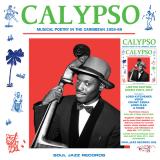
Calypso - Musical Poetry In The Caribbean 1955-69 (2x12")
  • 1: Lord Cobra Y Los Pana Afros – Man On The Moon
  • 2: Young Growler – Pussy Galore
  • 3: Lord Hummingbird – Teenage Bossa Nova Girl
  • 4: Lord Byron & Orquesta Nueva Alegria – Yes Parssin
  • 5: Cyril Diaz & His Orchestra – Voodoo
  • 6: Lord Flea & His Calypsonians – Out De Fire
  • 7: Brownie – The Bed Bug Song
  • 8: Count Zebra And The Seasiders – Cat-O-Nine
  • 9: Carlos Malcolm & His Afro Jamaican Rhythm – Elena
  • 10: Azie Lawrence And The Carib Serenaders – West Indians In England
  • 11: Lord Cobra Y Los Pana Afros – Negro Heart
  • 12: Lord Kitchener – Love In The Cemetery
  • 13: Charlie Binger & His Quartet – Jamaica Is The Place To Go
  • 14: Mighty Dougla – Exchange No Robbery
  • 15: Viper – Dog Better Than Man
  • 16: Lord Kitchener – Jamaican Woman
  • 17: Jb Williams Band – Gee Bongo Lady
  • 18: Lord Ivanhoe & His Caribbean Knights – Lift The Iron Curtain
  • 19: King Fighter – People Will Talk

Soul Jazz Records’ ‘Calypso – Musical Poetry in the Caribbean’ was first issued in 2014 and has been out of print for nearly 10 years. On its release ‘Calypso’ was voted one of the year’s best 50 reissues in Rolling Stone magazine and received glowing reviews in Pitchfork, The Guardian, Songlines and many more. This new edition has been fully remastered and comes as a one-off limited-edition double vinyl pressing on translucent green vinyl, complete with bespoke inners featuring extensive sleevenotes, notes on all the artists and songs featured, and original artwork and photography. The album is also available in a new card-edition CD package, also with complete notes and text.

Featuring Lord Kitchener, The Mighty Viper, Count Zebra, Lord Flea, Lord Hummingbird, King Fighter, Lord Growler, Lord Byron, Lord Ivanhoe and other members of Calypso’s aristocracy and aristocrats, the album features the music of Calypso in its many styles. Calypso is one of the most exciting and enduring forms of musical expression that first emerged at the beginning of the 20th century – swinging, persuasive rhythms, brilliantly expressive melodies, and lyrics of great humour, wisdom and wit. Here you will find music from Trinidad, birthplace of Calypso, other Caribbean islands including Jamaica and the Bahamas, as well as sounds from the style’s subsequent onwards journey including Britain, Panama and the United States. Calypsonian songs play out a role in society similar to the storytelling Griots of West Africa (and the corresponding music of Kaiso); with their own tales about popular and incredible news items, modern life, local politics all mixed up with sexual innuendo, one-upmanship, comedy and more. At its source, Calypso is intricately and inextricably bound to the social history of Trinidad and its myriad of traditions, beliefs, folklore and fables. As the music spread around the world, both from the diaspora of many of its performers as well as its commercial success, the subjects of songs similarly took on local topics.The most notable singer of Calypso in England was the Trinidadian Lord Kitchener, who came to Britain in 1948 on HMS Empire Windrush, along with fellow Calypsonians Lord Beginner and Lord Woodbine.

vorbestellen12.06.2026

erscheint voraussichtlich am 12.06.2026

26,85
Various - Longing for the Shadow: Ryūkōka Recordings, 1921-1939

Emerging during the early stages of the recording industry in Japan, the ryūkōka style adopted western classical, blues & jazz elements into traditional and classical Japanese music.

This collection of 1920s & 30s ryūkōka recordings follows on from the Kouta Katsutaro tape we put out a couple of years back, and further captures the hauntingly unique sound of a cultural merging that was starting to reflect itself via popular song, ahead of the widespread influence of western pop music during post-war US occupation.

"Death Is Not The End are on a mission to expand the musical archive, with compilations of everything from Jamaican doo wop to pirate radio idents and adverts weaving new threads into the history of music. Longing For The Shadow: Ryūkōka Recordings, 1921-1939 goes back to the beginnings of the recording industry in Japan, and a style merging traditional Japanese forms with western pop and classical. Swooning orchestrations and prominent vocals capture some of the melodrama and bombast found in US and European music of the time, but beds of plucked and strummed instruments give an ordered elegance, tying it firmly to Hogaku tradition. Not much has been written about Ryūkōka, and a 2017 book by Hiromu Nagahara gives some clue as to why, arguing that although popular with the public, it was dismissed by critics both for its adoption of western sounds and its dwelling on Japanese traditional styles. Close to a century later, those are some of the qualities that make this compilation so fascinating." - The Quietus

lagernd ab21.05.2026

21,64

Last In: vor 3 Monaten
Various - Dolores: Salsa & Guaracha From 70's French West Indies

In Guadeloupe, many people think that jazz and ka music are like a ring and a finger. To some extent, the same could be said about so called Latin music and the music played in the French West Indies.

Both aesthetics were born in the Caribbean and bear so many connections that they can easily be considered cousins. In constant dialogue, there are lots of examples of their fruitful alliance and have been for a while. The English country dance that used to be practiced in European lounges came to be called kadrille in Martinique and contradanza in Cuba. They both featured additional percussion instruments inherited from the transatlantic deportation. Drawing from shared feelings about the same traumatized identity – later to be creolized – it would be hard not to assume that they were meant to inspire each other. The golden age of the orchestras that graced the Pigalle nights during the interwar period further proves the point. As soon as the 1930s, Havana-born Don Barreto naturally mixed danzón and biguine music in a combo based at Melody's Bar. In the following decade, Félix Valvert, a conductor who was born and raised in Basse-Terre in Guadelupe, also worked wonders in Montparnasse with La Coupole, which was an orchestra made up of eclectic musicians. Afro- Caribbean performers of various origins were often hired on rhythm and brass sections in jazz bands, which used to enliven the typical French balls of the capital. In the 1930s and onwards, Rico’s Creole Band was one of them.


Martinican violinist-clarinettist Ernest Léardée, who would become the king of biguine music as well as the main figure of French Uncle Ben's TV commercials (a dark stigma of post-colonial stereotypes), had musicians from the whole Caribbean sphere play at his Bal Blomet – and they all enchanted "ces Zazous-là" (according the words of Léardée's biguine-calypso piece). In les Antilles (French for French West Indies), music history started to speed up in the 1950s, when trade expanded and radio stations grew bigger. The Guadelupean and Martiniquais youth tuned in their old galena radio sets to South American and Caribbean music. As for the women traders, les pacotilleuses, they bought and sold goods across different islands (the "passing of items through various hands" was thought to be most pleasurable) and brought back countless sounds in their luggage. Such was the case of Madame Balthazar, who once returned from Puerto Rico with the first 45rpm and 33rpm to ever enter Martinique.

Out of this adventure was created the famous Martinican label La Maison des Merengues, a music business she opened and undertook with her husband and which proved to be a major landmark. At the end of the 1950s, in Puerto Rico, Marius Cultier competed in the Piano International Contest playing a version of Monk's Round 'Midnight. He won the first prize and this distinction foreshadowed everything that was to come. Cultier, the heretic Monk of jazz, was quickly praised for writing superb melodies, always tinged with a twist that conferred a unique sound to his music. It didn't take long for the gifted self-taught musician to get to play with Los Cubanos, making a name for himself thanks to his impressive maestria on merengues.

The rest is history. Besides, in the late 1950s, Frantz Charles-Denis, born into the upper middle class in Saint-Pierre and better known by his first name Francisco, went back home after working at La Cabane Cubaine – a club located rue Fontaine where he had caught the Latin fever. Francisco's music was therefore heavily marked by his Cuban cousins' influence, which gave the combos he led a specific style and also led to renewal. Things were swinging hard in La Savane, located in the main square in Fort-de-France. He set up the Shango club close by and tested out the biguine lélé there, a new music formula spiced up with Latin rhythms. Soon afterwards, fate had him fly to Puerto Rico and Venezuela.

As for percussionist Henri Guédon (percussions were only a part of his many talents), he was born in Fort-de-France in May 22nd 1944, the day marking the celebration of the abolition of slavery. As an old man, he could remember that in " his father's Teppaz, a lot of hectic 6/8 music was constantly playing...". In the opening lines of his Lettre à Dizzy, a small illustrated collection of writings published by Del Arco, he highlighted the huge impact that cubop had on him as a teenage boy, around 1960. He eventually turned out to be the lider maximo in La Contesta, a big band steeped in Latin jazz. He was also the one who originated the word zouk to describe music which brought the sound of the New York barrio to Paris. It was the culmination of a journey that started in Sainte-Marie: "a mythical place for bélé, the equivalent of Cuban guaguancó". In the early 1960s, the tertiary economy developed to the detriment of agriculture. Yet rural life was where roots music emerged in Martinique and in Guadeloupe.

Record companies played a major part in the process of Latin versions sweeping across the islands – before reaching everywhere else. Producer Célini, boss of the great Aux Ondes label, and Marcel Mavounzy, both the head of Émeraude records - a firm which was founded in 1953 - as well as the brother of famous saxophonist Robert Mavounzy, were big names to bear in mind. Although there were many of them - all of whom are featured on this record - Henri Debs was definitely the major figure in the recording adventure. He proved to be so influential that he even got compared to Berry Gordy. In the mid 1950s, when he acquired his first Teppaz, he worked on his first compositions: a bolero and a chachacha. Then, he became the one man who made people discover Caribbean music, from calypso to merengue. He was among the first ones to rush out to San Juan, Puerto Rico, to buy records and distribute them through a store run by one of his brothers in Fort-de-France. He had members of the Fania All Star come and perform there, which he was madly proud about. He was also the first one to pay attention to Haitian music, such as compas direct and various other rhythms which would soon flood the market. As a result, many of the combos hitting his legendary studio would end up boosted by widespread "Afro-Latin" rhythms. However, he never denied his identity: gwo ka drums were given a major role, although they were instruments which had long been banned from the "official" music spheres. The present selection bears witness to such a creative swarming. Here are fourteen tracks of untimely yet unprecedented cross-fertilization: all types of music rooted in the Creole archipelago have found their way, whatsoever, to the tracklisting. Whether originating from the city or being more rural, they all go back to what Edouard Glissant, in an interview about the place of West Indian music in the Afro-American scope, called "the trace of singing, the one which got erased by slavery." "It is so in jazz, but also in reggae, calypso, biguine, salsa... This trace also manifests through the drums, whether Guadelupean, Dominican, Jamaican or Cuban... None of them being quite the same. They all point to the idea of a trace, seeking it out and connecting to each other through it. This is the hallmark of the African diaspora: its ability to create something new, in relation to itself, out of a trace. It may be the memory of a rhythm, the crafting of a drum, a means of expression which doesn't resort to an old language but to the modalities of it." The opening track features one of the emblematic orchestras of this aesthetic identity, criscrossing many music types from the archipelago. The 1974 Ray Barretto guajira – Ray Barretto was a major New York drummer influenced by Charlie Parker and Chano Pozzo – is magnificently performed by Malavoi, a legendary Fayolais group (i.e from Fort-de-France). Additionally, the compilation ends on a piece by Los Martiniqueños de Francisco. It symbolically closes the circle as it is a genuine potomitan of Martinique culture which also functions as a tireless campaigner for Afro-Caribbean music. Practicing the danmyé rounds (a kind of capoeiria) to the rhythm of the bèlè drum, it delivers a terrific Caterete, a kind of champeta of Afro- Colombian obedience which was originally composed by Colombian Fabián Ramón Veloz Fernández for the group Wgenda Kenya. The icing on the cake is Brazilian Marku Ribas, who found refuge in Martinique in the early 1970s, bringing his singing to the last trance-inducing track. These two "versions" convey the whole tone of a selection composed of rarities and classics of the tropicalized genre, swarming with tonic accents and convoluted rhythms. It is the sort of cocktail that the West Indians never failed to spice up with their own ingredients. For instance, the Los Caraïbes cover of Dónde, a famous Cuban theme composed by producer Ernesto Duarte Brito, has a typical violin and features renowned Martinique singer Joby Valente and his piquant voice.


The track used to be – or so we think – their only existing 45rpm. The meaningful Amor en chachachá by L'Ensemble Tropicana, a band which included Haitian musicians among whom was composer and leader Michel Desgrotte, also recalls how Latin music was pervasive in the tropics in the mid-1960s. They were the ones keeping people dancing at Le Cocoteraie in Guadelupe and La Bananeraie in Martinique. Around the same time, another "foreign" band, Congolese Freddy Mars N'Kounkou's Ryco Jazz, achieved some success on both islands by covering Latin jazz classics – such as their adaptation of Wachi Wara, a "soul sauce" by Dizzy Gillespie and Chano Pozo whose interweaving of strings and percussions can have anyone hit the dancefloor. How can you resist Dap Pinian indeed, a powerful guaguancó by Eugene Balthazar, performed by the Tropicana Orchestra and published by the Martinique-founded La Maison des Merengues? It also acts as a symbol of the maelstrom at work. Going by the name Paco et L'orchestre Cachunga, Roger Jaffory used to play guaguancó too: his Fania-inspired Oye mi consejo is one example of his style. Baila!!!!! Dancing was also one of the Kings' focus points. Oriza is a Puerto Rican bomba and a "classic" originally composed by Nuevayorquino trumpeter Ernie Agosto, which reserves major space for brasses, giving it a special sheen.

Emerging from the New York barrios crucible was also La Perfecta, a Martinique group originating from Trinidad, whose name directly references the totemic Eddie Palmieri figure as well as his own band, also called La Perfecta. Here they borrow Toumbadora from Colombian producer and composer Efraín Lancheros and interpret it by emphasizing percussions, which set fire to the track even more than the wind instruments. The same goes for Martinique's Super Jaguars, who use Tatalibaba – a composition by Cuban guitarist Florencio "Picolo" Santana which was made famous by Celia Cruz & La Sonora Matencera – as a pretext for sending their cadences into a frenzy. In a more typically salsa vein, the Super Combo, a famous Guadelupean orchestra from Pointe-Noire that was formed around the Desplan family and had Roger Plonquitte and Elie Bianay on board, adapt Serana, a theme by Roberto Angleró Pepín, a Puerto Rican composer, singer and musician also known for his song Soy Boricua. Here again, their vision comes close to surpassing the original. In the 1970s, L'Ensemble Abricot provided a handful of tracks of different syles, hence reaching the pinnacle of the art of achieving variety and giving pleasure. They played boleros, biguines, compas direct, guaguancó and even a good old boogaloo - the type they wanted to keep close to their hearts for ever, "pour toujours", as they sang along together in one of their songs. Léon Bertide's Martinican ensemble excelled at the boogaloo which had been composed by Puerto Rican saxophonist Hector Santos for the legendary El Gran Combo.


Three years later, in 1972, Henri Guédon, with the help of Paul Rosine on the vibraphone, tackled the Bilongo made famous by Eddie Palmieri. Such a classic!!!!! And so were the Aiglons, the band from Guadelupe: choosing to execute Pensando en tí, a composition by Dominican Aniceto Batista, on a cooler tempo than the original, they noticeably used a wonderfully (un)tuned keyboard in place of the accordion. On the high-value collectible single – the first one released by Les Aiglons under the Duli Disc label – there is a sticker classifying the track under the generic name "Afro". Now that is what we call a symbol. Jacques Denis


nicht am Lager

Bestelle jetzt und wir bestellen den Artikel für dich beim Lieferanten.

21,43

Last In: vor 59 Tagen
NORTH EAST SKA JAZZ - SULLA ROTTA DEI VENTI LP

''Sulla Rotta Dei Venti'' (On the Route of the Winds) is the brand-new album of Italian ska-jazz maestros North East Ska*Jazz Orchestra (NESJO). A collection of eleven own-penned original tracks, written and composed between 2020 and 2023, that frames a new chapter in the ten-year career of the band. In this record, NESJO bravely explores other worlds through music, which, as we know, is always also an inner quest. It is at the same time an effort to place their own music at the centre of the time and space in which they live, even at the cost of going beyond the stylistic limits linked to the band's chosen musical genre. Although, these new 11 cuts are built around rhythms that are undeniably of Jamaican origin, melodies are tainted with music from other traditions and sometimes also feature pop elements. Somehow, in this new album, NESJO has chosen to let the jazz big-band out of the orchestra pit and to mix with the popular sound of the street. Through the tracks of the record, NESJO creates mixed ensembles with the use of instruments such as strings, accordion, flute, clarinet, horn, tuba… together with the band's regular branding of sax, trumpets and trombones. Another novelty of this work is that the non-instrumental tracks are sung in Italian by the three singers Freddy Frenzy, Michela Grena and Rosa Mussin. And the musical journey takes us to exotic but at the same time very close sounds in 21st century Europe: Balkan (“Piazza Della Liberta”, “CiganSka #1”), Arabic (“Petrolio”), African (“Nimi Muzima”), Italian (“Roma Tokyo Paris”), and ska (“Donna Di Chi”) and a sophisticated ska-jazz suite (“Sulla Rotta Dei Venti”). The opening words of the first track of the album give us a glimpse of the feeling of vindication, brotherhood and hope contained in this set of songs: "Where is the empathy for those in difficulty / in the streets of Trieste that shout with vitality / indifference hearts of stone / dense black Balkan agony".

vorbestellen12.07.2024

erscheint voraussichtlich am 12.07.2024

21,64
MATTHIEU BORÉ - TILL THE MORNING LIGHT LP

French pianist, jazz vocalist and songwriter Matthieu Boré grew up surrounded by music and the arts. While his great-grandfather loved to give impromptu renditions of famous opera arias, his father's tastes were more modern and Matthieu's childhood was punctuated by the sounds of Eric Clapton, Bob Marley and the Stray Cats. At age 7, Matthieu began taking piano lessons, focussing predominantly on classical repertoire. In the 1990s he took his first steps into the music profession, singing in various punk and trip hop outfits, before pursuing his love of 1930s and 40s jazz. In early 2000, the young singer-pianist began playing the Parisian jazz club circuit and a year later, released an entire album of Fats Domino covers. In keeping with his fascination of 1950s R&B music, he issued Doo Wop in 2003. Sometimes on My Own (2007) is inspired by his idols Irvin Berlin, Hoagy Carmichael and Gershwin. 2009 saw the release of FriZZante!!, an album featuring a blend of covers and his own originals, with full orchestra. Matthieu Boré has performed at festivals and concert venues in both France and around the world, including the Montreal Festival, the Jarasum Festival (Korea), the New Morning and the Olympia. In 2011, he released a live album recorded at Paris's iconic Duc des Lombards. Roots (2012) was a surprising cocktail - a strong dose of New Orleans funk, from with Matthieu draws his own nonchalant style, combined with a predilection for acoustic sounds and syncopated grooves. In 2015, grammy-nominated Leo Sidran produced Naked Songs which explores the idea of pearing back songs to their defining elements. In Gumbo Kings (2019), Matthieu pays tribute to Allen Toussaint and The Meters through twelve original songs whilst his most recent release Till The Morning Light(2022) combines Jamaican ska and 60's garage rock influences.

vorbestellen05.08.2022

erscheint voraussichtlich am 05.08.2022

20,55
Various - Jazz in Jamaica - The Coolest Cats From The Alpha Boys School

Talking about the foundation of Jamaican music, the Alpha Boys School in Kingston can be considered as one of the places where it all began! Back in the day, under the direction of Sister Mary Ignatius, the school was the place where young boys from the poor neighborhoods in Kingston could embrace an instrument (mostly brass and drums). Then history tells us that some of these kids became among the most influential musicians in the history of Jamaican Jazz, Ska, and Reggae. Joe Harriott, Dizzy Reece, Tommy McCook, Don Drummond, Cedric Brooks, Rico Rodriguez, Johnny Osbourne, Leroy Smart and Yellowman are just some of the fruits of such a great community art project. Now this compilation contains some rare gems produced between 1959 and 1962 by Jamaican Jazz heavyweights such as Tommy Mc Cook, Don Drummond, Ernest Rangling, Lennie Hiibert, Cecil Lloyd and others. This is highly swinging music inspired by the Black American tradition with a unique and inevitable Caribbean flavour. Don't miss it!!!

vorbestellen05.02.2021

erscheint voraussichtlich am 05.02.2021

18,45
TOMMY McCOOK & FRIENDS - Horns Man Dub'
  • Track 1 Murderous Horn Dub – Rocking Jamboree Rhythms
  • Track 2 Wreaking Horns Dub – Wreak Up My Life Rhythm
  • Track 3 Natty Congo Dub – Roots Natty Congo Rhythm
  • Track 4 Tribulation Horn Dub - Tribulation Rhythm
  • Track 5 Everybody Needs Dub – Everybody Needs Love Rhythm
  • Track 6 Ambitious Dub – Breaking Up Rhythm
  • Track 7 Finding Dub – You’ll Never Find Another Love Like Mine Rhythm
  • Track 8 Catching Horns Dub – You Have Caught Me Baby Rhythm
  • Track 9 Springtime In Dub – In The Springtime Rhythm

Tommy McCook was not only a founding member of the legendary Jamaican Ska group The Skatalites, but also a brilliant musical arranger. His informed understanding of Jazz, R&B and in fact most music styles would always add another layer to any song put his way. This made him the go to guy for most of the Jamaican producers, who would use his arrangement skills to pepper up their latest tunes.

Tommy McCook, (b1927, Havana, Cuba) came to Jamaica with his mother from Cuba aged 11 and entered renowned Alpha Boys School for underprivileged children, a school that placed great emphasis on musical tuition. At the tender of 14, such was his talent he has left to join Eric Deans Orchestra and took on stints with other bands led by Don Hinchman and Roy Coburn. All the bands played in the Swing and Jazz style of the times. He relocated to the Bahamas in 1954 where he further developed his Jazz technique and upon his return to Jamaica in 1962 began working Coxsone Dodd’s Studio One and became involved in the development of Ska. His knowledge of Jazz, R& B and Jamaican musical forms helped set the tone for the group of musicians he was working with and would name the Skatalites. The group, consisting of Don Drummond (Trombone), Roland Alphonso (Tenor Saxophone), Jackie Mitoo (Piano), Lloyd Brevett (Bass), Lloyd Knibbs (Drums), alongside Tommy himself on Tenor Saxophone. The group would back all the major Ska vocalists pf the day and would also go on to cut a catalogue of instrumental music. The Skatalites split up in 1965 and Tommy McCook moved over to work with Duke Reid’s Treasure Isle Studios where he formed The Supersonics. A set of musicians under his guidance that consisted of Lynn Tait and Ernest Ranglin (Guitar), Neville Hinds and Winston Wright (Organ), Gladstone “Gladdy” Anderson (Piano), Hugh Malcolm and Arkland “Drumbago” Parks (Drums), Clifton “Jackie” Jackson (Bass), and Tommy and Hernon Marquis (Saxophone). The more laid back sounds from 1966-1968 would be given the name Rocksteady of which again McCook was at the forefront. The top producers like Bunny Lee would use the musicianship of Tommy McCook and his arrangement skills to enhance this new sound.

We have compiled a great selection of rhythms that featured McCook blowing over tracks stripped of their vocals and replaced with some fantastic lead lines played by Tommy and some of his fellow horns men.
We hope you agree like we do that they do this in fine style.

vorbestellen21.02.2020

erscheint voraussichtlich am 21.02.2020

13,40
90 Degrees Of Shade - Hot Jump-up Sounds From The Caribbean Record B

Soul Jazz Records’ new album 90 Degrees of Shade features the music of the Caribbean – Mambo, Calypso, Mento, Merengue, Latin Jazz and much more. The music of Cuba, Jamaica, Haiti, Puerto Rico, Dominican Republic and more all feature in this lightning journey through the many island sounds.

This is the sound of independence, righteous and hot jump-up sounds from the 1950s and 60s, an exciting period of endless new musical styles that would travel across the world – Mento, the Jamaican precursor to reggae; mambos and descargas from Cuba, Dominican merengue, Haitian compas – and more.

This album coincides with the release of Soul Jazz Records’ massive new deluxe large format hardback book 90 Degrees of Shade: 100 Years of Photography In The Caribbean (with foreward by Paul Gilroy) featuring hundreds of fascinating and unique photographs spanning one hundred years of Caribbean history.

The new album comes as a deluxe two-CD pack complete with large outsize booklet, packed full of info and original artwork. There are also two limited edition separate heavyweight double LP vinyl editions, each one housed in gatefold sleeves complete w

vorbestellen30.11.2015

erscheint voraussichtlich am 30.11.2015

30,21
90 Degrees Of Shade - Hot Jump-up Sounds From The Caribbean Record A

Soul Jazz Records’ new album 90 Degrees of Shade features the music of the Caribbean – Mambo, Calypso, Mento, Merengue, Latin Jazz and much more. The music of Cuba, Jamaica, Haiti, Puerto Rico, Dominican Republic and more all feature in this lightning journey through the many island sounds.

This is the sound of independence, righteous and hot jump-up sounds from the 1950s and 60s, an exciting period of endless new musical styles that would travel across the world – Mento, the Jamaican precursor to reggae; mambos and descargas from Cuba, Dominican merengue, Haitian compas – and more.

This album coincides with the release of Soul Jazz Records’ massive new deluxe large format hardback book 90 Degrees of Shade: 100 Years of Photography In The Caribbean (with foreward by Paul Gilroy) featuring hundreds of fascinating and unique photographs spanning one hundred years of Caribbean history.

The new album comes as a deluxe two-CD pack complete with large outsize booklet, packed full of info and original artwork. There are also two limited edition separate heavyweight double LP vinyl editions, each one housed in gatefold sleeves complete with insert, full text and free download code. Also comes as a worldwide digital release.

vorbestellen30.11.2015

erscheint voraussichtlich am 30.11.2015

30,21
  • 1
Artikel pro Seite:
N/ABPM
Vinyl