- 1: La Mort
- 2: Duo
- 3: New York Herald Tribune
- 4: Poursuite
- 5: L'amour, La Mort
- 6: Dixieland
- 7: Theme D'amour
- 8: La Mort (Version 2)
- 9: Poursuite (Version 2)
- 10: Campagne-Premiere
- 11: Blues Chez Le Bougnat
- 12: Juke-Box
- 13: Chanson D'angela
- 14: Le Lampadaire
- 15: Bastringe
- 16: Vivre Sa Vie
- 17: Main Theme From 'Eva
- 18: I Love Paris
- 19: Sous Le Ciel De Paris
- 20: La Vie En Rose
Cerca:jean luc godard
- 1
Audio-visual artists Soundwalk Collective were granted exclusive access to the personal archive of the groundbreaking filmmaker and present their ambitious New Album and Remix EP: What We Leave Behind released on 18th & 25th May 2018.
The NYC and Berlin based group were invited to aurally explore the archive of the seminal French director Jean-Luc Godard and release their interpretations in an innovative new album What We Leave Behind. Drawing on Godard's personal collection of shot film, reel- to-reels and historical ephemera, the recordings reveal the moments before and after the camera rolls, from stage directions and on-set asides to rehearsals, false stars and outtakes.
'There are boxes filled with sounds, words, chaos, and also silence. For Godard sound is a musical composition and when I began listening to the tapes and heard his voice between takes, it was like little bits of life...each sound has its own value. It has always been part of our working practice to venture into untapped sonic territories, discover the poetics behind them, and explore how we (as humans) relate to it, it is part of a larger discourse.' - Stephan Crasneancki, Soundwalk Collective
Revealing much insight to the director's process and personality, the 6-track album will be followed by a remix EP, featuring unique reworks from Ricardo Villalobos, Jan Jelinek and Petre Inspirescu.
What We Leave Behind, and the subsequent remix EP, arrive 50 years to the day that the the Cannes Film Festival, 1968, was closed after Jean-Luc Godard, Francois Truffaut and Claude Lelouche, publicly announced their closing of the festival in solidarity with workers and students protesting across the country.
The LP features a conversation between Stephan Crasneanscki, of Soundwalk Collective, and Franc¸ois Musy, Jean-Luc Godard's sound engineer, printed on a translucent paper insert. The LP and Remix EP both contain imagery taken by Stephan Crasneanscki of the archives, which he has also filmed to create a series of mesmeric short music videos of original and remix tracks.
An international genre-bending group of artist-musicians with studios in New York City and Berlin, the three members of Soundwalk Collective (Stephan Crasneanscki, Simone Merli, and Kamran Sadeghi) formed in Manhattan to produce concept albums, sound installations, and live performances, and have worked with a diverse range of collaborators, from Nan Goldin and Patti Smith to Berghain and Zaha Hadid.
- A1: Intr'o Loves Dub (Theme Expozition)
- A2: Major T-Bay Loves Dub (Rythm O'dub)
- A3: Major T-Bay Loves Dub (Far, O'dub, Ahmix)
- A4: Outr'o Loves Dub (Theme Impression)
- B1: Intro Shake (Theme Expolsion)
- B2: Shake A Leg High Life (Dub, Sun, Arp)
- B3: Shake A Leg High Life (Xendubz Akismix)
- B4: Outr'o Shake (Overdrive Bird
Hybrid is a word used indiscriminately in our daily lives. This record isn't a hybrid; it's beyond hybrid, post-hybrid, so to speak. Does this phrase sound complicated to you, and are you never overly convinced by music theory and its caricatural aspect? Then forget what you’ve just read and listen to both sides of this record. You'll soon realise that these tracks are deliciously deft, drawing their essence from dub while leaving room for some skillful jazz writing. For those of you intrigued by melodies, the art of musique concrète or the exploration of dub music’s deviant angles, this record will easily find its place on your turntable.
The two sides of the record are cut with play, improvisation and effects, while leaving room for themes and ideas. If this record’s first chapter was born from a request to remix and pay homage to Jackie Mittoo, its themes tell another story. They have been declined and even reduced to an explosion point. The tracks are also driven by subtle details of musique concrète, giving the record the effect of an intimate musical production – but, above all, one of uncategorisable beauty.
In Androo’s case, this is hardly surprising. He is a craftsman who is unassailable in every respect, a poetic dynamiter and, for this reason, one of the most unpredictable musicians in Geneva (and beyond). His appetite for dynamite is perhaps an indication of his conception of music as, first and foremost, an experience. His highly personal and inventive tribute to figures from free jazz and contemporary music proves the point. But perhaps it is also an indication of his attachment to Jean-Luc Godard. You'd have to imagine Androo at his mixing desk without a pre-written script. The idea of editing infuses the record. The two sides are very much in this style and spirit: (un-)shot, meticulous, (ir-)reverent. In this respect, this record is a formidable proposition, and perhaps difficult to understand, but not striving to be understood.
Its combination of improvisation and composition is underpinned by a razor-sharp precision and dexterity that's hard to ignore, especially if you're curious about the art of sound mixing and the romantic accidents. It has a dexterity that transforms musical grids into romantic essays and sketches. A romanticism in which Androo takes us on a liberating musical experience that makes us forget the inertia of the ramping formatting of the record industry. In any case, this record is an invitation to (un-)think the category, and will delight any ear curious to wander into territories of intuition where the word hybrid no longer makes sense.
Text by Carl Åhnebrink
- 1: Thoughts Of You
- 2: Shadows
- 3: Precious Time
- 4: Monsoon Season
- 5: Rosewood Ave
- 6: Vignette #1
- 7: Vignette #2
- 8: Carried By Six
- 9: Villano
- 10: 96 Hours
- 11: Insomnia
For Fans Of... 60's and 70's French Noir Scene / Black and White film photography, The Rugged Nuggets, Dirty Art Club, Massive Attack, Misha Panfilov, The Ironsides, Doctor Bionic, Blockhead, DJ Shadow, Sven Wunder. First Salvator Dragatto full length LP to be released on Colemine. All members of The Rugged Nuggets (205k monthly listeners / 8.4k followers on Spotify) played on this LP. 60's French Noir Cinematic Soul. Produced by Joey Reina. This record is an homage to the likes of André Kertész, Robert Frank, Jean-Luc Godard and René Groebli. Artist has previously released three successful 45s. Thoughts of You, as a phrase, might immediately associate one with feelings of love, endearment, fantasy or even obsession. These are the very sentiments that lay as cornerstones in Salvator Dragatto’s debut LP for Colemine Records. The allure and drama of black & white photography have always played a vital role in how Salvator (aka Joseph Reina) not only views the world but how he hears music. Parallels in film processing to his own recording methods started becoming more and more apparent as the record was being formed; Limitations in exposures rivaling limitations in tracks. Film grain and dust sediments rivaling tape hiss and dirty EQ pots. What most would consider to be imperfections, Dragatto leaned into and found inspiration. This record is an homage to the likes of André Kertész, Robert Frank, Jean-Luc Godard and René Groebli, who’s works have impacted Dragatto’s world so greatly both visually and sonically. Thoughts of You is an unabashed reflection of the noir. From the powerful thematic horn lines to the gentlest string passages, this record is a collection of themes and vignettes that explore the emotions set upon by black and white imagery
Thoughts of You, as a phrase, might immediately associate one with feelings of love, endearment, fantasy or even obsession. These are the very sentiments that lay as cornerstones in Salvator Dragatto's debut LP for Colemine Records. The allure and drama of black & white photography have always played a vital role in how Salvator (aka Joseph Reina) not only views the world but how he hears music. Parallels in film processing to his own recording methods started becoming more and more apparent as the record was being formed; Limitations in exposures rivaling limitations in tracks. Film grain and dust sediments rivaling tape hiss and dirty EQ pots. What most would consider to be imperfections, Dragatto leaned into and found inspiration. This record is an homage to the likes of Andre' Kerte'sz, Robert Frank, Jean-Luc Godard and Rene' Groebli, who's works have impacted Dragatto's world so greatly both visually and sonically. Thoughts of You is an unabashed reflection of the noir. From the powerful thematic horn lines to the gentlest string passages, this record is a collection of themes and vignettes that explore the emotions set upon by black and white imagery.
Thoughts of You, as a phrase, might immediately associate one with feelings of love, endearment, fantasy or even obsession. These are the very sentiments that lay as cornerstones in Salvator Dragatto's debut LP for Colemine Records. The allure and drama of black & white photography have always played a vital role in how Salvator (aka Joseph Reina) not only views the world but how he hears music. Parallels in film processing to his own recording methods started becoming more and more apparent as the record was being formed; Limitations in exposures rivaling limitations in tracks. Film grain and dust sediments rivaling tape hiss and dirty EQ pots. What most would consider to be imperfections, Dragatto leaned into and found inspiration. Opaque Natural Vinyl. This record is an homage to the likes of Andre' Kerte'sz, Robert Frank, Jean-Luc Godard and Rene' Groebli, who's works have impacted Dragatto's world so greatly both visually and sonically. Thoughts of You is an unabashed reflection of the noir. From the powerful thematic horn lines to the gentlest string passages, this record is a collection of themes and vignettes that explore the emotions set upon by black and white imagery.
Les Disques du Crepuscule presents a unique anthology by artful Brussels postpunk-funk band Marine, fondly remembered for their dazzling debut single ‘Life In Reverse’ in 1981, and now back with a clutch of brand new studio tracks.
The cover art is by LDDC art director Benoit Hennebert and based on the ‘Same Beat’ single sleeve from 1982. The vinyl edition s of TWI 143 is limited to 500 copies pressed on blue vinyl and includes a digital link. All tracks are newly remastered in 2023.
Formed in late 1980 around charismatic frontman Marc Desmare together with musicians from infamous punk band Mad Virgins, Marine made an early splash supporting Orange Juice and Josef K at the legendary Plan K venue, Postcard Records afterwards keeping tabs on the Sound of Young Brussels.
Snapped up instead by chic boutique label Les Disques du Crepuscule, Marine released their infectious debut single ‘Life In Reverse’ in April 1981, attracting rave reviews in the Belgian and UK press, reaching the giddy heights of #6 on the NME indie chart, and even being invited to record a radio session for John Peel - a world first for a Belgian band.
Soon favourable comparisons were being drawn with The Pop Group, A Certain Ratio, Defunkt, James White and Fire Engines, some pundits even sensing a new Haircut 100. ‘We’re not a fashion band,’ insisted Marc in UK rock weekly Sounds, ‘and it’s not really dance music. But all the same I’m glad people dance to it.’
Alas, artistic differences caused the fast-rising group to part ways in a London studio, when half the band quit to form pop-funk sophisticates Allez Allez. With new Marines on board, Marc and bassist Paul Delnoy went on to release two further singles (‘How to Keep Cool’ and ‘Same Beat’), gigged extensively around France and the Low Countries, and played a headline show at The Venue in London. ‘Fine, disciplined and gleeful rhythm workers,’ enthused Chris Bohn in NME. ‘A happy, contagiously clean aural equivalent to a Serge Clerc cartoon.’
Alas by the summer of 1982 Marine were all washed up, with Marc going on direct films and documentaries as Marco Laguna. Four decades later, finally heeding desperate pleas from Crepuscule that his sensational first band never cut an album, Marc has written and recorded another 6 remarkably authentic sounding Marine songs with help from like-minded friends in Brussels and Paris, once more drawing on a heady mix of supercool funkabilly, jazz and soundtrack influences.
‘It was an incredibly strange experience to revisit my past,’ says Marc, ‘but definitely fun. I’m glad, and I’m proud!’
- A1: Senza Motivo Apparente
- A2: Sospensione Folle
- A3: Il Movente
- A4: Ricerca
- A5: In Pieno Petto
- B1: Senza Motivo Apparente Version 2
- B2: Ricerca Version 2
- B3: Senza Motivo Apparente Version 3
- B4: Sospensione Folle Version 2
- B5: Senza Motivo Apparente Version 4
- B6: In Pieno Petto Version 2
- B7: Il Movente Version 2
- B8: Senza Motivo Apparente Version 5
Wewantsounds is delighted to present one of Ennio Morricone's best and least known soundtracks for the 1971 cult French crime film 'Sans Mobile Apparent' directed by Philippe Labro. This superb soundtrack featuring Morricone's classic sound has never been widely available on vinyl save for a small limited edition released under the film's italian title. The set has been remastered from the original tapes with lacquer cut by Frederic Alstadt (Mont Analogue) and gatefold sleeve designed by Eric Adrian Lee. Last but not least Philippe Labro himself has shared his experience in an exclusive interview with Jeremy Allen, discussing the making of the film, working with the Maestro (at only 34 years old) and his amazing career crossing path with Jean Luc Godard, Serge Gainsbourg and Jean-Pierre Melville.
Repress!
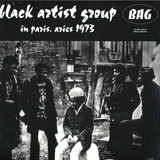
Outstanding free jazz session recorded in 1973 in Paris by Chicago outfit BAG.
It was Lester Bowie, trumpeter with the Art Ensemble of Chicago, who suggested that the Black Artists' Group (BAG) should head for Paris. In 1972 several members of BAG took his advice and flew to France for an extended stay. The following year a concert featuring saxophonist Oliver Lake, trumpeters Baikida Carroll and Floyd LeFlore, drummer Charles Bobo Shaw and trombonist Joseph Bowie (Lester's younger brother) was recorded and subsequently issued as In Paris, Aries 1973, a strictly limited edition LP on the group's own label.
Since the formation of Black Artists' Group in 1968, the home of this multidisciplinary arts collective had been St Louis, Missouri, the city where the Bowie brothers had grown up. It was there that Lester Bowie had started to investigate the expanding horizons of jazz before moving, in 1966, to Chicago where he joined the recently established Association for the Advancement of Creative Musicians (AACM). His close friend Oliver Lake visited Bowie, attended AACM concerts and meetings and was inspired not only by their artistic vision and integrity but also by their efficient organisation. In Chicago musicians were making things happen for themselves, taking control of their own destinies and giving shape to their lives as creative artists.
In June 1969, the Art Ensemble of Chicago had taken their music to France. During the preceding decade Paris had established a reputation for audiences that were unusually well-informed and open-minded, receptive to the uncompromising music of black American innovators such as Cecil Taylor, Ornette Coleman, Albert Ayler and Sun Ra. The city that had nurtured not only Cubism and Surrealism, but also Jean-Luc Godard and contemporary cinema's Nouvelle Vague was well prepared for the sonic collage forms and stylistic dislocations of the Art Ensemble. During that same month violinist Leroy Jenkins, trumpeter Leo Smith and saxophonist Anthony Braxton also arrived in Paris, three further emissaries from the AACM.
The adventure of collective improvisation resonated with the Parisian zeitgeist. Enthusiastic audiences attended their concerts and coverage in the media. In Paris, Aries 1973 offers an isolated and fascinating glimpse into that phase of the group's existence. The album is dedicated to the memory of Kada Kayan, a bassist who had hoped to make the trip from St Louis to France but, tragically, had grown ill and died. His absence adds special poignancy to the sound of the bass when it appears on this recording, played by Baikida Carroll. Listeners keen to hear Kayan himself in the company of Lake, Bowie, Shaw, LeFlore and Carroll should seek out Red, Black and Green by the 10-piece Solidarity Unit, Inc. That album, recorded on 18th September 1970 and dedicated to Jimi Hendrix, who died on that day, features an earlier version of Shaw's composition 'Something to Play On.'
In Paris, Aries 1973 reveals BAG's musical affinities with the Art Ensemble of Chicago. Both groups preserved an independently minded approach to the notion of free jazz and a carefully filtered awareness of pan-African musical practices, while their creative interest in space, mobile structure, chance occurrences and simultaneity also suggests parallels with the concerns of leading experimental composers working at that time. These performances in Paris of Shaw's 'Something to Play On' and Lake's 'Re-Cre-A-Tion,' plus two collective compositions/improvisations, display the dedication to structural fluency and sensitivity to coloration that accompanied BAG's unorthodox group dynamics and their unconventional instrumental combinations. In this case the musicians embrace congas, log drums, marimbas, woodblocks, cowbells and gongs. This is not a showcase for solos, but a shape-shifting and multi-centred statement of togetherness, quest and discovery. Removed from BAG's original multidisciplinary context the music still exudes an exhilarating spirit of collaborative exploration and shared excitement.
Big AC Records and renowned music photographer, Dean Chalkley, present ‘So Pure’, an astonishing soulful single written and recorded in just 48 hours by six musicians working together for the first time.
The collective, named Phono 48, features neo-soul singer Laville, Kitty and Lewis Durham (of Kitty, Daisy and Lewis), Amané Suganami (Maisha), Solomon Douglas and Nick Corbin, all of whom entered the studio with no preconceived ideas of what they would create.
The result is a beautifully crafted, contemporary-sounding song; Laville’s positive lyrics and smooth, laid-back vocal are soundtracked by an infectious piece of music, with all participants blending seamlessly to create a track at the intersection of soul, funk and jazz.
‘So Pure’ anchors the multi-media ‘New Perspectives’ project devised by Dean Chalkey, who captured the magic of the two days’ studio time in a vast series of documentary style images.
Additionally Chalkley and art director Ciaran O’Shea created a short experimental film with different abstract elements reflecting this brilliant creative journey, inspired by Jean Luc Godard’s ‘Sympathy For The Devil’, where the director shot the Rolling Stones as they made their famous record.
The multi-faceted ‘New Perspectives’ project also includes a one-off journal written by music journalist Andy Thomas. The project will launch on 17th February at The Museum of Youth Culture with a photography exhibition and film screening.
"What took you so long?" might be a valid question concerning the ten year gap between Zanshin's new album "In Any Case By Any Chance" and his first album "Rain Are In Clouds".
Of course it is a question that the Viennese musician has asked himself quite startled in his usual self-critical manner, just to realize at a closer look that it has not been a lack of creativity or laziness at least. He used the Zanshin moniker on four EP releases and several remixes, plus a game soundtrack. Not to forget all his output as one half of producer duo Ogris Debris (the album "Constant Spring" from 2016 and roughly two dozen singles and remixes) and the many, partly award-winning audiovisual installations and performances with Leonhard Lass as DEPART (depart.at). Furthermore he has also built two sound installations in 2021, "I Gong" at Elevate Festival and "Cymatic Sands" at Ars Electronica. In addition, Zanshin performs with the Max-Brand-Synthesizer from time to time as part of the compositions by Elisabeth Schimana, and together with label mate Dorian Concept he has also composed and performed the piece "Half Chance/Music for Moogtonium" for this unique instrument, built by Bob Moog himself.
Not spared by certain global developments of recent years, but rather invigorated by exploring his own resilience, Zanshin had a talk with Affine Records Operator Jamal in the beginning of 2021, speaking of future ideas and releases. And what was initially a single release spawned into a whole album in seemingly no time. An old skit ("Polar Polychrome") on the Roland MC-505 groove-box that had never really been forgotten, but was rather waiting patiently somewhere in the back of his mind, suddenly proved to be the initial spark for the album.
The term "Zanshin", roughly translated as un-focussed attention, is in fact more than just a pseudonym but rather a directive in the artists life. Zanshin really likes to go in several directions at once, kind of according to Wittgenstein's claim that "The world is everything that is the case.", to find out where his love for music might lead him this time. He also somehow went back to his roots with this album. Not necessarily in the sense of certain musical influences or genres, because then the album would be even more eclectic than it already is. More like a focus on the core values in the fabrication process of the music itself, the freedom to rather follow the structures and sounds than to shape them in a completely predetermined way. Somebody once called it, "to weave what the music demands."
In this regard, Zanshin often feels more like a sculptor and tries not toadhereto strongly to the rules of specific sub-genres of electronic music. Searching for sounds and designing them is one of the energies that fuels his interest the most, thus at the beginning of a lot of tracks there are small skits and ideas that have the freedom to grow in whatever direction.
Hence this album has no elaborate story to tell, there is no extensive "narrative" or big time "storytelling" at work. "In Any Case By Any Chance" is not a novel but rather a collection of short stories (which are certainly dense and have complex plots nonetheless). The result is a long-player where playful electronica, skillful songwriting, extrovert dance music and symphonic film music enter into a symbiotic relationship. Returning to another Wittgenstein quote, "Whereof one cannot speak, thereof one must be silent", the emotional impact of music is the main focus and the results can be quite solemn at times, but around the corner always lurks the next bone-breaking rhythm pattern and gnarly sound design.
The infamous saying, "writing about music is like dancing about architecture", is another brick in the wall of sound in Zanshin's approach to music. He rarely roots himself in traditions or uses them too overtly, he really likes to agglomerate sounds, to challenge the listeners. It seems like he tries to avoid classification on purpose, because he knows that everyone has their own perception anyway. The only thing that this music demands implicitly is a willingness to listen attentively.
Very dense, at times really heavy and massive, then again airy and playful. "Music for clubs that don't exist.", might be another fitting caption to describe this album, which lasts for a little more than an hour.
The opener "Heatseeker" rushes to a sudden head start with its steel pan extravaganza, tropical vibes meet a bass line drenched in electro funk, and electrified synth stabs support the declaration of love in the lyrics. Kind of Jamie XX meets Electro meets Diva House. The monster that is "Bronteroc Brawl" is up next, a serious test for the speakers and a wild ride with metallic, growling sounds. The aggressive sound design reminds of suspense ridden shark chases, vicious dogs and cunning dinosaurs, in any case a track for people who love a proper bass stomper.
A new approach for the "indie discotheque" brings the emotional roller-coaster "In Gloom" with snappy drums and hypnotic synth motives á la Alessandro Cortini, creating an epic atmosphere together with the multi-layered vocals. A psycho-acoustic treat is position 4, the crisp instrumental "Polar Polychrome", you could even go as far as calling this a Zanshin signature track. Like mentioned before, the roots of this track go back to 2002 and you can hear the unmistakable influence of beat wizards like Photek, a piercing bass line is supported by poly-rhythmic drums, while dense pads try to escape the claustrophobic lockdown mood of winter 2020/21.
Another round of intense pathos waits for the listeners in the ensuing track "In Search Of". Moderat say "Hello", a melancholy piano melody is rushed to a climax by a wild bass arpeggio and forceful drums, the desire for a perfect sunrise at the next after-hour to the max. Initially just an appendix to the preceding track, "Time After Thought" swiftly developed from a mere improvisation to an ambient epic with a croaking alien piano, as if Keith Jarrett were on his way to Alpha Centauri.
Up next is the first single "Because Why", a breakbeat driven, synth-heavy track with winged vocals and a popular film quote. The title refers to the movie "Alphaville" by Jean-Luc Godard, a dystopian science fiction film noir, in which an omniscient computer system named Alpha 60 is ruling society and humans can only say "because" but never "why". As if the gears of a galactic mechanism were spinning into motion sounds "Identity Slices". A raspy chord structure finds its counterbalance in a kind of stumbling, wonky beat, and Zanshin would never deny the huge influence that Autechre's sounds and structures always have had on his music. Micro- and macrocosm meet on the same level and this friction is also a metaphor for questions of identity and self-awareness, without using voices or lyrics.
Off we go into the IDM bubble bath of "Enzyme Enigma", the bass drum is stomping and a fizzy acid-line is twisting in all directions behind rolling dub-techno chords. "Corrosion Creak" is a kind of acoustic degradation process, the rave dogs are finally let loose and everything happens at once, funky synths shred, string sounds wail and then there is this bass that sounds like smashing a rusty metal plate in the junk yard with a vengeance.
Towards the end everything slows down a bit, the beat in "Whatever Words" is Warp school cerebral hop at its best and therefore loads of glittery, creaky sounds swarm out until the synapses are overloaded, cumulating in a mighty bass ending. Last but never least, "Rebus Redux" guides us into the limitless night sky, with long indulgent pads dotted by an aimlessly wandering piano, while a compact net of tamed resonances and meandering sub frequencies unfolds in the background, enticing navel-gazing imagination.
- A1: Après Le Vin
- A2: Philadelphie Story (With Soko)
- A3: La Dispute
- A4: L'enfer
- A5: Elle S'échappe
- A6: Le Cadeau
- A7: Le Sacre Du Printemps (With Asia Argento)
- B1: Le Souvenir
- B2: Les Trois Cloches
- B3: Bonbon
- B4: L'ennui
- B5: Bonbon
- B6: La Question
- B7: Au Sommet
Musique de film imaginé (music for film imagined) is a soundtrack that pays homage to the great European film directors of the late 50's and 60's, such as François Truffaut & Jean-Luc Godard (to name but two), created by Anton Newcombe on behalf of the Brian Jonestown Massacre for an imaginary French film. Guests on this daring symphonic experience are French chanteuse and multi-instrumentalist SoKo and Italian actress, singer and director Asia Argento. SoKo is signed to Because Music and her track 'We Might Be Dead by Tomorrow' was featured in the viral video 'First Kiss', which has garnered over 63 million views and debuted at number 9 in the Billboard Hot 100 last year. Asia Argento, who has starred in music videos for Marilyn Manson, Placebo and Tim Burgess, recently wrote the storyline for ASAP Rocky's music video and short film 'Phoenix', which has had over 5.5 million hits. Both vocal performances are in French. Anton Newcombe recorded Musique de film imaginé in Berlin in August 2014, after a successful European tour for the Brian Jonestown Massacre.
Soundwalk Collective is a multi-disciplinary audio-visual collective founded by Stephan Crasneanscki, including members Simone Merli and Kamran Sadeghi.
The Collective's approach to composition combines anthropology, ethnography, non- linear narrative, psycho-geography, the observation of nature, and explorations in recording and synthesis. The source material of their works is always linked to specific locations, natural or artificial, and requires long periods of investigative travel and field work.
Their recent projects include a collaboration with Patti Smith and reworking the archive of recordings on Jean-Luc Godard's film set.
For the 8th Marionette publication, Soundwalk Collective present 'Death Must Die'. A sound piece that began in 2004 and ended up as a composition for the PS1 radio in NY. For this New release the Collective has revisited the piece in a more musical way.
'Death Must Die' is based on Stephan Crasneanscki's multiple visits to the sacred Indian city of Varanasi, originally known as Kashi and Banares. Sacred texts maintain that Varanasi isn't even a city, but rather a lingam of celestial light, the subtle and cosmic form of Lord Shiva which manifested itself as a city for the sake of seekers of liberation. To bathe in the holy Ganga is to be purified of your sins. To die in Varanasi, is to attain liberation and to bring an end to the cycle of rebirth known as transmigration. Determined to capture the elusive reality of this ancient city, Stephan has day by day recorded and re-imagined his understanding of how to perceive the continuously moving stream of the holy Ganga; performing a simple form of sadhana, which request is to be very alert but also to allow your mind to be quiet, making it easier to slip into the streams, and into the current that both the city and the river are offering.
'Death Must Die' begins before the rising of the sun and reproduces the cycle of a day in Varanasi, going down the river that is believed to be the divinity descended to this Earth in the form of water. She grants us happiness and salvation. The composition attempts to emulate the vibration of Kashi that encourages the kind of interiority that enables a person to get a better perspective on reality than one might have, while constantly being in the current of human life. A vibration dedicated to eliminating the distinction between human and non-human, between alive and dead, between light and dark.
- 1