Purveyors of deep-tinged electronic grooves since 2008, Ornate Music returns for their next analogue emission. Dropping four refreshingly shaped cuts from mysterious Bolton boy: Jimmy The Hand. A seriously talented artist and shaper of off-kilter sonics, Jimmy works his alchemy in all the right places on this impressive collection of creations. Punchy drums and uplit mood colour the way in opener 'Nail Varnish'', as 'Delve Deep' opens the Arps to crunched drums, setting the mind to cycle with impressive effect. Over on the flip, rising pads and rhythmic shuffle fuse with warped effects as you skip through the sunny climes of 'That's More Like It'. Last but not least, you're met with the RAW punch of 'Breath': a full complement of Millsian influenced psychotropia that leaves you screaming for more, you've been warned.
Cerca:jimmy the hand
Tucky Buzzard
The Complete Tucky Buzzard 5 Lp Slipcase Box Set
- Having Come To The End Of The Psychedelic Path, The End Decided On A Change Of Musical Direction And A Change Of Name,
Arising From The Ashes As Tucky Buzzard In 1970 And Retaining The Line-up Of Guitarist Terry Taylor, Organist Nicky Graham,
Drummer Paul Francis, Bassist Dave Brown, And Vocalist Jimmy Henderson.
- The First Album, Recorded With Madrid Philharmonic Orchestra Directed By Waldo De Los Rios, Contained Some Last Vestiges
Of The Band's Previous Existence. But The Second Album, Produced By Old Associate Bill Wyman With Glyn Johns At Olympic
Studios Set Out The Band's Template Of Bluesy Rock, A Leading Genre At The Dawn Of The 70s. Mick Taylor Makes A Guest
Appearance.
- For The Fourth And Fifth Albums, The Band Was Signed To Deep Purple's Own Purple Records. Bill Wyman Continued In The
Producer's Chair, But The Departing Nicky Graham Was Replaced With A Second Guitarist.
- Strictly Limited To 750 Copies, And Housed In A Numbered Rigid Slipcase Featuring Photos From The Collection Of Terry Taylor
(bill Wyman's Right Hand Man In The Rhythm Kings For The Last 25+ Years), All The Original Sleeves (including Two Gatefolds)
Are Faithfully Reproduced. The Inner Sleeves Feature Extensive Annotation By Alan Robinson Based On Interviews With The Band.
- A1: You Came Thru
- B1: Hurry Up Tomorrow
The Nu’rons were a family group consisting of two sets of brothers and cousins, the four young men in question being brothers Daryl Howard and Raymond Gibson (Daryl’s mother registered him under his father’s surname of Howard and Raymond under her maiden name of Gibson) together with Otho Bateman and Charles Bateman. They were all born and raised in Salem, New Jersey and from the age of ten and eleven began singing with a fifth member and Gibson brother Rudolph as a group called The Gospel 5. They eventually decided to crossover to secular music and as a group known for their energetic dance routines they came up with the new performing name of ‘The Nu’rons’ (taken from the word ‘Neuron’ which is a cell that transmits nerve impulses). However Rudolph was soon to leave the group due to physical illness. Also Daryl Howard and Charles Bateman had also been part of a working group known as The Devotions prior to becoming The Nu-Ron’s.Following hours of practice The Nu’rons eventually felt confident enough to put their own shows together and began to perform at local dances and parties around New Jersey and Philadelphia, often being used as a non-paid warm up act for bigger named artists. They moved between several different managers including Jimmy Bishop (Duo Dynamic Productions) until they came under the tutelage of WDAS radio DJ Georgie Woods (his wife Gilda, being the owner of the Philadelphia Gil, Dion and Top & Bottom record Labels). It was Georgie who introduced them to Manny Campbell who in turn invited them to an audition at his and partner Charles Bowen’s Emandolynn Music studio in Chester P.A. The song The Nu’rons chose to audition with was the self penned “I’m A Loner”, the audition went well, as during late January/early February of 1970 Manny and Charles took The Nu’rons into the Sigma Sound Studio’s with Tom Bell and the TSOP musicians to record “I’m A Loner” and “All My Life” which was released on the Nu-Ron label in April of the same year. The two studio takes presente don this release came short after the band moved on from the collaboration with producer Emanuel Campbell to take music matters in their own hands. Beside recording "Disco Hustle" to be part of the disco boom in Philly of the times, they recorded also “You Came Thru”, a rough yet beautiful heavy bassline driven soul funk recording, and the just amazing “Hurry Up Tomorrow”, here presented in one of the original Studio takes.
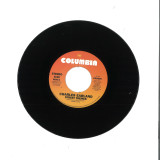
“Coming To You Love” is a classic and ever popular jazz funk and soul release from 1980. From its original release, the LP and 12” versions have dominated, this 7” version only recently coming to light as a different take on the track with a bonus Charles Earland organ solo. Since the realization of its existence, the previously styrene only US Columbia 7” has exchanged hands for increasingly higher amounts.
Charles came from Philadelphia, played sax first with Jimmy McGriff before turning to organ in the late 60s and earning a nickname ‘The Mighty Burner’
During his time at Mercury records he scored a hit song with the disco record “Let The Music Play”, building an audience with a jazz funk and soul crowd which exists to this day through numerous other releases on Mercury and then Columbia through to his passing in 1999.
- A1: Marvin Gaye & Tammi Terrell - Tears At The End Of A Love Affair
- A2: Brenda Holloway - Think It Over (Before You Break My Heart)
- A3: Jimmy Ruffin - He Who Picks A Rose
- A4: Gladys Knight And The Pips - If You Ever Get Your Hands On Love
- A5: The Originals - Suspicion
- A6: Barbara Mcnair - Baby A Go-Go
- A7: J. J. Barnes - (Tell Me) Ain't It The Truth
- A8: The Funk Brothers - Tell Me It's Just A Rumour Baby
- B1: Marvin Gaye - This Love Starved Heart Of Mine (It's Killing Me)
- B2: The Monitors - Crying In The Night
- B3: Kim Weston - You Hit Me Where It Hurt Me
- B4: Carolyn Crawford - Keep Stepping (Never Look Back)
- B5: The Contours - Baby Hit And Run (Alternate Vocal)
- B6: Tammi Terrell - I Gotta Find A Way To Get You Back
- B7: The Spinners - Memories Of Her Love Keep Haunting Me
- B8: Chris Clarke - Come On And See Me
The title says it all - A Cellarful Of Motown! ..A Northern Soul Love Affair.
West Grand has been set up to mine the deep vaults of mighty Motown courtesy of a licence deal with Universal Music.
The first West Grand LP fuses two musical religions, Motown and Northern Soul.
In some ways they are unlikely bedfellows. Motown became known as Hitsville by churning out hit after hit, while Northern Soul passion is fired by a constant search for the unknown and the obscure.
The 16 tracks here - on incredibly the first Motown various artists vinyl album released worldwide for 40 years - join the dots. All of them were recorded in the 1960s. None of them were released at the time, despite being prime examples of the sublime magic conjured up by Berry Gordy’s genius-like team of singers, writers, producers, arrangers and musicians at that tiny little snakepit of a recording studio on West Grand Boulevard in Detroit.
Motown authority Adam White’s album sleeve notes confirm just how productive that studio was. It often ran 24 hours a day, 7 days a week.
As a result, lots of the most sublime music ever made was somehow rejected for release. It would have stayed unknown and unloved in tape boxes if it had not been for detective work by Soul aficionados turned detectives. That’s Northern Soul power. Many were DJs and collectors tracking down cassette copies or acetates (some of them found in rubbish skips and about to be destroyed). Others, notably Paul Nixon, the founder of the CD series A Cellarful Of Motown! which inspired this album, badgered the Motown gatekeepers so much they were eventually granted access to the forbidden kingdom.
Over recent years all the tracks contained here have been released—some bootlegged, some on legitimate seven-inch issues, some on CD, one download-only. The album proudly boasts debut vinyl release for some in the collection. All have been remastered and have never sounded better.
As a homage to Motown music makers + Rare Soul fanaticism, WEST GRAND believe we have come up with a classic.
- A1: The Guiding Stars - Been Dipped In The Water
- A2: The Religious Five Quartet - Let Me Lean On You
- A3: The Butlerairs - He's So Good To Me
- A4: Eastern Star Chorale - Until You Try Jesus
- A5: The Sensational Bells Of Joy - Lord Take My Hand
- A6: Green Street Baptist Church Youth Choir - He's All Right
- A7: The Singing Son Of Zion - Steal Away
- B1: The Gospel Voices Of Soul - Woke Up This Morning
- B2: The Gospel Motivators - Trust Him
- B3: Joe Thomas - I Feel Like Pressing My Way
- B4: The Indiana Wonders - Thank You Jesus
- B5: The Webster Singers - Stay By Our Side
- B6: Rev Eddie James And Family - Jesus Will Fix It
- C1: The Solomonaires - Come Out Of The Wilderness
- C2: The Antioch Majestic Voices - Peace Until My Soul
- C3: Rev Thomas N. Pride - He Knows It All
- C4: The Ecclesiastics - He Made A Way For Me
- C5: The Gospel Descendents - Jesus Is All I Need To Get By
- C6: The Gospel Chanteurs - Lord Don't Leave Me
- C7: Newburg Radio Chorus - Calvary
- D1: Cleo K Joiner Iii And The Metropolitan Comm. Choir - Spirit Of The Living God
- D2: Jimmy Ellis And The Riverview Spiritual Singers - I've Come A Long, Long Way
- D3: Rev Charles E. Kirby - Lord You Been Good To Me
- D4: The Golden Crowns - We Are Trying
- D5: Indiana Community Choir - Lord Don't Move That Mountain
- D6: God's Girls - My Time Ain't Long
Hardcover Book which includes a 208-page book documenting Louisville's rich Black Gospel music legacy and access to a comprehensive digital archive.
In the mid-20th century, Louisville gospel music was occasionally recorded when members of the local gospel community pressed 45rpm records and LPs, and released them through grassroots record labels such as Sensational Sounds, Grace, Blessed, and D.J.S. Over the years, a substantial body of work was produced in our city, but those recordings are in danger of being lost forever.
The Louisville Story Program has been working with dozens of people in the local gospel music community to locate, digitize, and preserve hundreds of these recordings and to develop a book that documents and honors the legacies of the people and communities that produced them.
For decades, the passion, hard work, and support of countless people across dozens of Black church communities in Louisville have nurtured and sustained a rich gospel music ecosystem. This music has served as a central part of people's religious practice and as an expression of Black pride, joy, affirmation, love, dignity, determination, and hope. This legacy continues to this day.
With support from The Owsley Brown II Family Foundation and Owsley Brown III Philanthropic Foundation, LSP has partnered with members of the gospel community and a local advisory group of local gospel historians and luminaries:
To locate, clean, and digitize gospel records of local artists released by small local labels
To accompany the local Black gospel music community in developing a 4 CD box set that includes a 200+ page hardcover book with first-person documentation of their rich history
To create an accompanying double LP featuring 26 of those songs
To create and maintain a public-facing digital archive of 1,000 songs and 1,000 photographs
To celebrate the final release with a large concert at the Brown Theatre (September 28, 2024)
Jimmy Whoo and Muddy Monk have definitely never left each other's side. Since their first - and divine, like the title of the song - collaboration in the summer of 2019, the French producer and the Swiss singer have enjoyed meeting up in the studio to compose four-handed. Their budding friendship has quickly developed into a lasting artistic bond. There's an instant chemistry between them in their joint compositions. After once again inviting Muddy Monk on the track Aqua from his Motel Music trilogy, Jimmy Whoo has come up with a more developed collaboration for a fascinating EP, To the Moon, which will brighten up the autumn.
Gathered in the Ciel Rouge Studio in Paris, the two acolytes bring their instruments and machines, a priori to compose instrumentals, and we know their affinity for contemplative, floating and addictive music. When we work together, we produce sounds that have a common touch," explain Jimmy Whoo and Muddy Monk. We share the same taste for freedom, travel, dreams and the desire to ride in music". As always between them, their circumstantial meeting leads to a healthy emulation, an obvious magnetism. There's a clear cinematic quality to the heady melodies and harmonic patterns, reminiscent of some of the big names in dreamy electronica (Boards of Canada) or retro-futurist pop (Air).
Of the four tracks on the EP, To the Moon and So Close to You sound like potential singles on first listen. Muddy Monk must have written a few lyrics on these instrumental tracks, and you'll immediately recognise his free-spirited style ("Walking on the moon/Let me please come home", co-written with Jimmy Whoo on vocals) and pensive style ("Perdu en terre étrangère/J'éliminais quelques doutes"). Mixed by Stéphane 'Alf' Briat and illustrated by a graphic cover by 22note, this EP brings together two talents for a superb musical journey from the earth to the moon.
Water Machine is an office romance between Hando Morice (they/them), Flore de Hoog (she/her), Jimmy Gage (he/him) and Goda Ilgauskaitė (she/her). An unassuming supergroup formed out of Glasgow institutions including Goth GF, Passion Pusher, Brenda and Soursob, their sound careens between punk, country and alt-rock underpinned by the unique quality they call “Raw Liquid Power”.
Following last year’s self-titled demo tape on Gold Mold Records, and fresh off of shows with the likes of Holiday Ghosts, The Cool Greenhouse and The Orielles, as well as a rollicking Viagra Boys afterparty, the four-piece will release their highly-anticipated first studio effort ‘Raw Liquid Power’ on Upset The Rhythm on August 4th.
The EP opens with a menacing, modulating synth melody. Gage’s guitar enters with a mighty bend before breaking into the chugging rhythm of ‘Water Machine Pt. 2’. This timely reminder to refill your water bottle - “don’t be late, hydrate!” less a wellness mantra than a threat - builds to a spacey outro with flashes of the art-punk weirdness of Suburban Lawns. ‘Stilettos’ marches on indignantly with a spiky riff punctuated by Ilgauskaitė’s cowbells. Staccato talk-singing tells a playful tale of stray cats following you home, but belies a darker subtext as the breakdown gives way to paranoid duelling guitars evoking The Fire Engines.
The anti-anthem ‘At the Drive In’ skewers joyless DIY crowds, reminiscent of much-missed Glasgow punks Breakfast Muff. Water Machine’s irrepressible sincerity can’t help but shine through in the final moments though, as jibes about “late night trade potential” give way to plaintive vocal harmonies. Morice tears public transport a new one on closer ‘Bussy’, a First Bus diss track bemoaning precarious employment amidst crumbling infrastructure. “That’s why I’m not on time!” they roar over de Hoog’s frantic, pounding bass, bringing the record to a skidding, screeching halt.
- A1: Om Mani Padme Hum
- A2: Bohemia After Dark
- A3: Companionship
- A4: Stoned Ghosts
- A5: Jay-Jay
- B1: Dijar
- B2: Con Alma
- B3: Ct & Cb
- B4: The Turk's Bolero
- B5: Talk Some Yak-Ee-Dak
- C1: Calypso Blues
- C2: Balafon
- C5: I'm A Fool To Want You
- C4: Insensatez
- C5: Invitation
- D1: Yah-Yah Blues
- D2: Serenata
- D3: Just Give Me Time
- D4: Birn To Be Blue
- D5: Sconsolato
Jazz music has more than its fair share of overshadowed figures that whilst contributing much to the music have little presence in its collective conscious. One such musician is the talented multi-reedist, Sahib Shihab. Born Edmond Gregory, as he was known before he adopted the Muslim faith in 1946, Sahib Shihab's music background shows a deep and significant evolution, influenced by Thelonious Monk, Dizzie Gillespie (his experience in Dizzie's band marked Sahib's switch to Baritone, the instrument he became most readily associated with), and above all by Charlie Parker's Bop. Had it not been for the post-war migration of many top American jazz musicians to Europe, it is quite likely that the legendary Clarke-Boland Big Band might never come into existence. Sahib, one of this musicians disillusioned with the politics and racism of the United States, accepted to join the band of Quincy Jones for an European tour in 1959. When the tour ended, Shihab he remained in Europe where he joined, in 1961, the Clarke-Boland Big Band. The collection 'Companionship', whose line up consists of seven elements which derives from this original band, spotlights the consummate musicianship and individuality of Sahib Shihab and is testimony to his special musical gifts - not only as a top-rank flautist and baritone saxophone but also as a composer. Furthermore, it provides a welcome reminder of the high quality of the Clarke-Boland Big Band's rhythm section, the lively style of vibraphonist Fats Sadi and the power and personality of two of the C-BBB's horn-playing stalwarts, Benny Bailey and Ake Persson. Here's a real rarity, surely a desert island disc. This double album has it all from frantic banging percussive workouts to modal numbers to beautiful ballads. It's a staggeringly good piece of music and worth every penny of the price tag it commands. Let's have a look to the most significant pieces. Francy Boland's "Om Mani Padme Hum", taken from a Tibetan prayer, shows Shihab in exuberant mood, playing against a vigorous percussion background and making dramatic use of his special technique of combining voice and flute. Boland contributes an incisive, effervescent solo. "Bohemia After Dark", a classic original by bassist Oscar Pettiford which he first recorded back in August 1955, finds Shihab in exultant form on baritone. "Companionship" has a Bossa Nova beat and features Bailey on flugelhorn and Shihab on flute, playing with a limpid, floating sound. Bailey's minor-key original, "Stoned Ghosts" was, he says, inspired by listening to some music written by Bela Bartok before he emigrated to the United States. The piece has an infectious back-beat pulse and showcases the superb walking technique of Jimmy Woode. In "Con Alma" Shihab's mellow flute set against a churning 12/8 beat in this stylish Boland arrangement. Woode's performance of the superb Mei Torme ballad, "Born To Be Blue", reveals his great affection for the song. "lt is the perfect combination," he says, "a beautiful melody married to a great lyric. I really love that tune." It is a song of rueful resignation, putting a brave face on the blues. "Balafon" is an up-tempo Francy Boland original written for the French mime artist, Marcel Marceau. The rhythm section really cooks on this track with Kenny Clarke's cymbal work outstanding. Boland's solo here is notable for its neat, left hand punctuations. "Calypso Blues" has been written by Nat King Cole and Don George. lt tells the wry and wistful tale of a Trinidadian in New York desperately homesick for the land where everything 5 so much cheaper (in New York "a dollar buy, a cup of coffee and a ham on rye") and the girls more natural than the artificial, painted beauties of New York. Woode's composition, "Sconsolato" is a haunting theme in A minor and it brings to a close a truly fascinating album. This is dynamic music played with vigour, verve and vitality - and it is an enormous pleasure to rediscover it. A shadowy fugitive from his home in the land of jazz, Sahib Shihab remains a true unsung figure, worthy of more attention. With his equally expert technique on Baritone, Flute, Alto and Soprano saxophones and his capacity to adapt easily to a variety of musical settings. His warm, individual, singsong sound in improvisation and his unusual and interesting compositions mark him out as a hidden treasure in the dusty corners of jazz archive.
Mr. K takes on two different disco moods in the latest in his long-running series of edits on 45.
Danny Krivit’s edit of Tony Orlando’s “Don’t Let Go” was released in Japan in 2012 and immediately became a sought-after, impossible to find rarity. Orlando’s version of “Don’t Let Go” was released at the height of the disco era, but the song itself was already a well-worn pop standard, having been covered by numerous artists before the pop singer tried his hand at it, switching things up with a percolating disco groove. “I never expected to rave about a Tony Orlando record,” wrote Vince Aletti in his Record World column in June of 1978, “but this one’s really terrific… My pick for a summer refresher.” The Jimmy Simpson mix on the original 12-inch follows the vocals with a long instrumental section that teases the various elements provided by the Muscle Shoals band (guitar, vibes, strings, and above all a sinuous synth) back in over the relentless bass and drums. Danny’s edit, which he’s trimmed down for its debut on 7-inch, works with this instrumental break and more than lives up to Aletti’s description as an addictive warm weather jam.
From the moody instrumental sound of “Don’t Let Go” we move to the bright uptempo vocal track "I Fall In Love Everyday." In spite of the relative obscurity of this fabulous but lesser-known cut, it comes with a sparkling pedigree. “I Fall In Love Everyday” was written by Jay Graydon (whose credits also include “Turn Your Love Around” for George Benson and “Breakin’ Away” for Al Jarreau), produced by Motown ace Mickey Stevenson (who wrote “Dancing In the Street”) and arranged by David Foster, who was just making the transition from session keyboardist to the superstar songwriter/arranger he’d become. The backing track was first used for singer/TV personality Jaye P. Morgan’s version of the song a year earlier, but you certainly can’t blame the team for reusing the music when the band included studio heavyweights like Harvey Mason, Lee Ritenour, Ray Parker Jr., and Kenny Loggins. Danny’s creative edit fashions a clean, DJ-friendly instrumental intro where none existed on the original, and gives new life to a track that’s sure to bring some sunshine to dancefloors.
As always, these unique selections from Mr. K’s personal stash are cut on a loud, club-ready 7-inch pressing.
- Start
- Out Of Sight
- The Fountain
- These Are Things
- Manchester Cat
- Longsword
- Harum Scarum
- Bit 42
- One More Hand
- I Think I Found It
- Fireworks
- Morning Light
- Motorbike
- Close
The last time Noir embarked on a similar creative exorcism was for 2012's Jimmy's Show LP which selected choice cuts from 18 E.P. 's released via straight to fan subscription over as many months. The resulting album is one of his most lauded and beloved by fans, with the vinyl now selling for silly money on Discogs.
Programmes for Cools is Jimmy's Show's spiritual successor, idiosyncratic, other worldly and brimming with timeless melodies. Noir's influences seep through the track list, wrapped with a haunting, dreamlike delivery.
First single 'Out Of Sight' is a Fleetwood Mac meets Selected Ambient Works era Richard D James, four to the floor banger. Already a fan favourite, it propels Side A forward with a somewhat misplaced optimism, much like Neil Young's 'Walk On' starting On the Beach.
Side B is more esoteric, exemplified by 'Fireworks’which includes lyrics and vocals from Marie Claude Dequoy,produced with the wooze of golden era Boards of Canada. Elsewhere, influences as disparate as Stevie Wonder, on the wonky clav funk of 'The Fountain', and Ian Brown 'I think I found it' illustrate Noir's disregard for musical straightjackets (the latter may have the most unapologetic baggy, hypnotic groove since the Mondays' 'Halleluiah').
As the album swells to its conclusion, via the epic Led Zeppelin meets the Warhol clique 'Morning Light’and the heart tugging finale of 'Motorbike’(the first song released from the most recent run of E.P.'s), there is a sense of completion and finality...
‘This is the last Jim Noir album. There are no more Jim Noir albums after this one. This time I'm serious. It's been the hardest I've ever worked on anything. I think I have created my own Be Here Now...Sorry.’
Joking and hyperbole aside, the album has more of an Abbey Road feel, and needs to be experienced in one sitting. If the infamous Davyhulme prankster is to be believed and this is his final outing, then you could wish for a more fitting album. - NM
- A1: Overload
- A2: Driven
- A3: Dancing Wth St. Peter
- B1: Song Keeps A Coming
- B2: Clap Hands
- B3: Beautiful Friend
- C1: Bad On Bad
- C2: After Glow
- C3: Falling Down
- D1: Las Meadows Sanctum Divine
- D2: Seems To Me
Originally issued in 2002, from the band formed by UFO vocalist Phil Mogg with guitarist Jeff Kollman (Cosmosquad/Mogg/Way), drummer Shane Gaalaas (Glenn Hughes/Uli Jon Roth) and bass player Jimmy Curtain, soon after the release of UFO studio album Sharks. Sparkling with melody, this album combines guitar-based rock and soulful blues perfectly.
- A1: Robert Pico - Le Chien Fidèle
- A2: Annie Girardot - La Femme Faux Cils
- A3: Spauv Georges - Je Suis L'état
- A4: Zoé - Zoé
- A5: Jacques Da Sylva - Fou
- A6: Valentin - Je Suis Un Vagabond
- A7: Jacques Malia - Histoire De Gitan
- A8: Bernard Jamet - Raison Legale
- B1: Jean-Pierre Lebort - Barbara Au Chapeau Rose
- B2: Les Concentrés - Fils De Dégénérés
- B3: Les Missiles - Publicité
- B4: Hegessipe - Le Credi D'hegessipe
- B5: Marechalement Votre - Ethero Disco
- B6: Mamlouk - Decollez Les
- B7: Mozaique - L'amour Nu
- B8: Jean-Marc Garrigues - Je Dis Non
- B9: Penuel - Astronef 328
The journey through French-speaking pop archives continues with this fifth volume, packed with fuzz, gimmicks, and dissent. Far from the charts, the selected tracks display a great creative freedom, often backed by corrosive humor. Welcome to the surprising, kaleidoscopic, and colorful world of the late sixties and early seventies, Wizzz!
Born in Montauban, Robert Pico stumbled into music by chance when he met René Vaneste, then artistic director at Pathé-Marconi. René brought him to Paris to record his first 45 RPM EP in 1964. A year later, Pierre Perret introduced him to Vogue, where he recorded his second album with Claude Nougaro’s orchestra. Sylvie Vartan then introduced him to RCA, where he recorded four singles, including the astonishing "Chien Fidèle," a track backed by a hair-rising fuzz guitar. Alongside his solo career, he also composed for other artists like Alain Delon (the song was recorded but remains unreleased), Magali Noël, Bourvil, and Georges Guétary. In the Paris of the sixties, he mingled with Mireille Darc, Elsa Martinelli, Marie Laforêt, France Gall, Françoise Hardy, Petula Clark, Régine, Dani, Serge Gainsbourg, Joe Dassin, Franck Fernandel, Charles Level, and Roland Vincent. Despite his efforts and winning a Grand Prix Sacem for his final record, Robert Pico didn’t achieve the expected success in show business and decided to leave Paris and return to the Southwest, where he devoted himself to writing. He is the author of 23 books (including Delon et Compagnie, Jean-Marc Savary Editions 2025, a memoir about his youth and his many encounters). Today, he is relieved to never have become a celebrity and devotes himself to his work with passion.
In 1969, the Franco-Italian movie Erotissimo was released, directed by Gérard Pirès (who later directed Taxi in 1998, written and produced by Luc Besson). This pop comedy features Annie Girardot, Jean Yanne, Francis Blanche, Serge Gainsbourg, Nicole Croisille, Jacques Martin, and Patrick Topaloff. The soundtrack was written by Michel Polnareff and William Sheller, with lyrics by Jean-Lou Dabadie. "La Femme Faux-cils," performed by Annie Girardot. It recounts the feelings of a rich CEO's wife who seeks to develop her sex appeal under the influence of advertisement and magazines. Groovy, sparkling and light, this track, with ITS lush arrangements humorously critiques consumer society and feminine beauty standards.
“Je suis l’Etat” (1967) is the flagship track of the first EP by singer-songwriter Spauv Georges, aka Georges Larriaga, better known as Jim Larriaga (1941-2022). Born into a family of bakers, the young man was initially planning to become a hairdresser when he discovered English-speaking music through Elvis Presley and the Beatles. After this revelation, he decided he would become a songwriter and gave himself five years to succeed. He recorded his first two EP’s independently for RCA under the pseudonym Spauv Georges; meaning “that poor George”, a nickname given to him by the mother of her friend Jean-Pierre Prévotat (future drummer of the Players, Triangle, or Johnny Hallyday). Portraying a depressed and eccentric young man, Spauv Georges created corrosive and amusing songs that didn’t reach a wide audience, despite a TV appearance with Jean-Christophe Averty.
Supported by his loyal friend and fellow songwriter Jean-Max Rivière, Georges Larriaga met the future singer Carlos in the early '70s, then Sylvie Vartan’s assistant. He wrote songs for Carlos, including the popular "La vie est belle," "Y’a des indiens partout," and "La cantine", which went onto become a huge hit in 1972. He also composed for Claude François (“Anne-Marie”, 1971), Charlotte Julian (“Fleur de province”, 1972), helped launch child singer Roméo (who sold 4 million records), and later wrote the hit "Pas besoin d’éducation sexuelle" (1975) for the young Julie Bataille. In 1971, Jim recorded an album for Disc'Az: “L’univers étrange et fou de Jim Larriaga”, which featured pop gems like “La maison de mon père”.
The story of the song "Zoé" began when Pierre Dorsay, artistic director at Vogue Records, asked Swiss singer and musician Pierre Alain to write a song for a new female singer. The inspiration came when he realized that Zoé (the artist's name) was also the name of France's first atomic battery, created in 1948, which consisted of uranium oxide immersed in heavy water! The lyrics reflect a bubbling energy that must be handled with caution, while the instrumentation echoes this atomic theme, notably with the use of a theremin.
Zoé’s career lasted only as long as a single 45 RPM, but it seems Christine Fontane was the vocalist behind this pseudonym, who is known for several EPs, a good "popcorn" album in 1964, and a handful of children’s singles in the '70s. Regardless, the photograph on the cover is of a different girl entirely.
Later, Pierre Alain continued his career, writing songs for himself, Marie Laforêt, Danièle Licari, Alice Dona, Arlette Zola (3rd place in Eurovision 1982), and achieving multiple gold and platinum records in Canada. Also an inventor with several patents, president of the Romande Academy, and head of the French Alliance in Geneva, he now composes atonal music, books, and poetry. Moreover, he is also the host of "Les Mardis de Pierre Alain" at "Le P'tit Music'Hohl" in Geneva.
Filled with oriental choruses and fuzz guitar, "Fou" is from Jacques Da Sylva's only EP released by Vogue in 1967. Despite the quality of this recording, all traces of this singer disappear after this first effort.
Valentin is a baroque pop singer born in Belgium. He is the songwriter and composer of most of the tracks on his three singles released in the late 60s in Canada. A legend says that he reincarnated himself as Jacky Valentin during the 1970s for a rock'n'roll revival career in Belgium, but his older brother sadly debunked this story. Valentin's first two singles were arranged by Claude Rogen, a Parisian session pianist who had come to Canada to promote the song “Mister A Gogo”, a cover of David Bowie’s “Laughing Gnome”, adapted by singer Delphine, his wife at the time. Far from his usual network, Claude Rogen arranged music for Polydor, including the arrangements for “Je suis un vagabond” in 1969, a jerk tune with string arrangements and a furious optimism.
Jacques Malia wrote, composed, and recorded his only 45 EP for Festival in 1966. “Histoire de gitan” is an incredible beat track with bohemian scat that tells the story of a gypsy musician who came to Paris to make it in the Music-Hall, to no avail. The hero of the song and its author probably shared a similar fate, as Jacques Malia faded into anonymity after this remarkable attempt.
Bernard Jamet recorded two EPs for Barclay in the late sixties and co-wrote several songs with Christine Pilzer, Pascal Danel, and prolific songwriters Michel Delancray and Mya Simile. The track “Raison Légale” (1968), his masterpiece, immerses the listener in a courtroom right when a murderer is being judged, with jerk rhythm and free arrangements. A unique, paranoid, judicial, and psychedelic oddity.
Jean-Pierre Lebrot-Millers started his career in show business in 1967 as a singer and songwriter for the Philips label. After three singles, he wrote several songs of a new kind with his friend Pierre Halioche, in the midst of the sexual liberation movement and the democratization of drugs. With provocative lyrics, “Les filles du hasard” and “Barbara au Chapeau Rose” were released on a Philips singles in 1968. The character of Barbara was inspired by a queen of Parisian nightlife during the psychedelic years: model Charlotte Martin, who dated Eric Clapton from 1965 to 1968, then Jimmy Page from 1970 to 1983. Jean-Claude Petit’s arrangements, with a table-filled intro, soul brass, and Hendrixian guitar, emphasize the flamboyance of a hedonistic and sexy character, whose dog is named Junkie because “Junkie est un nom exquis”! The track was recorded live in three takes with a full orchestra.
Upon its release, the record was censored by Europe 1 and RTL due to its references to drug use. Jean-Pierre Lebrot was then banned from the airwaves and later dismissed by his record label. He changed his artist name to Jean-Pierre Millers, while his companion Pierre Halioche became D. Dolby for a new dreamy composition, “Chilla”, which Jean-Pierre produced himself with arrangements by Jean Musy. Once again, the song was immediately censored everywhere. After this setback, he decided to stop singing and started taking on odd jobs to support his Swedish wife and their son until the day he met Jean-Pierre Martin, then production manager at Decca, who had worked with Manu Dibango. Martin offered Jean-Pierre Lebrot-Millers, then employed at Rank Xerox, the position of artistic director at Decca. He accepted and became, a year later, promotion director (radio, press, TV). He worked on Julio Iglesias’s first album for Decca, which became a massive hit and allowed him to meet Claude Carrère. The latter asked him to write new songs and find their performers, much like a “talent scout.” It’s through him that Jean-Pierre discovered Julie Pietri and Corinne Hermès. He composed “Ma Pompadour” for Ringo, Sheila’s husband, and took the microphone again for the syncope hit “Rendez-Vous” in 1982.
That same year, Jean-Pierre Lebrot-Millers tried to release a track for which he had heavily gone into debt: “Si la vie est un cadeau”. Having recorded it in London, he presented it to numerous professionals, all of whom refused to get involved. The same thing happened with Antenne 2 and the Sacem when he proposed the song as France’s entry for Eurovision. He then met Haïm Saban, who was producing cartoon soundtracks and had just launched the Goldorak theme song. Saban, having listened to the song, declared it had the potential to become a hit. He sent Jean-Pierre and Corinne Hermès to meet the CEO of the Luxembourg radio and television network. The latter received them, asked to hear a verse and chorus a cappella in his office, and immediately hired them to represent Luxembourg at Eurovision 1983. They reworked the arrangements and recorded a new version with Haïm Saban as co-producer. The song ended up winning Eurovision 1983, a great comeback for our hero. He continued producing and hung out with the band Nacash in Belgium when a couple came to introduce their daughter for an impromptu audition in a hotel room. The girl sang “Les démons de minuit” while dancing to a radio cassette. Impressed, he had her take singing lessons for a year and composed a song for her (for which he had the melody and title, but no lyrics). This required him to go on the hunt for a lyricist, who ended up being Guy Carlier. They recorded the song, which was initially a ballad, at Bernard Estardy’s CBE studio, and gave the singer a new name: Melody. They showed the song around their industry network without success. Later, Estardy called Jean-Pierre to suggest changing the rhythm and making it pop-rock. Orlando, Dalida’s brother, liked the result and decided to co-produce the track. “Y’a pas que les grands qui rêvent » became a classic hit. The song has since been covered by Juliette Armanet (as a ballad, like the original) and Valentina.
Born into an aristocratic Breton family, Hervé Mettais-Cartier worked as a DJ at Queen Kiss, a nightclub in Poitiers, where he formed the band Les Concentrés with Michel (an actor) and Christian (a radio technician). Together, they created a repertoire of whimsical songs (“Ma bique est morte”, “J’suis un salaud”, “Fils de dégénéré”...) that they performed on stage dressed in white (in homage to “concentrated milk”). They performed at Bliboquet and Olympia in 1968 for the 10th edition of the “Relais de la chanson Française” organized by L’Humanité-Dimanche and Nous les Garçons et les Filles, sponsored by Pepsi Cola. Winners in the author-composer category, alongside Danish singer Dorte, their visibility allowed them to record a 45, and appear on television in Jean-Christophe Averty’s show. The A-side of the disc features Bruno le ravageur, a casatchok dedicated to Bruno Caquatrix, the director of Olympia, nicknamed in the song “Coq Atroce” or “croque-actrices”. The B-side is dedicated to “Fils de dégénéré”, a quirky tribute to Hervé's aristocratic roots, mixing absurdity with sophisticated vocal harmonies.
After Les Concentrés, Hervé Mettais-Cartier formed the duo La Paire et sa Bêtise with his friend Olivier Robert. They performed in Parisian cabarets and toured with Pierre Vassiliu. In the late 1970s, Hervé began a solo career. He recorded two albums for the Motors label in 1978 and 1979, which did not achieve their anticipated success due to lack of promotion. In 1980, he met Bernadette, with whom he started a family and created a “Chansons à voir” (songs to see) show that he performed until his death at the end of 2024.
Publicité comes from the final EP by the Missiles (Ducretet Thomson, 1966), a disc that also includes “La (nouvelle) guerre de cent ans”, featured on Volume 4 of our Wizzz! series. Please refer to the booklet for the story of the band.
“He’s 1.82 meters tall, 28 years old, weighs 135 kg, is black and Belgian”: this is the description of singer Hegesippe on the back of his sole single (Decca, 1967). He appears on the album cover wearing a Greek toga, like a hippie gag – we are at the end of the year 1967. In “Le crédo d’Hegesippe”, this former bodyguard of Antoine and the Charlots plays the delightful card of the thick brute converted to Flower-Power and non-violence, with arrangements by Jean-Daniel Mercier, aka Paul Mille.
“Ethéro-disco” was released on a promotional record for clients of the Maréchal company (Liège, Belgium) for the New Year 1979. Over a funky rhythm, celebrity impersonations (Brigitte Bardot, Jacques Dutronc, Fernandel…) deliver an enigmatic text about pharmaceutical products like ether, bismuth, and aspartate. The track was composed by Dan Sarravah (responsible for Joanna's “Hold-up inusité” featured on Wizzz! Volume 3) and Tony Talado, who was also a singer (one 45 in 1967), songwriter (with over a dozen credits between 1964 and 1985 in various styles from surf music to disco), author (Devenez Végétarien, Dricot Editions, 1985), ad designer, and psychologist.
Décollez-les is on the A-side of Mamlouk's only single, a pseudonym for Marsel Hurten, who is known for his work on several EPs in the late sixties, as well as composing music for Hervé Vilard’s “Capri, c’est fini”, Claude Channes' “La Haine”, Annie Philippe’s “On m’a toujours dit”, and Nancy Holloway’s “Panne de Cœur”.
This strange song, with Afrobeat horns and absurd dialogues between a chef and his kitchen staff, is the result of a collaboration between Marsel Hurten and one of his neighbors, a photographer from Pavillon-sous-Bois (93), where the musician settled after returning from the Algerian War. A music video was shot to promote the record.
Marsel Hurten was born in Tourcoing (59) into a musical family. At a young age, he joined the brass band founded by his grandfather, playing the piston before studying trumpet at the conservatory, as well as teaching himself how to play the guitar. As an orchestra musician, he toured in France, Belgium, Germany, and England. He released a series of solo 45’s between 1965 and 1968 for the DMF and Az labels before stopping recording to focus on working for other artists (Gilles Olivier, Noëlle Cordier…).
“L’amour nu” (Vogue, 1971) is the work of the short-lived Belgian band Mozaïque. The track, written by singer Jacques Albin, closely resembles another of his compositions, “Carré Blanc”, which he recorded in 1969 for Disc’AZ.
Represented by the Lumi Son micro-label based in Marignane (Côte d'Azur), Jean-Marc Garrigues released two 45 RPMs in the late sixties, defending the French jerk sound. The song “Je dis Non” is a short, joyful ode to youth, pop music, and rebellion.
Songwriter and performer Jacques Penuel released three singles. The first one, “Astronef 328” (Fontana, 1969), features a dizzying series of chords punctuated by sound effects, a sci-fi story, and arrangements by Jean-Claude Vannier.
We would like to sincerely thank Pierre Alain, Moon Blaha, Marsel Hurten, Bastien Larriaga, Jean-Pierre Lebrot-Millers, Bernadette Mettais-Cartier, Robert Pico, Olivier Robert, Claude Rogen, Micky Segura.
- 1: A Hard Rain's A-Gonna Fall - The Staple Singers
- 2: Everything Is Broken - Bettye Lavette
- 3: Just Like Tom Thumb's Blues - Nina Simone
- 4: Gotta Serve Somebody - Natalie Cole
- 5: It Ain't Me Babe - Maxine Weldon
- 6: It's Alright Ma (I'm Only Bleeding) - Billy Preston
- 7: The Mighty Quinn - Solomon Burke
- 8: Rainy Day Women #12 & 35 - Merry Clayton
- 9: Shelter From The Storm - Cassandra Wilson
- 10: The Times They Are A-Changin' - The Brothers & Sisters Of Los Angele
- 11: Tomorrow Is A Long Time - Harry Belafonte
- 12: Baby I'm In The Mood For You - Odetta
- 13: Don't Fall Apart On Me Tonight - Aaron Neville
- 14: If Not For You - Sarah Vaughan
- 15: George Jackson - Jp Robinson
- 16: When He Returns - Jimmy Scott
- 17: I Threw It All Away - The Bo-Keys
- 18: Down Along The Cove - Johnny Jenkins
- 19: Every Grain Of Sand - Lizz Wright
- 20: Blowin' In The Wind - The Caravans
Ace’s small but ever-evolving “Black America Sings…” series has been quiet of late, but it springs back into action this month with the 2-LP and CD releases of “Highway Of Diamonds” – a second dip onto the catalogue of Bob Dylan, as reimagined by some of the foremost African-American artists of the 20th century.
From almost the start of his songwriting career, Dylan’s words and music have impacted on black American music, with ‘Blowin’ In The Wind’, speaking to an America that was still mostly segregated and becoming an anthem for all colours and creeds. As Dylan’s own career progressed, so did the number of covers he received, with a significant amount coming from what might be termed ‘non-traditional’ sources such as those heard here.
The 20 songs on “Highway Of Diamonds” continue the story that was told in part on the earlier “How Many Roads” compilation, with an almost entirely different selection of artists lending their voices to some of the best songwriting of the 20th century, and an almost entirely different selection of songs (with the exception of ‘Blowin’ In The Wind’ itself, which provides a common thread linking the story told across the two sets).
Big names from the worlds of soul, gospel and jazz, timeless songs and, for many, new ways of appreciating ever-durable material make “Highway Of Diamonds” as essential a purchase as its predecessor.
As ever, the great audio is complemented by a handsomely illustrated package on both CD and double vinyl, with a plethora of illustrations and in depth song-by-song-and-track-by-track annotation by Ace legend Tony Rounce.
- A1: Arsen Dedić - Onaj Dan
- A2: Zdenka Vučković - Bosonoga
- A3: Bogdan Dimitrijević - O Barquinho
- A4: Nino Robić - Jedna Nota (Samba De Uma Nota Só)
- A5: Milan Bačić - Hō-Bá-Lá-Lá
- B1: Beti Jurković - Ljuljačka
- B2: Elda Viler - Senca Tvojega Nasmeha (The Shadow Of Your Smile)
- B3: Arsen Dedić - Često Te Sretnem
- B4: Bogdan Dimitrijević - Hershey Bar
- B5: Zdenka Vučković - Izgubljeno (Desafinado)
- C1: Drago Diklić - Moja Draga
- C2: Krunoslav Kićo Slabinac - Tko Si Ti
- C3: Plesni Orkestar Rtz - Plava Krizantema
- C4: Gabi Novak I Radojka Šverko - Za Mene Je Sreća (Samba Da Rosa)
- C5: Dubrovački Trubaduri - Ljuven Zov
- D1: Vikica Brešer - Sunčano Ljeto
- D2: Drago Diklić - Nitko Na Svijetu
- D3: Višnja Korbar - Subotnje Veče
- D4: Arsen Dedić - Večeras
- D5: Jimmy Stanić & Glenn Rich Orchestra - The Girl From Ipanema
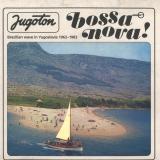
Rich musical history of Yugoslavia reveals a long-lasting love for the music of Latin America.
Entwined in Afro-Cuban rhythms, ballrooms were shakin', swayin' and swingin', gathering musicians who were heavily into jazz bands and orchestras, most notably in Ljubljana, Zagreb, and Belgrade. Jazz could be heard on the streets of Split way back in 1919 when dancing became a symbol of freedom. Radio was the most loved household item, newest sheet music was in demand and collecting records was hip like today. In the aftermath of Second World War, jazz went underground but little by little, things changed and Ella, Satchmo, Dizzy and Miles came to visit, among others. Music festivals shaped the music for entertainment and variety of popular styles showed influences from all over the world. In the early sixties, one particular rhythm crashed on the coast of the Adriatic Sea: the rhythm of bossa nova!
In the whirlwind of various musical styles, Latin American music still played important part of the scene in the early sixties Yugoslavia. Beguine, tango, rhumba, samba, calypso, mambo and cha-cha-cha all found their place on the festivals inspired by famous Sanremo, festival of Italian popular song that largely shaped the musical taste of Europe. It was the era of instrumental rock, R & B and rock'n'roll - sounds of "imperialist America" now played freely on imported and hand-made electric guitars. While dancing halls had been turning into concert venues, bossa nova has come! Eydie Gorme with Blame It on the Bossa Nova and Paul Anka with Eso Besso (That Kiss!) tried to make us learn some new dance moves but it was Joao Gilberto's gentle singing and his new way of playing samba songs, along with Tom Jobim's modern dissonant harmonies and poetry of Vinicius de Moraes that created the magic. When American alto saxophonist and flautist Bud Shank visited Zagreb and Ljubljana in 1963 (with Boško Petrović in his quintet) "it was the first time we heard bossa nova!" remembers Stjepan Braco Fučkar. Jugoton, the biggest record company in Yugoslavia, released 4-track EP Bossa Nova by Bogdan Dimitrijević and his ensemble that same year! While not being fully accepted or understood completely, the archives of Jugoton reveal to us various interpretations of this new trend from their vast catalogue.
- Again And Again
- Don't Let Them Tell You (It's Fair)
- Another World
- Cinema
- Back Of My Hand
- Hey You
- If You've Got The
- Time
- Smiling
- Burning Up
- Price Of A Man
SKY BLUE VINYL[23,49 €]
Nach der Neuauflage von The Belair Lip Bombs' (dem ersten australischen Signing des Labels) Debütalbum ,Lush Life" im Jahr 2023 durch Third Man Records - das breite Anerkennung fand, darunter eine ?-Bewertung im NME, eine 7,8-Bewertung von Laura Snapes in Pitchfork, einen Artikel in der Rubrik ,Ones To Watch" im Guardian und eine Auszeichnung als ,Best Rock or Punk Work" bei den Victoria Music Awards erhielt, bereitet sich die vierköpfige Band aus Melbourne auf die Veröffentlichung ihres mit Spannung erwarteten zweiten Albums ,Again" am 31. Oktober vor. Unter der Leitung von Maisie Everett (Gitarre, Keyboard, Gesang) und ergänzt durch ein talentiertes Trio von Musikern bestehend aus Mike Bradvica (Gitarre), Jimmy Droughton (Bass) und Daniel Devvlin (Schlagzeug) wurde das Album mit Produzent Joe White von Rolling Blackout Coastal Fever aufgenommen. (,Again" festigt die Position von Lip Bombs (als feste Größe in der aktuellen Indie-Szene). ,Hey You", die erste Singleauskopplung aus dem Album, fängt das großformatige Songwriting und das angeborene Gespür der Band für mitreißende Melodien ein.
“New York’s Harlem River Drive is a dividing line, a highway where the rich zip past the poor,” says singer Jimmy Norman. Eddie Palmieri’s Latin-funk band of the same name tackled these hard truths, playing prisons and speaking to the common man. Ultimately, Norman and Palmieri made a powerful socio-political statement that continues to resonate to this day." Pablo Yglesias/Wax Poetics. When initially released in 1971, many critics panned Eddie Palmieri’s album Harlem River Drive. Those critics were wrong. Regardless of critical opinion, the release was not the crossover success Palmieri and Roulette Records had hoped for, at least in the immediate. Over the years the release has developed a following among listeners, DJs, and aficionados of rare-grooves. The record may have been recorded towards the end of the Latin soul era, yet it features that genre's wonderful mix of Puerto Rican soul, Spanish Harlem Latin, and New York funk. Palmieri worked with an incredibly talented crew of Latin and R&B session musicians to create this quintessential New York vibe, a synthesis of funk and Afro-Cuban sounds. Contributors include Victor Venegas from Mongo Santamaria’s band, Palmieri’s brother Charlie, an accomplished musician in his own right, Bruce Fowler who went on to join Frank Zappa’s band, Dick Meza who went on to great things with Tito Puente, Ray Barretto and Celia Cruz, as well as Andy Gonzalez who’s pedigree includes recordings with Barretto, Johnny Pacheco, Willie Colon and even Chico O’Farrill. Also appearing Randy Brecker and one of the all-time greatest of the greats Bernard Purdy. An over-arching theme of Harlem River Drive is the thought that, as Palmieri puts it “The U.S. is richest country, all this immense wealth, side by side with the most intense poverty, racial prejudice; how is that possible?” A question that’s perhaps more even more relevant today than it was in 1971. A question that can be further explored with Get On Down’s reissue of this seminal recording.
David Bowie 6. I Can’t Give Everything Away (2002 - 2016) is the sixth in a series of box sets spanning Bowie’s career from 1969. The eighteen-piece vinyl box set is named after the closing track on ★ (BLACKSTAR), Bowie’s final studio album. The box sets include newly remastered versions (except ★ and No Plan), with input from David’s co-producer Tony Visconti.
Exclusive to each of the box sets are Montreux Jazz Festival and Re:Call 6. The former was recorded on the 18th of July 2002 at the prestigious Montreux Jazz Festival and among the 31 tracks features a full performance bar one song of one of Bowie’s most revered albums, Low.
Re:Call 6 features 41 non-album / alternative versions / b-sides and soundtrack songs, including tracks never previously available on vinyl.
An accompanying 84 page book features previously unseen notes, drawings and handwritten lyrics from Bowie and photos by Sukita (who took the set’s cover shot), Jimmy King, Frank W. Ockenfels 3, Markus Klinko, Mark ‘Blammo’ Adams and more as well as memorabilia, technical notes about the albums from co-producer Tony Visconti and design notes from Jonathan Barnbrook.
18 LP Box Set:
84-page hardback book
Heathen (Remastered) (1LP)
Montreux Jazz Festival (4LP) (Previously unreleased)*
Reality (Remastered) (1LP)
A Reality Tour (Remastered & Re-sequenced) (3LP)
The Next Day (Remastered) (2LP)
The Next Day Extra (Remastered) (1LP)
★ (Blackstar) (1LP)
No Plan (1LP)
Re:Call 6 (Non-album singles, edits, single versions, b-sides and soundtrack music) (Remastered) (4LP)*
- A1: As The Sun Beats Down
- A2: Atlanta's Own
- A3: Who The Hell Are You?
- A4: Goddamn These Hands
- A5: Drinking With Mickey Mantle
- A6: Raised In The Shadows
- A7: Weapon Of God
- A8: Jimmy Barlett's Teeth
- B1: Hungry Dog In The Street
- B2: The Business Man
- B3: The Carriage Town Clinic
- B4: I Love You Like An Alcoholic
- B5: Some Rotten Man
- B6: Let The Seconds Do Their Worst
- C1: Introduction
- C2: Go Fetch A Priest
- C3: Atlanta's Own Practice Demo
- C4: As The Sun Beat Down Practice Demo
- C5: I Love You Like An Alcoholic Practice Demo
- D1: Drinking With Mickey Mantle New Version
- D2: Who The Hell Are You? / When The Night Train Runs Low Florida Sessions
- D3: Get Your Cigarettes Florida Sessions
- D4: Hungry Dog In The Street Florida Sessions
- D5: He Was Born Outdoors Florida Sessions
- D6: Let The Seconds Do Their Worst Florida Sessions
- D7: Outro
- A1: Raining In Kyoto
- A2: Pyramids Of Salt
- A3: It Must Get Lonely
- A4: Sister Cities
- A5: Flowers Where Your Face Should Be
- B1: Heaven's Gate (Sad & Sober)
- B2: We Look Like Lightning
- B3: The Ghosts Of Right Now
- B4: When The Blue Finally Came
- B5: The Orange Grove
- B6: The Ocean Grew Hands To Hold Me
Following ‘No Closer To Heaven’, The Wonder Years released ‘Sister Cities’, their most transformative work to date.
Recorded at Sunset Sound with Joe Chiccarelli (Manchester Orchestra, The Shins, Spoon) and Carlos de la Garza (Jimmy Eat World, Paramore), ‘Sister Cities’ is an album about distance, connectivity and the way humanity towers above boundaries.
What The Wonder Years do so effortlessly on ‘Sister Cities’ is no small feat; through poetic lyricism, ambient guitar swells and Jimmy Eat World-levels of crashing momentum. On ‘Sister Cities’, they take a massive, unexpected leap forward both sonically and thematically, now speaking confidently to the world at large.
Vocalist Dan Campbell on the inspiration behind ‘Sister Cities’: “It started with journals and photos. We started by documenting. We didn’t know where it would go or if it would go anywhere at all, but we wrote it all down. We took photos of everything. And
then when it came to put it altogether, we had this catalog of how we felt and what it looked like and sounded like and we built from there. Figuring out what the moments were that stayed with me the most. When did I feel most connected to the people around me and why? What did being in this place during this moment teach me? It was a difficult year personally and globally and we experienced that through this lens of being everywhere but home, kind of floating through places and seeing how being there altered our perspective.”
The album is housed in a 200-page, 13”x13”, full-colour book that includes photos, artwork, journal entries and lyrics. LP pressed onto Shinjuku Street Splatter coloured vinyl.
An overpowering sense of earnestness and vulnerability.” - Pitchfork
There is a lifetime yelled in every punk song, captured in the desperate and catchy ‘Sister Cities’.” - NPR MusicFrom the first notes, it’s already clear that The Wonder Years are stepping into uncharted territory.” - UPROXX
- A1: My Little Girl - Bobby Garrett
- A2: Baby, Without You - Danny Monday
- A3: Lighten Up Baby - Ty Karim
- A4: You Hit Me (Right Where It Hurt Me) –Alice Clark
- A5: Cigarette Ashes - Jimmy Conwell
- A6: (Just A Little) Faith And Understanding - The Magicians
- A7: I Can Feel Your Love - Felice Taylor
- B1: Gone With The Wind Is My Love – Rita & The Tiaras
- B2: You Turned My Bitter Into Sweet - Mary Love
- B3: Would You Believe - Jackie Lee
- B4: Try My Love - Toni & The Showmen
- B5: The Same Old Thing - The Olympics
- B6: What Good Am I Without You - Darrow Fletcher
- B7: What Should I Do - Little Ann
Northern soul is in the news again, as once more this most resilient of dance floor cults is discovered by a new generation. For four decades now Ace Records has been a natural home for the music and using that experience we are bringing you our first ever all classics collection of some of the scene's greatest hits. All on one LP.
The recordings featured on this release are tried and tested, often in the hot forge of the scene's earliest day, when new discoveries were coming thick and fast, and only the strong survived. These did.
So we have 14 tracks which filled floors in Wigan, Blackpool, Cleethorpes, London's 100 Club and many other legendary venues. From West Coast Mirwood and Kent/ Modern label classics by Jackie Lee, Bobby Garrett, Mary Love and Danny Monday, to the big City Chicago soul of Darrow Fletcher via the super rare recordings by Rita & The Tiaras and Little Ann, which are now accepted standards of the scene.
This is an album for the beginner, those who want to know what all the fuss is about, or those older hands who just want to relive some exceptional memories.
- Mood Indigo
- Don’t Smoke In Bed
- He Needs Me
- Little Girl Blue
- Love Me Or Leave Me
- My Baby Just Cares For Me
- He’s Got The Whole World In His Hands
- For All We Know
- Good Bait (Instrumental)
- Plain Gold Ring
- You’ll Never Walk Alone
- I Loves You Porgy
- Central Park Blues (Instrumental)
- African Mailman
"Little Girl Blue, released in 1957, was Nina Simone's first studio recording ever. It was originally issued on the Bethlehem label and features the singer/ pianist backed by bassist Jimmy Bond (who had been a member of the Chet Baker Quartet among other groups) and drummer Albert ""Tootie"" Heath, one of the celebrated Heath brothers (the other two being saxophonist Jimmy Heath, and bassist Percy Heath). Many of the tracks from this LP would become true classics, among them her perennial version of ""My Baby Just Cares For Me"".
THE COMPLETE ALBUM + 3 BONUS TRACKS - 180-GRAM VIRGIN VINYL -
LIMITED EDITION"
Pierre Bujeau is an expert at creating temporary escape zones—musical structures to evade the everyday. Sometimes he works collectively as part of the mysterious French groups Omertà and Tanz Mein Herz. But it’s when he’s on his own, performing as Megabasse, that he offers the most complete break from reality. His kit is simple: a few bottles of cheap lager, twin Fender amps, and his double-necked guitar. An instrument like this normally signals maximum rockist excess—think Jimmy Page, Geddy Lee, or that dude from the Eagles. In Pierre’s hands, it becomes more like a zither or a dulcimer, producing soft chiming patterns that build against themselves until the sound of the room, passed back and forth between his two amps, starts to blur everything, and we are away in another world. Wait, though—let down your yoga bun and don’t light the palo santo yet. The new space he creates has nothing to do with smug wellness. It’s a rough, do-it-yourself psychedelia, scuffed but hopeful. Not a perfect blank space to be your best self in, but instead a communal dreaming, an uncanny place where all are welcome.
Until now, without catching him live, the Megabasse experience has been difficult to find: CD-Rs, short-run tapes, and one blink-and-you-missed-it LP. Thankfully, this record on Efficient Space, a reissue of some pieces that were previously only available on a small cassette edition, will put that right. Here are two long, intricate pieces, and something new—a shorter track that hints at a move toward beautiful, burnt-out guitar soli.
Unless you are very lucky, wise, or rich, life imposes its structures on you. Maybe a record of shimmering, tranced guitar is all you need to get out from underneath?
- Chris Goss; Alain Johannes - Aqualung
- The Well - Cross-Eyed Mary
- Osi And The Jupiter - Cheap Day Return
- Huntsmen - Mother Goose
- The Otolith - Wond'ring Aloud
- Motorpsycho - Up To Me
- Big Scenic Nowhere - My God
- Saturna - Hymn 43
- Mammoth Volume - Slipstream
- The Sword - Locomotive Breath
- Domkraft; Arvid Hällagård - Wind-Up
Oxblood Vinyl[33,57 €]
JETHRO TULL sind musikalische Riesen mit einem einzigartigen Sound - oder besser gesagt Sounds, die im Kanon der Rockmusik unvergleichbar geblieben sind. Die 1967 in Blackpool, Lancashire, von dem Schotten Ian Anderson gegründete Band hat im Laufe ihrer jahrzehntelangen Karriere immer wieder stilistische Veränderungen und Imagewechsel durch- und überlebt. Vor allem die charakteristische Stimme ihres Frontmanns und die Einbeziehung der Querflöte als wesentliches Instrument haben JETHRO TULL dennoch mit einem unverkennbaren klanglichen Fingerabdruck versehen.
"Aqualung Redux" präsentiert neue Versionen aller elf Titel des 1971 erschienenen Bestseller-Albums, von dem JETHRO TULL mittlerweile weltweit mehr als 7 Millionen Exemplare verkaufen konnten. Mit "Aqualung" feierten die Briten ihren Durchbruch als Rockband sowohl in Radio und TV als auch auf weltweiten Tourneen. "Aqualung" handelt in erster Linie vom Glauben und von Religion, beschäftigt sich aber auch mit anderen Themen wie der Obdachlosigkeit. Laut Ian Anderson handelt es sich bei "Aqualung" keineswegs um ein Konzeptalbum, für das es dennoch oft gehalten wird. Während die Band wie auf früheren Werken nach wie vor auf Blues, Hard Rock und der Psychedelia setzte, fügte sie auf "Aqualung " vermehrt akustische Folk-Momente hinzu. Bei der Singleauskopplung 'Locomotive Breath' handelt es sich um den vermutlich bekanntesten und am meisten gecoverten JETHRO TULL Song.
Zusammen mit "Aqualung Redux" präsentieren wir auch das Begleitalbum "Best of Jethro Tull Redux", das weitere Klassiker und Raritäten aus dem ebenso umfangreichen wie einzigartigen Katalog der britischen Rocklegende enthält.
Die Magnetic Eye Redux- Reihe lässt ausgewählte Künstler handverlesene klassische Alben aus der Geschichte des Rock und Metal komplett neu interpretieren und respektvoll in das neue Jahrtausend übertragen. Bisher hat das Label solche Meilensteine wie PINK FLOYDs "The Wall", HELMETs "Meantime", BLACK SABBATHs "Vol. 4", JIMMY HENDRIX' "Electric Ladyland", "Dirt" von ALICE IN CHAINS, AC/DCs "Back in Black" und den SOUNDGARDEN-Klassiker "Superunknown" in Redux-Versionen veröffentlicht. Unter vielen anderen haben sich solch herausragende Künstler wie MATT PIKE, PALLBEARER, THE MELVINS, ALL THEM WITCHES, KHEMMIS, ASG, ZAKK WYLDE, MARK LANEGAN, SCOTT REEDER an diversen Redux-Projekten beteiligt.
Angeschnallt und zugestiegen bei Magnetic Eyes achter Expedition ins Redux-Abenteuer, mit dem wir den einzigartigen britischen Rock-Erneuern JETHRO TULL die gebührende Ehre erweisen!
- Chris Goss; Alain Johannes - Aqualung
- The Well - Cross-Eyed Mary
- Osi And The Jupiter - Cheap Day Return
- Huntsmen - Mother Goose
- The Otolith - Wond'ring Aloud
- Motorpsycho - Up To Me
- Big Scenic Nowhere - My God
- Saturna - Hymn 43
- Mammoth Volume - Slipstream
- The Sword - Locomotive Breath
- Domkraft; Arvid Hällagård - Wind-Up
Black Vinyl[30,88 €]
JETHRO TULL sind musikalische Riesen mit einem einzigartigen Sound - oder besser gesagt Sounds, die im Kanon der Rockmusik unvergleichbar geblieben sind. Die 1967 in Blackpool, Lancashire, von dem Schotten Ian Anderson gegründete Band hat im Laufe ihrer jahrzehntelangen Karriere immer wieder stilistische Veränderungen und Imagewechsel durch- und überlebt. Vor allem die charakteristische Stimme ihres Frontmanns und die Einbeziehung der Querflöte als wesentliches Instrument haben JETHRO TULL dennoch mit einem unverkennbaren klanglichen Fingerabdruck versehen.
"Aqualung Redux" präsentiert neue Versionen aller elf Titel des 1971 erschienenen Bestseller-Albums, von dem JETHRO TULL mittlerweile weltweit mehr als 7 Millionen Exemplare verkaufen konnten. Mit "Aqualung" feierten die Briten ihren Durchbruch als Rockband sowohl in Radio und TV als auch auf weltweiten Tourneen. "Aqualung" handelt in erster Linie vom Glauben und von Religion, beschäftigt sich aber auch mit anderen Themen wie der Obdachlosigkeit. Laut Ian Anderson handelt es sich bei "Aqualung" keineswegs um ein Konzeptalbum, für das es dennoch oft gehalten wird. Während die Band wie auf früheren Werken nach wie vor auf Blues, Hard Rock und der Psychedelia setzte, fügte sie auf "Aqualung " vermehrt akustische Folk-Momente hinzu. Bei der Singleauskopplung 'Locomotive Breath' handelt es sich um den vermutlich bekanntesten und am meisten gecoverten JETHRO TULL Song.
Zusammen mit "Aqualung Redux" präsentieren wir auch das Begleitalbum "Best of Jethro Tull Redux", das weitere Klassiker und Raritäten aus dem ebenso umfangreichen wie einzigartigen Katalog der britischen Rocklegende enthält.
Die Magnetic Eye Redux- Reihe lässt ausgewählte Künstler handverlesene klassische Alben aus der Geschichte des Rock und Metal komplett neu interpretieren und respektvoll in das neue Jahrtausend übertragen. Bisher hat das Label solche Meilensteine wie PINK FLOYDs "The Wall", HELMETs "Meantime", BLACK SABBATHs "Vol. 4", JIMMY HENDRIX' "Electric Ladyland", "Dirt" von ALICE IN CHAINS, AC/DCs "Back in Black" und den SOUNDGARDEN-Klassiker "Superunknown" in Redux-Versionen veröffentlicht. Unter vielen anderen haben sich solch herausragende Künstler wie MATT PIKE, PALLBEARER, THE MELVINS, ALL THEM WITCHES, KHEMMIS, ASG, ZAKK WYLDE, MARK LANEGAN, SCOTT REEDER an diversen Redux-Projekten beteiligt.
Angeschnallt und zugestiegen bei Magnetic Eyes achter Expedition ins Redux-Abenteuer, mit dem wir den einzigartigen britischen Rock-Erneuern JETHRO TULL die gebührende Ehre erweisen!
- Mr Bison - Reasons For Waiting
- Sweat - Back To The Family
- Hashtronaut - Bungle In The Jungle
- Elephant Tree - We Used To Know
- The Golden Grass - The Teacher
- Sergeant Thunderhoof - Son
- Oceanlord - Sweet Dream
- Lowrider; Elephant Tree - Nothing To Say
Red/Gold Vinyl[33,57 €]
Mit dem Begleitalbum "Best of Jethro Tull Redux" lässt sich das Erlebnis von "Aqualung Redux" noch erweitern und vertiefen. Mit beiden Werken zollen Magnetic Eye Records gemeinsam mit zahlreichen Freunden der britischen Rocklegende JETHRO TULL und ihrem Meilenstein-Album "Aqualung" aus dem Jahr 1971 respektvollen Tribut. Auf "Best of Jethro Tull Redux" bieten weitere spannende Künstler ihre Neuinterpretationen aus dem ebenso einzigartigen wie umfangreichen Gesamtwerk der Briten an.
JETHRO TULL sind musikalische Riesen mit einem einzigartigen Sound - oder besser gesagt Sounds, die im Kanon der Rockmusik unvergleichbar geblieben sind. Die 1967 in Blackpool, Lancashire, von dem Schotten Ian Anderson gegründete Band hat im Laufe ihrer jahrzehntelangen Karriere immer wieder stilistische Veränderungen und Imagewechsel durch- und überlebt. Vor allem die charakteristische Stimme ihres Frontmanns und die Einbeziehung der Querflöte als wesentliches Instrument haben JETHRO TULL dennoch mit einem unverkennbaren klanglichen Fingerabdruck versehen.
JETHRO TULL haben von Anfang an die Grenzen der Rockmusik neu vermessen. Durch die Einführung von Elementen aus der klassischen Musik, des Jazz sowie der traditionellen Musik haben die Briten zahlreiche Impulse gegeben, weshalb sie zunächst dem Art Rock zugerechnet wurden und mittlerweile unter anderem zum Progressive Rock zählen. Die britische Legende schaffte den Spagat zwischen Kunst, Breitenwirkung und kommerziellem Erfolg stets mit nur scheinbarer Leichtigkeit. Dazu trug auch die herausragende Bühnenpräsenz von Frontmann Ian Anderson bei, dessen theatralischen Auftritte sogar mit denen seines Zeitgenossen, dem legendären britischen Sänger Arthur Brown, konkurrierten.
Die Magnetic Eye Redux- Reihe lässt ausgewählte Künstler handverlesene klassische Alben aus der Geschichte des Rock und Metal komplett neu interpretieren und respektvoll in das neue Jahrtausend übertragen. Bisher hat das Label solche Meilensteine wie PINK FLOYDs "The Wall", HELMETs "Meantime", BLACK SABBATHs "Vol. 4", JIMMY HENDRIX' "Electric Ladyland", "Dirt" von ALICE IN CHAINS, AC/DCs "Back in Black" und den SOUNDGARDEN-Klassiker "Superunknown" in Redux-Versionen veröffentlicht. Unter vielen anderen haben sich solch herausragende Künstler wie MATT PIKE, PALLBEARER, THE MELVINS, ALL THEM WITCHES, KHEMMIS, ASG, ZAKK WYLDE, MARK LANEGAN, SCOTT REEDER an diversen Redux-Projekten beteiligt.
- Mr Bison - Reasons For Waiting
- Sweat - Back To The Family
- Hashtronaut - Bungle In The Jungle
- Elephant Tree - We Used To Know
- The Golden Grass - The Teacher
- Sergeant Thunderhoof - Son
- Oceanlord - Sweet Dream
- Lowrider; Elephant Tree - Nothing To Say
Black Vinyl[30,88 €]
Mit dem Begleitalbum "Best of Jethro Tull Redux" lässt sich das Erlebnis von "Aqualung Redux" noch erweitern und vertiefen. Mit beiden Werken zollen Magnetic Eye Records gemeinsam mit zahlreichen Freunden der britischen Rocklegende JETHRO TULL und ihrem Meilenstein-Album "Aqualung" aus dem Jahr 1971 respektvollen Tribut. Auf "Best of Jethro Tull Redux" bieten weitere spannende Künstler ihre Neuinterpretationen aus dem ebenso einzigartigen wie umfangreichen Gesamtwerk der Briten an.
JETHRO TULL sind musikalische Riesen mit einem einzigartigen Sound - oder besser gesagt Sounds, die im Kanon der Rockmusik unvergleichbar geblieben sind. Die 1967 in Blackpool, Lancashire, von dem Schotten Ian Anderson gegründete Band hat im Laufe ihrer jahrzehntelangen Karriere immer wieder stilistische Veränderungen und Imagewechsel durch- und überlebt. Vor allem die charakteristische Stimme ihres Frontmanns und die Einbeziehung der Querflöte als wesentliches Instrument haben JETHRO TULL dennoch mit einem unverkennbaren klanglichen Fingerabdruck versehen.
JETHRO TULL haben von Anfang an die Grenzen der Rockmusik neu vermessen. Durch die Einführung von Elementen aus der klassischen Musik, des Jazz sowie der traditionellen Musik haben die Briten zahlreiche Impulse gegeben, weshalb sie zunächst dem Art Rock zugerechnet wurden und mittlerweile unter anderem zum Progressive Rock zählen. Die britische Legende schaffte den Spagat zwischen Kunst, Breitenwirkung und kommerziellem Erfolg stets mit nur scheinbarer Leichtigkeit. Dazu trug auch die herausragende Bühnenpräsenz von Frontmann Ian Anderson bei, dessen theatralischen Auftritte sogar mit denen seines Zeitgenossen, dem legendären britischen Sänger Arthur Brown, konkurrierten.
Die Magnetic Eye Redux- Reihe lässt ausgewählte Künstler handverlesene klassische Alben aus der Geschichte des Rock und Metal komplett neu interpretieren und respektvoll in das neue Jahrtausend übertragen. Bisher hat das Label solche Meilensteine wie PINK FLOYDs "The Wall", HELMETs "Meantime", BLACK SABBATHs "Vol. 4", JIMMY HENDRIX' "Electric Ladyland", "Dirt" von ALICE IN CHAINS, AC/DCs "Back in Black" und den SOUNDGARDEN-Klassiker "Superunknown" in Redux-Versionen veröffentlicht. Unter vielen anderen haben sich solch herausragende Künstler wie MATT PIKE, PALLBEARER, THE MELVINS, ALL THEM WITCHES, KHEMMIS, ASG, ZAKK WYLDE, MARK LANEGAN, SCOTT REEDER an diversen Redux-Projekten beteiligt.
Welcome to the second in the Knite Force Crew series. This is a series of limited edition triple albums from the very best and dedicated of the Kniteforce artists.
This triple pack vinyl album contains 10 superb tracks from Sunny & Deck Hussy, plus two remixes from rave legends Luna-C, and from Jimmy J. The beautiful old skool rave styled artwork was hand drawn by the original Kniteforce Records artist, Rebecca Try.
It will never be repressed and is limited in number!
The Peace Chant compilation series is a Temple, a reliquary of sacred harmonious statements made by enlightened artists throughout time. With Tramp Records' latest offerings, "Peace Chant, Raw Deep and Spiritual Jazz volumes 5 & 6, deeper, darker, and even more remote chambers of this already exalted temple are brought to light. The team at Tramp, with their torch of love and with reverence for those builders who came before, have returned from their quest with musical treasures unfathomable. Indeed, some of these tracks sound as if they may have literally been plucked from the ancient hands of some towering golden idol. But this quest was no looting effort, no. The Gods, as well as the artists and their families were fairly compensated through Tramp Records' rigorous and historically conscious licensing efforts.
Volume 6 ululates with a rich flute and Fender Rhodes-rich microtonal fusion called "Cataracts" by Musica Orbis that even comes with some sparkling Afro-harping moments ala Dorothy Ashby; a 5/4 dreamscape conjured by the Fredric Rabold Crew called "Januschka" with enraptured wailing soprano; and a very interesting and likely heretofore unheard version of a tune that, in Dizzy's words, "... has withstood the vicissitudes of the contingent world and rocketed in an odyssey into the realm of the metaphysical...", A Night in Tunisia, with rich vocals and scatting.
"Perhaps best known for his long association with the legendary Muddy Waters, Otis Spann is largely recognized as one of the greatest blues pianists of all time, if not the greatest.
Although Spann made a name for himself in Chicago by the mid 1940s, it wasn’t until 1960 that he got the opportunity to record an album of his own. The sessions Spann did with Candid Records co-founder Nat Hentoff that year resulted in the legendary album Otis Spann Is The Blues. (Incidentally, this was also the first album ever recorded for the fledgling New York City based label.)
The tracks on Walking The Blues were recorded during those same sessions in August of 1960 in New York City.
Left on the cutting room floor, they would not be officially released until 1972, two years after Spann’s untimely death.
Robert Lockwood Jr., also from Muddy Water’s group, accompanies Spann on guitar here as he does on the Is The Blues album. But Walking The Blues also features Spann’s close friend, veteran singer and composer James Oden, better known to blues fans as St. Louis Jimmy.
Stripped down to just the these musicians, this magnificently performed and produced set showcases Spann’s voice as well as piano. Spann stretches out with his pulsing two-handed rhythmic attack, and brings the barrelhouse piano style of his youth in line with the modern Chicago style he embodied."
Re-mastered from original mono master tapes.
Limited edition 1000 copies.
180 gr vinyl pressed by Pallas in Germany.
Deluxe high-gloss flipback album jacket.
Facsimile reissue using the original cover art.
Double insert using an original photo by JP Leloir from 1955.
Each record has been visually checked to prevent defects.
Recorded December 27 and 29, 1955 at the Pathé Magellan studio, Paris.
Original LP issue: Barclay 84.023.
After hitting Paris in 1950, saxophonist Bobby Jaspar enthralled jazz fans and jazzmen alike with his smooth, elegant playing, with the lyricism of his tranquil phrases heavily influenced by Stan Getz in particular. So when Jaspar began regularly performing with a small ensemble at the Club St-Germain five years later, he adopted the same instrumentation as that of his idol’s illustrious quintet, with Sacha Distel on guitar and René Urtreger on piano in the roles of Jimmy Raney and Al Haig, respectively.
Contrary to what its title might suggest, ‘Modern Jazz au Club St-Germain’ was actually recorded in the studio. It features compositions by Milt Jackson, Dizzy Gillespie and Miles Davis along with a handful of standards, in which the angular aridity of bebop gives way to the generous and yet sensitive idiom of cool jazz.
Jaspar’s premature death in 1963 robbed the jazz world of a promising talent; this record is among his best efforts as a leader. Bobby Jaspar is in top form here !!!
Text – Pierre de Chocqueuse
Bobby Jaspar (Tenor Saxophone & Flute)
Sacha Distel (Guitar)
René Urtreger (Piano)
Benoit Quersin (Bass)
Jean-Louis Viale (Drums)
- 01: American Idiot
- 02: Jesus Of Suburbia
- I. Jesus Of Suburbia
- Ii. City Of The Damned
- Iii. I Don't Care
- Iv. Dearly Beloved
- V. Tales Of Another Broken Home
- 03: Holiday
- 04: Boulevard Of Broken Dreams
- 05: Are We The Waiting
- 06: St. Jimmy
- 07: Give Me Novacaine
- 08: She's A Rebel
- 09: Extraordinary Girl
- 10: Letterbomb
- 11: Wake Me Up When September Ends
- 12: Homecoming
- I. The Death Of St. Jimmy
- Ii. East 12Th St
- Iii. Nobody Likes You
- Iv. Rock And Roll Girlfriend
- V. We're Coming Home Again
- 13: Whatsername
- 01: American Idiot (Live)
- Ii. City Of The Damned
- Iii. I Don't Care
- Iv. Dearly Beloved
- V. Tales Of Another Broken Home
- 03: Holiday (Live)
- 04: Are We The Waiting (Live)
- 05: St. Jimmy (Live)
- 06: Boulevard Of Broken Dreams (Live)
- 07: Favorite So
- 08: Shoplifter
- 09: Governator
- 10: Too Much Too Soon
- 11: Are The Waiting (Vh1-Storytellers)
- 12: St. Jimmy (Vh1-Storytellers)
- 13: Give Me Novacaine (Vh1-Storytellers)
- 14: Homecoming (Vh1-Storytellers)
- 01: American Idiot
- 02: American Idiot (Alt. Version)
- 03: Jesus Of Suburbia
- 04: Holiday/Blvd. Of Broken Dreams
- 05: Are We We Are/St. Jimmy Opera
- 06: Novacaine
- 07: She's A Rebel
- 08: Radio Baghdad
- 09: Cluster Bomb
- 10: Wake Me Up When September Ends
- 02: Jesus Of Suburbia (Live)
- 11: Homecoming (Nobody Likes You)
- 12: Everyone's Breaking Down
- 13: Just Another Year
- 14: Lowlife
- 15: What's Her Name
- 01: American Idiot (Live)
- 02: Jesus Of Suburbia (Live)
- 03: Holiday (Live
- 04: Boulevard Of Broken Dreams (Live)
- 05: Are We The Waiting (Live)
- 06: St. Jimmy (Live)
- 07: Give Me Novacaine (Live)
- 08: She’s A Rebel (Live)
- 09: Extraordinary Girl (Live)
- 10: Letterbomb (Live)
- 11: Wake Me Up When September Ends (Live)
- 12: Homecoming (Live)
- 13: Whatsername (Live)
- 14: Minority (Live)
- 15: We Are The Champions (Live)
- I. Jesus Of Suburbia
2x12" Vinyls[38,61 €]
Green Day’s seventh studio album American Idiot was released in September 2004 and has since sold over 23 million copies worldwide. The album is a punk rock opera masterpiece that won the Best Rock Album at the 2005 Grammy Awards©. Five hit singles were released from the album: “Boulevard of Broken Dreams”, “Holiday”, “Wake Me Up When September Ends”, “Jesus of Suburbia”, and the title track, “American Idiot”.
Limited Edition Super Deluxe Box Sets (vinyl and CD) will be released on October 25th, 2024, to celebrate the 20th Anniversary of this legendary album.
The CD Super Deluxe contains 4 CDs which feature the original album and also includes 15 unreleased demos, a 15-song 2004 concert from Irving Plaza, NYC (9 songs previously unreleased), and 14 tracks that were released as B-Sides and bonus tracks. The box set is completed with two Blu-rays that feature the film “Heart Like A Hand Grenade”, 35 minutes of Green Day live at the BBC, and a new, unreleased documentary: “20 Years of American Idiot” plus a 48-page book, an enamel pin set, sticker sheet, and cloth patch.
JTQ experimentieren ständig mit verschiedenen Musikstilen, nach Soul- und Jazzalben, einem Chor- und einem Orchesteralbum, nehmen sie jetzt ein Funk-Rock-Album auf, das eigentlich die nächste The Prisoners-LP hätte sein können. Funky, teils punky Rock-Elemente wechseln sich ab mit Hammond-Funk-Instrumentals im Stil von Jimmy McGriff. James Taylor nahm viel mit Billy Childish und The Prisoners auf und fand es an der Zeit, seine Jazzband auch an diesem eher rock'n'rolligen Sound auszuprobieren. Während die Funk-Rock-Tracks auf BBC 6 laufen, spielt Jazz FM die Instrumentals.
Tig Notaro is an Emmy, Grammy and SAG Award-nominated comedian, actor, writer, director and podcast host originally from Mississippi, and named by Rolling Stone one of the 50 best stand-up comics of all time. She appears in Season 3 of THE MORNING SHOW on Apple TV+ alongside Jennifer Aniston and Reese Witherspoon, and STAR TREK: DISCOVERY on Paramount Plus. Tig recently starred in the Netflix films YOUR PLACE OR MINE and WE HAVE A GHOST, as well as Zack Snyder's ARMY OF THE DEAD. Prior to that, she starred in the heartwarming Paramount film INSTANT FAMILY alongside Mark Wahlberg and Octavia Spencer. Tig wrote, produced and starred in the semi-autobiographical Amazon Prime Video series ONE MISSISSIPPI, also directing the premiere episode of Season 2. The show yielded critical acclaim and several award nominations, including WGA, GLAAD and The Critics Choice Awards. Tig's HBO standup special, DRAWN, made history as the first-ever fully animated stand-up special, and was nominated for a Hollywood Critics Association Award. She was previously nominated for an Emmy and a Grammy Award for her 2016 HBO special BOYISH GIRL INTERRUPTED, a GLAAD Award nomination for the Netflix Original Documentary TIG, and her memoir I'm Just a Person is a New York Times Bestseller. In 2013, Tig was also nominated for a Grammy for her sophomore release, LIVE, which was the #1 selling comedy album in the world that year. LIVE is a stand-up set delivered just days after Tig was diagnosed with invasive bilateral breast cancer, from which she is now in remission. Tig remains a favorite on talk shows, including "The Late Show with Stephen Colbert" and "The Tonight Show with Jimmy Fallon", public radio, and continues to tour internationally. Tig and her wife, Stephanie Allynne, co-directed the feature film, AM I OK?, starring Dakota Johnson and Sinoya Mizuno, which premiered at Sundance and premiered on HBO Max in June 2024. Tig also hosts HANDSOME, a critically acclaimed comedy podcast, alongside friends and co-hosts Fortune Feimster and Mae Martin. Her newest special, TIG NOTARO: HELLO AGAIN, premiered in March 2024 on Prime Video.
Previously Unreleased Recording. Limited to 1200 copies on transparent cherry vinyl. Tip-on jacket, Download code. Insert featuring LP sized original art by Grungie O'Muck. Includes the original recording of Richard Tucker's "Are You Leaving For The Country", later covered by Karen Dalton, and the only song co-written by Karen & Richard, "Sleeping In The Garden". "Richard, Cam & Bert seem to have grasped The Great Harmony. That is, ensemble singing that is at once sweet, precise, funky and a bit sardonic..." -Mike Jahn / New York Times (1970) "For a few years in the late sixties and early seventies Richard Cam & Bert ruled MacDougal St. walking a fine line between the increasingly commercialized demands created by groups like Crosby Stills and Nash and the fierce integrity of earlier folk performers, the generation to which Richard belonged. They managed this with great aplomb, producing original tunes of great integrity and obvious folkloric origins, as well as those which expressed the anarchic omnipresent psychedelia of the moment. They also never abandoned the idea of including some traditional material in their performances. But for the usual random application of luck they could have been very big." - Grungie O'Muck / Artist, Bluesman, Cover artist for their first album and contributor to this one. Richard Tucker, Campbell Bruce, and Bert Lee coalesced as a trio in the spring of 1968, and by the end of that year had become regular performers at fabled Greenwich Village nightspots - The Gaslight, The Bag I'm In, Cafe Feenjon, among others. But mostly they were street singers, busking regularly in Central Park. Their only LP, Limited Edition, was released in 1970, and sold mainly at gigs and on the street. Somewhere in The Stars compiles earlier, previously unreleased recordings, when all three members were signed with Peer-Southern Music publishers as writers and began using their studio to make demos and experiment musically. Beautifully recorded by house engineer Charlie Mack (supervised by Jimmy Ienner), the demos capture a back room casualness and rustic, homespun quality. For me, listening to their songs and harmonies is like entering a world you always hoped existed but had never experienced. Some of the songs were re-recorded the following year for Limited Edition, but many are heard here for the first time. Among them is the original demo for Richard Tucker's song, "Are You Leaving For The Country", which Karen Dalton covered on her seminal 1971 release, In My Own Time. Richard and Karen were husband and wife for much of the 1960s, performing as a duo (initially as a trio with Tim Hardin), and navigating their time on the Village scene while alternating living in a small mining town outside Boulder, Co. before splitting up in 1967. Also making its debut, is the only song Richard and Karen ever wrote together, the haunting "Sleeping In The Garden". Also contains two epic songs by Cam "One Of These First Nights", and "Stockholm") not on their LP, but staples of their live performances, and noted in a gig review by The New York Times, and in a column by future A&R hero, Karin Berg, who was an early champion. Another rarity is the only cover of "Sweet Mama" by Fred Neil we've ever heard. Campell Bruce came to New York in 1967 as lead singer with a band from Washington, DC, The Natty Bumpo. They'd recently signed a record deal with Phillips, but were falling apart. Cam landed in the Village with an acoustic guitar and first started playing and singing in the basket houses, and shortly thereafter at The Gaslight, as the "Cam Bruce Trio" (which included Collin Walcott). After opening for Mose Allison, Cam's hero, the trio went their separate ways, and Cam returned to regular solo gigs at The Flamenco, and the basket houses on Bleecker. Richard and Cam met up on that scene and quickly found a musical kinship as well as becoming best pals. Bert Lee arrived in New York as a runaway the following winter, and began playing and sleeping wherever he could. His sometime accompanist, Ron Price, introduced Bert to Richard and Cam just as Bert's own songs were garnering attention from publishers. According to Bert, "I arrived on the New York scene during a time of great change, and it was the notion of change that influenced me. All around me I saw there were two sorts of songwriters, on the one hand dedicated to the traditions that had inspired them, folk, jazz, the American songbook. On the other hand were songwriters influenced by the wave of experimentation that The Beatles were the perfect example of. Mixing genres, writing lyrics that weren't just about ordinary love and loss. Richard Tucker was a country blues player, with a relaxed and melodic approach to the craft. Cam wrote something more akin to soul songs, with a hint of jazz in the changes. I was writing tunes that sometimes drew on classical structures with a tendency toward what I suppose would be known as prog-rock. But I was rather adamant about not being pinned down stylistically, and so I would write, for example, a song based on some complex classical chord structure, and then go right ahead and write a simple folk song, like Evelyn. Our band was popular locally, and it was this variety that made it distinct." Delmore is excited to present this unearthed treasure, fifteen years in the making. In the words of Richard Tucker, "Tap on your knee, roll on the floor; if you aint free, what's it all for?" "The trio's singing, playing, and writing have all withstood the test of time. Believe me, because I was there. In 1969 R,C&B, myself, Charles John Quarto, David Bromberg, Ron Price, and Keith Sykes were just a few of that year's crop of song-slingers. We were young turks back then, out on the prowl in New York's Greenwich Village for record deals, gigs, and beautiful young women to sleep with and maybe even write a song about. I've lost the names and numbers of those lovelies and I'm not sure what happened to Ron Price, but Richard, Cam, and Bert are back! - Loudon Wainwright lll
- Jam
- China Cat Sunflower
- Mud Love Buddy Jam A.k.a. Mind Left Body Jam
- I Know You Rider
- Beer Barrel Polka
- Truckin
- Other One Jam
- Spanish Jam
- Wharf Rat
- Sugar Magnolia
- Eyes Of The World
- Sugar Magnolia
- Scarlet Begonias
- Big River
- To Lay Me Down
- Me And My Uncle
- Row Jimmy
- Weather Report Suite: Prelude/ Pt. 1/Pt. 2-Let It Grow
- Jam
- Jam (Cont.)
- U.s. Blues
- Promised Land
- Goin Down The Road Feeling Bad
- Sunshine Daydream
- Ship Of Fools
When we were offered the most welcome opportunity of choosing another “virgin” (as in never released on vinyl before) volume from the Dick’s Picks catalog, we did our Dead diligence, combing through the many chat rooms online to see which one the fans really wanted to see come out on LP. It will come as no surprise that opinions were varied and vehement…but a consensus emerged that Dick’s Picks Vol. 12—Providence Civic Center 6/26/74 & Boston Garden 6/28/74 was the one. Which is interesting, because that Pick is a little different, combining the second sets of two different nights instead of offering a single show. But it’s the exception that proves the rule—the playing is so extraordinary, and the repertoire so unusual, that one can understand why Dick Latvala played more curator than archivist here. Side A picks up the second set from Providence three songs in, featuring a short jam that leads into what many have labeled the most extraordinary live version of “China Cat Sunflower” ever recorded, complete with a sublime transition (“Mud Love Buddy Jam” a.k.a. “Mind Left Body Jam”) into “I Know You Rider.” The revelatory moments continue throughout the Providence set, highlighted by a dazzling, 15-minute “Spanish Jam.” But the second set of the Boston show—which appears here complete, after a superb encore performance of “Eyes of the World” from Providence—is the one that has passed into legend among Dead fans (a performance of Phil Lesh and Ned Lagin’s electronic music piece “Seastones” provides an appropriately adventurous interlude). The set boasts one of the most renowned live jams of the band’s career, a flawless, 14-minute “Weather Report Suite: Prelude/Pt. 1/Pt. 2-Let It Grow” leading into a 27-minute “Jam” that is simply one of the most far- ranging, telepathic improvisations ever played by, well, anybody. That this set also includes a separation of the “Sunshine Daydream” section from “Sugar Magnolia” for only the second time ever is just gravy. This is, of course, a “Wall of Sound” concert, so we’re working with something of a special audio source to begin with. So, we enlisted Jeffrey Norman to master the release for vinyl from the original tapes (pictured on the enclosed insert), and enlisted Clint Holley and Dave Polster over at Well Made Music to cut the lacquers. Gotta Groove Records, our manufacturer of choice, has pressed the 6 LPs on to 180-gram black vinyl housed inside a two-piece hardshell box, and we have a little stencil surprise for ya on Side L. Limited edition of 3000 hand- numbered copies!
A glorious dirty little gem in Los Angeles finally rears its four heads again. Love Fiend have been slaying sine waves and bashing bongos boldly for a while now in the dusty dens of the unkempt underground. Good news for you, you can get an injection in your own home soon enough, you Fiend! Hooks for days, these young humans are now leaning fast forward into the reverse-future with Handle With Care out soon on OG In The Red Records. Perhaps they can join the upper echelons of Tik Tok barf famous good feelin’ peddlers like some of their label mates or perhaps they can just wear you out on the dance floor. One can dream anyhow. Either way this is gonna get stuck in your ear hole eyes, thank heavens. Deffo some neon drizzled ’80s synth punk highway tunes here. Just the right amount of this and just a bit of that in the roux to make you forget that we are teetering on the edge of………..for 30 minutes or so at least. Whew close one. Really all you need to get on. All hail the medicinal extra strength over these counter pop pills. For fans of Nick Lowe, The Cars, Gary Numan, Blondie, The Nerves. I could go on but why reveal everything in the trailer. Twist! Enjoy.” —John Peter Dwyer
cassette[18,07 €]
Maya Hawke ist US Musikerin, Songwriterin, Schauspielerin und Produzentin - und nebenbei Tochter von Uma Thurman und Ethan Hawke. Sie hat bisher zwei hochgelobte Musikalben veröffentlicht, "Moss" (2022) und "Blush" (2020), die beide ihre natürliche Begabung für Songwriting und Geschichtenerzählen sowie ihr Händchen für eine eindrucksvolle visuelle Präsentation mit selbst entworfenen Coverdesigns unter Beweis stellen. "Thérèse", die Leadsingle von Moss, erregte mit dem faszinierenden Video unter der Regie von Brady Corbet weltweite Aufmerksamkeit - und zig Millionen Streams - und bescherte Maya einen beeindruckenden TV-Auftritt in der Tonight Show mit Jimmy Fallon. Maya und ihre Band ernteten jede Menge begeisterte Kritiken für ausverkaufte Shows in den USA und der EU, sowie Support-Slots für Bright Eyes und Faye Webster. Auf ihrem dritten Album "Chaos Angel", geht Maya, die mittlerweile 25 Jahre alt ist, mit ihrem sparsamen, ehrlichen Songwriting, mit dem sie sich einen Namen gemacht hat, noch einen Schritt weiter. Es ist ihr bisher klanglich anspruchsvollstes und thematisch nuanciertestes Werk und fühlt sich wie ein Höhepunkt an. In diesen 10 Songs katalogisiert Hawke Umbrüche, Enthüllungen, Schwächen und gebrochene Versprechen, während sie die Muster durchläuft, die wir wiederholen, während wir nach Wachstum streben, uns verirren und unseren Weg zurück zu einem grundlegenden Verständnis von uns selbst finden. "Chaos Angel" ist auch ein Dokument dafür, dass Hawke als Musikerin immer mehr zu sich selbst findet. Nach ihren beiden vorangegangenen Alben war Hawke im Studio abenteuerlustiger und lehnte sich an ihre Ambitionen an. Viele dieser Tracks werden immer noch von der Akustikgitarre und Hawkes anmutigem, aber dennoch gesprächigem Gesang getragen, aber ihre Umgebung ist komplizierter und üppiger als je zuvor. Sie hat sich erneut mit ihren langjährigen Mitarbeitern Benjamin Lazar Davis und Will Graefe zusammengetan, wobei Christian Lee Hutson als Produzent fungierte.