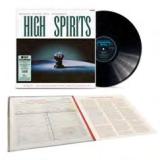
2025 Repress
Released in 1969, this is probably the best modern British jazz LP of all time. A beguiling mix of East meets West rhythms, ideas and joy, repressed with an authentic flip back sleeve.
An original of this will cost you about £2000. Because it’s rare but mainly because it’s absolutely amazing. A sax player hailing from the Jamaican Alpha School. A sublime guitarist from Mumbai, an tight quintet with special guests that include Norma Winstone on improvised wordless vocals. One session, 1969, at the very peak of British jazz invention and sound. I could go on and on about this but no one will actually read it. This album is brilliant and addictive in so many ways. It really does not get batter. Miss this at your peril.
Search:joe harriot
- 1
- 01: The London Jazz Quartet - Autumn In Cuba
- 02: Shake Keane Quintet - Fidel
- 03: Eddie Thompson - Body &Amp; Soul
- 04: Jimmy Deuchar Quartet - Dancing In The Dark
- 05: Tubby Hayes - Blues For Those Who Thus Desire
- 06: Ronnie Scott&Apos;S Quintet - Nemo
- 07: Wilton Gaynair - Rhythm
- 08: Stan Tracey Trio - Free
- 09: Jimmy Deuchar–Victor Feldman Quintet - Wail
- 10: The Pat Smythe Trio &Amp; Shake Keane - Old Devil Moon
- 11: Dizzy Reece Quintet - Sweet &Amp; Lovely
- 12: The Tony Kinsey Quartet &Amp; Joe Harriott - Fascinating Rhythm
The second volume in a survey of the modern jazz & hard-bop scenes that emerged in the new cultural melting pot of post war London, with recordings from the end of the 1940s through to the early 1960s.
Featuring representations from players whose roots lay in the East-End's jewish community alongside a wealth of talent of Caribbean and African descent playing and recording in post war London during this period.
Made in partnership with the Barbican to coincide with the exhibition Postwar Modern: New Art in Britain 1945-1965.
- A1: Ring My Bell - Blood Sisters
- A2: Don't Stop Til You Get Enough - Derrick Laro And Trinity
- B1: Do It Nice & Easy - Chariot Riders
- B2: Don't Let It Go To Your Head - Black Harmony
- C1: I'm Every Woman - Latisha
- C2: In The Rain - Ernest Ranglin
- C3: Reggae Beat Goes On - Family Choice
- D1: Ain't No Stopping Us Now - Risco Connection
- D2: Rappers Delight - Xanadu And Sweet Lady
- E1: Love Don't Live Here Any More - Sharon Forrester
- E2: Upside Down - Carol Cool
- F1: Be Thankful For What You've Got - One Blood
- F2: Am I The Same Girl - Charmaine Burnette
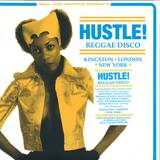
Soul Jazz Records' are releasing their long-out-of-print album 'Hustle! Reggae Disco' in a new expanded 2017 edition which now features five extra tracks. This ground-breaking album features non-stop killer reggae versions of original funk and soul classics in a disco style. Reggae disco updates of seminal classics by Anita Ward ('Ring
My Bell'), Chaka Khan ('I'm Every Woman'), Michael Jackson 'Don't Stop 'til You Get Enough,' Sugarhill Gang ('Rappers Delight' here performed by Derrick Laro and Trinity for producer Joe Gibbs) and more, all showing the hidden but inseparable link between the dance floors of New York, Kingston and London.
New bonus tracks to this collection include Derrick Harriott's funky take on Eddie Drennon's 'Do It Nice and Easy', the classic disco reggae of Risco Connection's take on McFadden and Whitehead's 'Ain't No Stopping Us Now' and the London rare groove lovers rock take on Barbara Acklin's soul classic 'Am I The Same Girl'.
'Hustle! Reggae Disco' has been one of Soul Jazz Records' best-selling releases since its first release 15 years ago (and subsequently featured heavily in the early Grand Theft Auto games!). This new edition comes complete fully re-mastered and with all original titles plus new tracks. This new expanded edition now comes a triple album (+ download code), CD and digital album.
'The effect of American R&B and soul music on Jamaican reggae is well documented, but the story doesn't stop there, for disco (and more so now for rap and hip-hop) have also been subsumed into the reggae mix, and while one might suspect that the resulting hybrid would die of its own implausibility, the feral mix of disco with reggae rhythms is so darn infectious that it hardly matters. Once you take your brain out of the frame and just let your feet go, this collection is a dancer's delight all done up in full-blown disco style, but with huge dub-style rhythm tracks ... if you're looking for an impossibly infectious dance collection, this is
it.' All Music
Dennis Brown has always been cited as Jamaica’s favourite singer. While Bob Marley set out to conquer the world, Dennis’s popularity on the island grew with every year. Overseas success also came Browns way with crossover hits like the massive ‘Money In My Pocket’. He will always be fondly remembered on the sound systems across the caribbean as the Crown Prince of Reggae.
Dennis Brown (b Dennis Emanuel Brown,1957, Kingston, Jamaica) began his illustrious career at the grand age of eleven like many of the other child singers at Coxsonne Dodds Studio One stable. His first hit in 1969 a cover of Van Dykes ‘No Man Is An Island’ still stands the tests of time and also its follow up cut ‘If I Follow My Heart’ as Reggae classics. The 1970’s saw Dennis build on his reputation by working with all the top Jamaican producers and
studio’s perfecting his sound. Lloyd Daley, Impact, Joe Gibbs, Aquarius and Derrick Harriott to name but a few. But it was his work with producer Winston ‘Niney’ Holness that he enjoyed the most success and many say recorded his best work for. Where many of the other producers stayed with the tried and tested Lovers Rock formula that did prove so popular with Dennis’s voice, producer Niney the Observer as he is fondly called, pushed him into a more roots led direction, over stark rhythms created by Niney’s studio band Soul Syndicate.
Two outstanding albums were put together ‘Just Dennis’ (1975) built on a collection of singles they had recorded together, ’Cassandra’, ’Westbound Train’, ’No More Will I Roam’ and ‘Conqueror’. The second 1977 set ‘Wolf and Leopards’ made up again of singles the prolific two had cut including, ‘Here I Come’ (a live favourite that Dennis always liked to start his set with) and ‘Children of Israel’ made these both strong roots era albums.
We have stayed with this period for our Dennis Brown album. Some of the above-mentioned cuts are present alongside the timeless crossover hit ‘Money In My Pocket’ (1979) produced by Niney but often credited as a Joe Gibbs production as it was released (and sweetened by adding Orchestration for the foreign market place) on his label. By the way this is the original Jamaican version (unsweetened) that you will find on this album a more truthful version in our humble opinion. His voice reigns supreme across these Niney produced cuts ‘Smile like An Angel’ ‘Silver Words’, ‘Play Girl’ and the fantastic ‘Poor Side Of Town’ (helped along by the great harmonies of the Heptones group), ‘Tribulation’ and ‘We Will Be Free’. Dennis Brown’s prolific catalogue of tunes that also found an outlet on his own DEB inprint (named after his initials) stands to show what a great artist he was and what a fine team he and Niney made when in the studio creating these magical moments. So sit back and enjoy a killer set of tunes compiled by Niney himself...Tribulation Times indeed and long may the records of the Crown Prince of Reggae Dennis Brown rule the world.....
On 4 October 2024 Universal Music Recordings and Decca Records are making Jamaican/British jazz saxophonist Joe Harriott’s album ‘Movement’ available again for the first time since it was released in 1964. Long sought after by collectors and connoisseurs, original copies now sell for upwards of £1,000.
This new edition was mastered at Abbey Road using high definition 24bit/192kHz audio files, copied directly from the original stereo analogue master tapes (previously only the mono version has been on vinyl). Images of those tapes are included in the package alongside new sleeve notes written by noted author, compiler and documentary maker Tony Higgins, who also acts as Executive Producer for Decca’s ‘British Jazz Explosion’ series.
Recorded in 1963, ‘Movement’ was released as part of the Lansdowne Series, overseen by the influential Denis Preston, one of the UK’s first independent record producers, and engineered by Adrian Kerridge. Of the nine tracks, seven are Harriott originals, whilst the other two were written by another pioneer of British Jazz, Michael Garrick. Playing alongside Joe were bassist Coleridge Goode (b. 1914 Jamaica, d. 2015 London), drummer Bobby Orr (b. Scotland 1928, d. 2020), pianist Pat Smythe (b. Scotland 1923, d. 1983), and trumpet/flugelhorn player Ellsworth ‘Shake’ Keane (b. St. Vincent 1927, d. 1997).
Born in Jamaica in 1928, Joseph Arthurlin Harriott was a pupil at the Alpha Boys School (alma mater to Harold McNair, Dizzy Reece, and a myriad of Ska greats). He arrived in Britain in the early ’50s, initially touring with the Ozzie Da Costa Band, followed by a brief spell with the Ronnie Scott Big Band, and sessions backing the likes of George Chisholm, and Lita Roza.
By the mid ’50s Joe was a big enough draw to release records under his own name, and whilst these early recordings conform to the then popular bop style, the following decade would see him release albums whose titles chart his development; ‘Free Form’ in 1960, and ‘Abstract’ in 1963.
‘Movement’ is a testament to Joe Harriott’s visionary approach to jazz. It blends structure with freedom, tradition with innovation, and individual expression with collective creativity. His development of free-form jazz represents a significant contribution to the genre, paralleling yet distinct from the work of Ornette Coleman and other American free jazz artists. It is an essential listen, not only for fans of British jazz, but jazz fans in general.
It is perhaps best summed up by the epitaph that now adorns Joe’s gravestone; “Parker? There’s them over here can play a few aces too.”
The West Indian-born alto saxophonist Joe Harriott was one of the most convincing boppers outside of the USA, though by the end of the 1950s he was exploring freer musical pastures, and the quintet with which he undertook the exploration was an outgrowth of the hard bop band with which he'd made a name on the British scene.
Often in the past the group's music, in which trumpet and flugelhorn player Shake Keane figured alongside Harriott in the front line, has been compared with that of the early Ornette Coleman quartets, but here it's far more interactive, a fact borne out most obviously by the lack of soloists. Here on Free Form (1961) is where the rhythm of that indigenously West Indian form is extraordinarily maintained in the midst of characteristic group exchanges.
- Musical Train – Roy Shirley
- Conversation - Uniques
- Till I Die- Delroy Wilson
- Daddy’s Home – Pat Kelly
- Run Come Dance – Glen Adams
- Forst Gate Rock- Lester Sterling
- Rock, Rock And Cry – Raving Ravers
- Trying To Find Me A Home - Uniques
- Warming Up The Scene- Roy Shirley
- I’ll Get You – Dawn Penn
- It’s Been So Long – Winston Samuels
- Long Life – Bill Gentiles
- She’s So Fine – Glen Adams
- Forever – Cynthia Richards
- How Could I – Ken Parker *
- Super Special – Lester Sterling
Fever hit Jamaica around 1966 when the jerky Ska rhythms slowed down to a more leisurely, sexy pace. Some say due to the extreme heat that hit the island that year, making frenzied dance routines of the earlier sounds seem like hard work in the all night Sound System Sessions. Others would say Reggae’s beat is always evolving and changing into something slightly different and moving with the times.
Whatever the reasons were, this two year period that ran until 1968, would see some of the power escape from then big three producers, Clemet ‘Coxone’ Dodd, Prince Buster and Duke Reid, who ruled the airwaves. They had to finally make room for the new wave of up and coming producers who had something to say.
Such names as Joel Gibson (Joe Gibbs), Sonia Pottiger, Derrick Harriot and the most prolific of them all, Mr Bunny Lee, would unleash some fine music in this fascinating, if short lived period in Reggae;s history. We have compiled some of the biggest hits from the Rocksteady era alongside some lesser known cuts we believe deserve to be re-evaluated.
Rocksteady was an inspirational time and some may say a little overlooked, but we hope you agree with us when we say that it brought us some outstanding music. So sit back and enjoy some Rocksteady straight from the dancefloors of Jamaica.
Hope you enjoy the set…..
- A1: The Uniques - Love And Devotion
- A2: Roy Shirley - If I Don't Know
- A3: Glen Adams - Taking Over Orange Street
- A4: Lester Sterling - It Might As Well Be Spring
- A5: The Uniques - Girl Of My Dreams
- A6: Roy Shirley - Good Ambition
- A7: Lester Sterling - Soul Voyage
- B1: Glen Adams - Hold Down Miss Winey
- B2: Errol Dunkley - I'm Going Home
- B3: George Dekker - Foey Man
- B4: The Uniques - Hooray
- B5: Don T Lee - It's Reggae Time
- B6: Webber Sisters - My World
Rocksteady took Over Orange Street, Jamaica around 1966, the same time that an extreme heatwave hit the Jamaican island. Some say the previous jerky Ska Rhythms proved too strenuous of an activity to partake in, during the all night Sound System sessions .So it proved a winning formula to slow the beat down to a more leisurely pace.
Whatever the reasons were this two year period that ran until 1968, would see some of the power escape from the big three producers, Clement ‘Coxone’ Dodd, Prince Buster and Duke Reid, who up until this period had ruled the airwaves .It was time to make room for a new wave of up and coming producers that also had something to offer the people. Such names as Joel Gibson ( Joe Gibbs ), Sonia Pottinger, Derrick Harriott and most prolific of them all Mr Bunny Lee.
These new names would unleash some fine music in what would be a short lived chapter in the ever changing and moving beat that is reggae’s history. We have compiled some of the biggest hits from the Rocksteady period, alongside some lesser known cuts we believe deserve to be re-evaluated. Rocksteady was an inspirational and somewhat over looked sound that provided us with some outstanding music. So sit back and enjoy some Rocksteady straight from the dances of Jamaica.
Back in stock!
Following in the footsteps of the landmark 1966 double-quartet recording by Joe Harriott and John Mayer, Indian born musician Amancio D'Silva produced some of the most adventurous and sophisticated recordings within the canon of 'indo-jazz', a term used to define a pioneering east meets west synthesis that reflected the shifting musical and cultural landscape of post-war Britain. An experiment which reached a pinnacle in 1972 with D'Silva's seminal recording Dream Sequence by Cosmic Eye (The Roundtable TRZY001), an adventurous fusion of modal jazz and Indian classical music viewed through the psychedelic lens of swinging London. Exotic third-stream jazz conceived by a visionary composer whose virtuosic technique and deeply emotive guitar playing defined his two earlier and now legendary 1969 UK jazz albums Integration and Hum Dono with Joe Harriott, both recorded for the much celebrated Lansdowne label.
Also recorded in 1972 although not released at the time was Konkan Dance, an unofficial sequel to Dream Sequence that further explored the unchartered possibilities of an Indian music-jazz fusion. Featuring many of the same personnel, this session also included support from Don Rendell and Alan Branscombe, two giants of the UK jazz scene who add serious credentials to D'Silva's singular and intimate compositions. For reasons unknown the album was cancelled by Lansdowne at the time and never saw the light of day until being resurrected again in the 2000s. The Roundtable are pleased to once again showcase this important artist and present a new addition of this incredible and almost forgotten piece of the Amancio D'Silva story. Pressed on 180g vinyl and packaged in a custom 1960s-style flip-back sleeve.
Unreleased British Jazz from 1972.
Sequel to Cosmic Eye - Dream Sequence
Includes liner notes and rare photos.
Custom Flipback sleeve.
180g Vinyl
Newly remastered from the original vinyl at Gearbox Studio with extended
liner notes and new information, The Joe Harriott Quintet’s ‘Swings High’,
recorded in 1967, saw Joe returning to his hard bop roots on a set that
burns with a rare light
A top band of British jazz players, including the UK’s greatest drummer, Phil
Seamen, and the sensitive and less-known-than-it-should-be trumpet playing of
Stu Hamer, create a session that transcends the difficulties of its recording to
create a timeless session, and from the point of view of pure playing, one of Joe’s
very best.
Joe Harriott: alto saxophone
Coleridge Goode: bass
Phil Seaman: drums
Pat Smythe: piano
Stu Hamer: trumpet
“Joe plays so fiercely on the record that at times it seems as though he’s about to
blow his alto apart.” - Coleridge Goode
“Shepherd's Serenade always a big one! great reissue.” - Gilles Peterson
"Some might say that this music is old- fashioned. If you’d call Bird and Fats
Navarro playing “Ornithology” old-fashioned, then this is too. But it’s still strong,
warm music played with skill and feeling, and that’s enough for me." - Richard
Williams (1970)
- A1: Bongo Man
- A2: Narration
- B1: Narration (Continued)
- B2: Mabrat
- B3: Poem 1
- B4: Four Hundred Years
- C1: Poem 2
- C2: Song
- C3: Lumba
- C4: Way Back Home
- D1: Ethiopian Serenade
- D2: Oh Carolina
- D3: So Long
- E1: Grounation
- F1: Grounation (Continued)
- G1: Blacker Black (Traditional) (Traditional)
- H1: Grounation (Excerpt) (Traditional)
LTD DELUXE BOXSET[66,18 €]
Like Sun Ra's Arkestra and John Coltrane are to jazz, the Mystic Revelation of Rastafari are to reggae – the ultimate expression of roots music and Rastafarian ideology in reggae music, music functioning at a high level of spiritual consciousness combined with an equally avant-garde and forward-looking approach to sound.
The group's stunning, unique and groundbreaking 1973 album ‘Grounation’, a mighty conceptual triplealbum (the first ever reggae triple!) is, similar to Marvin Gaye's 'What's Goin' On', a definitive allencompassing cultural statement of its time and place. A sprawling album of raw and unique cultural expression that combined Rastafari consciousness with deep spiritual jazz music – an absolute and essential classic of Reggae music.
The Mystic Revelation of Rastafari group came into existence at the start of 1970s, the union of two artists (and groups) of equal repute – Count Ossie and his African Drums and saxophonist Cedric ‘Im’ Brooks’ and his group,
The Mystics. Both Ossie and Brooks were alumni from the great Studio One Records. Master drummer Count Ossie and his collective of Rastafarian drummers performed for Haile Selassie on his
momentous visit to Jamaica in 1966. Cedric Brooks came out of the Alpha Boys School – the fertile breeding ground of musicians who dominated the Jamaican music scene from the 1960s onwards; Tommy McCook,
Don Drummond, Johnny Moore, Headley Bennett, Johnny Osbourne, Yellowman, Leroy Smart, Bobby Ellis, Joe Harriott, Eddie Thornton, Vin Gordon, Rico Rodriguez, Owen Gray, Leroy ‘Horsemouth’ Wallace and more.
The Mystic Revelation of Rastafari’s ‘Grounation’ is a massive opus, a work of profound musical genius that tells the story of Jamaica through music and words. The album is a cornerstone in the history of reggae, a unique and other-worldly album the like of which has never been made since.
Soul Jazz Records are releasing this long-revered album release in two unique vinyl formats: a one-off pressing limited-edition deluxe box set triple-vinyl edition complete with a free 45 single + art print + an exact-replica reproduction Mystic Revelation 1977 mag/zine + download code; And secondly as a triple album + download
code. There is also a deluxe 2 CD version
complete with large format booklet encased in
double-walled slipcase. All editions come with
extensive new sleevenotes, photography, exact
reproductions of the original text and artwork
- 01: Tony Hall&Apos;S &Quot;Hallstars&Quot; - Hi-Ya Mr. Jackson
- 02: Wilton Gaynair - Wilton&Apos;S Mood
- 03: Ronnie Scott &Amp; Dizzy Reece Quartet - Out Of Nowhere (You Came Along From)
- 04: Don Rendell - You Stepped Out Of A Dream
- 05: Tony Kinsey Trio &Amp; Joe Harriott - It Don&Apos;T Mean A Thing If It Ain&Apos;T Got That Swing
- 06: Eddie Thompson - Nelson&Apos;S Column
- 07: Ginger Mofolunsho Johnson &Amp; His Afro-Cuban Band - Egyptian Bint Al Cha Cha
- 08: Johnny Dankworth - Treasure Drive
- 09: The Joe Harriott Quintet - Spiritual Blues
- 10: The Jazz Five, Vic Ash &Amp; Harry Klein - Hootin&Apos;
- 11: Shake Keane Quintet - Morning Blue
- 12: Dizzy Reece - I Had The Craziest Dream
A survey of the modern jazz & hard-bop scenes that emerged in the new cultural melting pot of post war London, with recordings from the end of the 1940s through to the early 1960s.
Featuring representations from players whose roots lay in the East-End's jewish community, such as Ronnie Scott, Vic Ash & Harry Klein, alongside a wealth of talent of Caribbean and African descent playing and recording in post war London during this period, incl. Dizzy Reece, Wilton Gaynair, Joe Harriott, Shake Keane & Ginger Johnson.
Made in partnership with the Barbican to coincide with the exhibition Postwar Modern: New Art in Britain 1945-1965.
- A1: The Rudies - Train To Vietnam
- A2: Derrick & Patsy - Hey Boy - Hey Girl
- A3: Alton Ellis - Bye Bye Love
- A4: The Imperials - Young Love
- A5: Bunny & Bunny - On The Town
- A6: Junior Smith - Searching
- A7: The Soul Flames - Mini Really Fit Dem
- B1: Alton Ellis - La La Means I Love You
- B2: Rico - Blue Socks
- B3: Fitz & The Coozers - Cover Me
- B4: Bobby Kalphat - Rhythm & Soul
- B5: The Rudies - Engine 59
- B6: Derrick Morgan - Music Be The Food Of Love
- B7: Fredrick Bell - Ready Steady Cool
Rock Steady Cool is another fine collection of Rocksteady hits. The ‘Cool’ subtitle could not be more relevant to an album, as around 1966, an extreme heatwave hit the Jamaican island. This would not stop the all night dances from going ahead but the jerky Ska Rhythms proved too strenuous of an activity to partake in, so a new slower beat to suit this extreme weather had to be found and the ever resourceful music entrepreneurs came up with the slower paced beat and Rocksteady was born.
This two-year Rocksteady period ran until 1968 and would see some of the power escape from the big three producers, Clement ‘Coxone’ Dodd, Prince Buster and Duke Reid. It was time to make room for a new wave of up-and-coming producers that also had something to offer the people. Such names as Joel Gibson (Joe Gibbs), Sonia Pottinger, Derrick Harriott and most prolific of them all, Mr Bunny Lee would step forward and add some new musical touches to the island.
Rocksteady was an inspirational and somewhat overlooked sound that provided us with some outstanding music. So, sit back and enjoy some Rocksteady straight from the dances of Jamaica.
Hope You enjoy the set….
- A1: Wilton Gaynair - Rhythm (1959)
- A2: Lance Hayward Feat. Totlyn Jackson - Old Devil Moon (1960)
- A3: The Eric Grant Orchestra - Let’s Fall In Love (1960)
- A4: Cecil Lloyd - St. Thomas (1961)
- A5: Lennie Hibbert - I Love Paris (1961)
- A6: Ernest Ranglin - Exodus (1962)
- B1: Cecil Lloyd Group - I’ll Remember April (1962)
- B2: The Workshop Feat. Don Drummond - It Happens (1962)
- B3: The Workshop Feat. Tommy Mccook - The Answer (1962)
Talking about the foundation of Jamaican music, the Alpha Boys School in Kingston can be considered as one of the places where it all began! Back in the day, under the direction of Sister Mary Ignatius, the school was the place where young boys from the poor neighborhoods in Kingston could embrace an instrument (mostly brass and drums). Then history tells us that some of these kids became among the most influential musicians in the history of Jamaican Jazz, Ska, and Reggae. Joe Harriott, Dizzy Reece, Tommy McCook, Don Drummond, Cedric Brooks, Rico Rodriguez, Johnny Osbourne, Leroy Smart and Yellowman are just some of the fruits of such a great community art project. Now this compilation contains some rare gems produced between 1959 and 1962 by Jamaican Jazz heavyweights such as Tommy Mc Cook, Don Drummond, Ernest Rangling, Lennie Hiibert, Cecil Lloyd and others. This is highly swinging music inspired by the Black American tradition with a unique and inevitable Caribbean flavour. Don't miss it!!!
Recorded in 1972 at the legendary Landsdowne Studios in London, Cosmic Eye is an extraordinary piece of recorded music. Led by Indian born guitarist Amancio D'Silva, Cosmic Eye was a highly innovative studio experiment in which 'Jazz Meets World'. Following in the footsteps of other pioneering Landsdowne jazz recordings such as Joe Harriott & John Mayer's Indo Jazz sessions, Cosmic Eye is modal, but is also under-pinned with traditional Indian instrumentation and structure, resulting in a hypnotic, psychedelic jazz excursion.
Constructed into two conceptual pieces (Dream Sequences), two side-long jazz ragas showcasing D'Silva's soulful guitar playing reminiscent of his earlier 60s sessions, Hum Dono and Integrations, as well as his session work for the Bollywood film industry under the musical directors Laxmikant-Pyarelal. Featuring a host of UK and Indian musicians, Cosmic Eye is a Singular recording from a fervently rich period of British modern jazz. Finally this phenomenal jazz recording sees a legitimate reissue.
Never before reissued, this legendary 1968 EMI recording is a revered Indian jazz rarity, a collectors' holy grail. Raga Jazz Style is an original Indian excursion into Indo-jazz fusion. A one-away recording from the almost unknown Bombay jazz scene, it is among the few jazz LPs to hail from the subcontinent.Closely contemporary with the UK-based explorations of Amancio D'Silva, John Mayer and Joe Harriott, Raga Jazz Style takes the melodic, scale-based raga system of Indian classical music and marries it with a swinging jazz rhythm section assembled by Bollywood's most highly acclaimed musical directors, the soundtrack composing duo Shankar Singh and Jaikishan Panchal.Singh and Panchal were a dominant force in Hindi film music from the late 1940s onwards. Shankar had been trained in classical tabla, while Jaikishan was an expert harmonium player. They worked together on well over a hundred films, and their innovative compositions and orchestral scoring revolutionised the music of the nascent Bollywood industry. Central to their sound was regular collaborator Sebastian D'Souza. From 1952 onwards, D'Souza would work on every Shankar Jaikishan soundtrack, eventually becoming Bollywood's most coveted musical arranger.
Originally from Goa, D'Souza had cut his teeth in the dance-band era, arranging and playing with his uncle's jazz bands in Lahore and Quetta. After Partition, he had moved to Bombay to follow the reliable work provided by the film industry, where Goan musicians had become the mainstay of Bollywood's film studio orchestras. Goans were also the core of Bombay's thriving dance-hall and hotel-based jazz scene, with artists including saxophonist Braz Gonsalves, guitarist Amancio D'Silva and trumpeter Chic Chocolate all working in the city during the post-war years.
The team assembled for Raga Jazz Style were drawn from this inventive and forward-thinking milieu. Pianist Lucilla Pacheco, saxophonist Manohari Singh and guitarist Anibal Castro were all fixtures on the Bombay jazz circuit, while drummer Leslie Godinho is reputed to have taught Joe Morello the 5/4 'Take Five' beat when they jammed together during Dave Brubeck's State Department tour of India. To this jazz backbone was added the sitar of Ustad Rais Khan, scion of long line of classical instrumentalists, and nephew of the renowned sitarist Ustad Vilayat Khan. Bombay's jazz modernists had been experimenting with the fusion of ragas and jazz since the 1950s, long before American or British jazz musicians had tuned in to Indian classical music. But very little of this exciting scene was ever captured on record. Raga Jazz Style offers a rare chance to hear the innovative sounds of the Indian jazz scene, as peerless composers Shankar Jaikishan and arranging supremo D'Souza join with veteran Bombay jazzers to explore classical themes in a jazz setting — eleven ragas to a swinging beat!This is a highly impressive inaugural salvo by Outernational Sounds, using original masters and beautifully rendered facsimile artwork, with 180g vinyl pressed at Pallas, in Germany.
- 1