Suche:john du cann

Styles
Alle
  • 1
JOHN DU CANN - THE WORLDS NOT BIG ENOUGH

This album was recorded in 1977 and produced by Status Quo’s FRANCIS ROSSI. Shockingly, this album has never been released on vinyl until now. It originally came out on CD in 1992 and is now long out of print and even that goes for good coin.

Du Cann’s stellar career included freakbeat heroes THE ATTACK (“Magic In The Air”), psych/prog legends ANDROMEDA, and the group he’s best known for, ATOMIC ROOSTER. Du Cann wrote their their #4 hit single “Devil’s Answer”. A couple of years later he was in DAEMON, later renamed BULLET, then HARD STUFF. In 1974 he was even a temporary guitarist for a THIN LIZZY German tour.

In 1977, he was signed to the same management company as STATUS QUO, who paired him with Quo leader, Francis Rossi. The resulting album, “The World’s Not Big Enough” included Rossi on guitar, Andy Bown (The Herd, Judas Jump, Status Quo) on keyboards, Pete Kircher (Honeybus, Status Quo, Liverpool Express) on drums, and John McCoy (Ian Gillian, Tyla Gang, U.K. Subs) on bass. Basically, this is Du Cann backed by Status Quo at their Belt Buckle Boogie peak.

A few songs from this album appeared on killer late 70s Punxploitation singles “Throw Him Jail”, “Don’t Be A Dummy” (a UK Top 40 hit!), and “Where’s The Show”. This album has been described as “Quo mixed with the Sex Pistols”, and we can’t disagree with that assessment.

vorbestellen11.06.2021

erscheint voraussichtlich am 11.06.2021

28,53
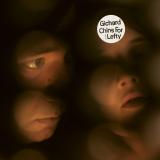
GICHARD - Chins For Lefty (LP)

Chins For Lefty is the debut album and first recording by Gichard, a new duo chronicling the absurdities of end-stage capitalism and mouldering social rituals from their vantage point in Glasgow, Scotland. Recorded primarily in the band’s home studio straight to tape, Chins For Lefty combines gorgeous, ramshackle melody, DIY kosmische punk, drum machine + synth and, in vocalist/lyricist Lisa Jones, an absurdist commentator on the human condition as it navigates the anxieties of the modern world. Instrumentalist Chas Lalli’s swirling music accompaniment stitches an evocative mix of musical styles, the ragged wind beneath the lyrics’ wings.

Although the duo first collaborated in their previous group Dragged Up, their disparate musical and artistic backgrounds make for an alluring mix in Gichard. Lalli has spent the last 20 years in the Glasgow underground, most notably in the noise rock group VOM, while Lisa Jones’s practice was in poetry and spoken word. Beginning as co vocalist in her previous band, in Gichard her lyrics are centre stage; the vision concocted alongside Lalli amounts to a total world-build.

Chins For Lefty scans almost like a novel, with each track elucidating a skewed universe that bears only some resemblance to the one you and I partake in. Like all works of fiction Gichard’s songs are rooted in reality and the lived experiences of its authors, but here characters are exaggerated, social mores and habits are pulled apart to reveal their inherent alienness. Universal emotions are laid bare, the bright light of anxious examination searching out every hairline fracture in our relationships. Distorted and cracked, the mirror that Gichard hold up to our world is also pretty damn funny.

Opener Cholesterol Test launches an expansive, cosmic guitar and synth intro that belies the Tascam-tape recorder it was recorded onto, like a Chromatics cut substituting anxiety for overt sexuality. Here Jones intones an apology to a non-responsive recipient, in the medium of a long voice note forensically deconstructing an interaction from the night before. Over punk guitars and shuffling, lo-fi drum machine splutters, the narrator in Asking The Apes “prefers things to people” before being taken hostage in the city zoo to confess an obsession which consumes the protagonist, ending with the immortal two liner “I sleep in a cocoon of old newspapers at the end of your street / And I think I have been fired from my job,” On album standout Posthumous Hologram, the narrator is faced with a human simulacra, in this case an undead pop star; the face of the encroaching technological singularity. Yes, it does requests, it can do My Way in 200 different language options. But what are the implications? While you’re left pondering, the alternating deadpan verse delivery and undeniably catchy chorus keep you company.

By the time Break Up With Johnny Dogbirth rattles into view, the band are satirising a suburban inanity blown up to cartoon proportions, soundtracked with a drawled musicality that recalls Rowland S. Howard’s post-Birthday Party balladeering. This approach is furthered on Human Resources: over an angular guitar+bass track, Jones’s short story recalls Dry Cleaning’s erudite lyrical post punk. On Soft Face, Lalli’s guitar and drum machine are swathed in echo and delay, as Jones dissects dating rituals with a west of Scotland drollness. Hamming It Up brings a porcine perspective in a short story that begins with the line “I was breastfeeding discreetly in the service station. She didn’t mind.” What follows is a passage punctured with canned laughter and a narrative involving tribute acts, modern farming techniques.

Brilliant first single Your Private Hell closes the album, the closest the group get to earnest perhaps, filtered through a surreal central Scottishness. While Your Private Hell might seem like a sardonic take down of romance, perhaps it’s the very distillation of love in all its awkwardness, selflessness and weirdness. Here there’s a distinctive Glasgow-ness to this doomed romance: the protagonist falls for an outsider, offers them cheap jarred hot dogs and carbolic soap (the infamous, excoriating soap dished out in schools and government buildings throughout Scotland), offers to cover up a murder, stalks them in the all-night Spar. It’s a short story of intrigue, murder and the irresistible pull of self-sacrifice to share in someone else’s suffering. If that’s not love, what is it? You can see this vision mapped out in black and white on their video for 'Your Private Hell'.

vorbestellen29.05.2026

erscheint voraussichtlich am 29.05.2026

24,79
Capucon, G./Rana, B./Pahud, E./Pletnev, M. - Adagietto LP

Capucon, G./Rana, B./Pahud, E./Pletnev, M.

Adagietto LP

12inch5026854537948
Warner Classics
05.06.2026

Diese LP präsentiert eine Auswahl besinnlicher Werke der klassischen Musik und richtet sich an Hörer:innen, die eine ruhige, reflektierte Klangatmosphäre suchen. Das Tracklisting verbindet groß besetzte orchestrale Kompositionen von Mahler und Williams mit der kammermusikalischen Präzision von Bach und Debussy. Seite A wird durch das Adagietto aus Mahlers 5. Sinfonie eröffnet, das insbesondere durch seine Verwendung im Film „Tod in Venedig” bekannt wurde. Es folgen das Thema aus „Schindlers Liste“ von John Williams sowie Faurés „Après un rêve“. Dadurch wird der erste Teil des Albums von dichten, orchestralen Arrangements geprägt. Die B-Seite wechselt in einen intimeren Rahmen und stellt die Solisten in den Vordergrund. Nach den impressionistischen Klängen Debussys folgt Saint-Saëns' „Aquarium“, das als Erkennungsmelodie der Filmfestspiele von Cannes bekannt wurde. Den Abschluss bildet Beethovens „Pathétique“-Sonate.

vorbestellen05.06.2026

erscheint voraussichtlich am 05.06.2026

19,75
Various - 10 Years Pressure Traxx Vinyl Compilation (4x12")

10 Years Pressure Traxx. 10 Years of genre defining tracks like Suciu – Dusintors, instant classics like Ricardo Villalobos – Wispa or Dj Sneak – 3d Print. Forgotten gems like Nail – Sentipede or Transparent Sound – Punk MF. Now we celebrate 10 years of Pressure Traxx with a big compilation.

The 4 x vinyl box will be released in September and we are looking forward to share it with you.

Auf Lager

Bei uns am Lager und sofort versandfertig

50,38
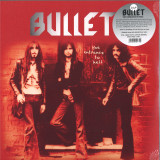
BULLET - The Entrance to Hell LP 2x12"

Top notch hard-rock / proto metal by post-Atomic Rooster and pre-Hard Stuff band BULLET, featuring the explosive guitar & vocals of JOHN DU CANN (The Attack, Andromeda, Atomic Rooster) plus bass player John Gustafson (Quatermass, Roxy Music, Ian Gillan Band) and PAUL HAMMOND (Atomic Rooster) on drums.

Their legendary studio recordings from 1970-71, now for the first time on vinyl.

*Gatefold sleeve with detailed liner notes and photos.

RIYL: HARD STUFF, CAPTAIN BEYOND, URIAH HEEP, DUST…

“…gritty sounding, blues based power trio built around John Du Cann’s unlimited arsenal of crunchy guitar riffs and scorching solos…”
Ryan Sparks (Sea Of Tranquility)

Auf Lager

Bei uns am Lager und sofort versandfertig

30,21
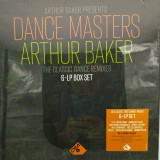
Various - Arthur Baker Presents Dance Masters (6x12")
 
35

This latest instalment of ARTHUR BAKER Presents DANCE MASTERS finds the production/ song-writing/ remixing maestro taking the spotlight for a long overdue snapshot of his own classic 12” mixes during a crucial evolution of dance music, club
and pop culture.

“I’ve always felt like I was on a mission to make music from the time I heard Motown, Philly and Sly and the Family Stone. My mission started as a hobby and still feels like one now. You’ve got to keep on pushing and hustling. It can be a drag sometimes but
if you really love what you’re doing, it’s worth the work. I still really love what I do.”

Arthur Baker helped codify the remixer as artist. His genre-fluid approach to projects
has resulted in a joyous myriad of classics that spans many decades. This ’80’s focused DANCE MASTERS collection offers a welcome glimpse at Baker’s illustrious career and many long out-of-print 12” versions and previously unavailable mixes.

This 35-track, six LP expanded edition includes a wide array of selections from the likes of Robbie Nevil’s “C’est La Vie,” Fleetwood Mac’s “Big Love,” Neneh Cherry’s “Buffalo Stance”, Jeffrey Osborne “Soweto”, Freeez “I.O.U”, Rockers Revenge “Walking On Sunshine” and of course the juggernaut “Planet Rock” with Afrika Bambaataa & Soulsonic Force.

Complete with in-depth liner notes by Bill Coleman, track by track notes written by Arthur Baker himself, previously unseen session photos from Arthur’s personal archives and a signed insert.

All tracks remastered by Nick Robbins at Sound Mastering

Auf Lager

Bei uns am Lager und sofort versandfertig

78,19
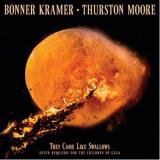
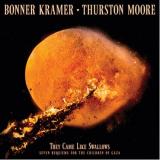
BONNER KRAMER | THURSTON MOORE - THEY CAME LIKE SWALLOWS - SEVEN REQUIEMS FOR THE CHILDREN OF GAZA LP

They Came Like Swallows is the first album-length collaboration between Thurston Moore and Kramer (now officially Bonner Kramer), two giants of alternative/ experimental music. The accomplishments and influence of these two artists in the world of independent music cannot be overstated and the result of their artistic union is a startlingly cohesive statement that burns through landscapes of primitive outsider rock, avant-garde composition, progressive ambient and further locales boldly and beautifully unnamable. “Kramer and I reconnected in Miami, Florida, a few years back, many many years after each of us had departed NYC on separate life adventures. It was only a matter of time before Kramer and I started making plans to record together and with his irrepressible due diligence he quickly set up a mobile recording contraption in the pad I was decamped in, the Florida sunshine flowing through the palm leaves, lithe lizards skittering across the windowsills, and we just went for it.

Kramer had the idea to cover a Joy Division tune, a left turn from the improvisations we had been tracking, though wholly in keeping with both our sensibilities of light and dark unifying in transcendent songwriting, both of us devotees of 'the song' as well as 'the freedom.’ What transpired is They Came Like Swallows, a session we immediately felt should exist as a prayer to the war-torn souls of the families of Palestine continually decimated by the brutality of genocide. We agreed beyond words to offer our music as a sonic activism and as a beneficent energy. This album is our duo exchange for human dignity, it is our soul music for any semblance of a peaceful planet.” ~ Thurston Moore “For the first time in our nearly 45 years of friendship, we had identical time windows open to make a record together,” recounts Kramer. After all this time not a moment is wasted as the duo immediately taps into the heightened core of improvisational tension across these seven offerings. Volcanic opener “Urn Burial” notches a similar historic union (John Cale and Terry Riley) to meet the circumstances of the moment, with swirling mists of organ and pounding toms over guitar that thickens the atmosphere with jagged, grimy dissonance.

Solemn strings open the second track, “The Redness In The West,” with Kramer’s cello and viola in dueling bow beneath the high tension drive and sustain of Thurston’s electric guitar, tapping out a Morse code of tension that mounts endlessly into a fog of inevitable war by the end. Moore and Kramer’s sense of experimentalism is in free and full grandeur throughout They Came Like Swallows, though the duo keep a strong and constant sideways eye on melody, composition and architecture, to the ends that any strict lines between song and improvisation are blurred beyond qualification.

As if to punctuate this point, Swallows closes with a nightwork cover of Joy Division’s “Insight,” a doleful coda that breathes out with a solemn inner grace under Thurston’s instantly stylistically recognizable guitar melodies as they weave into he and Kramer’s unison voices. As the lone vocal piece and only traditional ‘song’ form on the album, “Insight” is unique to this set and as a closing statement draws connective lines back to the kind of dynamic, electrified melodicism that wove deep, melancholy patterns into the untamed fire of Sonic Youth’s Sister and Daydream Nation. In the album’s final moments, the two voices repeat the lyric “I’m not afraid anymore” as mantra, underscoring the heavy, unsettled themes and methods that preceded it. Kramer describes the creative process of They Came Like Swallows: “I had composed and recorded a few pieces at my home studio over the course of a couple weeks. Thurston was spending the winter in South Florida, so I flew down and spent a few days recording his guitar parts in his home there. Watching him spontaneously compose his parts was pretty astonishing, to say the least. Once we'd finished working on those pieces, we began improvising and following wherever the music pointed us, and another few pieces were born. We got straight to it, without anything driving us other than the joy of finally working together.

My personal goal was to remain present and catch as many surprises as I could from Thurston's guitar work, and there were plenty during those few days. We had a fucking blast.” Thurston’s contributions here will be readily familiar to any acolytes of his other works, the through-line between his inspired playing, cradled in Kramer’s meticulous, solid arrangements. “If I had to make this record again, I'd do it all exactly the same way,” Kramer says. “It’s like jazz, you don't think about it. You just do it. It was miraculous, and you don't fuck with a miracle.”

vorbestellen01.05.2026

erscheint voraussichtlich am 01.05.2026

30,67
BONNER KRAMER | THURSTON MOORE - THEY CAME LIKE SWALLOWS - SEVEN REQUIEMS FOR THE CHILDREN OF GAZA LP
  • 1: Urn Burial
  • 2: The Redness In The West
  • 3: The Third Migration
  • 4: They Came Like Swallows
  • 5: The Living Theater
  • 6: The Oceans Are Crying
  • 7: Insight
auch erhältlich

Black Vinyl[30,67 €]


They Came Like Swallows is the first album-length collaboration between Thurston Moore and Kramer (now officially Bonner Kramer), two giants of alternative/ experimental music. The accomplishments and influence of these two artists in the world of independent music cannot be overstated and the result of their artistic union is a startlingly cohesive statement that burns through landscapes of primitive outsider rock, avant-garde composition, progressive ambient and further locales boldly and beautifully unnamable. “Kramer and I reconnected in Miami, Florida, a few years back, many many years after each of us had departed NYC on separate life adventures. It was only a matter of time before Kramer and I started making plans to record together and with his irrepressible due diligence he quickly set up a mobile recording contraption in the pad I was decamped in, the Florida sunshine flowing through the palm leaves, lithe lizards skittering across the windowsills, and we just went for it.

Kramer had the idea to cover a Joy Division tune, a left turn from the improvisations we had been tracking, though wholly in keeping with both our sensibilities of light and dark unifying in transcendent songwriting, both of us devotees of 'the song' as well as 'the freedom.’ What transpired is They Came Like Swallows, a session we immediately felt should exist as a prayer to the war-torn souls of the families of Palestine continually decimated by the brutality of genocide. We agreed beyond words to offer our music as a sonic activism and as a beneficent energy. This album is our duo exchange for human dignity, it is our soul music for any semblance of a peaceful planet.” ~ Thurston Moore “For the first time in our nearly 45 years of friendship, we had identical time windows open to make a record together,” recounts Kramer. After all this time not a moment is wasted as the duo immediately taps into the heightened core of improvisational tension across these seven offerings. Volcanic opener “Urn Burial” notches a similar historic union (John Cale and Terry Riley) to meet the circumstances of the moment, with swirling mists of organ and pounding toms over guitar that thickens the atmosphere with jagged, grimy dissonance.

Solemn strings open the second track, “The Redness In The West,” with Kramer’s cello and viola in dueling bow beneath the high tension drive and sustain of Thurston’s electric guitar, tapping out a Morse code of tension that mounts endlessly into a fog of inevitable war by the end. Moore and Kramer’s sense of experimentalism is in free and full grandeur throughout They Came Like Swallows, though the duo keep a strong and constant sideways eye on melody, composition and architecture, to the ends that any strict lines between song and improvisation are blurred beyond qualification.

As if to punctuate this point, Swallows closes with a nightwork cover of Joy Division’s “Insight,” a doleful coda that breathes out with a solemn inner grace under Thurston’s instantly stylistically recognizable guitar melodies as they weave into he and Kramer’s unison voices. As the lone vocal piece and only traditional ‘song’ form on the album, “Insight” is unique to this set and as a closing statement draws connective lines back to the kind of dynamic, electrified melodicism that wove deep, melancholy patterns into the untamed fire of Sonic Youth’s Sister and Daydream Nation. In the album’s final moments, the two voices repeat the lyric “I’m not afraid anymore” as mantra, underscoring the heavy, unsettled themes and methods that preceded it. Kramer describes the creative process of They Came Like Swallows: “I had composed and recorded a few pieces at my home studio over the course of a couple weeks. Thurston was spending the winter in South Florida, so I flew down and spent a few days recording his guitar parts in his home there. Watching him spontaneously compose his parts was pretty astonishing, to say the least. Once we'd finished working on those pieces, we began improvising and following wherever the music pointed us, and another few pieces were born. We got straight to it, without anything driving us other than the joy of finally working together.

My personal goal was to remain present and catch as many surprises as I could from Thurston's guitar work, and there were plenty during those few days. We had a fucking blast.” Thurston’s contributions here will be readily familiar to any acolytes of his other works, the through-line between his inspired playing, cradled in Kramer’s meticulous, solid arrangements. “If I had to make this record again, I'd do it all exactly the same way,” Kramer says. “It’s like jazz, you don't think about it. You just do it. It was miraculous, and you don't fuck with a miracle.”

vorbestellen01.05.2026

erscheint voraussichtlich am 01.05.2026

32,35
Various - Tchic Tchic: French Bossa Nova 1963-1974  Colored Edition LP 2x12"
  • A1: Les Masques - Il Faut Tenir (1969)
  • A2: Isabelle Aubret - Casa Forte (1971)
  • A3: Christianne Legrand - Hlm Et Ciné Roman (1972)
  • A4: Jean Constantin - Pas Tant D'chichi Ponpon (1972)
  • A5: Billy Nencioli & Baden Powell - Si Rien Ne Va (1969)
  • B1-: Marpessa Dawn - Le Petit Cuica (1963)
  • B2: Jean-Pierre Sabar - Vai Vai (1974)
  • B3: Sophia Loren - De Jour En Jour (1963)
  • B4: Isabelle - Jusqu’à La Tombée Du Jour (1969)
  • B5: Sylvia Fels - Corto Maltesse (1974)
  • C1: Frank Gérard - Comme Une Samba (1972)
  • C2: Ann Sorel - La Poupée Des Favellas (1971)
  • C3: Charles Level - Un Enfant Café Au Lait (1971)
  • C4: Andrea Parisy - Les Mains Qui Font Du Bien (1970)
  • C5: Audrey Arno - Quand Jean-Paul Rentrera (1969)
  • C6: Aldo Frank - T’as Vu Ce Printemps (1970)
  • D1: Christianne Legrand - Cent Mille Poissons Dans Ton Filet (1972)
  • D2: Clarinha - Lemenja (1970)
  • D3: Hit Parade Des Enfants - Aquarela (1976)
  • D4: Jean-Pierre Lang - Tendresse (1965)
  • D5: Magalie Noël - Une Énorme Samba (1970)
  • D6: Françoise Legrand - La Lune

Ever since the late 1950s bossa-nova revolution, Brazil’s influence on French music has been undeniable. Pierre Barouh, Georges Moustaki and a vast array of lesser known artists, all made the Musica Popular Brasileira (MPB) an axis of promotion at the service of a cool and metaphysical, modern and mixed Brazilian lifestyle. Some were seduced by the poetic languors of the bossa, some were looking for fun, and others just loved the American hybridization of jazz-bossa, jazz-samba.


What is bossa nova? One of its creators, Joao Gilberto said: "Its style, cadence, everything is samba. At the very start, we didn't call it bossa nova, we sang a little samba made up of a single note - Samba de uma nota so .... The discussion around the origins of bossa nova is therefore useless”. It is nevertheless useful to remember that these magnificent Brazilian songs, which the guitarist describes as samba, were shifted and balanced around improbable chords. "I like things that lean, the in-betweens that limp with grace," said Pierre Barrouh, quoting Jean Cocteau.


With emotion, arrangements for violin and supple guitar licks, bossa nova rapidly changed. A transformation that can be heard in the Tchic, tchic, French Bossa Nova 1963-1974 compilation, the result of a cultural reappropriation, which traveled through the United States and supplemented itself in France.

A musical revolution that has remained significant, bossa nova was born in Rio. From 1956 to 1961, Brazil lived through its golden years. In five years, the country had invented its modernist style. Elected president in 1956, Juscelino Kubitschek de Oliveira, an elegant man with a broad forehead, brandished a promising slogan: "Fifty years of progress in five years". He quickly got to work. Not worried about increasing debt, he launched the project for a new federal capital, Brasilia, designed by the communist architect Oscar Niemeyer. Volkswagen opened state-of-the-art factories and created the “fusquinha”, the Beetle. In Rio, the Vespa made its first appearance. The Arpoador Surf Club crew run into the “girl” from Ipanema, Helô Pinheiro - the tanned garota ("chick"), between a flower and mermaid, who at 17 walked by the Veloso bar, where the fiery author and composer, Tom Jobim and Vinicius de Moraes, were getting drunk on whiskey. From then on, bossa symbolized cool.

In 1958, Joao Gilberto recorded Chega de Saudade, which the directors of Philips denied, calling it "music for fagots". The marketing director, who believed in it, secretly pressed 3000 78-inch vinyls and distributed them at schools around Rio, creating a tidal wave.

American jazzmen then took over. In particular, trumpeter Dizzy Gillespie and guitarist Charlie Byrd. In November 1962, the Brazilian Ministry of Foreign Affairs funded a "Bossa-Nova" concert at Carnegie Hall in New York, inviting the genre’s pioneers. Unprepared, the show soon turned to disaster. But the troupe was invited to the White House by Jackie Kennedy. The first lady loved "the new beat" and in particular Maria Ninguem, a song by Carlos Lyra, later covered by Brigitte Bardot.

In Brazil, the 1964 military coup quickly ended this euphoria. The destructive atmosphere that ensued pushed many Brazilian musicians to leave, if not to exile. Thus, Tom Jobim, Sergio Mendes and Joao Gilberto arrived to the United States. In New York, Joao Gilberto met saxophonist Stan Getz. At the time, he was married to the Bahianese Astrud Weinert Gilberto, who had a German father. She had never sung before, but she knew how to speak English. Getz therefore asked her to replace her husband on The Girl From Ipanema. The Getz/Gilberto record with Tom Jobim on piano, was released in March 1964. Phil Ramone, the "pope of pop" was in charge of sound.

Bossa nova arrived in Paris through the classic “guitar-voice” channel (Pierre Barouh, Baden Powell, Moustaki…) But France loved jazz and Paris had already welcomed its American contributors. All these good people were to pass through Saint-Germain-des-Prés. The cabaret l'Escale became the Mecca of Latin American sound where one could find Pierre Barrouh and his friends, such as the Camara Trio, samba-jazz aces, whose only record was published by the Saravah label. With a band strangely called Les Masques (a band that included Nicole Croisille and Pierre Vassiliu, among others), the Camara Trio recorded an interesting Brazilian Sound, including the track Il faut tenir which is present on this tasty compilation of rarities.

Other enlightened musicians can also be found on the compilation, such as Jean-Pierre Sabar (songwriter for Hardy, Auffray, Leforestier ...) and the French pop rock organist Balthazar. In 1975, Sabar recorded Aurinkoinen Musiikkimatka on a Finnish label, which featured the crazy Vai, Vai, included on this record. We are now following the footsteps of Brazilian electronic musicians such as Sergio Mendes, Eumir Deodato or Marcos Valle who created funk and disco sounds on their keyboards and synthesizers. A style that influenced Véronique Sanson when she wrote Jusqu’à la Tombée de la nuit in 1969 for Isabelle de Funès, the niece of Louis and a great friend of Michel Berger - Sanson did end up singing this track on her 1992 Sans Regret record.


The pinnacle of exoticism and travel, Sylvia Fels’ Corto Maltese includes bongos, sea mist and ocean sounds. The title was taken from Jacky Chalard’s concept album written in 1974, Je suis vivant, mais j’ai peur (I am alive, but I am scared), based on Gilbert Deflez’s science fiction novel.


However, bossa nova extended the scope of popularity. "In the 1970s, I was a fan of Sergio Mendes, Getz / Gilberto. I fell in love with this music that I knew because I had been an orchestral singer, " explained Isabelle Aubret, who in 1971 delivered a composite record of covers by the very funky Jorge Ben, Orfeu Negro, Tom Jobim, Vinicius de Morais and Jean Ferrat. "I recorded this album for Meys Records in Paris, far from Brazil, with wonderful musicians, François Raubert, Roland Vincent, Alain Goraguer...". The latter wrote the arrangements for Casa Forte, a very percussive title borrowed from Edu Lobo, one of the initiators of the bossa who spent time in California. "Jazz and bossa came together and produced very rhythmic music. I love singing, it allows me to dream, to have fun, to feel a high on stage, and these songs brought me joy, made me swing, my singing felt like a dance.”


The world tours of French singers and their desire for the tropics, often brought them to Rio with its hills, forests, caipirinhas and tanned bodies. There are surprises though, like this Iemenja (Iemenja is the goddess of the sea in the Afro-Brazilian candomblé religion). Not unlike the composer and musician Jean-Pierre Lang, based in Sao Paulo, Claire Chevalier taught Brazil to Brazil. In 1970, the singer and painter published a 45-inch vinyl, Mon mari et mes amants (My husband and my lovers), under the improbable pseudonym of Clarinha (little Claire). She was then living in Rio, with her husband, Joël Leibovitz, who founded a band called Azimuth, and who owned a record label specialized in "sambas enredos" songs for samba school parades.


For its B side, she asked Pierre Perret to come up with lyrics for a song composed by Carlos Imperial: "Oh goddess of the sea, o goddess Iemenja, I bring a white rose to adorn your long hair ..." . "Perret came to see us, and we had fun, remembers Joël Leibovitz. We wrote Lemenja for fun, we recorded it at the Havaí studio, behind the Central do Brasil the central station. Erlon Chaves, the arranger who worked with Elis Regina, joined us" adding his share of Afro-Brazilian percussions and funky brass to the mix.

There is a common misunderstanding in Franco-Brazilian history: that bossa, admittedly hedonistic, is perceived as funny, even though the poets who wrote the texts are often philosophizing on the human condition. Its French interpreters pull it towards a carnival inspired universe, far removed from its fundamental essence. Thus, Jean Constantin covered the famous Samba da minha terra, an ode to the art of samba written by the classic Bahian composer Dorival Caymmi, renaming it with the enticing title of Pas tant de tchi tchi pompon: "On your pier there is no tchi tchi / when you arch your back, you know everything is alright ”(lyrics by Gérard Calvi). This expedited bossa aims for the absurd, but retains a certain elegance.

Indeed, Jean Constantin was not an idiot, the rather large man had a huge mustache and liked fantasy, (Les pantoufles à papa, Le pacha, inspired by cha-cha-cha-cha, salsa and jazz) but he was also the lyricist of Mon manège à moi interpreted by Edith Piaf, the composer of Mon Truc en plume by Zizi Jeanmaire and the soundtrack of François Truffaut’s 400 Blows. Le Poulpe, published in 1970, from which this bossa is extract, was arranged by Jean-Claude Vannier, an accomplice of Serge Gainsbourg’s Melody Nelson. In short: "There is enough of samba / By looking at the parasol / Because my poor cabeza / Is going to die in the sun".

Even the American actress Marpessa Down, who was at the heart of the bossa nova revolution with her role as Euridyce in Marcel Camus’ film Orfeu Negro, winner of the 1959 Cannes Palme d'or, fed the clichée with Je voudrais parler au petit cuica - "Tell me how you manage to always make people want to dance / It's true, I must admit that I cannot resist your magic" - in consequence, once can hear the cuica, a little drum inherited from the Bantu.


But bossa nova had many angles. Societal, of course, pushing actresses who were symbols of women's liberation like Brigitte Bardot, Jeanne Moreau, or Sophia Loren to engage in the exercise of accelerated bossa. In February of 1963, Sophia Loren made a record in French in Rome, Je ne t'aime plus, featuring the song De jour en jour, a bossa written by two Italians, Armando Trovajoli and Tino Fornai, which was released a little later by Barclay. Bossa accompanied the 1960s, a decade of moral liberation. Ann Sorel, who interpreted La Poupée des favellas, caused a sensation with L’amour à plusieurs, a provocative song written by Frédéric Bottom and Jean-Claude Vannier. As for the actress Andrea Parisy, she displayed her bourgeois cheekiness in Marcel Carné's Les Tricheurs before interpreting Les mains qui font du bien. And Magalie Noël, the friend of Boris Vian, who sung Johnny fais-moi mal, was hired to sing Une énorme Samba, composed by Alain Goraguer (arranger to Gainsbourg, Bobby Lapointe and Jean Ferrat) with lyrics by Frédéric Botton.

But in the end, of what wood is bossa nova made of? The answer is given by Christianne Legrand, daughter of Raymond the conductor, and sister to Michel the composer: "With me, with jà" - jà means "immediately" in Portuguese. In 1972, the singer, an expert in vocal jazz and a member of the Double Six, published Le Brésil de Christianne Legrand. Two songs included on the Tchic Tchic compilation that demonstrate how bossa, jazz, funk, rock, etc. work like a swiss army knife: the music is used to denounce broken systems, or miracles, HLM et ciné roman, Cent mille poissons dans ton filet, two songs from the O Cafona soundtrack, a successful telenovela broadcast, at the time in black and white, on TV Globo. The first was adapted in French by the fighter and friend of the Legrand tribe, Agnès Varda. The second is content with a play on words, jostling them into a summer fun.


Véronique Mortaigne

vorbestellen17.04.2026

erscheint voraussichtlich am 17.04.2026

27,31
33 - Tripolar LP

33

Tripolar LP

12inchSPCTR022
Haunter Records
27.03.2026
  • 1: Adhd
  • 2: Worry Days
  • 3: Crying Song
  • 4: Fuck U
  • 5: Bastard State
  • 6: Mania
  • 7 3: Sides Touching
  • 8: Canned Coffee
  • 9: Babymusicc

As collaborative projects often do, 33 has in time found a more fixed form, a kind of structure that turned it from a loose collection of collaborators gravitating around founders Bill John Bultheel and Alexander Iezzi into something resembling more of a traditional band. Not that there is anything conventional in their creative process tho, nor in the music itself… Nontheless Tripolar - their second album and first for Haunter - seems to take them closer to song territory than ever before.

The (progressive) graduation of multi-instrumentalist Cem Dukkha and vocalist/clarinet player Ivan Cheng from collaborators to full-time members has brought 33 to a more refined awareness of their possibilities as a creative unit, although their compositional process has retained a high level of spontaneity and musical madness. Tripolar was in fact assembled by editing hours of improvisation that Bultheel, Iezzi and Dukkah recorded with no specific endgame in mind. The sessions saw them exchange a variety of acoustic, electronic and electric musical instruments: percussions, guitars, strings, piano, hurdy gurdy, synthesizers and even CDJs as a tool of live sampling manipulation.

By molding the pieces into what they are now, the band managed to concoct some beautiful vignettes of contradictory mental and emotional states, as sonically playful as a renaissance fair happening within a broken timestream. Cheng’s lyrical and vocal contributions helped them coalesce even further into proper songs, adding a melodic presence that’s at once seductive and uncanny. But vocal duties are often ceded to guests, namely Danish pop-neoclassicist Astrid Sonne, Kenyan metal guru Lord Spikeheart, Irish goth raconteur Olan Monk and Japanese body-poet Golin.The amount of different sounds arranged into each of the tracks produces a unique sense of awe and bewilderment, a testament to the incredible talent and craft the musicians have employed into putting together such a broad range of influences and approaches into a coherent and extremely effective musical journey.

An equally erratic thematic thread seems to run through all the tracks, one ultimately preoccupied with mental health and its ramifications. Without turning the project into a concept album, 33 and their collaborators have sprinkled it with references to personality disorders and mental conditions that are all too relevant to the contemporary age, reflecting on the lineage of human inner life. A wide display of lyrical and musical tools is employed to explore these themes, ranging from Sonne’s expressionist depiction of ADHD in the opener, to Cheng’s queer-themed reinvention of an Irish murder ballad in closing track ‘Babymusicc’. Tracing lateral trajectories for introspection, Tripolar is not only highly captivating, but it ultimately sounds esoteric in the best possible way: progressively revealing layer after layer of incredible aural magic, its true meaning living in the form and in its manic scope of energies.

vorbestellen27.03.2026

erscheint voraussichtlich am 27.03.2026

23,49
Karin Krog - Tomorrow's Yesterday LP
  • Angel Eyes
  • For All We Know
  • Give Me The Simple Life
  • Where Flamingoes Fly
  • You Don't Know What Love Is
  • Dream Dancing
  • Tomorrow's Yesterday
  • Jubilee
  • Snowfall

In 2026, 62 years after the first release, she releases the LP Tomorrow's Yesterday, and it cannot be ruled out that this may be her last physical album. All the songs are recorded in duo or trio format. The musical sounds are excitingly combined with her voice and Rob Luft on guitar, John Surman on saxophone/ bass clarinet on side A. Whilst on side B we hear Karin Krog with Erlend Slettevoll on piano/electric piano and Rob Waring on vibraphone.

vorbestellen20.03.2026

erscheint voraussichtlich am 20.03.2026

35,50
Chet Baker - Swimming By Moonlight LP
  • 1: Make Me Rainbows
  • 2: Remember
  • 3: Relaxin
  • 4: Deep In A Dream Of You (Poem)
  • 5: I Can Dream, Can't I?
  • 6: Quiet Nights (Feat. Hubert Laws)
  • 7: Haunted Heart
  • 8: I'll Be Around
  • 9: Arbor Way
  • 10: Just Friends
  • 11: Beatrice
  • 12: Milestones
  • 13: So Hard To Know
  • 14: Kind Of Quiet (Chet Baker Intro)
  • 15: Almost Blue

From 1986-1987, Chet traveled and worked with the photographer and filmmaker Bruce Weber on a project that would become their Oscar- nominated documentary "Let's Get Lost"1988. During this period, Chet performed at the Cannes Film Festival and recorded sessions at Studio Davout in Paris and Sage and Sound Studio in Hollywood. All remained unreleased until now. Inspired by the film - which celebrated its 35th anniversary last year - SWIMMING BY MOONLIGHT is a two-record soundtrack album curated by Bruce Weber and produced by John Leftwich that compiles music, dialogue and live concert recordings.

vorbestellen30.01.2026

erscheint voraussichtlich am 30.01.2026

30,67
U.S. Maple - Purple On Time

U.S. Maple

Purple On Time

12inchDC250
DRAG CITY
26.09.2025
  • My Lil' Shocker
  • Sweet & Center
  • Oh Below
  • I'm Just A Bag
  • Dumb In The Wings
  • Whoopee Invader
  • Lay Lady Lay
  • Tan Loves Blue
  • Untitled
  • Touch Me Judge

Their final LP, recorded with Jeremy Lemos, Purple On Time dropped in late 2003, and found new drummer Adam Vida cannily replacing the fairly departed Pat Samson. With consolidations and developments heavy on the ground, the band once more surged and retarded in near-orchestral precision, as Johnson"s voice swooped through fresh ranges. The songs were tangy, more rock than ever, yet just as potent when it came to drawing forth that thrusting, demented hip-shake that they induced in their faithful. 180-gram DELUXE with a die-cut sleeve and contains an extra song and a poster.

vorbestellen26.09.2025

erscheint voraussichtlich am 26.09.2025

32,35
Various - NOW - Yearbook 1989 (3x12")
 
42

NOW is proud to present the next instalment in our ongoing ‘Yearbook’ series, and the final one representing an individual year from the 1980s: NOW – Yearbook 1989. 78 tracks across 4CDs – celebrating a magnificent and eclectic year in pop! This release is available as a standard 4-CD set, and as a special edition 4-CD set in ‘hardback book’ packaging, which includes a 28-page booklet packed with notes about all of the 78 featured tracks. Also available as 42 tracks across 3LPs, pressed in stunning pink vinyl…celebrating a magnificent and eclectic year in pop!

nicht am Lager

Bestelle jetzt und wir bestellen den Artikel für dich beim Lieferanten.

38,24

Last In: vor 11 Monaten
One Leg One Eye - ...And Take The Black Worm With Me LP
  • Glistening
  • She Emerges
  • Bold And Undaunted Youth
  • I’d Rather Be Tending My Sheep
  • The Fancy Cannot Cheat So Well
  • Only The Diceys

As a founding member of Dublin experimental folk group Lankum, Ian Lynch explores submerged leylines of music and song. Forging a musical path that is all at once dark, mysterious and foreboding, but ultimately transcendental. His new solo project One Leg One Eye sees him taking a fresh approach to musical arrangement culminating in a sound that is more rooted in the raw aesthetics of second wave black metal than contemporary folk. The project was born across 2021, a period in which Lynch was able to enjoy the freedom of experimenting and exploring different paths of sound design without expectation or pressure. Seeking out interesting settings to record music and gather field recordings, there are several environments, external and interior, whose respective essence have seeped into the spirit of the music and come to represent Lynch’s artistic approach and development with this singular debut album, …And Take The Black Worm With Me. Rediscovered spaces in Dublin and the familiar enclave of his bedroom are intrinsic to the distinct and sometimes harrowing atmosphere conjured throughout the album’s five enveloping compositions. One particular location, an abandoned factory where his father worked when Ian was a child, provided a space of great inspiration and intrigue during this time. Lynch frequently visited the large abandoned warehouse and sang with his shruti box, contented in his solitude. ‘I’d Rather Be Tending My Sheep’, grew into existence from those initial sessions, eventually finding a home as an emotive centrepiece to the album. Reflecting on the overall recording of …And Take The Black Worm With Me, Lynch says, “Everything I was doing with these songs was all kind of new to me; experimenting with different sounds, textures and palettes and seeing what I could come up with by piecing it all together. I spent about a year making the album. I loved the whole process because it was basically just me in my bedroom recording everything. The experience of recording like this and having my own time to do it was amazing. I could focus on recording a specific element and happily spend all day working on that one part, doing it as many times as I wanted. At the end of the day if it didn’t feel right, I could just try it again the next day. When you’re on your own you can spend as much time as you want on particular parts until you feel that it’s absolutely perfect. I found that to be a really liberating experience. It was probably my favourite experience recording music.” The collection of songs (and their chronology) featured on …And Take The Black Worm With Me tell a story unique to Lynch’s experiences with anxiety and recognising his shadow self. Whilst the album became an outlet of personal expression for Lynch, the overarching themes and subsequent journey to confront one’s internal dichotomy of light and dark before accepting this inherent duality is universally shared. The eerie and often unsettling world contained within the album’s texturally dense opener ‘Glistening, She Emerges’, driven by the captivating drone of distorted uilleann pipes, immediately immerses the listener in this transportive work. It descends with a great heaviness, yet woven throughout the arrangement is a fascinating and indescribable entity that draws you further into this otherworldly dimension. This mood continues as the tracklist progresses and transitions into Lynch’s haunting realisation of ‘Bold and Undaunted Youth’ which further demonstrates a cinematic influence to Lynch’s compositional style. Sonically, Lynch effectively builds an impressively vast terrain with brilliantly murky lo-fi recording techniques and an unshakable curiosity to move beyond conventional structures and play with the timbre of the instruments available to him. From recording hurdy-gurdy or concertina to tape and experimenting with loops and effects pedals to stitching field recordings together, there’s an intimacy established between Lynch and his audience established through the simultaneously eerie and beautiful tones courting through …And Take The Black Worm With Me. This culminates in ‘Only the Diceys’, the extraordinary closing track in which we reach a place of resolution mapped into the album’s narrative structure. Mixed by longtime collaborator John ‘Spud’ Murphy in his Dublin-based Guerrilla Sounds Studio and mastered by Harvey Birrell …And Take The Black Worm With Me features contributions from Ruth Clinton (Landless) on church organ and vocals by Laurie Shanaman (Ails, Ludicra). Of Shanaman’s participation, in particular, which further illustrates the lo-fi and DIY ethos to the recording, Lynch says, “Laurie is my favourite black metal vocalist of all time and so I reached out to her hoping to have her involved in some way. She did, and she features on the opening track by providing some incredible screams. She recorded them into her phone and sent them over to me; what appears on the album is literally a phone recording of her screaming in her kitchen!” …And Take The Black Worm With Me continues Ian Lynch’s groundbreaking work with Lankum; recontextualising traditional forms and generating new spheres of music in his wake, confirming his status as one of the most interesting and innovative artists working in Ireland today.

vorbestellen28.03.2025

erscheint voraussichtlich am 28.03.2025

29,62
TAPPER ZUKIE - Black Man LP

2022 Repress

Tapper Zukie's 'Black Man' album originally came out in 1978 as a Jamaican only release on Tapper's' Stars imprint. Long deleted it has become a classic in Mr Zukie's vast cannon of musical biscuits and is well overdue this worldwide release for the first time.
Tapper Zukie (b1956. David Sinclair, Kingston, Jamaica) was raised in the rough and tough West Kingston area of Jamaica, between the districts of Trench Town and Greenwich Farm. Living pretty much on the streets from an early age, the youths including the young Tapper had no choice but to fall into the hands of the Political Parties that controlled various ghetto areas of the town. Music seemed like the only way out of a life of crime and gang culture. A path that Tapper Zukie found by the mid 1970's was establishing himself as a named star on the DJ Roots circuit. Back home in Jamaica he was also getting a name for his production work for other local singers such as Prince Allah and the group Knowledge. To release these productions and his own material in Jamaica, Tapper started up his own label called Stars. It's this label that saw the initial release of this album 'Black Man'. A great collection of Tapper tunes such as his biblical cut 'My God Is Real', 'Revolution' and the tile track of this collection 'Black Man' and some work overs of some of his felloe Jamaican Artists like 'Poor Man Problem' a work over of Johnny Clarke's ' Blood Dunza' and also Mr Clarke's Leggo Violence'. 'Yaga Yaga' re working Horace Andy's and Tapper's big hit 'Natty Dread ah She Want'. 'Gather Them' a reworking of Knowledge's tune of the same name with the help from bands like Jah Wisdom and Delroy Fielding. A great collection of tunes and reworkings that we hope will find a wider audience with this release.
For the CD issue of this release we had added Tapper's 'Liberation Struggle', 'Get Ready', 'Prophesy' and 'Fire Bun' tracks from Tapper Zukie's back catalogue that seem to sit well and follow the theme and meanings of the 'Black Man' album.

nicht am Lager

Bestelle jetzt und wir bestellen den Artikel für dich beim Lieferanten.

13,49

Last In: vor 3 Jahren
Beth Anderson - I Can't Stand It
  • Ocean Motion Mildew Mind
  • Yes Sir Ree
  • I Can’t Stand It
  • Country Time
  • If I Were A Poet
  • Torero Piece
  • Peachy Keen-O

Carving an unlikely and elaborate niche in the stoney academic landscape
which she once shared with the likes of Phill Niblock, John Cage and Sorel
Hayes, the excitable proto-punk poèmes sonores of the linguistic loose
cannon known as Beth Anderson first rolled through New York in the mid-
1970s (from Kentucky via San Francisco) like a jumbled tumbleweed of lost
Letterism, face paint and threadbare drummy funk to astonish gallery floors,
lecture theatres and loft apartment stages.
One thousand leagues under the radar of the commercial music industry,
with a sense of humour that elevated way above her highbrow peer group,
the music of Beth Anderson has successfully evaded the pressing plant for
most of her creative career, and not unlike fellow New York gallery actionist
Suzanne Ciani, it has taken decades to successfully collect and contextualise
these early recordings - expanding her elusive discography beyond the rare
and mysterious solo single entry in the process.
When uttered amongst the type of vinyl vampires that haplessly gravitate
between both art school vintage vanity pressings and family funded plunder
funk, there’s an outside chance that the name Beth Anderson might muster
some vague recognition on account of her one and only solo wax sojourn
into the expansive DIY market. In 1980 the 45rpm single, ‘I Can’t Stand It’,
combusted into the consciousness of adventurous participants with its deep
rhythmic backbeat (courtesy of future Sonic Youth / Dinosaur Jr producer
Wharton Tiers, member of the new wave band Theoretical Girls), climaxing
with two colourful and commanding linguistic tantrums before disappearing in
a puff of smoke leaving would-be fans dumbstruck without so much as a
label name or distribution contact to explain what they had just heard.
For those who have spent the subsequent years on the edge of that same
seat, it might come as some comfort knowing that somewhere out there,
there is also a contrasting world of gallery patrons and experimental sound
poetry enthusiasts that similarly didn’t know that their regular performance
poet Beth Anderson even made the ambitious pop record. For the uninitiated,
the enigmatic Beth Anderson has straddled both sides of the art / rock fence
placed between two equally niche pastures.
Hopefully this first ever vinyl compendium will succeed in joining the dots,
loops, yelps, squeaks, beats and repeats. Let us follow Beth’s lineage, along
her magnetic tape highways crossing multiple boundaries in a hope to bridge
unlikely anti-genres like ‘yoga punk’, ‘ramble rap’, ‘combustion pop’ and
‘formroom funk’… all of which were officially neatly bracketed under the
curious Text-Sound movement where Beth garnered utmost respect as a key
practitioner.

vorbestellen06.09.2024

erscheint voraussichtlich am 06.09.2024

14,75
CANNED HEAT - '70 CONCERT RECORDED LIVE IN EUROPE

Die Geschichte von Canned Heat ist auch gleichzeitig die Geschichte von Exzessen, Drogenmissbrauch, psychischen Erkrankungen und Tablettensucht, verbunden mit der Affinität für bandinternen Begräbnisse. So sagte erst vor kurzem Drummer Adolfo "Fito" de la Parra in einem Interview: "Ich bin nach über 55 Jahren noch immer bei Canned Heat. Überhaupt noch am Leben zu sein, ist hier schon ein Triumph". Schließlich war Fito seit dem zweiten offiziellen Album der Band "Boogie With Canned Heat" mit dabei, das 1968 auf dem US-Label Liberty veröffentlicht wurde. 1970 erschien "Future Blues", das erste Album mit dem neuen Gitarristen Harvey Mandel. Mit "So Sad (The World"s in a Tangle)" enthält das Album den ersten Umweltschutz-Song der Band. Es handelt vom ständigen Smog über Los Angeles. "Let"s Work Together", eine Coverversion von Wilbert Harrisons "Let"s Stick Together" aus dem Jahre 1962, wurde für Canned Heat weltweit zu einem Top Ten Hit. Im gleichen Jahr folgte der Konzertmitschnitt ""70 Concert: Recorded Live In Europe". Aufgenommen an verschiedenen Orten während der Tournee durch Europa (u. a. der Londoner Royal Albert Hall), ist dies das erste offizielle Live-Album der Band und gleichzeitig das letzte Tondokument von Canned Heat mit Alan "Blind Owl" Wilson, der im September 1970 an einer Überdosis Tabletten starb. Mit "Final Vinyl" veröffentlichten Canned Heat vor kurzem ihr letztes Album; "Future Blues" und ""70 Concert: Recorded Live In Europe" gehören zu ihren essentiellen Alben, als die Band in ihrer Keybesetzung mit Al Wilson, Bob Hite, Fito de la Parra, Harvey Mandel und Larry Taylor Ende der 1960er / Anfang der 1970er Jahre den Zenit ihres Schaffens erreicht hatten. Wilsons Tod hinterließ eine Lücke, die nicht mehr zu schließen war, zumal auch Larry Taylor und Harvey Mandel kurz zuvor Canned Heat verlassen hatten, um sich John Mayalls "USA-Union"-Band anzuschließen.

vorbestellen30.08.2024

erscheint voraussichtlich am 30.08.2024

21,22
Miles Davis - Live In Europe: Bootleg Series 4 (8x12")
 
57
auch erhältlich

Bootleg Series 1[134,41 €]

Bootleg Series 3[152,90 €]

Bootleg Series 2[115,92 €]


The 8-LP box set Miles At Newport 1955-1975 - The Bootleg Series Vol. 4 features of live performances by Miles’ stellar band lineups from 1955, 1958, 1966, 1967, 1969, 1971, 1973, and 1975, in New-
port, Rhode Island, New York City, Berlin, and Switzerland. From Miles’ debut performance at NJF in 1955 (a hastily arranged jam session featuring Thelonious Monk and Gerry Mulligan), to his final public performance of the ‘70s in 1975, the box set traces the ascen- dance of Miles’ music as the jazz superstar he has become known to be.

The full-length concert performances alone of Miles’ famed “Kind Of Blue” Sextet (with Cannonball Adderley, John Coltrane, Bill Evans, Paul Chambers, and Jimmy Cobb), and second great quintet in ‘66 and ‘67 (with Wayne Shorter, Herbie Hancock, Ron Carter, and Tony Williams) represent templates that reverberate in jazz and popular music to this day.

Miles At Newport 1955-1975 - The Bootleg Series Vol. 4 is available as a deluxe 8LP box set, housed in a lift-off box. The set includes print- ed innersleeves, a mini poster of Miles, and a 12-page booklet with extensive liner notes and rare photos.

vorbestellen23.08.2024

erscheint voraussichtlich am 23.08.2024

190,71
Miles Davis - The Bootleg Series Vol. 4: Miles At Newport 1955 1975 LP 8x12"
 
41

Miles Davis' 20-year association as an artist at impresario George Wein's renowned Newport Jazz Festival is a thriving tradition that is celebrated with the release of Miles Davis At Newport 1955-1975: The Bootleg Series Vol. 4.

The 8-LP box set, comprised of live performances by Miles' stellar band lineups in 1955, 1958, 1966, 1967, 1969, 1971, 1973, and 1975, in Newport, Rhode Island, New York City, Berlin, and Switzerland.

The 4th entry in the critically-acclaimed Miles Davis Bootleg Series, contains hours of previously unreleased material. From Miles' debut performance at NJF in 1955 (a hastily arranged jam session featuring Thelonious Monk and Gerry Mulligan, that immediately led to the trumpeter's Columbia signing), to his final public performance of the '70s in 1975, the box set traces the ascendance of Miles' music as the Jazz superstar he has become known to be.

The full-length concert performances alone of Miles' famed ""Kind Of Blue"" Sextet (with Cannonball Adderley, John Coltrane, Bill Evans, Paul Chambers, and Jimmy Cobb), and second great quintet in '66 and '67 (with Wayne Shorter, Herbie Hancock, Ron Carter, and Tony Williams) represent templates that reverberate in jazz and popular music to this day.

vorbestellen09.08.2024

erscheint voraussichtlich am 09.08.2024

170,17
CANNED HEAT - FUTURE BLUES LP

Canned Heat

FUTURE BLUES LP

12inchMIG3141
MIG
31.07.2024

Die Geschichte von Canned Heat ist auch gleichzeitig die Geschichte von Exzessen, Drogenmissbrauch, psychischen Erkrankungen und Tablettensucht, verbunden mit der Affinität für bandinternen Begräbnisse. So sagte erst vor kurzem Drummer Adolfo "Fito" de la Parra in einem Interview: "Ich bin nach über 55 Jahren noch immer bei Canned Heat. Überhaupt noch am Leben zu sein, ist hier schon ein Triumph". Schließlich war Fito seit dem zweiten offiziellen Album der Band "Boogie With Canned Heat" mit dabei, das 1968 auf dem US-Label Liberty veröffentlicht wurde. 1970 erschien "Future Blues", das erste Album mit dem neuen Gitarristen Harvey Mandel. Mit "So Sad (The World"s in a Tangle)" enthält das Album den ersten Umweltschutz-Song der Band. Es handelt vom ständigen Smog über Los Angeles. "Let"s Work Together", eine Coverversion von Wilbert Harrisons "Let"s Stick Together" aus dem Jahre 1962, wurde für Canned Heat weltweit zu einem Top Ten Hit. Im gleichen Jahr folgte der Konzertmitschnitt ""70 Concert: Recorded Live In Europe". Aufgenommen an verschiedenen Orten während der Tournee durch Europa (u. a. der Londoner Royal Albert Hall), ist dies das erste offizielle Live-Album der Band und gleichzeitig das letzte Tondokument von Canned Heat mit Alan "Blind Owl" Wilson, der im September 1970 an einer Überdosis Tabletten starb. Mit "Final Vinyl" veröffentlichten Canned Heat vor kurzem ihr letztes Album; "Future Blues" und ""70 Concert: Recorded Live In Europe" gehören zu ihren essentiellen Alben, als die Band in ihrer Keybesetzung mit Al Wilson, Bob Hite, Fito de la Parra, Harvey Mandel und Larry Taylor Ende der 1960er / Anfang der 1970er Jahre den Zenit ihres Schaffens erreicht hatten. Wilsons Tod hinterließ eine Lücke, die nicht mehr zu schließen war, zumal auch Larry Taylor und Harvey Mandel kurz zuvor Canned Heat verlassen hatten, um sich John Mayalls "USA-Union"-Band anzuschließen.

nicht am Lager

Bestelle jetzt und wir bestellen den Artikel für dich beim Lieferanten.

22,65

Last In: vor 21 Monaten
OS MUTANTES - EVERYTHING IS POSSIBLE: BEST OF  LP

"The late 60"s in Brasil produced an explosion of creativity that is still reverberating throughout the workd... and Os Mutantes (The Mutants) were the most outrageous band of that period. Their creative cannibalism produced psychedelic gems unlike anything else, and they sound as relevant today as anything happening anywhere. They were exactly what their name implies- a mutant genetic recombination of John Cage, The Beatles, and bossa nova. A creature that was too strange and beautiful to live for very long, but too strong to ever fade away. It lives again. Be prepared." - David Byrne

nicht am Lager

Bestelle jetzt und wir bestellen den Artikel für dich beim Lieferanten.

28,15

Last In: vor 23 Monaten
Various - Someone Like Me LP 2x12"

A humanity-reminding suite of miracle moments, Someone Like Me unites a geographically unbound cast of real people in pursuit of a meaningful connection. Taping their lived experience in economic studios in quiet English counties, Pacific Northwest woodland retreats and the big city bustle of Sydney and Los Angeles, these kindred spirits rendered sheer beauty in the process. Custom pressed folk songs of love, loss and the lord saviour.

Illuminating minor works from seasoned players such as former Syndicate Of Sound chart-topper Sharkey and late-era Canned Heat lynchpin James Thornbury, the collection simultaneously honours the fleeting amateurism of hobby musicians. With their one shot at tangible vinyl, freshman Lynne Ann Kingan realised her loose bubblegum rocker on campus time, while U.S. Navy recruit Fred Potts cut his unconditionally serene ballad remotely stationed on a Spanish naval base. Spartan production continues to reign with Jon Betmead’s hair-raising gospel, howling into infinite space, and Goldrust’s stripped back garden hymn.

Throughout the hour-long reflection, faith has an intermittent yet revelatory presence, most overtly with the divine choral soul of Seventh-day Adventist quartet Remnant. More subtly, Gary Ramey and Jim Kennedy both turned to song in their spiritual quests, offering their all to a universal power. An irrefutable compilation cornerstone, the National Office For Black Catholics showcased Charles Murphy’s lionhearted account of the Black experience at a 1971 concert. Five years earlier, high school seniors The Superwomen would use their hauntingly angelic harmonies to address racial inequity with a breathless take on ‘Lowlands’.

Reaching the furthest corners, Someone Like Me secures the inaugural licence of three homespun masterpieces. Discovered by fluke in the digital haystacks of Youtube and Soundcloud, Jim Huxley’s bedroom pop earworm melds peacefully into Charlie Webster’s synthesized reverie. Meanwhile, Hollywood’s John Agostino introduces us to the bizarre world of tax scam records, with the artist only now learning that his tender psych-folk demos were leaked via a 1977 bootleg.

Compiled and lovingly restored by armchair digger Mikey Young (Eddy Current Suppression Ring/The Green Child), Someone Like Me pays due service to seventeen rarefied journals of truth and devotion. Adorned with visual artist Chris Fallon’s figure and flora dream extractions, the uniting songbook is further detailed by expansive track-by-track liner notes and a forward from San Franciscan poet Rod Roland.

nicht am Lager

Bestelle jetzt und wir bestellen den Artikel für dich beim Lieferanten.

22,65

Last In: vor 3 Monaten
MILES DAVIS - Milestones LP

Miles Davis created just one studio album with his original sextet: Milestones. And he made every moment count. Pairing with Cannonball Adderley, John Coltrane, Red Garland, Paul Chambers, and Philly Joe Jones, Davis not only laid the groundwork for the modalism that immediately followed but tailored a genuine modern-jazz masterwork laden with performances among the most explosive of his distinguished career. Sandwiched between the more famous 'Round About Midnight and the epochal Kind of Blue, Milestones remains a seminal work of art.

Sourced from the original master tapes and pressed on dead-quiet SuperVinyl, Mobile Fidelity's numbered-edition 180g LP grants each musician their own space amid broad soundstages. Afforded the benefits of a nearly non-existent noise floor and supreme groove definition, this vinyl reissue doubles as a time machine back to the February-March 1958 recording sessions.

Colors, shapes, and dimensions appear in the manner that resembles what you'd glean from behind a studio control room's window. Davis' burnished trumpet is rendered in three-dimensional perspective and seemingly coaxes the band to play with unburdened zest. Coltrane's trademark saxophone teems with lifelike tonality and images with specificity; his solos work in tandem with and against the driving rhythms. Garland's swaggering piano lines? Visualize the keys as he hits full stride, the chords and fills slithering around skeletal frameworks.

Inducted into the Grammy Hall of Fame and selected as a "Core Collection" record by the Penguin Guide to Jazz, Milestones is as famous for its title track – widely considered ground zero for modalism and bolstered by Jones' hallmark "Philly Lick" rim shot – as the players that produced it. The launching pad for many of Davis' improvisational flights, the album teases the explorations Coltrane would soon chase. Davis' own solo work broaches territories that far exceed what he had done in his bop-rooted past. Every song is a highlight.

Take the bravado "Dr. Jackle," featuring a hot-foot pace and bebop strains, or "Sid's Ahead," which continues the album's blues theme while juggling edgy harmonics and inside-out structures. On "Billy Boy," distinguished with an arco bass solo from Chambers, Garland gets a turn in the spotlight and channels the openness practised by one of his heroes, Ahmad Jamal. Even more instructive is the band's reading of Dizzy Gillespie's "Two Bass Hit." Three years removed from the version Davis and company recorded for the trumpeter's Columbia debut, this interpretation demonstrates the extent to which the group had jelled in a relatively short amount of time.


Then there's "Straight, No Chaser," the definitive rendition of Thelonious Monk's signature piece. Coltrane's marbled playing pulls at the tune's borders, Adderley takes liberty with solos, and Davis dances around his mates, at one point quoting "When the Saints Go Marching In" while demonstrating his knowledge of tradition and casting an eye towards the future.

About that future. Garland already had one foot out the door during the Milestones sessions to the extent Davis spells him on "Sid's Ahead." Jones would stick around for a bit longer but soon plot his exit. History proves Davis navigated the changes with visionary aplomb. Yet the chemistry, excitement, and beauty the sextet achieves on Milestones cannot be overstated. This reissue helps put the album in proper perspective – and presents the music the fidelity it deserves.

vorbestellen15.03.2024

erscheint voraussichtlich am 15.03.2024

100,80
LEE HAZLEWOOD - 13 LP  2x12"

Lee Hazlewood

13 LP 2x12"

2x12inchLITADLX142
Light In The Attic
19.01.2024

- Newly Expanded Deluxe Double LP Edition! - Includes the original 1972 album, plus all of Larry Mark's acoustic demos and tracks from his unreleased 1970 LHI LP for the first time on vinyl - Previously unreleased session outtake of "Cold Hard Times" plus demos of obscure Hazlewood compositions "Drums," "The - Start," "Susie," "Miracle on 19th Street," and "Peppermint Morning" - 30 total tracks - Remastered by GRAMMYr-nominated mastering engineer John Baldwin - Liner notes by GRAMMYr-nominated reissue producer Hunter Lea including interviews with Larry Marks, Joe Cannon, Torbjörn Axelman & Suzi Jane Hokom - Lee Hazlewood comic strip, the story of 13 told through original artwork by Jess Rotter - Double LP housed in a gatefold jacket // DESCRIPTION "Pimps_ whores_ pushers_ dopers_ gangsters_ and bottom of the human chain shit-heels. Now you're probably thinking I'm writing about major record companies and their unscrupulous executives_ and lawyers. You could be right_ but this time_ YOU'RE WRONG! I'm describing the characters in my album `13' _Some I knew_ some I invented _ some are true_ some are false_ some I liked_ some I didn't. But they all had a story to tell and I told it_none of `em seem to care_ and I don't either_ have fun_" - Lee Hazlewood "He (Lee) took my voice off the album and put his voice on the album. Now don't forget these were in my keys, it was my charts, it was my everything. Lee Hazlewood was not even remotely going to be considered as an artist for this album and that's the way he wanted it." - Larry Marks The album 13 was never supposed to be a Lee Hazlewood album. It is perhaps the strangest record in one of the most varied discographies in music. The Bombastic brass heavy funk, deep blues and soul paired with Hazlewood's subterranean baritone would be best enjoyed with a tall Chivas in an off-strip seedy Vegas lounge. By 1972 Lee Hazlewood had settled in his new homeland of Sweden. His days were spent carousing, making movies with Torbjörn Axelman and releasing albums. To keep up his prolific recorded output, Lee began to mine the recently defunct LHI Records archives for material. One such gem, was an unreleased album by Larry Marks (LHI producer, artist and the voice of the first Scooby-Doo theme). Larry's concept was to take Hazlewood's strongest compositions and arrange them in a soul vibe. An album was completed, but with no distribution in America and no funding, Lee had no vehicle to release Larry's record. The tapes were taken to Sweden, Larry's voice was wiped and Hazlewood's was dubbed_ 13 was born.

vorbestellen19.01.2024

erscheint voraussichtlich am 19.01.2024

60,46
Van Halen - Van Halen LP

Van Halen did more than announce to the world the earthshaking arrival of a revolutionary guitarist. Performed by an enterprising California quartet that took its name from two of its principal members, the 1978 debut ripped headlines away from punk, injected fresh energy into a then-moribund rock 'n' roll scene, reimagined how heavy music and throwback pop could coexist, and invited everyone to experience the top-down pleasures of a beach-front Saturday night every day of the week no matter where they lived. Painstakingly restored by Mobile Fidelity Sound Lab, and the first of a multi-album series in an exciting partnership between the famous reissue label and Van Halen, Van Halen delivers feel-good thrills and hormonally charged desires like never before.

Limited to 12,000 numbered copies, pressed on dead-quiet MoFi SuperVinyl at RTI, and mastered from the original analogue master tapes, Mobile Fidelity's ultra-hi-fi UltraDisc One-Step 180g 45RPM 2LP collector's edition pays tribute to the record's merit and allows fans to experience Van Halen's original blend of raw power, Hollywood flair, and vaudeville fun for generations to come. Playing with reference-setting sonics that elevate a 10-times-platinum landmark whose importance cannot be quantitatively measured, this definitive version provides a clear, clean, transparent, balanced, and turn-the-volume-up-to-11 view of an album that birthed entirely new styles. Since MoFi's unique SuperVinyl compound allows you to crank the decibels to your wildest desires without risking noise-floor interference, prepare to not only hear but feel Van Halen in your chest, no fifth-row concert seat necessary.

The premium packaging and gorgeous presentation of the UD1S Van Halen pressing befit its extremely select status. Housed in a deluxe box, it features special foil-stamped jackets and faithful-to-the-original graphics that illuminate the splendor of the recording. No expense has been spared. Aurally and visually, this UD1S reissue exists as a curatorial artefact meant to be preserved, touched, and examined. It is made for discerning listeners that prize sound quality and production, and who desire to fully immerse themselves in the art – and everything involved with the album, from the iconic cover art to the meticulous finishes and, yes, of course, Eddie Van Halen's pioneering fretwork and his brother Alex's double-bass percussion.

Indeed, could a piece of music that transformed how countless guitarists approached their instrument be more fittingly named than "Eruption"? Likely not, and in just 102 seconds, Eddie Van Halen rewrote, reimagined, and reconfigured a vocabulary last significantly updated a decade earlier by fellow six-string wizard Jimi Hendrix. Akin to the Washington State legend, Eddie Van Halen developed his own techniques and tones all the while making his seismic accomplishments seem effortless. Devoid of the pretence, ego, and showiness that infected many of his imitators, the Dutch native sticks to a straightforward approach that underlines the authority, prowess, and visionary scope of his playing and then-unheard-of finger-tapping skills. Throughout Van Halen, he establishes himself as an instant idol – a savant whose otherworldly combination of breadth, poise, feel, speed, force, and melody seems beamed in from another galaxy.

As does nearly every song on the record, whose cohesiveness and dynamic put into perspective the advanced chemistry and one-for-all spirit the youthful band had out of the gates. Having paid its dues for years in bars and clubs – going as far as recording a 24-track demo for Kiss bassist Gene Simmons at Village Recorders only to be spurned by management companies that felt its music wouldn't go anywhere – Van Halen finally got a deserved break when Warner Bros. executives signed the group in 1977. The subsequent recording sessions further testify on behalf of the band's synergy and alignment. Completed in just a few weeks with producer Ted Templeman, Van Halen was primarily cut live in the studio with minimal overdubs and edits. The explosiveness, energy, and electricity remain definitive, and as heard on this UD1S set, put the group on a private stage – humming amplifiers, Frankenstrat guitar, bright spotlights, sweaty headbands, and then some.

Van Halen yielded just one hit in the form of a Top 40 single (a breathless cover of the Kinks' "You Really Got Me") but practically every song on the revered LP has become a staple. Named the 202nd Greatest Album of All Time by Rolling Stone and considered by countless experts as one of the best debuts in history, the record displays what can happen with four distinct talents gel and strive for the same purposes. In Van Halen's case, the latter almost always involved partying, freedom, sex, and, in the immortal words of singer David Lee Roth, living "life like there's no tomorrow." The celebration manifests from the opening notes of the strutting "Runnin' with the Devil" – announced with the blare of droning car horns, Michael Anthony's robust bass line, and Alex Van Halen's thumping drumming – and continues through the conclusion of the white-hot "On Fire," goosed by Eddie Van Halen's race-track-ready lines, Roth's flamboyant deliveries, and the rhythm section's cat-like pounce.

Picking out individual highlights on Van Halen is akin to trying to count all the stars in a clear nighttime desert sky: There are far too many to identify, once you see one you notice another dozen you didn't spot before, and the cluster is best enjoyed as a whole. What's evident over repeat listens is the sheer diversity, a fact that's often overlooked: The high harmonies and background funk of "Jamie's Cryin'"; the insistent cane-and-a-tophat shuffle and doo-wop shoo-bop vocal break on "I'm the One"; the throwback acoustic blues that spreads into fast-paced, single-entendre wildfire on the Roth-led standout interpretation of John Brim's "Ice Cream Man." Like the man says, on Van Halen, all the flavours are guaranteed to satisfy.

More About Mobile Fidelity UltraDisc One-Step and Why It Is Superior


Instead of utilizing the industry-standard three-step lacquer process, Mobile Fidelity Sound Lab's new UltraDisc One-Step (UD1S) uses only one step, bypassing two processes of generational loss. While three-step processing is designed for optimum yield and efficiency, UD1S is created for the ultimate in sound quality. Just as Mobile Fidelity pioneered the UHQR (Ultra High-Quality Record) with JVC in the 1980s, UD1S again represents another state-of-the-art advance in the record-manufacturing process. MFSL engineers begin with the original master recordings, painstakingly transfer them to DSD 256, and meticulously cut a set of lacquers. These lacquers are used to create a very fragile, pristine UD1S stamper called a "convert." Delicate "converts" are then formed into the actual record stampers, producing a final product that literally and figuratively brings you closer to the music. By skipping the additional steps of pulling another positive and an additional negative, as done in the three-step process used in standard pressings, UD1S produces a final LP with the lowest noise floor possible today. The removal of the additional two steps of generational loss in the plating process reveals tremendous amounts of extra musical detail and dynamics, which are otherwise lost due to the standard copying process. Every conceivable aspect of vinyl production is optimized to produce the most perfect record album available today.

MoFi SuperVinyl


Developed by NEOTECH and RTI, MoFi SuperVinyl is the most exacting-to-specification vinyl compound ever devised. Analogue lovers have never seen (or heard) anything like it. Extraordinarily expensive and extremely painstaking to produce, the special proprietary compound addresses two specific areas of improvement: noise floor reduction and enhanced groove definition. The vinyl composition features a new carbonless dye (hold the disc up to the light and see) and produces the world's quietest surfaces. This high-definition formula also allows for the creation of cleaner grooves that are indistinguishable from the original lacquer. MoFi SuperVinyl provides the closest approximation of what the label's engineers hear in the mastering lab.

vorbestellen22.12.2023

erscheint voraussichtlich am 22.12.2023

201,64
JOHN COLTRANE - Lush Life LP

The seminal recordings that make up Lush Life were taped during a transitional period in John Coltrane's musical career. He had first joined the Miles Davis Quintet in 1955 and would form his own celebrated quartet with McCoy Tyner, Jimmy Garrison and Elvin Jones in 1960. In the intervening years, he overcame his narcotics addiction and began to expand on his own musical ideas while experimenting with both the Thelonious Monk Quartet and the Miles Davis Sextet (featuring Bill Evans and Cannonball Adderley).

Lush Life was constructed with material from three different sessions, all of which produced additional material issued in other albums. While Side A is in trio format with no piano, Side B features a quintet showcasing Donald Byrd and Red Garland.

180-GRAM COLORED BLUE VINYL - THE COMPLETE ALBUM

vorbestellen17.11.2023

erscheint voraussichtlich am 17.11.2023

22,65
Gaika - Drift LP 2x12"

Gaika

Drift LP 2x12"

2x12inchBD310
Big Dada
06.11.2023

Multidisciplinary artist GAIKA returns with a new track titled “LADY” featuring bbymutha from his forthcoming album, Drift out on September 8th.

Thrashing drums and droned out guitars take immediate effect on “LADY” but it’s the two mavericks' electrifying chemistry that is the driving force of this track. Enlisting KIDÄ (Yves Tumor) on production with additional contributions from Azekel (Gorillaz) and Max Winter, alternative rock and audacious rap come crashing together as GAIKA and bbymutha flex their lyrical prowess, unapologetically expressing their devotion to their lovers on this twisted, feverish affair.

Newly signed to Big Dada Recordings, home to Roots Manuva, Yaya Bey, Kae Tempest, Brian Nasty and more, GAIKA jumps back into music with new invigoration after delving into work as a composer to unveil Drift - his most expansive work to date. The visionary invites listeners on a high-speed journey where love, pain, brutality and beauty collide to produce a vivid and provocative cinematic masterpiece. The sonic universe of Drift is the most stylistically accurate representation of GAIKA’s personal tastes to date, stitching musical influences past and present such as Prince, Wu Tang Clan, Massive Attack, John Coltrane, Pink Siifu and A$AP Rocky to land on a gritty, distorted sound pulsating with an unwavering, formidable energy that’s disruptive yet timeless.

Drift is 14 tracks of nostalgic escapism, a shape-shifting body of work with hip hop and club music cultures at its core, as those simply run through the veins of GAIKA. Analogue and retro in feeling, Drift’s psychedelic feel is formed by incorporating 90s grunge, dark wave, post-punk and alt-rock into its tapestry. It’s a representation of his heritage and environment, featuring calypso steel pans to gospel vocals, reverberating dub to frenetic rap and elements of sound design taken from recordings of the real world. GAIKA’s music transcends borders and his nomadic nature means he simultaneously belongs and doesn’t, his music cannot be confined to just one genre and this unique new record further cements him as one of the most progressive artists of our time, telling the tale of modern day renaissance man driving away from the economic hierarchy he doesn't believe in.

GAIKA endeavoured to create a waking dream by constant participation in communal art making, removing the separation between art and life, his imagination and community and breaking the boundary between real life and any spectacular representation of it. He set up a number of situational arts facilities in the heart of London including shows at ICA, 180 the Strand, Now Gallery and as the world reopened, created pop up galleries, studios, exhibitions and raves with the intention to enhance the experience of real life by dreaming. To achieve this coherently and authentically the process became akin to a form of psychological examination of memories made before music “mattered” to GAIKA - before becoming commodified, individualised and his name capitalised.

Drift became the term used to describe the creative happenings in these spaces and the name for the collective of people who made this record. GAIKA is the central writer and composer working closely with KIDÄ on production and a group of classically trained musicians with contributions from Azekel, Charlie Stacey, Brbko and The Narrator over an extended period of time where they recorded music late into the night, night after night.

nicht am Lager

Bestelle jetzt und wir bestellen den Artikel für dich beim Lieferanten.

36,09

Last In: vor 2 Jahren
ATOMIC ROOSTER - Death Walks Behind You

Death Walks Behind You ist das zweite Studioalbum der britischen Rockband Atomic Rooster. Es wird allgemein als das archetypische Album von Atomic Rooster angesehen, aufgenommen von der 'klassischen' Besetzung mit Vincent Crane, John Du Cann und
Paul Hammond.

Es ist sowohl kritisch als auch kommerziell ihr erfolgreichstes Album und wird oft als ein Klassiker des Progressive Rock-Genres gefeiert. Es brachte auch die Hit-Single "Tomorrow Night" (UK #11) hervor, die zu einem der bekanntesten Songs der Band wurde. Das Cover des Albums zeigt den Monotypen "Nebuchadnezzar" von William Blake.
Der Titeltrack wurde 1992 von Paradise Lost, 2000 von Bigelf (auf ihrem Album "Money Machine") und 2012 von der schwedischen Death-Metal-Band NonExist gecovert.

Death Walks Behind You ist als Limited Edition von 1000 einzeln nummerierten Copies auf Clear & Black Marbled Vinyl erhältlich und wird in einem Gatefold-Cover präsentiert.

vorbestellen03.11.2023

erscheint voraussichtlich am 03.11.2023

33,19
Owen Gray - Fire And Bullets

Reissued for the first time on vinyl, an amazing showcase of roots & reggae lovers, originally released on Trojan in 1977. Although his place as a reggae pioneer cannot be questioned, Owen Gray has felt for many years that he never got his due from Jamaica, his homeland. On August 6 2023, the government finally recognized his contribution awarding him with the honour of Order Of Distinction, Jamaica’s sixth-highest honour. Gray, now 87, is ecstatic about what he considers an overdue and deserved reward. In the rocksteady era, he recorded for producer Sir Clancy Collins AKA sir collins. His popularity continued throughout the 1960s, working with producers such as Clement Dodd, Prince Buster, Sydney Crooks, Arthur "Duke" Reid, Leslie Kong, and Clancy Eccles, including work as a duo with Millie Small, with songs ranging from ska to ballads. He continued to record regularly, having a big hit in 1968 with "Cupid". His 1970 track "Apollo 12" found favour with the early skinheads, and in 1972 he returned to Island Records, recording reggae versions of The Rolling Stones' "Tumblin' Dice" and John Lennon's "Jealous Guy", although they met with little success. During this period, he regularly had releases on Pama and Pioneer Internacional label, Camel Records, and one single on Hot Lead Records. He had greater success in Jamaica, however, with "Hail the Man", a tribute to Emperor Haile Selassie, which was popular with the increasing Rastafari following.

vorbestellen03.11.2023

erscheint voraussichtlich am 03.11.2023

25,00
THYSENTERPRISE - ESSENTIAL LP

OVERVIEW: This is essential. We don't just refer to the album title: this new record by multi-instrumentalist and producer Thysenterprise is essential material for lovers of spiritual jazz with a hip-hop edge. As described in the liner notes: "The spirit of Pharoah Sanders, Archie Shepp, and Coltrane permeate the music here. At times, Thysenterprise and his guests meld the influence of the great jazz cannon with the rhythms of hip-hop."

'ESSENTIAL' moves with ease from spiritual sounds to hip-hop-infused head nods. The liner notes by writer John Morrison perfectly encapsulate the type of sonic trip you're in for: "While the improvisational heights that Thysenterprise and crew reach throughout the album owe a debt to hardbop and the avant-garde, there are beats and textures here akin to the work of Karriem Riggins or A Tribe Called Quest. The result is a truly contemporary sound that plays freely within the depths of human feeling."

'ESSENTIAL' is by far Thysenterprise's most personal album to date. From beginning to end, he pays a heartfelt tribute to his late father. The artist revisits and rearranges melodies from iconic jazz records that formed a profound connection between the two of them. Throughout the album, there are nods to songs that were essential for Reinier's musical upbringing. It shows that the saxophonist plays with heart and doesn't shy away from expressing grief and loss. Or as stated in the liner notes: "We play for pleasure, we play to understand ourselves and the world around us, we play to celebrate and remember our loved ones."

Renowned Dutch alto saxophonist Benjamin Herman joins Thysenterprise for intimate call-and-response on "Feedback of Silence." Next to that, Michael Moore graces "Happiness Is a Memory" with a heartfelt bass clarinet solo. Moore is part of the Han Bennink-founded ICP Orchestra. It's safe to say that Thysenterprise builds on that rich lineage of improvisation, playfulness, and distinct originality. On 'ESSENTIAL,' he takes that to new heights. The album comes beautifully packaged as a gatefold 2LP with vinyl-exclusive alternate takes on the D-side.

vorbestellen18.10.2023

erscheint voraussichtlich am 18.10.2023

35,08
Dying Fetus - Make Them Beg For Death LP

One of Death Metal's biggest bands, DYING FETUS return with their highly anticipated new album, Make Them Beg For Death. Recorded in Baltimore with longtime producer Steve Wright and mixed by Mark Lewis (Cannibal Corpse), Make Them Beg For Death contains every DYING FETUS hallmark. The veteran Death Metal band’s ninth album is fast, intense, and brimming with unstoppable grooves. Monstrous riffs, blast beats, unstoppable hooks, and earth-moving grooves define their catalog. “We put our own twist on Death Metal,” explains co-vocalist/guitarist John Gallagher. “We were like most bands, starting in the garage, drinking beer, having a little fun on the weekend, finding the right amps through trial and error. We blended aspects of bands we liked – Suffocation, Obituary, Deicide, and Cannibal Corpse, among others; the dual vocal approach of Carcass – and made them our own. ‘Let’s make it moshy, let’s make it slammy.’” Make Them Beg For Death delivers savage beatdowns equally designed to pulverize and mesmerize. “It follows on from where Wrong One To Fuck With left off,” drummer Trey Williams promises. “We don’t need to participate in the technical death metal arms race. We’ve got the big guns, and we’ve proven that. It’s all about pointing them in the right direction, so to speak.” To the men of DYING FETUS, the mission is straightforward. “The philosophy is the same now as it was when the band started,” Gallagher confirms. “To write catchy riffs and to make it memorable. Whatever style of music you’re doing, make it something people want to hear repeatedly.”

vorbestellen10.09.2023

erscheint voraussichtlich am 10.09.2023

23,32
Horace Tapscott with the Pan Afrikan Peoples Arkestra - Live At IUCC LP 2x12"

The music of Horace Tapscott and The Pan-Afrikan Peoples Arkestra is part Sun Ra Arkestra, part John Coltrane, part Art Ensemble of Chicago. This groundbreaking and monumental album explores the multi- faceted deep and spiritual jazz of Tapscott - Afro-centric rhythms, hypnotic bass lines, Tapscott's stabbing modal piano playing and stunning flute and horn arrangements. "The Pan-Afrikan
Peoples Arkestra - Live at I.U.C.C." is a true high point in the cannon of great independent underground jazz music recorded during this era.

vorbestellen01.09.2023

erscheint voraussichtlich am 01.09.2023

61,30
MILES DAVIS - Milestones

Miles Davis created just one studio album with his original sextet: Milestones. And he made every moment count. Pairing with Cannonball Adderley, John Coltrane, Red Garland, Paul Chambers, and Philly Joe Jones, Davis not only laid the groundwork for the modalism that immediately followed but tailored a genuine modern-jazz masterwork laden with performances among the most explosive of his distinguished career. Sandwiched between the more famous 'Round About Midnight and the epochal Kind of Blue, Milestones remains a seminal work of art.

Sourced from the original master tapes and pressed on dead-quiet SuperVinyl, Mobile Fidelity's numbered-edition 180g LP grants each musician their own space amid broad soundstages. Afforded the benefits of a nearly non-existent noise floor and supreme groove definition, this vinyl reissue doubles as a time machine back to the February-March 1958 recording sessions.

Colors, shapes, and dimensions appear in the manner that resembles what you'd glean from behind a studio control room's window. Davis' burnished trumpet is rendered in three-dimensional perspective and seemingly coaxes the band to play with unburdened zest. Coltrane's trademark saxophone teems with lifelike tonality and images with specificity; his solos work in tandem with and against the driving rhythms. Garland's swaggering piano lines? Visualize the keys as he hits full stride, the chords and fills slithering around skeletal frameworks.

Inducted into the Grammy Hall of Fame and selected as a "Core Collection" record by the Penguin Guide to Jazz, Milestones is as famous for its title track – widely considered ground zero for modalism and bolstered by Jones' hallmark "Philly Lick" rim shot – as the players that produced it. The launching pad for many of Davis' improvisational flights, the album teases the explorations Coltrane would soon chase. Davis' own solo work broaches territories that far exceed what he had done in his bop-rooted past. Every song is a highlight.

Take the bravado "Dr. Jackle," featuring a hot-foot pace and bebop strains, or "Sid's Ahead," which continues the album's blues theme while juggling edgy harmonics and inside-out structures. On "Billy Boy," distinguished with an arco bass solo from Chambers, Garland gets a turn in the spotlight and channels the openness practised by one of his heroes, Ahmad Jamal. Even more instructive is the band's reading of Dizzy Gillespie's "Two Bass Hit." Three years removed from the version Davis and company recorded for the trumpeter's Columbia debut, this interpretation demonstrates the extent to which the group had jelled in a relatively short amount of time.


Then there's "Straight, No Chaser," the definitive rendition of Thelonious Monk's signature piece. Coltrane's marbled playing pulls at the tune's borders, Adderley takes liberty with solos, and Davis dances around his mates, at one point quoting "When the Saints Go Marching In" while demonstrating his knowledge of tradition and casting an eye towards the future.

About that future. Garland already had one foot out the door during the Milestones sessions to the extent Davis spells him on "Sid's Ahead." Jones would stick around for a bit longer but soon plot his exit. History proves Davis navigated the changes with visionary aplomb. Yet the chemistry, excitement, and beauty the sextet achieves on Milestones cannot be overstated. This reissue helps put the album in proper perspective – and presents the music the fidelity it deserves.

vorbestellen14.08.2023

erscheint voraussichtlich am 14.08.2023

100,80
CANNONBALL ADDERLEY - Somethin' Else (2x12")

Julian Cannonball Adderley's only Blue Note album, Somethin' Else, would likely forever be famous in music lore if just for the presence of Miles Davis. The iconic composer/trumpeter steps into the role of sideman on the 1958 set, one of just a handful of times he'd make such a move after the calendar passed the mid-1950s. Yet evaluating Somethin' Else strictly on Davis' involvement misses the big picture. Plain and simple, Adderley's jubilant work remains a jazz landmark due to the chemistry of its Hall of Fame personnel, enthusiasm of its participants, and sophistication of its arrangements – not to mention the reference-grade production and inclusion of the definitive renditions of two all-time jazz standards.

Limited to 6,000 numbered copies, pressed on dead-quiet MoFi SuperVinyl at RTI, and mastered from the original master tapes, Mobile Fidelity's ultra-hi-fi UltraDisc One-Step 180g 45RPM 2LP collector's edition pays tribute to the record's merit and includes the bonus track "Allison's Uncle." Offering reference-calibre sonics, this spectacular collector's version provides a clear, transparent, ultra-dynamic, and up-close view of a cornerstone effort that witnesses Adderley and Davis sharing horn duty alone for the only time in their fabled careers – an arrangement that occurred as a result of Adderley having joined Davis' majestic sextet a year prior.

The premium packaging and beautiful presentation of the UD1S Somethin' Else pressing befit its extremely select status. Housed in a deluxe slipcase, it features special foil-stamped jackets and faithful-to-the-original graphics that illuminate the splendour of the recording. No expense has been spared. Aurally and visually, this UD1S reissue exists as a curatorial artefact meant to be preserved, touched, and examined. It is made for discerning listeners that prize sound quality and production, and who desire to fully immerse themselves in the art – and everything involved with the album, from the iconic photos to the gorgeous finishes.

The vibrant potency reveals itself openly on an analogue set that provides full-range reproduction of an ensemble that also includes pianist Hank Jones, bassist Sam Jones, and drummer Art Blakey. Each and every snare hit, downbeat, and cymbal splash registered by the latter take on realistic proportions, blooming and decaying as they would right in front of you on a stage. Jones' foundational bass lines register with uncommon depth and palpability, the litheness of the strings and fullness of the instrument epitomizing the definition of rhythm. Stellar, too, are the surefooted 88s. Sublime in scale, tonality, and attack, with the delineation such you can practically separate the white and black keys in your mind. As for that liquid interplay between Adderley and Davis? Breathtakingly lifelike in timbre, naturalism, purity, and presence. This collector's version takes you there – there being Rudy Van Gelder's legendary New Jersey studio in March 1958 to witness it all unfold, again and again.

For reasons that extend far beyond the outstanding playing and flawless repertoire, Somethin' Else is without question a record you'll always want to watch and hear come together. As veteran critic Bob Blumenthal observed writing about the album four decades after its release, "The instant rapport achieved by the quintet is thus the product of much shared and common history, though the tensile strength that they create throughout created a totally unique feeling that can be attributed to the sensitive musicianship of all concerned, including the supposedly hard bopping leader and drummer." Such inimitable feeling, or emotion, courses throughout every passage, and no where more obviously than on "Autumn Leaves" and "Love for Sale."

Without question, the discreet interpretations of the Johnny Mercer and Cole Porter songs, respectively, found on Somethin' Else have long been considered part of jazz's alluring mystique. Adderley and Davis bring contrasting approaches to the table yet sound of a singular mind on "Autumn Leaves," with the latter's muted trumpet and the headliner's lush alto saxophone dovetailing into a performance that endures as a blueprint for expression, counterpoint, sophistication, fluidity, and linearity. Blues, melody, and romance pour from their horns. Their bandmates, picking up on the intimate vibe and calm mood here – as well as on the spry, head-over-heels spirit of "Love for Sale" – join in on the conversation with sharp economy and float-on-air roundedness.

Not to undersell the other three numbers, all deserving five-star status. Twelve measures in length, the title track offers a slow burn in swing. Written by Adderley's brother, Nat, the 12-bar "One for Daddy-O" transmits funk flavors. The closing "Dancing in the Dark" pops with lushness and temptation, its stream of bold colours and understated textures calling for a moonlight twirl, or at least fantasies suggestive of a memorable night. Somethin' else, indeed.

vorbestellen11.08.2023

erscheint voraussichtlich am 11.08.2023

201,64
MADMADMAD - BEHAVIOURAL SINK DELIRIUM

ENG 'Behavioural Sink Delirium' is the new studio album from MADMADMAD. Powered by their wild live parties and rooted in the sounds of mutant disco, post-punk and experimental electronics, the London-based trio's third LP is due out July 21 via Bad Vibrations. Arriving following 2019's 'Proper Music' and 2020's 'More More More', 'Behavioural Sink Delirium' was recorded and produced by Eddie Stevens (Zero7, Moloko, Róisín Murphy) in his Fulham studio. "We locked ourselves away for ten days and recorded 30 hours of music, all played live in one room, and only edited to create arrangements", MADMADMAD recall. The result of those sessions is nine unhinged techno-dystopian freak-outs that mark the trio out as a truly singular group. 'Behavioural Sink Delirium' takes its name and inspiration from the 1968-70 'Universe 25' experiment by American ethologist John B. Calhoun, looking at the behavioural effects of population growth in a 'rodent utopia'. During the studies, a perfect space was built for a colony of 3,000 mice to thrive in, with constant food and water supplies, cosy apartments and no outside threats or predators. Starting with 4 females and 4 males, the population grew rapidly before capping at a number of 2,200. At this point, a living nightmare ensued, filled with antisocial and violent mice as the utopic conditions began to collapse. The mice formed violent cliques and social hierarchies, cannibalism started becoming common practice and the population started plummeting to eventual extinction. Calhoun coined this tipping-point the "behavioural sink" effect, and it's this state of societal breakdown that the trio tap into on the record. "You can easily see the link with our species in terms of overpopulation, but also with the Internet medium or 'metaverse' and its overproduction of data, causing tremendous societal, mental and environmental shifts. What was supposed to cater for most of our needs has also turned on us. Delirium kinda states the air of it all, and the folly of the music." Pressing Info: 180g red vinyl, standard sleeve, printed inner-sleeve, download card included!

vorbestellen21.07.2023

erscheint voraussichtlich am 21.07.2023

23,49
Historically Fucked - The Mule Peasants’ Revolt of 12,067

Historically Fucked is a four way entanglement made to create short, eruptive songs and then set about obliterating them from the inside, like improvising a barrel to encase themselves in and then proceeding to lick their way out of it. It is about playing and laughing at playing, and it is about not doing either of those things sometimes. Sometimes it is to do with talking, howling or grunting, and sometimes it is to do with hitting and rubbing.
Historically Fucked contains four people, who each share the same duties, and whose names in sequence are Otto Willberg, David Birchall, Greta Buitkuté and Alecs Pierce. They are from Manchester and often other places. Guitar, bass, drums and voices keenly jostle amid the group’s frenzy of spontaneous rock throttles. Some of these rampant exercises in avant are collected on ‘The Mule Peasants’ Revolt of 12,067’, the band’s new album, released by Upset The Rhythm on February 3rd. This is the group’s first release since 2018’s mantlepiece staple ‘Aliven Wool’ (Heavy Petting). This is Rock and/or Roll as fertilizer, uncivilised and free, as if one were to imagine what the Plastic Ono Band would’ve hit upon if they had read ‘Riddley Walker’, the sound of an entire timeline of expression put back together back-to-front, misshapen and irradiated.

‘The Mule Peasants’ Revolt of 12,067’ is not mere Sedentary Rock but Blasted Basalt, Frog worshipping cave-funk, harmolodic hullabaloo-wop, a musical game of “badger in the bag”. It is the sound of sacks crammed full of aggregate, a chimerical mind-meld, a seductive din that is to a hound dog in blue suede shoes what a raking of the dorsal fin with a fat marrow pinecone is to a pelican in the midst of being fired from the academy.

‘The Mule Peasants’ Revolt of 12,067’ by Historically Fucked was recorded by Rory Salter, mixed by Otto Willberg and mastered by Mikey Young. The liminally worrisome artwork was painted by John Cobweaver.

“They say these days that History is Fucked. Nothing ever dies but continues to rule the earth as an undead tyrant that cannot accept its own decomposition, look earwardly upon the dance of the proudly dead and decrepit!”

Vymethoxy Redspiders, Leeds 2022

vorbestellen10.02.2023

erscheint voraussichtlich am 10.02.2023

14,08
John Frusciante - .I: 2x12"

John Frusciante

.I: 2x12"

2x12inchAVE66-15
Avenue 66
03.02.2023

After a year and a half writing and recording rock music, I needed to clear my head. I listened to and made music where things generally happen gradually rather than suddenly. I would set up patches on a Monomachine or Analog Four and listen to them, hearing one sound morph into others, making changes to a patch only after having listened for quite a while, gradually adding elements, and finally manipulating the sounds on the fly. All tracks were recorded live to CD burner, with no overdubs, and executed on one or two machines.

While I was almost exclusively listening to artists such as Chris Watson, Peter Rehberg, Bernard Parmegiani, CM Von Hausswolff, Jana Winderen, Oren Ambarchi, Hazard, Bruce Gilbert, Klara Lewis, Ryoji Ikeda, and so on, I was also inspired by my mental image of John Lennon's tape and mellotron experiments he made at home during his time in the Beatles, as well as events like the first minute of Bowie's Station To Station, ...And The Gods Made Love by Jimi Hendrix, the synths in the song Mass Production by Iggy Pop, and the general idea of Eno's initial concept of Ambient music.

Music being a solitary sculpture in sonic space was the main motivating thought. I was looking at pictures of sculptures and trying to make music that simultaneously conveyed both movement and stillness. I refrained from sudden musical changes, especially avoiding sequences of notes and rhythms. In fact, this music was made from sequences which never exceed a single note, many of these pieces being made on a single pattern. The movement which a good sculptor conveys when the shape of his medium meets the eyes of the viewer who walks around the piece, or the sun changes its position, are the kinds of movement which it was the role of the synth patches to communicate.

I've been listening to music like this since I was 13 or so, but I felt that making it was out of my reach because of the amount of restraint I imagined it required. Once I found myself making this music, it did not feel like a matter of restraint at all. I wanted to build a certain type of building, and hear certain types of movement, and I knew when it was complete. There was no place for sequences of notes and rhythms in my plans.

I also cannot overstate the role that being in my band played. I had previously spent 12 years programming and engineering my own music, and then spent a year and a half making music where my role was basically to write songs and play guitar. When the band's recording phase was completed, I needed to go back to my adopted language. I had done enough with chords, rhythms, notes, defined sections, sharp transitions, etc.. What I needed was to create music from the ground up with nothing but sound, and have that music reflect "being" rather than "doing". It was a therapeutic way of re-balancing myself, before and during my band's mixing process.

This music seeks to just exist, and is not attempting to manipulate or grab the listener in any way. I believe it works well if one listens loud and focuses on it, but also works well at soft volumes and in the background. It can compete with silence on silence's own terms, and it can also happily wipe silence out.

There are two versions of this album. The CD version is pronounced "two" and called : I I . This is the longer version. The vinyl version is pronounced "one", and called . I : This version is shorter, but contains one vinyl-only track. The reason the vinyl is shorter is that some of the tracks have sounds that can not be pressed on vinyl.

John Frusciante

nicht am Lager

Bestelle jetzt und wir bestellen den Artikel für dich beim Lieferanten.

25,50

Last In: vor 2 Jahren
Various - Outernational - Live from Studio Two

Outernational Live from Studio Two Abbey Road" is a unique live LP featuring new stars of UK jazz recorded at the world-famous Abbey Road Studios during the winter lockdown of 2021.

Tracks were originally laid down for a covid-friendly filmed show hosted by the South by Southwest (SXSW) music festival in March of that year following a run of ground-breaking live showcases at the Austin event since 2017.

Featuring UK rising jazz stars Doom Cannon, Camilla George, Richard Spaven, Theon Cross, Noya Rao, Daniel Casimir and Tess Hirst, this will be a VINYL ONLY release - limited to 500 copies.

Previous acts from these internationally celebrated showcases include Shabaka Hutchings, Nubya Garcia and Moses Boyd with this special-edition LP highlighting the best of the next wave.

Theon Cross stated, "The JRF/BU Outernational showcase for SXSW filmed and recorded at Abbey Road in Feb 2021 was a very special one. It was one of the first times since the start of the pandemic that we were able to play together and make music for an audience despite them not being in the room. We really hit our stride with Panda Village a track from my album FYAH channeling all the joy and emotion of this cathartic moment."

Jazz Re:freshed also confirmed they will be returning to SXSW in 2023 for another landmark showcase, with further details to follow.creditsreleased September 2, 2022

Recorded in February 2021 in Studio Two, Abbey Road Studios, London.
Produced by Jazz re:freshed and British Underground.
Engineered by John Barrett
Mixed/Mastered by Mark Lewis
Photography Miles Myerscough-Harris
Cover Art by Luke Drozd

nicht am Lager

Bestelle jetzt und wir bestellen den Artikel für dich beim Lieferanten.

24,79

Last In: vor 3 Jahren
Daniela Gesundheit - Alphabet of Wrongdoing Boxset 2x12

Limited Edition Double LP Box Set with 108 page Hardcover Libretto Book and CD (500 copies).

Alphabet of Wrongdoing was set in motion a few years ago when Daniela was invited by Toronto songwriter Jennifer Castle to sing “‘a couple of acapella prayers to clear the space” ahead of her LA show. It was the first time Daniela had sung Jewish ceremonial prayers outside of a ritual context. Audience members were enthralled and stayed for hours after the show to ask questions about what they had heard and experienced. The title of the project comes from the prayer Ashamnu, or Alphabet of Wrongdoing. In a ritual context, a congregation would stand and recite, in alphabetical order, beating their chests with each admittance, all of the ways they may have missed the mark in the past year. This communal act of forgiveness is a form of spiritual accounting. “This music is for challenging junctures,” says Daniela, “when we have more questions than answers. I consult tradition when I am at such an impasse; It provides an antidote to the constant content update or disappointment of the news cycle. To make an album of reimagined Jewish liturgy is my way of saying we can re-work, but we cannot obliterate; matter just does not behave that way. We know what we have destroyed, but we don’t yet know what we will create. This is me hitting pause before we re-build -- consulting tradition, listening to my tradition, in case it carries any hints.” The accompanying video was directed and filmed by Johnny Spence and features dancers Erin Poole and Devon Snell. The video depicts two figures dressed in warm pinks and reds traverse a stark, barren snowscape. They are followed and encircled by iridescent color trails that appear at times to be celebratory shadows, at times prayer shawls, at times pestering consciences. A dual Canadian-American citizen, Daniela Gesundheit is a vocalist, composer, and cantor. As a member of Snowblink, Daniela writes non-denominational devotional pop music. She is also a member of the band Hydra, a collaboration between Feist and LaForce. She was a featured vocalist alongside Brian Eno on Owen Pallet’s In Conflict and on astronaut Chris Hadfield’s Songs From a Tin Can- the first record ever to be recorded in space. She sings traditional Jewish liturgy for Shir Libeynu, the first queer-inclusive synagogue in Toronto and officiates lifecycle rituals throughout the US and Canada.

Track list: 1. Thirteen Qualities - Adonai Adonai 2. Our Father Our King - Avinu Malkeinu 3. In the New Year - B'Rosh Hashanah 4. My Cup Overflows - Cosi Revaya 5. All Our Vows - Kol Nidre 6. Alphabet of Wrongdoing – Ashamnu 7. Self-Seclusion – Hitbodedut 8. The Great Confession - Al Cheyt 9. All Our Departed - El Malei Rachamim 10. Psalm of David - Mizmor L'David 11. She is a Tree of Life - Etz Hayim Hi 12. Who is Like You - Mi Chamocha 13. Opposite the Seraphim 14. Priestly Blessing II - Birkat Kohanim 15. Blessing for New Experiences – Shehechiyanu 16. Filled With Motherlove the Thousands Within – Shema 17. Priestly Blessing - Birkat Kohanot 18. The Just Will Blossom Like the Date Palm - Psalm 92 - Tzadik Ka'Tamar

vorbestellen25.11.2022

erscheint voraussichtlich am 25.11.2022

168,03
Donald Byrd - Parisian Thoroughfare

Re-mastered from the original master tapes.
180 gr vinyl pressed by Optimal in Germany using the Metal Mothers from Pallas.

Facsimile reissue using the original photo by Jean-Pierre Leloir.
Double insert using an original color photo by JP Leloir.
Each record has been visually checked to prevent defects.

In its October ‘58 issue, the title carried by Jazz Hot magazine was: »Revelation at the Chat Qui Pêche. The spirit of jazz (which some thought was dying) is sparkling with life in the Donald Byrd Quintet.« And indeed, on its first appearance at the Cannes Festival in July (the Jazz Festival, not the other one), the Donald Byrd Quintet brought the house down. Its members were hardly the Who’s Who of jazz, however. People vaguely knew that the leader had replaced Kenny Dorham in the Jazz Messengers, that Doug Watkins had played bass with them, and that pianist Walter Davis Jr. had been with Charlie Parker before he was 19. As for Art Taylor, if he’d already enjoyed a career longer than that of his colleagues, it hadn’t yet brought him recognition beyond a small circle of cognoscenti. Only Bobby Jaspar – who’d shone at the Club St. Germain – was famous with the Parisian audience. At the beginning of 1956, he’d decided to try his luck in the United States; J.J. Johnson had hired him, and then Miles Davis (for a brief spell) before Donald Byrd brought him into his own group. After appearing in Cannes (in the sun) and Knokke-le-Zoute (a much smaller audience) for almost three months, the Donald Byrd Quintet settled down for the autumn in one of the capital’s top jazz spots, the Chat Qui Pêche on the Rue de la Huchette. »In that tiny room,« wrote Frank Ténot, »where the owner used to bump into the soloists by accident when she was serving her customers, the music they played was hot, and always surprising.« To crown a tour that had been extremely satisfying for everyone, a concert at the Olympia theatre was organised (there were gigs there called “Jazz Wednesdays”). Byrd and Co. took things very seriously, even though they preserved the relaxed approach that their (relatively) long association now permitted: "La Marseillaise", and "And The Angels Sing" are both present in the introduction to Parisian Thoroughfare played by the two horns. The latter then went on to imitate other horns, those of the cars on 52nd Street ... However, when it came to "Stardust", it was with all the seriousness in the world, almost in meditation in fact, that Donald Byrd improvised over the backing provided by just Walter Davis Jr. and Doug Watkins. Bobby Jaspar, of course, was marvellous. If he showed a marked obedience to Sonny Rollins, he still preserved, intact, the virtues of sobriety that prevented him falling into the trap of serving up torrents of notes in pieces taken at a rapid tempo ("At This Time", for example). During the exchanges on "Formidable", you’d be forgiven for saying that he gets the better of Donald Byrd. As for the complicity that reigned between the members of the rhythm section, it gave the formation a homogenous character that was very rare in a quintet. One can’t thank François Postif enough for taking the risk to release this concert at the time. Now, almost half a century later, one

vorbestellen18.11.2022

erscheint voraussichtlich am 18.11.2022

26,85
Donald Byrd - Live in Pairs - Brunswick - 1958

Re-mastered from the original master tapes.
180 gr vinyl pressed by Optimal in Germany using the Metal Mothers from Pallas.

Facsimile reissue using the original photo by Jean-Pierre Leloir.
Double insert using an original color photo by JP Leloir.
Each record has been visually checked to prevent defects.

Recorded October 22, 1958, Olympia hall, Paris.
Original LP issue: Brunswick 87 903.

“They’d been living in Europe for months. They’d appeared in Cannes and at Knokke (…) yet the only thing missing was the consecration that a great concert in Paris would bring. They won that last battle with astounding brio, in front of an audience of connoisseurs. There were many there who thought modern jazz had never been so well- served in Paris.” (Jazz Magazine). Hard bop had arrived! Hallelujah! On its first French appearance, in July ‘58 at the Cannes Festival – the first and only Cannes jazz festival – the Donald Byrd Quintet had brought the house down. Yet four of its five members were relatively unknown in France… The French knew that the leader had replaced Kenny Dorham in the Jazz Messengers, that Doug Watkins was the Messengers’ bassist, and that pianist Walter Davis Jr. was still only 18 when he’d played with Charlie Parker. As for Art Taylor, even if his name meant something to fans, it was still difficult for people to have a more precise idea of his musical qualities. Only Bobby Jaspar was well-known to Paris audiences, and the tour marked the return of the prodigal son, the musician who’d decided, after setting the Club St. Germain on fire, to try his luck in the States early in 1956 – J.J. Johnson had hired him, and then Miles Davis (for a short spell) before Donald Byrd brought him into the group he was taking to Europe. This new tour would climax at the Olympia theatre during one of the “Jazz Wednesdays” that were organised there, ever since the Jazz At Carnegie Hall” tour – Zoot Sims, JJ. Johnson, Lee Konitz, Phineas Newborn – had inaugurated the series a little earlier. Byrd and his band took pains not to disappoint a Paris audience they knew to be particularly fickle, and they astutely varied the public’s pleasures throughout the evening. The complicity that united the rhythm section – Walter Davis Jr., Doug Watkins and Art Taylor – was much in evidence on Ray’s Idea; mistrusting the traps of the spectacular at all costs, Donald Byrd, producing brilliant inventions on the trumpet, took the lion’s share of the honours on a theme that was then much in fashion, Dear Old Stockholm, adapted from a Swedish traditional song; on Flute Blues, Bobby Jaspar proved he was still a specialist on that instrument, and Paul’s Pal showed that, on tenor, the playing of Sonny Rollins hadn’t gone unnoticed. It must be said that it didn’t have much effect on the discreet lyricism underlying the choruses he played during his “St. Germain” period. The Olympia spectators weren’t sparing in their applause for the five musicians. How else could they have reacted, faced with the fire the band showed during a tune like The Blues Walk? It wouldn’t take much for us to applaud, too, even if it is fifty-five years later…
Text – Alain Tercinet

vorbestellen18.11.2022

erscheint voraussichtlich am 18.11.2022

27,31
Various - Pure Wicked Tune: Rare Groove Blues Dances & House Parties, 1985-1992

Pure Wicked Tune is a mixtape-style collection of extracts & cut-ups, taken from DIY cassette recordings featuring rare groove and "soul blues" soundsystems playing at early morning house parties and blues dances - mostly in South & East London - between the mid 1980s & early 90s.

Sounds like Funkadelic, Touch of Class, Latest Edition, JB Crew, Manhattan, 5th Avenue (and the many more featured on this tape) originally began to form in the mid-1980s. With lovers rock dwindling, and the reggae scene becoming dominated by harder digital-style dancehall, these sounds provided a tight but loyal crowd with a potent alternative - playing a mixture of killer rare soul, funk and boogie records in an inimitably reggae soundsystem style, complete with toasting, sirens and effects aplenty.

They were most well-known for playing at house parties and blues dances, typically in small flats or warehouses, with timing of such events generally running from the early morning hours until late the next afternoon. Though the popularity of the sounds faded following the dance music explosion of the early 1990s, there has been continued demand for revival sessions ever since. Whilst the influence of key British reggae & dancehall soundsystems on subsequent UK sounds like hardcore & jungle is relatively well documented, a similar line can just as easily be drawn from these sounds and the aforementioned styles' tendency toward sampling popular rare groove cuts, particularly well evidenced in the work of Tom & Jerry, 4hero, Reinforced & LTJ Bukem among others.

This represents the first outing in a series of collections exploring the sounds of UK soundsystem culture, via extracts from archival DIY cassette recordings of blues parties, dances & clashes made between the late 70s and early 90s. Often duplicated and shared widely, these ruff and ready "sound tapes" provided keen ears with music that wasn't otherwise readily available on the airwaves or in the record shops, and would go on to leave a deeply-rooted but too often overlooked influence on the UK's musical landscape.

nicht am Lager

Bestelle jetzt und wir bestellen den Artikel für dich beim Lieferanten.

14,92

Last In: vor 6 Monaten
OLIVER SIM - HIDEOUS BASTARD LP

Oliver Sim hatte eigentlich nicht den Wunsch, es seinen The xx-Bandkollegen Romy Madley Croft und Jamie Smith gleichzutun und ein Soloprojekt zu starten. Er dachte auch nicht, dass er wirklich den Mut dazu hätte. Als er mit Jamie xx an einem Stück namens "Romance with a Memory" arbeitete, sagte dieser jedoch: "Ich denke, du solltest eine komplette Platte machen". Und das war der Beginn der langen und schmerzhaften Geburt von "Hideous Bastard", Oliver Sims Solo-Debütalbum, das am 09.09.22 auf Young erscheinen wird. "Fast drei Jahre lang habe ich mir Fragen gestellt und war beim Schreiben auf der Suche nach Antworten", beschreibt Sim den Entstehungsprozess des Albums. Die Enthüllung seiner HIV-Erkrankung verfolgt die Platte thematisch, so wie sie sein Leben stets überschattet hat. In diesem ersten Song "Hideous" fragt sich Sim, ob seine entwaffnende Ehrlichkeit ihn wohl befreien wird. Die Hoffnung und die Spannung spiegeln sich in der musikalischen Umgebung wider, die er zusammen mit seinem Freund Jamie xx geschaffen hat. Oliver begann zu Hause in London mit dem Schreiben und Aufnehmen von Songs, inspiriert von seiner Vorliebe für Horrorfilme und seinem eigenen Leben, wobei er Themen wie Angst und Scham durch die Brille eines queeren Mannes in den Dreißigern anpackte. Einige Monate später kehrte er mit einer Sammlung von Demos zu Jamie zurück, und die beiden begannen, sie gemeinsam zu produzieren. Er holte sich unter anderem die Hilfe seines lebenslangen Helden und jetzigen Freundes Jimmy Somerville, um dem Album den letzten Schliff zu geben und sprach zudem mit Elton John über seine Musik. Anschließend war es an dem französischen Regisseure Yann Gonzales eine visuelle Welt mit dem Kurzfilm "Hideous" zu erschaffen. Der Film feiert seine Premiere bei den diesjährigen Filmfestspielen von Cannes. "Hideous Bastard" ist ein audiovisuelles Ereignis geworden, wie es sich Oliver Sim anfangs selber nie zugetraut hätte, umso beeindruckender ist nun das Ergebnis.

nicht am Lager

Bestelle jetzt und wir bestellen den Artikel für dich beim Lieferanten.

19,12

Last In: vor 2 Jahren
OLIVER SIM - HIDEOUS BASTARD LP
auch erhältlich

Red Vinyl[19,12 €]


Oliver Sim hatte eigentlich nicht den Wunsch, es seinen The xx-Bandkollegen Romy Madley Croft und Jamie Smith gleichzutun und ein Soloprojekt zu starten. Er dachte auch nicht, dass er wirklich den Mut dazu hätte. Als er mit Jamie xx an einem Stück namens "Romance with a Memory" arbeitete, sagte dieser jedoch: "Ich denke, du solltest eine komplette Platte machen". Und das war der Beginn der langen und schmerzhaften Geburt von "Hideous Bastard", Oliver Sims Solo-Debütalbum, das am 09.09.22 auf Young erscheinen wird. "Fast drei Jahre lang habe ich mir Fragen gestellt und war beim Schreiben auf der Suche nach Antworten", beschreibt Sim den Entstehungsprozess des Albums. Die Enthüllung seiner HIV-Erkrankung verfolgt die Platte thematisch, so wie sie sein Leben stets überschattet hat. In diesem ersten Song "Hideous" fragt sich Sim, ob seine entwaffnende Ehrlichkeit ihn wohl befreien wird. Die Hoffnung und die Spannung spiegeln sich in der musikalischen Umgebung wider, die er zusammen mit seinem Freund Jamie xx geschaffen hat. Oliver begann zu Hause in London mit dem Schreiben und Aufnehmen von Songs, inspiriert von seiner Vorliebe für Horrorfilme und seinem eigenen Leben, wobei er Themen wie Angst und Scham durch die Brille eines queeren Mannes in den Dreißigern anpackte. Einige Monate später kehrte er mit einer Sammlung von Demos zu Jamie zurück, und die beiden begannen, sie gemeinsam zu produzieren. Er holte sich unter anderem die Hilfe seines lebenslangen Helden und jetzigen Freundes Jimmy Somerville, um dem Album den letzten Schliff zu geben und sprach zudem mit Elton John über seine Musik. Anschließend war es an dem französischen Regisseure Yann Gonzales eine visuelle Welt mit dem Kurzfilm "Hideous" zu erschaffen. Der Film feiert seine Premiere bei den diesjährigen Filmfestspielen von Cannes. "Hideous Bastard" ist ein audiovisuelles Ereignis geworden, wie es sich Oliver Sim anfangs selber nie zugetraut hätte, umso beeindruckender ist nun das Ergebnis.

vorbestellen09.09.2022

erscheint voraussichtlich am 09.09.2022

23,11
Blacklab - In A Bizarre Dream

Very limited vinyl pressing, 500 copies in a full colour single outer sleeve and full colour printed lyric inner sleeve, housing a 2-colour blue and yellow cosmic swirl vinyl. Full download included as well. Blacklab are back. The self-proclaimed ‘Doom witch duo from Osaka’ are set to drop their 3rd album ‘In A Bizarre Dream’ this summer. Their debut ‘Under the Strawberry Moon 2.0’ saw them taking Sabbath inspired doom, mashing it with a Japanese sensibility and a fuzzed-up groove. It certainly caused a stir, but only hinted at their potential. Album two ‘Abyss’ added to the mix. A Stooges like squalor to the riffs, dollops of lo-fi hardcore punk and loose riffing, pointing the way towards a signature sound. So what of the ‘difficult’ third album? Not so difficult at all it seems. ‘In A Bizarre Dream’ ups the ante considerably, to let rip and define what Blacklab are about. The combined talents of Jun Morino on production and Wayne Adams (Big Lad, Green Lung, Pet Brick, John, Cold In Berlin) on the mix have conspired to produce a towering beast of a record. A real step forward for the ‘Doom Witch Duo’. The drums have a humungous ‘Fugazi’ like welly, and the guitars are a boiling maelstrom of fuzz dense riffola and warped psychedelics, with added synth. Yuko’s throat shredding snarls are as mean as a pissed off Satan, and melodious, often within the same song. This is doom meets hardcore punk, hooky melodies, and killer riffs, all cranked up to the max. Japan has always had a special take on ‘noise’ and ‘heavy’ and with ‘In A Bizarre Dream’ Blacklab add their own spin to that tradition. Gone is the lo-fi approach, here is Blacklab in full effect. ‘Cold Rain’ and ‘Abyss Woods’ (debuted at their storming set at London’s Desert Fest and appearing here in its full version) are two nuggets of epic fuzz heavy doom with added screamo and a neat and canny grasp of melody at its core. Very much a Blacklab trademark. ‘Dark Clouds’ is D-beat fuelled hardcore, fierce and ferocious, with Chia’s rolling thunder drumming underpinning the distorted guitar. It’s pretty exhilarating stuff that shifts the mood perfectly. ‘Evil I’ is just that, a riff as evil as it gets, morphing into a chugging punk wig out. Then followed by ‘Evil II’ a breather, almost mellow, melancholy, with layers of dark overdrive threatening to explode beneath a sweet yet menacing vocal. Then, the mid-point of the album drops a real surprise. Yuko has said before that the band’s name is a combination of her two favourite bands, Black Sabbath and Stereolab. Odd bedfellows to be sure, but if you want to know what that combination might sound like ... here it is. ‘Crows, Sparrows and Cats’ actually features Laetitia Sadier of Stereolab, no less, providing the lead vocal, adding a layer of cool over Blacklab’s Hawkwind meets krautrock sludge. It’s a stoner groove with pop at its heart ...Sludge Pop even, a surprising gem amongst the maelstrom of sound around it. The skewed, sludgecore of ‘Lost’ with its push-pull riffs and rolling thunder drumming, signals that it’s back to business as usual. And after the brief atmospheric instrumental interlude that gives the album its title, comes ‘Monochrome Rainbow’ a huge beast of a track so simple, yet so seductive, from its filtered bass intro to its massive ebb and flow groove and stomping ending. The vocals are all mystery and melody, and the music is kind of a Groundhogs meets Goatsnake ten-ton fuzz-fest, with a singalong, wave your arms in the air chorus. The new Japanese Doom-blues, and what could be the album’s defining moment. ‘In A Bizarre Dream’ closes with ‘Collapse’ verging on noise rock, complete with throat shredding vocals and a crushing wall of guitars, that switch from a stoner groove to full on punk assault, teetering on mayhem before finally ending with the sound of Yuko switching off her fuzz pedal. Perfect. Blacklab have negotiated that ‘difficult’ third album with aplomb and have created a sound that, despite their many influences, is all their own.

vorbestellen07.09.2022

erscheint voraussichtlich am 07.09.2022

23,49
Persian - Cannot Face Clash EP

Born October 1966. Break Dancer in 1984, under the moniker Mad Max, started a crew named the Back Street Warriors, Busking all over the UK at places such as Covent Garden/Leicester Square Performing on stage & in clubs. They once jammed with the Rock Steady Crew in Camden Palace in front of an audience.

Then in 1987 he became a DJ, playing all genres of music, he first played on
RJR Radio, playing Electro, Hip Hop, Soul, R&B & Reggae. Moving forward he started playing Acid House & Four to the Floor Music styles, by the early 90s he played on Weekend Rush and then went onto Defection, Touchdown, Don & Passion FM, playing Acid & Hardcore Jungle.

In the early days MixMaster Max was one of the Innovators of Jungle music by mixing Hardcore, Reggae & Hip Hop together, helping others to produce, fuse & gain ideas in the music industry. He was by Far the most Original, Innovative, DJ anybody had ever heard.

In 1991 he played alongside John Saunderson at the Camden Palace on a Friday night, he also played at the famous Hacienda club in Manchester.
He was the First DJ to create the Topsy Turvey, which is one turntable on top of the other, he came runner up in the DMC world championships in the early 90s.

He played at some of the Biggest Raves back in the day, Pirate club 93, Fantazia 92, Dungeons 91/92, Turnmills 92, to mention a few. He also played on Avenues FM & People's Choice, which were legal Radio Stations, not forgetting Kool fm & Centreforce.

He performed on stage with the We Papa Girl Rappers in 1990 at the Notting Hill Carnival. This Legendary Cult figure is a Master of the Nunchuckers & TurnTables!
His innovative Mixes were ‘legendary’ he was a pioneer precursor to the Art form known as Jungle Music, not to mention his Scratching abilities, which was ‘extraordinary’!

For those that listened to pirate radio back in the day, he was the legendary cult
figure that inspired us all, giving us the freshest musical styles that had never been heard before!

nicht am Lager

Bestelle jetzt und wir bestellen den Artikel für dich beim Lieferanten.

12,40

Last In: vor 2 Jahren
Johnny Clarke - Jah Jah We Pray

Johnny Clarke ruled the Dancehall in the mid 1970’s, using the cleaver 'Flyers Rhythms' that gave some of his tunes an edge with the Sound Systems. But his voice was always.
bigger than this and his versatility to sing a wide range of vocal styles, has seen him cut through the decades as one of Reggae’s best voices.

Johnny Clarke (b.1955.Jamaica) cut his musical teeth at the age of seventeen, recording his first song ‘God made the sea and sun’ for Producer Clancy Eccles. A low-key release but one that led to Johnny catching Producer Rupie Edwards eye, when he appeared at a talent contest at Bull Bay. Impressed by his voice both live and on disc, Rupie cut a few tunes with Johnny, ’Don’t Go Julie’ and ‘Everyday Wondering’ the latter of which had success not only in Jamaica, but also in the UK reggae market. The back bones of ‘Everyday Wandering’ now voiced by Rupie himself would lead onto an even bigger hit in the 70’s with the classic ‘Irie Feelings’.

Johnny Clarke’s decision to move on around this time coincided with producer Bunny ‘Striker’ Lee looking for a new singer to compete in the ever-moving Dancehall arena. Johnnie’s break came in a strange way, having provided backing vocals initially to a Bunny Lee produced cut, Earl Zero’s ‘None Shall Escape the Judgment’. The very same session the drummer on the track, Carlton ‘Santa’ Davis, when asked by Bunny to come up with some new sound and while working the High - Hat cymbals, hitting it when open, then when shut (based on the Philadelphia Disco Sound known as the Phili - Sound) gave what the reggae world would call a ‘Flyers Sound’. On transferring the tune to four tracks to mix down at King Tubby’s studio, Earl Zero’s vocal was mistakenly left off. Johnny Clarke being present at King Tubby’s and knowing the track already inside out, then sang the lead vocal. The track became a smash Sound System favourite and the rest as they say is history.

Johnny Clarke became one of Bunny’s main vocalists during the heyday that was the 1970’s. It’s from this vast cannon that we have selected some of the singer’s finest cuts. His soulful voice worked the musical field from Dread to Rockers to Lovers Rock.A great gift that on playing this album we hope you’ll agree carries through with the tests of time.

nicht am Lager

Bestelle jetzt und wir bestellen den Artikel für dich beim Lieferanten.

13,24

Last In: vor 4 Jahren
Ye Vagabonds - Nine Waves LP

Ye Vagabonds

Nine Waves LP

12inchRLR016LP
River Lea
13.05.2022

Ye Vagabonds release their second album for Rough Trade's River Lea
label.Nine Waves was recorded in the Dublin Mountains at Hellfire
Studios, produced by John 'Spud' Murphy (whose previous work includes records by black midi, Lankum and caroline)

The album features 11 tracks of both traditional and original songs and tunes. Nine Waves follows the duo's standalone single I'm A Rover, which won them an RTE Radio One Folk Award for Best Traditional Folk Track. Ye Vagabonds were also named Best Folk Group for the second time at the 2021 ceremony, where they hold the record for most awarded artists.The brotherly harmonies and multiinstrumental abilities of Diarmuid and Brían Mac Gloinn were joined on Nine Waves by Kate Ellis (cello) and Caimin Gilmore (double bass), both members of the Irish contemporary classical group Crash Ensemble, and Ryan Hargadon (Anna Mieke, Rachael Lavelle, Kojaque) on piano and saxophone.

vorbestellen13.05.2022

erscheint voraussichtlich am 13.05.2022

26,85
Kenny Dickenson - Les Rivières

We finally made it: BEWITH100LP! And what better way for a re-issue label to celebrate such a landmark catalogue number than to give it to a record of new music. We couldn’t resist when the artist is Official Be With Family Member Kenny Dickenson and when the music is his lovely, lovely score to French-Vietnamese artist Mai Hua's 2020 documentary film “Les Rivières”. If you enjoy the more minimal, intimate piano of the likes of Nils Frahm or John Carroll Kirby’s solo work, you’re certain to fall for this beautiful album.

Taking six years to make, Mai’s film explores what happened when she brought her dying grandmother to France, pulling together four generations of women from the same family. Kenny’s score accompanies all the pretty things, sad things, dirty, beautiful, happy, broken and reborn moments of these women’s experiences.

The whole score is built around delicate, sparkling piano motifs. At times they’re joined by cello and complemented with ambient chords and other flourishes. It’s a very particular palette that Kenny and Mai established early on, as Kenny explains: “We had agreed on a particular sonic aesthetic early on in the process - to use specific and relatively minimal instrumentation, reflecting the intimacy of the picture. So piano and cello were quite prominent in instructing a sense of space and immediacy. Until I had to get the junkyard percussion out… ”

When it comes to describing the end results, Kenny’s happy to wear his influences on his sleeve:

“When the director and I sat down for the creative meetings early in the process, we watched ‘Wolf Children’, a Japanese animation film by Mamoru Hosoda. The amazing soundtrack by Masakatsu Takagi was a launching point for me and thereafter I leaned into more modern classical composers - Reich, Sakamoto, Glass as well as Jon Hassell’s Fourth World output. Richard Reed Parry’s ‘Music for Heart and Breath’ was a good early touchstone for me and Mark Hollis’ sparse, considered and deliberate approach was a constant presence. Also labels like Ghostly, ASIP and the ubiquitous Erased Tapes should probably get a nod here too…”

We’d even suggest there’s the occasional Yann Tiersen moment in there too.

Out of sheer necessity the collaboration between Kenny and Mai continued beyond this initial creative direction. With Kenny speaking neither French nor Vietnamese, Mai acted as translator, a process that naturally lead to discussing the film beyond just what was being said in the footage. Mai herself explains just how successful this relationship felt to her: “Music plays a very important role in all my work, particularly in Les Rivières. I cried every time Kenny sent me a new composition. I felt understood in a way that words cannot describe. It was absolutely magical and I am so happy if this music can make your soul vibrate too.”

Kenny composed much of the music in London, at the same time that Mai was shooting and editing. As the film took shape and the music also evolved, another challenge presented itself when Kenny relocated to Los Angeles part way through, resulting in Arnulf Lindners beautiful cello taking on new shapes- multi sampled, played and manipulated by Kenny into new compositions.

What Kenny has put together for the film score release is definitely a “soundtrack LP”, with the music arranged to work as a proper album in its own right that should be listened to from start to finish. Indeed the album also includes a new piece “Pour Marthe” that Kenny composed in memory of Mai’s grandmother who died after the film was finished.

Kenny’s personal highlight is also ours: “When I listen back to the album as a whole now, I never want part II of the Trilogy (Belles Larmes) to end. I have fond memories of recording it and I love how the dynamic of the piece gradually evolves from falling on the ‘1 and the 3’ to the ‘1 and the 2’. It’s so short and sweet, I keep wanting it to last for longer. But it’s kind of perfect as it is.”

Pretty much our sentiment for the album as a whole.

Running a record label means we often get asked advice about pressing a record. In this case the music was too good not to offer to release it ourselves. To Kenny, having the Les Rivières score on vinyl also feels like the final part of the project.

“It’s a beautiful thing to have it on vinyl. It’s quite an intimate soundtrack so there’s something really perfect about being able to listen to it on that format. When I was a kid, my Uncle Pat who used to work at Woolworths would visit and bring random records from their record department over to us. I can remember listening to “Theme From Exodus” by Ernest Gold. I had no idea what it was about but the imagery it conjured up when listening to that record was just mind blowing to me at that age. Soundtracks can have their own life on vinyl I think, and removed from their original context is this unique format for reinvention. So I’m excited that people who haven’t (and have for that matter) seen the film can have that experience.”

This might not be a re-issue, but the Les Rivières film score album has still been given the full Be With treatment. The vinyl has been mastered by Simon Francis (under Kenny’s ever-watchful eye/ear, of course), cut by Pete Norman and pressed at Record Industry. The sleeve follows the film’s poster and other promotional material, including Lucile Gomez’s almost magical illustration.

We’re under no illusions that many people reading this will have seen “Les Rivières”, but that doesn’t really matter when it comes to listening to the score. Just on its own, Kenny’s music still captures the robustness and the delicacy of lives lived.

nicht am Lager

Bestelle jetzt und wir bestellen den Artikel für dich beim Lieferanten.

20,63

Last In: vor 3 Jahren
George Duke - The Inner Source

Reissue of George Duke's classic 1973 jazz-funk-fusion album 'The Inner
Source'
In 1971 George Duke, having just recently done his time with the Mothers of
Invention, was engaged by the Cannonball Adderley Quintet. Beginning in April of
that year, Duke made two recordings over a short timespan that on their release
in 1973 as a double LP (against the desire of the artists, by the way), would be a
major statement.
On Chapter One of his fusion autobiography, "Solus", Duke, along with the
skeleton crew of bassist John Heard and drummer Dick Berk, tries out the new
compositional philosophy he had absorbed from his work with Adderley. On
Chapter two, "The Inner Source" " Duke lives it up as he shows off his exuberant
experimental synth side and also begins to vary the line-up here as some tracjs
are reinforced with Latin percussion, incisive horn and reed instruments or with
Duke on his first instrument, the trombone. As a curiosity, two basses compete
with each other on "Twenty Five".

vorbestellen25.02.2022

erscheint voraussichtlich am 25.02.2022

27,86
George Duke - Faces In Reflection

In many ways, this trio recording is a milestone in the career of this young
Californian
Duke unveils more of his early experiments with the ARP synthesizer, as well as a
new creativity on such more conventional keyboards, as the Wurlitzer, Fender
Rhodes, and the clavinet. As a result, Faces in Reflection is characterized by a
wide variety of tonal hues. The journey moves from the explosive The Opening on
to the tender- tinged Capricorn, which Duke had snatched from the Cannonball
Adderley repertoire. Adderley had been the second major player he had worked
with during that early period; Frank Zappa was the first. Two impressionistic solo
intermezzi segue into the funky fusion escapade Psychosomatic Dung, with
superb interplay between drummer Ndugu and bassist John Heard. The title
piece's secretive synth lines are the moments of calm before Duke's passionate
love affair with Brazil on the B side. The most surprising excursion on this side is
the vibrant and rhythmically intricate adaptation of Milton Nascimentos' Maria
Três Filhos, counterbalanced by the synth laboratory of North Beach. Duke
himself cherished the recordings; he stated that, "This was the first LP that really
said what I wanted to say."

vorbestellen25.02.2022

erscheint voraussichtlich am 25.02.2022

24,24
Various - SONG EDUCATION
 
15

Music has always played an important role in TV shows. It can create a vibe, tension, a romantic atmosphere or a certain setting in time. With the wide range of shows currently being offered by the growing number of streaming services, their audiences are discovering bands and artists, old and new, more than ever before.

Song Education brings together some of the pivotal songs from these series, with background info on each of these artists for educational purposes. But mostly, for you to enjoy these often re-discovered songs in the most romantic way to experience music: on a beautiful vinyl record.

Song Education is a new compilation that serves to familiarise youth and young adults with popular music from the 60’s through the 90’s. Some of the artists included on this record are Roxy Music, Duran Duran, The Cutting Crew, Elton John, Salt-N-Pepa and Frankie Goes to Hollywood. The album is available on solid red coloured vinyl. The package contains an insert with more information about the featured artists.

This album is released through Vinyl Base, a brand new sublabel by Music On Vinyl that is specifically targeted at youth and young adults.

vorbestellen30.07.2021

erscheint voraussichtlich am 30.07.2021

28,53
JOHN FRANCIS FLYNN - I WOULD NOT LIVE ALWAYS

Singer, guitarist, flautist (and practitioner of the double tin whistle), John is
also a member of celebrated traditional group Skipper’s Alley and is joined
here by bandmate Ultan O’Brien (also of Slow Moving Clouds).
Also contributing to the record are singer Consuelo Breschi of the duo Varo,
sean n s singer Saileog N Ceannabh in, Phil Christie (O Emperor / The Bonk) on
keyboards, and drummer & composer Ross Chaney who created many of the
Tascam tape-loop drones that bind the album together.
The record was produced, engineered and mixed by Brendan Jenkinson (Villagers / Cloud Castle Lake) who also joins in on a host of instruments for the record. It was recorded and mixed at Oxford Lane and Sonic Studios, Dublin. The
material John Francis Flynn has chosen to record includes songs learned from
recordings of Shirley Collins, Frank Harte and settled Traveller Paddy Quilligan,
two songs written by activist and folk revivalist Ewan MacColl, and a West Indies halyard shanty published by “Last Working Shantyman” Stan Hugill, alongside in-studio improvisations and tunes picked up by John along the way

vorbestellen30.07.2021

erscheint voraussichtlich am 30.07.2021

27,35
Rone - Mirapolis

Rone

Mirapolis

12inchIF1044LP
InFiné
05.07.2021

2021 Repress

Rone is a stalwart of the French electronic scene and returns with his fourth album, 'Mirapolis', a synesthetic journey with features from Bryce Dessner (The National), Baxter Dury, John Stanier (Battles) and Saul Williams. The artwork was created by the critically acclaimed director Michel Gondry.
Stepping into Rone's music is like sleepwalking through a vividly colourful dream, eventually stumbling across a strange, scintillating Megapolis of saturated light and colours: 'Mirapolis'. Its twelve tracks / districts, each with their own specific planning, pulsate as though animated by their musical mastermind.
The project was an opportunity to get reacquainted with long- time stage and studio partners John Stanier, Gaspar Claus and the Vacarme band and Bryce Dessner (guitarist for The National,) while bringing in new collaborators (and thus, new interpretation of Rone's dreams). We find American slam-poet Saul Williams, who happened to be in Paris for a moment and contributes a searing anti-Trump screed, Baxter Dury, who brings an irresistible East London touch to 'Switches', a kind of fan fic that reimagines the Beatles' Sergeant Pepper lounging pensive in a club chair, Israeli electronic music muse Noga Erez, who inspired 'Waves' which, despite being recorded remotely, betrays a euphoric partnership, and finally, Kazu Makino, Blonde Redhead's bewitching singer and multi- instrumentalist, who contributes to the album's closer, the gauzy 'Down For The Cause'.
Rone remains a producer of grand instrumental pieces, which cannot be easily categorized in the architectural canon of our electronic music galaxy. Hypnotic, cinematic opening track 'I Philip' is an offshoot from the score for the first French virtual reality fiction, built around Philip K Dick - the perfect gate into a city that then opens up myriad temporal perspectives.

nicht am Lager

Bestelle jetzt und wir bestellen den Artikel für dich beim Lieferanten.

17,10

Last In: vor 4 Jahren
Lee Perry - Dub Treasures From The Black Ark

Lee 'Scratch' Perry's Black Ark Studio opened its doors in 1974. Situated in his backyard at 5 Washington Gardens, Kingston, Jamaica. Using only basic
equipment, a Teac Four-Track Recorder, a Sound craft mixing desk, an Echoplex delay unit and later adding a Phaser effects unit that he used in conjunction with his Roland RE201 Space Echo. He managed mixing down the tracks from Four track to Two track to make his distinctive whirling sound that sets apart the Black Ark Sound from the other Jamaican Studios.

Born Rainford Hugh Perry, 28 March 1936, Hanover, Jamaica. He began his career at the grand age of 16, working for Clement ‘Coxsone’ Dodd’s sound
system, rising quickly to the position of record scout and organising recording sessions during his 3-year period 1963-1966. Restlessness and unsatisfied with credit he felt due to him he moved on to work with Producers J.J. Johnson and Clancy Eccles, the latter of which would help him set up his ‘Upsetter’ label in 1968, which would see his first of many recordings telling the injustices done to him by previous employers. ‘The Upsetter’ track itself pointed at Mr Dodd but reflected to Perry when he inherited it as a nick name alongside many others during the course of his career, including ‘Scratch’, again taken from one of his recordings ‘Chicken Scratch’ recorded in 1965/1966. Perrys work in 1968 with producer Joe Gibbs was fruitful and resulted in many successful releases, but again feeling a lack of credit and itchy feet, it was time to move on. Still not having a studio of his own, Perry recorded at the various Kingston establishments at the time, Randy’s Studio 17 on North Parade, Dynamics on Bell Road and Harry J’s on Roosevelt Avenue where the bulk of the aforementioned recordings with The Wailers were carried out. His dream was always to build his own studio and not to have to work to the constraints of the other studios and producers.

On opening the Black Ark studios, the hits seemed to come immediately. Firstly with Junior Byles' 'Curly Locks' and in 1975 the massive crossover hit Susan Cadogans' 'Hurt So Good' that reached No 4 in the UK charts.1976 saw Island Records releasing Perrys vast output, timeless material like the Heptones 'Party Time', Max Romeo's 'War Inna Babylon' Bob Marley and the Wailers 'Jah Live', 'Punky Reggae Party' and Junior Murvins 'Police and Thieves' to name but a few.But sometimes missing out on a few classics like Perrys own 'Roast Fish, Collie Weed & Corn Bread' and possibly one of the best reggae albums of all time The Congos 'Heart of the Congos'. Dub releases like 'Revolution Dub' (1975) showed a way forward for his production skills in this formidable arena. Having his own studio allowed him to build up a vast catalogue of tracks to work on. We have culled together some lost productions that Lee Perry carried out with singer Mike Brookes, a fine singer, arranger from that special time in the Black Arks history. Sounding like Junior Marvin in parts and Max Romeo in others but still carrying a distinctive Falsetto voice. Some classic tracks as you can see recorded with the cream of musicians at Lee Perrys disposal. Mr Perry works his magic that gives these songs that distinctive feel that his output.
carried around the mid 1970's.

So we hope you enjoy some more lost treasures from the Black Ark that we feel should be added to that mighty cannon of material that still sound so fresh and strong today.

nicht am Lager

Bestelle jetzt und wir bestellen den Artikel für dich beim Lieferanten.

13,24

Last In: vor 4 Jahren
Leo Almunia - Minor Circle 2x12"

Leo Ceccanti should be a familiar name to all followers of the Claremont 56 label. Alongside sometime studio partner Gianluca Salvadori, he was responsible for two delightfully distinctive Almunia albums released on the label, 2011’s New Moon and 2013’s Pulsar. Both sets were filled with golden, sun-kissed sounds, psychedelic grooves and immersive, life-affirming soundscapes.

Now he’s decided to go it alone as Leo Almunia, delivering a debut album for Claremont 56 that’s every bit as alluring, wide-eyed and evocative as those he made with Salvadori. In keeping with his previous work, the album blends layered acoustic and electric guitars with toasty bass, dreamy synthesizers and grooves that variously touch on hypnotic house, chugging mid-tempo disco, sunset-ready Balearic beats and, on the glistening, life-affirming album highlight ‘Wishing Star’, loose-limbed jazz breaks.

What’s most significant about Ceccanti’s personal musical style is not the blend of stylistic influences he draws on – think psychedelic rock, progressive rock, jazz-rock, new age ambient and slow-motion disco – but rather the way he uses it to paint vivid aural images that genuinely linger long in the memory.

After opening with the duelling guitars and chunky dub disco grooves of ‘Sinking Fields’, Ceccanti sashays between magical moments of rush-inducing positivity, heart-tugging poignance and heady nostalgia.

Along the way, you’ll find numerous sonic highlights. On the intoxicating 21st century psychedelia of ‘Panerea’, jangling chords and eyes-closed psych-rock guitar solos ride a chugging, thickset electronic bassline, while ‘Il Cormorano’ is a metronomic, flash-fried workout rich in fuzz-tone guitar motifs, bluesy riffs and echoing instrumental touches.

He cannily joins the dots between Mid-West Americana and throbbing, psychedelic disco-chug on ‘Loveblind’, while ‘Minor Circle’ sits somewhere between Santana, the Pat Metheny Band and sunrise-ready Balearic blues. Arguably even better is the saucer-eyed brilliance of ‘Brillo De Luna’, where a dubbed-out electronic beat becomes enveloped in life-affirming acoustic guitar chords, exotic slide guitar motifs and string-bending solos. If John Lennon had ingested MDMA rather than LSD before writing ‘Across The Universe’, it would probably sound like this.

Then there’s the album’s crowning moment, closer ‘Can’t Hold a Lover’. A heart-aching, largely ambient instrumental that channels the loneliness and anguish felt by many of those separated from their nearest and dearest during the pandemic, it sees Ceccanti brilliantly wrap a variety of sun-bright guitar textures and solos around some of the loveliest synthesizer chords you’re every likely to hear. On an album packed with effervescent, mood-enhancing musical highs, it’s a rare moment of bittersweet bliss.

nicht am Lager

Bestelle jetzt und wir bestellen den Artikel für dich beim Lieferanten.

28,15

Last In: vor 4 Jahren
Messer & Toto Belmont - No Future Dubs

There’s something new under the sun. If you look at it closely,
something new is only (and always) created at crossroads –
when different and signi¦cant traditions are connected and
combined. On their own, these traditions have often existed
for a while. However, in this new form they have never
appeared together. The latest manifestation of something
new can now be found on the album “No Future Dubs”, the
interpretations of “No Future Days” – the most recent album
by German band Messer – by Finnish producer and old
friend of the group Kimmo Saastamoinen aka Toto Belmont.
The intentional traditions that merge on this grand and
digni¦ed album are post-punk, dub and techno. A new
chapter in the culturally constant narrative of dub is written
here. Through their past and parallel activities in hardcore
and post-punk bands, Messer drummer Philipp Wulf met and
befriended Kimmo, originally a drummer too. In their
continuous dialogue discussing their musical journey, Philipp
and Kimmo over the years more and more immersed
themselves in the aesthetic possibilities of dub and reggae.
Indeed, lots of musicians do not listen to the type of music at
home that they write and play in their respective projects
(Take me as an example: House is the music that I produce
and put on as a DJ. On my own, I listen to various stuff,
music by Monk and Messer for example). The same applies
to the protagonists involved here. By discussing dub und
through Toto Belmont’s steadily increasing producingexpertise, the idea of creating dub versions of selected
Messer tracks was born. The Messer album “No Future
Days”, released in 2020, proved to contain the perfect raw
material as the songs on this album are already produced in
a much more transparent way than on previous LPs – and
are hence more suitable for dub. Still, it’s a giant leap from
the originals to the dubs. These add a third dimension to the
described character of the post-punk/dub amalgam: techno.
The result is a sound that hasn’t existed before, especially
not with German lyrics (which scarcely, however, carry
meaning or messages here. Hendrik Otremba’s voice is used
more like an instrument, as if he was the ghostly ¦gure which
he often sings about and which now §oats and screams
through the sound space). The history of mutual contact and
in§uence of (post-)punk and dub (reggae), which Messer
have kept on writing, is glorious and reaches back far in
musical history. Still, it has always been a rather marginal
chapter not only in punk but also in dub history. But already
in the beginnings of punk (the British version, less the
American one), the presence and in§uence of reggae was
obvious in many places as both are united in their resolute
attitude as rebel music. This is how the two genres
recognized each other – especially the punks regarded
reggae as rebellious. As is known, already Johnny Rotten
mainly listened to dub in private. By using the name John
Lydon, he then – together with bass player Jah Wobble –
established the group PiL as one of the most exemplary
bands at the crossroads of dub and punk. The Slits, Pop
Group, Killing Joke, The Ruts and last but not least The Clash
along with the Mick Jones offshoot Big Audio Dynamite –
the thriving British music scene in the early 80s was full of
dub-in§uenced acts. The echoes meandered everywhere. In
the USA, it took longer until the in§uence of dub became
noticeable and it has never been as distinctive as in the UK.
The history of US hardcore, however, cannot be told without
bands like Bad Brains from Washington D.C. who on their
albums occasionally inserted conscious reggae and dub
tracks between breakneck hardcore tracks. Another
important group is Blind Idiot God who similarly included
dub tracks on their LPs – the contrast between densely
droning rock tunes and widely breathing dub versions can be
experienced very vividly here. In the 90s, dub’s in§uence on
post-punk decreased while turning up even more distinctively
somewhere else: Techno was in many respects susceptible
to dub, to say nothing of the music from the so-called British
hardcore continuum (jungle, drum & bass etc.), which directlydeveloped from dub and reggae. But also “pure” techno –
meaning techno without breakbeats – discovered its a¨nity
for the possibilities of dub at an early stage, in England for
instance in projects like Left¦eld or The Orb. In addition, the
project Rhythm & Sound was established in Berlin with close
ties to the Hardwax record store. With regard to this project,
you can’t really say where dub ends and where techno begins
(or vice versa) because of the interconnection of the two
genres here – everything is based on the steppers pulse
which links the two styles like a common DNA. With dub
techno a new genre was created. Until the present day, there
are producers who don’t produce anything else and DJs who
don’t put on any other music. The Messer dubs are
characterized by a grand majestic manner and force that
presumably someone like Mad Professor is able to produce
and that is also inherent in many Scandinavian productions
of the last 15 years; a crystal-clear aesthetic which locates
itself far away from Kingston or Brixton, but features a pulse
referring clearly to Berlin and Helsinki. The songs appear in a
completely new and deconstructed form, the instruments are
exclusively used as particles and raw material, not as riffs;
merely glaring guitar textures ¦ll the wide dub space. There
are many new elements that were added by Toto Belmont,
especially synthesizer sounds and drums. The ¦nal result
creates an enormous aesthetic power and dignity, and an
atmosphere you don’t want to leave anymore. “No Future” is
a well-chosen title as a reference to the protagonists’ punk
association; as a main thrust of the album, however, a
comma between these two words is imaginable as well.

nicht am Lager

Bestelle jetzt und wir bestellen den Artikel für dich beim Lieferanten.

14,08

Last In: vor 4 Jahren
Willie Nelson - Band Of Brothers

Band Of Brothers is the 63rd studio album by country music singer songwriter Willie Nelson. Produced by Buddy Cannon, the album was recorded by Nelson in October 2013 and March 2014. The sessions took place at Nashville’s Sound Emporium Studios with additional recordings at Pedernales Studio in Austin, Texas and The Hit Factory Criteria in Miami, Florida.

Nine of the fourteen tracks of the album consist of newly written compositions by Nelson, the most included in one of his album releases since 1996’s Spirit. The album includes covers of Vince Gill’s “Whenever You Come Around”, Gordie Sampson’s “Songwriter” and a duet with Jamey Johnson of Billy Joe Shaver’s “The Git Go”.

The video for the first single, “The Wall” premiered on May 6, 2014 by Rolling
Stone. The single “Bring It On” was later premiered on June 3 by ESPN Music.

Now available as a limited edition of 1000 numbered copies on transparent blue vinyl.

vorbestellen26.03.2021

erscheint voraussichtlich am 26.03.2021

26,85
Atomic Rooster - Death Walks Behind You

- 180 GRAM AUDIOPHILE VINYL
- GATEFOLD SLEEVE

Death Walks Behind You is the second studio album by British rock band Atomic Rooster. It is commonly thought of as the archetypal Atomic Rooster album, recorded by the 'classic' line-up of Vincent Crane, John Du Cann and Paul Hammond.

It is, critically and commercially, their most successful album and often hailed as a classic of the progressive rock genre. It also produced the hit single Tomorrow Night' (UK #11), which became one of the band's best-known songs. The album's cover features the William Blake monotype Nebuchadnezzar.

The title track was covered on record in 1992 by Paradise Lost, in 2000 by Bigelf (on their album Money Machine) and in 2012 by Swedish death metal band NonExist.

A repackaging and remastering job restores the original artwork in all its gatefold glory.

nicht am Lager

Bestelle jetzt und wir bestellen den Artikel für dich beim Lieferanten.

25,17

Last In: vor 5 Jahren
Rob Zombie - The Lunar Injection Kool Aid Eclipse Conspiracy

As a rock icon and filmmaker with a unique vision, ROB ZOMBIE has continuously challenged audiences as he stretches the boundaries of both music and film. He has sold more than fifteen million albums worldwide, and is the only artist to experience unprecedented success in both music and film as the writer/director of eight feature films with a worldwide gross totaling more than $150 million.
ROB ZOMBIE has achieved great success in the music industry, first as a member of the multi-platinum band WHITE ZOMBIE and later as a solo artist with even greater results collecting numerous multi-platinum and gold albums along the way including Hellbilly Deluxe, The Sinister Urge and Educated Horses. In 2013, the seven-time GRAMMY® nominee released his fifth solo album, Venomous Rat Regeneration Vendor, on his Zodiac Swan label through UMe. The album debuted at No. 7 on the Billboard 200 and spawned two Top 10 Active Rock singles, “Dead City Radio and the New Gods of Super Town” and Zombie’s spin on GRAND FUNK RAILROAD’s anthemic “We’re An American Band.”
In April 2016, ZOMBIE released his 6th studio album, The Electric Warlock Acid Witch Satanic Orgy Celebration Dispenser. The album debuted at number six on the Billboard Top 200 making it the sixth consecutive release to debut Top Ten. Produced by Zeuss, it was recorded and mixed at Goathouse Studios. A full return to form by the rock icon, The Electric Warlock… features John 5 (Guitar), Piggy D (Bass) and Ginger Fish (Drums).
October 2020 sees the release of the first new ZOMBIE track and video in over four years — “King Freak: A Crypt Of Preservation And Superstition” off of the forthcoming full-length album entitled The Lunar Injection Kool Aid Eclipse Conspiracy. A classic ZOMBIE album through and through with high-energy rages like The Eternal Struggles of the Howling Man and Get Loose to heavy-groove thumpers like Shadow Of The Cemetery Man and Shake Your Ass-Smoke Your Grass. This new slab of ZOMBIE madness hits in early 2021
For the past two decades ROB ZOMBIE has also directed dozens of music videos for himself as well as other artists including Ozzy Osbourne. ZOMBIE was also the first self-directed artist to win an MTV Video Music Award. He’s also directed a special episode of CBS’s CSI: Miami, two Comedy Central specials, and uncharacteristically macabre commercials for various brands.

vorbestellen12.03.2021

erscheint voraussichtlich am 12.03.2021

31,89
John Tejada - Year Of The Living Dead 2x12"

With his new album, Year Of The Living Dead, Vienna-born and LA-based producer John Tejada finds a blissful extended moment of balance between the new and the familiar. Anyone who’s followed his career to date, which has included four previous albums for Kompakt, outings for storied labels like Plug Research, Playhouse and Cocoon, and numerous remixes and collaborations – most recently, his Wajatta duo with actor and musician Reggie Watts – will immediately sense the warmth and eloquence that Tejada brings to his gilded, pliant techno and electro hybrids. But there’s more here, too; an explorer’s glimmer in the producer’s eye, as he gets to grips with new ways of working and being, while offering a reflective opening for the listener, something echoed in artwork by graphic designer and ‘contemplative artist’ David Grey.

“The album was started using tools I was unfamiliar with, which became an interesting exploratory process,” Tejada says. “Staying away from the obvious and having to re-learn simple things was a fun challenge.” You can hear these new creative pulsions pushing the eight tracks on Year Of The Living Dead ever-forward; the album has an unique cast, and though there are trace elements of the genres Tejada has indulged previously, he’s never quite put them together this way before. There’s the dubwise glitter sprinkled across the moody opener “The Haunting Of Earth”, the kind caresses found amongst the deftly woven textures of “Sheltered”, and the churchy melancholy, all hymnal and golden, of “Echoes Of Life”.

Year Of The Living Dead also speaks obliquely to its moment, though Tejada works this implicitly, allowing the strange circumstances of 2020 to cast their inevitable shadow without being obvious or didactic. “The production process began right before lockdown and continued through what felt like a very serious time for all of us,” he recalls. “Not being able to see or touch our loved ones made me feel we are all like ghosts. We can observe from a distance but cannot really be there. We are isolated and alone.” And yet, Year Of The Living Dead’s tenderness offers an out for that anxiety and loneliness, its intimate immensities gifting the album a redemptive and compassionate core. Compact and glistening, Year Of The Living Dead sculpts unassuming beauty.

Mit seinem neuen Album “Year Of The Living Dead“ findet der in Wien geborene und in Los Angeles lebende Produzent John Tejada die richtige Balance zwischen Neuem und Vertrautem. Wer seine bisherige Karriere verfolgt hat, seine vier Alben für Kompakt, Beiträge für Labels wie Plug Research, Playhouse und Cocoon, zahlreiche Remixe und Kollaborationen wie zuletzt das Projekt Wajatta zusammen mit dem Schauspieler und Musiker Reggie Watts, spürt sofort wieder die Wärme und Eloquenz, die Tejada in seine geschmeidigen Techno-Elektro-Hybride einbringt. Doch es geht auch noch einen Schritt weiter. Da ist dieses Aufblitzen des Entdeckers im Auge eines Produzenten, der sich mit neuen Arbeits- und Seinsweisen auseinandersetzt und dem Zuhörer gleichzeitig etwas sehr Offenes und Nachdenkliches anbietet, etwas, das im Artwork des Grafikdesigners und "kontemplativen Künstlers" David Grey nachklingt.

"Ich hatte angefangen, das Album mit mir noch unbekannten Tools zu produzieren, was sich zu einem interessanten Forschungsprozess für mich entwickelte", sagt Tejada. "Sich vom allzu Offensichtlichen zu trennen und einfache mal Dinge neu lernen zu müssen, war eine recht spaßige Herausforderung.“ Man kann diese neuen kreativen Impulse hören, die “Year Of The Living Dead“ auf einer Länge von 8 Tracks nach vorne treiben; das Album hat einen einzigartigen Ansatz, denn obwohl es Elemente der Genres gibt, denen Tejada zuvor gefrönt hat, hatte er sie doch noch nie zuvor so zusammengefügt wie hier. Da ist dieses dubbige Glitzern im atmosphärischen Opener "The Haunting Of Earth", die freundlichen Zärtlichkeiten, die man in den Texturen von "Sheltered" findet, und schließlich die heilige Melancholie im hymnischen "Echoes Of Life".

Auch “Year Of The Living Dead“ enthält Andeutungen auf die momentane Situation und erlaubt es, den seltsamen Umständen des Jahres 2020, ihren unvermeidlichen Schatten zu werfen, ohne dabei zu offensichtlich oder gar belehrend zu sein. "Der Produktionsprozess begann kurz vor dem (ersten) Lockdown und setzte sich in einer Zeit fort, die sich für uns alle als eine sehr ernste Zeit anfühlte", erinnert er sich. "Da wir nicht in der Lage waren, unsere Lieben zu sehen oder zu berühren, hatte ich das Gefühl, dass wir alle wie Geister sind. Wir können nur distanzierte Beobachter sein, aber wir können nicht wirklich anwesend sein. Wir sind isoliert und allein." Und doch scheint die Zärtlichkeit von "Year Of The Living Dead" einen Ausweg aus dieser Angst und Einsamkeit anzubieten, die grenzenlose Intimität des Albums enthält einen erlösenden und mitfühlenden Kern. Derart konsistent und schillernd formt "Year Of The Living Dead" eine unprätentiöse Schönheit.

nicht am Lager

Bestelle jetzt und wir bestellen den Artikel für dich beim Lieferanten.

24,33

Last In: vor 20 Tagen
Dr Rubberfunk - My Life At 45

Dr Rubberfunk

My Life At 45

12inchJAL321V
Jalapeno
18.02.2020

Dr Rubberfunk might not be medically trained, but he does know a thing or two about treating your ears, as he returns with his fourth album 'My Life at 45'. The eagle eyed will have spotted the connection to the good Doctor's second album – 'My Life at 33' - and fans can do their own maths as to when they should expect the final RPM-punning release in the trilogy.

Having established himself in funk, soul, blues and jazz circles with a ton of high calibre releases, the good doctor holds a reputation for quality productions, with a hands-on approach, both in front of, and behind the mixing desk, as an accomplished multi-instrumentalist and producer.

The new album brings together stunning vocals from John Turrell, Izo FitzRoy and Stephanie Whitelock, whilst the instrumental tracks, showcasing the talents of long-time collaborators Jim Oliver, Jonathon James and Ben Castle, make it clear just what a crack production outfit the Doctor has put together. Got a lovely quote from Fatboy Slim: "Very soulful. Doesn't sound too retro. Just fabulous...."

UK Radio support has come in from BBC Radio 2 and 6 Music from Craig Charles (Spot play Trunk of Funk feature), Huey Morgan, Rylan and Paddy O'Connell. US Radio on KCRW from Jose Galvan, Karene Daniel and Garth Trinidad.

WW Specialist plays have come in on WWFM, JazzFM, Radio Krimi, Solar Radio, Radio 1 Prague, WMPG, Milk n Chocolate, Rai 1 Italy, KaneFM, Cannibal Radio, Radio Z Nurenburg and Radio Nova Portugal

Press: Bandcamp: New & Notable, 45Live, Sphere Of Hip Hop, Word Is Bond, The Dutch Guy, Last Day Deaf, Monkeyboxing, Flea Market Funk, Staccatofy, The Find Mag.

DJ support from Fatboy Slim, Laurent Garnier, Dj Yoda, Renegades of Jazz, DJ Andy Smith, Auntie Flo, Doc Scott, Smoove, Chicken Brothers, Crazy P, Satin Jackets, Marc Hype, Mr Benn, Mat The Alien, Basement Freaks, Renegades Of Jazz, The Allergies, Hint,

nicht am Lager

Bestelle jetzt und wir bestellen den Artikel für dich beim Lieferanten.

14,50

Last In: vor 5 Jahren
Ceasar Frazier - 75

Ceasar Frazier

75

12inchBEWITH064LP
Be With Records
11.11.2019

Funky soul-jazz organist Caesar Frazier crafted superior Hammond funk. 75, his second LP, is a rare gem. It’s comfortably his greatest artistic statement.

The follow-up to Hail Ceasar!, it’s a taut, grooving set that expands his sound and, put simply, it’s got better songs. The key elements of his debut album are all there – production from maestro Bob Porter, accompaniment from hip players (Bernard “Pretty” Purdie, Cornell Dupree, John Tropea) and arrangement from Horace Ott - but the overall sound is elevated. The tightly jamming, expressive jazz-funk makes for a richer, fuller, more satisfying experience.

75 is a mixture of hard-driving originals, deeply beautiful slower numbers to vary the tempo and a couple of classy covers. The crazy bombastic “Mighty Mouse” - a riot of horns, organ and in the pocket drums - became an acid jazz classic at Dingwalls and it’s easy to see (hear?) how. A blissed out, lushly instrumental take on Seals and Crofts’s “Summer Breeze” follows, perfect for those sunshine sets.

Side A closes with the heavenly “Sweet Children”. A loping, funky jazz masterpiece famously sampled by Kanye West for Common’s “Real People” from Be. It opens beautifully, with soaring sax and a funky horn section combining with weightless keyboard tones atop snapping drums. Unsurprisingly, the excellence endures right through to the end.

The B side opens with perhaps the album’s most famous track. "Funk It Down” contains the familiar “I can feel the funk” vocal refrain throughout. But it’s the gorgeous, insouciant bridge that you should all know and love, having been used as the hook for Gang Starr’s “Ex-Girl To Next Girl”. A great cover of Stevie Wonder's “Living for the City” comes next, with an unforgettable bass-line which anchors the entire heavy rhythm section workout. Dizzying organ, triumphant horns and sun-dappled guitar grooves combine to create “Walking On The Side”, rounding out a pretty smoking set.

This is one of those rare 70s funk-soul-jazz LPs on which a bad track cannot be found. It’s all essential. So of course finding original copies on vinyl at affordable prices has been tough for years.

Mastered brilliantly by Simon Francis, cut by Pete Norman and with painstakingly reproduced artwork by the Be With team, this fresh Be With reissue ensures this legendary LP now sounds, looks and feels as sensational as it should.

nicht am Lager

Bestelle jetzt und wir bestellen den Artikel für dich beim Lieferanten.

23,15

Last In: vor 6 Jahren
Ken Hayakawa - Sonic Wave EP

Austrian Ken Hayakawa keeps up Stripped Down Records' fine run of form with two new tracks that get remixed by John Tejada and Whitesquare.

Hayakawa's mother is Japanese but he hails from Salzburg. He is formally trained in piano and has performed Beethoven's music in a number of prestigious venues. That melodic, minimalist style still informs his own output and over the last decade has come on the likes of Audiomatique and Upon.You.

Superbly soothing opener 'Sonic Wave' is a brilliantly warm and spaced out deep house track that voyages into the cosmos. Dreamy pads drift by as muted acid lines flesh out the supple, subtle drums. It's a late-night groove to really get lost in.

American tech house titan and long-time Kompakt associate John Tejada steps up to remix and takes things even deeper, with pulsing, sonar-like acid blips and icy hi hats all working on melting your mind as warm, gurgling bass drives things forwards.

It is Italian producer and DFTD, 2020 Vision and Freerange house master Whitesquare who then remixes. He brings plenty of spine-tingling chords to his version, which is deep yet driven, with layer upon layer of rich sound all oozing real soul.
Hayakawa then finishes things off in style with 'Lost,' a brilliantly atmospheric track that is cavernous, dubbed out and finished with exquisite ambient details that cannot help but calm you.

This is a beautiful EP of deep, dynamic house music.

lagernd ab13.05.2026

10,50

Last In: vor 29 Tagen
Various - Ten Cities

Various

Ten Cities

3x12inchSNDWLP069
SOUNDWAY RECORDS
10.11.2014
 
18

BERLIN, BRISTOL, CAIRO, JOHANNESBURG, KYIV, LAGOS, LISBON, LUANDA, NAIROBI, NAPLES
50 electronic music producers and instrumentalists from these ten cites were invited to collaborate
in studios over the course of more than six months. As a result hip-hop from the squats of Naples,
dubstep and bass from Bristol and Lisbon, experimental techno from Berlin and jazz-tnged deep-house
from Kiev are thrust upon the pumping kuduro of Luanda, the free-thinking crackled electronica of
Cairo, the afro-jazz of Lagos & Johnannesburg, and the Sheng street slang of Kenyan hip-hop and rap.
A selecton of the results of these cross-contnental experiments can be heard on this record.


Ten Cites Masala

nicht am Lager

Bestelle jetzt und wir bestellen den Artikel für dich beim Lieferanten.

29,03

Last In: vor 8 Jahren
Felizol & The Boy - Like Cannibal Father Like Cannibal Son

Optimo Music is usually known as a 12" label, but occasionally something rare and dangerous comes our way that compels us to release a full length album...

It's not exactly a dance album, although there is music you can dance to on it. It's more filmic in nature, with gads of references to wonderful directors like Kubrick and Carpenter that will enthrall a film buff, particularly if they're interested in electronic and dance music. There's a sleazy and unsettling feel to much of the tracks ("Tina Weymouth" is a sleaze-floor monster groove...), but we hope it will intrigue and delight!

The film references are directly relevant as Felizol and The Boy are film directors Yiannis Veslemes and Alexandros Voulgaris, who live in Athens, Greece and have composed music for numerous feature films. They also perform live in house clubs, heavy metal dungeons and hippy-friendly festivals...

They have this to say about their release: "We had a loose concept for this album and we compiled tracks that we've recorded the last 3 years that have to do with the cannibalism. Literally but also as a metaphor for the blessing and the tyranny of paying homage and influenced from music and films (and directors and musicians).

So these are songs about the agony of creating something new and personal when so much information and influences are fused in them."

nicht am Lager

Bestelle jetzt und wir bestellen den Artikel für dich beim Lieferanten.

12,85

Last In: vor 11 Jahren
Various - Various Artists Ep #2

As with their first various artist compilation EP, Let's Play House has chosen to grab tracks from a handful of artists both new and old to the label and party. Portuguese duo Johnwaynes released the I Can See EP on the imprint in July of 2012 and Belgium's Mugwump has been part of the company's NYC party stable since 2010. The newcomers here—montel and Last Waltz—are obvious shoe-ins for inclusion in the roster.

As with the last V/A, this one tells a cohesive aural story. montel kicks the thing off with a no-nonsense jackin' house boogie, underscored by a slightly-out-of-tune and elastic bass that infects your whole body. Johnwaynes darkens the mood a bit without loosing montel's sense of urgency. The track throbs forward with the assistance of another thick bass, scattered synth ditties, herky-jerky hats, and breathy overlaid effects, giving it a cavernous vibe.

Brussels-based troublemakers Mugwump start the flip with a tune that seamlessly fits into their cannon—it sounds so familiar that it's hard to believe it's only just come out. As always, the duo's foundation is a choppy, hook-laden bass that's wrapped in playful synth lines, water-submerged effects, and big drums suitable for the largest of rock stadiums. Then Last Waltz wraps the whole affair up with their own melodious house boogie. As with the A2, theirs is more somber and spooky, yet just as catchy and addictive as the brighter montel and Mugwump songs. Imagine this EP as a miniature rendering of one of LPH's warehouse parties: it's big, bold, and lots of fun, while still having an obvious sense of a buildup, peak, and comedown.

nicht am Lager

Bestelle jetzt und wir bestellen den Artikel für dich beim Lieferanten.

7,22

Last In: vor 8 Jahren
Jaki Whitren,/john Cartwright - International Times (reissue) (lp 180g Vinyl)

Arriving at their fourth release, Emotional Rescue's knowledge of forgotten musical gems and their commitment to give them the chance of wider appreciation they fully deserve cannot be in question! After digging out that Bob Chance classic, the focus switches to something of an equally balearic nature with the release of Jaki Whitren & John Cartwright's lost folk rock album International Times. Originally released as a private press on the obscure French label Living Records back in 1983, this eight track album is filled with dusty soul nuggets which are given extra life by the silky vocal stylings of Whitren - formerly a backing singer for Alan Parson. Opening track "Stay Cool" sounds quite ahead of it's time, whilst there are some true dancefloor gems for the more adventurous DJs out there, such as the title track and the laid back bump of "Go With The Flow."

nicht am Lager

Bestelle jetzt und wir bestellen den Artikel für dich beim Lieferanten.

18,48

Last In: vor 7 Jahren
  • 1
Artikel pro Seite:
N/ABPM
Vinyl