
Reservar12.04.2024
debe ser publicado en 12.04.2024
34,87 €
debe ser publicado en 12.04.2024

Back in stock
Afro-Danish saxophonist John Tchicai spent his youth playing alongside the greats- recording and performing in NYC with Albert Ayler, John Coltrane, Archie Shepp and Don Cherry amongst many others.
Following a meeting at the Coimbra Jazz festival in 2004, he agreed to record with John Coxon and Ashley Wales. The beautiful resulting album sold out almost immediately on its release in 2005 and is available here for the first time on vinyl.
Eloquently balanced between Eric Dolphy and Lee Konitz, his wise and lyrical......' alto saxophone and bass clarinet playing make this .....one of his finest recordings....' (Richard Williams in The Guardian)
Essential.'
Haga su pedido ahora y le encargaremos el artículo en nuestro proveedor.
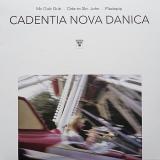
John Tchicai (1936 – 2012) was one of the most important free improvising saxophonists of the 20th Century: an artist of rare vision and aptitude whose lines soared and stood out even in the most hallowed company, and whose body of work as a leader / composer is among the most singular and distinct within the entire canon of that music. But Tchicai’s importance doesn’t end there. Born in Copenhagen, Denmark, to a Danish mother and a Congolese father, his life and career represent a crucial bridge between the European and American traditions of free jazz. Initially trained on violin as a child, Tchicai shifted his focus to the clarinet and alto saxophone during his mid-teens, and began touring Europe as a professional musician by his early 20s, which landed him at a socialist youth festival in Helsinki, Finland, where he met the trumpeter Bill Dixon and saxophonist Archie Shepp. Impressed by what they heard, Dixon and Shepp encouraged the young saxophonist to move to New York, and in so doing changed the history of jazz forever.
Tchicai’s arrival in New York marks the rare occurrence of a European player joining the intimate circle that was first wave of American free jazz. Following his landing in the city in November of 1962, in addition to regularly sitting in with Don Cherry’s group, Tchicai began playing with Bill Dixon's band alongside Archie Shepp and Roswell Rudd, forming the nucleus of the foundation of the New York Contemporary Five - one of the most important groups of the era - which counted Tchicai, Shepp, Cherry, Don Moore, and J. C. Moses as its members. From the ashes of this group, Tchicai would go on to found the legendary ensemble, New York Art Quartet, with Roswell Rudd, Milford Graves, and Lewis Worrell, as well as working within Albert Ayler's band, recording “New York Eye and Ear Control”, Shepp’s band, recording “Four for Trane”, the ensemble that recorded John Coltrane's “Ascension”, and the Jazz Composer's “Orchestra”.
By the time he decided to return to Denmark in 1966, had Tchicai chosen to record little else, his legacy within the history of music would have been ensured. Incredibly ambitious, his arrival home marked the beginning of an incredible period of activity which saw him radically expanding his creative explorations, which by the end of the decade would include becoming a founding member of Amsterdam's Instant Composers Pool and helping to record John Lennon and Yoko Ono's “Unfinished Music No.2: Life with the Lions”. This, however, was proceeded the formation of a new orchestra, Cadentia Nova Danica, led by Tchicai, dedicated to radical cross-disciplinary exploration. Remaining together between 1966 and 1971, the group and its shifting membership regularly fell into collaboration with artists and composers, notably Musica Elettronica Viva, who existed beyond the realms of jazz, as well as participating within multi-media events that incorporated the visual realms.
Cadentia Nova Danica’s only two LPs - “Cadentia Nova Danica” (Polydor, 1968), and “Afrodisiaca” (MPS, 1969) - are effectively Tchicai recorded efforts as a leader, and are legendary. There’s little mystery, once heard, why the later landed on Thurston Moore’s iconic “Top Ten from the Free Jazz Underground”, published by Grand Royal in 1996. Sadly, despite playing extensively during their five year run, with exception of a CD documenting a performance at Jazzhus Montmartre, in 1966, until now there has been no other publicly available recordings that allow us to capture a glimpse of this astounding band at work. Alga Marghen / Formalibera’s vinyl pressing of a never before released body of recordings, made in Copenhagen between 1969 and 1970, changes that in the most exciting of ways.
Comprising three pieces - “Mc Gub Gub, (I–VIII)”; “Ode to Skt. John”; and “Pladepip” - the material on this stunning LP comes from two specific events. The first, which encompasses the first side, “Mc Gub Gub, (I–VIII)” was recorded by Cadentia Nova Danica - in this instance, Tchicai, Sune Weimar, Theo Rahbek, Christian Kyhl, Niels Holt, Jørgen Thorup, Michael Schou, Morgens Bollerup, Allan Gregersen, Ole Matthiessen, Pierre Dørge, Willy Jaegert, Anthony Barnett, and Jon Finsen - on May 29th, 1969, at the ABC-Theatre in Copenhagen. Penned by Tchicai, the piece is a sprawling, evolutionary composition at the outer reaches of free jazz, rooted in large blocks of colliding tonality and rhythm - a sound only accessible to larger ensembles - that push territories explored by Charles Mingus to previously unimagined heights, threaded by moments of hard blown fire. Writhing like a stormy sea - skronking and devilish - “Mc Gub Gub, (I–VIII)” is a work of profound complexity that singlehandedly illuminates not only Tchicai’s singular vision as a composer, but also the power and uniqueness of Cadentia Nova Danica during the band’s most vital period.
The two pieces - “Ode to Skt. John” and “Pladepip” - taking up the flip side, were recorded on February 21st, 1970, at the Danish Broadcasting Corporation’s Radio House, and are the outcome of Cadentia Nova Danica’s extended residency there between 1969 and 1970. In many ways, these two recordings offer some of the best insights into the broad collaborative approaches that defined the band, in this case encountering them working with Danish experimental composer, Svend Erik Werner, who was among the earliest in his country to embrace stylistic pluralism and the use historical forms within a modern context. “Ode to Skt. John” - based on aspects of Gregorian music - was penned by Werner, incorporating heady improvisation by the members of Cadentia Nova Danica, this time made up by Tchicai, Sune Weimar, Hugh Steinmetz, Theo Rahbek, Christian Kyhl, Michael Schou, Morgens Bollerup, Ole Kühl, Torben Enghoff, Mauritz Tchikai, Kjeld Ipsen, Willy Jaegert, Ole Matthiessen, Ole Thilo, Pierre Dørge, Steffen Andersen, Jon Finse, and Clause Bøje. The piece is a fascinating binary of the composed and improvised, utilising the band’s large scale to introduce a remarkable sound within its slow progressions and furious, driving free moments, in this incredible meeting of worlds.
The album’s final piece, “Pladepip”, is arguably its most historically significant: an entirely singular piece, unlike anything in Tchicai’s recorded canon as his foray into musique concréte. Drawing upon two recordings of full-band improvisations by Cadentia Nova Danica, for its creation Tchicai also gouged the surfaces of 78rpm records in his collection to skip and create repeated phrases and patterns, creating a stunning sound collage of hard angles and abrupt phrase, that creates a striking counterpoint to the band’s flowing improvisations that bookend those passages. The result is an engrossing listen and easily one of the most unique and culturally important gestures in the entire history of musique concréte.
Truly incredible, Alga Marghen / Formalibera’s vinyl pressing of this never before released body of recordings, made by John Tchicai’s Cadentia Nova Danica, in Copenhagen between 1969 and 1970, offers an unprecedented window into one of the most important groups working in Europe during that period, significantly expanding their rare and slim discography to date. Accompanied by extensive exploratory liner notes by veteran jazz writer, Ed Hazell, this is easily one of the most historically important archival releases of the year and is impossible to recommend enough. Absolutely essential on every count.
debe ser publicado en 28.08.2026

Hekura are a Barcelona-based duo that create expansive soundscapes anchored in ritual minimalism. With influences ranging from the ethereal mysticism of Alice Coltrane to the hypnotic pulse of Steve Reich, their music explores the boundary between introspection and bold sonic exploration. Inspired by ethnographic traditions and the raw energy of Julius Eastman, their compositions fuse scattered percussion, shimmering textures, and hypnotic saxophone rhythms for moments of solitude and profound reflection. Hekura's work invites listeners to immerse themselves into a spectral world where tradition meets the avant-garde, offering a unique and evocative listening experience. Ernest and Edu met during their jazz studies at Taller de Musics in Barcelona. Their first conversation was about Charlie Haden Liberation Orchestra's "free jazz" version of the South African anthem, Nkosi Sikelele. That bond quickly translated into a shared world of listening, respect, experimentation, and sound that crystallized in Hekura. Edu Pons is a saxophonist and a music teacher at Taller de Mùsics in Barcelona. His music ranges from jazz to folk or from classical to free improvisation yet with his own distinctive voice. Ernest Pipó is a guitarist and composer from a small town in La Garrotxa. Currently based in Barcelona, he primarily focuses on music production and soundtrack composition. His influences range from jazz, electronica, noise, pop, and, although he dares to admit it, also ambient. For fans of: John Tchicai (with strings), Steve Reich, Arv & Miljö (Discreet Music, 2024)
debe ser publicado en 24.10.2025

Black Truffle is pleased to welcome free jazz legend Joe McPhee back to the fold with Oblique Strategies, a wild trio recorded in Antwerp in 2018 in the company of Mette Rasmussen’s fire-breathing alto saxophone and Dennis Tyfus’s post-Fluxus antics on tape, voice, and percussion. Rasmussen and Tyfus have previously recorded together as Bazuinschal, and some similar strategies are on display here: mysterious metallic scrapes, extended tones in which voice and sax become indistinguishable, comic explosions of varispeed tape. With McPhee on board, however, proceedings are more sumptuous, with the two horns moving fluidly from expeditions into the extremes of their instruments’ registers to pointillistic note-splatter and Ayler-esque folk melodies; we even get to bask in some of the slow-motion free blues that McPhee has now been playing for half a century. McPhee is heard primarily on tenor, Rasmussen mainly on alto, but with Rasmussen doubling on sundry objects, and the whole trio contributing vocals, certainty about who is doing what becomes nigh impossible.
The recording and production add to this hazy unclarity. Where much contemporary improvised music aims at dryly clinical hi-fi, the lively reverberant space of Oblique Strategies calls to mind the less-than-pristine sonics of classic free jazz artefacts like John Tchicai’s Afrodisiaca or McPhee’s own Underground Railroad. A further dimension of oblique unpredictability is added by subtle changes in the sense of space: at times merely a reverb tail glimpsed between phrases, at other points the whole mix seems to be momentarily swallowed up in slap-back, blurring the lines between acoustic instruments and the decayed fidelity of Tyfus’ tape playback. Spread across four pieces ranging from four to nineteen minutes in length, Oblique Strategies moves with anarchic swagger from explosions of clattering cymbals and bellowing horns to near-silent episodes of mysterious rumble and clunk. ‘Death or Dinner?’ opens the record with a lovely duet of climbing melodic patterns shared between the two saxophones, played with a buzzing oboe-like tone. A long, wavering note sung by Tyfus cues the first of countless changes of direction, eventually leading to a crescendo of watery splutters and duelling saxes. At points Tyfus’ keening resemble the signature moves of his friend and collaborator, Ghédelia Tazartès; at others, his tape-sped huffs and puffs possess a rawness reminiscent of Henri Chopin or Gil Wolman. The dialogue between wailing saxophones and vocal cries, punctuated by percussive thuds and crashes, can at times feel less like a musical performance and more like the calls of some mysterious forest creatures, possessing a primordial energy that might remind some listeners of the outdoor antics of Brötzmann and Bennink’s Schwarzwaldfahrt.
Oblique Strategies can also be delicate at times, as on the beautiful third piece, ‘Destilled Edible’, dominated by a slow, microtonal melody played with a breathy tone resembling a shakuhachi. The closing side-long ‘Light My Fire’ ranges across classic improv call and response, skittering trumpet blurts, inept cymbal clatter, mock-operatic vocals, and crude tape manoeuvres. Momentarily pausing at the ten-minute mark for an interlude of ghostly room sound and crackling texture, its closing moments unfurl a glorious dual saxophone finale, the almost epic tone subtly undermined by Tyfus quietly tapping out swing rhythms. Arriving in a striking sleeve adorned with Tyfus’ drawings, Oblique Strategies is an invigoratingly free-spirited blast of improvisation.
Downloads
Haga su pedido ahora y le encargaremos el artículo en nuestro proveedor.

"Of the records Ayler made during 1964, the LP New York Eye and Ear Control...is probably the most important link between the epoch-making collective improvisation Free Jazz by the Ornette Coleman double quartet, and John Coltrane's Ascension. Apart from that, it is—in my opinion—one of Ayler's very best recordings. New York Eye and Ear Control owes a large part of its success to the contrasting temperaments of the three musicians used by Albert Ayler in addition to his trio, namely, trumpeter Don Cherry, trombonist Roswell Rudd and alto saxophonist John Tchicai. Don Cherry improvises in broad melodic lines or places sharply accented staccato passages. Roswell Rudd interposes fragmentary flourishes in the highest register, or growl sounds and glissandos in the manner of the old tailgate trombonists. John Tchicai presents the polarity of a slightly 'cool,' linear style and offers motivic linkage by insistently repeating melodic patterns. All three inspire Albert Ayler to a breadth of expression which is too often missing in his improvisations with smaller groups. There is less limitation to his sound-span playing, more contrast, more punch and rhythmic accentuation, and with quick response Ayler takes motives from Cherry, Rudd and Tchicai, transforms them
into his own musical idiom, and in turn gives a new direction to the flow of ideas." - Free Jazz by Ekkehard Jost
"The music is fiery but with enough colorful moments to hold one's interest throughout." - Scott Yanow, All Music Guide
"...a valuable window into the music's early history as well as what might have happened outside record dates, more than one is usually privy to." - Clifford Allen, AllAboutJazz
Haga su pedido ahora y le encargaremos el artículo en nuestro proveedor.

Founded in Amsterdam in 1967 by saxophonist Willem Breuker, pianist Misha Mengelberg, and percussionist Han Bennink, Instant Composers Pool (or ICP) was an independent free jazz label and orchestra that would go on to release over fifty albums featuring such pillars of the scene as Derek Bailey, Peter Brötzmann, Evan Parker, Jeanne Lee, John Tchicai, and Steve Lacy. Based around the concept that improvisation was, in fact, an act of instantaneous composition, ICP's legacy on improvised and free music is impossible to overstate.
The ICP Tentet's Tetterettet is made up of recordings from 14-17 of September, 1977, cut and spliced together by pianist/composer Misha Mengelberg in a style similar to Teo Macero's work with Miles Davis. The first side is taken up entirely by Mengelberg's multi-part title track that breaks in and out of different tempos, with a loose arrangement style owing more than a bit to Charles Mingus' finest work on Black Saint or Ah Um.
Traversing across decades and styles from free-jazz funereal marches, to carnivalesque excursions, broken piano rolls, and ear-splitting skronk, ICP Tentet show remarkable skill and chops in both their compositional craft and improvisational symbiosis. There's a playful undercurrent here that finds its home in some previously uncharted land between Mingus and Spike Jones.
Featuring numerous ICP regulars along with the brilliant Alan Silva on bass, and a return to the fold of the amazing saxophonist John Tchicai, Tetterettet is one of the best of ICP's larger group recordings; humorous, unnerving, and ultimately, quite beautiful. This limited-edition reissue marks the first time this album has been in print on vinyl since its initial release.
debe ser publicado en 15.10.2021

Founded in Amsterdam in 1967 by saxophonist Willem Breuker, pianist Misha Mengelberg, and percussionist Han Bennink, Instant Composers Pool (or ICP) was an independent free jazz label and orchestra that would go on to release over fifty albums featuring such pillars of the scene as Derek Bailey, Peter Brötzmann, Evan Parker, Jeanne Lee, John Tchicai, and Steve Lacy. Based around the concept that improvisation was, in fact, an act of instantaneous composition, ICP's legacy on improvised and free music is impossible to overstate.
A live performance from May of 1970 in Rotterdam, Groupcomposing features a North Sea-crossing ICP lineup of British free improv luminaries Derek Bailey on guitar, Evan Parker on saxophone, and Paul Rutherford on trombone, along with ICP mainstays Han Bennink, his brother Peter, Misha Mengelberg, and Peter Brötzmann. The first side, "Groupcomposing, Part 1" is a nearly all-out assault with the reeds trio and Rutherford's trombone blasting nigh-continuously for the album's first side, culminating in a blistering Peter Bennink bagpipes solo. "Part 2" acts at first as the comedown, beginning with a playful piano and percussion back-and-forth before meandering a dark, brooding, path of trill horns to the album's eventual, tense conclusion.
Recorded just a few years into the ICP's long tenure, it is hard to think of a release more representative of the label's musical principles – or, more broadly, of the power of free group improvisation – than the aptly-named Groupcomposing. This limited reissue marks the first time the album has been in print on vinyl in over forty years.
debe ser publicado en 15.10.2021

Founded in Amsterdam in 1967 by saxophonist Willem Breuker, pianist Misha Mengelberg, and percussionist Han Bennink, Instant Composers Pool (or ICP) was an independent free jazz label and orchestra that would go on to release over fifty albums featuring such pillars of the scene as Derek Bailey, Peter Brötzmann, Evan Parker, Jeanne Lee, John Tchicai, and Steve Lacy. Based around the concept that improvisation was, in fact, an act of instantaneous composition, ICP's legacy on improvised and free music is impossible to overstate.
Yi Yole – recorded in 1978 – was the first time the legendary South African saxophonist Dudu Pukwana had worked with the ICP. An innovator in the genre of Cape Jazz with the Blue Notes – which also featured Chris McGregor, Louis Moholo, and Johnny Dyani – who fled the apartheid regime for London in 1964, Pukwana's style is the perfect complement to ICP co-founders Han Bennink and Misha Mengelberg, who round out the trio here.
Relaxed and somewhat understated for the ICP catalog, Yi Yole is the one and only time these leaders in European free improvisation would record together in a trio setting. This limited reissue marks the first time the album has been in print on vinyl since its initial release.
debe ser publicado en 15.10.2021
