Eric Krasno is a two-time GRAMMY winning guitarist, musician and producer best known for his work with Soulive, Lettuce, Tedeschi Trucks Band & Pretty Lights. Krasno has been nominated for a GRAMMY a total of seven times for Best Blues Album, Best Contemporary Blues, Best R&B, and Best Electronic Album.
Otis McDonald is a producer/multi-instrumentalist best known for his copyright free music released exclusively through the YouTube audio library, amassing over 5 million downloads and over 25 million streams.
Mike Chiavaro is a Brooklyn based electric and upright bass player with an impressive history.
Combined they form King Canyon, blending their unique styles into an infectious groove filled project with healthy doses of R&B/Soul and funk. The vibe will resonate with fans of Khruangbin, Bobby Caldwell, Allman Brothers, Soulive, Lettuce, El Michels Affair, Unknown Mortal Orchestra, Menahan Street Band, Durand Jones and the Indications, and Son Little (who's featured on one of the tracks).
In the perfect quarantine story the trio forged a relationship and has yet to meet in person. In April of 2020 in the midst of quarantine, Eric Krasno came across Otis McDonald’s music on Instagram and immediately became a fan. Months later, McDonald who had been working on music with his longtime friend, Mike Chiavaro, enlisted Krasno to add in some guitar to the mix and before they knew it, the trio had an album's worth of material and thus King Canyon was born.
The guys have still yet to meet in person, but despite this, the grooves are insatiable. The writing and feel are unlike any other projects these musicians have been involved with previously.
quête:king canyon
- 1
Percussionist Errison Pallman Johnson was born in Nassau, Bahamas, 1941. He started playing music from the age of 5 and left the island at 18 for Los Angeles to pursue an acting career resulting in few movies appearances and commercials. Most remarkably he appeared with his calypso band in the James Bond film Thunderball (1965). Musically his first break came when he met jazz saxophonist Julian “Cannonball” Adderly, with whom he recorded 8 albums.
King Errisson has played congas for Neil Diamond for over 30 years and has played on many Motown recordings. In his autobiography, Berry Gordy referred to King Errison as the “unsung hero of Motown”.
- A1: She's Getting Married In August
- A2: Evenin' Rain
- A3: Les Papillons
- A4: Zeena
- A5: Virgin Morn
- A6: Seeds
- B1: Crystal Blue
- B2: Lady Carole
- B3: Lotus Child
- B4: Last Prayer
- B5: Hymn For Today
- C1: Boston
- C2: Blackbird Charlie
- C3: My Sun
- C4: Closer To The Truth
- C5: Strange News
- D1: Moonchild
- D2: Red Shoe Truckin
- D3: Beautiful
- D4: Opal Blue Sunday
First time vinyl reissue, expanded and deluxe double gatefold 140g double vinyl, remastered audio with restored artwork and fresh liners written by Paul Hillery (Folk Funk & Trippy Troubadours)
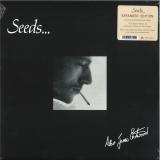
Alan James Eastwood's glorious Seeds is a certified folk-funk lost-classic.
But who was Alan James Eastwood? He had never hit the big time and commercial success eluded him. By the mid-1970s, his musical career was pretty much over and he was almost unknown except among deep heads, amongst whom he would gain cult status.
Original copies of the 1971 vinyl release of Seeds exchange hands for high sums, if you can find one. This expanded 2LP contains an extra record, collecting 9 rare non-album singles and is presented in a gatefold sleeve complete with freshly commissioned liner notes courtesy of Paul Hillery (Folk Funk & Trippy Troubadours).
With the long overdue deluxe reissue of this prized artefact, we hope to finally shine a light on the unheralded genius of Alan James Eastwood. RIYL Nick Drake, Rodriguez, Richie Havens.
Alan James ‘Bugsy’ Eastwood was a renowned musician and singer who came to prominence in the late 1960s with The Exception, an unsung but excellent band from Birmingham. The Exception released many singles, the first featuring friend Robert Plant on tambourine, before an album, The Exceptional Exception. However, by this time, Bugsy was feeling constrained and restless; he left the band within weeks of the release.
Having vanished from the scene, he was honing a deeper, introspective edge to his songwriting. His demos found their way to the sound engineer and producer Mike Cooper at Pan Music Studios in Denmark Street. Loving what he heard, Eastwood soon entered a recording session with Cooper. The session was just Alan, his guitar and harmonica and - by all accounts - it was remarkable. With the songs, the voice and such an exceptional talent, it was hard to go wrong. Says Mike: "We had John Hawkins do the big string arrangements and Richard Hewson arranged the string quartet. We overdubbed the orchestrations on Alan's original session recordings, adding Chris Karan on tabla and various percussion. We considered re-recording the vocals but found that the magic on that original session was so exceptional overdubbing would not be as good as the atmospheric 'live' performance."
Mike and Alan viewed each track as a different entity, giving the album a diverse sonic palette. Assessing each song individually, they decided which would be suitable for each arranger. Top-flight session musicians were added to the roster to complete the sound, with Byron Lye Fook (father of musician Omar) on drums, bassist Mike Ward, Brian Pickles on marimba and jazz drummer Chris Karan on tabla and percussion. Recorded in a matter of days in Pan's small 8-track studio, they carefully added overdubs, rhythm sections and four string sessions arranged by Hawkins, with Hewson's arrangements recorded at Trident Studios.
Seeds was Alan James Eastwood's debut solo album – indeed, his only solo album - and was originally issued on President in 1971. It melded Eastwood’s impressive rock sensibilities with a folk thread to superb effect. His arresting voice - its deep, rough-hewn soulfulness - coupled with gorgeous string-drenched backing, make this a phenomenal listen. It really is a great 70s singer-songwriter record - with touches of acid-folk and folk-funk throughout.
It opens with "She's Getting Married In August", a mellow tune with Richard Hewson's strings arranged around Alan's straightforward guitar structure. Up next, the joyous, sun-dappled guitar and strings workout "Evenin' Rain" glides by before the fragile, accordion-enhanced "Les Papillons" breezes out of the speakers. The bluesy "Zeena" follows, featuring vocals and acoustic guitar and showcasing Eastwood's effortless harmonica. Starting out as a ballad, "Virgin Morn" builds with soaring strings and gospel-tinged backing vocals from Marilyn Powell and jazz singer Josephine Stahl. The A-side closes with the title track, "Seeds". With a chugging mid-tempo beat, soulful vocals and a beautiful Bacharach-esque string arrangement, it truly is stop-you-in-your-tracks spectacular.
Side B opens with "Crystal Blue", gilded by Lye Fook's marimba, lush gospel-esque backing vocals and handclaps. Eastwood's acoustic guitar begins "Lady Carole", which starts as a bluesy ballad and builds with more string arrangement, lifting the track to another height. A towering highlight of epic proportions, "Lotus Child" is a true masterpiece of arrangement. It opens with simple yet stunning do-do-dah vocal harmonies blended with John Hawkins's strings, bass lines and rhythmic beats, forming a vibe very much in conversation with the sounds coming from LA's Laurel Canyon. Next up, the heartwarming "Last Prayer", dedicated to Alan's first and last love, contains a melancholic vocal with a wistful string-drenched arrangement that would sit comfortably in a Federico Fellini score. Bringing the album to a close, "Hymn For Today" is a melodic raga with tabla, strings and a soft-psych feel. Eastwood's prophetic whisper - "I am real. At last, I am real" - profoundly hits home.
Kicking off the extra disc is the sparsely funky and country-tinged "Boston", released as the flip to the astonishing "Seeds". Next up are the two tracks that comprised Alan’s debut solo 7" single from 1968. The laconic, Bobby Charles-esque "Blackbird Charlie" evidences a real depth and charm in Eastwood's songwriting whilst the starkly brilliant flip, "My Sun", was a horizontal, atmospheric folk-tinged soundtracky precursor to his later work on Seeds.
In 1972, two further standalone singles followed. The first was the evergreen flute-driven folk-funk bomb, "Closer To The Truth", backed by the funky blues of "Strange News". The second, a deeply moving Havens-inspired "Moonchild" - rightly fawned over to this day - was flipped with "Red Shoe Truckin'", a groove-infused track. Eastwood also paired up with Marilyn Powell for a single produced by Powell's partner, Mike Cooper. Under the name Eastwood & Powell, they released their staggering rendition of "Beautiful", a rock-blues-pop song arranged by Ivor Raymonde and written by Carole King. Over on the flip, a funky Eastwood original "Opal Blue Sunday" lurked. This is not to be overlooked.
Over the years, Alan remained active on the music scene, but problems with alcohol and health complications from diabetes severely impacted his career. He spent his latter years living in London until his untimely death from heart failure on 25 October 2007, just one day before his 62nd birthday and without his music having received the real acclaim it so dearly deserved.
This deluxe reissue, spellbinding from beginning to end, should hopefully go some way to rectifying this tragic fact. Mastering for this special double vinyl edition was overseen by Be With regular Simon Francis and it was cut by the esteemed Cicely Balston at Abbey Road Studios to be pressed in the Netherlands by Record Industry. The original artwork has been lovingly brought back to life at Be With HQ, with the addition of passionately written liner notes specially for this landmark reissue by none other than Paul Hillery.
- A1: Military Madness
- A2: Better Days
- A3: Wounded Bird
- B1: I Used To Be A King
- B2: Be Yourself
- C1: Simple Man
- C2: Man In The Mirror
- C3: There's Only One
- D1: Sleep Song
- D2: Chicago
- D3: We Can Change The World
After finding fame with the Hollies and Crosby, Stills, Nash & Young, expatriate Englishman turned West Coast rock icon Graham Nash made an auspicious solo debut on this 1971 disc. It's an exemplary singer-songwriter effort, striking a vital balance between graceful introspection and political fervor — and while it's deeply personal, it still carries the harmonies, heart and politics that made CSN(Y) so essential.
With assistance from the likes of David Crosby, Jerry Garcia, and Dave Mason, highlights include the sensitive internal explorations "I Used to Be a King" and "Man in the Mirror" and the impassioned protest anthems "Chicago" and "Military Madness."
If Déjà Vu was a wild canyon party with four competing egos, Songs for Beginners is Nash's introspective morning after — a mix of heartbreak, hope, and a little bit of righteous protest. He recorded it while reeling from his split with Joni Mitchell, and you can feel that melancholy seeping through the grooves.
But don't mistake this for a wallowing breakup album — it's also a call to action, packed with the kind of folk-rock anthems that made Nash an indispensable voice of his era. If you love CSN's folk-rock harmonies but also crave a more personal, raw touch, this is a must-listen.
This Analogue Productions (Atlantic Series) reissue of Pain in My Heart is a standout for your collection. First, we turned to Bernie Grundman to cut lacquers from the original master tape. Pressing on 180-gram vinyl is by Quality Record Pressings, and the album is housed in a tip-on old style gatefold double pocket jacket by Stoughton Printing.
- A1: Evil And Flowers (Piano Version)
- A2: Forget Me Not
- A3: Your Butterfly
- A4: Hickey Hickey
- A5: He
- A6: Eve's Apple
- A7: 金魚
- B1: Meddler
- B2: Masquerade
- B3: Quiet Life
- B4: Only For Him
- B5: Fallen Sun
- B6: Evil And Flowers
This is an entry for Record Day DAY 2. Released on 180g heavyweight vinyl!
Following on from their hit previous album, this is their third album, produced by Tore Johansen in 1998.
The band changed their production environment, spending two months at Tore's home/studio in Sweden.
Includes 13 tracks, including "Evil and Flowers (Piano version)" "Forget Me Not," and "Kingyo"
Smith & Liddle are two young artists from the North of the United Kingdom who have never been to the desert and whose mere existence was a long way off the horizon in the 1970s, yet their music wouldn't be out of place on the FM waves in a Cadillac driving through the California desert at that time.
"Songs For The Desert" is Smith & Liddle's debut album, a collection of great songwriting, beautiful harmonies and wonderful musicianship that also offers an unashamedly a large dose of nostalgia harking back to some of the best eras there ever was.
These songs were created during one of their hometowns rainiest year, offering the duo an escape via their creations, dreaming of being transported to California at a time when the music scene there drifted from legendary stars of Laurel Canyon to the soft rock icons of Fleetwood Mac and The Doobie Brothers.
Elizabeth Liddle & Billy Smith grew up 25 miles away from each other in small towns but only met when Billy was on the lookout for a vocalist years later. The chemistry between the pair was instant, and over time their intertwined musical sensibilities evolved into something unique.
Following years of swapping records and building a transcendent musical connection, Smith & Liddle worked alongside producer Josh Ingledew to record 9 songs that blend Soft Rock, West Coast soul & 60s beats to produce their debut album "Songs For The Desert".
An archival release of sorts. Leeds-based outfit Drug Free America’s existence spanned 1987-1997 and was chiefly the side project of Brian Moss, from UK synth-pop duo Vicious Pink, along with the late Steve Dixon. Early on, they explored a harder edged, industrial techno type of sound.
However, the tracks issued here are a bit of an anomaly. Culled from their 1995 CD release ‘Narcotica’ and joined by vocalist Hayley Windsor, these long form tracks rest on a tapestry of eternal groove; stringing a high wire between toasty cyberdelic dub canyons and ethereal post-punk architecture. This is the first time the tracks will be appearing on vinyl.
For fans of: Coil, King Tubby, Dead Can Dance, Scorn, Sabres of Paradise, and Vicious Pink
Limited edition of 200 on black vinyl, cut at 45 rpm. Housed in silkscreened, chipboard jackets with full color lyric sheet insert and mint inner sleeves.
This release has already received airplay on NTS.
Featured on Soup To Nuts w/ BabySchön and Channeling w/ Nathan Gregory Wilkins
- A1: Travelin' Man
- A2: Poor Little Fool
- A3: Hello Mary Lou
- A4: Waitin' In School
- A5: Be-Bop Baby
- A6: I'm Walkin
- A7: Believe What You Say
- A8: I Got A Feeling
- A9: Young World
- A10: Lonesome Town
- B1: It's Late
- B2: Teenage Idol
- B3: It's Up To You
- B4: A Teenager's Romance
- B5: Stood Up
- B6: Never Be Anyone Else But You
- B7: Just A Little Too Much
- B8: A Wonder Like You
- B9: Everlovin
- B10: Sweeter Than You
When Elvis joined the Army in 1958, Ricky Nelson was the young man who, it was predicted, would fill the King’s blue suede shoes. He went on to become a country-rock pioneer, but everybody still remembered his pop hits. Ricky Nelson's teenage celebrity typecast him for life, but these recordings from his heyday reveal a solid musician who matured and grew over time. It’s also fair to say that his later music opened the door for the Eagles, featuring ex-Stone Canyon Band bass player Randy Meisner, to pass through. It was more than a sympathy vote that saw Nelson posthumously inducted into the Rock and Roll Hall of Fame in 1987.
The last couple of years have seen a renaissance for West Coast singer-songwriters. LA-based youngsters such as Drugdealer and Sylvie have attracted considerable attention releasing warm and mellow records tonally reminiscent of the early 70s. Most fans of this new/old sound are unaware of Bart Davenport's early explorations in the same sonic territory. His now 20-year-old "Game Preserve"album should gain an appreciative new audience with its first ever vinyl release.
In the year 2000, Bay Area troubadour Bart Davenport and several other musicians were recruited by a major tech corporation in Seattle to work on an algorithm-based music matching/search engine. It was what looked like the beginning of a promising career. After a year, however, the project was shelved. Bart and his colleagues were laid off with a healthy severance package... on the 12th of September, 2001. Not only had the musician's life changed, so had the world. Rather than blow the money on a holiday or new car, Bart knew he had to make a record. A proper album that meant something.
Back in Oakland, he entered Wally Sound Studios with former Kinetics bandmate Jon Erickson at the controls, and a swathe of talented local musicians. "With Game Preserve," Bart explains, "Jon and I really wanted to knock it out of the park. I wanted to utilize people from my old bands like Loved Ones drummer John Kent. I also invited my newer indie-pop friends from Call & Response, and a young Nedelle Torrisi. Harmony singing by The Moore Brothers was an essential ingredient on Game Preserve as well."
Both Erickson and Davenport fondly recall growing up in households where the music of The Carpenters, Joni Mitchell and The Eagles soundtracked their young lives. By the early 00s they were ready to reconnect with what is often referred to as the "Laurel Canyon" sound. "I'd buy used tapes at garage sales and play them in the car. "Ladies Of The Canyon" by Joni and Jackson Browne's first album were both in heavy rotation. Jon Erickson was getting deeper into the Steely-Mac-Doobie yacht-rock sound in earnest. A certain amount of childhood nostalgia led a lot of us back to that part of the 70s. I'd flirted with classic soft-rock on my first album, but that record was pretty scattered esthetically. I wanted my next one to be more focused. Jon and I made some ground rules: no electric guitars (except on 'Bar-Code Trees'). No synths. Most importantly, all the songs have an air-tight, super dead, close mic'd drum sound. Putting these sorts of limitations on the sessions will give your record a specific quality. In the case of "Game Preserve"it's mostly about tight drums, acoustic instruments and analog production. We used a 24-track, two-inch tape machine for tracking, then ran the mixes through an analog board straight to a 1/4 inch master tape."
While the album's sonic palette may be firmly planted in 1970, Davenport's songwriting covers a sizable landscape of moods and reflections. From the quasi-flamenco intro of 'Sweetest Game' to the somber Wurlitzer of 'Nowhere Left To Go', to the 12-string shimmer of 'Intertwine', "Game Preserve" tells a story of young love, lost innocence and redemption, crossing borders and oceans along the way.
Released in 2003 on family-run Oakland label Antenna Farm, the ultra-analog sounding "Game Preserve" was only made available on digital formats, including CD. Copies were later pressed by labels in Germany and Spain; the latter being one country the album actually did well in, establishing Bart Davenport with a small but loyal fanbase he still enjoys today. Two European tours as support for Kings of Convenience also helped gain a foothold on the continent. Back in the US, however, Davenport and his sophomore album remained quite obscure.
Limited promotion meant it did little, but for the music lovers that heard it, the album undoubtedly remains a classic of the era, deserving far more. Twenty years on, it now finally receives its vinyl debut. "I personally think it holds up well," says Bart of the album two decades later. "The idea was to make something that could be an homage to late 60s/early 70s West Coast pop but hopefully timeless as well. Years on, I hear it as just that. It was a colorful and brief period of my life that felt at times like it could last forever. I discovered the joy of working in a proper studio with a perfect cast of characters. I'm still very close with all these people and still play music with many of them."
. For Fans Of: The Weather Station, Weyes Blood, Adrianne Lenker, Phoebe Bridgers, Joan Shelley, Lana Del Rey, Cass McCombs, Angel Olsen & Neil Young. Camelot, the legendary seat of King Arthur’s court in Early Middle Ages Britain, was probably not a real place. A corruption of the name of a real Romano-Briton city, the word “Camelot” accumulated symbolic, mythic resonances over centuries, until achieving its present usage as a near-synonym of “utopia.” In the mid-20th century alone, Camelot inspired an explosion of representations and appropriations, among them the violent, affectless Arthurian court of Robert Bresson’s 1974 film Lancelot du Lac and the absurdist iteration of Monty Python’s 1975 Holy Grail, both of which feature armoured knights erupting into fountains of blood; the mystical Welsh world of novelist John Cowper Powys’s profoundly weird 1951 novel Porius, with its Roman cults, wizards and witches, and wanton giants; and the nationalist nostalgia of President John F. Kennedy’s White House. Unsurprisingly there are fewer Camelots in more recent memory. Camelot, Canadian songwriter Jennifer Castle’s extraordinary, moving 2024 chronicle of the artist in early middle age, charts a realer, more rooted, and more metaphorical place than the fabled Camelot of the Early Middle Ages (or its myriad depictions), but it too is a space more psychic than physical. In Castle’s Camelot, the fantastic interpenetrates the mundane, and the Grail, if there is one, distills everyday experience into art and art into faith, subliming terrestrial concerns into sublime celestial prayers to Mother Nature, and to the unfolding process of perfecting imperfection in one’s own nature. Co-produced by Jennifer and longtime collaborator Jeff McMurrich, her seventh record is at once her most monumental and unguarded to date, demonstrating a mastery of rendering her verse and melodies alike with crisply poignant economy. For all their pointedly plainspoken lyrical detail and exhilarating full-band musical flourishes, these songs sound inevitable, eternal as morning devotions. “Back in Camelot,” she sings on the lilting, vulnerable title track, “I really learned a lot / circles in the crops and / sky-high geometry.” The album opens with a candid admission of sleeping “in the unfinished basement,” an embarrassing joke that comes true. But the dreamer is redeemed by dreaming, setting sail in her airborne bed above “sirens and desert deities.” If she questions her own agency whether she is “wishing stones were standing” or just “pissing in the wind” it does not diminish the ineffable existential jolt of such signs and wonders. This abiding tension between belief and doubt, magic and pragmatism, self and other, sacred and profane, and even, arguably, paganism and monotheism, suffuses these ten songs, which limn an interior landscape shot through with sunstriped shadows of “multi-felt dimensions” both mystical and quotidian. The epic scale and transport of “Camelot,” with its swooning strings, gives way dramatically to “Some Friends,” an acoustic-guitar-and-vocals meditation in miniature on Janus-faced friends and the lunar and solar temperatures of their promises—“bright and beaming verses” versus hot curses which recalls her minimalist last album, 2020’s achingly intimate Monarch Season. (In a symmetrical sequencing gesture, the penultimate track, the incantatory “Earthsong,” bookends the central six with a similarly spare solo performance and coiled chord progression, this time an ambiguous appeal to … a wounded lover? a wounded saint? our wounded planet?). Those whom “Trust” accuses of treacherous oaths spit through “gilded and golden tooth” cynics, critics, hypocrites, gurus, scientists, doctors, lovers, government, the so-called entertainment industry sow uncertainty that can infect the artist, as in “Louis”: “What’s that dance / and can it be done? What’s that song / and can it be sung?” Answering affirmatively are “Lucky #8,” an irrepressible ode to dancing as a bulwark against the “tidal pools of pain” and the “theory of collapse,” and “Full Moon in Leo,” which finds the narrator dancing around the house with a broom, wearing nothing but her underwear and “big hair.” But the central question remains: who can we trust, and at what cost faith, in art or angels or otherwise? Castle’s confidence in her collaborators is the cornerstone of Camelot. Carl Didur (piano and keys), Evan Cartwright (drums and percussion), and steadfast sideman Mike Smith (bass) comprise a rhythm section of exquisite delicacy and depth. This fundamental trio anchors the airiness of regular backing vocalists Victoria Cheong and Isla Craig and frames the guitars of Castle, McMurrich, and Paul Mortimer (and on “Lucky #8,” special guest Cass McCombs). Reprising his decennial role on Castle’s beloved 2014 Pink City, Owen Pallett arranged the strings for Estonia’s FAMES Skopje Studio Orchestra. On the ravishing country-soul ballad “Blowing Kisses” Pallett’s crowning achievement here, which can be heard in its entirety in the penultimate episode of the third season of FX’s The Bear Jennifer contemplates time and presence, love and prayer and how songwriting and poetry both manifest and limit all four dimensions: “No words to fumble with / I’m not a beggar to language any longer.” Such rare moments of speechlessness “I’m so fucking honoured,” she bluntly proclaims suggest a state “only a god could come up with.” (If Camelot affirms Castle as one of the great song-poets of her generation, she is not immune to the despairing linguistic beggary that plagues all writers.) Camelot evinces a thoroughgoing faith not only in the natural world including human bodies, which can, miraculously, dance and swim and bleed and embrace and birth but also in our interpretations of and interventions in it: the “charts and diagrams” of “Lucky #8,” a daydreamt billboard on Fairfax Ave. in LA in “Full Moon in Leo,” the bloody invocations of the organ-stained “Mary Miracle,” and all manner of water worship, rivers in particular. (Notably, Jennifer has worked as a farmer and a doula.) The album ends with “Fractal Canyon”s repeated, exalted insistence that she’s “not alone here.” But where is here? The word “utopia” itself constitutes a pun, indicating in its ambiguous first syllable both the Greek “eutopia,” or “good-place” the facet most remembered today and “outopia,” or “no-place,” a negative, impossible geography of the mind. Utopia, like its metonym Camelot, is imaginary
Camelot, the legendary seat of King Arthur's court in Early Middle Ages Britain, was probably not a real place. A corruption of the name of a real Romano-Briton city, the word "Camelot" accumulated symbolic, mythic resonances over centuries, until achieving its present usage as a near-synonym of "utopia." In the mid-20th century alone, Camelot inspired an explosion of representations and appropriations, among them the violent, affectless Arthurian court of Robert Bresson's 1974 film Lancelot du Lac and the absurdist iteration of Monty Python's 1975 Holy Grail, both of which feature armored knights erupting into fountains of blood; the mystical Welsh world of novelist John Cowper Powys's profoundly weird 1951 novel Porius, with its Roman cults, wizards and witches, and wanton giants; and the nationalist nostalgia of President John F. Kennedy's White House. Unsurprisingly there are fewer Camelots in more recent memory. Camelot, Canadian songwriter Jennifer Castle's extraordinary, moving 2024 chronicle of the artist in early middle age, charts a realer, more rooted, and more metaphorical place than the fabled Camelot of the Early Middle Ages (or its myriad depictions), but it too is a space more psychic than physical. In Castle's Camelot, the fantastic interpenetrates the mundane, and the Grail, if there is one, distills everyday experience into art and art into faith, subliming terrestrial concerns into sublime celestial prayers to Mother Nature, and to the unfolding process of perfecting imperfection in one's own nature. Co-produced by Jennifer and longtime collaborator Jeff McMurrich, her seventh record is at once her most monumental and unguarded to date, demonstrating a mastery of rendering her verse and melodies alike with crisply poignant economy. For all their pointedly plainspoken lyrical detail and exhilarating full-band musical flourishes, these songs sound inevitable, eternal as morning devotions. "Back in Camelot," she sings on the lilting, vulnerable title track, "I really learned a lot / circles in the crops and / sky-high geometry." The album opens with a candid admission of sleeping "in the unfinished basement," an embarrassing joke that comes true. But the dreamer is redeemed by dreaming, setting sail in her airborne bed above "sirens and desert deities." If she questions her own agency_whether she is "wishing stones were standing" or just "pissing in the wind"_it does not diminish the ineffable existential jolt of such signs and wonders. This abiding tension between belief and doubt, magic and pragmatism, self and other, sacred and profane, and even, arguably, paganism and monotheism, suffuses these ten songs, which limn an interior landscape shot through with sunstriped shadows of "multi-felt dimensions" both mystical and quotidian. The epic scale and transport of "Camelot," with its swooning strings, gives way dramatically to "Some Friends," an acoustic-guitar-and-vocals meditation in miniature on Janus-faced friends and the lunar and solar temperatures of their promises_"bright and beaming verses" versus hot curses_which recalls her minimalist last album, 2020's achingly intimate Monarch Season. (In a symmetrical sequencing gesture, the penultimate track, the incantatory "Earthsong," bookends the central six with a similarly spare solo performance and coiled chord progression, this time an ambiguous appeal to _ a wounded lover? a wounded saint? our wounded planet?) Those whom "Trust" accuses of treacherous oaths spit through "gilded and golden tooth"_cynics, critics, hypocrites, gurus, scientists, doctors, lovers, government, the so-called entertainment industry_sow uncertainty that can infect the artist, as in "Louis": "What's that dance / and can it be done? What's that song / and can it be sung?" Answering affirmatively are "Lucky #8," an irrepressible ode to dancing as a bulwark against the "tidal pools of pain" and the "theory of collapse," and "Full Moon in Leo," which finds the narrator dancing around the house with a broom, wearing nothing but her underwear and "big hair." But the central question remains: who can we trust, and at what cost faith, in art or angels or otherwise? Castle's confidence in her collaborators is the cornerstone of Camelot. Carl Didur (piano and keys), Evan Cartwright (drums and percussion), and steadfast sideman Mike Smith (bass) comprise a rhythm section of exquisite delicacy and depth. This fundamental trio anchors the airiness of regular backing vocalists Victoria Cheong and Isla Craig and frames the guitars of Castle, McMurrich, and Paul Mortimer (and on "Lucky #8," special guest Cass McCombs). Reprising his decennial role on Castle's beloved 2014 Pink City, Owen Pallett arranged the strings for Estonia's FAMES Skopje Studio Orchestra. On the ravishing country-soul ballad "Blowing Kisses"_Pallett's crowning achievement here, which can be heard in its entirety in the penultimate episode of the third season of FX's The Bear_Jennifer contemplates time and presence, love and prayer_and how songwriting and poetry both manifest and limit all four dimensions: "No words to fumble with / I'm not a beggar to language any longer." Such rare moments of speechlessness_"I'm so fucking honoured," she bluntly proclaims_suggest a state "only a god could come up with." (If Camelot affirms Castle as one of the great song-poets of her generation, she is not immune to the despairing linguistic beggary that plagues all writers.) Camelot evinces a thoroughgoing faith not only in the natural world_including human bodies, which can, miraculously, dance and swim and bleed and embrace and birth_but also in our interpretations of and interventions in it: the "charts and diagrams" of "Lucky #8," a daydreamt billboard on Fairfax Ave. in LA in "Full Moon in Leo," the bloody invocations of the organ-stained "Mary Miracle," and all manner of water worship, rivers in particular. (Notably, Jennifer has worked as a farmer and a doula.) The album ends with "Fractal Canyon"'s repeated, exalted insistence that she's "not alone here." But where is here? The word "utopia" itself constitutes a pun, indicating in its ambiguous first syllable both the Greek "eutopia," or "good-place"_the facet most remembered today_and "outopia," or "no-place," a negative, impossible geography of the mind. Utopia, like its metonym Camelot, is imaginary. Or as fellow Canadian songwriter Neil Young once sang, "Everyone knows this is nowhere." "Can you see how I'd be tempted," Castle asks out of nowhere, held in the mystery, "to pretend I'm not alone and let the memory bend?"
- 01: Absolutely Cuckoo
- 02: I Don't Believe In The Sun
- 03: All My Little Words
- 04: A Chicken With Its Head Cut Off
- 05: Reno Dakota
- 06: I Don't Want To Get Over You
- 07: Come Back From San Francisco
- 08: The Luckiest Guy On The Lower East Side
- 09: Let's Pretend We're Bunny Rabbits
- 10: The Cactus Where Your Heart Should Be
- 11: I Think I Need A New Heart
- 12: The Book Of Love
- 01: Fido, Your Leash Is Too Long
- 02: How Fucking Romantic
- 03: The One You Really Love
- 04: Punk Love
- 05: Parades Go By
- 06: Boa Constrictor
- 07: A Pretty Girl Is Like
- 08: My Sentimental Melody
- 09: Nothing Matters When We're Dancing
- 10: Sweet-Lovin' Man
- 11: The Things We Did And Didn't Do
- 01: Roses
- 02: Love Is Like Jazz
- 03: When My Boy Walks Down The Street
- 04: Time Enough For Rocking When We're Old
- 05: Very Funny
- 06: Grand Canyon
- 07: No One Will Ever Love You
- 08: If You Don't Cry
- 09: You're My Only Home
- 10: (Crazy For You But) Not That Crazy
- 11: My Only Friend
- 12: Promises Of Eternity
- 01: World Love
- 02: Washington, D.c
- 03: Long-Forgotten Fairytale
- 04: Kiss Me Like You Mean It
- 05: Papa Was A Rodeo
- 06: Epitaph For My Heart
- 07: Asleep And Dreaming
- 08: The Sun Goes Down And The World Goes Dancing
- 09: The Way You Say Good-Night
- 10: Abigal, Belle Of Kilronan
- 11: I Shatter
- 01: Underwear
- 02: It's A Crime
- 03: Busby Berkeley Dreams
- 04: I'm Sorry I Love You
- 05: Acoustic Guitar
- 06: The Death Of Ferdinand De Saussure
- 07: Love In The Shadows
- 08: Bitter Tears
- 09: Wi' Nae Wee Bairn Ye'll Me Beget
- 10: Yeah! Oh, Yeah!
- 11: Experimental Music Love
- 01: Meaningless
- 02: Love Is Like A Bottle Of Gin
- 03: Queen Of The Savages
- 04: Blue You
- 05: I Can't Touch You Anymore
- 06: Two Kinds Of People
- 07: How To Say Goodbye
- 08: The Night You Can't Remember
- 09: For We Are The King Of The Boudoir
- 10: Strange Eyes
- 11: Xylophone Track
- 12: Zebra
Limited edition silver vinyl anniversary reissue of the Magnetic Fields' classic 1999 rumination on, of course, love. Funny, smart, dark, memorable, and a lifetime's worth of listening. Stephin Merritt solidifies his songwriting genius on his "most ambitious and fully realized work". (AMG) This vinyl reissue is remastered for vinyl and beautifully packaged in a 10" slipcase box with three double gatefold sleeves and a 24 page booklet!
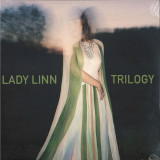
It is no longer a secret that Lady Linn has a very rich and unique voice with a versatility that is second to none, ensuring that she is right at home in a myriad of styles.
She proved exactly that in her new 'trilogy', a series of three E.P.'s - 'I'm Fine', 'Sea of Trees' & 'Nocturne'- each one telling its own unique story, and now bundled on the album 'Trilogy'.
The common thread throughout the album is her affinity with jazz, soul and dance, but also lyrically, various themes return: the tenderness within family life, melancholy, nature, and the magic of the dance floor.
There is also a clear evolution with the arrangements going from a sober, stripped-down quasi-electronic sound of the JX-03 on 'I'm fine' (with contributions from Gustaph, Gregory Frateur and producer Frederik Segers) to dreamy and warm analog synths by producer Joris Caluwaerts on 'Sea of Trees', to an organic, energetic sixties sound on 'Nocturne' with starring role for her partner and bass player Filip Vandebril and partners in crime: The Magnificent Seven, arranger Frederik Heirman and producer Jan Chantrain.
In addition to a selection of the three EPs, 'Trilogy' also includes the extra song 'Hurricane', one of Linn's personal favorites, recorded at Daft Studios with The Magnificent Seven:
'I had just watched a documentary on Laurel Canyon (on the topic of Los Angeles - the epicentre of the 'counter culture' or better 'hippie culture' - in the late 60's and early 70's and the habitat of The Mamas and the Papas, Frank Zappa, Jim Morrison, etc.) which fed my fascination for the 60's that I already had thanks to my parents. The way in which music was created and recorded in that era is a dream for every musician, me included. With the surplus in time due to the lack of gigs during the pandemic the time was right to follow my dream and record in the Daft Studios with my own band. I felt a bit like Carol King behind my piano, but I was also inspired by Joni Mitchell.'
A quote from the lyrics of 'Hurricane': 'I wanna feel the wind like the birds outside/Dive like a seagull, enter the water from flight/Into the deep I slide'.
'A very personal song about losing yourself and the longing for freedom. I composed this one specifically with 60's songs in mind, with loads of modulations and pretty complex chords.'
Lady Linn wrote a versatile trilogy, inspired by a diverse set of influences that had her digging in music history in a very original and contemporary way. She also made her mark on the sound of the productions. On both 'I'm Fine' and 'Nocturne' she was co-producer.
"Hello It’s Me" sings Signe Marie Rustad in her crystal clear, inimitable voice. And with that, she’s back, three years after the release of her successful third album, When Words Flew Freely. The above lyric is taken from a song bearing the same name, the first single off Rustad’s fourth album, Particles of Faith. Known for her poetic lyrics and vivid songwriting, and backed by a tight knit band that’s been with her for years, Rustad’s new album offers a natural transition from the already classic When Words Flew Freely (WWFF). However, Particles of Faith also brings something completely new and fresh. WWFF presented a broader, organic and piano-driven Laurel Canyon-sound, and less of the americana sound present on Rustad’s first two releases. Particles of Faith is harder to place in any genre, other than in the broader singer-songwriter tradition, helmed by pioneers such as Joni Mitchell and Carole King. But Rustad also points to a host of other inspirations. Alternative pop/rock from the 80’s and 90’s have always been a big influence on Rustad, and on Particles of Faith, this is more evident than ever. R.E.M., Fiona Apple, Crowded House and Tori Amos were important components both in the artist’s record collection and on her TV screen via MTV. Seeing as this era was also the golden age of the saxophone, it was only natural to include a three-minute-long sax solo, courtesy of acclaimed Norwegian jazz musician Harald Lassen – a solo that “made me cry” says Rustad. The album is produced by Rustad along with indie pop hero Kenneth Ishak. “This is the music coursing through my veins,” says Rustad about the album. Rustad has been critically acclaimed ever since her 2012 debut, but with WWFF, things really took off. Rave reviews, inclusion on several year-end lists, live performance on Norway’s biggest talk show and a booking to Norway’s biggest festival followed the release. The album was awarded a Spellemann award (Norwegian Grammy) for lyricist of the year. After widespread touring since the fall of 2019, Rustad’s performance on Øyafestivalen’s main stage in August 2022, marked the wrap up of the WWFF project, while it simultaneously introduced the next chapter, announcing the new album with the performance of two new songs. The songs on the album are snapshots from a life, and “particles of faith” refers to keeping the faith in yourself, love, the people around you and the world in general throughout everything that you endure in life. It can be a kind of strength that you may think comes from the outside, but is actually found inside of us.
"Hello It’s Me" sings Signe Marie Rustad in her crystal clear, inimitable voice. And with that, she’s back, three years after the release of her successful third album, When Words Flew Freely. The above lyric is taken from a song bearing the same name, the first single off Rustad’s fourth album, Particles of Faith.
Known for her poetic lyrics and vivid songwriting, and backed by a tight knit band that’s been with her for years, Rustad’s new album offers a natural transition from the already classic When Words Flew Freely (WWFF). However, Particles of Faith also brings something completely new and fresh.
WWFF presented a broader, organic and piano-driven Laurel Canyon-sound, and less of the americana sound present on Rustad’s first two releases. Particles of Faith is harder to place in any genre, other than in the broader singer-songwriter tradition, helmed by pioneers such as Joni Mitchell and Carole King. But Rustad also points to a host of other inspirations.
Alternative pop/rock from the 80’s and 90’s have always been a big influence on Rustad, and on Particles of Faith, this is more evident than ever. R.E.M., Fiona Apple, Crowded House and Tori Amos were important components both in the artist’s record collection and on her TV screen via MTV. Seeing as this era was also the golden age of the saxophone, it was only natural to include a three-minute-long sax solo, courtesy of acclaimed Norwegian jazz musician Harald Lassen – a solo that “made me cry” says Rustad. The album is produced by Rustad along with indie pop hero Kenneth Ishak. “This is the music coursing through my veins,” says Rustad about the album.
Rustad has been critically acclaimed ever since her 2012 debut, but with WWFF, things really took off. Rave reviews, inclusion on several year-end lists, live performance on Norway’s biggest talk show and a booking to Norway’s biggest festival followed the release. The album was awarded a Spellemann award (Norwegian Grammy) for lyricist of the year. After widespread touring since the fall of 2019, Rustad’s performance on Øyafestivalen’s main stage in August 2022, marked the wrap up of the WWFF project, while it simultaneously introduced the next chapter, announcing the new album with the performance of two new songs.
The songs on the album are snapshots from a life, and “particles of faith” refers to keeping the faith in yourself, love, the people around you and the world in general throughout everything that you endure in life. It can be a kind of strength that you may think comes from the outside, but is actually found inside of us.
Midland are an American country music trio. Having released an EP last summer en route, Midland’s Cameron Duddy, Mark Wystrach and Jess Carson are on the verge of arriving at their ultimate destination with The Last Resort: Greetings From on May 6 via Big Machine Records. The trio spent the pandemic exploring their creative depths, from progressive Country that grew out of “Urban Cowboy” through Dwight Yoakam’s post-traditionalism and arrive with their third studio album. As Midland’s “Sunrise Tells The Story” rises at Country radio, the two-time GRAMMY® nominees dial in their Laurel Canyon-cum-Bakersfield sound for a tension that also promises release. Falling harder than the singer imagined throughout the spicy hook-up song, melting harmonies lean into a more erotically charged proposition. RADIO: BBC Radio 2, BBC local stations (session on BBC Radio Ulster), CountryLine's 'Artist Of The Month', Absolute Radio Country, Downtown Country, Smooth Country PRESS: Entertainment Focus (5* review), Building Our Own Nashville (5* review), Maverick, Americana UK, RNR Magazine, SW London Magazine, country specialist outlets Socials: TW: 62.3K, FB: 307.9K, IG: 276K, TikTok: 91.5K
Sugaray Rayford returns with 'In Too Deep', the follow up to his 2020
Grammy® nominated 'Somebody Save Me', an album which also earned
Rayford two major Blues Music Awards for BB King Entertainer and Soul
Blues Male Artist of the Year (2 straight years)
Combining classic soul melodies with funky R & B grooves, raw blues power and
mashed up with modern sensibilities, the album takes on social issues, such as,
PTSD, civil rights and social justice. With vibrantly detailed arrangements tailored
to showcase Rayford's deft portrayals and interpretations, 'In Too Deep' is a
poignant album that seeks to inspire and uplift.
Albumism described Rayford as having "a sound that's undeniably fresh and
inspired," while PopMatters declared it "will appeal to fans of Gary Clark Jr. and
Chicano Batman."
At his core, Sugaray Rayford is a galvanizing uniter. His live shows are a party.
Some conversations may be had, and some self-reflection may occur, but at the
end of the day, people leave feeling a sense of joy and togetherness.
Sugaray Rayford returns with 'In Too Deep', the follow up to his 2020
Grammy® nominated 'Somebody Save Me', an album which also earned
Rayford two major Blues Music Awards for BB King Entertainer and Soul
Blues Male Artist of the Year (2 straight years)
Combining classic soul melodies with funky R & B grooves, raw blues power and
mashed up with modern sensibilities, the album takes on social issues, such as,
PTSD, civil rights and social justice. With vibrantly detailed arrangements tailored
to showcase Rayford's deft portrayals and interpretations, 'In Too Deep' is a
poignant album that seeks to inspire and uplift.
Albumism described Rayford as having "a sound that's undeniably fresh and
inspired," while PopMatters declared it "will appeal to fans of Gary Clark Jr. and
Chicano Batman."
At his core, Sugaray Rayford is a galvanizing uniter. His live shows are a party.
Some conversations may be had, and some self-reflection may occur, but at the
end of the day, people leave feeling a sense of joy and togetherness.
- 1: Aaron Lee Tasjan - Traveling After Dark
- 2: Jaime Wyatt - Need Shelter
- 3: Beachwood Sparks & Gospelbeach - You Don't See Me Crying
- 4: Marcus King With Eric Krasno - No One Above You
- 5: Fruit Bats - Feathers For Bakersfield
- 6: Billy Strings With Circles Around The Sun - All The Luck In The World
- 7: Dori Freeman W/ Teddy Thompson - Sweeten The Distance
- 8: Hiss Golden Messenger - Time Down The Wind
- 9: Johnathan Rice - Me & Queen Sylvia
- 10: Mapache - The Wisest Of The Wise
- 11: Phil Lesh & The Terrapin Family Band - Freeway To The Canyon
- 12: Leslie Mendelson - Feel No Pain
- 13: Jonathan Wilson With Hannah Cohen - Detroit Or Buffalo
- 14: Susan Tedeschi & Derek Trucks - Day In The Sun
- 15: Jimmy Herring With Circles Around The Sun - Bird With No Name
- 16: Shooter Jennings - Maybe California
- 17: Vetiver - White Fence Round House
- 18: Todd Scheaffer - December
- 19: Courtney Jaye - Grand Island
- 20: Oteil Burbridge, Nick Johnson, Steve Kimock, John Morgan Kimock, Duane Trucks - Superhighway
- 21: Britton Buchanan - Willow Jane
- 22: Kenny Roby W/ Amy Helm - Too Much To Ask
- 23: Bob Weir - Time & Trouble
- 24: J Mascis - Death Of A Dream
- 25: Tim Heidecker - The Cold & The Darkness
- 26: Warren Haynes - Free To Go
- 27: Rachel Dean - So Far Astray
- 28: Steve Earle & The Dukes - Highway Butterfly
- 29: Victoria Reed - Angel & You're Mine
- 30: Jason Crosby - Pray Me Home
- 31: Lauren Barth - Lost Satellite
- 32: Jesse Aycock - The Losing End Again
- 33: Puss N Boots - These Days With You
- 34: Tim Bluhm With Kyle Field - Cold Waves
- 35: Zephaniah Ohora With Hazeldine - Best To Bonnie
- 36: The Mattson 2 - Let It All Begin
- 37: Cass Mccombs, Ross James, Joe Russo, Farmer Dave Scher, Dave Schools - You'll Miss It When It's Gone
- 38: Angie Mckenna - Fell On Hard Time
- 39: Allman Betts - Raining Straight Down
- 40: Hazy Malaze Featuring Jena Kraus - Soul Gets Lost
- 41: Robbi Robb - I Will Weep No More
Highway Butterfly: The Songs of Neal Casal is a 5LP vinyl boxset
celebrating the prolific body of work Casal left behind over the course of
14 studio albums
Recording sessions for the project began in February 2020 led by co-producers
Dave Schools of Widespread Panic and seven time Grammy- Award winning
recording engineer/ producer Jim Scott at PLYRZ Studios in Valencia, CA.Over
forty artists appear on the tribute including Susan Tedeschi and Derek Trucks,
Jonathan Wilson, Phil Lesh and The Terrapin Family Band, Steve Earle, Warren
Haynes, Jaime Wyatt, and Shooter Jennings among numerous others. The first
single and video from the recording was captured during the initial sessions in
February 2020. It features Billy Strings with Circles Around the Sun performing
"All The Luck In The World.
"It’s a voice that soars –pure, clear and true —above bass and synths, traditional percussion and infectious Mande guitar grooves. A stop-you-in-your-tracks voice instantly familiar to anyone in Mali, West Africa: Rokia Koné, aka the Rose of Bamako. On her debut international release, she’s teamed with Irish-born, California-based rock producer Jacknife Lee —and reimagined the Malian sound in ways leftfield and ground breaking.
BAMANAN is a collaboration that connects the great ancient kingdoms of Mali and the bustling modern street life of its capital, Bamako to a remote recording studio nestled within California’s Topanga Canyon. That bridges deep tradition and forward-facing innovation. One of Mali’s most beloved and dynamic artists, Rokia Koné is a force to be reckoned with. Her captivating performances in the city’s local maquis clubs very often last for hours, as Koné runs the gamut of emotion from joy to despair, fury to tenderness, wielding that astounding voice with grace and power. In 2016, she joined feminist supergroup Les Amazones d’Afrique and made her debut on an international stage alongside the likes of Oumou Sangaré, Angélique Kidjo and Kandia Kouyaté. Jacknife Lee is the acclaimed producer of bands including U2, R.E.M and The Killers, and has a Grammy for his work on Taylor Swift’s multi-million selling Red. Stadium-sized soundscapes are his speciality. Yet BAMANAN finds Lee upholding the stark beauty of Rokia’s voice with subtlety and sensitivity. Every nuance and breath is heard, each inflection and melismatic improvisation carefully preserved on this exciting debut."
The seven-headed Aussie rock beast King Gizzard & The Lizard
Wizard return with a new vinyl edition of ‘Fishing For Fishies’,
perhaps their most perfectly-realised album to date.
The Eco Edition has been pressed on Eco-Mix vinyl and is housed
in a brown paper bag after previous pressings quickly sold out.
Released on the band’s own Flightless Records, here is a world
where the organic meets the automated; where the rustic meets
the robotic. Where the past and future collide in the beautiful
present.
‘Fishing For Fishies’ is a blues-infused blast of sonic boogie that
struts and shimmies through several moods and terrains. From the
soft shuffle Outback country of the opening title track through the
sunny easy listening of ‘The Bird Song’ (think a lysergically-soaked
Laurel Canyon circa 1973) and on through the party funk of
‘Plastic Boogie’ (which somehow summons the spirit of Stevie
Wonder’s ‘Innervisions’) the road-trucking, Doors-like highway
rock of ‘The Cruel Millennial’ and ‘Real’s Not Real’ - what
Carpenters might have sounded like had they existed entirely on
vegemite and weed - it’s a dizzying, dazzling display which
addresses a number of pertinent environmental issues along the
way.
“We tried to make a blues record,” says frontman Stu Mackenzie.
“A blues-boogie-shuffle-kinda-thing, but the songs kept fighting it -
or maybe it was us fighting them. Ultimately though we let the
songs guide us this time; we let them have their own personalities
and forge their own path. Paths of light, paths of darkness. This is
a collection of songs that went on wild journeys of transformation.”
Quiet though it was on the record front, 2018 was hardly a year of
rest for King Gizzard & The Lizard Wizard. In almost perpetual
motion, the band continued their unstoppable rise as their
juggernaut of a live show grew and grew and grew, with a mindblowing headline slot at Green Man Festival, a massive sold-out
US tour in the summer which saw them play their biggest venues
to date, a brain-frying sold out Brixton Academy show, two gigs in
Russia and Istanbul where they played in front of over 15,000
people and putting on the fourth edition of their annual Gizzfest in
Melbourne amongst the highlights.
Canadian collective The Hello Darlins, dubbed “the Broken Social Scene of
Americana”, release their first full-length LP Go By Feel on June 11, 2021.
With over 500,000 combined Spotify streams for their initial three singles, it’s
safe to say there’s a lot of anticipation for their debut album. The buzz began
building almost immediately after the Calgary, Alberta-based Americana collective debuted on the scene in early 2020, with American Songwriter calling the
group “the product of a talented pool of session musicians craving more,” while
Americana UK stated, “It’s great to see a band put together by the talented
folks who would usually be ‘behind the scenes.’”
So, who exactly are The Hello Darlins? The seeds of the band took root in 2016
when vocalist/producer Candace Lacina crossed paths again with keyboardist/
producer Mike Little after first meeting at a recording studio years earlier. Once
reconnected, they soon found themselves making music together in between
their work with other artists, an impressive list that ranges from Shania Twain
to Charlie Major, The Road Hammers to George Canyon as well as the late B.B.
King.
In short order, the couple began inviting others within their circle to participate, including Murray Pulver (Crash Test Dummies), Clay- ton Bellamy (The
Road Hammers), Matt Andersen, Dave and Joey Landreth (aka The Bros. Landreth), Russell Broom (Jann Arden), and ace fiddler Shane Guse.
On Go By Feel, this incredible collection of talent has forged a hybrid of country,
gospel and blues like no other, from the heart-wrenching ballads “Aberdeen”
and “Prayer For A Sparrow” to the classic country-rocker “Mountain Time” and
the album’s soulful title track.
Making music influenced by times of joy and sorrow is natural for Candace and
Mike, as both come from families with long musical traditions within Canada.
It all adds up to The Hello Darlins preferring to add “North” to the Americana
genre, a more than symbolic gesture that’s in line with a musical vision that will
continue to evolve as soon as the band gets a chance to play live with a lineup that could potentially consist of anywhere between five to nine players on
stage.
Until then, audiences will now be able to fully savour the tunes, musicianship
and production of Go By Feel, proof positive that teamwork ultimately leads to
exceptional results.
- A1: Since I Left You
- A2: Stay Another Season
- A3: Radio
- A4: Two Hearts In 3/4 Time
- B1: Avalanche Rock
- B2: Flight Tonight
- B3: Close To You
- B4: Diners Only
- B5: A Different Feeling
- C1: Electricity
- C2: Tonight May Have To Last Me All My Life
- C3: Pablo's Cruise
- C4: Frontier Psychiatrist
- D1: Etoh
- D2: Summer Crane
- D3: Little Journey
- D4: Live At Dominoes
- D5: Extra Kings
- E1: Since I Left You (Cornelius Remix)
- E2: Tonight May Have To Last Me All My Life (Edan Remix)
- E3: Frontier Psychiatrist (Mario Caldato Jr 85 Percent Remix)
- E4: Close To You (Sun Araw Remix)
- F1: Since I Left You (Stereolab Remix)
- F2: Flight Tonight (Canyons Travel Agent Dub)
- F3: Radio (Sinkane Remix)
- G1: Since I Left You (Prince Paul Remix)
- G2: Electricity (Harvey Nightclub Re-Edit)
- G3: Summer Crane (Black Dice Remix)
- G4: Extra Kings (Deakin Remix)
- H1: Tonight May Have To Last Me All My Life (Mf Doom Remix)
- H2: Tonight May Have To Last Me All My Life (Dragged By Leon Vynehall)
- H3: A Different Feeling (Carl Craig Paperclip People Remix)
- H4: Thank You Caroline (Avalanches Demo Tape)
- A1: Anymore Time Between
- A2: I Hate Alternative Rock
- A3: For Knox, King Solomon
- A4: Next Time That You Leave
- A5: Egøverride
- B1: Thumbtack
- B2: Hair Stew
- B3: Deep Karma Canyon
- B4: Art Crisis
- B5: Roll Over And Die
The self-titled 1996 studio album from Hüsker Dü and Sugar vocalist and guitarist, Bob Mould. Reissued on vinyl for the very first time. Housed in a reverse-board sleeve and pressed on heavyweight 180g clear vinyl. Recorded and mixed after the break up of Sugar, Mould moved away from a band approach and played every instrument on the album himself. Includes the singles ‘Egøverride’ and ‘Fort Knox,
King Solomon’.
- 1