Originally recorded in 1981, this album is best known for its tropical boogie bomb 'Let's Talk About It'. Having drawn attention from diggers for quite some time, it's finally available again on vinyl. Besides this killer boogie tune five other tracks from the album that have remained unknown to most people complete this French boogie / reggae / zouk re-issue.
out of Stock
Last delivered 14 months ago available to reorder, subject to availability
Split System, the Aussie group featuring Jackson Reid Briggs (Jackson Reid Briggs & The Heaters) on vocals and Arron Mawson (Stiff Richards) on guitar, took the punk world by storm with its debut EP this past spring. That was hardly surprising given the talent involved. But whatever my expectations were for Split System, the Melbourne-based outfit far exceeded them. Not just another "super group" (also on board are guitarist Ryan Webb Speed Week, bassist Deon Slaviero, and drummer Mitch McGregor [No Zu]), Split System is straight-up one of the most powerful and exciting punk rock and roll bands of recent memory. The band's EP was a smasher, and now debut album Vol. 1 emphatically follows suit. My god, this record is a monster! Essentially Split System's sound is classic Aussie punk. That may sound like nothing new, but this band executes the style with a force and fury rarely heard these days. It doesn't hurt that Jackson Reid Briggs is one of the best rock and roll screamers going. He's got a fire inside of him. Meanwhile, Mawson and Webb form one hell of a guitar tandem. And that rhythm section is insane. These are all brilliant players who come together to make an extraordinary band. Vol. 1 comes storming out of the gates with "The End" and never lets up. Of course we knew some of the previously-released tracks ("Hit Me," "Demolition," "Climbing") were going to rip. But the newer material is just as good and will just about melt your face off. Songs like "Ringing In My Head" and "Grip" are pure energy and ferocity, while closing track "Feelings" has a mellowed-out Saints feel. This band knows how to rock and roll, and there are literally no songs on this album that don't entirely kick ass. Sometimes we think of these all-star groups as "side projects," but such categorization would sell Split System woefully short. If we're talking about the top three or four punk bands in Australia right now, this has to be one of them! Josh Rutledge/ Faster and Louder
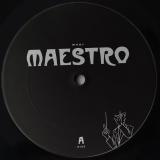
Professor Roth's debut EP, self-released on his newly formed label Maestro, is music that feels half remembered. Familiar enough to settle into, strange enough to keep shifting beneath your feet, it lives in that sweet spot where groove and abstraction lean into one another. Dusty textures, hazy melodies and understated rhythms never demand attention, yet quietly refuse to let go. Every track feels like another realm of the same dream: warm, weightless and just slightly out of focus.
‘Daydreaming’ is an inviting first step into the haze, opening the door without ever fully revealing what's on the other side. Gentle movement carries drifting melodies that seem to appear and disappear with every listen. An ethereal vocal breakdown creates the feeling of being quietly carried away from its hypnotic groove before pulling you back under its spell. Patient and understated, ‘The Way It Is’ lets the groove do the talking while subtle details gradually come into focus. Dubby percussive chaos is softened by warm, lifelike pads, encouraging your body to move while your mind wanders elsewhere.
As the name suggests, ‘Swells’ arrives in waves. Layers fold over one another, building and dissolving without urgency. There's a beautiful tension between motion and stillness, leaving the track suspended somewhere between the dancefloor and a reverie. ‘Shades’ is a fitting close that blurs the edges even further. Soft, hypnotic and quietly psychedelic, it feels less like an ending and more like waking up slowly. Content to linger in that in-between a little longer, glitchy samples drift through swirling soundscapes, keeping the dancefloor gently spun until the very end.
More Rice and Jugaar Records – Two Bangkok-affiliated labels – bring together an assemblage of their mutual friends for a heady, floor-focused VA with moods to soundtrack peak flow, after-hours rabbit holes, and just about everything in between.
Rudoh of Jugaar Records fame kicks us off with ‘Madoh’, a bendy groove that initially bares flex of early 2000s Minimal with its trimmed, rubbery percussion and obscured vocal snippets. As the track progresses, a hefty break and a catchy synth line bolster things before breakdowns unfold like little trippy slumbers rudely interrupted by bold, punchy drops.
Next up is Tokyo legend Gonno who follows up with ‘Rad’, a broad-shouldered banger propelled by a heaving kick and clap combo. A wrought synth is paired with odd shocks of acid and a sequence that flickers like a strobe. All the while a thick, gnarled bass line rumbles underneath, keeping vibes at boiling point throughout.
More Rice’s DOTT follows up with a swampy excursion propelled by a potent kick and nimble submarine tones. Drums are neatly stacked in polyrhythms as an infectious swing unfolds, one that’s decorated with ghostly synths and a generous dose of psychedelic synthesis.
Sarayu – also of More Rice fame, closes things up with ‘Fuijan Groove’, a brilliantly lean cut that lets the subs do the talking. Sharp tonal blobs flesh out a simple but highly effective march as spectral pads expand in plumes of smoke until the conclusion of a rich and varied record that unites two kindred labels perfectly.’
‘More Rice and Jugaar Records – Two Bangkok-affiliated labels – bring together an assemblage of their mutual friends for a heady, floor-focused VA with moods to soundtrack peak flow, after-hours rabbit holes, and just about everything in between.
Rudoh of Jugaar Records fame kicks us off with ‘Madoh’, a bendy groove that initially bares flex of early 2000s Minimal with its trimmed, rubbery percussion and obscured vocal snippets. As the track progresses, a hefty break and a catchy synth line bolster things before breakdowns unfold like little trippy slumbers rudely interrupted by bold, punchy drops.
Next up is Tokyo legend Gonno who follows up with ‘Rad’, a broad-shouldered banger propelled by a heaving kick and clap combo. A wrought synth is paired with odd shocks of acid and a sequence that flickers like a strobe. All the while a thick, gnarled bass line rumbles underneath, keeping vibes at boiling point throughout.
More Rice’s DOTT follows up with a swampy excursion propelled by a potent kick and nimble submarine tones. Drums are neatly stacked in polyrhythms as an infectious swing unfolds, one that’s decorated with ghostly synths and a generous dose of psychedelic synthesis.
Sarayu – also of More Rice fame, closes things up with ‘Fuijan Groove’, a brilliantly lean cut that lets the subs do the talking. Sharp tonal blobs flesh out a simple but highly effective march as spectral pads expand in plumes of smoke until the conclusion of a rich and varied record that unites two kindred labels perfectly.’
Bold, delicious and full-bodied, it’s no wonder Rube Goldberg Series Wines have such a loyal following. Volume nine is certainly a top spot for exceptional tunes. Here, cool fogs help to keep temperatures down, giving the beats time to ripen slowly and develop intense, complex flavours. Oliver.R, B.Love, Two Opposites and Let's Talk bring out the best of this prized fruit, crafting a bright, silky record that’s a real step up from the norm. Discover vibrant notes of house, funk and sweet rhubarb, with touches of baking spice and earthy forest dancefloor. The tunes are aged for up to 12 months, giving it soft tannins and a smooth texture.
On every copy sold 2 euros minimum goes to Mealespoirs : An NGO association who fight for Childhood rights, malnutrition and education.
lets talk about music now :
Crazy meet up between 2 monsters !
Atomic Compressor, the GTI number one composer who did the best of KSI records, and more recently a brilliant Komum brings a full side of his best recent tunes : Speed pityless kickerz bringing "le Père Noël Est une Ordure" special Thérèse édition !
On the flip you'll get Leatherface, newcomer from Cellul R production, with 2 Industrial psychedelic rolling kickerz : the first one is a C.Mantle hit combo, light kick mentalism ; and the second a powerfull Brotherhood lesson.
Yes here we are 50 years on from year zero 1976 (where did that go!!!). To celebrate this and the fact we are all still here and talking about the importance of the Punk Rock movement i put together an album under the banner Punk Rock Daze. The title reflects it was all such a daze, as it ran by so fast and also as a reminder of an old Malcolm McLaren remark that came to mind. That when the band and management were discussing the look and name of the Sex Pistols forthcoming album ‘Never Mind The Bollocks’. Malcolm remarked, lets sell it as you would sell washing powder, bright, simple and with fluorescence colours. Great idea so here is my homage to that thought.
So I hope you enjoy the gesture and here’s to another 50 years of Alchemy, Joyousness and
instruction (Anarchy, Chaos and Destruction).
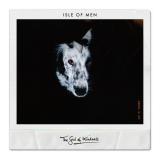
Isle Of Men is the band led by guitarist Dirk Fryns, featuring Gunther Verspecht (Stash) and all-round keyboard maestro Tom Van der Schueren, Herman Temmerman (bass and production), Niels Delvaux (drums) and Sara De Smedt (backing vocals). They made an impressive debut in 2015 with the album ‘Voluntary Blindness’.
Here is what the press had to say at the time:
De Morgen ****: “Subtle night music that inhabits the same world as David Sylvian, The Blue Nile, Ray Lamontagne… an excellent debut.
Focus: *** “A fine Belgian debut with an album that willingly lets itself be enveloped by the quiet twilight of the night.
Het Nieuwsblad/GVA ***: “Refined, intimate songs carried by the deep voice of Gunter Verspecht”.
RifRaf: “An impressive nocturnal record for fans of, say, Talk Talk, Tindersticks, Nick Cave or Nick Drake. Welcome to the fragile world of Homo Melancholicus”.
Now, at last, there is an equally atmospheric and impressive follow-up with the album “The Soul Of Kindness”.
Jacaranda is an album published in 1973 that highlights Bonfá’s refined approach to bossa nova and Brazilian instrumental music, blending Brazilian melody and rhythms with jazz-influenced harmonies. The album is cantered on Bonfá’s classical-influenced guitar technique. Indeed, rather than focusing on vocals, Jacaranda lets the guitar lead the narrative, creating a relaxed yet sophisticated atmosphere which evokes Brazilian landscapes and moods. Compared to his previous album Introspection (HE72018), Jacaranda is less restrained and inward, it does not have a meditative mood but offers warmer harmonies and a stronger melodic richness. This is the first vinyl edition of this album since its first edition in 1973.
out of Stock
Last delivered 6 months ago available to reorder, subject to availability
Let’s Start Again – A Collaboration between Mikekon & BTA (Byron The Aquarius), connected whilst Byron was touring Australia in 2023. Mike threw an intimate afterparty for Byron after his Nature’s Calling festival tour and got talking about Music, DJing and Life.
They threw some beats around to feel out and Byron began laying some lush keys, and within hours the magic was made. The project was left to cool off a little while and the two picked it up and polished it (Hence the title “Lets Start Again” before setting the date for a mid 2025 release via Mother Tongue distribution.
WIP Music is proud to have this as their first vinyl release under the label, further emphasising its desire to share timeless electronic music.
out of Stock
Last delivered 13 months ago available to reorder, subject to availability
Music possesses an incredible ability to transform raw emotion into an expansive array of expression. Nackley knows this ideation well. Having spent years working behind the scenes as an agent, Bordello’s latest discovery now steps fully into the spotlight with Anger Management, channeling the turbulence of transition into sound.
Cathartic and charged compositions are at the heart of this four-track release. Acid-dipped keys are both delicate and direct in the driving highs of Return of the Gecko, a track pulsing with raw energy. The crueler side of the music industry isn’t so much parodied here as it is dismissed entirely—Nackley lets the music do the talking. Sublime Desolation is pure dancefloor dynamite, where synth sirens detonate and explosive rhythm commands movement.
Been A Long Time arrives dripping in attitude. Breaks and a juddering bassline face off with a hustling 303 hook, harmonies weaving through deep sonic textures. A renewed confidence courses through the release as Nackley explores a range of styles, closing with the synth romance of Heartbreaker—an addictive blend of keyboards, guitar strings, and enveloping vocals are the emotive ingredients of this tear-streaked work of 1980s-inspired joy.
And joy is exactly what Anger Management delivers—a healing triumph and a bold debut declaration from a rising talent.
out of Stock
Last delivered 10 months ago available to reorder, subject to availability
'Through Today' is the sophomore album for rising Australian band Chimers. A husband / wife duo comprising life partners Padraic Skehan (vocals / guitar) and Binx (drums / vocals). Recorded by Jono Boulet (Party Dozen) over two days at Stranded Studios, Wollongong and mixed at Boulet’s Sydney home studio, produced by the band and veteran manager / promoter / producer Tim Pittman (Feel Presents), 'Through Today' features ten tracks of tightly-coiled intensity that barely lets up for all of its 34 mins. In enlisting Boulet, the band were confident that due to his own experience of being one half of Party Dozen, they had someone who understood the confines of working within the structure of a two-piece but also the possibilities that creates. Boulet, in turn, rewarding that trust by capturing a powerful bedrock of sound that allowed the band's taught rhythms to circle and permeate and yet give full breathing space for the melody within. For Pittman’s part, having a third ear on hand to devote serious listening time and critical commentary was an added bonus. It’s a major step forward from the band’s 2021 self-titled debut. A twelve track effort that snuck out during covid and only hinted at the power within. "Our debut felt more like just trying to capture the songs we had at the time, we weren’t sure if we’d even release it or if it would be our only album" "This time around we were intent on capturing the energy and intensity of our live show on the recording but with a more produced sound than self-titled. We worked more on song structure previous to the sessions. We rehearsed a lot playing quietly so we could actually talk to each other whilst playing the song and iron out any kinks.” “Jono turned the whole live room into a drum room, mics everywhere. The guitar amps were situated outside to prevent too much spill but still recorded live along with about half of the vocals. Second guitar and the rest of the vocals were recorded the next day. Jono was super quick and had the same work ethic and mindset, get in, get it done. If the first take was good enough, move on.” - Padraic Lyrically Chimers maintain the intensity as they tackle the themes of love, life, death and relationships, distance from home (Padraic is Irish, moving to Australia in 2001) and the current political climate providing enough drama to fuel a forest fire. Guest musicians on the album include saxophonist Kirsty Tickle - also of Party Dozen - and violinist Jordan Ireland of The Middle East. Both of whom were invited in on short notice adding their respective parts in just 1-2 takes each without any prior knowledge of the material. Binx too showing added versatility contributing lead vocals to An Echo and sharing lead across 3AM, Generator and others. “Singing is not something that comes naturally to me, and it was at the last minute before we went into the studio that Padraic suggested I sing the lead in An Echo. Having very minimal musical instruments within the band I think having the two different vocals adds a nice dynamic to the record.” - Binx 'Through Today' is a great album. Solid and confident from the get go. No waste. No unnecessary fat. Should it be Chimers last it would remain a defining statement of originality and intent. But it’s not the last, it’s just the beginning. And there’s plenty more where that came from. BIO Like many good bands Chimers are a band born of isolation, not geographically though, via the pandemic. Irish born Padraic Skehan and his life partner Binx, formed the band in their Wollongong backyard during the initial lockdown of 2020. Veterans and drummers both of the ‘Gong’s vibrant garage-scene – The Pink Fits, The Drop Offs, Evol and more – Chimers is an altogether different beast, Padraic taking a giant leap forward by removing himself from the back-seat and assuming the role of driver; singing, playing guitar and writing the songs that would eventually become their 2021 self-titled debut album. It’s a sound and album that draws heavily on Skehan’s time as a youth in Ireland and the post-hardcore sounds of Dischord Records, Husker Du, The Wipers and which has seen the band find friends and favour in like-minds The Mark Of Cain, Henry Rollins, Guy Picciotto and Mudhoney. This is no mere nostalgia though, the band instead landing at the vanguard of a new generation of Sydney and surrounds bands – Body Type, Second Idol, Dust, Private Wives, R.M.F.C – borrowing from the past in order to create a future.
The second release on Between Stations (proceeding the «rst BETWEENTAPES release by DOOM TV), sees label head Cowper kicking off the «rst in the BETWEENEDITS series. Possessing atom-splitting heft at a tectonic pace, A1 writhes around on a French Kiss theme, tantalising FX swirls and thundering bass before sensual pads slowly begin to caress the central nervous system, taking us off into hypnotic revelry.
B1 grasps onto a swirling and mesmerising, opiated version of Larry Heard. A spine-tingling concoction of elements and drifting echoes transporting us to a blissful ocean, ebbing with the sonic currents in a suspended state of glee. B2 pulls on the space cord, bringing us back from our temporary drift with a slow and steady hand. This one lets the machines do the talking whilst we concentrate on keeping stable as the «nal remnants of euphoria are squeezed from our serotonin glands.
out of Stock
Last delivered 4 months ago available to reorder, subject to availability
Loyle Carner will release his highly anticipated sophomore record, 'Not Waving, But Drowning' on 19 April via AMF Records.
'Not Waving, But Drowning' follows Loyle's BRIT (Best Male, Best Newcomer) and Mercury Prize nominated, top 20 debut 'Yesterday's Gone'. The bedrock of honest and raw sentimentality that you heard on 'Yesterday's Gone' left an inextinguishable mark on music in general and UK Hip Hop in particular, standing out as an ageless, bulletproof debut.
'Not Waving, But Drowning', Loyle's new album, gives yet more evidence - as if it were needed - of his razor-sharp flow and his unique storytelling ability. Yes, he can rap, but he allies that with the sensitivity of a poet, the observational skills of a novelist, and warmth of your best friend. The album opens with 'Dear Jean', a letter to his mother in which he's telling her that he has found the love of his life, 'a woman from the skies', and he's moving out.
It goes without saying that Loyle's music is hard to categorise, but what is even more impressive is that for someone who grew up listening to Mos Def, Biggie Smalls, Roots Manuva, and Wu Tang Clan, he doesn't sound like any of them. Although he might from time to time give lyrical nods to them, he's no imitator.
Loyle loves cooking. There are two tracks on this album named after chefs. The British-Israeli chef Yotam Ottolenghi, and the now deceased Italian chef Antonio Carluccio. 'Ottolenghi' the first single from the album was featured on the BBC Radio 1 B-list, BBC 6 Music A-list and has already been streamed over 5 million times.
Loyle refers to real life for everything, the title of 'Yesterday's Gone' came from a song of his step father, the title of his new album 'Not Waving, But Drowning' comes from a poem by his grandfather, which in turn came from a Stevie Smith poem. What you hear on the track 'Krispy' is real. He is pouring his heart out to his best friend Rebel Kleff after their relationship went downhill, he invites him on the track to say his piece but he doesn't turn up, so we get a flugel solo instead.
Loyle also has his own personal black consciousness movement. When he refers to his 'fathers' in the track 'Looking Back' he really is referring to two fathers. His biological father, a black man who he knows, but knows very little of, and his step father, a poet and musician who happens to be a white man but died a sudden unexpected death from epilepsy (SUDEP). With no real emotional ties to his biological father, but a deep connection with a deceased step-father, where does a young child turn He succinctly captures many of the great, unspoken, cultural and historical paradoxes of multicultural Britain on 'Looking Back'.
An album like this is hard to find. It is for those who like their Hip Hop to have soul, and their soul to have spirit. This is because it works on so many levels, but it is reflecting the personality of its creator. There are a host of collaborators here, Jorja Smith, Rebel Kleff, Kiko Bun, Kwes, Jordan Rakei, Sampha, Tom Misch and more, but none are overpowering. They blend righteously into place.
Loyle is not bitter with people who have let him down, or a society that lets so many down, but the combination of anger and love he has gives his voice the perfect blend of strength and vulnerability. This might be a coming of age album, but it's also a coming of ageless album. Loyle's 2019 Spring tour - which includes London's Roundhouse - sold out within 20 minutes of being on sale.
Not Waving, But Drowning
A rapper that raps about family is hard to find. The boys in the 'hood' tend not to be that interested in how much a 'brother' loves his mother, or how much he misses his dad, or even how much he misses his best friend. The boys in the 'hood' tend to be obsessed with the size of their cars, girls, bank accounts, and other personal 'possessions'. Loyle Carner's Mercury and BRIT Prize nominated debut 'Yesterday's Gone' (Released 2017), made it clear that he wasn't that kind of rapper. In fact, every time I talk to him about his work we talk about the world, and we tended to confuse ourselves by calling his work rap, poems, or songs, sometimes in the same sentence. They are in truth all of these things.
Here's some poetry.
Honestly I need them.
I hate them but I grieve them
I think I've finally found the reason
Trust
Like the fire needs the air.
I won't burn unless you're there.
'Not Waving, But Drowning', Loyle's forthcoming new album, gives us yet more evidence, (if it were needed), that he still has what rappers call, flow, but he hasn't lost any of his story telling qualities. Yes, the boy can rap, but a rapper with the sensitivity of a true poet, the observational skills of a novelist, and warmth of your best friend. The album opens with 'Dear Jean', a letter to his mother in which he's telling her that he has found the love of his life, (a woman from the skies), and he's moving out. He really loves the woman from the skies, but he still loves his mum, and so he reassures her that there is no competition, and tells her that 'She's not behind me or behind you, but beside we and beside two', his words. Or to put it another way, moving out without moving out. My words.
It goes without saying that Loyle's music is hard to categorise, but what is even more impressive is that for someone who grew up listening to Mos Def, Biggie Smalls, Roots Manuva, and Wu Tang Clan, he doesn't sound like any of them. Although he might from time to time give lyrical nods to them, he's no imitator. He says finding his own voice was something he always found easy. Although young, (in terms of a musical career), he has confidence in his own words and his own voice, and has never been tempted to sound like he's been hanging out in the USA, or rolling in 'Grime' on the mean streets of East London. And so when it comes to the creative process he doesn't simply find a beat to jump on and ride. Beats are important, but they are tenderly layered with samples, keyboards, or live drums, all imaginatively assembled for the laying on of words. Some tracks start with the idea, some with poetry, and some with a verse from a singer or some other melodic inspiration, but there is no formula.
Here's some poetry.
Don't hold any memories of us
Rather hold you everyday until the memories are dust
Yo we only caught the train
Cos you know I hate the bus
A prolific reader, who has dyslexia is hard to find. Add ADHD (Attention deficit hyperactivity disorder) to that and life should become even more difficult. To deal with your difficulties you devise coping strategies, which can differ from person to person. Loyle loves cooking. There are two tracks on this album named after chefs. The British-Israeli chef Ottolenghi, and the now deceased Italian chef Antonio Carluccio. Loyle describes himself as 'weird' because he is happy to read a cookbook as if he was reading a novel or a book of poetry. He has opened a cookery school for young adults not just because he loves food and wants to make more of it, but because it is one of the few things that can focus the ADHD mind. And when it comes to his other love, football, his approach is the same. Focus. He wanted to be a striker he says, up front scoring goals, but found his best position was in midfield because he was able to focus, check options, and see passes ahead of time, providing passes for other players just when they needed them. He says, 'You don't grow out of ADHD, you grow into it.' Loyle is also working with Levi's® on their music project where he is mentoring young musicians over a six month period, culminating at Liverpool Sound City festival.
More poetry.
When the going is tough
I wait till it falls on deaf ears
Hearsay
Without the boundaries of love
He also said, 'Ask most people and they will say that they love their mothers, but most are not going to rap about her'. On his first album Loyle's mum Jean wrote about the 'scribble of a boy' that growing up would take things apart to see how they worked. On this album she speaks with pride about a man who has found his place in the world.
Yes, poetry.
I'm still looking for the answers
Trying to find the right questions
Still waiting for my fathers
But can't break them in to sections
This poetry is serious. Loyle has his own personal black consciousness movement. He told me that he always felt safe at home, and being the darkest one in the family never meant a thing, but then when he had to face the outside world he felt hostility. It shook him up. Now he had to start asking questions, but what were the questions. This is serious. When he refers to his 'fathers' in the verse above taken from the track 'Looking Back' he really is referring to two fathers. His biological father, a black man who he knows, but knows very little of, and his step father, a poet and musician who happens to be a white man but died a sudden unexpected death from epilepsy (SUDEP). So to whom would a young black (or mixed race) kid turn He succinctly captures many of the great, unspoken, cultural and historical paradoxes of multicultural Britain when he says, 'My great grandfather could of owned my other one.' We are a people descended from enslaved people on one hand, and enslavers on the other, something we are still struggling to come to terms with, and this can be apparent in one family. A big book could have told you that, but here we get it in one line on the track, Looking Back.
Loyle refers to real life for everything. The album is peppered with captured moments that he records on his phone. These moments can range from conversations with taxi drivers, to capturing the moment when England scores a goal in the world cup. The title of 'Yesterday's Gone' came from a song of his step father, the title of his new album 'Not Waving but Drowning' comes from a poem by his grandfather, which in turn came from a Stevie Smith poem. What you hear on the track 'Krispy' is real. He is pouring his heart out to his best friend after their relationship went downhill, he invites him on the track to say his piece but he doesn't turn up, so we get a flugel solo instead. Yes people, this is real.
An album like this is hard to find. It is for those who like their Hip Hop to have soul, and their soul to have spirit, this is an album for those who have, (I'm sorry, I'm going to say it), emotional intelligence. This is because it works on so many levels, but it is reflecting the personality of its creator. There are a host of collaborators here, Jorja Smith, Rebel Kleff, Kiko Bun, Jordan Rakei, Sampha, Tom Misch and more, but none are overpowering. They blend righteously into place. Loyle is not bitter with people who have let him down, or the society that has let him down, but the combination of anger and love he has gives his voice the perfect blend of strength and vulnerability. This might be a coming of age album, but it's also a coming of ageless album. His first album worked, and this second album is a continuation of that work. Not creating a form, but being formless, as someone like Bruce Lee once said.
And here's some poetry from mum.
We talked long in to the darkest hours
Until we saw the burnished sky
And our eyes stung
As our words blurred and became thoughts
As we were silenced by the dawn
We clung to each other like sailors in a storm
out of Stock
Last delivered 19 months ago available to reorder, subject to availability
Panoram makes soundtracks for daydreams gone sideways. Picture the scene: an afternoon nap with the television on, quietly, in the corner; snatches of conversation drift in through the open window. Wandering, half-formed thoughts take unexpected detours; before you know it, there’s a movie playing out against closed lids, the colors bright, the characters unfamiliar. Accidental rhythms, incidental melodies, imitations of life, messages in code.
Across 17 fragmentary, sketch-like tracks, Panoram carves a labyrinthine path in which nothing is what it seems: a fantasy world of breathy vox pads, faux guitar, detuned synths, bursts of flute and orchestral percussion, and even the occasional cheeky cartoon sample. It’s chillout music with a chilly edge, ambient with a darkly ironic undertone. (The briefest glance at your news outlet of choice should be enough to confirm that the title—Great Times—ought to be taken with a healthy dose of skepticism.)
Panoram has been making music under his principal alias for more than a decade now, releasing albums on labels like Firecracker, Running Back, and his own Wandering Eye. (He has also performed and recorded with Amen Dunes, and has co-production credits on Amen Dunes’ forthcoming Sub Pop album Death Jokes.) Panoram’s output has ranged widely, taking in abstract pop, classical composition, twisted takes on library music, and cyborg funk. One record of “bio-acoustic transmissions” came with a cannabis leaf pressed in clear wax; his 2021 album Pianosequenza Vol. 1 gathers his experiments on the Yamaha Disklavier. But Great Times offers the truest picture yet of a project that has never been easy to pin down.
Loath to overshare details about his personal life, Panoram instead lets the music do the talking, using his cryptic tracks to express the slipperiest sorts of ideas—the thoughts that take root where anxiety, distraction, and the most fleeting traces of grace commingle. Panoram’s approach flies in the face of contemporary ambient orthodoxy, with its emphasis on immersion and uplift. Great Times expresses something thornier, more difficult to translate, yet also more tantalizing to contend with. Its 17 tracks offer a chance to get lost—and an invitation to remain in the maze as long as you like.
out of Stock
Last delivered 2 years ago available to reorder, subject to availability
The Cat's Miaow return to World Of Echo with Skipping Stones: The Cassette Years '92-'93, their second compilation for the imprint, and the fourth in a loosely defined series of reissues associated with the group (also including The Shapiros' Gone By Fall: The Collected Works of The Shapiros and Hydroplane's Selected Songs 1997-2003). It's a smart selection of songs by one of Australia's finest independent pop music groups, whose initial run, across the nineties, was as mysterious as it was bewitching. A generous double album featuring thirty-five songs drawn from The Cat's Miaow's history, Skipping Stones lets listeners in on a bunch more secrets. The four cassettes that Skipping Stones draws from - Little Baby Sour Puss, Pet Sounds (both 1992), From My Window, and How Did Everything Get So Fucked Up (both 1993) - were released or assisted by Toytown, a Melbourne cassette label of rare taste, savvy and intelligence. Diving into that two-year period, Skipping Stones is full of surprises, rich with unexpected and inspired detours, while reminding everyone just how clear and distinct The Cat's Miaow's music was from the very start. Looking in from the outside, they always felt like a group that knew just what they were doing, but intuitive as they are, they weren't forcing anything: these songs always sound exactly what they need to be, rough edges, playful moments and all. The Cat's Miaow may have been bedroom dreamers, but their songs were richly informed, with the sweetest of girl-pop moves sashaying into walls of tremolo-d and distorted guitar, jangling six strings tangling with melodic bass that's pure Peter Hook/Naomi Yang, while the gentle trickle of a drum machine or the earthy twitch of brushes on drum skins provided the spine for Kerrie's and Bart's lovely, unforced singing. This double LP on World Of Echo feels like the very core of the thing - some of the most heartbreakingly beautiful, effortlessly lush and deeply moving pop music you're likely to hear. RIYL: Hydroplane, The Cannanes, Magnetic Fields, Belle and Sebastian, Jesus and Mary Chain
180g audiophile vinyl reissue of American blues guitarist Melvin Taylor's 1995 album 'Melvin Taylor & The Slack Band', which is appearing on vinyl for the first time with remastering by Cicely Baston at Alchemy/Air Mastering, London "The U.S. release of Melvin Taylor's two early-'80s LPs by Evidence a decade later was a shock introduction to a blues guitarist who seemingly blazed out of nowhere - outside of Rosa's Lounge in Chicago, that is. "Blazed" is the right word, too, because Taylor is a total maximalist who unleashes torrents of notes to fill up every space. But he's so convincing a player that the concept of "blues guitar hero" might get a good name again, even with fans dead- tired of excess who never thought they'd think things like, "Man, can Melvin Taylor play the ever-loving (add the expletive superlative of your choice) out of the guitar" again. Taylor's first real-time release, Melvin Taylor & the Slack Band, is a pretty straightforward affair - basic trio with minimal overdubs, serviceable vocals in an Albert King mode, and a mix of originals and very classic covers. The opening "Texas Flood" lets him rip on a slow blues, constantly changing up his playing with wah-wah blitzes as the real ace in his sonic hole. The originals "Depression Blues" and "Groovin' in New Orleans" add some funk flair, while "Talking to Anna Mae" is a straight- up Chicago boogie instrumental that Taylor shines on. But he's even more in his element on the unadorned slow blues "Tin Pan Alley" and King's "Don't Throw Your Love on Me So Strong." It's partly the speed but even more the phrasing - the unexpected stops and starts, the spiky and blazing runs and flurries, the unusual note selections he tosses in - that sets his playing apart. The other covers have their sporadic moments - "TBone Shuffle" is inconsequential, but Otis Rush's "All Your Love" and "Voodoo Chile" are worth listening to, even if the latter doesn't add anything to the famous Hendrix wah-wah workout. Taylor actually doesn't sound that radical here, like he was playing to establish blues circuit credentials by putting his stamp on familiar songs more than indulging offbeat personal touches like the mellow lounge jazz take on the Champs' "Tequila." But his playing can be truly electrifying and Melvin Taylor & the Slack Band is recommended for anyone, especially Stevie Ray Vaughan fans, looking for a distinctive new blues guitar voice." - Don Snowden, AllMusic Personnel: Melvin Taylor, guitar, vocals / Willie Smith, bass guitar / Steve Potts, drums Recorded and mixed on March 27-30, 1995 at Dockside Studios, Maurice, LA
While this may be the first release on Sheffield's Central Processing Unit from Global Goon, the one known to friends and family as Johnny Hawk brings a whole heap of experience to the Nanoclusters mini-LP.
Hawk started dropping Global Goon records on the legendary Rephlex Records back in the 1990s. The project's subsequent releases have taken in imprints as esteemed as WéMè and Balkan. Factor in a whole host of other aliases which have delivered missives via the likes of Planet Mu, and you know even before you press play on this witty, wily record that you're dealing with a master at work here.
The confidence with which Global Goon approaches Nanoclusters shines through in Hawk taking much of the mini-album at midtempo. Cuts like 'Khroxic Mould', 'Metallik' and 'Syntheseers' sound like Bochum Welt heading down a dark alleyway. The former in particular is a seasick lope, the tuned synths lurching around like sailors on deck in a storm as bass ebbs and flows underneath the mix.
The influence of Kraftwerk comes through prominently at times here, particularly in the way 'Calcula' and 'Digit Six' play pensive, slightly sombre synth chords off some simple but effective forward motion in the drum programming. That is not to say that Nanoclusters is not full of invention, though. None of the productions are overly flash, but this approach allows the little details to shine through more clearly, from cleverly panned hi-hats to hissing synth counter-melodies which flit in and out of the mix. Enthralling and packed full of ear candy, they're further evidence that Nanoclusters is the work of an expert craftsman.
While the pulse of Nanoclusters remains relatively steady throughout, it's still a rather lively record. Plenty of these tracks will get the dancefloor moving if deployed correctly - though whether they're heard at home or in the dance, it's the attention to detail which makes them stand out.
'Snapterisk' is as perfect an example of machine-funk as you're likely to find - the drum programming is razor-sharp but rubbery with bongos, the bass a lithe burble, and those wobbly stabs of keys that put a bit of wiggle in the beat? Delightful stuff. Elsewhere the ever-looping arpeggio of 'Metro Esc' has hints of Frankie Knuckles' house classic 'Your Love', though an array of interesting sonic nuggets - snippets of vocal, radar-like bloops, a gently insistent low-end pulse - soften the track's clubbier elements with a pillowy sheen. And Hawk throws us a curveball right at the end of Nanoclusters, tapping back into that old Rephlex sound for the fizzy, braindancing 'Metal Glass'.
Global Goon doesn't need to show off on Nanoclusters - from brilliantly slick machine-funk to Kraftwerkian reveries, the CPU debutant lets the music do the talking here. It makes for a confident and vivacious mini-LP, one which wears its expertise lightly.
I Talk To Water, the fifth album for Kompakt by Danish producer Kölsch, is the artist’s most personal statement yet. While all the trademarks that make his music so popular and powerful are still present – lush, melodic techno; swooping, trance-like figures; sensuous, shivery texturology – I Talk To Water is also a deep and intimate rapprochement with family and history, a beautiful, finely detailed document of loss and memory, and a tracing of the long, unbroken thread of grief that runs through our lives once we’ve lost those we loved.
The emotional core of I Talk To Water, then, is a cache of recordings by Kölsch’s father, Patrick Reilly, who passed away in 2003 from brain cancer. With time rendered elastic by the pandemic and its associated lockdowns, its sudden, alienating shifts in everyday living, Kölsch found himself reflecting on his father’s passing and ongoing spiritual presence, thinking about how best to memorialise such a significant figure in his own life. Those recordings opened a gateway, of sorts, for Kölsch to move through – a way to bring past and present together and entwine them in a sensitive, poetic manner.
Kölsch’s father was a musician – “touring in the sixties and seventies, in the Middle East especially, he was doing the whole hippy trail, playing guitar, and wrote some songs over the years,” he recalls. “But all in all, he decided to focus on family rather than pursue a musical career.” Reilly kept playing and writing music over the years, though Kölsch hadn’t listened to the material for some time: “I’d never had the guts to listen to it, because I just felt too fragile listening to his voice. It’s such a tough thing to go through.”
During the pandemic, though, Kölsch listened through the fragmented body of work that his father had produced over the years. “I decided I’m gonna finally release my dad’s music twenty years after his passing,” he reflects. “This whole album is about the process of loss, and for me it’s been one of my main driving forces in my musical life, the whole emotional aspect of whatever I’ve done has been based in that feeling that he’s not there anymore.”
Recordings of Reilly appear on three songs across I Talk To Water. His guitars drift pensively across “Grape”, offering a lush thread of melody that Kölsch wraps with clicking, driftwood rhythms and droning, melancholy bass. “Tell Me” is a lovely three-minute art song, a sadly beautiful reflection, minimally adorned with gentle keys and a muted pulse. And on the closing “It Ends Where It Began”, Kölsch lets his father’s acoustic guitar take centre stage for a lament that’s unexpectedly folksy, a guitar soli dream, which Reilly originally recorded in 1996. “He actually recorded it for my first album that never came out,” Kölsch reveals, “and I had it sitting around forever. That is purely him.”
These three imagined collaborations between father and son are poised and delicate. But their relationship also marks the gorgeous music Kölsch has made across the rest of I Talk To Water, from the itchy yet lush “Pet Sound” (titled in tribute to one of Reilly’s favourite albums), the flickering synths and yearning vocal samples that slide through “Khenpo”, the ecstatic shuddering that marks “Only Get Better”, or “Implant”’s slow-motion pans and subtle reveals.
There’s also the title song, where Kölsch is joined by guest Perry Farrell (Jane’s Addiction, Porno For Pyros), singing a mantra for internal reflection: “I talk to water / Searching for myself / Looking for answers / Oceans of you.” Farrell’s appearance brings another timbre, another spirit to the album, aligning neatly with his recent interest in electronic music. “He was completely taken by this idea of talking to water,” Kölsch says, thinking about the ways we collectively lean towards the natural world as a comfort and a listener, a guide through mourning, a way to map out the terrain of the heart. This mapping is something that Kölsch has proven remarkably adept at through the years; dance music for both body and mind, but also both for the here-and-now, and for the hereafter.
“I Talk To Water”, das fünfte Album des dänischen Produzenten Kölsch für Kompakt, ist zweifellos das persönlichste Statement des Künstlers bislang. Während alle Markenzeichen, die seine Musik so beliebt und kraftvoll machen, immer noch präsent sind – üppige, melodische Techno-Tracks; schwebende, tranceartige Elemente; sinnliche, fiebrige Texturen – ist “I Talk To Water” auch eine tiefe und intime Annäherung an Familie und Geschichte. Es ist ein wunderschönes, fein ausgearbeitetes Dokument des Verlusts und der Erinnerung, und es verfolgt den langen, ungebrochenen Faden der Trauer, der durch unser Leben läuft, sobald wir diejenigen verloren haben, die wir liebten.
Der emotionale Kern von “I Talk To Water” besteht aus Aufnahmen von Kölschs Vater, Patrick Reilly, der 2003 an Hirnkrebs verstarb. Durch die Pandemie und ihre damit verbundenen Lockdowns, die plötzlichen, entfremdenden Veränderungen im Alltag, fand Kölsch sich in Gedanken an den Tod seines Vaters und seine fortwährende spirituelle Präsenz wieder. Er überlegte, wie er eine so bedeutende Figur in seinem eigenen Leben am besten verewigen könnte. Diese Aufnahmen öffneten ihm sozusagen ein Portal, um Vergangenheit und Gegenwart miteinander zu verbinden und sie auf sensible und poetische Weise zu verweben.
Kölschs Vater war Musiker – “er tourte in den sechziger und siebziger Jahren, vor allem im Nahen Osten, auf dem Hippie Trail, spielte Gitarre und schrieb im Laufe der Jahre einige Songs”, erinnert sich Kölsch. “Aber alles in allem entschied er sich, sich auf die Familie zu konzentrieren, anstatt eine musikalische Karriere zu verfolgen.” Reilly spielte und schrieb jedoch im Laufe der Jahre weiterhin Musik, obwohl Kölsch das Material lange Zeit nicht angehört hatte: “Ich hatte nie den Mut, es anzuhören, weil ich mich einfach zu zerbrechlich fühlte, seine Stimme anzuhören. Es ist so schwer, das durchzustehen.”
Während der Pandemie hörte sich Kölsch jedoch durch das fragmentierte Werk, das sein Vater im Laufe der Jahre produziert hatte. “Ich beschloss, die Musik meines Vaters zwanzig Jahre nach seinem Tod endlich zu veröffentlichen”, reflektiert er. “Dieses ganze Album handelt von dem Verlustprozess, welcher für mich generell eine der Hauptantriebskräfte in meinem musikalischen Leben ist. Der ganze emotionale Aspekt von dem, was ich getan habe, basierte auf dem Gefühl, dass er nicht mehr da ist.”
Auf “I Talk To Water” sind Aufnahmen von Reilly in drei Songs zu hören. Seine Gitarren ziehen nachdenklich durch “Grape”, bieten einen üppigen Melodiefaden, den Kölsch mit klickenden, treibenden Rhythmen und dröhnendem, melancholischem Bass umwickelt. “Tell Me” ist ein schönes dreiminütiges Kunstlied, eine traurig-schöne Reflexion, minimal geschmückt mit sanften Tasten und einem gedämpften Puls. Und auf dem Abschlusstrack “It Ends Where It Began” lässt Kölsch die akustische Gitarre seines Vaters im Mittelpunkt stehen, ein überraschend folkiger Klagegesang, den Reilly ursprünglich 1996 aufgenommen hatte. “Er hat es tatsächlich für mein erstes Album aufgenommen, das nie veröffentlicht wurde”, enthüllt Kölsch, “und ich hatte es ewig liegen.”
Diese drei erdachten Kollaborationen zwischen Vater und Sohn sind ausgewogen und zart. Aber ihre Beziehung prägt auch die wunderschöne Musik, die Kölsch im Rest von “I Talk To Water” geschaffen hat, angefangen bei dem nervösen, aber üppigen “Pet Sound” (benannt als Hommage an eines von Reillys Lieblingsalben), den flimmernden Synthesizern und sehnsüchtigen Vocal-Samples in “Khenpo”, den ekstatischen Erschütterungen in “Only Get Better” oder den langsamen Schwenks und subtilen Enthüllungen in “Implant”.
Es gibt auch den Titelsong, in dem Kölsch von Gast Perry Farrell (Jane’s Addiction, Porno For Pyros) begleitet wird, der ein Mantra für die innere Reflexion singt: “I talk to water / Searching for myself / Looking for answers / Oceans of you.” Farrells Auftritt bringt eine weitere Klangfarbe, einen weiteren Geist in das Album, der gut zu seinem jüngsten Interesse an elektronischer Musik passt. “Er war völlig fasziniert von der Idee, mit Wasser zu sprechen”, sagt Kölsch und denkt darüber nach, wie wir kollektiv zur Natur als Trost, Zuhörer, Führer durch die Trauer neigen, um die Gelände des Herzens zu kartieren. Diese Kartierung ist etwas, in dem Kölsch im Laufe der Jahre erstaunlich geschickt war; Tanzmusik für Körper und Geist, sowohl für das Hier und Jetzt, als auch für das Leben danach.
out of Stock
Last delivered 9 months ago available to reorder, subject to availability
Unknown Assailant is a limited run vinyl only label shrouded in mystery. Each of the four tracks on this second release touches on a different style of techno/deep tech, ranging from the timeless sound of the Detroit inspired “Ancient Beauty” to the peak time energy and in-your-face style of “Rude Awakening”.
It also incorporates the dark and stripped-back minimal style of “Isolated Mechanics” plus the trippy atmosphere and dystopian vibe of “How Has It Come To This”.
Unknown Assailant is a secretive artist who lets the music do the talking, and all four of the tracks on this release are solo productions from the illusive producer. Striking from the shadows to showcase an eclectic range of dancefloor focused techno/deep tech that orientates around raw grooves with machine driven sounds, this vinyl only release cuts straight to the heart of the dancefloor.
This release is limited to a vinyl pressing of only 200 copies with the previous release picking up support by artists ranging from Gerd to Arnaud Le Texier.
out of Stock
Last delivered 2 years ago available to reorder, subject to availability
Whitney did more than turn Whitney Houston into a pioneering sensation known around the world by her first name. Originally released in June 1987, the singer's blockbuster sophomore record became the first album by a female artist to debut at No. 1 on the Billboard 200 chart — a position it claimed for a total of 11 weeks en route to selling more than 10 million copies in the U.S. The Diamond platinum effort also contains four No. 1 Hot 100 hits that, when combined with the three chart toppers from her 1985 debut, gave her seven consecutive No. 1 singles — an accomplishment that no other artist has accomplished. Commercially and creatively, Whitney stands on hallowed ground — especially now that the record plays with a sound that puts into perspective just how extraordinary, engaging, and vital Houston's music remains.
Mastered from the original master tapes and pressed on MoFi SuperVinyl at RTI, Mobile Fidelity's 180g 33RPM SuperVinyl LP of Whitney invites listeners to experience the Rock & Roll Hall of Fame inductee's pivotal album in audiophile quality for the very first time. Free of the dynamic limitations and tonal flatness prevalent on prior vinyl and CD pressings, it lets the music breathe and reveals the copious detail, nuance, and texture within the immaculately produced songs. MoFi's SuperVinyl profile offers further advantages in the forms of a nearly inaudible noise floor, dead-quiet surfaces, and superb groove definition.
In addition to featuring extreme clarity and immediacy, this numbered-edition reissue does wonders for the attribute that inspired more than 20 million people around the globe to add Whitney to their record collections: that inimitable voice. Houston's trademark mezzo-soprano — an acrobatic instrument equally capable of taking off on fantastic flights and unwinding for hushed meditations — benefits from the fantastic airiness and transparency afforded by this meticulously restored edition. Whitney has never sounded or looked better. The crossover landmark deserves nothing less.
Issued just two years after Houston's breakthrough debut, Whitney immediately signalled the genre-defying singer's intent to continue to push ahead and expand her palette. Shot by photographer Richard Avedon, the album cover depicts an iconic image of Houston — captured with a gleaming smile, bright eyes, teased-out afro, toned arms, and a right hand that appears to wave a friendly hello — whose active, athletic profile stands in contrast to the extremely formal sit-down shot of her that graces her '85 record. The change is telling: Whitney overflows with unfettered joy, rhythmic vibes, and deep-seated emotions that forever endeared her to the hearts and minds of countless listeners — and which set the standard for the wave after wave of divas that followed in her footsteps.
It's no coincidence that the first track on Whitney is the declarative "I Wanna Dance with Somebody (Who Loves Me)." Like Michael Jackson's "Billie Jean" and Madonna's "Material Girl," the feel-good smash is one of the quintessential '80s gems — a lithe, melodic, celebratory release of pent-up energy and loneliness that glides across club floors, shouts to the rooftops, and shrugs off any concerns about vulnerability or embarrassment. Houston's swooping voice moves in sync with the sleek beats and dipping-and-diving synths. She practically takes her fellow musicians by their hand and leads them in a blissful dance that nobody would dare sidestep. Focusing on Houston's singing — a task made challenging only because of the impossible-to-ignore hooks and grooves — showcases the virtuosic facets of not only her register but her control, discipline, smoothness, and warmth.
That she replicates those feats for the entirety of the nearly 53-minute-long album makes Whitney that much more special. Houston reaches back and channels her childhood gospel training on the R&B-flared "So Emotional"; effortlessly slips into Quiet Storm mode on the duet with her mother, gospel great Cissy Houston, on "I Know Him So Well"; flirts with smooth jazz and collaborates with tenor saxophonist Kenny G on the lush "Just the Lonely Talking Again"; conjures dreamscapes and shadow-boxes with supple funk on a romantic cover of the Isley Brothers' "For the Love of You"; and, for the majestic power ballad "Didn't We Almost Have It All," displays the sky-scraping reach of her vocals amid a grand arrangement made even bigger by Houston's sweeping performance and triumphant finish.
Houston's once-in-a-generation talents weren't lost on the adoring public, radio deejays, or industry experts. In addition to harbouring four No. 1 hits and receiving nominations for four Grammy Awards, Whitney generated another Top 10 success in the guise of the Afro-Cuban-leaning "Love Will Save the Day." The album also netted Houston four American Music Awards; two Billboard Music Awards; back-to-back People's Choice Awards; a Soul Train Award; and various other accolades. It all makes the crux of the Washington Post's July '87 review of the album appear prophetic: "Her voice sounds stronger still and the songs are varied but so consistent she could garner 10 Top 10s out of a field of 11."
That claim still holds true. A brilliant fusion of pop, R&B, smooth jazz, and soul, Whitney is a showstopper – and one of the key reasons Houston is the most-awarded female artist of all time.
Eaux proudly announces the second full length LP from Rrose, Please Touch, released on vinyl, CD, and digital download. The LP follows 2019's Hymn to Moisture in ways that are both subtle and striking: Please Touch further hones the artist's tensile sound while exploring new aesthetic vistas and basking in an undeniably erotic sense of play. Moving with undulating power, the album's nine tracks drift across tempos from a weightless 0 bpm to a crawling 100 to a lunging 140 and back, with a rich palette of sculpted noise and cross-talking microtones.
Rrose's compositional process, rooted in their studies with West Coast avant garde trailblazers at Mills College, centers on "seed" sounds being fed through elaborate webs of interrelated audio processing. The result is a world where changes in any one element have downstream implications for some or all the others. It's a rich interdependence that lets the tracks breathe, grow and mutate with uncanny organicism. Please Touch addresses in equal measure the perceptual and the corporeal: these are sounds that sink into the body, exhibiting a tactility that pushes, pulls, bends and yields with fearsome vibrancy.
The album splits its time between radical techno iterations and pieces which pare back the percussion, letting the synth textures uncurl in their own time and space. The quivering drone and rolling sub-bass of "Joy of the Worm'' set the tone for the record, while "Rib Cage," Spore" and "Spines " swing with stepping rhythmic underpinnings. Building with finely calibrated tension, they use their few elements to startling, snarling effect. "Pleasure Vessels" is a rare moment of becalmed introspection in Rrose's oeuvre, hinting at a melodic ambiance that is practically unseen in previous works. It glows with a soft, dawn-like light before dissolving into a tidal fizz. "The Illuminating Glass'' brings the tempo down to a languorous chug, nodding its way through a field of glistening chirps and leaden gasps. "Feeding Time," "Disappear" and album closer "Turning Blue'' meanwhile nod to the cerebral psychedelia of Rrose's forebears, with mesmeric, looping textures and long, magisterial tones not dissimilar to the spectral works of James Tenney (whose work Rrose regularly performs) and the deep listening pieces of Pauline Oliveros.
The title of the album refers playfully to the tactile quality of the music while hinting at a forbidden sensuality that is only permitted within the confines of this microcosm. The phrase is also another nod to Marcel Duchamp, who gave this title to a 1947 exhibition of Surrealist art. Across the nine tracks, Rrose follows the lead of the sound(s) rather than trying to impose on the flow of the sonic material. Each move changes the parameters of a track's evolution. Thus, a non-hierarchical, symbiotic relationship forms between the so-called "music-maker" and the music itself. Please Touch acts as a collection of limbs, organs, parasites, and growths which both devour each other and keep each other alive.
out of Stock
Last delivered 20 months ago available to reorder, subject to availability
Following in the footsteps of "Mind Palace" and "Lost Spirits", respectively issued in 2018 and 2021, Hidden Empire return to Stil vor Talent with their eagerly anticipated third studio full-length, "Momentum". Going the same route that came to define their sound throughout the years, Branko Novakovic and Niklas Schäfers cook a savvy mix of deep electroid flavours and prog techno magnitude which flourishes in the long-playing format. Orbiting the frontier between proper no-nonsense, floor-focussed effectiveness and a trademark exploratory take on electronics, Hidden Empire here delivers one of their most accomplished slices to date, which not only spans the largest span of their many-faceted influences, from tribal anchorage to hypermodern escapology, but breathes a truly epic wind into it.
Draped in luscious, silken envelopes and easternmost ambiences, "Dawn" gets the ball rolling on a mystique-imbued note, halfway meditation-friendly material and square-shouldered club busting wares. Moving into Afro-infused house grounds, "Modesty" finds Branko and Niklas heading for the deeper end of the spectrum, as they pull out a clinically precise blender of rattling percussions, opaque incantations, lush synth swashes and verbed-out machine talk, tailored for nightly boogie rituals in the forest. "Avalanche" opts for a more brooding, deadlier approach. Cutting its path away from prying eyes, this one finds Hidden Empire pulling the stealth weaponry to absolute hypnotic effect - perfect for serious in-between peak time business with its thick, thriller-like tension, mist-shrouded atmosphere and surgical focus. Featuring Felix Raphael on vocals, "Who We Are", is a pop-influenced chugger that perhaps best defines Hidden Empire's ambivalent style, both hi-NRG and innervated with a melancholy that infuses down to the bass and most functional elements. Geared up for big-room traction with its seesawing synths and clinical drumwork, Raphael's moving timbre does more than offer a sensible counterpoint to the track's overall sturdy backbone, it takes it to a whole other dimension completely.
"Repeat The Good" ft. Wolfson balances out a fast-ticking groove with those subtle melodic lines Hidden Empire champion to astounding vibrancy, offering a particularly satisfying glimpse into their vortical imaginarium, whereas "Last Call" has us journeying to straight out Moroder-esque territories, flush with the aptly configured palette of fuzzy space disco bass, fast-paced Italo churn and vocodized talk for good measure. All in breaks and chopped-up euphoria, "Vivid" runs the hoodoo down in muscular fashion and with impressive levels of energy throughout, all set at cranking up the heat one notch further, while "Rebel" provides us with the kind of rough-around-the-edges EBM horsepower and neon-clad synth engineering that'll get the basement in a state of alert. Encompassing all of the pair's idiosyncratic merger of styles - from pop-laced Italo to spaced-out techno wares, through jagged motorik and heavily mecched-out jacking house, "Alright" shows off Hidden Empire's wide arsenal of pyrotechnics under the most compelling of lights. A more openly jagged and quirky weapon that hatches into a full-fledged solar number around the half, "Momentum" roars up the club's highway at full throttle, proving a formidable asset when it comes to plunging dancers into a state of weird, left-of-centre euphoria.
A stroboscopic eclipse is predicted as "Dark Sun" enters the room, deploying its obscure wingspan over the ravers, not quite a bad omen as it lets more light in with every bar, its brittle piano lines and heart-wrenching vocals cutting a path into the crowd's pulsating hearts. Graceful as Hidden Empire's music can be, a moment of utter exhilarating beauty. "Savasana" wraps up the voyage with a pure slab of cyphered 4x4 seduction, as an ASMR-like voice guides us across the soul-questioning haze that blankets our pathway onto a luminous finale. A piece of elusive nature, clearly designed for the club and yet telling a tale of off-piste initiation through twelve fascinating movements, "Momentum" will undoubtedly etch on the listeners' mind as one of the German pair's most strikingly powerful emanations.
Download:
1. Hidden Empire - Dawn Interlude
2. Hidden Empire - Modesty
3. Hidden Empire - Avalanche
4. Hidden Empire & Felix Raphael - Who We Are
5. Hidden Empire & Wolfson - Repeat the Good
6. Hidden Empire - Last Call
7. Hidden Empire - Vivid
8. Hidden Empire - Rebel
9. Hidden Empire - Alright
10. Hidden Empire - Momentum
11. Hidden Empire - Dark Sun
12. Hidden Empire - Savasana
13. Hidden Empire & Felix Raphael - Who We Are (Instrumental)
out of Stock
Last delivered 20 months ago available to reorder, subject to availability
Riding high on the inexplicable Tech-house adoption of their last release, Talking Drums return with hit number six.
This desert island disc finds the family bagging a last minute flight to sunnier climes, where the cocktails are strong and the seas are calm.
On 'Air Ecosse', the crew provide an engine overhaul to a middling slice of Scotch boogie, squeezing maximum thrust out of the new beat-y intro before a bubbling bassline and chiming chords provide some serious uplift. The captain takes the comms for a late deadpan vocal, hinting at a little Pet Shop Boys karaoke prior to touchdown in paradise.
The percussion pals kick off the Birkies on the B side, boarding the bateau with a pair of proper harbour heaters. 'Too Yacht To Handle' bubbles along like Mick'n'Keef in disco mode, oozing grooves under a swooning vocal a la Nicolette Larson. A hazy arrangement lets the music play, indulging the instrumental breaks, soaring synths and subtle delays in true 12" Extended Mix stylee, perfect for peak-time at poolside or la playa.
Dropping the tempo to a sunset strut, 'AORwaves' provides the perfect cool-down, as TD cut back the fat on a forgotten soft-rocker to create a cosmic yacht bomb. Low slung, sleazy and spaced out, this is gonna rock a bar set and beyond.
Limited Press - Numbered Insert - Drum Fun Guaranteed.
out of Stock
Last delivered 11 months ago available to reorder, subject to availability
We are happy to welcome a true classic to our label, none other than Jeroen Search, a true veteran with countless pivotal releases on the best labels out there.
On this occasion, he has delivered four cuts.
Dutch veteran producer wastes no time but lets his ever evolving array of machines do the talking. They speak in many tones - be it snappy or propelling, vivid or restrained, stomping or intricate - yet they all retain Searchs consistently singular voice.
all drenched in the signature analog Search-sound.
out of Stock
Last delivered 36 days ago available to reorder, subject to availability
(Amsterdam | NL) Surrender to the call of NowNow Records as the imprint from Lee Ann Roberts' sets the release of its first V/A compilation. Featuring Aida Arko, Brecc, Blicz, and Geerson, NowNow Various 1 sets the space between the subtlety and soul of Hard Techno with a tasting of proper talent. Pre-orders are available starting on 30 September 2022.
The now Amsterdam-based South African artist, Robert's created NowNow Records as a destination for communities and cultures to come together in sonic bliss. NowNow Records has championed off-the-grid Techno through its inherent state of urgency since Robert's kicked off the imprint with 2021's I Want You Ep. Since, NowNow Records has been celebrated as a go-to destination for the harder edges of Techno, with releases from WarinD, OGUZ, Ana Lilia, and Benny Guzi all offering their respective takes on this unmistakably relentless sound.
After two successful years, NowNow Records' first V/A features Vienna's Aida Arko, whose A Long Night Into Dunwall kicks things off with her typically industrial, dark, and percussive groove before melding into Brecc's appropriately titled Praise the Rave. The Utrecht-based artist, known for his relentlessly energetic sets, draws from much experience with this one, and it shows! Next, Paris' enigmatic Blicz lets the music do the talking with Independance Night before fellow Frenchmen Geerson closes the affair with the bonafide banger, Domenical Mass.
The complete release is not one for the faint of heart but definitely for those looking for that moment where the music takes you travelling without ever having to leave where you are.
out of Stock
Last delivered 3 years ago available to reorder, subject to availability
+ 10 Tracks for download
Preceded by the successive releases of lead singles "Sandcastles" and "My Mind", here comes the versatile debut full-length offering from Tel-Aviv-based producer Kadosh on Stil vor Talent, "Unanimously". Bridging the club universe with that of deeper, further immersive off-floor narratives, Kadosh entices us down a compelling path of rhythmic enlightenment and all-embracing togetherness. Casting mutable strains of EBM, house, pop and exotica entangled in one dizzying polyphony throughout the album, the Israeli vibist has us surfing our way across his musical headspace effortlessly.
From the stealth, neo-noir-like opening sequence of "Interstellar" feat. Marc Piñol to the epic Luso-Italo vibrations of "Sandcastles" feat. vocal hoodooist Abra~o, via the exquisite Afro-informed piano house and all-round atmospheric luxuriance of "My Mind" feat. Floyd Lavine and Erika Krall's supremely smooth yet characterful timbre, Kadosh swings the pendulum with constant surprise and bravura. Aside from his compositions' obvious hooking nature, there's also great lots of textural back funk to dive in at every corner. Hauntingly transporting, "From Jaffa to Frederichshain" feat. Upon You's Marco Resmann works a more jagged programming, flush with big-room reverbs and muted drums, while the slo-evolving "Pronto" feat. Emanuel Satie morphs from a low-key DJ tool into a full-fledged, melancholy-charged peak-time burner.
Bearing both Kadosh and David Mayer's signature, "1999" lets the 80s-inherited arsenal of iridescent Casio synths and lashing percussions talk in unhindered fashion, whereas "Volantage" feat. Murat Uncuoglu goes all in on the trampling kicks, sooty claps and prismatic keyboard stabs. Sensual to the fullest, "Moran" in collaboration with Rodriguez Jr. is certainly one of the album's highlights with its impeccably laid-down melange of bassy thunder and shapely Latin rhythmic backbone ushering us down an irresistibly poignant and hypnotic tunnel of sound. A joint effort with Locked Groove, "Far Too Close" is a further loopy discoid affair reminiscent of the French filtered-house scene's heyday, while the album's closer "Think it Over" feat. Stereo MC's is that perfect pop-indebted electro chugger that'll rev up any tired engine with reinvigorated, ecstasy-inducing horsepower.
out of Stock
Last delivered 13 months ago available to reorder, subject to availability
Heiko Voss has earned near mythical status as a torchbearer for the emotional, deeply felt and quietly radical style of electronic music. The blissed-out radiance of his Kompakt Pop single, “I Think About You” remains one of the label catalog highlights and a stellar run of collaborative singles as Schaeben & Voss; others might know him for his stewardship of the excellent, much-underrated Firm imprint. But with his new album, 3:30 Minutes To Live, released by Michael Mayer’s label Imara, Voss returns after a long silence with a beautiful collection of songs that hymn heartbreak with a lusciously melodic touch.
There is something definitive and newly confident in 3:30 Minutes To Live that has it feeling like a real statement of intent if compared to his earlier releases. “Although it’s not, 3:30 Minutes To Live feels like my debut album,” Voss reflects. “All releases before were more song sketches or electronic dance tracks.” Bunkering down in Teary Eyes Studio, Voss worked up somewhere between thirty and forty sketches of songs, which he whittled down to the twelve collected here, all of them situated in a unique space, but very much in accord with Voss’s defining aesthetic, which he describes as “indie pop music with a lot of guitar, electronic elements and a great love for melancholic ‘80s synth-lines.”
Voss is sensitive to both variety and consistency – 3:30 Minutes To Live sits together as an assured, vibrant collection of pop songs, but it’s marked by all kinds of surprising incident, like the guitar solo that erupts out of “This Is My Life”, or the acoustic guitar-led melancholy of the closing “This Summer”. It’s all borne of the alchemy of the studio process and the intimate romance of music-making. “If you constantly feel a little bit like you’re in love while writing and producing your music – simply because of the sound of the synth flowing warmly and gently through the room, or because the sequence of notes awakens something in you, or even a randomly arising groove in the loop of a guitar lick makes you shout, ‘Ha!!’ – then it usually becomes a beautiful song,” Voss nods. “Those moments make me happy.”
There’s also a delicious tension between the push of the music, its melodic lushness and gliding, ballerina-like movement, and the darker currents that pull through Voss’s lyrics, inspired by a “short, dramatic and toxic love affair.” This may read like familiar terrain for a pop album, but the way Voss weaves language through both the extra-linguistic joys of music and the inarticulate speech of the heart somehow allows for direct communication that is simultaneously plain-spoken and deeply profound. “Say It” is a simple, devastatingly effective plaint of alienation; “She Wasn’t Lonely” a simple portrait of everyday living set to chiming, clacking guitars, the music in the bridge taking astral flight as the titular character ‘lets herself go.’
A smart and sharp collection of songs that captures you with its gorgeous melodicism just as it blindsides you with its aching heart, 3:30 Minutes To Live is Heiko Voss at his most assured and open-hearted best.
Heiko Voss hat sich als Fackelträger einer emotionalen, von ganzem Herzen kommenden und nicht auf den ersten Blick radikalen Spielart von elektronischer Musik einen nahezu mythischen Status erarbeitet. Das schiere Glück, welches seine Kompakt Pop-Single "I Think About You" aus dem Jahr 2003 immer noch ausstrahlt, macht sie nach wie vor zu einem der Highlights des Label-Katalogs, wo sie neben einer ganzen Reihe hervorragender Singles als Schaeben & Voss steht; andere kennen Heiko vielleicht durch das tolle und vielfach unterschätzte Label Firm, für das er zusammen mit Thomas Schaeben verantwortlich war. Mit seinem neuen Album “3:30 Minutes To Live”, das am 4. März 2022 auf Michael Mayers Label Imara erscheint, kehrt Voss nun nach einer langen Pause mit einer wunderschönen Sammlung von Songs zurück, die den Herzschmerz – getragen auf den Schwingen unwiderstehlicher Melodien – ausgiebig besingen.
“3:30 Minutes To Live” kommt mit einer gehörigen Portion Überzeugung und Selbstbewusstsein daher, was im Vergleich zu seinen früheren Veröffentlichungen wie ein bewusstes Statement wirkt. "Obwohl es das nicht ist, fühlt sich ‘3:30 Minutes To Live’ wie mein Debütalbum an", meint Voss. "Alle meine vorherigen Veröffentlichungen waren eher Song-Skizzen oder elektronische Dance-Tracks."
Im Teary Eyes Studio arbeitete Voss zwischen dreißig und vierzig Songskizzen aus, die er auf die zwölf hier versammelten Songs reduzierte, die alle ihren eigenen Raum einnehmen, dabei aber sehr gut mit Voss' übergeordneter Ästhetik harmonieren, die er als "Indie-Pop-Musik mit viel Gitarre, elektronischen Elementen und einer großen Liebe für melancholische 80er-Jahre-Synthies" beschreibt.
Voss ist sowohl für Abwechslung als auch für Konsistenz empfänglich - “3:30 Minutes To Live“ ist eine selbstsichere, lebendige Sammlung von Popsongs, die aber auch von allerlei Überraschungen geprägt ist, wie dem Gitarrensolo, das aus “This Is My Life” herausbricht, oder die von einer Akustikgitarre getragene Melancholie des abschließenden “This Summer”.
Das alles ist entstanden aus der besonderen Alchemie des Studioprozesses und der intimen Romantik des Musikmachens. "Wenn du beim Schreiben und Produzieren deiner Musik ständig das Gefühl hast, ein bisschen verliebt zu sein – einfach weil der Klang des Synthesizers warm und sanft durch den Raum fließt, oder weil die Notenfolge etwas in dir weckt, oder sogar ein zufällig auftauchender Groove im Loop eines Gitarren-Licks dich ein 'Ha!' ausrufen lässt – dann wird daraus meist ein schöner Song", nickt Voss. "Diese Momente machen mich glücklich."
Es entsteht eine besondere Spannung zwischen dem positiven Elan der Musik, ihrer melodischen Verschwendungssucht, den gleitenden, Ballerina-artigen Bewegungen und den dunkleren Strömungen, die durch Voss' Texte ziehen, die von einer "kurzen, dramatischen und giftigen Liebesaffäre" inspiriert sind. Das mag sich wie ein vertrautes Terrain für ein Pop-Album anhören, aber die Art und Weise, wie Voss die Sprache sowohl durch die nonverbalen Elemente der Musik als auch durch den nicht artikulierten Ausdruck des Herzens verwebt, ermöglicht eine Art direkte Kommunikation, die gleichzeitig ausgesprochen klar und trotzdem tiefgründig ist. “Say It" ist eine erschütternd einprägsame Anklage von Entfremdung; "She Wasn't Lonely" ist ein einfaches Porträt des alltäglichen Lebens, untermalt von klappernden Gitarren, in dem die Musik einen astralen Flug unternimmt, während die Titelfigur sich "gehen lässt".
“3:30 Minutes To Live“ ist eine kluge und scharfsinnige Sammlung von Songs, die den Zuhörenden mit ihren wunderschönen Melodien fesseln, aber auch mit einer Menge schmerzenden Gefühlen konfrontiert. Ein Album, auf dem Heiko Voss ganz bei sich ist und Euch dabei mehr als nur sein Herz öffnet.
out of Stock
Last delivered 4 years ago available to reorder, subject to availability
With his debut release for Peckham club and label institution Rhythm Section International, Hackney-raised Jerome Thomas is declaring the dawning of a new age for British soul music.
Jerome’s school was a home filled with non-stop music; whether that was bootleg CDs of Rare Groove from East London’s Sunday markets to late 90s R&B on The Box or family favourites; Marvin Gaye, Curtis Mayfield, Al Green, Chico DeBarge, Jill Scott. He learnt his prodigious vocal craft of ad-libs and harmonies by listening to Brandy’s ‘98 LP ‘Never Say Never’ on repeat.
Working with a live 6 piece band of assorted ages and musical backgrounds from rock to classical jazz, Jerome’s sound is a 180 degree turn from the direction of travel of UK R&B which has trended towards producers tracks made inside the computer. Jerome composes the pieces, then allows space for interaction with his long term musical collaborators. The ‘organic decisions’ open up the scope of his music as they jam and record. The result is a sound that could been made in the 70s, the 90s or the 00s. He’s the new blood of the sophisticated British sound that traces back to artists like Mica Paris, Soul II Soul and Omar.
For Jerome, music has literally been a life saving vessel for self expression. Like 1% of the population, he has a stutter, which disrupts the fluent flow of his speech. The stutter disappears when he sings, freeing his voice as it’s transformed into an instrument. As an introverted, intuitive Pisces, the songwriting process lets him explore and express his internal cosmos; “a lot of my songs are like diary entries addressed to people I haven’t been able to talk to or speaking about desires I am too embarrassed to talk about”. Jerome describes his sound using the acronym FOE, standing for “Freedom of Expression” and “Fusion Of Everything”. His music is a space for him to dissolve boundaries and binaries.
“As soul beings we are all a mixture of masculine and feminine; a mixture of our Mum and our Dad”. His fine falsetto explores a register that can read as masculine or feminine. The romantic story that runs across the two vinyl sides of “That Secret Sauce” is told without specifying a gender point of view. As Jerome says “we all experience the same thing with romantic situations, so I didn’t want to pin it to one side”. Like many of the great soul records, a close listen to “That Secret Sauce” reveals its romantic narrative; from first meeting to sexual infatuation to the dissolution of the affair, the breaking up and the moving forward - keeping your energy clear. It’s a tale as old as time, retold.
out of Stock
Last delivered 4 years ago available to reorder, subject to availability
Two years after the drop of his latest solo effort, 'Strangers', Budapest cross-dimensional vibes trader Imre Kiss clocks in on Dalmata Daniel with the eagerly awaited followup to his widescreen, sci-fi ready sonic adventures. Here again, the Hungarian producer - who's made a name for himself through discerning blends of kosmische-infused nostalgia and uplifting emotional apexes, takes us off to a world of sense-awakening wonders and hidden alien treasures, well supported in his quest by Den Haag's legend Intergalactic Gary, up on the flip with a heat-seeking belter of a remix.
Written during a tour across Japan, the title-track 'Oimachi' breaks things in on a punchy yet immersively emotional note, flexing out the blunt Casio arpeggios and muscular bass leads for what results in a soul-whelming, wildly enjoyable trip away from the gridlocked 4/4 paradigm. The further jagged and wonky 'Whipromance' extrudes a weirdo-friendly piece of stretchin' electronics from its squelchy gangue of acid subs and straightforward drumwork, all set against a refreshingly contemplative dawn of pastel-brushed pads and ample beat-free sequences that shall leave weary dancers in a daze.
Flip sides and here comes 'Soft Obsession' - a fine-tuned assembly of organic envelopes, plurally sourced sample library and that idiosyncratic sense of otherworldliness the name of Imre Kiss has become synonymous with. Opening the sunroof onto a luxuriantly arranged and incredibly deep forest of rhythmic folds and textures, this is the very kind of track to send you off to the zone on a one-way trip. Rounding off the journey in true Moebius-esque fashion, Intergalactic Gary lets his unmatched jockey know-how do the talk through a mind-expanding finisher that'll be sure to please both the lovers of stadium-sized epics and all-night-long chock-a-block sweatbox action.
/Baptiste Girou/
out of Stock
Last delivered 5 years ago available to reorder, subject to availability
Kangding Ray consistently fascinates the scene with his unique style that is bridging the dance floor and abstract electronic composition, talking equally to the mind and the body. His first record for Figure spans exactly that arc, introducing to the label something both for headphones as it is built for the big clubs.
The tracks on X13 feel as intimate as the artist‘s work on other long players but are focused clearly on impacting the physical realm. Teeming with ideas, he first lets his modular synths sway and turn loosely before switching it to a more bassy and propulsive approach on the flip. Balancing cinematic strings against stepping rhythms, the EP‘s closing track is another prime example of this producer‘s skill to craft something which holds up as an abstract piece of art as much as it does yield a lot of emotional tension.
out of Stock
Last delivered 2 years ago available to reorder, subject to availability
Meander is the more experimental alias of one of the absolute best Hardcore producers ever "Ophidian".
On his "Dead Things EP" he has taken experimental broken up Industrial Hardcore and Drum & Bass to a next level, something hardly thought possible...
We could fill a book worth's of linear notes on how great this 4 track EP is. But why even try... Just listen for yourself and lets let the music do the talking. In this case is says a whole lot!
out of Stock
Last delivered 6 years ago available to reorder, subject to availability
Beyond being a quality mixture of unusual dance tracks and unique electronica, XYXX is a conceptual body of work whose themes of sex, race, unity and destruction reveal themselves to those listening closely. XYXX is the first collaborative album between Berlin based electronic producer NYMA (Nima Chatrsimab) and Toronto based, Detroit raised vocalist Noisy Vibration. Sitting somewhere in between house, techno and electro, but with honest pop sensibilities, the record is a push-and-pull of ideas, highlighting each artist in distinctive and mesmerizing ways. The Berlin-via-Tehran musician, DJ and sound engineers melting-pot influences and wealth of experience are the perfect vehicle for Noisy Vibrations piercing lyrical style. He lets her do the talking, while delivering a powerful message of his own through more subconscious means. From the opening refrain the dialogue begins, angelic tones embrace you with open arms. Noisys lyrics speak to NYMAs colourful beats and masterful sound design, connecting to the moment and full of unexpected turns. XYXX is an album that is both spontaneous and carefully considered. With XYXX, the ride is completethe DNA whole.
Figure SPC inevitably arrives at the alphabet's last letter and therefore the end of what has been a most prosperous runtime and success story. Already accountable for its first release 'A' seven years ago, Jeroen Search has proven essential to the sublabel's course with his many cornerstone contributions. This final, special extended release grants him the ample scope to tell the closing chapter in all proper detail. Spread across two fully packed 12s the Dutch veteran producer wastes no time but lets his ever evolving array of machines do the talking. They speak in many tones - be it snappy or propelling, vivid or restrained, stomping or intricate - yet they all retain Search's consistently singular voice. Each of the nine tracks was composed as a live take, with elements being reduced to the utmost minimum but always carrying the kinetic energy onto the next bar. Thus this ultimate catalogue number SPC Z not only bears witness to an artist's impressive ability to reliably distill the pure essence of a groove. It is also the grand conclusion to an esteemed series that has become a staple in many DJ's bags, brought forth plenty of future classics and left its unmistakable mark on techno. Crafty, refined and irresistibly moving, this record is sure to be stirring up dancers around the globe.
Lets talk about the music now : Excellent mental core and acide... But helas records are warped because of the transportation. It's playable buit we prefer to warn you on that point