
In Stock
On Stock and ready to ship
Last In: 3 years ago
15,08 €
On Stock and ready to ship

Selected East African Recordings From The 1970s & '80s !
Order now and we will order the item for you at our supplier.

Fully licensed ! Ltd to 500 copies. Singer and guitarist Ram John Holder was born in. 1939 in Georgetown, British Guiana, then moved to Cincinnati
in 1954, and to the East Coast to work as folk blues singer in the early 1960s. In 1963, he took residency in England where he recorded several
albums. Released in 1969 Black London Blues is surely is masterpiece. A socio-political manifesto the album chronicles the trials and tribulations
that were the result of being a black-immigrant in London, and it contains all the pathos and pain one can imagine. Self-conscious, as concept
albums often are, the record is almost like an audio A-Z or pub guide. It’s funky/soul and represents his own black experience. It is a must have
for all the blues revivalist out there, a record to rank along the lines of early Mike Cooper and American stalwarts like Eugene McDaniels or Sixto
Rodriguez!
Tracklist:
SIDE A: 1. Loie - 2. Lloro Tu Despedida - 3. Goin’ Home - 4. Me ‘N You
SIDE B: 1. Liebestraum - 2. Shu Shu - 3. Blue Samba - 4. Favela - 5. Linda Flor
SOULGRA
On Stock and ready to ship

It's hard to explain an album when one listen is enough. All the more so with MaMaMa: there's no room to stay passive. Listening to his new album, EST, means immersing yourself in an atmosphere that's softly psychedelic, comforting and organic all at once. A dreamy, electronic pop that proves this Strasbourg-at-heart, Paris-by-adoption musician, arranger, singer, songwriter and producer never stops reinventing himself. After changing his name — formerly Petit Prince — and delivering two critically acclaimed albums ("MaMaMa-gnificent." / "Hooks you carry in your head for a long time" / "sumptuous arrangements"), Elliott Diener now offers an even more sincere record. Real songs in French, after two albums where production sometimes took up all the space: "when you make heavily produced music, once you strip away the layers of sound, there's no fruit left underneath. On EST, I don't need makeup for the songs to work," he admits.
That's what this new album is about: the song and the French language first, then the pleasure of sound. An album less concerned with talking about its own making, more inhabited, more embodied, within a contemporary folklore. With this new album, don't expect to be bored: EST is his best record yet.
No pretense
Entirely conceived in his studio in Pantin — a room of his own, at last — imagined as a space free of any daydream, open to every sonic landscape, MaMaMa offers a record that's both hazy and downy soft. Often composed very early in the morning, it has become nostalgic without being dark, melancholic without being sad, with a few lineages showing through: Flavien Berger, Moodoïd, Feu! Chatterton for the taste for words and unease, Mount Kimbie for the approach to sound and rhythm. Unsurprising, given that EST was finalized with the British duo's producer. Live, MaMaMa is preparing a show in the style of Nicolas Jaar or UTO. Hypnotic and immersive.
The most liberating thing is that EST is an album without pretense. With it, we move through perseverance (in Aussi loin qu'il tiendra debout), the small arrangements we make to avoid facing reality (Tout sauf la vérité), and the fragility of bonds we thought were solid (Si bien ensemble). We also touch on lasting conflicts with the people we love (Anywhere You Are, There You Are), misunderstanding (Elle me parle une langue), and the erosion of friendships (S'envoler). EST draws an intimate and redemptive map of human relationships, in a body of work that's both lucid and sensitive — like when he also addresses social masks such as filial love (in Beau garçon, dedicated to his son) or relationships that have become impossible.
"It's really the album that sounds most like me, in terms of sonic landscape," Elliott points out. A record that rises above the noise of an imperfect, shifting world — like us — joyful in its words, liberating in its production. A true gem.
expected to be published on 16.10.2026

On Stock and ready to ship

"From the Toolkit of Lovers" is the latest from Brian Leeds, known publicly under several monikers: Huerco S., Pendant, and Loidis - a play on his own surname. Recorded over the summer of 2025, Leeds expounds upon the sound of One Day in a 110-minute meditation on life, love and dub
expected to be published on 23.10.2026

On their third album, FANGS, London collective HMLTD have created an entirely new genre: Götherdammerüng (or ÜberGöth). Predictably unpredictable, it could not be further away from their last outing, 2023 rock opera The Worm. The sixteen-piece orchestra has been traded in for Ableton, the timpani and violins replaced with side-chained four-to-the-floor and rave synths, and the gospel choir swapped for guttural gothic howling and black metal screams. The result is both unique and terrifying: a total reinvention and rehabilitation of the goth genre, through the looking glass of modern electronic and doomscroll-era dance music.
This new beginning was accompanied by a change in personnel, with Theo Spark and Andrei Martynchyk joining the fray alongside original members Henry Spychalski and Duc Peterman. Decamping to a ruined château in the Loire Valley, the quartet became obsessed with vampire lore, and the EBM and goth sound that inspired their early work: Fad Gadget, DAF, Nitzer Ebb, Suicide and Bauhaus. FANGS also points to more contemporary influences like Crystal Castles, German hardcore, 2000s blog-house a la Justice, and 2020s sleazepop.
The world crafted in FANGS is full of cosmic pessimism, glowing horror, imperceptible evil and digital dismemberment, ancient curses and ruined castles, Vampires. But it is also a thoroughly fun, and funny, record, as danceable as it is deep. Born of the club, some tracks would not sound out of place on Brat. Like a Smiths song which sounds happy and carefree until your brain tunes in to the misery of the lyrics, it can be listened to - and enjoyed - on two levels. One can get lost in the throb of bass and ludic synths, or tune into the horror of the lyrics which overlay them.
FANGS attempts to offer up a reflection to a culture that - like a Vampire - has lost its own. The result is something not only thoroughly modern, original, and inventive - but that feels genuinely dangerous and potent. FANGS delights in this ambiguity: simultaneously indicting decadence, decay, and moral rot, while luxuriating in its intoxication by it. Cacophonous sub-bass becomes a chthonic call of the void; seraphic rave synths become the screech of Valkyries; four-to-the-floor becomes a deathly funeral march. Vampire apocalypse.
expected to be published on 23.10.2026

Color Vinyl[28,15 €]
On their third album, FANGS, London collective HMLTD have created an entirely new genre: Götherdammerüng (or ÜberGöth). Predictably unpredictable, it could not be further away from their last outing, 2023 rock opera The Worm. The sixteen-piece orchestra has been traded in for Ableton, the timpani and violins replaced with side-chained four-to-the-floor and rave synths, and the gospel choir swapped for guttural gothic howling and black metal screams. The result is both unique and terrifying: a total reinvention and rehabilitation of the goth genre, through the looking glass of modern electronic and doomscroll-era dance music.
This new beginning was accompanied by a change in personnel, with Theo Spark and Andrei Martynchyk joining the fray alongside original members Henry Spychalski and Duc Peterman. Decamping to a ruined château in the Loire Valley, the quartet became obsessed with vampire lore, and the EBM and goth sound that inspired their early work: Fad Gadget, DAF, Nitzer Ebb, Suicide and Bauhaus. FANGS also points to more contemporary influences like Crystal Castles, German hardcore, 2000s blog-house a la Justice, and 2020s sleazepop.
The world crafted in FANGS is full of cosmic pessimism, glowing horror, imperceptible evil and digital dismemberment, ancient curses and ruined castles, Vampires. But it is also a thoroughly fun, and funny, record, as danceable as it is deep. Born of the club, some tracks would not sound out of place on Brat. Like a Smiths song which sounds happy and carefree until your brain tunes in to the misery of the lyrics, it can be listened to - and enjoyed - on two levels. One can get lost in the throb of bass and ludic synths, or tune into the horror of the lyrics which overlay them.
FANGS attempts to offer up a reflection to a culture that - like a Vampire - has lost its own. The result is something not only thoroughly modern, original, and inventive - but that feels genuinely dangerous and potent. FANGS delights in this ambiguity: simultaneously indicting decadence, decay, and moral rot, while luxuriating in its intoxication by it. Cacophonous sub-bass becomes a chthonic call of the void; seraphic rave synths become the screech of Valkyries; four-to-the-floor becomes a deathly funeral march. Vampire apocalypse.
expected to be published on 23.10.2026
“The Long Transition From Death To Wisdom” marks a new chapter in Dmitry’s evolving sonic world – a contemplative, slow‑burning journey through grief, memory, and the quiet emergence of clarity. Rooted in a brooding fusion of shoegaze, goth, and darkwave, the album drifts through washed out guitars, spectral synths, and poignant vocals – its emotional landscape suspended between sadness and awakening. On vocal duties is Dmitry’s longtime collaborator Valeria Simonova, whose presence deepens the album’s atmosphere. Each track feels like a step forward in the ritual of becoming aware of one’s own existence, moving through silence and ancient memories toward a sense of spiritual renewal.
The album opens with the mysticism and layered metaphors of “Liar,” before descending into the ancient, biblical presence of “Serpent Queen.” Midway, “Zenith” rises with shimmering synths and steady, triumphant percussion, while “Echoes of Yesterday” lingers in celestial melancholy, dissolving the boundary between remembrance and insight. The Bside begins with “The Other Side of Life,” a threshold into a quieter, more reflective space, followed by the meditative, ritual like ambience of “Shrine of Ruins.” Closing track “Cold” offers a final exhale from the fading realm of the past – an acceptance shaped by distance, time, and the erosion of old wounds.
An array of musicians contributed to the recoding of the album: Mathys Dubois (No One Is Innocent, exBlack Strobe), Loïc Maurin (M83), Victor Sologub (Deadушки, Странные Игры), Alexander Titov (Кино, Аквариум), Ben Easton (Deary), and others. The album was mastered at Abbey Road Studios by Miles Showell.
On Stock and ready to ship

In August 2022, Australia-based, French born fourth-world music legend Ariel Kalma was invited to participate in BBC Radio 3"s Late Junction series of special collaborations. The program pairs artists that have not previously collaborated to create new music together. Kalma was quick to suggest working together with two musicians whom he has never met - the International Anthem recording artists Jeremiah Chiu & Marta Sofia Honer, whose critically-acclaimed duo debut Recordings from the Âland Islands had been released just a few months earlier. Kalma sent an invitation to Chiu and Honer, which was received with great enthusiasm. Chiu had been a fan of Kalma"s work for a long time, even citing him as a major influence on his approach to electronic music composition. After meeting their goal of 20 minutes worth of music for the program (which was four pieces total), the three musicians were satisfied in what they would present, and sent along their work to the producers of Late Junction; but simultaneously they felt like there was much more to be said, more work to be done. There were several pieces that they had nearly completed that weren"t sent for inclusion in the radio program, and there were many ideas for refining those that had. The three musicians collectively agreed that they would continue work together and try to push the music further. The Closest Thing to Silence is the result of their efforts to take the collaboration further.
On Stock and ready to ship

We don’t know much about Ariane Bonzini. Her age, perhaps. Her first name, certainly – but it’s confusing, as you’d expect. The rest, he keeps to himself, tucked away somewhere between Villeneuve-Saint-Georges and the Landes in the off-season.
What we do know is that at 16 he left everything behind to try his hand at rap. That six years later he left everything behind, again, without really saying why. That he taught himself sound engineering as one might learn a dead language.
And then came Magenta. In 2025, for three months, Bonzini set himself a challenge bordering on the absurd: to produce one track a day, write it, record it, mix it, master it, film himself doing it, and post it on social media. Without planning, without taking a step back, working until 3 am behind the screen. His monthly listeners went from 35 to 100,000.
For ‘Mec Normal’, something changed. Bonzini headed to the Rue Boyer studio – a space steeped in analogue charm, where some of the synths had once belonged to Christophe – and surrounded himself with a team for the first time: Crayon on production, Renaud Letang on mixing.
Chilly Gonzales spotted him, and from their meeting came ‘Gonzini’.
Thirteen tracks suspended between gentle melancholy and a willing detachment. Soaring synths. Recurring, obsessive ‘you’s’. A voice that whispers where others would shout.
Ariane Bonzini is unlike anything we’ve heard before. That is undoubtedly what makes her so unforgettable.
expected to be published on 06.11.2026

Maman Küsters return to Oráculo Records with “Oniromancia Completa”, a third vinyl release carved from tension and precision. The duo—Gaël Loison and Cyril Pansal— refine their language into something sharper, harder to define: a rigid hybrid of EBM and electro where structure becomes intensity. Furious step-sequenced arpeggios cut through dense low-end pressure, while knife-edged drums lock the body into a mechanical trance. On “Dos Mundos”, Pedro Peñas (UPR) enters the system with vocals that fracture the surface, adding a human pulse to an otherwise relentless machine. Built for dark rooms and uncompromising floors, Oniromancia Completa is not just played —it is deployed. There is no ornament here—only function, force, and control. A decisive strike for both electro and EBM purists.
On Stock and ready to ship
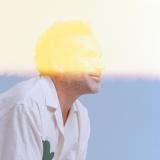
For his sixth solo album, Ezéchiel Pailhès returns with a new collection of songs infused by a sunny wandering spirit.
Within each of the twelve songs on SOL is a thread of melancholic happiness that has permeated much of Pailhès’ music and songwriting. He addresses love, the passing of time, hope, lost illusions, fleeting moments of grace, the temptation of forgetting, a need to escape, and desire. All this is
insulated by understated orchestrations that blend acoustic and electronic instrumentation with deft confidence.
The Portuguese and Brazilian concept of saudade—a form of melancholic longing and nostalgia— pervades, thanks in part to Pailhès decision to record the album in Rio de Janiero and to reinterpret some of the finest works of Música Popular Brasileira (MPB). In particular, he revisits a handful of
lesser known classics from the mid-century samba and bossa nova era—originally written or performed by talents including Vinícius de Moraes, João Gilberto, Tom Zé, Dorival Caymmi, João Donato, Os Tincoãs, and Ataulfo Alves.
The shift from Brazilian Portuguese to French and the decision to adapt rather than perform a straightforward cover versions, allows Pailhès to invent a form of prosody and euphony (the musicality and harmonious combination of words) that feels vibrant and unlike anything else in today’s French
chanson landscape.
“Some lyrics are simple translations from Portuguese, in what I’d call an expanded version. For others, I started from a single word or a single phrase and embroidered an entirely new text that carried me elsewhere,” explains Pailhès. “I allowed myself great interpretive freedom, while preserving the humanist dimension of the original songs. I’ve always been deeply moved by the way Brazilians transfigure reality through heightened emotion. I love this visceral and spontaneous country, which always seems to live through emotion. And above all, I love its music both popular and unifying,
bringing together all social classes. In that sense, it’s very political music, but even more so utopian, made by the people and for the people.”
On this new album, however, the French artist was keen to avoid cliché. Each song is therefore built around a carefully balanced interplay between Pailhès’ piano and synthesizers, alongside restrained arrangements of percussion, brass, bass, and cavaquinho (a small four-string plucked guitar). These parts were recorded in Rio de Janeiro with two musicians who regularly perform alongside the legendary Caetano Veloso—Kainã Do Jêje and Alberto Continentino—joined by Thomas Harres, Antônio Neves, Eduardo Neves, and Gabriel Loddo.
Since the 1960s, France and Brazil have shared a long-standing cultural and musical relationship. Some Brazilian artists, most famously Gilberto Gil, took refuge in France during the dictatorship years (1964–1985). But above all, French chanson quickly fell in love with the richness and ingenuity of
bossa nova and samba, translating and reinventing them in the language of Molière. Throughout the 1960s and 1970s, albums and hits by Henri Salvador, Georges Moustaki, Pierre Barouh, Pierre Vassiliu, and Claude Nougaro all drew from the MPB repertoire.
Fifty years later, with SOL, Ezéchiel Pailhès reinvents this rich Franco-Brazilian musical legacy, bringing to it a personality and modernity that stand confidently alongside those of his forbears.
On Stock and ready to ship
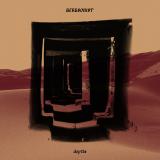
Bergsonist emerges on Dark Entries with Depths, a genre-bending 12-track LP of atmospheric and rhythmic excursions. For more than a decade, Moroccan-born Selwa Abd has been using the Bergsonist moniker to examine postcolonial identity and speculative temporalities across disparate media, including sound, image, video, and installation. She is also a key figure in New York underground music, fostering mutual aid and community support through her platforms Pick up the Flow (PUTF) and BizaarBazaar. On the 2025 album ASL أصل ⴰⵙⵍ, Bergsonist explored her Amazigh heritage using field recordings captured in Morocco. With Depths, her sixth LP, she continues the project of ancestral reconnection through sound. Abd notes: “I really use making music as therapy, not as a precious act, more as an energy release that makes me feel alive.” Depths overflows with this excess of vitality.
Tracks like “Trust the Current”, “Depths”, and “Underwater World Pursuit” showcase her singular take on diasporic techno-futurism, where James Stinson-esque atmospherics meet Moroccan rhythms. Elsewhere, “Again” and “Higher” push into coldwave territory, with icy arpeggios and electroid beats dancing beneath Abd’s ethereal vocals. But the dancefloor is not to be neglected: “Breakthrough” and “Ode to Life” spring forth with the kind of skewed peak-hour energy that only Bergsonist can bring. Artwork for Depths was designed by Eloise Leigh, and incorporates photographs by Abd and Greg Zifcak taken in Morocco. Also included is a protection poster that features an Amazigh symbol used for warding off the evil eye. Depths is an album that achieves a rare balance of elegance and DIY ethics - it is truly an ode to life.
On Stock and ready to ship

Delivering the second sermon in their Disco Gospel series, Chicago’s Sadar Bahar & Marc Davis hand-pick and re-edit two more under-the-radar disco/gospel fusion tracks for the modern dancefloor.
Both revered selectors and producers, Marc and Sadar are integral parts of Chicago's underground music scene, sharing the city’s spirit with the world. Through his own label, Black Pegasus, and the Chi Talo series, Marc has become an in-demand DJ known for his raw and eclectic sets. He joins forces with good friend, DJ’s DJ and Soul In The Hole head Sadar Bahar, whose name regularly tops the bill at some of the finest clubs and festivals around the globe.
Digging deep once again, the pair serve up two certified secret weapons from their renowned collections. Finding that sweet spot that drew out the most uplifting, powerful, and danceable elements of both gospel and disco, they shine a light on two beauties from Myrna Summers and also The Yancy Family. Tweaked and re-edited with style and consideration, they re-work the tracks with DJs and dancers in mind.
As Robert M. Marovich of Journal of Gospel Music puts it, “The rise of contemporary gospel music in the 1970s and 1980s changed the style, if not the substance, of Black sacred music. Artists, including the Yancy Family and Myrna Summers, worked within the groovy new sound to attract the attention of a generation growing up on rock, jazz, pop, and soul. Bring them into the church through the music, the maxim goes, and they’ll stay for the sermon. Likewise, these two re-edited album tracks by Sadar Bahar and Marc Davis keep the gospel music heritage alive while encouraging a brand-new generation to dance through the church doors.”
Up first, Myrna Summers ‘So Much to Live For’ channels that straight from the heart passion and collective joy that gospel embodies. Bursting with uplifting lyrics, scintillating organ melodies, and an infectious sing-along spirit, Marc and Sadar give it a club-ready DJ edit, extending it for maximum dancefloor deliverance.
The B side sees the duo work their magic on, ‘Lifted Me Higher’. Written by Kevin Yancy and taken from the Yancy Family’s 1989 album From One Christian Family to Another, it features vocals from siblings Kevin, Judy, and Rev. Darryl Yancy, along with Lois Scott. The all-star team of Chicago musicians includes Sherwin (Butch) Yancy on organ, Michael Wade on piano and synthesizer, and Richard Gibbs (longtime accompanist for Aretha Franklin) on piano and bass. With a soulful boogie flavour, dripping in slap bass and ‘80s synthlines, Marc and Sadar rework the intro so it rides out on a section of delectable instrumental grooves, before letting the glorious vocals hit home.
On Stock and ready to ship

The album from an association of Ukrainian artists called Noneside brought musicians and painters together under the famous words of the writer Taras Shevchenko and his poem "Make love, o dark-browed ones..". The painting by contemporary figurative artist Iryna Maksymova frames the trance and tech house music of such performers as Shjva (Warning, Terra Magica, Viscera), Lostlojic (Secret Feta, Infinite Pleasure, Deeptrax), Saturated Color (Neptune Discs, Nerang), Peshka (Visionquest, Re.Face, Banoffee Pies) and Yevhenii Loi. Mastered by Taras Bril, also typefaces of Ivan Tsanko-Khlibovych used in design. First of all, this is the music of love and unity, wherever you are - at home in the kitchen or on the big festival dance floor - common feelings will unite you and spin you in a crazy rhythm, and will make you understand that we are not strangers. Together we dance for a better future!
On Stock and ready to ship

Outsider techno artist Anders Enge is back with another offering on his own imprint Ett Annorlunda Hörn after recent excursions to labels such as Blank Forms and Alexi Delanos AD ltd.
From the title track’s polymetric urkraft synth lines paired with a minimal house beat to the ending, a Buchla meditation recorded at EMS in Stockholm, My Head In Flames is pure synthesizer machine groove magic. Edition of 200, hand stamped & numbered. Mastered by Andrea Merlini.
On Stock and ready to ship

Kwamé Bâ aka Fényan
Music producer, keyboardist and professional dancer based in France.
Coming from a Senegalese bloodline and growing up in Martinique (West indies), Fényan is deeply rooted in Black music. Epitome of a childhood in the West indies. A Caribbean Tale about Kreyol langage, about legacy and resilience, about turning victimhood into proactivity.
Douvan Douvan can be translated by "avant garde" in Kreyol. It is a story about People growing up and facing themselves, and their elders in order to move forward in their enlightenment.
It is your story.
On Stock and ready to ship

Like a phoenix from the ashes, or Ukrainian culture after centuries of demolition, the Kyiv based label Noneside Records is experiencing its revival and rebirth. After all, «Nothing will stop an idea whose time has come» - these words of chief Stepan Bandera make it clear to everyone: if you really burn with sincere emotion for your dream - no difficulties will stop you on the way to its realization.
Five unique tracks from Slava Los, Yevhenii Loi, Lostlojic, Luschn and aqua. - is a tech house with elements of trance with soul and passion from musicians who write music despite the war. Visualization of the whole action on the record is the picture «The hug» by the Lviv artist Oles Derega.
Slava Los makes his debut on vinyl with the beautiful track «Snus» - old school trance in the best traditions. The author now defends the borders in the ranks of the Armed Forces of Ukraine, so he decided to fulfill his old dream about the vinyl. Yevgeny Loi is also currently in the military, but this did not prevent him from making a new version of «Bounce» - a trance for a slow, erotic dance mood. Lostlojic, who is also the art director of the project, recalls the important message of «Send Me F16» in the uncompromising track of the same name, or rather in its VIP version created especially for the release.
Known to vinyl collectors for releases on Deeptrax and Infinite Pleasure. Luschn, a Kyiv legend and mega productive musician, known to tech house maniacs for his releases on Vector.Kyiv and Noneside, invites you to have fun and crazy dances with friends to his rehearsed «Ostinato Transdanz». Newbie aqua. has a unique recognizable style, where the rhythm is constantly changing in each track, nostalgic for the favorite place of childhood - near the Hydroelectric Station in Zaporizhzhia, crazy beats and steppe motifs in the track «H.E.S.».
On Stock and ready to ship

To need, to be needed, in four corners. Sleep and privacy, gases come and gases go, and now you are the only one in the room you sit in, you are one with the room you sit in, as if there are no negatives and no positives--did you know that you are an extension of your apartment? Did you know that you are in a codependent relationship with your apartment? Did you know that your apartment knows and appreciates all of your secrets?--I feel safe, which is not a new need for human beings, but a very ancient one, almost the first one. It is enacted by the possibility of sound, humming or strumming something mostly. But the quiet apartment makes its own sounds: a single longing note of birdsong told to the beat of restful breathing, the angelic insistence of tinnitus, the neighbours. Sometimes I wonder if silence means nobody's home. How still I sit. Sometimes I return to silence and feel hugged by the cool lightness of its touch, like sleeping with just a sheet in summertime. Like turning the key. Like a visit from the cat next door. Like a somnambulant ray reaching across the room, asking if you'd like to step outside. Reste Envie is a desirous message to oneself, made from a place of lived solitude: the parameters of home. Roger 3000 is a painter and a musician from Brussels, Belgium. Rest En Vie follows his 2020 release on his own imprint Tundra Records, Fiftine. His first solo EP, UFO Love Letters, was released by JJ Funhouse in 2014, followed by a contribution to Ekster's 2017 compilation album EXO3. Roger 3000 frequently collaborates with other musicians and artists, most recently with Lawrence le Doux (with whom he released the EP Chou Chou on Lexi Disques in 2021); with Carole Louis as Ondine & Turbotin for the EP Club Solitude, as well as with Bitsy Knox, with whom he released the LP OM COLD BLOOD in 2018 on Tanuki Records. Text by Bitsy Knox
On Stock and ready to ship

The Athenian producer and co-founder of WonTon records made his debut in 2020, with the album "IRINA" and his collaboration with Lena Platonos on the eponymous track, putting him on the lists of the top domestic albums of the year.
His fixation with analog synths, endless synthetic sequences and world-weary narratives of urban everyday people continues in the second LP with the, representative of his sound, title "CANCELLATION" (ΜΑΤΑΙΩΣΗ).
On Stock and ready to ship

After a couple of solo EPs to start the label, FAC-3 is comprised of four different artists, each with their own unique sound. Although a mix of up-and-coming and established producers, old and new music, there’s a common thread running through the EP.
First up, Justin Zerbst’s Waverider is an atmospheric nod to Detroit. Unearthed from a 90’s DAT, it’s built around some heavily modulated chords and 808 percussion which carry the track through to its string-laden climax.
Italian mainstay Luca Piermattei’s Venice is distinct end-of-night fare. Haunting pads sit atop a deftly-programmed bass which provides most of the movement over a tight drum groove.
While the A side has a undoubted warmth to it, the B dials things back and ups the intensity with two techier cuts. UK producer Skelter’s first release is a spacious acid groove, with the bassline taking centre stage amidst a nervy backdrop of percussive textures and reverb hits.
Finally, Brisbane’s Loif rounds things off with the simmering Digiburra; a dense, electro-tinged breakbeat aimed squarely at the dancefloor.
On Stock and ready to ship

On Stock and ready to ship

Eero Koivistoinen's debut album reissued in July Eero Koivistoinen is a wide-ranging composer and a talented musician – one of the all-time greats of the Finnish jazz. In 1965 Koivistoinen founded a trio that played avant-garde and fusion jazz together with Pekka Sarmanto and Edward Vesala. In 1967–68 he was a member of Blues Section – a group that is regarded as the first progressive rock band in Finland. Valtakunta (“Kingdom”) was originally released in 1968 and is Eero Koivistoinen’s first jazz LP. The songs of the album are based on the lyrics written by Finnish poets Pentti Saarikoski, Tuomas Anhava, Hannu Mäkelä and Jarkko Laine. The vocalists are Eero Raittinen, Seija Simola, Vesa-Matti Loiri and Koivistoinen himself. He also plays the tenor saxophone, piano and vibraphone, and is joined by a vast selection of legendary Finnish musicians, including Seppo "Baron" Paakkunainen, Pekka Sarmanto, Ronnie Österberg, Hasse Walli, Juhani Aaltonen, Antero Jakoila, Kaj Backlund, Esa Pethman, and Reino Laine among many others. All compositions are by Koivistoinen. The album reflects well the forthcoming compositional repertoire of Koivistoinen with its wide style spectrum. Valtakunta was reissued on vinyl in 2016 via Svart and the pressing quickly found a new home on the turntables of record collectors worldwide. After ten years, it's time to bring back this quintessential piece of Finnish psychedelia, avant-garde, free jazz, and progressive rock on wax and CD again.
expected to be published on 18.09.2026

Lisa O"Neill stammt aus Ballyhaise im irischen County Cavan und lebt heute in Dublin. Ihr Album Heard A Long Gone Song, erschienen auf River Lea (Rough Trade), verbindet traditionelle Folk-Lieder mit eigenen Kompositionen. Durch ihre unverwechselbare Interpretation verschmelzen alte und neue Stücke zu einem zeitlosen Ganzen. Das Album eröffnet mit einer puren, unbegleiteten Version von The Galway Shawl, gefolgt von der düsteren Ballade Along The North Strand, die durch Geige und Concertina eindringlich untermalt wird. Ein weiterer Höhepunkt ist das bewegende Duett The Factory Girl mit Radie Peat von Lankum. 2018 trat O"Neill bei Shane MacGowans 60. Geburtstag in der National Concert Hall in Dublin auf. Auf dem Album interpretiert sie zudem Lullaby Of London von The Pogues, dessen Textzeile dem Album den Titel gab. Zu ihren eigenen Liedern gehören Rock The Machine, das die Folgen der Mechanisierung für ehemalige Hafenarbeiter in Dublin thematisiert, sowie Violet Gibson, die Geschichte einer Irin, die 1926 ein Attentat auf Mussolini verüben wollte. Mit diesen Stücken verleiht O"Neill oft übersehenen Menschen und Geschichten eine Stimme. Aufgenommen in einem ländlichen Studio nahe dem Loiretal und produziert von David Odlum und Lisa O"Neill, knüpft das Album an den Erfolg von Pothole In The Sky (2016) an. Es ist eine zugleich politische, poetische und zutiefst persönliche Folk-Platte, deren Lieder zeitlos wirken.
expected to be published on 04.09.2026
5 x LP
60-page hardback book
Black vinyl
Printed labels
Printed inners
Slipcase
A2 poster
Slipmat
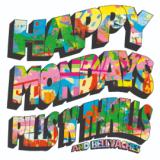
Originally released in 1990 by Happy Mondays, Pills ‘n’ Thrills and Bellyaches captured the chaotic, euphoric spirit of the Madchester movement, blending indie rock, acid house rhythms and funk grooves into a sound that helped reshape British alternative music. Featuring era-defining tracks such as “Step On” and “Kinky Afro,” the record became both a commercial breakthrough and a cultural snapshot of a generation fuelled by dance culture and Northern nightlife.
More than three decades later, its grooves, attitude and genre-blurring production still resonate strongly with contemporary audiences, influencing modern indie and electronic artists alike.
5LP Edition. All original audio remastered from Factory Records master tapes. Includes original album, Hallelujah + Madchester Rave On, Baby Big Head Bootleg Album (Live at Elland Road, 1991), classic and new remixes, 60-page hardback book with brand new essays from James Brown and Central Station designers, fold-out A2 tour poster and Madchester slipmat.
expected to be published on 21.08.2026
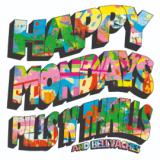
Originally released in 1990 by Happy Mondays, Pills ‘n’ Thrills and Bellyaches captured the chaotic, euphoric spirit of the Madchester movement, blending indie rock, acid house rhythms and funk grooves into a sound that helped reshape British alternative music. Featuring era-defining tracks such as “Step On” and “Kinky Afro,” the record became both a commercial breakthrough and a cultural snapshot of a generation fuelled by dance culture and Northern nightlife.
More than three decades later, its grooves, attitude and genre-blurring production still resonate strongly with contemporary audiences, influencing modern indie and electronic artists alike.
1LP Red Edition. All original audio remastered from Factory Records master tapes. Includes original album and brand new liner notes by James Brown.
expected to be published on 21.08.2026

Eero Koivistoinen's debut album reissued in July Eero Koivistoinen is a wide-ranging composer and a talented musician – one of the all-time greats of the Finnish jazz. In 1965 Koivistoinen founded a trio that played avant-garde and fusion jazz together with Pekka Sarmanto and Edward Vesala. In 1967–68 he was a member of Blues Section – a group that is regarded as the first progressive rock band in Finland. Valtakunta (“Kingdom”) was originally released in 1968 and is Eero Koivistoinen’s first jazz LP. The songs of the album are based on the lyrics written by Finnish poets Pentti Saarikoski, Tuomas Anhava, Hannu Mäkelä and Jarkko Laine. The vocalists are Eero Raittinen, Seija Simola, Vesa-Matti Loiri and Koivistoinen himself. He also plays the tenor saxophone, piano and vibraphone, and is joined by a vast selection of legendary Finnish musicians, including Seppo "Baron" Paakkunainen, Pekka Sarmanto, Ronnie Österberg, Hasse Walli, Juhani Aaltonen, Antero Jakoila, Kaj Backlund, Esa Pethman, and Reino Laine among many others. All compositions are by Koivistoinen. The album reflects well the forthcoming compositional repertoire of Koivistoinen with its wide style spectrum. Valtakunta was reissued on vinyl in 2016 via Svart and the pressing quickly found a new home on the turntables of record collectors worldwide. After ten years, it's time to bring back this quintessential piece of Finnish psychedelia, avant-garde, free jazz, and progressive rock on wax and CD again.
expected to be published on 14.08.2026

Ike Quebec’s Bossa Nova Soul Samba put the saxophonist’s unique spin on the bossa nova craze sweeping the jazz world in 1962. Ike’s sensual tone imbues the breezy Brazilian vibe with a soulful dose of the blues to create a masterpiece featuring Kenny Burrell, Wendell Marshall, Willie Bobo, and Garvin Masseaux.
This stereo Tone Poet Vinyl Edition was produced by Joe Harley, mastered by Kevin Gray from the original analog master tapes, pressed on 180g vinyl at RTI, and packaged in a deluxe tip-on gatefold jacket.
expected to be published on 07.08.2026

Black Vinyl[20,97 €]
Jetzt mit Fettfleck Records (Loikaemie) unterwegz! SOKO LINX melden sich zurück! Mit einem Knall? Mit einem Konzept für Weltfrieden? Nicht ganz, aber immerhin mit Album #3! Dieses entstand in einer Zeit der masziven Veränderung und des Umbruchs. 2024 verstarb völlig unerwartet ein enger Freund und wichtiger Wegbegleiter der Band. Drummer und Gründungsmitglied NiXS KOOL verliesz nach einer Zeit der Ungewiszheit die Band. Die Aufnahmen fanden nicht wie zuvor innerhalb von zwei Wochen in Leipzig statt, sondern in unterschiedlichen Sessions in zwei Berliner Studios auf zwei Jahre verteilt. ACEY AVALON unterstützte bei den Gitarren- und Schlagzeugaufnahmen. Er spielte aus Ermangelung eines Schlagzeugers auch die Drums ein. Aus diesen Gründen bedeutet PUNK FÜR LEUTE, DIE PUNK HASZEN sowohl Abschlusz als auch Neuanfang. Abschlusz, auch weil dieses Album eine Trilogie vervollständigen wird. Neuanfang, auch weil mit dem nun gefundenen neuen Drummer ONLi KOXS frische Einflüsze und Impulse SOKO LiNX bereichern werden. Mit Features von THE DEAD END KIDS & WIZO! Nach den schon reichlich gefeierten Singelz "Jetzt bitte keine Neiddebatte!", "Kleiner Demokrat, was nun?" und "Gewaltenteilung" kommt vorab noch "Zeitmanagement" mit WIZO als Gast dabei. Und kurz danach kann mensch alle 15 neuen SOKO LINX-Trackz komplett haszen! Oder lieben! Schwarzes Vinyl im Gatefold-Sleeve mit 8seitigem 12"-Booklet und bedruckter Innenhülle oder farbiges Vinyl (Marbled Lilac-Violet-White) genauso plus als Deluxe Edition mit Patch, SOKO LINX-Poster & welterstes Analog-Meme inklusive persönlichen Grusz!
expected to be published on 07.08.2026

LTD COL. DELUXE ED[26,68 €]
Jetzt mit Fettfleck Records (Loikaemie) unterwegz! SOKO LINX melden sich zurück! Mit einem Knall? Mit einem Konzept für Weltfrieden? Nicht ganz, aber immerhin mit Album #3! Dieses entstand in einer Zeit der masziven Veränderung und des Umbruchs. 2024 verstarb völlig unerwartet ein enger Freund und wichtiger Wegbegleiter der Band. Drummer und Gründungsmitglied NiXS KOOL verliesz nach einer Zeit der Ungewiszheit die Band. Die Aufnahmen fanden nicht wie zuvor innerhalb von zwei Wochen in Leipzig statt, sondern in unterschiedlichen Sessions in zwei Berliner Studios auf zwei Jahre verteilt. ACEY AVALON unterstützte bei den Gitarren- und Schlagzeugaufnahmen. Er spielte aus Ermangelung eines Schlagzeugers auch die Drums ein. Aus diesen Gründen bedeutet PUNK FÜR LEUTE, DIE PUNK HASZEN sowohl Abschlusz als auch Neuanfang. Abschlusz, auch weil dieses Album eine Trilogie vervollständigen wird. Neuanfang, auch weil mit dem nun gefundenen neuen Drummer ONLi KOXS frische Einflüsze und Impulse SOKO LiNX bereichern werden. Mit Features von THE DEAD END KIDS & WIZO! Nach den schon reichlich gefeierten Singelz "Jetzt bitte keine Neiddebatte!", "Kleiner Demokrat, was nun?" und "Gewaltenteilung" kommt vorab noch "Zeitmanagement" mit WIZO als Gast dabei. Und kurz danach kann mensch alle 15 neuen SOKO LINX-Trackz komplett haszen! Oder lieben! Schwarzes Vinyl im Gatefold-Sleeve mit 8seitigem 12"-Booklet und bedruckter Innenhülle oder farbiges Vinyl (Marbled Lilac-Violet-White) genauso plus als Deluxe Edition mit Patch, SOKO LINX-Poster & welterstes Analog-Meme inklusive persönlichen Grusz!
expected to be published on 07.08.2026

On his new full-length album, d00mscrvll. Diplo continues his journey into the lawless, genre-blending land of phonk music, a genre that fuses Memphis rap, lo-fi hip hop and electronic dance influences into something dark, hypnotic and deeply rhythmic.
Across this project, he’s joined by Three 6 Mafia members Juicy J and Project Pat, as well as genre stalwarts Odetari, Kordhell, 1nonly, DVRST and many more.
expected to be published on 24.07.2026

Ondanaconda does not compose with the jaw harp, but through it. For their self-titled debut album, the quartet turns this lamellophone, often perceived as archaic, into the record"s sole sound source. Found for centuries across continents, from Asia to Europe, the jaw harp is played against the teeth, using the mouth as a resonating chamber, shaping sound through breath and bodily movement. Here, amplified, prepared and sometimes pushed to its limits, it becomes percussion, bass, drone and texture - a true mouth synthesizer with vast possibilities. Between performance and trance, Ondanaconda crafts an unidentified sonic object, somewhere between collective ritual and raw electroacoustic experiment. Each piece emerges from specific combinations of instruments, exploring timbral affinities and rhythmic or harmonic potentials, while leaving room for drift and improvisation. Repetition acts as an unstable engine, bending patterns until they morph into something else. Together, Laurent Bruttin, Antoine Läng, John Menoud and Daniel Zea weave a dense, shifting mass where individual voices dissolve into an organic, almost hallucinatory polyphony. Conceived as a continuum, the album unfolds as a hypnotic flow, a physical and immersive music that moves from mouths to bodies, saturating the surrounding space. A radical UFO, at the crossroads of concert, performance and sound installation.
expected to be published on 03.07.2026

expected to be published on 26.06.2026

Quartier Celeste is a unique project in today’s landscape: here’s Premier Voyage, an album that goes beyond music to offer a complete universe, almost an autonomous mythology, which unfolds through music, lyrics, videos, and a collection of visual artifacts.
It all began with a revelation: the discovery of NASA’s sound archives, recordings collected during space missions to the outer
reaches of the solar system. What can be heard as we approach the Sun? What sound does a black hole produce when its electromagnetic activity is translated into audible frequencies? What does Jupiter's fifth moon whisper through the instruments of
a probe?
From track to track, we drift through an immense space — sometimes calm, almost meditative, sometimes shaken by cosmic storms. We encounter supernovas, cosmic rays, magnetic fields, stellar winds, and clouds of antimatter. The infinitely large rubs shoulders with the infinitely intimate: the fragile, close voice offers a human counterpoint to these titanic forces. The whole is mystical, contemplative, punctuated by bursts of noise, areas of shadow, and flashes of light amid vast areas of darkness.
expected to be published on 12.06.2026
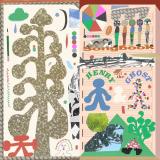
On his new album, Micha Acher rearranged compositions for bands such as Tied & Tickled Trio and Ms. John Soda from previous years.
Why are we interested in ghosts? What fascinates us about the eerie? According to cultural theorist Mark Fisher, the allure that the eerie possesses is not captured by the idea that we „enjoy what scares us“. It has, rather, to do with a fascination for the outside. For that which lies beyond standard perception, cognition or experience, as he writes in his book „The Weird and the Eerie“.
In fact, also none of the 15 pieces from Henry and the Ghost is really scary. On the contrary, they all feel strangely familiar. Like revenants or doppelgängers, which in fact they are. They have all been released before. But in a different form. In different line-ups. With different band projects such as Tied & Tickled Trio, The Notwist or the Alien Ensemble.
With the „Songbook“, Micha Acher's aim was, as he says, to find out how the familiar pieces sound in a chamber music instrumentation. Therefore he met with Theresa Loibl (bass clarinet, piano), Timm Kornelius (bassoon), Markus Rom (guitar, banjo, electronics) and Simon Popp (drums, percussion) in his living room for a musical séance in the summer of 2022. The séance lasted two days. Afterwards, Markus Rom (Oh No Noh), added some haunting electronical ideas.
The mood of most of the pieces is melancholic. There are surprising twists and siren-like melodies. Just as ghost stories should be. However, most of the songs sound very light-footed. With their feet in pop, folk, jazz and classical music. Pieces such as „Johanna“ with its wheezing harmonium and spooky piano, or the dreamy „Modest Farewell“ on the other hand have a cinematic flair. Immediately faces and scenes arise in the mind. But at the beginning, there is „Hamlet“. It starts with ghostly electronics and merges into a calm, almost classical guitar piece. Could it be that the ghost of Hamlet's father is hiding between the strings?
„34E“ begins with a banjo. Then the deep humming of Micha Achers sousaphone and the other brass instruments kick in. In the slow, solemn „Aelita“, the sousaphone starts a dialogue with a children's piano. With the banjo and the other wind instruments acting as mediators. The title of „All Tomorrow's Past“ brings Velvet Undergrounds „All Tomorrow's Parties“ to mind. Another ghost from the past. What connects the two pieces is free-floating percussion, which accompanies the sumptuous melodies.
„Arc“ takes us on an exhilarating voyage at sea, with the sousaphone providing powerful propulsion. Towards the end, things get quite turbulent. With the clarinet stirring up the water, before the sea calms down again. „Henry and the Ghost“ is characterised by a ghostly mood change between major and minor. In „Radio Four“ the banjo with its stoic chords keeps the lively brass section in check. „Solid Ground“ is imbued with melancholy. „Space Minor“ takes us into outer space, with the power of sousaphone and percussion.
„Tomorrows“ is filled with cautious optimism. And the concluding „Nordlead“ turns out to be a revenant of the instrumental „N.L.“ from The Notwist's legendary album „Shrink“ from 1998. In the new version, the piece sounds like a distant echo. One that also brings to mind how Micha Acher's music has evolved. Which new worlds he explored and opened up since the nineties. And yet Acher's signature is recognisable in every single note of this fascinating „Songbook“.
expected to be published on 12.06.2026

Debut vinyl release from San Francisco indie pop trio The Kitchenettes. After a quietly beloved 2024 demos tape, The Kitchenettes return with their first vinyl release: a sparkling three-song 7" that updates the timeless indie pop template of Marine Girls, The Cat's Miaow, and Lois for 2026. Across the three tracks, the band moves gracefully between tender, jangling pop and brighter, upbeat moments, revealing an impressive range of mood, tempo, and texture. Formed by Morgan (The Umbrellas, Telephone Numbers) with Emily and Sequoia (The Snogs),writing collaboratively and trading vocal duties, the band crafts effortlessly charming indie pop built on jangly guitars, loose harmonies, and a homespun DIY spirit. Short, sweet, and full of heart, it's a perfect introduction to one of San Francisco's most charming new indie pop groups.
expected to be published on 05.06.2026
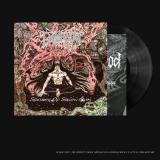
New vinyl colorways of Demigod's Slumber Of Sullen Eyes out in May 2026 The crown jewel of Finnish Death Metal, Slumber of Sullen Eyes by Demigod, reissued in a band-approved edition. Features a vinyl master from the original source by Noise for Fiction, comes in a gatefold sleeve with a booklet featuring a lengthy feature by Hippo Taatila and some visual memorabilia. Available on Svart exclusive Pink/Green/Black Marble edition, Transparent Red edition and Classic Black edition. Together with bands like Demilich, Abhorrence, Disgrace, Xysma and Sentenced, Demigod from the wastelands of Loimaa, southern Finland, put Finland on the map in the global death metal scene in the late 80's and early 90's. Having risen to underground fame with their demo Unholy Domain, Slumber of Sullen Eyes was a hugely expected debut album. When it was finally released in 1992 after a complicated creation process at Tico-Tico Studios in northern Finland, it was received with open arms and drooling excitement by the then very active underground death metal scene. That scene was, however, short lived,and by 1994 pretty much every band had switched from death metal to something else entirely. What was left after the bands had left the building was a number of classic albums that constitute the legacy of Finnish Death Metal. Among them, Slumber of Sullen Eyes is one of the most original and ferocious. There was nobody like Demigod.
expected to be published on 29.05.2026

New vinyl colorways of Demigod's Slumber Of Sullen Eyes out in May 2026 The crown jewel of Finnish Death Metal, Slumber of Sullen Eyes by Demigod, reissued in a band-approved edition. Features a vinyl master from the original source by Noise for Fiction, comes in a gatefold sleeve with a booklet featuring a lengthy feature by Hippo Taatila and some visual memorabilia. Available on Svart exclusive Pink/Green/Black Marble edition, Transparent Red edition and Classic Black edition. Together with bands like Demilich, Abhorrence, Disgrace, Xysma and Sentenced, Demigod from the wastelands of Loimaa, southern Finland, put Finland on the map in the global death metal scene in the late 80's and early 90's. Having risen to underground fame with their demo Unholy Domain, Slumber of Sullen Eyes was a hugely expected debut album. When it was finally released in 1992 after a complicated creation process at Tico-Tico Studios in northern Finland, it was received with open arms and drooling excitement by the then very active underground death metal scene. That scene was, however, short lived,and by 1994 pretty much every band had switched from death metal to something else entirely. What was left after the bands had left the building was a number of classic albums that constitute the legacy of Finnish Death Metal. Among them, Slumber of Sullen Eyes is one of the most original and ferocious. There was nobody like Demigod.
expected to be published on 29.05.2026

Fast At Work touches down with its fifth flight, and it’s come a long way. Hailing from Kyoto, Japan, Stones Taro delivers three original productions that move through dubstep, breakbeat and the restless spaces in between — a record that carries the weight and precision you’d expect from one of the most in-demand producers to emerge from Japan’s underground in recent years.
Order now and we will order the item for you at our supplier.