When it comes to Latin soul, Bobby Matos And The Combo Conquistadores 'Tema De Alma Latina', has to be up there as one of the heaviest tracks ever recorded. This much-loved Latin workout has been rocking dancefloors for years with its infectious, driving energy and pulsating rhythms. Released in 1968, the 'My Latin Soul' album on Philips Records now receives a welcome reissue on Mr Bongo. It’s a sheer delight throughout and a premier example of the Nu Yorican sound that was thriving in New York in the ‘60s.
From a young age, the Bronx, New York-born Latin jazz percussionist Bobby Matos found inspiration through the conga drum masters Mongo Santamaría and Patato Valdez (who he had informal backstage lessons with) and timbales legends Willie Bobo and Tito Puente. Bobby was drawn into New York's club scene and began playing in the vibrant ‘60s beat / bohemian Greenwich Village cafes, followed by stints in a wide range of different venues. These included Bronx dance halls and after-hours clubs in El Barrio, through to the elegance of Carnegie Hall, Central Park concerts, and off-Broadway theatres.
Later relocating to Los Angeles, Bobby played an important role in spreading Latin music far and wide. He became an inspiration to many on the jazz dance and acid jazz scenes in the ‘80s / '90s where his recordings were picked and played, becoming prized collector items amongst DJs. The track 'Tema De Alma Latina' was immortalised as a classic for many, after being featured on the Gilles Peterson’s Street Sounds Jazz Juice 5 compilation in 1987. A captivating listen from start to finish, the album features other treats such as the dynamic album opener ‘Nadie Baila Como Yo’, the blazing flute led 'Mambo Maxims', and the blistering piano shuffler 'Raices'.
A truly iconic Latin classic whether you’re being reunited with it like an old friend or discovering it as a fresh new find.
Cerca:mambo street
- 1
- A1: Arsen Dedić - Onaj Dan
- A2: Zdenka Vučković - Bosonoga
- A3: Bogdan Dimitrijević - O Barquinho
- A4: Nino Robić - Jedna Nota (Samba De Uma Nota Só)
- A5: Milan Bačić - Hō-Bá-Lá-Lá
- B1: Beti Jurković - Ljuljačka
- B2: Elda Viler - Senca Tvojega Nasmeha (The Shadow Of Your Smile)
- B3: Arsen Dedić - Često Te Sretnem
- B4: Bogdan Dimitrijević - Hershey Bar
- B5: Zdenka Vučković - Izgubljeno (Desafinado)
- C1: Drago Diklić - Moja Draga
- C2: Krunoslav Kićo Slabinac - Tko Si Ti
- C3: Plesni Orkestar Rtz - Plava Krizantema
- C4: Gabi Novak I Radojka Šverko - Za Mene Je Sreća (Samba Da Rosa)
- C5: Dubrovački Trubaduri - Ljuven Zov
- D1: Vikica Brešer - Sunčano Ljeto
- D2: Drago Diklić - Nitko Na Svijetu
- D3: Višnja Korbar - Subotnje Veče
- D4: Arsen Dedić - Večeras
- D5: Jimmy Stanić & Glenn Rich Orchestra - The Girl From Ipanema
Rich musical history of Yugoslavia reveals a long-lasting love for the music of Latin America.
Entwined in Afro-Cuban rhythms, ballrooms were shakin', swayin' and swingin', gathering musicians who were heavily into jazz bands and orchestras, most notably in Ljubljana, Zagreb, and Belgrade. Jazz could be heard on the streets of Split way back in 1919 when dancing became a symbol of freedom. Radio was the most loved household item, newest sheet music was in demand and collecting records was hip like today. In the aftermath of Second World War, jazz went underground but little by little, things changed and Ella, Satchmo, Dizzy and Miles came to visit, among others. Music festivals shaped the music for entertainment and variety of popular styles showed influences from all over the world. In the early sixties, one particular rhythm crashed on the coast of the Adriatic Sea: the rhythm of bossa nova!
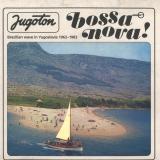
In the whirlwind of various musical styles, Latin American music still played important part of the scene in the early sixties Yugoslavia. Beguine, tango, rhumba, samba, calypso, mambo and cha-cha-cha all found their place on the festivals inspired by famous Sanremo, festival of Italian popular song that largely shaped the musical taste of Europe. It was the era of instrumental rock, R & B and rock'n'roll - sounds of "imperialist America" now played freely on imported and hand-made electric guitars. While dancing halls had been turning into concert venues, bossa nova has come! Eydie Gorme with Blame It on the Bossa Nova and Paul Anka with Eso Besso (That Kiss!) tried to make us learn some new dance moves but it was Joao Gilberto's gentle singing and his new way of playing samba songs, along with Tom Jobim's modern dissonant harmonies and poetry of Vinicius de Moraes that created the magic. When American alto saxophonist and flautist Bud Shank visited Zagreb and Ljubljana in 1963 (with Boško Petrović in his quintet) "it was the first time we heard bossa nova!" remembers Stjepan Braco Fučkar. Jugoton, the biggest record company in Yugoslavia, released 4-track EP Bossa Nova by Bogdan Dimitrijević and his ensemble that same year! While not being fully accepted or understood completely, the archives of Jugoton reveal to us various interpretations of this new trend from their vast catalogue.
- Que Pasa
- Oye
- Groovy Samba
- Descarga China
- Bomba Chévere
- Para Pello
- The Jody Grind
- Como Fue
- Descarga China (Groove Version)
Manteca’s 2014 album, first time on vinyl. Manteca, the London Latin jazz/salsa funk combo, are back with a first-time vinyl release of their brilliant digital album “Oye” from 2014. “Oye” is a collection of heavy-duty Latin music that reaches well beyond the standard salsa or Cuban dance-band style, appealing to anyone and everyone, from mambo dancers to B-boys, jazz brothers to soul sisters! Led by Colombian singer Martha Acosta and bassist Javier Fioramonti, who have played with everyone from Roberto Pla and Candela, to Alex Wilson’s groups and Salsa Celtica, as well as backing Latin legends such as Joe Bataan, Jack Costanzo, Henry Fiol and Azuquita, this band really cooks! “Que Pasa” is smoking Latin funk, this will get your head nodding and foot tapping for sure.“Oye”, a lovely mid-tempo Afrobeat/Latin jazz fusion number with punching brass and super-funky kit playing. There are three cover versions on the album: Horace Silver’s “The Jody Grind”, a 1960s Blue Note Records soul jazz classic. Manteca does it justice, taking the original and turning it into a heavy Mongo Santamaria style funky Latin soul belter. Sergio Mendes’s “Groovy Samba” is also given the 1960s Mongo “Watermelon Man” style Latin soul jazz treatment. Very hip arrangement, and some fantastic brass soloing in there too. The last one is a brave choice. It’s the timeless bolero standard “Como Fue”, which the band plays beautifully. “Para Pello” (“For Pello”), a conga-style big percussive beat that evolved from Afro-Cuban street carnivals. Secondly, “Bomba Chevere”, a blend of Puerto Rican bomba and Colombian cumbia. The big Afro-Cuban track of the album is “Descarga China”, which has two different mixes. One is a descarga funk mix with some heavyweight kit playing and smoking trumpet soloing, while the other is a more straight-ahead Latin jam with Javier’s upright bass playing underpinning the whole number in a very Cachao way. Big shouts to the whole band, which features some of the best musicians from the London Latin music scene of the last three decades. These cats are as good as you’ll get in Latin music from anywhere across the world.This London Latin music gem has been crying out for a vinyl release for over a decade. At last, it's here. Slap it on the turntable, drop the needle on track one, turn the volume up, press play and be ready to dance. Standing still is NOT an option! DJ Lubi (One Jazz / Totally Wired Radio)
- A1: Early Bird
- A2: Wild Mow-Mow
- A3: Mambo No.6
- A4: Crystal Memories
- B1: My Secret Beach
- B2: Soradoshiroso
- B3: Palm Street
- B4: Le Premier Mars
T-WAVE (original release date: 1 June 1980): 180g vinyl weight, clear orange vinyl.
Remastered & cut by Alex Wharton (Abbey Road Studios, London).
Sixth original album. The album is bursting with exhilarating funky sounds, including ‘Early Bird’, which starts with the sound of an alarm,
and ‘My Secret Beach’, a commercial song for the Mazda Familia.
The Irish producer t-woc makes his return to Rudimentary Records with Scenes, Journeys & Colors, his second LP for the label. The bones of the album was made during the 'quiet time' starting with a track that didn’t make the cut on this release but had provided the blueprint to that project titled ‘Street Soul Osaka’. It was a recent chance encounter with a lone boombox playing actual street soul on a pavement in Osaka that it became clear the project needed to be released and the album was completed in Dublin in 2024.
This album is crafted through a blend of samples, live instrumentation, field recordings and studio experimentation. The tracks are a mix of the slow and low, interspersed with minimal ambient pieces with a pronounced dub undercurrent, and a tip of the hat to the cosmos. There are also some vocoders and a fair dose of weirdness.
Since his 2016 LP for Rudimentary - ‘Sentinelas’, t-woc has released with Strangelove Records, Emotional Response, Macadam Mambo amongst others and is a regular contributor to DJ Sofa’s Elsewhere compilation series.
- A1: Manhattan Mambo 2:07
- A2: Baila Boogaloo 2:16
- A3: Latin Shindig 1:51
- A4: Can't Stop The Boogaloo 2:33
- A5: Grease My Palm 2:20
- A6: Hip Street Boogaloo 2:27
- A7: Super Soul Bossa 2:30
- B1: Funky Amigo 2:32
- B2: Bolero For The Soul 2:30
- B3: Heavy Hands 2:31
- B4: Latin Surf Shack 1:50
- B5: Latin Sweet Spot 2:24
- B6: Vamanos! 1:49
- B7: Do The Hippy Shake 2:13
- B8: Swing To The Mambo 1:43
* The legendary music publisher KPM, famous for its iconic music library catalogue, commissioned a group of session musicians in 2018 to write and record an authentic tribute to the early 70’s Latin Soul Boogaloo blending heavy funk/soul with the infectious latin rhythms (cha cha, mambo, rumba and bossa nova)
* Although not originally intended for commercial release, this vinyl LP is a limited pressing of just 500 copies and features 15 new songs inspired by pioneers such as Tito Puente, Ray Barretto and Machito.
* Ray Lopez and his band recorded the session in the traditional way for this style using vintage microphones direct to analogue tape to get that classic authentic tone.
- A1: Rock Around The Clock
- A2: Shake, Rattle And Roll
- A3: See You Later, Alligator
- A4: Dim, Dim The Light (I Want Some Atmosphere)
- A5: Happy Baby
- A6: Razzle Dazzle
- A7: The Saints Rock‘n‘roll
- A8: Burn That Candle
- A9: Mambo Rock
- B1: Don‘t Knock The Rock
- B2: Rockin‘ Through The Rye
- B3: Rock-A-Beatin‘ Boogie
- B4: Thirteen Women (And Oly One Man In Town)
- B5: Birth Of The Boogie
- B6: Hide And Seek
- B7: R-O-C-K
- B8: Two Hound Dogs
- B9: The Paper Boy (On Main Street, Usa)
Mit Hits wie “Rock Around The Clock” , “See You Later Alligator”, “Shake Rattle And Roll” hat sich Bill Haley in die Geschichtsbücher des Rock’n’Roll geschrieben.
Für alle Vinylliebhaber gibt es ab sofort eine Zusammenstellung mit allen Hits der Rock’n’Roll Legende.
With hits like „Rock Around The Clock“, „See You Later Alligator“, „Shake Rattle And Roll“, Bill Haley made his mark in the annals of rock‘n‘roll. „See You Later Alligator“, „Shake Rattle And Roll“, Bill Haley has made his mark in the records of rock‘n‘roll.
For all vinyl lovers, a compilation with all the hits by the rock‘n‘roll legend is now available.
- 1: Manu Dibango - Groovy Flute
- 2: Tenorio Jr. - Nebulosa
- 3: Mark Murphy - Why Don't You Do Right
- 4: Illinois Jacquet - Mambocito Mio
- 5: Frank Minion - Bongo Blues
- 6: Blue Mitchell - Mi Hermano
- 7: Lorez Alexandria - I'm Whishin
- 8: Marian Mcpartland - Coming Home Baby
- 9: Oliver Nelson - 125Th Street & 7Th Avenue
- 10: Ella Fitzgerald, Ernie Heckscher Big Band & Tommy Flana
- 11: Orchester Roland Kovac - Milky Way
- 12: Gene Ammons - Pagan Love Song
- 13: The Monty Alexander Trio - Monticello
- 14: Mel Tormé - Right Now!
- 15: Richard "Groove" Holmes - Six Million Dollar Man Theme
- 16: Dizzy Gillespie - For The Gypsies
- 17: Michel Sardaby - Welcome New Warmth
- 18: Art Farmer Septet - Mau Mau
- 19: Frank Minion - Watermelon
- 20: The Ibrahim Khalil Shihab Quintet - Before The Rain And
- 21 0: Gabor Szabo - Galatea's Guitar
- A1: Unforgettable
- A2: Mona Lisa
- A3: When I Fall In Love
- A4: Let There Be Love
- A5: Nature Boy
- A6: On The Street Where You Live
- A7: Fly Me To The Moon
- A8: Smile
- B1: Papa Loves Mambo
- B2: Straighten Up And Fly Right
- B3: The Very Thought Of You
- B4: (Get Your Kicks On) Route 66
- B5: Too Young
- B6: Autumn Leaves
- B7: Stardust
- B8: Nat King Cole - Quizas, Quizas, Quizas (Perhaps, Perhaps, Perhaps)
Nat ‘King’ Cole was born in Alabama in 1917. He began his musical
career in the 1940s with his own Jazz trio, but his skills as an innovative Jazz Pianist soon became overshadowed by his skills as a ballad singer. Cole’s phrasing, his uncanny ability at interpreting a song and his sheer style made the whole business seem natural and effortless. Smoother than Sinatra, cooler than Crosby, when it came to crooners, Nat Cole truly was the King. His mellow approach influenced not only other ballad singers, but a whole generation of 1960s soul singers. This 16-track ‘greatest hits’ collection is a superb selection.
After his debut LP ‘Temmuz’, released at the beginning of last year, Houschyar is back on Macadam Mambo with his new album: a less danceable but more personal opus. Being locked up on the rooftops of Istanbul, Houschyar repurposed a satellite dish, making use of its perfectly round and concave shape to create strange metallic-sounding percussive loops which he painted with sonic atmospheres that contained diverse shades of blue. ‘Mavi’ is an introspective pallet of emotions condensed into 7 hybrid compositions highly improvised which divagate into a very jazzy modern state of mind, jamming with pianos, electronic organs and rhythm boxes to produce another type of spiritual music that sounds absolutely timeless. In a very prolific year - with his release with DJ Sofa and Okay Temiz on Music from Memory and the initial EP of Raphael Kosmos’ newborn label Späti Records -, Marius Houschyar leaves no doubt about the level of his talent and him being part of a new generation of artists to keep a close eye on. To discover as soon as possible!
Turned on by a new dawn of chemical love, Sydney dance-funk combo Bellydance laid down their sampledelica blueprint in 1991, thinking in parallel with Weatherall's revelatory work with Primal Scream. A candy flip of streetsoul, festival jam band and Chip Monck's cautionary brown acid address, 3 Days Man! was primed for open fields and discotheques, in an age when the deejay was royalty.
With an elastic lineup that boasted up to 9 members, Bellydance synchronised more with the club scene than the city's straight-ahead pub rock racket, naturally recruiting hometown heroes Peewee and John Ferris to remix their multi-track concoction. A certified party closing anthem, the brother's sun-smacked breakbeats elevate a collective consciousness beyond the clouds.
Originally issued on Regular Records sub-label Boomshanka Music as a precursor to their album One Blood, the now sought-after 12" sports characteristic artwork from Mambo visionary and Mental As Anything co-founder Reg Mombassa. Instigated by Sydney selector Ben Fester, this Efficient Space reboot arrives fashionably late to Woodstock's 50th anniversary but just in time to help soothe universal division.
- A1: Ray Charles - I Got A Woman
- A2: Horace Silver & The Jazz Messengers - The Preacher
- A3: Count Basie & His Orchestra - Jumpin At The Woodside Feat Dave Lambert, Jon Hendricks & Annie Ross
- A4: Miles Davis - Au Bar Du Petit Bac (Bo Ascenseur Pour L\'Echafaud)
- A5: Chet Baker - The More I See You
- A6: Elek Bacsik - Take Five
- A7: Anita O\'Day - Rock\'N Roll Blues
- B1: Charles Mingus - Boogie Stop Shuffle
- B2: Sarah Vaughan - All Of Me
- B3: Cannonball Adderley - A Little Taste
- B4: Dinah Washington - You Let My Love Grow Cold Feat Quincy Jones & His Orchestra
- B5: Sonny Rollins - Mambo Bounce
- B6: Carmen Mcrae & Dave Brubeck - Oh, So Blue (Live At Basin Street East)
- B7: Art Blakey & The Jazz Messengers - Ill Wind
Celebrating the photography of Robert Doisneau, 25 years after his death. Discover the new Esprit Robert Doisneau Collection, associating songs with his famous images of Paris.
Famous all over the world, the photographer’s work accurately represents the soul of Paris. This collection of ten LPs are all pressed on 180g coloured vinyl.
The music on this EP was conceived in China, between 1989 and 1993. The original tracks were mixed to DAT in real time, in a small neighbour-proof studio inside my apartment in Macau, a 19th floor with a view to the hurricanes. There's a small, unexpected or improbable story behind each track, some little magic fused with the local atmosphere, certainly guaranteeing their lasting authenticity 25 years later.
TAIPEI DISCO
Late 80s Guangzhou was an exotic city where the traditional past coexisted in harmony with the present and even already with the future.
I'd rather spend my weekends in Guangzhou than diving into Hong Kong consumerism - as most ex-pats in Macau did. I took a cab at the border and travelled 150 Km through chaotic roads with family and friends until reaching the hot, humid, mega South China metropolis.
We ate on street joints in the evenings, went on to a karaoke bar and ended up at Taipei Disco, the only proper club in town. All the others were inside hotels and played generic music or they were seedy, sleazy, smoky cabarets.
Taipei Disco used to be a cinema and played cantonese pop music and anglo-saxon pop/rock (that was new). The spacious dance floor was generously lighted, the atmosphere was airy and modern. Boys and girls were in the habit of dancing in pairs, one in front of the other, observing a respectful yet sensual distance. When the girl took a few steps back, the boy went along and vice versa. With legs and feet (more than the upper bodies) synchronized with the music, they never exceeded in extroversion. Cool.
I always carried a MicroComposer and a portable DAT recorder in my travels through China and weekends in Canton. Any spontaneous musical idea was imediately recorded and memorized. The MicroComposer allowed multitrack recording, which was very handy on the road. Based on the emphatic choreography of Taipei Disco's dancers, i started to compose a rhythm track while sitting at a table, with headphones, listening to Cantopop in the background. As if by magic - not a rare occasion in music - everything began fitting together. Odd as it may seem, the track ended up sounding more germanic (Kraftwerkian) than Cantonese pop.
The story ends in a circle: the cantonese DJ at Taipei Disco, whom i used to ask to play certain records, wanted to play my music at the disco when it was basically only just a rhythm track and little else. From a cupboard under his set up he took out a battered keyboard (unrecognizable brand) and invited me to play over the track with the available sounds on the keyboard. The circle was complete, with Cantonese clubbers happily dancing forwards and backwards, as if it were another Cantopop hit.
I didn't get payed but the house offered us free ice cream cups in which little Portuguese flags were sticked.
The track would be finished later, in studio, with vocoder strings ensemble and synth solos.
TAIPEI DISCO (LIVE)
The live version of 'Taipei Disco' was recorded during a live set at the China Pop venue, in Macau, 1993. China Pop was a rock club built in the ample space of an old fishing warehouse, located in the labyrinthic Inner Harbour area. It was decorated with large Mao Zedong and Cultural Revolution posters and memorabilia and had a unique atmosphere, fusing Pop Art with film noir. We began our performance at 1AM, pretty early for Macau's nightlife standards. We were lucky. An audience showed up. And in Macau there were always several friends among the audience, which tranformed a musical performance into a relaxed party.
The atmosphere was particularly surreal on that night. The front row was dominated by French Crazy Horse dancers, a sort of Oriental Moulin Rouge. The girls had finished their last performance of the evening at the Crazy Horse and were still energized from their show. During our performance, right in front of us and perfectly synched, we could hear the famous irreverent screams of can-can dancers. You always had to expect the unexpected in Macau.
RED MAMBO (IMPROMPTU)
I was familiar with the Portuguese-speaking African countries well before having lived in China. I found myself returning several times to one in particular, always attracted by its magic and very distinct, identitary culture and music: Cape Verde.
During the early years of DWART a lot of the inspiration for drum machine rhythms (Roland's TR series) came from African music, especially from new musical trends that gained full autonomy with Cape Verde's independence from Portugal, as was the case with funaná.
I had the privilege of having known and befriended some of the greatest Capeverdian composers, musicians and singers during the 70s and 80s, such as Bana, Luís Morais, Cesária Évora, Paulino Vieira, Chico Serra, Tito Paris, and historical bands such as Bulimundo (ambassadors of funaná) and Os Tubarões (great innovators of morna, coladera and funaná, with the sonic impact of an afro-beat big band).
When Luís Filipe de Barros began playing Os Tubarões for the first time on Portuguese radio, that was the turning point for African music in Portugal. The 'Tabanca' album was so widely heard and talked about that it quickly got a Portuguese release through one of the big labels of the time.
The mystic of this band from the Santiago Island would reach the East. Os Tubarões played to a packed room in Macau in 1992, and after the bombastic gig we arranged a dinner and party at my place.
We ate and drank generously and the moment came for a jam session at the small studio on the 19th floor. Because Os Tubarões didn't all fit in the studio, we recorded an impromptu with only three of the musicians: Tótó Silva (electric guitar), Mário Russo Bettencourt (bass) and Zeca Couto (piano). And there we were improvising without barriers, suddenly detached from cultural roots, labels and constraints, a truly unique moment. The track is now being released exactly as it was recorded, imbued with the real communion between the musicians. And it could only be titled 'Red Mambo'. I wish to dedicate it to the memory of Ildo Lobo and Jaime do Rosário, founders of Os Tubarões, sadly and too soon departed from the land of music.
- A1: The Eloise Trio - Come To The Caribbean
- A2: Cachao Y Su Ritmo Caliente - Trombon Criollo
- A3: Duke Of Iron - Bambouche
- A4: Lucho Azcarraga Y Su Conjunto - Tamboritos Panamenos
- B1: Alfredito - Timbales
- B2: King Scratch - Christmas Time In Nassau
- B3: Guy Du Rosier Orchestra - Panono M'tombe
- B4: Noro Morales Orchestra - Mississippi Mambo
- C1: Peanuts Taylor - Nassau Blues
- C2: Katherine Dunham Ensemble - Nago
- C3: Hubert Porter & The Jamaican Calypsonians - Rum & Coconut Water
- C4: The Bay Street Boys - Donkey Wants Water
- C5: Guy Du Rosier Orchestra - Anatole
- D1: Sonny Burke & His Orchestra - West Indies
- D2: Dioris Valladares & His Conjunto Tipico - Los Dos Merengues
- D3: Julio Gutierrez - Theme For Conga
- D4: Hubert Porter & The Jamaica Calypso Funmakers - Mary's Lamb
Soul Jazz Records’ new album 90 Degrees of Shade features the music of the Caribbean – Mambo, Calypso, Mento, Merengue, Latin Jazz and much more. The music of Cuba, Jamaica, Haiti, Puerto Rico, Dominican Republic and more all feature in this lightning journey through the many island sounds.
This is the sound of independence, righteous and hot jump-up sounds from the 1950s and 60s, an exciting period of endless new musical styles that would travel across the world – Mento, the Jamaican precursor to reggae; mambos and descargas from Cuba, Dominican merengue, Haitian compas – and more.
This album coincides with the release of Soul Jazz Records’ massive new deluxe large format hardback book 90 Degrees of Shade: 100 Years of Photography In The Caribbean (with foreward by Paul Gilroy) featuring hundreds of fascinating and unique photographs spanning one hundred years of Caribbean history.
The new album comes as a deluxe two-CD pack complete with large outsize booklet, packed full of info and original artwork. There are also two limited edition separate heavyweight double LP vinyl editions, each one housed in gatefold sleeves complete w
- A1: The Eloise Trio - Come To The Caribbean
- A2: Cachao Y Su Ritmo Caliente - Trombon Criollo
- A3: Duke Of Iron - Bambouche
- A4: Lucho Azcarraga Y Su Conjunto - Tamboritos Panamenos
- B1: Alfredito - Timbales
- B2: King Scratch - Christmas Time In Nassau
- B3: Guy Du Rosier Orchestra - Panono M'tombe
- B4: Noro Morales Orchestra - Mississippi Mambo
- C1: Peanuts Taylor - Nassau Blues
- C2: Katherine Dunham Ensemble - Nago
- C3: Hubert Porter & The Jamaican Calypsonians - Rum & Coconut Water
- C4: The Bay Street Boys - Donkey Wants Water
- C5: Guy Du Rosier Orchestra - Anatole
- D1: Sonny Burke & His Orchestra - West Indies
- D2: Dioris Valladares & His Conjunto Tipico - Los Dos Merengues
- D3: Julio Gutierrez - Theme For Conga
- D4: Hubert Porter & The Jamaica Calypso Funmakers - Mary's Lamb
Soul Jazz Records’ new album 90 Degrees of Shade features the music of the Caribbean – Mambo, Calypso, Mento, Merengue, Latin Jazz and much more. The music of Cuba, Jamaica, Haiti, Puerto Rico, Dominican Republic and more all feature in this lightning journey through the many island sounds.
This is the sound of independence, righteous and hot jump-up sounds from the 1950s and 60s, an exciting period of endless new musical styles that would travel across the world – Mento, the Jamaican precursor to reggae; mambos and descargas from Cuba, Dominican merengue, Haitian compas – and more.
This album coincides with the release of Soul Jazz Records’ massive new deluxe large format hardback book 90 Degrees of Shade: 100 Years of Photography In The Caribbean (with foreward by Paul Gilroy) featuring hundreds of fascinating and unique photographs spanning one hundred years of Caribbean history.
The new album comes as a deluxe two-CD pack complete with large outsize booklet, packed full of info and original artwork. There are also two limited edition separate heavyweight double LP vinyl editions, each one housed in gatefold sleeves complete with insert, full text and free download code. Also comes as a worldwide digital release.
- 1