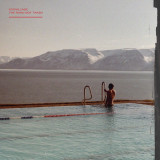
Japanese vibraphonist and marimba player Masayoshi Fujita returns with Migratory, his masterful new solo album, where his sonic explorations into the unknown continue.
In 2019, after 13 years of living in Berlin, Fujita returned to his native Japan with his wife and their three children, fulfilling his life-long dream of living and composing music in the midst of nature. The family found their new home in the mountain hills along the coast of Kami-cho, Hyōgo, three hours west of Kyoto.
Once settled in, Fujita spent his time turning an old kindergarten into his own music studio, Kebi Bird Studio, which became the birthplace of Migratory. On his new album, the composer and producer masterfully reimagines and mesmerises with his trademark sounds of vibraphone, and resumes his experimentation with the marimba and synthesisers that he first incorporated on his 2021 album, Bird Ambience, which followed the release of his acclaimed vibraphone triptych: Stories (2012), Apologues (2015) and Book of Life (2018).
On Fujita’s ever-evolving list of collaborators, Migratory introduces vocals from Moor Mother on ‘Our Mother’s Lights’ and Hatis Noit on ‘Higurashi’, as well as shō and saxophone to its soundscapes. Whilst at a music residency in Stockholm in 2021, Fujita met Swedish shō player Mattias Hållsten. Although it was a brief encounter, the two musicians stayed in touch. During a visit to Japan, Hållsten stopped by the studio and played on three of the tracks, including the alluring album closer ‘Yodaka’, exceeding Fujita’s own expectations.
Suche:masayoshi fujita
- 1
Japanese vibraphonist and marimba player Masayoshi Fujita returns with Migratory, his masterful new solo album, where his sonic explorations into the unknown continue.
In 2019, after 13 years of living in Berlin, Fujita returned to his native Japan with his wife and their three children, fulfilling his life-long dream of living and composing music in the midst of nature. The family found their new home in the mountain hills along the coast of Kami-cho, Hyōgo, three hours west of Kyoto.
Once settled in, Fujita spent his time turning an old kindergarten into his own music studio, Kebi Bird Studio, which became the birthplace of Migratory. On his new album, the composer and producer masterfully reimagines and mesmerises with his trademark sounds of vibraphone, and resumes his experimentation with the marimba and synthesisers that he first incorporated on his 2021 album, Bird Ambience, which followed the release of his acclaimed vibraphone triptych: Stories (2012), Apologues (2015) and Book of Life (2018).
On Fujita’s ever-evolving list of collaborators, Migratory introduces vocals from Moor Mother on ‘Our Mother’s Lights’ and Hatis Noit on ‘Higurashi’, as well as shō and saxophone to its soundscapes. Whilst at a music residency in Stockholm in 2021, Fujita met Swedish shō player Mattias Hållsten. Although it was a brief encounter, the two musicians stayed in touch. During a visit to Japan, Hållsten stopped by the studio and played on three of the tracks, including the alluring album closer ‘Yodaka’, exceeding Fujita’s own expectations.
May 28 will see prolific Japanese vibraphonist, multi-percussionist and composer Masayoshi Fujita mark a new sonic direction with his forthcoming album Bird Ambience on Erased Tapes.
Bird Ambience brings several fresh changes for the artist. Until now, Fujita would separate his acoustic solo recordings from the electronic dub under his El Fog alias and experimental improvisations with contemporaries such as Jan Jelinek, Bird Ambience sees him unite all of these different sides to his work for the first time, into one singular vision. He also makes a lateral leap from his signature instrument the vibraphone, on which he created his acclaimed triptych Stories (2012), Apologues (2015) and Book of Life (2018), to the marimba, which takes centre stage on his new album alongside drums, percussion, synths, effectors and tape recorder.
“The way of playing the marimba is similar to the vibraphone, so it was kind of a natural development for me and easier to start with, yet it sounds very different”, explains Masayoshi. “The marimba bars are made with wood and it has a wider range than the vibraphone, which gives me a bigger sound palette with more possibilities. I play the instrument with bows and mallets, and sometimes manipulate it with effects.”
Bird Ambience also marks his liberation from fastidious preparation for past solo releases to new endeavours in improvisation. “I prioritised trying to capture the wonder which happens during those occasional magic improv moments. Sometimes the mic-ing and placement of instruments was pretty rough; things weren’t perfect and everything was done quickly, but it turned out as the final recording. Overall when I
couldn’t decide between two takes, I told myself to go with the first”, Masayoshi recalls.
Arranged with a perfect Kanso-like balance, the unhurried pace of Bird Ambience allows each sound and phrase enough time to be mindfully absorbed and savoured. This subtle but affective work carries ethereal remnants of Midori Takada’s minimalism, the static atmospheres of Mika Vainio, To Rococo Rot’s organics and the bucolic electronics of Minotaur Shock. Fujita vaporises contemporary and classical, ambient and dismantled dub, controlled noise and fragments of jazz into an atmospheric, static mist, which he skilfully coerces into new forms.
After 13 years in Berlin, Masayoshi recently relocated to a new home and studio in the rural Japanese mountain village of Kami-cho, Hyogo, following his life-long dream of creating music in nature. Even though the album was entirely recorded in Germany before he left, it has this palpable sense of reverie found in the natural world. From there we can only imagine the kind of impact his new life in rural West Japan will have on future works.
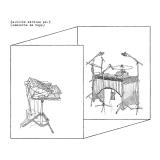
May 28 will see prolific Japanese vibraphonist, multi-percussionist and composer Masayoshi Fujita mark a new sonic direction with his forthcoming album Bird Ambience on Erased Tapes.
Bird Ambience brings several fresh changes for the artist. Until now, Fujita would separate his acoustic solo recordings from the electronic dub under his El Fog alias and experimental improvisations with contemporaries such as Jan Jelinek, Bird Ambience sees him unite all of these different sides to his work for the first time, into one singular vision. He also makes a lateral leap from his signature instrument the vibraphone, on which he created his acclaimed triptych Stories (2012), Apologues (2015) and Book of Life (2018), to the marimba, which takes centre stage on his new album alongside drums, percussion, synths, effectors and tape recorder.
“The way of playing the marimba is similar to the vibraphone, so it was kind of a natural development for me and easier to start with, yet it sounds very different”, explains Masayoshi. “The marimba bars are made with wood and it has a wider range than the vibraphone, which gives me a bigger sound palette with more possibilities. I play the instrument with bows and mallets, and sometimes manipulate it with effects.”
Bird Ambience also marks his liberation from fastidious preparation for past solo releases to new endeavours in improvisation. “I prioritised trying to capture the wonder which happens during those occasional magic improv moments. Sometimes the mic-ing and placement of instruments was pretty rough; things weren’t perfect and everything was done quickly, but it turned out as the final recording. Overall when I
couldn’t decide between two takes, I told myself to go with the first”, Masayoshi recalls.
Arranged with a perfect Kanso-like balance, the unhurried pace of Bird Ambience allows each sound and phrase enough time to be mindfully absorbed and savoured. This subtle but affective work carries ethereal remnants of Midori Takada’s minimalism, the static atmospheres of Mika Vainio, To Rococo Rot’s organics and the bucolic electronics of Minotaur Shock. Fujita vaporises contemporary and classical, ambient and dismantled dub, controlled noise and fragments of jazz into an atmospheric, static mist, which he skilfully coerces into new forms.
After 13 years in Berlin, Masayoshi recently relocated to a new home and studio in the rural Japanese mountain village of Kami-cho, Hyogo, following his life-long dream of creating music in nature. Even though the album was entirely recorded in Germany before he left, it has this palpable sense of reverie found in the natural world. From there we can only imagine the kind of impact his new life in rural West Japan will have on future works.
Queried on his favourite word in the German language, Masayoshi Fujita will pick ‘getragen’ – without a sliver of hesitation. Further questioning will reveal that he loves the term’s semantic signifiers, its inherent sense of “expansive, deep, quiet and sombre.” And yet, ‘getragen’ leaves plenty of room for interpretation: depending on context, it might also indicate wearing apparel or the state of being carried – two more mundane interpretations that I would rather keep from him. Does Masayoshi’s own definition, however, apply to ‘Bird, Lake, Objects’? Only to a limited extent. Compared to previous Faitiche releases, ‘Bird, Lake, Objects’ is certainly the most ‘getragen’ of them all. Nevertheless, this is by far not the first association that comes to mind. From a distance, these tracks seem rather introspective, cautious even – and reflect the recording situation: deliberately pared down, reduced to a single microphone in space and a separate track for all other instruments, each movement and action is chronicled by the treacherous mike. This confronted me with some unexpected and unfamiliar problems. For example, we had to swap out the seating in the studio as my favoured chair had a characteristic creak. Other, external influences were proved our control: fire engine klaxons, street noise and footfall became part of the recordings and their improvisatory nature. Each movement required careful orchestration, fully aware of its irrevocable nature. Space itself was always present and an audible entity, except on ‘Stripped to RM’ (recorded without a microphone or vibraphone track). After extensive deliberations, we decided to forgo the vibes on this piece – a very similar version had already been released in 2008 (on the compilation ‘Enjoy The Silence’, Mule Electronic, 2008). Jan Jelinek, February 2010
Queried on his favourite word in the German language, Masayoshi Fujita will pick 'getragen' - without a sliver of hesitation. Further questioning will reveal that he loves the term's semantic signifiers, its inherent sense of "expansive, deep, quiet and sombre." And yet, 'getragen' leaves plenty of room for interpretation: depending on context, it might also indicate wearing apparel or the state of being carried - two more mundane interpretations that I would rather keep from him. Does Masayoshi's own definition, however, apply to 'Bird, Lake, Objects'? Only to a limited extent. Compared to previous Faitiche releases, 'Bird, Lake, Objects' is certainly the most 'getragen' of them all. Nevertheless, this is by far not the first association that comes to mind. From a distance, these tracks seem rather introspective, cautious even - and reflect the recording situation: deliberately pared down, reduced to a single microphone in space and a separate track for all other instruments, each movement and action is chronicled by the treacherous mike. This confronted me with some unexpected and unfamiliar problems. For example, we had to swap out the seating in the studio as my favoured chair had a characteristic creak. Other, external influences were proved our control: fire engine klaxons, street noise and footfall became part of the recordings and their improvisatory nature. Each movement required careful orchestration, fully aware of its irrevocable nature. Space itself was always present and an audible entity, except on 'Stripped to RM' (recorded without a microphone or vibraphone track). After extensive deliberations, we decided to forgo the vibes on this piece - a very similar version had already been released in 2008 (on the compilation 'Enjoy The Silence', Mule Electronic, 2008). Jan Jelinek, February 2010
Das ursprünglich 2013 erschienene und international gefeierte Werk "Stories" war das erste Album, das der in Berlin lebende Komponist und Vibraphonist Masayoshi Fujita unter eigenem Namen veröffentlichte. Es bildete den Auftakt für eine Trilogie von Solo-Vibraphon-Alben, dessen letzter Teil, "Book Of Life", im Sommer 2018 bei Erased Tapes herauskommt. "Book Of Life" ist letztlich auch der Grund dafür, warum das Londoner Label "Stories" als weltweite Neuauflage noch einmal in die Läden bringt. Der Zeitpunkt ist gut gewählt, da 2018 perkussiver Ambient eine Art Renaissance erlebt, unter anderem befeuert durch die Wiederveröffentlichung von Midori Takadas wegweisendem Album "Through The Looking Glass" in 2017 sowie Ryuichi Sakamotos "Comeback", dessen Soundtracks durchaus Parallelen zu Masayoshis Storytelling-Klangwelten aufweisen. In den vorangegangenen Jahren fokussierte der ausgebildete Schlagzeuger sein künstlerisches Schaffen ausschließlich auf das Vibraphon und prägte so einen ganz eigenen Ansatz zwischen Ambient und moderner Komposition. Das Vibraphon "ist ein recht junges Instrument, und doch wird es fast immer auf dieselbe Art gespielt", so der Berliner Exilant. "Ich habe das Gefühl, dass es da noch viel mehr zu erkunden gibt mit dieser spannenden Erfindung."
Ahead of the release of his new album Book Of Life, Erased Tapes will re-issue Stories, the first in a trilogy of vibraphone solo albums by Berlin-based composer Masayoshi Fujita. This quietly exquisite album is like a book of illustrations, evoking scenes of natural beauty and poetic poignancy that combines climactic crescendos laced with electronic detail and luxurious melody. Stories is the beginning of Masayoshi's mission in bringing the vibraphone — a relatively new invention in the history of instruments often kept in the background in orchestras and jazz outfits — into the spotlight. Having trained as a drummer, Masayoshi began experimenting with the vibraphone, preparing its bars with kitchen foil or beads, playing it with the cello bow or using the other end of the mallets to create a more ambient texture of sound. Focussing on the vibraphone in this way sets Masayoshi apart, dedicating his artistic life to celebrating this fascinating and often under appreciated instrument and making his take on ambient and modern compositional styles a unique one.
10 years after their debut, City Of All Times audio-visual enquirers John B McKenna and Richard Greenan re-appear as Devonanon, to share the findings of a decade-long sonic experiment. Like its predecessor, Richard & John is a living, breathing collection of field recordings and compositions, gathered gradually from remote corners of the pair's lives. Familiar waypoints - interwoven microtonal synths, regurgitated live performances, polite whispering, and the gurgling hum of vehicles (land and sea) - all fold into the perpetual stew.
Where City read like a crumpled postcard account of fraternal reportage, Richard & John is a tone poem on something more amorphous, and out of time - a garbled history of human closeness, upheaval and mark-making, that seems to buckle and creak like a tapestry with no beginning or end. No two spoonfuls are the same, as our story reels through kosmische library stylings ('Wilderness Engine'), to cortex-quieting free association ('Generate Countryside'), and baroque instrumentation ('Blood Laughing', which features beautiful turns from Masayoshi Fujita on vibraphone, and Rosa Juritz on bassoon).
- A1: Rival Consoles - Them Is Us
- A2: The Art Ensemble Of Chicago - Mama Koko (Feat Moor Mot
- A3: Bell Orchestre - The Stars In His Head / Bernard 33- Da
- B4: Masayoshi Fujita - Book Of Life
- B5: Hatis Noit - Aura
- B6: Anne Müller - Nummer 2
- C7: Lubomyr Melnyk - Son Of Parasol
- C8: Daniel Brandt - Flamingo
- C9: Ben Lukas Boysen - Clarion (Kiasmos Remix)
- C10: Crayon - Ithinkso (Feat Bastien Brison)
- D11: Penguin Cafe - Harry Piers 2021
- D12: Peter Broderick - Sonata For The Sirius
- D13: Qasim Naqvi - Aftertouched
- D14: Kevin Richard Martin & Hatis Noit - After The Storm
- E15: Rival Consoles - I Love This, I Love You
- E16: Douglas Dare - Heavenly Bodies (Feat London Contempora
- E17: Roedelius & Story Spirit - Clock
- E18: Högni - Anda _Inn Gud (Feat Hatis Noit)
- E19: Daniel Thorne - From The Other Side Of The World
- F20: Michael Price - Sandham (Feat Shards)
- F21: Shards Inner - Counterpoint
- F22: David Allred - The Garden
- F23: Nils Frahm - O I End
A new compilation titled Erased Tapes _+ù_¦ö, encompassing a two hour cross-section of the label"s 15-year history including hidden gems and previously unreleased material, will be available on November 4 to coincide with specially curated festivals in London and Berlin. The first offering comes from UK producer Kevin Richard Martin aka The Bug and Japanese voice artist Hatis Noit who share their paranormal first collaborative cut After the Storm amongst other unique pairings such as The Art Ensemble of Chicago featuring Moor Mother, Bell Orchestre interpreted by Colin Stetson, Douglas Dare joined by The London Contemporary Orchestra and Ben Lukas Boysen remixed by Kiasmos. Premiered exclusively via The Wire magazine in form of a free download ahead of their debut live performance at Le Guess Who? Festival 2019 in Utrecht, the track is now finally made available on vinyl and streaming platforms alongside other previously unreleased pieces from electronic producer Ryan Lee West aka Rival Consoles and Icelandic composer Högni. "As a solo vocalist and voice artist, I"d always dreamed of floating and being drowned in a beautiful sonic storm. And then I met Kevin Martin" - Hatis Noit The artwork is composed of the Japanese kanji for "15" - calligraphed by label founder Robert Raths and designed by Munich-based artist Bernd Kuchenbeiser.
il Holmström and Peter Wikström are a duo from Northern Sweden. The duo have collaborated with many artists over their almost twenty year long music career such as 4th Disciple, Dwight Trible, Carlos Niño, Fennez, Green-House, Laraaji, Lo-Fang, Masayoshi Fujita, Purl and many more.
»The Road Not Taken« is the tenth released studio album from Ecovillage and the first one released on vinyl. The album has a more sacramental and human feel to it compared to their previous work.
Features new collaborations with Laraaji, Janie Cowan, Masayoshi Fujita, Qasim Naqvi, Brad Weber, Hanna Benn, and PRINTtEXT. A coproduction of Anchorage Museum, National Geographic Society, and Temporary Residence Ltd. What does the Earth sound like? In Stations, the 10th volume in the Field Works series, producer Stuart Hyatt approaches that question with a team of scientists working on the EarthScope experiment. Using sophisticated ground recording
devices, Field Works has created a new type of music in which human voices sing along with the actual voice of the Earth. Stations features an all-star ensemble of vocalists and instrumentalists, including Hanna Benn, Janie Cowan, Masayoshi Fujita, Stuart Hyatt, Laraaji, Qasim Naqvi, and Brad Weber. The deluxe vinyl edition includes a bonus digital album of peer reviews by Deantoni Parks, Green-House, Olga Wojciechowska, Afrodeutsche, Nathan Fake, Ben Chatwin, Sophia Loizou, Amulets, Penelope Trappes, and Alva Noto. Stations was commissioned by The Anchorage Museum and The National Geographic Society. “For those interested in the intersection between field recordings and music, this is a must-have.” A Closer Listen // “A beguiling and quietly astonishing piece of work.”
Ambient folk musician and experimental composer from Portland, Oregon David Allred returns to Belgium-based Dauw Label with a full length record, Driving Through the Aftermath of a Storm on a Clear Day. The underlying theme of this music is about exercising calm and learning to find it in the aftermath of all situations. These modern classical compositions are primarily centered around felt piano, strings, brass, tape, voices, synthesizers, guitars, percussion, etc. with methodical dynamic dub-inspired experimental arrangements throughout.
David Allred is a musician, multi-instrumentalist, composer, songwriter and sound engineer based in Portland, Oregon. While primarily working and touring internationally as a solo artist, David has also released music under various collaborative projects such as Allred & Broderick (with Peter Broderick) and Good Enough for Grandpa (with Greg Eldridge). David has additionally appeared on works by Heather Woods Broderick, Lubomyr Melnyk, Masayoshi Fujita, Chantal Acda, Brigid Mae Power, Birger Olsen, Jung Body, St. Tsunami, The Beacon Sound Choir, etc
DAUW present the release of What the Fog, the second album of David Allred & Peter Broderick. The album is a follow-up of their first full-length LP Find the Ways, which was released through Erased Tapes in 2017.
The music itself was originally composed as a soundtrack for an 11-hours slow motion journey in the Louvre museum in Paris. The title, #monalisa, can be interpreted as a new way of perceiving art through technology and social media such as Twitter or Instagram. The movie is directed by Jennifer Anderson and Vernon Lott and tries to make us more aware of the presence of technology in our lives as well as the way we experience an exhibition or art itself. The album is a 42-minutes extraction of the 11-hours journey they went through. Each track is built in a way that makes it possible for the listener to travel from one place to the other, as if you were walking in the museum yourself. In that way, the record can even be perceived as a music documentary.
Being completely instrumental, What the Fog distinguishes itself from their first album in which the voices of both artists held a central place. Nevertheless, in line with an earlier observation from Clash Magazine, the music still combines minimalism and serenity to construct intense pieces of music.
“It presents a moment of calm that uses sparsity to create something quietly intense.” (Clash Magazine on their debut album)
Born in Maine, raised in Oregon, Peter Broderick learned to play several instruments such as piano, banjo and violin. In 2007 he joined the Danish ensemble Efterklang on their tour and had numerous collaborations with artists such as Machinefabriek and Nils Frahm. His most recent release Blackberry was released this August through Erased Tapes. It marked his first vocal album in 5 years and once again showed the variety in his ever growing repertoire.
In a relatively short period of time, Portland-based musician and multi-instrumentalist David Allred showed his songwriting capabilities through several releases on Oscarson and Erased Tapes. Besides his own music, he played as a session musician for several artists and ensembles such as Heather Woods Broderick, Masayoshi Fujita and The Beacon Sound Choir. His most recent album Felt the Transition sees the light late December 2020 through Erased Tapes.
- 1