
In Stock
On Stock and ready to ship
Last In: 8 months ago
21,30 €
On Stock and ready to ship

The Original Mix was first released in 1996 on a single sided 12", the 4th release on the B.I.T. Productions label and became a club anthem in the North of England. In 1997, a single sided white label was released that had a Pumped Up remix by Maximum Project and in 1999, a remix by Da Fool, which incorporated the bell sound from "Meet Him At The Blue Oyster Bar" with a new melody was also released. Since then, it has become an 'Old Skool' piano anthem across the UK. In 2021, a 25th Anniversary double pack was released with 8 mixes including 5 New Remixes by Sarasota, The Crowdpleasers, Miguel Sanchez/Carlos Garcia and Pianohead. This 30th Anniversary Edition includes the Original 1996 Mix and Maximum Project 1997 Remix plus the Da Fool 1999 Remix and the Pianohead 2021 Remix on Gold Vinyl.
On Stock and ready to ship
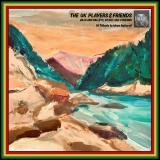
The UK Players & Friends Hills and Valleys, Rivers and Streams (A Tribute to Idren Natural) 9 brand new tracks by The UK Players. Voiced by Singers and Poets who knew Idren Natural personally. Recorded and Mixed by Supa Yout’ at Earth Works Studio, Amsterdam. Sleeve artwork and written testimonials from close friends and associates. Idren Natural aka Ras Natural aka InI Oneness, DJ, Singer, Chanter, Musician, was a pivotal player and pillar of UK/European Roots, Reggae, Dub, Sound System Culture. A humble Rastaman who did so much for so many, inasmuch as inspiring, encouraging, and connecting. He selflessly helped those less fortunate than himself. A strong advocate of the culture and philosophy of Rastafari. He was a commanding presence who lit up the stage, giving JAH all the glory. His passing was a great loss to the community. The UK Players Dub Band formed in 1996. They teamed up with Ras Natural/InI Oneness to record their debut 7” single ‘Further’ for Jah Works with Producer Jah Rej. This single gained exposure via Jah Shaka, Abashanti, and King Shiloh Sound Systems, even the famous Radio 1 DJ ‘John Peel’ played it. More recordings with Jah Rej at Seventh Sense Studio led to the debut album ‘Take Heed’. During the halcyon days of InI Oneness & The UK Players (1997-2004) they toured the UK and Europe, clocking up over 250 gigs in that time. Amongst brethren within the Rastafari community, the band became affectionately known as Ras Naturals band. Friends of Natural like Ras Iyah, Tony Roots, Sister Aisha, Wayne McArthur, and Barry Isaacs (among others) performed with them during this time. Members of InI Oneness & The UK Players never split up, throughout the years they branched out into other projects, reconvening for specials and one offs. Following Idren Naturals passing in 2022, the band stepped up to play his memorial show, where the idea formulated of making a tribute album to him. Ben King offered the use of Earth Works studio to help realise the vision. Work began with longtime live sound engineer Supa Yout’ in March 2024. Jah Rej assisted production on a number of these recordings, and sadly passed during the making of it, the last album he worked on. Various vocalists who were close to Natural, submitted vocals across the following year. The album was mixed and dubbed in March ‘25 at Earth Works by Soupa Yout' & Kingsway. Artwork and written memories/testimonials were then assembled. Everyone involved in the creation of this album knew Idren Natural personally. This album shines a spotlight on his spirit. Carrying songs of tribute, and messages for the times. ALPHA DUB: Every time the band played a gig, Natural would insist on starting with a dub. In that tradition, this album is no different. ‘Mandlion’ passing through the studio, headtopped a Melodica cut on it. Dubbed to the max by Supa Yout! NATURAL VIBE: The ‘Forward Fever’ crew from Belgium were one of the first collectives that Natural affiliated with in Europe. Here, Ras Cloud cleverly weaves all of Naturals song titles into the lyrics, creating a song in itself. WORD & FLESH: Fellowdread was born and raised in Kingston, Jamaica. Now living in Bristol, England, residing with Natural in his last days. His Poetry is rich in inflection, knowledge and wisdom, teachings that spark up the divine. ALL ABOUT LOVE: A pause for contemplation, this one stills the listener. Rootsman Rak’s words warn against complacency, and encourages action. A completely (natural) acoustic track featuring the skilled percussionist Jonah Dan. REMEMBER HIM: Inna Dubplate style, Barry Isaacs toasts to Idren in personal remembrance, reminding us all of the man he was. The track also features snippets of a phone call from Naturals oldest friend ‘Fergie Greenspears’ recounting memories. RISE UP RASTA CHILDREN: The legendary Tony Roots, graces the album with his unique delivery. Natural, The Players, and Tony go back a long way. A song of strength to affirm the soul, and rally against Babylon. Livicated to the one (Natural) SONG FOR THE RIVER MAN: During those halcyon days, many stages were shared with Albaroot, whom the band met whilst on tour in Scotland. Clark Innes (lead singer/songwriter) reminisces about the force of nature that was Natural, times shared, and that knowing, to never meet again. ONE STEP AHEAD: An interpretation of the ‘Look Inside’ riddim by Reuben Addis. Built for Sound System, it is the only track on the album that rolls into a dub. Lyrical Benjie literally entered the studio, rode the riddim without hearing it first, cutting his vocal in one take! A message for the times that sends shivers up your spine. THE PRAYER: Iman Onedub AKA Iman Gebre Iyesus, member of the Ethiopian Orthodox Tewahedo Church, met Idren Natural at Fairfield House in Bath. Here he seals the album with a recital of the Lord's Prayer in English, with Amharic. His rich textural tones elevated with a one away riddim to carry the listener home.
expected to be published on 09.10.2026
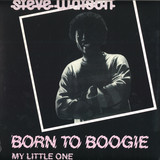
"Steve Watson's roots lie in Paramaribo, at that time the capital of the Dutch colony, where he won the 1975 Suriname Song Festival. This artist had a very strong connection with the music of his country, although unlike other artists - such as Max Nikman, for whom he acted as vocalist too - he performed his songs in English. Siegfried Boerleider, his real name, moved shortly thereafter to the Netherlands, where he also played in the groups The Backlot (with Laura Fygi and Rowan Moore) and Soul Conference. He released several singles on various labels, shaking off the "kaseko" music genre, which fused many different styles from Africa, Europe and the Americas, but considered rhythmically complex. He took time to move toward a simpler, yet well-structured, melodic genre in the recording studio, producing songs that were enjoyable to listen to on the radio and sensually danced to in the disco. With 1981's "Born To Boogie," we risk a seductive journey into the soul music of Suriname, which also possesses the fragrance of Dutch tulips. Then thanks to its charm, exploded in the Netherlands and subsequently in the world. Steve Watson - in addition to his personal style, rich in that simple and genuine expressiveness - also deserves recognition for his excellent songwriting, which led him to write for other Dutch artists, even though his two best songs are on this vinyl: "May Little One" and "Born to Boogie", ....the latter title has never been more fitting !!! Listen to it and go crazy !!!"
expected to be published on 09.10.2026

HIKARIGASASHIKOMU translates as ‘Light Shines In’, a Japanese phrase conveying a sense of hope in a difficult place. Opening new creative possibilities for Foodman, this astonishing album is an introspective yet hyperactive body of work, representing the clarity and light found after a period of self-exploration. While this is a deeply personal record, it also captures the now-universal sound of a brain stretched between 500 open tabs, multitasking into oblivion in a world in which attention deficit is a global media environment, not merely a privatized psychological malaise. Focusing more on the use of voice, the album incorporates Foodman’s own looped vocals, singing elements of Japanese children’s songs and playground rhymes, and his everyday thoughts. Despite its charm and innocence, this soundworld leaps around manically, fractures and dissolves. Foodman’s voice repeats, disassembles, speeds up and down and is bounced around deliriously, as sound elements call and respond around him. Structurally and vocally, influences are drawn from footwork, ghetto house, and baile funk, all of which are maximally abstracted into bursts of spiralling psychedelic effects.
expected to be published on 12.10.2026

Houston’s premier street griot is stepping into his most profound chapter yet with his highly anticipated upcoming album, O.Y.N. Throughout a decorated career that spans over 1.2 billion global streams and a fiercely loyal fanbase, Maxo Kream—born Emekwane Ogugua Biosah, Jr.—has established himself as one of rap’s most authentic, uncompromising storytellers. From the raw trenches of Alief to the critically acclaimed triumphs of Punken, Brandon Banks, Weight of the World, and his triumphant 2024 independent pivot Personification, Maxo has long been celebrated by Pitchfork, NPR, and Complex for his cinematic, hyper-detailed world-building. Now, O.Y.N. finds the Houston icon turning his gaze inward, pairing his signature Texas grit with an expansive, global perspective that redefines his artistic boundaries.
If his previous work was about Maxo taking full creative control as an independent force, O.Y.N. is about him uncovering who he is at his core. Following the passing of his father, Maxo found himself searching deeper for his family origins, leading to a pivotal moment of artistic and personal rebirth. For the first time in his life, Maxo traveled to Lagos, Nigeria, anchoring his new music in a profound celebration of his Nigerian heritage. The emotional centerpiece of this journey is the JPEGMAFIA-produced single “Time Out,” an introspective track that moves away from the frantic energy of his past releases to offer a stripped-back look at love, loss, and legacy. Featuring a heavy, resonant drum presence on the outro, the song’s accompanying music video was filmed on location in Lagos, capturing Maxo navigating his ancestral roots in real-time.
While O.Y.N. reaches new emotional depths, it doesn't sacrifice the hard-hitting, volatile street persona that made Maxo a star. The album expertly balances soul-baring vulnerability with cutting-edge hip-hop experimentation, showcasing elite chemistry with some of the genre's most forward-thinking visionaries. Look no further than “Fake Jeezy,” a collaborative explosion featuring Denzel Curry and masterminded by JPEGMAFIA. The track is a masterclass in industrial chaos, combining sharp lyricism and early-2000s trap imagery with cold, surreal visual aesthetics. This duality highlights Maxo's unique positioning in the culture as a trusted street general who can effortlessly trade bars with rap's avant-garde elite.
From his early days flipping Kendrick Lamar's “Rigamortis” to sharing marquee tracks with the likes of A$AP Rocky, Travis Scott, and Tyler, The Creator on hits like “Big Persona,” “Cracc Era,” and “Cracc At 15,” Maxo Kream has always been a rapper's rapper. O.Y.N. represents the ultimate synthesis of this incredible journey. It is an album born from the soil of Alief but elevated by the spirit of Lagos—a raw, beautiful, and heavy-hitting testament to an artist who has survived his past, honored his losses, and fully embraced his destiny.
On Stock and ready to ship
Kito Jempere has spent more than two decades building a universe of his own, with releases on Mule Musiq, DFA and other influential labels, alongside remixes from Ewan Pearson and others. With Other People’s Aesthetics, that universe finally opens outward. After years of protecting his own musical language, Kito lets the outside world in—embracing the sounds, artists and scenes that have shaped him, from house and techno to Aphex Twin, Warp, Ninja Tune and Omar-S. The result is a personal universe merging with the world beyond it. The album opens with “Change For Now,” a collaboration with longtime friend Lipelis (L.I.E.S., Public Possession, Running Back), marking a friendship that has grown over the past decade. “Teaser,” originally released on Mule Musiq, returns in a new album “Dub” version, with fewer vocals and a stronger garage-house feel—a direct statement of love for David Lynch. “OPA” looks back to Kito’s original half-jazz, half-drum’n’bass sound and the Uniquetunes era of the early 2000s, alongside the music he absorbed from CDs by Amon Tobin, Squarepusher, Skalpel and The Cinematic Orchestra. “Listens To Selected Ambient Works Once” is a direct homage to Aphex Twin, given a Warehouse-style treatment for bigger dancefloors. “I’m Not A Doctor, Either,” featuring mishinuki—previously heard on Green Monster in its Moloko homage—builds towards an epic, euphoric string finale. “Kobayashi Porcelain” closes the record by combining memories of Usual Suspects with Moby-like atmosphere and an Omar-S-type beat. The release of Other People’s Aesthetics will be followed by a Japan tour in December 2026 and Kito Jempere’s ongoing residency at Honeycomb Hi-Fi in Dubai. Early support from: Ata, Reznik, Horse Meat Disco, Vladimir Ivkovic, Tim Sweeney, Max Pask, Rich Thair of Red Snapper, Ame, Ellen Allien, Benji B, John Tejada, The Blessed Madonna, Hard Ton
expected to be published on 16.10.2026

Though Scratch may have at times seemed crazy, it is worth noting that creative
genius appears so because geniuses see things others do not see and inhabit
realities unseen. As the music on this album reveals, Lee Perry's Black Ark creations
re-arrange the familiar into something new and magical.
Lee spent his early days working with legendary producers Coxsone Dodd, Duke Reid,
Joe Gibbs, Clancy Eccles and Prince Buster, and by 1968 he was an independent
producer, naming his studio musicians The Upsetters and scoring instrumental hits
with innovative rhythms that helped forge the new reggae style. In 1970-1971 he
produced what many consider the greatest works by the Wailers; in 1968 one of his
Upsetters productions hit #5 on the UK pop chart and more hits followed. That gave
him the funds to build his own studio and in 1973 the legendary Black Ark was born.
Among the many landmark classics cut at Black Ark are such incisive political
commentaries as Max Romeo's "War Ina Babylon," and Junior Murvin's "Police and
Thieves" (covered by the Clash). The Congos' "Heart of the Congos" album is a roots
classic and there are many wonderful obscure singles such as Carlton and the Shoes'
"Better Days." Many dub creations made innovative use of Scratch's sonic wizardry via
echo, phasing, reverb, fanging, wah-wah and various sound effects.
It all came to an end in 1978 as Lee, besieged by extortionists, freeloaders, religious
fanatics and assorted pilgrims, let the studio lapse. And then he set it on fre, some
say due to frustration, others say from mental collapse. He left Jamaica, collaborated
with musicians around the world, toured as a sort of mystic trickster/ shaman and
prospered. But his work at Black Ark will always stand as his ultimate creative
achievement.
expected to be published on 19.10.2026

Max Cooper delivers the latest instalment in the acclaimed fabric presents series, marking a landmark release as the first tracks to be presented in Spatial Audio. Fusing his signature blend of emotive electronica, immersive sound design and club-focused energy, the project captures Max’s ability to bridge the gap between cutting-edge technology and deeply human storytelling. Featuring exclusive material alongside carefully curated selections, the mix places him alongside previous fabric presents contributors including Daniel Avery, Overmono, Helena Hauff and Mount Kimbie, while pushing the series into new sonic territory.
Leading the accompanying EP is Flecks, a collaboration with LSB that pairs fast drum & bass breaks with Max Cooper’s unmistakable immersive production. Referencing the iconic Hurt You So break, the track fuses old-school jungle influences with a modern, spatial mix, hypnotic synth lines and subtle vocal fragments draw the listener deeper into its expansive soundscape. Also featured is Bredren’s Hash (Max Cooper Remix), a tension-filled drum & bass track built around distorting basslines and constantly evolving movement.
The EP's focus track, AO, sees Max Cooper reunite with Rival Consoles for a more introspective moment. Swapping high-tempo breaks for a slower electronica and house framework, the track unfolds through beautifully detailed percussion, organic rhythmic textures and sweeping synth melodies, culminating in a soaring central passage that showcases the pair's shared gift for emotionally resonant electronic composition.
Released via fabric Records, fabric presents: Max Cooper represents another evolution of the long-running series, a release that is equally at home on immersive listening systems and the dancefloor.
expected to be published on 23.10.2026

Mit „Tranquilo II“ schlagen In Extremo ein neues Kapitel ihrer beeindruckenden Erfolgsgeschichte auf. Am
23. Oktober 2026 erscheint das außergewöhnliche Akustikalbum mit 17 Songs, die mehr als drei Jahrzehnte
Bandgeschichte in überraschend neuem Klang präsentieren.
Statt ihre Klassiker lediglich leiser zu spielen, haben In Extremo Stücke wie „Spielmannsfluch“, „Frei
zu sein“, „Störtebeker“, „Liam“ und „Feine Seele“ komplett neu arrangiert. Swing, Rockabilly, Ska, Reggae und osteuropäische Einflüsse treffen auf historische Instrumente und den unverwechselbaren Sound der
erfolgreichsten Mittelalter-Rockband der Welt. Eingespielt wurde das Album in einem kleinen Studio in
Dornbirn – live, unmittelbar und mit viel Raum für spontane musikalische Ideen.
Unterstützt werden In Extremo von hochkarätigen Gästen: Metal-Ikone Doro Pesch verleiht „Feine Seele“
besondere Intensität, Jan „Monchi“ Gorkow und Max Bobzin von Feine Sahne Fischfilet sorgen bei „Störtebeker“ für eine ebenso ungewöhnliche wie mitreißende Begegnung, während Faun-Sängerin Laura Fella
den Klassiker „Liam“ bereichert. Mit „Heute wird der Himmel brennen“ enthält das Album außerdem einen
brandneuen Song.
Ein besonderes Highlight für Fans ist die exklusive Bonus-EP „Sternhagelvoller“, die der Deluxe-CD sowie
dem streng limitierten Vinyl-Bundle beiliegt. Das Herzstück bildet eine sechsminütige XXL-Version des
Partyklassikers „Sternhagelvoll“, aufgenommen mit zahlreichen Weggefährten aus der Mittelalter-Rock- Szene – darunter Mitglieder von Feuerschwanz, d’Artagnan, Faun, Tanzwut, Subway to Sally, Versengold,
Fiddler’s Green und Corvus Corax. Ergänzt wird die EP durch den exklusiven neuen Song „Amontillado“
und eine besondere Version von „Ave Maria“ mit der kroatischen Vokalformation Metaklapa.
Im November und Dezember bringen In Extremo „Tranquilo II“ auf große Akustiktour. In ausgewählten
Spielstätten wie dem Berliner Admiralspalast, der Hamburger Laeiszhalle, der Alten Oper Frankfurt und
dem Circus Krone in München stehen Nähe, Atmosphäre und musikalische Feinheiten im Mittelpunkt.
„Tranquilo II“ ist weit mehr als eine Reise durch die Vergangenheit: Es ist ein mutiges, vielseitiges und
überraschendes Album, das bekannte Hymnen neu entdecken lässt und zugleich eindrucksvoll zeigt, warum
In Extremo auch nach mehr als drei Jahrzehnten musikalisch unberechenbar bleiben.
expected to be published on 23.10.2026

New York-based Japanese jazz and electronic music polymath Takuya Nakamura presents his debut album Shape The Future - almost 35 years into his storied musical journey.
An expansive double album, the album’s first LP documents a spellbinding live performance by Nakamura recorded at fabric. A hybrid set combining DJing, live electronics, vocals, and trumpet, the set also features studio versions of special collaborations with Shigeto, Currency Audio and Tim Reaper. The second LP complements the first by assembling studio recordings of select album tracks. Altogether the two volumes make for a definitive display of Nakamura’s exceptional musicianship across jazz, DnB, jungle, broken beat, deep techno and more.
Across his career, Nakamura has played Brazilian music, merengue, salsa and straight-ahead jazz. He’s opened for Sun Ra Arkestra, performed with David Byrne, Laurie Anderson, Lee “Scratch” Perry, Wu-Tang Clan, and Arto Lindsay, appeared on sessions with Terry Riley, ASAP Rocky, Goldie, and TV On The Radio, and remixed the likes of Quincy Jones, Sun Ra, Billie Holiday, and The Streets. He’s also played under director and playwright Robert Wilson.
Although the musical past and present of the Tokyo-born, New York-based DJ and trumpet player is undoubtedly eclectic, Nakamura is abidingly steeped in the sounds of jazz and jungle. This’ll be obvious to casual observers who may have seen any viral videos of him. But there’s more to this. The depth of Nakamura’s engagement with these kinds of music, the way they’ve made him into the person he is, the decades-long path they’ve taken him on; to now arrive at the summit of a solo album is all truly remarkable. Shape The Future resonates with every chapter in this story.
In high school, Nakamura’s friends started listening to jazz and jazz fusion, which piqued his interest, especially when they started going to clubs to see it live, where they managed to see US legends like Sonny Rollins play. Eventually he began to play jazz every day and his musical skill emerged early. He soon became obsessed with getting closer to the source of this music, which led to his studies at the New England Conservatory of Music in Boston with George Russell, an influential figure who had taught Miles Davis and John Coltrane. Nakamura drank it in: not only the technical aspects but the sense of a direct connection to “a music culture where Russell and his friends changed harmony forever. I wanted to know how that was possible!”.
This was a radical experience in itself, but then another revolution happened for Nakamura. He was playing in a venue called The Western Front, near Boston and discovered that the elderly owner had his own soundsystem and was playing what was then - in 1992 - only just becoming known as jungle. This was as freeing a musical revelation as his proximity to the giants of jazz was, and in that instant the two things fused. He understood that using technology to fill a dancehall with sound and a jazz musician’s reflexes are all working to the same ends: “You’re always making decisions,” he says, “but it doesn’t have to be really difficult. It’s the truth of the frequencies, and how they’re affecting people’s minds.”
From that moment on, his life path was set. Moving to New York City, he sought out jungle and its offshoot sounds wherever he could find them, gigging and collaborating relentlessly, and gradually developing his own live and hybrid live/DJ shows. Through regular appearances at New York fixtures Zebulon and CBGBs, and continual shows elsewhere in the city, Nakamura developed his live performance and DJing and it was in these environments that he gradually weaved together his twin loves without compromising either, building an international reputation in the process.
It’s only fitting then that his first album, almost 35 years after he first found his musical direction, should be a live one: a window into this never-ending process. Even here, he had to be persuaded that he should make a record. A member of the fabric team got turned on to his music after their daughter saw him play. Of course, as a jungle lover, Nakamura knew fabric – which has a special place in the history of jungle and drum’n’bass – and “had wanted to play there since I was very young.” You can hear the club in the record: this isn’t just a live show, in keeping with his jungle roots, it’s Nakamura duetting with the soundsystem, and you can feel how the emotions in the room would have ebbed and flowed.
This dynamic translates to a transfixing record. Setting the tone with lushly textured ambient and reverberant jazz, Nakamura segues into cinematic breakbeat and stellar fusion, infusing it all with intoxicating low end and hypnotic rhythms. The LP’s midway point locks into mesmeric percussion heightened by resonant echoes of piano and trumpet. There’s an endless pull to this music. Nakamura adjusts the levels for maximum impact throughout, and the overall effect begins to evoke some harmonious hybrid between a jazz ensemble, a classic Metalheadz 12” and a Theo Parrish DJ set. His electric form continues through surreal jazz, intricate electronics and rolling sub-bass velocity, right up to the subtly devastating final cover of Peter Gabriel and Kate Bush’s ‘Don’t Give Up’, with Nakamura’s fragile vocal sitting in the heart of a huge sound.
From Tokyo jazz nights to formative studies and encounters in Boston to his artistic development in New York, Nakamura reaches another milestone with his monumental debut album. It’s a release that happened just the way a Takuya Nakamura record should. In the same way his instincts led him to musical revelations, taking his own sweet time has led him to make one of the most extraordinary debut albums imaginable, all executed in his own singular style. In Nakamura’s world, the universe finds a way.
expected to be published on 30.10.2026

Timeless – yet always fresh: Regardless of the whims of the pop business, Planet Yello has been making its rounds for almost fifty years, repeatedly whisking us away to a world where past and future greet each other and James Bond joins forces with the Man in the Moon, Dionysus and Philip K. Dick.
"To the future, through the past"—with their fifteenth studio album, "Time Lab," Dieter Meier and Boris Blank put this maxim into practice more vividly than ever. Blank meticulously crafts his imaginary soundtracks from fresh samples and found objects from his own archive, which has accumulated a vast collection of sonic fragments, riffs, and motifs over nearly fifty years of creative work. Meier immerses himself in these parallel soundscapes, discovering within them his romantic tales of robbers, mysterious night creatures, and Dadaist wordplay. Essentially, every Yello track is both ancient and brand new at the same time. This principle is perfectly illustrated by the first single, "Around the Sun." It's based on a dormant Meier recording that was cut at the last minute from the selection for "Claro Que Si" (1981). Blank gave Meier's sonorous voice a fresh sonic makeover – the result is an elegant and flexible, thoroughly Yello-esque combination of past and present, romantic wanderlust and driving percussion. "Break Out" also plays with stylistic elements that can be traced back to Yello's earliest days: a dangerously prowling bass riff, fiery percussion, and storyteller Meier in hypnotic top form.
Time begins where it ends, or vice versa. Or, as Boris Blank says: "Yello's music doesn't really know time."
expected to be published on 30.10.2026

DJ HS presents "Booty Shake EP" on Ghoststyle
A legendary figure of the Belgian electronic scene and one of the iconic DJs of the famous Lagoa, DJ HS returns to Ghoststyle with Booty Shake EP, a four-track release showcasing the sound that has made him a favourite among clubbers for decades.
Featuring Booty Shake, Spectrum, Shut Up and Acid Twist, the EP delivers four driving cuts packed with infectious grooves, pounding rhythms and unmistakable acid flavours. Staying true to DJ HS's signature style, each track is built for maximum dancefloor impact while preserving the raw spirit of authentic underground electronic music.
Whether you're looking for energetic peak-time weapons or timeless club grooves, Booty Shake EP is a solid addition to any DJ bag and vinyl collection.
Français
DJ HS présente "Booty Shake EP" sur Ghoststyle
Figure emblématique de la scène électronique belge et DJ incontournable du mythique Lagoa, DJ HS signe son retour sur Ghoststyle avec Booty Shake EP, un EP de quatre titres qui reflète parfaitement le son qui fait vibrer les clubs depuis des décennies.
Composé de Booty Shake, Spectrum, Shut Up et Acid Twist, cet EP rassemble quatre productions percutantes mêlant grooves entraînants, rythmiques puissantes et touches acid irrésistibles. Fidèle à l'univers musical de DJ HS, chaque morceau est pensé pour offrir un impact maximal sur le dancefloor tout en conservant l'esprit brut de la musique électronique underground.
Que ce soit pour les DJs à la recherche d'armes redoutables pour le peak time ou les amateurs de vinyles électroniques authentiques, Booty Shake EP trouvera naturellement sa place dans toute collection.
expected to be published on 06.11.2026

Trentemøller's new untitled album explodes with the force of a supernova before dissolving into swooning vocals. Across 10 songs, maximalist guitar-noise blowouts collide with some of the most bruising shoegaze you'll hear this year. "The noisy got noisier, the dreamy got dreamier," says Trentemøller. "I was ruthless this time."
Opener "Swerve", recorded with Vienna-based singer Sakura, crashes into searing walls of sound - a stark contrast to 2024's haunting Dreamweaver. The album's radically intuitive energy persists on the anthemic "Visceral" and the industrial fuzz of "Your Love Walks Alone", featuring Sune Rose Wagner of the Raveonettes. "Coyote" deconstructs synths into feedback and brutal guitars, while "To Mist" and "Halved" (featuring Midwife) offer nocturnal respite - nugaze ambience reduced to fractals of fragile beauty. For the first time in Trentemøller's history, vocals appear on every track - contributors include Sakura, German-British singer Anika, Midwife, Tan Cologne, Sune Rose Wagner, Jonas Bjerre of Mew, and Danish singer-songwriter Emma Acs, among others. "I knew early on exactly who I wanted. We never met in the studio; everything was exchanged remotely. I'm pretty shy, and it gave the vocalists the privacy to really open up," he explains. Songwriter, multi-instrumentalist, producer, and mixer - Trentemøller did it all himself. "I don't follow trends or think in algorithms." The reward: playing the album live, start to finish, for the very first time on the upcoming live tour.
expected to be published on 13.11.2026

Cassette[17,61 €]
Trentemøller's new untitled album explodes with the force of a supernova before dissolving into swooning vocals. Across 10 songs, maximalist guitar-noise blowouts collide with some of the most bruising shoegaze you'll hear this year. "The noisy got noisier, the dreamy got dreamier," says Trentemøller. "I was ruthless this time."
Opener "Swerve", recorded with Vienna-based singer Sakura, crashes into searing walls of sound - a stark contrast to 2024's haunting Dreamweaver. The album's radically intuitive energy persists on the anthemic "Visceral" and the industrial fuzz of "Your Love Walks Alone", featuring Sune Rose Wagner of the Raveonettes. "Coyote" deconstructs synths into feedback and brutal guitars, while "To Mist" and "Halved" (featuring Midwife) offer nocturnal respite - nugaze ambience reduced to fractals of fragile beauty. For the first time in Trentemøller's history, vocals appear on every track - contributors include Sakura, German-British singer Anika, Midwife, Tan Cologne, Sune Rose Wagner, Jonas Bjerre of Mew, and Danish singer-songwriter Emma Acs, among others. "I knew early on exactly who I wanted. We never met in the studio; everything was exchanged remotely. I'm pretty shy, and it gave the vocalists the privacy to really open up," he explains. Songwriter, multi-instrumentalist, producer, and mixer - Trentemøller did it all himself. "I don't follow trends or think in algorithms." The reward: playing the album live, start to finish, for the very first time on the upcoming live tour.
expected to be published on 13.11.2026

"Al Festa's musical genius was revealed at the age of 14 when was released ''Starway to Escher'' with the Italian prog rock band Bauhaus (1974). His talent continued with "Miss Manhattan" by Metropole Al Festa, Francesco Puccioni (aka Mike Francis), Claudio Giorgi, Sharon Russell vocalist), his very first disco-music song in 1981. Over his career - a dozen movie soundtracks and hundreds music videos - his involvement in the Italo-Disco scene of the early 1980s is noteworthy. Undoubtedly, his contribution to Kristal (himself Al Festa, with Anne Dattner and Max Liofredi) remains most memorable. "Ete Super" was written with Helene Chauvin, a close friend of the now legendary Jeanne Mas. Helene attempted success as Abilene with "Tout Tout Tout Mais Pas Ca" arranged by another Italo-disco legend, Pierluigi Giombini (1987). Returning to Kristal, what convinced Claudio Casalini - one of Al Festa's best friends - to create this vinyl reissue was not only the memory of this talented artist, who passed away prematurely, but also the track "Fallin'" on the B-side, which embodies all the composer's post-Romanticism, a song rich of emotional and sensitivity, with intimate and often dramatic tones. When you are about to purchase Kristal, keep this excellent B-side in mind. You will not regret the choice."
On Stock and ready to ship

2026 Repress
Field Records proudly presents the first complete vinyl edition of Monolake’s seminal excursion into experimental dub techno, Hongkong. Originally released on the now-classic Chain Reaction label in 1997, this collection of early singles by Robert Henke and Gerhard Behles has gone on to become a vital listening experience in its own right - a genre classic alongside the other groundbreaking works from the likes of Porter Ricks and Vladislav Delay.
The tracks which make up Hongkong were made while Henke and Behles studied computer science and immersed themselves in Berlin’s techno scene. Their early forays into computer-based music production were enabled by the use of the Max/MSP programming environment, forming a backdrop to the landmark work they would undertake in developing the Ableton Live DAW. Henke and Behles travelled to Hong Kong in 1996 to attend the annual International Computer Music Conference, and while there recorded extensive field recordings. These recordings became the glue that pieced together their collaborative tracks into a fluid listening experience for a CD-compilation at Chain Reaction’s request.
While absolutely rooted in the embryonic sound of European dub techno, Monolake’s early work possesses a back room, headphone-ready demeanour which lends itself to the album listening experience. In the cascade of rhythms created by precision engineered delays and subliminal, expansive spatial world building occurring throughout Hongkong, the stage is set for a full and thorough immersion. Before the Monolake sound progressed into a more pointillist form of computer music as Henke’s solo project, Hongkong presented a gritty, grainy sonic still tied in some way to the traditional methods of techno production, even as the artists’ ideas were sending the sequencing and arranging in exciting new directions.
Remastered and presented for the first time as a complete double 12” package, this is the definitive edition of an essential work in the evolution of experimental techno. As Henke himself explains, “twenty-five years later, this record still holds immense value to me in many ways.”
On Stock and ready to ship

Curated by Brian d'Souza (aka Auntie Flo), Plants Can Dance is a forthcoming new compilation bringing together a global community of artists, exploring the creative possibilities of biosonification - transforming signals from plants, ecosystems and the natural world into sound. Out June 26th, the project marks the culmination of several years of d'Souza’s work across music, ecology and technology.
The album arrives at a time when more artists are turning toward nature as both subject and collaborator, such as Brian Eno’s Earth Percent, which formally recognises “Nature” as an artist. Plants Can Dance sits within a wider cultural shift, which is redefining the relationship between sound and the living world.
The project builds on several years of work by d'Souza, whose Plants Can Dance events have taken place across the UK, Europe, India and Africa, appearing in institutions including the V&A, Tate and the Design Museum. What began as a series of intimate gatherings has since evolved into a global platform, reflecting a growing appetite for work that reconnects music with the natural world.
The compilation features contributions from leading practitioners including Modern Biology (Tarun Nayar) in collaboration with saxophonist Zekarias Musele Thompson, OMMA (Olga Maximovam founder of Playtronica), Jason Singh, Dr Helen Anahita Wilson, Justin Wiggan in collaboration with celebrated Norwegian jazz musician Arve Henriksen, Lamine Touré, Bit Marten and Balam, alongside new work from d'Souza himself. Using a range of tools - from commercially available devices to bespoke modular systems - artists translate electrical activity, environmental data and organic processes into musical material.
The processes behind each piece differ - from interpreting plant biodata to translating wind patterns into compositional structures - and the results are as varied as they are compelling. The record spans ambient, jazz, electronica and modern classical, yet all pieces are unified by a shared intent: to reimagine music as a space of collaboration between human and more-than-human worlds.
At the core of Plants Can Dance is a question about how we define music, and how we choose to listen. Traditional musical forms, with their fixed tempos and predictable structures, give way here to something more fluid and less easily controlled. The listener is invited to surrender expectation and engage with sound as an evolving environment rather than a linear narrative. In this context, the compositions function as what d'Souza describes as “acoustic ecologies” - sonic systems shaped by biological, environmental and elemental forces unfolding in real time.
Accompanying the release is a printed zine offering reflections from each artist, and deeper insight into the ideas and debates surrounding this practice. Rather than presenting definitive answers, Plants Can Dance positions itself as an artistic exploration grounded in curiosity, experimentation and critical thought.
Ultimately, Plants Can Dance is less concerned with proving whether plants “make music” than with changing how we listen. By inviting audiences to engage with sound shaped by non-humans, it opens up new ways of perceiving the environments we inhabit - not as passive backdrops, but as active, dynamic participants in a shared ecological network. In doing so, it offers a quietly radical proposition: that by listening differently, we might begin to relate to the natural world differently too.
On Stock and ready to ship
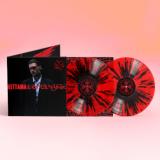
One of electronic music’s most sought-after names, producer and DJ KETTAMA today announces the release of his long-awaited debut album, Archangel, out 3rd of October. The announcement arrives in tandem with new single “Sort It Out” featuring Clouds, and a landmark moment in his career: his biggest ever London headline show, taking over Brixton Academy on Saturday, October 4th, followed by an expansive tour across Europe, North America, and Australia.
A decade in the making, Archangel is the definitive statement from KETTAMA (Evan Cambell), the Galway-born, London-based artist. The 15-track project is a powerful blend of hard-house energy, trance-inflected euphoria, hip-hop sample-based attitude, and unmistakable emotional depth—sonic signatures that have placed KETTAMA at the cutting edge of contemporary dance music.
The album showcases a curated roster of collaborators who reflect KETTAMA’s reach and relevance across today’s underground and mainstream scenes, including Interplanetary Criminal, Fred again.., Clouds, Prospa, DJ HEARTSTRING, Shady Nasty, SØLV and seantommy. Their contributions amplify the project's scope, offering a multi-sided view into KETTAMA’s musical universe.
Among its early singles, the Interplanetary Criminal collaboration “Yosemite” is a high-velocity anthem marrying speed-garage grit with ecstatic rave melodies, while his track “Air Maxes” with Fred again.. And Shady Nasty blends introspective vocal sampling with wide-eyed club emotion. On “If U Want My Heart” with DJ HEARTSTRING featuring KLP, the ensemble channels high-energy trance, breakbeats, and vocal euphoria into a soaring anthem that fuses emotional intensity with peak-time club energy. Meanwhile, his collaboration with Clouds, released today, “Sort It Out” dives headfirst into industrial-techno territory, conjuring a dark, cathartic energy destined for warehouse euphoria. And reigning as one of the undeniable anthems of the summer so far, “It Get’s Better (Forever Mix)” delivers euphoric waves of uplifting synths and relentless rhythm, bringing an irresistible surge of energy that’s become synonymous with this summer’s club moments.
Archangel has already found a home on the world’s biggest stages and radio airwaves, with early support from key tastemakers including Jack Saunders, Danny Howard, Sarah Story, and Tim Sweeney. Simultaneously, a grassroots groundswell continues to bloom across social platforms—where viral snippets and show footage capture the visceral reaction of a fast-growing, global fanbase.
This year, KETTAMA has elevated his status to a full-blown festival phenomenon, performing at major stages including Coachella, Glastonbury, Creamfields, Portola, Seismic, and ARC Festival, to name a few. In June, he played to 20,000 people in Belfast for a b2b with Chris Stussy—one of the UK’s largest DJ events in recent memory—and is currently mid-way through a 16-week Ibiza residency at Amnesia, playing every Monday night throughout summer. Full list of upcoming live dates can be found below.
Perhaps the clearest signal of his surging popularity is the jaw-dropping response to his upcoming Boiler Room live set, with over 15,000 fans signing up to attend— the set’s release is now highly anticipated as a time capsule moment in a breakout year for the artist.
KETTAMA’s rise to prominence has been anything but conventional. Eschewing the traditional gatekeepers of the industry, KETTAMA cultivated an underground following through the likes of SoundCloud and TikTok, where raw uploads, bootlegs, and viral edits generated a tidal wave of grassroots momentum. Over the years, these platforms became launching pads for a fiercely loyal global community, drawn to his unfiltered energy and boundary-pushing sound. This subversive path to recognition has made him not just a fixture of the scene but a symbol of how new-generation artists can forge success on their own terms.
From his humble roots in the Irish underground to the world stage KETTAMA is now pushing the limits of what a next-gen DJ-producer can achieve. With Archangel, he fuses the sound of his native ‘G-Town’ with a futuristic vision that’s unapologetically global—marking a creative milestone that cements his place among electronic music’s most compelling voices.
On Stock and ready to ship
Building momentum around his moody, alchemical breakthroughs in the techno-bass laboratory, Buckley lands on Sneaker Social Club with a punchy quadruplex that marks him out as an innovative talent in the next generation of low end producers.
Manchester-based Elias Buckley first came to light with a lathe-cut drop on ec2a, followed up over the past two years with outings on Well Street, Dimeshift and S.P.E.C. That sets the tone for exploratory zone Buckley is operating in, and he maintains a forward-thinking slant to his physical, dynamic club weapons on this latest EP.
'City Dweller' rests on a creeping mid tempo 4/4 pulse, all the better to carry slithering layers of sound design that slide off the undulating sub bass throb. Minimalism is the order of the day here, but his approach is shot through with gully zaps and rude swagger that makes this a positively UK- centric affair. 'Carl's Floorboard' makes a sizeable swerve towards brutalist grime mutation, letting the space in the mix swallow you whole around the dislocated bass womps and whipcrack snares.
On the B side, 'Gawy' hits the mark squarely between techno propulsion and soundsystem swagger, plying slippery sound design to the bass blasts and working an offbeat groove designed for maximum lock-in. Making sure there are no doubts about his range, Buckley saves one of the deadliest joints on the record for the closer, whipping up a wide-as-you-like UKG bounce on 'M.O.B.S.O.T.' while maintaining the lean and mean sound that binds the EPs any angles together.
On Stock and ready to ship

Hekt's debut album Forever is released 1st May 2026 on Numbers, with the first single "Someday" featuring Valeria Litvakov out now.
Made with his friends Henriette Motzfeldt & Catharina Stoltenberg (solo and together as Smerz), Copenhagen-based composer/producer Fine Glindvad (who records as Fine), and Valeria Litvakov, Forever is built around juxtaposition: pop and bass brushing shoulders with dopamine fueled EDM. The record is a funhouse of mirrors where polystyrene arpeggios skitter underneath uplifting chords.
As Hekt describes the record: "Forever is desire and digital synthesis, car rides and lingering perfume. It’s missing someone who was never really there, holding on to something you didn’t want in the first place. The songs you hear when you’re falling in love on the dancefloor, and the songs you hear when you open your eyes and realize it’s just you alone with the DJ, the last one to leave. Songs to make out and break up to. A party so good you get depressed it can’t last forever."
Forever is a continuation of Hekt's work exploring the emotional core of pop music. "Someday" is the soundtrack to a hundred imagined futures with strangers in the club, as pristine arps and heartswelling chords skitter under Valeria Litvakov's ruminations, both lovestruck and terrified. Smerz add a level of fantastic to the slanted otherworldly pop of "Up in the Air, So" and "Forever." On both tracks, the melodies are squishy and impressionistic, the sound of all those memories we make in dance floors, taxis home, and in the blurry morning sunshine as we adjust to reality.
And while guest vocalists abound on Forever, Hekt also takes a turn at the mic himself. On "Without You" he shakes up a perfectly mixed cocktail of melancholy and beauty. And on "Promise" his voice is turned into another melodic accent against the fragile IDM sound design. Elsewhere he turns up the aggro. Dueting with Catharina Stoltenberg on Boys Noize's secret weapon, "Anytime Anywhere," the two trade bars across a compressed field of static and feedback while little hints of sub and wiry synths circle the edge of the stereo.
Hekt's music has always attempted to redefine what club music can and might be. This reimagining of the very basic building blocks of the dance floor is felt across Forever where he leans into the emotions of 2010s EDM. "What I loved about hardstyle and jumpstyle was the emotional intensity that kind of music can bring if you’re in the right setting. And I think that is what has stuck with me from EDM too. Emotional intensity," he explains. "It’s just been the soundtrack to some of the most fun moments in my life." On "But I Can't Really Show You," he compresses the EDM-era into 3-minutes. Vocal catharsis, dubstep womp, and soaring chords make it sound like the entirety of Tomorrowland being processed through MAX/MSP. This Skrillex-meets-Calvin Harris colossus is designed to destroy every sub woofer as it pulls on every last heart string.
And then there are the straight-up club stompers. "Baby" is UK club music reimagined with the steely lines of Danish modernism - think DJ Q going b2b with Errorsmith. It has a bassline made out of flubber with a vocal chopped beyond recognition as it bounces across chromatic synth lines. Even when he strips things down on the slinky garage-esque "Big Things," there are still unexpected twists and turns. The melody sounds like an Ibiza House compilation played in reverse, alongside drums that swing in and out of psilocybin bleeps and bloops. On other tracks like "Dream" and "You Won't Believe," the tropes of dance musics past, present, and future are dissolved in baths of synthesis and polished sound design.
Forever is a record where club music and Scandinavian EDM seamlessly mixes into avant-garde pop. Hekt has crafted singular and unclassifiable love songs alongside effortless bangers, making an ode to those eternal dance floor moments where time stops and you start hoping for something big.
On Stock and ready to ship

2025 Reissue.
Münchenbuchsee, a suburb of Bern, Switzerland. Stephan Eicher is the youngest of three children. His father, a radio and TV repairman, is also a jazz violinist and a sound tinkerer in his spare time. In the family home's converted fallout shelter turned studio, Mr. Eicher experiments with homemade sequencers, tortures handcrafted drum machines, and abuses reel-to-reel tape recorders—all under the fascinated gaze of young Stephan.
The boy quickly develops a musical curiosity, exploring sound through various experiments and wanderings. Alongside his younger brother Martin, Stephan crafts audio plays on a homemade multi-track recorder (essentially several cassette decks hooked together!), which they write, record, add sound effects to, and perform for family and friends. Just a couple of nice kids, really...
Then comes 1972, and Lou Reed's Transformer album changes everything for the Eicher kids. For 13-year-old Stephan, it's a revelation—especially "Vicious", the opening track, which he plays on repeat for months. He convinces his father to buy him an electric guitar. Not stopping there, his father also builds him a tube amp using an old radio.
Then comes adolescence. A rough one. Stephan leaves home at 16 and moves to Zurich. With obvious artistic talent, he persuades his art teacher to help him get into F+F, a radical, alternative art school—despite his young age. Accepted, he starts learning video techniques, determined to become a filmmaker.
At F+F, Stephan organizes Dada-style happenings and concerts with a group of friends known as the Noise Boys. Among them: one of his teachers on bass, Veit Stauffer on drums (who would later found ReR/Recommended Records), his girlfriend Sacha on vocals, and Stephan on guitar. In one of their early performances, they release a remote-controlled mouse covered in dull razor blades into the audience to create panic and chaos. Keeping with this aggressive, confrontational spirit, they once played a concert while wearing headphones blasting Tristan and Isolde, trying to perform their own songs simultaneously—to maximize the cacophony. The goal was always the same: clear the room.
Their “songs,” if you can call them that, followed suit. Take "Hungeriges Afrika", for instance—performed entirely with power drills and some drum feedback.
To make ends meet, Stephan returns to Bern on weekends to work as a waiter at the Spex Club, the city’s main punk venue. On September 16, 1980, during a show by proto-electro group Starter, the police raid the club and arrest everyone. Stephan, who manages to avoid arrest, seizes the opportunity to “borrow” Starter’s gear left behind. He suddenly finds himself in possession of a Roland Promars synth, a Korg MS20, and a gorgeous CR78 drum machine, which he runs through a Big Muff distortion pedal to get that perfect gritty sound.
He then sets out to reinterpret some Noise Boys tracks, reworking them during impromptu sessions recorded on a dictaphone (yes, a dictaphone—now the lo-fi sound makes more sense, doesn’t it?). He ironically titles the resulting cassette "Stephan Eicher spielt Noise Boys" ("Stephan Eicher plays Noise Boys"). This gem features seven tracks, which are the ones reissued here.
Back in Zurich, he visits his friends Andrew Moore and Robert Vogel, who have a DIY cassette duplication setup. They make 25 copies of Stephan Eicher spielt Noise Boys for Stephan and his friends. Robert encourages him to visit Urs Steiger of Off Course Records and play him the tape.
Without much hope, Stephan shows up at Urs’s office. But Urs is instantly hooked and suggests releasing a 7” single. Due to space constraints, they reluctantly drop two of the seven tracks ("Hungeriges Afrika" and "One Second"). As for the musical score featured on the cover—it was randomly chosen and remains a mystery to this day. Calling all music theory nerds!
The 7-inch is pressed in 750 copies and released in the first week of December 1980—a date Stephan remembers well, as it’s the same week John Lennon was killed. Smartly, Urs sends a promo copy to François Murner, Switzerland’s answer to John Peel, who hosts a show on alternative station Sounds. Murner falls in love with the record and starts giving it airtime. To Stephan’s surprise, sales follow—and people actually seem interested in his music.
Even this modest underground success scares Stephan a bit. He stops making music for a year and moves to Bologna, where he works as a programmer at Radio Città, a feminist radio station.
Meanwhile, Stephan’s younger brother Martin, who’s also involved in the punk scene, joins the band Glueams as a singer and guitarist. Glueams, named after the fanzine run by two of its members (drummer Marco Repetto and bassist GT), eventually rebrands as Grauzone. Stephan is invited to their shows to project hacked Super 8 visuals live on stage.
Urs Steiger, now working on a compilation titled Swiss Wave – The Album, asks Grauzone to contribute alongside bands like Liliput, Jack and the Rippers, The Sick, and Ladyshave (Fall 1980).
For the album, Martin tasks Stephan with producing their recording sessions. Under Stephan's artistic direction, two tracks emerge: "Raum" and "Eisbär". During "Eisbär", Martin plays a minimalist bass line borrowed from post-punk band The Feelies (just an open string). Drummer Marco Repetto struggles to keep time. Later that evening, unhappy with the takes, Stephan builds a four-bar drum loop from a ¼-inch tape and uses it instead of the flawed original. He then adds bleepy synths and wind sounds to complete the track’s icy vibe before handing it over to Urs.
The Swiss Wave – The Album compilation is released quietly at first, but things snowball thanks to "Eisbär", which eventually becomes a smash hit—selling over 600,000 singles.
Meanwhile, Stephan plays in a rockabilly band called SMUV (named after Switzerland’s social security agency) and begins producing artists, including the debut album of Starter (1981), which includes a more pop-oriented version of "Minijupe".
By early 1982, Stephan starts spending time with the post-punk girl band Liliput (formerly Kleenex). They’re older than him, and he happily drives them around in his Renault Major, acting as their roadie.
By 1983, Grauzone—signed to the major label EMI, which turned out to be a misstep—is falling apart. Stephan begins to pivot toward a more mainstream pop sound with his debut solo album Les Chansons Bleues.
But that... is already another story.
On Stock and ready to ship

CRYME lands on Oddysee with 5 club tools designed for maximum dance floor functionality. Titled “7th Element”, the Berlin-based producer finds himself in form with a collection of deep and dubby dance floor grooves, rhythmic programming and sexy vocal-infused house. The record also features a sophisticated slice of steamy, house-laced techno in collaboration with Ben Reymann. Another step in the SEVEN’s co-founder steadily growing repertoire that shows continues upwards progression.
On Stock and ready to ship

Prolific beat pharmacist par excellence Brendon Moeller continues his hot streak with a return to Samurai to serve up the exquisite craftsmanship of Shadow Language. Across 15 fresh productions the seasoned house and techno producer demonstrates yet more variations on his rejuvenated sound since pivoting towards 160 tempo zones. Heavyweight dub techno pulses collide with D&B pressure and dubstep snarl, delivered with devastating restraint and mediative warmth.
Moeller's dub-informed, high-grade production hit a hot streak as he started to experiment with faster tempos and more broken rhythms, reaching into thrilling new sound fields where fast-slow rhythmic intrigue meets with spatial subtlety and constantly evolving synth voices. The past year has seen him release a swathe of albums, from Further on Samurai to outings on Constellation Tatsu, ESP Institute and Quiet Details that all burst with inspiration, each distinct from the last and offering an original perspective on this rich seam of crossover electronics.
Shadow Language shows Moeller burrowing even deeper into this new era of his work, continuing the hypnotic approach set out on Further while edging more forthright ingredients into the mix. From the outset 'Division By Zero' hits with immediacy even as it dips into a dubwise breakdown, with snatches of vocal and even the iconic loom bird making the slightest of appearances. 'Feral Hymn' finds a curious kind of uplift in the synth chord that twists in and out of the mental techno murmurations of the rhythm section. 'Impermanence' has some snarling bass that belongs in the gnarliest tech-step, while the nagging hats ticking through 'Junkyard Syntax' hint at a shockout without resorting to brute force. The majestic dub techno chords of 'Driftform' create a through-line across Moeller's extensive catalogue, but here they dominate the mix above a spongy bed of sub bass throb and framed by the tiniest slithers of percussion.
Throughout the album, it's the implications Moeller suggests with the tools at his disposal that create a powerful energy. Restraint governs the delivery, guiding the listener in deeper until they find a maximal experience from each elegantly understated roller. The weight and presence is abundant across every track, fuelled by the invigorating power of each tone and frequency while avoiding the clutter of overloaded arrangements.
Finding the notes in between and half-hidden rhythms, Moeller himself perfectly summed up his latest opus as he continues to develop his own compelling Shadow Language.
On Stock and ready to ship

Isa Gordon and Tony Morris were first brought together through their individual releases on Optimo Music, which established mutual respect within the label’s community. While they had not previously performed live together, they were invited to take part in a fundraiser hosted by Queen’s Park Arena in support of Glasgow NW Foodbank and later for JD Twitch’s end-of-life care. Tony asked Isa to contribute guitar and backing vocals to his set, including a track then called Last Night I Had a Dream. That performance became the seed for their collaboration.
The first phase of fleshing it out, recalls Tony: “Somebody said Isa sang like Shania Twain. That got me thinking about country music and call and response, prompting me to come up with alternative lyrics.” Isa remembers: “I cycled over to Tony’s house with my guitar, and we spoke about what the tune meant. It was about him being wrapped up in dreamland, luxuriating in his subconscious, while my character — impatient and trapped in her own routines — barely had time to remember her own dreams.” Tony continues: “Brilliantly I realised that I could never collaborate with anyone in situ and so I sat in the garden for two hours watching my wife tend to plants. Every now and again I would creep up the stairs and put my ear to the door. I could hear Isa warbling away and so would resume my garden watch. After two hours I went back upstairs to see how she was getting on, only to find that she had written one of the greatest songs I’d ever heard. I still think that.” Tony adds: “My overwhelming sentiment about Wake Up Baby is pride. I can honestly say that I’m more proud of it than anything else I have done. It ticks a whole load of boxes. Isa’s singing in various Scottish modes is unique. The way her electric guitar adorns the dance beat makes it a rock song as well as a dance and a C&W song — truly multi-genre.”
The B-side of the 12” release, Syringe Moustache, is a surreal, darkly playful counterpart to Wake Up Baby. The track was inspired by a dream Tony had: “I was in a shopping mall, in a two-level shoe shop, and my attention was taken by a little girl with a syringe taped beneath her nose like a moustache. She went about her business trying on shoes, confident and wise beyond her years. In the dream, I imagined her as the daughter of cultured, intelligent parents determined to raise her independently. I was struck by my own feelings of inadequacy — I knew I could never have coped with such a contraption myself.” Isa’s take on the meaning of this song somewhat differs: “Tony sent me the tune over Instagram months before I met him, and I was spooked — as far as I knew, he didn’t know anything about me, but the story felt like it was written about me as a little girl, growing up around heroin addiction. The syringe beneath the girl’s nose became a symbol of the inescapable constraints of that environment, literally written on her face, yet something you just have to carry on through. On a buzz from the serendipity, I added a full instrumental backing to this most bizarre of works.”
The result is absurd, unsettling, and strangely empowering, staking out its own surreal, cinematic space. The 12” dance single is a format Tony had long wanted to explore — a tangible artefact to leave for family, a medium that celebrates the physicality of sound and the ritual of listening. It allowed the artists to maximise the format’s potential: a strong, multi-genre A-side, a surreal B-side, and remixes that expanded the record’s sonic world. Glasgow music staples Auntie Flo and 100% Positive Feedback were invited to reinterpret the tracks, bringing their distinctive touch — Auntie Flo transforming the A-side into a luscious, dancefloor-ready meditation, and 100% Positive Feedback twisting Syringe Moustache into absurd, playful shapes with false-start drops and over-the-top vocal editing.
The cover photograph, taken at the University Café by Harrison Reid, captures Isa and Tony embodying the characters they brought to life in the songs — a visual reflection of the record’s narrative and emotional stakes. The Café also holds personal significance: it’s where all of Isa’s meetings with Keith McIvor took place, where she first remembers visiting Glasgow as a child, and a place Tony fondly likes to go to drip egg yolk down his tie and watch the world go by. Together, the 12” format, the remixes, and the artwork create a cohesive, tactile experience, amplifying the duality, theatricality, and emotional breadth of the collaboration.
On Stock and ready to ship

A heavyweight library record delivered straight from the Gods; truly, we are all blessed: Dubmaster Dennis Bovell presents cLOUD mUsIc. A miraculous set of loose limbed, slinky funk-forward dub on the A-Side with totally blunted, spaced out trippiness on the grooving versions gracing the flipside.
A pioneer of dub and progenitor of lovers rock, genius producer-arranger Dennis 'Blackbeard' Bovell's prolific and eclectic career encompasses a huge range of music: from dub poetry to lovers rock, afro-beat to post-punk, disco to pop and beyond.
His production work encompasses such diverse figures as Ryuichi Sakamoto, The Slits, Fela Kuti, Linton Kwesi Johnson, The Pop Group, Janet Kay, Saada Bonaire, Orange Juice, Golden Teacher, I Roy, Maximum Joy, Steel Pulse and more.
cLOUD mUsIc features 8 new, deep, never-heard heaters, initially created for upstart UK library label FOLD. Dennis had written some music under the influence of Cloud-watching and presented it to FOLD with a view to them presenting it as Library Music to be utilised by anyone interested in having music for incidentals, films, TV and advertising etc.
cLOUD mUsIc represents Dennis expressing himself freely and inviting others to join and express themselves. As Dennis explains: "Library music is what makes the difference between creating for specific reasons and creating for your own individual enjoyment. cLOUD mUsIc was created whenever I felt the urge to create music that I wanted to, with no pressure. It was recorded at various times and in various studios around the world with various musicians’ assistance. Much sonic indulgence with many different recording devices."
Who doesn't like the sound of that?
On Stock and ready to ship

Rochelle Jordan is proudly stepping into her diva era. To those in the know, the Los Angeles-based British-Canadian singer and songwriter has long been an underground force coaxing together the mutually flirtatious scenes of daring alt-R&B and heart-pumping electronic music. With her longtime creative director/producer KLSH, she’s cultivated a singular marriage of sound — mixing soulful sensuality, house bump, DnB wildness, hip-hop swagger, and pure experimentalism — that’s spread not only through certain circles, but also to the mainstream. At the same time that her gauzy 2014 single “Lowkey” was going viral in 2023 — racking up 21 million streams on Spotify alone — she was in the studio cooking with tastemaking beatsmiths like KAYTRANADA and Sango, quietly preparing to melt dance floors and headphones alike.
Now, as the timelines merge, Jordan is approaching success with the sparkle of a brand new star and the stance of someone who’s earned everything she has. Her new musical chapter aims to carry forward the magic that fans feel in her coquettish vocals and bold soundscapes even as she reaches deeper into her pop bag. The fact that her first single of 2025, the darkly dazzling “Crave,” was produced by Chicago house legend Terry Hunter (Janet Jackson, Mariah Carey, Beyoncé) speaks volumes to this exact moment in Jordan’s ascendent trajectory.
“My goal when I first started making music was to bring back something that I felt had started to fade away for me,” says Jordan. “That certain essence or sound that would give me butterflies in my stomach when I’d listen to music — it would unleash some kind of chemical that would make me feel happy and excitable and curious, something that would make my soul shine. My number one goal is always: How do I give people that feeling when they listen to my music?”
Jordan grew up in Toronto raised by British-Jamaican parents. She remembers hearing one of her older brothers cycling through a variety of music at maximum volume in the room next to hers. “Reggae to soul to drum and bass to garage music to gospel,” Jordan recalls. “It was all intertwining for me at such a young age.” She developed her own sound quietly, and soon met KLSH through MySpace. They traded multiple songs back and forth daily until he flew her out to L.A. to record what would become her debut project, 2011’s R O J O. That collaboration hasn’t faltered since, resulting in sonically surprising, subtly infectious sets like Jordan’s breakthrough 2014 album 1021 (with “Lowkey”) and 2021’s dance-steeped revelation, Play with the Changes.
“If you’re talking about Rochelle Jordan, you’re talking about KLSH,” she says. “It’s one and the same. We come from the same inspiration source.” With him at her side to this day, Jordan is crafting new listening experiences as radiant as refracted light glimmering through a prism — an incredible space from within which to explore love in all its iterations — from romantic infatuation to self-affirmation, and strength in womanhood to pride for what she’s accomplished thus far.
More than a decade into her career, Jordan has arrived at a new stage of life and creativity — she’s a seasoned professional, a fully realized woman, and she’s excited to continue growing. “I know my story isn’t necessarily a new one,” she says. “I look at 2 Chainz, who became 2 Chainz way later on in his life. I look at Tina Turner, who became Tina Turner at 40. I want to be another story of resilience for people.” As she prepares to unveil more of her vision, and fans clamber for a long-awaited fourth album, Rochelle Jordan is casting aside self-doubt, and appreciating and underlining her status as a verifiably influential reigning diva in her one-of-one sonic space.
On Stock and ready to ship

Black Vinyl[28,36 €]
“I've always dreamed of making an album where I could bring together artists I deeply admire, curating voices, energies, and sensibilities that have inspired me,” says Brussels-born producer and multidisciplinary artist ShunGu of his new record, Faith in the Unknown. “It took time, and it grew into something very human, rooted in trust, patience, and creative risk. These songs are conversations, not just between me and the artists, but between worlds, eras, and ways of feeling.”
That spirit of dialogue and discovery is what defines Faith in the Unknown. Emerging from years of steady, meticulous work in the underground, the album is both a bold statement of identity and an invitation into Shungu’s world. Across 14 tracks, each a self-contained vignette, ShunGu guides the listener through shifting moods and perspectives- moments of intimacy, defiance, reflection and release, coalescing into a much larger story.
His distinct touch threads through the surefire cast of collaborators - Pink Siifu, Liv.e, Fly Anakin, Chester Watson, Fatima, Maxo, Navy Blue, Dreamcastmoe, Ruqqiyah, Zekeultra and Goya Gumbani — each track unfolding as a new dimension in the same universe.
ShunGu has long been a boundary-pusher, known for weaving jazz-inflected samples, skilfully constructed textures, and MPC-driven grooves into production that feels timeless yet untethered. With Faith in the Unknown he pushes further still: a project as much about collective energy as it is about personal vision. It’s a leap into uncertainty, carried by trust in the process and the people involved.
From the lo-fi beat tapes that first won him a cult following, to collaborations that span the globe, Shungu has forged a body of work rooted in exploration and community. Faith in the Unknown crystallises those qualities into his most ambitious statement yet; a record that doesn’t just blur boundaries between genres, but asks what happens when vulnerability and experimentation are treated as shared ground.
The result is a record that trades in subtlety. Each artistic contribution adds its own shade to the larger mosaic, pulling the listener deeper into an expanding narrative. If Faith in the Unknown has a message, it’s that art can thrive in uncertainty - that in the spaces where trust, risk, and vulnerability intersect, something entirely new can emerge.
On Stock and ready to ship

Cassette[16,39 €]
“I've always dreamed of making an album where I could bring together artists I deeply admire, curating voices, energies, and sensibilities that have inspired me,” says Brussels-born producer and multidisciplinary artist ShunGu of his new record, Faith in the Unknown. “It took time, and it grew into something very human, rooted in trust, patience, and creative risk. These songs are conversations, not just between me and the artists, but between worlds, eras, and ways of feeling.”
That spirit of dialogue and discovery is what defines Faith in the Unknown. Emerging from years of steady, meticulous work in the underground, the album is both a bold statement of identity and an invitation into Shungu’s world. Across 14 tracks, each a self-contained vignette, ShunGu guides the listener through shifting moods and perspectives- moments of intimacy, defiance, reflection and release, coalescing into a much larger story.
His distinct touch threads through the surefire cast of collaborators - Pink Siifu, Liv.e, Fly Anakin, Chester Watson, Fatima, Maxo, Navy Blue, Dreamcastmoe, Ruqqiyah, Zekeultra and Goya Gumbani — each track unfolding as a new dimension in the same universe.
ShunGu has long been a boundary-pusher, known for weaving jazz-inflected samples, skilfully constructed textures, and MPC-driven grooves into production that feels timeless yet untethered. With Faith in the Unknown he pushes further still: a project as much about collective energy as it is about personal vision. It’s a leap into uncertainty, carried by trust in the process and the people involved.
From the lo-fi beat tapes that first won him a cult following, to collaborations that span the globe, Shungu has forged a body of work rooted in exploration and community. Faith in the Unknown crystallises those qualities into his most ambitious statement yet; a record that doesn’t just blur boundaries between genres, but asks what happens when vulnerability and experimentation are treated as shared ground.
The result is a record that trades in subtlety. Each artistic contribution adds its own shade to the larger mosaic, pulling the listener deeper into an expanding narrative. If Faith in the Unknown has a message, it’s that art can thrive in uncertainty - that in the spaces where trust, risk, and vulnerability intersect, something entirely new can emerge.
On Stock and ready to ship

2026 Repress
Step onto the dancefloor and relive the golden age of club culture with the revival of Jon Pleased Wimmin’s iconic anthem “P.A.S.S.I.O.N,” brought back by Full Circle in a brand-new package of remixes. Following the success of the Tin Tin Out Mix reissue in 2023, this release features fresh reinterpretations from some of today’s most exciting names, including the legendary Demi Riquísimo and a brand new remix from Jon himself with Paul Morrell, a triple platinum selling remixer, for the likes of Ava-Max, Kelly Clarkson, All Saints & Troye Sivan.
Jon Cooper, universally known as Jon Pleased Wimmin, became a defining figure of the UK scene thanks to his flamboyant presence and finely tuned knack for getting the party started.
From his beginnings as a face on London’s late-80s dancefloors, Jon made the leap from clubgoer to DJ in 1991 with his Cabaret act The Pleased Wimmin, catching the eye of Danny Rampling and securing sets at the legendary Milk Bar. His unmistakable style, fearlessness behind the decks, and sheer love of music led to him touring the world, being voted 6th in DJ Magazines' Top 100 DJ poll and reaching Top 30 with the original release of P.A.S.S.I.O.N. He is still playing out weekly across Europe & the U.K.
With Full Circle’s revival, P.A.S.S.I.O.N bridges past and present, paying tribute to Jon’s legacy while propelling the track into a new dimension. Alongside Demi’s deep, groove-heavy rework, the package also includes a brand-new Jon Pleased Wimmin & Paul Morrell Remix, road tested by Jon this summer at Pikes & 528 Ibiza, which injects fresh energy and an edge while staying true to the spirit of the original.
This isn’t just a reissue; it’s a chance to own a piece of dance music history, reimagined for today’s floors. Grab your copy, feel the groove, and let these remixes guide you back into the feeling of where it all began.
On Stock and ready to ship

Our second vinyl release comes from within the house. Juan Ferreyra, co-founder of Easy Latino Records, drops his debut EP on the label: I didn’t buy my Dr Märtens.
True to his style, Juan doesn’t take production or himself too seriously — and that playfulness shines through these four tracks. Playful vocals, deep grooves, heavy bass lines and timeless melodies come together in lighthearted, summer-ready cuts made for the dancefloor. Pure fun, no pretension. Run fast, they won’t last.
On Stock and ready to ship

Directly from the Many Records files, an iconic italo disco track from early 1985 written and arranged by Enzo Vallicelli (the man behind great hits from Cruisin' Gang of Max-Him). No remixes or updates are needed for this track, it still sounds as fresh and powerful as the day it was released.
On Stock and ready to ship

Mother Recordings is back for summer 2025 with a bang! Get ready for a lineup bursting with exciting releases, features, and remixes starting this August.
We are thrilled to introduce Nesi, Catalonia's hottest female export and a rising star in the electronic music scene. This time, Nesi teams up with New York house legend Mr. V for a collaboration you won't want to miss. Their track, "Feel Blessed," is destined to become a classic, featuring a monster bass line groove and infectious vocals from Mr. V himself.
This awesome 4 tracker EP comes also with some other dope collaborations as Scotty Cal, Garry Todd ft. Queen Rose, C´mon, Nhan Solo, Otistic ft. Lyric Christian and Mark Maxwell ft. Steve Obsidian.
Tracks are heavy supported and played by Matthias Tanzmann, Piem, Franky Rizardo, Jamie Jones, Claptone, Cassimm, Junior Sanchez and many more.
On Stock and ready to ship

10 years since the passing of Max_M - artist, friend and the visionary mind behind M_Rec Ltd. To honor and remember him, Attic Music represses "Isabel" by Fabrizio Lapiana feat. Max_M himself and Reeko remixes, originally released in March 2015, just few months before his death.
More than a repress, this is our tribute to the sound and spirit of Max_M...Whatever!
On Stock and ready to ship

The writer Max Sebald often pondered over the nature of human memory, specifically, how our thoughts and desires - and their results - overlap and mutate over time. In A Place in the Country, he writes of the significance of what see as “similarities, overlaps and coincidences”. Are they the “delusions” of the self and senses, or manifestations of “an order underlying the chaos of human relationships, ... which lies beyond our comprehension”?
Song of the Night Mists, the new album by post-classical composer Stefan Wesołowski, often feels it draws on Sebald’s premise.
On a simpler plane, the one where the market dictates the neatly ordered information we consume, Song of the Night Mists can be described thus: recorded in the main by Stefan Wesołowski in Gdańsk, both in his studio and in Saint Nicholas' Basilica, the album incorporates acoustic instruments - piano, violin, double bass - and classic synthesizers such as the Roland Jupiter-8, the Soviet Polivoks. A Roland Space Echo RE-150 tape delay was also pressed into service as an instrument. We also hear the basillica’s organ and field recordings from the Tatra Mountains. Other musicians were Maja Miro, who played the flute parts on ‘Glacial Troughs’ and brother Piotr Wesołowski, who played the organ on ‘Wilhelm Tombeau’. Sound engineer was Marcin Nenko, who was also on hand to record the basilica organ parts. The album was mixed in New York by Al Carlson (Oneohtrix Point Never, Jessica Pratt, Zola Jesus, Lady Gaga, and Liturgy) and Rafael Anton Irisarri handled the mastering.
Ostensibly, Song of the Night Mists is the last in a trilogy, following on from albums Liebestod (2013) and Rite of the End (2017). All three deal with existential matters such as love, death, decay and “an ultimate end”; apocalyptic and Promethean in spirit, and betraying very human conceits. The Sebaldian nature of the new record starts to make itself felt when Wesołowski talks of how he used sampling. One element is unexpected, that of sampling himself: “I go back to dozens of my own unused sketches and recordings, treating them as raw material to cut, slow down, reverse, and transform in every possible way.” Memory as sound, to be reemployed by the listener through their own imaginings.
Another set of samples made by Wesołowski plays another role. These are field recordings, originally created for an audio illustration of the formation of the Tatra Mountains, and used in a film by sound designer Michał Fojcik. Wesołowski: “You can hear cracking ice, streams, footsteps in the snow and the wind, and a real avalanche, recorded from the inside.” The “Tatra connection” on the album is also found in samples referencing composer Karol Szymanowski. The album’s title alludes to a poem about the mountains by Polish poet, Kazimierz Przerwa-Tetmajer.
Wesołowski’s Tatra recordings are “about a world without humans - about the fact that the world existed, was beautiful, and had meaning long before people arrived, and for the vast majority of its history, it was a place without us.” Wesołowski, using one iteration of the natural world, plays out in sound Sebald’s idea of another order, underlying the chaos of human relationships lying beyond human comprehension.
These feelings play themselves out on the five album tracks. Sonorous and rich, they illustrate tectonic shifts we have no control over. Wesołowski hints that the overall sound is a “meditation on the metaphysics of the non-human set against the spirituality that human presence has brought into it.” In that light, the opening number, ‘Core’, with its slow build, and crackling and straining sound effects, create an effect of the earth groaning into life in a creation myth. Once the piano part raps out a simple melody and modulated tonguing trumpet samples add to the overall atmosphere, the listener can certainly find a cue in the “spiritual”, or “human” side of the story. Human versus nature: from the strains and harmonic muscle stretches of the second number, ‘Glacial Troughs’, through to the powerful and filmic ‘Stalagmite’ and heart-on-sleeve romance expressed in closer, ‘Wilhelm Tombeau’, we listeners are cast as Friedrich’s wanderer, looking out over a landscape that will appear only if we engage with it.
Formations of melody appear incrementally, almost appearing by chance - like hidden footings in the rock shelves to give us something to grasp onto. Rhythms are used sparsely: the prolonged percussive taps on ‘Glacial Troughs’ are an anomaly and maybe there to give pace to the album to come; essentially to keep the listener strapped in. Elsewhere, percussion is used as an aid to mood, the two thudding, timpani-style passages on ‘Peak’ there to offset the short, beautiful, kosmische passage that splits them.
Elements of the borderline religious spirit that drove German electronic music in the late 1960s and 1970s also find a place on Song of the Night Mists. The swells and recessions of the organ find their emotional climax on ‘Wilhelm Tombeau’, a track which summons up echoes of the “mountain magic” vistas created by Popol Vuh or Tangerine Dream, especially with the slightly atonal wobble of the Mellotron that counters it.
This is a dramatic album, but it does feel a strangely short, or curtailed listen on ending, evoking the feeling one gets when waking from a dream, and, for all its incipient grandeur, a track like ‘Stalagmite’, for instance, ends on a minor note. Wesołowski admits that Song of the Night Mists is born of the all too human process of temptation, doubt and recalibration - Sebaldian overlaps and coincidences forming something that must live another life, away from its creator. In Wesołowski’s words, the album is “a newborn foal must stand up and walk right after birth.” Now it is yours to ponder.
On Stock and ready to ship

On Stock and ready to ship

Satya is excited to welcome Sweden’s very own Chris Llopis, a veteran of electronic music, with his highly anticipated EP Echo Ridge, to its vinyl only catalog.
Chris has been a prominent figure in electronic music since the late ‘90s, releasing on respected labels like Fabric Records, Tooloop, and Micronica. Inspired by a trip to Spain at age 13, Chris began DJing on Technics SL1210 turntables and later immersed himself in Copenhagen’s vibrant techno scene. His first vinyl release on Tatsu in 1998 brought him global recognition. Today, Chris’s sound blends timeless influences with modern techniques.
Echo Ridge is inspired by Chris’s love for funk-driven bass lines and the energy of underground raves. “I wanted to create tracks with strong rhythms and a playful edge,” he says. “The bass line is the soul of a track, and this EP captures the vibe of late-night moments when everything clicks.” The EP combines the groove-heavy minimal style of the late ‘90s with a fresh, contemporary edge, delivering tracks that energize the dance floor.
Chris’s creative process thrives during early morning studio sessions. “It’s the perfect time for clarity and creativity,” he shares. For Echo Ridge, Chris used iconic gear like the Juno 106, Elektron Analog Four, Eventide H3000, and Roland Space Echo RE-201, alongside Ableton 12 and Max for Live, to craft its warm, textured sound.
Out on the shelves June 13, 2025, the EP is a celebration of Llopis’s evolution as an artist and his deep connection to the dance floor. With its groove-driven energy and meticulous attention to detail, the release is a must-have for fans of minimal house and vinyl enthusiasts alike.
On Stock and ready to ship

vol 2[46,18 €]
Tauchen Sie ein in die faszinierende Welt des Italo Disco mit unserer exklusiven 4 LP Box „The Italo Disco Collection“.
Diese einzigartige Sammlung bietet Ihnen eine Auswahl der größten Hits aus den 1980er Jahren, präsentiert von einigen der bekanntesten Künstlern dieser Ära. Diese limitierte Auflage umfasst vier hochwertige Vinylplatten, die mit den zeitlosen Klassikern von Gazebo, Sabrina, Scotch, Koto und Valerie Dore gefüllt sind. Jeder Titel wurde sorgfältig ausgewählt, um die Essenz des Italo Disco einzufangen und Ihnen ein unvergessliches Hörerlebnis zu bieten.
Die Box enthält speziell ausgewählte Versionen der Songs, die speziell für diese Edition remastered wurden. Die Klangqualität wurde optimiert, um den authentischen Sound des Italo Disco zu bewahren und gleichzeitig das bestmögliche Hörerlebnis auf Vinyl zu bieten.
Das hochwertige Box-Set wurde mit großer Sorgfalt und Liebe
zum Detail gestaltet.
Holen Sie sich jetzt Ihre Kopie dieser exklusiven 4 LP Box „The Italo Disco Collection“ und erleben Sie den unverwechselbaren Charme des Italo Disco auf eine ganz besondere Weise. Tauchen Sie ein in die Welt der pulsierenden Beats und mitreißenden Melodien, die diese Ära geprägt haben.
On Stock and ready to ship

Rzee Jackson, also known by his stage names Esso Jaxxon and Castro Pink, has been a transformative figure in the reggae music scene, both in Jamaica and Canada. Originally from Clarendon, Jamaica, Jackson's musical journey began in earnest when he moved to Canada in 1975 after a cultural exchange program in the United States. Toronto's reggae scene was vibrant with legendary figure such as Jackie Mittoo of Studio One fame, and Rzee Jackson was at the forefront, contributing to the city's unique Jamaican vibes.
Leroy Sibbles, the lead singer of The Heptones, recognized Jackson's talent and brought him into the Ital Groove Band, where Jackson sang harmonies, played Gong Bap/Congos, and engineered. The Ital Groove Band became one of Canada's most prolific reggae bands, with Jackson touring extensively. With The Ital Groove Band, Rzee Jackson quickly made his mark, collaborating with renowned producer Oswald Creary of Half Moon Records.
Through his own indie labels : Ital, BeeZee Sounds Production, and Radio Plus, Rzee Jackson has recorded and distributed music with CC Records and Jet Star in the UK. His records have resonated on radio stations across Canada, the USA, Europe, Africa, and Brazil.
On this new Jamwax release, you will play two standout tracks from the "New Beat" album, originally released in the mid-80s in Canada on Ossie Records, the label owned by Oswald Creary.
The reissue features on A-Side "Row Fisherman Row," a timeless classic from Cedric Myton & The Congos, "Blackheart Man" the iconic song from Bunny Wailer and on the B-Side "Long Long Time" a deep extended 12-inch roots track with dubwise elements reminiscent of King Tubby's style. All songs, produced by Rzee Jackson, were recorded at Half Moon Recording Studio in Toronto, Canada, under the expert engineering of Oswald Creary.
This reissue also boasts new sleeve artwork by Ras Mykha, capturing an Ethiopian-inspired scene that depicts Rzee Jackson, Jackie Mittoo, and Cedric Myton in a fisherman boat, celebrating the unity and legacy of these reggae legends.
In recent years, Rzee Jackson has been collaborating with Cedric Myton and The Congos. As a producer, engineer, singer, and songwriter, Rzee Jackson continues to contribute to the rich tapestry of reggae music, bringing authentic Jamaican and Rasta vibes to audiences globally.
On Stock and ready to ship

Michael Mayer albums don’t come round too often, which is one of many reasons why his fourth collection, The Floor Is Lava, is a genuine event. It’s been eight years since his last one, the collaborative & released on !K7; its predecessors, Mantasy (2012) and Touch (2004), took their sweet time, too. It’s no real surprise, given the many hats Mayer wears – globetrotting DJ, revered remixer, inveterate collaborator, and boss of both Kompakt and Imara – that his solo productions are relatively sparing. But this also speaks to their quality: Mayer’s name on a record sleeve is a sign of quality, of music that’s both looking to the future and calling back to the past, that balances the imperatives of the dancefloor and the loungeroom, that’s as exploratory as it is functional.
On The Floor Is Lava, Mayer seems to be taking the temperature of both the music that surrounds him (past and present), and the ides of the industry he works within. There’s that iconic album title, for a start. “The album’s mindset,” he says, reflecting on those four words together. For Mayer, it’s partly a critique of the way the industry boxes in both producer and listener, focuses them on genre, on market, on the next new thing: “Being a free minded spirit that transcends genres has become an uphill battle.” A battle worth fighting, though, and with The Floor Is Lava, the result is an album that’s varied, quixotic, idiosyncratic, charming, and deeply, addictively listenable.
Throughout, Mayer finds thrills in exploration and juxtaposition, allowing unexpected things to blossom and giving them their life, their platform, throwing the listener exciting curveballs: “It’s a DJ album by a DJ that’s easily bored.” Either easily bored, or endlessly curious, The Floor Is Lava is rich with ideas. It opens with “The Problem”, which looks back to look forward, embracing the rickety way early house productions threw samples together with gleeful abandon. Mayer mentions Pal Joey, and the scene around Rockers Hi-Fi and their Different Drummer imprint, as reference points, and you can hear that freewheeling spirit throughout.
It’s followed by “Vagus”, a slinky, sensual minimal house number that Mayer describes as his “musical catnip”. The flow of these two opening cuts defines the dynamic of The Floor Is Lava, defining the dialectical drive at its core: thesis and antithesis leads to synthesis, but with a welcome prickliness that means you’re always excited, always engaged. It’s also productive in the way it derives energy from rubbing genres and sounds against each other, in unexpected ways, for maximum musical frisson. There’s psychedelic techno on “Feuerstuhl”, more minimal techno with “Ardor” (Mayer mentions ‘Immer 1’ era 90s minimal as inspiration), slippery, Shepard-tone breakbeat through “Sycophant”, a lovely, lush vocal turn on the poppy “The Solution”.
The album closes with the melancholy “Süßer Schlaf”, where Mayer sets a poem by Goethe to one of his most haunted, moving pieces of music yet, in abstract tribute to a lost friend. It’s one of the most affecting moments on The Floor Is Lava. There’s also an update on 2020’s wild Brainwave Technology EP, with the surrealist glitter-stomp of “Brainwave 2.0” (check out those handclaps!),where Mayer’s thinking about the socio-political precipice of the now: “I’m reading with great interest about this whole complex of how humanity is about to cross so many lines and the implications that the resulting financial and educational inequality will bring.”
That’s The Floor Is Lava: then and now, brainwaves and nerve structures, problems and solutions, genres on fire; the real, the unreal, and the surreal. An album for the easily bored and the endlessly curious. Mayer has the last word, telling us all you need to know about the album’s spirit: “Burning for the cause, being zealous, being addicted to the heat of the night, the exuberant powers of music.”
Michael Mayer veröffentlicht nicht oft Alben, was einer von vielen Gründen ist, warum ‘The Floor Is Lava’ ein echtes Ereignis ist. Es sind acht Jahre vergangen seit seinem letzten Werk, dem Kollaborationsalbum &, das auf !K7 erschien; seine Vorgänger, Mantasy (2012) und Touch (2004), ließen ebenfalls auf sich warten. Es überrascht nicht wirklich, da Mayer viele Rollen gleichzeitig erfüllt – weltreisender DJ, vielbeschäftigter Remixer, unermüdlicher Kollaborateur und Chef von sowohl Kompakt als auch Imara – weshalb seine Solo-Produktionen eher sparsam ausfallen. Doch das spricht auch für deren Qualität: Ein Album mit Mayers Namen auf dem Cover steht für Qualität, für Musik, die sowohl in die Zukunft blickt als auch auf die Vergangenheit verweist, die das Gleichgewicht zwischen den Anforderungen des Dancefloors und des Wohnzimmers hält, die genauso erforschend wie funktional ist.
Auf The Floor Is Lava scheint Mayer sowohl die Musik um ihn herum (vergangen und gegenwärtig) als auch die Strömungen der Branche, in der er arbeitet, zu reflektieren. Da wäre zunächst der ikonische Albumtitel. „Die Grundhaltung des Albums“, sagt er, drückt sich in diesen vier Worte aus. Für Mayer ist es teilweise eine Kritik daran, wie die Industrie sowohl Produzenten als auch Hörer in Schubladen steckt, sie auf Genres, auf den Markt und auf das nächste große Ding fokussiert: „Ein freier Geist zu sein, der Genres überschreitet, ist zu einem steinigen Weg geworden.“ Ein Kampf, der sich jedoch lohnt, und mit The Floor Is Lava ist das Ergebnis ein Album, das vielfältig, eigenwillig, charmant und tiefsinnig, aber auch süchtig machend ist.
Im gesamten Album findet Mayer Freude an der Erforschung und Gegenüberstellung von Stilen, lässt unerwartete Dinge erblühen und gibt ihnen Raum, überrascht den Hörer mit spannenden Wendungen: „Es ist ein DJ-Album von einem DJ, der sich schnell langweilt.“ Entweder langweilt er sich schnell oder er ist unendlich neugierig – The Floor Is Lava ist reich an Ideen. Es beginnt mit „The Problem“, das in die Vergangenheit blickt, um nach vorne zu schauen, und die wilde Art, wie frühe House-Produktionen Samples mit fröhlicher Unbekümmertheit zusammenwarfen, aufgreift. Mayer nennt Pal Joey und die Szene um Rockers Hi-Fi und ihr Label Different Drummer als Referenzpunkte, und dieser freie Geist zieht sich durch das gesamte Album.
Es folgt „Vagus“, eine sinnliche Minimal-House-Nummer, die Mayer als seine „musikalische Katzenminze“ beschreibt. Der Fluss dieser beiden Eröffnungstracks definiert die Dynamik von The Floor Is Lava und den dialektischen Antrieb im Kern: These und Antithese führen zu einer Synthese, jedoch mit einer willkommenen Schärfe, die dafür sorgt, dass man immer aufgeregt und engagiert bleibt. Zudem gewinnt das Album Energie, indem es Genres und Klänge auf unerwartete Weise aneinanderreibt, um maximalen musikalischen Nervenkitzel zu erzeugen. Es gibt psychedelischen Techno in „Feuerstuhl“, mehr Minimal Techno mit „Ardor“ (Mayer erwähnt ‘Immer’ Ära Minimal als Bezugspunkt), gleitenden Shepard-Ton-Breakbeat in „Sycophant“ und einen lieblichen, üppigen Vocal-Auftritt im poppigen „The Solution“.
Das Album schließt mit dem melancholischen „Süßer Schlaf“, in dem Mayer ein Gedicht von Goethe vertont und eine seiner bisher eindringlichsten und bewegendsten musikalischen Kompositionen schafft, als abstrakten Tribut an eine verschiedene Freundin. Es ist einer der ergreifendsten Momente auf The Floor Is Lava. Ebenfalls gibt es ein Update der wilden Brainwave Technology-EP von 2020, mit dem surrealistischen Glitzer-Stampfer „Brainwave 2.0“ (hör dir diese Handclaps an!), in dem Mayer über den sozio-politischen Abgrund der Gegenwart nachdenkt: „Ich lese mit großem Interesse über diesen ganzen Komplex, wie die Menschheit dabei ist, so viele Grenzen zu überschreiten und welche Auswirkungen die daraus resultierende finanzielle und bildungstechnische Ungleichheit haben wird.“
Das ist The Floor Is Lava: Damals und heute, Gehirnwellen und Nervengeflechte, Probleme und Lösungen, brennende Genres; das Reale, das Unreale und das Surreale. Ein Album für die schnell Gelangweilten und die unendlich Neugierigen. Mayer hat das letzte Wort und sagt uns alles, was wir über den Geist des Albums wissen müssen: „Brennen für die Sache, leidenschaftlich sein, süchtig nach der Hitze der Nacht, den überschwänglichen Kräften der Musik.“
On Stock and ready to ship