
Reservar10.04.2026
debe ser publicado en 10.04.2026
23,95 €
debe ser publicado en 10.04.2026

debe ser publicado en 10.04.2026

SWEARING AT MOTORISTS haben einen langen Weg hinter sich, seit der Name 1994 auf Plakaten für eine Fake-Band erschien Die hingen auf mysteriöse Weise in Plattenläden und Musiklokalen in Dayton, Ohio, Ein paar Monate nachdem die Plakate auf auftauchten kritzelte Dave Doughman den Namen auf eine Kassette mit homerecordings, die er an Freunde verschenkte, und 1995 war die Band dann offiziell geboren. Ende der 90er Jahre veröffentlichten S@M eine Reihe von 7"-EPs bei verschiedenen Labels, und nachdem sie wiederholt von John Peel gespielt wurden und die Presse weltweit positiv über sie berichtet hatte, erhielt die Band einen Vertrag mit dem damals neuen Label Secretly Canadian. Sie veröffentlichten 2 EPs und 4 LPs auf Secretly Canadian, darunter Number Seven Uptown aus dem Jahr 2000 und This Flag Signals Goodbye aus dem Jahr 2002, die beide in den Jahren ihrer Veröffentlichung vom MOJO Magazine zum Underground Album of the Year" gewählt wurden. Swearing At Motorists zogen 2005 nach Berlin, Deutschland, und veröffentlichten im folgenden Jahr ihre letzte LP für Secretly Canadian, Last Night Becomes This Morning, bevor sie leise in der nicht enden wollenden Berliner Nacht verschwanden... 8 Jahre später war die Band plötzlich in Hamburg wieder aufgetaucht, mit einem neuen Album: "While Laughing, The Joker Tells The Truth", das 2014 auf Anton Newcombes Label A Recordings Ltd. erschien. Co-produziert von Dave und Rick McPhail (von Tocotronic), erzählt das Album die Geschichten dieser verlorenen" 8 Jahre im klassischen Motorists-Stil. Der Autor Camden Joy, vielleicht eine weitere Underground-Figur der 90er/00er Jahre, beschreibt es am besten: "Like Iggy Pop's great lost Nashville record or the legendary demos for the Strokes masterpiece that never was, this recording is full of catchy courage, significant low notes, bedroom rhythms, hooks, and so on, all of which make for an impossible amount of pleasure. This Swearing At effort towers heads and squirrels above whatever that was you were just listening to. I see why Rolling Stone gave it five stars." - Camden Joy 11 Jahre später ist die Band in Hamburg erneut aufgetaucht, aus einer weiteren Auszeit und mit einem neuen Album, das im Herbst 2025 über BB*ISLAND erscheinen soll. Vor der Veröffentlichung stellen wir euch das Album von 2014 noch einmal, oder zum allerersten Mal vor. Vielleicht lag Camden Joy genau richtig. Zu gut, um vergessen und vergriffen zu sein. Das Beständige an Swearing At Motorists sind ihre Auszeiten als Band. Alles andere ist Bonus, aber das ist natürlich der beste Teil. "...While Laughing...demontrates Doughman's unerring abilitity to turn autobiographical minutiae and emotional turmoil into exquisitely heartfelt rock'n'roll poetry. From the warmly familiar powerpop chug of Groundhog Day (Damn The Piper) and Great Actress, to the tearjerker wistfulness of Wrote You A Letter and acoustic closer It's Love That Chooses You, this is classic Swearing At Motorists throughout...." - Andrew Carden/ MOJO
debe ser publicado en 13.06.2025
Yellow Coloured Vinyl[29,37 €]
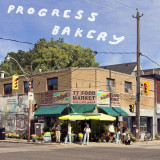
Kneading dough is tricky – you should know how it’s supposed to feel. If you try too hard you could make it worse. It’s a beautiful practice – creation with a gentle touch, to work at something so it can be left alone. “If it’s too drawn out it’s awful. It’s easy to give too much.” Dance in the mirror. Contemplate your veiny hands. Who do they remind you of?
You begin by mixing flour and water. “What happens when your people die? Why’d they move the rock to the other side of Ulster Park?” Eliza Niemi asks two seemingly unrelated questions in a rising melody with guitar accompaniment, like fingers playing spider up to the nape of your neck. Gentle pressure. Strands of gluten form to bind the mix. A new question lingers in the binding. When she admits “but I don’t know how to tell if I’m feeling it or not,” that question surfaces through the text. It is reiterated throughout the album. When I’m working with dough I think the same thing to myself.
On Progress Bakery, her second album as a solo artist, Eliza knows to leave some questions alone – to let juxtaposition and tension be the proof. It doesn’t have to be hard. The feelings and revelations they provoke rise in the heat. The smell is sweet. Crispy on the outside and soft all the way through. She playfully slip-slides through words and sounds and images, delighting in surprise, skimming ideas like stones cast across clear water, touching down briefly with uncommon grace.
The question provoked between those opening lines resurfaces in the strands between songs – “Do U FM” is fully formed and beautifully layered, while “Novelist Sad Face” is a short, acapella rendering of gentle curiosity. What is holding these ideas together? Some songs demand more, seem to carry a whole load – eventually the skipping stone will halt to sink and resume its idle duty – while others drift in and out of focus, the way thoughts and dreams become interwoven before the mind is sunk into true sleep.
Music and words don’t always have to interact. Where she decides to keep them apart gives a new contour to where and how she puts them together. The kind of thing you’re supposed to take for granted with songs and their singers comes alive in Eliza’s hands – the little miracle of mixing, kneading, stretching, and stopping.
So often on Progress Bakery, Eliza teases out truth and meaning by asking questions. “Do I wanna be crying?” “Do you want me good or do you want me bad?” “Do I need an eye test?” “I’m writing songs in my head while you’re going over stuff with me — is that cruel??” In “Pocky” Eliza ends with a question that feels to me like the actual biography, succinct and revealing:
I don’t wanna be made to see
I just wanna ask “what’s that?”
Grace that ought to be rare, but in its care and precision is offered humbly, with great generosity, and without announcing itself. Eliza’s simple, miraculous music is given further form and shape by a group of collaborators – invaluable guest musicians Jeremy Ray, Evan Cartwright, Steven McPhail, Kenny Boothby, Ed Squires, Carolina Chauffe, Dorothea Paas, Louie Short, and Avalon Tassonyi. Together with Louie Short, who recorded, mixed, and produced the album along with Jeremy Ray and Lukas Cheung, Eliza has cultivated a richness in sound and texture that prods and provokes the ticklish ear. Barely audible guitar tinkering, a brief lo-fi field recording of trumpets, the harmonic clicking of a looped synthesizer, a flourish of reeds, a child’s conversation, each uncanny sound perfectly placed, rippling out under a soft breeze.
Lay in bed alone at night and ask aloud to the stillness,
“What were you doing at the Albuquerque Airport?
What were you doing there??”
And hear your question answered by a dream of swelling, undulating cellos. Try to grasp at the melody and structure. It’s not an answer (if there could be one), but it moves deeper, closer to the weird layer of fleeting moments and disconnected images, barely perceptible at its core. Wait for the dream reel to click into place.
Eliza took me for a ride in Nicole (her beloved Dodge Grand Caravan) and told me she’d been thinking of the album as an embodiment of transition – and I think every transition, known or unknown, carries the weight of new meaning, skittering off the surface tension of life as you know it, creating ripples, sometimes bouncing off and sometimes breaking through. There is a trick you can use to tell if a dough is glutinous enough. You’re supposed to stretch it out as thin as you can without breaking it and hold it up to the light. If you can see through, even if it renders the world murky and uncertain, you should leave it alone. I love this trick. It’s one that Eliza seems to know intuitively: work gently and ask questions and don’t always expect answers, and when you can, take a glimpse at something new, and then leave.
debe ser publicado en 04.04.2025
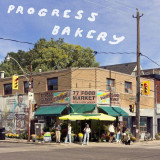
Kneading dough is tricky – you should know how it’s supposed to feel. If you try too hard you could make it worse. It’s a beautiful practice – creation with a gentle touch, to work at something so it can be left alone. “If it’s too drawn out it’s awful. It’s easy to give too much.” Dance in the mirror. Contemplate your veiny hands. Who do they remind you of?
You begin by mixing flour and water. “What happens when your people die? Why’d they move the rock to the other side of Ulster Park?” Eliza Niemi asks two seemingly unrelated questions in a rising melody with guitar accompaniment, like fingers playing spider up to the nape of your neck. Gentle pressure. Strands of gluten form to bind the mix. A new question lingers in the binding. When she admits “but I don’t know how to tell if I’m feeling it or not,” that question surfaces through the text. It is reiterated throughout the album. When I’m working with dough I think the same thing to myself.
On Progress Bakery, her second album as a solo artist, Eliza knows to leave some questions alone – to let juxtaposition and tension be the proof. It doesn’t have to be hard. The feelings and revelations they provoke rise in the heat. The smell is sweet. Crispy on the outside and soft all the way through. She playfully slip-slides through words and sounds and images, delighting in surprise, skimming ideas like stones cast across clear water, touching down briefly with uncommon grace.
The question provoked between those opening lines resurfaces in the strands between songs – “Do U FM” is fully formed and beautifully layered, while “Novelist Sad Face” is a short, acapella rendering of gentle curiosity. What is holding these ideas together? Some songs demand more, seem to carry a whole load – eventually the skipping stone will halt to sink and resume its idle duty – while others drift in and out of focus, the way thoughts and dreams become interwoven before the mind is sunk into true sleep.
Music and words don’t always have to interact. Where she decides to keep them apart gives a new contour to where and how she puts them together. The kind of thing you’re supposed to take for granted with songs and their singers comes alive in Eliza’s hands – the little miracle of mixing, kneading, stretching, and stopping.
So often on Progress Bakery, Eliza teases out truth and meaning by asking questions. “Do I wanna be crying?” “Do you want me good or do you want me bad?” “Do I need an eye test?” “I’m writing songs in my head while you’re going over stuff with me — is that cruel??” In “Pocky” Eliza ends with a question that feels to me like the actual biography, succinct and revealing:
I don’t wanna be made to see
I just wanna ask “what’s that?”
Grace that ought to be rare, but in its care and precision is offered humbly, with great generosity, and without announcing itself. Eliza’s simple, miraculous music is given further form and shape by a group of collaborators – invaluable guest musicians Jeremy Ray, Evan Cartwright, Steven McPhail, Kenny Boothby, Ed Squires, Carolina Chauffe, Dorothea Paas, Louie Short, and Avalon Tassonyi. Together with Louie Short, who recorded, mixed, and produced the album along with Jeremy Ray and Lukas Cheung, Eliza has cultivated a richness in sound and texture that prods and provokes the ticklish ear. Barely audible guitar tinkering, a brief lo-fi field recording of trumpets, the harmonic clicking of a looped synthesizer, a flourish of reeds, a child’s conversation, each uncanny sound perfectly placed, rippling out under a soft breeze.
Lay in bed alone at night and ask aloud to the stillness,
“What were you doing at the Albuquerque Airport?
What were you doing there??”
And hear your question answered by a dream of swelling, undulating cellos. Try to grasp at the melody and structure. It’s not an answer (if there could be one), but it moves deeper, closer to the weird layer of fleeting moments and disconnected images, barely perceptible at its core. Wait for the dream reel to click into place.
Eliza took me for a ride in Nicole (her beloved Dodge Grand Caravan) and told me she’d been thinking of the album as an embodiment of transition – and I think every transition, known or unknown, carries the weight of new meaning, skittering off the surface tension of life as you know it, creating ripples, sometimes bouncing off and sometimes breaking through. There is a trick you can use to tell if a dough is glutinous enough. You’re supposed to stretch it out as thin as you can without breaking it and hold it up to the light. If you can see through, even if it renders the world murky and uncertain, you should leave it alone. I love this trick. It’s one that Eliza seems to know intuitively: work gently and ask questions and don’t always expect answers, and when you can, take a glimpse at something new, and then leave.
debe ser publicado en 04.04.2025

Kneading dough is tricky – you should know how it’s supposed to feel. If you try too hard you could make it worse. It’s a beautiful practice – creation with a gentle touch, to work at something so it can be left alone. “If it’s too drawn out it’s awful. It’s easy to give too much.” Dance in the mirror. Contemplate your veiny hands. Who do they remind you of?
You begin by mixing flour and water. “What happens when your people die? Why’d they move the rock to the other side of Ulster Park?” Eliza Niemi asks two seemingly unrelated questions in a rising melody with guitar accompaniment, like fingers playing spider up to the nape of your neck. Gentle pressure. Strands of gluten form to bind the mix. A new question lingers in the binding. When she admits “but I don’t know how to tell if I’m feeling it or not,” that question surfaces through the text. It is reiterated throughout the album. When I’m working with dough I think the same thing to myself.
On Progress Bakery, her second album as a solo artist, Eliza knows to leave some questions alone – to let juxtaposition and tension be the proof. It doesn’t have to be hard. The feelings and revelations they provoke rise in the heat. The smell is sweet. Crispy on the outside and soft all the way through. She playfully slip-slides through words and sounds and images, delighting in surprise, skimming ideas like stones cast across clear water, touching down briefly with uncommon grace.
The question provoked between those opening lines resurfaces in the strands between songs – “Do U FM” is fully formed and beautifully layered, while “Novelist Sad Face” is a short, acapella rendering of gentle curiosity. What is holding these ideas together? Some songs demand more, seem to carry a whole load – eventually the skipping stone will halt to sink and resume its idle duty – while others drift in and out of focus, the way thoughts and dreams become interwoven before the mind is sunk into true sleep.
Music and words don’t always have to interact. Where she decides to keep them apart gives a new contour to where and how she puts them together. The kind of thing you’re supposed to take for granted with songs and their singers comes alive in Eliza’s hands – the little miracle of mixing, kneading, stretching, and stopping.
So often on Progress Bakery, Eliza teases out truth and meaning by asking questions. “Do I wanna be crying?” “Do you want me good or do you want me bad?” “Do I need an eye test?” “I’m writing songs in my head while you’re going over stuff with me — is that cruel??” In “Pocky” Eliza ends with a question that feels to me like the actual biography, succinct and revealing:
I don’t wanna be made to see
I just wanna ask “what’s that?”
Grace that ought to be rare, but in its care and precision is offered humbly, with great generosity, and without announcing itself. Eliza’s simple, miraculous music is given further form and shape by a group of collaborators – invaluable guest musicians Jeremy Ray, Evan Cartwright, Steven McPhail, Kenny Boothby, Ed Squires, Carolina Chauffe, Dorothea Paas, Louie Short, and Avalon Tassonyi. Together with Louie Short, who recorded, mixed, and produced the album along with Jeremy Ray and Lukas Cheung, Eliza has cultivated a richness in sound and texture that prods and provokes the ticklish ear. Barely audible guitar tinkering, a brief lo-fi field recording of trumpets, the harmonic clicking of a looped synthesizer, a flourish of reeds, a child’s conversation, each uncanny sound perfectly placed, rippling out under a soft breeze.
Lay in bed alone at night and ask aloud to the stillness,
“What were you doing at the Albuquerque Airport?
What were you doing there??”
And hear your question answered by a dream of swelling, undulating cellos. Try to grasp at the melody and structure. It’s not an answer (if there could be one), but it moves deeper, closer to the weird layer of fleeting moments and disconnected images, barely perceptible at its core. Wait for the dream reel to click into place.
Eliza took me for a ride in Nicole (her beloved Dodge Grand Caravan) and told me she’d been thinking of the album as an embodiment of transition – and I think every transition, known or unknown, carries the weight of new meaning, skittering off the surface tension of life as you know it, creating ripples, sometimes bouncing off and sometimes breaking through. There is a trick you can use to tell if a dough is glutinous enough. You’re supposed to stretch it out as thin as you can without breaking it and hold it up to the light. If you can see through, even if it renders the world murky and uncertain, you should leave it alone. I love this trick. It’s one that Eliza seems to know intuitively: work gently and ask questions and don’t always expect answers, and when you can, take a glimpse at something new, and then leave.
debe ser publicado en 21.03.2025

Shop Assistants formed in Edinburgh in 1984 and quickly gained a cult following, playing with kindred spirits the Pastels and the Jesus & Mary Chain and gaining positive coverage in fanzines and the music press. Their Shopping Parade EP and Safety Net single both hit the top of the indie charts and charmed listeners with their unique melodic blend of punk rock and 60s pop. The band signed to Geoff Travis' new Chrysalis Records imprint, Blue Guitar, in 1986 for the release of their debut album 'Will Anything Happen'. The album has since become a cult classic and is an essential listen for fans of indie, dream-pop, and shoe gaze. Stand-out songs include the lead single 'I Don't Wanna Be Friends With You', 'All Day Long', and 'Somewhere In China'. This newly expanded edition has been remastered from the original master tapes and compiled in collaboration with David Keegan and Laura McPhail from the band. CD 1 features the newly remastered version of 'Will Anything Happen' accompanied by B-sides from the era, plus previously unreleased instrumental demos from 1986. CD 2 contains a further 18 previously unreleased tracks including recently unearthed alternate versions and rough mixes from the making of the album, live recordings from London and Deinze, and a John Peel session featuring a cover version of Motorhead's 'Ace Of Spades'. The discs are housed in a 6-panel digisleeve with a 12-page booklet featuring lyrics and photographs.
debe ser publicado en 26.07.2024

Bekannte Musiker:innen erzählen von den Umständen, in denen man im deutschsprachigen Raum Musik macht. "Never get old" und "Sex, drugs and rock"n"roll". Das sind die Mythen. Und die Koordinaten, zwischen denen sich der Popkosmos aufspannt. Aber wie sieht das eigentlich im wahren Leben aus? Hinter allen Bühnen und Kulissen: Wie wirkt sich das Alter auf eine Musiker:innenkarriere aus? Kann ein Frank Spilker dem Alter gelassener entgegengehen als eine Christiane Rösinger? Wird es, wenn man älter wird, auch schwieriger, mit Musik Geld zu verdienen? Lohnt sich das überhaupt finanziell, Musiker:in zu sein in Deutschland? Oder sind das eh alles reiche Erb:innen? Über Besuche beim Jobcenter und jünger retouchierte Bandfotos liest man selten in Musiker:innen-Interviews. Alles, was den Mythos zum Wackeln bringen würde, wird lieber nicht angefasst. Schließlich verkauft man nicht nur Musik, sondern auch einen Traum. Oder? "Kommst du mit in den Alltag" bricht mit allen Tabus und bringt in 18 Gesprächen Künstler:innen unterschiedlichen Geschlechts und Backgrounds zusammen, um sie einmal über all das reden zu lassen, was sonst ungesagt bleibt: Wie reagieren eigentlich Freunde und Familie auf den Musiker:innen-Job? Kann man überhaupt Kinder haben, wenn man beruflich kreativ ist? Und wie hält man als Künstler:in Freundschaften zu festangestellten Eight-to-Fivern? Tut man sich etwa gut daran, jemanden zu ehelichen, damit man sich auch "wenn es mal nicht so läuft" noch den Zahnarzt leisten kann? Gespräche u. a. mit Albertine Sarges, Peter Hein (Fehlfarben), Sophie Löw (Culk), Masha Qrella, Carsten Friedrichs (Superpunk), Christin Nichols, Christiane Rösinger, Hendrik Otremba, Michael Girke (Jetzt!), Frank Spilker (Die Sterne), Katharina Kollmann (Nichtseattle), Jan Müller (Tocotronic), Jana Sotzko, Jonas Poppe (Oum Shatt), Julie Miess, Tobias Bamborschke , Bernadette La Hengst, Max Gruber (Drangsal), Paul Buschnegg (Pauls Jets), Paul Pötsch (Trümmer), Pedro Crescenti (International Music), Rick McPhail (Tocotronic) ...
debe ser publicado en 14.06.2024

During the later stages of 2020, Damien Duque (City of Dawn) and M Cody McPhail (ATOP) decided to begin writing a collaborative album together. Their styles, although different, compliment each other extremely well and it became apparent that this project would end up flowing out of them with ease. They shared wav files and recording parts individually at each other homes over a few months. City of Dawn's smooth reverbed tonal compositions mixed with ATOP's rougher and meandering synth lines gives the Starwind lp its expansive and cosmic qualities.
debe ser publicado en 13.06.2022
