Search:memorial home
- 1
'World' is the debut album dreamt up by Barcelona based DJ / Production duo Memorial Home. Comprising of Paul Roux (France) and Jeremy Pinchasi (Belgium), 'World' is the exciting result of their shared desire to push the limits of their own brilliant musical foresight. It's an ambitious 20 track longplayer which effortlessly showcases the incomparable sonic space shared between both musical masterminds.
Sitting somewhere just to the left of Nicolas Jaar, Radiohead, Massive Attack, Mike Dehnert and Ostgut Ton, Memorial Home has managed to craft an album absolutely unique to their sound, impossible to categorise and sure to catch the attention of music lovers of all shapes and sizes. Techno without a dancefloor, experimental electronica fit for the warehouse raves. It's an exciting, perfectly confusing album which simply works wonderfully.
Heavily textured in incredible atmospherics, dub effects and crisp, clear percussion, 'World' spreads over an excellent array of individual tracks full of groundbreaking musical magic. Incorporating a stunning fusion of live instrumentation and electronic craftsmanship, 'World' is an audio adventure into emotive soundscapes, with a clear focus on the subtle saturation of melancholy. It's a soundtrack for a dystopian film yet to be written. A sonic painting for the coming winter months where the trees are all but dead and frozen; and the ground a thick layer of glowing white snow.
Memorial Home are the founders of the independent label Rapid Eye Movement, which has seen a breadth of incredible EPs riding the balance between experimental Techno and introspective electronica. They first met by random chance in their newly adopted home of Barcelona, Spain. This unexpected encounter quickly developed into a full-fledged musical kinship through their shared interest in crafting cinematic, experimental techno music. Each release from the label and duo showcase their clear passion to unearthing sounds beyond the expected. With their debut LP about to drop, the future is looking certain for the duo, the label, and the changing face of modern day electronic music.
Hot on the heels of Rapid Eye Movement's journey of discovery and growth comes the EP 'Split: Remixes' featuring reworks of the quartet of cuts originally signed by label founders Memorial Home and VII Circle.
Invited to apply their own reflections onto the material are rising producers Nur Jaber and Wrong Assessment as well as renowned artists on the underground experimental scene Edit Select and Reggy Van Oers.
First up is Nur Jaber's take on VII Circle's 'Metaphysical Functions' showing how the young Berlin-based Lebanese artist is as much inspired on remix duties than in crafting her already much acclaimed productions. The perfect mixture of dark and intense driving techno beat with haunting ambient-driven melodic motifs and dramatic breakdowns encompasses much of what her sophisticated sense of sonic exploration is about.
Up next on a heavier kicking note is 'Dogma' refashioned by Milanese fellow Wrong Assessment who transmits his vision of both minimal and hard pounding techno by merging a strait rugged beat with undulating synth lines and bouncy cymbals that will drive the audience to an insane rave-spirited dance floor venture.
Following the path, Tony Scott a.k.a Edit Select's interpretation of Memorial Home's 'Second Floor' is a clear example of the unique and forward-thinking sound that the Scottish techno scene 'veteran' has developed throughout the years. Deftly combining a tension-building drum and bassline work with layers of hypnotic synth textures that makes the track both suggestive and trippy-hitting in equal measure.
Concluding the journey is Reggy Van Oers (RVO)'s rework of Memorial Home's 'Ampere' which evinces this quest for organic and mental techno soundscapes inspired by classical and cinematic music, characterising the both complex and powerful crafting signature of Dutch Telemorph label's owner.
Between dark shadows and brightness, REM confirms with this new release that quality and free-minded artistry are the key pillars of the platform's curation philosophy.
With the Split EP, the fourth release of their own label Rapid Eye Movement, Memorial Home and VII Circle head the way with two original cuts both and sign another stunning dark and hypnotic techno odyssey with a strong emotional pattern.
The opening track 'Metaphysical Functions', starting with a slow building atmospheric overture, encompasses much of what the VII Circle's sophisticated sound is about. A combination of compelling and dark pulsing kick drums with deep and melodic synth lines and dramatic ethereal breakdowns.
'Dogma' is stamped by a strait cavernous and rugged beat, powerful and catchy basses as well as propelled by uplifting and immersive melodic motifs that have a fierce cosmic appeal.
Following the path, Memorial Home delivers with 'Second Floor' an intense ambient-driven piece, harnessing haunting and misty cinematic textures with a tension-building repetitive bassline which provides a rising magnetic and powerful effect.
Closing the journey or rather keeping the flame high and firm till the deep end, 'Ampere' evinces a more pin-sharp and frantic percussive techno approach overlaid with highly suggestive atmospheric swirling synth effects.
Four captivating weapons which display an aesthetic quest focused and driven both by dancefloor-orientated climax and underground-rooted emotive escapism.
Devoting an album entirely to the Persian poetry of Jami, aluminary of the Sufi tradition, was one of Haji Ghulam Farid Sabri"s cherished ambitions for a long time. This dream came true for the Qawwali icon when he visited Berlin in July 1991 at the invitation of the Heimatklänge ("Home Soundsfrom Home Planet Earth") festival, accompanied by his 14-year-old son Amjad. After Ghulam Sabri"s untimely death on the 5th of April 1994, Amjad Sabri became his musical successor, thereby passing on the Sufi Qawwali mastership of the Sabri family to the next generation. This all came to an end when Amjad was murdered for his Sufi beliefs in the streets of Karachi on the 22nd of June 2016. Thus, Jami is not only a memorial to the Sufi Muslim tradition and the Persian poet but also to Ghulam Farid Sabri and Amjad Sabri. It remains their only record in Farsi.
- In The Beginning
- Demolition
- Reality Of Living In A Construction Site
- Water Song
- Steel I-Beams
- Taking Out The Trash
- The First Dinner
- The New Neighbors
- House For Sale
- And Now The Memory
LP comes with 24 page 8.5x11 full color booklet. In the blurred and memorial hallways of bygone time, to remember is to wander between the rooms of our own experiences, to appear and disappear, like a play of overlapping shadows. In music set drifting through the architecture of his own memories, Moses Brown weaves a story that oscillates between the past and the present, like a mason turning over stones to reconstruct his childhood home in this beautiful and disquieting soundtrack to growing up. On Stone Upon Stone, Moses' first solo LP attributed to his given name after several releases under the brilliant and despondent "Peace de Resistance" moniker, he moves sidelong into the realm of soundtracks with this score to the construction of his childhood home in a story spanning 1993-2023. Laid out in lush and provocative minimalist instrumentals, the album unfolds a story about the planning, partial construction, and dissolution of a home in constant state of becoming through the lens of its only child, coming of age under flux. Influenced by the approach of friends and collaborators Straw Man Army's OST to Charles Darwin's Voyage of the Beagle, Stone Upon Stone was originally intended as a soundtrack to a novel of the same name by Wieslaw Mysliwski, an epic set in Poland about a family's construction of a mausoleum. Struck by the story's parallels with his own family's project, he got the idea to complete the work as a personal narrative. Created from layers of different mellotron voices then separated, re-amplified, and recorded as if they were a sitting chamber orchestra, the music eerily blurs the line between human and synthetic, giving way to something akin to a memory with it's blurriness of fact and fiction. In the same spirit of association, this record is certainly influenced by other minimalists working within the confines of "soundtrack", like Philip Glass' North Star and the film work of Michael Nyman. But Brown's soundtrack works within its own peculiar depth of field, living in the listener's imagination, thriving in its own sense of loneliness, aspiration, and confusion that only childhood can evoke. Listeners will feel the entropy of aging in Stone Upon Stone, like a memoir in cascading tones, that sets it apart from so much else in DIY music, and rewards with repeated listens. For Fans of Philip Glass, Kali Malone, Julius Eastman, Mica Levi, Roedelius.
- Hey You
- See Emily Play
- The Happiest Days Of Our Lives
- Another Brick In The Wall, Pt. 2
- Have A Cigar
- Wish You Were Here
- Time
- The Great Gig In The Sky
- Money
- Comfortably Numb
- High Hopes
- Learning To Fly
- The Fletcher Memorial Home
- Shine On You Crazy Diamond (Pts. 1-5)
- Brain Damage
- Eclipse
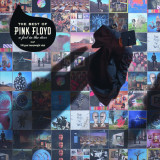
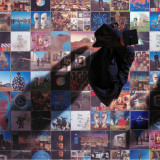
16-track greatest hits compilation by the legendary rock group. The album features some of the band's most popular songs, including “Another Brick in the Wall (Part 2)”, “Time”, “Money”, “Comfortably Numb”, and many more. Features original artwork, art directed by the late Storm Thorgerson.
- Prologue (The National Goal)
- Kelly Jones, Creative Director
- A Colourful Past
- Rocket Road
- Mission Control
- Nasa Tour
- Tricky Moe
- Kelly And Cole
- Run It Again
- Some Light Back
- Cole's Loss
- The Camera Angle
- Senator Stitch-Up
- Apollo 10 Takeoff
- Under The Stars (Kelly And Cole)
- The Artemis Version
- We're Going To The Moon
- The Interview
- Apollo Memorial
- Fly Me Home (Kelly And Cole)
Der Daniel Pemberton-Score zur RomCom "Fly Me To The Moon" von Regisseur Greg Berlanti mit Scarlett Johansson und Channing Tatum in den Hauptrollen, die im Juli 2024 in die Kinos kam und seit Dezember 2024 auf Apple TV+ läuft. Eine scharfsinnige, stilvolle Dramakomödie vor dem Hintergrund der historischen Mondlandung von Apollo 11 der NASA. Dabei balanciert Daniel Pemberton gekonnt zwischen der enormen Bedeutung der NASA-Mondmission und den komödiantischen und an Raubüberfälle erinnernden Episoden, während er gleichzeitig - mit Verweis auf Quincy Jones und dessen Soundtracks zu "The Italian Job" und "Big Band Bossa Nova" die spielerische Energie und Leichtigkeit der Spät-1960er einfängt.
A fully licensed, analogue reissue -- sure, on cassette and not on vinyl, that's a
long story -- of the first Index LP, originally released in 1967
The "Black Album" is one of the all-time holy grails of psychedelia, with originals going
for more than $4,000. It is an album "with a really druggie sound, full of feedback and
fuzzy guitars. The vocals, when present, are not easily heard. The cover of 'Eight Miles
High' is very good, probably one of the best cover versions I have ever heard. The
original songs all follow a similar pattern as the covers, with hazy guitar riffs and loud
rhythms. The last track is particularly noisy and unstructured. Hidden in amongst the
echoing canyons of sound there's some really snotty punk attitude wrapped up in
trippy velvet fuzz."
This record is magnificent-- bizarre, atmospheric, amateurish (in the best of all
possible ways). It has a wonderful bleak sound, both droning and murky... the atonal
sound of 1960's rock that would leave the most lasting impression on what would
become future punk, post-punk and indie rock artists.
"Much has been written about this incredible band. Much of it isn't true. Index was
formed in the early spring of 1967 in Grosse Pointe, Michigan. I was 18 years old
when I met a chain-smoking 16-year-old named Gary Francis. Our conversation soon
got around to rock and roll. He told me that he and his friend, John Ford, were forming
a band. I told him that I played drums and we arranged a jam session at John's home
on Lakeshore Drive. Our first meeting was incredible. Our sound was full and
powerful. John's lead guitar techniques were fresh and innovative. After our first
sessions we knew we had something special. Index was born. Soon we hit the local
'sock hop' circuit, playing at high schools and teen clubs in the area. We poured our
unique sound out at The Hideout, Undercroft and G.P. War Memorial every weekend.
One afternoon John pulled out a new album he had been listening to. It was a new
band with a mind-shattering sound called 'The Jimi Hendrix Experience.' John played
some songs he had written inspired by this 'psychedelic' sound. Over the next few
days, 'Fire Eyes,' 'Shock Wave' and 'Feedback' were written. This album was recorded
in December of 1967 at the Ford estate. It is recorded in mono with literally one
microphone and with all instruments and vocals recorded at the same time. The cover
photo is of founders of a singing group John joined at Yale. The stiff, board- like
figures seem to characterize the exact opposite of this musical collection. This
reissue is taken from the original recordings. Nothing has been added and all songs
are in their original length. Over the years various bootleg copies of this album have
surfaced but this is the original work." --Jim Valice
Joni Void, the artistic persona of Montréal-based French-British producer Jean Néant (he/them) returns to songcraft on their warmest and most welcoming record yet, where the acclaimed sampledelic sound collagist chills out with an emotionally resonant song cycle tinged by downtempo, lo-fi, avant-pop, and trip-hop. Guests include Haco, Ytamo, Sook-Yin Lee, Pink Navel and N NAO. Every Life Is A Light expands on Void's recent stylistic turn towards more languorous and mellow lo-fi production, foreshadowed by the drifting looseness and ambient bricolage of their preceding experimental sound-art record. This transitional sensibility now shapes more defined song structures and styles, with loops are given time and space to unspool, and rhythms shot through the softer-focus lens of trip-hop and dub. Every Life Is A Light swaps the twitchy insistence of Void's acclaimed early albums for a newfound lightness and suppleness, still imbued with all the restlessness, sonic detailing, and emotional resonance that made their name. The neurotic brokenmachine kinetics of earlier Void, summarized by Sasha Geffen as "drawing despair and wonder from within the vast unfeeling of digital communication" in an 8.0 Pitchfork review, may be chilling out, but Void is becoming an ever better conjurer of hauntological feeling. Every Life Is A Light summons this in a comparatively buoyant, benevolent, head-nodding journey more open to tenderness and modest joys. Perhaps it's the sound of Void at greater peace with themselves and the world, despite the bittersweet cost: even as it channels grief, memorializing comrades and companions recently deceased, this album wants light. Void's raw materials continue to draw heavily from samples (their own Walkman cassette fieldrecordings and songs by others) and from a wide community of musical guests. Vocalists Haco on "Time Zone" and Ytamo on "Cloud Level" help levitate what could be lost tracks from a mid-90s Too Pure Records compilation of skewed-lounge electronica. Canadian musician Sook-Yin Lee sings on lead single "Vertigo," a sinewy 80bpm tape-loop and bassline groove propelled by psychedelically-layered lyrics that eventually turn the song in on itself entirely, like Grace Jones' "Nightclubbing" covered by Animal Collective. One of Void's greatest hip-hop loves is the Ruby Yacht collective; charter member Pink Navel drops some brilliant verses on "Story Board." The album's two minimal tracks, an extended piano loop set to a slow beat and shimmering electronics on "Muffin-A Song For My Cat" and the languid sampled bass riff and breakbeat of "Event Flow," are perhaps most overtly `lofi chill.' Indeed the whole album could be said to sit adjacent to those viral (if not already AI-generated) genre trends, which maybe begs the question on a lot of our minds: can specificity and authenticity of musical materials still be heard, still meaningfully signify substance and difference, still matter? Perhaps a question that fades in comparison to the career break Void could catch by landing on generic streaming playlists. More likely, these tracks remain too off-kilter, too genuinely lo-fi and ineffable, and too disqualified by the status of its peasant rights-holders, to catch the algos. Context remains the poor cousin of content. Meanwhile Void marches on, as a tireless organizer of local music events, bouncing around and often living in DIY venue, depending on the latest apartment eviction. With an ubiquitous polaroid camera in tow, they also document each communal happening with a single shot (and often a blinding flash bulb): a memory and metaphor for lives illuminated preciously, singularly, `imperfectly' in the moment. Dozens of these polaroids adorn the album's back cover and inner sleeve art in grid-like montages, as a fitting analog for the careful construction, grainy intimate materiality, and ephemeral feeling of these songs. Every Life Is A Light is Joni Void's most coherent and congenial record while relinquishing none of their experimentalist acumen as a producer or emotional attunement as a composer. Instead these qualities flourish, on an album that lights a humble flame for the fragile promise of homespun creative collaboration as unalienated labour and therapeutic communion, making an enchantingly idiosyncratic contribution to downtempo sample music along the way. Thanks for listening.
Gregory T.S. Walker’s Minstrels & Minimoogs was self-published by a young, nomadic composer and virtuoso in 1988 to accompany an immersive multimedia performance at the University of Colorado Boulder’s Fiske Planetarium. Created with this outer, and other, world setting in mind, the four tracks find Walker stretching toward an ancient-to-future vision where Egyptian myths and Hieronymus Bosch-ian tableaus are rendered in a screaming three dimensional circuitry of electronic drums, synth guitars, and, of course, Minimoog. Given the musical terrains and outmoded topics traversed, and that this entirely DIY effort was originally released as a micro one-sided 12” edition, Minstrels & Minimoogs is as perplexing and euphoric a document lost-to-time as it is now found.
Born in 1961 into an intensely musical family spanning four generations, Gregory’s mother Helen Walker-Hill was a noted musicologist specializing in the rediscovery and work of historical Black female composers, while his father, George Walker, was the first African American composer to win the Pulitzer Prize for music. Both parents studied with the famed (and famously strict) Nadia Boulanger in Paris in the 1950s, and held to lofty aesthetic standards in their home life. Walker began studying the violin as a child, but when a burgeoning interest in the electric guitar and rock music as a teen manifested, it was largely verboten in the household. The rule was that the music played in the home was to be acoustic and classical. Although the elder Walkers eventually relented and allowed Gregory’s guitar to be plugged in for a brief interval on the weekends, the remaining days he settled for strumming it sans amplification.
Gregory, conditioned and eager for a life in music but looking to get out from under the influence and yoke of his famous composer father, ultimately chose to study computer music at the University of California at San Diego, where he earned a Master of Arts. This was followed by another MA in electronic music composition at that hotbed of West Coast experimental music, Mills College. Intermedia and multimedia in the arts was the rage in the 1980s, and Mills was one of the centers for it; audacious spectacle meeting visionary performance, such as one of the realizations for Anthony Braxton’s music for multiple orchestras a young Gregory performed in with his violin.
After a series of solo synthesizer concerts around California, Gregory followed a girlfriend on a mid-country move to Boulder, Colorado. After picking up yet another composition degree at University of Colorado Boulder, his life as a composer really started, writing a piece for extended technique for guitar, a passacaglia for vocoder and orchestra, as well as Minstrels & Minimoogs.
Envisioned as a multimedia performance such as the kind he’d experienced at Mills (which was all but unknown in Boulder at the time), Gregory roped in a number of college going or aged friends of varying skill levels and musical sympathies to accompany him with distorted sax or oblique spoken interludes. Confronted with a lack of finances, but driven to get his ideas captured in a complete musical package, the album was recorded in his brother’s apartment. If not every player assembled was on Gregory’s virtuosic level, so be it; it was more about capturing the spirit of his intentions and embracing the serendipity of mistakes.
An inspired attempt at world building, Minstrels & Minimoogs draws on the deep well of musical knowledge Gregory gathered from his parents and teachers, but all the while subverting that historical basis by incorporating mutant strains of prog and pop music. The work accumulated is not unlike the playful 1980s work of Gregorio Paniagua, where medieval estampies and rondeaus are wrenched into an anachronistic present where Hildegard Von Bingen and Kate Bush are contemporaries. Ars nova, new art, a 20th century minimalist jester and troubadour.
A one sided LP was the cheapest option Gregory found to have Minstrels & Minimoogs memorialized on vinyl, so somewhere between 50 to 100 copies were pressed. There was no distribution, outside of copies that were handed out to friends or sold at the performances at the planetarium. Gregory T.S. Walker’s cosmic-futuristic forays into oblique pop and baroque subversion could forever reside perfectly in both the domed simulacrum of our universe for which it was composed, in the formats it is being reintoduced now, and our own biblical firmament. For in the words of Gregory, straight from the original liner notes: “God Is A Minimoog”
Gregory T.S. Walker’s Minstrels & Minimoogs arrives again August 23, 2024 on vinyl and digitally as part of uncommon¢ (“uncommon sense”), an open-ended, serialized endeavor from Freedom to Spend that provides new meaning for rarefied recordings from music's outermost fringe.
Cathartic avant-rock, literate DIY folk & experimental composition exploring displacement, love, climate change, belonging & the places we call home - RIYL Jim O’Rourke, Richard Youngs, This Heat, Richard Dawson, Flying Nun. ‘Real Home’ is the new album by the Manchester-born, London-based artist Kiran Leonard. His sixth album proper (not including innumerable tour-only CD-Rs and short-run cassettes), since his precocious debut in 2013, ‘Real Home’ finds Leonard invigorated by inspiration and experience, making passionate, literate, and mercurial music that explores displacement, love, memory, climate change, connections to home and more. Encompassing songs recorded after moving to South London, ‘Real Home’ reflects on ideas of belonging and domesticity through folkloric, stream-of-consciousness songwriting. Across nine tracks, Leonard traces lived impressions of the household and the city, expressing sentiments of dislocation, alienation and stasis, but contentment too. Infusing the avant-rock effervescence, terraced dynamics and visionary lyricism of his music with what he defines as a greater sense of openness, Leonard is as versatile, fervent and imaginative as ever on ‘Real Home’, yet his music is somehow more intimate, affecting, and acutely expressive. Shaped by dual considerations of simplicity and formalism, ‘Real Home’ is by turns beautiful, allusive, and ruminative, an album on which Leonard considers what his songs have resembled in the past and what they mean now. In recent years, Leonard has crafted eloquent chamber music inspired by the likes of James Joyce and Clarice Lispector (‘Derevaun Seraun’), responded to contemporary politics and communication breakdown in the digital age (‘Western Culture’), and compiled solo works and ensemble recordings for a longform ode to Jonas Mekas and to one of Leonard’s enduring themes; home (‘Trespass On Foot’). On ‘Real Home’, Leonard reiterates this abiding thematic focus yet ascends to new, different heights, in music of cathartic delicacy and dissonance where all the myriad dimensions of his work to date seem to crystallize. There are sinuous songs about struggle and defying the pace of city life through drift and diversion (‘Pass Between Houses’), stirring songs of intense feeling and crescendo, described as a form of speculative detective fiction (‘Theatre for Change’). There are touching solo piano ballads (the title track), symbolic contentions with carbon capture and climate change (‘Utopia of Bog’), modes of experimental minimalism (‘Void Attentive’), and other profuse feats of compositional range, embroidered with wild tendrils of narrative and lyrical depth. A record to pore over, and get lost in. Exemplifying the vast aesthetic scope of Leonard’s music, lead single ‘My Love, Let’s Take The Stage Tonight’ is inspired by country lodestar Hank Williams, Russian poetry and a late period love poem by William Carlos Williams. Yet for Leonard, the song signals a sense of accessible materiality, and is the product of a more linear approach to writing songs: “My imitation of the great Hank Williams, in spirit if not in substance…This is one of the best efforts on Real Home at a song-as-object. Looking at it now I realise I was trying to write a song that made itself known as a song to the listener, and I wonder whether that’s crucial if you want a song to transcend its context. And that this is either accomplished through a total openness – by being inviting, by laying the tricks of the song out plain to see, as Williams and his many ghostwriters did so well – or by adopting a knowing aloofness, positioning oneself against the listener but letting it be known that that’s what it’s doing. In this song I try both, but mostly the former: as in, I wanted to write a song where every line follows on from the next.” Imbuing the endlessly elaborate and inventive qualities of his music with a newfound streak of candid, clear-cut melodicism, Leonard has reached a special place in his artistry, on a record that feels familial, and expresses closeness. Assembled with affiliates including Lauren Auder, Otto Willberg, Jasper Llewellyn (caroline), Tom Hardwick-Allan (Shovel Dance Collective), Magda McLean (caroline, The Umlauts), Alex Mckenzie (caroline, Shovel Dance Collective), Isabelle Thorn (Dear Laika) & more, the recording process had a significant influence on the subject matter of ‘Real Home’, in sessions defined by close-knit camaraderie and artistic eccentricity: “The theme of the home obviously recurs throughout the record; the album was mostly recorded in domestic spaces with friends, and the name of the album is Real Home. I like the qualifier ‘real’, like you’re getting past the cloak of the word and towards the thing-itself…also nearly all the percussion in this record was recorded on items from my dad’s shed (jam jars, sandpaper, blocks of wood, etc). Real home record!” ‘Real Home’, like anything by Kiran Leonard, is a record of dazzling multiplicity. Yet it’s a companionable prospect with a central premise; a collection of songs where listeners old and new can find a home. An album led by a scene; of Leonard standing at the threshold, ready to welcome you inside. “Exceptional songs that linger” - The Guardian // “An autodidact of amazing talent & energy” – Pitchfork // “A ridiculous amount of talent…confrontational, celebratory, provocative or perverse – he manages all of these emotions & more” - The Quietus /
Dream team trio Better Corners – Valentina Magaletti, Sarah Register and Matthew Simms – have completed a staggering new album Continuous Miracles: Vol. 2 for state51 Conspiracy, and where their debut LP joyfully opened the door to a brand new room, this one strides purposefully inside.
Renowned drummer/percussionist Magaletti (Holy Tongue, Vanishing Twin, Moin), avant rock musician and in demand mastering engineer Register (Kim Gordon, Talk Normal) and multi-instrumentalist and modular obsessed Simms (Wire, MEMORIALS) inject an all-too-rare sense of childlike wonder and joy into their own inimitable collage of experimental rock, wonky dream pop, analog ambient, tape experimentation, avant percussion, modular electronics and noise music.
It is this sense of fun that led to one of the band’s “uncovers”: ‘Modulating De Niro’ began with a solo piano version of Bananarama’s ‘Robert De Niro’s Waiting’ which was then sent on a very long journey through modular synth patches and FX chains until it became the unrecognisable to the original and the majestic beast it is now. The album centres round the colossal 16- minute-long ‘Career Test’, a dynamic trip through glitch-enhanced noise, machine dub and the ambience of amplified rock music, to a transcendent, mind-expanding modern raga.
Like an industrial Gamelan played by a future civilisation who have never heard it, only read about it in ancient books, the song is formed from bowed treated guitars, hypnotic hand drums, water bowl and bells. It also has a suitably macabre genesis, as Register reveals: “I was visiting my aunt's house and slept in her bedroom. In the headboard of her bed are places for curiosities and heirlooms. In these spaces she had box after box of the ashes of pets of hers that I had known over the years…”
The latest suite by composer (and Stars Of The Lid co-founder) Adam Wiltzie took shape following a move north from Brussels into the Flemish countryside, although it was initially inspired by a recurring dream wherein “if someone listened to the music I created, then they would die.”
The album uniquely evokes and evades the allure of oblivion, keening between beauty and ruin, forever unresolved. Wiltzie cites the barbiturate of the title as both muse and sacred escape: “When you are sitting face forward on the daily emotional meat grinder of life, I always wished I could have some, so I could just fall asleep automatically and the feeling would not be there anymore.”
Recorded at Wilzie’s home studio, with strings added in Budapest at the old Hungarian National radio facility (Magyar Radio), the tracks feel simultaneously intimate and infinite, unfolding vistas glimpsed in an inner space.
Robert Hampson of English drone rock icons Loop mixed the album, further lending the music a sense of cinematic expanse and oblique hypnosis.
These are fugue states as much as fugues in a literal classical music sense—smeared epiphanies of uncertain memory and spatial dislocation, coaxed from the unconscious and set aloft.
Black Truffle is thrilled to announce a major archival release from legendary American composer and live electronics innovator Richard Teitelbaum, centred around his soundtrack for Suzan Pitt’s cult 1978 animation Asparagus. Best known to some listeners for introducing Europe to the Moog synthesizer as a founding member of Musica Elettronica Viva in Rome, Teitelbaum’s extensive and radically experimental body of work includes collaborative recordings with master improvisers like Anthony Braxton, Andrew Cyrille and George Lewis, intercultural experiments combining electronics with non-Western instruments such as the shakuhachi, works for computer controlled piano, and large-scale multi-media operas. Recorded at York University, Toronto in 1975–1976, ‘Asparagus (European Version)’ sprawls across both sides of the first LP. Discovered by composer Matt Sargent in Teitelbaum’s tape archive, this is a previously unheard major work for Moog modular and Polymoog synthesizers, unique in Teitelbaum’s oeuvre for its lushness and gently melodic quality. The music unfolds slowly, submerging lyrical melodies and burbling arpeggios into uneasy, glacially shifting harmonic swells, the luscious texture thickened with subtle changes of modulation and phase, calling up the shifting layers of Costin Miereanu’s classic Derives or the kosmische Musik tradition more than any academic synthesizer exercise. Teitelbaum incorporated much of this material into his soundtrack for Suzan Pitt’s Asparagus, which receives its first official release here. Asparagus, famously paired with David Lynch’s Eraserhead for a two-year run of midnight screenings at New York’s Waverly Theatre, uses hand-drawn and stop animation to unfurl an oneiric succession of images, beginning with a sequence in which the female protagonist defecates two stalks of asparagus, which multiply and float out of the toilet bowl to form the letters of the title. Teitelbaum’s soundtrack interweaves delicate drifting tones from the ‘European Version’ with contributions from Steve Lacy and Steve Potts on saxophones, George Lewis on trombone and Takehisa Kosugi on violin. Edited closely to the film, even without images the soundtrack proposes a surreal journey through floating synth tones, squealing horns, propulsive arpeggios, distant chatter, and an old-timey waltz. The final side of the set presents a new realisation of Teitelbaum’s text score ‘Threshold Music’, performed at a memorial concert at Roulette, New York in 2022 by Leila Bourreuil (cello), Alvin Curran (sampler and objects), Daniel Fishkin (daxophone), Miguel Frasconi (glass objects) and Matt Sargent (lap steel). The piece asks musicians to match their instrumental volume to that of the sounds of the environment in which they play, sometimes with the addition of recorded environmental sounds, reinforcing frequencies they encounter in listening deeply to their surroundings. Here the players use a field recording taken at Teitelbaum’s home in Bearsville, New York, their long tones and shimmering, glassy textures delicately emerging from the white noise of the location recording. Released with the full approval of both Richard Teitelbaum and Suzan Pitt’s estates, Asparagus is illustrated with striking images from Pitt’s film and accompanied by detailed liner notes by Francis Plagne. These previously unheard pieces shed new light on the work of a key composer in the American experimental tradition, offering up some of Teitelbaum’s most beautiful and engaging music.
Despite her pride in what she had created with The National's Aaron Desner, her faith in music in this new, unforgiving reality had started to falter. She realised in this moment that the one thing she could lean into was her own talent and workethic, after all her greatest ambition had always been to self-produce an album, and this was the moment.
Helped by her partner Sean Sroka (Ten Kills The Pack), who co- produced and together crafted the vision and balance between organic and synthetic production. The process of writing new album
'I'd Be Lying if I Said I Didn't Care' was a journey of catharsis and self-confrontation. Sometimes it gave her anxiety, sometimes it gave her a song. This is Hannah's first record on Lucy Rose's Real Kind Records (Bess Atwell, Samantha Crain, Memorial).
The free folk/jazz sound of modern Los Angeles. Featuring a heavy bunch of musicians and vocalists including Moor Mother.
"Fearlessly Accessing the Divine Spirit From Here on Out" is the vinyl debut from pianist, composer, and producer Diego Gaeta. He has previously released projects as Club Diego and with the trio Human Error Club (whose members Mekala Session and Jesse Justice helped produce this record). He has quickly become a fixture in a number of Los Angeles musical environments, working with Lionmilk, The Pan Afrikan Peoples Arkestra, Carlos Niño, Black Nile among others. This album is a synthesis of these many LA environments, and carries chamber, jazz, ambient, and folk influences, ultimately giving it an uncategorizable feel similar to works by Arthur Verocai or David Axelrod.
Gaeta recorded the initial ideas for the album by himself after experiencing a burst of creativity during the lockdown of 2020, in the aftermath of a season of protests in Los Angeles, on a piano at his home in El Sereno. "I was constantly not in tune with myself, always awaiting outrage and tragedy in a very unstable world. However, hitting the streets in support of various ongoing pandemic community actions felt necessary and it marked a point in time that ushered in large societal changes. The weight of that era made me feel allergic to making art at the time. All of these ideas came after that period, expressing my reflections subconsciously. I remember that the ideas came in a short amount of time, and then they developed."
Once he had created the tracks as Ableton sessions, he realized the gravity and context of how he was processing his ideas so he, as he puts it, "felt like taking them outside the hands of midi and into the hands of friends." Gaeta was able to assemble his dream band, which ended up being a 9-piece ensemble, or a nonet. "I felt that at some point I was channeling the geometrical balance of that nonet...it's almost as if I had a sextet and then the three of the sextet that's not the rhythm section were doubled. It's a really dense sextet, that's how I see it."
The recording process began the following summer in June 2021 as the musicians were all adjusting to the newfound dynamic of getting tested for COVID, waiting a few days, and then meeting up to record. "We were eating Indian food, some of us were smoking, it was a nice memory, but I felt a little stressed, because I was the bandleader, and I felt the emotional weight of my music."
The title track and single, featuring vocals by Jimetta Rose, begins with a speech by Gaeta delivered when playing with Black Nile in 2019 at the Levitt Amphitheatre in MacArthur park. Gaeta provides the following account: "Even though it was in 2019, socio-political tensions and issues were at the forefront for me at that time. I wrote a speech that was intended to be critical of the US but it ended up becoming a collage inspired by different women that had messages of freedom that spoke to me the most. I quoted Nina Simone and Georgia Anne Muldrow, it wasn't something that I read but something that she said "kicking it with consciousness and style" that phrase stuck with me, so I used it in that speech. Although critical, the speech had a positive feeling to it, and it was hopeful. I gave that speech while fireworks were going off."
Moor Mother & Zeroh are found on their respective tracks, Memory Screen & Eccolo - both delivering a distinct, commanding vocal performance. Low Leaf colors the track Soft Spot with harp, a beautiful ballad nestled in the center of the album. Other players include Gregory Uhlmann on guitar, Jon Kaye on violin, Devin Daniels on alto saxophone, Caleb Buchanan on bass, Dante Luna on vibraphone, Patrick Behnke on viola, Bryan Baker on tenor saxophone/flute, and Mekala Session on drums.
"I’d like for us tonight to embody a freedom oriented life. Freedom isn’t just a dream, it’s a place we must all arrive at together, as one by one the people of the Earth help each other to be Free of power, hate, and insecurities. Let’s kick it with consciousness and style. Can y’all dig that? YEAH. I can too. So now we’d like to present to you a spiritual transmission I like to call: 'Fearlessly Accessing the Divine Spirit of Freedom From Here On Out.' YEAH" - Diego Gaeta
- 01: Morose Vandal The White-Out Memorial
- 02: Saint Advantage
- 03: A Cast Of Gray On The Arm Lights The Stovetop Pilot
- 04: Loose Jaw
- 05: Ash Wednesday, The Triage
- 06: Sky Blue Above The Gang Violent Motion
- 07: Anxiety Interlude (Feat. Andre Altrez)
- 08: Feral Pet The Ankh The Ticker Wears
- 09: Tomorrow On The Installment Plan, A Debt Unpayable
Emotion Hospice is the debut LP by New York-based sound artist and writer Chaperone on Bedouin Records. Combining layers of doom electronics, dystopian ambient, and manipulated tape loops, Emotion Hospice reflects both the artist's suffering and recovery from addiction, as well as Philadelphia's history of socio-economic decay and misanthropy.
Emotion Hospice was recorded from 2016 to 2019, when Chaperone's David Coccagna lived and worked in his hometown of Philadelphia, a city notoriously known for its poverty, redlined city divisions, and fascist policing tactics. While exploring the sound of the city and the effects of its political and social climate, Coccagna also struggled with and managed to overcome a severe addiction to alcohol, tying further the misaligned nature of the self to the maladjusted world he grew up in that is reflected in the record itself.
Sonic thrills and their destruction is present throughout the record, as Coccagna experiments with the brutal manipulation of bossa nova, varying styles of jazz, hip hop, and rap, using 4-Track tape loops, shortwave radio frequencies, various apps on his iPad, and open source audio editing software. With Emotion Hospice, Chaperone liberates the inherent darkness of the cheerful and poppy music that he samples and transforms it into an extensive, doomy sound of a future that is dystopian, maladroit, suffering, but hopeful about human beings. The album was written and recorded entirely by Coccagna aside from the track featuring New York rapper and producer Andre Altrez, whose establishment of Girard Hall in Philadelphia was a beacon of DIY ethos that became legendary in the city in its own right.
Chaperone's Emotion Hospice is his first release on Bedouin Records. His cassette release Dead Pitbulls Slung On Tired Shoulders was his first outing for Bedouin's now defunct sub-label Bastakiya Tapes in 2017. This initial tape was the catalyst to a working relationship between Coccagna and label operator Salem Rashid as collaborators and colleagues.
1000 black vinyl LPs. London-based ‘indie-supergroup’ SUEP announce their long-awaited debut mini-album Shop, a collection of 6 oddball, car-boot-sale pop songs with a sprinkling of theatrical storytelling. Led by Georgie Stott (of Porridge Radio, Garden Centre) and Josh Harvey, SUEP was born out of a near-decade of playing in sheds and barns with like minded personnel, holding a mutual love for Paul McCartney, Jona Lewie, the B-52s, Devo and other performative freaks enjoying themselves. Following a move to London from Brighton, the pair added George Nicholls (The GN Band, Joanna Gruesome, The Tubs), Will William Deacon (PC World, Garden Centre), and Ollie Chapman (Boil King) to the line-up. The 5 piece take turns writing songs and taking the lead vocal duties in a wonderfully playful but coherent collaboration, with their debut being a kaleidoscopic off kilter pop ride, taking the listener through haunted castles, deprived encounters, days lost to the imagination in bed, and through the integral friendships that give SUEP the energy to keep dancing to their own beat. The album was arranged and recorded in the Red Lion Boys Club, an ex-youth centre in which Georgie and Josh both lived. Using equipment collected by Josh in his travels as a bootsale and market trader, the sports hall was transformed into a makeshift studio for a few days, with sessions conducted by producer Matthew Green (Sniffany & The Nits, The Tubs, etc.) Mark Riley (BBC 6 Music) described SUEP’s debut single and album opener, ‘Domesticated Dream’ (2021) as “perfect pop music.” The joyfully kitsch track brims with a 70s Yamaha disco beat, deep bass, nostalgic drum machines, and hooky melodies. Possibly the most psychedelic and infectious track born out of lockdown, it tackles homelife, drinking too much, and making big plans that never come to fruition, but with a big technicoloured positivity for the future of the human-race, with the chorus’ refrain, “the psychedelic 4000s,” predicting the return of the psychedelic Age of Aquarius in a couple of millennia time. The following single ‘Misery’ (2021) is pure cosmic swing-pop wizardry in part inspired by spy music and The Supremes. Ollie, The track’s baritone vocalist, describes it as “A love song disguised as a song about loss. It's about cherishing the things that matter but it’s also about having the courage to say goodbye,” with each line of the song a small story about a different character. Whilst latest Shop taster ‘In Good Health’ is darkly euphoric like a pleasantly strange meeting of Siouxsie Sioux and Jona Lewie. It’s a playfully discombobulating mix of 80s jangly guitar, chirpy keyboard and moody post-punk tackling mental health, drug addiction, and the power of friendship, written after the song’s vocalist Georgie came out of hospital following a mental health crisis. “I wanted to write a song that encapsulated how important my relationships with my friends and boyfriend were at that time” she explains “…and one that also felt dark like I did at the time. I couldn’t go outside due to anxiety surrounding my health so I stayed inside for weeks. People would visit and watch films with me or let me tattoo them or make music with me. My community helped me recover.” Elsewhere on Shop is ‘Just The Job’ fronted by Harvey and described by him as “About the relief of accepting a menial existence, and allowing life to be boring - but (within that) how the small things are the important ones, how pulling a sicky or extra long lunch break are important things to do for yourself. It’s an anthem for working people who’ve had enough - and a crowd favourite at SUEP gigs. The darker undertones and post-punk angles of the Georgie-fronted ‘Onions’ is inspired by the crapness of cliques, with the band calling the song “A cry of welcome to all;” and finally the hooky ‘Friend of Mine,’ described as “A love letter to all the people that come and go throughout your life no matter how long you know them”. SUEP have received coverage in Independent & Clash, (among many others), with big support from Mark Riley and Steve Lamacq (BBC 6 Music) for early singles.
Billy & The Loins reunite for a tribute 7” to founding Loins member Chris Broderick. Billy recorded the first two Singing Loins LPs with Chris Broderick and Arf' Alan in his bathroom at May Road, Rochester in 1991 and 1993. The lads then decided to record an LP of folk variations of Billy’s own tunes, called At The Bridge. The Singing Loins then went their own way recording many LPs. Fast forward to late 2021 and the singer Chris was diagnosed with blood cancer. Before his passing in January 2022, he let Arf (and later Loin Rob), know that he wished them to carry on the group. That said Billy proposed a memorial 45 (and an LP to follow). The tracks: ‘The Song of the Medway’ is about their hometowns of Rochester, Chatham, Strood and Gillingham, all on the banks of the River Medway. Chatham's ancient Dockyard was where Nelson’s Victory was built. The Broken and the Lost of the Old Long Bar celebrates a drinking hole on Chatham High Street (which once boasted more pubs and brothels in a single mile than anywhere in the world). Especially written by Billy for this return of The Singing Loins, the songs are at once brand new and ancient. TRACKLISTING 1 - Song of The Medway 2 - The Broken and the Lost of the Old Long Bar
(feat. Claire Davis)
300 copies pressed
The A side was released back digitally in March. "Hope To See You Again" Which is an original song with Claire Davis on lead vocals
Better things is coming out digitally 15th July and it will be on a Ltd edition 45 vinyl. The Pre-Orders for the vinyl will be starting soon.
The B side is a killer version of her classic tune, "Better Things" The soulful vocals of Claire Davis are accompanied by jaunty horns and keyboards, and the cool groovebefits the positive lyrics ("I'm a better woman than I have been")
Introducing The HP's. This talent-studded Hamilton-based funk/soul collective is poised to make major moves with the release of their debut 45. The group is the brainchild of drummer/bandleader 'Parkside' Mike Renaud, the founder/owner of noted Canadian music company Hidden Pony Records & Management. A life-long fervent fan of funk and old school soul, Parkside has assembled a crack team of musicians and vocalists dedicated to his vision of breathing vibrant new life into these classic forms. Drawing inspiration from the likes of James Brown and The J.B.'s and Sharon Jones and The Dap Kings. The title pays tribute to Renaud's hometown, Hamilton, and The H.P.'s sound
honours The Hammer's core characteristics of rugged authenticity. Get ready to get Gritty!
— The HP's have partnered with UK based soul label LRK Records for the release of their latest single "Hope To See You Again", featuring Canadian soul singer and LRK alum Claire Davis
— "Hope To See You Again" arrives digitally March 31st, 2022 with the 45" expected summer 2022
— The 45" single will also include a cover of the Sharon Jones & The Dap Kings classic "Better Things"
The HP's.
To the Canadian music industry, 'Parkside' Mike Renaud is best known as the founder and owner of Hidden Pony
Records & Management, now widely recognized as one of Canada's premiere talent-development labels and artist
management companies. Past and present artists on Renaud's roster include Said The Whale, The Elwins, The Dirty
Nil, Hannah Georgas, Imaginary Cities, Jeremy Fisher, Odds, and many more.
Not many are aware that this popular industry power player actually got his start in music as a drummer in a '90s
Montreal soul/funk band called Parkside Jones (the source of his nickname). When he moved over to the business
side of music, beginning with top indie label Aquarius Records, Mike Renaud packed the kit away, launching himself
into the biz with full passion, commitment, and skill.
Mike has now resurrected his kit (after 20 years), honed his chops, and emerged as the driving force behind The
Renaud recalls the spark that reignited his love of playing drums: "The first time I played them in 20 years was at the
memorial for industry comrade Jon Box at The Opera House in Toronto. I was talked into playing with Chris Murphy
Sloan, Terra Lightfoot, and the Dirty Nil guys on a version of 'Handle With Care.'"
This renewed love affair would lead to Mike's vision for The H.P.'s. From his teenage years, his favourite musical
genre has been classic soul and funk, and he has an encyclopedic knowledge of these styles. Heartened to see the
growing international community building around these sounds, Mike decided to make his own creative contribution to
the form. He recruited musical and vocal collaborators from his hometown (plus a couple of Toronto imports) for the
project, and The H.P.'s were born.
The group name, The H.P.'s, pays homage to James Brown's legendary band, The J.B.'s, with these initials
referencing Hidden Pony. The album title is a tribute to Renaud's hometown, Hamilton, and The H.P.'s sound
honours The Hammer's core characteristics of grit and authenticity. Mike actually spent some time co-managing the
current J.B.'s.
The late Sharon Jones, a key inspiration for Renaud, is honoured via a killer version of her classic tune, "Better
Things." The soulful vocals of Claire Davis are accompanied by jaunty horns and keyboards, and the cool groove
befits the positive lyrics ("I'm a better woman than I have been").
Giving this cover extra resonance are the memorable encounters both Davis and Renaud had with Jones back in
2015. A documentary portrait of the soul great, Miss Sharon Jones!, had its world premiere at the Toronto
International Film Festival (TIFF), and Claire Davis was doing a house concert playing DapKings songs that night.
The band came across the party and jammed along, then, when one of the Dap Kings backup singers couldn't cross
the border, Claire got the call to fill in at Sharon Jones' headlining show at Hamilton's Supercrawl fest.
In a cool twist of fate, Mike Renaud was one of the organizers of that show, and was tasked with looking after
Sharon. The two bonded instantly and deeply, as Mike recalls. "While driving her to soundcheck, Sharon confided in
me that her cancer had returned. She didn't want anyone to know, as the documentary was about her conquering it,
and she didn't want people to be bummed out at the news. It was my 40th birthday that day, and Sharon actually
stopped her show to sing me Happy Birthday in a soulful way!"
Shakethehoof added "Hope To See you Again' to their playlist musicto/shake-a-hoof/the-hps-ft-claire-davis-hope-to-see-you-again-the-hoof-chats/
"BETTER THINGS" has gone straight into the UK Soul chart breakers at No 8
• A Guy Called Gerald’s soundtrack to Trevor Miller’s Trip City novel was originally released in 1989 on cassette bundled with the book. It went on to sell 12,000 copies in a year before becoming an underground cult classic.
• Reissued in 2021 on vinyl for the first time as part of a bundle with the book, the vinyl is now available to buy on its own.
In the summer of 1989, when Trevor Miller’s Trip City book was first released with a five-track cassette EP by A Guy Called Gerald, there had been no other British novel like it. For 2021, Trip City came back and the original soundtrack by A Guy Called Gerald was also reissued on vinyl for the first time as part of a bundle with the book. Now the vinyl is available to buy on its own.
“I remember back in the 80s, in my hometown, Tony Wilson (of Factory Records fame) was fond of calling Shaun Ryder the WB Yeats of his day. In that vein, whether or not I like to see myself in the canon of Anthony Burgess and Clockwork Orange - with these five tracks, A Guy Called Gerald feels very much like the Ludwig Van to my Alex DeLarge.” Trevor Miller
“Coming on the heels of the acid house classic “Voodoo Ray”, the cut-up vocals, driving bass and hand claps of “FX” and “Trip City” blurred the line between the fictional Tower club and its real-world counterpart The Limelight. This reissue further blurs the lines between past and present, memorialising those heady times
of the Second Summer of Love that anyone invested in the counterculture, much like Valentine, can’t afford to forget.” The Wire
“The EP comprises five acid rollers that showcase his transition into the world of sampling, with the title track functioning as the main theme.” The Quietus
The roots of Naima Bock’s music are far reaching. Born in
Glastonbury to a Brazilian father and a Greek mother, Naima spent
her early childhood in Brazil before eventually returning to England
and various homes in South East London. This heritage combines
with more recent pursuits in Naima’s music. From the Brazilian
standards that the family listened to while driving to the beach, to the
European folk traditions she tapped into on her own, and the pursuits
that interest her today - studies in archaeology, work as a gardener,
and walking the world’s great trails - Naima’s music draws from
family, the earth and music handed down through generations.
Naima’s debut album, ‘Giant Palm’, is undoubtedly infused with the
Brazilian music of her youth and regular family visits. She found
inspiration in “the percussion, the melodies, chords - and particularly
the poetic juxtaposition of tragedy and beauty held within the lyrics.”
By the age of 15, Naima was embedded in the music scene of SouthEast London, eventually forming Goat Girl with school friends and
touring the world. After six years playing bass in Goat Girl, Naima left
the band to try something new. She set up a gardening company and
started a degree at University College London in archaeology
because, as she jokes, “I liked being near the ground.” During this
time, she wrote music, played guitar, learned violin, worked with evershifting South-London collective Broadside Hacks, and met producer
and arranger Joel Burton through Memorials of Distinction labelhead
Josh Cohen. Joel’s burgeoning interest in Western classical music,
global folk music, and experience in large scale arrangement and
orchestration informed the collaborative process that eventually
culminated in ‘Giant Palm’.
Recorded with the help of over 30 musicians (including Josh Cohen
on synth / electronics) by Dan Carey of Speedy Wunderground at his
studio space in Streatham, South-East London, and engineered by
Syd Kemp, the songs on ‘Giant Palm’ represent a snapshot of a
specific feeling, of brief moments in Naima’s life that make up a larger
whole.
The expansive yet delicate arrangements highlight Naima’s love for
the collectivist values of traditional folk music, in which songs belong
to everyone, and singing can take on countless forms without the
need to exactly replicate something. “All the other representations
that I’d had of singing felt so unattainable,” she recalls. ‘Giant Palm’
finds Naima bucking these expectations to let her unique voice and
sense of communal creativity flourish.
- 1: The New Real
- 2: Don't Switch Me Off
- 3: Pink Beatles In A Purple Zeppelin
- 4: Dr Slumber's Eternity Home
- 5: Yellowstone Memorial Day
- 6: Parental Procreation Permit
- 7: Where Pigs Fly
- 8: When I'm A Hundred Sixty-Four
- 9: Lost In The New Real
- 10: E-Police
- 1: Our Imperfect Race
- 2: Battle Of Evermore
- 3: Welcome To The Machine
- 4: The Space Hotel
- 5: Some Other Time
- 6: So Is There No God
- 7: You Have Entered The Reality Zone
- 8: Veteran Of The Psychic Wars
- 9: The Social Recluse
- 10: I'm The Slime
This limited reissue of Arjen Lucassen’s (of Ayreon fame) second solo album from 2012 comes in a gatefold jacket and features the original booklet. The story of “Lost in the New Real” follows Mr. L, a twenty-first century man who was cryopreserved at the moment of clinical death from a terminal disease. The album begins as Mr. L is being revived at a point in the distant future, when technology has advanced enough to cure his disease. Mr L finds himself in a world that has drastically changed — to the point that the line between what’s real and what’s not is no longer clear. Arjen Lucassen as “Mr. L” Vocals, instruments, music, lyrics Rutger Hauer as “Dr. Voight-Kampff” Instrumentalists Arjen lucassen: all instruments, with the exception of those listed below Wilmer Waarbroek: backing vocals Ed Warby: drums Rob Snijders: drums Ben Mathot:violin Maaike Peterse: cello Jeroen Goossens: flute Elvya Dulcimer: Hammered dulcimer on “Battle of Evermore”
- Z]C To Infinity
- A2: Home Team
- A3: The Pit
- A4: Girl Guide Cookies (Feat Robo Robb & Eddie Quotez)
- A5: Well Wishers (Feat Illgil)
- A6: Translucence (Feat Kamilah Apong)
- A7: Years (Feat Nole)
- A8: To Friend Too Fortunate (Feat Thesis Sahib)
- B1: S Morganstern (Feat Ginzuintriplicate)
- B2: Nothin Fri3Ndly (Feat More Or Les, Wordburglar, Swamp Thing, The Mighty Rhino & Ghettosocks)
- B3: Lush Karma
- B4: Gjhs
- B5: What Would Buffy Ste-Marie Do? (Outro)
- B6:
The Library Steps is a new pairing of an old rapper named Jesse
Dangerously and a young producer named Ambition
The duo is named in remembrance of the now demolished stone stairs of the
Halifax Memorial Library entrance, where among a loose and ragtag assortment
of the city's rappers they would gather across generations every Friday as the
doors locked, to freestyle, beatbox, and play tapes in a cipher called Public Rhyme
Distribution. Jesse and Ambition have been members of the Canada- wide
collective Backburner since 2001 and 2009 respectively, but only started making
songs as a rapper/producer duo in the spring of 2017. It took them more than a
decade of intention to pair off as a team. All of the beats and rhymes for Rap Dad,
Real Dad were created in the next few months as a time capsule of that season's
preoccupations. The beats are jazzy, soulful, and moody, with a prominent nod
factor, and the rhymes are confessional and witty, vulnerable and boastful,
intimate and intimidating. Under their fingernails, no microscope is needed to
detect the DNA of golden era rapper/producer teams like Pete Rock & CL Smooth,
Gang Starr, a gentler Beatnuts, or any group that was part of Native Tongues or
Hieroglyphics. Just as present are the influences of turn- of- the- century
underground boundary pushers like Sage Francis, Aesop Rock, MF DOOM, and
Buck 65, and for that matter, just about everyone who was on Roc-A-Fella at its
peak. Refracted here, those chosen ancestors and more recombinate into a hiphop that challenges, from unexpected angles, traditional modes and narratives of
masculinity. They are your rap dads, and they just may be your real dads, too.
[n] B6 . [A,Z]A+[A,,Z]B+
Learning about what Deliluh has been through these past two years
brought the commands on a cassette player to mind: press rewind,
forward, play and eject The band, now a duo of Kyle Knapp and Julius Pedersen, relocated to Europe from their Toronto base with the ambition to plug into a continent that felt more cohesive in terms of a gig circuit and to map new spaces, both terrestrial and spiritual. This bold move came with several adjustments.
Fault Lines is also a European record in its making. It first took shape at a session in Copenhagen in January 2019 where the band, still a four piece, recorded the beds before heading out on tour. The plan was to take a post-tour break and track some ideas that could be worked on remotely until everyone got back together in the early summer. Then everything "kind of went sideways". Fault Lines stayed in an embryonic state for more than half a year, during which Deliluh reconfigured as a two piece. The lockdowns did, however, provide the time to rework material, or reposition ideas in line with the circumstances the pair found themselves in.
Julius Pedersen: "We did a lot of heavy lifting at home together in Berlin and Marseille, taking turns training back and forth, throwing shit at the wall and experimenting."
After all this upheaval, does Deliluh still dream of going to another place? Are places different and do they really have a bearing on the creative path? "There's always another place calling from beyond. Without it we would be stuck and hopeless
Iconic singer Mavis Staples is an alchemist of American music, and during her 70+ year career one of her most beloved musical mo?ments was her riveting performance in Martin Scorsese's film' The Last Waltz,' performing "The Weight" with The Band, a moment that forged a life-long friendship between her and Levon Helm. Staples came to Woodstock, NY to perform as part of Helm's re?nowned Midnight Ramble series, and the ensuing concert-available now for the first time on the rousing new ANTI- Records release Carry Me Home-would mark a personal high watermark for both artists. Captured live in the summer of 2011, Carry Me Home showcases two of the past century's most iconic voices coming together in love and joy, tracing their shared roots and celebrating the enduring power of faith and music. The setlist was righteous that night, mixing vintage gospel and soul with timeless folk and blues, and the performances were loose and playful, fueled by an ecstatic atmosphere that was equal parts family reunion and tent revival. Read between the lines, though, and there's an even more poignant story at play here. Nei?ther Staples nor Helm knew that this would be their last performance together-the collection marks one of Helm's final recordings before his death-and listening back now, a little more than a decade later, tunes like "This May Be The Last Time" and "Farther Along" take on new, bittersweet meaning. The result is an album that's at once a time capsule and a memorial, a blissful homecoming and a fond farewell, a once-in-a-lifetime concert-and friendship-preserved for the ages. Staples and the night's soulful crew of backup singers handle the vast majority of the vocal work here, but it's perhaps album closer "The Weight," which features Helm chiming in with lead vocals for the first time, that stands as the concert's most emotional moment. "It never crossed my mind that it might be the last time we'd see each other," says Staples. "He was so full of life and so happy that week. He was the same old Levon I'd always known, just a beautiful spirit inside and out." "My dad built The Midnight Rambles to restore his spirit, his voice, and his livelihood," says Helm's daughter, Amy, who sang backup vocals with her father and Staples at their performance. "He'd risen back up from all that had laid him down, and to have Mavis come sing and sanctify that stage was the ultimate triumph for him."
- A1: Hey You
- A2: See Emily Play
- A3: The Happiest Days Of Our Lives
- A4: Another Brick In The Wall (Part 2)
- A5: Have A Cigar
- B1: Wish You Were Here
- B2: Time/Breathe (In The Air) (In The Air)
- B3: The Great Gig In The Sky
- B4: Money
- C1: Comfortably Numb
- C2: High Hopes
- C3: Learning To Fly
- D1: The Fletcher Memorial Home
- D2: Shine On You Crazy Diamond (Part 1-5 - Edit)
- D3: Brain Damage
- D4: Eclipse
Vice Squad are a UK Punk Rock band who’s first single releases included the classic ‘Last Rockers’ 7” in 1981. This was followed by the landmark albums ‘No Cause For Concern’ in the same year and ‘Stand Strong Stand Proud’ in 1982 which were both released on EMI. Since then Vice Squad have delivered short sharp songs with incisive political lyrics and a dash of humour spat out over a thunderous rhythm and machine gun Rock ’n’ Roll guitars. Their latest releases are the EPs 'Born In A War' and 'Ignored To Death V2' taken from the forthcoming album ‘Battle of Britain’ set for release on their own Last Rockers label in May 2020. The band have become 100% DIY since forming Last Rockers Records in 2009. In keeping with the DIY ethic the previous albums were recorded in the band’s own ‘Sci Fidelity’ studio South London and the new album ‘Battle of Britain’ continues this with the band maintaining full artistic control with the benefit of global distribution via Cargo. Their last album ‘ Cardboard Country’ was launched on the back of a very successful Pledge campaign raising funds for the Shelter homeless charity in line with the album title which was inspired by 'Cardboard City', the name given to the settlement of homeless people living in cardboard boxes near London's Waterloo station. Vice Squad is fronted by raucous voiced singer/guitarist Beki Bondage who was famed for being a teenage champion of Animal rights long before the current popularity of veganism. Vice squad’s song ’Humane’ was one of the first ever Animal Rights songs. Beki has been featured on the front cover of a number of influential music tabloids such at Melody Maker, NME, Sounds, Record Mirror and Smash Hits. After a hiatus, Beki formed a new version of Vice Squad in 1997 featuring longstanding members of her post VS outfit The Bombshells and they have released several quality albums of powerful punk songs that have been very well received across the world. Vice Squad are considered one of the most influential punk rock bands of all time, paving the way for other female Punk and Rock singers and influencing male performers such as Dave Grohl of Nirvana and Foo Fighters fame who was introduced to Vice Squad via his sister’s record collection. The first rule of Punk is there are no rules and Vice Squad ably illustrate this with ‘Battle of Britain’. Written, Recorded and Mixed by Beki Bond and Paul Rooney in their home studio. The 13 track album opens with the blistering ‘Ruination’ which cuts through the bullshit of small time promoters and blaggers with consummate swagger and melody while ‘I Dare To Breathe’ is an amphetamine driven anthem to paranoia. ‘When You Were 17’ is almost-tender and tells of first tattoos and under age booze whilst the more chilling ‘Ignored To Death’ rails against isolation and homelessness. The explosive ‘Born In A War’ rages along like a missile ravaging a third world country and warns ‘See how they treat refugees? That’s how they’ll treat you and me’. Elgar’s ‘Nimrod’ reworked with a pulsating industrial bass segues into title track, 'Battle Of Britain' where Beki's vocals soar like a Spitfire over the crunching de-tuned riff and spit fury over the hypocrisy of putting war memorials before people. The dystopian ‘Poverty Face’ hits you with the opening line ‘Disinheriting the meek, slyly killing off the weak’ and is counter balanced by the more upbeat ‘How The Other Half Lives’. ‘No Evil’ is a relentless attack on the normalisation of the suffering and death of billions of animals for the meat industry. Battle of Britain's hard hitting collection of anger and riffage pulls no punches in covering topics from austerity and factory farming to the pernicious influence of the Mainstream Media - ‘Led by lies lambs to the slaughter, tax exiles say who you vote for’. Brexit, fake patriotism and cognitive dissonance all get a good kicking too. The penultimate track, 'You Can’t Fool All Of The People' mixes baritone guitar with violin and Celtic rhythms climaxing in an epic James Bondesque heavy guitar/orchestral blend and breaks every rule in the Punk Police hand book whilst pleading for unity against a rigged political system. ‘Pulling Teeth’ with its ominous riff and hilariously frustrated lyrics ‘Dithering jibbering solid as jam, is it fair I’m both the woman and the man’ closes the album in manic style
Triumph breeds confidence, and with confidence comes an expansion of ambition, a focus of ability, an emboldening of audacity. De-Loused In The Comatorium had risked everything Omar and Cedric possessed on the wildest of gambits, the most impossible of dreams: making sense of the riot of influences ricocheting about Omar’s head, and memorialising their departed friend Julio Venegas through Cedric’s magical realist roman-a-clef. It Clouds Hill shouldn’t have worked. But it did, and with that fiendish tightrope act successfully accomplished, the duo stretched the wire even further and higher, over a figurative fiery pit peopled with lions, crocodiles, piranha and other sharp-toothed beasts not yet known to man. Because how do you make great art without taking great risks? Frances The Mute was no De-Loused Part Two. For one thing, the band’s configuration had changed, in the most painful way. Shortly before the release of De- Loused, sound manipulator and founder member Jeremy Michael Ward passed away, a wound Omar says the group never recovered from. But even though his inspired fucking- with-the-sonic-parameters is absent from Frances The Mute, his spirit and influence can still be determined, the album’s concept derived from a diary Ward had encountered in his day-job in repossession. “Jeremy picked up lots of interesting stuff when he was a repo man,” remembers Cedric. “Weird things, including this diary, He let us read it a bunch of times. It was by a guy who’d been adopted and was searching to find his real parents. It was very surreal, it didn’t make much sense – the guy might’ve been schizophrenic – but it was very inspiring. It felt like how certain music helps you escape your boring every-day life. The names and scenes in the diary directly inspired these songs.” Some of the tracks pre-dated De-Loused, having their origins in early demos Omar recorded at the duo’s Long Beach home Anikulapo, songs such as The Widow and Miranda The Ghost Just Isn’t Holy Anymore. Cedric had heard these jams in their embryonic state and began working in his mind on what he could bring to them. “I was attracted to The Widow like you would be to a lover, right?” Cedric remembers. “I sang over it with Omar while we were touring De-Loused in Australia on the Big Day Out, like, ‘Okay, I’ve got something for this.’” A potent ballad, laden with emotional crescendos and evoking the epic drama of Ennio Morricone – an effect aided by an elegiac trumpet part performed by Flea – The Widow would become The Mars Volta’s first song to chart on the Billboard Top 100, capturing the album’s potent sorrow and widescreen sprawl in miniature. Indeed, the lush sound of the album, the depth of detail and breadth of instrumentation, belies its grungy roots. Having tasted the luxury of Rick Rubin’s mansion, Omar veered in the opposite direction when recording Frances, cutting the album in what he describes as “a shithole... Basically a warehouse with one little air conditioner on its last legs, awful wiring and a console you couldn’t rely on. We were there night and day – I would literally lock engineer Jon DeBaun in there. He slept on a mattress in the vocal booth.” A considerably more complex and ambitious album than its predecessor – four of its five tracks lasted over ten minutes in length, with its closing epic Cassandra Gemini spanning over half an hour – Frances The Mute wasn’t recorded “live” by an ensemble, but with the individual musicians coming into the “shithole” and recording the parts Omar had scripted for them separately. “They had to have absolute trust in me,” Omar remembers, “Like actors trust their director.” In addition to the core band – now fleshed out with incoming bassist Juan Alderete, and Omar’s brother Marcel on keyboards and percussion – the album featured guitar solos from John Frusciante, saxophone and flute by future member Adrian Terrazas-Gonzales, a full string section, and piano played by Omar’s hero, salsa legend Larry Harlow. “It was a childhood dream come true,” Omar says. “We recorded with him in my hometown in Puerto Rico, and my father flew in to watch the session. Larry was a perfect gentleman, and a very lively spirit.” The album’s fevered intensity infected even the staid string section, Cedric remembers. “When they performed the part on Cassandra Gemini, ’25 wives in the lake tonight’, one of the guys in the orchestra played so hard he broke his bow, this real old, antique bow. And you could see his ‘classical’ side come out – like, ‘I broke this playing a fuckin’ rock song??’ He was pissed off. But I was like, ‘Fuck yeah, man, that’s on the record! You’ve got to realise things like that are cool.’” The album also features field recordings of “the coqui of Puerto Rico” during the opening minutes of Miranda That Ghost Just Isn’t Holy Anymore. “We took a page out of the Grateful Dead’s book there,” laughs Cedric. “They recorded air. We recorded fuckin’ frogs in Puerto Rico.”
- A1: Botafogo Blue (Feat The Bbc National Orchestra Of Wales)
- A2: Olá! (Feat The Bbc National Orchestra Of Wales)
- A3: Y Bywyd Llonydd (Feat The Bbc National Orchestra Of Wales)
- A4: Açai (Feat The Bbc National Orchestra Of Wales)
- A5: Cariad, Cariad (Feat The Bbc National Orchestra Of Wales)
- B1: Tristwch 20 (Feat The Bbc National Orchestra Of Wales)
- B2: Ynys Aur (Feat The Bbc National Orchestra Of Wales)
- B3: Y Ferch Ar Y Cei (Feat The Bbc National Orchestra Of Wales &Amp; Nina Miranda)
- B4: Arpoador (Feat The Bbc National Orchestra Of Wales)
- B5: Ble Aeth Yr Amser (Feat The Bbc National Orchestra Of Wales)
Carwyn Ellis from Cardiff/Wales is a singer, songwriter, composer, arranger, multi-instrumentalist and record producer. He fronts Colorama, formed the Welsh folk group Bendith and hosts a regular themed radio show on Soho Radio. In 2019, Ellis embarked on the first project under his own name, Carwyn Ellis & Rio 18. Sung in Welsh and recorded mainly in Rio de Janeiro, the album, "Joia!" was nominated for the Welsh Music Prize and followed by "Mas" in early 2020. The new album "Yn Rio" is a collection of new songs recorded in Cardiff together with The BBC National Orchestra Of Wales.
In 2017 Carwyn Ellis joined the touring line-up of The Pretenders. For Ellis, a record collector and fan of Brazilian music, the opportunity to tour South America would present opportunities he couldn't have possibly imagined when he accepted Chrissie Hynde's invitation. "The first place we went to was Rio and by the time I met Chrissie for breakfast the day after our gig, I already had a bag of albums I'd just bought. I'm sitting with her and she says, 'You should meet my mates, and do something in Welsh with them! Nobody's done a Welsh language album with Brazilian musicians?"
In 2018, when Alexandre Kassin, a leading light in that Brazilian scene announced a show in London, Hynde suggested that they see it. "I met him afterwards," Ellis recalls, "and we hit it off straight away." Within weeks, Ellis was on a plane to Rio with songs that would form the basis of the first album. This creative purple patch extended into another album released early in 2021 with Carwyn working once again with Kassin plus long-time friend Shawn Lee. The songs on "Mas" drew on the environmental threats that face both Wales and South America, spidering out around the central theme of water ("rains, no rain, droughts, rising seas and flooded valleys for corporate gain. We're screwed without it and screwed if there's too much").
With "Mas" recorded but weeks away from release, Ellis received a call from Gareth Iwan Jones, head producer of BBC Radio Cymru, offering a third album to be performed in March 2021. Ellis started to reflect upon the life-changing events triggered by his South American adventures. The Welsh word 'hiraeth' which describes the longing that Welsh people feel when they're far from home, was something that he was now beginning to feel for Rio de Janeiro: "'Yn Rio' is based around a day in Rio," he explains. "The events of 2020 influenced the record inasmuch as I wanted it to be a complete antidote to what was going on. If you couldn't go on holiday in real life, you could at least put this record on."
The first single "Olá!", incorporating Jorge Ben's spirit in the chorus and rhythmic breakdown, manages to sound languorous and euphoric. "Cariad, Cariad" was a Portuguese folk poem brought to Ellis' attention by Sonya from Quarteto em Cy and arranged by Christiaan Oyens. "Tristwch 20" is a nod to "Foot and Mouth 68" by Gorkys Zygotic Mynci from "The Blue Trees", 'one of the most beautiful albums of all time', while "Ynys Aur" is named after a 1929 book by Welsh missionary J. Luther Thomas written on returning from his travels to Papua New Guinea. With Kassin unable to participate, Ellis thanks him by translating his "A Paisagem Morta" to create "Y Bywyd Llonyd". For Carwyn Ellis "Yn Rio" is an extraordinary memorial to extraordinary times."There are some days so idyllic you just want tobe able to jump back into them at the touch of a button. That's what I was searching for when I was writing these songs."
Following ‘Heirloomʼ, which came out on E. Sagglia and Death Kneelʼs now defunct Summer Isle label in 2018, ‘The Cormorantʼ is the latest album by Australian native Jason Campbell.
After taking exactly a year to complete, Campbell perceives the work on ‘The Cormorantʼ as “a document of small-town Australia, concerned with the natural environment and the rugged coastline that I call home.”
The sounds of his native Australian domain, located by the coastlines of New South Wales, are meticulously explored and dissected throughout the entire album, where ocean swells or conversations at the local food court are layered onto sequences of violin tremolos, detuned cymbals and delayed piano chords.
Throughout the albums run time, ‘The Cormorantʼ encompasses a destructive sonic realm of its own, and yet the pieces also manages to stands out individually; from the highly emotive opening ‘Emerge Againʼ, which features an accelerative volley of machine clatter and pitch shifted choruses, slowly merging into a bed of candid breaths and piano chords, to the deeply emotive, corrosive title track ‘The Cormorantʼ and the albums pre-culminating reprieve ‘A Fallen Eucalyptʼ, each piece showcases a unique, riveting sonic investigation of J. Campbellʼs coastal home.
In the end, ‘The Cormorantʼ is the culmination of a sincere, introspective and deeply invigorating journey, resulting in an album that is not merely about the examination of oneʼs topography, but about passion, existence and self- discovery.
Back by popular demand, Memorials of Distinction is rereleasing Porridge Radio's shed-recorded debut album on a limited pressing of 1000 clear vinyl and CD. This comes after a year in which Porridge Radio's Every Bad, their first on Secretly Canadian, led to top reviews in Pitchfork, The Guardian, NME, The Times, The Quietus, Clash, Uncut, Q, The Independent, LOBF, DIY, Stereogum, Paste, Vice, amongst others, and then being shortlisted as one of the Hyundai Mercury Prize's 12 Albums of 2020. Porridge Radio started as Dana Margolin’s bedroom project, but grew to a Brighton-based band who, on this debut, inelegantly knotted together tender melodic pop songs with vicious and furious emotional outpour. After a series of home-recorded solo demos and the growing legend of their live shows on the UK DIY scene, they originally released this lofi debut full band LP in 2016. The album documents struggles with life, love and boredom - spelt out with sticky fingers by five idiot savants. RP&OF's lyrics, title and artwork, as well as the group's name, brings to mind a certain scrapbook absurdism at the core of Porridge Radio's earlier work. Faced with the dark abyss of existence, Margolin and co. scrape together some value from the nonsensical and the pointless, and then cling to it, giggling, for dear life.
Porridge Radio grew out of Dana Margolin's bedroom, where she started making music in private. Living in the seaside town of Brighton, she recorded songs and slowly started playing them at open mic nights to rooms of old men who stared at her quietly as she screamed in their faces. Though she eventually grew out of them, for Margolin these open mic nights unlocked a love of performing and songwriting, as well as a new way to express herself. She decided to form a band through which to channel it all, and be noisier while she was at it - so Porridge Radio was born. Inspired by interpersonal relationships, her environment - in particular the sea - and her growing friendships with her new bandmates (bassist Maddie Ryall, keyboardist Georgie Stott, and drummer Sam Yardley) Margolin's distinctive, indie-pop-butmake-it-existentialist style soon started to crystallise. Quickly, the band self-released a load of demos and a garden-shed-recorded collection on Memorials of Distinction, while tireless touring cemented their firm reputation as one of UK DIY's most beloved and compelling live bands. The band's sound - bright pop-rock instrumentation blended with Margolin's tender, open-ended lyrics - has developed and refined. Now, they are taking that development a step further, as they put out their label debut, Every Bad.
When acclaimed South African musician Guy Buttery first sought out Dr. Kanada Narahari in late 2016, it was as his patient.
“It was a dark time.” Buttery recalls, “I had been bedridden for months and had been suffering from debilitating bouts of fatigue which no diagnosis or medication could help me get to the bottom of. When I first met Kanada, I was at the stage where even picking up my guitar to make music had become a joyless and taxing exercise.”
As Buttery’s searched for a cure, a family member recommended he see Kanada an Ayurvedic doctor who had relocated to South Africa from India and set up a practice in Durban. It was during this consultation, that the musician first experienced how Narahari infused the healing properties of Indian Classical music into his practice. Rather than treating him with a smorgasbord of pharmaceuticals, Narahari played his sitar and set Buttery on a strict daily diet of Raga’s to fast track his recovery.
Buttery was not only struck by his doctor’s musical talents but by the powerful healing properties inherent in his sitar compositions. When he left Narahari’s doctors room that afternoon, he asserts he was feeling decidedly clearer, lighter and stronger.
“Diving into Kanada’s music was definitely one of the reasons I'm still here today.” he admits. “The consistent tonal centre at the heart of Indian Classical Music, literally became my support pillar over this period. A central core of sorts in which to fall back on, strengthen and discover.”
Narahari as it turned out, was not only a prominent music therapist (and one of the only Ayurvedic doctors practicing in South Africa) but like Buttery, a highly accomplished musician with a devoted following back in his homeland.
Born in a small village along the Western Ghats in Karnataka, India, Narahari, at the age of nine, had enrolled to study Carnatic classical vocal and developed an interest in Hindustani Classical music with a particular passion for the sitar. While Buttery had secured his reputation as one of South Africa’s musical treasures, a multi-instrumentalist who commands sold-out performances both locally and internationally and more recently had been awarded the prestigious 2018 Standard Bank Young Artist for Music.
From this consultation, a friendship developed between the two musicians with Buttery soon inviting Narahari to join him in his studio. But it wasn’t all plain sailing in the beginning. While Buttery and Narahari’s sensibilities were very much aligned, there were a range of cultural and musical influences, nuances and inflections that first needed to be navigated and understood.
“I suppose we had to find a common ground.” Buttery says, before adding, “Which in the end turned out to be pretty "uncommon ground" for the both of us.”
It was after a few intensive sessions together that something exhilarating began to emerge. What began as a few idle improvisations soon evolved into feverish and lengthier jams. Whenever time permitted, the musicians would meet, descending deeper into the emerging sounds, while reimagining the realms that existed between their African and Indian heritages.
Over the next few months, the duo would rack up over fifteen hours of recordings in studio, and it was up to Buttery to shape the material into an album which they collectively titled Nāḍī, which Narahari translates from the Sanskrit as "The Channel" or "An Internal River".
During this period, Narahari bestowed upon Buttery, the moniker Guruji while Guy would refer to him, in affectionate return, as Panditji. Each time the musicians would meet, the studio space would be cleared by an impromptu ritual, with Guruji burning African Imphepho while Panditji would chant a Sanskrit mantra dusting Indian Agarbatti clouds over their instruments.
Once the room had been made hazy with this aromatic alchemy (with the ancestors welcomed in) the musicians would pick up their instruments and plunge into shimmering tides of sound. Reflecting on these sessions, Narahari recalls the immense creative freedom he felt throughout: “Guy and I tried to wander as much as possible, without any speculative, preoccupied ideologies or limitations. Love remained at the forefront of our journey together.”
“Those evenings we spent together in the studio” adds Buttery, “felt incredibly rich with purpose and a profound sense of freedom. While improvising, anything could happen and mostly did.”
On a first listen, the tracks on Nāḍī emerge as salty, humid invocations to the inscrutable depths and misty myths of the Indian ocean-- that vast body of water that stretches between, and laps the shorelines, of the artists’ respective homelands.
When asked to describe the sound him and Narahari refined, Buttery prefers to relay a series of evocative images.
“For me” he explains, “Nāḍī is a lighthouse, a beacon that resides at the bottom of the ocean.” As Buttery envisions it, “what once offered light to guide ships to safety, has been submerged and re-purposed by marine life as a coral-reef temple. Similarly, this sunken lighthouse exists as a concealed cenotaph, memorializing the ancient sea-routes and passages that once connected the two distant lands.”
On paper this may sound obscure but listening to the songs, it serves as an apt metaphor.
Across each meditative movement, listeners are able to relive the journey, immersing themselves in a series of incantations, replete with high dynamics, delicate African-Indian inflections and virtuoso string playing of an entirely new order. Further complimenting the fusion of musical dialects are a range of guest artists including Shane Cooper on bass, Thandi Ntuli on vocals, Chris Letcher on organ, Ronan Skillen on tabla and percussion and Julian Redpath on guitar, synth and backing vocals.
Now like the submerged lighthouse, the recordings stand as a monument, a marker and snapshot of this fortuitous meeting, a tribute to the healing gifts of Guruji and Panditji in performance. It’s a process that already, both musicians look back on with reverence and nostalgia.
Buttery ruminates in closing, that when he first met Kanada his illness correlated with the biggest drought South Africa had experienced in many years “…for whatever reason, whenever we would connect and make music together, the sky would tend to open. Even if it was just a few drops. This went on for months, until finally the drought dissipated and my health had been restored.”
By the time the heavens did open across the East Coast, a deep friendship had been forged and with it abundant musical offerings poured down. A treasured sample of which we able to share in every time we press play and immerse ourselves in the sacrosanct musical universe that is Nāḍī.
- 1