- A1: Charlie Palomares Y Su Yuboney - Vives Boogaloo
- A2: Nilo Espinosa Y Orquesta - Baby Boogaloo
- A3: Los Hilton's - Hilton's Descarga
- A4: Silvestre Montez Y Sus Guantanameros - Silbando
- A5: Alfredo Linares Y Su Sonora - El Pito
- A6: Melcochita Y Karamanduka - Booga Jazz
- B1: La Sonora De Lucho Macedo - Caramelos
- B2: Mario Allison Y Su Combo - Un Regalo Para Ti
- B3: Coco Lagos Y Su Orates - Descarga Jala Jala
- B4: Tito Chicoma Y Su Orquesta - Fat Mama
- B5: Alfredo Linares Y Su Sonora - Cool
- B6: Nico Estrada Y Su Sonora - Ven Pa' Mi Casa
- C1: Mario Allison Y Su Combo - Ensueno
- C2: Charlie Palomares Y Su Yuboney - Push Push Push
- C3: Al Valdez - Que Rico Sabor
- C4: Tito Chicoma Y Su Orquesta - Clap Your Hands
- C5: Coco Lagos Y Sus Orates - Mamblues
- C6: Mario Allison Y Su Combo - Uno-Dos-Tres
- C7: La Sonora De Lucho Macedo - Guayaba
- D1: Alfredo Linares Y Su Sonora - Yo Traigo Boogaloo
- D2: Nico Estrada Y Su Sonora - Juan Jose
- D3: S Montez Y Sus Guantanameros - El Diablo
- D4: Alfredo Linares Y Su Sonora - Linares Blues
- D5: Nilo Espinosa Y Orquesta - Do The Boogaloo
- D6: La Sonora De Lucho Macedo Con Lina Panchano - Moliendo Cafe
- D7: Al Valdez - Guajira
Suche:mi casa
We talked a ton about LPH co-owner and -founder Jacques Renault's debut LP, Zentrum, so let's keep things brief and cut to the chase for Off Zentrum, the first remix EP to be spun off from that record.
Four remixes, all by LPH family members, all burners. First one's by Borrowed Identity, second one's by Nicholas, third on's by Massimiliano Pagliara, fourth one's by Max McFerren. How multicultural! That's two continents and four countries represented! Hot dog!
- A1: Les Masques - Il Faut Tenir (1969)
- A2: Isabelle Aubret - Casa Forte (1971)
- A3: Christianne Legrand - Hlm Et Ciné Roman (1972)
- A4: Jean Constantin - Pas Tant D'chichi Ponpon (1972)
- A5: Billy Nencioli & Baden Powell - Si Rien Ne Va (1969)
- B1-: Marpessa Dawn - Le Petit Cuica (1963)
- B2: Jean-Pierre Sabar - Vai Vai (1974)
- B3: Sophia Loren - De Jour En Jour (1963)
- B4: Isabelle - Jusqu’à La Tombée Du Jour (1969)
- B5: Sylvia Fels - Corto Maltesse (1974)
- C1: Frank Gérard - Comme Une Samba (1972)
- C2: Ann Sorel - La Poupée Des Favellas (1971)
- C3: Charles Level - Un Enfant Café Au Lait (1971)
- C4: Andrea Parisy - Les Mains Qui Font Du Bien (1970)
- C5: Audrey Arno - Quand Jean-Paul Rentrera (1969)
- C6: Aldo Frank - T’as Vu Ce Printemps (1970)
- D1: Christianne Legrand - Cent Mille Poissons Dans Ton Filet (1972)
- D2: Clarinha - Lemenja (1970)
- D3: Hit Parade Des Enfants - Aquarela (1976)
- D4: Jean-Pierre Lang - Tendresse (1965)
- D5: Magalie Noël - Une Énorme Samba (1970)
- D6: Françoise Legrand - La Lune
Ever since the late 1950s bossa-nova revolution, Brazil’s influence on French music has been undeniable. Pierre Barouh, Georges Moustaki and a vast array of lesser known artists, all made the Musica Popular Brasileira (MPB) an axis of promotion at the service of a cool and metaphysical, modern and mixed Brazilian lifestyle. Some were seduced by the poetic languors of the bossa, some were looking for fun, and others just loved the American hybridization of jazz-bossa, jazz-samba.
What is bossa nova? One of its creators, Joao Gilberto said: "Its style, cadence, everything is samba. At the very start, we didn't call it bossa nova, we sang a little samba made up of a single note - Samba de uma nota so .... The discussion around the origins of bossa nova is therefore useless”. It is nevertheless useful to remember that these magnificent Brazilian songs, which the guitarist describes as samba, were shifted and balanced around improbable chords. "I like things that lean, the in-betweens that limp with grace," said Pierre Barrouh, quoting Jean Cocteau.
With emotion, arrangements for violin and supple guitar licks, bossa nova rapidly changed. A transformation that can be heard in the Tchic, tchic, French Bossa Nova 1963-1974 compilation, the result of a cultural reappropriation, which traveled through the United States and supplemented itself in France.
A musical revolution that has remained significant, bossa nova was born in Rio. From 1956 to 1961, Brazil lived through its golden years. In five years, the country had invented its modernist style. Elected president in 1956, Juscelino Kubitschek de Oliveira, an elegant man with a broad forehead, brandished a promising slogan: "Fifty years of progress in five years". He quickly got to work. Not worried about increasing debt, he launched the project for a new federal capital, Brasilia, designed by the communist architect Oscar Niemeyer. Volkswagen opened state-of-the-art factories and created the “fusquinha”, the Beetle. In Rio, the Vespa made its first appearance. The Arpoador Surf Club crew run into the “girl” from Ipanema, Helô Pinheiro - the tanned garota ("chick"), between a flower and mermaid, who at 17 walked by the Veloso bar, where the fiery author and composer, Tom Jobim and Vinicius de Moraes, were getting drunk on whiskey. From then on, bossa symbolized cool.
In 1958, Joao Gilberto recorded Chega de Saudade, which the directors of Philips denied, calling it "music for fagots". The marketing director, who believed in it, secretly pressed 3000 78-inch vinyls and distributed them at schools around Rio, creating a tidal wave.
American jazzmen then took over. In particular, trumpeter Dizzy Gillespie and guitarist Charlie Byrd. In November 1962, the Brazilian Ministry of Foreign Affairs funded a "Bossa-Nova" concert at Carnegie Hall in New York, inviting the genre’s pioneers. Unprepared, the show soon turned to disaster. But the troupe was invited to the White House by Jackie Kennedy. The first lady loved "the new beat" and in particular Maria Ninguem, a song by Carlos Lyra, later covered by Brigitte Bardot.
In Brazil, the 1964 military coup quickly ended this euphoria. The destructive atmosphere that ensued pushed many Brazilian musicians to leave, if not to exile. Thus, Tom Jobim, Sergio Mendes and Joao Gilberto arrived to the United States. In New York, Joao Gilberto met saxophonist Stan Getz. At the time, he was married to the Bahianese Astrud Weinert Gilberto, who had a German father. She had never sung before, but she knew how to speak English. Getz therefore asked her to replace her husband on The Girl From Ipanema. The Getz/Gilberto record with Tom Jobim on piano, was released in March 1964. Phil Ramone, the "pope of pop" was in charge of sound.
Bossa nova arrived in Paris through the classic “guitar-voice” channel (Pierre Barouh, Baden Powell, Moustaki…) But France loved jazz and Paris had already welcomed its American contributors. All these good people were to pass through Saint-Germain-des-Prés. The cabaret l'Escale became the Mecca of Latin American sound where one could find Pierre Barrouh and his friends, such as the Camara Trio, samba-jazz aces, whose only record was published by the Saravah label. With a band strangely called Les Masques (a band that included Nicole Croisille and Pierre Vassiliu, among others), the Camara Trio recorded an interesting Brazilian Sound, including the track Il faut tenir which is present on this tasty compilation of rarities.
Other enlightened musicians can also be found on the compilation, such as Jean-Pierre Sabar (songwriter for Hardy, Auffray, Leforestier ...) and the French pop rock organist Balthazar. In 1975, Sabar recorded Aurinkoinen Musiikkimatka on a Finnish label, which featured the crazy Vai, Vai, included on this record. We are now following the footsteps of Brazilian electronic musicians such as Sergio Mendes, Eumir Deodato or Marcos Valle who created funk and disco sounds on their keyboards and synthesizers. A style that influenced Véronique Sanson when she wrote Jusqu’à la Tombée de la nuit in 1969 for Isabelle de Funès, the niece of Louis and a great friend of Michel Berger - Sanson did end up singing this track on her 1992 Sans Regret record.
The pinnacle of exoticism and travel, Sylvia Fels’ Corto Maltese includes bongos, sea mist and ocean sounds. The title was taken from Jacky Chalard’s concept album written in 1974, Je suis vivant, mais j’ai peur (I am alive, but I am scared), based on Gilbert Deflez’s science fiction novel.
However, bossa nova extended the scope of popularity. "In the 1970s, I was a fan of Sergio Mendes, Getz / Gilberto. I fell in love with this music that I knew because I had been an orchestral singer, " explained Isabelle Aubret, who in 1971 delivered a composite record of covers by the very funky Jorge Ben, Orfeu Negro, Tom Jobim, Vinicius de Morais and Jean Ferrat. "I recorded this album for Meys Records in Paris, far from Brazil, with wonderful musicians, François Raubert, Roland Vincent, Alain Goraguer...". The latter wrote the arrangements for Casa Forte, a very percussive title borrowed from Edu Lobo, one of the initiators of the bossa who spent time in California. "Jazz and bossa came together and produced very rhythmic music. I love singing, it allows me to dream, to have fun, to feel a high on stage, and these songs brought me joy, made me swing, my singing felt like a dance.”
The world tours of French singers and their desire for the tropics, often brought them to Rio with its hills, forests, caipirinhas and tanned bodies. There are surprises though, like this Iemenja (Iemenja is the goddess of the sea in the Afro-Brazilian candomblé religion). Not unlike the composer and musician Jean-Pierre Lang, based in Sao Paulo, Claire Chevalier taught Brazil to Brazil. In 1970, the singer and painter published a 45-inch vinyl, Mon mari et mes amants (My husband and my lovers), under the improbable pseudonym of Clarinha (little Claire). She was then living in Rio, with her husband, Joël Leibovitz, who founded a band called Azimuth, and who owned a record label specialized in "sambas enredos" songs for samba school parades.
For its B side, she asked Pierre Perret to come up with lyrics for a song composed by Carlos Imperial: "Oh goddess of the sea, o goddess Iemenja, I bring a white rose to adorn your long hair ..." . "Perret came to see us, and we had fun, remembers Joël Leibovitz. We wrote Lemenja for fun, we recorded it at the Havaí studio, behind the Central do Brasil the central station. Erlon Chaves, the arranger who worked with Elis Regina, joined us" adding his share of Afro-Brazilian percussions and funky brass to the mix.
There is a common misunderstanding in Franco-Brazilian history: that bossa, admittedly hedonistic, is perceived as funny, even though the poets who wrote the texts are often philosophizing on the human condition. Its French interpreters pull it towards a carnival inspired universe, far removed from its fundamental essence. Thus, Jean Constantin covered the famous Samba da minha terra, an ode to the art of samba written by the classic Bahian composer Dorival Caymmi, renaming it with the enticing title of Pas tant de tchi tchi pompon: "On your pier there is no tchi tchi / when you arch your back, you know everything is alright ”(lyrics by Gérard Calvi). This expedited bossa aims for the absurd, but retains a certain elegance.
Indeed, Jean Constantin was not an idiot, the rather large man had a huge mustache and liked fantasy, (Les pantoufles à papa, Le pacha, inspired by cha-cha-cha-cha, salsa and jazz) but he was also the lyricist of Mon manège à moi interpreted by Edith Piaf, the composer of Mon Truc en plume by Zizi Jeanmaire and the soundtrack of François Truffaut’s 400 Blows. Le Poulpe, published in 1970, from which this bossa is extract, was arranged by Jean-Claude Vannier, an accomplice of Serge Gainsbourg’s Melody Nelson. In short: "There is enough of samba / By looking at the parasol / Because my poor cabeza / Is going to die in the sun".
Even the American actress Marpessa Down, who was at the heart of the bossa nova revolution with her role as Euridyce in Marcel Camus’ film Orfeu Negro, winner of the 1959 Cannes Palme d'or, fed the clichée with Je voudrais parler au petit cuica - "Tell me how you manage to always make people want to dance / It's true, I must admit that I cannot resist your magic" - in consequence, once can hear the cuica, a little drum inherited from the Bantu.
But bossa nova had many angles. Societal, of course, pushing actresses who were symbols of women's liberation like Brigitte Bardot, Jeanne Moreau, or Sophia Loren to engage in the exercise of accelerated bossa. In February of 1963, Sophia Loren made a record in French in Rome, Je ne t'aime plus, featuring the song De jour en jour, a bossa written by two Italians, Armando Trovajoli and Tino Fornai, which was released a little later by Barclay. Bossa accompanied the 1960s, a decade of moral liberation. Ann Sorel, who interpreted La Poupée des favellas, caused a sensation with L’amour à plusieurs, a provocative song written by Frédéric Bottom and Jean-Claude Vannier. As for the actress Andrea Parisy, she displayed her bourgeois cheekiness in Marcel Carné's Les Tricheurs before interpreting Les mains qui font du bien. And Magalie Noël, the friend of Boris Vian, who sung Johnny fais-moi mal, was hired to sing Une énorme Samba, composed by Alain Goraguer (arranger to Gainsbourg, Bobby Lapointe and Jean Ferrat) with lyrics by Frédéric Botton.
But in the end, of what wood is bossa nova made of? The answer is given by Christianne Legrand, daughter of Raymond the conductor, and sister to Michel the composer: "With me, with jà" - jà means "immediately" in Portuguese. In 1972, the singer, an expert in vocal jazz and a member of the Double Six, published Le Brésil de Christianne Legrand. Two songs included on the Tchic Tchic compilation that demonstrate how bossa, jazz, funk, rock, etc. work like a swiss army knife: the music is used to denounce broken systems, or miracles, HLM et ciné roman, Cent mille poissons dans ton filet, two songs from the O Cafona soundtrack, a successful telenovela broadcast, at the time in black and white, on TV Globo. The first was adapted in French by the fighter and friend of the Legrand tribe, Agnès Varda. The second is content with a play on words, jostling them into a summer fun.
Véronique Mortaigne
- A1: No Problem
- A2: Dangerous Bees
- A3: Pas Contente Feat Roger Damawuzan
- A4: Meva
- A5: Happiness
- B1: Ata Calling
- B2: Wrong Road
- B3: No Way To Go
- B4: Djin Ku Djin
- B5: Think Positive
Repress of the 1 st album of the fresh Afro funk sensation ! Recorded on analog equipment in Lyon in 2014 !
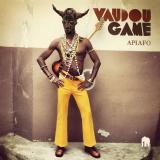
Peter Solo is a singer and composer born in Aného-Glidji, Togo, the birthplace of the Guin tribe and a major site of the Voodoo culture. He was raised with this tradition’s values of respect for all forms of life and the environment. With his new band, Vaudou Game, Peter Solo claims, and spreads this spiritual and musical heritage. Chants are at the heart of the Voodoo practice, but for times immemorial, harmonic instruments have never accompanied them. No balafon, no kora - only the “skins” support the singers. However, in 2012, Peter, along with his band based in Lyon, France, decided to explore and codify the musical scales that are found in sacred or profane songs of Beninese and Togolese Voodoo so they can be played easily on modern instruments. Peter composed the album Apiafo, using the two main musical scales of this tradition. The first musical scale on Apiafo leans towards raw Funk with a sound similar to the famous 70’s bands, L’Orchestre Poly Rythmo De Cotonou and El Rego. Funk, is the skeletal structure of this record, and provided the opportunity for Peter to invite his uncle, Roger Damawuzan - the famous pioneer of the 70s Soul scene - on two tracks. Their collaboration on “Pas Contente” is a highlight on this 100% analog album. Apiafo was entirely recorded, mixed and mastered with old tapes and vintage instruments. The second scale, which had never before been transposed for instruments, evokes deeper feelings and a sacred ambiance. The moving song Ata, an invocation to a supreme divinity is another highlight of this record. Even if some can recognize similarities between this scale and Ethiopian scales, they are in fact different. Peter, the only African band member, introduced the other musicians to the universal values of Voodoo and he taught them his native language. On the recording of Apiafo and during their live performances, the musicians all sing and answer Peter in the Mina language. The strive for authenticity, the analog sound and vintage looks don’t mean that Vaudou Game is looking backwards. This is Togolese funk, born in the post-colonial era but that never before explored its ancient roots so deeply and proudly.
Antoine RAJON
- A1: Donna Summer - Hot Stuff
- A2: Thelma Houston - Don‘t Leave Me This Way
- A3: Barry White - You‘re The First, The Last, My Everything
- A4: Rose Royce - Car Wash
- A5: Dollar - Shooting Star
- A6: New Paradise - Showman
- A7: One Hundred Ton And A Feather - It Only Takes A Minute
- B1: Blondie - Sunday Girl
- B2: Gloria Gaynor - Reach Out I‘ll Be There
- B3: Tommy Hunt - Loving On The Losing Side
- B4: Stevie Wonder - Signed, Sealed, Delivered (I‘m Yours)
- B5: Kool & The Gang - Too Hot
- B6: Roots - What Are You Doing In Casablanca
- B7: D D. Sound - 1, 2, 3, 4, Gimme Some More
Tauchen Sie ein in das glitzernde Lebensgefühl der 1970er Jahre! Mit „70s Disco Hits Vol. 3“ holen Sie sich die größten Dancefloor-Klassiker einer unvergesslichen Musikära direkt nach Hause – energiegeladen, zeitlos und voller Groove.
Diese exklusive Vinyl-Compilation vereint ikonische Künstler und Welthits, die die Disco-Welle geprägt haben:
• Donna Summer – Die „Queen of Disco“ begeistert mit ihren elektrisierenden Hymnen und unverwechselbarer Stimme.
• Barry White – Samtweiche Soul-Vibes und unverkennbarer Groove.
• Blondie – Disco trifft New Wave mit ikonischem Sound.
• Stevie Wonder – Funkige Rhythmen und musikalische Meisterwerke.
„70s Disco Hits Vol. 3“ bringt das Gefühl von Spiegelkugeln, Plateauschuhen und durchtanzten Nächten zurück – eine musikalische Zeitreise in die goldene Ära der Disco.
Let the music play – und machen Sie Ihr Wohnzimmer zur Tanzfläche!
- As Time Goes By
- Skyfall
- Brucia La Terra
- Can You Feel The Love Tonight (Feat. Gay Men’s Chorus Of Los Angeles)
- When You Wish Upon A Star
- Unchained Melody (Feat. Jennifer Hudson)
- Remember Me
- Moon River (Feat. Jack Groban)
- Against All Odds (Take A Look At Me Now)
- Stand By Me
Mit seinem neuen Studioalbum „Cinematic“ widmet sich der Multi-Platin-Vokalist Josh Groban den großen Momenten der Filmgeschichte.
Die Auswahl reicht von Oscar-prämierten Klassikern wie „Can You Feel the Love Tonight“ (Der König der Löwen) und „Skyfall“ (James Bond) bis hin zu zeitlosen Standards wie „As Time Goes By“ (Casablanca) und „Moon River“ (Frühstück bei Tiffany).
Hochkarätige Kollaborationen: Ein besonderes Augenmerk liegt auf dem Duett „Unchained Melody“ mit Jennifer Hudson sowie einer persönlichen Interpretation von „Moon River“ zusammen mit seinem Bruder Jack Groban.
Orchestrale Inszenierung: Produziert von Greg Wells (u. a. The Greatest Showman), besticht das Album durch opulente orchestrale Arrangements, die in Los Angeles und London aufgenommen wurden.
CBR009 by Hannah Addams & Cxma (Including Oxygeno Remix) Hannah Addams, Label Owner is back on the imprint after a long period of silence. First of many releases to come is a collaboration with Cxma.
This EP is the result of a whole life together in Sin City, a friendship longer than 30 years, thousands of moments, raves, parties, countless time sharing their love for music. 3 Original Mixes, Raw music, dirty bass lines, crazy random Synthe patterns. A style where both artists feel like at home. It is notorious how comfy they feel swimming on those seas. The EP gets to its maximum when a good old friend of
both, after listening to the tracks, realizes and decides he would love remixing one of them. Oxygeno Remix of "Danza de los ET" is adding the class and cleanness that was missing in the though original mixes.
- A1: The Mountain (Feat. Dennis Hopper, Ajay Prasanna, Anoushka Shankar, Amaan & Ayaan Ali Bangash)
- A2: The Moon Cave (Feat. Asha Puthli, Bobby Womack, Dave Jolicoeur, Jalen Ngonda And Black Thought)
- A3: The Happy Dictator (Feat. Sparks)
- B1: The Hardest Thing (Feat. Tony Allen)
- B2: Orange County (Feat. Bizarrap, Kara Jackson And Anoushka Shankar)
- B3: The God Of Lying (Feat. Idles)
- B4: The Empty Dream Machine (Feat. Black Thought, Johnny Marr And Anoushka Shankar)
- C1: The Manifesto (Feat. Trueno And Proof)
- C2: The Plastic Guru (Feat. Johnny Marr And Anoushka Shankar)
- C3: Delirium (Feat. Mark E. Smith)
- C4: Damascus (Feat. Omar Souleyman And Yasiin Bey)
- D1: The Shadowy Light (Feat. Asha Bhosle, Gruff Rhys, Ajay Prasanna, Amaan & Ayaan Ali Bangash)
- D2: Casablanca (Feat. Paul Simonon And Johnny Marr)
- D3: The Sweet Prince (Feat. Ajay Prasanna, Johnny Marr And Anoushka Shankar)
- D4: The Sad God (Feat. Black Thought, Ajay Prasanna And Anoushka Shankar)
Yellow Bio Vinyl[31,89 €]
The Mountain is Gorillaz’ ninth studio album, a collection of 15 new tracks featuring a stellar list of artists and collaborators. Jamie Hewlett’s album artwork captures the four much-loved animated band members - Murdoc, Noodle, Russel and 2D – in a series of beautifully intricate, hand-drawn illustrations.
The Mountain is Gorillaz 9th studio album. The album is a collection of 15 new tracks featuring artists and collaborators including: Ajay Prasanna, Anoushka Shankar, Asha Bhosle, Asha Puthli, Bizarrap, Black Thought, Gruff Rhys, Idles, Jalen Ngonda, Johnny Marr, Kara Jackson, Omar Souleyman, Paul Simonon, Sparks, Trueno and Yasiin Bey; as well as the voices of Bobby Womack, Dave Jolicoeur, Dennis Hopper, Mark E. Smith, Proof and Tony Allen. Produced by Gorillaz, James Ford, Samuel Egglenton, Remi Kabaka Jr. and Bizarrap (Orange County), The Mountain was recorded in London, Devon, Miami, Jaipur, Mumbai, New Delhi and Rishikesh; and features artists performing in five languages: Arabic, English, Hindi, Spanish and Yoruba. The artwork for The Mountain sees Jamie Hewlett’s distinct, yet ever-evolving, style illustrate the world of Gorillaz with an ever more detailed and beautiful intricacy across a series of hand-drawn illustrations. Circumstances find Murdoc Niccals, Russel Hobbs, 2D and Noodle in India, where our heroes are immersed in the rhythms of mystical music-making as they navigate the mountainous terrain of this thing called life.
- A1: Elado - I Wanna Dance
- A2: Gee Lane & Dante Feat Jose Barranquero - Rhythm Roots
- A3: Marla Kether - One Time
- B1: Alma Negra Feat Pat Kalla - Soleil (Extended Version)
- B2: Musta - Afro Tonic
- C1: Alot - Mi Casa (Extended Version)
- C2: Arpy Brown & Kapote - Drop It Low
- C3: Daniel Monaco & Bop Feat Candy Voice - Sobby
- D1: Paul Older - Xylo
- D2: Melon Bomb – Galia
WILDSTYLE HOUSE is a new compilation series where Toy Tonics invites producers and DJs that have a very special, funky, unique sound to make one new track. The compilation should show the variability and diversity of house and disco TODAY. Like the wild music mix you can hear at the Toy Tonics events and the way Toy Tonics DJs combine many different styles of "4 to the floor" music into one new soulful, multi-style, and warm-sounding blended "genre." It's about the groove, about a new soul sound, the human feel, the organic and Y2K-inspired dance music that is growing and appeals to a new generation of dance music lovers.
This first part of the compilation includes unreleased music by:
Afro-funk and salsa-house producer talents ELADO, MUSTA, and ALMA NEGRA.
Garage house maestros MELON BOMB and Italian musician DANIEL MONACO (known for his New Wave disco and proto-house releases on Rush Hour and his work for Antal).
MARLA KETHER, the London bass player and DJ, who is known for her work with Little Simz, Oscar Jerome, and Loyle Carner, and has now started to release her own tracks.
Argentinian singer, musician, and DJ ALOT, combining proto-house vibes with Spanish rap.
Funk house producer and edit maestro PAUL OLDER, who is starting to become one of the key names of the new soul house scene (supported by DJs like Folamour, David Penn, Seth Troxler, Kirollus, Breakbot...).
And also Toy Tonics' own GEE LANE, KAPOTE, and ARPY BROWN contributed new tracks.
Combo Efectivo was formed in November 2024 in Bogota in a studio in the Teusaquillo district, at the invitation of Jazztropicante. It brings together an all-star cast from Bogota's neotropical movement and three iconic brass players from the current French jazz scene.
The chemistry was immediate and the energy palpable: a sound that was both playful and demanding, exuding groove, rich material rooted in contemporary jazz structures, and breathing the spirit of brass bands and the splendor of popular expression from the Colombian Caribbean.
A two-track EP was produced from this unique studio session, recorded and mixed at Mambo Negro Records, with the expertise of Daniel Michel. Mastered in Paris at Loom, this first 45 rpm single was released in February 2026 with The Pusher, officially marking the birth of the Casa Maguey Records label, which promotes the catalog resulting from Jazztropicante's encounters.
On the French side, three musicians who are making their mark on their generation: Stéphane Montigny on trombone, Antoine Berjeaut on trumpet, and saxophonist Léon Phal, the spearhead of a new generation of jazzmen. The Colombians are a cocktail of musicians from the most exciting groups on the current scene: Karen Nerak on vocals, rap, gaita, and percussion, Ruben Aragon on keyboards, Pelango on bass, and Kike Narvaez on drums.
Combo Efectivo magnifies the alchemy between the finesse of European jazz and the power of Colombian rhythms. A tropical trance fueled by improvisation, where the contemporary jazz scene and neo-tropicality meet in a spirit of openness and exploration.
The Libra LP finds DJ Dex searching for the perfect balance on the dancefloor. "Freeks N' Geeks" is a shameless party anthem asking dancers to get their geek and their freak on with stomping kick drums, percussion, acid funk, and hands-in-the-air horns. "Papa Was a 909" reinvents a classic Motown anthem via a relentless 909 drum machine workout. "Hoodrat" pays homage to Detroit minimalism and Chicago jack—doubles are essential for the creative DJ. "The Balance" merges an 808 kit with clever percussion, melodic chords, and sci-fi synths for a tense, building track ready for peak-time action. "Casa Oscura" takes equal inspiration from hi-NRG disco tracks and the funkiest aquatic synths of Drexciya for a vibe entirely its own. "Astrological" is the LP's polyrhythmic, thumping, big-room techno cut where cascading synth lines meet atmospheric pads and vocal samples.
Casabianca launches its vinyl imprint with “Irma’s Disko,” the debut EP from Zagreb-based DJ and producer MIMI.
Channeling the deeper corners of contemporary club music, the EP moves between hypnotic percussion, atmospheric tension and moody, slow-building grooves.
“Treshold Chant” opens with ritualistic rhythm and forward-driving momentum, while “S04E04” explores a darker, more introspective space.
The B-side centers on the title track “Irma’s Disko,” where MIMI combines tight, minimal drum work with unsettling synth motifs and a steadily expanding rhythmic architecture.
Closing the record, Düsseldorf’s Tolouse Low Trax reshapes the track into his signature off-kilter style — sparse, shadowy and unmistakably physical.
- B2: Grazia Vitale – Poi (1975)
- D4: Daniel Sentacruz Ensemble – Vivo Solo Con Te (1982)
- A1: Cinzia Peloso – Sciogli Le Catene (1980)
- A2: Linda’s Night – Cucciolona (19??)
- A3: Daniela Guerci – Non Ti Resisto Più (1979)
- A4: La Comune Idea – Cuore Di Serpente (1981)
- B1: Tony Ferri – Stella D’oriente (1979)
- B3: Sara Bongiovanni – Casablanca (1985)
- B4: Solimar – Veliero (1980)
- B5: Coscarella & Polimeno - Station To Station 2025 (2025)
- C1: Cap – Alla Porta Del Tempo (1982)
- C2: Francisca – Non Dico No (1983)
- C3: Hyper Drive Band – Hyper Mix (1985)
- C4: Linnel Jones – We’ll Cry Out (1986)
- D1: Jairo – Night Woman (1985)
- D2: Ilaria Berlato – Vincerò (1985)
- D3: Alex P.i. – Free Love (1985)
- D5: Miro – Tu Non Lo Sai (1984)
Everyone knows the story of American disco.
But few are aware that, between the late 1960s and the late 1980s, Italy wrote a parallel one — spontaneous, surprising, and incredibly creative.
It is a story that spans two distinct seasons: the Italian disco of the 1970s — melodic, handmade, sometimes naïve yet always original — and the emerging Italo Disco of the 1980s, electronic, futuristic, and lightheartedly projected toward the future.
Two different languages, yet both driven by the same desire for freedom and modernity. Discoteca Sound — Italian Discoteca Underground 1975–1986 brings together 18 rare tracks — including two previously unreleased — that tell this story of transition: from the orchestral and sentimental disco of Italian dance halls to the synthetic and visionary sound of the first drum machines.
A journey through private archives, local labels, regional studios, and forgotten voices — the sonic map of a country that has always danced, but to its own rhythm. From Mediterranean disco to the first Italo Disco, from the dim lights of provincial dance halls to the early home synthesizers, each track opens a window onto an Italy that dreamed of the dance floor as a universal language of connection during the brief season of revolutionary utopias.
This compilation celebrates ten years of work by Disco Segreta — a decade dedicated to the research, recovery, and appreciation of Italian disco and electronic culture. An act of justice owed to all those artists who had their moment yet were never remembered by history — bringing back to light an essential, still too little known part of our musical heritage.
Because dancing today remains, more than ever, a living act of memory.
Limited edition 2LP, features 2 previously unreleased tracks and a new 2025 version of Coscarella & Polimeno – Station to Station.
f Grazia Vitale – Poi (1975) Previously Unreleased
q Daniel Sentacruz Ensemble – Vivo Solo Con Te (1982) Previously Unreleased
f Grazia Vitale – Poi (1975) Previously Unreleased
q Daniel Sentacruz Ensemble – Vivo Solo Con Te (1982) Previously Unreleased
f B2. Grazia Vitale – Poi (1975) Previously Unreleased
q D4. Daniel Sentacruz Ensemble – Vivo Solo Con Te (1982) [Previously Unreleased]
[f] B2. Grazia Vitale – Poi (1975) [Previously Unreleased]
[q] D4. Daniel Sentacruz Ensemble – Vivo Solo Con Te (1982) [Previously Unreleased]
[f] B2. Grazia Vitale – Poi (1975) [Previously Unreleased]
[q] D4. Daniel Sentacruz Ensemble – Vivo Solo Con Te (1982) [Previously Unreleased]
- 1: Toronto 20Xx
- 2: Theme From Scott Pilgrim Ex
- 3: Player Select
- 4: One More Summer
- 5: Stephen's House
- 6: Shopping District
- 7: High Fashion
- 8: High Park
- 9: Wallace's House
- 10: Downtown T.o
- 11: Hollie Hawkes
- 12: Food Court
- 13: Julie Powers
- 14: Coffee Break
- 15: Window Shopper
- 16: Wallace Wells
- 17: Band Practice
- 18: Ice Age
- 19: Dino Surf Rock
- 20: The Beaches
- 21: Vegan Banter
- 22: Vegan Brawl
- 23: Playtime
- 24: King Of The Rails
- 25: Chill Minigame
- 26: Benvie Tech 1F
- 27: Benvie Tech 2F
- 28: Benvie Tech 3F
- 29: Benvie Tech Boss Battle
- 30: Vpd Hq
- 31: Eldest Son
- 32: Vpd Boss
- 33: Medieval Julienne
- 34: Subspace Ex
- 35: Unchill Minigame
- 36: Demon Chat
- 37: Demon Attack
- 38: Casa Vania
- 39: Lady Envy
- 40: Let's Fight!
- 41: Movie Studio
- 42: Let's Throw Down!
- 43: Peaceful Casa
- 44: Throne Room
- 45: Demon Boss
- 46: Let's Do This!
- 47: Old Timey Movie Studio
- 48: Big Band Intro
- 49: Big Band Boss
- 50: Riff Rift Revisited
Scott Pilgrim EX, the newest video game from the Scott Pilgrim franchise developed by Tribute Games, is out now with an all new original soundtrack from Anamanaguchi. The sprawling soundtrack, which accompanies a brand-new storyline co-written by series creator Bryan Lee O’Malley, perfectly connects the band's legendary electronic past with their fuzzed out garage rock present while maintaining their unmistakable punchy style. Known for resonant world building across past projects, the depth of emotion and the range of styles displayed on Scott Pilgrim EX are uniquely Anamanaguchi while delivering a host of melodically anthemic and new energetic hooks that are sure to pack a punch for both newcomers and old school fans of the band alike.
Anamanaguchi's collaborative relationship with the Scott Pilgrim universe goes back to the early days of the band. After cutting their teeth programming music with playable Nintendo cartridges and helping to bring a wider audience to a largely internet based 8-bit chiptune scene, the band was brought in to score the fan-favorite soundtrack for Scott Pilgrim vs. the World: The Game. The success of this game soundtrack would help them to launch an early crowdfunding success story with their campaign for their debut album, 2013's Endless Fantasy. From there the band would go on to collaborate with virtual pop star Hatsune Miku (resulting in the perpetually viral, Fortnite featured hit, “Miku”), and later develop the intricately soundscaped compositions displayed across their second album, USA, but throughout it all the connection between the band and the Scott Pilgrim universe would remain a pivotal source of inspiration.
After being brought in to score the animated Netflix series, Scott Pilgrim Takes Off, in 2023, band members Peter Berkman and Luke Silas would credit the live kinetic energy they channeled when writing songs for the in-universe garage band Sex Bob-Omb with helping them get back in touch with the roots of how they learned to play music even before Anamanaguchi's earliest releases. This process would eventually lead to Peter and Luke alongside the remaining two band members — Ary Warnaar and James DeVito — flipping their typically meticulous digital writing process for the more collaborative, straight to tape, distorted angst that can be found on 2025's Anyway, marking another significant evolutionary turn for the band to come out of their relationship with Scott Pilgrim.
Now fresh off the heels of a nationwide tour in support of Anyway, Anamanaguchi have returned to the 8-bit beat em up world of Scott Pilgrim with a relentlessly high energy and genre defying original soundtrack for Scott Pilgrim EX. A return to form that comes with a depth of knowledge and innovative skills that have allowed the band to continue to evolve and grow alongside the characters in the Scott Pilgrim universe and the multi-generational fanbase that continues to follow along with them.
The new soundtrack for the latest installment in the Scott Pilgrim franchise, Scott Pilgrim EX
Limited Algae Sea Vinyl. CocoRosie is Bianca and Sierra Casady. Sierra sings and plays guitar and flute. Bianca sings and does percussion (rattles things, makes things squeak, shakes a gold chain belt). They write all the music together. La Maison de Mon Réve was written and recorded in a tiny apartment in the 18th district of Paris during the spring of 2003. La Maison de Mon Réve was released by Touch and Go Records in March 2004. La Maison de Mon Réve is deceptively innocent; enchanting and sweet yet eerie and twisted. An acoustic guitar paints melody through a haze of cryptic sounds and perversely angelic voices. A broken radio transmits a music box orchestra. Tiny field mice sing opera. This 20th anniversary edition of CocoRosie's debut album La Maison de Mon Réve is pressed on transparent algae sea vinyl and limited to 1500 copies worldwide. Packaged in a gatefold jacket with neverbefore-seen photos, the vinyl includes the full album along with a previously unreleased bonus track, "Hairnet Paradise."
We are thrilled to present AA005, the latest EP from Jerome.c, set to release in 2025. This captivating collection of four tracks captures the essence of minimalism, inviting listeners to immerse themselves in a rich landscape of nuanced textures and infectious dancefloor rhythms.
Swiss-born, Berlin-based artist Stallo makes his anticipated vinyl debut on Casanova Bar Records with Mifepan EP.
After first appearing on the label in 2020 with a contribution to CBB007 a digital VA, he now returns as the main artist on CBR008, delivering two original tracks that define his signature sound.
The EP opens with Bleenthal, a hypnotic journey built on rolling drums and immersive textures. On the flip, "Wavoom" pulsates with a constantly evolving synth, pushing forward with relentless energy.
Elevating the release, Japanese techno legend Takaaki Itoh delivers a raw and powerful remix of Wavoom, while Italian innovator Fabio Florido reinvents Bleenthal with his cutting-edge sound design.
Mifepan EP is a bold statement from Stallo, an immersive exploration of deep grooves and evolving driving textures.
d B2 Bleenthal Reinvented (Fabio Florido remix)
Reinvented (Fabio Florido remix)
A collection of earlier and newer works by LFU
combined in one EP.
On November 14, 2025 !K7 Records released DJ-Kicks by Eris Drew. She chose 'Oh Echt' by LFU as the opening track of her mix.
The style of 'Oh Echt' is not easy to categorize. Electronic breakbeats with Detroit hi-hat patterns and a typically pushy four-to-the-floor kick. The funky, staccato bassline and mysterious strings take you back to the eighties and the added funky organs and stabs complete the story. The "Oh Echt" Main Mix is the instrumental mix of the 'Vogel Mix' in which the 'Oh Echtapella' is incorporated.
The first design of 'Boom Boom Tracking' was in 2011 for a DJ/DRUM performance that LFU did. He picked it up again in 2014, but did not finish it until 2024. This big beat floor filler contains chemical beats accompanied by electrostabs and a deep, dark bassline. If you listen intently to this song on a regular audio device, you might notice a thump on every 1 of the 4 beats, but when it's played on a good, big sound system, you can't miss this tension in your stomach. 'Boom Boom Tracking' it is!
Downtempo percussive track 'Tjeetje' is the first track LFU has made in North Coast Studio in 2001. 'Slow Forward' was the third song he completed there in 2003, the same place where he met Ben Baan of Fruitcake, who played the piano part.
Initially, 'Queen Cubana' did not make it as a remix of Eddy Zoey's 'No Soy Cubano' in 2017. In this new version, LFU removed his vocals, except for "Step". LFU took inspiration from Katy Perry's 'Bon Appetit' and turned it into a rhythmic slow jam with carefully programmed beats, resulting in a spectacular funky joint.
In the late summer of 1994, Upadhmanyia (John Mackaay & Michel Rehatta) invited Leo Verhoef (LFU) to collaborate on a track. They met a few more times afterward at a power station converted into a studio in IJsselstein, The Netherlands. "Hasiya" was quickly born and was already in stores by early November 1994. John & Leo drove to house club iT in Amsterdam, where they gave the track to DJ Marcello, resulting in an iT hit! The track was quickly picked up by DJs worldwide, and Richie Hawtin used it in a live set in Denver on November 19th of that year, which can be heard on SoundCloud (Hasiya is mixed around 43:00). The track was also a huge hit on dance floors in England and Spain.
In late 1994, Hasiya appeared on a CNR Music EP titled "Welcome To The Club," along with four other hits from producers like Pete Lazonby, The Shaker, and Drum Club. A double CD of the same name followed in early 1995, released in Belgium, featuring Hasiya alongside artists like Robert Miles, Digital Express, Aura, Natural Born Grooves, and other hits of the era. In early 1995, Arcade released "House Party '95 the Kinky Klubmixx," mixed by Koen Groeneveld & Addy van der Zwan. The same CD was released in Scandinavia as "House Party '95 (5)." Hasiya flourished among the most popular house tracks of the time. The record spent three weeks in the Dance Music Mega Top 30 and peaked at number 22 around the holidays of late 1994.
For 31 years, Hasiya was only available on record, CD, tape, or YouTube. Starting November 21, 2025, it will be resurrected from the underground into the world of digital downloads and streaming. The 2025 Remaster, along with five new mixes, will be widely available, including a limited vinyl release of 350 copies. The 30 test pressings have already been received with open arms by various DJs and received immediate support from Eris Drew and Octa Octa during ADE.
Because Hasiya was created in 1994, the only available remix material is the original DAT tape, which, thankfully, was still stored in an old box in a dusty attic. Most of the sounds for the new versions have been recreated and re-recorded.
Rehatta's Reanimated Mix:
This remix - created by one of the two founders of Upadhmaniya - combines driving, percussive beats with a thrilling, progressive break featuring ascending, dizzying strings. This trick returns shortly afterward to rev things up again. An accessible remix for dance floors worldwide.
LFU 2025 Version:
This straightforward, raw techno version with a touch of acid is ready to rock dance floors. LFU's updated version of the 1994 original, which he created with Michel & John, will undoubtedly remain a head shaker from here on out.
John Consemulder Metaphysical Mix:
With a pumping groove and a funky bassline as an intro, John Consemulder's remix immediately strikes a chord. A refined and elegant approach to the original, with sounds as mysterious and exciting as the flowing lava in the 'Gruta das Torres' - a cave in the Azores - the setting where this tech-trance remix was created.
Davje Remix:
Davje's version begins with the typical club and hard-trance bassline of the late '90s. You're drawn into a trance journey where beat changes sometimes try to throw you off track. Davje's creative Hammond organ interpretation of the Hasiya theme surprises and transports you back to the hippie era by the end of his remix.
Bojcot Remix:
Junglist Bojcot creates an exciting, nuanced, and mathematical remix with a beat that feels like jungle and half-tempo. He conjures up the sounds of LFU's 2025 Version, creates a bassline that sounds like a disturbed bumblebee, and adds a surprising string section. Massive!
In 2018, Rian Treanor left his home in Rotherham, UK, and headed to Kampala for a residency at Nyege Nyege's villa studio. The mind-expanding experience inspired his critically acclaimed 2020 full-length "File Under UK Metaplasm", but that wasn't the end of the story. Treanor also spent time working alongside Acholi fiddle player Ocen James, developing an improvisation-heavy collaboration that would push both musicians' idiosyncrasies into completely new places. Treanor wanted this collaboration to be as tactile and reactive as a live performance with traditional instruments, so he set about working on a digital process that would synchronize with James' approach. Using physical modeling techniques, Treanor created an instrument that explored the tunings and sounds of the a'dungu, an arched harp, and the nah or nag. With Ocen playing his rigi rigi, a single string violin, they intuitively experimented with the spectral properties of sound, using texture and acoustic contours as their structural framework. They were able to develop a sound together that was unconventionally rooted in traditional Ugandan culture, but shuttled into different dimensions of noise, computer music and radical UK rave. "Saccades" is the buffer between two vastly different sonic universes, united in respect and sprightly curiosity. Treanor's hyperactive computer-controlled rhythms are immediately identifiable on opening track 'Bunga Bule', but the sound palette is distinct: it's more flexible and less digital. James' expressionistic fiddle strokes are a revelation, contorted into hoarse squeals and rough vibrations that rub and flex off Treanor's tin can shuffle.
Con todo el freestyle que el funk puede tener Igor Gil conocido como Mailu nos entrega su debut álbum en 12” “Martian Princess Arrives”
Nada nos hace más felices en Sofa Tunes que descubrir nuevos artistas al gran público, aunque Mailu ya es de la casa hace muchos años. Las primeras impresiones sobre la tierra de esta ordinaria princesa marciana están recogidas en clave de funk electrónico en un maravillosos 12” cuyo artworks corre a cargo de la ilustradora Elena Vera. Una plástica más propia de Herbie Hancock, Clavinet o Rhodes, Slap Bass son los ingredientes que Mailu este maravilloso teclista ha utilizado para poner banda sonora a este aterrizaje marciano.
Esta colección de 10 tracks nos trasladan al lounge bar más bizarro de la galaxia. 10 temas con abruptos finales extraidos de los cálidos lives del artista navarro.
1er Single: Que asco “Original Mix”
For its sixth release, Rio de Janeiro’s Onda Boa label sees founder Joutro Mundo, step up once again - this time reviving and re-vibing Netinho’s independent 1980s bop, “Du Du Du Domingo”.
Netinho first made his mark in the 1960s as the drummer for Brazilian beat icons Os Incríveis, then again in the 1970s with the heavier, lysergic sounds of Casa das Máquinas. By the 1980s, he had turned toward a new vision, inspired by the spiritual group Amor e Caridade. Released on his own imprint, Manancial do Amor, 1982’s Apartamento 97 – Projeto Amor & Caridade Vol. 2 brought together heavyweights Zé Rodrix, Faísca, and Manito to expand on this funky, pop-rock chapter first introduced with 1980’s Amor & Caridade Vol. 1.
According to Netinho, a year passed in search of inspiration for the follow-up LP before he began receiving notes and poems through his medium, dictated to her by his “protector.” Following that divine intervention, the album’s songs were completed in just two days—including the standout track, “Du Du Du Domingo,” an ode to the beauty of a Sunday afternoon after the toils of the workweek.
Side A presents the original track, lovingly remastered, in all its stripped-down, idiosyncratic glory. A bubbling synth bass paired with a nimble electric bass line set the stage for the plunky synth melody that defines this anomalous yet infectious gem—before giving way to a samba break and a wafting crowd noise that instantly transports you to a sunny Sunday by the sea.
On the B-side, Joutro Mundo injects a new vitality into the track with crisp hi-hats, a thumping kick, and other subtle studio magic. The samba break is brought forward, while the electric bass line—previously bubbling beneath the surface—rises to center stage around the three-minute mark. True to form, Joutro Mundo avoids the obvious, drawing on his deep crates and production sorcery to conjure up yet another gem for the balearic heads and other lovers of left-field dancefloor deviance.
When it comes to Latin soul, Bobby Matos And The Combo Conquistadores 'Tema De Alma Latina', has to be up there as one of the heaviest tracks ever recorded. This much-loved Latin workout has been rocking dancefloors for years with its infectious, driving energy and pulsating rhythms. Released in 1968, the 'My Latin Soul' album on Philips Records now receives a welcome reissue on Mr Bongo. It’s a sheer delight throughout and a premier example of the Nu Yorican sound that was thriving in New York in the ‘60s.
From a young age, the Bronx, New York-born Latin jazz percussionist Bobby Matos found inspiration through the conga drum masters Mongo Santamaría and Patato Valdez (who he had informal backstage lessons with) and timbales legends Willie Bobo and Tito Puente. Bobby was drawn into New York's club scene and began playing in the vibrant ‘60s beat / bohemian Greenwich Village cafes, followed by stints in a wide range of different venues. These included Bronx dance halls and after-hours clubs in El Barrio, through to the elegance of Carnegie Hall, Central Park concerts, and off-Broadway theatres.
Later relocating to Los Angeles, Bobby played an important role in spreading Latin music far and wide. He became an inspiration to many on the jazz dance and acid jazz scenes in the ‘80s / '90s where his recordings were picked and played, becoming prized collector items amongst DJs. The track 'Tema De Alma Latina' was immortalised as a classic for many, after being featured on the Gilles Peterson’s Street Sounds Jazz Juice 5 compilation in 1987. A captivating listen from start to finish, the album features other treats such as the dynamic album opener ‘Nadie Baila Como Yo’, the blazing flute led 'Mambo Maxims', and the blistering piano shuffler 'Raices'.
A truly iconic Latin classic whether you’re being reunited with it like an old friend or discovering it as a fresh new find.
RedNilo is an Italian-Moroccan duo composed of Reda Zine and Danilo Mineo, two musicians based in Bologna linked by a deep passion
for world music, particularly African music. Their ongoing and tireless musical exploration has led them to collaborate for over a decade
on numerous artistic and recording projects. Their new album, eponymously titled RedNilo, features six tracks characterized by a sound
reminiscent of Gnawa, Hassani, Tuareg, and experimental rock. The psychedelic, raspy riffs of the electric guitar, the repetitive rhythms
of the percussion, and the rhythmic-melodic lines of the guembri represent and evoke their journey. The resulting sound material is the
culmination of their journey and their encounters with masters, artists, griots, artisans, and instrument makers in the Draa Valley in
southeastern Morocco, bringing together the two musicians' urban and experimental backgrounds and souls. The album's artwork was
designed by Moroccan artist Aali Wica, initiator and mentor of their spiritual and artistic journey to the southern African continent,
across the long black snake.
Réda Zine, a musician and documentary filmmaker born in 1977 in Casablanca, launched his musical career in the 1990s, contributing
to L'Boulevard, Africa's largest independent festival. Raised in the Casablanca medina, he was introduced to Gnawa music by various
Maallems. After studying at the Paris 3 Sorbonne University, he founded Café Mira, a project that has performed at several international
events.
From 2011 to 2014, Zine was artistic director for Creative Commons (Middle East and North Africa), where he won the #CC10 Korea
award in 2012 with the project "It will be Wonderful," which brought together musicians from over 12 countries. He has also been
involved in exhibitions on music and censorship, participating in events in major cities such as Paris, Buenos Aires, and Seoul. In Italy,
he continued his musical research with the Hardonik project and was part of the Afrobeat group Voodoo Sound Club, recording the
album Mamy Wata. Zine collaborates with artists such as Seun Kuti and has initiated educational activities related to Gnawa music,
contributing to initiatives such as the African Symphony Laboratory for improvisers. He is the co-founder of Fawda, a Gnawa-based
project, and is part of the Gnawa Rumi collective, which explores the music of the Moroccan diaspora in Italy. He directed the documentary "The Long Road to the Hall of Fame" about Public Enemy, which won an award at the Pan African Film Festival in 2015.
Danilo Mineo graduated as a national educator from the AMMnationalscholl music academy in Milan, with a thesis entitled "Afro-Cuban
Music and the Rhythm Section." Over the years, he has attended workshops and masterclasses with international artists and masters
of percussion and drums, including Horacio El Negro Hernandez, Airto Moreira, Trilok Gurtu, Luis Agudo, Arto Tuncboyaciyan, Dudu
Tucci, Dom Famularo, Karl Potter, Rodney Barreto, and Eno Zangoun, exploring the rhythmic language of various musical genres and
styles.
In addition to publishing several educational manuals for percussionists, music critics consider him a versatile percussionist, active in
various musical productions and recordings: Mop Mop, Fawda, Guglielmo Pagnozzi "Voodoo Sound Club," Fabrizio Puglisi "Guantanamo," Panaemiliana, The Mixtapers, and many others, with whom he has performed at numerous national and international music festivals (in Europe and Africa). As a percussionist and side man he has recorded numerous albums and collaborated with Italian and
international artists including: Giancarlo Schiaffini, Gianluca Petrella, Roy Paci, Roberto Freak Antoni, Famoudou Konate, Melaku Belay, Baba Sissoko, Kalifa Kone, Jamal Ouassini, Deda, Dj Lugi, Bioshi.
Butterfly Records is proud to release a vinyl reissue of Radio Babilonia, the fourth electrifying studio album by Uruguayan alternative band Traidores. The album was originally released on CD and cassette in 1995 and it stands as one of the most representative works of their career. In Radio Babilonia voices of Juan Casanova and Víctor Nattero converge into a symphony of intense emotions and profound reflections. Each note resonates with their musical legacy, rising as a testament to the reality that surrounded them, where pain and beauty intertwine in a powerful auditory experience. With a style that defies convention, their lyrics transport us to a world of poetic chronicles, inviting us to explore the catastrophes of the present and future through their vibrant and critical lens. This album from 1995 is a masterpiece for those who seek an authentic and moving sound - a sonic journey that reflects its time and makes a bold statement. Released in August 1995, Radio Babilonia opens with its title track- a sonic storm that sets the tone with poetic urgency and avant-garde defiance. Songs like "Máquina" and "Crónica del Sur" explore inner turmoil and fracture realities, wrapped in melodic brilliance and sharp arrangements. Nattero's guitar work shines, especially in tracks like "Ella sabe bien" and "Pasajero de un tren," where a sense of déjà vu echoes through the lyrics. Side A closes with the haunting waltz "Como una plegaria," evoking blood-stained devotion. Side B deepens the album's mystique, offering lucid hope through punk anthems like "Enemigo del mundo" and "Fragmentos de mí." It culminates in the defiant "Canción rebelde": "There is no worse evil than chaining oneself to pain." Traidores channel poetic rage into a powerful, redemptive soundtrack for a disenchanted era.
Tunnel was made in Naples in 1978 by Giorgio Verdelli and Danilo Rustici only on 7inch and it was the theme song for two RAI radio programs. Going through the names of the musicians we begin with the inimitable voice and the splendid guitars of Danilo Rustici, then passing through the saxophones of Enzo Avitabile we arrive at the keyboards of Joe Amoruso, musician-arranger who left a great void with his untimely death. For Joe, who crossed his experience with Premiata Forneria Marconi, Zucchero, Vasco Rossi, Mauro Pagani and was part of that 'dream team' of Pino Daniele - made up of technically extraordinary musicians, but above all gifted with an inimitable sound - this one-off project represented his recording debut. 'Tunnel Lights' and 'Speed Up' have been brought to light by Dario Di Pace and Claudio Casalini, two visionaries who believe that Neapolitan music is a sonic mixture of ancient and modern musical registers even if it sometimes develops a conflict between tradition and modernity as the recovery of popular tradition is strongly opposed to the push for innovation. This therefore is the reason for a 12" reissue in which the evocative original songs - from almost 50 years ago - are reflected in the new versions created by a bevy of talented DJ-arrangers including Massimo Berardi (with the bassist Luca Andreozzi) and by the industrious and passionate Francisco & Malkuth (ed: Francesco De Bellis and Cosimo 'Cosmo' Mandorino in disguise) in turn assisted by other zealous musicians and dee-jays - including the very good and always very collaborative Raffaele Arcella - who took part in a remix of this EP with enormous fervor The 12" reissue of Tunnel was released both on the classic black vinyl and in the very limited red vinyl version, in order to reflect the lips of the extravagant cover, a graphic work by another brilliant and multifaceted artist: Lino Vairetti, legendary singer of the historic prog rock band Osanna. The envelope developed by Best Record is embossed (front and back cover) to further enhance the passion that Neapolitan musicians have always had in knowing how to combine their roots with all the other musical genres of the world.
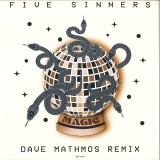
With the reissue of ''Magic" the circle of the works originally published by Eyes Records and composed in the earliest 80s by Celso Valli is completed: Future State, Blue Gas and now precisely Five Sinners !!! Best Record thus creates ''the triplet'' of the Italo-Disco operas made by the immense musician from Bologna, who used various nicknames at that time - as the trend of the main Italian arrangers - feeling 'a certain shame' in making commercial pieces, songs that were danced in the discos. He hid under dozens of pseudonyms (Adal-Scandy, Azoto, Bulldog Lama, Sandon, Super Band....) ''Magic'' and ''Precious Lies'' kept hidden, almost buried for over 40 years (but with many followers abroad) now shine their own light! Indeed. To further enrich this latest vinyl production by Claudio Casalini there is - in addition to the successful artwork of graphic designer Nerina Fernandez - the new captivating version of ''Magic'' (timing 6'20'') skillfully remixed by the talented Italian-Australian DJ-producer Dave Mathmos. In short, a 12-inch reissue not to be missed for both collectors and club DJs.
Prospect Park,Taka Boom,Lou Casablanca,Angela Johnson,Da Funk Junkies&Discogalactix,Massimo B
Groove Is In The Heart Vol. 2
DJ Support: Dimitri From Paris, David Morales, Dave Lee, The Shapeshifters, Brian Tappert, Quentin Harris, Michael Gray, Dr. Packer, Marcel Vogel, Dj Pippi, Sebb Junior, Dj Pope, Dj Oji and many others
Groove Culture main men Micky More and Andy Tee are once again at the controls as the label presents its' second collection of 'Groove Is In The Heart'. As with the popular imprint's various EPs, the focus is on joining the dots between organic house, revivalist disco, uplifting dancefloor soul and colourful jazz-funk. There's much to admire from start to finish, a very strong bunch including MM & AT's celebratory Mix of Prospect Park's swirling disco-funk treat Feat Taka Boom 'i Got This Feelin', a wonderfully rolling and soulful Groove Assassin rework of Lou Casablanca and Angela Johnson's 'Gimme Your Love', Da Funk Junkies and DiscoGalactiX tasty Feel Good house Tune 'Holding On' and the revivalist Italo-house warmth of Massimo Berardi's 'Who I Am' Feat. Sheree Hicks.
Rico Casazza is no stranger to the Moving Pictures Label and the local scene. Calling Prague his home for the past few years, Italian electro/techno heavyweight is returning to the imprint with another release titled "Climax".
The EP brings to life a pair of high-speed dancefloor weapons, showcasing Rico's signature touch and sonic precision.
Complementing these tracks are two remixes by Moving Pictures' label founders - Roman Rai & Täino, having stayed true to the imprint's eclectic sound and the record's driving essence.
Pressed on black vinyl with a full artwork sleeve & label, "Climax" is yet another chapter to be discovered in Moving Pictures' universe.
CASABLANCA first started as a party exploring the depths of Arabic grooves from Northern Africa and the Middle East, brought to life by two musical legends...Parisian digger Victor Kiswell, known for his journey through the world’s rarest records and influential NTS radio sets, and Dez Andrés, a Detroit native whose roots in the city's hip-hop and house scene are matched by his love for soul, fun, and jazz. The two artists have stepped into the studio to bring the same energy and ethos from their party to this album.
- A1: E Di Nuovo Cambio Casa
- A2: Impressioni Di Settembre
- A3: L'uomo Sapiente
- A4: Gigi's Love
- A5: Vorrei Fare Una Canzone
- B1: Gimnastica Mentale
- B2: Please Don't Cry
- B3: Passo Folk
- B4: Lo Sbaglio
- B5: Arcobalento
- B6: Solo In Te
- C1: Ho Fatto Un Sogno
- C2: Gioco Armonico
- C3: Viaggetto
- C4: Stand By Me
- C5: Il Camino
- D1: Gimnastica Mentale
- D2: Un Mondo Migliore
- D3: Lo Sbaglio
- E1: Ininterrottamente
- E2: Capatosta
- E3: Pietanza
- E4: Oscillazionne Dag
- F1: Passo Felino
- F4: Raggi Uonz
- F5: La Batteria Della Mente
- G1: Passo Folk
- G2: Legna Degna
- G3: Tordo Sordo
- G4: Please Don't Cry
- H1: Ho Fatto Un Sogno
- H2: Un Mondo Migliore
- H3: Voyage
- F2: Endis
- F3: Tira E Molla
The legendary album „Lento Violento...E Altre Stori“ by Gigi D‘Agostino is now available in an exclusive 4LP edition—a must-have for vinyl enthusiasts and electronic music fans! Originally released in 2007, this groundbreaking album is a milestone in electronic music history, introducing Gigi D’Agostino as the pioneer of the unique „Lento Violento“ style—a fusion of melodic, slow-paced techno beats with powerful, aggressive rhythms.
This special 4LP edition not only preserves the diverse and dynamic tracklist of the original release but also enhances the experience with the unparalleled depth of vinyl sound. A true masterpiece, this album solidifies Gigi D‘Agostino‘s legacy as a visionary and innovator in electronic music. Secure your copy of this exceptional 4LP set and immerse yourself in the signature Lento Violento sound like never before!
Long time friends and collaborators Anna Wall and Thoma Bulwer are back with their next EP following on from their successful last 12” EP release on EYA records with a remix from Radioactive man. This new EP explores their London house n garage roots and includes a remix from deep house don Boris Werner to complete the package in ‘Classique’ style.
Early support from Moxie, Raresh, Secret Sundaze, Eliza Rose, Voigtmann, Shanti Celeste, Reiss, Seb Zito. Peach, tINI, Enzo Siragusa (FUSE), Reeshy, Michelle Manetti (Adonis) and Anna Wall.
Vaudou Game is back with a Funky Afro Cumbia 7 inch release !
First single of their 5th album, the french afro funk band's influences have spread beyond the city and country limits, crossing the Atlantic to reach Colombia and the afro latin world.
« Afro Cumbia » is one of the new musical direction took by the band.On the track «Râler» helped by the brilliant voice of the Spanish-english singer Clara Serra López, you'll hear the funky fusion between high-life guitars and typical cumbia guiro and bass. An original soulful duo sharing Spanish and Mina lyrics.
Koliko is a tribute of the west African street food and specially the sweety donuts , you can find in the morning in Lomé or Cotonou. "Nana Benz du Togo" band are invited to sing the chorus on this funky highlife dj friendly anthem .
Recorded on analog equipment at Otodi Studio in Lomé (Togo)
From the album "Fintou" (out January 15 th 2025)
Inedited tracks recorded at Kracklite Studio (Alessandria, IT) in 1998, without mistreating any DAW, only Macintosh and midi instruments mixed live.
Urbanatribù is a project born in 1994 by Flavio Gemma and Massimiliano Bocchio, both based in Alessandria (IT).
They started producing for the Minus Habens/Disturbance label in 1994/95, debuting in the compilation "Outer Space Communications V.3.01-T1". Their first self-titled album was released immediately after and in '96 "The Mix" with a remix by Francesco Zappalà. In the same year they were contacted by Digital Boy, releasing their second CD "Mondotondo". Also for D-Boy Records, two E.P.s were released under the name "Biomontana", dedicated only to DJs and fans of the goa genre. Since '97 they have been under SONY Edizioni, doing many gigs in that period in the best Italian clubs, including: Maffia, Lustando, Casalone, Leoncavallo, and remixing, together with Roberto Vernetti of Aereoplanitaliani, Elisa's first success "Labyrinth".
They continue to work on new unreleased songs, moving with Vernetti's mobile studio from London to Bologna with Maurizio Liguori of Technogod. In that period a song is released for Easy Tempo together with DJ Lele Sacchi. Their tour continues in 2001 performing live in historic clubs such as Cocoricó and Jaisse with their new project "Selenita", which sees them together with Francesco Zappalà. They also participated with him in "Planet Rock", RAI radio program with Luca De Gennaro.
Introducing the first release from Italy's Ellito's Bakery label, a fresh EP packed with four electrifying tracks by Elliot P, tailored for the dance floor. With a keen focus on stirring emotions, these club-ready tunes are crafted to immerse listeners in a sonic journey. —White Label Hand stamped 12"
- A1: Ali Bawa -Yansama
- A2: Napo De Mi Amor - Kissakpiou
- A3: Alognon Degbevi & Les Vétérans Jazz - Baba Na Mi
- A4: Mamo Lagbema - Fati Waka
- B1: Koffi Ottytana Bebli - Doka
- B2: Gregoire Lawani - Habie
- B3: Deg Dos - The End Of All
- B4: Tomede Ehue - Bella Bellow
- C1: Mawuli Decker - Hlomede
- C2: Palete Wawa - Assini
- D1: Akofa Akoussah - Sumga Na Bacci
- D2: Roger Damawuzan - Miziqui
- D3: Agboti – Agaza Gbona
A treasure-trove of rare and unusual recordings mostly recorded in Lomé during the 70’s and 80’s . A fusion of traditional
voodoo chants, raw soul and even Electro Funk . Includes biographies and rare photos
Finding these tracks and their rights holders hasn’t become any easier even after few trips all over this west African country bordered by Ghana , Benin & Burkina Faso. After 8 years, We , at Hot Casa Records with the kind help of Roger Damawuzan decided to select thirteen tracks, a snapshot of some hundreds of rare and often forgotten tapes from the most prolific, professional and exciting phase of the country’s recording history included international stars like Akofa Akoussah, Gregoire Lawani to Roger Damawuzan compared as the James Brown from Lomé to forgotten tapes and brilliant songs in Mina, Kabyié and Fon language.
Many of the tracks featured here are peppered with innovation and experimentation highlighting how diverse, the music scene in Togo was at the time even if the political context influenced their creation. Many of the original albums these tracks are taken from high prices online due to their rarity and so it’s with great pleasure that we present a selection here that evokes a golden boomtime in Togolese music history.
Dedicated to the captivating essence of feminine expression, this album pulsates with deep bass and raw emotion. This release is more than just notes and beats; it's a celebration of diversity, creativity, and the profound impact of music on our hearts and souls. Each track is a unique reflection of its creator, showcasing an array of styles and perspectives.
After the success with his "Timelapse" album on our label, Vincent Casanova returns with his solo vinyl on Pirka called "Euphoria".
The EP contains intelligent melodic cuts, which drives us through different colors across the micro house universe.