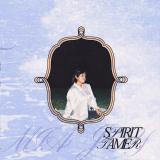
Spirit Tamer’ is the debut album from Mia Joy available on limited edition
Bright Pink and Classic Black vinyl and compact disc on Fire Talk.
A member of the Chicago Children’s Choir at a young age, the record sees Joy’s
dual backgrounds in music and poetry evolve into a juxtaposition between
soaring emotional synthpop and introspective devotional harmonies.
Past press has referred to Mia’s music as ‘warm, ethereal, endlessly layered,
and beautifully expanding’.
Filled with heady atmospherics and vulnerability that abounds through the
shapeshifting sonic palette, fans of Ana Roxanne or Hand Habits will find much
to love in this painstakingly crafted, endearingly intimate universe.
quête:mia joy
- 1
- 1: Urn Burial
- 2: The Redness In The West
- 3: The Third Migration
- 4: They Came Like Swallows
- 5: The Living Theater
- 6: The Oceans Are Crying
- 7: Insight
Black Vinyl[30,67 €]
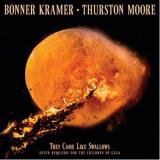
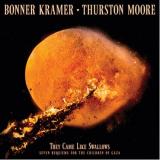
They Came Like Swallows is the first album-length collaboration between Thurston Moore and Kramer (now officially Bonner Kramer), two giants of alternative/ experimental music. The accomplishments and influence of these two artists in the world of independent music cannot be overstated and the result of their artistic union is a startlingly cohesive statement that burns through landscapes of primitive outsider rock, avant-garde composition, progressive ambient and further locales boldly and beautifully unnamable. “Kramer and I reconnected in Miami, Florida, a few years back, many many years after each of us had departed NYC on separate life adventures. It was only a matter of time before Kramer and I started making plans to record together and with his irrepressible due diligence he quickly set up a mobile recording contraption in the pad I was decamped in, the Florida sunshine flowing through the palm leaves, lithe lizards skittering across the windowsills, and we just went for it.
Kramer had the idea to cover a Joy Division tune, a left turn from the improvisations we had been tracking, though wholly in keeping with both our sensibilities of light and dark unifying in transcendent songwriting, both of us devotees of 'the song' as well as 'the freedom.’ What transpired is They Came Like Swallows, a session we immediately felt should exist as a prayer to the war-torn souls of the families of Palestine continually decimated by the brutality of genocide. We agreed beyond words to offer our music as a sonic activism and as a beneficent energy. This album is our duo exchange for human dignity, it is our soul music for any semblance of a peaceful planet.” ~ Thurston Moore “For the first time in our nearly 45 years of friendship, we had identical time windows open to make a record together,” recounts Kramer. After all this time not a moment is wasted as the duo immediately taps into the heightened core of improvisational tension across these seven offerings. Volcanic opener “Urn Burial” notches a similar historic union (John Cale and Terry Riley) to meet the circumstances of the moment, with swirling mists of organ and pounding toms over guitar that thickens the atmosphere with jagged, grimy dissonance.
Solemn strings open the second track, “The Redness In The West,” with Kramer’s cello and viola in dueling bow beneath the high tension drive and sustain of Thurston’s electric guitar, tapping out a Morse code of tension that mounts endlessly into a fog of inevitable war by the end. Moore and Kramer’s sense of experimentalism is in free and full grandeur throughout They Came Like Swallows, though the duo keep a strong and constant sideways eye on melody, composition and architecture, to the ends that any strict lines between song and improvisation are blurred beyond qualification.
As if to punctuate this point, Swallows closes with a nightwork cover of Joy Division’s “Insight,” a doleful coda that breathes out with a solemn inner grace under Thurston’s instantly stylistically recognizable guitar melodies as they weave into he and Kramer’s unison voices. As the lone vocal piece and only traditional ‘song’ form on the album, “Insight” is unique to this set and as a closing statement draws connective lines back to the kind of dynamic, electrified melodicism that wove deep, melancholy patterns into the untamed fire of Sonic Youth’s Sister and Daydream Nation. In the album’s final moments, the two voices repeat the lyric “I’m not afraid anymore” as mantra, underscoring the heavy, unsettled themes and methods that preceded it. Kramer describes the creative process of They Came Like Swallows: “I had composed and recorded a few pieces at my home studio over the course of a couple weeks. Thurston was spending the winter in South Florida, so I flew down and spent a few days recording his guitar parts in his home there. Watching him spontaneously compose his parts was pretty astonishing, to say the least. Once we'd finished working on those pieces, we began improvising and following wherever the music pointed us, and another few pieces were born. We got straight to it, without anything driving us other than the joy of finally working together.
My personal goal was to remain present and catch as many surprises as I could from Thurston's guitar work, and there were plenty during those few days. We had a fucking blast.” Thurston’s contributions here will be readily familiar to any acolytes of his other works, the through-line between his inspired playing, cradled in Kramer’s meticulous, solid arrangements. “If I had to make this record again, I'd do it all exactly the same way,” Kramer says. “It’s like jazz, you don't think about it. You just do it. It was miraculous, and you don't fuck with a miracle.”
They Came Like Swallows is the first album-length collaboration between Thurston Moore and Kramer (now officially Bonner Kramer), two giants of alternative/ experimental music. The accomplishments and influence of these two artists in the world of independent music cannot be overstated and the result of their artistic union is a startlingly cohesive statement that burns through landscapes of primitive outsider rock, avant-garde composition, progressive ambient and further locales boldly and beautifully unnamable. “Kramer and I reconnected in Miami, Florida, a few years back, many many years after each of us had departed NYC on separate life adventures. It was only a matter of time before Kramer and I started making plans to record together and with his irrepressible due diligence he quickly set up a mobile recording contraption in the pad I was decamped in, the Florida sunshine flowing through the palm leaves, lithe lizards skittering across the windowsills, and we just went for it.
Kramer had the idea to cover a Joy Division tune, a left turn from the improvisations we had been tracking, though wholly in keeping with both our sensibilities of light and dark unifying in transcendent songwriting, both of us devotees of 'the song' as well as 'the freedom.’ What transpired is They Came Like Swallows, a session we immediately felt should exist as a prayer to the war-torn souls of the families of Palestine continually decimated by the brutality of genocide. We agreed beyond words to offer our music as a sonic activism and as a beneficent energy. This album is our duo exchange for human dignity, it is our soul music for any semblance of a peaceful planet.” ~ Thurston Moore “For the first time in our nearly 45 years of friendship, we had identical time windows open to make a record together,” recounts Kramer. After all this time not a moment is wasted as the duo immediately taps into the heightened core of improvisational tension across these seven offerings. Volcanic opener “Urn Burial” notches a similar historic union (John Cale and Terry Riley) to meet the circumstances of the moment, with swirling mists of organ and pounding toms over guitar that thickens the atmosphere with jagged, grimy dissonance.
Solemn strings open the second track, “The Redness In The West,” with Kramer’s cello and viola in dueling bow beneath the high tension drive and sustain of Thurston’s electric guitar, tapping out a Morse code of tension that mounts endlessly into a fog of inevitable war by the end. Moore and Kramer’s sense of experimentalism is in free and full grandeur throughout They Came Like Swallows, though the duo keep a strong and constant sideways eye on melody, composition and architecture, to the ends that any strict lines between song and improvisation are blurred beyond qualification.
As if to punctuate this point, Swallows closes with a nightwork cover of Joy Division’s “Insight,” a doleful coda that breathes out with a solemn inner grace under Thurston’s instantly stylistically recognizable guitar melodies as they weave into he and Kramer’s unison voices. As the lone vocal piece and only traditional ‘song’ form on the album, “Insight” is unique to this set and as a closing statement draws connective lines back to the kind of dynamic, electrified melodicism that wove deep, melancholy patterns into the untamed fire of Sonic Youth’s Sister and Daydream Nation. In the album’s final moments, the two voices repeat the lyric “I’m not afraid anymore” as mantra, underscoring the heavy, unsettled themes and methods that preceded it. Kramer describes the creative process of They Came Like Swallows: “I had composed and recorded a few pieces at my home studio over the course of a couple weeks. Thurston was spending the winter in South Florida, so I flew down and spent a few days recording his guitar parts in his home there. Watching him spontaneously compose his parts was pretty astonishing, to say the least. Once we'd finished working on those pieces, we began improvising and following wherever the music pointed us, and another few pieces were born. We got straight to it, without anything driving us other than the joy of finally working together.
My personal goal was to remain present and catch as many surprises as I could from Thurston's guitar work, and there were plenty during those few days. We had a fucking blast.” Thurston’s contributions here will be readily familiar to any acolytes of his other works, the through-line between his inspired playing, cradled in Kramer’s meticulous, solid arrangements. “If I had to make this record again, I'd do it all exactly the same way,” Kramer says. “It’s like jazz, you don't think about it. You just do it. It was miraculous, and you don't fuck with a miracle.”
New album from the South African musician + creative visionary, known for her vibrant, inimitable style + affirming lyricism Full Moon is a collection of 12 songs which displays Sanelly's unique sonic fingerprint, joyous attitude, distinctive vocals + genre-bending hits. Recorded in multiple locations while on the road, Full Moon is an introspective yet kinetic display of her versatility. "I can make any genre, I have fun creating music because I'm not limited," she says. Its club- ready beats oscillate between electronic, afro-punk, edgy-pop, kwaito, + hip-hop sensibilities. Produced by Johan Hugo (Diplo, MIA, Self Esteem)
DJ Girl is a DJ and producer who was raised in Detroit, but since the pandemic has been based in Austin, Texas. She's the co-founder of the up and coming Eat Dis Records and her recent releases have been generating excitement in all the right places.
In some ways, 'Hellworld' feels like a direct relation to a lot of early 2000s Planet Mu releases. It could sit neatly alongside Hellfish or Neil Landstrumm, with a similar anything-goes, gleeful attitude, but instead DJ Girl mashes together a driving sound that is founded upon Detroit techno and electro, Chicago juke and Miami bass, with an old school/new school production style that's finessed with distortion and sparse IDM production.
It's a midwest USA style that takes a leaf from DJs and producers such as the wild-style hard techno of Lenny Dee, the tough midwest acid of Woody McBride and the system wrecking electro of Dynamix II, with a joyful, take-no-prisoners bounce.
'Hellworld' kicks off with the industrial juke of 'Get Down', followed by the powerful electro of 'Opp Pack Hittin' (the first of two tracks to feature MC Malik McFly).
'Technician' is a chirpy old school electro track that gets crazier as it progresses, while 'Lucky' mashes together samples and rough beats like an electro version of breakcore.
'Gallery' again features Malick McFly and switches between footwork beats, pumping techno and electro.
'So Hot' is hard 8-bar electro while 'When U Touch Me featuring Irish producer Lighght feels like a very manic take on hyperpop.
The album ends with the tough, spiralling acid of 'Groover' which wouldn't be out of place on a late nineties Jeff Mills mix. The fun is infectious on this one.
Continuing to make 2020 their own Tropical Disco are back with four tracks of joyous dancefloor fervour in the shape of Volume 19 of their well loved vinyl series.
The EP see’s a welcome return for the outrageously talented and regular contributor to the label Phased Groove. He is appearing alongside a debut for the equally revered Ziggy Phunk and a welcome return of Vagabundo Club Social on a release which is completed by a dynamite collaboration between Kikko Esse & Emanuele Del Carmine.
This is an EP punctuated by the jazzy flourishes that we have come to love from Tropical Disco which sit perfectly alongside a prodigious selection of disco edged funk.
Phazed Groove’s ‘In Motion’ is the perfect opener for this ever so stylish collection. Its dashing groove packs in everything from subtle guitar licks and disco flutes to gentle keys and an ever so sensual breathless female vocal which has likely beamed in directly from the 70’s. It’s a track which belies its laidback notions and is deceptively energetic. Expect this one to be played everywhere from Miami pool soirees to Mediterranean boat parties in the coming months.
Danish artist Ziggy Phunk has seen his star rise rapidly over the last couple of years on the back of a series of sublime releases. His track here ‘Vibes of Nola’ is as captivating as anything that he has produced to date. Built around some incredible keys its funk infused bassline gives it some genuine dancefloor guile.
Over on the flip Kikko Esse & Emanuele Del Carmine’s ‘Funky Tranky’ brings to mind some of Masters at Works jazzier moments as Nuyorikan Soul. Built round some wonderful live bass guitar playing its layers of sumptuous guitar and brass are a joy.
Closing the EP is an essential Latin-edged dance-floor gem in the shape of ‘Calabao’ from Colombia’s irrepressible Vagabundo Club Social. Acidic bass notes and filtered vocals add the grit here. It’s a track which you can expect to be ubiquitous on in the know dancefloors across the tail end of 2020.
Yet again Topical Disco raises the bar ever higher for contemporary disco.
Support across Mi Soul & House FM.
Mia Zapata was the greatest rock singer of her time. She may have likely been the greatest blues singer in punk rock history, the woman who married the 78 and the '78. Tragedy did not make this true. Mia Zapata made this true, and the ferocious, spring-loaded shrapnel frame that was built around her by Andy Kessler (guitar: metronomic and furious), Matt Dresdner (bass: fluid, punching, beat-addicted and melodic), and Steve Moriarty (drums: martial and explosive) - who, with Mia, combined to form The Gits - made it true. The Gits were formed at Antioch College in Yellow Springs, Ohio in mid-1986, grabbing and swapping pieces of art, thrash, noise, punk rock, classic rock, and all the sorts of magical silly and bookish jingle bells that an old-school liberal arts education handed you; for the next few years they worked on turning it all into something tough, sensitive, both brutal and kind. Andy, Matt, Mia, and Steve moved to Seattle in middish 1989, landing in a house on Capitol Hill where they (and fellow travelers) wood-shedded and rehearsed for the next few years. The Gits put out three EPs in 1990 and '91 before signing with C/Z Records and releasing their first full-length album, Frenching the Bully. Seattle quickly claimed the quartet as their own and embraced the Gits blend of ferocious fangs and soft heart, the slug/slap of the guitars, and the gorgeous, soft underbelly of the poetic emotions. These qualities not only fit in with the doe-eyed/sharp-clawed grunge ethos but earned the Gits the respect of their peers, including Nirvana, who tapped them to open a major local show in 1990. Then other stuff happened, and their frantic, confessional barbed-heart snowball began rolling up hill very, very fast; the Gits "quickly" (hah! After half a decade learning to implode and explode hearts and stomping their boots on manifold beer-softened, Marlboro-weeded wood stages!) inspired rapture, awe, and the levitation that happened when peak emotion meets peak grindage in front of amps spitting out something that sounded like the mad marriage of Bolan swagger and Dischord tension_ all fronted by a genuinely incomparable woman who held her heart in her mouth and shared it, in all its celebration and fear, without hesitation. The Gits were an angry, inflamed slinky fully in tune with and tuned by the Bessie Patti Smith of her time, truly the only singer who could summon Joplin, Poly Styrene, Sam Cooke, Iggy Pop and Ian MacKaye all in the same goddamn song. In 1993, less than four weeks after accepting an offer from Atlantic Records, Mia died. I leave it at that, because this is not about death; it's about an extraordinary life. I do not say, "You should have been there," I say, "We are lucky so many of us were, and I am so glad we have this extraordinary evidence of the power and gifts of Mia and the Gits that you now can hold in your hands." And I note that Frenching the Bully, this extraordinary testament to the soul, shock, fury and feeling of the Gits, has been long out of print on vinyl and CD, and this new edition - remastered by legendary Seattle engineer Jack Endino - joyfully rectifies that. -Tim Sommer
“Oh damn I got fired suddenly, replaced by a hydraulic pump with life long guarantee”.
The undefinable Kaboom Karavan returns to the dusty Belgian roads with a total Fiasko! - or a full blown disaster if you will (seen from a minimalist perspective), although one that might be the antidote to the sterilised and scattered world that increasingly surrounds us. Fiasko! represents a musical chaos that feels both ecstatic, fun, as well as deeply melancholic. Like an overwhelming moment where the world seems to touch you on all senses. This is music for a new underground of black tie workers raising up to the dullness of societal norms by connecting to their inner child. It’s protest music towards the new normal, where the rules are thrown out of the window and unpredictable sense of joy prevails. Shortly said, Fiasko! Is contemporary exotica made by a madman with too much time on his hands.
As usual, Kaboom Karavan releases contains a conglomerate of strange, mostly home made instrumentation, which will be too long to list here. To shorten it down… Bram Bosteels himself, the captain of the ship, plays all kinds of acoustic instruments, guitars, electronics and uses his voice. Additionally we have Bart Maris on trumpet, tuba and trombone. Stefaan Smagghe plays violin and sarangi. Lastly we have Raphael de Cock on such typical instruments as igir, jadagan and uillean pipes. All that remains to be said is: Bring your neighbour, let yourself loose and have some fun. Listen to Fiasko!
'Oh Snap' features twelve very personal songs by Salvant (plus a cover of a verse from the Commodores’ 1977 hit “Brick House), mostly recorded outside of a traditional studio environment, and which showcase her genre-spanning tastes and influences. The MacArthur Fellow and three-time Grammy-winning singer and composer wrote these short, intimate songs as part of a creative quest: to place spontaneity and joy at the centre of her writing process, and originally recorded them alone, at home, never intending for them to be released, using digital tools and effects that she had never played with before, like GarageBand, Logic, AutoTune, Midi plugins, drum loops, vocal effects, reverb, and filters. The songs reflect Salvant’s wide-ranging musical influences from her 1990s childhood in Miami—from boy bands to grunge to classical to folk—and include party tracks with beats, samba grooves, and quiet folk songs. The album features longtime collaborators Sullivan Fortner, Yasushi Nakamura, and Kyle Poole, as well as cameos from singers June McDoom and Kate Davis.
"Oh Snap features twelve very personal songs by Cécile McLorin Salvant - plus a cover of a verse from the Commodores’ 1977 hit “Brick House” - mostly recorded outside of a traditional studio environment and showcasing her genre-spanning tastes and influences. The album features longtime collaborators Sullivan Fortner, Yasushi Nakamura, and Kyle Poole, as well as cameos from singers June McDoom and Kate Davis. Salvant has US and international tour dates throughout the summer and autumn; find more details at nonesuch
The MacArthur Fellow and three-time Grammy-winning singer and composer wrote these short, intimate songs as part of a creative quest: to place spontaneity and joy at the center of her writing process. She originally recorded them alone, at home, never intending for them to be released, using digital tools and effects that she had never played with before, like GarageBand, Logic, AutoTune, Midi plugins, drum loops, vocal effects, reverb, and filters. The songs reflect Salvant’s wide-ranging musical influences from her 1990s childhood in Miami - from boy bands to grunge to classical to folk - and include party tracks with beats, samba grooves, and quiet folk songs.
"
Kink Hot Pink Vinyl[23,95 €]
Kesha’s sixth studio album, . (PERIOD) – yes, it's just a period. – is an unapologetic, unfiltered declaration of artistic freedom and fearless authenticity from the 2x GRAMMY® Award-nominated pop icon. Conceived, co-produced and co-written by Kesha, the 11-song collection transcends pop norms to create a raw, daring, and intensely personal sonic journey, a defiant act of self-expression that refuses to adhere to expectations or play it safe.
More than just a new album, . (PERIOD) is Kesha at her most powerful best, turning her experiences into vibrant, audacious art with a spiked heel at the neck of pop culture.
Among its many exhilarating highlights, . (PERIOD) includes 2024’s blockbuster hits “JOYRIDE” and “DELUSIONAL,” both available everywhere now. Currently boasting over 103M streams at Spotify alone, “JOYRIDE” proved a true sensation since its Independence Day release, reaching #6 on Billboard’s “Bubbling Under Hot 100 Singles” and “Hot Dance/Electronic Songs” along with the top 30 on “Pop Airplay” and chart success around the world from the UK to New Zealand. Produced by Zhone and co-written by Kesha, Zhone, and Madison Love, the track marked the triumphant first chapter of a milestone new era for Kesha, celebrating both her long overdue empowerment as an independent artist as well as a powerful sonic evolution following 2023’s critically acclaimed fifth studio album, Gag Order. Along with its popular achievement, “JOYRIDE” has been met by high-profile critical applause from the likes of Rolling Stone, Variety, and Vulture, to name only a few. Perhaps NYLON said it best: “Everything about ‘JOYRIDE’ is a trip…The original glitter-faced party animal of the 2010s is back with a fiery vengeance.”
“JOYRIDE” joined by an equally acclaimed official music video streaming now on YouTube.
Directed by Dimitri Basil (Kylie Minogue, Vance Joy), Cooper Roussel (Unknown Mortal Orchestra, Miami Horror), and Laura Gorun (Joywave, Kings of Leon), the high-octane visual received wide-ranging attention from major publications and top online outlets around the globe, including Billboard, Vulture, and Rolling Stone, the latter of which raved, ““Kesha is taking her foot off the brakes and going full-speed ahead on her new video for ‘JOYRIDE.’ The video sees Kesha racing through the desert in a hot red convertible while being chased by a helicopter, gun-toting assassins, and a shirtless dude hell-bent on catching up to the pop diva.”
- Freedom
- Joyride
- Yippee-Ki-Yay
- Delusional
- Red Flag
- Love Forever
- The One
- Boy Crazy
Orgy Orange Vinyl[23,95 €]
Kesha’s sixth studio album, . (PERIOD) – yes, it's just a period. – is an unapologetic, unfiltered declaration of artistic freedom and fearless authenticity from the 2x GRAMMY® Award-nominated pop icon. Conceived, co-produced and co-written by Kesha, the 11-song collection transcends pop norms to create a raw, daring, and intensely personal sonic journey, a defiant act of self-expression that refuses to adhere to expectations or play it safe.
More than just a new album, . (PERIOD) is Kesha at her most powerful best, turning her experiences into vibrant, audacious art with a spiked heel at the neck of pop culture.
Among its many exhilarating highlights, . (PERIOD) includes 2024’s blockbuster hits “JOYRIDE” and “DELUSIONAL,” both available everywhere now. Currently boasting over 103M streams at Spotify alone, “JOYRIDE” proved a true sensation since its Independence Day release, reaching #6 on Billboard’s “Bubbling Under Hot 100 Singles” and “Hot Dance/Electronic Songs” along with the top 30 on “Pop Airplay” and chart success around the world from the UK to New Zealand. Produced by Zhone and co-written by Kesha, Zhone, and Madison Love, the track marked the triumphant first chapter of a milestone new era for Kesha, celebrating both her long overdue empowerment as an independent artist as well as a powerful sonic evolution following 2023’s critically acclaimed fifth studio album, Gag Order. Along with its popular achievement, “JOYRIDE” has been met by high-profile critical applause from the likes of Rolling Stone, Variety, and Vulture, to name only a few. Perhaps NYLON said it best: “Everything about ‘JOYRIDE’ is a trip…The original glitter-faced party animal of the 2010s is back with a fiery vengeance.”
“JOYRIDE” joined by an equally acclaimed official music video streaming now on YouTube.
Directed by Dimitri Basil (Kylie Minogue, Vance Joy), Cooper Roussel (Unknown Mortal Orchestra, Miami Horror), and Laura Gorun (Joywave, Kings of Leon), the high-octane visual received wide-ranging attention from major publications and top online outlets around the globe, including Billboard, Vulture, and Rolling Stone, the latter of which raved, ““Kesha is taking her foot off the brakes and going full-speed ahead on her new video for ‘JOYRIDE.’ The video sees Kesha racing through the desert in a hot red convertible while being chased by a helicopter, gun-toting assassins, and a shirtless dude hell-bent on catching up to the pop diva.”
Mia Zapata was the greatest rock singer of her time. She may have likely been the greatest blues singer in punk rock history, the woman who married the 78 and the '78. Tragedy did not make this true. Mia Zapata made this true, and the ferocious, spring-loaded shrapnel frame that was built around her by Andy Kessler (guitar: metronomic and furious), Matt Dresdner (bass: fluid, punching, beat-addicted and melodic), and Steve Moriarty (drums: martial and explosive) - who, with Mia, combined to form The Gits - made it true. The Gits were formed at Antioch College in Yellow Springs, Ohio in mid-1986, grabbing and swapping pieces of art, thrash, noise, punk rock, classic rock, and all the sorts of magical silly and bookish jingle bells that an old-school liberal arts education handed you; for the next few years they worked on turning it all into something tough, sensitive, both brutal and kind. Andy, Matt, Mia, and Steve moved to Seattle in middish 1989, landing in a house on Capitol Hill where they (and fellow travelers) wood-shedded and rehearsed for the next few years. The Gits put out three EPs in 1990 and '91 before signing with C/Z Records and releasing their first full-length album, Frenching the Bully. Seattle quickly claimed the quartet as their own and embraced the Gits blend of ferocious fangs and soft heart, the slug/slap of the guitars, and the gorgeous, soft underbelly of the poetic emotions. These qualities not only fit in with the doe-eyed/sharp-clawed grunge ethos but earned the Gits the respect of their peers, including Nirvana, who tapped them to open a major local show in 1990. Then other stuff happened, and their frantic, confessional barbed-heart snowball began rolling up hill very, very fast; the Gits "quickly" (hah! After half a decade learning to implode and explode hearts and stomping their boots on manifold beer-softened, Marlboro-weeded wood stages!) inspired rapture, awe, and the levitation that happened when peak emotion meets peak grindage in front of amps spitting out something that sounded like the mad marriage of Bolan swagger and Dischord tension_ all fronted by a genuinely incomparable woman who held her heart in her mouth and shared it, in all its celebration and fear, without hesitation. The Gits were an angry, inflamed slinky fully in tune with and tuned by the Bessie Patti Smith of her time, truly the only singer who could summon Joplin, Poly Styrene, Sam Cooke, Iggy Pop and Ian MacKaye all in the same goddamn song. In 1993, less than four weeks after accepting an offer from Atlantic Records, Mia died. I leave it at that, because this is not about death; it's about an extraordinary life. I do not say, "You should have been there," I say, "We are lucky so many of us were, and I am so glad we have this extraordinary evidence of the power and gifts of Mia and the Gits that you now can hold in your hands." And I note that Frenching the Bully, this extraordinary testament to the soul, shock, fury and feeling of the Gits, has been long out of print on vinyl and CD, and this new edition - remastered by legendary Seattle engineer Jack Endino - joyfully rectifies that. -Tim Sommer
»Mother Nature« is the debut solo album by Berend Intelmann, a key figure in the German indie music scene since the late 1980s. Having made his name as a member of groups such as Hallelujah Ding Dong Happy Happy, Guther, and Paula, Intelmann most recently focussed on his work as a producer for artists such as Jens Friebe, MissinCat, or Fotos. »Mother Nature« sees the multi-instrumentalist and singer navigate between pop sentiment and his penchant for classical music on these eight pieces, three of which feature additional contributions by Karaoke Kalk label mate Marla Hansen, synth pop iconoclast Der Assistent, and the versatile Mieke Miami, respectively. »Mother Nature« combines a sense of playfulness with cunning compositional rigour to stunning effect.
Intelmann took full creative licence and worked with the instruments that he feels most comfortable using: the drums, synthesizers, and his voice. While inspired by his life-long passion for pop music in all shades, he also took some cues from his more recent passion for classical music. »The synthesizer melodies are arranged like string quartets, while the songs are presented as musical themes strung together so that they form a coherent story,« he explains. The resulting sound isn’t quite as »krauty« as someone called it, instead the artist prefers to call it »slow-kraut—1980s synth sound with 1970s George Duke-style beats,« though of course he never attempted to fit in one specific genre or replicate a certain sound: This is simply the essence of Berend Intelmann as a composer and storyteller.
The lyrical matter of »Mother Nature« is inspired by life and death. This informs an album that masterfully creates contrasts and utilises the friction generated between them to tell its stories. The album opener and second single »All Gone« greets its audience with the couplet »In the long run / We’re all gone,« but sets this to soothing sounds that form a joyful counterpoint to the fatalism of the words. Also the slowly-unfolding first single »Life Of Another One« sets the stage for a reflection on memories that have become so distant that they feel like belonging to another person altogether with sombre, intertwined melodies. However, these darker tones slowly give way to laid-back grooves, Intelmann’s smooth vocalisations and whirling synthesizer sequences.
The collaborations—a vocal duet with Marla Hansen on »A Focused Mind,« Der Assistent’s subtle theremin contributions to »The Less We Cared« and Mieke Miami flute and saxophone playing on »Mother Nature«—further enrich this album that the artist claims has been »co-produced by friends and family.« Indeed, »Mother Nature« might be Intelmann’s solo debut proper, but he remains a teamplayer at heart.
- A1: Holy Ghost (Feat Joe Fox)
- A2: Canal St (Feat Bones)
- A3: Fine Whine (Feat Joe Fox X Future X Mia)
- A4: L$D
- A5: Excuse Me
- B1: Jd
- B2: Lord Pretty Flacko Joyde 2 (Lpfj2) (Lpfj2)
- B3: Electric Boy (Feat Schoolboy Q)
- B4: Jukebox Joints (Feat Joe Fox X Kayne West)
- B5: Max B (Feat Joe Fox)
- C1: Pharsyde (Feat Joe Fox)
- C2: Wavybone (Feat Juicy J X Ugk)
- C3: West Side Highway (Feat James Faunteleroy)
- C4: Better Things
- D1: M'$ (Feat Lil Wayne)
- D2: Dreams (Interlude)
- D3: Everyday (Feat Red Stewart X Miguel X Mark Ronson)
- D4: Back Home (Feat Mos Def X Acyde X Yams)
“…a surprisingly cohesive atmospheric soundtrack to a movie that does not yet exist.” LONER is the stunning album from cult auteur DAVID J (Bauhaus, Love & Rockets) featuring Mia Doi Todd and Tim Newman. U.K. Edition in orange vinyl with gatefold sleeve. Limited edition of 500. Former Bauhaus and current Love and Rockets bass man returns via Dakota Records with a series of deconstructions of an original twenty some year old demo. Originally streamed as part of his 2007 series of unreleased stash ‘Tracks from the Attic,’ a precursor to the now hugely successful platform: Patreon. David’s original demo titled ‘Albino Dog’ alongside singer/songwriter Mia Doi Todd’s sublime studio version both appeared via that platform in 2015; only the latter appears amongst this new series of arrangements. David’s premonition of Mia’s voice on this song is one to be applauded – perfectly suited creating a ghostly sepulchral aura. Here the Colonel is aided by a series of foot soldiers varying in rank. Veteran comrade Joyce Rooks adds texture with her trademark cello to Mia’s ‘Albino Dog’, whilst privates’ Nigel Gwennap (‘The Day that David Bowie Died’) and Whitehall Rec’s Joel Baldwin contribute electric guitar and drum programming respectively. But it’s the work of the captain that captivates this whole package. Tim Newman (Love is a Ghost), arranger, sound alchemist, mixer and lunatic. Tim’s work with David is best savoured via their ‘Analogue Excavations & Dream Excavations’ 2002 Glass Modern set. ‘Loner’ offers the listener a kaleidoscope of sounds best experienced with headphones, the journey from David’s simple ‘Albino Dog’ strummed acoustic demo to ‘Crescendo’ is quite staggering. Joel’s synth on ‘Cold, Cold, Cold’ and the glitch added to Mia’s vocal (‘Loner on the Range’) for example take the song into an altogether different direction. But it’s ‘Crescendo’ though that sits atop the apex. Building, as the title suggests, into a blistering array of guitars, bass and drums with a gorgeous, ethereal repeating low vocal motif from Mia wrapping itself around the cacophony.
“A huge thing for this record was to make it feel as close to our live show as possible,” says Tom Sharkett of W.H. Lung’s latest album. “We didn’t want it to sound live but we wanted to capture the excitement of the live performances.”
This is something that has become paramount to the group in recent years as they have undeniably blossomed into one of the most joyous and arresting live bands in the country. “The reason I’m in a band is to play live music,” says singer Joe Evans. “For me, music is live music. That’s what it’s for, to be played with people.”
The five-piece band, also featuring Chris Mulligan, Hannah Peace, and Alex Mercer-Main, decided to try something new on their third album after two incredibly successful collaborations with previous producer Matt Peel. In order to capture the energy, spirit and dynamism of their live shows, they relocated to Sheffield to work with Ross Orton (MIA, Arctic Monkeys, Working Men’s Club) who was able to harness this side of the band to remarkable effect. “Ross is the Sheffield Steve Albini,” says Evans. “He’s the king of not overthinking it and trusting the process of the art of recording songs. He was always there to stop us fucking around with cerebral stuff and get it down.” Sharkett echoes this too: “He was the exact producer we needed without us even realising. His productions and mixes are bombastic, lively and in your face and that’s exactly what we wanted.”
However, while this album is rooted in a sense of capturing a moment and a sparky liveness, that’s not to say it’s a raw or ragged record. It is still a meticulously composed, delicately layered and pristinely produced piece of work that, in true W.H. Lung style, runs the gauntlet from dance to pop to indie while still capturing that distinctly unique quality that is unquestionably their own. “It was a really big thing for me to realise what made us sound like us on this record,” says Sharkett. “I think the album sounds a lot more confident and self assured because of it. Some songs sound just so much like Lung and I’m really proud of that. I’m not sure we’ve done that as consistently across the other records.”
While the band have drilled deeper into finding their own singular identity, it’s not a record resting on its laurels. It’s a significant leap forward, expanding on their solid foundations while also breaking new ground. “The big difference with this record is its directness in every sense,” says Sharkett. “The songwriting is more upfront. Previously we’d focused a lot on vibe and production as opposed to just writing songs. The overall mission here was to revert to a classic songwriting structure and for the production to come afterwards.” And so what you have on this record are deeply considered and well-crafted songs, then recorded with blistering intensity in the moment, and then given a touch of experimentation afterwards. Then throw in Orton’s contributions to the band and it’s proven to be a real winning formula. “He brought a real dose of magic to the songs we’d written,” says Sharkett. “And brought an extra bit of wonk and quirkiness each time.”
The band’s ability to write more traditional and conventional songs is clearly a skill they’ve taken to with ease, at times there’s an almost Springsteen-like quality – but if he'd ever had an ecstasy period – to tracks such as ‘Thinner Wine’ and ‘Bloom and Fade’. While ‘How to Walk’ was constructed with one thing only in mind: that it would absolutely slay on stage. “I can’t wait to play this live,” says Evans. “We wanted a song to represent our live set, a new big one, and this is it.” Once again it leans towards the anthemic, with its driving, propulsive charge complete with incandescent synths and vocal melodies so irresistible you can already hear them being sung in unison by a crowd.
It’s an incredibly difficult feat to pull off a record that is more rooted in traditional songcraft while also capturing the power of a live performance, as well as pushing sonics into experimental new directions while working with a brand new collaborator. But here the band has managed to do just that. And the album’s closing song ‘I Will Set Fire To The House’ is a perfect example of such a thing. It’s a song that feels immaculately constructed but also very much alive and of the moment as its radiating synths engulf from the off, and Evans’ vocal is silky but powerful and in perfect symbiosis with Peace’s. It’s a song that captures the endless joys of music playing long into the night. “It may be a bit of a bloody bombastic way to end an album saying ‘and we’ll dance into the sunrise’,” says Evans. “But fuck it.”
MORE PRESS ON ‘VANITIES’ (MELO131)
"Vanities artily refines an exhilarating brand of up-front electro-dance" MOJO ⅘
'Idiosyncratic yet euphoric electronic pop on triumphant second LP' 9/10 Uncut
''One of the most effective alternative pop albums of the year'' 4/5 Record Collector
'Dance music for the modern age' - The Times (4*)
Pearson Sound returns to his Hessle Audio label with Which Way Is Up, a 4 track EP showcasing a range of textures and tempos with soundsystem pressure as the anchor. The 808-laced 'Hornet' kicks things off with a sound palette inspired as much by '80s Miami as '10s London. 'Twister' dials up the energy with a jagged lead and scattered breakbeats pulling in opposing directions, while the steppers pulse of 'Slingshot' evokes formative experiences at Subdub in Leeds. The EP is brought to a close with the blissed out title track 'Which Way Is Up', whose arpeggios dance around each other until they fizzle to breaking point. Support from Mala, Mary Anne Hobbs, Joy Orbison and more.
The Morning Papers Have Given Us the Vapours was made with the black watch bandmates and producers/engineers Rob Campanella (Brian Jonestown Massacre, The Tyde, The Warlocks) and Andy Creighton (The World Record, Parson Red Heads). Ben Eshbach, formerly of The Sugarplastic, arranged the strings. Kesha Rose guests on lead vocals on the second single, Oh Do Shut Up. And the great Lindsay Murray once again lends her beautiful backing vox to a number of tracks.
the black watch songwriter/frontman John Andrew Fredrick wrote the ten songs on this, his Los Angeles-based band's latest album, entirely unselfconsciously, with no set goal in mind other than to revel in the joy of songwriting, and, eventually, the luxury of recording his music with his more-than-accomplished band. The Morning Papers Have Given Us the Vapours, produced separately and together by Rob Campanella and Andy Creighton evinces the black watch's often stunning ability to, as Andy Gill once observed in The Independent, "find chaos in the calm, melody in the miasma."
Fredrick, who has also published four comedic novels and a book on the early films of Wes Anderson, jovially describes himself as "a recovering Anglophile--one who'll never, one hopes, fully recover." From his home studio in the Angeleno Heights district of L.A., he waxes eloquent about how being branded, as it were, as a too-ardent lover of British music, film, and literature has left him as bemused as has the tag "prolific" that is often affixed to reviews of his work.
"I just don't think it's all that interesting to note that we've made so many records. Looked at one way, it's a sort of deflection from talking about the timbre if not the quality of the individual songs. Though I know it can be intimidating for fans who've just discovered us--a sort of 'My goodness, where do I start with this band that has put out LPs since 1988?' I get it. I do. I picture someone standing at our slot at a bin at a record store becoming overwhelmed at the prospect of picking the 'wrong' title. And then walking away and not picking up anything from us!" Fredrick laughs. "What can you do indeed?"
He started his career as a songwriter as a result of an American Football injury that left him bedridden in the home he grew up in in Santa Barbara, California. The year The Beatles immortal double-album came out at Christmastime he broke his leg so badly that he had to be home-schooled for an entire year. His parents, ex-teachers themselves, refused to let him watch telly for more than an hour a day. He propped a Silvertone acoustic on top of the massive cast that screamed all the way up to his thigh from his toes, and began to write little melodies and lyrics that, doubtless, did not in the least mask his love for the Fabs, The White Album in especial.
And he read and read and read--histories of the American Revolution and Civil War, mostly, and as many Dickens novels as his mum and dad could bring him. "That year," Fredrick observes, "surely made me who I am today. Proof that intensely unfortunate-seeming events can prove most fortunate. As a sport-mad kid, it made me absolutely mental that I was exiled from the activities I loved most and the school teams I played on. What a blessing undisguised that injury was! Not that I'd like to experience anything like it ever again, mind you."
Fredrick can even recall a few of the melodies he wrote as boy ("Utterly trite, of course, completely jejune"); and in a way, The Morning Papers Have Given Us the Vapours showcases a kind of get-back-to-where-you-once-belonged sensibility. "I didn't intend, this time, to make an album per se. I write both songs and fiction in order to find out what happens, to find out what I might want to say," he notes. "Rob often asks me what a particular song is about; and I often reply that I either don't know, or would prefer that others say. Same thing goes for when people ask me where they should start with our discography. I never know what to say. Our LP from 2011, Led Zeppelin Five (remastered in 2021 for its tenth anniversary), has been our best seller, I think--but that may be because some stoned Zepheads thought their gods had perhaps put out a record they'd missed!"
Despite being deadly serious about music-making, TBW's been known to either whimsically or perversely title their albums. Examples: Jiggery-Pokery (an allusion to John Lennon assessing George Martin's productions), After the Gold Room (a pun on the Neil Young classic plus a local eastside L.A. watering hole), Sugarplum Fairy, Sugarplum Fairy (echoing Lennon's famous count-off to A Day in the Life), Fromthing Somethat (a garbled spoonerism/lyric while doing a vocal), Brilliant Failures (the 2020 release that, along with Fromthing Somethat, was named Album of the Year by venerable indie rock magazine The Big Takeover), and the aforementioned LZ5.
For the new LP, the band recruited longtime friends and allies Ben Eshbach (the Emmy-Award-winning frontman of The Sugarplastic) and Lindsay Murray (Gretchens Wheel) to compose and arrange strings and sing heaps of lovely backing vocals, respectively.
And the result? A collection of songs that Fredrick, in his quite-but-not-quite self-deprecatory way, might call another set of brilliant failures. "Every song, every LP we do, is a failure of sorts--no matter how powerful or beautiful or pleasing-to-us it turns out," John concludes. "I have often said that my aim is to write songs as good as anything on The Beatles... and I will never achieve my goal. And thus I'll have to keep at it, keep trying. And chin-chin to that!"
And now your attention's been brought to a band (or you've heard of them or heard a track or two down the years) that has been pegged by The L.A. Weekly as "a national treasure" as well as "the most criminally-neglected indie pop group imaginable."
So here's to the prospect of that ostensible neglect becoming as much of a thing of the past as John Andrew Fredrick's year-long stint in bed.
- A1: Tina Turner - Let's Stay Together
- A2: Jocelyn Brown – Somebody Else’s Guy
- A3: Gwen Guthrie – Ain’t Nothin’ Goin’ On But The Rent
- A4: Womack & Womack - Teardrops
- A5: Joyce Sims - Come Into My Life
- A6: Princess - Say I’m Your Number One
- A7: Loose Ends - Hangin' On A String (Contemplating)
- A8: Will Downing - A Love Supreme
- B1: Whitney Houston - How Will I Know
- B2: Alexander O'neal – Criticize
- B3: Aretha Franklin - Who's Zoomin' Who?
- B4: Lionel Richie - Dancing On The Ceiling
- B5: Laura Branigan - Self Control
- B6: Imagination - Body Talk
- B7: Hi-Gloss - You’ll Never Know
- C1: Ashford & Simpson – Solid
- C2: Irene Cara - Fame
- C3: Diana Ross - My Old Piano
- C4: Donna Summer - Love Is In Control (Finger On The Trigger)
- C5: Odyssey - Inside Out
- C6: Terri Wells - I'll Be Around
- C7: Daryl Hall & John Oates - I Can't Go For That (No Can Do)
- C8: Fat Larry’s Band - Zoom
- D1: Rufus And Chaka Khan - Ain't Nobody
- D6: Billy Ocean - Caribbean Queen (No More Love On The Run)
- D7: Sister Sledge - Thinking Of You
- D2: Womack & Womack – Love Wars
- D3: Steve Arrington - Feel So Real
- D4: Miami Sound Machine - Dr. Beat
- D5: Jermaine Stewart - We Don't Have To Take Our Clothes Off
NOW Music is proud to present the third in our ongoing series of vinyl compilations, NOW That’s What I Call 80s Dancefloor. Each edition features an essential collection of tracks representing key genres of 1980’s Dance music. This volume, featuring 30 tracks across 2 LPs pressed on flaming yellow and orange vinyl, presents the best from the era of Soul and Disco.
The first LP kicks off with Tina Turner's landmark remake of ‘Let's Stay Together,’ a testament to her timeless vocal prowess. Jocelyn Brown’s ‘Somebody Else’s Guy’, brings a fabulous fusion of Funk and Soul, followed by Gwen Guthrie’s anthem ‘Ain’t Nothin’ Goin’ On But The Rent. Womack & Womack's ‘Teardrops’ blend of captivating lyrics and rhythm, leads into Joyce Sims' ‘Come Into My Life’, before the Stock Aitken Waterman written & produced ‘Say I’m Your Number One’ from Princess. Loose Ends' ‘Hangin' On A String’ offers a smooth, jazz-infused sound, echoed by Will Downing's very first hit, ‘A Love Supreme’, which closes this side.
Side B takes you on a whirlwind trip around the dancefloor with Whitney Houston's ‘How Will I Know,’ showcasing her stellar vocal range. Alexander O'Neal’s ‘Criticize’ and Aretha Franklin's ‘Who's Zoomin' Who?’ bring a blend of irresistible beats. Lionel Richie's ‘Dancing On The Ceiling’ makes you want to move, and Laura Branigan’s ‘Self Control’, alongside Imagination's debut single, ‘Body Talk’, offers a cross of Hi-NRG Disco with a sensual groove. Hi-Gloss's ‘You’ll Never Know’ is a gem of smooth, elegant Soul to finish the first LP.
Side A of LP 2 begins with the iconic duo Ashford & Simpson's ‘Solid,’ a celebration of enduring love. Up next is the #1 Disco anthem ‘Fame’ from Irene Cara, and Diana Ross's ‘My Old Piano’ - showcasing her unique ability to blend Pop with Soul on this Chic-produced classic. Donna Summer's Grammy-nominated single ‘Love Is In Control (Finger On The Trigger)’ fuses Disco with a Funk edge, while Odyssey's ‘Inside Out’ provides a smooth, and melody filled dance. Terri Wells's ‘I'll Be Around’ is a soulful delight, and Hall & Oates' ‘I Can't Go For That (No Can’t Do)’ mixes Rock with Soul, and became a hugely sampled and influencial track. The side ends on a romantic note with Fat Larry’s Band's ‘Zoom’.
The final side opens by showcasing Rufus and Chaka Khan’s ‘Ain’t Nobody,’ a masterpiece of Funk and Soul synergy. Womack & Womack make their second appearance with ‘Love Wars’, followed by Steve Arrington's ‘Feel So Real’ - a true example of the era's crossover with Disco and Soul. Miami Sound Machine's ‘Dr. Beat’ injects Latin-infused Pop rhythms, while Jermaine Stewart's biggest hit ‘We Don't Have To Take Our Clothes Off’ became a global dance-floor smash hit. Billy Ocean's Grammy award winner, ‘Caribbean Queen (No More Love On The Run)’, blends Soul, Disco and Pop, and Sister Sledge's ‘Thinking Of You’ is the perfect closer, uplifting and full of joy.
A Limited edition pressing, and an essential addition to any collection. Perfect for collectors, DJs, and anyone who loves to get down to the greatest dance-floor-fillers of the ‘80s. NOW That’s What I Call 80s Dancefloor: Soul & Disco is released on February 23rd 2024.
Craig Clouse has devoted the past several decades to exploring a wide range of avant-garde avenues for his brainchild Shit & Shine. The monolithic riffs of raw and powerful psych'n'roll hysteria, the freeform dance miasma, sub-heavy electronica and the blissful stupidity crafted for ecstatic ascension: all perfectly-placed in the idiosyncratic world of Shit & Shine. There's also fertile soil for twisted noises in their lowest form, often obscured by groovier comrades in S&S releases yet vitally important for the substance of Clouse's compositional carcass and OOH-sounds has given him the required space to stretch out his longtime interest in developing loose structures and crackling landscapes to transcend his rhythmic comfort zone.
Making an enthusiastic transgression into noisy tones, "Joy Of Joys" has a friendly way of presenting difficult material. The rough and ready cheapo electronics sparkle in full electrifying mode, welding an ascetic gamut of aural hypnotics with a wormhole of uncompromising loop brut. Clanks, bangs, twangs and creeping, ragged globs of sound bloom on the bones of repetition to focus on the swinging stream of dirty anarchy. Stepping out of any context and genre disciplines, S&S finds new sonic trajectories in "Joy Of Joys" which perfectly sit in-between a wobbly cabal of international sub-underground acts: the idiot-avant strategies of LAFMS, early Mego bad digitalia, no-brow enthusiasm of Wolf Eyes family, micro-DIY ethos of Chocolate Monk and the sheer hellish nonsense of US noise circa '00s.
Clouse was already established as a landscape painter with a series of faux naïf paintings charmingly accompanying his releases. With his heart full of passion for abstract minimalism, he continued these narrative forms but was always in search of the confidence to paint non-figurative art. The first step into the chaotic abyss is coming from his sonic side by abandoning the beat and riff layers of his previous works to complete nakedness and reductionist courage. At once Clouse makes an evolutionary lurch into extremes as well as taking us back to basic forms in "Joy Of Joys". He creates an entire new parallel world to Shit & Shine with his maverick imagination presenting us with one of the most mutant releases to bear his name. Arthur Kuzmin
- A1: Point Of No Return (7'' Version) - Expose
- A2: Don't Be Shy (Vocal/Radio Mix) - Janelle
- A3: Lover Girl - Meg
- A4: Two Of Hearts (12'' Version) - Stacey Q
- B1: Together Forever (Radio Edit) - Lisette Melendez
- B2: I Wonder If I Take You Home – Lisa Lisa & Cult Jam With Full Force
- B3: When I Hear Music - Debbie Deb
- B4: Let's Go (Radio Version) - Nocera
- C1: Funky Little Beat - Connie
- C2: Show Me - Cover Girls
- C3: Nightime - Pretty Poison
- C4: Fascinated (12'' Version) - Company B
- D1: Dreamin' - Will To Power
- D2: Baby Talk - Alisha
- D3: Take Me In Your Arms - Lil Suzy
- D4: Thief Of Heart - Cynthia
• Latin Freestyle was a dizzying, passionate, ultra-modern music. It was the aural equivalent of a can of thirst-quenching Quatro or a Spanish Harlem dance-off, and it became the electronically constructed bridge between disco and house.
• Freestyle grew out of the electro sound of the early 80s, combined clean staccato rhythms with morse code synth hooks, and topped them off with emotive, usually female, frequently Latina vocals. There was plenty more going on besides: proto-house piano lines, Cuban percussion, high emotion and synth hooks to die for.
• Put together and annotated by Bob Stanley (who also compiled the acclaimed “The Daisy Age” and “Fell From The Sun”), “Latin Freestyle” is the first compilation to cover the whole gamut of Freestyle from its early 80s breakthrough to its early 90s revival. So many classics… Lisa Lisa made the UK top ten with the 808 joy of ‘I Wonder If I Take You Home’. Stacey Q’s cosmically great ‘Two Of Hearts’ came out in 1986, while 1987 saw the likes of Company B’s ‘Fascinated’ and Exposé’s ‘Point Of No Return’ become huge UK club hits.
• Today, Freestyle is a scene with a solid collector’s market, and rarities like Janelle’s ‘Don’t Be Shy’ sell for hundreds of dollars. It’s a classic summer soundtrack, finally condensed in one Ace Records compilation – “Latin Freestyle”.
Pianist and composer Harold López-Nussa has been steadily building a global following in jazz and beyond over the past two decades since winning the prestigious Montreux Jazz Piano Competition in 2005. López-Nussa has released nine acclaimed albums and captivated audiences across the world with his thrilling performances at esteemed venues and jazz festivals. Born into a musical family in Havana, Cuba, his music reflects the full range and richness of the Cuban musical tradition with its distinctive combination of classical, folkloric, and popular elements, as well as its embrace of improvisation. With the forthcoming release of his Blue Note Records debut Timba a la Americana, López-Nussa reaches a career milestone with a vibrant album teeming with joy and pathos that was inspired by the pianist’s recent decision to leave his Cuban homeland and begin a new life in France. Produced by Michael League (Snarky Puppy), Timba a la Americana presents 10 dynamic new compositions and features the harmonica virtuoso Grégoire Maret, Luques Curtis on bass, Bárbaro “Machito” Crespo on congas, and Harold’s brother Ruy Adrián López-Nussa on drums.
If it's really a post-genre world, why does everything sound the same? The two halves of Tampa rap duo They Hate Change_Dre (he/him) and Vonne (they/them)_first came together in front of the apartment complex where they both lived as teens. Dre had just moved down from Rochester, NY; Vonne was trying to sell him bad weed. It was clear from the start that the two listen to music differently from most people_they're sonic omnivores, obsessive deep-divers, lovers of rare and radical sounds. Starting as kids trawling the internet for tracks, they've been collecting music from around the world and across the decades, amassing a shared sonic knowledge so deep that "encyclopedic" barely begins to cover it _ not just the East Coast hip-hop that Dre grew up on, or the hyperlocal bass-music variants like jook (the Gulf Coast's twerkably raunchy answer to house) and crank (think "Miami bass meets NOLA bounce"), but also drum `n' bass, Chicago footwork, post-punk, prog (they're, like, seriously into prog), grime, krautrock, emo, and basically any genre on the map. Once they graduated to DJs on the Tampa DIY scene _ which includes everything from punk rock house parties to the black "teen nights" that pop up in rec centers and ballrooms _ they figured out how to pull all these disparate sounds together into a cohesive style. More importantly, they figured out how to make it something people will actually move to. When they made the transition to rapping and making beats, they brought that pleasure-seeking approach to sonic experimentation with them. "With this album, Vonne says, "it's really like, okay, you know how you talk about the internet breaking down borders? Here's what that actually sounds like. It's not just a hip-hop record with a couple more weird sounds. You want homegrown DIY? This is a record that was written, produced, and recorded in a 150-squarefoot bedroom from the least cool city you could think of." Finally, New is what a truly post-genre musical landscape is supposed to be: building deep connections that transcend outdated distinctions between them, spilling over with the joy of exploration and possibility, and daring other artists to think broader, go deeper, take bigger risks. Let the rest of them keep playing by the old rules_They Hate Change will keep changing the game.
ONLY 400 PRESSED. NO RETURNS, ONLY ORDER TO DEMAND. With New Confusion they've usurped their own outré paradigms yet again, resulting in a demented heat-haze panorama of delirious beat-driven abandon and elucidated neural pathways. As ever the brainchild of Texan king of outlaw brinkmanship Craig Clouse, these nine abject and glorious meditations exist in an alternate dimension whereby a loop-driven exploratory framework is joyridden with alacrity offroad by a moonshine-swigging convict, a zone whereby aural scrap metal is alchemically transformed into gleaming, abstract and intimidating structures and sculptures anew. It may not have occurred to the average head that the sound of Tropicália melting gleefully in the sun (as here essayed on 'Miami') might be to their satisfaction, nor that the image of J Dilla trapped in a K-hole with Butthole Surfers would do anything but make them mildly anxious.
The Independent - 5 star Glastonbury set review “Making their Glastonbury review, IOW collective Plastic Mermaids are a joy to behold at the Croissant-Neuf stage.” New single 'Girl Boy Girl' Girl Boy Girl is an uncomfortable place, an unspoken awkwardness and tension. Always convoluting, never resolving. Just like this perpetual frustration when a relationship isn’t right but none has the language or understanding to fix it. And then thinking that adding a 3rd party to the mix is going to solve the problems…oh dear. We took some inspiration from the song ‘Night Call’ on the Drive soundtrack and also some of the slower Daft Punk tunes. Kinda wanted it to feel like something you’d stick on cruising in your car after dark in the 80’s. It has been two years since Plastic Mermaids released their critically acclaimed debut ‘Suddenly Everyone Explodes’, and now they return to spread some eagerly awaited blissed out joy with new single Disco Wings & b side Environmental with their second album due next year. The band have been working hard in the studio teaming up with producer Ant Whiting, who has worked with the likes of MIA, John Newman and Lana De Ray, in what proved to be an exciting mix of creative ideas.
Imperfect Stranger is the pseudonym of Glasgow based soundtrack composer and producer Kenny Inglis. “Everything Wrong is Right” is his debut solo album for Castles in Space.
Born in 1975, Kenny didn't listen to much music, unless it was the opening credits to a TV show or a film score that had caught his ear. "I loved the pre-title music on a lot of those 80's U.S. TV shows. From the family orientated stuff like The A-Team, to darker dramas such as The Equalizer. My mother would let me stay up to watch the opening sequence of the latter then send me to bed because the story would be too heavy for a kid. That left me with this hanging sense of ambiguity as to what would happen in that hour after the titles came up.”
Exposure to a work colleague’s tiny project studio in a kitchen cupboard was a lightbulb moment for him and the experience of utilising music technology as a way of writing and producing entire tracks stirred a wave of determination to chase a career in music using the opportunities that technology could offer. Kenny figured the best way to move forward was to start a small project studio and learn his craft as a recording engineer. "It was a bit of a shock to the system. I literally had no idea how to work any of the equipment. Kenny focused on learning as much about the craft as he could whilst winging his way through recording and mixing everyone from the likes of singer/songwriters to bands, to voiceovers artists and anything in between. "Eventually, I stopped writing the music I thought people would want to hear, and started writing the music I wanted to make. I didn't come from a music loving background, but I was always obsessed by the way music and film would interact - how music brings this atmosphere and tone to even the most mundane visual stuff. I wanted to capture that. I wanted to grab some of that ambiguity I felt from the TV shows of my childhood and make it into a project of some sort". That project was Spylab. A dark, downtempo project with a cinematic edge. The initial demo consisted of three tracks, with the melancholic 'This Utopia' leading the playlist.
"At the time you did demos on normal cassette tapes. I remember having this endless battle with the bias control to try and get the best sound I could on these little tapes. Ten went in the post one Monday morning, and the following Monday there were three offers from three different labels. Studio K7 were interested in a singles deal, as was Flying Rhino in London. But then there was an offer from a Chicago based label by the name of Guidance Recordings. They wanted an album, and were offering a $15,000 advance. It wasn't a difficult decision to make"
Writing and recording Spylab 'This Utopia' began in 1999. The album took a whole year to produce. The album was to catch the attention of Mary Anne Hobbs at Radio One. At the time Mary Anne was presenting The Breezeblock - a late Sunday night show with an eclectic playlist of alternative electronic music. Picking out the album's title track 'This Utopia', Mary Anne would go on to play it no less than 8 weeks in a row. A request for Spylab to DJ on the show was to follow. "I had never DJ'd before. I think I had a week to figure out how to do that and put a playlist together. I'm not entirely sure how I pulled that off.” In March 2001 the Spylab album was finally released to a hoard of excellent reviews. A North American live tour would follow. From the launch party in Los Angeles, to a sell out show at SXSW in Austin. "I then started a new project under the name Cinephile. It had some of the core elements of the Spylab sound but it was deeper, more cinematic.” Kenny received news that a track from the previous project Spylab had been requested by HBO for the first episode of a new TV drama called Six Feet Under. This was to become a major turning point in Kenny's career. The Spylab track 'Celluloid Hypnotic' dropped during a poignant party scene of the first Six Feet Under episode. Within a couple of days Kenny was getting requests for music from other music supervisors. "It was a chain reaction. The Six Feet Under sync was like the tip of an iceberg. One day I called CBS in America and they put me on to the CSI music supervisor and I managed to get on a call with him. I sent the Cinephile stuff out and within a few months I got this fax through from CBS - a quote request for one of the tracks for a potential use on CSI. It changed my life."
The tone and style of Kenny's music sat perfectly with the CSI score requirements. So much so he found himself part of a pool of incidental writers who worked on all three aspects of the franchise - CSI, CSI: NY, and CSI: Miami. This would continue until 2013, when the last of the series would come to an end.
"I was juggling a bunch of stuff for those ten years. Writing material for CSI, whilst releasing new Cinephile stuff and playing live. As Cinephile continued to gather pace, one of the tracks from Kenny's efforts on CSI was chosen for the Hollywood trailer for the Samuel L. Jackson film 'Lakeview Terrace'. Further trailers would follow, from Gangster Squad to Dead Man Down, Spike Lee's Undisputed Truth, to Fifty Shades Freed.
At the same time, Kenny picked up his first factual commissions in the UK, and this too would be the beginning of a regular run of fully scoring factuals and documentaries. By 2021, six of these had won BAFTAs. He also would find himself soundtracking adverts for the likes of Nike, Audi, and American AirlinesIn early 2020, Kenny made a return to focusing on his own music under the pseudonym Imperfect Stranger. A tweet from Colin Morrison from Castles In Space regarding a charity compilation album 'The Isolation Tapes' caught his eye. Kenny had made a start on his debut album as Imperfect Stranger and submitted the track 'Hymn To The Sun' (which would become the lead track on the album). Further discussions ensued, and the album found a home on CiS. "I had been doing TV and film stuff for almost ten years. It paid the bills and was as close to a 'real job' as I'd had, but I yearned to get back to writing for myself, so doing an album for Castles in Space was a joy.
“The music I write is like a diary. There's an authentic narrative to everything i do. I don't write tracks for the sake of writing. I write tracks to diarise and process the stuff that I've lived through, and the experiences that have come along with the passing years. That's what makes me tick. It's a very public and vulnerable way of expressing myself. If people want to know the real me, all they have to do is listen."
- Tkay Maidza - Where Is My Mind? (Pixies)
- U.s. Girls - Junkyard (The Birthday Party)
- Aldous Harding - Revival (Deerhunter)
- The Breeders - Dirt Eaters (His Name Is Alive)
- Maria Somerville - Seabird (Air Miami)
- Tune-Yards - Cannonball (The Breeders)
- Spencer. - Genesis (Grimes)
- Helado Negro - Futurism (Deerhunter)
- Efterklang - Postal (Piano Magic)
- Bing And Ruth - Gigantic (Pixies)
- Future Islands - The Moon Is Blue (Colourbox)
- Jenny Hval - Sunbathing (Lush)
- Dry Cleaning - Oblivion (Grimes)
- Bradford Cox - Mountain Battles (Breeders)
- Sohn - Song To The Siren (Tim Buckley)
- Becky And The Birds - The Wolves
- Act I And Ii (Bon Iver)
- Ex:re - Misery Is A Butterfly (Blonde Redhead)
- Big Thief - Off You (The Breeders)
In 2020, 4AD turned 40. Never one to be on time for a party, the label is
commemorating that landmark this year with the release of ‘Bills & Aches & Blues’.
The compilation features 18 of its current artists covering a song of their
choosing from 4AD’s past: a creative experiment rooted in the spirit of
collaboration and a snapshot of 4AD, 41 years after its inception.
‘Bills & Aches & Blues’ will be released on double CD and double LP. The
first 12 months’ profits from ‘Bills & Aches & Blues’ will be donated to The
Harmony Project, a Los Angeles-based after-school programme for children
from communities and schools that lack equitable access to studying the arts
or music.
‘Bills & Aches & Blues’’ 18 recordings contain fascinating connections
between artist and track. The earliest song chosen (by U.S. Girls) is The
Birthday Party’s ‘Junkyard’, from 1981; the most recent are the two Grimes
covers (‘Genesis’ and ‘Oblivion’, respectively by Spencer. and Dry Cleaning)
from 2012. Suitably, for the one band that bridges 4AD past and present, The
Breeders are all over ‘Bills And Aches And Blues. They’re covered three
times - ‘Cannonball’ by Tune-Yards, ‘Mountain Battles’ by Bradford Cox of
Deerhunter and ‘Off You’ by Big Thief, whilst The Breeders cover ‘The Dirt
Eaters’ by their ‘90s contemporaries His Name Is Alive.
Landmark songs such as ‘Cannonball’, ‘Song To The Siren’ and Pixies’
‘Where is My Mind?’ will feel comfortable to casual fans, however by
contrast, much joy can be found in the album’s surprise choices, such as Air
Miami’s ‘Seabird’ and the Lush B-side ‘Sunbathing’, covered respectively by
new signings Maria Somerville and Jenny Hval.
‘Bills & Aches & Blues’ is named, arguably (as Elizabeth Fraser never
published the lyrics), after the opening line of Cocteau Twins ‘CherryColoured Funk’. Perhaps too unique and uncoverable in their own right, their
legendary take on Tim Buckley’s ‘Song To The Siren’, under the name This
Mortal Coil (along with Buckley’s pre-Starsailor acoustic version) informs
SOHN’s cover.
Some tracks unearth hitherto hidden shared DNA, such as Future Islands’
and Colourbox’s ‘The Moon Is Blue’; other tracks are more akin to
reinvention. Aldous Harding distils the melodic essence of Deerhunter’s
‘Revival’ and recasts it in her own uncanny image. U.S. Girls’ future-disco
‘Junkyard’ and Bing & Ruth’s neo-classical instrumental ‘Gigantic’ are even
more radical interpretations. Leading off the album, Tkay Maidza brings both
her Art Rap and R&B game, but also an unexpected ‘80s synth pop template,
to Pixies’ ‘Where Is My Mind?’, a perfect title for these chaotic times.
MJN RECORDS Trondheim Jazz Orchestra & The MaXx / Live ‘Live’ with
Trondheim Jazz Orchestra & The MaXx is really a story of three young
Swedes, Oscar Gr nberg, Petter Kraft and Tomas J rmyr meeting in college
before starting their formal jazz education in Trondheim.
When The MaXx won the prestigious Jazz talent award (JazZtipendiatet) at
Molde International Jazz Festival in 2017, they decided to use the opportunity
to invite some of their best friends and amazing musicians from their college
years, both guitarist Anton Toorell and trombone player Petter H ngsel met the
guys from The MaXx at Fridheim Folkh gskola in 2006. A few years later Oscar,
Petter and Tomas reunited in Trondheim, and The MaXx was born.
The MaXx developed the music on ‘Live’ through hours of jamming in their
studio in an old German bunker in Trondheim. Simultaneously with the music
slowly taking shape, a theme dealing with the youth’s fascination for dystopian
sci-fi, involuntary heroes and time travels evolved. Combined with their love
for rhythmical riffs and extreme musical shifts a new piece of music appeared.
Some people have called it an abstract rock opera. The MaXx tells us that what
this project is really about is to amplify the undisguised energy and joy that
always has been the core of band.
Advice: Live is grasping the steaming atmosphere in the theatre a hot summer
night in Molde, and should be played on a high volume!
TJO & The MaXx:
Oscar Gr nberg - keyboards; Petter Kraft - guitar, tenor saxophone and vocals;
Tomas J rmyr - drums; Mia Marlen Berg - vocals; Thomas Johansson - trumpet;
Petter H ngsel - trombone and recorder; Mette Rasmussen - alto saxophone;
Kjetil M ster - tenor saxophone; Anton Toorell - electric guitar; Anja Lauvdal -
keyboards; Mattis Kleppen - electric bass; Recorded by Tor Breivik Mixed by H
vard Soknes.
Due to the Covid-19 pandemic, De Nor had no choice but to free all its prisoners - even the jazz ones - and shut its gates. But the red beacon shall shine again! Until such a time, we asked some of the artists who were booked to play there this summer to submit a piece for this new publication in lieu of their cancelled performance. This compilation lp contains tracks by Lori Goldston, Hiele, Agnes Hvizdalek, Nubots, Justine Grillet, Thurston Moore, Sami Bergold, Possessed Factory, Stacks, David Edren, Aaron Dilloway & Lucrecia Dalt, Ka Baird, Ben Bertrand, Miaux, Lorie Bevins, and C.O.P. and is housed in a deluxe dye cut linnen sleeve and comes with an insert and a mini Nor cut out made by Gerard Herman. De Nor is a sculpture-pavillion in the grounds of the Middelheim Museum conceived and designed by Dennis Tyfus and FVWW Architecten. In peace time it hosts concerts, lectures, and various presentations throughoutthe summer.
Hunter And The Dog Star is the band’s fifth studio album and their first since 2018’s Rocket—a record that marked a major return for the group following a twelve-year hiatus and was released to widespread critical acclaim. Of the album, Associated Press declared, “a triumphant return…their joy in recording together again is clear on Rocket, a record that touches on a variety of musical styles with ease,” while NPR’s World Café proclaimed, “explosively joyful” and the Austin American Statesman praised, “a beautiful, inspiring, sensational album.” Since forming in Dallas in the mid-1980s, the band has toured extensively across the country and had their music featured in several hit shows including Miami Vice, Girls, Cold Case, Ugly Betty, Wet Hot American Summer: Ten Years Later, American Dad! and more. Since the release of their 1988 debut, the 2x platinum-certified, Shooting Rubberbands at the Stars, the band has continued to earn their reputation as an unclassifiable, genre-blending force. Returning to Arlyn Studios in Austin, TX to record with producer Kyle Crusham, Brickell and the New Bohemians—Brandon Aly (drums), John Bush (drums, percussion), Brad Houser (bass, synthesizer) and Kenny Withrow (bass, guitars, synthesizer)—once again put forth a collection of diverse musical ideas and styles on Hunter And The Dog Star, as they have continuously done for the past three decades. Reflecting on the album, Brickell shares, “Hunter And The Dog Star is a collection of songs reflecting the mystery of self-expression, loyalty, companionship and love in the darkest sky just before dawn.” In addition to Brickell (vocals, guitars), Crusham (background vocals, mellotron, piano, Rhodes, synthesizer) and the New Bohemians, the album also features Matt Hubbard (background vocals, organ, piano, synthesizer, wurlitzer), Burton Lee (pedal steel) and background vocals from Kelly Micwee and Alice Spencer.
The first album on Numbers from Complete Walkthru aka US producer Max McFerren, titled Scrolls, is out on 20th September 2019.
Scolls plays around with themes of privacy, disillusionment and personal development over eleven tracks, representing a transitional time in McFerren’s life. Through Scrolls’ early stages he moved from New York, where he was holding down a residency at Brooklyn’s Bossa Nova Civic Club and playing regularly in downtown Manhattan at the iconic China Chalet and the now much missed Santos Party House, to the open, rural setting of South Carolina.
The albums personality, and the thematic preoccupations underlying it, reflect the impact of this contrast. It’s sound textures cast widely into what McFerren describes as “the ephemera of the saturated digital realm” while moving through arcane rhythms, chiming melodies and expansive, metallically tinged ambient passages. First single Lean In, streaming in full now, is a dusty breaks-tight miasma of fragmented cyber-consciousness. There are playful, hyperactive refrains on Getting Ridiculous. Leavin’ Church Early is an expansive beat free meditation, while NYC’s dynamic momentum is a cityscape of bad-faith corporate aspiration.
McFerren refers to his motivations with Scrolls as being “anti-nihilism”, as reacting against a dark emptiness he perceives in certain forms of techno. Ultimately with the record, he is seeking the potential of centring joy in the present moment, in a conscious awareness of now.
- A1: A Min We Vo Nou We - Les Sympathics De Porto Novo
- A2: Asaw Fofor - Ignace De Souza & The Melody Aces
- A3: Dja Dja Dja - Stanislas Tohon
- B1: L´enfance - Elias Akadiri & Sunny Black´s Band
- B2: Mé Adomina - Picoby Band D´abomey
- B3: Nounignon Ma Klon Midji - Antoine Dougbé
- B4: Moulon Devia - Orch. Poly-Rythmo De Cotonou
- C1: Paulina - Black Santiago
- C2: Glenon Ho Akue - Lokonon André Et Les Volcans
- C3: Sadé - Sebastien Pynasco And L´orchestre Black Santiago
- C4: Baba L´oke Ba´wagbe - Super Borgou De Parakou
- D1: Gangnidodo - Cornaire Salifou Michel Et L´orchestre El Rego & Ses Commandos
- D2: How Much Love Naturally Cost - Gnonnas Pedro And His Dadjes Band
- D3: Idavi - Orchestre Poly-Rythmo De Cotonou
African Scream Contest 2
A great compilation can open the gate to another world. Who knew that some of the most exciting Afro-funk records of all time were actually made in the small West African country of Benin Once Analog Africa released the first African Scream Contest in 2008, the proof was there for all to hear, gut-busting yelps, lethally well- drilled horn sections and irresistibly insistent rhythms added up to a record that took you into its own space with the same electrifying sureness as any favourite blues or soul or funk or punk sampler you might care to mention.
Ten years on, intrepid crate-digger Samy Ben Redjeb unveils a new treasure- trove of Vodoun-inspired Afrobeat heavy funk crossover greatness. Right from the laceratingly raw guitar fanfare which kicks o Les Sympathics' pile-driving opener, it's clear that African Scream Contest II is going to be every bit as joyous a voyage of discovery as its predecessor. And just as you're trying to get o the canvas after this one-punch knock out, an irresistible Afro-ska romp with a more than subliminal echo of the Batman theme puts you right back there. Ignace De Souza and the Melody Aces' Asaw Fofor" would've been a killer instrumental but once you've factored in the improbably-rich-to-the-point-of-being-Nat-King-Cole-influenced lead vocal, it's a total revelation.
The screaming does not stop there, in fact it's only just beginning. But the
strange thing about African Scream Contest II's celebration of unfettered Beninese creativity is that it would not have been possible without the assistance of a musician who had been trained by the Russian secret services to "search and destroy" enemies of the country's (then) Marxist-Leninist president Mathieu Kerekou.
Already familiar to fans of the first African Scream Contest as a mainstay of ruthlessly disciplined military band Les Volcans de la Capitale, Lokonon André vanished in a cloud of dust at Ben Redjeb's behest with a list of names and some petrol money, only to return a few days later having miraculously tracked down every single name he'd been given. The source of this Afrobeat bounty-hunter's impressive people-finding skills - his training with the KGB - highlights the tension between encroaching authoritarian politics and fearless expressions of personal creative freedom which is the back-story of so much great African music of the 60s and 70s. Happily, in this instance, Lokonon was tracking the artists down to oer them licensing deals, rather than to arrest them.
Where some purveyors of vintage African sounds seem to be strip-mining the
continent's musical heritage with no less rapacious intent than the mining companies and colonial authorities who previously extracted its mineral wealth, Samy Ben Redjeb's determination to track this amazing music to its human sources pays huge karmic dividends.
Like every other Analog Africa release, African Scream Contest II is illuminated by meticulously researched text and eortlessly fashion-forward photography supplied by the artists themselves. Looming large - alongside Lokonon André - in the cast of biopic-worthy characters to emerge from this seductive tropical miasma is visionary space-nerd Bernard Dohounso, who laid the foundations for Benin's vinyl predominance by importing and assembling the turntables that would play the products of his Bond villain-acronymed pressing plant SATEL, a factory that would revolutionise the music industry in the whole region.
The scene documented here couldn't have been born anywhere else but in the Benin Republic , and the prime reason for that is Vodoun. It's one of the world's most complex religions, involving the worship of some 250 divinities, where each divinity has its own specific set of rhythms, and the bands introduced on the African Scream Contest series and other compilations from that country were no less diverse than that army of dierent Gods. At once restless pioneers and masters of the art of modernising their own folklore, the mystic sound of Vodoun was their prime source of inspiration.
One especially irascible Vodoun-adept was Antoine Dougbe, who styled himself The devil's prime minister' while turning ancestral rhythms into satanically alluring modern beats. As Orchestre Poly-Rythmo songwriter Pynasco has observed sagely, Evil is not elsewhere, evil extends into the house'. And African Scream Contest II is a gloriously cinematic road-trip through an undiscovered realm of music lore whose familiarity is every bit as thrilling as its otherness.
Written by Ben Thomson, March 2018
proper mixed bag this one.. soothing, grinding, banging, and disturbing!
.
New York City by way of Miami, Alex Suarez delivers his debut lp the eight track "Autogolpe" for L.I.E.S. Autogolpe, is a term for military coup initiated by a dictator to take control of an existing government and Suarez uses this loose idea to create the sonic equivialent of the pain, strife, oppression, isolation, and joyous freedom associated with said act. Musically he expands on his prior releases for Bank and Primitive Languages as heavy industrialized sonic beatings sit next to somber passages, oil drum slow beat tribal clangers provide a back drop for screams shooting out of the dark. Musically it paints a distorted picture of world in decline, an exile from another land and arrivial to anothers in chaos or the clinging hope of something better on the other side.
In recent years the clamour for the funkier side of AOR, Blue eyed soul, funky rock or any other description you'd care to imagine has reached heightened places. The hardest diggers have been endlessly searching for breezy, soulful and rock-infused R&B gems hidden away in the recesses of the major and independent label archives. Miami's CAT Records - one such independent, and an off-shoot of the hugely successful TK Disco empire had made it's mark since the early 70's with stellar sides from Little Beaver, George & Gwen McCrae, Raw Soul Express and many more. It was later, 1977 to be precise, in the height of the Disco era when Chocolateclay appeared. Their self-titled and sole LP has long been a thing of sought after beauty, a real Miami rarity that showcases a classy blend of funk, soul and AOR stylings delivered by the solid pairing of George 'Chocolate' Perry and Clay Cropper. Perry's name is well known among rare soul aficionados due to his involvement in some classic underground records from that scene (Wizzdom 'I'm So In Love With you' etc) and his part in writing, producing and arranging for artists like Blowfly, Milton Wright, King Sport, Bobby Caldwell, Latimore, Joe Walsh and many more. Cropper was also well known as a solid Miami session man who played keys, wrote and produced for a plethora artists from that part of the world throughout the 70's and 80's including Betty Wright, George McCrae, Frederick Knight and more. To say these 2 guys were seasoned pro's would be an understatement. No surprise then that their contribution to the CAT catalogue is a finely tuned, funky, sunkissed LP of jams that will bring unlimited joy and warmth to you via your turntable. Languid, melodic, grown-up soul music here folks, drenched in that sunshine state goodness. Oozing positivity and class - Chocolateclay is as deep as it gets. Often selling on-line for tidy sums (£60 +) this LP is a true gem, now is your chance to own a %100 legit, TK Disco sanctioned, vinyl copy of this killer Soul LP. Re-issued just the way it originally came out in 1977, no tricks. Essential!
- A1: Pastor T. L. Barrett - After The Rain
- A2: Camille Doughty - Elijah Rock
- A3: The Howard Lemon Singers - For The Children
- A4: The Fantastic Family Aires - Tell Me
- A5: Jean Austin & Company - Spirit Free
- B1: The Jordan Singers - Will You Save Me
- B2: The Phillipians - Never Say What You Want
- B3: The Fabulous Luckett Brothers - Help Me To Carry On
- B4: Bright Clouds - I've Got To Make A Change
- C1: The Fantastic Family Aires - Troubled Mind
- C2: The O'neal Twins - Wake Up Everybody
- C3: Rev. T.l. Barrett - Said It Long Time Ago
- C4: The Fantastic Family Aires - The Color Of God
- C5: The Brooklyn All Stars - Blessed Be The Name Of God
- D1: The Original Sunset Travelers - On Jesus' Program
- D2: Reverend Edna Isaac And The Greene Sisters - Christians Catch Hell
- D3: The Fountain Of Life Joy Choir - Thank You
- D4: The Fantastic Family Aires - Glory
Utterly magnificent, sublimely soulful survey of the Gospel Roots label, subsidiary of the mighty TK Records at the height of the Miami Sound. Beautifully presented... the LPs with a 12"-square, full-colour, sixteen-page album of photos and original artwork. Check!!
A&R was co-ordinated by Gospel legends Ira Tucker — from the Dixie Hummingbirds — and Ralph Bass, veteran producer with Savoy, King and Chess. The label was run by Timmy Thomas, who had recently smashed with Why Can't We Live Together, for another TK spin-off, Glades. Operations were overseen by Henry Stone himself, unlikely King of Disco, who had recorded a young Ray Charles, and pushed forward James Brown. They drew in artists from all over the US, from St. Louis, Columbus, Memphis, Brooklyn, Cabrini Green in Chicago: unknowns like Camille Doughty, reluctant to jeopardise her job at GM ('Generous Motors') in Detroit, and huge-sellers like the revered Brooklyn All Stars, who started out on Peacock in 1958.
Choral belters, deep ballads, harmony quartets, epic city-blues, gritty funk, powerhouse female soul... Killer-diller Philly like a scorching version of Harold Melvin & The Blue Notes' Wake Up Everybody, and Jean Austin's raw Spirit Free, co-written by Ronnie Dyson, produced by Jesse James at Future Gold. Chicago Sound like The Fantastic Family Aires — named after the family's furniture store on North Cicero, but reminiscent of the Staple Singers at their best — through to the full-blown glory of The Fountain Of Life Joy Choir, led by Marvin Yancy from The Independents, and featuring Natalie Cole... Singers like Versie Mae Gibson, from the Jordans, by rights up there with Irma, Etta and Ree... Bangers 100%-guaranteed to find their way into Theo Parrish sets, and mortal delirium for the prissiest of soul and gospel purists.
- 1