
pre-order now22.11.2024
expected to be published on 22.11.2024
32,73 €
expected to be published on 22.11.2024

Color Vinyl
Musica Elettronica Viva, or MEV for short, was formed in 1966 in Rome by Allan Bryant, Alvin Curran, Jon Phetteplace, Carol Plantamura, Frederic Rzweski, Richard Teitelbaum and Ivan Vandor. From the very beginning the group was based on musical freedom and the shunning of convention. Using contact microphones to record and manipulate sound wherever it could be found – from box springs to vibrators – and improvisationally combining those recordings with tenor sax, homemade synths and the very first Moog to trek cross the Atlantic, MEV made some of the most imaginative and abrasive sounds of the time.
Recorded in live performance at the Academy of Arts (Akademie der Künste) in Berlin on October 5, 1967, Spacecraft is made up of a single piece of the same name – a slow building, jarring and disquieting work that reveals the entire MEV ethos in its lone half hour. As group member Alvin Curran put it “The music could go anywhere, gliding into self-regenerating unity or lurching into irrevocable chaos - both were valuable goals. In the general euphoria of the times, MEV thought it had re-invented music; in any case it had certainly rediscovered it.” Our Swimmer is pleased to present this first ever vinyl issue of MEV’s Spacecraft, an early piece from the most free-spirited group of the 20th century avant-garde.
expected to be published on 18.06.2021
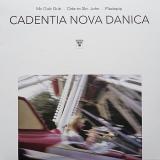
John Tchicai (1936 – 2012) was one of the most important free improvising saxophonists of the 20th Century: an artist of rare vision and aptitude whose lines soared and stood out even in the most hallowed company, and whose body of work as a leader / composer is among the most singular and distinct within the entire canon of that music. But Tchicai’s importance doesn’t end there. Born in Copenhagen, Denmark, to a Danish mother and a Congolese father, his life and career represent a crucial bridge between the European and American traditions of free jazz. Initially trained on violin as a child, Tchicai shifted his focus to the clarinet and alto saxophone during his mid-teens, and began touring Europe as a professional musician by his early 20s, which landed him at a socialist youth festival in Helsinki, Finland, where he met the trumpeter Bill Dixon and saxophonist Archie Shepp. Impressed by what they heard, Dixon and Shepp encouraged the young saxophonist to move to New York, and in so doing changed the history of jazz forever.
Tchicai’s arrival in New York marks the rare occurrence of a European player joining the intimate circle that was first wave of American free jazz. Following his landing in the city in November of 1962, in addition to regularly sitting in with Don Cherry’s group, Tchicai began playing with Bill Dixon's band alongside Archie Shepp and Roswell Rudd, forming the nucleus of the foundation of the New York Contemporary Five - one of the most important groups of the era - which counted Tchicai, Shepp, Cherry, Don Moore, and J. C. Moses as its members. From the ashes of this group, Tchicai would go on to found the legendary ensemble, New York Art Quartet, with Roswell Rudd, Milford Graves, and Lewis Worrell, as well as working within Albert Ayler's band, recording “New York Eye and Ear Control”, Shepp’s band, recording “Four for Trane”, the ensemble that recorded John Coltrane's “Ascension”, and the Jazz Composer's “Orchestra”.
By the time he decided to return to Denmark in 1966, had Tchicai chosen to record little else, his legacy within the history of music would have been ensured. Incredibly ambitious, his arrival home marked the beginning of an incredible period of activity which saw him radically expanding his creative explorations, which by the end of the decade would include becoming a founding member of Amsterdam's Instant Composers Pool and helping to record John Lennon and Yoko Ono's “Unfinished Music No.2: Life with the Lions”. This, however, was proceeded the formation of a new orchestra, Cadentia Nova Danica, led by Tchicai, dedicated to radical cross-disciplinary exploration. Remaining together between 1966 and 1971, the group and its shifting membership regularly fell into collaboration with artists and composers, notably Musica Elettronica Viva, who existed beyond the realms of jazz, as well as participating within multi-media events that incorporated the visual realms.
Cadentia Nova Danica’s only two LPs - “Cadentia Nova Danica” (Polydor, 1968), and “Afrodisiaca” (MPS, 1969) - are effectively Tchicai recorded efforts as a leader, and are legendary. There’s little mystery, once heard, why the later landed on Thurston Moore’s iconic “Top Ten from the Free Jazz Underground”, published by Grand Royal in 1996. Sadly, despite playing extensively during their five year run, with exception of a CD documenting a performance at Jazzhus Montmartre, in 1966, until now there has been no other publicly available recordings that allow us to capture a glimpse of this astounding band at work. Alga Marghen / Formalibera’s vinyl pressing of a never before released body of recordings, made in Copenhagen between 1969 and 1970, changes that in the most exciting of ways.
Comprising three pieces - “Mc Gub Gub, (I–VIII)”; “Ode to Skt. John”; and “Pladepip” - the material on this stunning LP comes from two specific events. The first, which encompasses the first side, “Mc Gub Gub, (I–VIII)” was recorded by Cadentia Nova Danica - in this instance, Tchicai, Sune Weimar, Theo Rahbek, Christian Kyhl, Niels Holt, Jørgen Thorup, Michael Schou, Morgens Bollerup, Allan Gregersen, Ole Matthiessen, Pierre Dørge, Willy Jaegert, Anthony Barnett, and Jon Finsen - on May 29th, 1969, at the ABC-Theatre in Copenhagen. Penned by Tchicai, the piece is a sprawling, evolutionary composition at the outer reaches of free jazz, rooted in large blocks of colliding tonality and rhythm - a sound only accessible to larger ensembles - that push territories explored by Charles Mingus to previously unimagined heights, threaded by moments of hard blown fire. Writhing like a stormy sea - skronking and devilish - “Mc Gub Gub, (I–VIII)” is a work of profound complexity that singlehandedly illuminates not only Tchicai’s singular vision as a composer, but also the power and uniqueness of Cadentia Nova Danica during the band’s most vital period.
The two pieces - “Ode to Skt. John” and “Pladepip” - taking up the flip side, were recorded on February 21st, 1970, at the Danish Broadcasting Corporation’s Radio House, and are the outcome of Cadentia Nova Danica’s extended residency there between 1969 and 1970. In many ways, these two recordings offer some of the best insights into the broad collaborative approaches that defined the band, in this case encountering them working with Danish experimental composer, Svend Erik Werner, who was among the earliest in his country to embrace stylistic pluralism and the use historical forms within a modern context. “Ode to Skt. John” - based on aspects of Gregorian music - was penned by Werner, incorporating heady improvisation by the members of Cadentia Nova Danica, this time made up by Tchicai, Sune Weimar, Hugh Steinmetz, Theo Rahbek, Christian Kyhl, Michael Schou, Morgens Bollerup, Ole Kühl, Torben Enghoff, Mauritz Tchikai, Kjeld Ipsen, Willy Jaegert, Ole Matthiessen, Ole Thilo, Pierre Dørge, Steffen Andersen, Jon Finse, and Clause Bøje. The piece is a fascinating binary of the composed and improvised, utilising the band’s large scale to introduce a remarkable sound within its slow progressions and furious, driving free moments, in this incredible meeting of worlds.
The album’s final piece, “Pladepip”, is arguably its most historically significant: an entirely singular piece, unlike anything in Tchicai’s recorded canon as his foray into musique concréte. Drawing upon two recordings of full-band improvisations by Cadentia Nova Danica, for its creation Tchicai also gouged the surfaces of 78rpm records in his collection to skip and create repeated phrases and patterns, creating a stunning sound collage of hard angles and abrupt phrase, that creates a striking counterpoint to the band’s flowing improvisations that bookend those passages. The result is an engrossing listen and easily one of the most unique and culturally important gestures in the entire history of musique concréte.
Truly incredible, Alga Marghen / Formalibera’s vinyl pressing of this never before released body of recordings, made by John Tchicai’s Cadentia Nova Danica, in Copenhagen between 1969 and 1970, offers an unprecedented window into one of the most important groups working in Europe during that period, significantly expanding their rare and slim discography to date. Accompanied by extensive exploratory liner notes by veteran jazz writer, Ed Hazell, this is easily one of the most historically important archival releases of the year and is impossible to recommend enough. Absolutely essential on every count.
expected to be published on 28.08.2026

Carrying on their longstanding dedication to the seminal output of Merzbow, Urashima returns with what is unquestionably their most ambitious release to date: “Collection 001-010”, a deluxe, 10 LP vinyl box set limited to 299 copies, gathering together the entirety of the project’s first ten releases, originally released in 1981. Encountering the band in its early incarnation of the duo of Masami Akita and Kiyoshi Mizutani, raw, exposed and bristling with energy, foreshadowing numerous trajectories they would follow over the coming years, these astounding full lengths - the majority of which have never been released on vinyl - come housed in a beautifully produced, deluxe wooden box, with each LP in its own individual sleeve reproducing the original artwork, and a LP-sized 32-page book containing reproductions of artworls and collages by Masami Akita, an interview conducted by Jim O'Rourke, and liner notes penned by Lasse Marhaug, Thurston Moore, and Akita himself, amounting to what is unquestionably one of the most historically significant releases we’re likely to encounter in 2025.
Deluxe Edition of 299 copies, remastered from the original analog tapes by Masami Akita, each LP comes in its individual sleeve reproducing the original artwork, also includes a LP-sized 32-page book. ** Since its founding during the late 2000s, the Italian imprint, Urashima, has become a definitive voice in the landscape of noise. Bringing forth beautiful limited edition releases, they’ve sculpted a singular vision of one of the most vibrant and revolutionary bodies of experimental sound to have graced the globe. Among the many projects that they have supported over the decades, there has been an undeniable dedication to the output of the seminal Japanese noise outfit, Merzbow, making a significant amount of the project’s out of print back catalog available across a range of formats. Now they return with what is arguably their most stunning and ambitious release dedicated to the project to date: “Collection 001-010”, gathering the entirety of Merzbow’s first ten releases, largely privately released by the band on cassette across 1981, in a deluxe, 10 LP vinyl box set. Representing what is effectively ground zero in Japanese noise and collectively amounting to some of the most sought after releases ever produced within that movement, Urashima’s truly beautiful collection comes fully remastered by Masami Akita himself from the original tapes, presenting all but a small number in their first ever vinyl pressings, with each LP housed in its own individual sleeve reproducing the original artwork, alongside a LP-sized 32-page book containing reproductions of artworks and collages by Masami Akita, an interview conducted by Jim O'Rourke, and liner notes penned by Lasse Marhaug, Thurston Moore and Akita himself. Towering with energy and groundbreaking creative vision, within the realms of noise and experimental music, releases don’t get more monumental or historically important than this!
Merzbow came roaring onto the Tokyo scene in 1979, and remains, to this day, one of the most prolific and aggressively forward-thinking projects in experimental music. Eventually becoming the solo vehicle for the efforts of Masami Akita, in its earliest incarnation the project was the duo of Akita and Kiyoshi Mizutani, taking their name from German artist Kurt Schwitters' pre-war architectural assemblage, The Cathedral of Erotic Misery or Merzbau, and quickly set out to challenge entrenched notions of what music could be. Embracing technology and the machine, even in its earliest iterations, Merzbow pushed toward new territories of the extreme, arriving at a space of pure, unadulterated sonic onslaught that has continued, for over 40 years, to set the pace for the entire genre of noise, and has remained one of the movement’s most important, definitive voices, continuously laying the groundwork for countless artists who have followed in its wake.
When dealing with historical gestures, there’s an invertible aura surrounding original line-ups and early statements, and rightfully so. It is often within a band’s debut that we catch the purest glimpse of the raw energy and creative ferment that made them what they are. This is certainly the case when regarding the coveted early releases of Merzbow, capturing the emergence of the project in its form as the duo of Masami Akita and Kiyoshi Mizutani as they helped set the blue print from the then emerging movement of Japanese noise. Over the course of its nearly five decades of activity, Merzbow has always been noted for how prolific and ambitious the project is. This was no less the case in the very beginning. While they were active for roughly two years prior, in 1981 alone they issued ten self-released cassettes numerically titled “Collection 001-010”, albums which have both individually and collectively become holy grails in the realms of noise, with only two - “Collection 007” and “Collection 009” - ever receiving vinyl reissues prior to now.
As Lasse Marhaug deftly articulates in the newly commissioned liner notes for “Collection 001-010”, despite having been recorded in different location across a span of time, the sum total of Merzbow’s first ten releases might be best regarded as a single release to be listened to in the same, durational sitting, with the material standing well apart from what most came to expect from Merzbow, while foreshadowing numerous trajectories the project would take over the coming years. Not only do these recordings feature a vast array of instrumentation - tapes, acoustic and electric guitar, violin, drums, voice, recorder, organ, found sounds, clarinet, homemade and prepared instruments, a vast arsenal of effects and electronics, and piano, to only begin to scratch the surface - the majority of which would disappear from the project’s active sources of sound generation over the subsequent years, but there is a slow pacing and raw sense of openness and exposure that reveals strong connections to the avant-garde improvisations of groups like AMM, Musica Elettronica Viva, and Gruppo di Improvvisazione Nuova Consonanza, the psychedelia of groups like Taj Mahal Travellers and Flower Traveling band (both of whom Akita mentions having seen in youth within his interview with Jim O’Rourke), and rock in general - albeit in fully abstracted forms - unspooling as brittle, pointillistic, textural, raw and abrasive forms, that occasionally flirts with unexpected tonal sensibilities. As Marhaug describes it in his excellent liner notes: «Sonically, “Collection” sounds more sparse and stripped. It’s dry sounding, up-front, no reverb, and there’s less heavy low-end grime and thin on the signature frequency sweeps. Viewed in a 1981 context, musically, it’s more akin to what the LAFMS (Los Angeles Free Music Society) pool of artists were doing at that time than what was happening in industrial music... There’s a strong playfulness throughout, like the sound objects are being explored for the first time, without neither restraint nor hurry. Events are allowed to be fully examined before the music moves on, or simply cuts off. To a large degree, the music on “Collection” feels acoustic in nature, although a Electro-Harmonix ring-modulator features prominently throughout.»
Easily described as a rarely encountered revelation into the original and earlier documented studio sound of Merzbow, “Collection 001-010” collectively amounts to an engrossing sonic journey in its own right, while also allowing for important, often overlooked connections drawn from numerous other creative wellsprings, notably free jazz, underground rock, the output of European and Japanese avant-garde music, as well as Dada, Fluxus, and Mail Art, much of which, beyond the illumination made possible by the sounds, Jim O’Rourke’s fantastic interview with Akita, published in the booklet, further explores, offering great insights into the origins of Merzbow and the thinking behind the project, as well as aspects of the earliest days of Japanese noise.
expected to be published on 18.04.2025

Black Truffle is thrilled to announce a major archival release from legendary American composer and live electronics innovator Richard Teitelbaum, centred around his soundtrack for Suzan Pitt’s cult 1978 animation Asparagus. Best known to some listeners for introducing Europe to the Moog synthesizer as a founding member of Musica Elettronica Viva in Rome, Teitelbaum’s extensive and radically experimental body of work includes collaborative recordings with master improvisers like Anthony Braxton, Andrew Cyrille and George Lewis, intercultural experiments combining electronics with non-Western instruments such as the shakuhachi, works for computer controlled piano, and large-scale multi-media operas. Recorded at York University, Toronto in 1975–1976, ‘Asparagus (European Version)’ sprawls across both sides of the first LP. Discovered by composer Matt Sargent in Teitelbaum’s tape archive, this is a previously unheard major work for Moog modular and Polymoog synthesizers, unique in Teitelbaum’s oeuvre for its lushness and gently melodic quality. The music unfolds slowly, submerging lyrical melodies and burbling arpeggios into uneasy, glacially shifting harmonic swells, the luscious texture thickened with subtle changes of modulation and phase, calling up the shifting layers of Costin Miereanu’s classic Derives or the kosmische Musik tradition more than any academic synthesizer exercise. Teitelbaum incorporated much of this material into his soundtrack for Suzan Pitt’s Asparagus, which receives its first official release here. Asparagus, famously paired with David Lynch’s Eraserhead for a two-year run of midnight screenings at New York’s Waverly Theatre, uses hand-drawn and stop animation to unfurl an oneiric succession of images, beginning with a sequence in which the female protagonist defecates two stalks of asparagus, which multiply and float out of the toilet bowl to form the letters of the title. Teitelbaum’s soundtrack interweaves delicate drifting tones from the ‘European Version’ with contributions from Steve Lacy and Steve Potts on saxophones, George Lewis on trombone and Takehisa Kosugi on violin. Edited closely to the film, even without images the soundtrack proposes a surreal journey through floating synth tones, squealing horns, propulsive arpeggios, distant chatter, and an old-timey waltz. The final side of the set presents a new realisation of Teitelbaum’s text score ‘Threshold Music’, performed at a memorial concert at Roulette, New York in 2022 by Leila Bourreuil (cello), Alvin Curran (sampler and objects), Daniel Fishkin (daxophone), Miguel Frasconi (glass objects) and Matt Sargent (lap steel). The piece asks musicians to match their instrumental volume to that of the sounds of the environment in which they play, sometimes with the addition of recorded environmental sounds, reinforcing frequencies they encounter in listening deeply to their surroundings. Here the players use a field recording taken at Teitelbaum’s home in Bearsville, New York, their long tones and shimmering, glassy textures delicately emerging from the white noise of the location recording. Released with the full approval of both Richard Teitelbaum and Suzan Pitt’s estates, Asparagus is illustrated with striking images from Pitt’s film and accompanied by detailed liner notes by Francis Plagne. These previously unheard pieces shed new light on the work of a key composer in the American experimental tradition, offering up some of Teitelbaum’s most beautiful and engaging music.
Order now and we will order the item for you at our supplier.

Black Truffle is pleased to announce Symphony No. 107 –The Bard, a previously unheard archival recording of the legendary improvising ensemble MEV (Musica Elettronica Viva), captured in concert at Bard College, New York in 2012. Formed by a group of American expat composers in Rome in 1966, the MEV ensemble played an important role in the development of free improvisation, bridging the live electronics tradition begun by Cage and Tudor and the high-energy squall of free jazz. Early recordings like Spacecraft or The Sound Pool unleash volleys of metal and glass amplified with contact microphones, howling winds, primitive synthesizer bleep and raucous audience participation, the intensity of which puts much later ‘noise’ to shame. In later decades, the ensemble would go through many iterations, often including legendary free players like Steve Lacy and George Lewis. In its final years, MEV settled into the core trio of founding members heard here: Alvin Curran, Frederic Rzewski, and Richard Teitelbaum, using piano, electronics, and small instruments.
Curran, Rzewski, and Teitelbaum were life-long friends blessed, as Curran says, with ‘incompatible personalities’: major figures in the post-Cagean experimental tradition, they explored countless divergent and even contradictory paths as composers and performers, from agitprop songs to brainwave-controlled synthesis. MEV is the sound of these three personalities coming together, their contributions radically individual yet attaining a state of ‘fundamental unity’ that Rzewski, in a text written in the collective’s earliest years, defined as the ‘final goal of improvisation’. Of course, listeners familiar with aspect of the trio’s individual works might hazard some guesses about who is doing what: the crisp piano figures are probably Rzewski’s, the cut-up hip-hop samples most likely Curran’s, the sliding, squelching synth possibly Teitelbaum’s. But often these identities are dissolved in a constantly shifting hall of mirrors, the listener unable to tell which of these pianos is live and which is a sample of a past virtuoso, or whether a horn blast derives from ethnographic documentation or Curran cutting loose on Shofar. The two side-long sets here occupy a similar terrain of constantly shifting texture and instrumentation, unexpected interruptions, and moments of sudden beauty. The first set is sparser, at times almost ominous, as a bell repeatedly sounds across wheezing harmonica, seasick orchestral textures, and creaking wood, making room for episodes of yodelling and delicate prepared piano before exploding into a storm of buzzing synth and piano fragments. The second set is more frenetic, moving rapidly across centuries and continents: cars crash into post-serial piano pointillism, wailing voices collide with chopped and screwed hip-hop samples, Hollywood strings are buried under layers of electronic gurgles. The performance slows in its final moments, making way for a sampled voice repeating the phrase ‘protest and the good of the world’, reminding us that MEV’s idea of freedom was always more than musical. Symphony No. 107 –The Bard is a beautifully recorded example of the endlessly multi-layered later MEV sound, accompanied by new liner notes by Alvin Curran (now the only surviving member of the group) and a selection of previously unseen photographs from across the many decades of the group’s activity. Arriving in an elegant sleeve bearing a beautiful photograph by Francis Zhou of the Olin Hall at Bard College where the concert was recorded, this is an essential document from a major group in the history of experimental music. As Rzewski wrote, this music is ‘like life, unpredictable, sometimes making sense, mostly not’.
Order now and we will order the item for you at our supplier.

Playing in Dixieland jazz bands during his teens and then passing through some Kansas City jazz acts, New York-born alto saxophonist Steve Lacy became associated with the avant-garde jazz movement from the mid-1950s, playing on free jazz pianist Cecil Taylor’s influential debut LP and early work by the Canadian pianist Gil Evans, before serving a long tenure with the idiosyncratic improv pianist Theolonius Monk, whose work he would continue to reference throughout his career. Visiting Europe from the md-1960s, starting with a trip to Copenhagen with pianist Kenny Drew (who made the Danish city his home thereafter), Lacy later travelled to Italy to form a quartet with Italian trumpeter Enrico Rava (who had earlier played in Argentinian sax player, Gato Barbieri’s group), plus South African exiles and former Blue Notes members Johnny Dyani on double bass and Louis Moholo on drums. Lacy subsequently moved to Paris, which became his permanent base from 1970, leading a sextet there whilst also exploring the limits of the alto saxophone as a solo instrument. The disparate and often discordant album Threads was recorded in Rome at Mama Dog studio in 1977 for filmmaker-turned-record producer Aldo Sinesio’s Horo Records label; comprised of six of Lacy’s own compositions, the album saw Lacy supported by Alvin Curran on piano and Frederic Rzewski on flugelhorn, synthesizer and percussion, the pair both longstanding members of the experimental group, Musica Elettronica Viva.GO
expected to be published on 30.06.2022

American composer and multi-instrumentalist Alvin Curran has remained one of the great emblems of experimental music for the last half-century. In 1966, along with Frederic Rzewski and Richard Teitelbaum, Curran co-founded Musica Elettronica Viva, a seminal gesture in collective free improvisation. In the early '70s, his solo work would become a crucial bridge between minimalist traditions on both sides of the Atlantic.
Canti E Vedute Del Giardino Magnetico, Curran's solo debut, was recorded by the artist himself and issued on Ananda, the small Italian imprint started by Curran and fellow composers Giacinto Scelsi and Roberto Laneri. The piece itself was put together in the winter of 1973 and presented for the first time at Teatro Beat 72 (Rome's The Kitchen).
Encouraged by the work of Terry Riley, La Monte Young, Charlemagne Palestine and Simone Forti, Curran binds the listener to aberrant notions of place and time: blending field recordings (wind, high-tension wires, beach waves, etc.) with simple and often primitive instruments. Across two sidelong tracks, Giardino Magnetico forms a lyrical collage of synthesizer, glass and metal chimes, plastic tubes, brass and the composer's alluring voice - converging in an immersive realm of Curran's inner / outer experiences.
This first-time vinyl reissue is recommended for fans of Harry Bertoia, Michel Redolfi and Lino Capra Vaccina.
Order now and we will order the item for you at our supplier.