Search:nature’s consort

Styles
All
  • 1
Nature’s Consort - Nature’s Consort

Obscure & outstanding free jazz album reissued for the first time since it’s original release in 1969. Old-style gatefold sleeve LP, with liner notes by Ed Hazell.

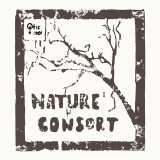
In the late 1960s, young jazz musician Bobby Naughton, a keyboardist and vibraphonist, faced significant challenges as he sought to record his first album. With major record labels and jazz clubs catering only to big names, Naughton and other creative musicians of his generation found themselves sidelined by the mainstream music industry. They turned to self-reliance and self-production, becoming part of a movement of independent musicians. Naughton’s debut album, Nature’s Consort, was a DIY effort in every sense—recorded on home equipment and featuring a hand-printed woodblock cover. The album was distributed independently at concerts and by mail, receiving little attention initially, but over the years it gained a reputation as a rare, sought-after artifact of the period.

Though recorded during an outdoor concert in Connecticut, Nature's Consort reflected the "loft jazz" scene in New York City. This avant-garde jazz movement centered around musicians who lived and played in loft spaces in lower Manhattan. Naughton commuted from his home in Southbury, Connecticut, to play with his bandmates Mark Whitecage, Mario Pavone, and Laurence Cook in New York's lofts. These musicians regularly performed at venues like Studio We, a key gathering spot for free-form jazz, where musicians could experiment and develop their sound, often with no audience present.

Naughton’s journey into jazz was a winding one. Originally from Boston, he played rockabilly and blues-rock before transitioning into free jazz. Inspired by avant-garde artists like Carla Bley and Paul Bley, Naughton sought to explore new forms of music that went beyond traditional jazz structures. His bandmates, Mark Whitecage and Mario Pavone, were both deeply affected by the death of John Coltrane in 1967, which prompted them to quit their day jobs, attend Coltrane’s funeral, and move to New York to pursue jazz full-time.

Nature’s Consort was a collective project, with band members sharing equally in any profits. However, Naughton was the driving force behind the group’s creative direction. He composed much of the original material and selected pieces by Ornette Coleman and Carla Bley for the band’s repertoire. Jazz critic Nat Hentoff praised the album for its “high-risk improvisation” and the musicians' ability to anticipate each other’s moves. Though Nature’s Consort received little press at the time, it has since been recognized as a significant early document of the loft jazz era, representing Naughton’s disciplined, improvisational approach to music.

pre-order now06.12.2024

expected to be published on 06.12.2024

26,68
PAULINE ANNA STROM - Angel Tears In Sunlight

Angel Tears in Sunlight is Pauline Anna Strom's first album in over thirty years; an assemblage of music that refracts the expansiveness, and minutiae, of imagined realms while embracing the kaleidoscopic echoes of our distant epochs. The capacity to collapse time might elucidate the enigma of Pauline Anna Strom. A mystic force in music, emerging during the dawn of new age as the Trans-Millenia Consort, the pioneering synthesist channelled primordial energies into future-facing sound through a series of full-length releases between 1982 and 1988. Little was known about her, except by a constellation of devoted followers who saw a unique legacy forming amidst the (mostly male) synthesist canon of the time. Following the 2017 release of Trans-Millenia Music, an anthology revitalizing the most evocative parts of Strom's catalog, the Bay Area visionary sensed the universe telling her to return to music. As with her work in the 80s, Angel Tears in Sunlight was composed and recorded in the same San Francisco apartment where Strom has lived for almost four decades in synthesis with her machines and "dinosaurs." Populated by a compact array of modern instruments that streamline the sound of her analog past and her beloved iguanas, Little Soulstice and Ms Huff, the terrarium of her home forms an intimate yet limitless ecosystem that defies the constraints of the outside world. Within this sanctuary, Strom becomes lost in time, drawing on the ancient energies of her inner visions. Her hardware forms the crux of translating these ideas into sound. "It's the only way this stuff can be pulled out of myself, the universe, Little Soulstice, an ammonite_," Strom notes. "It couldn't be done without this machinery, because there's no other way to draw and capture these frequencies into sonic interpretation." Strom's process of recording transient live-takes enriches the mystery of her work. She renders the machinery a composer itself, a cohabitation with a living other. "Many musicians wouldn't go that far because of ego," Strom muses. "The equipment has to become part of you and your creativity. That's how I think it all comes together." Music-making becomes a harmonic language of intuition with an instrument, where Strom cultivates sound for a harvest that defies season. Shaped by circadian contours, Angel Tears in Sunlight is a celestial observatory of earthborn phonic mosaics. Strom uncovers a symbiosis between hardware frequencies and apparitions of nature in the record's arena of organic tones, emulating the melodic pulses of primeval terrain. The album transcends both shadow and light, falling to hushed stretches of sound as if not to awaken antediluvian animals, before soaring through the treetops where ancient skies peer over reptilian traffic and unsparing rains.

out of Stock

Order now and we will order the item for you at our supplier.

21,39

Last In: 5 years ago
  • 1
Items per Page:
N/ABPM
Vinyl
