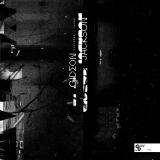
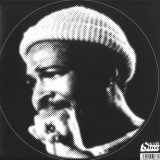
Three Stripe Records, the original ‘Bristol Sound’ label release their first vinyl in 30 years.
Founded in 1988 by Smith & Mighty, the label was set up to release music from local talent as well as the pair’s own recordings, and in the late eighties released a string of underground hits.
The label’s first venture in ’88, a cover of Dionne Warwick’s ‘Anyone Who Had A Heart’, featured local singer Jackie Jackson alongside rappers M.C. Kelz and Krissy Kriss and stayed at the top of the indie charts for several weeks.
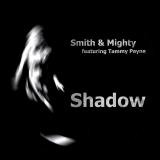
Now after a long hiatus, a new three-track 12” vinyl featuring Tammy Payne performing a cover of the ’60s Mandel & Webster classic, ‘The Shadow Of Your Smile’ is due to be released on 13th November 2026.
The vinyl’s three tracks capture different variations of breakbeat, dub and soul.
The A side is a break driven, dynamic bond-esque version with orchestral drops and rises, over a tough hiphop rhythm.
AA1 is a head nodding, rolling breakbeat affair with a digi dub style bassline, while Tammy’s vocal floats in and out on a sea of echo.
AA2 is the original mello mix with sparse beat machine style patterns and 303 bass line. Tammy’s full vocal carrying the flow in contrast to the urgent backbeat, occasionally joined by keys, guitar melodies and fx.
Each version having it’s own identity while all remaining very ’Smith & Mighty’
Sentimental Ultra marks DJ HEARTSTRING’s debut proper on Steel City Dance Discs, and their first album project, releasing November 13th 2026. Starting life as a mixtape before a happy accident or two took it down a different path, the 15-track album finds the pair chasing not just peak-time euphoria and what they can conjure in a club setting, but everything around it, too. The befores and the afters. The soft and the supercharged. What life felt like when they were young. Featuring collaborations with SWIM, Spriitzz, BAUGRUPPE90, Sam Gellaitry, Saidah, DMA’S, KennyHoopla, Monk, 3NDLES5, David Jackson and secret act, they fold formative years influences such as indie rock, rap, ambient and breakbeat into their sought-after sound, and balance them with contemporary-coded ideas.
This blend of worlds is at the crux of the album’s concept visually as well. Sentimental Ultra is an exploration blurring the lines of hard and soft, taking inspiration from subculture communities around football hooliganism and skateboarding. The cover is shot by iconic British photographer Ewen Spencer, renowned for his work around Skins, The Streets and more. The collaboration has seen DJ HEARTSTRING land features in Numero Berlin, Notion Mag and other cross-cultural editorial platforms ahead of the album announcement.
To date, the project has already received various milestones across international radio, including Arielle Free’s Big Whopper for third single ‘Another Year Alone’ and DJ HEARTSTRING landing a coveted BBC R1 Residency in November. Adding to this is the slew of digital looks and accolades for DJ HEARTSTRING’s set recordings including their closing set at Soenda Festival earlier this year which is on 115k views since being published in May 2026, their Melbourne Boiler Room published in 2025 with +1 million views and their Belfast Boiler Room published in 2023 with +1.1 million views.
Since DJ HEARTSTRING’s 2021 debut, when they rollicked through the club door with their Destiny of the Moment and Eternal Euphoria EPs, alongside a slew of self-released, pop-and-R&B-indebted edits, DJ HEARTSTRING have followed their hearts and won over legions more with an emotional dance music style that’s fast become synonymous with their name.
There’ve been big releases such as 2025’s You Are The Sun, I Am The Sky EP, and buzzy collaborations with fellow synapse-igniters like SWIM, Narciss, southstar and S.C.D.D.’s KETTAMA. The past few years have also seen remixes for Charli XCX and Sam Smith, Romy, Sugababes and Empire of the Sun, sets everywhere from Berghain to London’s 3000-capacity Roundhouse, their own Teenage Dream parties and a must-listen contribution to the BBC Radio 1’s Essential Mix series, which showcased just some of the sonic inspirations behind their signature, like Eurodance and trance, plus heaps of DJ HEARTSTRING material.
And now, Sentimental Ultra arrives off the back of DJ HEARTSTRING’s busiest summer to date with landmark festival plays at Awakenings in the Netherlands, Lost Village and Maiden Voyage in the UK, We Love Green in France, Lost Paradise in Belgium, Movement Festival in Detroit and Arc Festival in Chicago. Hot off the heels of their festival run, the Berlin duo show no signs of slowing down with a 3-date Australia tour at the end of September whereby they sold a cumulative 15,500 tickets across Melbourne, Sydney and Perth shows, all on presales. In addition to some pop-up in key markets around album release including Ireland, Scotland, Berlin and London, the Sentimental Ultra official tour also encompasses a European hard ticket run including Belfast’s Telegraph Building (2,000 cap), Brussels’ Braindance (2,000 cap), Paris Phantom (3,400) and DJ HEARTSTRING’s biggest London show to date - Brixton Academy (5,000) - an apt follow-up after selling out Magazine (4,000 cap) weeks in advance in February 2026.
There’s plenty still in store, and plenty of places to catch them throughout the rest of what’s set to be a landmark year. Shows from Miami to Manchester (for the sold-out KETTAMA presents Steel City Dance Discs WHP takeover) to Dublin’s District X, a hometown Teenage Dreams event and 2 colossal ADE headlines at Dockyard and Sugar Factory - with more plans bubbling behind the scenes. DJ HEARTSTRING season is well and truly upon us.
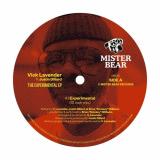
Since launching two years ago, Craig White has used the Mister Bear label as a vehicle for quality, musically expansive deep house from a handful of established artists. Chief among these is Chicago great Vick Lavender, who here once more joins forces with trusted multi-instrumentalist Justin Dillard (and on side B, Will Jackson) for a pair of cuts fronted by honeyed vocalist Brian 'Smokey' Williams. A-side 'Experimental' is particularly special, with Williams seemingly improvising atop a chunky, bass-heavy organic house groove marked out by funky Clavinet licks, Ron Trent style percussion, spacey synths and rich organ chords. The collective goes deeper, smoother and even more intricate on flip-side 'Love Times', which is presented in both full vocal and instrumental forms.
There was a regrettable time in Turbo's history when our email filters would prevent anything called Groovedeep from reaching our senior A&R braintrust. We felt we needed to shield their sensibilities and sanity from demos by acts like The Rhythm Pilgrims and Loop Addict, but it ended up costing us potential stars like SonicVisions and Beatweaver. Someone had to stand up and say no more.
With this benighted era behind us, Turbo is proud of itself for presenting you with this pair of decidedly modern bangers from international supergroup Groovedeep, comprised of Toronto's Ciel and DC's James Bangura and Jackson Ryland.
"Funk Solo" packs 145 beats into each and every minute of a delirious techno mindbeast, with remixes from icons such as Shed, Batu, and Mark Broom taking the vibe in all the right various directions. Meanwhile, the bottom of the B-side is a "Big Bass Mix" for those of us who are compelled to slather ourselves in bass-boost ultrasound gel and nestle into the club sub-woofer where the low frequencies massage our kidneys and sacrum and the twinned demons of treble and vision cannot touch us I mean not even close brother.
After the dissolution of his wave-making duo project Ameli Paul, Berlin based musician and producer Paul Valentin aims to venture down new roads and finds help from illustrious folks like Liv Lisa Fries, DJ Koze, Thomass Jackson and Philipp Fein along the way. Valentin’s debut EP on Feines Tier marks his first solo release in 10 years and is a colourful journey through sonic worlds and emotions in the continuous search for his own sound.
Opener ELVAU is a collaboration with actor Liv Lisa Fries built around their intimate voice recordings which are woven delicately into a dreamy web of shimmering synths atop pulsating break beats that would make Bicep proud. For his remix, His Kosiness, the Tripsitter Himself also known as DJ Koze follows the breakbeat path further down, gleefully taking all sorts of wonky and fun diversions on the way, which makes one hope that the ride never ends.
Follow-up tune MALFUNCTION is a more straightforward affair with its rolling synth arps and is - in Valentin’s own words - “about personal failure, dissolution, and the distortion of the self“. Equally dark under- and overtones are throwing shades over WHATTHE!, dealing with anger and transformations, resulting in a banger for the heavier moments on the dancefloor or the mind between your headphones. The EP closes on a more hopeful note with LISTEN, which stands for „everything that could be, if we listened to each other“. And it’s never a bad idea to listen to chirping 303 basslines, especially when paired with melancholic synth pads and weird vocal samples, as is the case here. The rework of Thomass Jackson and FT-head honcho Philipp Fein feels beautifully anachronistic with its reduced tempo and could have been something Andrew Weatherall would have played when he was still playing our earthly dancefloors.
After following Luke Blair's work for approaching two decades from his 2007 debut as Lukid on Actress' Werk Discs, we're humbled to present a new album on Death Is Not The End. Following relatively hot on the heels of 2023's Tilt (his first in 11 years, not counting his work with Jackson Bailey under the Rezzett guise) Underloop brings Blair's innate knack for building loops and sound structures further to the surface, while allowing his ear for emotional expression to be dialled up a notch. Those fortunate enough to be familiar with Lukid's work as a DJ will be aware of how distinct his ability is to seamlessly disappear into loop-based abstraction and back again seemingly without blinking, and often Underloop feels much like a collection of the sludgey interludes and foggy sketches that underpin his sets. Blending apparently ramshackle melodies and textures and pulling them together into an undeniable whole, Blair's tendency for pairing the simple and the indescribable with an understated vigour is fully on show here.
Written and produced by Luke Blair. Mastered by Giuseppe Ielasi.
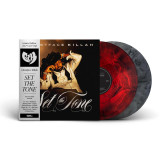
Hip-Hop-Legende Ghostface Killah liefert mit seinem neuen Album "Set The Tone" eine Mischung aus Tracks, die sowohl das männliche als auch das
weibliche Publikum ansprechen: Eine Mischung aus knallhartem New Yorker Rap und melodischen, entspannten Tracks.
Ghostface hat außerdem mit Hip-Hop-Schwergewichten wie Nas, Kanye West, Ja Rule und vielen anderen zusammengearbeitet.
Celebrating thirty years of collaboration, Loren Connors and Alan Licht performed for two nights at OTO on May 5 and 6th, 2023. The shows celebrated a new release titled “At The Top of the Stairs”; a document of the pair's reunion in 2018 after a period of 8 years not playing together. It’s a dark, swirling two-sided spectral noir session, put out by the duo’s home label, Family Vineyard, and we expected a similar kind of atonal abyss to appear at the OTO residency. On the second night however, with the stage lit in blue, Connors took up a seat on the piano stool whilst Licht picked up the guitar. What followed was the duo’s first ever set with Connors on piano - one of only a few times Connors has played piano live at all - here captured and issued as The Blue Hour. Its spacious warmth came as a total surprise live, but makes complete sense for a duo whose dedicated expressionism takes inspiration from a vast spectrum of emotion. Both opening with single notes to start, it doesn't take long before a surface rises and begins to shimmer between the pair. A run up the keys, the drop of a feedback layer on a sustained and bent note. When the two begin to exchange notes in tandem, brief touches of melody and chord hover and the hush of the room is palpapale. After a while, Connors picks up the guitar, stands it in his lap and sweeps a wash of colour across Licht’s melody. Sharp, glassy edges begin to form, open strings and barred frets darkening the space. When his two pedals begin to merge, Licht finds a dramatic organ-like feedback and it’s hard not to imagine Rothko’s Chapel, its varying shades of blue black ascending and descending in the room. When Connors goes back to the piano for the second side, the pair quickly lock into a refrain and light pours in. It’s a kind of sound that Licht says reminds him of what he and Connors would do when the duo first started playing together 30 years ago. It’s certainly more melodic than some of their more recent shows, and the atonal shards of At The Top of the Stairs seem to totally dissolve. What is always remarkable about Licht is that his enormous frame of reference doesn't seem to weigh him down, and instead here he is able to delicately place fractures of a Jackson C Frank song (“Just Like Anything”,) amongst the vast sea of Connors’ blues. Perhaps it's the pleasure of playing two nights in a row together, or the nature of Connor’s piano playing combined with Licht’s careful listening, but the improvisation on The Blue Hour feels remarkably calm and unafraid. There’s nothing to prove and no agenda except the joy of sounding colour together. Totally beautiful.
To celebrate 10 years of one of London’s most loved underground club nights, Tangent, Mr Bongo are thrilled to launch this new compilation series. Crafted by its two residents, John Gómez and Nick the Record, it aims to transmit a taste of Tangent’s spirit. A party rooted in inclusivity and open-mindedness, whose name captures the spontaneous switches in musical direction that are a defining element of their nights. For the compilation, the pair have cherry-picked a selection of their prized, rare and dancefloor-ready tracks from around the globe, that have soundtracked the past decade of parties.
Friends for close to 20 years, music lovers, record obsessives and internationally renowned DJs in their own right, John and Nick have two lifetimes worth of musical knowledge to draw from. John a long-standing NTS Radio resident and compiler for Music From Memory. Nick one of the UK’s go-to record dealers, resident DJ since the ‘90s at one of Japan’s pioneering parties, Life Force, and co-captain / co-edit-expert of Record Mission with Dan Tyler (Idjut Boys).
In 2014, the pair decided to bring some of Life Force’s grassroots principles to the UK, whilst channelling underground clubbing institution Plastic People’s meticulous attitude to sound. Tangent grew from being a small gathering of friends, to an established fixture in London’s nightlife, whilst always maintaining a strict no guest DJ policy. “As London’s clubs have become increasingly reliant on international guests, we wanted to emphasize the importance of a club night growing through its residents”, John and Nick reflect. With 10 years of the duo at the helm, an intimate connection between DJ and dancefloor has been built, allowing for freedom of expression on both sides of the decks.
Tangent reaches around the globe and across different eras to make connections that stimulate emotional reverberations in the unfamiliar. Where the blissfully Balearic ‘Laberinto’ by Miguel Perikás, goes hand-in-hand with the Cameroonian hip-house of King B.’s ‘Love is Crazy’. The thundering ‘Amek Amek’ by L'Innovateur Djoe Ahmed et le Zoukabyle, rubs shoulders with the soulful Caribbean-influenced touch of Champagn’s ‘Bel Ti Négress’. And Pellegrin El Kady’s afro-cosmic ‘Seiva de Carnaval’, crosses paths with Kajou’s Kompa disco anthem ‘Tet Chajé’.
Tangent’s longevity is in part down to it having always embraced contemporary sounds. The sub-rattling bass of Srirajah Sound System’s stunning Molam dub stepper ‘Si Phan Don Lovers Rock’ and the slow, woozy mantra of leftfield dancehall explorer Androo’s ‘Lyriso’, are two shining examples.
This compilation represents an ongoing dialogue between past and present, transporting listeners to the heart of a pure musical experience, where open minds and open hearts are eager to follow the tangent.
The latest from Mr. K and Most Excellent Unlimited pairs lowdown and stomping disco from an unlikely source with a funked-out floorfiller from some very familiar voices.
Minnie Riperton’s 1977 single “Stick Together” was an outlier in her catalog of smooth modern soul, an intentional nod in the direction of the prevailing disco sound. Co-written with Stevie Wonder, “Stick Together” in its original single release was divided into two parts, the first a fairly conventional uptempo cut with all the catchy qualities you’d expect from Stevie and the husband and wife team of Richard Rudolph and Minnie. It was the second half of the song that caught the ears of DJs who played for funkier dancefloors, however. Freddie Perren, a former member of Motown’s legendary Corporation collective of songwriters and producers, and a man then red-hot off his success with Tavares’ “Heaven Must Be Missing An Angel” and the Sylvers’ “Boogie Fever,” was on production duties, and the song clearly benefits from his disco-friendly touch. In Mr. K’s epic edit we are treated to a lengthy exploration of the second part of “Stick Together,” featuring keyboardist Sonny Burke (veteran of Marvin Gaye’s band and fresh from playing on Candi Staton’s disco smash “Young Hearts Run Free”) working out an irresistible Jingo-esque piano part, Riperton’s sensual ad-libs, and, as if that wasn’t enough, a cameo appearance by Pam Grier on finger snaps! Krivit’s 8-minute-plus edit passes way too quickly to get enough of the hypnotic groove — rewinds are called for!
Our flip side, “Body Language,” originated as an album cut on the Jackson Five’s last album of original material for Motown, Moving Violation, recorded before Jermaine left to go solo and the remaining brothers joined Epic Records in a new incarnation as the Jacksons. For such an obvious heater it’s puzzling why the label never released it as a single; but regardless of that apparent misstep, “Body Language” has long been a sure shot in many DJs’ bags. With his new edit, Mr. K presents the track in its ultimate form, loud, remastered, stretched out and rippling with energy over a full six minutes. With an iconic bass line that just doesn’t quit, and Michael and the boys in fine form, it’s impossible to imagine a situation where this wouldn’t set the room on fire.
We are honored to release the debut album from Violet, the alias of Inês Borges Coutinho, Lisbon born and raised DJ, producer boss of Naive records, co-founder of Rádio Quântica, and mina resident. Violet began producing music in 2012 and has released music on One Eyed Jacks, Love on the Rocks, Paraíso and Naive. Inês uses her seemingly boundless energy to amplify other artists all the while progressing her own creative practice.
‘Bed of Roses’ contains 10 songs made as a sort of childhood-teenage memories diary, a return to things Inês liked then and also the difficult things she’s been through. The feeling behind the album is self forgiveness in an optimistic way but also in an adult way, aware of the bruises (thorns) but also of the invaluable love and life experiences (roses). The title comes from the Bon Jovi song that Inês loved as a 9-year old and doubles as an intent of positivity paired with the inescapable darkness of life. Inês says, “I wrote this music as a healing device that I hope can somehow help heal others too.” All songs have been mastered by George Horn at Fantasy Studios. The jacket features an original design by Eloise Leigh that incorporates themes of self-inspection and hope mixing a teen bedroom girly vintage scrapbook aesthetic with contemporary 3D mapping techniques. Each LP contains a postcard featuring a childhood photo of Inês with notes.
A unique collaboration between Industrial Breakbeat pioneers Meat Beat Manifesto (Jack Dangers) and the undisputed king of Japanese noise, Merzbow (Masami Akita). "We may not speak the same language, but in the vortex of sound, there's a raw, primal understanding that transcends words. Noise can be art, a visual representation could maybe be Jackson Pollock's No 5, a plexus of chaos redefining what music can and could be. Pushing boundaries with Masami wasn't just a musical adventure, it was a masterclass in sonic anarchy"
(Jack Dangers, January 2024). 'Extinct' sees the duo take listeners on a transcendental journey, focusing on the dismantling of beat and structure and recycling the result through layers of beautifully crafted noise and feedback loops, giving birth to new rhythms buried deep in the dirt. The 20 minute opener 'FLAKKA' takes constantly evolving breakbeats which are gradually broken down over time, driven through a filter of harsh noise, destroying the old to give birth to the new. Raw and unforgiving, the track is a behemoth that blends mutant forms of broken beats and hints of dub, creating rhythmic noise of the highest calibre in the process. 'Burner' takes the record to its ultimate conclusion, the initial drum beat broken down so that it is barely recognisable. Pulsating distortion and high end audio fragments bleed into each other as the track lumbers forth and destroys everything in its path before slowly unravelling, degrading and falling apart. A harrowing yet somewhat cathartic trip through walls of harsh industrial noise and audio degradation, 'Extinct' is a masterful pairing of artists who have delivered something truly unique yet totally relevant. Don't sleep on this one! (Todd Robinson / Subunit) Composed, recorded and produced November 2023 - January 2024 by Jack Dangers and Masami Akita.
Kenny Dope - the legendary DJ and producer - has been a central figure in the incredible Spring Revisited series, launched in 2025. A collaboration between Acid Jazz and Ace Records, the series has explored the legacy of Spring Records, with a run of sell-out vinyl releases, digital singles and a 2LP compilation, with new mixes from the biggest names in dance music and remix production. The series continues with this new 7” single: ‘Spring Revisited vs. Kenny Dope - The 45 Mixes’.
It pairs an edit of Kenny Dope’s mix of ‘Mucho Macho’ by Macho with the mix of Millie Jackson’s ‘Don’t Send Nobody Else’ he created with Swedish producer Magnus Frykberg. Macho was an alias for the mighty Fatback Band, who are central to the Spring legacy, led by the great Bill Curtis (and co-writer of Mucho Macho), while Millie Jackson is one of the great voices of modern soul. Soulful and dance-floor ready, this 7” arrives fittingly in time for spring.
out of Stock
Last delivered 25 days ago available to reorder, subject to availability
Sushitech's first release for 2026 marks a landmark project from London based tech house pioneer Gideon Jackson.
Tokinowa : Seven, from the Japanese meaning “a circle of time” reflects the seven year period which these tracks were produced, 1999 – 2005. The release is a retrospective journey into the raw and warm sound of a producer who helped shape the London underground sound in the early 2000's and went on inspire generations that followed.
Pressed as a special triple 180g gatefold collectors edition, Tokinowa : Seven welcomes us into Gideon Jackson's world of art and vision, featuring original photography by Gideon himself paired with artwork by Sushitech's in-house designer Jeremy.
Sushitech's first release for 2026 marks a landmark project from London based tech house pioneer Gideon Jackson.
Tokinowa : Seven, from the Japanese meaning “a circle of time” reflects the seven year period which these tracks were produced, 1999 – 2005. The release is a retrospective journey into the raw and warm sound of a producer who helped shape the London underground sound in the early 2000's and went on inspire generations that followed.
Pressed as a special triple 180g gatefold collectors edition, Tokinowa : Seven welcomes us into Gideon Jackson's world of art and vision, featuring original photography by Gideon himself paired with artwork by Sushitech's in-house designer Jeremy.
out of Stock
Last delivered 6 months ago available to reorder, subject to availability
After following Luke Blair's work for approaching two decades from his 2007 debut as Lukid on Actress' Werk Discs, we're humbled to present a new album on Death Is Not The End. Following relatively hot on the heels of 2023's Tilt (his first in 11 years, not counting his work with Jackson Bailey under the Rezzett guise) Underloop brings Blair's innate knack for building loops and sound structures further to the surface, while allowing his ear for emotional expression to be dialled up a notch. Those fortunate enough to be familiar with Lukid's work as a DJ will be aware of how distinct his ability is to seamlessly disappear into loop-based abstraction and back again seemingly without blinking, and often Underloop feels much like a collection of the sludgey interludes and foggy sketches that underpin his sets. Blending apparently ramshackle melodies and textures and pulling them together into an undeniable whole, Blair's tendency for pairing the simple and the indescribable with an understated vigour is fully on show here.
Written and produced by Luke Blair. Mastered by Giuseppe Ielasi.
out of Stock
Last delivered 7 months ago available to reorder, subject to availability
Trumpeter Eddie Henderson came to prominence as a member of Herbie Hancock’s Mwandishi in the early-70s after which he recorded a pair of seminal jazz-funk fusion classics for Blue Note—Sunburst (1975, and Heritage (1976)—the latter featuring a forward-looking crew with Julian Priester, Patrice Rushen, Paul Jackson, Mike Clark, Billy Hart, Mtume, and others. This Blue Note Classic Vinyl Edition is stereo, all-analog, mastered by Kevin Gray from the original master tapes, and pressed on 180g vinyl at Optimal.
out of Stock
Last delivered 13 months ago available to reorder, subject to availability
Exploring late-night, after-hours meditations on sound; ‘Everything Above The Sky (Astral Travelling with Luke Una)’ is a new compilation by the titular DJ, promoter and enigmatic cultural curator. Off the back of the E Soul Cultura phenomena, this compilation comes at a timely point in Luke’s rich career as he soars the heights of playing all over the world. Avoiding any chance of his sound being pigeonholed, Luke has put together a tracklist of songs and music that have a transcendental feel, after coming off the grid, going back to source, outside the city walls .
Music has long been believed to aid out of body experiences and many of us have searched long and hard for a combination of those elusive ingredients that might alleviate some of the monotony of everyday life, our daily routines and obligations, and those things that seem to block us from the spirit of the universe. In this collection, Luke selects music with all the right ingredients in just the right quantities, allowing the listener to engage in an esoteric journey of enlightenment through sound. Being a prolific collector of music, Luke initially delivered enough tracks to compile several compilations, making the licensing process the biggest effort to date for the label. The music moves softly and slowly, never becoming too intrusive, exemplifying the wonderful elevating properties of simple songs played from the heart.
Luke’s Everything Above The Sky manifesto reads, “Astral Travelling in the meadowlands with acid folk, spiritual jazz, around midnight hocus pocus, cosmic psychedelic soul, magical spellbound whirling swirling love songs, Brazilian ballads of light into machine soul gospel utopia dreaming, Balearic bossa, Outer Space ancient African drum, the breath of trees, escaping the big bad modern world, gathering round winter fires, walking amongst the bracken in Padley Gorge in late summer twilight, overlooking the Hope Valley, escaping ego, detaching and finally letting go amongst the stars with the slowly floating people. It’s beautiful beyond. Everything above the Sky”.
Beginning his career as an original Sheffield house young blood in the mid 1980s, Luke’s move to Manchester and partnership with Justin Crawford saw the birth of Electric Chair, a cornerstone cult night in the UK underground club scene. Then came Electric Elephant, a Croatian festival paying homage to their wild eclecticism from Balearic to Brazilian to É Soul, house, disco and techno. Luke’s much loved, long-running Homoelectric night and more recently Homobloc sell out festival for 10,000 souls has been at the forefront of Manchester’s LGBTQ+ cultural landscape. Luke’s Friday evening show on Worldwide FM captured imaginations and became a cult four-hour must-listen monthly journey for fans all over the world. Today, Luke remains, as ever, at the forefront of a changing milieu, pairing the momentous legacy of Manchester’s 80s and 90s scene with the delivery of what today’s club communities need to get down.
Greg Wilson returns to Running Back with another special project.
Forty years on from the release of the groundbreaking ‘Street Sounds UK Electro’ LP, ‘Real Time’ (two versions of which opened the separate sides of the album), finally gets a 12” release. Despite its prominence on ‘UK Electro’, it was the only inclusion not to be issued on 12” back in 1984.
Zer-o, like Syncbeat and Forevereaction, were the same trio – Manchester musicians, Martin Jackson and Andy Connell, and DJ Greg Wilson, making his first foray into record production. They also teamed up with rappers, Kermit and Fiddz, for the Broken Glass
track, ‘Style Of The Street’, one of the early UK hip hop releases. Fictional production and songwriting credits were added by Street Sounds to suggest a thriving British electro scene, the music having blown-up in New York during ‘82/’83, with the ‘Street Sounds Electro’
series, launched in October ’83, documenting these developments and unlocking a significant youth market who’d religiously collect these compilations.
Featured here is a Greg Wilson edit of ‘Real Time’, the ‘retrospective dub’ (the ‘UK Electro opener, which was in fact the original demo version of the track), and a Gerd Janson bonus beats edit. Flip it over and you’ll find a pair of 2024 reworks – the retrospective
dub, and the more downtempo introspective dub – courtesy of Greg and Ché Wilson, whose recent collaborations have included remixes for Gabriels and Confidence Man.
out of Stock
Last delivered 12 months ago available to reorder, subject to availability
Exploring late-night, after-hours meditations on sound; ‘Everything Above The Sky (Astral Travelling with Luke Una)’ is a new compilation by the titular DJ, promoter and enigmatic cultural curator. Off the back of the E Soul Cultura phenomena, this compilation comes at a timely point in Luke’s rich career as he soars the heights of playing all over the world. Avoiding any chance of his sound being pigeonholed, Luke has put together a tracklist of songs and music that have a transcendental feel, after coming off the grid, going back to source, outside the city walls .
Music has long been believed to aid out of body experiences and many of us have searched long and hard for a combination of those elusive ingredients that might alleviate some of the monotony of everyday life, our daily routines and obligations, and those things that seem to block us from the spirit of the universe. In this collection, Luke selects music with all the right ingredients in just the right quantities, allowing the listener to engage in an esoteric journey of enlightenment through sound. Being a prolific collector of music, Luke initially delivered enough tracks to compile several compilations, making the licensing process the biggest effort to date for the label. The music moves softly and slowly, never becoming too intrusive, exemplifying the wonderful elevating properties of simple songs played from the heart.
Luke’s Everything Above The Sky manifesto reads, “Astral Travelling in the meadowlands with acid folk, spiritual jazz, around midnight hocus pocus, cosmic psychedelic soul, magical spellbound whirling swirling love songs, Brazilian ballads of light into machine soul gospel utopia dreaming, Balearic bossa, Outer Space ancient African drum, the breath of trees, escaping the big bad modern world, gathering round winter fires, walking amongst the bracken in Padley Gorge in late summer twilight, overlooking the Hope Valley, escaping ego, detaching and finally letting go amongst the stars with the slowly floating people. It’s beautiful beyond. Everything above the Sky”.
Beginning his career as an original Sheffield house young blood in the mid 1980s, Luke’s move to Manchester and partnership with Justin Crawford saw the birth of Electric Chair, a cornerstone cult night in the UK underground club scene. Then came Electric Elephant, a Croatian festival paying homage to their wild eclecticism from Balearic to Brazilian to É Soul, house, disco and techno. Luke’s much loved, long-running Homoelectric night and more recently Homobloc sell out festival for 10,000 souls has been at the forefront of Manchester’s LGBTQ+ cultural landscape. Luke’s Friday evening show on Worldwide FM captured imaginations and became a cult four-hour must-listen monthly journey for fans all over the world. Today, Luke remains, as ever, at the forefront of a changing milieu, pairing the momentous legacy of Manchester’s 80s and 90s scene with the delivery of what today’s club communities need to get down.
out of Stock
Last delivered 15 months ago available to reorder, subject to availability
Two seminal 12" mixes of a pair of enormous tracks from Surface. Housed in the super-rare and - until now - French-only picture sleeve of the eternal "Falling In Love", we've backed that classic with Be With's favourite deconstructed mix of the swirling electronic soul / synth-driven slow jam "Happy". These sought-after versions have never been paired on the same record before. This fresh Be With edition ensures these legendary tracks now sound, looks and feel as sensational as they deserve to. You know what to do...
American post-disco/R&B trio Surface were a New Jersey vocal group made up of Bernard Jackson, David Townsend and David Conley. The majesty of boogie ballad "Falling In Love" was their first single, released in 1983 on Salsoul Records. The mellow magic of this track is loved the world over; it's a feel-good smooth boogie jam that's forever coveted. The slick, crystal clear beat, the legendary minimoog bassline, the melody, Karen Copeland's superb vocal, the great flute solo (referenced on the cover) all of it is literally perfect and beautifully encapsulates that mid 80s international club vibe. This here is the original Shep Pettibone mix in its entirety - it's the only one you really need.
Flip for the legendary "Love Mix" of 1987 hit single “Happy". You all know the original. At least, you *should* all know it. But the "Love Mix" is a deconstructed, boldly produced mix which is the one the heads have turned to for so long. Yet, in our opinion, its hypnotic groove has flown under the radar for too many years. This killer remix begins with Jackson's spine-tingling isolated vocal, cleverly subverting expectations by actually delivering the first words of the original's second verse "You must be Heaven sent...Sent into my life...And I compliment you baby...Baby" before a heavy 808 drum kicks hard with echoey handclaps. It's super sparse and a dubbed out slow-mo boogie banger like no other. The synth bass, atmospheric synth pads and synthesized flute glide in and out with effortless style and the whole thing is a wonder to behold.
It's a slow jam, for sure, but crafted in the straight up funk tradition, using the digital tools of the day and this sparser than sparse version almost sounds like a precursor to UK Street Soul. A unique combination of undeniable funk, electro beats and an earnest, youthful tenor; it should be slamming out of every jeep forevermore.
Simon Francis remastered the original audio for both tracks and Cicely Balston's precise cut for Alchemy at AIR Studios ensures this 12" well and truly slaps. The immaculate Record Industry pressing will ensure this incredibly sought-after treasure finds a home in many more collections, this and every year. Simply flawless.
out of Stock
Last delivered 23 months ago available to reorder, subject to availability
Two seminal 12" mixes of a pair of Michael Wycoff heavy hitters from 1982. One a two-step favourite and one a Loft classic, these sought-after versions have never been paired on the same record.
Side A features the smooth-gliding anthem "Looking Up To You". The unmistakable snap of that sighing intro is unlike anything else. As such, it's no surprise that Leon Ware, celebrated master of the unexpected chord, has his fingerprints all over the track. Co-written with Zane Grey, "Looking Up To You" stands among the very best of Leon's staggering bank of compositions, both solo and with Michael Jackson, Minnie Riperton and Marvin Gaye. It's such an influential track, serving as the sample foundation of a massive top five R&B hit for Zhane in 1993, but it has never been bettered upon. Original 12" copies - if you can find them - go for over £50 today, making this side worth the price of admission alone.
If that wasn't enough, it's arguable that the B-Side wins again. A staple of David Mancuso's New York Loft parties, the Tee Scott mix of uplifting boogie gem "Diamond Real" is on another level entirely. A DJ legend of infamous clubs Better Days and Zanzibar and a trailblazing innovator, Tee Scott mastered the art of the reconstructive club mix.
For maximum destruction of discerning dancers, we've opted for here for his heavenly dub. 7 minutes of devastatingly slick dance floor dynamite, at once polished and dilapidated, its ecstatic charm is universal.
Devout lovers of modern soul have long worshipped the rapturous, sophisticated funk of Michael Wycoff. In combining that richly elegant voice, redolent of Donny Hathaway, with the production of keyboardist and arranger Webster Lewis, it's no surprise that both of these tracks became vital club classics of the early 80s R&B scene. Clear, full-bodied and bright - the 12" versions of these tracks are notoriously punchier than those featured on Wycoff's LP, and feature boomin' low end and neck-snapping drums. Buy on sight.
out of Stock
Last delivered 2 years ago available to reorder, subject to availability
Hip-Hop-Legende Ghostface Killah liefert mit seinem neuen Album "Set The Tone" eine Mischung aus Tracks, die sowohl das männliche als auch das
weibliche Publikum ansprechen: Eine Mischung aus knallhartem New Yorker Rap und melodischen, entspannten Tracks.
Ghostface hat außerdem mit Hip-Hop-Schwergewichten wie Nas, Kanye West, Ja Rule und vielen anderen zusammengearbeitet.
LRK are excited to announce their next full album release LRKLP-08
'ALL I EVER WONDER' By Johnny Burgos
Available on LP/CD/DIGITAL
Singer, songwriter, and producer Johnny Burgos converges with veteran soul producer, Jeremy Page, (Kendra Morris, Czarface, MF Doom) to offer their first joint album together titled, 'All I Ever Wonder.' The album is a vividly vulnerable and honest effort by Burgos, lyrically and vocally, supported effortlessly by Page's masterful production. The pairing of the two seems meant to be, with a sound steeped in retro soul techniques, the album is equal parts novelty and nostalgia, equalling a timelessness that speaks to the humanity in all of us. All I Ever Wonder will be released on Vinyl, CD and all digital platforms on Friday, JUNE 28th, 2024 via UK-based Soul label LRK Records.
Johnny - "Jeremy and I have been ships passing in the night for years now. However, our first official collaboration was a 2021 remix of my song The Grey, which featured his long-time co-collaborator Kendra Morris. From the get-go, the musical chemistry was strong, so we took a shot at writing some original tunes. Since then, we've locked in on a creative groove and churned out a bunch of material. As we learned how to complement each other's musical strengths, the project took on more form and purpose, exploring heavier subject matter and expanding its range of genres. I'm pretty sure that's what makes this project so fun for us, and possibly what the early gatekeepers and listeners resonated with most. Neither of us expected such a reception to the music, which only made us more excited to hone in with more intention towards a goal. This also allowed me to bring more raw ideas to the table and have the confidence in Jeremy to hear the potential, then work his magic to extrapolate on my foundation. The teamwork in this effort was inspiring as we listened and referred to each other in every step of the process, and had a crew of killer musicians on deck for when we needed the extra feels on some joints.
We worked really hard on this record and hope it reconnects our listeners to being human in a visceral way. It's accessible, honest, and soulful because I wanted it to speak to anyone who still wants music to relate to. Music to help you through the valleys, to celebrate the peaks, and handle everything in between. It's a journey of the soul that explores ego, insecurity, love, loss, survival, enlightenment and trusting the process. It's truly 'All I Ever Wonder.' "
"All I Ever Wonder" will have its digital release through LRK Records on all platforms on Friday, JUNE 28th, 2024.
Johnny Burgos is a Brooklyn - born singer, songwriter, producer & engineer. His brand of future-soul embodies a raw uncompromising sound revealing beauty from pain, hope from despair, and the will to keep fighting. Especially influenced by his uncle and world-class percussionist, Andre Martinez, Johnny grew a fascination with the percussive rhythms of salsa and soul music, eventually manifesting into a devoted passion for Hip Hop production using an Akai MPC. With influences from Michael Jackson, OutKast, J Dilla, Lauryn Hill and D'Angelo, Johnny's music draws upon the core principles of R&B, while encompassing elements of Hip Hop, Funk, Pop, Salsa and Reggae.
Johnny has collaborated with DJ Skizz, for Mobb Deep & M.O.P., Marco Polo, Frans Mernick, Liza Colby (The Gold Setting) and led his band Bridge City Hustle, with whom he toured nationally.
As a solo artist Johnny debuted with back-to-back brand endorsements from French's Mustard and Samsung US, using them as a platform to launch his 2018 EP 'Love Through it All.' His debut album 'Gone Into The Grey' was released to critical acclaim in March of 2021 and has since been added to multiple editorial playlists by Spotify, Apple Music and Tidal, creating exponential growth. In 2022, Burgos' song 'Wild About You' was heard as the soundtrack to Neiman Marcus' "It's Your Moment" global streaming campaign. Johnny's currently amid promoting his latest album, The Tangent Tape, performing with his band The Butter, recording new collaborations and preparing his upcoming LP with Jeremy Page & LRK Records.
credits
releases June 28, 2024
out of Stock
Last delivered 2 years ago available to reorder, subject to availability
To celebrate 10 years of one of London’s most loved underground club nights, Tangent, Mr Bongo are thrilled to launch this new compilation series. Crafted by its two residents, John Gómez and Nick the Record, it aims to transmit a taste of Tangent’s spirit. A party rooted in inclusivity and open-mindedness, whose name captures the spontaneous switches in musical direction that are a defining element of their nights. For the compilation, the pair have cherry-picked a selection of their prized, rare and dancefloor-ready tracks from around the globe, that have soundtracked the past decade of parties.
Friends for close to 20 years, music lovers, record obsessives and internationally renowned DJs in their own right, John and Nick have two lifetimes worth of musical knowledge to draw from. John a long-standing NTS Radio resident and compiler for Music From Memory. Nick one of the UK’s go-to record dealers, resident DJ since the ‘90s at one of Japan’s pioneering parties, Life Force, and co-captain / co-edit-expert of Record Mission with Dan Tyler (Idjut Boys).
In 2014, the pair decided to bring some of Life Force’s grassroots principles to the UK, whilst channelling underground clubbing institution Plastic People’s meticulous attitude to sound. Tangent grew from being a small gathering of friends, to an established fixture in London’s nightlife, whilst always maintaining a strict no guest DJ policy. “As London’s clubs have become increasingly reliant on international guests, we wanted to emphasize the importance of a club night growing through its residents”, John and Nick reflect. With 10 years of the duo at the helm, an intimate connection between DJ and dancefloor has been built, allowing for freedom of expression on both sides of the decks.
Tangent reaches around the globe and across different eras to make connections that stimulate emotional reverberations in the unfamiliar. Where the blissfully Balearic ‘Laberinto’ by Miguel Perikás, goes hand-in-hand with the Cameroonian hip-house of King B.’s ‘Love is Crazy’. The thundering ‘Amek Amek’ by L'Innovateur Djoe Ahmed et le Zoukabyle, rubs shoulders with the soulful Caribbean-influenced touch of Champagn’s ‘Bel Ti Négress’. And Pellegrin El Kady’s afro-cosmic ‘Seiva de Carnaval’, crosses paths with Kajou’s Kompa disco anthem ‘Tet Chajé’.
Tangent’s longevity is in part down to it having always embraced contemporary sounds. The sub-rattling bass of Srirajah Sound System’s stunning Molam dub stepper ‘Si Phan Don Lovers Rock’ and the slow, woozy mantra of leftfield dancehall explorer Androo’s ‘Lyriso’, are two shining examples.
This compilation represents an ongoing dialogue between past and present, transporting listeners to the heart of a pure musical experience, where open minds and open hearts are eager to follow the tangent.
out of Stock
Last delivered 2 years ago available to reorder, subject to availability
Thanks to the success of his productions and his remixes, all the works printed on vinyl made by Luca LTJ Xperience Trevisi have been snapped up among his fans and DJs from all over the world.
From his past catalog there was still a complete album released only in Compact Disc and in digital format in 2013: Ain't Nothing But A Groove, left behind not because it had anything less than the others but simply to alternate new releases with catalog ones.
Now it is finally being printed.
The album, strictly in the DJ Friendly version, double vinyl with only two tracks on each side, contains some of his Nu Disco Funk pearls such as: What I Feel, Linear Funk and Get Down. Luca LTJ Trevisi (LTJ Xperience) began his career as a DJ and producer in the 80s.
As resident DJ of two of the most famous Italian clubs, the Kinky in Bologna and the Cap Creus in Imola, he was one of the first Italian DJs to play House Music and to revive that particular selection of Black Music called Rare Groove mixed with Jazz and Latin-Bossa who gave birth to the Acid Jazz movement at the end of the 80s.
His first official release was in 1988 and was titled First Job, paired with Kekkotronics, and was also the first album from Irma Records. The song was included in many compilations and many DJ playlists around the world. In the following years, among his singles we find some song forms that anticipated the Breakbeat genre such as Do n't Stop The Sax and Funky Superfly. He produced Tameka Starr's single Going In Circles, also for Irma Records, which has become a classic of the Downtempo/R&B genre.
In the mid-90s he produced some Italian Acid Jazz groups such as Bossa Nostra and Live Tropical Fish and began to select Rare Grooves compilations that have become classics such as Groovy and Suono Libero. At the same time he also started playing outside Italy, in particular at the Blue Note and the Jazz Café in London, at the
Giant Step in New York and at the Montreaux Jazz Festival in Switzerland. In 1999 he released his first album under the pseudonym LTJ Xperience entitled Moon Beat which featured Ohm Guru in
the production and Taka Boom and Jackson Sloan as vocal guests. Two tracks from the album have become club classics:
the Brazilian House version of Sombre Guitar and the chill out Moon Beat. His second album in 2003 entitled When The Rain Begin To Fall features Joe Bataan in the reinterpretation of his most famous song Ordinary Guy which has become a Gilles Peterson classic.
After some singles including Organ Mind / I Love you (Larry Heard's favorite track) he dedicated himself to the world of the Nu Disco genre, releasing 5 albums in the genre to date. The latest Deepening of A Groove contains Bad Side with the American singer Anduze on vocals, which is one of his most popular hits, adored by Moodyman so much that he included it in the music of Playstation's Gran Theft Auto which sees him as the protagonist with his avatar.
out of Stock
Last delivered 11 months ago available to reorder, subject to availability
THE 1968 ALBUM ON WHICH JOHNNY CASH BECAME A LEGEND: AT FOLSOM PRISON AMONG THE MOST IMPORTANT AND POTENT STATEMENTS OF THE 20TH CENTURY
Johnny Cash already knew his way around Folsom Prison when he and his band stepped inside the institution’s forbidding walls on the morning of January 13, 1968 to record At Folsom Prison. He’d played there two years prior. But this time was different.
Cash took the stage that day for two shows amid a darkening sociopolitical atmosphere and a raging war in Vietnam, as well as the knowledge his career and health hung on by a thread. The Arkansas native shared many of the long odds and abject failures of the inmates for which he performed. The songs he chose, and the conviction with which he delivered them, say as much. The point at which Cash transformed from a country star into a legendary artist, and a bold statement about the American prison state and its commitment to rehabilitation, the triple-platinum At Folsom Prison remains one the most important, potent, and fabled records of the 20th century.
You can hear it echo off the walls of the room; pulse through the itchiness of the Tennessee Three’s acoustic-based boom-chick rhythms; crackle in the announcements conveyed over the intercom; ring in the comedy of the off-cuff remarks and pair of novelty tunes; sense it in palpable energy that wells up within Cash and his audience. And you can experience it like never before via Cash’s knockout singing. The bedrock foundation of all his music, the singer’s baritone resonates with profound degrees of depth, pliability, and passion that underscore how much this appearance meant to him — and the extent he was living the narratives.
Indeed, every song on At Folsom Prison serves a purpose and speaks to the conditions — mental, emotional, physical, geographical, legal, social — the inmates confronted on a daily basis. Beginning with the explicit messages of the opening “Folsom Prison Blues,” Cash makes it clear he understands and shares many of their plights. Not for nothing did the myth of Cash having done hard time persist for decades once this record hit the streets. That’s how real it is, and how dedicated Cash remains to conveying every note with the same truth he invests in the impromptu comments he makes between and amid songs.
Listen to the sorrow, regret, pity, and loneliness of Merle Travis’ “Dark as the Dungeon,” Cash pulling syllables til they threaten to break and inhabiting the mood of bleak phrases such as “pleasures are few” and “the sun never shines.” Witness the isolation, dejection, and sadness punctuating the walking-blues “I Still Miss Someone,” matched in gravity by a solemn reading of “The Long Black Veil” — a traditional dirge that involves murder, cheating, and deception. Cash cuts even deeper on a heartbreaking solo rendition of “Send a Picture of Mother” and plainspoken version of Harlan Howard’s “The Wall,” detailing a suicide disguised as jailbreak through cliched-jaw deliveries that softly curse the impossible situation.
In chronicling temptations, mistakes, mortality, punishment, and life “inside” — for better or worse, the stories of the disenfranchised, forgotten, written-off, and unrepentant — At Folsom Prison also has a blast playing the outlaw role. Cash captures wild-eyed craziness and out-of-control mayhem on a revved-up take of “Cocaine Blues,” taking extra satisfaction in its dastardly tales by way of voice that shifts into character for the sheriff and judge. The gallows humor and racing drama of “25 Minutes to Go”; quicksilver accents and resigned acceptance of “I Got Stripes”; train-whistle blare and twangy locomotion of “Folsom Prison Blues” — all fight the law only to see the law win.
Cash remains deeply committed at every moment, and inseparably connected with the tortured souls removed from the goings-on of the outside world. No wonder all but two songs here stem from the day’s first performance that saw Cash, Luther Perkins, Marshall Grant, and company give everything. As does the Man in Black’s soon-to-be-wife, June Carter. The couple’s fiery duet on “Jackson” scorches; their combination of surrender and fortitude “Give My Love to Rose” puts us in the dying protagonist’s shoes.
And with the closing “Greystone Chapel,” famously penned by convict Glen Sherley, who watched it all happen under the watchful eye of guards, Cash separates the corporeal from the spiritual, relaying lessons about salvation and survival. Heady themes to which he’d return for the remainder of his illustrious career.
Pattern Select aka Milton Jackson and Show-B have gone well and truly back to the raw on this, their first collaborative work together and debut EP for Delusions Of Grandeur. Both producers have been busy on some top quality projects just recently with Milton Jackson remixing Recloose for Planet E and Show B producing for Robert Owens on Compost. The pair met at a party in Munich, promptly fell in love, and soon enough Pattern Select was born.
Kicking off Tale Of The Tape sees the pair go deep n dark on this low-slung groove where demonic laughter rides the driving hats and insesant crashes until the filtering arpeggiated synth line joins the fun. Tale Of The Dub gives us a stripped back, dub-infused version which goes a little lighter on the craziness of the first version but without losing any of the deep, hypnotic funk.
Cottam is a producer who will need little introduction seeing as he's been getting hyped from all corners of the electronic scene following a series of untitled vinyl only EP's on his own Cottam label. Brilliant releases on Story and Use Of Weapons followed, and now we're very happy to have him bring his own unique take on house music here on this remix of Tale Of The Tape.
Finally, another original entitled Matrix drops the bpm's further for a lazy, hazy, hiphop inspired jam with deep atmospherics and simple rolling groove.
The band is John Dwyer (synths, vocals), Heather Lockie (viola), Thomas Dolas (synths), Andres Renteria (hand percussion), Brad Caulkins (tenor saxophone), Kyp Malone (synths) and Archie Carey (bassoon). The singers are YoshimiO (Boredoms, OOIOO), Albert Wolski (EXEK), Gracie Jackson (GracieHorse), Ciriza (Artist Extraordinaire), Kyp Malone (Bent Arcana, TV On The Radio, Rain Machine etc.), Brigid Dawson (Thee Oh Sees, The Mothers Network), AZITA (Scissor Girls, Bride of NONO, AZITA). For fans of Steve Roach, Eno, Syrinx, Howard Shore, Current 93, Terry Riley, Tangerine Dream and a proper sage scrub. “An experiment in symphonic improvisation paired with synthesizerscapes. Strings, reeds, synths and hand percussion all blend sweetly into an odd landscape indeed. The final touch was to bring aboard some singers I have loved over the years. I’m so pleased they were all willing to participate and I’m very tickled by the plane we navigate. Once YoshimiO agreed to be on board I knew we were going to be OK. Recorded and mixed at my home studio (Stu-Stu-Studio in Los Angeles) and remotely, this one was a slow burn to see the light of day. And here it is in its final crystal form. Celebrating the spaces between ritual, habit and ceremony. And all the parallels between. The line is blurred. This is occult adjacent strain of sound. At home in daily ritual, contemplation and meditation.” - John Dwyer
Johnnie Taylor was an accomplished soul artist despite having little instrumental skill and he rarely wrote any of his own material. He was known variously as the ‘Blues Wailer’ and the ‘Philosopher Of Soul’ and recorded over 30 albums and 120 singles throughout a career that cemented his status as one of the leading male soul vocalists during the late sixties and throughout the seventies.
He started his recording career mid-50s with the doo-wop group The Five Echoes and gospel groups The Highway Q.C.’s and then in 1957, The Soul Stirrers, replacing Sam Cooke who had left the group for a solo career. Taylor followed that path a few years later signing for Cooke’s SAR label. and had a minor hit in 1962 with “Rome Wasn’t Built In A Day”.
in 1964 he moved to Stax Records where he started as a blues artist enjoying many fruitful years, most notably with “Who’s Making Love” selling more than a million copies. Following the unfortunate demise of Stax in 1976 he moved to Columbia Records where he went platinum with the hit “Disco Lady” (ironically not a disco track at all) and the album from which it came ‘Eargasm’ (1976) was a commercial peak he would never scale again. However, he continued with many collectable releases before moving to Beverly Glen Music in the early eighties and then Malaco Records in 1984, where his style became the more soul-blues based sound that was synonymous with the label. He remained with them until he died of a heart attack in Dallas aged 66 in 2000.
“Let’s Get Back On” Track comes from the CD ‘Gotta Get The Groove Back’ (1999) produced (and co-written with Charlie Brooks) by Frederick Knight, who also used the same backing track some 7 years later with his production of the David Sea track “Stay In My Arms” which was a modern soul favourite and will help to register the significance of this earlier production. It is now available as a vinyl release for the first time. It was taken from his final album although Malaco released ‘There’s No Good In Goodbye’ posthumously in 2003.
Robert Calvin Brooks, known professionally as Bobby “Blue” Bland spent his early career in Memphis, developing a sound that mixed gospel with blues and R&B and was known as the ‘Lion Of The Blues ‘and the ‘Sinatra Of The Blues’. His father abandoned the family not long after his birth and he acquired his name from his stepfather, Leroy Bland. His formative musical years were centered around the Beale Street scene and he was scouted by Ike Turner for Modern Records.
His progress was interrupted by a two year stint in the US Army and when he returned to Memphis he signed for Duke Records, run by Don Robey. Bland was illiterate and Robey helped him sign his contract which only gave him half a cent per record sold instead of the industry standard of 2 cents. He had his first hit in 1957 and continued a successful run of R&B chart entries without breaking through into the mainstream markets and was ranked number 13 of the all time chart-topping artists in Joel Whitburn’s “Top R&B/Hip-Hop Singles: 1942-1995”.
Duke Records sold out to ABC and with them he managed to return to the R&B charts but he still couldn’t succeed in the pop charts. In 1985 Bland signed for Malaco who were specialists in the Southern black music sound and he recorded many albums and toured for them, frequently with B.B. King, and was inducted into the ‘Rock And Roll Hall Of Fame’ in 1992.
Whilst “Heart Open Up Again” was a vinyl release in 1985 it was not chosen to be the single release from the Tommy Couch & Wolf Stephenson produced album Members Only (1985). This beautiful ballad, penned by George Jackson/Robert Miller/Michael Wooten, was never before released as a single and is a fabulous pairing with the topside – two of the best from two of the all-time greats.
The Acid Series celebrates over 10 years of No Way Back, with music that directly references that experience. This is the third volume in the series, to be followed by BMG & Derek Plaslaiko, and there will be four more after this pair, with records by Tin Man & Ectomorph, Dona, Romans, and Pervocet (Patrick Russell & Jasen Loveland) yet to come. They all arrive in a unique sleeve especially created for this series, inspired by the decorations of NWB. Jordan Zawideh's music perfectly reflects his personal migration from Detroit to Chicago. It somehow combines the raw elegance of a Larry Heard demo (listen to the demos of "A Path" or "Acid Dreams" and cry) with Detroit Techno and an unconscious take on the sonic exploration of Drexciya, showcased in songs like "Magellanic Cloud" and "Trails of Sophia". In Jordan's sound, the raw power of the cassette era of Chicago House combines with a Detroit Acid Dream. His debut record was on K Starke Records in 2014, and while he was working at the store,
the concept for "No One (Jacks The Box)" came together. Kevin Starke proposed a concept for a collaboration, using an old Chicago radio ad, so Jordan borrowed a 303 & 707 from Kevin and some gear from Beau Wanzer, but Kevin never made the session. Ultimately we had master editor Gay Marvine edit this instant lost classic. Jordan has also released on the Nation box set, and is part of the No Way Back family. Jordan lives like a monk, in total dedication to learning his machines and advancing his craft. He is also an accomplished DJ. BMG on his edit of "Magellanic Cloud" - this is my fantasy version of this jam, its so lost in it, like a cool mature Chicago take on Gerald's jam for the Silicon Ghetto series on Accelerate, or Mika Vainio's "Spirality".
out of Stock
Last delivered 20 months ago available to reorder, subject to availability
Marvin Gaye at his very best! Two classics from Gaye’s esteemed catalogue, ‘I Wanna Be Where You Are’ and ‘I Want You’ with alternative mixes that have never been on 12 inch before. Plucked from the Deluxe Edition of the spellbinding ‘I Want You’ album that was mixed Kevin Reeves & remastered by Ellen Fitton, these two cuts have always called out for loud and proud pressing on either side of a 12.
Up first, ‘I Wanna Be Where You Are’ written by the magical pairing of Leon Ware and Arthur 'T-Boy' Ross with Ware also behind the production controls. An abbreviated cover of Michael Jackson’s hit, it sees Gaye take a brief respite from his usual steamy and sensual swooning to express his love for his family. Jackson would then return the favour, taking influence from Marvin’s 1977 hit ‘Got to Give it Up’ to make ‘Don’t Stop ‘Til You Get Enough’.
Originally a 1:17 minute segue on the album, the Unedited version clocks in at over 6 minutes, turning it from a transitionary passage to a standalone gem. Extending those delectable grooves, building and breaking with a sun-kissed, funk channelling feeling that washes over like a warm wave. With the 7 inch release trading hands for over £75 on Discogs this ain’t one to miss.
On the flip, ‘I Want You’ written by the same duo as the A, with Leon Ware once again on the production and released as part of the same ’76 album. It was an LP that introduced a change in musical styles for Gaye, songs such as this giving him a disco audience thanks to Leon Ware. The Jam-Alternate version leaves Gaye’s vocals till the final section, letting that sweet soaring soundtrack sing to its absolute emotive peak. Sunrise or sunset, this one is not to be used lightly - tears of joy on the dancefloor guaranteed.
out of Stock
Last delivered 12 months ago available to reorder, subject to availability
An unmissable pairing of Texan-born soul queens! Ruby Wilson was Memphis based for most of her life whilst Emily spent her formative years in Houston before relocating to Stockton, CA, to raise her family. Both were signed to Malaco Records in Jackson, MS, where these two timeless example of Southern Soul were recorded nearly 30 years apart and now appear on 7” vinyl for the first time.
Ruby Wilson first came to our attention in the mid-70s with two singles on T.K. subsidiary Glades, with Number One In Your Heart and the funkier Sky High both still sounding good today. She signed to Malaco during their most fruitful period, and her self-titled album in 1981, from which this classy below-midpaced selection comes, despite being a typically polished affair never reached the highs with the label that Jewel Bass, Fern Kinney, and of course Dorothy Moore had set over the previous few years. It remained her only outing with them, but she went on to make a further three albums in the late 80s with the Hot Cotton Jazz Band, one with the Climax Jazz Band, and finally back on her own A Song For You (2000 Cadre Ent.) and Show You A Good Time (2005 Unkut Music). She became an accomplished actress and was also known as the Queen Of Beale Street for her many club performances in Memphis. Sadly, Ruby died in 2016, but hopefully this release on Jai Alai will help us remember what a talent she really was.
Not only is Emily David an extraordinary talent, she is a remarkable woman too. Her only album Queen Emily was a direct result of her finishing as a semi-finalist of America’s Got Talent in 2008 at the tender age of 40. She was no stranger to talent shows having won a Sammy Davis Jr award in 1999, but back then, as a single-mother decided to put her singing career on hold to bring up her two daughters. One day her troubled sister arrived to stay but left without taking her two boys with her, so Emily felt she had to bring up her nephews as well. Her dreams of a musical career had evaporated but years later her daughters encouraged her to try once again.
It was almost a year after America’s Got Talent that Malaco boss Tommy Couch Jr. called out of the blue and offered her a contract without meeting her. As Queen Emily, a digital 4-track EP was released in the US, but her eponymous CD album, bizarrely released by Malaco in the UK before the US, is one of the best examples of 21st century Southern Soul, steeped with the label’s trademark live instrumentation by the Muscle Shoals Horns Rhythm Section and contains a number of polished standards such as Use Me, Angel In Your Arms, I Betcha Didn’t Know That and Going Crazy. However, it is the George Jackson-penned ballad Throw Away Me that really stands out and deservedly received critical acclaim in the UK at the time. It now gets a very welcome vinyl debut on Jai Alai and makes for a fabulous pairing.
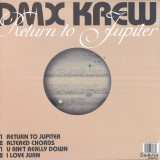
DMX Krew announces his return to Peggy Gou's Gudu Records with a new four-track EP, sharing the dreamy, Detroit-inspired title track, ‘Return to Jupiter’.
The full EP - out 14th April 2023 - will be his second release for the label and Gudu’s first release of 2023, set to be the label’s busiest year yet.
Ed DMX made his debut for Gudu with 2019’s Don’t You Wanna Play? EP, becoming the first artist to release on the label outside Peggy herself. Ed and Gudu have retained a regular working relationship ever since: he mastered Indonesian crate-digger Dea’s ‘Glazer Drum’ release for Gudu, contributed a pair of remixes to the reissue of Riff’s South African electro curio ‘Jacks Jive’, and now returns to the label with Return to Jupiter, a new original four-track EP.
Ed has been one of electronic music’s most respected faces for over 25 years. Debuting in the mid-1990s, he released his first decade of music almost exclusively through Grant Wilson-Claridge and Aphex Twin’s Rephlex label and his own Breakin’ imprint, but recent years have seen him ply his trade across a who’s who of dance music’s most respected underground labels: including Hypercolour, Balkan Vinyl, Central Processing Unit and, of course, Gudu.
Inspired by the futurist funk and vivid synthesiser epics of classic Detroit, ‘Return to Jupiter’ is dripping with richness and colour, driven by the sort of thick analogue basslines and distinctive melodies that have come to define Ed’s catalogue. The EP’s title track sets the tone for what’s to follow, introducing a language of sorts for the record - before ‘Altered Chords’ turns the funk up to 11, ‘U Ain’t Down’ aims its distorted kicks and wiggy, manipulated lead straight at peak time dancefloors, and ‘I Love Juan’ closes the EP on a star-gazing tip.
Founded by Peggy Gou in 2019, Gudu releases music from a global roster of artists, including DMX Krew, Maurice Fulton, Hiver, Dea, Mogwaa, Brain de Palma, Dukwa, JRMS and Peggy herself (including the hits ‘Starry Night’, ‘I Go’ and ‘Nabi’). 2023 will see Gudu’s busiest year to date, with new releases scheduled from the current roster and some exciting new faces.
out of Stock
Last delivered 24 days ago available to reorder, subject to availability
Definitive compilation spans solo recordings, rarities and duets with Lee Hazlewood Newly remastered from the original analog tapes by GRAMMYr-nominated engineer John Baldwin New interviews with the legendary singer, actress, and activist, Nancy Sinatra Extensive essay by Amanda Petrusich Q&A interview with Nancy & GRAMMYr-nominated reissue co-producer Hunter Lea Never-before-seen photos from Nancy Sinatra's personal archive Deluxe CD housed in 7"x7" hardcover book w/ 64-pg booklet Beautifully packaged Double LP featuring a 24-pg book 2xLP available on Standard Black Wax plus Summer Wine Sunburst Orange Release coincides with Nancy Sinatra's 80th birthday celebration Release to be supported by international press campaign in cooperation with Nancy Sinatra // Light In The Attic Records is proud to present Nancy Sinatra: Start Walkin' 1965-1976. The definitive new collection surveys Sinatra's most prolific period over 1965-1976, including her revered collaborations with Lee Hazlewood, over 23 tracks. Remastered from the original analog tapes by GRAMMYr-nominated engineer John Baldwin, the collection is complemented by liner notes penned by Amanda Petrusich (author and music critic at The New Yorker), featuring insightful new interviews with Sinatra, as well as a Q&A with archivist and GRAMMYr-nominated reissue co-producer Hunter Lea. The CD edition comes housed in a 7"x7" hardcover book (featuring 64-pages) and the two-disc vinyl set is presented in a gatefold jacket (featuring a 24-page booklet), with special color editions available exclusively at and independent record stores. Nancy's performance of the Lee Hazlewood-penned song "These Boots Are Made for Walkin'" was a huge hit in 1966 and became her signature tune. The pair began a three year run of successful albums, duets and singles including "Sugar Town," "Some Velvet Morning," "Summer Wine," "Sand," "Jackson," and the title track to the 1967 James Bond film "You Only Live Twice." Start Walkin' explores Nancy's recordings with Lee, her inspired collaborations with songwriter Mac Davis ("Hello L.A., Bye Bye Birmingham"), producer Lenny Waronker ("Hook and Ladder") and the "should've been hit" song with arranger/producer Billy Strange ("How Are Things In California.") Over the years, she has been cited as an influence by countless artists, including Sonic Youth, Morrissey, Calexico, U2, and Lana Del Rey. Her haunting song "Bang, Bang" gained a new legion of fans when it appeared in the opening credits of Quentin Tarantino's 2003 film, Kill Bill Volume 1.
out of Stock
Last delivered 4 years ago available to reorder, subject to availability
Jackson Lee's Mystical Disco label unveils a new singing here in the form of Paranoid Pyramid. The mysterious outfit enchants us from the off here with the sleazy, meandering acid lines of the opener drawn out over dusty, dubby and deep house drums. 'Water Temple' is another proudly analogue cut with wispy pads way off in the distance and slow but lumpy drums get you into a groove. There is more hazy and horizontal depth to 'Analog Joint' and 'Memphis Prophet' pairs vaporous synths with mystic drum sounds before 'Birdspeak' making for another perfectly lo-fi world of cosmic melodic wonder.
out of Stock
Last delivered 3 years ago available to reorder, subject to availability
On Seeds, Georgia Muldrow takes a step back and leaves the beatmaking to Otis Jackson Jr., aka Madlib. As producers, Muldrow and Jackson are not worlds apart, so the switch requires no adjustment on the part of the listener. That said, this is one dense and tight set, barely over half-an-hour in length, and it's definitely in contention for Muldrow's most focused, funkiest, and (somewhat ironically) personal release to date. Throughout the record, the emphasis remains heavily fixated on her family as a unit of salvation and purpose. The most direct track of the lot is "Husfriend," where she honors her relationship with Dudley Perkins (a/k/a Declaime, who appears on “The Few”). Muldrow can't quite divorce the planetary and personal issues, heard vividly on "Best Love," which sounds just like a simple, sweet, straight-ahead love song until she starts asking her other half for money to build water wells on three continents ("We can make a difference if we try now"). Overall, Seeds is another left-field deviation in Muldrow's career: it's one of her most captivating and immediate front-to-back statements of purpose as a singer, but it's also the first album where she's handed over all the production duties to somebody else. In celebration of this album’s decenary run, Someothaship Connect is pleased to reintroduce an anniversary edition repress of this captivating release in partnership with Fat Beats. "Seeds strikes the perfect balance, as Madlib's thickly layered funk and soul samples and cabinet rocking beats pair with Muldrow's gloriously off-kilter vocals and free-form song structures to make this her most satisfying release to date." – Exclaim!
Single-LP edit of Piñata lacquered at half speed master by Metropolis Mastering in London for the highest fidelity.
After the original release Freddie Gibbs & Madlib's Piñata in 2014, cover artist Jeff Jank made a new sleeve for the album in the style of a 1964 Blue Note album.
Featuring Danny Brown, Mac Miller, Earl Sweatshirt, Raekwon, Scarface, Domo Genesis, Ab-Soul, Polyester the Saint, BJ The Chicago Kid, Big Time Watts, G-Wiz, Casey Veggies, Sulaiman, Meechy Darko & Freddie Kane.
Freddie Gibbs is the product of violent, drug-laden streets but unlike most rappers with similar resumes, he brings the block to the booth without inhibition or an exaggerated rap persona. Piñata, a 17 track collaboration with producer Madlib, is the best distillation yet of his transparent approach to making music, combining an at times stark honesty with electrifying talent as a lyricist and performer.
Piñata is a gangster Blaxploitation film on wax, says Gibbs, who came up on the streets of Gary, Indiana, the disregarded city previously best known for producing Michael Jackson. Here he is joined by Mac Miller, Earl Sweatshirt, Raekwon, Scarface, Domo Genesis, Ab-Soul and a host of others in setting his soliloquies of the streets alongside film snippets and dusted funk, soul and prog musical tapestries. While this is the latest in a series of single-artist collaborations for Madlib, after Jaylib (J Dilla), Madvillainy (MF Doom) and the street-centric O.J. Simpson with Detroits Guilty Simpson, the pairing is unique as it is the first time for Gibbs working with just one producer.
On Piñata, where Gibbs can shift from textbook lessons in robbing and drugging on trackslike Scarface and Knicks, to perhaps the albums most personal song, Broken, a collaboration with Scarface, who, along with Tupac, DMX and 50 Cent, make up the rappers own Mount Rushmore of MCs (Youre getting a hurricane of all those motherfuckers hitting you at once when you listen to Freddie Gibbs, he says). Deeper, a Gibbs favorite and the third single from the album after Thuggin (2012) and Shame, (2013) is an ode to hip-hop in the mold of Commons I Used to Love H.E.R.; High, featuring Danny Brown, is self-explanatory and just what you would expect from Gibbs, Madlib and one of Detroits finest; while on Real, Gibbs addresses an old score just as Michael Corleone settled all family business on baptism day.
As a producer, Madlib, quite simply, is music, and ten years into his career-a time when other artists become comfortable-Gibbs remains restless, focused, with an eye on the competition and their position relative to his ascent. This is because mentally, hes still on the corner hustling, which would be the downfall of the average rapper. With Piñata, Gibbs confirms that he is anything but average.
out of Stock
Last delivered 3 years ago available to reorder, subject to availability
Tacit Group is an audio-visual group founded in 2008 with a vision of creating new art for the 21st century. Based in Seoul but working globally, the group comprises composer Jaeho Chang and electronic musician Gazaebal(Lee Jinwon).
With audio-visual art as its core content, Tacit Group has expanded in a contemporary and experimental way in multimedia performances, interactive installations, and music installations. Representative works such as ‘Hun-Min-Jeong-Ak,’ ‘Game Over,’ ‘Morse ㅋung ㅋung,’ combine a systematic worldview weaved through intuitive materials and technology inspired by normal everyday activities such as games and text chatting. In particular, works that utilize the beauty and communica- tion power of characters are among their most striking.
“It’s like wind chimes,” says Tacit Group’s Jeaho Chang. “The creator makes the pipes, but the wind makes the music.” He’s talking about the algorithmic music that Tacit Group creates. Jaeho and Gazaebal create audio/visual systems using code that the pair work within to unleash their utterly compelling AV performances, each show, each track, as unique as a snowflake. The pair met at Korea National University of Arts in 2006. Jaeho Chang was a media installation artist and composer who’d studied classical composition in Korea and electronic music at Den Haag’s Conservatoire. Gazaebal, who’d moved to the US as a teen, had worked at the renowned Quad group studios as a sound engineer, recording acts including Rage Against The Machine, Wu Tang and Janet Jackson. Returning to Korea, he had found success as a K-Pop producer, (founding the act Banana Girl, and writing their No.1 Korean hit ‘Shake Your Ass’) and DJing under the moniker Gazaebal, before deciding to go ‘back to school’ to learn to create more challenging music.
The quiet and reserved Jae and the more outgoing Gazaebal bonded over a shared vision, forming Tacit Group in 2008. And until recently, everything they have done has been through the medium of their globally acclaimed live shows, playing all over the world from Lincoln Center in NY, the Museum of Contemporary Art in Chicago, MMCA (National Museum of Modern and Contemporary Art) and Nam June Paik Art Center in Korea, Aarhus Festival in Denmark, Stereolux in France and NYU Abu Dhabi.
Each show an utterly unique and compelling event, a synthesis of music and visual art that has echoes of the concept of synesthesia: “we love the idea that the audience can ‘see’ the music.” says Gazaebal, “the way that you can hear a painting like Edvard Munch’s ‘The Scream’.” The frameworks and systems are created in advance using code such as C++ and max/M- SP(sometimes combined with analog and modular synthesizers), often growing out a of a simple idea (one of their first composi- tions, ‘Game Over’ explored the idea of a Tetris gameplay as a musical score) while on stage the pair react to the audience, creating new inputs and variables that can lead the performance in ways that are unexpected and even self sustaining - some of their installations could in theory continue to evolve and run on into infinity.
For Tacit Group, the process is as important as the outcome, and every bit as fascinating for the audience, who’ve been known to react like the crowd at a rock band gig to tracks / installations like ‘Hun-Min-Jeong-Ak’ which sees abstract geometric shapes based on the Korean alphabet evolve (through the process of live text interchanges between the pair) to become almost an immersive call and response.With that in mind, the duo have long been reluctant to commit to the idea of releasing via a ‘fixed medium’ it was actually the release of an acclaimed (and beautifully designed) book Tacit.print0_Anthology that convinced them to share their work more widely through an album.
out of Stock
Last delivered 18 months ago available to reorder, subject to availability
- FIRST EVER official vinyl reissue - definitive version with Nancy's involvement - Definitive reissue of Nancy & Lee's classic 1968 duet album - Includes the bonus tracks, "Tired Of Waiting for You" and "Love Is Strange," from the album sessions - Newly remastered from the original analog tapes by GRAMMYr-nominated engineer John Baldwin - Vinyl pressed at RTI - Q&A with Nancy & GRAMMYr-nominated reissue co-producer Hunter Lea - Never-before-seen photos from Nancy Sinatra's personal archive - Beautifully packaged and expanded gatefold LP featuring a 20-pg booklet // "We had sort of a love/hate relationship. Maybe it was a sexual tension because we never had any kind of affair. I don't know exactly what it was, but it worked." - Nancy Sinatra Light in the Attic is thrilled to announce the first official reissue of Nancy & Lee: the highly-influential 1968 duet album from Nancy Sinatra and Lee Hazlewood. This definitive edition of Nancy & Lee features newly-remastered audio by the GRAMMYr-nominated engineer John Baldwin and includes an array of exclusive content, including a new interview with Nancy, never-before-seen photos, and two bonus tracks from the album sessions: an ethereal cover of The Kinks' "Tired of Waiting for You" and an uptempo version of "Love Is Strange" (first made famous by Mickey & Sylvia in 1956). This release marks the official debut on vinyl for both tracks. After a string of successful duet singles with Lee Hazlewood, including "Sand," "Summer Wine," "Jackson," and "Some Velvet Morning;" the pair released the duet album Nancy & Lee in 1968. The album features the lush, orchestral arrangements of Billy Strange and the famed Los Angeles session musicians, The Wrecking Crew, at the peak of their powers. The unique vocal blend, the iconic cover and the selection of classic songs attracted a huge following and sold over a million copies.