
pas en stock
Commandez maintenant et nous commanderons l'article pour vous chez notre fournisseur.
Last In: 5 years ago
9,37 €
Commandez maintenant et nous commanderons l'article pour vous chez notre fournisseur.

An exciting announcement - The Return Of Cosmic Ritual by Joaquin Joe Claussell.
The Return of Cosmic Ritual
Kanita- Forgiveness is a Beautiful Thing Featuring a Cosmic Tribute to Nujabes
Cosmic Ritual, the early recording alias of Joaquin Joe Claussell, emerged during the formative years of his journey-with at the time the young and visionary Spiritual Life Music label. From those beginnings came For The Loft in You, a composition whose atmospheric language would travel far beyond its original moment-helping shape a sonic vocabulary that continues to resonate throughout the deeper realms of contemporary dance music.
Its influence can still be felt today: in the spaces between rhythm and silence, in the textures of deep house, ambient soul, spiritual jazz, and in productions created by artists who continue to explore the unseen dimensions of sound.
Now, after its long journey through the cosmos, Cosmic Ritual returns.
At the heart of this new chapter is “Kanita (Forgiveness Is a Beautiful Thing)”, a composition that journeys even further inward-toward the more atmospheric, introspective, and soundscape-oriented side of Joaquin Joe Claussell’s musical spirit.
It is music for the inner traveler.
And as another celestial passage, the release also offers a special Cosmic Tribute to Nujabes Titled "Heaven", Nujabes is a deeply admired artist whose work transcended boundaries and whose musical spirit continues to inspire generations across cultures and continents-even after his untimely departure.
This tribute is more than an acknowledgment. It is a meeting of frequencies, a quiet conversation between kindred spirits who understood that music could exist beyond genre, beyond geography, and beyond the limitations of ordinary perception.
And Finally " Myths Across Tribes " A Trance Dance Percussion number that takes the listener into the jungles of Africa.
As with all of Joaquin Joe Claussell’s work, The Return of Cosmic Ritual l invites the listener to go deeper.
For those who seek mind travel.
For those who listen between the notes.
For those drawn toward cosmic ambience, spiritual resonance, and the deeper dimensions of sound.
il devrait être publié sur 02.10.2026

Limen brings together two artists whose musical paths converge around a shared sensitivity to listening, resonance, and the evocative power of sound.
Recorded at Ritmo e Blu Studio during a five-day residency between spring and summer 2025, the album emerged from a series of spontaneous encounters free from predetermined structures. The pieces preserve their original form, retaining the immediacy and temporal flow of the dialogues as they first unfolded.
Subsequent interventions were conceived not as revisions, but as an exploration of the open spaces already present within the recordings—deepening what remained unspoken and extending resonances without altering the music's natural evolution.
The title, derived from the Latin word for “threshold,” reflects the nature of the project itself: a place of passage between improvisation and composition, silence and vibration, memory and imagination. Limen inhabits a suspended territory where listening becomes an experience of openness, presence, and transformation.
---
Lino Capra Vaccina
Lino Capra Vaccina is one of the most distinctive voices in Italian experimental music. A percussionist, composer, and pioneer of minimalist and meditative sound practices, he first emerged in the early 1970s as a founding member of the influential group Aktuala, whose visionary fusion of ancient traditions, improvisation, and contemporary research anticipated what would later become known as world music.
Over a career spanning more than five decades, Vaccina has cultivated a unique artistic language centred on vibration, resonance, and the transformative power of sound. His landmark 1978 album Antico Adagio remains a touchstone of European minimalism, while his collaborations have included figures such as Franco Battiato, Juri Camisasca, Markus Stockhausen, Keith Tippett, Paolo Tofani, and many others.
Whether working with percussion, piano, electronics, or voice, Vaccina's music seeks a state of suspension and contemplation. His compositions unfold as immersive sonic environments whereancient echoes and contemporary sensibilities meet, inviting listeners into an experience that is at once intimate, spiritual, and timeless.
---
Luca Formentini
Luca Formentini is an Italian composer, sound artist, and improviser whose work unfolds at the intersection of experimentation, atmosphere, and deep listening. Active since the late 1990s, he has developed a highly personal language in which guitar, voice, field recordings, and electroacoustic processes become tools for exploring memory, perception, and the expressive potential of sound itself.
His music resists easy categorization, moving freely between ambient, contemporary composition, improvisation, and sound art. Throughout his career he has released numerous solo works and collaborated with a wide range of internationally acclaimed musicians, including Holger Czukay, Robert Rich, Markus Stockhausen, Steve Jansen, Theo Travis and Steve Lawson.His recordings have appeared on labels across Europe, Asia, Australia, and the United States.
Rooted in a practice of attentive listening and sonic exploration, Formentini creates evocative musical landscapes that invite reflection rather than certainty, opening spaces where silence, texture, and resonance become as meaningful as melody itself.
il devrait être publié sur 06.11.2026
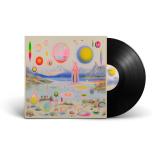
Selection of IKIGAI Album by Nadia Struiwigh. IKIGAI was born in the quiet space between grief and remembering... Made entirely on hardware, from my living room in Berlin near Hermannplatz (my dad's name is Herman -- the odds), in the months my father passed away. Every sound, every sequence, every texture carries his fingerprint. Not because he made music, but because he made me love gadgets. Circuits, signals, blinking lights. He was the man who opened me up to machines and taught me how, eventually, to listen to them and use them for my craft. The name IKIGAI, a Japanese word for ''reason for being,'' found me when I was at a crossroads. The kind where you ask yourself: Why am I still here? What am I still creating for? What part of me still believes in beauty when everything feels like it's falling apart? These pieces came through slowly, on Japanese gear like Yamaha SEQTRAK, KORG, Roland -- like threads weaving a tapestry I didn't know I was making. Each track is a kind of purge... to him, to myself, to the listeners who find themselves in the in-between. The space where you're not who you were, and not yet who you're becoming. I found myself back into soundscapes and Ambient with a touch of Electronica. I weaved in sounds I captured from daily life, memories -- like the laugh of my sister. I built in silence and let the machines cry for me and let them tell the story I couldn't find the words for. IKIGAI is spacious. It's not trying to impress anyone. It's trying to just be, and hold space for all kinds of emotions. It moves like memory... slow, sacred, shifting. This release needs to be close to home, and will be released on my own imprint Distorted Waves, on the day 11.11 -- which refers to my first album that my dad had hanging up in his shed. For my father. Nadia
Disponible en stock et prêt pour l'expédition

Andrew Weatherall never wakes up in the morning and decides to start a new album that day. Instead, recording music is a continuous process usually working with different collaborators and seeing where the muse takes him. Somewhere down the line the rewards of a collaboration will coalesce into a body of work between thirty minutes and an hour long and he will put a call into the Rotters' team to say he has a new release ready to go.
We were visiting the studio catching up on new tracks in various states of readiness when he offered up some remixes of tracks from his recent "Ruled by Passion…" he'd been sent by fellow musicians. Tim Fairplay, Andrew's partner in The Asphodells, Sean Johnston from A Love From Outer Space and Scott Fraser live and work in the area and all popped in at various points.
Andrew's black book reads like the who's who of contemporary music but rather than plunder it for remixers he'd let drop the idea of a remix with friends and neighbours. These plus a couple a swaps with musical friends who were new to the concept of remixing, gave Andrew an hour of music he thoroughly enjoyed listening to.
It goes without saying none of the tracks are duds but our ears always prick up when Justin Robertson's take on "Beglammered" ups the heart rate or Daniel Avery's own unscrewing of "… the Axis" ruffles the neck hairs. We've stopped arguing in the office about which is the best track. They all are.
Disponible en stock et prêt pour l'expédition

South London’s Jerkcurb – aka Jacob Read – is back with news that his sophomore album ‘Night Fishing On A Calm Lake’ is to be released at the end of November following 2019’s ‘Air Con Eden’.
After that album’s successful release Read had planned to expand Jerkcurb into a full band setup when his father, a painter like himself and a creative inspiration, passed away. Instead of the envisioned plan of taking his project bigger Read returned to the family home and re-examined the material for the new album and instead the album became one of reflection, grief and redemption. It’s not much of a stretch to see clear musical inspirations for the record too – Prefab Sprout, Talk Talk and The Blue Nile, records where the moments of silence are stretched out.
Read produced and engineered the album himself, mostly at home with Lara Laeverenz and Gray Rimmer providing cocals. The album is mixed by Dilip Harris (King Krule, Mount Kimbie).
The enchanting cover artwork was painted at Read’s father’s studio in Camberwell, painted in oil with its dreamlike blur of blue and black . It hints at the early film noir and magical realist influences for the album.
Disponible en stock et prêt pour l'expédition
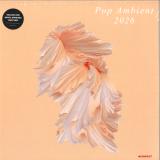
“Everything flows – nothing remains, there is only an eternal becoming and changing” is a well-known formulation of the river theory of the Greek philosopher Heraclitus, also known as panta rhei (ancient Greek: πάντα ῥεῖ, “everything flows”). This teaching states that everything in the universe is subject to constant change and that nothing stays the same forever. The metaphor of the river illustrates this: You can't step into the same river twice because both the river and you are constantly changing. The water is constantly flowing, but the river stays in one place. Thus, reality is constantly changing, even if sometimes perceived as constant.”
„Same Same but Different.“ Always different – always the same. Chill-Out DJ Heraklit
For the 26th time, the most consistent of all ambient compilations, in a constant flux of static change, is released on Kompakt. Joining good friends from the early days and reliable confidants are some new additions to the non-hierarchical charts of contemplative rapture culture.
Leading the way is Micå, a Japanese electronic musician whose finely chiseled, graceful musical style has made it onto the new collection with two pieces. Also making his debut is Richard Ojijo, a seasoned sound engineer known, among other things, for his long-standing collaboration with the artist Marcel Odenbach and the Cologne-based label Magazine. Oskø aka Max Hytrek, a multi-talented newcomer to Kompakt and the music scene, debuts with his rapturously ecstatic piece "Ar Vag." He's followed by Sebastian Mullaert, appearing for the second time—this time teamed up with Sebastian Lilja aka Hush Forever. After his surprise return last year after a 20 year hiatus, we are delighted that Tetsuo Sakae aka Pass Into Silence is back again this year with one of his distinctive sound gems. As are Dirk Leyers (Closer Musik) and Mikkel Metal. 18 tracks are featured on this CD. "Erlösung" (Redemption) is the title of Segensklang's closing track. A kind of ambient bolero into infinity. Or at least until next year...
And what would Pop Ambient be without the iconic, artistic cover design of Veronika Unland, who once again, in her unmistakable way, says through the digital flower: The eye always listens...
Disponible en stock et prêt pour l'expédition
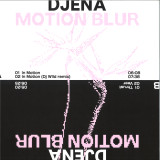
After years of silence dedicated to side projects, DJENA makes a triumphant return with his solo EP, In Motion. A testament to his passion for eclecticism, this release seamlessly bridges house and breakbeat, enriched by a stunning remix from the legendary French producer DJ W!LD.
The journey begins with the title track, In Motion, a hypnotic breakbeat composition where deep pads intertwine with tribal vocal elements, evoking raw emotion and sonic depth. This track is designed to captivate both the ears and the heart. DJ W!LD then takes the reins, transforming In Motion into an irresistible dancefloor anthem. His remix injects a house-driven groove, elevating the track into an emotive yet club-ready masterpiece.
Flipping to the B-side, Thrust propels listeners into a deep tech-driven rhythm, gradually intensifying into a peak-time energy surge. Rounded arps, subtle vocal textures, and celestial pads craft an immersive, ethereal adventure—blurring the lines between introspection and movement.
Closing out the EP, Veer is a sublime after-hours gem. Its bouncy bassline and tech-house rhythm are complemented by atmospheric pads and haunting vocals, leading the listener into a space where both mind and soul find fulfillment
In Motion EP is a refined sonic exploration, balancing depth and energy in perfect harmony. DJENA’s return marks a powerful statement—one that will undoubtedly resonate on dancefloors and beyond.
Order now. Collecting orders for repress.

Four Flies Records is proud to present its brand new imprint Edizioni Della Notte, which expands the label's musical range. The sound of Edizioni Della Notte is a sound of twilight atmospheres and moonlit nights, traversing genres from disco-funk to soft rock, jazz-fusion and city pop. It's the music that creeps out of smoky nightclubs and car cassette radios, breaking the silence of empty streets and offering an escape from metropolitan reality into cosmic-exotic dreamlands.
Quite fittingly, the first official release on Edizioni Della Notte is called By Night. It's the debut EP of Scerida, a solo project of musician and singer-songwriter Daniela Resconi, and a perfect match for the sound that the new imprint intends to represent.
Its four tracks explore the idea of night as a time of ecstasy and torment, as a land of freedom and imagination but also of delusion, as an accomplice, a friend and an enemy described through feelings and mental states that range from expectation and euphoria to disillusionment and resignation.
Resconi, who hails from Brescia, northern Italy, formerly released music under the moniker Cara and as part of the duo The Loud Vice. Her new alias Scerida, which combines the French term chérie with the Spanish word querida, signals both a revolution and an evolution. "Scerida is a dive into the exotic side of my imagination, into mischevious thoughts, into a crazy night where I lost and found myself again," she explains. "She is still me, Daniela, but she keeps her eyes wide open on this restless, troubled world to write songs that try to ward off the horror vacui of everyday life."
By Night celebrates the dark hours as magical and mesmerizing, even when mysterious or dangerous. It evokes images and scenarios cinematically – a taxi passing by and fading into the distance, ice-cold Martinis during a party, whirlwinds of emotion, psychedelic sunrises and neon sunsets – through a stream of consciousness filled with noir-inflected pop, lo-fi vibes, slow hypnotic rhythms, suspended grooves and swelling atmospheres.
Disponible en stock et prêt pour l'expédition
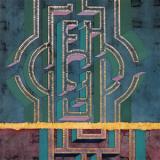
Courant Zéro is the new moniker of Montréal multi-media installation artist and Kohlenstoff label co-founder Maxime Corbeil-Perron, signalling his return to purely recording-based electronic music production following several years focused on award-winning experimental film and audio-visual works. Solari channels his cinematic sensibility and decade-long exploration of sound art and electroacoustic counterpoint into deep cuts of maximalist ambient electronica. Drawing on his early background as a pianist and jazz drummer, Corbeil-Perron weaves a fabric of melodic and rhythmic vectors with his unique timbral palette, intersecting modern composition, IDM, ambient, glitch, and noise on a debut album brimming with sonic detail and emotive resonance. A fixture of Montréal's sound art community as both creator and curator since the early 2010s, Corbeil-Perron's work has ranged from "hypnotic A/V onslaught" (FACT Magazine) to the "richly nuanced acousmatic journey" of his 2018 EP Polychrome (Bandcamp Best Contemporary Classical Of The Month), with earlier electronic and techno-adjacent projects like Political Ritual, Dresden, and Le poisson d'argent garnering accolades from avant-music outlets A Closer Listen, Silence and Sound, and Musicworks, among others. Courant Zéro mobilizes this cumulative wealth of explorative sonic experience in the service of distinctive compositional architectures and electronic music pathways that fans of Floating Points, Jan Jelinek, Squarepusher, Tim Hecker, and Oneohtrix Point Never should find compelling. Title track "Solari" opens the album with a cavernous ambient glitch-drone soundscape that envelops ever-shifting timbres of modular arpeggiation, serving as introduction to the clarion call of "En deçà du réel", an homage to video artist Manon Labrecque, where layers of interweaving melodic counterpoint played on Buchla and other synths slowly build to widescreen immersive intensities; "I have this vision of Labreque vibrating eternally between two frames of magnetic VHS tape_ the slow pace of the piece also inspired by Tarkovsky's approach to scenography" says Corbeil-Perron. "Strange Aorta" is ectoplasmic ambient with wistful melody lines transmuting along a central filament, awash in shifting waves of low-end and ricocheting tonal glitch, the title a reference to "the thumping rhythm beating around the main melody_and the heavy remnants of grief related to my father's passing and a brutal confrontation with my own mortality a few years back." Tracks like "La peau des dents" and "Eroding Us" are more firmly rooted in electroacoustic and aleatory systems music, where colliding loops are shaped into unstable flows of deconstructed slippage and reconvergence. Those two pieces bookend the album's pivotal center: the gorgeous piano digitalia of "Horizon n'arrête" and the skittering electronica of 9-minute opus "Unyeldd", its loping broken beat and cascading melodic glitter like a cluster of wind-up music boxes in a dappled forest _ and for Corbeil- Perron also partly inspired by now fellow Constellation labelmates Do Make Say Think: "I spent a lot of time rediscovering their records after seeing them last September 2024 which definitely influenced this piece." Courant Zéro's debut is a vibrant sonic rebus at the junction of electronic, electroacoustic, noise and ambient music that resists easy categorisation. Solari strikes a compelling balance of unsettled disorientation and hospitable warmth, teeming with real feeling throughout. The album's cover art painting Cryptography I by Yen-Chao Lin represents this prevailing sensibility, its mazelike circuitry distinctly carved and crisply rendered, while filigreed with handmade detail and artisanal patina. Thanks for listening.
il devrait être publié sur 25.09.2026

Jason Dungan (aka Blue Lake) and Johan Carøe find beauty in the rhythms
and repetitions of domestic life for collaborative album, 'Routine' - out September 25
Copenhagen-based multi-instrumentalists Jason Dungan and Johan Carøe didn't set out to make an album. Instead, as the title 'Routine' suggests, they found their way there through a process of habitual making and listening, developing an intuitive musical language to reflect the dreamlike meanderings and creative play of life's quiet moments. 'Routine' blends pop orientated sounds, Avant-garde minimalism, folk and new age with the emotive depth of film-score.
Their meeting was not entirely coincidental. Previously in bands such as Squares and Triangles, Jason Dungan has since recorded multiple albums under the moniker Blue Lake, including the lauded 'Sun Arcs', pursuing his passion for self-built percussion and multi-string instruments. Johan Carøe meanwhile is a composer whose film soundtrack work has seen him collaborate with Angelo Badalamenti, Arp, and Sofie Birch, at whose Andersabo residency (curated by Dungan) the pair first met, resulting in the highly praised album 'Repair Techniques' written by Birch and Carøe.
'Routine' emerged organically over many years against the backdrop of great personal change. As Carøe said goodbye to his father and welcomed his first child, the pair sent each other fragments of melodies and patterns, working up responses when time allowed to assemble a sonic palette that combined acoustic instrumentation of zither, clarinet, cello, saxophone (among others) with the textures of tape, drum machine and Yamaha DX7 synth. Inspired by the vulnerability and DIY ethos of Arthur Russell's home recordings, the vision of labels like Disques de Crepescule, and the art pop, experimentation inherent to late '70s and early '80s recordings from NYC and Japan alike, Dungan and Carøe conjured new forms for their folk, leftfield pop and avant garde influences from the low-lit living rooms of Copenhagen and rural Sweden. "I'm very interested in the ways in which music and art emerge from our wider experiences as people, workers, parents and in the daydreaming activity of making music," Dungan explains of a process which allowed the duo's individual styles to drift apart and merge together seamlessly. "I think the process was definitely capturing moments in time, but over a long time," Carøe adds. "It was a bit like improvisation, but with time stretched."
The music floats with grace and humility, remaining sophisticated yet acutely introverted.
Whether on 'Clouds', where soft layers of zither and clarinet are moved along by a featherlight bass riff and the hypnotic clip-clop of the primitive groovebox, or the gentle grandeur of cello rising and falling through 'Routine 1', the album reveals itself over 10 instrumental tracks, evoking the ineffable calm that descends when the light changes and the world turns inwards. The act of time passing became a key creative ingredient to the evolution of the album, enriched with the exciting challenge to transform their passing rounds of home recordings via a slow release musical dialogue. Jason found creative moments in the twilight hours to lay down zither, melodica, acoustic guitar to name but few, while Johan utilising "line-in and headphones" would manipulate, stretch and pitch Jason's melodic pathways during newly born naptimes.
Carøe rhythmically plucks and slides the stringed cello instrument, leaving palpable foundations on 'Hymn' and 'Chords', in a treated, stylistic approach akin to Mabe Fratti, while 'Silence' draws to a close with a gospel touch. Dungan's harp-motion zither flourishes reveal more classical connotations on 'Reunion' with inspiration of Bedroom Community's Nico Muhly as organs rise with Moogs, culminating with a climatic choral outro from friend, mezzo-soprano Anna Caroline Olesen.
'Routine' then is their first collaboration, an album of deep and sincere reflection with inviting overtones that gesture with unrushed authenticity. A document of a new-found friendship that opens a window into the most personal of spaces, where the daily practices of music and life exist side-by-side to wondrous effect.
il devrait être publié sur 25.09.2026

Bachar Mar-Khalifé Plays Christophe
The album title, Bachar Mar-Khalifé Plays Christophe, inevitably comes as a surprise: the Lebanese composer, singer, and multi-instrumentalist ventures into the world of the pop dandy who escaped the yé-yé era… From the very first notes, one thing becomes clear: splendor flows effortlessly from melodies restored to their fragility and simplicity. Bachar Mar-Khalifé explores the hypnotic melancholy of a world that is both sophisticated and crystal clear. A fascinating plunge “into this collapsing luxury,” as the lyrics of Paradise Lost say. Seven tracks with his collaborators Dogan Poyraz on drums and Aleksander Angelov on bass, seven narratives unfolding the musical richness of Christophe’s songs as much as that of Bachar Mar-Khalifé’s playing and singing. A captivating journey, both on record and on stage. It all started there, in fact. In April 2025, BMK dared to pay tribute to Christophe at the Fragile Festival, at the Cirque Zingaro, five years after his death. At first glance, it wasn't his familiar world. "I haven't idolized him my whole life," he explains. "I really knew Christophe personally before I knew his work in detail." During his childhood in Lebanon, and then after arriving in France in 1989 at the age of six, the music played at home left little room for Christophe's pop. "We listened more to Brassens, Brel, Ferré, Barbara. I hardly knew anything more than 'Les Mots bleus.' Then we met. Christophe loved the night, young musicians, exploring together..." In 2018, Bachar and Christophe recorded a Unik session for FIP, which involved recording a 45 rpm single live, followed by a concert at the Maison de la Radio. The younger brother has the opportunity to discover a legend, but also how it works: “His melodies allow you to go very far—even him, who seems to be searching for a new version with each interpretation, as if he wanted to return to the organic aspect of the song. A researcher who, out of a need for freedom, wants to escape the image people have of him.” So there was no question of overproducing these covers as one might do with the stage fright of tackling an intimidating work. “I tried to go very fast to deliver each song, as if I had composed it myself.” Working instinctively, very spontaneously, the bulk of the album comes from the trio's rehearsals and the concerts that followed. “I chose songs that moved me. Very beautiful melodies and very beautiful lyrics.” Whether the lyrics are by Jean-Michel Jarre or Alain Kan, “they often speak of love in danger.” “I like to hear this quote from Paradise Lost: ‘Dandy, a little cursed, a little aged / In this crumbling luxury.’ Here and there, he pruned the lyrics, as if to make them more audible, in Les Mots bleus, ‘The winter wind blows in April / I love the still silence’ – an evocation of the month of Christophe’s death. And he chose a little-known song from the yé-yé era, Les Amoureux qui passent, in which we hear the young trumpeter Siméon Petrov, who further expands the play on the archetypes of vintage romantic song. Between accepted fragility and the vertigo of feeling, between virtuosity of lightness and unfathomable depths, Bachar Mar-Khalifé unfolds an unexpected kinship with Christophe.” A kinship of silences and sonic surprises (a synthesized zurna sound in "Emporte-moi," for example) that will continue on tour. He is also preparing an album of original songs, his first since 2020, after many compositions for film and collaborations with other artists. He writes songs of love and dance, at a time when Lebanon and the world are experiencing such dark times. Perhaps this is yet another lesson from Christophe: to love and sing "in this crumbling luxury."
il devrait être publié sur 18.09.2026

Swiss hard rock veterans Shakra return with renewed fire and unstoppable energy on *Just Live Loud*, their explosive new studio album and the band’s very first release through Frontiers Music Srl. Fueled by massive riffs, soaring melodies, and the unmistakable chemistry that has defined Shakra for decades, the album captures the spirit of classic European hard rock while pushing the band into a heavier, more modern sonic territory. Produced with a raw yet polished approach, *Just Live Loud* delivers a powerful mix of thunderous anthems, emotionally charged ballads, and adrenaline-fueled rockers designed for both festival stages and late-night highway drives. From razor-sharp guitar work and pounding rhythms to towering vocal hooks, every track reflects the band’s commitment to authenticity, passion, and pure rock’n’roll attitude. Lyrically, the album celebrates resilience, freedom, brotherhood, and the determination to live life at full volume — themes that resonate deeply with the band’s own journey through the international hard rock scene. *Just Live Loud* also marks an exciting new chapter for Shakra, combining the experience and songwriting strength of their legacy years with a fresh creative momentum that feels more vital than ever. With this landmark release, Shakra reaffirm their status as one of Switzerland’s premier hard rock exports and prove that true melodic heavy rock is alive, loud, and ready to conquer a new generation of fans.
il devrait être publié sur 28.08.2026

With bloated souls and skeletal bodies the three mad kings of the end times walk among us, with empty eyes and insatiable hunger. Innocence thieves, blood collectors, bastard children of archaic dynasties built upon the broken bones of the weak. Their consorts are the rotten and the dead, their champions soulless, empty vessels gasping for validation as they bathe in the nectar of inflicted pain. They lead us not into temptation, but into degradation and the all-consuming fire. Born in the heat and shadows of the Australian underground, in Brisbane in 2014, Graveir have carved out a stronghold for themselves in their homeland's black metal scene. Bleak, violent and uncompromising, their music possesses a powerful individuality that sees them following their own path, lone wolves in a world of people searching frantically for a voice to tell them how to think and what to believe. After their powerful 2016 debut, Iconostasis and its critically acclaimed successor, King Of The Silent World, hailed as 'captivatingly hypnotic' by Metal Bite, Graveir are poised to unleash their third set of black prophecies - The Festering Triad. The Festering Triad begins with the sinister 'Lords Of Misrule', rising from the silence with guitars like an insect swarm before a lugubrious, dolorous shift into life and movement. The song holds you on the edge of oblivion, a constant aura of threat radiating from its broken beauty. There's a powerful underlying melody too, but it's corrupted and riddled with disease. And while this unsettling and disorientating introduction to The Festering Triad is still crawling through your veins, 'A Futile Exhortation' bursts into flame - as implacable and unstoppable as the passage of time, formed from the seething darkness on the edge of chaos and touched by something ancient and primal. You are now in the heart of darkness, jagged riffs circling like atavistic, feral presences, hammering blast beats disrupting natural rhythms. Nothing is as it should be. Nothing stays within the expected boundaries. This is a malicious attack on the laws that govern reality. 'A Thief In The Heart Of Man' flies at you in a howl of rage and bloodlust; you can feel its desperate need to tear you apart and the inherent danger is exhilarating. Title track, 'The Festering Triad' arrives swathed in an aura of decaying majesty, a triumvirate of wickedness wreathed in flame, marching onwards, entwined in black briars of unease - on into twisted soundscapes of fear and dizzying anxiety, through boiling malignancy and relentless intensity to the finale of 'The Rite Of Degradation', where portentous grandeur and bestial hunger combine in bewildering, schizophrenic fury. This album is fuelled by a determination to leave you broken, beaten and humbled - and it succeeds, absolutely.
il devrait être publié sur 17.07.2026
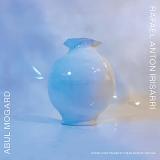
In spring 2025, Abul Mogard and Rafael Anton Irisarri created the source material for their second album, Where Light Pauses in the Silence of the Sun, during a three-day residency at Morphine Raum in Berlin. Functioning as both recording studio and performance venue, the space has no stage, with the audience gathered around the performers. Working within an open framework, the duo reshaped the music each evening while recording the performances live to multitrack. Rotary speakers, modular synthesizers and bowed guitar formed the core of their sonic language, captured through a 1970s mixing console and microphones placed around the room.
Back in Mogard’s studio in Rome, the material was further crafted as motifs were stretched, fragments isolated, and tempos dissolved. Irisarri recorded additional guitar textures and treatments in New York, while passages recorded by Martina Bertoni and Andrea Burelli in Berlin reinforced the harmonic centres and brought breath, refinement and a new sensibility to their compositions. The process continued as Mogard’s layering and subtraction reassembled everyone’s parts into the final arrangement.
The album opens with “In the Eastern Wild,” building from a sparse outline into a monumental formation of low-frequency weight, its internal motion shaped by the rotating Leslie speaker. “Over the Domes” widens into a broader acoustic field, where sustained modular tones meet waves of softly plucked guitar. The music then turns inward with “A Blue Descent,” centred on Bertoni’s cello, whose growling timbre introduces a melancholic depth.
At the album’s centre, “In a Quiet Radiance” unfolds around a slow guitar ostinato, its luminous stillness opening into a more expansive and reflective state. Across its ten-minute span, Burelli’s violin lines and Bertoni’s lower cello phrases gradually surface, weaving through the harmonic field. Mogard brings Burelli’s processed voice to the fore, its emotive, operatic presence becoming one of the record’s pivotal moments. “Of Blessed Ages” suspends the sonic flow, shifting between parallel major and minor chords as lingering, slowly decaying melodies shape the music’s internal drift. The closing “Among Shadows” settles into a darker resonance as layered textures recede.
Mogard and Irisarri’s shared language balances restraint and maximalism. UK magazine Crack describes the music as “a tidal wave held in suspension,” while Dutch newspaper de Volkskrant writes, “What a colossal sound, and how this music strikes at the emotions.” Reflecting on the residency sessions, Irisarri recalls: “At moments I genuinely couldn’t tell if a sound was coming from me or from Abul. It stopped feeling like two people making decisions and began to feel like we were inside a system moving on its own."
Marja de Sanctis’ cover artwork revisits the vessel sculpture from the duo’s first album, Impossibly Distant, Impossibly Close. There it appeared as raw, unfired clay. Here it has been fired in the kiln and finished with a glaze. Light gathers on its polished surface and spills into the surrounding space. As she explains, “I wanted to convey the idea of continuity within the duo, and the vessel became a kind of container for that idea. However, their music felt different this time, and with the collaboration of Martina and Andrea, I felt it should have a sleeker, softer, more glamorous look, very distant from the first raw appearance.” The transformation of the vessel from raw clay to fired form suggests a passage from immediacy toward permanence, mirroring the music’s gradual expansion.
Commandez maintenant et nous commanderons l'article pour vous chez notre fournisseur.
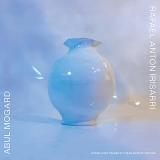
In spring 2025, Abul Mogard and Rafael Anton Irisarri created the source material for their second album, Where Light Pauses in the Silence of the Sun, during a three-day residency at Morphine Raum in Berlin. Functioning as both recording studio and performance venue, the space has no stage, with the audience gathered around the performers. Working within an open framework, the duo reshaped the music each evening while recording the performances live to multitrack. Rotary speakers, modular synthesizers and bowed guitar formed the core of their sonic language, captured through a 1970s mixing console and microphones placed around the room.
Back in Mogard’s studio in Rome, the material was further crafted as motifs were stretched, fragments isolated, and tempos dissolved. Irisarri recorded additional guitar textures and treatments in New York, while passages recorded by Martina Bertoni and Andrea Burelli in Berlin reinforced the harmonic centres and brought breath, refinement and a new sensibility to their compositions. The process continued as Mogard’s layering and subtraction reassembled everyone’s parts into the final arrangement.
The album opens with “In the Eastern Wild,” building from a sparse outline into a monumental formation of low-frequency weight, its internal motion shaped by the rotating Leslie speaker. “Over the Domes” widens into a broader acoustic field, where sustained modular tones meet waves of softly plucked guitar. The music then turns inward with “A Blue Descent,” centred on Bertoni’s cello, whose growling timbre introduces a melancholic depth.
At the album’s centre, “In a Quiet Radiance” unfolds around a slow guitar ostinato, its luminous stillness opening into a more expansive and reflective state. Across its ten-minute span, Burelli’s violin lines and Bertoni’s lower cello phrases gradually surface, weaving through the harmonic field. Mogard brings Burelli’s processed voice to the fore, its emotive, operatic presence becoming one of the record’s pivotal moments. “Of Blessed Ages” suspends the sonic flow, shifting between parallel major and minor chords as lingering, slowly decaying melodies shape the music’s internal drift. The closing “Among Shadows” settles into a darker resonance as layered textures recede.
Mogard and Irisarri’s shared language balances restraint and maximalism. UK magazine Crack describes the music as “a tidal wave held in suspension,” while Dutch newspaper de Volkskrant writes, “What a colossal sound, and how this music strikes at the emotions.” Reflecting on the residency sessions, Irisarri recalls: “At moments I genuinely couldn’t tell if a sound was coming from me or from Abul. It stopped feeling like two people making decisions and began to feel like we were inside a system moving on its own."
Marja de Sanctis’ cover artwork revisits the vessel sculpture from the duo’s first album, Impossibly Distant, Impossibly Close. There it appeared as raw, unfired clay. Here it has been fired in the kiln and finished with a glaze. Light gathers on its polished surface and spills into the surrounding space. As she explains, “I wanted to convey the idea of continuity within the duo, and the vessel became a kind of container for that idea. However, their music felt different this time, and with the collaboration of Martina and Andrea, I felt it should have a sleeker, softer, more glamorous look, very distant from the first raw appearance.” The transformation of the vessel from raw clay to fired form suggests a passage from immediacy toward permanence, mirroring the music’s gradual expansion.
Commandez maintenant et nous commanderons l'article pour vous chez notre fournisseur.
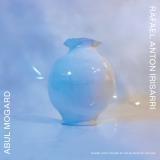
In spring 2025, Abul Mogard and Rafael Anton Irisarri created the source material for their second album, Where Light Pauses in the Silence of the Sun, during a three-day residency at Morphine Raum in Berlin. Functioning as both recording studio and performance venue, the space has no stage, with the audience gathered around the performers. Working within an open framework, the duo reshaped the music each evening while recording the performances live to multitrack. Rotary speakers, modular synthesizers and bowed guitar formed the core of their sonic language, captured through a 1970s mixing console and microphones placed around the room.
Back in Mogard’s studio in Rome, the material was further crafted as motifs were stretched, fragments isolated, and tempos dissolved. Irisarri recorded additional guitar textures and treatments in New York, while passages recorded by Martina Bertoni and Andrea Burelli in Berlin reinforced the harmonic centres and brought breath, refinement and a new sensibility to their compositions. The process continued as Mogard’s layering and subtraction reassembled everyone’s parts into the final arrangement.
The album opens with “In the Eastern Wild,” building from a sparse outline into a monumental formation of low-frequency weight, its internal motion shaped by the rotating Leslie speaker. “Over the Domes” widens into a broader acoustic field, where sustained modular tones meet waves of softly plucked guitar. The music then turns inward with “A Blue Descent,” centred on Bertoni’s cello, whose growling timbre introduces a melancholic depth.
At the album’s centre, “In a Quiet Radiance” unfolds around a slow guitar ostinato, its luminous stillness opening into a more expansive and reflective state. Across its ten-minute span, Burelli’s violin lines and Bertoni’s lower cello phrases gradually surface, weaving through the harmonic field. Mogard brings Burelli’s processed voice to the fore, its emotive, operatic presence becoming one of the record’s pivotal moments. “Of Blessed Ages” suspends the sonic flow, shifting between parallel major and minor chords as lingering, slowly decaying melodies shape the music’s internal drift. The closing “Among Shadows” settles into a darker resonance as layered textures recede.
Mogard and Irisarri’s shared language balances restraint and maximalism. UK magazine Crack describes the music as “a tidal wave held in suspension,” while Dutch newspaper de Volkskrant writes, “What a colossal sound, and how this music strikes at the emotions.” Reflecting on the residency sessions, Irisarri recalls: “At moments I genuinely couldn’t tell if a sound was coming from me or from Abul. It stopped feeling like two people making decisions and began to feel like we were inside a system moving on its own."
Marja de Sanctis’ cover artwork revisits the vessel sculpture from the duo’s first album, Impossibly Distant, Impossibly Close. There it appeared as raw, unfired clay. Here it has been fired in the kiln and finished with a glaze. Light gathers on its polished surface and spills into the surrounding space. As she explains, “I wanted to convey the idea of continuity within the duo, and the vessel became a kind of container for that idea. However, their music felt different this time, and with the collaboration of Martina and Andrea, I felt it should have a sleeker, softer, more glamorous look, very distant from the first raw appearance.” The transformation of the vessel from raw clay to fired form suggests a passage from immediacy toward permanence, mirroring the music’s gradual expansion.
Commandez maintenant et nous commanderons l'article pour vous chez notre fournisseur.

AFTERNOON LIGHT ED.[24,79 €]
Over the course of more than a decade, the French quartet Lost in Kyiv have refined a sound that fuses cinematic ambition, electronic precision, and visceral live energy into something unmistakably their own. With their new album, `We're All Going To Be Fine', they push that identity further than ever; sharpening their production, intensifying their dynamics, and embracing a darker, more immersive sonic architecture. Lost in Kyiv's music has always thrived on tension between the organic and the synthetic. On `We're All Going To Be Fine', that integration reaches a new level of clarity and depth. The writing and production process was long and exacting, allowing the band to refine every transition and tonal detail. Songs unfold with architectural precision, motifs are introduced subtly before expanding into vast, multi-layered climaxes. Dynamics are handled with patience and control, silence and minimalism are deployed as strategically as explosive crescendos. This careful pacing gives the album a cinematic flow and larger narrative in which struggle and compassion coexist. Guitars surge and recede in wide, panoramic arcs. At moments they shimmer and support, at others they thrash violently, accumulating layers of distortion and harmonic overtones. Acoustic instrumentation is interwoven with sequenced synth lines, pulsing arpeggiators, and carefully sculpted electronic textures that give the band's sound a sense of forward propulsion. Rhythm plays a central role in Lost in Kyiv's identity. The drums provide impact and structure, locking into intricate patterns that interact with bass-driven synth pulses. At times the groove feels almost mechanical, echoing the steady insistence of electronic music; at others, it breathes and swells with human elasticity. This interplay creates a powerful sense of movement, an impression that the music is always advancing, even in its most introspective passages. "We almost consider this album as the first record of a new version of the band. That's why we decided to use the name Lost in Kyiv now. We don't want to erase the past, but it really feels like a new direction. Artistically, I think this album marks the beginning of a new direction, louder and more metal-oriented than what we did before." (Lost in Kyiv) FOR FANS OF Russian Circles * P.G.Lost * The Ocean * Cult of Luna * Brutus * This Will Destroy You
il devrait être publié sur 19.06.2026

Over the course of more than a decade, the French quartet Lost in Kyiv have refined a sound that fuses cinematic ambition, electronic precision, and visceral live energy into something unmistakably their own. With their new album, `We're All Going To Be Fine', they push that identity further than ever; sharpening their production, intensifying their dynamics, and embracing a darker, more immersive sonic architecture. Lost in Kyiv's music has always thrived on tension between the organic and the synthetic. On `We're All Going To Be Fine', that integration reaches a new level of clarity and depth. The writing and production process was long and exacting, allowing the band to refine every transition and tonal detail. Songs unfold with architectural precision, motifs are introduced subtly before expanding into vast, multi-layered climaxes. Dynamics are handled with patience and control, silence and minimalism are deployed as strategically as explosive crescendos. This careful pacing gives the album a cinematic flow and larger narrative in which struggle and compassion coexist. Guitars surge and recede in wide, panoramic arcs. At moments they shimmer and support, at others they thrash violently, accumulating layers of distortion and harmonic overtones. Acoustic instrumentation is interwoven with sequenced synth lines, pulsing arpeggiators, and carefully sculpted electronic textures that give the band's sound a sense of forward propulsion. Rhythm plays a central role in Lost in Kyiv's identity. The drums provide impact and structure, locking into intricate patterns that interact with bass-driven synth pulses. At times the groove feels almost mechanical, echoing the steady insistence of electronic music; at others, it breathes and swells with human elasticity. This interplay creates a powerful sense of movement, an impression that the music is always advancing, even in its most introspective passages. "We almost consider this album as the first record of a new version of the band. That's why we decided to use the name Lost in Kyiv now. We don't want to erase the past, but it really feels like a new direction. Artistically, I think this album marks the beginning of a new direction, louder and more metal-oriented than what we did before." (Lost in Kyiv) FOR FANS OF Russian Circles * P.G.Lost * The Ocean * Cult of Luna * Brutus * This Will Destroy You
il devrait être publié sur 19.06.2026

Formed in 2022 and already moving with the assurance of a band far beyond its years, Hanry stands at the confluence of atmosphere and impact, restraint and eruption. Hanry return with `What Came From Silence`, their first full-length album that captures the band at a decisive moment in their evolution. Their performance at the legendary Trans Musicales in Rennes, broadcast nationally to an audience of thousands, marked a defining moment, and the forthcoming live session with KEXP signals Hanry's international ascent The new album is a cinematic journey that is all at once introspective, soaring and meticulously curated. Hanry transform restraint into resonance, and `What Came From Silence` is an album that invites immersion; it begins in stillness and slowly, inexorably, unfolds into something vast and luminous Sonically, the album deepens Hanry's exploration of contrast. Clean guitar tones shimmer with crystalline precision, only to dissolve into waves of saturated distortion. Ambient passages feel suspended in time, yet the band resists drifting into passivity. Even at their most delicate, there is motion; subtle pulses and evolving textures that suggest forward momentum. When the band unleashes its full force, the sound remains articulate; each instrument retains its identity within the surge. "The main new element on this album is our collaboration with the pianist Mariposa, who worked with us on the track Phantom Rush. His sensitivity and musical depth brought a new dimension to the piece. He took the composition into a space we likely would not have explored on our own, adding both emotional intensity and richness to the track." (Hanry) FOR FANS OF Explosion in the Sky * Boards of Canada * Massive Attack
il devrait être publié sur 12.06.2026

TRANSPARENT VIOLET Vinyl[24,79 €]
Formed in 2022 and already moving with the assurance of a band far beyond its years, Hanry stands at the confluence of atmosphere and impact, restraint and eruption. Hanry return with `What Came From Silence`, their first full-length album that captures the band at a decisive moment in their evolution. Their performance at the legendary Trans Musicales in Rennes, broadcast nationally to an audience of thousands, marked a defining moment, and the forthcoming live session with KEXP signals Hanry's international ascent The new album is a cinematic journey that is all at once introspective, soaring and meticulously curated. Hanry transform restraint into resonance, and `What Came From Silence` is an album that invites immersion; it begins in stillness and slowly, inexorably, unfolds into something vast and luminous Sonically, the album deepens Hanry's exploration of contrast. Clean guitar tones shimmer with crystalline precision, only to dissolve into waves of saturated distortion. Ambient passages feel suspended in time, yet the band resists drifting into passivity. Even at their most delicate, there is motion; subtle pulses and evolving textures that suggest forward momentum. When the band unleashes its full force, the sound remains articulate; each instrument retains its identity within the surge. "The main new element on this album is our collaboration with the pianist Mariposa, who worked with us on the track Phantom Rush. His sensitivity and musical depth brought a new dimension to the piece. He took the composition into a space we likely would not have explored on our own, adding both emotional intensity and richness to the track." (Hanry) FOR FANS OF Explosion in the Sky * Boards of Canada * Massive Attack
il devrait être publié sur 12.06.2026

Inner City Sound Archives returns with its second chapter — digging deeper into the forgotten vaults of New York’s underground disco culture.
This new volume brings to light another cache of mysterious acetate recordings: no titles, no credits, just cryptic handwriting, tape hiss, and the unmistakable pulse of a bygone era. Painstakingly transferred and fully remastered through analog processes, these raw and extended cuts preserve the full emotional weight of the original sessions — dusty, physical, and made to move bodies in the dark.
These are tracks that once passed hand-to-hand among a tight circle of selectors, whispered about and played just once or twice at legendary loft parties between 1978 and 1983. Then, silence. Until now. Once championed in the shadows by the likes of Larry Levan, Francis Grasso, Steve D’Acquisto, but also by more elusive selectors like Bobby Guttadaro, Michael Cappello, Roy Thode, and Mark Paul Simon — these grooves return to tell their story, the way they were meant to be heard. Each piece is a sonic time capsule — hypnotic, unpolished, and intimate. Pressed loud and with care, for those who still believe in the ritual of vinyl.
Commandez maintenant et nous commanderons l'article pour vous chez notre fournisseur.

Six years after their last full-length release, Satoshi & Makoto return with Mirage Café, the highly anticipated new album on 8mm Records, in collaboration with Standart Magazine.
A carefully crafted and long-awaited work, Mirage Café is more than an album — it is a fully immersive sensory experience. The Japanese duo expand their signature sound into deeper and more cinematic territory, blending refined electronica, ambient textures, subtle jazz inflections and understated groove with remarkable elegance and control.
The title evokes an imaginary café — a space of contemplation, connection and inspiration. The partnership with Standart Magazine reinforces this conceptual layer, bridging music and coffee culture into a cohesive narrative that feels both intimate and international. The result is an album that unfolds like a slow ritual: warm, enveloping and meticulously detailed.
Throughout the record, Satoshi & Makoto demonstrate a mature and confident songwriting approach. The production is rich yet restrained, atmospheric yet rhythmically engaging — balancing introspection with forward motion. Lush harmonies, delicate arrangements and immersive sound design create a listening experience that rewards both focused attention and late-night drifting.
With Mirage Café , the duo not only meet expectations after a six-year silence — they surpass them. This is a masterwork of nuance and vision, poised to become a defining chapter in their discography and a standout release in the contemporary electronic landscape.
Cet article n'a pas encore été publié. Vous pouvez pré-commander le produit maintenant.

REPRESS ON SILVER VINYL . COMES WITH 24”x24” POSTER + DOWNLOAD CARD + GATEFOLD JACKET.
On The Beths’ album Expert In A Dying Field, Elizabeth Stokes’ songwriting positions her somewhere between being a novelist and a documentarian. The songs collected here are autobiographical, but they’re also character sketches of relationships – platonic, familial, romantic – and more importantly, their aftermaths. The shapes and ghosts left in absences. The question that hangs in the air: what do you do with how intimately versed you’ve become in a person, once they’re gone from your life?
The third LP from the New Zealand quartet houses 12 jewels of tight, guitar-heavy songs that worm their way into your head, an incandescent collision of power-pop and skuzz. With Expert, The Beths wanted to make an album meant to be experienced live, for both the listeners and themselves. They wanted it to be fun -- to hear, to play -- in spite of the prickling anxiety throughout the lyrics, the fear of change and struggle to cope.
Most of Expert was recorded at guitarist Jonathan Pearce’s studio on Karangahape Road in Tāmaki Makaurau, Aotearoa (Auckland, New Zealand) -- and sometimes in the building's cavernous stairwell at 1am -- toward the end of 2021, until they were interrupted by a four-month national lockdown. They traded notes remotely for months, songwriting from afar and fleshing out the arrangements alone, the first time they’d written together in such a way. The following February, The Beths left the country for the first time in more than two years to tour across the US, and simultaneously finish mixing the album on the road. That latter half felt more collaborative, with everyone on-hand to trade notes in real time, until it all culminated in a chaotic three-day studio mad-dash in Los Angeles. There, Expert finally became the record they were hearing in their heads.
Expert is an extension of the same skuzzy palette the band has built across their catalog, pop hooks embedded in incisive indie rock. The album’s title track “Expert In A Dying Field” introduces the thesis for the record: “How does it feel to be an expert in a dying field? How do you know it’s over when you can’t let go?” Stokes asks. “Love is learned over time ‘til you’re an expert in a dying field.”
The rest is a capsule of The Beths’ most electrifying and exciting output, a sonic spectrum: “Your Side” is a forlorn and sincere love song, emotive; while “Silence is Golden,” with its propulsive drum line and stop-start staccato of a guitar line winding up and down, is one of the band’s sharpest and most driving. “When You Know You Know” skews a bit groovier, pure pop and a natural addition to the band’s live set. “Knees Deep” was written last minute, but yields one of the best guitar lines on Expert. There’s a certain chaos across the 12 tracks, the palpable joy of playing music with long-time friends colliding with the raw nerves of pain.
Stokes strings it all together through her singular songwriting lens, earnest and self-effacing, zeroing in on the granules of doubt and how they snowball. Did I do the wrong thing? Or did you? And are we still good people at the end of it? She isn’t interested in villains, but instead interested in just telling the story. That insecurity and thoughtfulness, translated into universality and understanding, has been the guiding light of The Beths’ output since 2016. In the face of pain, there’s no dwelling on internal anguish - instead, through The Beths’ music, our shortcomings are met with acceptance. And Expert In A Dying Field is the most tactile that tenderness has been.
il devrait être publié sur 15.05.2026
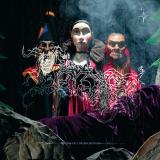
Over six years have passed since HAGZISSA's successful debut album, They Ride Along. Some may have even declared the Austrians as dead in between; however, HAGZISSA never ceased to wander the borderlands of the here and beyond. In silence and yet in turmoil, too, a nightmare has been slain and gutted - in necromantic pride, its offspring gleams and dances to never-ending music of the night!
HAGZISSA's brand-new Revelry of a Maltreated Jade EP is a showcase of a pack in motion, marking this as the last recording with A White Pawn (Kringa, Weathered Crest et al.) and the first with V.Adalbert II (Sněť, Bahratal et al.). The four-song work is immediately recognizable as HAGZISSA: a now-trademark style of eyrie, olde-worlde black METAL that's obscure, enigmatic, and unbound. Here, intensities are both reigned in and let loose to roam even wilder, as Iron Curtain heavy metal magick weaves a spell perhaps even more potent than said full-length. The result is somehow more approachable and more foreign, but compellingly potent either way.
With heads both in the past and the future, thus passes the glory of the world and dives deep into another plane! Can't you hear their flutes and horns and whispers? So come, then, and join in boisterous battue!
il devrait être publié sur 26.03.2026

The first resonant space Zosha Warpeha played in was the Emanuel Vigeland Museum in Oslo, Norway. Built as a mausoleum, its walls reach up into a gradual archway, creating an environment where sound expands and reverberates for twelve seconds before decaying into silence. Warpeha was greeted only by dim lights when she entered, and it wasn’t until she had spent several minutes listening that she was able to make out the frescoes that covered every inch of the room: graphic depictions of the cycle of life from conception through death. As the sound of her Hardanger d’amore encountered the walls and these slowly emerging scenes, they obscured its point of origin in both time and space, augmenting its own life cycle. The experience sat in the back of her mind over the next several years as she developed her own patient style of composition and performance, one that comes into full bloom on her new album I grow accustomed to the dark.
When Warpeha was selected as an artist in residence at Brooklyn’s ISSUE Project Room in 2025, she saw it as an opportunity to more intentionally explore how her music might fill a room with ample natural reverb. I grow accustomed to the dark documents two single-take solo performances for Hardanger d’amore and voice at IPR, with both pieces composed in a unique tuning system developed to interact with the space itself. Listeners can trace resonance from the contact of the bow on gut strings into the body of the instrument, its five sympathetic strings offering another layer of refraction, before the sound is thrown about the cavity of the room. The echoes emerge like a photographic double exposure, or wisps of smoke that linger in the air, creating ghostly harmonic convergences that blur the line between what is there and not-there. Sound begins to act like light, a synesthetic alchemy that transforms drones into beams and ornamental trills into flickers.
Both side-long compositions, “filament” and “visual purple,” exemplify a duality that animates Warpeha’s music: an expressive, individualistic style that draws on extensive knowledge of her instrument’s history in folk traditions, and an austere, devotional quality maintained by focus and precision. Though very different in character and structure, both pieces evolve slowly through numerous repetitive phrases, passages of stillness, and bursts of intensity. “filament” opens with a cycle of delicate melodic fragments played and sung around a drone before blossoming into an outpouring of swooping arpeggios, harmonics flying from the strings like sparks off a bonfire. The disorienting pulsation of harmonic beating forms the core of “visual purple,” the close-tone dissonance building to a swarm of open strings ringing boldly throughout the space. After the knotty tones reach their climax, the piece collapses into studied quietude, hushed, but without any drop in intensity.
When Warpeha first visited the Vigeland Museum in 2019, she was in Oslo to deepen her relationship to the Hardanger fiddle through the study of Norwegian traditional music, which is primarily passed down aurally. The experience of learning songs by ear, not only internalizing the tune but also absorbing the techniques and tonalities by listening, was a crucial step in her development as a composer. The years since have seen her sharpen those skills as a prolific member of the New York avant-garde and improvised music communities. Warpeha’s music encourages listeners to join her in this journey, to listen closely with each repeated phrase and through each dramatic shift. Like the frescoes on Vigeland’s walls, with time and intention, the depth of I grow accustomed to the dark comes on like a revelation.
Commandez maintenant et nous commanderons l'article pour vous chez notre fournisseur.

San Francisco–born singer-songwriter Ben Kweller returns with Cover The Mirrors, his seventh studio album — and perhaps his most personal work to date. Known in the late ’90s as a member of post-grunge outfit Radish, who were signed to Mercury Records and even counted Nils Lofgren among their fans, Kweller has since carved out a long and prolific solo career rooted in melodic indie rock and unfiltered emotion. Cover The Mirrors is a deeply poignant record, written in honour of what would have been Kweller’s late son Dorian Zev’s 19th birthday. It also marks Kweller’s first release since Dorian’s tragic passing in 2023 — an event that reshaped both his life and his music. Far from retreating into silence, Kweller channels his grief into a collection of songs that explore loss, love, and renewal with raw honesty. “This is the most personal, emotionally raw project I've ever worked on,” he reflects, and every track bears that truth. The album features an impressive roster of collaborators from across the indie landscape: Waxahatchee joins on “Dollar Store,” a sparse and arresting song built on two vocals and a guitar that eventually erupts into a distorted, soaring finale; MJ Lenderman lends his touch to “Oh Dorian,” a tender tribute steeped in warmth and melancholy; Jason Schwartzman resurrects his mid-aughts project Coconut Records for the haunting “Depression”; and psych-rock icons The Flaming Lips appear on the shimmering, otherworldly “Killer Bee.” Musically, Kweller’s craft is as sharp and sincere as ever — intimate yet expansive, stripped-down yet powerful. Cover The Mirrors captures an artist walking through grief with purpose, turning heartbreak into something both fragile and transcendent. It’s the sound of Ben Kweller looking loss directly in the eye — and finding beauty, courage, and connection reflected back. - “One of the great American songwriters” – Jack Antonoff TRACKLIST: A1. Going Insane A2. Dollar Store (feat. Waxahatchee) A3. Trapped A4. Park Harvey Fire Drill A5. Depression (feat. Coconut Records) A6. Don't Cave B1. Optimystic B2. Brakes B3. Killer Bee (feat. The Flaming Lips) B4. Letter To Agony B5. Save Yourself B6. Oh Dorian (feat. MJ Lenderman) Clear Vinyl LP
il devrait être publié sur 27.02.2026

Inspired by witnessing the broken tension and renewed possibilities of a laptop breaking down at a gig – not to mention the void left behind by the sudden end of a relationship – Pentu’s latest release is a jump-cut menagerie of musical moments. Sewn together into ‘And I Saw My Devil And I Saw My Deep Blue Sea’, these fifteen tracks continue the London-based producer’s active departure from the soundscapes and song structures that dominated their previous writing style. These disparate pieces slice themselves off into sudden silence, or veer into unpredictable sidebars, hopping from hyperactive instrumentals to beautifully deconstructed YouTube samples. Described by Pentu as “emotionally intuitive to write”, this is music by and for the endlessly scrolling modern mind – “navigating the world alongside the splintered, interruptive emotional hyper realities of social media.”
The sudden silences, drones, and interruptions are perhaps less surprising than the guitar-based textures of metal & shoegaze woven into several vital passages by Pentu. The result is a collage that encapsulates the erratic feeling, not only of a relationship’s end, but simply of navigating online mediascapes.”I found myself realising that my phone, the constant interrupter of nothingness and silence, was both a cause of depression (reliving memories, dating apps) and a relief from it (creating new friendships, distractions, also dating apps)”, says Pentu.
Pentu’s attempt to overcome content overload by actively curbing his setup of laptop-guitar--synth does little to reduce the scope of this album’s sonic palette. YouTube vlog samples (from videos with next-to-no views) are an attempt to recontextualise and dramatise material that “would have otherwise been throwaway moments lost in the internet”, adding staccato moments of reality to Pentu’s beautiful and jarring album-length paean to overstimulation.
Commandez maintenant et nous commanderons l'article pour vous chez notre fournisseur.

A chance meeting in Mexico City set Points of Inaccessibility into motion. When Ibero-American composer Rafael Anton Irisarri crossed paths with Dutch media artist Jaco Schilp at MUTEK in 2024, a conversation about how technology shapes perception revealed an unexpected common ground. Schilp invited Irisarri to a spring 2025 residency at Uncloud, the Utrecht-based collective he co-founded, where Irisarri's sound began to take form amid an environment shaped by Schilp’s visual research.
The Uncloud studio was located inside the former Pieter Baan Centre, a forensic psychiatric prison where suspects of violent crimes were once confined. Its long history of silence and containment shaped the atmosphere in which the project developed. Within this setting, Irisarri coaxed long bowed-guitar tones through a network of pedals and looping systems. The raw gestures thickened into a vaporous and architectural field of sound. Schilp processed the material through a custom point-cloud software patch that produced images in continuous flux. The visuals flickered, dissolved and reformed like memories that resist coherence, functioning as a digital Rorschach that reflected the observer’s own perception.
Amid these spectral echoes, the project evolved into an examination of how the past persists within present signals. Memory endures as residue and interference, continually shaping perception even when its source has faded.
Schilp’s visual process required a continuous stream of sound in real time. Irisarri improvised throughout the residency, generating material that allowed the visuals to develop in parallel. Once back in his New York studio, he began shaping the recordings by carving pathways through the improvisations and mapping selected passages into MIDI. This process allowed him to build outward from the bowed-guitar material with minimal overdubs, adding Prophet 5 textures, Moog bass and strings that expanded the harmonic field while keeping the original performances at the center. To refine the structure, Abul Mogard provided editorial input, working with Irisarri’s stems to guide transitions and strengthen the overall pacing. The material, originally created under conditions of immediacy and constraint, evolved into a fully realized work through careful revision, patience and sustained reworking.
The title engages the geographic concept of the Poles of Inaccessibility, locations defined solely by their distance from all surrounding points. Irisarri adapts this idea to the conditions of digital life, where new forms of inaccessibility arise through the informational enclosures that structure perception. What appears to be a fully connected network often produces a deeper kind of separation, one shaped by the filtering logic of the systems that mediate experience. In this sense, the digital sphere mirrors its geographic counterpart. We inhabit spaces saturated with signals, yet the possibility of genuine contact becomes increasingly remote.
At its core, Points of Inaccessibility considers what can be understood as the new rituals of capitalist realism. Irisarri uses the term digital shamanism to describe the forms of simulated connection that organize contemporary life. These systems promise comfort through algorithms, influencers and AI interlocutors, yet they often reproduce the same conditions that generate loneliness in the first place. What appears as connection becomes the echo of connection, a sequence of gestures that imitate solidarity while withholding it. Like the geographic poles, these rituals are defined by distance. They pull us into environments where everything is illuminated, yet meaningful proximity becomes increasingly rare. In this sense, the work approaches a hauntology of the present, a reflection on futures that have stalled and intimacies that have been thinned by the algorithmic infrastructures that surround us.
This thematic tension unfolds across the album’s four movements. Faded Ghosts of Clouds introduces the work with textures that rise and dissipate in slow cycles, creating an atmosphere that resists clear definition. Breaking the Unison occupies a pivotal position in the sequence and focuses on the moment when the individual and the system fall out of alignment. Its shifting patterns trace the scattering of signals that once suggested connection, revealing the instability at the heart of contemporary perception. Signals from a Distant Afterglow forms the center of the album and features vocals by Karen Vogt, whose presence enters the sound field like a fragile transmission shaped by distance and delay. The closing piece, Memory Strands, follows motifs that appear, recede and briefly intersect before returning to quiet. Across these movements, the album outlines a landscape in which emergence and disappearance continually inform one another.
Listening to Points of Inaccessibility is an encounter with a sound field that is constantly in flux. Elements surface briefly, shift position and recede, creating a sense of motion that resists stable interpretation. The music moves between closeness and vastness, carrying traces of memory while withholding a clear point of resolution.
The album’s visual identity completes the project’s conceptual arc. In Mexico City, where Irisarri and Schilp first met, Daniel Castrejón transformed stills from Schilp’s point-cloud visuals into the cover image. The final artwork captures a single suspended frame of the digital material, a moment extracted from a field that is normally in constant motion. Its surface recalls the texture and abstraction found in the work of Catalan artist Antoni Tàpies, where material presence and erasure coexist within the same plane.
What emerges is a work that examines the tension between technological systems and human presence. Points of Inaccessibility asks whether connection is still possible within environments shaped by mediation and delay, or whether we have become isolated points within the very networks that promise proximity. What possibilities for relation persist within environments organized by algorithms and interruption? And how are we meant to understand presence when so much of it is constructed at a distance?
Points of Inaccessibility will be released on BioVinyl on February 6, 2026, with audiovisual performances planned throughout 2026.
Mastered by Stephan Mathieu
Artwork by Jaco Schilp
Design and layout by Daniel Castrejón
Artist photo by Iulia Alexandra Magheru.
Commandez maintenant et nous commanderons l'article pour vous chez notre fournisseur.

For over a decade, Hyunhye Seo a core member of Xiu Xiu, in her solo work navigates the precarious edges where composition dissolves into pure gesture. Through ecstatic piano improvisations, restless percussive attacks and an expansive use of acoustic space, she constructs layered sonic environments that move across the boundaries of noise, avant-garde jazz, ambient and contemporary classical music. Her performances reveal an unfiltered process of listening and creation - a practice in which thinking becomes the enemy, and surrender the only viable strategy.
Continuation captures one such surrender. Recorded live at MAO - Museo d'Arte Orientale in Turin during the exhibition Rabbit Inhabits the Moon – The Art of Nam June Paik in the Mirror of Time, this cascading piano improvisation unfolds as a dialogue between performer, space and the particular acoustics of a museum built to house contemplative objects. Jamie Stewart processes the sound in real time; Giuseppe Ielasi shapes the final mix. What emerges is a work of charged immediacy - restless gestures giving way to passages of unexpected tenderness, noise and silence trading places in continuous exchange. The title is precise: this is music that refuses conclusion, that exists in a state of perpetual becoming. On Side B, Continuous Extension offers an unprecedented response. Phew - the pioneering figure of Japanese avant-garde music since the late 1970s - was invited by curators Chiara Lee and Freddie Murphy to reinterpret Seo's performance. Working with synthesizer and subtle processing, Phew distills the resonances of Continuation into a new electronic landscape - waves of abstraction that echo like reflections in sound, tracing the harmonic tensions of Seo's playing into territories she herself did not visit.
The accompanying booklet includes an essay by Bruno Lo Turco exploring the deep connections between improvisation and Buddhist thought, and a written reflection by Seo on her own practice of surrender and listening.
Continuation is released on Ubi Kū, the record label of the Unione Buddhista Italiana. The cover reproduces Avalokitesvara "Water and Moon" from the Museo d'Arte Orientale "E. Chiossone" in Genoa - the bodhisattva of compassion gazing at the reflection of the moon in water. Like that reflection, this music exists fully in the present, complete and unrepeatable.
il devrait être publié sur 13.02.2026

Since the turn of this century, perhaps no other modern composition has had a more resonant healing effect than The Disintegration Loops. Composer William Basinski’s deteriorating analog tape loops evolved from melodic symphonies to melancholic silence over a span of time that uncannily turned passing minutes into pensive lifetimes. In her foreword for the new box set reissue of The Disintegration Loops, the pioneering multimedia storyteller Laurie Anderson describes the impact of this transformation in poetic detail: “These dissolving sounds, this emptying space, has gained my complete confidence. They are taking me somewhere. I am willingly following these sounds, becoming more and more transparent.”
The Disintegration Loops – Arcadia Archive Edition is an expansive new box set that includes the entire 5-hour suite of iconic work. Newly remastered from the original recordings by Josh Bonati, the hefty package includes eight vinyl records (or four CDs for the less analog-inclined) in sturdy full-color jackets featuring the restored original artwork, and a new 1000-word foreword by Laurie Anderson – all housed in a striking heavyweight, case-wrapped box. It is the ideal encapsulation of one of the 21st century’s most truly transcendent works. As Anderson concludes in her foreword, “this music has created another world, a world to be carried away in.”
Commandez maintenant et nous commanderons l'article pour vous chez notre fournisseur.
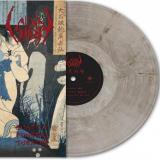
Black Vinyl[21,81 €]
Japanese black metal legends Sigh formed in 1989/1990. The genre-classic debut ‘Scorn Defeat’ followed on Euronymous’ Deathlike Silence Productions in 1993 & with each subsequent release, Sigh grew to become one of the country’s greatest & most revered metal exports. With a journey through the strange & the psychedelic, incorporating a whole eclectic mix of genre styles & experimentation throughout their career, Sigh has remained a vital creative force in the avantgarde field whilst maintaining their old school roots, as witnessed with the stellar 2022 album, ‘Shiki’. 2025 also saw Sigh reimagining their ‘Hangman’s Hymn’ album for a release on Peaceville as part of the band’s 35th anniversary celebrations, in the shape of ‘I Saw The World’s End: Hangman’s Hymn MMXXV’.
Maintaining the core trio of Mirai Kawashima, Shinichi Ishikawa & Satoshi Fujinami & on the back of the epic & darkly symphonic opus ‘Infidel Art’ (1995), Sigh adopted a more boundary-defying approach to their writing, whilst still keeping the dark foundations & traits of the band’s fundamental sound. The result was ‘Ghastly Funeral Theatre’ which surfaced in 1997 & draped in Eastern & horror-based atmospherics, the band also embraced elements outside of metal with what was their most experimental offering to date; utilising instruments such as the saxophone as well as acoustic passages & notoriously drawing comparisons to the moods of bands such as The Beatles at times, featuring catchy hooks & structures in line with the rock music genre, but masterfully woven into Sigh’s unique blackened metal tapestry.
Continuing with Peaceville’s re-issues of Sigh’s classic early ( & until now, hard to find) works, this edition of ‘Ghastly Funeral Theatre’ contains a new master created by Patrick Engel at Temple of Disharmony, featuring a new transfer from the original DAT source.
The release also includes a new interview with main-man Mirai Kawashima conducted by Dayal Patterson of Cult Never Dies, delving into the history & inspirations behind ‘Ghastly Funeral Theatre’.
This edition of ‘Ghastly Funeral Theatre’ is presented on black vinyl.
il devrait être publié sur 23.01.2026

Marble Vinyl[27,31 €]
Japanese black metal legends Sigh formed in 1989/1990. The genre-classic debut ‘Scorn Defeat’ followed on Euronymous’ Deathlike Silence Productions in 1993 & with each subsequent release, Sigh grew to become one of the country’s greatest & most revered metal exports. With a journey through the strange & the psychedelic, incorporating a whole eclectic mix of genre styles & experimentation throughout their career, Sigh has remained a vital creative force in the avantgarde field whilst maintaining their old school roots, as witnessed with the stellar 2022 album, ‘Shiki’. 2025 also saw Sigh reimagining their ‘Hangman’s Hymn’ album for a release on Peaceville as part of the band’s 35th anniversary celebrations, in the shape of ‘I Saw The World’s End: Hangman’s Hymn MMXXV’.
Maintaining the core trio of Mirai Kawashima, Shinichi Ishikawa & Satoshi Fujinami & on the back of the epic & darkly symphonic opus ‘Infidel Art’ (1995), Sigh adopted a more boundary-defying approach to their writing, whilst still keeping the dark foundations & traits of the band’s fundamental sound. The result was ‘Ghastly Funeral Theatre’ which surfaced in 1997 & draped in Eastern & horror-based atmospherics, the band also embraced elements outside of metal with what was their most experimental offering to date; utilising instruments such as the saxophone as well as acoustic passages & notoriously drawing comparisons to the moods of bands such as The Beatles at times, featuring catchy hooks & structures in line with the rock music genre, but masterfully woven into Sigh’s unique blackened metal tapestry.
Continuing with Peaceville’s re-issues of Sigh’s classic early ( & until now, hard to find) works, this edition of ‘Ghastly Funeral Theatre’ contains a new master created by Patrick Engel at Temple of Disharmony, featuring a new transfer from the original DAT source.
The release also includes a new interview with main-man Mirai Kawashima conducted by Dayal Patterson of Cult Never Dies, delving into the history & inspirations behind ‘Ghastly Funeral Theatre’.
This edition of ‘Ghastly Funeral Theatre’ is presented on black vinyl.
il devrait être publié sur 23.01.2026

Gold Vinyl[35,08 €]
It's taken over two decades, but at last, the wait is over: Sevan Mater has unleashed the first- ever vinyl pressing of Live Damage , the iconic live performance by DARK TRANQUILLITY, captured during their "Damage Done" era. Pressed on Gold and Black swirl vinyl, limited to just 500 copies, and housed in a stunning gatefold cover, this reissue is nothing short of melodic death metal heaven. Originally released in 2003 as a DVD, Live Damage immortalized one of DT 's most intense and electric live shows - recorded in Krakow, Poland. Now, for the first time ever, that raw energy, that iconic Swedish aggression, and that perfectly balanced blend of melody and brutality has been etched into vinyl grooves for audiophiles and collectors alike. From the soaring leads of The Treason Wall to the punishing drive of Final Resistance, every track explodes with clarity and presence on wax.
The vinyl mastering brings new warmth and immediacy to the performance, giving fans the closest thing to being there, without the sweat and flying beer. And the packaging? Absolutely elite. Sevan Mater delivers a luxurious gatefold, featuring rare tour photos, liner notes, and an aesthetic drenched in cold, melancholic elegance. If you're a fan of At The Gates, In Flames, or if Damage Done was the soundtrack to your early 2000s fury, this release is a must-own. More than just a live album - it's a time capsule of melodic death metal at its peak.
Commandez maintenant et nous commanderons l'article pour vous chez notre fournisseur.
Recordings from the Åland Islands, the duo debut by synthesist Jeremiah Chiu and violist Marta Sofia Honer, is a truly unique series of pieces that marry acoustic and electronic sounds with field recordings, all captured on a trip to the titular Baltic archipelago.
By the time Åland Islands was released in 2022, Honer had already been working with Makaya McCraven and Daniel Villarreal, but this project brought her to the front as a lead artist. And Åland Islands was the label's first collaboration of any kind with Chiu, who has since released the solo outing In Electric Time and the genre-breaking debut of his co-led supergroup SML, in addition to a trio album with Honer and the late Ariel Kalma (2024's The Closest Thing to Silence).
Recordings from the Åland Islands is far more than its context within the world of IARC, however, and it’s certainly more than its context as a travel document. Here Chiu and Honer have created a new world out of an old one with work that sees them in dialogue with their own source material. Like early masterpieces by Franco Battiato or Alvin Lucier, Åland Islands repeatedly presents the listener with a palpable sense of place, only to pluck them up and drop them into an entirely new one.
“...so tranquil and beautiful...” – Jayson Greene, Pitchfork
Commandez maintenant et nous commanderons l'article pour vous chez notre fournisseur.

Black Vinyl[35,08 €]
It's taken over two decades, but at last, the wait is over: Sevan Mater has unleashed the first- ever vinyl pressing of Live Damage , the iconic live performance by DARK TRANQUILLITY, captured during their "Damage Done" era. Pressed on Gold and Black swirl vinyl, limited to just 500 copies, and housed in a stunning gatefold cover, this reissue is nothing short of melodic death metal heaven. Originally released in 2003 as a DVD, Live Damage immortalized one of DT 's most intense and electric live shows - recorded in Krakow, Poland. Now, for the first time ever, that raw energy, that iconic Swedish aggression, and that perfectly balanced blend of melody and brutality has been etched into vinyl grooves for audiophiles and collectors alike. From the soaring leads of The Treason Wall to the punishing drive of Final Resistance, every track explodes with clarity and presence on wax.
The vinyl mastering brings new warmth and immediacy to the performance, giving fans the closest thing to being there, without the sweat and flying beer. And the packaging? Absolutely elite. Sevan Mater delivers a luxurious gatefold, featuring rare tour photos, liner notes, and an aesthetic drenched in cold, melancholic elegance. If you're a fan of At The Gates, In Flames, or if Damage Done was the soundtrack to your early 2000s fury, this release is a must-own. More than just a live album - it's a time capsule of melodic death metal at its peak.
il devrait être publié sur 28.11.2025

Step into the world of Parisian flair and lyrical finesse with Clovis Ochin's latest masterpiece: "Sans Souffrance (R)ajoutée", once again entirely produced by Camoflauge Monk.
Picture this: a seamless fusion of hip-hop vibes and the exquisite taste of fine natural wines, served with a side of haute couture swagger. Clovis Ochin, the enigmatic rapper and vintner extraordinaire, invites you on a sensory journey unlike any other.
Following the success of their 2022 debut album "Sans Souffrance Ajoutée," Clovis Ochin returns with a sophomore sensation that transcends boundaries. Produced by the renowned Camoflauge Monk, the sonic architect behind Griselda Records' iconic sound, this album is a testament to musical innovation and artistic evolution.
Known for his captivating presence on "F*ck That's Delicious" alongside Action Bronson, Clovis embodies the essence of a modern-day bon vivant. His passion for hip-hop, natural wines, food, and fashion pulsates through every track, creating a symphony of flavors and rhythms that captivate the senses.
But that's not all. "Sans Souffrance (R)ajoutée" boasts electrifying guest appearances from the likes of Billie Essco and SonnyJim, adding layers of depth and dimension to an already stellar lineup.
So, whether you're a connoisseur of hip-hop or a devotee of fine wine, prepare to be swept away by the intoxicating blend of sound and style that is Clovis Ochin's latest offering. "Sans Souffrance (R)ajoutée" is more than just an album—it's a cultural phenomenon, a celebration of life's pleasures, and a testament to the enduring power of artistic expression. Don't miss your chance to experience the magic firsthand. Cheers to Clovis Ochin, where hip-hop meets the love of natural wine in perfect harmony.
il devrait être publié sur 28.11.2025

Step into the world of Parisian flair and lyrical finesse with Clovis Ochin's latest masterpiece: "Sans Souffrance (R)ajoutée", once again entirely produced by Camoflauge Monk.
Picture this: a seamless fusion of hip-hop vibes and the exquisite taste of fine natural wines, served with a side of haute couture swagger. Clovis Ochin, the enigmatic rapper and vintner extraordinaire, invites you on a sensory journey unlike any other.
Following the success of their 2022 debut album "Sans Souffrance Ajoutée," Clovis Ochin returns with a sophomore sensation that transcends boundaries. Produced by the renowned Camoflauge Monk, the sonic architect behind Griselda Records' iconic sound, this album is a testament to musical innovation and artistic evolution.
Known for his captivating presence on "F*ck That's Delicious" alongside Action Bronson, Clovis embodies the essence of a modern-day bon vivant. His passion for hip-hop, natural wines, food, and fashion pulsates through every track, creating a symphony of flavors and rhythms that captivate the senses.
But that's not all. "Sans Souffrance (R)ajoutée" boasts electrifying guest appearances from the likes of Billie Essco and SonnyJim, adding layers of depth and dimension to an already stellar lineup.
So, whether you're a connoisseur of hip-hop or a devotee of fine wine, prepare to be swept away by the intoxicating blend of sound and style that is Clovis Ochin's latest offering. "Sans Souffrance (R)ajoutée" is more than just an album—it's a cultural phenomenon, a celebration of life's pleasures, and a testament to the enduring power of artistic expression. Don't miss your chance to experience the magic firsthand. Cheers to Clovis Ochin, where hip-hop meets the love of natural wine in perfect harmony.
il devrait être publié sur 28.11.2025

South London’s Jerkcurb – aka Jacob Read – is back with news that his sophomore album ‘Night Fishing On A Calm Lake’ is to be released at the end of November following 2019’s ‘Air Con Eden’.
After that album’s successful release Read had planned to expand Jerkcurb into a full band setup when his father, a painter like himself and a creative inspiration, passed away. Instead of the envisioned plan of taking his project bigger Read returned to the family home and re-examined the material for the new album and instead the album became one of reflection, grief and redemption. It’s not much of a stretch to see clear musical inspirations for the record too – Prefab Sprout, Talk Talk and The Blue Nile, records where the moments of silence are stretched out.
Read produced and engineered the album himself, mostly at home with Lara Laeverenz and Gray Rimmer providing cocals. The album is mixed by Dilip Harris (King Krule, Mount Kimbie).
The enchanting cover artwork was painted at Read’s father’s studio in Camberwell, painted in oil with its dreamlike blur of blue and black . It hints at the early film noir and magical realist influences for the album.
il devrait être publié sur 28.11.2025

Step into the world of Parisian flair and lyrical finesse with Clovis Ochin's latest masterpiece: "Sans Souffrance (R)ajoutée", once again entirely produced by Camoflauge Monk.
Picture this: a seamless fusion of hip-hop vibes and the exquisite taste of fine natural wines, served with a side of haute couture swagger. Clovis Ochin, the enigmatic rapper and vintner extraordinaire, invites you on a sensory journey unlike any other.
Following the success of their 2022 debut album "Sans Souffrance Ajoutée," Clovis Ochin returns with a sophomore sensation that transcends boundaries. Produced by the renowned Camoflauge Monk, the sonic architect behind Griselda Records' iconic sound, this album is a testament to musical innovation and artistic evolution.
Known for his captivating presence on "F*ck That's Delicious" alongside Action Bronson, Clovis embodies the essence of a modern-day bon vivant. His passion for hip-hop, natural wines, food, and fashion pulsates through every track, creating a symphony of flavors and rhythms that captivate the senses.
But that's not all. "Sans Souffrance (R)ajoutée" boasts electrifying guest appearances from the likes of Billie Essco and SonnyJim, adding layers of depth and dimension to an already stellar lineup.
So, whether you're a connoisseur of hip-hop or a devotee of fine wine, prepare to be swept away by the intoxicating blend of sound and style that is Clovis Ochin's latest offering. "Sans Souffrance (R)ajoutée" is more than just an album—it's a cultural phenomenon, a celebration of life's pleasures, and a testament to the enduring power of artistic expression. Don't miss your chance to experience the magic firsthand. Cheers to Clovis Ochin, where hip-hop meets the love of natural wine in perfect harmony.
il devrait être publié sur 28.11.2025
