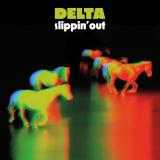
“From Birmingham and centred around the extraordinary songwriting talent of James and Patrick Roberts – initially as The Sea Urchins and since 1993 as Delta – they’ve only just got round to releasing their debut album, Slippin’ Out. It is a work of some beauty”. 9/10 NME ALBUM OF THE MONTH, 2000
“It’s classicist for sure, shot through with the influence of The Beatles, Byrds and Buffalo Springfield. In James’ downright beautiful closing ballad ‘I Want You’ one can also discern the school of ambitious English balladry that peaked in about 1968: The Casuals, Love Affair, Barry Ryan. The impression of accomplished old-schoolery is only furthered by the dizzying string arrangements penned by Louis Clark Jnr, son and namesake of the one-time orchestral chief of Electric Light Orchestra” – Mojo lead review, 2000
Having ended the 90s with the spirited ‘Laughing Mostly’ compilation of singles and demos (Guardian Album Of The Week) Delta finally released their debut studio album of twelve songs in the summer of 2000 on the Dishy Recordings label. Accepting that this might be their sole studio album the band threw everything at these recordings allowing it to exist in its own sphere, unbothered by their contemporary generation and disregarding the idea of even releasing a single.
Recorded at DEP International there was a notable difference to the scruffier, looser charm of their 1990s recordings, a tighter focus developed by having the experienced Lenny Franchi mixing the LP with them. Lenny had been working with a number of Island artists including My Bloody Valentine and Tricky so knew his way around a desk. There was also the question of budget (a few months passed between recording and mixing whilst funds were raised) so every day counted. Ultimately though you can hear the joy in the recordings, even amongst the melancholy and angst. As James recently recalled in an interview in Shindig! Magazine: “It was such a big deal for us. It’s one of my fondest memories doing that record. Everyone was happy. If there’s anything that I’d stand by, I think it would be that”
Louis Clark Jr joined the band towards the end of the ‘90s and brought a classically-trained element to the recordings particularly with his string arrangements. For ‘Cuckoo’, ‘I Want You’ and the prophetic ‘We Come Back’ Louis brought in eight players from the Birmingham Conservatoire; the baroque style is partly why the record often receives comparisons to Love’s ‘Forever Changes’.
On release ‘Slippin’ Out’ was a big favourite with writers at the NME, Mojo and The Guardian again and before long the band were signed to Mercury/Universal for their second studio album ‘Hard Light’, a far more expensive and expansive love affair. It was a temporary palatial home where things quietly fell apart again, but that’s another chapter.
“If long-term memory is nothing more than selective editing and only pop’s most weighty visceral works are built to last then it’s quite possible that in 50 years the Britpop era will be best recollected for the two bands it ostracised. Earlier this year we met Shack and thought their story of mercurial brilliance indicated the biggest music biz oversight of the 90s. We were wrong because we hadn’t met Delta yet. This is richer and more engrossing than anything by Shack”
Suche:peak time players
- 1
‘3' saw the core Lifted duo of Max D & Matt Papich unravel their visions of excess into their most divergent and wide-eyed collection to date. Presented here by Peak Oil in a vinyl edition featuring the painting of Jordan Kasey (yes, related to Martin Kasey, saxophonist on 2019’s LP 2) and packaged for a seamless listen.
First scene ‘Chefs’ places us squarely off-center, landing in a cinematic environment that feels a bit like steadycam Luis Bunuel , wine bottle whoo-ing and horn fanfare. Its music without a hard surface, defined more by its fluidity and characters, found sounds and performed dialogue. “Cymbecko” shifts gears into blissful ambient dub, and paves the way for a Luke Stewart led excursion into the uncanny that is ‘Trip Tongue’. Stewart’s upright bass never stops seeking, while Jordan GCZs Rhodes barely touches down before lifting back up into and out of Jacob Long’s (Earthen Sea, Esau) liquid tone sheets. An outside world of percussion accompanies.
The mood morphs and the scene cuts in hard with “Born in the Roof”, slacker techno that grows shimmering parts, Perlon for potheads. Voiceover slacks right with it, a half-convo caught in the billowing chorus of fx. “Macarena” snaps things into focus, working almost like an open window to airing out the heady fog. Simplicity in the vignette.
After “Mecha Perfume & Variety”, “Snow Dancing” reignites the drama, with burning guitar by Jonny Nash taking a plucky and sliding lead over wildly fused drums by Max D, we get a test of new depths for Lifted with the somber and exuberant “Whipped Cream”. Crackling like a radio but with modern propulsion in the form of richly evocative pads courtesy of Motion Graphics, it sounds like a dinner, a space trip, a storyboard, a scene, threaded together in bouncing, oblique ways.
"Bobby V" drops refreshingly, timed like a credit roll and leaving an afterglow that feels more tuned-in than ever.
Players on this album include: Luke Stewart (Irreversible Entanglements, Blacks Myths), Jeremy Hyman, Jonny Nash (Melody As Truth), Jordan GCZ, Matt Papich, Josh Levi, Mezey, Hirama, Dawit Eklund (1432 R), Motion Graphics, Max D, Jacob Long (Earthen Sea, Esau)
d 4.Born In The Roof Radio Mix
e 5.Macarena Radio Edit
On this 4th release, on his own imprint, London based producer Dying in Beauty presents 4 techno weapons with an old school twist. The 4 peak time tracks showcase a sound reminiscent of early Gigolo, Muller and Missile releases from the late 90s and early 2000s, ranging from EBM infused sounds to groove techno that is hard, yet always playful. This is for the players.
Evelyn spreads her wings and prepares to fly. This is her first offering for the ESP Institute. On side A, 'Tremors' slams together a plethora of seemingly disparate rhythms, organic percussion, field samples, hypnotic chants and a relentless low end punch, that when in full-swing, works some seriously deep sorcery. Contrasting her pounding kick and rolling sub combo are a softer grouping of melodies, soft mallets and muted tones that lay subtly beneath the aggression, skillfully playing with a sense of spatial depth and room size. Its the kind of track that draws you in with meditative bars, concentric cycles that sit ever so slightly off-axis, inducing the mind and body to obsess and regulating its timing, and then drops you into a very intentionally arranged soundstage giving expansive space to explore. On the flip, 'Pregunta' continues this approach of natural versus industrial instrumentation. The consistent machine kick has a powerful but playful tone, the negative space between each stroke evoking a mighty gesture as its note bends in the decay. Set in 3/4, a community of live percussion successively adds and subtracts, each player’s imperfect attack accumulating into a mechanically smeared and addictive loop that toys with peaks a handful of times yet restrains any unnecessary climax for the betterment of a driving groove. Near the end, as the kick and various players mute and the base of the track is given a moment to breathe, its apparent just how layered the production was in the moments prior, as we’re suddenly at home, smitten with the wobbly and lopsided innocence of the foundational percussion. These two songs will push you headfirst into the light.
- The Organ Grinder
- In Your Own Sweet Way
- Just A Ballad For Woody
- Sippin' At Bells
- Estate
- The Dragon
- Joshua C
Remastered from the original recordings and now presented on a 45rpm 2 LP deluxe audiophile edition, this is first time the complete 7-track album has been available on vinyl. 'In My Own Sweet Way', recorded during a month- long European tour in 1987, captures Woody Shaw in peak form playing with a spirit and a sense of adventure that identify him as a jazz giant. Woody calls the trumpet "the prince of all the horns". Woody is the king of all the trumpet players.
Nobody around plays with such a big, round, ravishing sound - a sound which could easily fool you into thinking that you are listening to a flugelhorn. Woody's musical asociates on this album are Alex Deutsch, a young drummer from Austria who has worked in Europe with many American jazz stars; Neil Swainson, a highly gifted bassist from Toronto who has worked with Pat La Barbera and Peter Leitch but is perhaps best known for his superb collaboration with George Shearing; and Fred Henke , a pianist from Montreal whose credits include backing Clifford Jordan, Steve Grossman and Junior Cook
“From Birmingham and centred around the extraordinary songwriting talent of James and Patrick Roberts – initially as The Sea Urchins and since 1993 as Delta – they’ve only just got round to releasing their debut album, Slippin’ Out. It is a work of some beauty”. 9/10 NME ALBUM OF THE MONTH, 2000
“It’s classicist for sure, shot through with the influence of The Beatles, Byrds and Buffalo Springfield. In James’ downright beautiful closing ballad ‘I Want You’ one can also discern the school of ambitious English balladry that peaked in about 1968: The Casuals, Love Affair, Barry Ryan. The impression of accomplished old-schoolery is only furthered by the dizzying string arrangements penned by Louis Clark Jnr, son and namesake of the one-time orchestral chief of Electric Light Orchestra” – Mojo lead review, 2000
Having ended the 90s with the spirited ‘Laughing Mostly’ compilation of singles and demos (Guardian Album Of The Week) Delta finally released their debut studio album of twelve songs in the summer of 2000 on the Dishy Recordings label. Accepting that this might be their sole studio album the band threw everything at these recordings allowing it to exist in its own sphere, unbothered by their contemporary generation and disregarding the idea of even releasing a single.
Recorded at DEP International there was a notable difference to the scruffier, looser charm of their 1990s recordings, a tighter focus developed by having the experienced Lenny Franchi mixing the LP with them. Lenny had been working with a number of Island artists including My Bloody Valentine and Tricky so knew his way around a desk. There was also the question of budget (a few months passed between recording and mixing whilst funds were raised) so every day counted. Ultimately though you can hear the joy in the recordings, even amongst the melancholy and angst. As James recently recalled in an interview in Shindig! Magazine: “It was such a big deal for us. It’s one of my fondest memories doing that record. Everyone was happy. If there’s anything that I’d stand by, I think it would be that”
Louis Clark Jr joined the band towards the end of the ‘90s and brought a classically-trained element to the recordings particularly with his string arrangements. For ‘Cuckoo’, ‘I Want You’ and the prophetic ‘We Come Back’ Louis brought in eight players from the Birmingham Conservatoire; the baroque style is partly why the record often receives comparisons to Love’s ‘Forever Changes’.
On release ‘Slippin’ Out’ was a big favourite with writers at the NME, Mojo and The Guardian again and before long the band were signed to Mercury/Universal for their second studio album ‘Hard Light’, a far more expensive and expansive love affair. It was a temporary palatial home where things quietly fell apart again, but that’s another chapter.
“If long-term memory is nothing more than selective editing and only pop’s most weighty visceral works are built to last then it’s quite possible that in 50 years the Britpop era will be best recollected for the two bands it ostracised. Earlier this year we met Shack and thought their story of mercurial brilliance indicated the biggest music biz oversight of the 90s. We were wrong because we hadn’t met Delta yet. This is richer and more engrossing than anything by Shack”
Emerging from the Minneapolis underground and heading straight towards the sky, IE arrive on Quindi with a full-length album of sparkling, sophisticated wonder. Touching on kosmische grandeur, Riley-esque cyclical patterns, lounge pop and dubbed out psychedelia, the five-piece allow their songs to unfurl with a natural, hypnotic elegance which can take many different forms.
There's a loose, live quality to the recordings IE's members commit to record, which reflects their steady presence gigging in Minneapolis and the surrounding area. Since putting out their first release in 2016, they've glided from drone and synth-led jam band ambience (2018's Pome) to strung out, stoner-tinted slowcore (on 2023's outstanding Junk Body). For Reverse Earth they strike a smoky note that wraps itself around your skull across extended run times that evolve with a meditative poise.
From the deceptively driving 4/4 thrum of the opening title track through 'Divination Bag's snaking tryptamine mantras on to 'Simplify's slow and smouldering indie-soul, IE's sound is bathed in a sumptuous warm glow that rounds out the lows and the mids, creating a nocturnal shroud in which their nebulous song structures can feel deliciously endless.
Meredith Gill's drums provide rolling and tumbling undercurrents for the slowly shifting phases of the instrumental players, as Michael Gallope and Travis Workman trade keyboard parts and Workman and Sam Molstad chop and pick at their six-strings. Atop the thrum of her bass, Mariel Oliviera's vocal adapts to the scenery, from a distant, dreamlike siren song on 'Reverse Earth' to a spoken word meditation on 'Babel'.
There's space in each track for every instrument to cut through and have its moment, from a spiralling key vamp to a chicken-scratch guitar flex. The gently twisting, head-feeding groove exercises of the first four tracks give way to a slow and powerful march on 'Dark Rome', closing the record on a noirish anti-ballad fit to peal out in the closing slot at Twin Peaks' Roadhouse (circa season three).
As much as the tracks teem with composition, musicianship, and production to savor, a sound like IE's has a soporific quality that soaks in unconsciously. It's an evocative portal where the band feel as if they could just play on each piece ad infinitum - where the time itself seems to dislodge from its moorings.
Originally released to a fan base and music press that were unprepared for the band to move on from the punk fury of "Crossing The Red Sea", The Adverts "Cast Of Thousands" has since been recognized as a lost classic of the time. TV Smith's cutting observational lyrics and sharp musical instincts saw his song writing grow and move in unexpected directions. The primal thumping was replaced by dynamic and driving drumming, acoustic guitars and probing solos emerged, and Tim Cross joined to add keyboards and fill out the overall sound. The one constant was the pounding throb of Gaye Advert's bass. Encouraged to experiment by surprise producer Tom Newman (Mike Oldfield "Tubular Bells") the band found themselves stretching creatively, both in song writing and recording techniques. They might agonize over the sound of recording a match being lit in the middle of one song, while doing a single take of a vocal via a microphone hung in the bathroom for another. Giant choirs were built meticulously over multiple tracks, while the sound of a rat running through the reverb room would be captured forever. The results wrapped some of TV's best songs in strange and inventive sounds to compliment his anti-pop smarts and rock and roll heart. They did not know it at the time, but the band was falling apart. Tensions would soon rise to the level that replacement players were called in to finish their final tour. Punk fans left them in droves. Critics skewered the singles from the album. Their record label had moved on to the next big thing. Feeling that they had reached a creative peak made the tumble even harder to swallow. Time has been very kind though, and fans discovering punk after the first wave have been able to hear "Cast" for what it is - a brilliant and biting collection of rock and roll. Still full of stomp and swagger even when stripped down on "My Place" or via the anthemic surge of "Television's Over", with TV's hook factory on full display on the anti-love song "Love Songs", and the band closing the album with the creeping ballad "I Will Walk You Home"; The Adverts had grown from a great punk rock band to a great rock band. Black vinyl.
- The Day Begins
- Morning Glory
- Dawn (Prelude)
- Dawn Is A Feeling
- The Morning (Prelude)
- Another Morning; Lunch Break (Prelude)
- Peak Hour
- Tuesday Afternoon (Forever Afternoon)
- Evening (Time To Get Away)
- The Sunset (Prelude); The Sunset
- Twilight (Prelude)
- Twilight Time
- Nights In White Satin
- Late Lament
- The Night (Finale)
. Lodge has been performing and recording with The Moody Blues for more than five decades, selling in excess of 70 million albums, and also enjoys a successful solo career, doing what he loves, performing and playing music. Lodge has been voted one of the “10 most influential bass players on the planet,” and has been the recipient of numerous awards, including ASCAP, and Ivor Novello Awards for Outstanding Contribution to Music. John was inducted into the Hollywood Walk of Fame, and in 2019 was given a star in his hometown ‘Walk of Fame’. In 2018, John and the Moody Blues were inducted into the ‘Rock and Roll Hall of Fame’, and in 2019 John was given the Lifetime Achievement Award in the Prog Awards. John’s latest release is the new studio Album ‘DAYS OF FUTURE PASSED – MY SOJOURN’. The album was recorded over the last year and has grown from John’s current live show as he, and his 10,000 Light Years Band, lovingly recreate this classic album
- A1: Yoko Ono – Walking On Thin Ice (1981 Re-Edit)
- A2: Liquid Liquid – Cavern
- B1: Loose Joints – Tell You (Today) (Vocal)
- B2: Ian Dury & The Seven Seas Players – Spasticus Autisticus (Version)
- C1: Material – Over And Over
- C2: Was (Not Was) – Wheel Me Out
- D1: Dinosaur – Kiss Me Again (Original Edit)
- D2: Don Cherry – I Walk
- E1: Common Sense – Voices Inside My Head
- E2: Nicky Siano - Move
- F1: Indian Ocean – School Bell / Tree House
Strut present a new repress of the influential first volume of 'Disco Not Disco' compiled by Joey Negro and Sean P as part of the label's 20th Anniversary.
'Disco Not Disco' was a perfectly timed compilation back in 2000. Released when interest in the myths, history and playlists of original New York clubs like Paradise Garage and The Loft was at its peak, the album drew on the outer limits of leftfield disco championed by Levan and Mancuso, bringing together unlikely dancefloor anthems by rock acts like Yoko Ono and Ian Dury, obscurities from cottage labels like BC and Splash and selected oddities from the unique mind of avant-garde hero, Arthur Russell.
It was essentially a celebration of the sonic melting pot in New York during the early '80s, an era when punk had burnt itself out and disco had become commercial and saccharine; in its place, the post-punk movement threw up brilliant oddities which tore up the accepted rulebook.
The album features full original artwork and Kris Needs' sleeve notes and is remastered and cut by The Carvery.
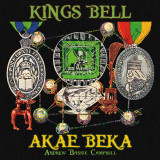
Kings Bell, first made available to the world on CD and digital on November 1, 2011, is now being released on a 12" vinyl courtesy of Before Zero Records. This LP joined the best of St Croix with the best of Jamaica: an amazing lineup of players spearheaded by the venerable Jamaican production maestro Andrew "Bassie" Campbell. The result of this collaboration is Kings Bell – a modern roots masterpiece. As Vaughn Benjamin's first-ever full-length collaboration with a Jamaican producer, Kings Bell was a historic release and features some of the greatest musicians the genre has ever seen including Leroy "Horsemouth" Wallace, Earl "Chinna" Smith, Squidley Cole, Mikey "Boo" Richards and Sticky Thompson.
The driving musical force behind the album, producer and bassist Andrew "Bassie" Campbell has crafted beautiful rhythms that truly compliment the deep lyrics of Vaughn Benjamin. The power and authenticity of Andrew Bassie's productions stand out from the mass of slickly-produced modern roots coming out of Jamaica today. Much of the music was recorded organically in Jamaica at Tuff Gong Studio, with additional overdubs, vocal recording and mixing completed at I Grade's studio in St. Croix. The result is a collection of songs that capture not only the essence of classic roots from the hands and minds of some of the individuals who have literally helped build the genre, but also the urgency and innovation of the present time. In more than seventy albums and in over twenty years of Midnite music nothing like this cross-fertilization of Jamaican classic roots tradition mixed with St. Croix's own deep roots tradition has ever happened, making "Kings Bell" a glowing highlight in the expansive catalogue of Vaughn Benjamin. A catalogue born from a non-stop movement in pursuit of progressing his craft and delivering his message to the world. One of Benjamin's most fruitful stops along his journey was with I Grade Records, headed by producer/engineer/multi-instrumentalist Laurent "Tippy I" Alfred, regarded by many as some of the finest work of his career.
Note price increase and cat number change from last time around. In 1968, Don Cherry had already established himself as one of the leading voices of the avant-garde. Having pioneered free jazz as a member of Ornette Coleman's classic quartet, and with a high profile collaboration with John Coltrane under his belt, the globetrotting jazz trumpeter settled in Sweden with his partner Moki and her daughter Neneh. There, he assembled a group of Swedish musicians and led a series of weekly workshops at the ABF, or Workers' Educational Association, from February to April of 1968, with lessons on extended forms of improvisation including breathing, drones, Turkish rhythms, overtones, silence, natural voices, and Indian scales. That summer, saxophonist and recording engineer Göran Freese who later recorded Don's classic Organic Music Society and Eternal Now LPs invited Don, members of his two working bands, and a Turkish drummer to his summer house in Kummelnäs, just outside of Stockholm, for a series of rehearsals and jam sessions that put the prior months' workshops into practice. Long relegated to the status of a mysterious footnote in Don's sessionography, tapes from this session, as well as one professionally mixed tape intended for release, were recently found in the vaults of the Swedish Jazz Archive, and the lost Summer House Sessions are finally available over fifty years after they were recorded. On July 20, the musicians gathered at Freese's summer house included Bernt Rosengren (tenor saxophone, flutes, clarinet), Tommy Koverhult (tenor saxophone, flutes), Leif Wennerström (drums), and Torbjörn Hultcrantz (bass) from Don's Swedish group; Jacques Thollot (drums) and Kent Carter (bass) from his newly formed international band New York Total Music Company; Bülent Ates (hand drum, drums), who was visiting from Turkey; and Don (pocket trumpet, flutes, percussion) himself. Lacking a common language, the players used music as their common means of communication. In this way, these frenetic and freewheeling sessions anticipate Don's turn to more explicitly pan-ethnic expression, preceding his epochal Eternal Rhythm dates by four months. The octet, comprising musicians from America, France, Sweden, and Turkey, was a perfect vehicle for Don's budding pursuit of "collage music," a concept inspired in part by the shortwave radio on which Don listened to sounds from around the world. Using the collage metaphor, Don eliminated solos and the introduction of tunes, transforming a wealth of melodies, sounds, and rhythms into poetic suites of different moods and changing forms. The Summer House Sessions ensemble joyously layers manifold cultural idioms, traversing the airy peaks and serene valleys of Cherry's earthly vision. In the Swedish Jazz Archive quite a few other recordings from the same day were to be found. Some of the highlights are heard as bonus material on the CD edition of this album. The octet is augmented by producer and saxophone player Gunnar Lindqvist, who led the Swedish free jazz orchestra G.L. Unit on the album Orangutang, and drummer Sune Spångberg, who recorded with Albert Ayler in 1962. The bonus CD also includes a track without Cherry featuring Jacques Thollot joined by five Swedes including Lindqvist, Tommy Koverhult, Sune Spångberg, and others. With liner notes by Magnus Nygren and album art featuring a cover painting by Moki Cherry: Untitled, ca. 1967-68. Track list: 1. Summer House Sessions 2. Summer House Sessions.
Outernational Sounds very proudly Presents The Mallory-Hall Band "Song of Soweto" & "The Last Special".
Limited, fully licensed digital and vinyl reissues of two crucial South African sessions led by Charles Mallory and Al Hall, Jnr., featuring Kirk Lightsey, Marshall Royal, Rudolph Johnson, Billy Brooks and more! Essential companion pieces to Kirk Lightsey’s legendary ‘Habiba’.
Featuring tracks:
Song Of Soweto: Side A – ‘Song of Soweto’, ‘Hamba Samba’; Side B – ‘Cape Town Blues’, ‘Moroka Rock’, ‘The African Night’
The Last Special: Side A - ‘The Last Special’, ‘Princess of Joh’Burg’; Side B - ‘Amafu (Clouds)’, ‘Blue Mabone’
Never released outside South Africa, and out of print since 1974, Outernational Sounds presents two long-lost Johannesburg sessions from the Mallory-Hall Band – an all-star review of West Coast jazz stars who toured apartheid South Africa in the mid-1970s.
Sanifu Al Hall, Jnr. is a musician’s musician. During a storied career stretching across six decades, Hall has recorded with the greats of the music including Freddie Hubbard, Doug Carn, and Johnny Hammond, and leads his own Cosmos Dwellerz Arkestra. But until recent years, the only records on which he had appeared as leader were a brace of rich, funky LPs, Song Of Soweto and The Last Special, issued only in South Africa under the moniker of The Mallory-Hall Band (named for Hall and his co-leader, guitarist Charles Mallory – musical director for Martha Reeves and the Vandellas, Mallory was conductor for Dusty Springfield touring bands, and had worked with John Lee Hooker, Stevie Wonder, and many others). Neither LP had any wider release, and both have remained out of print since 1974. How did a young stalwart of the Los Angeles jazz scene end up in a recording studio in apartheid South Africa?
Al Hall, Jnr. and Charles Mallory had arrived in South Africa as part of the touring band for the singer Lovelace Watkins. Sometimes billed as ‘the Black Sinatra’, the Detroit-born Watkins sang standards and ballroom classics on the Las Vegas circuit. He never made it big in the US, but in his 1970s heyday he was a huge star in southern Africa, and 1974 he hired a jazz big band to accompany him on a tour of South Africa – Hall and Mallory were part of the line-up, alongside Mastersounds bassist Monk Montgomery, pianist Kirk Lightsey, tenorist Rudolph Johnson, drummer Billy Brooks, and Marshall Royal, musical director of the Count Basie band. The tour was a huge success, and during downtime from performing, members of the group managed to independently record no fewer than three albums. Lightsey and Johnson’s stunning Habiba was the first (reissued as Outernational Sounds OTR.013), and it was followed by two crucial sessions led by Hall and Mallory – Song of Soweto and The Last Special, issued on the local IRC imprint.
Visiting apartheid South Africa in 1974 was a controversial choice for any artist. Numerous artistic and cultural bodies around the world had already announced that their members would boycott the country in solidarity with the struggle against apartheid, and working in South Africa was severely frowned on by anti-apartheid activists everywhere. For a Black band, touring the country to play to mostly white audiences could have been seen by many both inside and outside South Africa as a questionable decision. ‘It was a batch of mixed reactions when I choose to visit South Africa whilst apartheid policies were in place,’ Hall recalls. ‘To me the choice was a simple one – “I wanna see for myself!” I also wanted to be a part of breaking down racial barriers, having been down some of the same roads in my own country.’
The albums were recorded by a twelve-piece band at Johannesburg’s Video Sounds Studios in December 1974, and feature the legendary pianist Kirk Lightsey, Black Jazz recording artist Rudolph Johnson, and the rest of the touring band. Both records are superbly arranged slabs of peak 1970s funky big band soul jazz, with tasteful Latin inflections and more than a nod to South Africa’s upful township jazz sound. They are the sonic traces left by a seasoned African American band who were touring South Africa in the depths of the apartheid era, and who immediately moved beyond the segregated hotels and ballrooms to build links with local South African players and audiences.
Never previously available outside South Africa, Outernational Sounds’ new editions of Song of Soweto and The Last Special (alongside our edition of Kirk Lightsey’s Habiba) represents the first time these albums have been in print for nearly fifty years. Fully licensed from Gallo Records and pressed at Pallas in Germany from Gallo’s original masters, they feature new sleeve notes from Francis Gooding (The Wire) based on interviews with Al Hall, Jnr., and a reminiscence from pianist Kirk Lightsey.
Cardinal Fuzz are pleased to bring your way The Band Whose Name Is A Symbol – Ensemble 2016. Eight players made up the iteration of the always mutating ensemble cast, who were as follows for this recording - John Westhaver, Nathaniel Hurlow, Bill Guerrero, Jason Vaughan, Dave Reford, Scott Thompson, Mark McIntyre and Eric Larock.
The session for Ensemble went down at their spiritual home of Birdman Sound in Ottawa in August 2016 where what you hear on record was recorded direct from the floor (and mastered/tweaked by Chris Hardman).The whole session (and note this is an edit to fit the constraints of vinyl) - flies by with a reckless, organic abandon, as at times 8 players fly off in different dynamic directions of abstract playing and improvisation with trumpet player Scott Thompson much to the fore and blowing wild.
At times the feel of this recording is like a collision between a 70s album on the German Sky transported to a San Franciscan Ballroom is ’68 as the audience are peaking on ‘Orange Sunshine’ as Ensemble finishes up like a beautiful trip, well taken.
If The Fall truly is a cult band, then Slates both benefits from and reinforces such shrouded obsessions. In presenting these six particular songs as a 10-inch EP, the inherent and attractive difficulty of The Fall's sound is made physical, framing the urgency of their singles from this period (notably How I Wrote 'Elastic Man' and Lie Dream of a Casino Soul) alongside lengthy rumblings normally restricted to long players.
The tumbling and phased "Middle Mass" begins on an incredible high note, segueing into the snake-charm hypnotism of "An Older Lover Etc." "Slates, Slags, Etc." is built on stretched VU-inspired riffing, complete with ace feedback bleed that doubtlessly went on long after fade-out. Ultimately, it's the piercing chimes of guitar and marching drum grind of "Prole Art Threat" that elevates Slates beyond oddity. Truly one of Mark E. Smith's finest, busiest and most enigmatic performances, equally matched by a band at the peak of their powers.
Superior Viaduct's edition is the first time that Slates has been available on vinyl since its initial release in 1981. Liner notes by Brian Turner.
Everything has its right moment in space and time. And Rhode & Brown’s debut album “Everything in Motion” is no exception to this rule.
But first things first:
Hailing from Munich, Germany, Friedrich Trede and Stephan Braun are the DJ and producer duo Rhode & Brown. Growing up in two neighbouring villages near Munich both of them had been music enthusiasts since their early childhood. Friedrich played drums in punk bands at school and recorded rap songs in his bedroom, while Stephan, as childhood friend of Harold Faltermeyer's son, had the chance to experiment in the impressive studio of the legendary Donna Summer producer in his early teens.
By the late 2000s older friends started supplying them with DJ mixtapes and helped them sneak into clubs they weren’t allowed to visit, yet – cultivating their love for electronic music and club culture. And, of course, the Internet was their go-to source for finding the latest blog house tunes back then, too.
It wasn’t until October 2009 that their paths would cross for the very first (but almost last) time when introduced by a mutual friend: Back then Stephan was selling his old CDJ-player and Friedrich, who wanted to hone his DJ skills, ended up buying it: „When I got home and unpacked the player I realized that it was the wrong model. I thought Stephan was trying to rip me off - so I called him in a rage and demanded my money back.“ Friedrich laughs. To cut a long story short, the two met again the same evening, money and CD-players were exchanged, but luckily so was their passion for house and disco music. It was at that very moment that Rhode & Brown was born.
A lot has happened since the two played their first gigs together and made baby steps in music production. In the past 10 years they established themselves as one of the most reliable house producers around with rock solid releases on Toy Tonics, Shall Not Fade, Public Possession or their own Slam City Jams imprint. As well as becoming a household name in the DJ world, sharing the booth with the likes of Palms Trax, Dam Swindle, Jamie Tiller or Octo Octa - spreading their infectious "Dancing Deejays" vibes around the globe.
Following the great reception of last years „Aku Aku“ EP, June 2021 will see the release of Rhode & Brown’s debut album on Permanent Vacation. A record that showcases their open minded approach to making music and a passion for the nuances between genres - „We found inspiration for this album in all corners of our record collection. That means we are as much influenced by disco or 80s synth-pop as by house and techno of the last decades or the latest viral trap hit on Spotify“, the guys say.
On "Everything In Motion" you'll hear piano house / Italo disco hybrids alongside dreamy Balearic soundscapes and '90s-infused acid breakbeats flawlessly accompanying '80s synth pop anthems. Always infused with that signature Rhode & Brown magic. The album also finds them collaborating with some of the finest vocalists of the moment: Peaking Lights' own Indra Dunis is lending her voice to the title track for this special laid back California vibe, while Berlin's hottest export DJ City evokes a neon light romance affair on "Memory Palace", with a longing poem that makes you wander the rainy streets at night with your walkman on.
At a time when suddenly everything seems to be standing still, Rhode & Brown undeterred moving forward... true to their LP’s title.
Black Vinyl[16,77 €]
Color Vinyl
Formed in 1977 by Tomata du Plenty (vocals), Tommy Gear (synthesizers, vocals), David Brown (electric piano) and KK Barrett (drums), the Screamers were deeply linked to Los Angeles' first wave punk scene, yet their music and high-energy performances stood apart – defying classification and evoking intense audience reactions.
"These songs were recorded a few months after the Los Angeles punk scene began. These five statements of intent transcend Punk and project forward into the future: to the analog synth wave of the late '70s and beyond, to the present day, four decades later, when they finally receive an official release. Sourced from the original reel-to-reels, they are a revelation compared to the countless copies that have been circulating by multiple generations of tape-traders. Here, for the first time, is the Screamers' initial and legendary manifesto.
The Screamers concept was simple, yet audacious: take the spirit and the look of Punk – the pseudo-psychotic aggression, the spiky hair, vacant stares and barely concealed sadomasochism – and match it to a different configuration than the typical '60s rock template. As launched, the Screamers featured two keyboard players (Tommy Gear and David Brown), a drummer (KK Barrett) and an intensely charismatic singer (Tomata du Plenty). The idea was to be confrontational – to evoke (as Tomata described in an early interview) a state of anxiety.
Forty years later, this release builds on the groundswell of interest in the Screamers that has been occurring in the early 21st century. There are web sites with detailed histories of the group and several bootlegs of demos and live material from 1977-79. The video of '122 Hours of Fear' – perhaps their peak moment, recorded at Target Video in August 1978 – has now passed over 650,000 views online. This is the Screamers' time, and the time is now."
– Jon Savage (excerpt from the liner notes)
Color Vinyl[17,61 €]
Formed in 1977 by Tomata du Plenty (vocals), Tommy Gear (synthesizers, vocals), David Brown (electric piano) and KK Barrett (drums), the Screamers were deeply linked to Los Angeles' first wave punk scene, yet their music and high-energy performances stood apart – defying classification and evoking intense audience reactions.
"These songs were recorded a few months after the Los Angeles punk scene began. These five statements of intent transcend Punk and project forward into the future: to the analog synth wave of the late '70s and beyond, to the present day, four decades later, when they finally receive an official release. Sourced from the original reel-to-reels, they are a revelation compared to the countless copies that have been circulating by multiple generations of tape-traders. Here, for the first time, is the Screamers' initial and legendary manifesto.
The Screamers concept was simple, yet audacious: take the spirit and the look of Punk – the pseudo-psychotic aggression, the spiky hair, vacant stares and barely concealed sadomasochism – and match it to a different configuration than the typical '60s rock template. As launched, the Screamers featured two keyboard players (Tommy Gear and David Brown), a drummer (KK Barrett) and an intensely charismatic singer (Tomata du Plenty). The idea was to be confrontational – to evoke (as Tomata described in an early interview) a state of anxiety.
Forty years later, this release builds on the groundswell of interest in the Screamers that has been occurring in the early 21st century. There are web sites with detailed histories of the group and several bootlegs of demos and live material from 1977-79. The video of '122 Hours of Fear' – perhaps their peak moment, recorded at Target Video in August 1978 – has now passed over 650,000 views online. This is the Screamers' time, and the time is now."
– Jon Savage (excerpt from the liner notes)
The incredible sonic beauty of the Sphincter Ensemble results from musical spontaneity, a random jam session undertaken by a loose group of friends in the unlikely setting of the
Harrovian Club in Barnes, west London, on 2 January 1972. The sumptuous free jazz/prog rock/avant-classical fusion features top session players at their peak, with Trevor Morais’
funky drumming loosely tied to Quatermass bassist John Gustafson’s rough melodic lines, embellished by Anne Odell’s far-out synths, Martyn Ford’s French horn and arrangements by Elton John’s orchestrator, Paul Buckmaster. This hugely enjoyable rarity is appearing on vinyl here for the very first time—a thing of wonder for all discerning prog fans.
Studio Mule drops “Anthologia”, the final chapter of a close look on the work of the Tokyo born DJ and producer Takayuki Shiraishi, a jack of all trades, that sways through Tokyo’s vast music scene since the late 70’s, a time when post punk grooves called the tune. As part of the band BGM he released in 1980 the album “Back Ground Music” on the legendary Osaka based underground label Vanity. Last October Studio Mule reissued BGM’s no wave, free funk mini-mal treasure. A few Month earlier Studio Mule already published “Missing Link”, a thrilling retrospect on Takayuki Shiraishi's unreleased material from the late 1980s, a creative period of which only a little ever saw the light of the day.
And now “Anthologia”, a record that is dedicated to his work during the years 1990 to 1996, a time span, in which Shiraishi moved on to produce house, downbeat and playful electronica. In 1995 he released the ambient/techno 12inch “Spectral Colours” on the R&S sublabel Apollo under the alias Planetoid. Two years later he manifested his techno leaning creativity under his given name on the album “Photon”, a record that helped launching Japan’s techno scene. It was followed by two more long players, that display his wide musical taste with ambient, house, breakbeat and other genre blending styles. Besides producing, Shiraishi was also a prominent figure of Tokyo’s club nightlife, DJing alongside Jeff Mills as well as Krautrock icons like Holger Czukay.
“Anthologia” features three unreleased tunes of this lapse of time, as well as highlights some work Shiraishi produced together with his friend Jun Sonohara as Musica Nova and a hidden gem he tuned in for the “Isolated Audio Players 1” compilation, published by the Tokyo based Pickin' Mushroom Recordings label in 2000.
The three unreleased tracks display his love for diversification. “Distant Thunder” is a drone driven ambient voyage, that slowly melds into a gentle rhythmic sensation driven by loose hi-hat patterns and a soft chord crescendo. On the opposite, “Lapis Lazuli” comes around as a mellow melodic downbeat trip enlarged with twisted rhythms and cosmic infiniteness. “A Voy-age” shows his love for house music with a grooving arrangement that comes close to the kinky house gems of contemporary producers like Lowtec. Also, the already known “Isolated Audio Players 1” compilation tune “Flicker” is located in the house spheres, delivering nervous jacking minimal vibes emerging from a precise produced dance of melodies, grooves and sound effects.
In comparison, the four Musica Nova tracks show again another side of Takayuki Shiraishi’s many musical talents. “Birds in Paradise” is an elegant triphop tranquilizer, while tunes like “Nocturnal Tribes” and “Green on Green” express his passion for electronic arrangements that think out of the box with airy melodies, slow-motion big beat rhythms, jazz particles and an overall cosmic sound complexion. The tune “Shifting Sand” goes the same direction, while adding esoteric reverberations and a touch of Drum and bass.
Together the eight tracks turn “Anthologia” into something more than just an anthology of Takayuki Shiraishi’s work. In association, all compositions work like an album that overwhelms with a reasoned story-arc, who slowly rises to a hypnotizing peak, from where all downswings to a calm finish, that makes you want to start all over again.
Entitas, is the second instalment of Jay Clarke's BLACKAXON imprint, and sees the label boss bring out the big guns in the form of three distinct and diverse cuts. First up is Entity, an autonomic monster which has sweat soaked energy written all over it. It's auspiciously one part deep, and more than double just as twisted. Things are far from linear with Entity, it's mercilessly the sum of it's own parts, and has the hallmarks of a true big room pleaser written all over it. A truly authentic demonstration of the old adage 'It's not where you are going, it's how you get there'. Entity is certain to be reached for by all of the major players on the Techno circuit for a long time to come.
On the flip, Ghosts Of Acid is the Yin to Entity's Yang. A plangent and introspective groove opens up with wispy cymbals, cleverly placed rims, hats and claps. Exploratory and evolving subaqueous acidic forays dare the listener to dive in a little deeper, with the reward being a very proficient and efficient take on the now classic Acid sound.
Existence Through Perception seeks to carry on where the previous two tracks left off. A driving groove and sinister hook lets up briefly midway to a near triumphant fanfare, only to be brought back to it's mischievous overture. A perfect late night/peak time track for DJ's looking to elevate the bar of their set just one more rung higher.
Support From:
(Phase), DVS1, Ben Klock, Answer Code Request, Luke Slater, Norman Nodge, Chris Liebing, Lucy, Oscar Mulero, Speedy J, DJ Deep, Tommy Four Seven, Cassegrain, Inigo Kennedy, Slam, Brendon Moeller, Nihad Tule, Kr!z, Psyk, Jonas Kopp, Truncate, Samuli Kemppi, Juho Kusti, Anthony Parasole, Eric Cloutier, Jereon Search, Moerbeck, Truss, Distant Echoes, Yac (I/Y), Philippe Petit, Thomas Hessler, Randomer, Volte-Face, Fundamental Interaction, Arnaud Le Texier, Ame, Angel Molina, Tensal, Kwartz, Stacey Pullen.
Credits
Following on from his contribution to the various artists Multi-Dimensional World EP (ASG/DE002) Stanny Franssen returns to the De:tuned stable for a solo release with 4 tracks of floor friendly yet versatile techno.
Stanny has been one of the key players in the Belgian techno scene. Starting out as a DJ in the infamous Montini club, he soon ventured into production; first as part of Propionic and later on solo. Stanny used the moniker 'G-Force' or simply 'GF' for most of his earlier productions. Under this name he released two albums which were very well received at the time: Electronic Lesson Part 1 and 2.
The tracks on offer here are very much in the same vein as the Electronic Lesson albums. Multi-Vintages 2 and 3 have that distinct psychedelic and otherworldly groove that is typical of Stanny's tracks from the 90s. Multi-Vintages 4 reminds us of Umek's old output and features a pounding kick accompanied by a twisted synth stab. Stanny goes wild on the effects in the breakdowns making this a track for the peak-time hours. On the last track Stanny goes into 303 mode. Multi-Vintages 5 is a bubbling, funky acid cut that has all the qualities of a well-produced Hardfloor track.
This release will be available on sturdy 180 gr black vinyl and is limited to 250 copies, stay tuned!
- 1