
out of Stock
Order now and we will order the item for you at our supplier.
Last In: 5 years ago
10,55 €
Order now and we will order the item for you at our supplier.

The batucada-influenced tune "Favela Gyal" is a hot dancehall riddim with U.K. MC Coppa (who has played alongside the likes of Roni Size & Dynamite, Adam F, Marcus Intalex, the G-Stone posse and many others).
Order now and we will order the item for you at our supplier.

Order now and we will order the item for you at our supplier.

Jazz Against The Machine's (JATM) cool jazz covers of 90s indierock were essentials for those in the know: virtuosity and curiosities! Franksen's remixes take the souls of Loser (Beck), Under The Bridge (Red Hot Chili Peppers) and Come As Your Are (Nirvana) to a new future. Adding much extra love and detail: Vocals, dubs, deep beats n bass propel the songs to cosy or swinging heights. In jazzhouse manner, in soulful downtempo or grooving hiphop… give 'em some love!
Franksen delivers a mere lexicon of roots n traces. A wide range of clubculture scultpured his unique style over 25 years: djing, producing and hosting public dj radioshow "hr Clubnight". From Downtempo to Dub, Disco to Deephouse or Reggae to HipHop, Breaks and more.
Order now and we will order the item for you at our supplier.
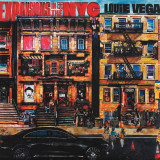
Limited repress!
What is it about New York City, that concrete jungle that continually inspires the creative spirit? From Warhol’s Factory to Larry Levan’s Paradise Garage to David Mancuso’s Loft, collectives that celebrate and nurture unfettered, organic artistry have been absolutely intrinsic to the story of this sprawling metropolis. Its latest chapter is being written at the hands of ‘The Maestro’, Grammy Award winner Louie Vega and his Expansions NYC parties, the sound documented in his latest album Expansions In The NYC (Nervous Records).
Starting in February 2019 in Manhattan and Brooklyn venues, Vega’s Expansions NYC parties have their origin not in his revered prowess as a DJ but rather his whole-hearted appreciation of the different elements of the dance floor surrounding him: the dancers, the musicians who bring their instruments to join him ad-hoc on the night, the small, dedicated crowd of clubbers whose ears to the ground keep them informed on the underground party information. The events included 6-hour DJ Sets with Louie under his select curation, and would usually end with 3 AM jam sessions involving keyboardists, guitar players and poets all performing in front of a jam packed crowd. In just a few short years the Expansions NYC events have evolved into an NYC-clubland institution, an intimate celebration of house, funk, disco, afro, R&B and more.
As with his parties, so goes his album. The collective vibe that forms the beating heart of Expansions NYC parties is absolutely front and centre in Expansions In The NYC, Vega drawing in one of the most comprehensive lists of collaborators in recent memory. House heavyweights Honey Dijon, Joe Claussell, Moodymann, Kerri Chandler and Anané rub up against legendary vocalists Bernard Fowler, Cindy Mizelle, Lisa Fischer, Audrey Wheeler and Tony Momrelle. Gospel royalty BeBe Winans and Debbie Winans, pop icon Robyn and rising star Karen Harding sit alongside disco-era champions Unlimited Touch, Cuban jazz pianist Axel Tosca, Nico Vega, Two Soul Fusion with Josh Milan and Vega and underground legend DJ Spinna. At the centre of it all, fingerprint on every beat, touch on every groove, sits a master at work, weaving the individual threads into a rich dance music tapestry.
"In the past few years I’ve found new inspiration both from the musicians I’m working with and the audiences coming to see me at my DJ shows,” Vega says. “So for me this album represents new beginnings, bringing together a beautiful mosaic of artistic perspectives to express musically what we call Expansions In The NYC."
At its heart, Expansions In The NYC is a love letter to New York, as much as melting pot as the city it represents, the scope of its line-up possible only because of the influence and reverence of Vega the artist, the DJ, the producer, the curator. In creating this album, Louie Vega has once again utterly enriched the lives and libraries of music lovers the world over, far beyond the hustling streets of NYC that have so indelibly left their mark on his work.
On Stock and ready to ship
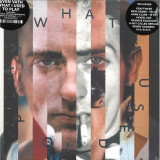
For this uniquely personal retrospective spread over twelve vinyl discs, Sven Väth takes us back to the early days of his DJ career. On What I Used To Play we meet great pioneers of electronic music, gifted percussionists, obscure wave bands, and innovative producers of a bygone 'new electronic' era. Rough beats and irresistible grooves from the identification stage of house, techno, and acid remind us not just how far electronic music has evolved over the past four decades, but how great it was to dance to EBM, techno, and house for the very first time.
If there is one protagonist of the electronic music scene who has remained curious, innovative and at the very cutting edge of music for over four decades, it's Sven Väth. His multi-layered artist albums and Sound of the Season mix compilations have been defining the genre for over two decades, and even today, he is constantly on the lookout for the next top tune to add to the highlights of his next set. At least, that's the case when he's not producing them himself as an artist or remixer. "Actually, it's always been part of my DNA to think ahead," and nothing had been further from his mind than looking back at his past, but when in spring of 2020 the international DJ circuit had to be scaled down to virtually zero, the 'restless traveler' suddenly had time. Time to stop and reflect on "how it actually was back then, at the very beginning of my career..."
"It was a great trip and with every track, beautiful memories came flooding back".
In the London apartment, he had just moved into, Sven has set up a "little music room", where he cocooned himself for several days, "to look way back for the first time and review my musical journey through the eighties, so to speak."
The interim result was six thematically oriented playlists with a grand total of 120 tracks from 'early 80s' to 'Balearic late 80s', together with excursions into afrobeat, European new wave, and EBM sounds and a few epochal techno/house tracks from the USA in between. From these 'Best of Sven Väth's favorites', the project What I Used To Play crystallized. Sven remembers how the Cocoon team reacted to his proposal: "They found the idea of making a compilation out of it MEGA from the beginning and everyone said 'Sven, go for it', but then, of course, the work really started, namely, to clear the rights and to get clean sounding masters of the up to 40-year-old tracks. There was also disappointment, of course. We couldn't clear certain titles because the rights holders in the USA had fallen out with each other or simply disappeared from the scene. In short, it wasn't easy, but now I can safely say we got the most important tracks."
Finally, after two years of research, curation, design, and administrative fine-tuning, the "little retrospective" from 1981 to 1990 is available. The exquisitely packaged, and three-kilo heavy box set is not only physically impressive, WIUTP is also the definitive record of Sven Väth's musical development. On each of the twenty-four sides of vinyl, you can trace track by track, what influenced him during which phase, and how he took off as a DJ from his parents' Queen's Pub straight into the spotlight at Dorian Gray. There and at Vogue (later OMEN), Sven became the style-defining player in the DJ booth that he still is today.
1981 - 1990: Future Sounds of Now
In the early eighties, the crowd in clubs like Vogue and Dorian Gray danced to what nowadays we call 'dance classics' - mainly disco, funk, soul, and chart pop. It was up to a new generation of DJs, including Sven Väth, the youngest protagonist in the Rhine-Main area at the time, to create their own club-ready music mix. Good new tracks and potential floor-fillers were rarities that had to be sought out and found, in order to prove oneself worthy.
Without MP3s, internet streaming, or other digital download possibilities, music didn't just gravitate to the DJ, instead, it had to be tracked down. In well-stocked record stores in Frankfurt and Wiesbaden or even in Amsterdam, London, or New York, Sven and friends sourced the material for countless magical nights. On WIUTP we can follow Sven's very personal journey through this wild, innovative era in which synth-pop, funk, hip-hop, and disco were successively replaced as 'club music' by house, techno, acid, and breakbeat. By the end of the decade, it was clear to see that these once exotic 'fringe' phenomena would soon become 'mass' phenomena.
Early 80s
Dirty Talk by the Italian-American duo Klein & M.B.O. represents the most innovative phase of the Italo-disco genre in the early eighties like no other track. Mario Boncaldo (I) and Tony Carrasco relied entirely on the original synthetic drum and percussion sounds of the Roland TR-808, coupled with the raunchy vocals of Rossana Casale and guitar accents of Davide Piatto. Of course, other tracks from this period were also influential in style, most notably Unit by Logic System, which worked as the perfect soundtrack to the laser lighting system at the legendary Dorian Gray club. With stomping beats and robotic rap interludes, Bostich by Yello also belongs on Sven's eternal playlist - after all, it caught the attention of Afrikaa Bambaataa, who invited the Swiss duo to perform at the Roxy in New York in 1983.
EBM Wave - Mid 80s
From today's point of view, the almost ten-minute-long, downtempo track Giant by Matt Johnson's band project The The, would probably not be considered an obvious club classic. However, a closer (re)listen reveals the rhythmic intricacies of the percussion overdubs by JG Thirlwell (aka Foetus) on Johnson's composition, and it becomes clear why this exceptional piece of music is one of Sven's absolute favorites. Other classics from this phase include Kaw-Liga by the mysterious The Residents, the hypnotic-synthetic Our Darkness by Anne Clark (and David Harrow), and last but not least, the somber, monotonous anthem Where Are You? by 16Bit, one of Sven Väth's projects together with Michael Münzing, Luca Anzilotti from 1986.
US House - Late 80s
You certainly can't talk about Chicago house without mentioning Frankie Knuckles. The resident DJ at the Warehouse not only gave the name to an entire genre, but also produced epochal floor fillers on the Trax label like the timeless Your Love, sung (and moaned) by Jamie Principle. Acid house protagonists Phuture also hail from Chicago, and on We Are Phuture (also released on Trax) we hear the chirping acid sounds of the legendary Roland TB-303 in full effect. Another featured classic is No UFO's by Detroit's Model 500 aka Juan Atkins, who is rightly considered the 'Godfather of Techno' even if the genre-defining track from 1985 still breathes with the spirit of hip-hop and electro from the first breakdance era.
Afrobeat
Le Serpent, by Algerian-born Abdelmadjid Guemguem, is a track that sounds completely different from everything else on WIUTP. Made in 1978, it's a monumental, rousing groove created without bass or synths, just with five congas! Even though Guem sadly passed away in 2021, his immortal, acoustic beats are understood all over the world and will continue to enrich many thousands of DJ sets for years to come. Another classic that not only Sven appreciates beyond measure is Hugh Masekela's Don't Go Lose it, Baby. In addition to being one of the most important jazz pioneers, the trumpeter and freedom fighter from Johannesburg was very experimental, integrating electronic sounds into his music in later years, in a similar vein to Miles Davis and Herbie Hancock. Dutch jazz pianist Jasper van't Hof's afrobeat project Pili Pili has also aged well. The trance-like, almost sixteen-minute-long track of the same name, manages to fill a whole side on the seventh of twelve vinyl discs in the WIUTP box.
UK-US-Euro - Late 80s
Time for a change of scene, in the truest sense of the word, and from a musical perspective, this section is like landing on another planet. First up is Andrew Weatherall's classic remix of Primal Scream's Loaded, featuring the iconic Peter Fonda sample (lifted from the 1966 biker film Wild Angels) that came to personify the mood triggered by the British Second Summer of Love in the late eighties: "We wanna be free to do what we wanna do, and we wanna get loaded...". This period also saw the emergence of M/A/R/R/S whose only single, 1987's Pump Up The Volume, became a club classic with support from DJ legend CJ Mackintosh. In this most eclectic of sections, we also encounter New York house and reggae producer Bobby Konders and his seminal Nervous Acid.
Balearic - Late 80s
Those who know him, know that Sven had already lost his heart to the 'magic island' of Ibiza as a teenager, so with that in mind, the WIUTP project couldn't end without a Balearic chapter. Inspired by Manuel Göttsching's E2-E4, the immortal, eponymously titled Sueño Latino belongs in there without question. Equally popular on the island was, and still is Break 4 Love by Raze, which thinking about it, would also fit perfectly into the house chapter. Last, but not least, there's an overdue reunion with Sven Väth himself, in his role as frontman of the successful Frankfurt trio OFF. Together with Michael Münzing and Luca Anzilotti (later of Snap!) this 'Organization For Fun' created the off-the-wall club hit Electric Salsa in 1986 which incidentally turned into an international chart smash, putting Sven in the enviable position of having to decide between pop stardom and a DJ career. Well, we all know how that decision turned out and the rest, as they say, is history. A not insignificant part of his story is What I Used To Play. Enjoy!
On Stock and ready to ship
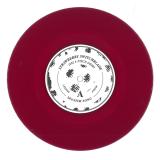
1982 4-Piece Demo' is the first official, fully-licensed and unreleased material to be released under the name Strawberry Switchblade in 30 years. Since disbanding amid major record label acrimony and personal differences in 1986, the already-cult band have since grown in stature and legend. Trailblazers in many ways, the band's mythology justifiably centers around the charismatic duo of Jill Bryson and Rose McDowall, but that isn't a complete picture. Bryson and McDowall's growing friendship, having met some years earlier on the punk scene, became a creative partnership: Bryson's art school background and McDowall's history in avant-punk group The Poets meant Strawberry Switchblade was a band pitted against many established norms. The band's very first incarnation, an all-female 4 piece, recorded one demo at Glasgow's Hellfire Club and played a handful of gigs. Friends Janice Goodlett and Carole McGowan completed the line up on bass and drums respectively. Strawberry Switchblade would eventually pair down to a duo and go on to chart success but it's in these raw, passionate recordings that the songwriting and vocal elements were being hammered out and explored in real time.
Spanish Song' is a previously unreleased song. With Rose McDowall's instantly recognizable lead vocal dovetailing with Bryson's harmonies and lead guitar, it's the first glimpse at an alternative history of Strawberry Switchblade. This incarnation could easily have been featured on a Nuggets compilation or a precursor to the indie-pop revolution that would take over British bedrooms a couple of years later. "Trees & Flowers" is instantly recognizable, a bona fide classic that would earn the band its first record deal. Here it's given a more forceful rhythm section: Goodlett and McGowan's playing is in fact accomplished and doesn't hint at the bands' youth. "Go Away" would also surface later on the band's debut LP but here it is a moody-garage stomper with a psychedelic, haunting refrain. These 3 songs point to a tantalizing future of the band that was never realized.
Remastered and restored by Sean Pennycook from the original cassette, with artwork based on a single photographic contact sheet (the only visual evidence of the band in this form) and with a booklet of photographs and new text. Pa
Order now and we will order the item for you at our supplier.

Ever since the late 1950s bossa-nova revolution, Brazil’s influence on French music has been undeniable. Pierre Barouh, Georges Moustaki and a vast array of lesser known artists, all made the Musica Popular Brasileira (MPB) an axis of promotion at the service of a cool and metaphysical, modern and mixed Brazilian lifestyle. Some were seduced by the poetic languors of the bossa, some were looking for fun, and others just loved the American hybridization of jazz-bossa, jazz-samba.
What is bossa nova? One of its creators, Joao Gilberto said: "Its style, cadence, everything is samba. At the very start, we didn't call it bossa nova, we sang a little samba made up of a single note - Samba de uma nota so .... The discussion around the origins of bossa nova is therefore useless”. It is nevertheless useful to remember that these magnificent Brazilian songs, which the guitarist describes as samba, were shifted and balanced around improbable chords. "I like things that lean, the in-betweens that limp with grace," said Pierre Barrouh, quoting Jean Cocteau.
With emotion, arrangements for violin and supple guitar licks, bossa nova rapidly changed. A transformation that can be heard in the Tchic, tchic, French Bossa Nova 1963-1974 compilation, the result of a cultural reappropriation, which traveled through the United States and supplemented itself in France.
A musical revolution that has remained significant, bossa nova was born in Rio. From 1956 to 1961, Brazil lived through its golden years. In five years, the country had invented its modernist style. Elected president in 1956, Juscelino Kubitschek de Oliveira, an elegant man with a broad forehead, brandished a promising slogan: "Fifty years of progress in five years". He quickly got to work. Not worried about increasing debt, he launched the project for a new federal capital, Brasilia, designed by the communist architect Oscar Niemeyer. Volkswagen opened state-of-the-art factories and created the “fusquinha”, the Beetle. In Rio, the Vespa made its first appearance. The Arpoador Surf Club crew run into the “girl” from Ipanema, Helô Pinheiro - the tanned garota ("chick"), between a flower and mermaid, who at 17 walked by the Veloso bar, where the fiery author and composer, Tom Jobim and Vinicius de Moraes, were getting drunk on whiskey. From then on, bossa symbolized cool.
In 1958, Joao Gilberto recorded Chega de Saudade, which the directors of Philips denied, calling it "music for fagots". The marketing director, who believed in it, secretly pressed 3000 78-inch vinyls and distributed them at schools around Rio, creating a tidal wave.
American jazzmen then took over. In particular, trumpeter Dizzy Gillespie and guitarist Charlie Byrd. In November 1962, the Brazilian Ministry of Foreign Affairs funded a "Bossa-Nova" concert at Carnegie Hall in New York, inviting the genre’s pioneers. Unprepared, the show soon turned to disaster. But the troupe was invited to the White House by Jackie Kennedy. The first lady loved "the new beat" and in particular Maria Ninguem, a song by Carlos Lyra, later covered by Brigitte Bardot.
In Brazil, the 1964 military coup quickly ended this euphoria. The destructive atmosphere that ensued pushed many Brazilian musicians to leave, if not to exile. Thus, Tom Jobim, Sergio Mendes and Joao Gilberto arrived to the United States. In New York, Joao Gilberto met saxophonist Stan Getz. At the time, he was married to the Bahianese Astrud Weinert Gilberto, who had a German father. She had never sung before, but she knew how to speak English. Getz therefore asked her to replace her husband on The Girl From Ipanema. The Getz/Gilberto record with Tom Jobim on piano, was released in March 1964. Phil Ramone, the "pope of pop" was in charge of sound.
Bossa nova arrived in Paris through the classic “guitar-voice” channel (Pierre Barouh, Baden Powell, Moustaki…) But France loved jazz and Paris had already welcomed its American contributors. All these good people were to pass through Saint-Germain-des-Prés. The cabaret l'Escale became the Mecca of Latin American sound where one could find Pierre Barrouh and his friends, such as the Camara Trio, samba-jazz aces, whose only record was published by the Saravah label. With a band strangely called Les Masques (a band that included Nicole Croisille and Pierre Vassiliu, among others), the Camara Trio recorded an interesting Brazilian Sound, including the track Il faut tenir which is present on this tasty compilation of rarities.
Other enlightened musicians can also be found on the compilation, such as Jean-Pierre Sabar (songwriter for Hardy, Auffray, Leforestier ...) and the French pop rock organist Balthazar. In 1975, Sabar recorded Aurinkoinen Musiikkimatka on a Finnish label, which featured the crazy Vai, Vai, included on this record. We are now following the footsteps of Brazilian electronic musicians such as Sergio Mendes, Eumir Deodato or Marcos Valle who created funk and disco sounds on their keyboards and synthesizers. A style that influenced Véronique Sanson when she wrote Jusqu’à la Tombée de la nuit in 1969 for Isabelle de Funès, the niece of Louis and a great friend of Michel Berger - Sanson did end up singing this track on her 1992 Sans Regret record.
The pinnacle of exoticism and travel, Sylvia Fels’ Corto Maltese includes bongos, sea mist and ocean sounds. The title was taken from Jacky Chalard’s concept album written in 1974, Je suis vivant, mais j’ai peur (I am alive, but I am scared), based on Gilbert Deflez’s science fiction novel.
However, bossa nova extended the scope of popularity. "In the 1970s, I was a fan of Sergio Mendes, Getz / Gilberto. I fell in love with this music that I knew because I had been an orchestral singer, " explained Isabelle Aubret, who in 1971 delivered a composite record of covers by the very funky Jorge Ben, Orfeu Negro, Tom Jobim, Vinicius de Morais and Jean Ferrat. "I recorded this album for Meys Records in Paris, far from Brazil, with wonderful musicians, François Raubert, Roland Vincent, Alain Goraguer...". The latter wrote the arrangements for Casa Forte, a very percussive title borrowed from Edu Lobo, one of the initiators of the bossa who spent time in California. "Jazz and bossa came together and produced very rhythmic music. I love singing, it allows me to dream, to have fun, to feel a high on stage, and these songs brought me joy, made me swing, my singing felt like a dance.”
The world tours of French singers and their desire for the tropics, often brought them to Rio with its hills, forests, caipirinhas and tanned bodies. There are surprises though, like this Iemenja (Iemenja is the goddess of the sea in the Afro-Brazilian candomblé religion). Not unlike the composer and musician Jean-Pierre Lang, based in Sao Paulo, Claire Chevalier taught Brazil to Brazil. In 1970, the singer and painter published a 45-inch vinyl, Mon mari et mes amants (My husband and my lovers), under the improbable pseudonym of Clarinha (little Claire). She was then living in Rio, with her husband, Joël Leibovitz, who founded a band called Azimuth, and who owned a record label specialized in "sambas enredos" songs for samba school parades.
For its B side, she asked Pierre Perret to come up with lyrics for a song composed by Carlos Imperial: "Oh goddess of the sea, o goddess Iemenja, I bring a white rose to adorn your long hair ..." . "Perret came to see us, and we had fun, remembers Joël Leibovitz. We wrote Lemenja for fun, we recorded it at the Havaí studio, behind the Central do Brasil the central station. Erlon Chaves, the arranger who worked with Elis Regina, joined us" adding his share of Afro-Brazilian percussions and funky brass to the mix.
There is a common misunderstanding in Franco-Brazilian history: that bossa, admittedly hedonistic, is perceived as funny, even though the poets who wrote the texts are often philosophizing on the human condition. Its French interpreters pull it towards a carnival inspired universe, far removed from its fundamental essence. Thus, Jean Constantin covered the famous Samba da minha terra, an ode to the art of samba written by the classic Bahian composer Dorival Caymmi, renaming it with the enticing title of Pas tant de tchi tchi pompon: "On your pier there is no tchi tchi / when you arch your back, you know everything is alright ”(lyrics by Gérard Calvi). This expedited bossa aims for the absurd, but retains a certain elegance.
Indeed, Jean Constantin was not an idiot, the rather large man had a huge mustache and liked fantasy, (Les pantoufles à papa, Le pacha, inspired by cha-cha-cha-cha, salsa and jazz) but he was also the lyricist of Mon manège à moi interpreted by Edith Piaf, the composer of Mon Truc en plume by Zizi Jeanmaire and the soundtrack of François Truffaut’s 400 Blows. Le Poulpe, published in 1970, from which this bossa is extract, was arranged by Jean-Claude Vannier, an accomplice of Serge Gainsbourg’s Melody Nelson. In short: "There is enough of samba / By looking at the parasol / Because my poor cabeza / Is going to die in the sun".
Even the American actress Marpessa Down, who was at the heart of the bossa nova revolution with her role as Euridyce in Marcel Camus’ film Orfeu Negro, winner of the 1959 Cannes Palme d'or, fed the clichée with Je voudrais parler au petit cuica - "Tell me how you manage to always make people want to dance / It's true, I must admit that I cannot resist your magic" - in consequence, once can hear the cuica, a little drum inherited from the Bantu.
But bossa nova had many angles. Societal, of course, pushing actresses who were symbols of women's liberation like Brigitte Bardot, Jeanne Moreau, or Sophia Loren to engage in the exercise of accelerated bossa. In February of 1963, Sophia Loren made a record in French in Rome, Je ne t'aime plus, featuring the song De jour en jour, a bossa written by two Italians, Armando Trovajoli and Tino Fornai, which was released a little later by Barclay. Bossa accompanied the 1960s, a decade of moral liberation. Ann Sorel, who interpreted La Poupée des favellas, caused a sensation with L’amour à plusieurs, a provocative song written by Frédéric Bottom and Jean-Claude Vannier. As for the actress Andrea Parisy, she displayed her bourgeois cheekiness in Marcel Carné's Les Tricheurs before interpreting Les mains qui font du bien. And Magalie Noël, the friend of Boris Vian, who sung Johnny fais-moi mal, was hired to sing Une énorme Samba, composed by Alain Goraguer (arranger to Gainsbourg, Bobby Lapointe and Jean Ferrat) with lyrics by Frédéric Botton.
But in the end, of what wood is bossa nova made of? The answer is given by Christianne Legrand, daughter of Raymond the conductor, and sister to Michel the composer: "With me, with jà" - jà means "immediately" in Portuguese. In 1972, the singer, an expert in vocal jazz and a member of the Double Six, published Le Brésil de Christianne Legrand. Two songs included on the Tchic Tchic compilation that demonstrate how bossa, jazz, funk, rock, etc. work like a swiss army knife: the music is used to denounce broken systems, or miracles, HLM et ciné roman, Cent mille poissons dans ton filet, two songs from the O Cafona soundtrack, a successful telenovela broadcast, at the time in black and white, on TV Globo. The first was adapted in French by the fighter and friend of the Legrand tribe, Agnès Varda. The second is content with a play on words, jostling them into a summer fun.
Véronique Mortaigne
Order now and we will order the item for you at our supplier.
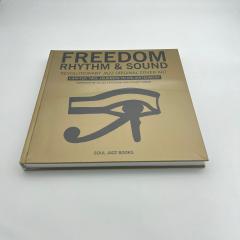
Freedom, Rhythm and Sound showcases the stunning graphic works of independently published jazz record cover designs in the 1960s, 70s, 80s and beyond, from radical jazz musicians such as Sun Ra, John Coltrane, Pharoah Sanders, The Art Ensemble of Chicago and others. This second Freedom, Rhythm and Sound book is a new ‘chapter’, featuring hundreds more unique, rare and beautiful jazz record cover designs.
This book documents the continued development in jazz as African-American artists set out on new journeys to enlightenment, heading out into Europe at the end of the 1960s. The artwork of these (often self-produced) record cover designs during this era reflected their radical agenda, spiritual awareness and singular search for musical and personal freedoms. From raw, DIY aesthetics to lyrical and poetic illustrations, sometimes containing futuristic worlds and ancient landscapes, the designs are always bold, strikingly graphic, and most importantly capture the spirit of the music, giving them a unique beauty. The book also includes sections on African-American poets and writers, Civil Rights and Black Power Movement leaders (Martin Luther King, Malcolm X) and early musical pioneers (Yusef Lateef, Max Roach, Art Blakey and others), all of which helped influence and shape the world of radical and spiritual jazz from the 1960s and onwards to its rebirth today. Since the 1980s, Gilles Peterson has been a pivotal figure in the club scene, renowned for his genre-defying approach to music with jazz at its core. As one of the UK’s most iconic DJs, he has spent over 40 years shaping music trends as a radio presenter, club DJ, producer, and festival curator.
He hosts a flagship show on BBC Radio 6 Music and, in 2016, launched Worldwide FM. He is founder of the Worldwide Festival in the South of France and We Out Here festival in the UK. He runs the label Brownswood Recordings, dedicated to discovering and promoting new talent and bringing fresh voices to the global stage. Stuart Baker founded Soul Jazz Records in 1992. For more than 30 years the record company has released over 500 records covering a genre-defying array of non-mainstream musical worlds – Jazz, Reggae, Punk, Latin, Brazilian, Disco, African, Gospel, Acid House and more.
In 2017, part of Stuart Baker’s jazz record collection (much of which appears in Freedom, Rhythm and Sound) was featured and displayed as part of the Soul of a Nation: Art in the Age of Black Power exhibition at Tate Modern in London, and subsequently at The Broad in Los Angeles (2019) and Brooklyn Museum (2019). Soul Jazz Books launched in 2007, a similarly diverse and critically acclaimed publishing house with graphic art, culture and photography titles that include ‘Voguing and The House Ballroom Scene of New York’, ‘Dancehall – The Rise of Jamaican Dancehall Culture’, ‘Yo! The Early Days of Hip-Hop’, ‘Freedom, Rhythm and Sound – Revolutionary Jazz Cover Art 1965-83’, ‘Punk 45 – The Singles Cover Art of Punk 1976-80’ and others. Reviews of the first Freedom, Rhythm and Sound: “A remarkable book” The New Yorker “If there can be such a thing as a revolutionary coffee table book, Freedom Rhythm & Sound is it―a chance to wallow in the Afrocentric visual language of the non-mainstream black jazz vinyl of this extraordinary fertile and creative period.” Eye “Like the uncompromising music they represent, all the covers broadcast a sense of bold, brazen ideology” Pitchfork “A definitive account of a complex passage of cultural upheaval.” The Independent “For decades, no one was sure how to refer to this extraordinary music.
Calling it ‘fire music’ does justice to its incandescent spirit, still burning from the pages of a book that preserves the memory of a special time.” The Guardian “These sleeves are the original independent legacy to America’s premier art form – Jazz. In terms of African-American cultural expression they are part of a long line of thought that was charged in the 1960s by John Coltrane, Martin Luther King, Ornette Coleman, Malcolm X and others” The Wire “A hefty compendium of radical jazz cover art” Mojo
Order now and we will order the item for you at our supplier.

Transcendental poetry meets Southern Nightmare Jazz on the third album by Alabama-based artist Johnny Coley Mister Sweet Whisper is the meeting of poet & artist Johnny Coley and the band Worst Spills, led by guitarist & arranger Joel Nelson. (Imagine "King Tubbys Meets Rockers Uptown," but more like "William Burroughs Meets Lounge Lizards in Ghost Swamp"). Joined by vibraphone player and recordist of the group, Jasper Lee, Mister Sweet Whisper centers Coley as a gifted writer and unique elder voice, supported by an eclectic cast of friends & collaborators. Tapping into French surrealism and transgressive American poets such as John Ashbery, the songs in Mister Sweet Whisper evolve, cinema-like, with Coley as an uninhibited, almost mystical, narrator. Textural, jazz-like playing complements Coley's decadent landscapes, which glide by like cigarette-inspired invocations. Echoing, and at times, dissonant notes of saxophone, crystalline tones of vibraphone, and jagged guitar arrangements punctuate Coley's dreamlike visions, populated by ballet dancers, haunting nightclubs, and ghostly car drivers. Wistful and expansive, the songs in Mister Sweet Whisper speak of Coley's talent and natural ability to channel his poetic world into songs. A remarkable follow-up to Coley's first two albums_Antique Sadness, from 2021, and Landscape Man, from 2022_which were praised as "exquisitely haunting, sublime, hilarious" and falling "somewhere between Robert Ashley, David Wojnarowicz, and Intersystems," Mister Sweet Whisper arrives in full form: unpredictable and brilliant. LP comes with a 4-page booklet featuring artwork and writing by Johnny. Pressed in black vinyl.
expected to be published on 15.11.2024

Original 2LP[30,88 €]
Almost three decades on from their last release, Acid Jazz forefathers Galliano are back with news of their new LP ‘Halfway Somewhere’ which is being released on Gilles Peterson’s Brownswood Recordings on 30 August.
Born out of London’s underground clubs and warehouse parties of the mid to late eighties, with the debut single on the Acid Jazz label in 1988, Galliano came out of a culture that spanned music, dance, fashion, art, design, and the written word.
When they arrived as the first act on Gilles Peterson’s Talkin’ Loud label in 1990 with ‘Welcome to the Story’ (produced by Chris Bangs who invented the term Acid Jazz) dressed in Gabicci sweaters, beads and skullcaps they captured a scene built on re-invention. “We were all playing around with what we could get our hands on whether that was a seventies book on Jamaican style or old Last Poets and Watts Prophets records,” says Gallagher. “We’d been recycling things for a few years but suddenly everything had coalesced and you’ve got an amalgam that seemed quite solid.”
For their first album since 1997, Rob Gallagher and his partner, vocalist Valerie Etienne, are joined by Galliano stalwarts Ernie McKone on bass, Crispin Taylor on drums, and Ski Oakenfull on keys (with guests including saxophonist Jason Yarde and percussionist Crispin ‘Spry’ Robinson).
Where the old Galliano recycled records they heard at clubs, today they are responding to the kaleidoscopic global jazz scene - from Total Refreshment Centre in London to International Anthem in Chicago. More than forty years since they came together, Galliano are still only ‘Halfway Somewhere’, but listening to the album they are obviously having fun getting there. “I think the stars have to be aligned when you redo things,” says Gallagher. “Coming at it from this door is very different to the door we came into back then. But once it's existing it is something. But I’m still not sure what that something is.”
Order now and we will order the item for you at our supplier.

Blue 2LP[34,87 €]
Almost three decades on from their last release, Acid Jazz forefathers Galliano are back with news of their new LP ‘Halfway Somewhere’ which is being released on Gilles Peterson’s Brownswood Recordings on 30 August.
Born out of London’s underground clubs and warehouse parties of the mid to late eighties, with the debut single on the Acid Jazz label in 1988, Galliano came out of a culture that spanned music, dance, fashion, art, design, and the written word.
When they arrived as the first act on Gilles Peterson’s Talkin’ Loud label in 1990 with ‘Welcome to the Story’ (produced by Chris Bangs who invented the term Acid Jazz) dressed in Gabicci sweaters, beads and skullcaps they captured a scene built on re-invention. “We were all playing around with what we could get our hands on whether that was a seventies book on Jamaican style or old Last Poets and Watts Prophets records,” says Gallagher. “We’d been recycling things for a few years but suddenly everything had coalesced and you’ve got an amalgam that seemed quite solid.”
For their first album since 1997, Rob Gallagher and his partner, vocalist Valerie Etienne, are joined by Galliano stalwarts Ernie McKone on bass, Crispin Taylor on drums, and Ski Oakenfull on keys (with guests including saxophonist Jason Yarde and percussionist Crispin ‘Spry’ Robinson).
Where the old Galliano recycled records they heard at clubs, today they are responding to the kaleidoscopic global jazz scene - from Total Refreshment Centre in London to International Anthem in Chicago. More than forty years since they came together, Galliano are still only ‘Halfway Somewhere’, but listening to the album they are obviously having fun getting there. “I think the stars have to be aligned when you redo things,” says Gallagher. “Coming at it from this door is very different to the door we came into back then. But once it's existing it is something. But I’m still not sure what that something is.”
Order now and we will order the item for you at our supplier.

Two-Piers, the label that brought you ‘Pop Psychédélique (The Best of French Psychedelic Pop 1964-2019)’ brings you the second instalment in the series ‘Garage Psychédélique (The Best of Garage Psych and Pzyk Rock 1965-2019)’. A thrill-a-minute dive into the crazy awesome world of Garage Psychedelic Rock.
From the Psych sound explosion onto the underground club scene in the US and UK in the mid 1960s, to its discovery by a wider audience via the exceptional Nuggets and Pebbles compilation series in the 1970-1980s. Through its mainstream revival with the Garage sound of the late 1990 - early 2000s, to the current crop of exceptional bands flying the Garage Psych flag today, ‘Garage Psychédélique’ takes you on a journey and gives you a little taste of some of the finest music from the scene and the bands that blazed a trail for others to follow…..Sit back and enjoy the ride!
From the opening bars of The Sonics ‘Have love Will Travel’ through the Psych workout that is Count Five’s ‘Psychotic Reaction’ to the joys of ‘60s Beat Psych groups from the US such as The Paragons, The Preachers, The Strangeloves, The Squires, and the eccentric stylings of The Monks. The album careers along at a blistering pace of Garage Psych brilliance, jammed packed full of underground floor fillers a plenty.
US legendary underground acts such as The Electric Prunes, The Chocolate Watch Band and MC5 all deliver classic tracks for the cause, and singer-songwriter Harry Nilsson even makes a foray into the psych rock sound with ‘Jump into the Fire’.
In recent years such bands as Thee Oh Sees, Moon Duo and Allah-Las from the US have taken the Garage Psych influence and ‘60s sound and made it their own. A whole crop of bands such as White Hills, Gnod and Goat from the scene have evolved the music into a ‘Pzyk Rock’ feel with a darker and heavier vibe, but crucially still with the joyous undertones that the scene brings to its devotees.
The Garage Psych sound has influenced groups from around the globe with bands like Liverpool’s The Stairs ‘Weed Bus’, Scotland’s finest The Poets with ‘That’s the Way It’s Gotta Be’, The Bogeymen, a largely undiscovered ‘90s Psych Hammond band from France with ‘Electrocution’. Hailing from Sweden Goat bring us ‘Gathering of Ancient Tribes’ and The Hives their dancefloor anthem ‘Main Offender’. From Perth, Australia Pond’s Psych leanings on ‘Fantastic Explosion of Time’ are clear to see. Finally, Kevin Parker’s band Tame Impala were very influenced by the whole garage psych sound in their early band incarnation, as perfectly showcased here on the epic wig-out that is ‘Half Full Glass of Wine’ that closes the album.
This isn’t meant to be a ‘crate diggers’ album or a compilation of ‘obscure hard to find tracks’ to out-do your mates. It is quite simply a celebration of the Garage Psychédélique scene and a chance to revel in its brilliance and dance around your kitchen. If it means you go down a rabbit warren of discovery to unearth more gems and brilliant bands from the Garage Psych scene then job done!
expected to be published on 15.07.2024

Toy Tonics going New Wave Disco with Baby’s Berserk’s self-titled debut album (to be released on 29 September).
There are many shades of funk in dance music. Berlin’s Toy Tonics label brings up artists that reflect many of these different aspects in dance music. Now the label comes up with a band! A band that is inspired by 1980ies New Wave as well as the Y2K Indie dance scene. Two guys and 2 girls from Amsterdam and Montreal called Baby’s Berserk.
Baby’s Berserk is about taking the freedom to be who you want to be, about being comfortable. Having played in all-girl punk bands since the age of 14, the bands singer Lieselot is an expert on female empowerment. “Dress like a girl and act like a boy,” is a catchphrase she lives up to every day and it clearly is a message that resonates with the band’s wild fans.
In the great tradition of Roxy Music, Throbbing Gristle and Malcolm McLaren, Baby’s Berserk is not just about the edgy music, but also about a very strong own visual style. They readily blend their sounds with underground fashion. What you see is what you get and seeing Baby’s Berserk is feeling right at home. Lieselot is a visionary when it comes to stage presence. Have you always wanted to see an electronic band with a punk attitude perform wearing a mix of haute couture and Flintstone-style rags? Look no further, it’s Baby’s Berserk.
Following on the critically acclaimed singles ‘What I Mean’ (2020) and ‘Toxic Kisses’ (2022), Baby Berserk’s highly anticipated self-titled full-length is now finally about to see the light on Berlin’s Toy Tonics records. Sonically designed for gritty rock venues as well as up-to-date edgy dance clubs, Mano’s lush compositions smoothly intertwine with the highly associative lyrics written by Puggy and Lieselot. Poets and literary addicts may think they’ve just discovered the rock & roll equivalents of Sylvia Plath, Kurt Vonnegut and Allen Ginsberg. To tell you the truth: their wild guess is pretty accurate as the works by these greats lie scattered around the Baby’s Berserk studio for inspiration.
The band was born in a laboratory back in 2019. Tired of being in bands with unruly and unpredictable humans, Mano Hollestelle set out to create a group of high precision robots to create the post-punk sound he had in mind. His outdated technology of floppy disks and cassette tapes worked well to program the androids, until one day a 90s rave mixtape was mistakenly entered into his computer. House music is a feeling and the punk bots instantly got hooked on it upon hearing it for the first time. They could never be reset to factory settings again. Mano worked tirelessly with his androids, currently known by their humanoid names of Lieselot Elzinga, Puggy Beales and Eva Wijnbergen, to fulfil his evil plan to make the rockers dance and the dancers rock. Baby’s Berserk is the fiendish extension of this plot. Beware, the band’s bass driven grooves and computerized beats have been known to cast a spell upon all within earshot.
So what do the songs on ‘Baby’s Berserk’ tell you? That it’s totally fine to have lots of fun in life! To have a boyfriend as an accessory (‘Accessories’), to get inspired by Sponge Bob (‘Dancing with the Fish’) and to blend your spirits with mixers whenever the hell you feel like it (‘Rum ‘n’ Kola’).
Baby’s Berserk member Puggy Beales on ‘Limousine’: “Decant the wine from my tip jar to yours. Soon we'll be on easy street, chauffeured home from the rat race each evening. Is it everything you'd hoped it would be?”
Check not only the debut album but also the forthcoming Remix EP with remixes by Each Other, Niklas Wandt, Sam Ruffillo, Kris Baha and Nicolini.
Order now and we will order the item for you at our supplier.

The story of the invention of the term, 'deepfunk' is probably only known among fans and practitioners of this niche-genre. In short, it all started in the 1990s when DJs like Keb Darge, Mark 'Snowboy' Cotgrove and others began spinning obscure and feral Funk 45 RPM singles from local American bands, ostensibly generating another sub-category branch off of the mighty Northern Soul tree. The dance-club phenomenon inevitably spilled over to contemporary groups on the funk scene which immediately tried to record their music the way their idols did. The 'rare groove' and 'acid jazz' movements had run their course and there was a concerted effort to reinstate primitive idiomatic styles and techniques into the music, most notably by 90s funk collective The Poets of Rhythm. As more years passed by the number of bands steadily increased (although in tiny numbers, compared to the mainstream market). Almost every country had a representative with the majority of them coming from the United Kingdom. The deepfunk sound was still a niche, however a very few bands made it onto the mainstream charts, most notably Sharon Jones & the Dap Kings.
At the height of the retro-soul movement a questionable development took place. As more bands arrived on the scene, the production became more and more polished and pop-ish. Some of that squeaky-clean tidiness began to creep into the recordings, encouraged in part by the signature sounds of the digital recording technology available at that time. Some bands even tried to jump onto the possibility of promoting their music as 'deepfunk' although they were actually playing slick, funky pop music. This way some people who thought they were listening to raw, energetic funk actually felt quite ambushed when hit with real deepfunk. In fact, a certain percentage of funk music produced within the past 20 years does not deserve to be described as 'deepfunk' at all. Fortunately there were (and are) some pleasant exceptions which did not just imitate but actually rendered amazing funk music just like some of the finest funk combos of the 1960s and 70s.
One of those creative minds is without a doubt Joel Ricci aka Lucky Brown. Originally from Seattle, Washington, USA, he has enriched the deepfunk community since the mid-2000s with his stellar abilities. He is not only an amazing musician playing multiple instruments, but also a brilliant composer, arranger, and producer too. But for us here at Tramp he is much more, a close friend and remarkable human being. Whenever we were struggling, whether with the label or in private life, Joel and his musical work helped us to overcome everything and to keep going our path.
So here we are in 2023. The songs you are listening to right now are the complete Space Dream collection, split into two parts, representing the two living-room recording sessions from which his 2011 Tramp Records debut was compiled. Each fully remastered album contains unreleased material and comes with brand new, beautifully reimagined artwork by Ricci himself, housed in an authentic 1960s tip-on cover. A first class product from a first class musician for the discerning funk enthusiast.
Order now and we will order the item for you at our supplier.

The story of the invention of the term, 'deepfunk' is probably only known among fans and practitioners of this niche-genre. In short, it all started in the 1990s when DJs like Keb Darge, Mark 'Snowboy' Cotgrove and others began spinning obscure and feral Funk 45 RPM singles from local American bands, ostensibly generating another sub-category branch off of the mighty Northern Soul tree. The dance-club phenomenon inevitably spilled over to contemporary groups on the funk scene which immediately tried to record their music the way their idols did. The 'rare groove' and 'acid jazz' movements had run their course and there was a concerted effort to reinstate primitive idiomatic styles and techniques into the music, most notably by 90s funk collective The Poets of Rhythm. As more years passed by the number of bands steadily increased (although in tiny numbers, compared to the mainstream market). Almost every country had a representative with the majority of them coming from the United Kingdom. The deepfunk sound was still a niche, however a very few bands made it onto the mainstream charts, most notably Sharon Jones & the Dap Kings.
At the height of the retro-soul movement a questionable development took place. As more bands arrived on the scene, the production became more and more polished and pop-ish. Some of that squeaky-clean tidiness began to creep into the recordings, encouraged in part by the signature sounds of the digital recording technology available at that time. Some bands even tried to jump onto the possibility of promoting their music as 'deepfunk' although they were actually playing slick, funky pop music. This way some people who thought they were listening to raw, energetic funk actually felt quite ambushed when hit with real deepfunk. In fact, a certain percentage of funk music produced within the past 20 years does not deserve to be described as 'deepfunk' at all. Fortunately there were (and are) some pleasant exceptions which did not just imitate but actually rendered amazing funk music just like some of the finest funk combos of the 1960s and 70s.
One of those creative minds is without a doubt Joel Ricci aka Lucky Brown. Originally from Seattle, Washington, USA, he has enriched the deepfunk community since the mid-2000s with his stellar abilities. He is not only an amazing musician playing multiple instruments, but also a brilliant composer, arranger, and producer too. But for us here at Tramp he is much more, a close friend and remarkable human being. Whenever we were struggling, whether with the label or in private life, Joel and his musical work helped us to overcome everything and to keep going our path.
So here we are in 2023. The songs you are listening to right now are the complete Space Dream collection, split into two parts, representing the two living-room recording sessions from which his 2011 Tramp Records debut was compiled. Each fully remastered album contains unreleased material and comes with brand new, beautifully reimagined artwork by Ricci himself, housed in an authentic 1960s tip-on cover. A first class product from a first class musician for the discerning funk enthusiast.
Order now and we will order the item for you at our supplier.

NEW 45 BY DEEP-FUNK PIONEER LUCKY BROWN RECORDED DURING THE NOW LEGENDARY SPACE DREAM SESSIONS!
In around 2001, Joel Ricci, the trumpet player/composer behind his former stage alias, Lucky Brown, went traveling on a worldwide "quest for funk". During that pilgrimage, he went to London England in time to attend Keb Darge's 'Legendary Deep Funk' 6-year anniversary at Madame Jojo's. While in the middle of the dancefloor, he was moved so significantly by this obscure brand of 'deep funk' Mr. Darge was unveiling, he became overcome by a mystical sense of 'coming home'. Additionally, he spent a week at Camden's Jazz Cafe to meet The Poets of Rhythm, The Breakestra, The Sugarman Three, DJ Snowboy, DJ James Trouble, and others. When Joel mentioned the nature of his quest to Neal Sugarman, he warmly invited him to come visit Brooklyn and kick it with members of Antibalas, Binky Griptite & The Mellomatics, and the Dap Kings. But before the trip back to the states, Joel spent some time in Paris playing his trumpet at a club called 'Cithea' where they would host weekly 'rare groove' jam sessions. During the jams, Parisian students of Tony Allen would overtake the stage with their instruments and their full African clothing, chant the word, 'Fela', and begin to play this intense free improvised funk and afrobeat. While traveling by train from Paris to the south of France to visit family, Joel began hearing this inspiring polyrhythm swirling in his inner ear and mixing with the "clack-clacka" of the train moving down the track. As soon as he arrived at his destination, he sat down at a piano and jotted down the polyrhythm, bass line and fundamental horn cluster on a piece of sheet music paper. The simple tune was finally rendered to tape ten years later with Lucky Brown's Crawdad Farmers aka The Funk Revolution on the Magik Carpet at drummer Olli Klomp's Lakeside log cabin in Stanwood, Washington. The tune became the title track to Lucky's first full-length on Tramp Records (Lucky Brown's Space Dream, TRLP-9011).
Space Dream is so titled in part to commemorate a soulfunk masquerade party Joel threw at a temporary all-ages Bellingham Washington music venue called 'The Pickford Dream Space'. This is Joel's stripped-down tape-only remix and re-edit which has never before appeared on 45RPM and commemorates the re-release, remaster and repackaging of upcoming Tramp LPs, "Space Dream" and "Don't Go Away", the fully realised 'director's cut' featuring Ricci's early group funk experiment: "The Funk Revolution."
Order now and we will order the item for you at our supplier.

"Kontakt Audio and Infinite Fog Productions proudly present the 25-th anniversary reissue of the one of most unique albums on avantgarde/neoclassic music – Ihor Tsymbrovsky – Come, Angel.
Recorded in 1995 in Ukraine and released in 1996 just as a small run on cassette on Polish label Koka Records, the album without any promotion little by little became legendary and madly wanted by many fans all around the world. And from the first seconds, you can hear why it is so. Pretty hard to explain what songs play Ihor, moreover that would be senseless. “Come, Angel” is one of those albums which are so unique that takes you in a vacuum of verbal forms in an attempt to describe the record. In a few words, this is definitely very intimate and deeply emotional music with an absolutely incredible voice. The first associations could forward you to Antony Hegarty from Antony And The Johnsons, Marc Almond, Arthur Russell, Baby Dee, Bjork. Experienced listener familiar with these great artist knows that all of them are inimitable and Ihor Tsymbrovsky is totally inimitable as well.
In 2016 well-known German label Offen Music published 3 tracks from the album “Come, Angel” which brought a lot of attention to Ihor’s music. This time we’re excited to announce the first full album reissue on CD, Double vinyl, and tapes. Beside the full version of the album, you’ll find an exclusive bonus song from the cult compilation “Music The World Does Not See” – Nefryt Records 2000.
~
“For me, music is a certain way of cultural survival. Here I do not set myself theoretical problems or experiments.
The connotations of life are important: rhythms, melodies, their connection with language, poetry, real life, virtual or imaginary space. It is very important to me how the recitation of work sounds, how consonant and vowel sounds dissolve in singing, how they combine musically. I understand sound space as a field of my interpretations, preferences, priorities, and I do not use direct imitation. If I hear a melody or a musical phrase, and it is fixed in my memory, later I extract it in my own interpretation, as already formed by this field. In art, the goal is in the work itself, not outside it. For me, the expression “To be is to create a new reality” is another winged reality.” – Ihor Tsymbrovsky
~~
“Tsymbrovsky – an architect, musician, a poet, an artist; one of the most underestimated musicians in Ukraine’s artistic world. Many critics pulled their hair out trying to get to the bottom of Tsymbrovsky’s music. It has been inspired by jazz, minimal, modern, ethnic, and meditation music. Tsymbrovsky is not a virtuoso, however, he creates whole worlds with his astonishing falsetto. Although Cymbrovsky’s music is simple it is made of many elements. Filled with magic and unusual sensitivity and warmth it can be therapeutic for the listener. This is that kind of music, which can be listened to many times – in a different way each time.” – Koka Records.
~~~
“Igor Tsymbrovsky’s only album “Come Angel” (1995) still remains perhaps the most bizarre phenomenon in Ukrainian music since independence. The story of its author is a vivid example of cultural amnesia. In the pre-Internet era, Tsymbrovsky was a prominent figure in the Ukrainian underground, performed on the “Red Route”, went on tour in Germany. However, he left a minimum of evidence of his activity and became a silent legend for a few. We talked to Igor to find out where he came from and where he was going.
The album “Come Angel” is eight compositions performed with a falsetto to the accompaniment of a piano. (Tsymbrovsky’s falsetto is a legacy of the Lviv Dudaryk choir, where he sang as a child.) It would seem that it could be easier. But, despite such ascetic tools, Tsymbrovsky managed to create a phenomenon unique to Ukrainian culture. Some people compare him to Benjamin Clementine and Anthony Hegarty, but no comparison will be exhaustive. The lyrics of the songs attract special attention: two of them were written by Tsymbrovsky himself, the others demonstrate his remarkable literary knowledge. Here and Guillaume Apollinaire, and Mikhaijl Semenko, and even less obvious poets, such as Mykola Vorobyov or Jozsef Attila.
The young performer’s first performance took place in 1987 in the club of the Forestry Institute. It is quite symbolic that this room used to be a Jesuit church because such a chamber environment suits his songs about angels much better than the noise of big festivals. However, there were also many festivals in Tsymbrovsky’s career: in 1989, Chorna Rada and Chervona Ruta, in 1991, Kharkiv’s Nova Scena and Ukrainian Nights in Gdansk, Alternativa in Lviv. Ihor calls his first performances musical performances and notes that they sounded completely different. Unfortunately, we will never know exactly how.” – Amnesia
~~~~
“The magicians at Dusseldorf’s Offen Music pluck a madly beguiling pearl of late-night songcraft by Ukraine’s Ihor Tsymbrovsky to follow their vital releases by Toresch and Rex Ilusivii. Come Angel was first recorded in Lviv, Ukraine, in 1995, and issued on cassette by Poland’s Koka Records in 1996. There appears to be no prior mention of the release or artist on the internet and quite how it came into of Offen Music possession is not disclosed, and that only ratchets the record’s enigma to astonishing degrees once you’ve heard the music. In a quivering, high register, androgynous trill, Ihor Tsymbrovsky beckons heavenly beings in the remarkable A-side Come, Angel against a swirling backdrop of phasing, subtly delayed organ. It was recorded in one take (this is the 2nd version), and, if we’re not mistaken, you can hear the keys being pressed rhythmically in the background, which seems to be the song’s only tangible connection to this mortal world as Ihor vaults octaves high and close-in-the-mix with the sort of alien, dreamlike vocal that requires pinching oneself to make sure you’re awake. Spellbinding is definitely the word. On the other side he (we’re assured it is a ‘he’ in the promo text) sets two poems by Mykola Vorobyov and Mykhal Semenko, respectively, to emphatic piano keys, this time more shy of FX save for some delay, placing that willowing, avian vocal at a dreamy arms reach in Roses for the Poet, and with a sort of liturgical dark jazz feel, sorta like Lewis repenting his sins as a castrato monk, in the spare atmosphere in By the Sea. This is gold-seal business, we tell ya. Clock the clips and clear some swooning room.” – Boomkat
credits:
Music By – Ihor Tsymbrovsky
Lyrics By: Ihor Tsymbrovsky (tracks: C2, D1)
Atilla Joszef (tracks: B1)
Mychajl Semenko (tracks: B2, C1,C3, D2)
Mykoła Worobjow (tracks: A1,A2)
Engineer – Edward Hryhorjew
Remastering – Ihor Tsymbrovsky"
Order now and we will order the item for you at our supplier.

Ex Washington DC native and now Portland Oregon resident Lida Husik has her 1997 album 'Fly Stereophonic' released on vinyl for the first time. Lida Husik's versatile recording career has been graced by a broad pantheon of labels - the likes of Kramer's seminal NYC imprint Shimmy Disc, Caroline Records / Astralwerks, Alias Records and even an appearance on Rough Trade Singles Club with multi instrumentalist Beaumont Hannant. ' Fly Stereophonic ' is Lida Husik's fifth album, another inventive slab with clever twists and turns. Raised on Washington DC's Punk scene, Lida Husik's 90's Indie Rock template has morphed from 1960s Psychedelia with 1970’s SciFi movie scores and even endorsing Electronica with her collaborative efforts with Ambient specialist Beaumont Hannant. This new vinyl version is a welcome format that enhances the breezy and balanced Pop Psychedelia and Folky gem that is ' Fly Stereophonic'. Laced with three solid minute dream pop confections and balanced with addictive melodies and quiet pop sensibilities. Lida Husik's personal stamp is surreal, mature, with catchy trippy hook laden guitar and a great seductive voice to match. A treasure trove - ' Fly Stereophonic ' splendid celestial rhyme; the cosmic wobble of ' Fade Sister Cool '; the panoramic swoon of ' Chocolate City ' and the giddy cover of the Monochrome Set's great masterpiece ' Eine Symphonie des Grauens ' all served with panache. Mastered for vinyl at Abbey Road by Alex Wharton on limited edition 180g clear vinyl. " three-minute confections that sound like pop hits from another galaxy " Salon // " an alluring 34-minute seduction, the songs revealing new layers of wonder with each listen " Chicago Tribune // " as many psychedelicious, bouncing, organ-drenched pop hits as a Stereolab album " Time Out New York
expected to be published on 30.05.2022

Songwriter and fingerstyle guitarist, Jason McNiff releases his 7th full length album, Dust Of Yesterday, on April 16th. Produced and engineered by Roger Askew (Joe Strummer, Wilko Johnson, Christy Moore) the album was recorded throughout the summer and autumn of 2020 in Roger's home studio in Eastbourne, UK. It features McNiff's signature acoustic guitar work throughout with significant contributions from Beth Porter (of Eliza Carthy's band) on cello and Basia Bartz (most London based folk bands) on violin.
His first album since leaving London - McNiff is now based in Hastings - Dust of Yesterday is an elegy on moving away from a beloved place and a lament for lost youth. We are treated to a musical tour of McNiff's life to date, from his 8-year residency as a Flamenco guitarist in a Spanish bar in Waterloo (Damaged Woman) to hopping the northbound train from King's Cross, hiding in the lavatory up to Nottingham (A Load Along). All the songs on Dust of Yesterday, in one way or another, speak of the past. But it is not bleary-eyed nostalgia.
"I read somewhere that it is possible to literally change the past and I became very interested in this idea. It so happened around the same time that I discovered the Greek/Egyptian poet, Cavafy. In his poems he would talk about the past, but the memory is not a thing of the past, but something that is still part of him in the present. I could relate to that. "
Musically, Jason is influenced by the British acoustic guitarists (Jansch, Graham, Wizz Jones) and the great folk/rock troubadours of the 60s and 70s. He loves Mark Knopfler in the early days; the English teacher turned reluctant rock star, singing about Leeds and Newcastle and sounding like JJ Cale. For McNiff, the lyrics are central, and he has been especially captivated by those considered poets and writers as well as musicians. He loves literature and cites Hemingway, Chekhov and the aforementioned Cavafy, as major influences in his work. ( He has 'translated' Hemingway's 'For Whom the Bell Tolls' into a song on a previous album, 'Nobody's Son')
Jason McNiff was born in Bradford, Yorkshire in 1974 to an Irish father and Polish mother. Academically gifted, he did well at school and went to the University of Nottingham to study French and Russian. He fell in with the Folk & Blues scene in that city before moving to London in the mid-nineties to do another degree in English Lit. He was just in time to catch the Bert Jansch residency at the 12 Bar club. For 6 months, every Wednesday night, McNiff would be in the front row of Soho's tiny club learning fingerstyle from the master. He would later sign his first record deal with Snowstorm Records, a label run by Bert's brother-in-law and found himself opening for Bert on numerous occasions.
There followed a string of albums on various labels, including 2003's Nobody's Son (Americana UK album of the year) and 2011's April Cruel (nominated for best alt-country album at the Independent Music Awards in the US.)
expected to be published on 16.04.2021

From 1963 to 2014: "Peace Chant - raw deep and spiritual jazz" exhibits 51 years of music. A well matched anthology with sounds to dive into, hard rhythms to dance to and vocals to meditate on.
The Tramp Records crew has compiled 9 tracks in nice order and dramaturgy. Some tunes you might have never heard before unless you own one of the rare original vintage vinyl records. Peace Chant is released on two separate LPs with own catalogue numbers and on one CD. Some songs I can't get out of my mind:
The previously unreleased "Don't Give Up Your Smile Today" is opening the compilation. It's from Das Goldene Zeitalter, a band that didn't survive - but whose members had a huge influence on German jazz, soul, afrobeat and funk within the last years merging into groups like The Poets of Rhythm, The Whitefiled Bros., and The Malcouns. Boris Geiger aka. Bo Baral sings a Pharoah Sanders like tune, his voice deeply resonating, the rhythm section heavily grooving.
After the first three woolly recorded tracks Walt Bolen's "Peace Chant" with its dry and funky sounds with flute, two guitars and percussion is quite a pleasure to listen to. Organ and voice are Bolen's who used to play the keys in San Fernando Valley church when he was a child. "Peace Chant" was recorded for his own Ar-Que label in 1972 and is one of the few cuts with him as a leader. He has played sessions and clubs for years and today he is sitting at the church organ again.
This publication's oldest recording dates back to 1963: "Mozambique" by Luna Brothers Trio, a Caribbean and hypnotic instrumental. For my jazz trained ears it is rather unusual that the güiro (the gherkin played with a stick) is being played throughout the entire song. Heavily laid back cowbell, concas and timbales and the slightly detuned piano are wonderful! "Mozambique" sounds like from another star but its origin is Los Angeles, where the brothers Fred and Ricardo Luna had their night club band. You could imagine a bast skirt strip and at the same time the great Raumpatrouille (Space Patrol) landing on German B&W TV screens in 1966.
Hozan Yamamoto recorded crime jazz with the Japanese bamboo flute shakuhachi. He belonged to Tony Scotts "Music for Zen Meditation" in 1964, played with Ravi Shankar, avant-garde jazz bassist Gary Peacock and appeared at Donaueschingen Festival for contemporary music. Tokio university's open minded lecturer recorded the funky and modal "Spotlight on Sapporo" in 1972.
Order now and we will order the item for you at our supplier.

Wenn es ein Wort gibt, das Mathias Kaden in all den Phasen seines Schaffens als DJ und Producer zu beschreiben vermag, dann dürfte energiegeladen weit oben stehen. Nur schlüssig, dass sein neues Album eben diesen Titel trägt. Musikalisch war der eng mit dem Jenaer Label Freude am Tanzen verbundene Künstler von Anfang überaus energetisch unterwegs. In den Präferenzen verortete er seinen Sound selten irgendwo fest: Von filigranem Micro-House und perkussivem
Minimalismus über gemeinsame Tracks mit Marek Hemmann und der Leipziger Band Marbert Rocel (unter dem Namen Karocel) offenbarte Mathias Kaden über die vergangenen zehn Jahre hinweg immer neue Facetten.
Sechs Jahre nach dem viel beachteten und eher clubfernen Debüt-Album 'Studio 10' besinnt sich Mathias Kaden mit 'Energetic' gleichermaßen auf seine musikalischen Wurzeln sowie die Gegenwart als international herumreisender DJ. Dem Dancefloor möchte er mit den zehn neuen Tracks etwas zurückgeben. Einen positiven, zeitlosen Vibe, tief geerdet im Funk und der Würde der frühen House-Jahre, die nicht nur für Kaden das Fundament eines klassischen Club-Sounds
bilden. Angedeutet hat sich diese neue House-Wärme bereits zuvor bei seiner 'Tentakle EP' auf Desolat sowie bei 'Fin', dem exklusiven Beitrag zur gleichnamigen Mix-Compilation von Watergate Records.
Order now and we will order the item for you at our supplier.