Cerca:public animal
- 1
- A1: Intro
- A2: Schizophrenia
- A3: Tom Violence
- A4: White Kross
- A5: Kotton Krown
- B1: Stereo Sanctity
- B2: Brother James
- B3: Pipeline_Kill Time
- B4: (I Got A) Catholic Block
- C1: Tuff Gnarl
- C2: Death Valley '69
- C3: Beauty Lies In The Eye
- C4: Expressway To Yr Skull
- D1: Pacific Coast Highway
- D2: Loudmouth
- D3: I Don’t Wanna Walk Around With You
- D4: Today Your Love, Tomorrow The World
- D5: Beat On The Brat
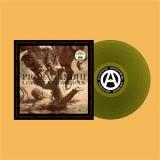
In October 1987, four months after the release of their critically acclaimed Sister LP, Sonic Youth showcased their latest work in a blistering set at Cabaret Metro, Chicago. The concert was introduced by Big Black's Steve Albini (who at the time was banned from the venue) and subsequently released as a semi-official bootleg under the title Hold That Tiger on writer/provocateur Byron Coley's impishly Geffen-baiting label Goofin' (years later the band would use this nom de guerre for their own imprint).
Hold That Tiger's sterling reputation among the Sonic Youth faithful is well deserved. In fact, it isn't a stretch to suggest that the album is to the first handful of SY releases what It's Alive is to the first three Ramones LPs – a feral and liberatory public snapshot of a band's blossoming imperial phase. Indeed, HTT is the sound of a group at the peak of their powers, presenting new songs alongside a handful of older ones with the kind of wild, cathartic enthusiasm common to rock 'n' roll's most revered live albums.
Taking nothing away from Sister – inarguably one of indie rock's first true masterpieces – it is reasonable that many fans prefer the live versions heard on Hold That Tiger to their studio counterparts. On HTT, Sonic Youth is a spiky, pummeling and confident force, alternately mammoth and meditative. Sister and its predecessor EVOL notably added an airy, dreamlike reverie to the band's turbulent doom-lurch, a stylistic evolution that seems to crystallize on HTT. Throughout, Kim Gordon's sinewy, sumptuous bass and Steve Shelley's propulsive, tom-heavy percussion provide the bedrock groove for Thurston Moore and Lee Ranaldo's ferocious barrages of noise-guitar crunch.
By 1987, the band was confidently articulating their dual lexicon of punk-noir dissonance and supernal, psychedelic sonic calligraphy – bending their jagged, streetwise gnarl into balloon animals of dazzling and beautiful songs. This collision of splendor and chaos would become a hallmark of the group's singular alchemy as well as provide a blueprint for the post-SST American underground they would help invent and ultimately nurture.
Hold That Tiger's encore – four songs by the band's beloved Ramones, which Thurston would later astutely compare to "the perfect pudding after a hearty meal" – serves as a reminder that, like any true punks, Sonic Youth never could resist a good, rousing anthem to send the kids home with their ears ringing, their hearts hot-wired.
This first-time reissue with speed-corrected master comes in a gatefold tip-on jacket. Mastered by Bob Weston from the original tapes. Recorded by Aadam Jacobs. Audio repair/editing by Aaron Mullan.
KingCats are a German Show Band from West Germany, formed in 1972 first as AristoCats. They became KingCats in 1976. The lineup was Peter "Pit" Kurz and Norbert "Knox" Rieger on vocals and guitar, Theo Wild (and later, Hans-Jörg Koch) on keyboards and vocals, Eberhardt "Lupp" Krieg on bass and vocals, and Rolf Knauss on drums and vocals. French drummer/singer Patrick Buchmann, alias "Sdinganuff", joined the band in 1980 upon recommandation from Claus Backhaus (Studio 2000, Mannheim, Germany) and saxophone superstar Peter Drischel, alias « Pete Tex ». Before Buchmann’s departure to Los Angeles to study at Musicians Institute, he suggested they record an LP to document some of the band’s compositions which led to the original self titled "KingCats" album in January of 1983.
This rare album was recorded and mixed in Strasbourg, France at Omega Studio by sound engineer Francis Adam, the LP showcases a variety of 80’s unique compositions by Buchmann, Kurz and Rieger. The song "Down In California" gently made its way to the public ear since. Luckily, Francis Adam found the original 16 track, 1 inch tape in early 2024 and saved the original project from desintegration. This long awaited discovery led to this freshly edited, remixed and remastered 2024 version of "KingCats". Produced by Francis Adam, Patrick Buchmann and Peter Kurz, no instruments or vocals were added, and no animals or vegetables were harmed during this process. We hope you will like this new limited edition of "KingCats" !
- 1: Golden
- 2: Locks
- 3: Medusa
- 4: Roma
- 5: Katyusha
- 6: Runaway
- 7: Saigon
- 8: Brokenworld
- 9: Zoo Story
- 10: Trojan Stalks
- 11: Floods
- 12: Polen
In collaboration with EIoper Music, Impressed is proud to press the 10-Year Anniversary Edition of Szymon's debut album, Tigersapp, on limited edition vinyl.
Szymon was a multi-instrumentalist from Newcastle, Australia, with a deep love for jazz and production, building rich sonic worlds in his bedroom studio. Tigersapp stands as his creative legacy—a beautifully curated and emotionally layered collection that blends influences from folk, ambient, electronic, and indie pop.
These songs were mostly recorded in 2008–2009 in his home studio. After his death, his family and supporters enlisted producers like Rusty Santos (Animal Collective, Grizzly Bear) and Ian Pritchett (Angus & Julia Stone) to complete the mixes.
Tigersapp has earned both public and critical recognition in Australia and beyond. It debuted at #21 on the ARIA Albums Chart, and earned a nomination for the 2015 ARIA Award for Best Adult Contemporary Album.
- That Girl
- Sister
- Lullaby And Goodnight
- Love's My Only Crime
- Let It Burn
- Everything I Want
- Dedications To The One I Love
- Seven Come Eleven
- Wild Heart
- Here We Go Again
- Public Animal #9
- Black Cloud
- Crawl
- Just Can't Win
- Each Dawn I Die
- I Want You Right Now
- Stain
- Hell's Kitchen
- Playground
Black & White Swirl Vinyl. Mit ihren Wurzeln fest in der Punkrock- und Hardcore-Szene des Cass Corridor in Detroit der frühen 80er Jahre verankert, erreichten John Brannon (Negative Approach) und Larissa Strickland (L-7) zuerst zusammen mit der eingespielten Rhythmusgruppe aus Kevin Strickland und Jim Kimball, und nachdem Kevin und Jim die Band verlassen hatten (um Mule zu gründen) mit Ron Sakowski (Necros) am Bass und Todd Swalla (Necros) am Schlagzeug, eine ganz neue Ebene. Inspiriert von The Birthday Party und den Stooges der Funhouse-Ära sowie frühen Blues- und Jazzkünstlern, waren die Laughing Hyenas ein heftiger, schwefeliger Noise-Knaller. Die düsteren und hypnotischen Bassriffs und der Tribal-Swing bildeten den perfekten Rahmen für Larissas (sie hatte erst ein paar Monate vor der Gründung der Band angefangen, Gitarre zu spielen) schneidendes, zerklüftetes, ja fast schon mörderisches Gitarrenspiel und John Brannons teuflisches Heulen. Wenn es eine Band gibt, die eine LP mit Live-Material verdient hat, dann sind es die Laughing Hyenas. Wie Aaron Dilloway es so schön gesagt hat: "Die Laughing Hyenas waren die gruseligste Band, die ich je gesehen habe." Dieses Set wurde von John Brannon sorgfältig aus seinem persönlichen Archiv an Kassetten zusammengestellt. Die Aufnahmen wurden von Bobby Emmett übertragen, gemischt und gemastert, bekannt für seine Arbeit mit The Sights, Sturgill Simpson und zuletzt Jack White.
- A1: Les Orques Adorent Le Foie De Requin
- A2: Je Ris Pour Autre Chose
- A3: Calme-Toi Bouge Tes Genoux
- A4: Que La Biche Soit En Nous
- A5: Dieux
- A6: C5
- A7: Soirée Parfaite
- B1: Ce Requin-Baleine Ne Me Sert À Rien
- B2: Cheese Bad Girl
- B3: Uno
- B4: L´archère
- B5: Texte Sur Les Vivants
- B6: Faux Comptes
- B7: Goûter Soir Apéro
Patami isn't a judo mat, an animal defense association or a kind of sausage. Patami is a concept unique to each individual and, above all, unique to singer Stanislas. Patami is a friend to all children. He's at their service, but he's also their king. For the audience, it's whatever they want it to be, as long as it's comforting! Patami is Astéréotypie's third album, an extraordinary musical adventure featuring post- punk, noise and electro sounds. There are also some lovely melodies. Patami will shake your heart with the myths, memories, concepts and rants of the four star MCs: Claire, Stan, Yohann and Aurélien, the greatest songwriters of the moment (a few guests are also expected)! In short, Patami is like nothing you've ever heard before, and what's more, it's a real comfort. Their previous record, Aucun mec ne ressemble à Brad Pitt dans la Drôme, released in the spring of 2022, was warmly received by the public and achieved great critical success. Since then, Astéréotypie has been playing headline shows and festivals all over France. The band's singularity has left its mark. After 10 years of existence, the collective has finally found its audience.
- Freedom
- Joyride
- Yippee-Ki-Yay
- Delusional
- Red Flag
- Love Forever
- The One
- Boy Crazy
Orgy Orange Vinyl[23,95 €]
Kesha’s sixth studio album, . (PERIOD) – yes, it's just a period. – is an unapologetic, unfiltered declaration of artistic freedom and fearless authenticity from the 2x GRAMMY® Award-nominated pop icon. Conceived, co-produced and co-written by Kesha, the 11-song collection transcends pop norms to create a raw, daring, and intensely personal sonic journey, a defiant act of self-expression that refuses to adhere to expectations or play it safe.
More than just a new album, . (PERIOD) is Kesha at her most powerful best, turning her experiences into vibrant, audacious art with a spiked heel at the neck of pop culture.
Among its many exhilarating highlights, . (PERIOD) includes 2024’s blockbuster hits “JOYRIDE” and “DELUSIONAL,” both available everywhere now. Currently boasting over 103M streams at Spotify alone, “JOYRIDE” proved a true sensation since its Independence Day release, reaching #6 on Billboard’s “Bubbling Under Hot 100 Singles” and “Hot Dance/Electronic Songs” along with the top 30 on “Pop Airplay” and chart success around the world from the UK to New Zealand. Produced by Zhone and co-written by Kesha, Zhone, and Madison Love, the track marked the triumphant first chapter of a milestone new era for Kesha, celebrating both her long overdue empowerment as an independent artist as well as a powerful sonic evolution following 2023’s critically acclaimed fifth studio album, Gag Order. Along with its popular achievement, “JOYRIDE” has been met by high-profile critical applause from the likes of Rolling Stone, Variety, and Vulture, to name only a few. Perhaps NYLON said it best: “Everything about ‘JOYRIDE’ is a trip…The original glitter-faced party animal of the 2010s is back with a fiery vengeance.”
“JOYRIDE” joined by an equally acclaimed official music video streaming now on YouTube.
Directed by Dimitri Basil (Kylie Minogue, Vance Joy), Cooper Roussel (Unknown Mortal Orchestra, Miami Horror), and Laura Gorun (Joywave, Kings of Leon), the high-octane visual received wide-ranging attention from major publications and top online outlets around the globe, including Billboard, Vulture, and Rolling Stone, the latter of which raved, ““Kesha is taking her foot off the brakes and going full-speed ahead on her new video for ‘JOYRIDE.’ The video sees Kesha racing through the desert in a hot red convertible while being chased by a helicopter, gun-toting assassins, and a shirtless dude hell-bent on catching up to the pop diva.”
Kink Hot Pink Vinyl[23,95 €]
Kesha’s sixth studio album, . (PERIOD) – yes, it's just a period. – is an unapologetic, unfiltered declaration of artistic freedom and fearless authenticity from the 2x GRAMMY® Award-nominated pop icon. Conceived, co-produced and co-written by Kesha, the 11-song collection transcends pop norms to create a raw, daring, and intensely personal sonic journey, a defiant act of self-expression that refuses to adhere to expectations or play it safe.
More than just a new album, . (PERIOD) is Kesha at her most powerful best, turning her experiences into vibrant, audacious art with a spiked heel at the neck of pop culture.
Among its many exhilarating highlights, . (PERIOD) includes 2024’s blockbuster hits “JOYRIDE” and “DELUSIONAL,” both available everywhere now. Currently boasting over 103M streams at Spotify alone, “JOYRIDE” proved a true sensation since its Independence Day release, reaching #6 on Billboard’s “Bubbling Under Hot 100 Singles” and “Hot Dance/Electronic Songs” along with the top 30 on “Pop Airplay” and chart success around the world from the UK to New Zealand. Produced by Zhone and co-written by Kesha, Zhone, and Madison Love, the track marked the triumphant first chapter of a milestone new era for Kesha, celebrating both her long overdue empowerment as an independent artist as well as a powerful sonic evolution following 2023’s critically acclaimed fifth studio album, Gag Order. Along with its popular achievement, “JOYRIDE” has been met by high-profile critical applause from the likes of Rolling Stone, Variety, and Vulture, to name only a few. Perhaps NYLON said it best: “Everything about ‘JOYRIDE’ is a trip…The original glitter-faced party animal of the 2010s is back with a fiery vengeance.”
“JOYRIDE” joined by an equally acclaimed official music video streaming now on YouTube.
Directed by Dimitri Basil (Kylie Minogue, Vance Joy), Cooper Roussel (Unknown Mortal Orchestra, Miami Horror), and Laura Gorun (Joywave, Kings of Leon), the high-octane visual received wide-ranging attention from major publications and top online outlets around the globe, including Billboard, Vulture, and Rolling Stone, the latter of which raved, ““Kesha is taking her foot off the brakes and going full-speed ahead on her new video for ‘JOYRIDE.’ The video sees Kesha racing through the desert in a hot red convertible while being chased by a helicopter, gun-toting assassins, and a shirtless dude hell-bent on catching up to the pop diva.”
- A.i.m
- Po$T American
- My Spirit Animal Ate Your Spirit Animal
- Pit Song
- The Caucasity
- Mythical Cowboys
- Dead Pioneers
- White Wine
- Juicy Fruit (Ode To Chief Bromden)
- Stfu
- Bloodletting Carnival
- Love Language
- Fire And Ash
- Working Class Warfar
- Untitled Spoken Word No. 2
TRANSPARENT YELLOW VINYL[23,11 €]
Crystal clear vinyl. 'PO$T AMERICAN' is the second full-length album by Dead Pioneers. Written in February and recorded in July, it preempts the 2024 American election but wraps up the fears and frustrations as eloquently and, crucially, humorously as the band's 2023 self-titled debut. "Currently, we are amidst the gross existence of capitalism, colonialism, white supremacy and the many oppressive forces that have come to inform everything around us" says vocalist and songwriter Gregg Deal. "The title PO$T AMERICAN informs a collective disenfranchisement and disillusionment to the so-called American dream, while moving forward with hope of a desired designation of unity outside those that would use us for their own capitalistic power grab." The aural palate is broadly the same, but it feels expanded, stronger somehow: drawing on the confrontational writing of Rage Against The Machine, the unapologetic voice of Chuck D and Public Enemy, the storytelling of Johnny Cash, the evolution of IDLES, and punk stalwarts including Black Flag, Rollins Band and Dead Kennedys. Overall the resulting feeling across the new album is one of cautious optimism: "Although we didn't expect the political relevance to become more relevant, we have no illusions to the American dream, or to where we seem to be going. But we have hope that we can get to a better place for people to have what they need." It is an album that speaks to and for this precise time and place; that perhaps could not exist at any other time. It is an album for now.
- A.i.m
- Po$T American
- My Spirit Animal Ate Your Spirit
- Animal
- Pit Song
- The Caucasity
- Mythical Cowboys
- Dead Pioneers
- White Wine
- Juicy Fruit (Ode To Chief Bromden)
- Stfu
- Bloodletting Carnival
- Love Language
- Fire And Ash
- Working Class Warfare
- Untitled Spoken Word No. 2
Crystal clear vinyl. 'PO$T AMERICAN' is the second full-length album by Dead Pioneers. Written in February and recorded in July, it preempts the 2024 American election but wraps up the fears and frustrations as eloquently and, crucially, humorously as the band's 2023 self-titled debut. "Currently, we are amidst the gross existence of capitalism, colonialism, white supremacy and the many oppressive forces that have come to inform everything around us" says vocalist and songwriter Gregg Deal. "The title PO$T AMERICAN informs a collective disenfranchisement and disillusionment to the so-called American dream, while moving forward with hope of a desired designation of unity outside those that would use us for their own capitalistic power grab." The aural palate is broadly the same, but it feels expanded, stronger somehow: drawing on the confrontational writing of Rage Against The Machine, the unapologetic voice of Chuck D and Public Enemy, the storytelling of Johnny Cash, the evolution of IDLES, and punk stalwarts including Black Flag, Rollins Band and Dead Kennedys. Overall the resulting feeling across the new album is one of cautious optimism: "Although we didn't expect the political relevance to become more relevant, we have no illusions to the American dream, or to where we seem to be going. But we have hope that we can get to a better place for people to have what they need." It is an album that speaks to and for this precise time and place; that perhaps could not exist at any other time. It is an album for now.
- A1: A I.m
- A2: Po$T American
- A3: My Spirit Animal Ate Your Spirit Animal
- A4: Pit Song
- A5: The Caucasity
- A6: Mythical Cowboys
- A7: Dead Pioneers
- A8: White Wine
- B1: Juicy Fruit (Ode To Chief Bromden)
- B2: Stfu
- B3: Bloodletting Carnival
- B4: Love Language
- B5: Fire And Ash
- B6: Working Class Warfar
- B7: Untitled Spoken Word No 2
CRYSTAL CLEAR VINYL[26,01 €]
Transparent yellow vinyl, limited to 300 copies. GSA exclusive Indie variant. 'PO$T AMERICAN' is the second full-length album by Dead Pioneers. Written in February and recorded in July, it preempts the 2024 American election but wraps up the fears and frustrations as eloquently and, crucially, humorously as the band's 2023 self-titled debut. "Currently, we are amidst the gross existence of capitalism, colonialism, white supremacy and the many oppressive forces that have come to inform everything around us" says vocalist and songwriter Gregg Deal. "The title PO$T AMERICAN informs a collective disenfranchisement and disillusionment to the so-called American dream, while moving forward with hope of a desired designation of unity outside those that would use us for their own capitalistic power grab." The aural palate is broadly the same, but it feels expanded, stronger somehow: drawing on the confrontational writing of Rage Against The Machine, the unapologetic voice of Chuck D and Public Enemy, the storytelling of Johnny Cash, the evolution of IDLES, and punk stalwarts including Black Flag, Rollins Band and Dead Kennedys. Overall the resulting feeling across the new album is one of cautious optimism: "Although we didn't expect the political relevance to become more relevant, we have no illusions to the American dream, or to where we seem to be going. But we have hope that we can get to a better place for people to have what they need." It is an album that speaks to and for this precise time and place; that perhaps could not exist at any other time. It is an album for now.
Repressed for the first time in 2 years, Note price change. Sermonizing Black Nationalism, Pan-Africanism and the benefits of a healthy and just lifestyle during the height of the Bad Boy/Roc-AFella era of nihilistic excess in the late 90's, Dead Prez also signed to a major label (Loud/Columbia) despite leaning much more towards the burgeoning indie aesthetics of the day. But this was a good thing – using major label muscle to wake up righteous hip-hop fans who might have fallen asleep at the wheel. The group itself – consisting of MCs stic.man and M-1, who produced or co-produced most of the duo’s music – was formed in Tallahassee, Florida in the early 1990's.
By later that decade, the duo had started making significant waves, having their music heard on the soundtracks to “Soul In The Hole” and “Slam,” as well as appearing on albums by Big Pun and The Beatnuts. By 1998, they released their first official single, the serious, stark “Police State,” on Loud, appropriately brought to the label by Lord Jamar of Brand Nubian. After building a solid rep over the next two years with fiery live performances, in 2000 they unleashed their debut album, Let’s Get Free.
The album was a welcome return to provocative and often radically political rhetoric that hearkened back to hip-hop forebears including The Coup, Public Enemy and KRS-One (as well as poetic descendants like the Last Poets and Watts Prophets). Let’s Get Free was critically acclaimed and benefited from multiple singles, including the infectious, thick analog drive of “Hip-Hop” “It’s Bigger Than Hip-Hop,” with a remix co-produced by a young Kanye West; “Mind Sex” (with Abiodun Oyewole of the Last Poets); and the poignant “I’m An African.”
But the singles weren’t the only worthy songs, as just about every cut here has deeper meaning than most full albums by their early 2000's peers. Highlights: the thought-provoking, anti-drug album opener “Wolves”; “We Want Freedom” “They Schools” and “Propaganda” . All in all, this is one of the more underrated and possibly Top 5 fully-realized political hip-hop albums of all time.
- Rejection Letter Sample
- No Network
- Contactless
- Gift Shop
- Every Elevator
- A4:
- Bad Deal
- Ketchup
- Brainfog
- Covfefe
- Homework
- Tennis
- Portal
Dischi Fantom’s Sussurra Luce series, blurring the boundaries between text, music and voice, returns with their fifth instalment, an expanded version of Hanne Lippard’s “Talk Shop”. Sculpting a fascinating bridge between radically experimental sound practice, conceptual art, and sound poetry, across its two sides the Berlin based multidisciplinary artist taps an almost dada sensibility, delivering a suite of poems and texts where singular words and sentences are looped and repeated creating a sensory experience of the efficiency and stress found in our private as well as public life.
Roughly a year ago, we had the pleasure of exploring the first two releases from Dischi Fantom’s emerging Sussurra Luce series, Ginevra Bompiani, Caterina Barbieri, and Tomoko Sauvage’s “Il Calore Animale” and Francesco Cavaliere’s “Zoomachia Disc 1”. An extension of the Milan based cultural platform Fantom’s broad and diverse activities (exhibitions, installations, performances, etc.) across numerous artistic disciplines, the series, curated by Francesco Cavaliere and Massimo Torrigiani, delves into the “science of imagination”, working with contemporary authors to explore and blur the boundaries between text, music and voice. Now the brilliant series returns with its latest entry, the Berlin based multidisciplinary artist Hanne Lippard’s “Talk Shop”. Released in a limited edition of 200 copies and coming with an LP-sized booklet, it combines orality and textuality with the idea of loop and repetition to explore the notion of time, and it’s a stunning gesture of performative poetics that plums a startling range of subjects through its sonorous forms.
Working across the fields of text, vocal performance, sound installation, printed objects and sculpture, for more than a decade Hanne Lippard has deployed language as the raw material for her work. Working within a practice that rests at the juncture of the spoken and written word, drawing upon content appropriated from the public sphere (found text) intertwined with her own words, Lippard’s work investigates how the rise in digital communication and mediation reprograms our relationship to language, presenting the subsequent fragility of language - its flaws, oddities, and potential for misinterpretation - and its attempts to convey meaning and sense.
“Talk Shop”, the fifth instalment of Dischi Fantom’s Sussurra Luce series and Lippard’s third recorded release - building upon the ground of 2020's “Work”, issued by Collapsing Market, and 2021's “PigeonPostParis”, released by Boomkat Editions - began as a live performance. Combining orality and textuality with the idea of loop and repetition to explore the notion of time, its relationship with the world of work today, and its personification through the experience of the human body - anonymity as the spearhead of the digital economy - the conceptual underpinnings of the piece depart from the notion that the human voice has become commodified by the ubiquitous nature of contemporary productivity, and intertwined with the mechanics of capital - the voices of satnavs, smart speakers and voicemail systems - while the written word has become increasingly anonymous online.
Addressing vocal anonymity as a spearhead of the digital economy, Lippard’s “Talk Shop” - regarded by the artist as “a compilation of poems and texts where singular words and sentences are looped and repeated creating a sensory experience of the efficiency and stress found in our private as well as public life” - taps an almost dada sensibility through its unexpected layers of meanings drawn from a maximalized approach to the potential of the human voice, creating an engrossing and challenging listen from the first sounding to the last, that continues to reveal itself and unfold with every return.
Sculpting a fascinating bridge between radically experimental sound practice, conceptual art, and sound poetry, it culminates as one of the most strikingly singular creative gestures we’re likely to encounter this year. Highly recommended and not to be missed.
Hanne Lippard (Milton Keynes, 1984) explores the social forms that govern discourse. Her artistic practice, which mainly takes the form of reading and sound installations, investigates the voice as an instrument of emancipation and alienation in times of hyper-connectivity. By mixing personal thoughts and appropriating texts from advertising, slogans and newspaper articles, the text becomes a mix of private and public that regains inventiveness and authorship through the use of the voice, becoming a body of its own. Her recent artistic research has focused on the use of the female body as a container of sounds, on the conscious and unconscious automation of speech and language.
Current 93’s first and last album, NATURE UNVEILED dragged together my obsessions, as I had decided to make a pop album that dealt with my (then—as now!) primary fascinations: Christian apocalyptic and eschatological Christian texts.
In my Speed-Ridden Soul and Mind, I thought I was reinventing The Ronettes, and that the 2 long sides of NATURE UNVEILED were A- and B- Sides of a Wall Of Soundhogs HIT! But the reality is that I was sharing a squat in Vauxhall with Little Annie Anxiety, and hanging out with Youth in The BatCave, with chickens rescued by The Animal Liberation Front in our backyard. Or did that come soon after, soon later? The album was recorded at The Roundhouse Studios in London’s Chalk Farm, home of Bronze Records, the label of my heroes (then—as now!) Uriah Heep, and Motörhead too, for whom I had moved stage-gear on their tour promoting their debut single on Chiswick Records.
Anyway, anyway—I had not reinvented The Ronettes, though every time, every place, I listen to NATURE UNVEILED it Hits Me, And Feels Like A Judas Kiss. There has been NOTHING UNVEILED like NATURE UNVEILED, Before, Since, Or After.
Remastered by The Bricoleur at Bladud Flies!, and with the original artwork refreshed and reborn by Rob Hopeye, this 12” vinyl picture-disc comes in a full-colour die-cut sleeve, which is printed on both the outside and inside.
This is one of the first 4 reissues of the entire back catalogue of C93 on picture-disc and standard vinyl, in the lead-up to the publication of my autobiography at the end of 2025, whilst I also work on many other recording, publishing, and painting projects, and Watch And Pray! Each release in the picture-disc vinyl reissues series is limited to 1,000 copies, and the titles will not be repressed as picture-discs once they have sold out.
Repressed for the first time in 2 years, Note price change. Sermonizing Black Nationalism, Pan-Africanism and the benefits of a healthy and just lifestyle during the height of the Bad Boy/Roc-AFella era of nihilistic excess in the late 90's, Dead Prez also signed to a major label (Loud/Columbia) despite leaning much more towards the burgeoning indie aesthetics of the day. But this was a good thing – using major label muscle to wake up righteous hip-hop fans who might have fallen asleep at the wheel. The group itself – consisting of MCs stic.man and M-1, who produced or co-produced most of the duo’s music – was formed in Tallahassee, Florida in the early 1990's.
By later that decade, the duo had started making significant waves, having their music heard on the soundtracks to “Soul In The Hole” and “Slam,” as well as appearing on albums by Big Pun and The Beatnuts. By 1998, they released their first official single, the serious, stark “Police State,” on Loud, appropriately brought to the label by Lord Jamar of Brand Nubian. After building a solid rep over the next two years with fiery live performances, in 2000 they unleashed their debut album, Let’s Get Free.
The album was a welcome return to provocative and often radically political rhetoric that hearkened back to hip-hop forebears including The Coup, Public Enemy and KRS-One (as well as poetic descendants like the Last Poets and Watts Prophets). Let’s Get Free was critically acclaimed and benefited from multiple singles, including the infectious, thick analog drive of “Hip-Hop” “It’s Bigger Than Hip-Hop,” with a remix co-produced by a young Kanye West; “Mind Sex” (with Abiodun Oyewole of the Last Poets); and the poignant “I’m An African.”
But the singles weren’t the only worthy songs, as just about every cut here has deeper meaning than most full albums by their early 2000's peers. Highlights: the thought-provoking, anti-drug album opener “Wolves”; “We Want Freedom” “They Schools” and “Propaganda” . All in all, this is one of the more underrated and possibly Top 5 fully-realized political hip-hop albums of all time.
A tribute to one of the greatest songwriters & artists of our time! Features newly recorded covers from Keith Richards, Joan Jett and the Blackhearts, Rufus Wainwright, Lucinda Williams, Maxim Ludwig & Angel Olsen, Rickie Lee Jones, Mary Gauthier, Bobby Rush, Automatic, The Afghan Whigs, and Rosanne Cash. Special Record Store Day Edition pressed on Silver Nugget vinyl and housed in a silver laminated jacket Booklet features liner notes by compilation producer & former Lou Reed publicist Bill Bentley, featuring photos by Mick Rock and Timothy Greenfield-Sanders. "To me, Lou stood out. The real deal! Something important to American music and to ALL MUSIC! I miss him and his dog." - Keith Richards "Lou seemed fearless to me, like he'd rather die than be a people-pleaser. I took inspiration from that." - Rosanne Cash "Lou Reed is my earliest influence, my introduction to punk rock, and the soundtrack to the beginning of my romance with Maxim." - Angel Olsen "Lou Reed has been gone now for many years. He's one of the few people whom I miss as much now as when he left. There are so many instances where I wonder what he would say or what he would think. His general aura would always lend something really unique to the room. Thank God he left his great music and recordings. His personality is sorely missed. Love you, Lou." - Rufus Wainwright // It goes without saying that the legendary Lou Reed was a true rock 'n' roll pioneer. From The Velvet Underground's debut in 1967 all the way through the end of his days, Reed sang truth from his heart. He lived life to the limit-and then some. The Power of the Heart is a tribute to Reed's freedom of expression with covers spanning his ground-breaking years with the Velvets into his majestic solo career. Each track is a glorious extension of the Rock 'n' Roll Animal's soul, ever adventurous and avant-garde. The Power of the Heart: A Tribute to Lou Reed kicks off with a legend in his own right, Keith Richards, reimagining the Velvets' classic, "I'm Waiting for the Man." Richards' rendition instantly invites you on board this unforgettable ride. In stark contrast, "Perfect Day" is somehow even more melancholy than the original given the Rufus Wainwright treatment, featuring sparse fingerpicking and gentle harmonies. Joan Jett and the Blackhearts deliver a version of "I'm So Free" that would have even Lou rockin' in his grave. It's thrilling to hear these songs reinterpreted and sung by such heavyweights; you can even hear as Lucinda Williams channels the spirit of Lou with her take on "Legendary Hearts." Other notable tracks include a punk-drunk, loved-up duet by real-life lovers Angel Olsen & Maxim Ludwig with "I Can't Stand It," and Rickie Lee Jones' reimagining of "Walk on the Wild Side," both whimsical and enticing with her whispery vocals, stripped-down percussion, and a piano fit for a late-night lounge. This tribute album truly defies genre, but its throughline, in the end, is its heart: a deeply thoughtful collection of songs that shaped a generation, each paying homage to a man whose body of work still sings.
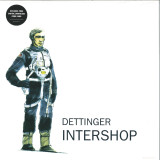
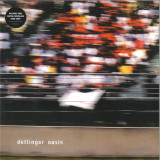
Dettinger’s Intershop and Oasis have long been held, by many fans of ambient and electronic music, to be some of the finest albums in their field. Produced by the mysterious Olaf Dettinger, about whom not much is publicly known, they were some of the earliest full-lengths released by the then-nascent Kompakt, and in many ways, they both articulated and defined the sound that would come to be known as Pop Ambient, while also existing, somehow, to the leftfield of any clearly recognisable genre.
Beautiful, sui generis works, it is a rare pleasure to see them being reissued on vinyl for a new generation of listeners to embrace. Originally released on CD only in 1999, Intershop was Kompakt’s first artist full-length. The music here simmers and broods, with opulent banks of tone marking out territory for rhythms that seem to be built from the clacking detritus of technology – hisses, thunks, knocks. Bass is deployed carefully, each drop a dubbed-out depth charge; drones spin and spiral, warping and weaving between the beats.
Oasis, released in 2000, refined the palette that Dettinger had explored on its predecessor. A blurred crusade of ambient texturology, its unassuming patterns, and subtle, incremental dynamics, admit to real beauty, and a kind of abstract sensuality that you don’t often experience with music that is, perhaps, similarly tooled, but not as poetic. Through seemingly simple gestures – whether lushly expansive repetitions, hyper-acute tremolo tones, or ear-tickling rhythms – it builds complex emotional resonance. It’s no surprise to discover Oasis is held in high esteem by artists like Panda Bear of Animal Collective, who once said of Dettinger, “For us, he was the dude.”
There is, of course, other music to know Dettinger by, too – his three excellent EPs for Kompakt, Blond (1998), Puma and Totentanz (1999), the latter of which, Michael Mayer once argued, “invented dubstep.” There is also a small, yet graceful run of compilation contributions, many of which can be found on Kompakt’s Total and Pop Ambient series. All this music has plenty to recommend it, sharing a clarity of purpose, and a rare, human warmth and depth. But Intershop and Oasis are the releases that distil Dettinger’s singular vision, and allow him, should he wish, to claim his place as a modern master of ambient and electronic music.
Dettingers Intershop und Oasis werden von vielen Fans von Ambient und elektronischer Musik seit langem als einige der besten Alben in diesem Bereich angesehen. Produziert von dem mysteriösen Olaf Dettinger, über den nicht viel bekannt ist, gehörten sie zu den ersten Alben, die von der damals aufstrebenden Plattenfirma Kompakt veröffentlicht wurden. In vielerlei Hinsicht formulierten und definierten sie den Sound, der später als Pop-Ambient bekannt werden sollte, während sie gleichzeitig irgendwie links von jedem klar erkennbaren Genre existierten.
Es ist eine seltene Freude zu sehen, dass diese wunderschönen Werke auf Vinyl wiederveröffentlicht werden, um sie einer neuen Generation von Hörern zugänglich zu machen. Ursprünglich wurde Intershop 1999 nur auf CD veröffentlicht und war Kompakts erstes komplettes Künstleralbum. Die Musik hier brodelt und brütet, mit opulenten Klangbänken, die das Territorium für Rhythmen abstecken, die aus dem klappernden Gerümpel der Technik gebaut zu sein scheinen – Zischen, Klopfen, Schaben. Der Bass wird sorgfältig eingesetzt, jeder Drop ist eine synchronisierte Tiefenladung; Drones drehen und winden sich spiralförmig und verflechten sich zwischen den Beats.
Oasis, das im Jahr 2000 erschien, verfeinerte die Palette, die Dettinger auf seinem Vorgänger erkundet hatte. Ein verschwommener Kreuzzug der Ambient-Texturologie, dessen unaufdringliche Muster und subtile, schrittweise Dynamik echte Schönheit und eine Art abstrakter Sinnlichkeit zulassen, die man nicht oft bei Musik erlebt, die vielleicht ähnlich ausgestattet, aber nicht so poetisch ist. Durch scheinbar einfache Gesten – seien es üppig ausladende Wiederholungen, hyperakute Tremolotöne oder ohrenbetäubende Rhythmen – baut sie eine komplexe emotionale Resonanz auf. Es ist keine Überraschung, dass Oasis von Künstlern wie Panda Bear von Animal Collective hoch geschätzt wird, der einmal über Dettinger sagte: “Für uns war er DER Typ”.
Es gibt natürlich auch noch andere Musik, die Dettinger bekannt macht – seine drei ausgezeichneten EPs für Kompakt, Blond (1998), Puma und Totentanz (1999), von denen letztere, wie Michael Mayer einmal kühn behauptete, “den Dubstep erfand”. Es gibt auch eine kleine, aber feine Reihe von Compilation-Beiträgen, von denen viele auf Kompakts Total- und Pop-Ambient-Serien zu finden sind. All diese Musik ist sehr empfehlenswert und zeichnet sich durch eine klare Zielsetzung und eine seltene, menschliche Wärme und Tiefe aus. Aber Intershop und Oasis sind die Veröffentlichungen, die Dettingers einzigartige Vision destillieren und es ihm ermöglichen, seinen Platz als moderner Meister der Ambient- und elektronischen Musik zu behaupten, sollte er dies wünschen.
Dettinger’s Intershop and Oasis have long been held, by many fans of ambient and electronic music, to be some of the finest albums in their field. Produced by the mysterious Olaf Dettinger, about whom not much is publicly known, they were some of the earliest full-lengths released by the then-nascent Kompakt, and in many ways, they both articulated and defined the sound that would come to be known as Pop Ambient, while also existing, somehow, to the leftfield of any clearly recognisable genre.
Beautiful, sui generis works, it is a rare pleasure to see them being reissued on vinyl for a new generation of listeners to embrace. Originally released on CD only in 1999, Intershop was Kompakt’s first artist full-length. The music here simmers and broods, with opulent banks of tone marking out territory for rhythms that seem to be built from the clacking detritus of technology – hisses, thunks, knocks. Bass is deployed carefully, each drop a dubbed-out depth charge; drones spin and spiral, warping and weaving between the beats.
Oasis, released in 2000, refined the palette that Dettinger had explored on its predecessor. A blurred crusade of ambient texturology, its unassuming patterns, and subtle, incremental dynamics, admit to real beauty, and a kind of abstract sensuality that you don’t often experience with music that is, perhaps, similarly tooled, but not as poetic. Through seemingly simple gestures – whether lushly expansive repetitions, hyper-acute tremolo tones, or ear-tickling rhythms – it builds complex emotional resonance. It’s no surprise to discover Oasis is held in high esteem by artists like Panda Bear of Animal Collective, who once said of Dettinger, “For us, he was the dude.”
There is, of course, other music to know Dettinger by, too – his three excellent EPs for Kompakt, Blond (1998), Puma and Totentanz (1999), the latter of which, Michael Mayer once argued, “invented dubstep.” There is also a small, yet graceful run of compilation contributions, many of which can be found on Kompakt’s Total and Pop Ambient series. All this music has plenty to recommend it, sharing a clarity of purpose, and a rare, human warmth and depth. But Intershop and Oasis are the releases that distil Dettinger’s singular vision, and allow him, should he wish, to claim his place as a modern master of ambient and electronic music.
Dettingers Intershop und Oasis werden von vielen Fans von Ambient und elektronischer Musik seit langem als einige der besten Alben in diesem Bereich angesehen. Produziert von dem mysteriösen Olaf Dettinger, über den nicht viel bekannt ist, gehörten sie zu den ersten Alben, die von der damals aufstrebenden Plattenfirma Kompakt veröffentlicht wurden. In vielerlei Hinsicht formulierten und definierten sie den Sound, der später als Pop-Ambient bekannt werden sollte, während sie gleichzeitig irgendwie links von jedem klar erkennbaren Genre existierten.
Es ist eine seltene Freude zu sehen, dass diese wunderschönen Werke auf Vinyl wiederveröffentlicht werden, um sie einer neuen Generation von Hörern zugänglich zu machen. Ursprünglich wurde Intershop 1999 nur auf CD veröffentlicht und war Kompakts erstes komplettes Künstleralbum. Die Musik hier brodelt und brütet, mit opulenten Klangbänken, die das Territorium für Rhythmen abstecken, die aus dem klappernden Gerümpel der Technik gebaut zu sein scheinen – Zischen, Klopfen, Schaben. Der Bass wird sorgfältig eingesetzt, jeder Drop ist eine synchronisierte Tiefenladung; Drones drehen und winden sich spiralförmig und verflechten sich zwischen den Beats.
Oasis, das im Jahr 2000 erschien, verfeinerte die Palette, die Dettinger auf seinem Vorgänger erkundet hatte. Ein verschwommener Kreuzzug der Ambient-Texturologie, dessen unaufdringliche Muster und subtile, schrittweise Dynamik echte Schönheit und eine Art abstrakter Sinnlichkeit zulassen, die man nicht oft bei Musik erlebt, die vielleicht ähnlich ausgestattet, aber nicht so poetisch ist. Durch scheinbar einfache Gesten – seien es üppig ausladende Wiederholungen, hyperakute Tremolotöne oder ohrenbetäubende Rhythmen – baut sie eine komplexe emotionale Resonanz auf. Es ist keine Überraschung, dass Oasis von Künstlern wie Panda Bear von Animal Collective hoch geschätzt wird, der einmal über Dettinger sagte: “Für uns war er DER Typ”.
Es gibt natürlich auch noch andere Musik, die Dettinger bekannt macht – seine drei ausgezeichneten EPs für Kompakt, Blond (1998), Puma und Totentanz (1999), von denen letztere, wie Michael Mayer einmal kühn behauptete, “den Dubstep erfand”. Es gibt auch eine kleine, aber feine Reihe von Compilation-Beiträgen, von denen viele auf Kompakts Total- und Pop-Ambient-Serien zu finden sind. All diese Musik ist sehr empfehlenswert und zeichnet sich durch eine klare Zielsetzung und eine seltene, menschliche Wärme und Tiefe aus. Aber Intershop und Oasis sind die Veröffentlichungen, die Dettingers einzigartige Vision destillieren und es ihm ermöglichen, seinen Platz als moderner Meister der Ambient- und elektronischen Musik zu behaupten, sollte er dies wünschen.
After several EP’s and collaborations with artists - such as Elderbrook, Hayden James and Novaa – the producer and singer releases his solo debut album "Aniimals" on April 5th.
With great attention to detail, Moglii creates his very own genre „organic electronic“, defined by a modern mix of warm beats, analogue synthesizers and soulful vocals. Each track explores the relationship between intelligent life forms and humans, such as "Fungii," "iinsects," or "Roots“, aiming to draw attention to the incredible organic diversity on this planet.
„Aniimals“ represents biodiversity in each track named after a wonderful and inspiring creature, that Moglii relates to. This DIY-release campaign includes a limited bio-vinyl pressing and a sustainable merch edition.
Why biodiversity? The extinction of many species (often undiscovered) is perhaps the most underestimated problem of our time. There is a lot of public debate about CO2 budgets, but according to experts, the basis of our survival as humanity could also depend significantly on the preservation of genetic diversity in our limited planetary garden. Due to destruction of nature, the loss of species will continue to worsen unless there is a cultural rethink.
Moglii proves his appreciation for animals of any kind and fascination for other intelligent life forms in a very impressive musical way with his debut album, aiming to create an emotional bridge between our urban lifestyle and the animals that inhabit this planet with us.
Seit Jahren vergriffen und jetzt als 10 years Anniversary-Collector's Edition streng limitiert wieder erhältlich: Die Rude Boy RocknRoll-Show von den City Saints mit einem Dutzend hochexplosiven Streetpunk/RocknOi!-Shoutern plus exklusiven Bonus Song "Riot"! Das Debüt "Kicking ass for the working class" der Göteburger um Ex-Mitglieder von Perkele schlug zurecht ein wie eine Bombe und katapultierte die Band sofort in die Herzen der Szene! Songs wie "Gonna Balls", This is my life" oder "Public Animal No.1" sind fast forward-melodic Hymnen mit jeder Menge Dampf und einer Spielfreude, die jeden Lautsprecher zum Beben bringen.
If there ever was a monicker apt for describing an artist’s behavior, that is Ghost Lemurs. Manifesting spottily in compilations and limited edition tapes, then returning to the shadows without much fanfare, the project has indeed demonstrated a ghostly behavior and a nature as puzzling as the animal it takes its name from. Wombs And Alien Spirits represents now their most public outing, one in which the duo of visual artist / producer Kareem Lofty and Daniele Guerrini (better known as Heith and as Haunter’s co-founder) are happy to showcase all the discoveries in a process of musical and spiritual research begun in 2019. Described by the artists themselves as an experiment in mediterranean psi-trance, the album makes use of an incredibly diverse number of traditions, sonic sources and techniques of musical experimentation, keeping its psychedelic intentions central to the whole creative endeavor. Moments of meditative relaxation are brought to unsettling new levels by cavernous basses and spaced out drones, while tight polyrhythms bring beautiful granular melodies to a sidereal ceremonial dance. As beautiful and captivating as it is, Wombs And Alien Spirits remains as chimeric and unrestrained as any previous effort by the two artists. It’s a type of folk music devoid of a specific homeland, but resulting from the authors’ heritages, simultaneously divided and united by the mediterranean sea, injected with all the trajectories of their personal journeys. It ends up sounding profoundly human and uncannily inhuman, tapping into the undiscovered alien element at the beginning of the experience of life. Genre: Electronic / Experimental Listen:
- A1: Profesor Baltazar (Opening Credits From Professor Balthazar)
- A2: Maxol (Theme From Maxol)
- A3: Maestro Koko (Theme From Maestro Koko)
- A4: Horacijev Uspon I Pad (Theme From The Rise And Fall Of Horatio)
- A5: Tetke Pletke (Theme From Knitting Pretty)
- A6: Profesor Baltazar (Zagrebfilmijada Vocal Version)
- A7: O Misu I Satovima (Theme From Of Mouse And Ben)
- A8: Horacijev Uspon I Pad (Animal Choir From The Rise And Fall Of Horatio)
- B1: Stonozica Bosica (Theme From Tenderfeet Centipede)
- B2: Vjetrovita Prica (The Balthazar Machine From A Windy Story)
- B3: Lutke Bez Kose (Theme From Bald Is Beautiful)
- B4: Oblacno Sa Svadjavinama (Theme From Cloudy With Brawlstorms)
- B5: Krojac Silvestar (Bozica Sings From The Grave Little Tailor)
- B6: Peppino Cicerone (Theme From Peppino Cicerone)
- B7: Maxol (The Lullaby From Maxol)
Original soundtrack from the animated TV series 'Professor Balthazar' (1967 - 1978) by Tomislav Simovic.
Gatefold LP, cut from the original master tapes, liner notes by Zeljko Luketic and exclusive graphics by Boris Stapic.
Master tapes were considered lost; now found and restored for this unique release celebrating Yugoslavia's biggest cartoon export of the times.
Professor Balthazar was filmed from 1967 to 1978 in Zagreb. It was a huge international success: from large fan base in Scandinavia to broadcasting on USA television and countries like Germany, Italy, UK, France and even Iran. It's still aired on various TV programs and video platforms.
Animation style and content is widely praised for being one of the rare cartoons that does not feature any kind of violence or aggression. The character of Professor Balthazar solves problems in a peaceful way. He uses his inventions and science to help his friends. Distinctive visual influence is a crossover of bright, psychedelic colors, weird shapes and naive art, typical for Zagreb School of Animated Film. This soundtrack is mastered from original tapes, composed and conducted by Tomislav Simovic.
The music is busy, playful and mixes influences of jazz, modern classical and even electronica. Fox & His Friends Records, also the curators of the largest ever multimedia exhibition on Professor Balthazar series in Museum of Modern and Contemporary Art in Rijeka as a part of the European Capital of Culture program in 2020, present the masters without any interventions in sound. This album cut includes longer rare version of main credits, made exclusively for Zagrebfilmijada, an event of public screenings of Professor Balthazar and other cartoons in cinemas in 1970's Yugoslavia.
- 1: Connais Tu L'animal Qui Inventa Le Calcul Integral?
- 2: Evariste Aux Fans
- 3: Les Pommes De Lune
- 4: La Chasse Au Boson Intermédiaire
- 5: Dans La Lune
- 6: La Faute À Nanterre
- 7: Ma Mie
- 8: Wo I Nee
- 9: Si J'ai Les Cheveux Longs C'est Pour Pas M'enrhumer, Atchoum!
- 10: La Révolution
- 11: Je Ne Pense Qu'a Ça
- 12: Je Chante Pour Vous Faire Marcher
- 13: Je Ne Suis Pas Simple
- 14: Si Les Étoiles Pouvaient Parler
Évariste is one of the rare specimens of artist-cum-scientists. Among his kind stand others like Pierre Schaeffer, a Polytechnique graduate (an engineer but also the father of musique concrète) and the eccentric Boby Lapointe (graduate of the École centrale and inventor of the Bibi-binaire system, patented in 1968). Évariste's songwriting, joyful and full of energy (albeit extremely critical), shrouds an original tragedy: born in 1943 among résistants, Joël Sternheimer (aka Évariste) grew up without a father, lost to Auschwitz. Although he makes little reference to Jewish culture in his music, his origins leave their mark: in 1974, he sings a Hebrew song on television. In 1966, the young Joël sports Princeton's colourful paraphernalia - that's because he's freshly returning from the US, where he was sent to pursue his research on "particle mass and the interpretation of observed regularities, such as the effects of a wave" (will understand who may). When he gets there the country's in the midst of the Vietnam War. With McNamara keen to find an alternative to the nuclear weapon and calling upon the country's biggest brains to undertake the task, there's a "fund shift" within the university - a diplomatic way to give notice to whoever may not be disposed to follow the government's scheme. Joël, who's under the supervision of a rebellious physician, is dismissed. He regardless keeps following the prestigious seminaries of the Institute for Advanced Study, chaired by Oppenheimer, inventor of the atomic bomb. Likely inspired by the hippie movement and music, Joël buys a guitar and starts playing in Washington Square - after all, Bob Dylan himself started there. He blithely skips Oppenheimer and receives a warm (though surprised) welcome from a crowd thoroughly unfamiliar with French. When the ageing physicist questions him about his decreasing attendance, Joël explains how drawn he is to music, and how he thinks it could help him in self-financing his research. Évariste recalls seeing the sickened man, his face torn by remorse, lighten up to his words and say: "What's keeping you - go for it! If I was still young that's exactly what I'd do." The student takes these words as a testimony from his professor - and it's enough to convince him . And so he takes the leap during the Christmas vacations he spends in Paris. A journalist friend he often sees around the Sorbonne introduces him to the artistic director of Disques AZ. The latter passes the tapes on to the label's boss, Lucien Morisse, also program manager on Europe N°1. Morisse is blown away - and signs him onto the label right away. Michel Colombier, arranger for Serge Gainsbourg and co-author of "Psyché Rock", with Pierre Henry, contributes some of his original ideas to the 7 inch "E=mc2": Évariste's preoccupation with the percussion sound on the track "Le calcul intégral" is that it goes "poom poom" and not "tock tock" - Colombier is aware of the issue and records Évariste's guitar like a percussion in an isolated booth. The organist Eddy Louis, who is to participate, in 1969, to the success of Claude Nougaro's "Paris mai", also appears on the record. It's 1966 and the Antoine phenomenon (signed on Vogue) storms through France. The two singers share similarities: Antoine is an engineer of the École centrale, gifted with a great originality in his song-writing. A godsend for the two labels who turn this resemblance into a commercial strategy, setting them out as rivals. To this day though, Évariste still denies what was little more than slushy tabloïd gossip. Success comes around swiftly and in 1967 Évariste launches into a second 7 inch, "Wo I nee", again arranged by Michel Colombier. Quantum mechanics fans finally get their anthem with "La Chasse Au Boson Intermédiaire" (or the "Intermediary Boson Pursuit"). To sum up what's a boson, say he's a close pal of the meson, photon and other gluons. A few months later, it's May 68 and everything's turned upside down. Évariste writes a series of songs inspired by the events, which he immediately submits to Lucien Morisse. When the man behind "Salut les copains", once married to Dalida, hears the song "La révolution" - a father and son dialogue - he can't take any more: AZ simply cannot release this. But there and then Lucien Morisse makes a gesture which will remain engraved in French music's history: sorry to be unable to officially stand by the singer, he encourages him to self-produce the record, but with his tacit support. He calls the pressing factory and asks they apply the same rate for Évariste as they would for AZ. The singer and his musicians use the same studio as for the previous record, all of them playing for free awaiting a return on investment. Évariste keeps singing at the Sorbonne with "Jussieu's gang" and "the young Renaud" he nicknames "le p'tit gavroche" (or "street urchin"). Renaud volunteers to type the lyrics of the song "La révolution" so that the chorus can be sung and recorded. A boy in the group is related to Wolinski and introduces them. The two get along so well that Wolinski ends up drawing the cover for the record "La révolution", for free. The self-released 7 inch "La révolution / La faute à Nanterre" is sold under the table and door-to-door for half the price of a standard record, on and around the boulevard Saint-Michel; and it runs out fast. In the end, there will be 6 releases of the record, and 25000 copies sold. When the theatre director Claude Confortès decides to adapt Wolinski's drawing series titled "Je ne veux pas mourir idiot" ("I don't want to die a fool"), he asks Évariste to write the original soundtrack. His friend, now cartoonist for Hara-Kiri Hebdo, often promotes him in accordance with a principle dear to him by virtue of which he gives a special place to his friends. Dominique Grange (writer of the song "Nous sommes les nouveaux partisans") soon joins the team. After 150 performances, Évariste leaves his place to Dominique Maurin (brother of Patrick Dewaere). Évariste composes the songs for Claude Confortès' next play, "Je ne pense qu'à ça" ("That's all I think about"), co-wrote with Wolinski in 1969. The comedians of the play record the songs on a 7 inch, with a cover signed, again, by Wolinski. In 1971, French television produces the documentary "Évariste et les 7 dimensions", but doesn't air it. Indeed, the scientific sub-comity of the programming comity (sic) censors the show. The given justification is that "Évariste dangerously mixed science with science-fiction, numerology and other non-scientific disciplines". The underlying motive might have been a will to censor the singer-mathematician's political discourse. In the documentary and among other things, Évariste discusses hierarchy, alienation and revolution. Half a century later the documentary remains invisible, though some excerpts resurfaced in 1992 in the cult show "L'oeil du cyclone", on Canal +. Though flourishing, Évariste's career is nearing its end. 1970 is the beginning of a decade in the course of which he is to make a decisive discovery in the musical and scientific domains. Following this breakthrough, he moves away from self-produced music and gaucho magazines to focus on science. He keeps Oppenheimer's encouraging words in mind, now freely pursuing his research thanks to the sales of his records. Joël realises that when decoding protein sequences, one finds musical sequences recognisable to humans. He names them "proteodies". If, when listening to a proteody, one responds by being so sensitive as to finding it beautiful, then it reveals a deficiency of the related protein - and this peculiar music may be the cure. We could trace back the music history in light of proteins lacking in a given artist, or within a public's majority. You always thought these hysterical groupies who'd throw their underwear with passion and faint in the pit had miraculously appeared because they had never heard anything as wonderful as the Beatles? Make no mistake! For Évariste, it all boils down to an intro's protein content. Indeed, the beginning of their first hit "Love Me Do" corresponds to dopamine, the neurotransmitter linked to compulsive buying. An intro like this could only unleash the fervour of groupies, victims of fashion and biology. Évariste's success is such that the income from his sales gives him the autonomy to which he had aspired when confiding to Oppenheimer. It made it possible for him to pursue his research without any institutional constraints. He now devotes himself to his proteodies, sat in the offices of the European University for Research, just around the corner from the Sorbonne he knew so well. Évariste is no more. Joël regained control of this strange and comical beast.
About Last Night… is Mabel’s second debut studio album by English singer and songwriter Mabel, released on 15th July 2022 by Polydor Records. Mabel worked with artists such as 24kGoldn, Lil Tecca, Jax Jones, Galantis, Joel Corry on this album. A candid, positive and important voice in contemporary pop, the Brit Award winner’s new music emerged not just in the wake of a startling few years in the public eye, but through the life-changing lens of the pandemic. Right at the beginning of lockdown, Mabel and her dogs moved back in with her parents, she threw herself into dance classes, and channelled everything she missed (close friends, the big night out, young love, feeling unafraid) into this brand-new musical chapter. As she continued work on the record in the UK, US and between various lockdowns, Mabel first teased what she had been working on with first single ‘Let Them Know’ – an unapologetic anthem about dressing up with nowhere to go, and projecting confidence for anyone who needs it. Recent single ‘Good Luck’ distilled influences of house, heartbreak and female solidarity into perfectly realised pop – and the empowering song you need, when getting ready to go to the party of ‘Overthinking’. Pulling all these strings and tying them together is Mabel herself, with much more on the project to be revealed soon.
Limited to 500 copies worldwide.
Heavy as f-ck and deep as hell, this devastating split album gleefully corrupts and corrodes Dub’s sunshine reflections. Celebrating rhythm & noise in its dank echo chamber, these demolition dub tracks are built from obsessive studies in distortion, overdrive and seriously ruff textures, amongst an absolutely insane amount of sub-bass level.
‘Disintegration Dubs’ is a three way low end collision, between G36 (The Bug aka Kevin Martin/Gorgonn’s rig torturing beat project) and JK Flesh (Justin Broadrick of Godflesh/Jesu etc…). As the album title suggests, this instrumental pile up of floor crawling, sound system crushers, is a clearer sign than ever, that these three producers crave their dub cuts to be mutant and heavyweight, totally damaged and completely atomised. Dub as sonic obliteration
Anyone previously smitten by Techno Animal’s deeply psychedelic face off with Porter Ricks, on the long out of print ’Symbiotics’, or who worshipped Zonal’s recent rhythmic wreckage via Relapse records, will surely gorge greedily on Disintegration Dubs’. Likewise, newbies, who have snapped up this year’s ‘Fire’ by The Bug or ‘New flesh in dub’ by Godflesh, will find endless pleasure within these dread-tech, annihilated dubs and Industrial strength steppas rhythms. Echoes of Basic Channel, early Iration Steppas, Public Image Limited or even Andy Stott can be heard within this collection’s haunted atmospherics and bulldozing rumble. Yet, these three individual producers have obviously found their own recognisably original sound, within these monolithic grooves, and what makes this album so utterly refreshing, is just how well the three disparate sound manipulators complement each other fully, as they collectively set their sights on some shared, relentlessly futuristic sci-fi vision, for a new form of dub.
Obviously, Martin as The Bug, and Broadrick with his colossal dubs of Godflesh and his filthy back catalogue of JK Flesh releases, have both long since subscribed to the genre, aesthetic and fragmentation of Dub. Meanwhile relative newcomer, Gorgonn, is The Bug’s long time, live soundman, and former bandmate with DJ Scotch Egg in Devil Man, as well as having formed Dokkebi Q with Kiki Hitomi (ex-King Midas Sound), so he is no stranger to the art of deviant dubs either…
G36 dropped their appropriately titled debut EP ’Floor Weapons’, in 2018, on PRESSURE, as well as providing the backing riddim for the first ever release from Jamaican MC phenomena Nazamba, with his startling debut, ’Vexed’. Alternately, Justin has previously released seven albums solo, as JK Flesh, that systematically contorted, distorted and completely bastardised techno for labels such as Hospital Productions, Downwards and Speedy J’s Electric Deluxe… (Next year will also see a full JK Flesh album on PRESSURE too…!)
This album is Mastered by Stefan Betke aka POLE, at Scape Mastering.
»Sull’Accordo Mimetico (On the Mimetic Chord)« dates back to the end of the 80’s. It was commissioned by the artistic director of the ParcoScenico Festival, held in Treviso, Italy. Since the area where artists and the public gathered after the Festival was located to a very busy street, Marco asked me for a sound installation that could work as some sort of a defensive barrier for the street noise. I suggested that my work, rather than hiding the noise, should aim to harmonize the disturbances coming from the street within musical structures and forms, without burdening or saturating too much the acoustic spectrum of the place. In this way, I thought about sonic veils, consisting of repetitive – but also light and discreet – harmonic-rhythmic structures. Since the Festival took place in a beautiful centenary park, I also integrated the music with natural sounds and animal calls, always as an attempt to bridge these sound events and the other materials that made up the composition. The human voice constitutes a central element in this musique d'ameublement project, as a constant source of memory of places and times – here with many references to traditional music for children.
A pearl of ambient electro-acoustic mimimalism with field recordings components in which the nostalgia of Maestro Tiziano Popoli shines through in painting landscapes that slowly change to be seen with the ears. Nocturnal, emblematic, Lynchian.
The iconic global pop star Charli XCX, announced CRASH, her highly-anticipated forthcoming album, releasing 18th March 2022. She also released ‘New Shapes’ featuring Caroline Polachek and Christine and the Queens.
The announcement of CRASH followed her latest single, ‘Good Ones’, a track signalling a new chapter for Charli in which she embraced all that the life of a pop figurehead has to offer in today’s world.
Producers and collaborators include A. G. Cook, George Daniel, Deaton Chris Anthony, Lotus IV, Caroline Polachek, Christine and the Queens, Oscar Holter, Digital Farm Animals, Rina Sawayama, Ian Kirkpatrik, Jason Evigan, Justin Raisen, Ariel Rechtshaid, Ilya, Oneohtrix Point Never, Jon Shave and Mike Wise.
In addition, Charli XCX revealed a European and North American tour, with shows in Los Angeles, London, Paris and more. Tickets go on sale to the general public on Friday 12th November, with ticket presales beginning Wednesday 10th November.
One Instrument welcomes the Australian sound artist and composer Felicity Mangan. Based in Berlin since 2008 she plays her found native Australian wildlife archive and other field recordings exploring the timbre and biorhythm of animal voices and field recordings to create minimal quasi-bioacoustic environments.
For the release on One Instrument the mouth organ is her instrument of choice. Felicity explores the resonance and pitch of the reeds within at the harmonica The Echo Harp of the brand M.Hohner. “Bell Metal Reeds” shows a committed and ambitious composition in each singular tone. The striking attention to detail and commitment to investigating tonal possibility characterizes throughout the whole body of work.
As an amateur player, through breath and minimal electronic music composition techniques she composed four beautiful organic ambient pieces within the parameters of the One Instrument concept.
Felicity breaths new life into the harmonica and meditates on a the single instrument where she takes extraordinary sounds out of. The Echo Harp that Felicity used was found on a flea market in Hamburg in February 2020. All tracks were composed during the severe lockdown in the Autumn of 2020 in Berlin.
Felicity Mangan is an Australian sound artist and composer based in Berlin, Germany since 2008. In different situations such as solo performance, collaborative projects with other musicians or installation, Felicity plays her field recording archive exploring timbres and biorhythmic patterns to create quasi-bioacoustic electronic music. Felicity has played in collaborative projects Native Instrument (Shelter Press, Entr’acte) presenting electro-acoustic bug beats with vocalist Stine Janvin.
Felicity has released solo publications on Longform Editions titled Stereo’frog’ic, a play on the word stereophonic – presenting a sound piece, crafted from found recordings of frogs, insects and other ‘vocal’ animals wavering about in a stereo field.
More recently a tape release titled Creepy Crawly on Slovakian label Mappa Editions. With the up and coming release Bell Metal Reeds on One Instrument, November 2021. Felicity has presented projects in many different settings from galleries, gardens, clubs, festivals and online platforms throughout Europe, including National Gallery Denmark, Technosphärenklänge CTM/HKW, Sonic Acts Academy and RIVERSSSOUNDS
- The Moment
- Number 2 Ft. Future & 21 Savage
- Patience Ft. Yungblud And Polo G
- You
- Don’t Play W/ Anne-Marie & Digital Farm Animals
- Really Love Ft. Craig David & Digital Farm Animals
- Gang Gang Ft. Jay1 & Deno
- Madness
- Silly Ft. Bugzy Malone
- Rent Free Ft. Gracey
- Flash It Ft. Rico Love
- No Time Ft. Lil Durk
- Smoke Ft. Nevve
- Sleeping With The Enemy Ft. S-X
Hitting number two in the UK album chart and with over a billion streams, in Dissimulation KSI creates space for both his public persona and the personal: big hit features with the likes of Rick Ross and Lil Baby (Down Like That) and AJ Tracey (Tides) sit alongside more intimate, honest tracks. No stranger to defying expectations, Dissimulation received critical acclaim. Clash labelled it “an excellent body of work”; “he’s absolutely smashed it” proclaimed Metro.
It’s no surprise that KSI has been seen on the cover of The Sunday Times Magazine and Music Week; The Observer Magazine, Viper and Notion. Other labels and artists want a piece of the KSI pie too: just look to the success of his features on S1mba’s Loose and Nathan Dawe’s BRIT nominated Lighter.
With his second album on the horizon, a 2021 tour which sold out in seconds, the launch of his own label and a single with Craig David (Really Love), Anne-Marie (Don’t Play) and YUNGBLUD (Patience), KSI is proving that music is very much his domain.
KSI brings with him the unrelenting work ethic and infectious energy which YouTube instilled in him. Despite his debut’s success, he’s certain Dissimulation just scratched the surface: the next record, he’s clear, will showcase his artistry’s further progression again. Given FAULT Magazine described KSI as “one of 2019’s biggest success stories - “an emergent hip-hop star” said The i - all eyes will be on his follow up. KSI’s task - writes The Observer - is “not just to make “YouTube rap” but the real thing”. Their verdict? “Mission accomplished.”
It is said that every generation casts its mind back to a previous era in times of crisis; the resources that will allow us to decode the questions of our moment may lie in the myths of another era.
Le Renard Bleu, the new musical and cinematic collaboration between Lafawndah and composer Midori Takada, and filmmakers Partel Oliva, takes a cross- generational echo as ground zero for recovering a crucial myth for uncertain times: the blue fox.
As transmitted by Takada, the fox appears in both ancient Senegalese and Japanese folktales as the trickster archetype; belonging both to the heavens and to the earth, the fox is the agent of chaotic good, shaking the world up when its energy has become stagnant. Above all else, the fox is famous for its cunning nature.
Renard Bleu marks the first new music released by Takada in nearly twenty years; it would be difficult to overstate the importance of her return to the public eye. Her first solo record, 1983's Through the Looking Glass, has been rediscovered and heralded as a lost classic; the influence of her percussion trio, the Mkwaju Ensemble, continues to permeate and inspire a new generation entranced by its lucid beauty, playfulness, and sensual patience. Takada has performed in numerous film score orchestras, including the ensemble for Akira Kurasawa's Dreams, coincidentally a key influence on Renard Bleu.
In the ensuing years, Takada has worked closely with theater group the Suzuki Company of Toga on productions of Electra and King Lear, an experience, she says, that allowed her to pursue 'a unity of music, body and space.' Recent live solo performances have evinced the depths of her exploration of all three.
Equally, it is Lafawndah's freedom of tone, decentralized maps of ancient and modern music cultures, and alloying of devotional intensity with modern songcraft casts her as a distinct relative of Midori Takada's.
Over the course of two EPs, self- directed music videos, and countless live performances, Lafawndah has drawn out an uncompromising exploration of how theater, situational intervention, and choreography can amplify the affective palate of forward pop music. One can trace the influence of artists such as Meredith Monk, Carlos Sara, and Andy Kaufman as much as musical antecedents AR Rahmann, Missy Elliott, or Geinoh Yamashirogumi.
It is in a mutual commitment to this unity that Lafawndah, Takada and Partel Oliva find fertile aesthetic common ground.
The music of Renard Bleu originated in Takada's preoccupation with the legend of the fox; after constructing a vivid instrumental composition dramatizing the spirit animal's journeys through waterphone, bells, marimba and various forms of drums, Lafawndah responded - in her inimitable mix of fairytale and undertow-- with melodies and lyrics capturing a dialogue between her and the fox himself. Eventually, the duo met in Tokyo for a week of communing with the material at Avaco Creative Studios, where new elements were composed on site.
Created in partnership with KENZO and premiered today via their channels, it was Partel Oliva who imagined a contemporary cinematic frame for the myth of the fox to re- appear, creating a hybrid of choreography and narrative around Takada and Lafawndah's performance of their joint composition (also titled Le Renard Bleu.) Returning to film in Japan for the third time, Partel Oliva's moving image work (Club Ark Eternal, The Pike and the Shield) has set the standard for and revolutionized the fashion art film. Their deployment of original music, dance, and a highly stylized mis en scene coalesces here in the casting of Los Angeles krump artist Qwenga as the eponymous fox, stalking the halls of the ancient Noh theater in which Takada and Lafawnda's performance takes place.
Why call up the myth of the fox now In Le Renard Bleu, Lafawndah and Takada's collapsing of distance between generations, styles, and milieus intimates that the relationship to time must be shaken. The future lies in fragments in the past; to remember is to recover it; the fox rises to thicken the plot.
- 1